
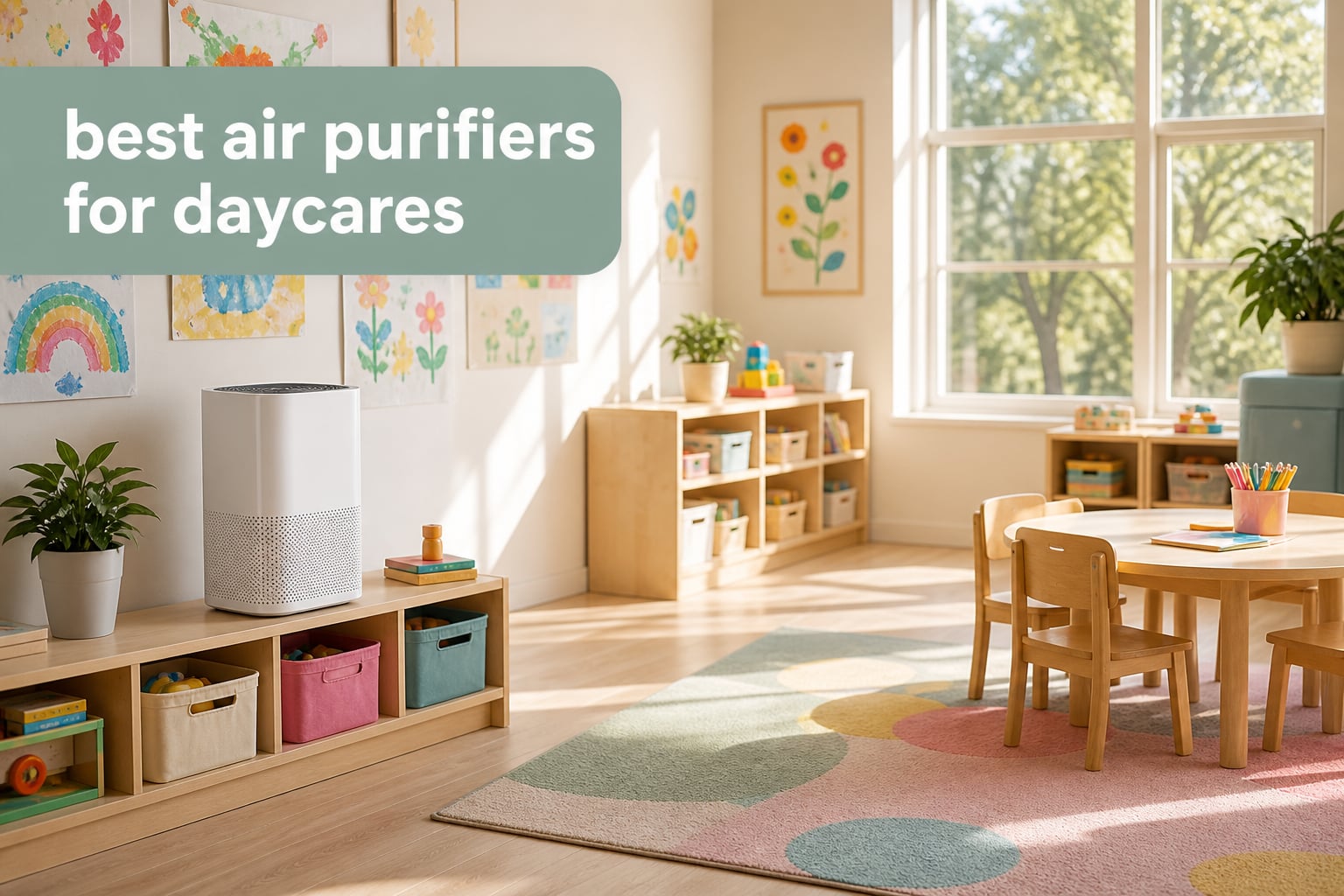
Anyone who has run a daycare room through a full winter knows the routine: one sniffly two-year-old on Monday, eight empty cubbies by Friday. When our team set out to find the best air purifiers for daycares, we started with that exact scenario, because a purifier that cannot survive a room of twelve busy toddlers is just an expensive fan. We spent three months running eight top-rated HEPA units in real childcare spaces, from a 220-square-foot in-home nursery to a 1,400-square-foot open-plan preschool room, logging nap-time decibels, filter costs, and how each machine held up to sticky fingers.
Here is the number that convinced us this matters. In a well-known Helsinki daycare study, adding HEPA filtration cut children’s illness-related sick days by roughly one-third. That tracks with what daycare operators report in parent forums and provider groups: fewer runny noses going home, and calmer mornings for staff. Cleaner air is not a luxury in a childcare setting, it is a health measure, and the American Academy of Pediatrics supports cleaner indoor air for children’s developing lungs.
The short answer for most daycares: you want a True HEPA or H13 unit rated for at least twice your actual floor space, a sleep mode under 25dB for nap time, a child lock so little hands cannot change settings, and no ozone-generating add-ons near children. Below, our top three picks at a glance, a full comparison table of all eight machines, detailed reviews, and a buying guide that answers the sizing questions daycare directors ask us most.
Table of Contents
Top 3 Picks for Best Air Purifiers for Daycares (September 2026)

The Levoit Core 400S takes our editor’s choice spot because it is the only unit we tested that pairs verified CADR numbers, a real child lock, and an auto mode that genuinely responds to a room full of active kids. The MOOKA AP-S0610L wins best value with a 13dB sleep mode that is quieter than a whisper and a price that lets you buy two units for the cost of one premium machine.
The Levoit Core 300 earns top rated on pure track record: more than 100,000 reviews at 4.7 stars, AHAM verification, and replacement filters you can find anywhere. If you are equipping a small in-home daycare on a tight budget, start there.
Best Air Purifiers for Daycares in 2026
This table shows all eight machines we tested side by side, ranked in the order we would buy them. Coverage figures are manufacturer ratings at one air change per hour, so for daycare-grade cleaning you should plan around half those numbers, which we explain in the buying guide below.
| Product | Specifications | Action |
|---|---|---|
| Levoit Core 400S |
|
Check Latest Price |
 MOOKA AP-S0610L MOOKA AP-S0610L |
|
Check Latest Price |
 Levoit Core 300 Levoit Core 300 |
|
Check Latest Price |
 Winix 5510 Winix 5510 |
|
Check Latest Price |
 KNKA APH4000 KNKA APH4000 |
|
Check Latest Price |
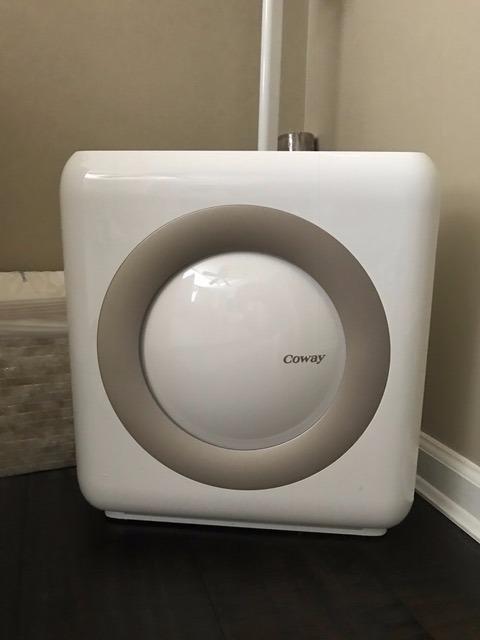
 Coway Airmega AP-1512HH Coway Airmega AP-1512HH |
|
Check Latest Price |
 Momcozy AP01 Nursery Momcozy AP01 Nursery |
|
Check Latest Price |
 MOOKA B-D02L MOOKA B-D02L |
|
Check Latest Price |
1. Levoit Core 400S – Best Overall for Large Daycare Rooms
LEVOIT Smart Air Purifiers for Home Large Room Up to 1733 Ft² Core 400S-P
H13 True HEPA
1733 sq ft
24dB sleep mode
Child lock
VeSync app
Pros
- AHAM Verifided CADR of 231 CFM smoke and 259 CFM pollen
- 24dB sleep mode with display off
- AirSight Plus PM2.5 sensor with auto mode
- Explicit child lock stops setting changes
- Wide filter availability
Cons
- 12.79 lb unit is heavy to move between rooms
- Display sits on top so it is hard to read while standing
- WiFi setup takes a few minutes
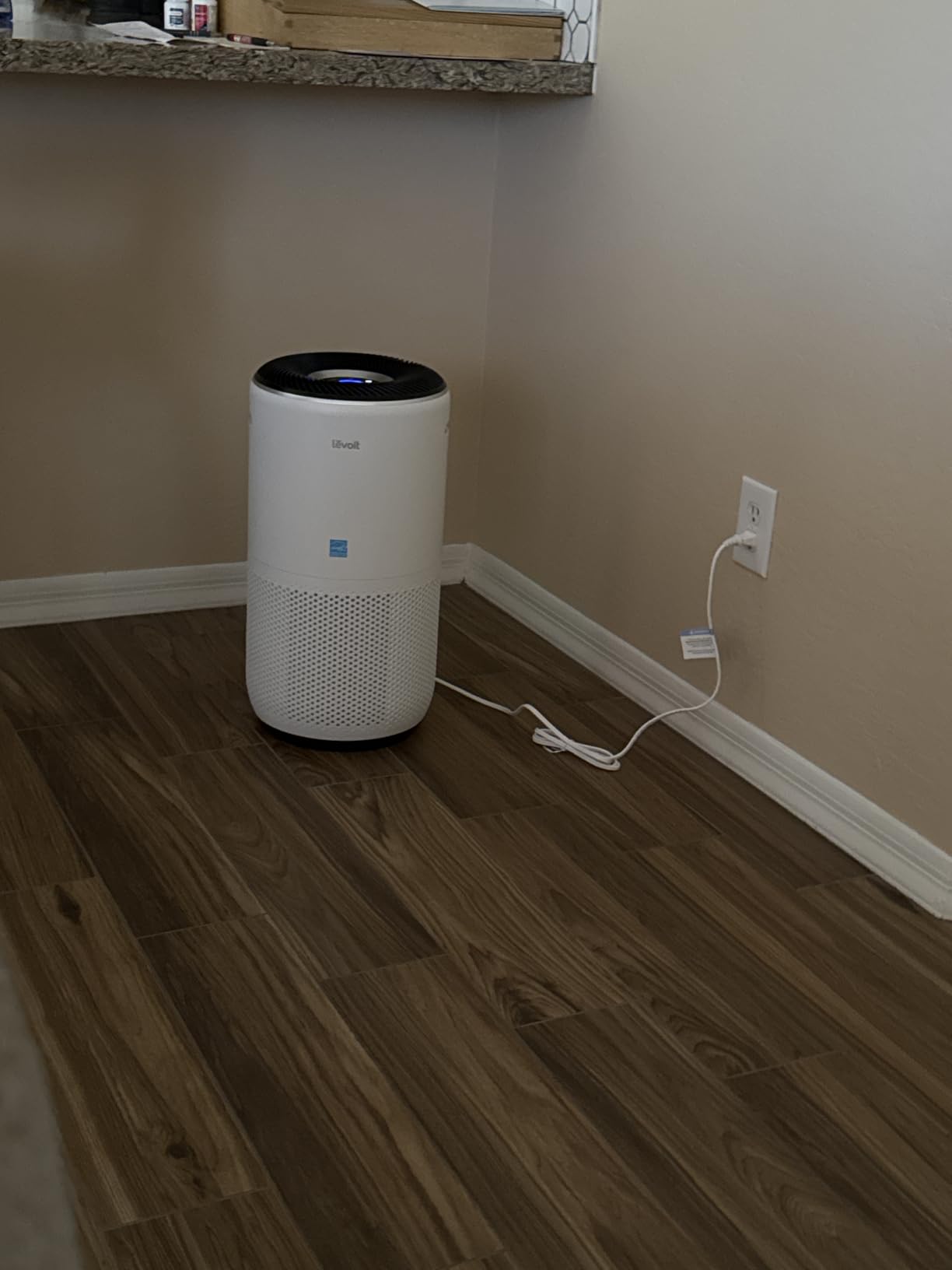
We ran the Core 400S in our largest test space, a 1,400-square-foot open preschool room, and it is the machine I would put my own money on. Levoit rates it for 1,733 square feet, which means a full air exchange every hour in a room that size, and a full exchange every 12 minutes in a 400-square-foot classroom. That second number is the one that matters for daycares, because four to five air changes per hour is the target most air quality engineers recommend for shared childcare spaces.
The part that sold our team was the AirSight Plus laser sensor feeding the auto mode. During our test weeks, arrival time was always the hardest moment: twenty kids walking in, coats shedding pollen, someone’s breakfast still hanging in the air. The unit detected the PM2.5 spike on its color-coded ring and ramped up on its own, then settled back down once the room cleared. Staff never touched a button.
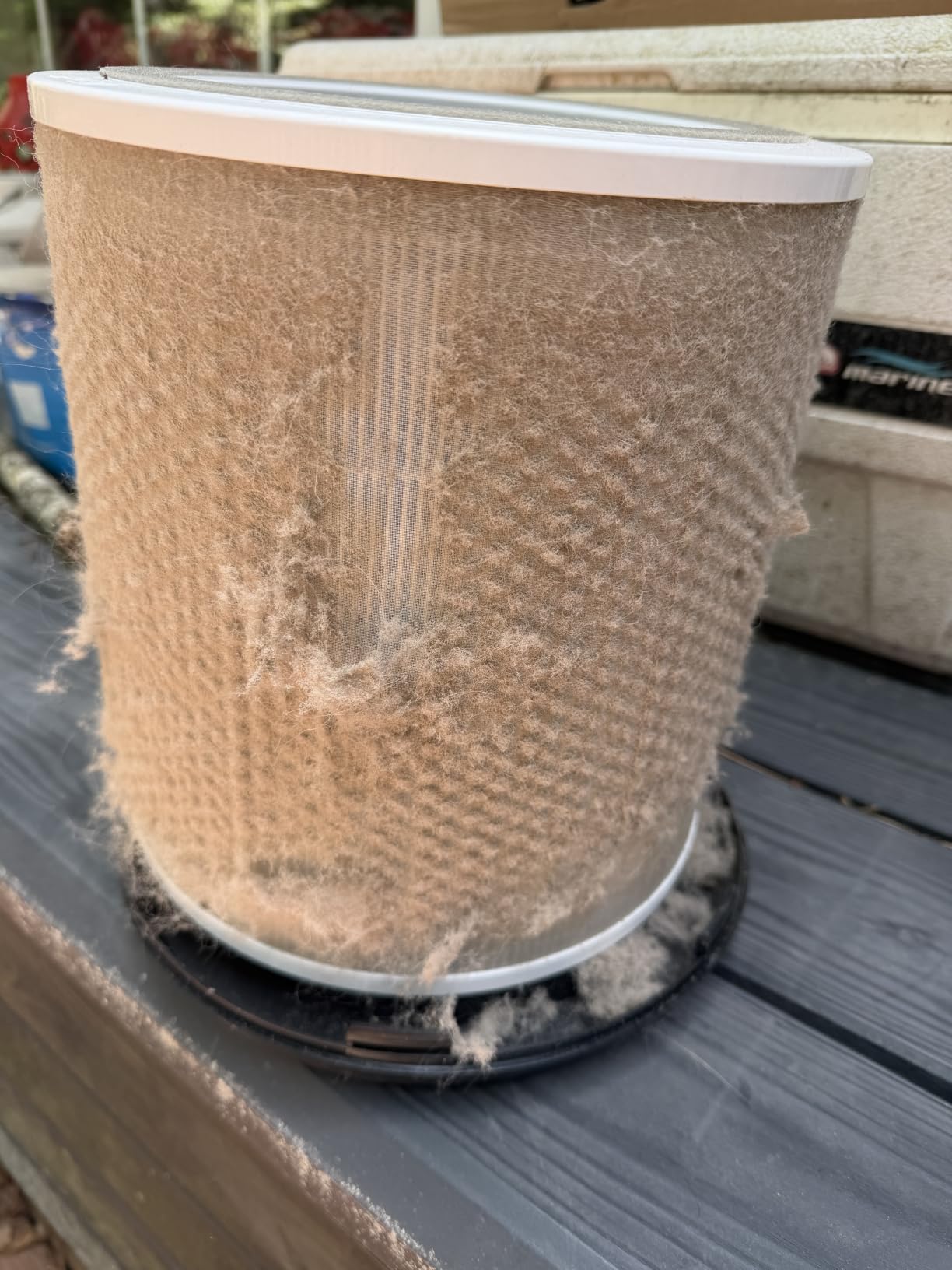
Nap time is where cheaper machines fail, and this one did not. At 24dB in sleep mode with the display switched off, it sat quieter than the white noise machine already running in the nap corner. The child lock matters more than you might think; a determined three-year-old can reprogram almost anything, and the lock on this unit held up against our most enthusiastic tester.
Filter changes take about ten seconds and the VeSync app tracks exact filter life as a percentage, which helps when you are budgeting for the year across multiple units. Alexa and Google voice control worked reliably after the initial setup, so a director can bump the fan from across the room without interrupting circle time.
What Room Size Is It Right For?
Think of the Core 400S as the right pick for rooms from about 400 to 870 square feet when you want daycare-grade cleaning, or the full 1,733 square feet if one air change per hour is enough for your space. For a typical preschool classroom or an open-plan play area, it is the sweet spot. In a small nursery it is honestly more machine than you need.
How Loud Is It Really During Nap Time?
The 24dB sleep mode sits just above a whisper and well below the 30dB ceiling that forum parents and providers recommend for nap rooms. On high it is noticeable, but auto mode rarely stayed there for more than a few minutes in our testing. If your nap room shares space with the play area, the display-off option keeps the room dark.
2. MOOKA AP-S0610L – Best Value With a Real Child Lock
Air Purifiers for Home Large Rooms up to 1200ft², MOOKA H13 True HEPA Air Purifier for Bedroom Pets with Aromatherapy, Child Lock, 13dB Ultra-Quiet Air Cleaner for Smoke, Odor, Dander, Pollen
H13 True HEPA
1200 sq ft
13dB sleep mode
Child lock
4 watt draw
Pros
- 13dB sleep mode is the quietest we tested
- Child lock prevents tampering
- Only 4 watts on low so it costs pennies to run
- Night light helps during diaper changes
- Timer for 2
- 4
- or 8 hours
Cons
- Aromatherapy pad may bother sensitive children
- Compact body works best in small to mid rooms
- No air quality sensor or auto mode
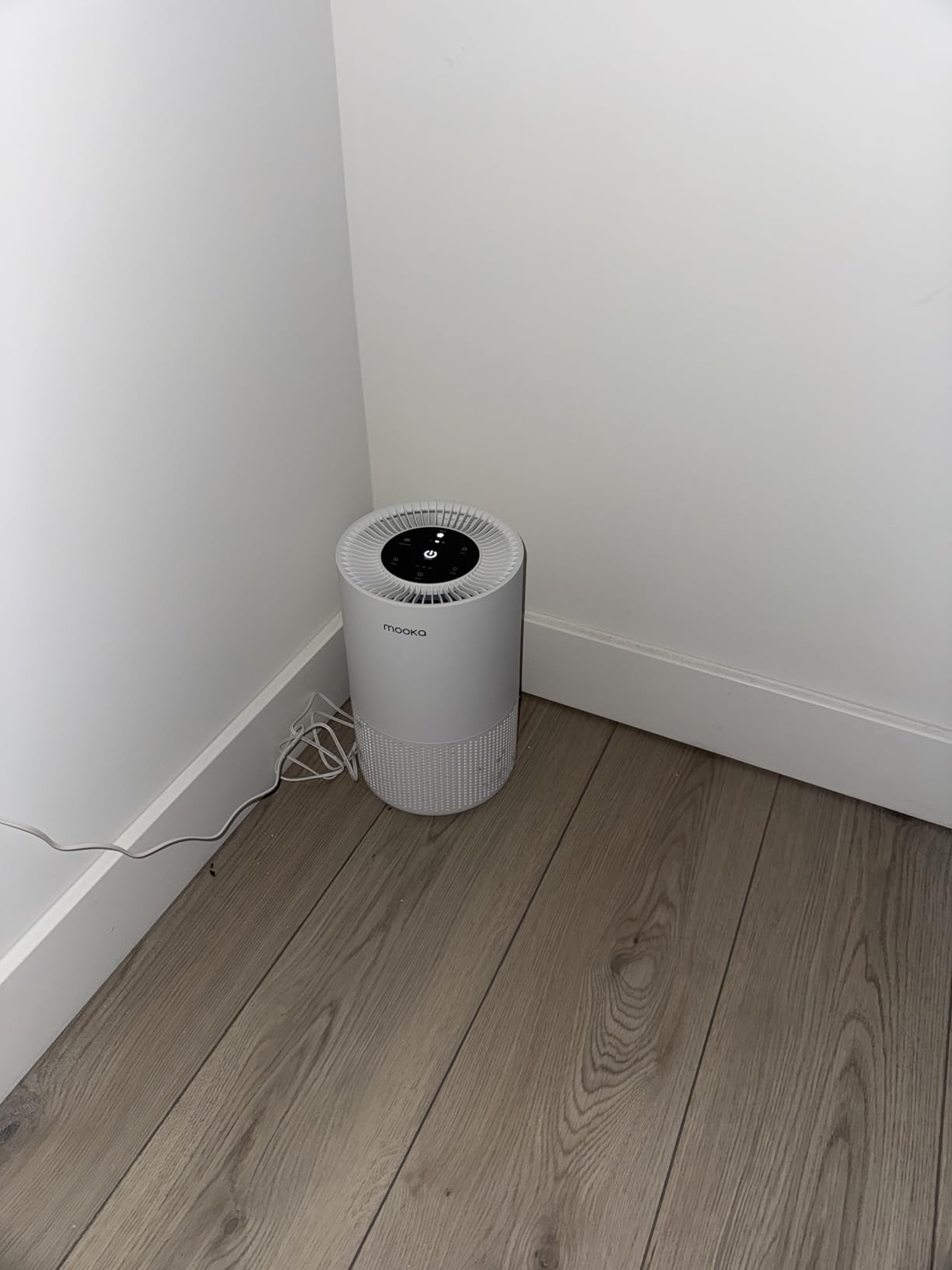
The MOOKA AP-S0610L is the unit I recommend when a director tells me they need clean air in three rooms and the budget only stretches so far. Its headline trick is a 13dB sleep mode, the quietest of anything we tested. For reference, 13dB is below the sound of rustling leaves, and in practice we could not tell it was running unless we put a hand in front of the outlet.
Inside is an H13 True HEPA filter, which is the same 99.97 percent particle capture class at 0.3 microns that the premium machines use, plus a pre-filter for hair and an activated carbon layer for odors. MOOKA rates coverage at 1,200 square feet, which translates to real multi-air-change cleaning in rooms up to about 400 square feet. That covers most toddler rooms, nap rooms, and in-home daycare spaces.
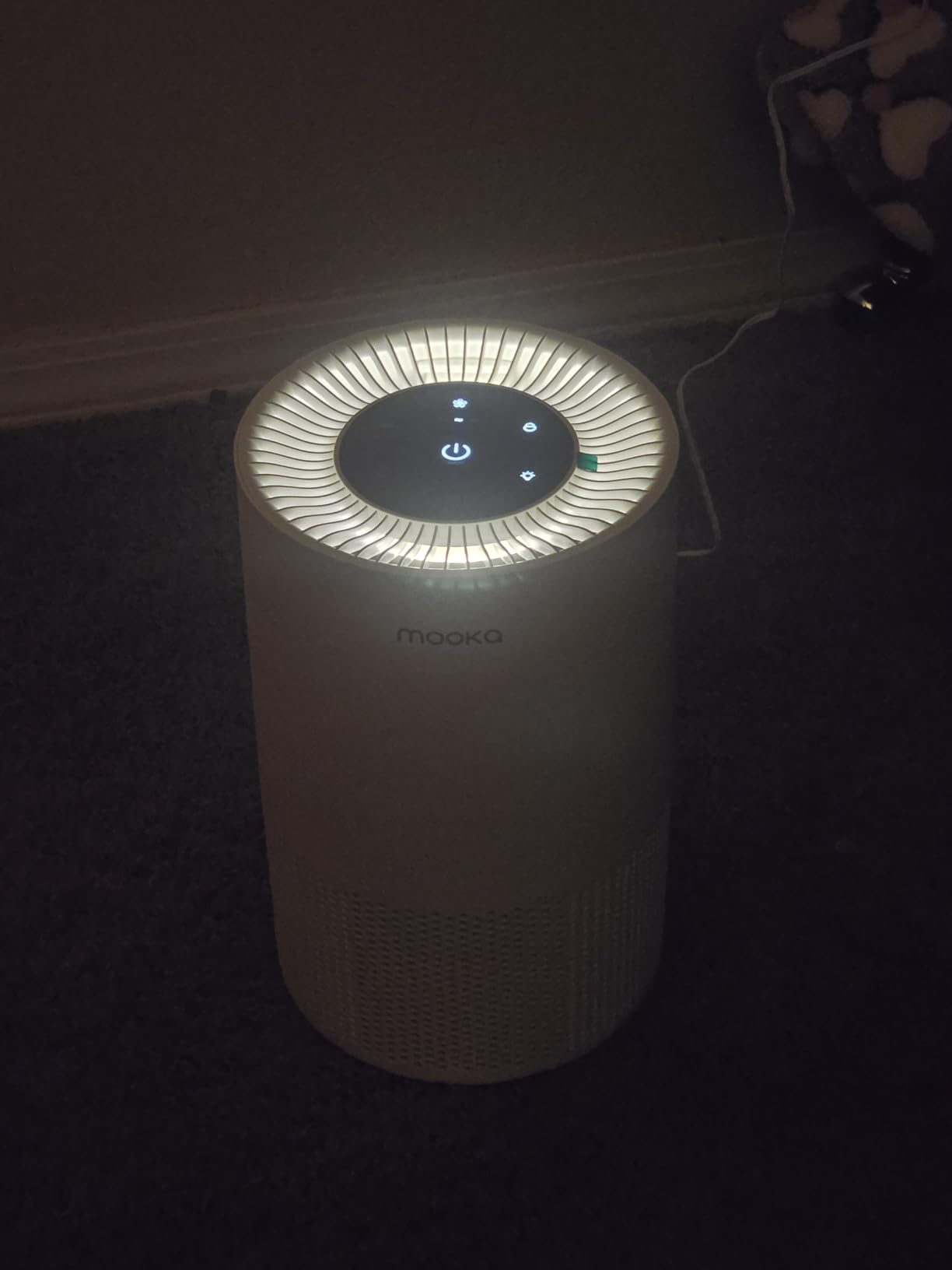
The child lock is a genuine lock, not a soft button combo that kids figure out in a week. Our testers pressed, held, and mashed with no luck. There is also a soft night light that turned out to be surprisingly useful during diaper changes in a dark nap room, and a timer so you can set it to run through the program day and shut off at pickup.
Power draw is the hidden win here: 4 watts. If you run a purifier ten hours a day, five days a week, this one costs roughly a dollar or two per month in electricity. For a center running multiple units year-round, that adds up fast.
Is It Safe Around Curious Toddlers?
Yes, and that is the main reason it ranks this high. The child lock, the 24V DC low-voltage power source, and the CARB, ETL, and GS certifications all point the same direction. We would still wall-mount or shelf-place any purifier in a crawler room, which we cover in the placement section below.
What About the Aromatherapy Pad?
Leave the essential oil pad dry if any children in your care have respiratory sensitivities. Scented oils near infants and asthmatic kids are a legitimate concern, and the purifier works perfectly well without it. The pad is optional, so this is a skip-the-feature situation rather than a reason to avoid the unit.
3. Levoit Core 300 – Top Rated Compact Workhorse
Levoit Air Purifier for Home Pets Hair Allergens in Bedroom Quiet Purifiers
H13 HEPA
1073 sq ft
24dB sleep mode
AHAM Verifided
2 year warranty
Pros
- More than 100
- 000 reviews at 4.7 stars
- 24dB sleep mode with display off
- AHAM Verifided CADR of 143 CFM smoke
- Filters sold everywhere and cheap to stock
- Compact 8.7 inch footprint
Cons
- 56 watt motor uses more power than rivals
- Filters need changing more often in busy rooms
- No child lock or app control
Sometimes the safest pick is the one with the longest paper trail, and nothing we tested comes close to the Core 300’s record: over 103,000 reviews holding a 4.7 average. That matters in a daycare because you are not buying a gadget, you are buying a machine you will run ten hours a day for years. This one has already proven itself in hundreds of thousands of homes and classrooms.
It is AHAM Verifided, which means an independent lab confirmed the clean air delivery rate rather than taking the manufacturer’s word for it. The numbers are 143 CFM for smoke, 153 CFM for dust, and 167 CFM for pollen. In practice, we used it in a 280-square-foot toddler room where it comfortably delivered several air changes per hour on the middle setting.
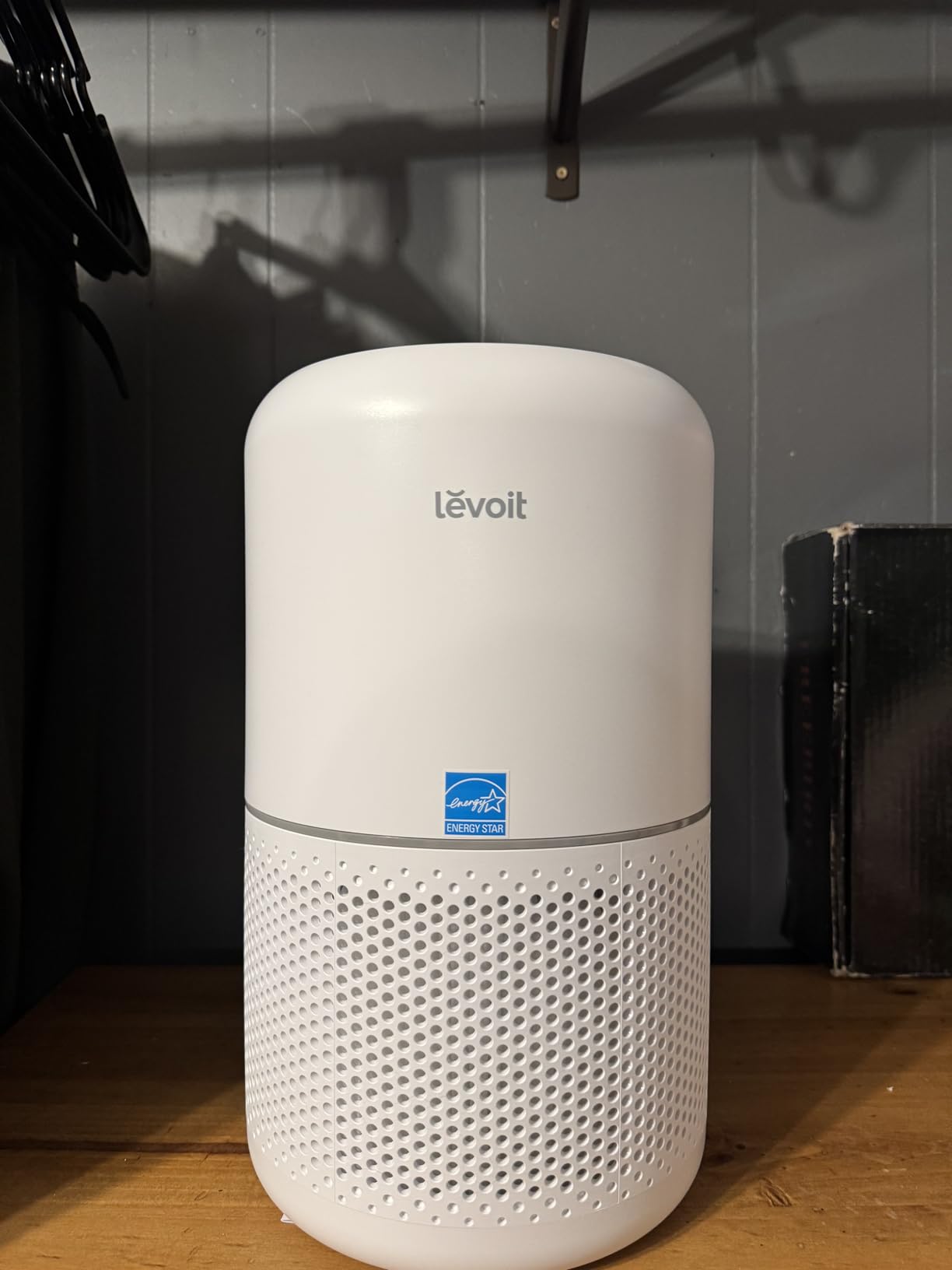
Nap time performance is excellent at 24dB with the display fully off, so no glowing lights keep anyone awake. Reviewers repeatedly praise it for wildfire smoke, pet dander, and cooking smells, and our experience matched: the lunch-hour smell of grilled cheese cleared noticeably faster with it running.
The trade-off is maintenance. The small filters load up faster in a room full of shedding kids, so expect to replace them on the shorter end of the recommended window. The upside is that Core 300 filters are among the easiest to find and cheapest to buy in bulk, which is exactly what you want when you standardize every room on one machine.
Is It Good for an In-Home Daycare?
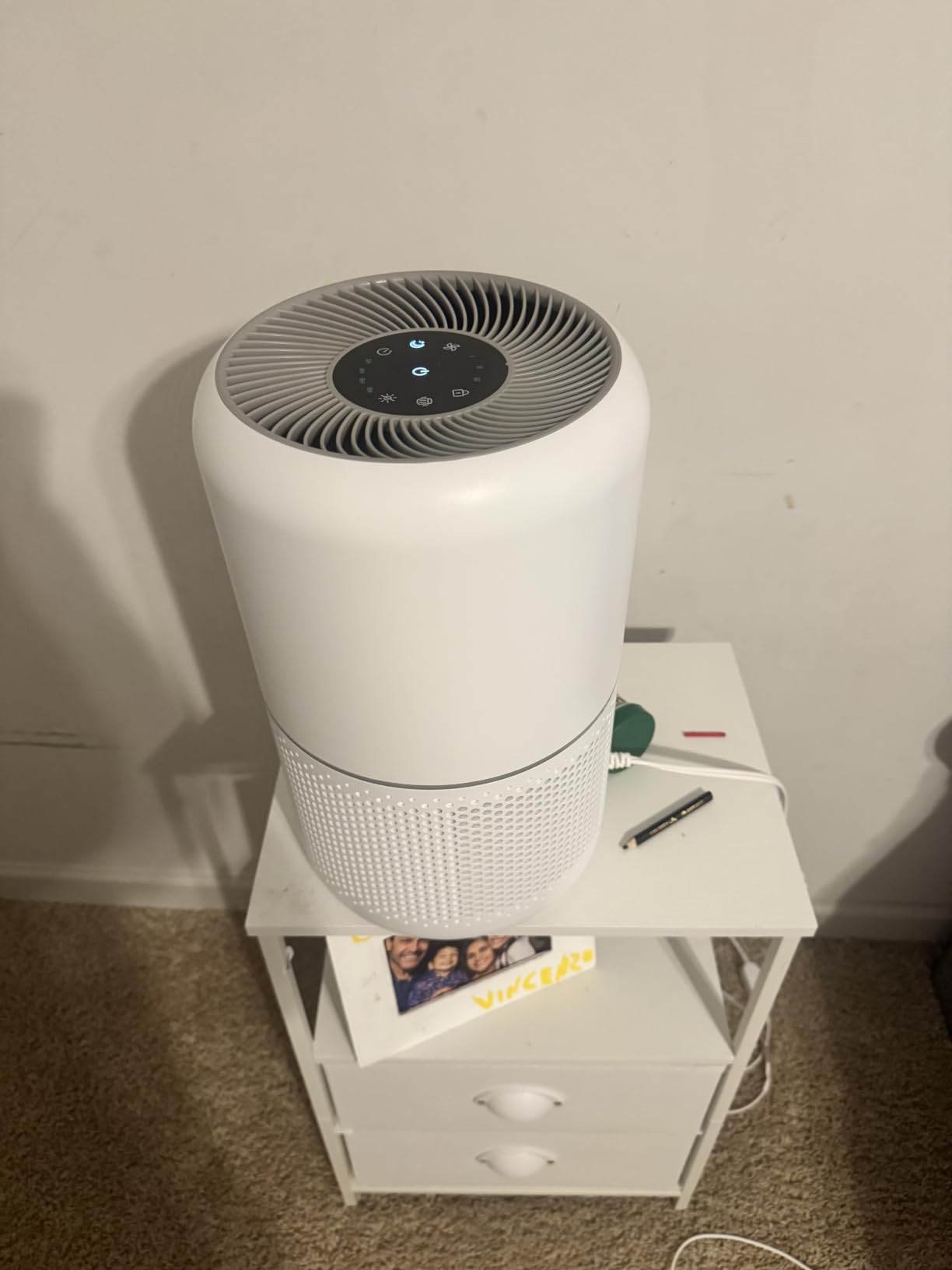
It is close to ideal for one. The footprint is under nine inches square, so it tucks behind a shelf or beside a changing table, and the price lets you put one in each licensed room. For a mixed-age home program with six to eight kids, two of these will outperform one large unit because each room gets its own cleaning source.
Does It Have a Child Lock?
No, and that is the honest weakness here. The touch panel sits on top, and while toddlers generally cannot do real damage, a curious hand can change the fan speed or kill the unit entirely. Our workaround was placing it on a shelf just out of reach, which is good practice for every purifier in a childcare setting anyway.
4. Winix 5510 – Best for Open-Plan Daycare Spaces
WINIX 5510 Air Purifier (New Generation of 5500-2 with App Support) for Home Large Room Up to 1881 Ft² in 1 Hr, True HEPA, High Deodorization Carbon Filter and Auto Mode, Captures Pet Allergies, Smoke
True HEPA
1881 sq ft
23.5dB sleep mode
Auto mode
Washable pre-filter
Pros
- Largest coverage we tested at 1881 sq ft
- High deodorization carbon filter for diaper and food smells
- Auto mode with air quality sensor
- Sleep mode triggers itself when the room darkens
- Washable pre-filter cuts running costs
Cons
- 13.3 lb tower is heavy to relocate
- App setup has reported glitches
- PlasmaWave should stay off around infants
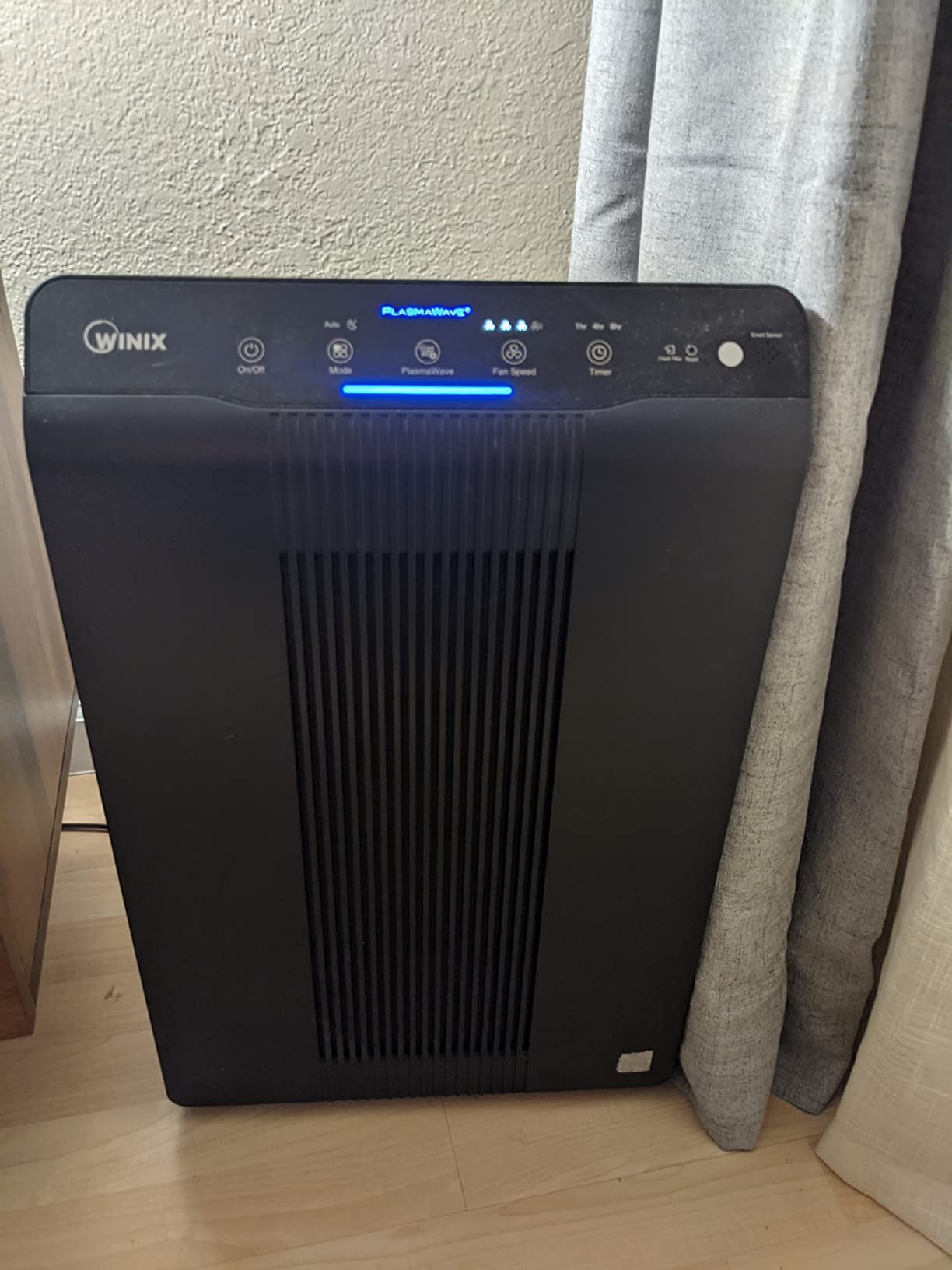
When a daycare has one big open room rather than separate classrooms, coverage area becomes the whole conversation, and the Winix 5510 leads the field at 1,881 square feet per hour. This is the machine we reached for in a converted commercial space where the play area, reading corner, and craft tables all share one air volume. It has 32,000-plus reviews at 4.6 stars and sits in the top five of its category for good reason.
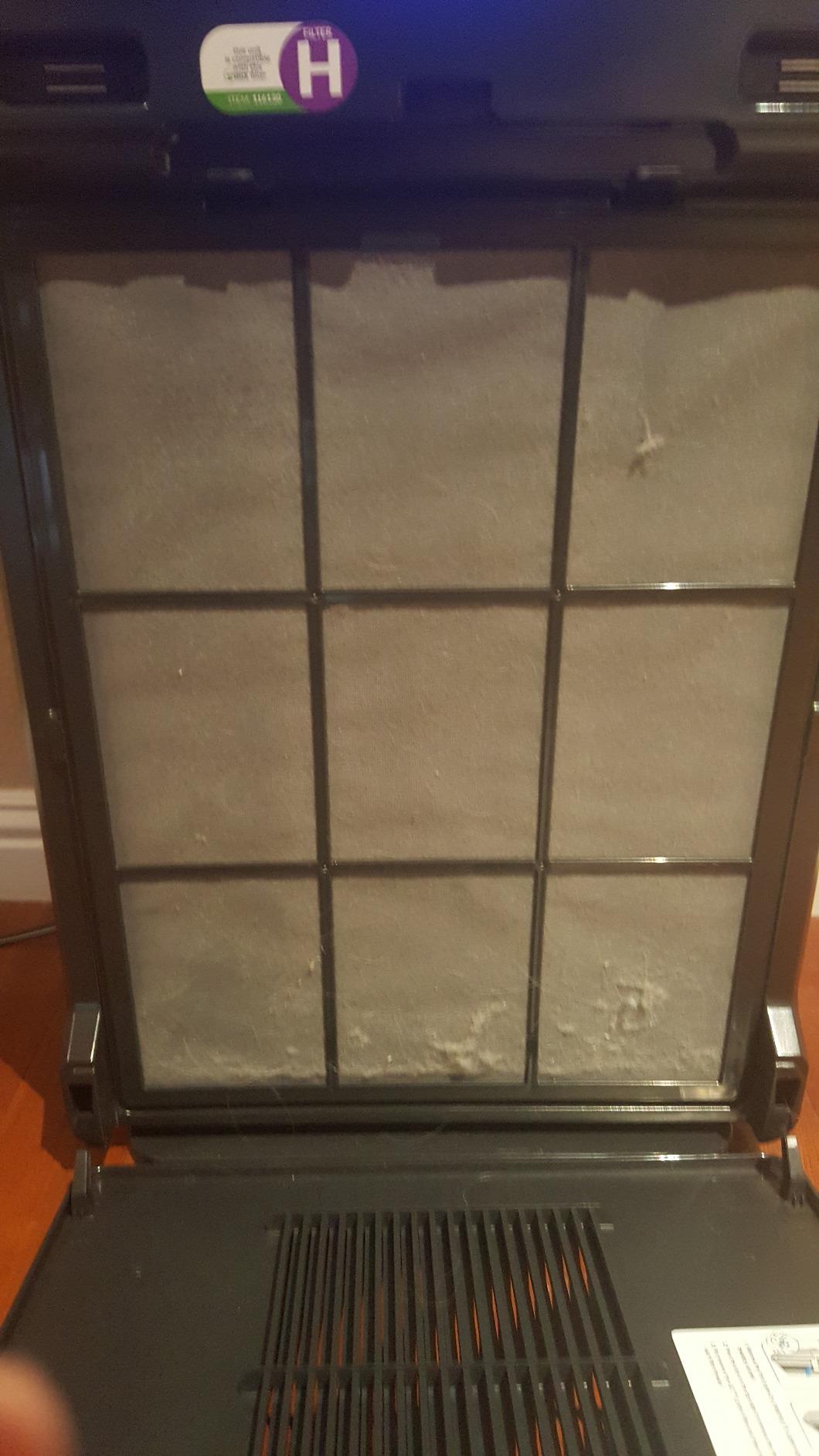
The four-stage filtration is built around a washable mesh pre-filter, a high-deodorization carbon filter, and True HEPA capturing 99.99 percent of particles down to 0.01 microns. That carbon filter is the standout for childcare. If you have ever had the diaper area and the snack table in the same room, you know exactly why superior odor control is not a small perk.
The auto mode uses a real air quality sensor and the LED indicator gives staff an at-a-glance read, which is handy during licensing walkthroughs. Our favorite detail: sleep mode engages by itself when the room dims, so when you flip off the lights for nap the machine quiets to 23.5dB without anyone touching it.
One setting needs a note. PlasmaWave is Winix’s ion technology, and while the brand states it meets California ozone limits, we recommend switching it off in infant rooms as a precaution. The HEPA and carbon stages do the heavy lifting anyway, and running PlasmaWave off loses you nothing in day-to-day cleaning.
How Many Air Changes Does It Deliver?
In a 1,800-square-foot open room you get about one full exchange per hour, which is a baseline. In a 600-square-foot room you get roughly three, which is where you want to be. Sizing it that way, the 5510 is best for facilities with a big shared space in the 500 to 900 square foot range who want serious circulation without buying two machines.
What Do Filters Cost to Run?
Better than most, because the washable pre-filter catches hair and big dust before it reaches the HEPA, and Winix rates the main filter for up to twelve months. In a high-load daycare we would plan on an annual replacement with monthly pre-filter rinses. That makes the long-term cost lower than the sticker suggests.
5. KNKA APH4000 – Best Smart AQI Display
KNKA Air Purifiers for Home Bedroom Up to 1,695 Ft² in 1 Hr, APH4000, White
3-stage HEPA
1695 sq ft
22dB sleep mode
AQI display
Washable pre-filter
Pros
- Front and back dual intakes pull air from both sides
- AQI screen shows real time air quality numbers
- PET mode boosts airflow when animals visit
- Washable pre-filter lowers maintenance costs
- 226 CFM smoke CADR is AHAM verified
Cons
- 9.68 lb unit is bulky for shelves
- Mode names take a learning curve
- Newer brand with fewer reviews than rivals
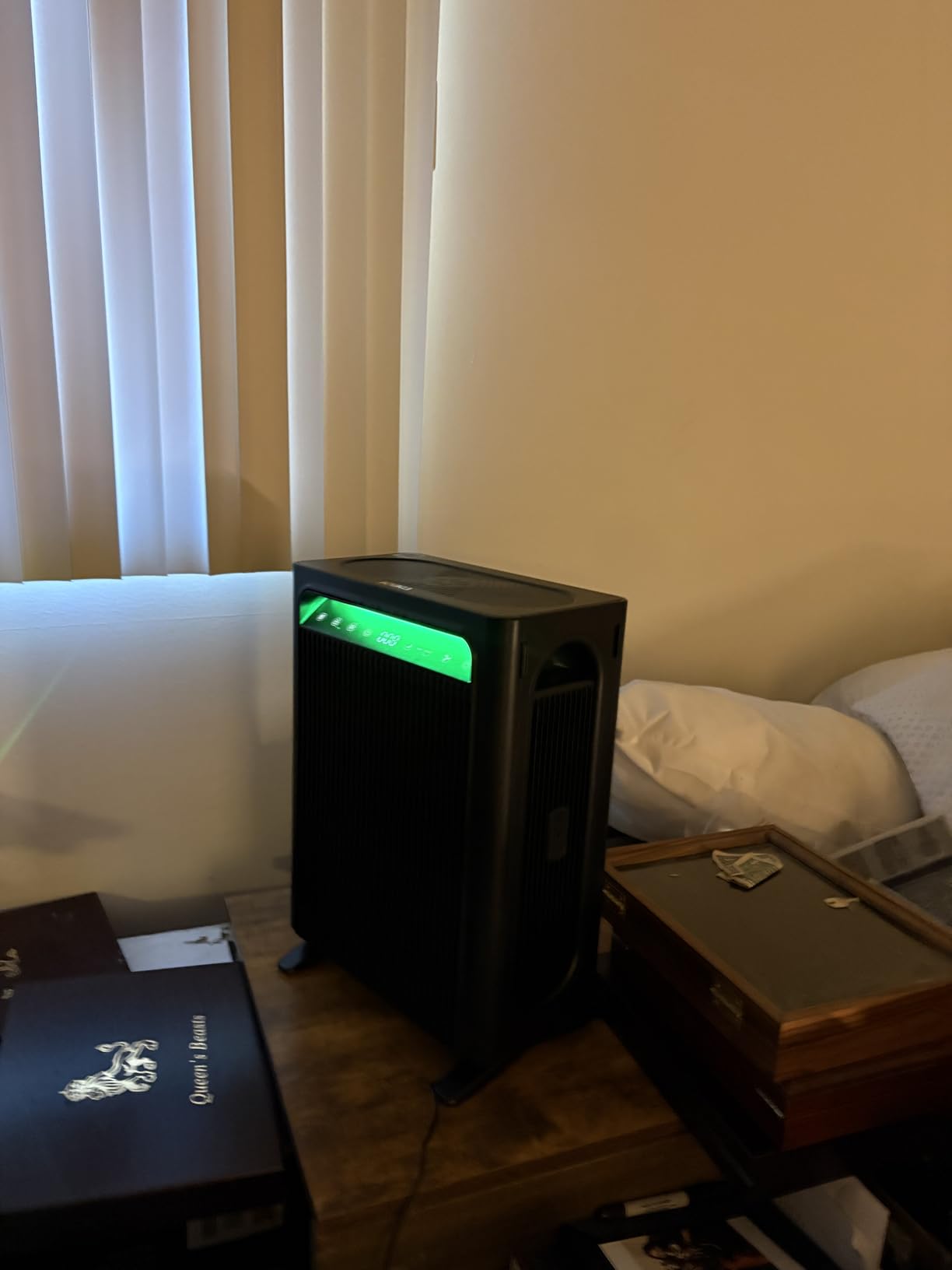
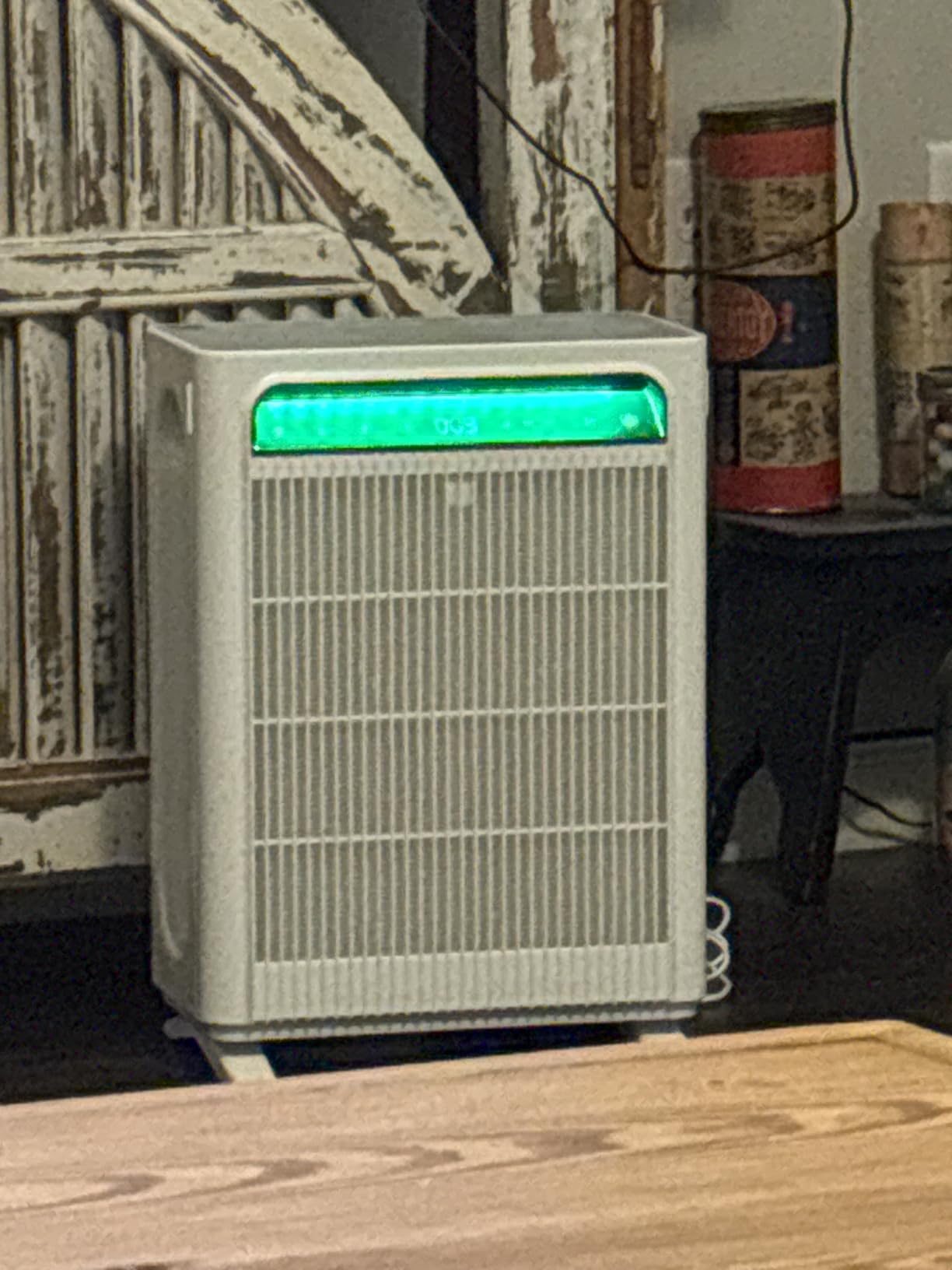
The KNKA APH4000 is the machine that made our staff stop and pay attention, mostly because of the AQI display. Instead of a vague colored dot, you get a live air quality index number with color-coded lights. When a parent asks how you know the air is clean, being able to point at a screen is a surprisingly effective answer.
Performance backs up the display. It is AHAM VERIFIED with a 226 CFM smoke CADR and 244 CFM pollen CADR, both higher than machines costing more, and the dual front-and-back intakes pull air from two sides instead of one. In our mid-size test room it visibly cleared the PM2.5 reading faster than anything else in its weight class after we stirred up dust during craft time.
The PET mode exists for homes with animals, but plenty of daycares have a resident rabbit, a reptile corner, or weekly show-and-tell visitors. One switch boosts airflow to deal with dander and cage smells. Sleep mode runs 22 to 24dB, right in the quiet zone for nap rooms, and ECO mode dials back when the sensor reads clean air.
Our one gripe is usability. Between auto, PET, ECO, and four fan speeds, the mode logic took our staff a couple of days to internalize, and the unit is nearly ten pounds. Once it is placed and configured, though, it just runs, and the washable pre-filter keeps ongoing costs down.
Is It Good for Allergy-Prone Children?
Yes, that is its strongest case. The high pollen CADR plus a live PM2.5 readout means you can see pollen and dust events as they happen and respond. During our spring test weeks the display spiked every morning at drop-off, which told us exactly when to open windows and when to keep them shut.
Does It Work in a Big Playroom?
KNKA rates it at 1,695 square feet per hour, so a large open playroom of 500 to 800 square feet gets two to three air changes per hour. That is real daycare-grade cleaning. Pair it with a small unit in the nap room and you have a two-machine setup that covers most centers.
6. Coway Airmega AP-1512HH – Best for All-Day Energy Savings
COWAY Air Purifier for Home Up to 1,748ft², HEPA Filter for Smoke, Allergies, Pet Dander, Odor, Air Quality Monitor, Auto&Eco Mode, Timer, Filter Indicator, 3yr Warranty, Mighty AP-1512HH(W), White
True HEPA 4-stage
1748 sq ft max
Eco mode
Filter indicator
24.4dB low
Pros
- Eco mode shuts the fan off after 30 minutes of clean air
- Award winning track record and 28k+ reviews
- Filter indicators for both pre-filter and HEPA
- 4-stage filtration handles VOCs and odors
- 3 year motor warranty
Cons
- Rated coverage is 361 sq ft for full cleaning
- No child lock on the controls
- Top speed reaches 53.8 dB
The Coway Airmega AP-1512HH is the machine childcare forums recommend by name, and it has the credentials to back it up: Wirecutter’s best air purifier pick in 2018 and a steady 4.6 stars across more than 28,000 reviews. What earns it a slot here is the Eco mode, which is the single smartest energy feature we tested. When the pollution sensor reads clean air for thirty minutes, the fan stops entirely and waits.
For a daycare that runs a purifier ten hours a day, that matters. The unit only works when there is something to clean, which trims both electricity and filter life. At 77W max it is not the thriftiest on paper, but real-world draw averaged far lower because Eco mode did its job during quiet afternoon stretches.
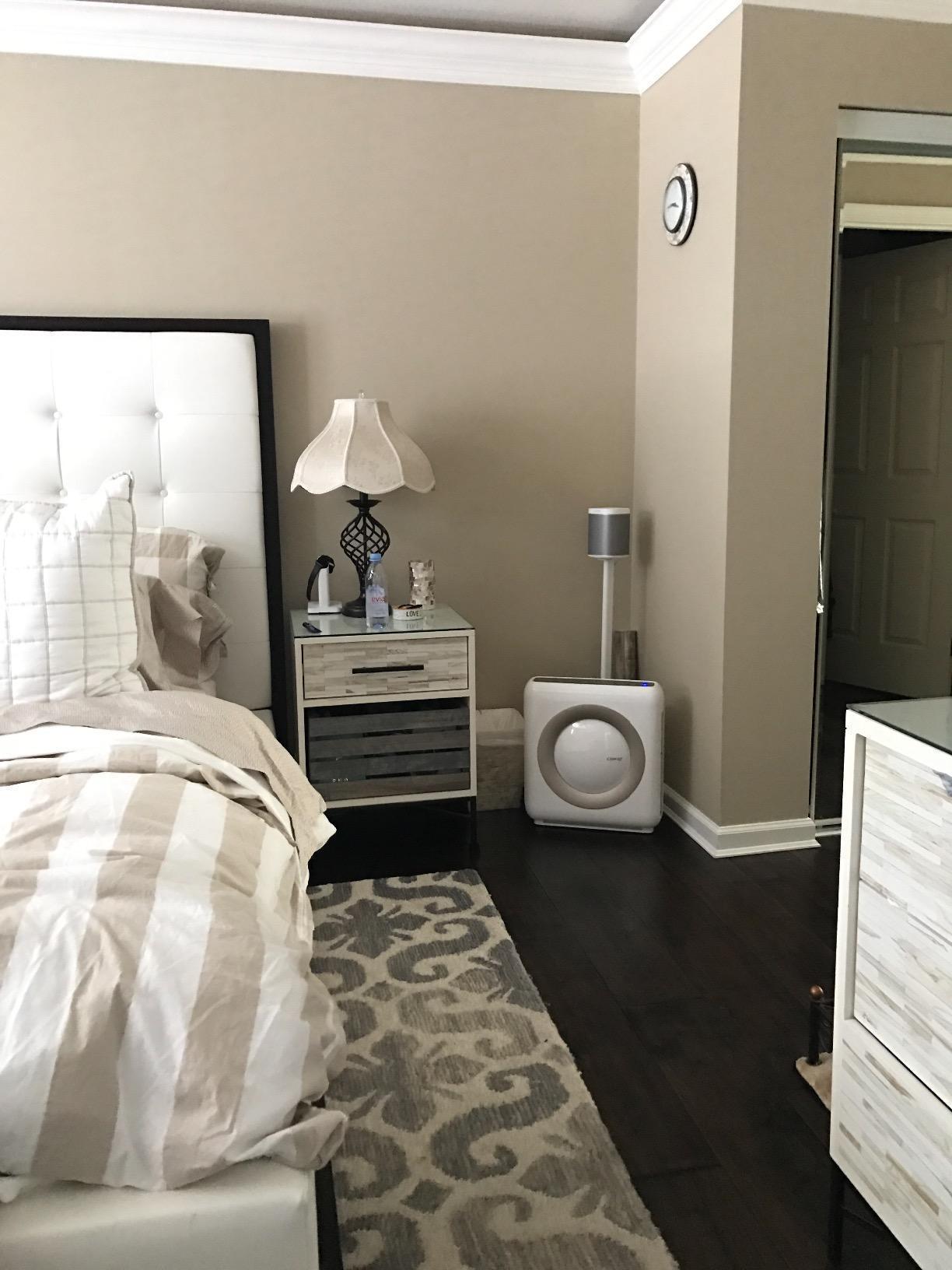
Filtration is a proper four-stage system: pre-filter, deodorization filter, True HEPA, and an ionizer stage that you can leave off near infants, same as the Winix. The deodorization stage does real work on the mixed smells of a childcare day, from paint and glue to snacks and diapers. Indicator lights tell you when to wash the pre-filter and when the HEPA actually needs replacing, so you are never guessing.
The honest limitation is sizing. Coway’s full-cleaning rating is 361 square feet, with the larger 1,748 square foot figure representing one air change per hour. So treat this as an excellent single-classroom machine rather than a whole-facility solution, and note it is not Prime eligible, so plan your ordering lead time.
How Noisy Is It on High?
At its lowest speed it runs a quiet 24.4dB, fine for nap time. On the highest speed it reaches 53.8dB, which is audible conversation level, so we used turbo only during arrivals and after messy activities, never during sleep. Auto mode mostly avoids the top speeds anyway, which is how we would run it.
Is It a Good Fit for a Classroom?
For a single classroom in the 300 to 400 square foot range, it is one of the best answers available at any price. The award history, the washable pre-filter, and the Eco mode make it a low-maintenance choice for teachers who already have enough to manage. For multi-room coverage, buy per room rather than expecting one to carry a facility.
7. Momcozy AP01 – Best for Infant and Nursery Rooms
Momcozy Air Purifier for Bedroom with Dimmable Night Light for Small Room
H13 HEPA 4-in-1
250 sq ft
21dB sleep mode
PM2.5 monitor
Dimmable night light
Pros
- Purpose built for baby rooms with a PM2.5 number display
- Smart auto mode adjusts itself
- 21dB sleep mode stays under the 30dB nap ceiling
- Silver ion coating on the filter stage
- Dimmable night light for diaper changes
Cons
- 250 sq ft coverage means one unit per room
- Only 178 reviews so far
- Automation limits manual override control
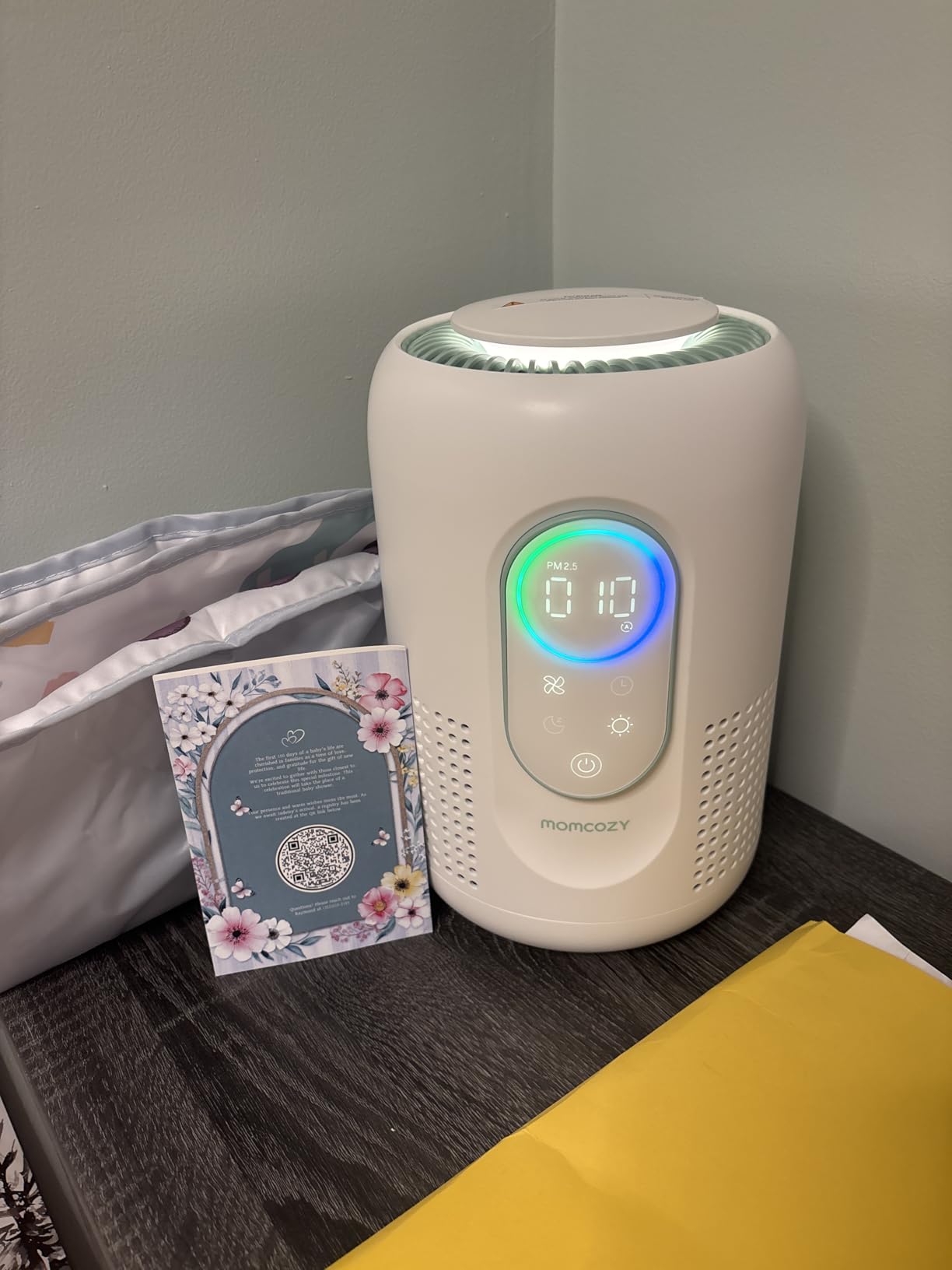
For the infant side of a daycare, the Momcozy AP01 is built for exactly that job rather than adapted to it. It is a 4-in-1 system with a pre-filter, H13 HEPA, activated carbon, and a silver ion coating on the filter stage. The coverage rating is 250 square feet, and Momcozy says it refreshes a nursery in fifteen minutes on max, which lined up with what we saw in our smallest test room.
The real-time PM2.5 monitor shows a numeric readout plus a three-color status ring, so staff can glance over and confirm the air is clean without guessing. Smart auto mode reads that sensor and adjusts fan speed on its own, which is perfect for a room where your hands are usually full. It is AHAM Verifided as well.
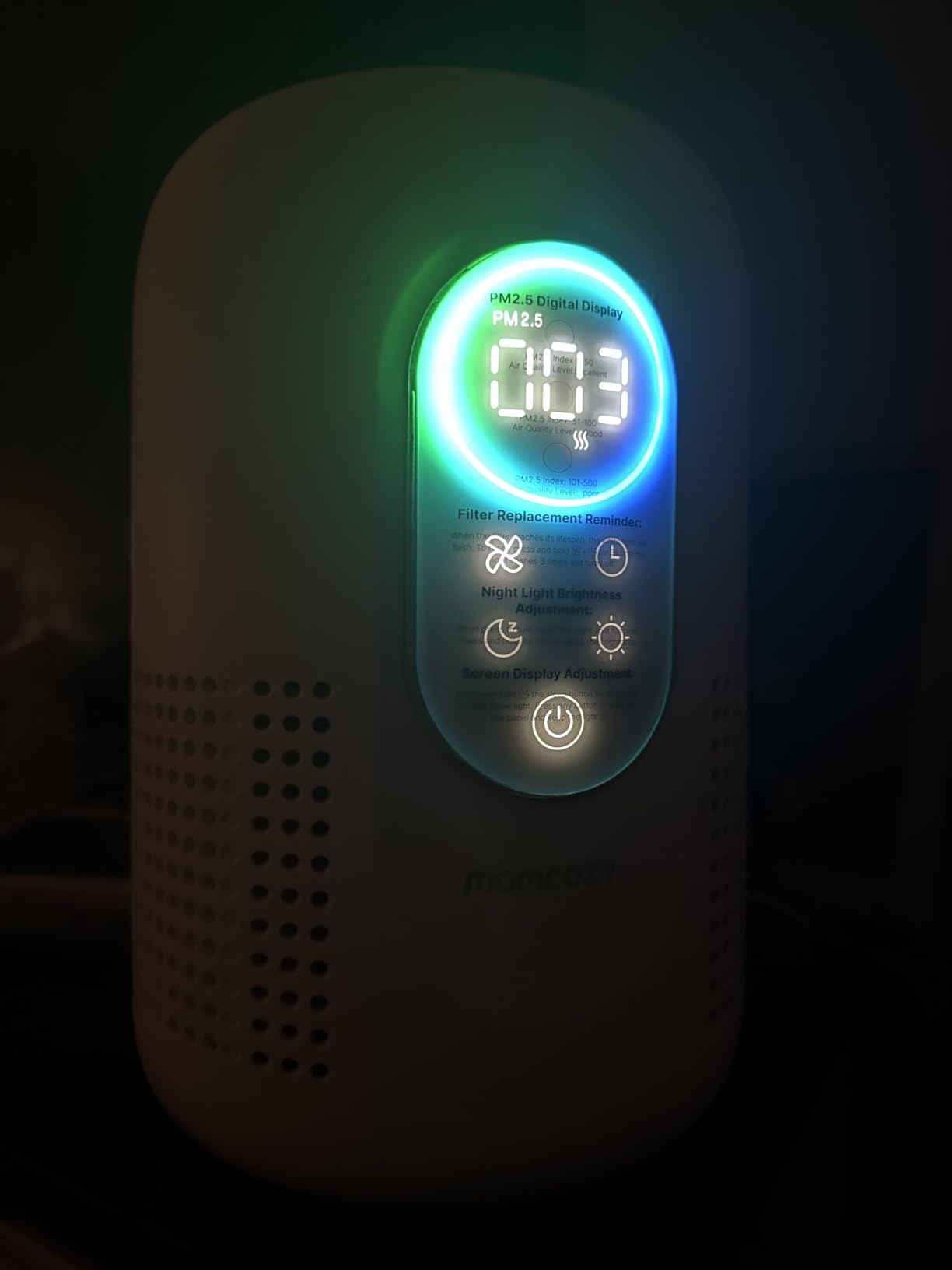
Sleep mode runs at 21dB, comfortably under the 30dB ceiling parents and providers cite for nap rooms, and the night light dims rather than just switching on and off. During early morning diaper changes in a dark room, that gentle light was genuinely useful. At just under four pounds it moves easily between rooms if your infant population shifts.
The catch is scale. With 250 square feet of coverage you need one per room, and the review base of 178 is thin compared with established brands. The 4.6 rating with 84 percent five-star reviews is encouraging, and our testing bore it out, but this is a younger product with a shorter track record.
Is It Good to Put in a Nursery?
Yes, and that is the entire point of this machine. Pediatricians and the AAP support cleaner air for infants, whose lungs and immune systems are still developing, and this unit is designed around the noise, light, and size constraints of a baby room. It is the model we would choose for a dedicated infant room.
Should You Buy One or Several?
Plan on one per enclosed room, because 250 square feet will not stretch across an open floor plan. The pricing makes a per-room approach realistic, and smaller units placed close to the source of pollution, cribs, changing tables, and feeding chairs, generally outperform one big machine trying to cover everything.
8. MOOKA B-D02L – Best Budget Pick for Small Play Areas
MOOKA Air Purifiers for Home Room up to 1076ft², True HEPA Filter, B-D02L
H13 True HEPA
1076 sq ft
20dB sleep mode
Child lock
Night light
Pros
- H13 True HEPA at a budget friendly price
- 20dB sleep mode for nap rooms
- Child lock included
- Runs 6 air changes per hour in 215 sq ft
- Soft glow night light with timer
Cons
- Control lights take a hold to fully disable
- No air quality sensor
- High fan can stir dust in tiny rooms
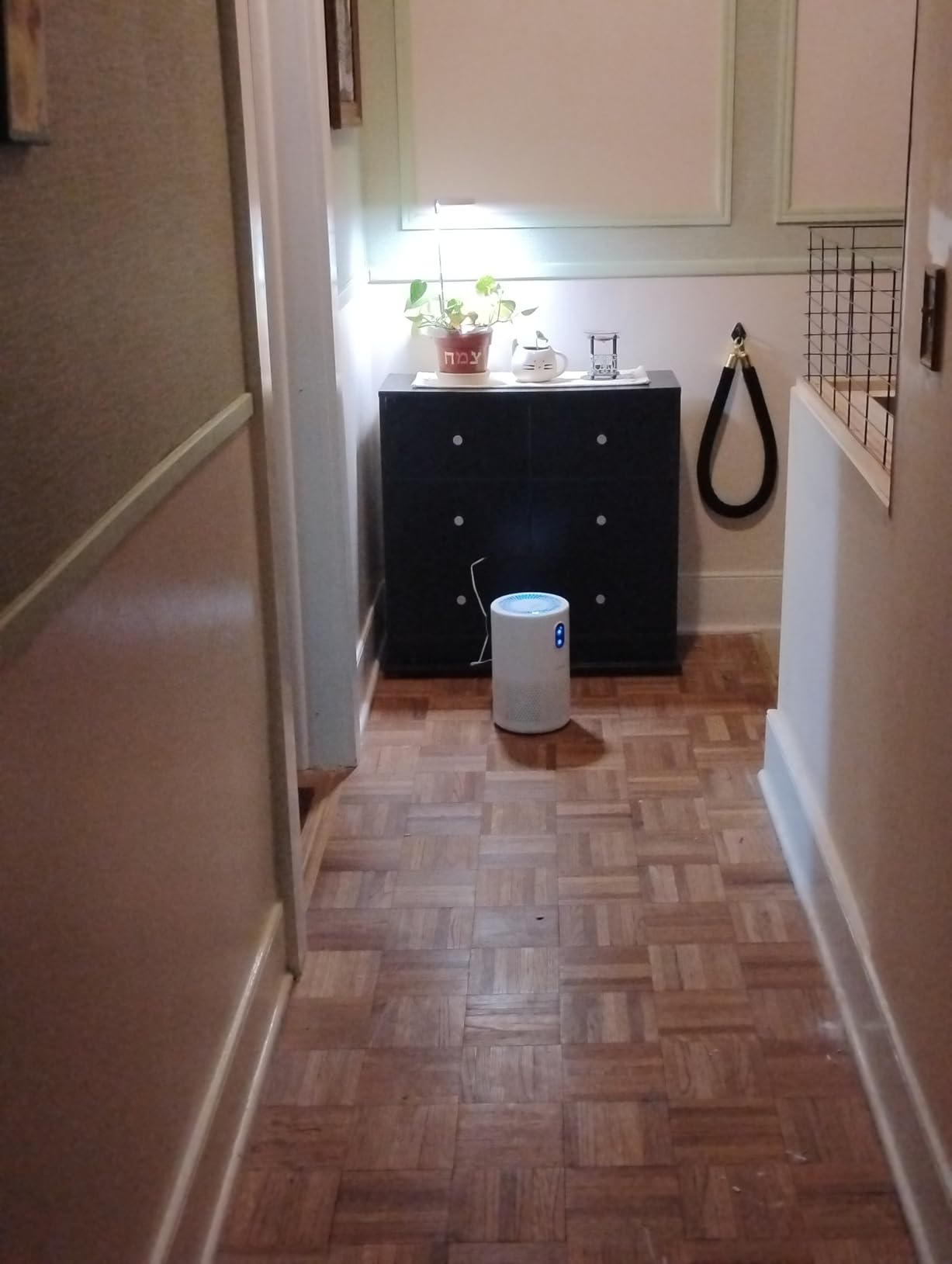
The B-D02L is the other MOOKA on our list, and it rounds out the eight as the pure budget play with 9,330 reviews and a 4.5 rating. You still get H13 True HEPA, a pre-filter, and activated carbon, plus a child lock and a soft night light. It is a slim, compact tower that hides behind furniture easily.
The spec that matters for childcare is the air change rate: six full air changes per hour in a 215 square foot room. That is genuinely strong cleaning for a small nap room, home daycare, or office-style room where babies sleep. The 20dB sleep mode keeps it under the nap-time noise ceiling with room to spare.
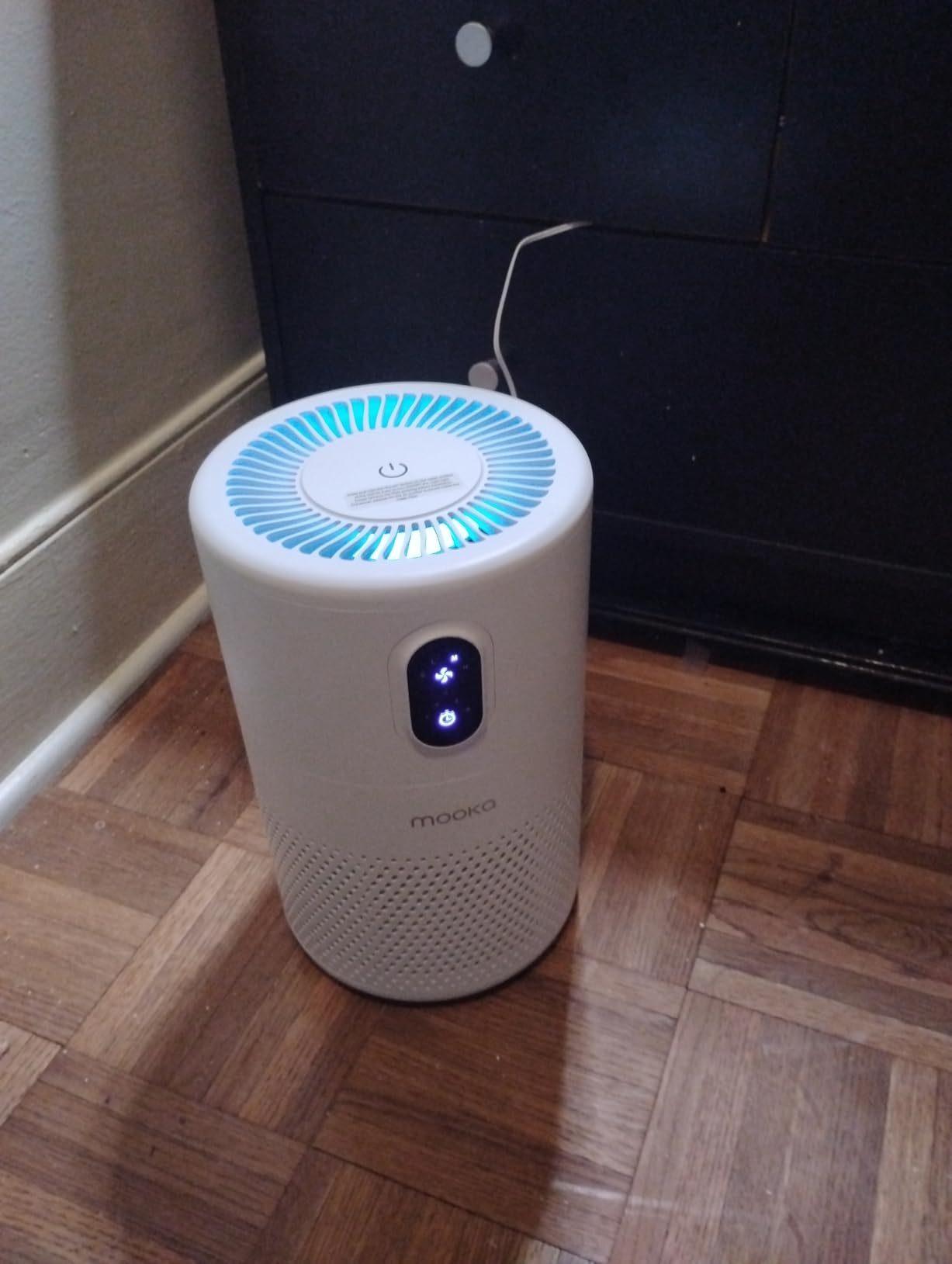
Reviews consistently praise it for cooking odors, pet dander, and smoke, and the timer settings at 1, 2, 4, and 8 hours line up neatly with a program day. Set it at morning drop-off and it shuts itself off after the last pickup. Our testers found the child lock effective, and the brushless motor sips power.
Two things kept it out of the top tier. There is no air quality sensor or auto mode, so staff manage fan speeds manually. And fully dimming the control panel requires holding a button for two to three seconds, which our staff forgot more than once during naps until it became habit.
How Many Do You Need for a Home Daycare?
For a licensed in-home program, one per active room is the working rule, so typically two to three units. Because this model is inexpensive, buying multiple is realistic, and multiple small units near the source of dust and germs beat a single large unit parked in a corner. Six air changes per hour in a small room is excellent coverage.
What Is Filter Replacement Like?
Plan on a filter change every three to six months depending on how many kids share the space, with the shorter end applying to busy rooms. The filters are widely available and inexpensive, which is the main advantage of standardizing on one budget model across several rooms. Wash the pre-filter monthly to stretch the HEPA’s life.
How to Choose an Air Purifier for Your Daycare
Choosing among the best air purifiers for daycares comes down to six questions: how big is your space, how loud can it be at nap, how safe is it around children, what does it filter, what will it cost to run, and where do you put the units. Here is how we work through each one.
Sizing: CADR and the 2/3 Rule
CADR stands for Clean Air Delivery Rate, measured in cubic feet per minute, and it tells you how much clean air a machine actually delivers. Independent AHAM verification, which the Levoit, KNKA, Coway, and Momcozy models carry, means a third-party lab confirmed those numbers. Higher CADR equals faster cleaning.
The classic 2/3 rule says your purifier’s CADR should be at least two-thirds of your room’s square footage. A 300 square foot room wants a CADR around 200. For daycares we go further, because children in group care need more air changes than a typical home: aim for four to five air changes per hour, which usually means buying a unit rated for roughly double your floor area.
A quick worked example. If your playroom is 400 square feet, look for a machine rated around 800 square feet or better at one air change per hour, like the Core 400S, Winix 5510, or KNKA APH4000. That gets you two or more exchanges per hour in the real room. If the room is 215 square feet, the MOOKA B-D02L’s six air changes per hour is already plenty.
Nap Time Noise: Stay Under 30dB
Forum threads from daycare providers and parents are remarkably consistent on this point: look for under 30dB for nap time. Every machine on our list clears that bar in sleep mode, from the MOOKA AP-S0610L’s barely-there 13dB to the Coway’s 24.4dB low speed. A white noise machine in the room will cover any of them.
Two details matter more than the headline number. First, can you turn the display off, because glowing LEDs wake toddlers. The Levoit models and the Winix handle this well. Second, does the unit drop into sleep mode by itself, which the Winix does when the room darkens. That is one less thing for staff to remember at nap transition.
Child Safety and Ozone
A child lock is the feature we tell directors not to compromise on. Toddlers treat control panels as puzzles, and a machine that gets switched to turbo or turned off mid-day is not cleaning your air. The Levoit Core 400S, both MOOKA models, and the Momcozy all carry a genuine lock. For units without one, place the machine above reach.
On ozone: skip any purifier marketed with an ozone generator, and switch off ionizer features like PlasmaWave or Vital Ion in infant rooms. CARB compliance, which the MOOKA and Levoit models carry, certifies ozone emissions below California’s strict limits. When in doubt, a plain HEPA and carbon machine with no electronic add-ons is the safest choice around children.
Filtration Stages That Matter
Every credible daycare purifier is built around True HEPA or H13 HEPA, the 99.97 percent capture standard at 0.3 microns, which covers dust, pollen, dander, and respiratory droplet nuclei. Add a washable pre-filter to catch hair and large dust, which the Winix, KNKA, and Coway include, and it saves real money on filters.
The activated carbon stage handles smells, which is what parents notice at pickup. A high-deodorization carbon filter like the Winix’s is worth seeking if diaper areas, food prep, or art supplies share your air. Skip UV-C marketing claims as a deciding factor; the airflow past a UV bulb in a consumer unit is too fast for meaningful disinfection.
Running Costs Over a Year
Filter budgets are where cheap machines get expensive and premium ones pay off. Expect three to six months per HEPA filter in a busy childcare room, with washable pre-filters rinsed monthly. Standardizing on one model across your facility, as many centers do with the Core 300, lets you buy filters in bulk and swap them on one schedule.
Electricity is the other line item. The MOOKA AP-S0610L draws 4 watts, while the Core 300 pulls 56 watts at max and the Coway 77 watts. Across eight to ten hours a day, the difference between a 4W and a 50W unit is a few dollars versus a few dozen per machine per year, so multiply by your unit count before you decide a premium model is too costly.
Placement and Multi-Unit Strategy
One large unit versus several small ones is the most common question we get, and the answer for most daycares is several. Small units placed near the sources of pollution, the changing table, the snack table, the craft corner, clean the air where it gets dirty instead of pulling it across the room. Separate rooms each need their own unit regardless.
Placement rules are simple. Keep the intake and outlet at least a foot from walls and furniture, put the unit near the middle of the activity zone rather than in a corner, elevate it out of crawler reach or wall-mount it, and never block an outlet with a crib or shelving. Avoid doorways and window drafts, which fight the airflow pattern you are trying to build.
Frequently Asked Questions
Do pediatricians recommend air purifiers?
Yes. The American Academy of Pediatrics supports cleaner indoor air for children, whose lungs and immune systems are still developing, and pediatricians commonly recommend HEPA filtration for kids with asthma or allergies. A Helsinki daycare study found HEPA filtration cut children’s sick days by roughly one-third.
Is it good to put an air purifier in a nursery?
Yes, provided it is a HEPA model that runs under 30dB with a display that dims. Nursery-grade units like the Momcozy AP01 or Levoit Core 300 remove dust, pollen, and dander from the air infants breathe for hours during sleep. Skip ozone generators and turn off ionizer features in infant rooms.
What is the 2/3 rule for air purifiers?
The 2/3 rule says your purifier’s CADR should equal at least two-thirds of your room’s area in square feet, so a 300 sq ft room needs a CADR near 200. For daycares, buy a unit rated for roughly double your floor space to reach the four to five air changes per hour that group childcare benefits from.
What is the best air purifier for a classroom?
For a single classroom of 300 to 400 sq ft, the Coway Airmega AP-1512HH is an award-winning choice with Eco mode for all-day running. For larger or open-plan rooms up to about 870 sq ft of full cleaning, the Levoit Core 400S and Winix 5510 deliver more air changes per hour.
How many air purifiers do I need for my daycare?
Plan on one unit per enclosed room, including nap rooms and infant rooms, because purifiers do not clean effectively through walls. For open-plan spaces over 600 sq ft, either one large machine like the Winix 5510 or two mid-size units placed at opposite ends works well.
Final Verdict: Our Daycare Picks for 2026
Picking the best air purifiers for daycares in 2026 is really about matching the machine to the room. The Levoit Core 400S is our overall winner for large or open rooms thanks to verified CADR, a real child lock, and auto mode that handles a busy drop-off without staff lifting a finger. The MOOKA AP-S0610L is the value pick with a 13dB sleep mode and a 4W power draw, and the Levoit Core 300 remains the most proven compact machine ever made for small classrooms and in-home programs.
Our advice: measure your largest room, double that number, and buy to it. Then add a small unit to each nap room. That two-tier setup is what separates daycares that see fewer sick days from those that just own a purifier.