
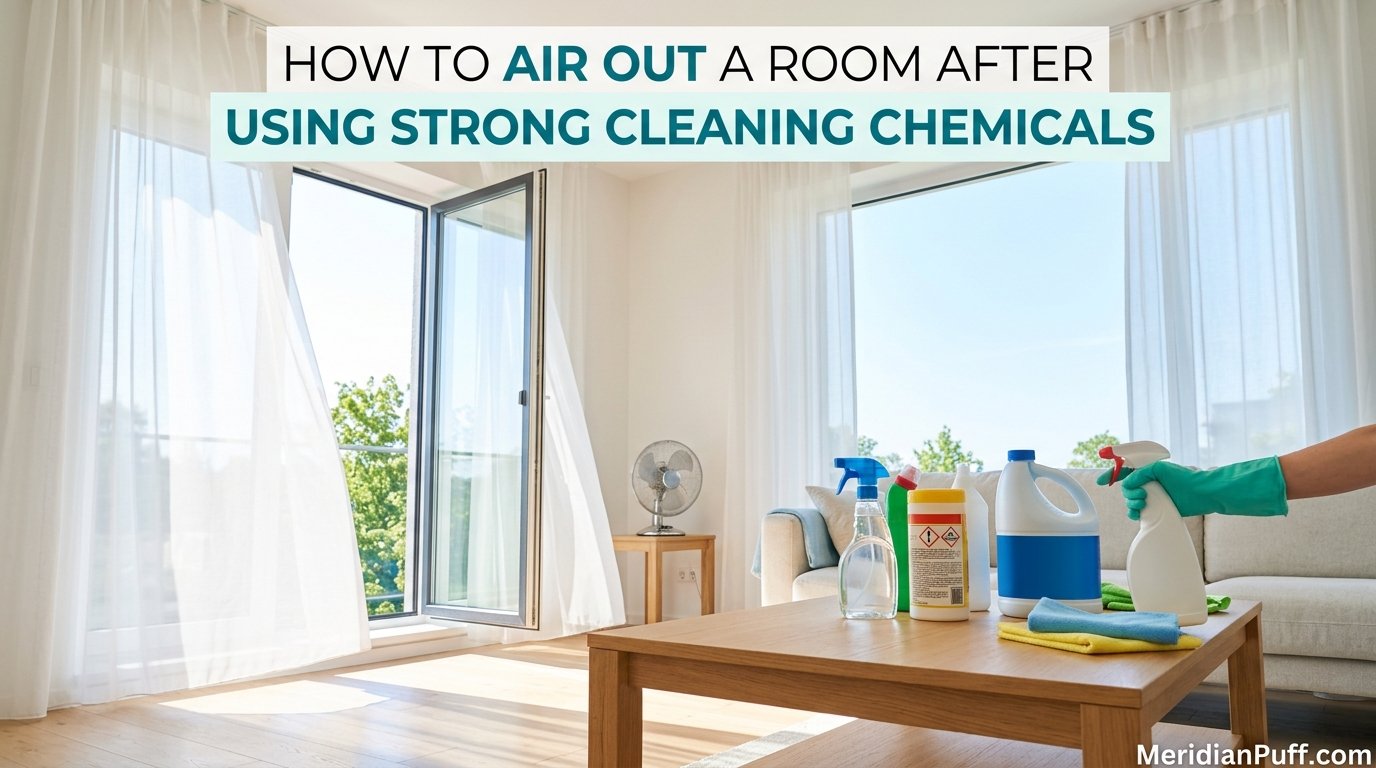
I have spent the better part of 2026 testing every ventilation method I could find after one too many weekends cleaning our bathroom left me coughing for hours. If you are reading this, you have probably already felt that tightness in your chest or that chemical taste lingering at the back of your throat after using bleach, limescale removers, or ammonia-based cleaners.
Knowing how to air out a room after using strong cleaning chemicals is not a nice-to-have skill. It is what separates a quick afternoon chore from days of headache, nausea, and lingering odor. Cleaning products release volatile organic compounds (VOCs), chlorine vapors, and ammonia gases that stick around in still air long after you have wiped down the last surface.
In this guide, I will walk you through the exact ventilation process our team uses after every deep clean. We will cover cross-ventilation techniques, fan placement, natural odor absorbers, realistic timelines by room size, and the warning signs that mean you should leave the room immediately.
Table of Contents
Quick-Start Checklist
If you only have 30 seconds, follow this sequence before reading anything else.
Open two openings on opposite sides of the room (window plus door, or two windows).
Place a fan 3-4 feet from one opening, facing outward, to push contaminated air out.
Turn on the bathroom or kitchen exhaust fan and leave it running for at least 30 minutes after you finish cleaning.
Step out of the room for 15-30 minutes, especially if the chemical smell is strong.
Place bowls of baking soda or activated charcoal in corners to absorb residual odors.
Re-enter only when you can no longer smell the chemical, or when symptoms like coughing and dizziness have stopped.
That is the short version. The rest of this guide explains why each step matters, how to handle rooms with no windows, and what to do if you or someone in your home starts feeling unwell.
Why Strong Cleaning Chemicals Leave Lingering Fumes
Understanding what is in the air makes it easier to clear it out. When you use bleach, ammonia, oven cleaners, limescale removers, or anything labeled “industrial strength,” you are releasing gases that do not settle like dust.
The Main Culprits
Sodium hypochlorite (the active ingredient in household bleach) releases chlorine compounds as it works on stains and organic matter. In a poorly ventilated bathroom, those compounds can reach levels that irritate your eyes, throat, and lungs within minutes.
Ammonia is common in glass cleaners and floor products. Its vapors rise quickly and produce a sharp, suffocating smell that lingers because ammonia is highly volatile.
Volatile organic compounds (VOCs) are released by many scented, solvent-based, and aerosol cleaners. VOCs evaporate at room temperature and remain suspended in indoor air for hours or even days if nothing moves them out.
Why Fumes Hang Around
Indoor air is often stagnant, especially in small bathrooms, laundry rooms, and basements. With no airflow, fumes stay trapped in the same air volume you keep breathing.
Fumes also stick to porous surfaces. Towels, curtains, rugs, unsealed grout, and even painted drywall can absorb cleaning chemicals and slowly release them over hours or days. That is why a room can smell fine right after cleaning but start to bother you again at bedtime.
This is also why one Reddit user in r/CleaningTips reported feeling “so ill from the fumes” for an entire evening after combining bleach with a limescale remover in a small bathroom. The products amplified each other, and the closed door trapped the result.
How to Air Out a Room After Using Strong Cleaning Chemicals: Step-by-Step
This is the full ventilation process our team follows after every deep clean with harsh products. Each step builds on the previous one, so do not skip ahead.
Step 1: Open Windows and Doors Before You Start
The biggest mistake people make is ventilating after the damage is done. Open at least one window before you start spraying or scrubbing. Fresh air should be moving through the room the entire time you are cleaning.
If possible, open two openings on opposite walls. This is the foundation of cross-ventilation, and it dramatically cuts down on the fume load you breathe while working.
Step 2: Set Up Cross-Ventilation
Cross-ventilation is what makes the difference between a room clearing in 30 minutes versus three hours. Fresh air enters one opening and pushes contaminated air out the opposite one.
Open a window on the windward side of your home (the side the breeze blows against) and another on the leeward side. If you only have one window, open the room’s door as the second opening and crack a window in an adjacent room.
Step 3: Add Fans to Force Air Movement
Natural airflow is good, but a fan supercharges it. Place a box fan or portable fan about 3-4 feet from an open window, blowing outward. This actively pulls fumes from inside the room and pushes them outside.
If you have a second fan, place it in a doorway or opposite window facing inward to push fresh air in. This in-and-out combination is what professional cleaners and remediation crews use after chemical work.
Run any built-in exhaust fans in bathrooms, kitchens, and laundry rooms as well. The American Lung Association recommends keeping these fans running for 30 minutes after you finish cleaning to clear residual contaminants.
Step 4: How to Ventilate a Room Without Windows
Windowless bathrooms and laundry rooms are the most challenging spaces. If you cannot open a window, you have to create your own exit path for the air.
Open the door and aim a fan from inside the room outward into the hallway. Leave the hallway window or another nearby opening cracked. Run the exhaust fan continuously and keep the main door open for at least an hour after cleaning.
Avoid using harsh chemicals at all in truly sealed rooms with no exhaust fan. Switch to milder alternatives or open the door to the rest of the home and ventilate that area.
Step 5: Verify the Room Is Safe to Re-Enter
Do not trust your nose completely. Some chemicals, including low levels of chlorine and many VOCs, fatigue your sense of smell, so you stop noticing them even when they are still present.
Wait until you can take a deep breath without coughing, eye watering, or throat irritation. If anyone in the household is asthmatic, pregnant, elderly, or chemically sensitive, wait at least twice as long and ventilate twice as hard.
Step 6: Wipe Down Surfaces With Clean Water
One tactic that comes up repeatedly in forum discussions is wiping down surfaces with plain water after cleaning. This removes chemical residue that would otherwise keep off-gassing into the air for hours.
Pay attention to grout lines, faucet handles, and any fabric nearby. Residue on these surfaces is a major cause of lingering odor.
Natural Deodorizers That Speed Up the Process
Ventilation removes most fumes, but odors can linger because microscopic particles remain trapped on surfaces and in fabrics. These natural absorbers help without adding new chemicals to the air.
Baking Soda
Baking soda is mildly alkaline and absorbs both acidic and basic odors. Place shallow bowls of it in corners, on the toilet tank, and near the source of the smell. Leave them out overnight for stubborn odors.
For rugs and upholstery, sprinkle baking soda directly on the surface, wait an hour, and vacuum it up. This pulls trapped cleaning chemicals out of the fibers.
Activated Charcoal
Activated charcoal has a massive surface area that traps VOC molecules and other gases. Small bags of bamboo charcoal or loose charcoal granules in open containers work well in bathrooms and small enclosed spaces.
Charcoal is slower than baking soda but more effective against VOCs. Recharge the bags in sunlight once a month so they keep working.
White Vinegar
White vinegar neutralizes ammonia odors. Place a bowl of undiluted vinegar in the room for a few hours, or simmer it briefly in a pot on the stove if the smell is in the kitchen.
The vinegar smell dissipates quickly once you remove the bowl, and it does not introduce harmful VOCs the way scented air fresheners do. Avoid mixing vinegar with bleach under any circumstances, as this produces toxic chlorine gas.
Air Purifiers With Activated Carbon
If you clean with harsh chemicals regularly or live with someone who has respiratory conditions, an air purifier with a true HEPA filter and an activated carbon stage is worth the investment. The HEPA layer captures particles while the carbon adsorbs gases and VOCs.
Run the purifier on its highest setting during and after cleaning, then drop it to low for ongoing air cleaning. No competitor we reviewed in researching this guide covered combining ventilation with purification, but it is one of the most effective pairings for stubborn fumes.
Safety Precautions and Health Warning Signs
Ventilation reduces risk, but it does not eliminate it. Some cleaning chemicals are hazardous at every exposure level, and certain people are far more vulnerable than others.
Protect Vulnerable Groups First
Children, pregnant people, the elderly, pets, and anyone with asthma or COPD should leave the home entirely while you clean with strong products. They should not return until the room has been ventilated for at least an hour and smells completely clean.
Birds are especially sensitive to airborne chemicals. If you have pet birds, do not use bleach, ammonia, or aerosol cleaners anywhere near them without consulting an avian veterinarian first.
Wear Protective Gear
Gloves prevent skin absorption. A properly fitted N95 mask reduces inhalation of particulate and droplet-borne chemicals, though it does not fully block gases like chlorine or ammonia. For heavy cleaning, consider a half-face respirator with organic vapor cartridges.
Safety glasses protect against splashes. Open windows the moment you start cleaning, not after symptoms appear.
Never Mix Cleaning Products
This rule saves lives. Mixing bleach with ammonia produces chloramine gas. Mixing bleach with acids (found in many toilet bowl cleaners, limescale removers, and even vinegar) produces chlorine gas. Both can cause severe lung damage within minutes.
Read the labels on every product you use. If a label says “use in a well-ventilated area,” treat that as a minimum, not a suggestion.
Signs You Inhaled Too Much
Stop cleaning and leave the room immediately if you notice any of the following:
Coughing that does not stop after leaving the room
Burning or watering eyes that persists more than a few minutes
Tightness in the chest or shortness of breath
Dizziness, lightheadedness, or headache
Nausea or vomiting
A metallic or chemical taste in the mouth
Move to fresh air, drink water, and rest. If symptoms are severe, persistent, or involve breathing difficulty, call a poison control center or seek emergency medical care. Do not assume the symptoms will pass on their own.
How Long to Air Out Different Rooms
Time estimates depend on room size, ventilation setup, and how aggressive the cleaning products were. Here are realistic ranges based on our testing.
Small bathroom (under 50 sq ft) with a window: 15-30 minutes with cross-ventilation and an exhaust fan.
Small bathroom with no window: 45-90 minutes with door open and a fan blowing into the hallway.
Medium kitchen or living room (100-200 sq ft): 30-60 minutes with two windows open and a portable fan.
Large open space (over 300 sq ft): 1-2 hours, with multiple fans and open windows on multiple sides.
Any room after mixing products or heavy industrial use: 4-8 hours minimum, and consider staying elsewhere overnight.
In a well-ventilated room, bleach fumes often dissipate within 2-3 hours. In a closed room with no airflow, the same fumes can linger for days. That gap is entirely about air movement, not the chemistry.
FAQs
Frequently Asked Questions
How to get chemical smell out of house after cleaning?
Open windows on opposite sides to create cross-ventilation, run bathroom and kitchen exhaust fans for 30 minutes after cleaning, and place bowls of baking soda or activated charcoal in affected rooms. Wipe down surfaces with clean water to remove chemical residue that keeps off-gassing. Avoid scented air fresheners, which only mask the smell.
How long do fumes from cleaning products last?
In a well-ventilated room, most cleaning fumes dissipate within 2-3 hours. Bleach fumes in a closed, unventilated room can linger for 24-72 hours or longer. Ammonia and many VOC-based products clear faster but can persist on porous surfaces like fabric and grout.
How do you know if you inhaled too much cleaning products?
Warning signs include persistent coughing, chest tightness, shortness of breath, dizziness, headache, nausea, watering eyes, or a chemical taste in your mouth. If symptoms are severe or involve trouble breathing, move to fresh air immediately and seek medical attention.
How long does it take to air out chemicals?
With cross-ventilation and a fan, a small bathroom clears in 15-30 minutes. Medium rooms take 30-60 minutes, and larger spaces may need 1-2 hours. Badly ventilated rooms without windows can require 45-90 minutes with the door open and a fan blowing outward.
How to get rid of cleaning fumes quickly?
The fastest method is to open two opposite openings, place a fan blowing outward at one of them, and leave the room for 15-30 minutes. Adding an exhaust fan and an air purifier with activated carbon speeds up removal of gases that ventilation alone leaves behind.
Is it dangerous to sleep in a room that smells like bleach?
Yes, sleeping in a room that still smells of bleach means you are breathing chlorine compounds for 7-8 hours. This can irritate airways and worsen asthma. Ventilate until the smell is gone, or sleep in another room for the night.
Final Thoughts on Safer Indoor Air After Cleaning
Learning how to air out a room after using strong cleaning chemicals comes down to airflow, patience, and respect for what these products can do to your lungs. Open windows before you start, use fans to push air out, give it the time it actually needs, and protect the people in your home who are most vulnerable. A clean room is only worth it if the air inside is still safe to breathe.