
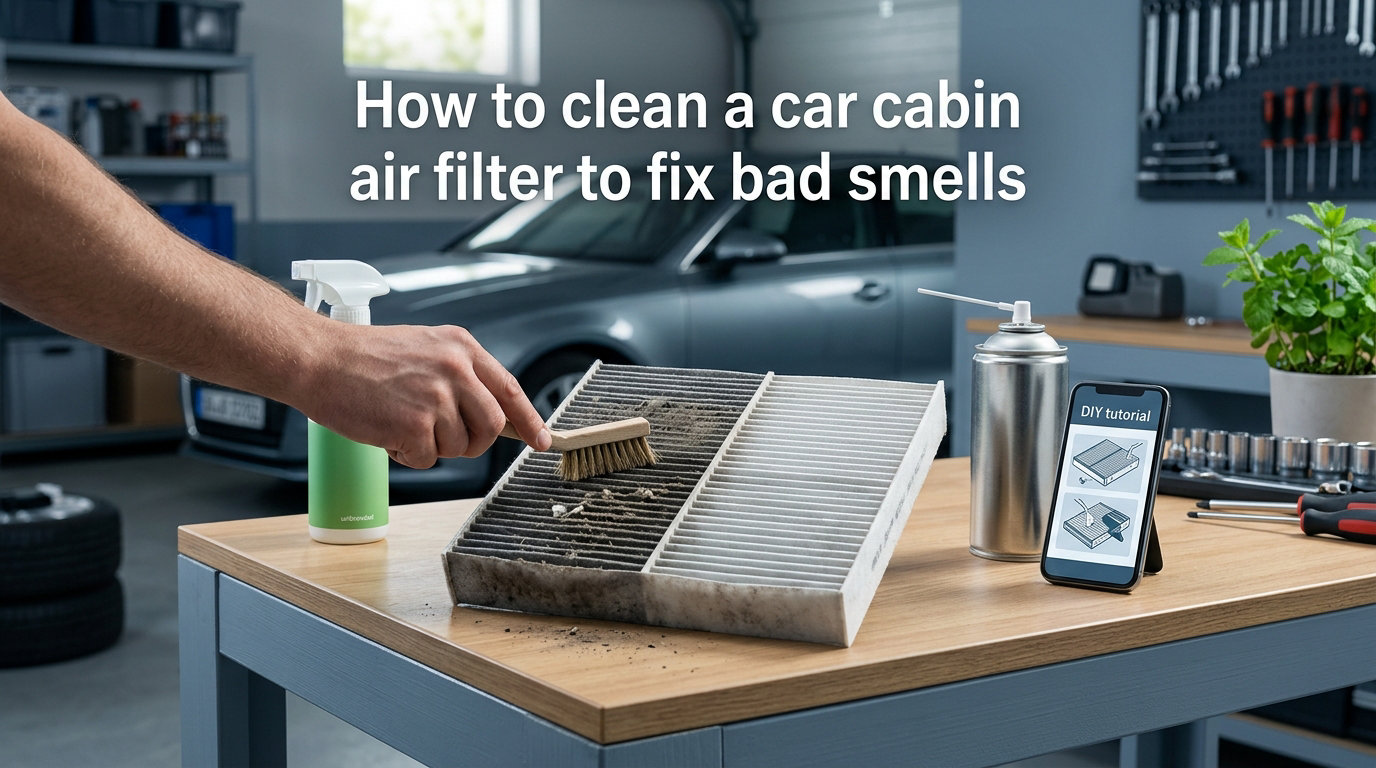
That musty, sour, or vinegary smell hitting you the moment you turn on your AC is one of the most annoying problems a car owner faces. The culprit is almost always a dirty cabin air filter that has been quietly collecting moisture, mold spores, and debris for months. When you want to clean a car cabin air filter to fix bad smells, you have a few proven methods that can save you a trip to the mechanic and get your car smelling fresh again.
I have dealt with this exact problem in my own vehicles, especially during humid summers where mold grows faster than you would expect. After testing different cleaning approaches on disposable paper filters and reusable washable filters, I can walk you through what actually works and what will make things worse.
This guide covers everything from locating your filter to choosing the right cleaning method for your filter type. You will also learn when cleaning is a waste of time and replacement is your only real option. By the end, you will have a clear plan to kill those odors for good.
Table of Contents
Why Your Cabin Air Filter Causes Bad Smells
Your cabin air filter sits between the outside air and your face. It traps dust, pollen, soot, and debris before air reaches the cabin through the HVAC system. Over time, all that trapped material builds up and starts to rot.
The real smell problem starts with moisture. Every time you run the AC, condensation forms on the evaporator core and drips through the drain line. If the filter is damp when you park, it never fully dries. That dark, wet, debris-filled environment is the perfect breeding ground for mold and bacteria.
Short trips make this worse. The HVAC system never runs long enough to dry itself out, so moisture sits inside the filter housing for days. I have seen moldy cabin filters at just 15,000 miles in humid climates, which is far sooner than the typical 15,000 to 30,000 mile replacement window most people follow.
Critters can also be a factor. Mice and small rodents love building nests in cabin filter housings because they are warm and sheltered. If you notice a strong ammonia or urine smell, you may be dealing with a rodent problem inside the filter housing rather than simple mold.
Different Smell Types and What They Mean
Not all cabin filter odors smell the same, and the type of smell tells you a lot about the underlying cause. Diagnosing the smell first helps you pick the right fix instead of wasting time on the wrong solution.
Musty or moldy smell is the most common complaint. It means mold and mildew have colonized the filter or the evaporator core. This smell hits hardest when you first turn on the AC after the car has been sitting.
Sour or vinegar smell usually points to bacterial growth breaking down organic material trapped in the filter. It can also indicate refrigerant-related issues, but a dirty filter is the most common cause.
Burning smell is a different problem entirely. It often means debris has gotten near the blower motor resistor or wiring. Shut off the AC immediately and inspect the system rather than trying to clean the filter.
Chemical smell can signal a refrigerant leak or an issue with the cooling system. This one needs professional attention because breathing refrigerant fumes is harmful.
Rotten or sulfur smell that hits when you first crank the AC sometimes comes from a clogged AC drain line rather than the filter itself. If cleaning the filter does not help, the drain line is your next stop.
Ammonia or urine smell almost always means a rodent has taken up residence. You will need to remove the filter, clean the housing thoroughly, and address how the rodent got in.
Signs Your Cabin Air Filter Needs Attention
Smell is the most obvious sign, but your car gives you other warnings before the odor gets bad. Catching these early signs means you can clean or replace the filter before the smell takes over.
Weak airflow from your vents is a classic symptom. A clogged filter chokes the blower motor, so even on the highest fan setting you get a weak breeze. You might also hear a whistling noise as air forces itself through a restricted filter.
Foggy windows that take forever to clear point to a filter problem too. The defroster relies on airflow, and a dirty filter reduces how fast it can pull moisture out of the cabin.
If your allergies act up every time you drive, the filter is probably overdue. A saturated filter stops trapping new particles and instead recirculates dust and pollen straight into your face.
How to Locate Your Cabin Air Filter
Before you can clean anything, you need to find the filter. Most cabin air filters live in one of three spots, and figuring out which one yours occupies takes about two minutes.
The most common location is behind the glovebox. Open the glovebox, remove the stops or pins on each side, and let it drop down. You should see a rectangular plastic cover with a tab or latch that pops off to reveal the filter.
Some vehicles hide the filter under the dashboard on the passenger side. Look for a plastic access panel near the floorboard or beneath the center console. You may need a screwdriver to remove the cover.
A few trucks and older models place the cabin filter under the hood, near the base of the windshield on the passenger side. Lift a plastic cowl cover to access it. Check your owner’s manual if you cannot spot it in any of these locations.
Tools and Materials You Will Need
You probably already own most of what you need to clean a cabin air filter. The exact supplies depend on whether you have a disposable paper filter or a washable reusable one, but here is the general list:
You will want a shop vacuum or a handheld vacuum with a brush attachment to remove loose debris. A soft-bristled brush helps scrub away embedded dirt without damaging the filter media. If you have a washable filter, you need mild dish soap, warm water, and a clean microfiber cloth for drying.
For deodorizing, keep a spray bottle with a 50/50 white vinegar and water solution on hand. A can of compressed air works well for blasting debris out of pleated paper filters. If you want a fresh scent afterward, an HVAC-safe odor eliminator spray or a few dryer sheets can do the trick.
How to Clean a Car Cabin Air Filter to Fix Bad Smells
Here is the step-by-step process I use to clean a car cabin air filter to fix bad smells. Follow these steps in order for the best results.
Step 1: Turn off the car and AC. Make sure the ignition is completely off and the fan is not running before you start removing components.
Step 2: Remove the filter from its housing. Open the access panel, slide the filter out carefully, and note which way the airflow arrow points so you can reinstall it correctly.
Step 3: Tap the filter gently to dislodge loose debris. Tap it against a trash can or your hand to knock out leaves, dust, and dirt. Do this outside so you do not fill your car with dust.
Step 4: Vacuum both sides thoroughly. Run a vacuum with a brush attachment over every pleat and fold. Work slowly so you pull debris out of the crevices instead of just skimming the surface.
Step 5: Blow out remaining dust with compressed air. Hold the can about six inches away and blast air through the filter from the clean side out. This forces trapped particles out without pushing them deeper.
Step 6: Spray with a vinegar solution to kill odor-causing bacteria. Lightly mist both sides with a 50/50 vinegar and water mix. Do not soak the filter, especially if it is a disposable paper type.
Step 7: Scrub stubborn spots with a soft brush. For visible mold or stains, gently scrub with a soft-bristled brush. Avoid tearing the filter media.
Step 8: Let the filter dry completely before reinstalling. Set it in the sun or a well-ventilated area for at least an hour. A wet filter will grow new mold and make your smell problem worse.
Step 9: Clean the filter housing while it is empty. Vacuum out the housing, wipe it down with a damp cloth, and spray a little vinegar solution inside to kill any bacteria lurking there.
Step 10: Reinstall the filter with the airflow arrow pointing the right way. Snap the cover back on and run the fan on high for a few minutes to confirm the smell is gone and airflow is restored.
Disposable vs Washable Cabin Filters: Know the Difference
This is the most important warning in the entire guide. Cleaning a disposable paper filter and cleaning a washable reusable filter are two very different things. Using the wrong method can ruin your filter and leave you with worse odors than before.
Most factory cabin filters are disposable pleated paper. These are designed to trap particles and be thrown away when dirty. You can vacuum them, blow them out with compressed air, and lightly deodorize them, but you should never soak or wash a paper filter. Water breaks down the paper fibers, destroys the filtering ability, and creates a mushy mess that grows mold faster than before.
Washable filters, like those from K&N, use a cotton or synthetic mesh that is built to be cleaned and reused. For these, you can rinse them under running water, wash them with mild dish soap, and let them air dry completely before reinstalling. I have talked to K&N filter owners who have cleaned and reused the same cabin filter for years with great results.
If you are not sure which type you have, check the packaging or look at the material. Stiff pleated paper means disposable. Soft, fabric-like mesh on a plastic or rubber frame means washable. When in doubt, treat it as disposable and replace it.
When to Replace vs Clean Your Cabin Filter
Cleaning buys you time, but it is not a permanent solution. Knowing when to stop cleaning and start replacing saves you from chasing a smell that will never fully go away.
Replace the filter if the paper is visibly torn, warped, or water damaged. A filter with holes in it lets debris and mold straight into your HVAC system, which defeats the entire purpose.
If the filter is black with mold, smells rotten even after a full vinegar treatment, or has a rodent nest inside it, do not bother cleaning. Replace it immediately and sanitize the housing thoroughly.
Most manufacturers recommend replacing the cabin filter every 15,000 to 30,000 miles. In humid climates or if you drive on dirt roads, lean toward the lower end. If you have already cleaned the filter twice and the smell keeps coming back within a few weeks, the filter media is saturated and replacement is your only real fix.
A new cabin filter typically costs between $15 and $50, and installing it yourself takes about ten minutes. That is far cheaper than a professional odor treatment, which can run $100 or more. If cleaning does not solve the smell, replacement almost always does.
How to Prevent Future Cabin Filter Odors
Cleaning the filter fixes the immediate problem, but prevention keeps the smell from coming back. A few simple habits make a huge difference in how long your cabin air stays fresh.
Run the fan on high without the AC for the last two minutes of your drive. This dries out the evaporator core and filter housing so mold has no moisture to grow in. I started doing this habit a few years ago and noticed a massive drop in musty smells during summer.
Park in the sun when possible and crack a window slightly on humid days. Air circulation keeps moisture from building up inside the HVAC system while the car sits.
Replace your cabin filter on schedule rather than waiting for the smell. Mark it on your calendar or tie it to an oil change interval so you never forget. Fresh filters trap odors before they reach the cabin.
If you live in a humid climate, consider switching to a washable K&N-style filter. You can clean and dry it regularly, and it will not grow mold as aggressively as damp paper. Just make sure you follow the manufacturer cleaning instructions for the specific product.
Avoid spraying heavy perfumes or air fresheners directly into the vents. These mask odors temporarily but leave a sticky residue on the filter that traps more dirt and feeds bacteria over time.
FAQs
Can a dirty cabin filter make a car smell bad?
Yes. A dirty cabin filter traps moisture, dust, pollen, and debris that mold and bacteria feed on. As those microorganisms grow, they release musty, sour, or vinegary odors that blow straight into your cabin every time the fan runs.
Is there a way to clean a cabin air filter?
Yes. You can vacuum both sides of the filter, blow out dust with compressed air, and lightly mist it with a 50/50 vinegar and water solution to kill odor-causing bacteria. Let it dry completely before reinstalling. Do not soak or wash a disposable paper filter.
How to deodorize a cabin air filter?
Remove the filter, vacuum loose debris, then spray both sides lightly with a white vinegar and water solution. Vinegar kills mold and bacteria without leaving a chemical residue. Let the filter air dry fully in the sun before reinstalling it.
Can I put something on my cabin air filter to make it smell better?
You can tuck a dryer sheet behind the filter or spray a small amount of HVAC-safe odor eliminator onto the filter after cleaning. Avoid heavy perfumes or air fresheners, which leave residue that traps more dirt and feeds bacteria over time.
Can I use Dawn dish soap to clean my air filter?
Only if you have a washable reusable filter like a Ku0026amp;N. Use a small amount of mild dish soap with warm water, rinse thoroughly, and let it dry completely. Never use soap and water on a disposable pleated paper filter, because water destroys the paper fibers.
How often should a cabin air filter be replaced?
Most manufacturers recommend replacing the cabin filter every 15,000 to 30,000 miles. In humid climates, if you drive on dirt roads, or if you make frequent short trips, replace it closer to the 15,000 mile mark to prevent odor buildup.
Final Thoughts on Cleaning Your Cabin Air Filter
Learning how to clean a car cabin air filter to fix bad smells is one of the easiest DIY maintenance skills you can pick up. A few minutes with a vacuum, some compressed air, and a vinegar spray can knock out odors that have been bothering you for weeks.
The key is matching the cleaning method to your filter type. Vacuum and deodorize disposable paper filters, but never soak them. Wash and reuse the fabric-style filters made for that purpose. And when a filter is torn, moldy beyond recovery, or saturated after two cleanings, swap in a fresh one.
Pair the cleaning with the prevention habits above, especially drying out your HVAC system at the end of each drive. Do that, and you will spend a lot less time fighting musty smells and a lot more time enjoying clean air on the road.