
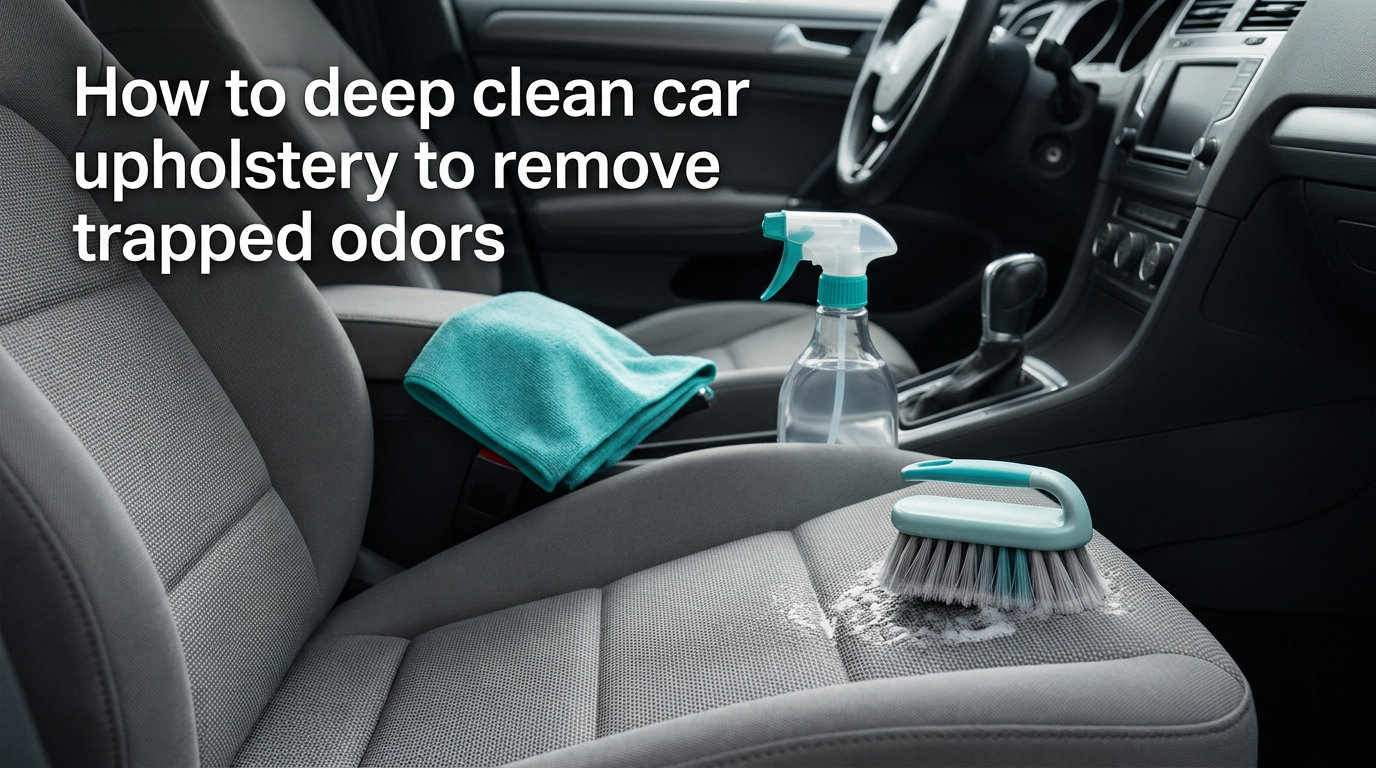
That lingering smell in your car that air fresheners just will not fix usually means the odor has worked its way deep into the upholstery. Learning how to deep clean car upholstery to remove trapped odors can save you hundreds of dollars compared to professional detailing and permanently eliminate smells instead of just covering them up. The key is targeting the fabric fibers and the padding underneath where bacteria, moisture, and organic matter actually live. Surface wipes and vent clips only mask the problem temporarily. This guide walks you through the exact process I use to pull embedded smells out of cloth seats, carpet, and headliners so your car actually smells clean again. We will cover why upholstery holds onto odors, the step-by-step cleaning method, baking soda techniques, enzyme cleaners for organic smells, steam cleaning, prevention tips, and answers to the questions car owners ask most. By the end, you will have a complete toolkit to tackle everything from sweat and smoke to pet accidents and mildew.
Table of Contents
Why Car Upholstery Traps Odors So Easily
Car upholstery traps odors because fabric fibers and foam padding act like sponges, absorbing moisture, oils, and organic particles that bacteria feed on. Unlike your living room couch, a car interior is a sealed box that bakes in the sun, creating a warm, humid incubator for the bacteria that actually produce bad smells.
Most cloth car seats have three layers. The top fabric layer catches surface dirt, but liquids penetrate through to a foam padding layer underneath. Beneath that sits a backing material pressed against the metal seat frame. When something spills, it soaks through all three layers. You can clean the surface perfectly and still smell the odor because the padding beneath holds the source.
Carpet faces the same problem. Automotive carpet is dense and sits directly on metal flooring with minimal padding. Moisture that reaches the carpet backing has nowhere to evaporate, so it stays damp and feeds mold and mildew growth. That is why a car that smells musty after rain likely has moisture trapped beneath the carpet, not just on the surface.
The enclosed nature of a vehicle makes everything worse. When you park in the sun, interior temperatures can exceed 145 degrees Fahrenheit. That heat accelerates bacterial growth and drives odors deeper into the foam. Every time the car heats up and cools down, the upholstery breathes those smells back into the cabin air.
Leather seats trap odors differently. While leather itself is less absorbent than cloth, the perforations in many leather seats allow liquids to reach the foam beneath. Leather also absorbs oils from skin and hair products, which oxidize over time and create a distinctive stale smell that regular leather cleaner will not remove.
Common Causes of Trapped Odors in Car Upholstery
Identifying the source of the odor determines which cleaning method will actually work. Different causes require different treatments, and using the wrong approach can set a stain permanently or push the odor deeper into the padding.
Smoke From Cigarettes, Vaping, or Cannabis
Smoke is one of the most stubborn odors to remove because tar and nicotine particles coat every surface inside the car, including deep inside upholstery fibers. These particles are oily and sticky, so they resist water-based cleaning. Smoke odor typically requires multiple treatments and sometimes professional-level methods like ozone treatment to fully eliminate. Thirdhand smoke residue can linger for months in foam padding.
Pet Accidents and Body Oils
Pet urine, saliva, and dander contain proteins and uric acid crystals that bond tightly to fabric fibers. Standard cleaners do not break these bonds, which is why pet odors return after surface cleaning. The crystals reactivate every time humidity rises, releasing the smell over and over. This is the most common cause of odors that come back after you thought the problem was solved.
Spilled Food and Drinks
Milk spills are notorious for creating some of the worst car odors possible. When milk soaks into foam padding and begins to spoil, it produces sulfur compounds that smell like rotting garbage. Coffee, soda, and fast food grease also penetrate deep and feed bacteria. Food odors often intensify in summer heat as decomposition accelerates.
Sweat and Body Oils
If you drive after working out, commute in hot weather, or wear seat covers, sweat gradually builds up in the upholstery. Sweat contains salts, proteins, and oils that bacteria break down into smelly compounds. Seat covers make this worse by trapping moisture against the fabric and preventing airflow. I have seen used cars where the previous owner’s body odor had permanently set into the seat foam after years of daily driving.
Water Damage and Leaks
A leaky sunroof, damaged door seal, or clogged AC drain can allow water into the cabin where it pools beneath the carpet. Even a small amount of standing water under the carpet can grow mold and mildew within 48 hours. Cars that smell like mildew after rain almost always have a moisture intrusion problem that needs fixing before the odor can be eliminated permanently.
Vomit and Motion Sickness
Vomit is highly acidic and contains partially digested food particles that penetrate deep into upholstery. The stomach acid can damage fabric fibers, and the organic matter feeds bacteria for weeks. Vomit odors require enzyme-based cleaners specifically, because nothing else breaks down the proteins effectively.
Signs Your Car Upholstery Needs a Deep Clean
Your car needs a deep clean when surface cleaning and air fresheners no longer keep odors at bay. There are several clear warning signs that trapped odors have taken hold in the upholstery.
A musty or sour smell that returns within hours of airing out the car means moisture and mildew are living in the padding. If the odor intensifies on hot days or after the car has been sitting in the sun, you have active bacterial growth in the foam. Visible water stains on the headliner or dark patches on carpet indicate moisture problems that need immediate attention.
Allergy symptoms that flare up only when you drive, such as sneezing, coughing, or itchy eyes, often point to mold spores circulating through the cabin. If passengers comment on a smell that you have gone nose-blind to, that is a strong signal the odor is significant enough to require deep cleaning.
Another indicator is when a recently cleaned surface smells fine initially but develops an odor within a day or two. This happens because you cleaned the surface but left the odor source in the padding beneath. The bacteria continue multiplying and re-contaminate the fabric from below.
How to Deep Clean Car Upholstery to Remove Trapped Odors: Step-by-Step Process
Follow this step-by-step process to deep clean car upholstery and pull trapped odors out of the fabric and padding. Each step builds on the previous one, so do not skip ahead.
Step 1: Remove everything from the car. Take out all floor mats, seat covers, child seats, trunk contents, and personal items. You need a completely empty interior to access every surface. Shake out floor mats and clean them separately.
Step 2: Vacuum thoroughly. Use a wet and dry shop vacuum with a brush attachment to vacuum every surface, including under the seats, between seat crevices, along the seat tracks, and inside the trunk. Vacuuming removes loose dirt and debris that would otherwise turn to mud when you apply liquid cleaners. Pay special attention to seams and stitching where crumbs collect.
Step 3: Apply baking soda and let it sit. Sprinkle a generous layer of baking soda over all cloth surfaces, including seats, carpet, and floor areas. Work it into the fabric with a soft brush. Let it sit for at least 30 minutes, or overnight for severe odors. Baking soda absorbs moisture and neutralizes acidic odor compounds while it dwells.
Step 4: Vacuum the baking soda. Completely remove the baking soda with your vacuum. If the baking soda clumps during this step, the fabric is still damp and you need to let it dry longer before proceeding.
Step 5: Treat stains and specific odor sources. Apply the appropriate cleaner for the odor type. Use an enzyme-based cleaner for pet urine, vomit, milk, and other organic odors. Use a dedicated upholstery shampoo for general soil and sweat. Work the cleaner into the fabric with a soft-bristled brush, focusing on stained areas.
Step 6: Extract the moisture. Use a wet and dry vacuum to extract as much liquid and dissolved soil as possible from the fabric. This step is critical because leaving dirty water in the padding will cause the odor to return. Go over each area multiple times until the vacuum pulls up mostly clear liquid.
Step 7: Dry completely. Leave windows cracked and park in the sun with the car facing so sunlight hits the interior. Place moisture absorbers like silica gel packs or a container of kitty litter inside the car. Run a fan if possible. Do not close up the car until every surface is completely dry to the touch, which typically takes 4 to 8 hours in good conditions.
Step 8: Replace the cabin air filter. A dirty cabin air filter recirculates trapped odors every time you run the blower. Swap in a new filter as the final step to prevent odors from blowing right back into your freshly cleaned interior.
Baking Soda Application Method for Odor Removal
Baking soda is the single most effective, affordable, and safe odor remover for car upholstery. It works through a chemical process called adsorption, where odor molecules bond to the surface of the sodium bicarbonate crystals and get neutralized rather than just covered up.
The simplest method is the sprinkle-and-vacuum approach I mentioned in the step-by-step process above. For routine maintenance between deep cleans, sprinkle baking soda on seats and carpet, let it sit for 15 to 30 minutes, then vacuum it up. This pulls out light odors from daily driving and keeps smells from building up over time.
Baking Soda Paste Method for Stains
For stains that are also producing odors, make a paste by mixing three parts baking soda with one part water. Apply the paste directly to the stained area and work it in gently with a soft brush. Let it sit for 30 minutes to an hour, then blot with a damp microfiber cloth and vacuum the residue. This method is effective for food stains, coffee rings, and ground-in dirt that carries odor.
Baking Soda and Vinegar Method for Stubborn Smells
For odors that the dry sprinkle method does not fully address, combine baking soda with white vinegar. The reaction between the two creates a fizzing action that helps lift contaminants from deep in the fibers. Spray a light mist of equal parts white vinegar and water onto the fabric, then sprinkle baking soda over the damp area. Let it fizz and sit for 15 minutes, then blot and vacuum. This is particularly effective for sweat and mildew odors.
How Long Should Baking Soda Sit?
For light odors, 15 to 30 minutes is sufficient. For moderate odors like daily sweat or food residue, leave it for 1 to 2 hours. For severe odors such as smoke or pet urine, leave baking soda on the upholstery overnight or up to 24 hours. Always apply baking soda to dry fabric only, because moisture causes it to clump and reduces its effectiveness.
Enzyme-Based Cleaners for Tough Organic Odors
Enzyme-based cleaners are the only product type that permanently eliminates organic odors from pet accidents, vomit, blood, milk, and urine. Unlike regular cleaners that wash away surface residue, enzyme cleaners contain living enzymes and beneficial bacteria that literally consume the organic matter causing the smell.
Standard cleaners fail on organic odors because the uric acid crystals and protein bonds survive surfactant cleaning. The odor disappears temporarily but returns as remaining organic matter continues to decompose or as humidity reactivates the crystals. Enzyme cleaners break down these compounds at a molecular level so there is nothing left to produce a smell.
How to Apply Enzyme Cleaners Correctly
The most important rule with enzyme cleaners is to saturate the affected area completely. If you only spray the surface, the enzymes cannot reach the organic matter that has soaked into the padding beneath. Pour or spray enough cleaner to penetrate through the fabric and into the foam underneath.
After applying, cover the area with plastic wrap to keep it from drying out too quickly. Enzymes need moisture and time to work, typically 12 to 24 hours. Keep the car in a temperature between 65 and 85 degrees Fahrenheit during this period. After the dwell time, remove the plastic wrap and let the area air dry completely, then vacuum any residue.
One detail that Reddit users in the AutoDetailing community emphasize is that you should never use enzyme cleaners alongside bleach or ammonia-based products. These chemicals kill the enzymes and render the treatment useless. Use enzyme cleaners as a standalone treatment for best results.
Which Odors Require Enzyme Cleaners
Enzyme cleaners are essential for pet urine, vomit, blood, milk spills, and any odor involving bodily fluids. They are also effective for severe sweat odors that have soaked deep into foam padding. For smoke, gasoline, and chemical odors, enzyme cleaners are less effective and you should use different methods.
Steam Cleaning and Advanced Odor Removal Techniques
Steam cleaning is a powerful method for deep cleaning car upholstery because high-temperature steam kills bacteria on contact and extracts contaminants from deep within the foam padding. When basic methods are not enough, these advanced techniques can handle the most stubborn trapped odors.
Steam Cleaning Upholstery
A handheld steam cleaner heats water to over 200 degrees Fahrenheit and forces it through fabric under pressure. The heat sanitizes the surface while the moisture loosens embedded dirt and odor compounds. Immediately follow steam cleaning with vacuum extraction to pull the loosened contaminants out before they settle back into the fabric.
Test steam on an inconspicuous area first, because some synthetic fabrics and leather can be damaged by high heat. Keep the steam nozzle moving and never hold it in one spot for more than a few seconds. Steam cleaning works best on cloth seats and carpet, not on leather or vinyl.
Ozone Generator Treatment
Ozone generators are what professional detailers use for smoke and severe odors that resist every other method. An ozone generator produces ozone gas (O3) that penetrates every surface in the car, including deep into upholstery foam, and oxidizes odor molecules at a molecular level.
To use an ozone generator, place it in the car with the engine off, run it for 30 to 60 minutes, then let the car air out completely for at least 2 hours before entering. Never occupy the vehicle during treatment because ozone is harmful to breathe. This method is extremely effective but should be used as a last resort because excessive ozone can degrade rubber seals and electrical components over time.
Dry Ice Treatment for Smoke Odor
A method shared by Reddit users for removing stubborn smoke smell involves placing dry ice in the car overnight. The sublimating dry ice fills the cabin with heavy carbon dioxide gas that displaces oxygen and penetrates the upholstery, helping to neutralize trapped smoke particles. Follow up the next morning by cleaning seats with a mixture of baking soda, dish soap, and hydrogen peroxide.
Rubbing Alcohol Saturation Method
For extreme body odor or smoke that has saturated foam padding, the rubbing alcohol method goes deeper than any surface treatment. Reddit detailers recommend saturating the affected seat with 70 percent isopropyl alcohol, working it into the foam, then blotting repeatedly with clean white paper towels until no more residue comes up. The alcohol kills bacteria and evaporates quickly, pulling odor compounds out with it. For the most severe cases, removing the seat from the vehicle entirely allows you to fully saturate and treat both sides of the foam.
Natural Remedies Beyond Baking Soda
If you prefer natural approaches, several household items can help. White vinegar neutralizes alkaline odors and kills many bacteria. Coffee grounds placed in an open container absorb ambient odors over several days. Activated charcoal bags tucked under seats trap odor molecules passively. A bowl of vanilla extract left overnight can help freshen a car, though these methods mask rather than eliminate deep odors.
Different Upholstery Types and How to Clean Each
Car upholstery materials require different cleaning approaches because they absorb odors differently. Using the wrong method on the wrong material can cause permanent damage.
Cloth and Fabric Seats
Cloth upholstery is the most odor-absorbent material and the most responsive to deep cleaning. All the methods in this guide work well on cloth. The key is thorough extraction and drying, because cloth holds moisture longer than other materials. Always vacuum before applying any liquid to avoid creating mud from trapped dirt.
Leather and Synthetic Leather
Leather seats require gentler treatment. Never steam clean leather or saturate it with liquid, because moisture damages the leather and causes it to crack. For leather odors, wipe surfaces with a dedicated leather cleaner, then apply a leather conditioner to restore oils. For odors trapped in perforated leather seats where liquid has reached the foam beneath, use a small amount of enzyme cleaner injected through the perforations, then extract immediately.
Suede and Alcantara
Suede and Alcantara are extremely sensitive to water and require specialized suede cleaners only. Use a dry brushing technique to lift dirt and a minimal amount of suede-specific cleaner for stains. Baking soda can be used dry on suede to absorb odors, but avoid any liquid saturation.
How Your AC System and Cabin Filter Contribute to Odors
Your car’s air conditioning system is a hidden odor source that many people overlook when cleaning upholstery. Even perfectly clean seats will smell bad if your AC is blowing moldy air across them.
The evaporator coil inside your dashboard stays damp after the AC runs, creating an ideal environment for mold and mildew. When you turn on the blower, spores from that mold get distributed throughout the cabin and settle into freshly cleaned upholstery. If your car smells musty only when the AC runs, the evaporator is likely the source.
To address AC odors, turn the fan on high with all vents open and spray an AC disinfectant into the exterior air intake near the base of the windshield. Let the system run for 10 minutes so the disinfectant travels through the entire duct system and across the evaporator coil. This kills the mold growing inside the system.
Replace the cabin air filter every 12,000 to 15,000 miles, or at least once a year. A saturated cabin filter recirculates trapped odors, pollen, and bacteria every time you drive. I recommend replacing the cabin air filter as the final step of any deep cleaning process so you are not blowing old odors back into your freshly cleaned interior.
Check for clogged sunroof drains and AC condensation drains as well. When these drains block, water backs up and spills into the cabin, soaking the carpet padding and causing chronic mildew. If you find standing water under your carpet, the drain issue must be fixed before any cleaning will produce lasting results.
How to Prevent Odors From Returning to Your Car Upholstery
Once you have deep cleaned your upholstery, prevention is far easier than removing odors a second time. These habits keep your car smelling fresh for months after a deep clean.
Address Spills Within Minutes
The single most effective prevention habit is cleaning spills immediately. Every minute a liquid sits on upholstery, it penetrates deeper into the foam padding. Blot spills with a microfiber cloth right away, then apply baking soda to absorb residual moisture. For milk, coffee, or anything organic, follow up with an enzyme cleaner the same day.
Use Washable Seat Covers
Seat covers protect your upholstery from sweat, body oils, and daily wear. Choose machine-washable covers and wash them every two to four weeks. This catches sweat before it reaches the factory fabric underneath. If you drive after workouts or have pets, seat covers are the cheapest insurance against odor buildup.
Keep Moisture Under Control
Moisture is the root cause of most recurring odors. On rainy days, remove wet floor mats and let them dry outside the car. Use moisture absorbers like DampRid containers or silica gel packs under the seats. If you live in a humid climate, run the AC on recirculate for a few minutes after driving to dry the air before you park.
Vacuum Weekly
A quick weekly vacuum removes food crumbs, pet hair, and dirt before they break down and start producing odors. Pay attention to seat crevices, under seats, and the gap between the seat and center console where debris collects unnoticed.
Air Out the Car Regularly
Park with the windows cracked an inch on dry days to allow trapped moisture and odors to escape. Avoid leaving gym bags, wet towels, or food containers in the car overnight. These items continuously off-gas odors into the upholstery even when sealed.
Replace the Cabin Air Filter Annually
A fresh cabin air filter prevents the AC system from blowing stale, moldy air into your clean interior. Set a reminder to replace it every spring, or more often if you drive in dusty conditions or have allergies.
Cost Comparison: DIY vs Professional Detailing
Deep cleaning your car upholstery yourself costs under $100 for all supplies. A basic kit includes baking soda, an enzyme cleaner, a bottle of upholstery shampoo, microfiber towels, and a soft brush. If you need an ozone generator, rentals run about $40 to $60 per day. The main investment is your time, typically 3 to 5 hours for a thorough job.
Professional odor removal detailing typically costs between $150 and $400 depending on severity and whether ozone treatment is needed. Professionals have extraction equipment that pulls more moisture from padding than most consumer vacuums, and they can remove seats to access hard-to-reach areas. For moderate odors, DIY methods are highly effective. For extreme cases involving water damage, biohazards, or heavy smoke, professional equipment often produces better results.
FAQs
How to get bad smell out of car upholstery?
Sprinkle baking soda generously over all cloth surfaces, let it sit for 30 minutes to overnight depending on severity, then vacuum thoroughly. Follow with an enzyme-based cleaner for organic odors or an upholstery shampoo for general soil, scrub with a soft brush, extract with a wet-dry vacuum, and dry completely with windows open. Replace the cabin air filter as the final step.
What do car detailers use to remove odors?
Professional detailers use hot water extraction machines, commercial-grade enzyme cleaners, ozone generators, and chlorine dioxide treatments. They also remove seats to access padding beneath, steam clean HVAC ducts, and replace cabin air filters as part of a complete odor removal service.
How to get tough odors out of upholstery?
Tough odors require enzyme-based cleaners for organic sources like pet urine, vomit, and milk. Saturate the area fully so enzymes penetrate into the padding, cover with plastic wrap to retain moisture, and let it dwell for 12 to 24 hours. For smoke and chemical odors, use an ozone generator treatment or the dry ice method for best results.
How to remove extreme odor from a vehicle?
For extreme odors, combine multiple methods in sequence: deep clean and extract upholstery, replace the cabin air filter, disinfect the AC system, and run an ozone generator for 30 to 60 minutes with the car sealed. For biohazard-level odors or severe water damage, remove the seats, treat the foam padding directly, and consider professional detailing if DIY methods do not resolve the smell.
Can you use steam to clean car upholstery?
Yes, steam cleaning is effective on cloth seats and carpet because high-temperature steam kills bacteria and loosens embedded contaminants. Always test on an inconspicuous area first, keep the nozzle moving, and extract immediately with a wet-dry vacuum. Do not steam clean leather, vinyl, suede, or Alcantara because the heat can damage these materials.
How often should you deep clean car upholstery?
Deep clean car upholstery every 6 to 12 months for daily drivers, or more frequently if you transport pets, children, or food regularly. Do a light baking soda treatment monthly to prevent odor buildup between deep cleans. Address spills immediately rather than waiting for the next scheduled deep clean.
Conclusion
Knowing how to deep clean car upholstery to remove trapped odors gives you control over a problem that air fresheners will never solve. The process comes down to vacuuming thoroughly, neutralizing odors with baking soda, targeting organic sources with enzyme cleaners, extracting all moisture, and drying completely. Replace your cabin air filter, fix any moisture leaks, and maintain the interior with weekly vacuuming and monthly baking soda treatments. For extreme cases, ozone generators and professional extraction equipment are available when DIY methods have been exhausted. Start with the simplest approach and work your way up only if the odor persists. Your car interior will smell genuinely clean, not just temporarily masked.