
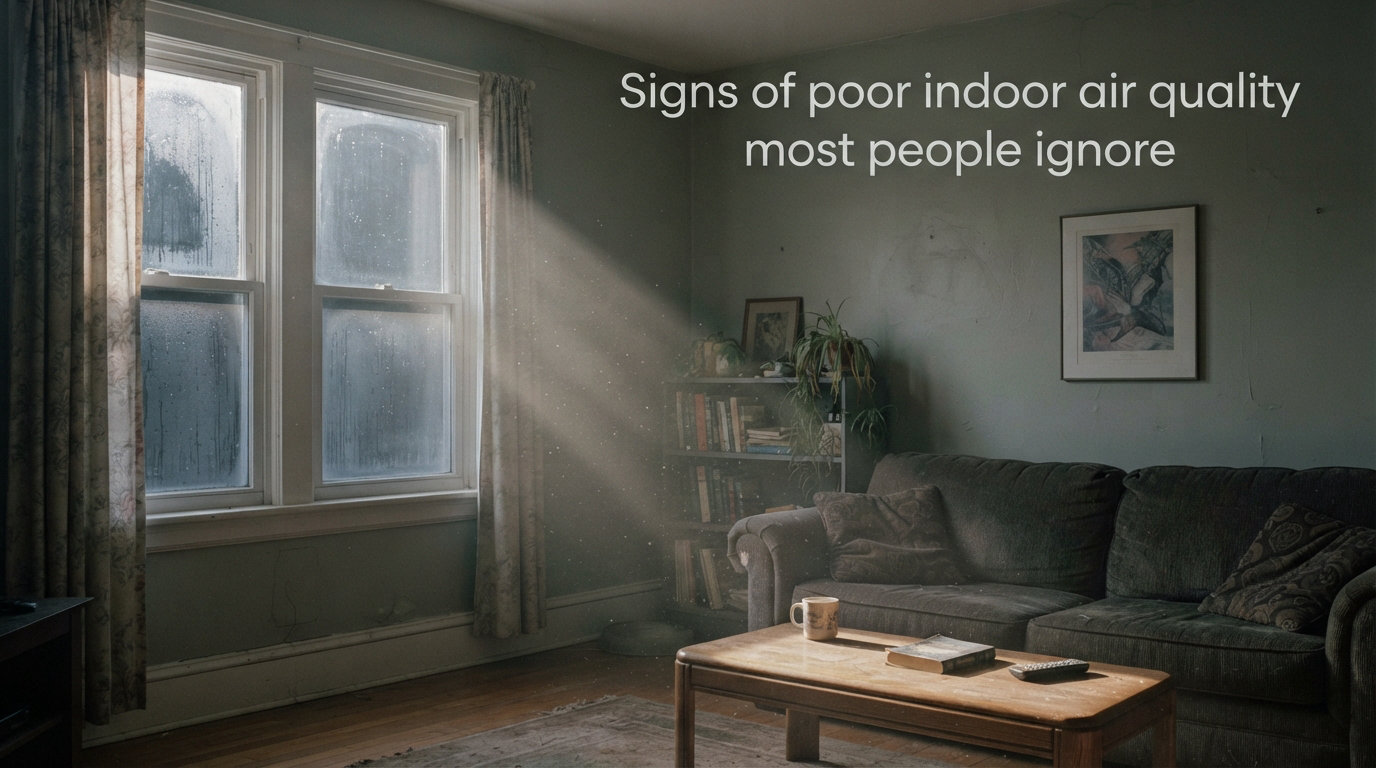
Most of us assume the air inside our homes is cleaner than the air we breathe outside. That assumption is wrong more often than you would think. According to the EPA, indoor pollutant concentrations run 2 to 5 times higher than outdoor levels, and Americans spend roughly 90% of their time indoors.
The signs of poor indoor air quality are easy to miss because they mimic everyday annoyances. A lingering headache, a stuffy nose, afternoon fatigue that hits like a wall. Your body sends warnings long before you can see or smell the problem.
I have spent years digging into home air quality research, and one thing stands out every time. The people who catch problems early are the ones who know what to look for. They notice patterns, like symptoms that fade the moment they leave for work and return the second they walk back through the door.
This guide walks through the signs of poor indoor air quality most people ignore, from obvious respiratory irritation to subtle cognitive effects that almost never get mentioned. You will find a self-assessment checklist, a room-by-room inspection guide, and clear guidance on when to call a professional for testing.
By the end, you will know exactly what to watch for and what steps to take next.
Table of Contents
What Is Indoor Air Quality and Why It Matters
Indoor air quality, or IAQ, refers to the condition of the air inside buildings and homes as it relates to the health and comfort of the people who live or work there. It is determined by pollutant concentrations, ventilation rates, humidity levels, and how sensitive the occupants are to specific contaminants.
Poor IAQ happens when pollutants accumulate faster than ventilation can remove them. The tighter and more energy-efficient a building is, the more likely pollutants get trapped inside. This tradeoff between energy efficiency and air quality catches many homeowners off guard.
Here is why this matters more than ever. The EPA reports that Americans spend approximately 90% of their time indoors, where pollutant concentrations are often 2 to 5 times higher, and occasionally 100 times higher, than outdoor levels. That means the air you breathe at home probably has a bigger impact on your health than the air you breathe on your morning walk.
Indoor air pollution does not just cause occasional discomfort. Long-term exposure to contaminated indoor air has been linked to respiratory diseases, heart disease, and even cancer. The World Health Organization estimates that household air pollution was responsible for 3.2 million premature deaths in a single year.
The good news is that once you recognize the warning signs, most indoor air quality problems are fixable. Awareness is the first step, and that is exactly what this guide provides.
Emergency Warning Signs That Need Immediate Action
Some indoor air quality problems are inconveniences. Others are emergencies that can kill you within minutes. Knowing the difference could save your life.
Carbon monoxide is the most dangerous indoor air threat because it is invisible, odorless, and tasteless. If anyone in your home experiences sudden headaches, dizziness, nausea, confusion, or loss of consciousness, and multiple people feel symptoms at the same time, suspect carbon monoxide poisoning immediately.
If you suspect a carbon monoxide leak, get everyone out of the building right away. Call 911 or your local emergency services from outside. Do not go back inside until emergency responders confirm it is safe.
Other emergency warning signs include the smell of gas or rotten eggs, which indicates a natural gas leak. If you smell gas, leave the building, avoid using light switches or anything that could create a spark, and call your gas company from a safe distance.
Visible smoke, a sudden chemical smell that burns your eyes or throat, or rapid onset of breathing difficulty in multiple people are all reasons to evacuate. These situations can indicate combustion problems, chemical spills, or severe mold blooms that require professional intervention.
Install carbon monoxide detectors on every level of your home and near sleeping areas. Test them regularly and replace the batteries twice a year. A working detector is the single most effective way to catch this deadly gas before it harms your family.
Signs of Poor Indoor Air Quality Most People Ignore
The signs of poor indoor air quality most people ignore fall into three categories: physical symptoms, cognitive effects, and sleep disruption. Most people recognize the physical symptoms but completely overlook the cognitive and sleep-related warnings.
I am going to break each category down so you can identify exactly what your body is telling you.
Physical Symptoms Your Body Uses as an Early Warning System
Your respiratory system, eyes, and skin are the first to react when indoor air contains irritants like dust, mold spores, volatile organic compounds, or particulate matter. These symptoms are your body sounding the alarm.
Eye irritation is one of the most common early signs. If your eyes feel dry, itchy, watery, or burning when you are home, but the irritation clears up when you leave, your indoor air is likely the culprit. Forum users in the indoor air quality community frequently describe milky, swollen, or blurry eyes that resolve once they spend time away from home.
Throat and nasal irritation follows a similar pattern. A scratchy throat, post-nasal drip, or persistent stuffiness that has no obvious cause points to airborne irritants. Pay attention if these symptoms appear within minutes of entering a particular room or building.
Frequent headaches are another signal that gets blamed on stress, screen time, or dehydration. But if your headaches cluster in certain rooms, worsen in the afternoon, or disappear when you spend time outdoors, poor air quality is a strong suspect. Carbon monoxide, formaldehyde, and high VOC levels are all known headache triggers.
Unexplained fatigue deserves attention too. When indoor air has elevated carbon dioxide levels from poor ventilation, people report feeling drowsy, sluggish, and unmotivated. This effect is well documented in offices with insufficient fresh air exchange, and it happens in homes too.
Skin problems can also trace back to air quality. Dry, itchy skin or sudden eczema flare-ups may result from low humidity, dust mite allergens, or chemical irritants circulating in your home’s air.
Respiratory symptoms are the red flag most people eventually notice. Wheezing, shortness of breath, coughing, and increased asthma attacks all signal that something in the air is irritating your lungs. If your asthma medication use goes up at home but levels out elsewhere, your indoor air is contributing.
Allergic reactions that seem to follow you indoors point to dust mites, pet dander, pollen tracked inside, or mold. Sneezing, a runny nose, and itchy skin that persist year-round, not just during pollen season, suggest an indoor allergen source.
The Hidden Cognitive Signs Everyone Overlooks
Brain fog is one of the most overlooked signs of poor indoor air quality. Difficulty concentrating, forgetfulness, and mental sluggishness can all stem from elevated carbon dioxide and VOC levels that build up in poorly ventilated spaces.
People in online air quality communities describe this exact experience. They report difficulty concentrating after a full day indoors, trouble remembering simple tasks, and a fuzzy-headed feeling that lifts the moment they step outside for fresh air. Many attribute these symptoms to burnout or stress when the real cause is the air they are breathing.
Dizziness and lightheadedness are cognitive symptoms that also get misattributed. Low-level carbon monoxide exposure, which can come from a faulty furnace or water heater, causes exactly these symptoms. Without a detector, you might blame dehydration or low blood sugar instead.
Mood changes are another surprising connection. Research suggests that poor air quality can contribute to irritability, anxiety, and depressive symptoms. The mechanism involves both direct chemical effects on the brain and the constant low-grade stress of fighting off physical discomfort.
If you feel mentally sharper and more positive after spending a day outdoors or in a different building, take note. That contrast is telling you something about the air in your usual environment.
How Poor Air Quality Sabotages Your Sleep
Poor indoor air quality can quietly wreck your sleep without you ever connecting the two. High carbon dioxide levels in a closed bedroom, allergens in your bedding, and nighttime humidity swings all interfere with restorative sleep.
Many people report that their air quality is worse at night, and there is a reason for this. When you close your bedroom door and windows, carbon dioxide from your own breathing accumulates. In a small, poorly ventilated bedroom, CO2 levels can climb well above recommended thresholds within hours.
The result is fragmented sleep, frequent waking, and morning grogginess that no amount of coffee seems to fix. You might wake up with a dry throat, a stuffy nose, or a headache that gradually fades after you start your day.
Dust mites thrive in warm, humid bedroom environments and are among the most common indoor allergens. Their waste particles become airborne and irritate your airways all night long, triggering subtle congestion that prevents deep sleep.
If you sleep better in hotels, at other people’s homes, or after opening a window, your bedroom air quality is likely the problem. Track your sleep quality and morning symptoms for two weeks. The pattern will tell you whether your air is the issue.
Common Sources of Indoor Air Pollution
Indoor air pollution comes from a surprisingly wide range of everyday sources. Most homes have at least five different pollutant sources operating at any given time, and the combined effect adds up quickly.
Combustion sources are the most dangerous. Gas stoves, furnaces, water heaters, fireplaces, and space heaters all produce carbon monoxide, nitrogen dioxide, and particulate matter. A gas stove alone can raise nitrogen dioxide levels above outdoor air quality standards within minutes of cooking.
Volatile organic compounds, or VOCs, are chemicals that evaporate at room temperature. They off-gas from new furniture, carpet, paint, cleaning products, air fresheners, and personal care products. Formaldehyde, a known carcinogen, is one of the most common VOCs in homes, released by pressed wood products, glues, and insulation.
Mold and moisture problems are rampant. Mold grows anywhere with persistent moisture, including bathrooms, basements, under sinks, and behind walls with hidden leaks. Mold spores become airborne and trigger allergic reactions, asthma attacks, and respiratory irritation in sensitive individuals.
Your HVAC system and ductwork can be a hidden pollution source that most people never consider. Dirty air ducts, clogged filters, and contaminated AC coils recirculate dust, mold spores, and bacteria throughout your home every time the system runs. Forum users frequently discover their air quality problems trace back to ductwork that has not been cleaned or inspected in years.
Radon is a radioactive gas that seeps into homes from the soil. It is the second leading cause of lung cancer after smoking, yet it is completely invisible and has no smell. The only way to detect radon is with a test kit, and the EPA recommends every home be tested.
Pets, pests, and tracked-in pollution also contribute. Pet dander, dust mite waste, cockroach allergens, and pollen brought inside on shoes and clothing all degrade indoor air quality. Even candles and cooking can generate fine particulate matter that lingers for hours.
Room-by-Room Air Quality Inspection Guide
Different rooms have different air quality risks. Walking through your home room by room is the fastest way to spot problems you might otherwise miss.
The kitchen is a major pollution hotspot. Gas stoves produce nitrogen dioxide and carbon monoxide with every use. Cooking also generates grease, smoke, and fine particulate matter. Check that your range hood vents to the outside, not just recirculates air, and use it every time you cook. A poorly ventilated kitchen can have worse air than a busy intersection.
The bedroom is where air quality hits your sleep hardest. Check for dust mites by inspecting mattresses and pillows for signs of infestation. Look behind the headboard and under the bed for dust accumulation. Consider whether your window seals allow fresh air in or trap stale air inside. A closed bedroom with no ventilation is a carbon dioxide trap.
The bathroom is ground zero for mold and moisture problems. Check for visible mold around tubs, showers, and ceilings. Feel for dampness under the sink and behind the toilet. Confirm that your exhaust fan actually vents outside and runs long enough to clear humidity after showers. A bathroom that stays humid for hours is growing mold you cannot see.
The basement often has the worst air in the house. Test for radon, check for water intrusion and mold, and inspect for chemical storage that could be off-gassing. Basements with poor ventilation accumulate pollutants that can drift upstairs through natural air movement.
The living room may hide VOC sources. New furniture, carpets, and rugs off-gas chemicals for months. Fireplaces and wood stoves produce particulate matter. Candles and incense release fine particles and VOCs. Check for adequate ventilation and consider whether air fresheners or cleaning products are contributing to the chemical load.
The garage deserves special attention if it is attached to your home. Car exhaust, stored chemicals, paints, and fuels can seep into living spaces through shared walls and doors. Never idle a car in an attached garage, and store chemicals in sealed containers away from connecting doors.
Short-Term vs Long-Term Exposure: What Is at Stake
Indoor air pollution affects your body in two distinct ways. Short-term exposure causes immediate, reversible symptoms. Long-term exposure causes chronic, sometimes permanent damage.
Short-term effects include eye, nose, and throat irritation, headaches, dizziness, and fatigue. These symptoms typically appear within hours of exposure and resolve once you leave the contaminated environment. Think of them as your body’s early warning system.
Long-term effects are far more serious. Years of breathing polluted indoor air can lead to chronic respiratory diseases, reduced lung function, heart disease, and cancer. Radon exposure, for example, causes no symptoms until lung cancer develops years or decades later. By the time long-term effects appear, the damage may be irreversible.
The gap between short-term and long-term effects is exactly why early detection matters. The headache you ignore today could be the canary in the coal mine for a serious problem developing in your home.
Who Is Most Vulnerable to Poor Indoor Air Quality
Certain groups suffer more from poor indoor air quality than others. Children are especially vulnerable because their lungs are still developing and they breathe more air per pound of body weight than adults.
Older adults face higher risks because their immune and respiratory systems are less resilient. People with asthma, allergies, COPD, or cardiovascular disease experience symptoms sooner and more severely than healthy adults.
Pregnant women should also be cautious. Some indoor pollutants can affect fetal development, and pregnancy already stresses the respiratory system. If anyone in these vulnerable groups lives in your home, take air quality warnings especially seriously.
Self-Assessment Checklist: Is Your Home’s Air Making You Sick?
Use this checklist to assess your home’s indoor air quality. Answer each question honestly. If you answer yes to three or more questions, your home likely has an air quality problem worth investigating.
Quick Symptom Self-Check
Do your eyes, nose, or throat feel irritated when you are at home, but the irritation clears up when you leave?
Do you wake up with a headache, stuffy nose, or dry throat that improves during the day?
Do you feel unusually tired, foggy, or unable to concentrate after spending a full day indoors?
Do your allergy or asthma symptoms worsen at home and improve when you spend time elsewhere?
Do you sleep poorly at home but notice better sleep in other locations?
Does anyone in your household have unexplained respiratory symptoms, frequent headaches, or chronic fatigue?
Home Environment Check
Can you see or smell mold or mildew anywhere in your home, including bathrooms, basements, or under sinks?
Is the humidity in your home regularly above 50% or below 30%?
Do you use a gas stove without a properly vented range hood?
Has your HVAC system been inspected or had its filter changed in the last three months?
Have your air ducts been cleaned or inspected in the last five years?
Does your home smell stuffy, stale, or musty even after cleaning?
Has your home been tested for radon in the last five years?
Do you use air fresheners, scented candles, or strong cleaning products regularly?
Do you have new furniture, carpet, or paint that is less than six months old?
Does anyone smoke or vape inside your home?
What Your Answers Mean
If you answered yes to one or two questions, keep an eye on the situation and address the specific issues you identified. Small changes like improving ventilation or changing your HVAC filter can make a noticeable difference.
If you answered yes to three to five questions, you likely have a moderate air quality problem. Start with the easiest fixes, like opening windows daily, upgrading to a high-quality air filter, and eliminating obvious pollutant sources like air fresheners and candles. Consider buying a home air quality monitor to track pollutant levels over time.
If you answered yes to six or more questions, your home has a significant air quality issue. The combination of symptoms and environmental factors means you should take action now. A professional indoor air quality assessment can identify the specific pollutants and sources affecting your home.
When to Call a Professional
Call a professional if symptoms persist despite your efforts to improve ventilation and remove pollutant sources. An IAQ professional can test for specific contaminants, inspect your HVAC system, identify hidden mold, and provide a targeted remediation plan.
You should also hire a professional if you suspect radon, carbon monoxide, or a serious mold infestation. These problems require specialized testing and remediation that go beyond what a homeowner can do alone.
If anyone in your home has severe respiratory symptoms, frequent asthma attacks, or symptoms that a doctor cannot otherwise explain, ask your physician whether indoor air quality could be a factor. Your doctor can help connect the dots between your symptoms and your environment.
FAQs
How to tell if indoor air quality is bad?
Common signs include eye, nose, or throat irritation that clears up when you leave home, unexplained headaches, persistent fatigue, worsening allergy or asthma symptoms, visible mold, musty or stale odors, excessive dust, and poor sleep quality. If your symptoms follow a pattern of worsening at home and improving elsewhere, your indoor air quality is likely the problem.
What is the most common cause of poor indoor air quality?
The most common causes are inadequate ventilation, which traps pollutants indoors, combined with everyday pollution sources like gas stoves, building materials that off-gas VOCs, mold from moisture problems, dust mites, pet dander, and household cleaning products. Combustion appliances and dirty HVAC ductwork are also frequent contributors.
How do you know if bad air quality is affecting you?
Bad air quality is likely affecting you if you experience eye irritation, throat scratchiness, nasal congestion, headaches, dizziness, fatigue, brain fog, or worsening allergies that appear or intensify when you are indoors and fade when you spend time in a different environment. Tracking your symptoms against your location for two weeks can reveal the pattern.
Can poor indoor air quality make you sick?
Yes. Poor indoor air quality can cause both short-term and long-term illness. Short-term effects include respiratory irritation, headaches, fatigue, and allergic reactions. Long-term exposure to pollutants like radon, formaldehyde, and fine particulate matter is linked to chronic respiratory disease, heart disease, and cancer.
Who is most susceptible to poor air quality?
Children, older adults, pregnant women, and people with pre-existing respiratory conditions like asthma or COPD, cardiovascular disease, or compromised immune systems are most susceptible to poor indoor air quality. These groups experience symptoms sooner and more severely than healthy adults and should take air quality warnings especially seriously.
Conclusion
The signs of poor indoor air quality most people ignore are hiding in plain sight. That recurring headache, the afternoon brain fog, the restless sleep, the allergies that never quite go away. Your body has been telling you something, and now you know how to listen.
Start with the self-assessment checklist above. Walk through your home room by room. If the answers point to a problem, begin with simple fixes like improving ventilation, changing your HVAC filter, and removing obvious pollutant sources. For persistent or severe issues, do not hesitate to call a professional.
The air in your home affects every hour of every day. You deserve to breathe easy.