
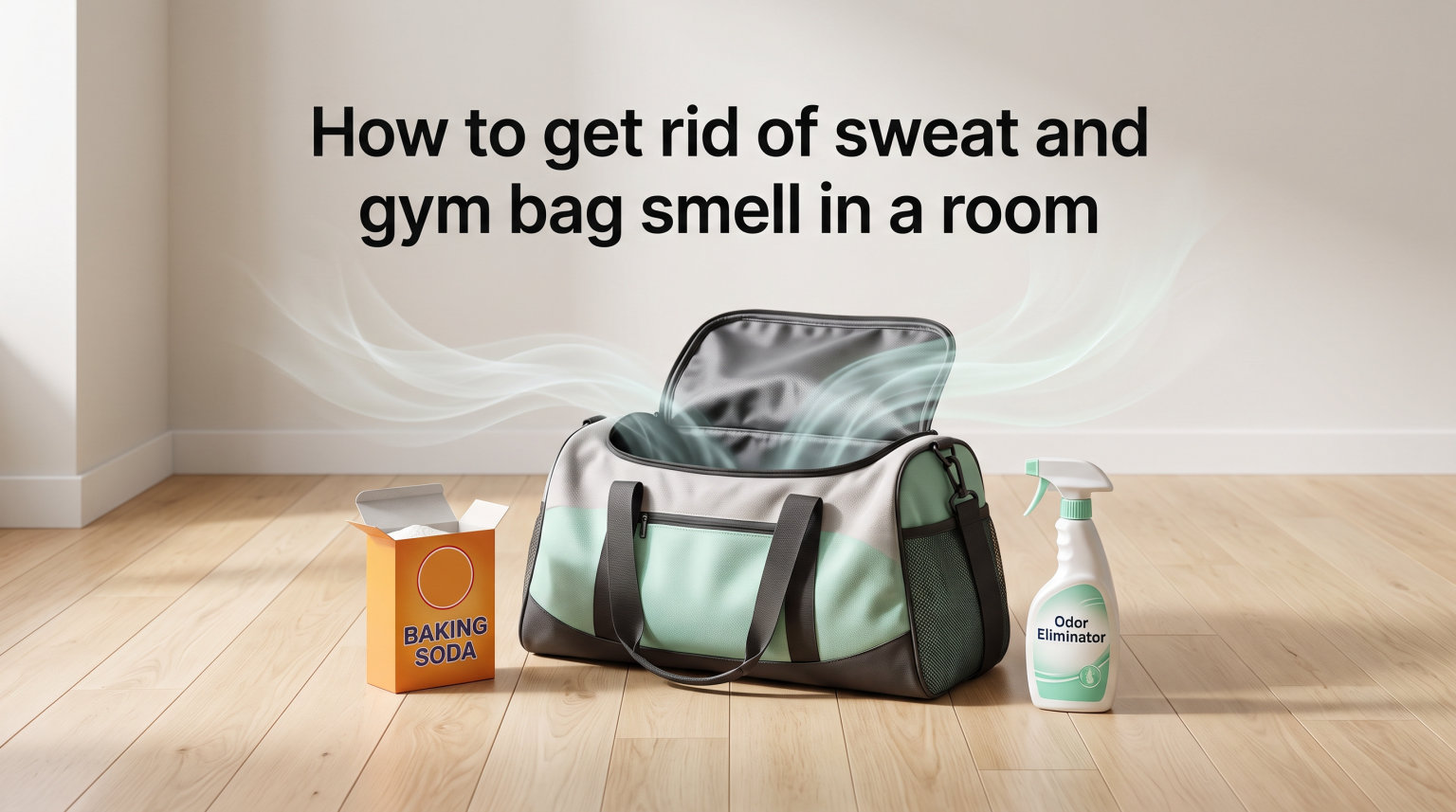
That sour, locker-room stench creeping out of your gym bag and into your bedroom is one of the most stubborn household odors you can deal with. I have spent years fighting it in small apartments with limited ventilation, and I have tested just about every fix the internet and the r/CleaningTips community swear by. Here is the short version: to get rid of sweat and gym bag smell in a room, you need to air out the bag, kill the bacteria with white vinegar or rubbing alcohol, absorb leftover odors with baking soda or activated charcoal, and treat the room itself with ventilation and an odor absorber. The bacteria, not the sweat itself, are the real problem, so masking the smell with perfume will always fail.
This guide goes deeper than most articles you will find online because it focuses on the part almost nobody covers: the room. Most resources tell you how to clean a bag, but they skip why the smell takes over an entire living space and how to clear it once it has settled into your curtains, carpet, and walls. I will walk through the science, the quick fixes, the deep-cleaning methods, a head-to-head comparison of natural remedies, and a prevention routine that keeps the smell from coming back.
Whether you live in a studio apartment, share a room with someone who trains hard, or run a home gym, these steps work for 2026 and beyond. The principles do not change because bacteria do not change. Let us start with what is actually causing that smell.
Table of Contents
What Causes Sweat and Gym Bag Smell
Gym bag smell is not caused by sweat itself. Sweat is mostly water, and it is nearly odorless when it leaves your skin. The smell comes from bacteria that live on your body and inside your bag, and they thrive in the warm, damp, dark environment your gym bag creates after a workout.
When you toss sweaty clothes, damp towels, and used shoes into a zipped bag, you are building a perfect incubator. Bacteria feed on the proteins and lipids in sweat, sebum, and dead skin cells, then release volatile organic compounds as metabolic byproducts. Those byproducts, including isovaleric acid and propionic acid, are what your nose reads as that sour, sweet-and-funky gym odor.
Moisture is the multiplier here. A damp environment lets bacteria reproduce rapidly, doubling their population every 20 minutes under ideal conditions. That is why a bag left closed overnight smells dramatically worse than one aired out right after a session. Closed bags also limit airflow, which traps moisture and prevents the natural evaporation that would slow bacterial growth.
Synthetic fabrics make the problem worse. Polyester and nylon, which most modern workout gear is made from, are hydrophobic and oleophilic, meaning they hold onto oils from your skin while pushing water away. Those trapped oils become food for bacteria, which is why even freshly washed gym clothes sometimes still smell the moment they get damp again.
Shoes add their own odor profile. The combination of sweat, dark interiors, and pressure from your feet creates an anaerobic environment where different bacteria produce the cheesy, vinegary smell associated with well-worn sneakers. Throw those shoes into a closed bag with damp clothes and you have a complex, layered odor that is tough to eliminate.
Why That Smell Takes Over Your Whole Room
This is the part almost no article explains, and it is the reason you are reading this guide. The smell does not stay inside the bag. Those volatile organic compounds are gases, and gases spread to fill whatever space they are in.
When you set your gym bag on the floor and leave it closed, the odorous gases slowly leak out through the zipper, seams, and fabric itself. In a small room with the door and windows shut, those gases have nowhere to go, so they concentrate. Over a few days, the room starts to smell like the inside of the bag.
Worse, those odor molecules stick to surfaces. Soft materials like curtains, bedding, carpet, upholstered chairs, and even painted walls absorb the gases and slowly release them back into the air. This is why the smell lingers long after you have removed the bag. The room itself has become a secondary odor source.
Ventilation is the difference between a room that recovers in hours and one that stays funky for weeks. Outdoors, wind and open air dilute the gases to undetectable levels almost instantly. Indoors, with the windows closed and the HVAC off, the same gases build up and settle into every porous surface they touch.
Humidity speeds up the whole process. If your room already runs humid, the moisture encourages bacteria on those absorbed odor molecules, and the smell compounds on itself. A dehumidifier or a window cracked for even an hour a day breaks the cycle more effectively than any air freshener.
How to Get Rid of Sweat and Gym Bag Smell in a Room
Now we get to the practical work. The process below moves from the fastest fixes to the deepest cleaning, then into a comparison of natural remedies so you can choose what fits your space, your budget, and how bad the smell has gotten. Each step builds on the last, so do not skip the airing-out phase even if you plan to scrub the bag.
Quick Fixes for Immediate Odor Relief
When you walk into the room and the smell hits you, you want it gone now. These four steps will drop the odor significantly within hours, not days.
Step 1: Remove the source and open everything up. Take the gym bag and all its contents out of the room immediately. Empty the bag completely, separate damp clothes from dry gear, and hang the sweaty clothes somewhere with airflow, ideally outside in direct sunlight. UV light kills surface bacteria, and the sun dries residual moisture fast.
Step 2: Hit the bag with white vinegar. Mix equal parts white vinegar and water in a spray bottle. Turn the bag inside out if you can, then mist every interior surface until it is damp but not soaked. Vinegar is mildly acidic, and it disrupts the cell membranes of odor-causing bacteria. The vinegar smell itself fades within an hour as it evaporates.
Step 3: Sprinkle baking soda and let it sit. While the bag is still inside out, cover the interior with a generous layer of baking soda. Leave it for at least 4 hours, overnight if possible. Baking soda is a mild base that absorbs both acids and odors through simple chemical neutralization. Vacuum or shake it out thoroughly before the next step.
Step 4: Wipe down with rubbing alcohol. A spray bottle of 70 percent isopropyl alcohol is one of the cheapest and most effective tools in this whole process. The r/workout and r/Fitness communities consistently recommend it because it kills bacteria on contact and evaporates without leaving residue. Lightly mist the interior, let it dry fully, and you have a bag that is disinfected, not just deodorized.
Deep Cleaning Your Gym Bag
Quick fixes handle surface odors, but a bag that has been festering for weeks or months needs a full reset. The method you choose depends on what your bag is made of, so check the care label before committing.
Machine washing. Most nylon and polyester gym bags survive a gentle cycle in cold water with a mild detergent. Turn the bag inside out first to protect zippers, clasps, and any plastic or leather trim, and place it in a pillowcase or laundry bag to stop hardware from banging around the drum. Skip the fabric softener every time. Fabric softener coats fibers in a waxy film that traps odors and reduces the fabric’s ability to absorb moisture, which actually makes future smells worse. Many r/CleaningTips users report that ditching softener was the single change that fixed their recurring gym odor problem.
Hand washing. For leather, canvas, or bags with glued seams, hand washing is safer. Fill a tub or large sink with cool water and a small amount of mild detergent. Submerge the bag and work the soapy water through every interior and exterior surface with a soft brush. Drain, refill with clean water, and rinse until no suds remain. Press out excess water with a towel, never wring it, and hang to dry.
The freezing method. Several Reddit users swear by putting the bag in a sealed plastic bag and leaving it in the freezer overnight. The theory is that sub-freezing temperatures kill bacteria. The reality is more complicated: freezing does kill some bacteria but many strains survive and rebound quickly. Use the freezer as a supplement to cleaning, not a replacement, and only on bags that will not be damaged by moisture condensation when they come back out.
Drying matters more than washing. A wet bag is a future smelly bag, so get it bone dry before storing anything in it. Hang it open in direct sunlight if possible, or in front of a fan in a dry room. Never put a damp bag back in a closet or under a bed. If the bag still smells faintly after drying, repeat the baking soda step before declaring it done.
Natural Remedies Compared: Baking Soda vs Vinegar vs Charcoal vs Essential Oils
The four natural remedies come up constantly in forum discussions, and they each do something slightly different. Picking the right one depends on whether you need absorption, disinfection, ongoing control, or scent.
Baking soda is your workhorse absorber. It neutralizes both acidic and basic odor compounds, which is why it handles such a wide range of smells. Sprinkle it liberally inside the bag, leave it for hours or overnight, and vacuum it out. It is cheap, safe on every fabric, and practically foolproof. The downside is that it is passive: it absorbs what is there but does not prevent new odors from forming.
White vinegar is your active disinfectant. The acetic acid kills bacteria on contact, which means it actually attacks the source of the smell instead of just soaking it up. Use it as a spray on interior surfaces, on smelly clothes in the wash (add half a cup to the rinse cycle), or as a soak for stubborn items. The vinegary smell disappears as it dries. Do not mix vinegar with baking soda in the same step; they neutralize each other and you lose both effects.
Activated charcoal is your long-term passive filter. Charcoal bags, sold as small porous pouches, absorb odors and moisture continuously for months at a time. Toss one inside your gym bag between uses and another in the corner of the room where the smell concentrates. Reactivate them by setting them in direct sunlight for a few hours every month. Charcoal does not kill bacteria, so it is a maintenance tool rather than a cleaner.
Essential oils are your scent layer, but they bring real antibacterial properties too. Tea tree, lavender, and eucalyptus oils have documented antimicrobial activity. Add a few drops to your vinegar spray, to a charcoal bag, or to a cotton ball tucked into a bag pocket. Use them sparingly. Heavy oil application can stain fabrics and irritate skin, and a strong perfume over a bacterial smell just creates a worse combined odor.
The winning combination, in my experience and that of most forum users, is vinegar for the kill, baking soda for the immediate absorb, charcoal for ongoing maintenance, and a few drops of essential oil for the final freshness layer. Use them in sequence, never all at once.
Clearing the Lingering Smell From Your Room Itself
Cleaning the bag solves half the problem. The other half is the room, which has been absorbing those odor gases for as long as the bag sat there. If you skip this step, the smell will come back even with a perfectly clean bag.
Ventilate aggressively for 24 to 48 hours. Open every window in the room and set up a fan to push air out. Cross-ventilation, with one window pulling fresh air in and another pushing stale air out, is dramatically more effective than a single open window. Run this for at least a full day after removing the source.
Wash or replace soft surfaces. Bedding, curtains, and rugs that have absorbed the odor need to be laundered in hot water with a cup of white vinegar added to the wash. For items that cannot be washed, like a mattress or upholstered chair, sprinkle baking soda over the surface, let it sit for several hours, and vacuum thoroughly.
Run a dehumidifier. If the room is humid, drop the relative humidity below 50 percent. Bacteria slow their reproduction at lower humidity, and any trapped moisture in fabrics dries out faster. A small dehumidifier pulled my own training room from borderline moldy to neutral in about three days of continuous running.
Place odor absorbers in the corners. Activated charcoal bags, open boxes of baking soda, or bowls of white vinegar left in the corners of the room will pull residual odors out of the air over several days. Swap them out or recharge them weekly until the room smells neutral again.
Avoid ozone generators and heavy air fresheners. Ozone can damage lungs and degrade rubber and plastic in the room, and air fresheners only mask odors temporarily. If you want a faster active solution, an air purifier with a true HEPA filter and an activated carbon layer will pull odor particles from the air continuously without adding anything harmful.
Prevention Routine That Keeps Smells From Coming Back
Cleaning is reactive. Prevention is what stops you from repeating this whole process every month. Build these habits into your routine and the smell problem mostly solves itself.
Empty the bag the moment you get home. This is the single highest-impact habit. The longer damp clothes sit in a closed bag, the worse the bacteria bloom. Pull everything out within minutes of walking through the door, separate wet from dry, and hang or lay out the sweaty items to dry before they go anywhere near a laundry basket.
Air out the bag itself. After emptying, leave the bag fully unzipped and open overnight in a well-ventilated spot. If your bag has a frame or stiff sides, prop it open. Never store a closed, even slightly damp bag in a closet, under a bed, or in a car trunk.
Use a dedicated towel wrap. Several heavy sweaters on r/workout wrap their soaked clothes in a dedicated gym towel before putting them in the bag. The towel absorbs excess moisture and contains the worst of the smell. Swap the towel into the wash after every session.
Keep an odor absorber inside the bag full-time. A small activated charcoal pouch or an open container of baking soda lives inside the bag between workouts. Replace or recharge it monthly. This passive absorption keeps any residual moisture from turning into a full bacterial bloom.
Never use fabric softener on gym clothes. This comes up in almost every forum thread on the topic, and it is worth repeating. Fabric softener coats synthetic fibers, traps odor-causing oils, and reduces moisture wicking. Use white vinegar in the rinse cycle instead. It softens fabric naturally, breaks down detergent residue, and kills lingering bacteria.
Wipe shoes and gear with rubbing alcohol after each use. A quick spray of 70 percent isopropyl alcohol on the insoles of your training shoes and on any pads, straps, or wraps kills bacteria before they multiply. Let everything dry fully before it goes back in the bag.
Schedule a monthly deep clean. Even with perfect habits, gym bags accumulate bacteria over time. Run the bag through the cleaning process in this guide once a month, or more often if you train daily. A monthly reset is dramatically easier than waiting until the smell takes over a room again.
When to Replace Your Gym Bag Instead of Cleaning It
Sometimes the bag is the problem, not the cleaning routine. I have thrown out two bags in the last five years after they reached a point where no amount of vinegar, baking soda, or sunlight brought them back. Knowing when to give up saves you weeks of fighting a losing battle.
You have deep-cleaned it three times and the smell returns within days. If the odor keeps coming back quickly after a thorough cleaning, bacteria have likely colonized parts of the bag you cannot reach: seams, padding, zippers, and lining layers. At that point, the bag itself is a reservoir.
The fabric is breaking down. Pilling, thinning, fraying seams, and cracked coatings on the interior all trap moisture and bacteria more aggressively than intact fabric. Once the waterproof lining on a bag starts peeling, every drop of sweat seeps into the foam layer underneath where no spray or wash can reach.
You see visible mold. Black, green, or white fuzzy patches inside the bag mean mold has taken hold. Mold is much harder to eliminate than bacteria, and the spores spread to the room every time you open the bag. Most bags with visible mold should be discarded, not cleaned.
The smell triggers headaches or nausea. If opening the bag makes you feel physically unwell, the bacterial load is high enough to be a health concern. Replace the bag and clean the room thoroughly before bringing in new gear.
A good gym bag should last two to five years with proper care. If yours is younger than that and already smells permanent, your prevention routine likely needs work before you buy a replacement. Fix the habits first, or the new bag ends up the same way.
Frequently Asked Questions
Why does my room smell like a gym bag?
Your room smells like a gym bag because odor-causing bacteria inside the bag release gases that leak out through the zipper and seams. Those gases spread through the room and get absorbed by curtains, bedding, carpet, and walls, which then re-release the smell over time. Poor ventilation and high humidity make the problem worse.
How do you get rid of gym bag odor fast?
The fastest fix is to empty the bag, spray the interior with a half-and-half white vinegar and water solution, sprinkle baking soda inside, let it sit for at least 4 hours, then vacuum it out and wipe down with 70 percent rubbing alcohol. Air the bag out in direct sunlight afterwards.
How do you get the gym smell out of a room?
Remove the bag and any sweaty clothes from the room, open the windows and run a fan for cross-ventilation for 24 to 48 hours, wash all soft surfaces like bedding and curtains with white vinegar added to the rinse cycle, run a dehumidifier to drop humidity below 50 percent, and place activated charcoal or baking soda in the corners to absorb residual odors.
What absorbs gym bag smell best?
Baking soda is the best all-round absorber for immediate use because it neutralizes both acidic and basic odor compounds. Activated charcoal is the best long-term option because it absorbs odors and moisture continuously for months. White vinegar does not absorb odors but kills the bacteria that cause them.
Will washing my gym bag in the machine damage it?
Most nylon and polyester gym bags can go in the washing machine on a cold gentle cycle with mild detergent, provided you turn the bag inside out and place it in a pillowcase to protect zippers and hardware. Always skip fabric softener, which traps odors, and never machine-wash leather, glued, or structured bags.
Conclusion
Getting rid of sweat and gym bag smell in a room comes down to three things: removing the source, killing the bacteria, and treating the room itself so absorbed odors do not linger. The bacteria are the real enemy, which is why masking the smell never works and why white vinegar, rubbing alcohol, and sunlight will always beat air fresheners and perfumed sprays.
Start with the quick fixes, move into a deep clean if the smell has set in, and then build a prevention routine around emptying the bag immediately, airing it out overnight, and skipping fabric softener forever. Add activated charcoal for ongoing absorption and a dehumidifier if your space runs damp.
Do the work once, build the habits, and your room stays fresh no matter how hard you train. For 2026 and every year after, those basics will not change.