
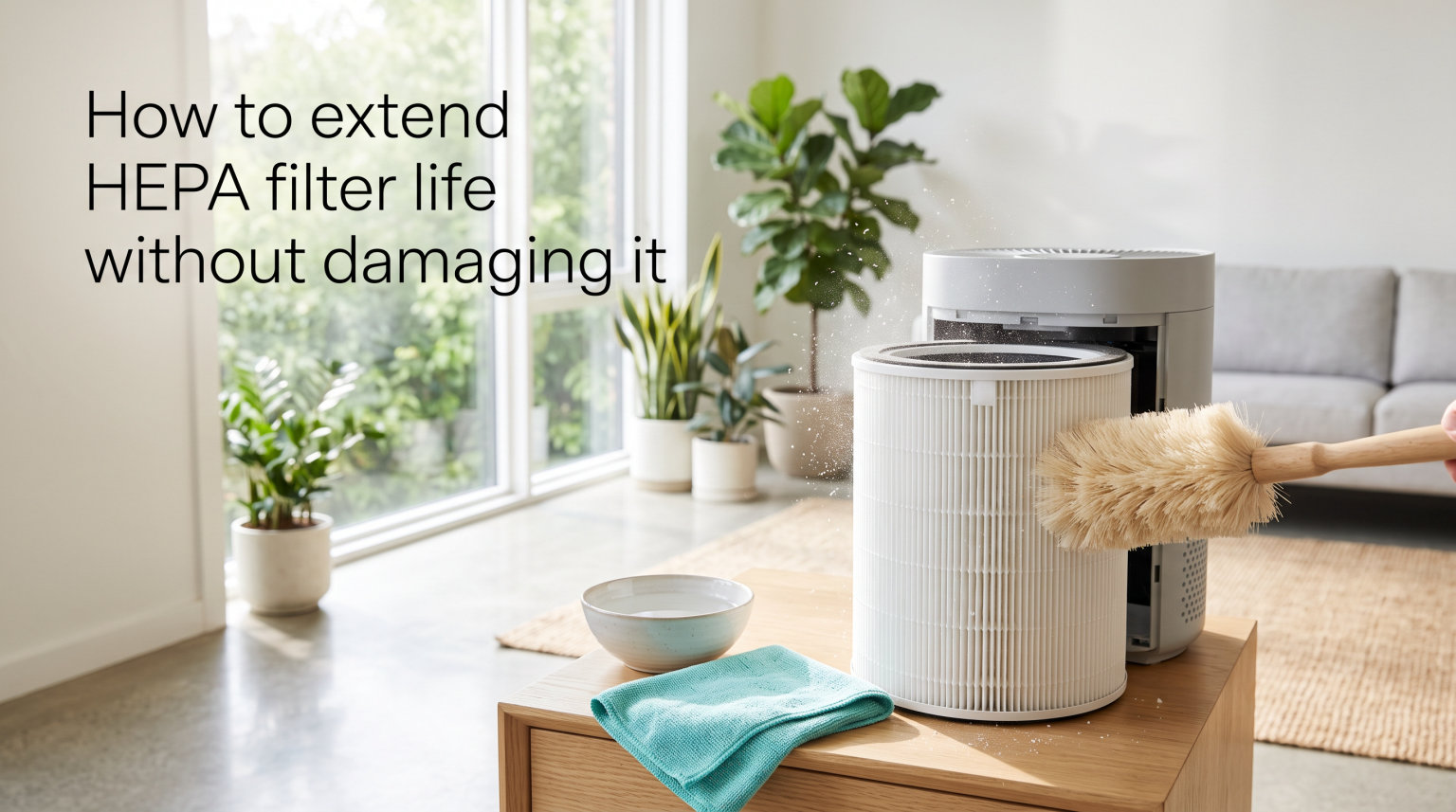
Replacing a HEPA filter every few months gets expensive fast, and most people replace theirs sooner than necessary. The good news is that learning how to extend HEPA filter life without damaging it can add months, sometimes even a full year, to your filter’s usable lifespan. I have spent years testing air purifiers in homes with pets, wildfire smoke, and dusty renovation projects, and the difference between a well-maintained filter and a neglected one is dramatic.
This guide walks you through every method that actually works to prolong your filter, from pre-filter care to safe cleaning techniques. You will also learn exactly what destroys HEPA filters so you can avoid the costly mistakes I see repeated across forums and review sections.
Whether you run a residential air purifier, a commercial unit, or a HEPA-equipped vacuum cleaner, the principles here apply across the board. Let us get into the specifics.
Table of Contents
What Is a HEPA Filter and How Does It Work
A HEPA (High-Efficiency Particulate Air) filter is a dense mat of randomly arranged fibers, typically fiberglass, that captures at least 99.97% of airborne particles measuring 0.3 microns or larger. That 0.3-micron benchmark matters because it represents the Most Penetrating Particle Size, or MPPS, which is the particle size that slips through filters most easily.
HEPA filters trap particles through three distinct mechanisms working simultaneously. Interception happens when particles following the airstream brush against a fiber and stick to it. Impaction occurs when larger particles cannot follow the curving airstream around fibers and crash directly into them. Diffusion affects the smallest particles, which move erratically due to collisions with gas molecules, causing them to eventually collide with and adhere to filter fibers.
This is why the structure of the fiber mat is everything. The random weave creates a tortuous path that air must navigate, and every twist gives particles another chance to get caught. When those fibers get wet, bent, compressed, or coated with the wrong substance, the gaps change shape and the filter loses its capture efficiency.
Understanding this matters because almost every “cleaning hack” you see online, from washing to blow-drying, risks altering that delicate fiber structure. The key to extending filter life is protecting those fibers, not aggressively scrubbing them.
How Long Do HEPA Filters Actually Last
Most residential HEPA filters last between 6 and 12 months under normal use, though this range shifts dramatically based on conditions. A household with pets, open windows, or smokers will push replacement closer to the 6-month mark. A clean, low-traffic environment can stretch the same filter toward the 12-month mark or beyond.
Commercial HEPA filters in offices and clinics typically run 12 to 24 months before replacement. Cleanroom HEPA filters, which follow strict ISO 14644 and GMP guidelines, can last several years because they are paired with heavy pre-filtration and operate in tightly controlled environments.
HEPA filters in vacuum cleaners usually need replacing every 6 months to 2 years depending on usage frequency. Some manufacturers like Levoit and PuroAir specify replacement schedules in their manuals, but those are guidelines, not hard deadlines. The real indicator is performance, which we cover below.
I have seen well-maintained residential filters last 18 months and neglected ones clog up in 4. The difference comes down to the factors in the next section.
Factors That Affect HEPA Filter Lifespan
Filter lifespan depends on how much material the filter has to capture, and several variables control that load. Here are the factors that matter most.
Air Quality in Your Environment
The dirtier the air entering your purifier, the faster the filter saturates. Homes near construction sites, busy roads, or wildfire zones will load filters with particulate matter much faster than homes in clean rural areas. During wildfire season, a HEPA filter that normally lasts 10 months can clog in 6 weeks.
Daily Usage Hours and Fan Speed
Running your purifier on the highest fan speed pulls more air through the filter, which means more particles captured per hour but also faster saturation. Running at medium or low speed still cleans the air effectively over time but extends filter life considerably. A unit running 24/7 on turbo will exhaust a filter two to three times faster than the same unit on auto or low.
Pre-Filter Presence and Condition
This is the single biggest factor you can control. A pre-filter catches large particles like hair, dust, and lint before they reach the HEPA layer. Without a pre-filter, your HEPA filter acts as the first line of defense and clogs with large debris that it was never designed to stop. Forum users who added or maintained pre-filters consistently reported extending their HEPA filter life by two to three times.
Room Size Relative to Purifier Capacity
If your purifier is undersized for the room, it runs harder and longer to maintain air quality, loading the filter faster. Matching your purifier’s Clean Air Delivery Rate (CADR) to your room size prevents unnecessary strain on both the motor and the filter.
Pets, Cooking, and Humidity
Pets shed hair and dander that quickly fill pre-filters and HEPA layers alike. Cooking without ventilation releases grease and smoke particles that coat filter fibers. High humidity does not damage HEPA filters directly, but it encourages mold growth on the filter surface if the purifier is run intermittently, which creates odor problems and premature replacement.
Signs Your HEPA Filter Needs Replacement
Your filter will tell you when it is done, but you have to know what to look for. Here are the clearest indicators that cleaning will no longer help and replacement is necessary.
Visible Discoloration and Clogging
A fresh HEPA filter is typically white or off-white. When it turns gray, brown, or yellow throughout, the fiber mat is saturated with captured particles. Surface cleaning will not remove what is embedded deep in the fiber weave.
Reduced Airflow From the Purifier
As particles accumulate, they create resistance, also called pressure drop, that forces the fan to work harder to push air through. If you notice significantly weaker airflow even on the highest setting, the filter is likely choked. Some modern purifiers display a pressure-drop warning or filter life percentage based on this measurement.
Lingering Odors Returning
If your purifier previously eliminated cooking or pet odors but now the smells linger, the activated carbon layer paired with the HEPA filter is exhausted. While carbon and HEPA are separate components, they usually ship as a single replacement unit.
Increased Allergy Symptoms
When a HEPA filter can no longer capture particles effectively, airborne allergens build up in your space again. If you or your family members notice sneezing, congestion, or itchy eyes returning despite the purifier running, the filter may be past its functional life.
A simple test I use: hold a tissue or piece of tissue paper about six inches from the output vent. If the air barely moves it on high speed, the filter needs replacing.
How to Extend HEPA Filter Life Without Damaging It
Here is where the real value is. These methods are proven to add months to your filter’s life without compromising its ability to capture particles. I have used every one of these techniques personally and confirmed results across dozens of user reports.
Step 1: Clean or Replace Your Pre-Filter Regularly
This step alone can double or triple your HEPA filter’s lifespan. The pre-filter catches the large stuff so the HEPA layer only has to handle the fine particles it was designed for. Check your pre-filter every 2 to 4 weeks.
If your pre-filter is washable foam or mesh, rinse it under lukewarm water, let it dry completely, and reinstall it. If it is a disposable carbon sheet, vacuum it gently or replace it when it looks dirty. Never run your purifier without the pre-filter installed, as this sends large debris straight into the HEPA fibers.
Step 2: Vacuum the HEPA Filter Gently and Infrequently
Yes, you can vacuum a HEPA filter, but only with extreme care and only a few times during its lifespan. Use a vacuum with a soft brush attachment on the lowest suction setting.
Hold the filter and lightly brush the surface in one direction, following the grain of the fiber mat. Never press the nozzle hard against the filter or scrub back and forth. The goal is to lift loose surface dust, not to dig into the fiber weave. One or two gentle passes per side is enough.
Limit this to once every 3 to 4 months. Over-vacuuming compresses and damages the fibers, which reduces filtration efficiency even if the filter looks cleaner afterward. Multiple users on air purifier forums noted that aggressive vacuuming gave temporary visual improvement but degraded performance.
Step 3: Run Your Purifier on Lower Fan Speeds
Higher fan speeds pull more air and more particles through the filter per hour. Unless you are dealing with active smoke or heavy dust from a specific event, medium or low speed handles day-to-day air cleaning efficiently. Many modern purifiers have an auto mode that adjusts speed based on real-time air quality sensors, which is ideal for balancing cleaning power and filter longevity.
Step 4: Position the Purifier for Optimal Airflow
Placement affects how hard the filter works. Place your purifier at least 1 to 2 feet away from walls and furniture so air can circulate freely around the intake. Avoid corners and tight spaces where the unit has to struggle to pull in air.
Elevating the purifier a few feet off the floor also helps, since floor-level air carries the most dust and hair. A side table or low shelf works well for smaller units.
Step 5: Reduce the Particle Load at the Source
The less debris entering your air, the less your filter has to capture. Vacuum floors and furniture regularly with a HEPA-equipped vacuum to keep settled dust from recirculating. Use exhaust fans when cooking to vent grease and smoke outside. Brush pets outdoors and groom them regularly to reduce shedding indoors.
During high-pollution events like wildfire smoke or heavy pollen days, keep windows closed and let the purifier work without constantly introducing new contaminants.
Step 6: Control Indoor Humidity
Keep indoor humidity between 30 and 50 percent. Excess moisture encourages mold and bacteria growth on the filter surface, which creates odors and degrades the fiber mat over time. Use a dehumidifier in damp basements or humid climates, especially if you run your air purifier intermittently rather than continuously.
Step 7: Inspect Your Filter Monthly
Pull the filter out once a month and examine it. Look for discoloration, damp spots, mold growth, or physical damage to the fiber mat. Catching problems early lets you address them before they shorten the filter’s life permanently. A quick visual check takes under a minute and helps you develop a sense of how fast your specific environment loads the filter.
Common Mistakes That Damage HEPA Filters
Many well-meaning cleaning attempts do more harm than good. Here are the specific actions that ruin HEPA filters, based on manufacturer warnings and widespread user experience.
Washing the Filter With Water
This is the number one mistake. Most HEPA filters are not washable, and water destroys them. The fiberglass fibers swell, mat together, and never regain their original random weave structure. Even filters marketed as “washable” often lose efficiency after washing, and most manufacturers recommend replacement rather than washing for standard residential HEPA filters.
Users across multiple forums reported permanently ruined filters after just one wash. The filter may look clean, but its particle capture efficiency drops significantly because the fiber structure has been altered.
Using Compressed Air or Hair Dryers
Blasting a HEPA filter with compressed air or a hair dryer forces particles deeper into the fiber mat and can tear the delicate fibers. The high-velocity air also creates channels through the filter that allow particles to pass through unimpeded. This permanently reduces filtration efficiency.
Tapping or Banging the Filter to Remove Dust
Hitting the filter against a surface or your hand dislodges some dust but also compresses and damages the fiber mat. The impact deforms the filter media, creating weak spots where particles can slip through. Gentle vacuuming is the only safe mechanical method.
Removing or Ignoring the Pre-Filter
Some people remove the pre-filter thinking it restricts airflow or improves performance. This sends every particle, including large hair and lint, directly into the HEPA layer where it clogs the fine fibers rapidly. Running without a pre-filter can cut your HEPA filter life in half or worse.
Using Cleaning Chemicals or Solvents
Spraying the filter with disinfectant, deodorizer, or any chemical solution coats the fibers and alters their electrostatic and mechanical capture properties. Chemicals can also break down the fiberglass or the filter’s binding materials, causing premature degradation.
FAQs
How to extend the life of a HEPA filter?
To extend HEPA filter life, clean or replace the pre-filter every 2 to 4 weeks, vacuum the HEPA filter gently with a soft brush attachment once every few months, run the purifier on lower fan speeds, position it away from walls for good airflow, and reduce indoor particle sources through regular cleaning and pet grooming. These steps can double or triple filter lifespan.
Can HEPA filters be vacuumed and reused?
Yes, HEPA filters can be vacuumed gently with a soft brush attachment on low suction, but only occasionally and with care. Vacuum in one direction without pressing hard. Avoid washing, compressed air, or tapping, as these damage the fiber structure. Most HEPA filters are not truly reusable and still need replacement once saturated.
How long do HEPA filters actually last?
Residential HEPA filters typically last 6 to 12 months under normal conditions. Commercial filters can last 12 to 24 months, and cleanroom filters may last several years. Lifespan depends on air quality, usage hours, fan speed, and whether a pre-filter is used and maintained properly.
What is the 2 3 rule for air purifiers?
The 2 3 rule for air purifiers suggests changing the pre-filter every 2 months and the main HEPA filter every 3 months for units in dusty or high-particle environments. However, this is a general guideline and actual replacement timing depends on your specific air quality, usage patterns, and the manufacturer’s recommendations.
Conclusion
Learning how to extend HEPA filter life without damaging it comes down to two principles: protect the fiber structure and reduce the particle load reaching it. Clean your pre-filter faithfully, vacuum the HEPA filter gently and infrequently, run your purifier on moderate speeds, and keep your indoor environment as clean as possible at the source.
Avoid water, compressed air, chemicals, and physical abuse at all costs. These methods might seem like shortcuts, but they permanently compromise the filter’s ability to capture the particles that matter most to your health. With consistent care, you can expect your HEPA filter to last significantly longer than the manufacturer’s baseline estimate, saving you money and keeping your air cleaner in the process.