
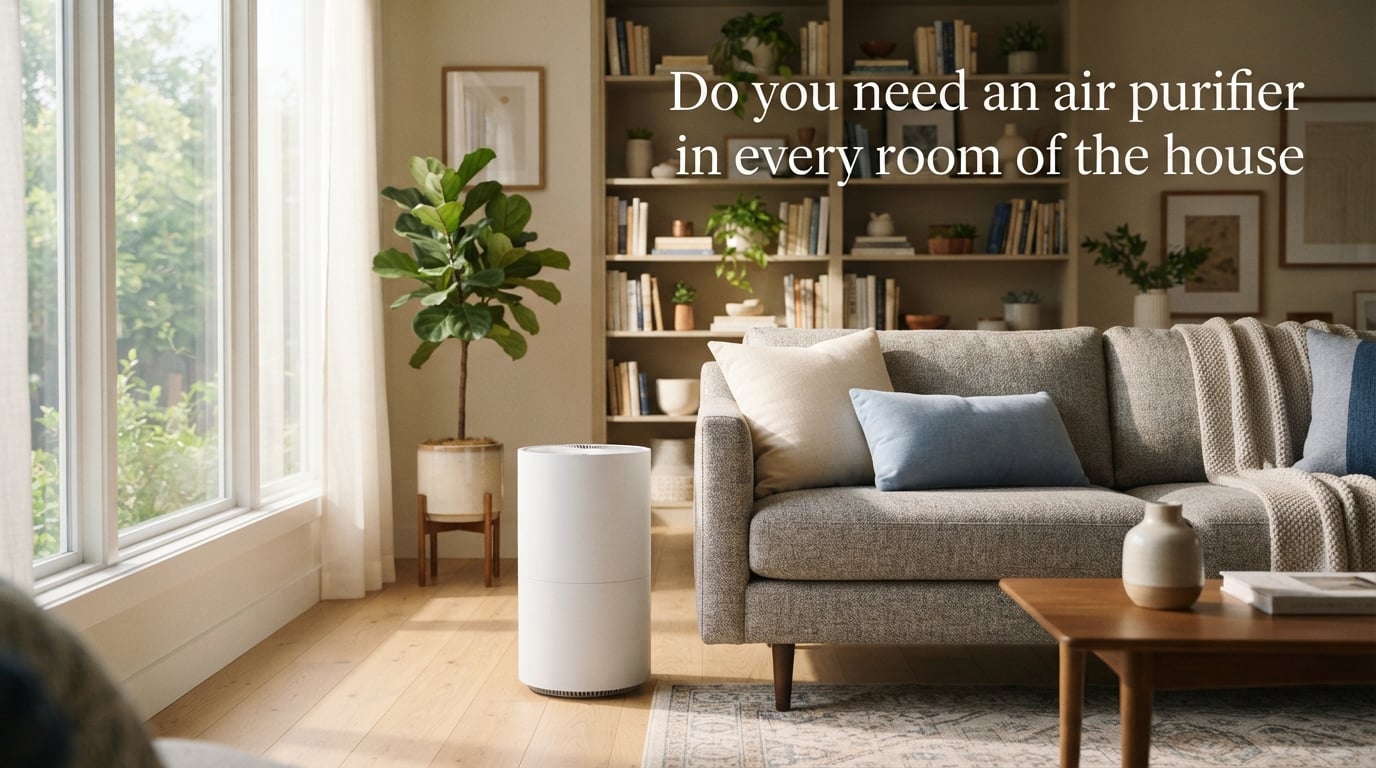
I stood in my living room last winter counting the dust particles floating in a sunbeam, and I asked myself the same question thousands of homeowners type into search engines every month. Do you need an air purifier in every room of the house? The short answer is no, you do not. But the longer answer depends on your home layout, your health, your pets, and where you actually spend your waking and sleeping hours.
Our team has spent the last several months digging through forum threads, manufacturer specs, and real user experiences to figure out what actually works. We talked to allergy sufferers who run three units, pet owners who get by with one, and apartment dwellers who move a single purifier between rooms. What we found surprised us, and it challenged a lot of the marketing claims out there.
The Environmental Protection Agency notes that indoor air can be two to five times more polluted than outdoor air. We spend roughly 90 percent of our time inside, which means the air we breathe at home matters more than most people realize. But buying a purifier for every single room is overkill for most households. Strategic placement delivers better results at a fraction of the cost.
This guide breaks down exactly which rooms deserve priority, how your home layout changes the equation, and how to build a coverage plan that fits your specific situation. By the end, you will have a clear framework for deciding how many air purifiers you actually need.
Table of Contents
Do You Need an Air Purifier in Every Room of the House?
No, you do not need an air purifier in every room of the house. The most effective strategy focuses on the rooms where you spend the most time, particularly the bedroom and main living areas. Most households get excellent results with one to three well-placed purifiers rather than one in every single space.
Air purifiers clean the air within a defined coverage area, and that coverage is limited by walls, closed doors, and the unit’s clean air delivery rate. A single purifier cannot pull air from behind a closed bedroom door while sitting in the hallway. This is why placement strategy matters far more than sheer quantity.
The rooms that matter most are the bedroom, where you spend roughly eight hours every night, and the living room, where family time and daily activity concentrate. After that, the decision becomes personal. Pet owners, allergy sufferers, and people in areas with poor outdoor air quality may benefit from additional units in other spaces.
Forum users on Reddit echo this conclusion. One homeowner with a 2,300 square foot open floor plan reported running just two units successfully and noticing a real difference in dust accumulation. Another user emphasized that running purifiers 24 hours a day matters more than having one in every room. Quality coverage in priority spaces beats scattered underpowered units every time.
The Time Spent Principle: Prioritize Where You Breathe Most
When our team analyzed how people actually use their homes, one pattern jumped out immediately. We spend our time in a handful of rooms, and the rest sit empty for most of the day. A purifier running in an unused guest bedroom cleans air nobody breathes. That is wasted electricity and wasted filter life.
The time spent principle is simple. Match your air purification investment to the hours you actually spend in each room. The bedroom wins by a wide margin because you spend roughly one third of your life asleep there. Breathing clean air for eight straight hours delivers more health benefit than intermittent exposure in a room you pass through.
The living room or main family area comes second. This is where cooking smells, pet activity, and foot traffic concentrate throughout the day. A single well-sized unit here handles the bulk of your daytime exposure.
The home office takes third place for anyone working remotely. You may spend six to ten hours a day in that chair, and closed office doors can trap stale air, printer particles, and dust. A compact purifier on your desk pays dividends in focus and respiratory comfort.
Rooms like hallways, laundry rooms, formal dining rooms, and rarely used guest spaces do not need dedicated purifiers. Air circulates through these areas naturally as doors open and close throughout the day. Save your budget for the spaces where you actually live and breathe.
Open Concept vs Closed Rooms: Why Walls Matter
Your home layout changes the air purification equation dramatically. Open concept homes allow air to circulate freely between spaces, which means one large purifier can effectively cover a combined kitchen, dining, and living area. Closed floor plans trap air behind walls and doors, creating isolated air environments that each need their own coverage.
This single factor determines whether you need one purifier or five. Let us break down how layout affects your strategy.
Open Floor Plan Coverage
In an open concept home, a single high-capacity purifier placed centrally can handle 800 to 1,200 square feet of combined living space. The lack of interior walls lets cleaned air circulate naturally through the kitchen, dining area, and living room. One Reddit user with a 2,300 square foot open layout reported excellent results from just two strategically placed units.
The key here is matching the purifier capacity to the total open area. Check the square footage rating on the unit and make sure it exceeds the combined size of your open space. Undersizing an open area leaves pollution pockets that never get cleaned.
Closed Door Strategy
Closed doors create entirely separate air environments. When you shut your bedroom door at night, the air in that room stops mixing with the rest of the house. Any purifier in the hallway does nothing for the air you breathe while sleeping.
This is why bedrooms with closed doors almost always need their own dedicated unit. The closed door that gives you privacy also seals in dust, allergens, and carbon dioxide buildup from breathing overnight. A bedroom purifier running with the door closed cleans the exact air you are inhaling for those eight critical hours.
Multi-Floor Home Considerations
Two story homes present a unique challenge because air does not move easily between floors. Stairwells offer some circulation, but each floor effectively functions as its own air zone. Most multi-floor homeowners need at least one purifier per level.
The upper floor typically holds bedrooms, making it the priority for nighttime air quality. The ground floor usually contains the kitchen and main living spaces, which need coverage during waking hours. A finished basement, if you use it regularly, counts as a third zone that needs its own approach.
Place at least one unit on each occupied floor. Trying to cover a two story home with a single purifier means one floor gets clean air and the other gets whatever drifts through the stairwell.
Room-by-Room Breakdown: Where to Place Purifiers
Different rooms have different air quality challenges. The kitchen battles cooking smoke and grease particles. The bedroom fights dust mites and nighttime allergens. The basement wrestles with moisture and mold spores. Let us walk through each space and explain what matters most.
Bedroom: Priority Number One
The bedroom is the single most important room for air purification. You spend roughly eight hours there every single night, breathing deeply while you sleep. Dust mites in bedding, pet dander if animals share the room, and pollen that drifted in through windows all concentrate in this small closed space.
Look for a bedroom purifier with a true HEPA filter and a sleep mode that runs quietly enough not to disrupt rest. The unit should cover at least the square footage of your bedroom, and ideally exceed it by 30 percent so the air cycles completely several times per hour. Place it three to five feet from your bed for maximum benefit.
Allergy sufferers notice the difference within days. Waking up without a stuffy nose or scratchy throat is the most common feedback we see in forum discussions.
Living Room: Second Priority
The living room handles the most diverse air quality challenges in most homes. Foot traffic tracks in pollen and dirt. Upholstered furniture traps dust. Pets shed dander. Cooking smells drift in from the kitchen. A single well-sized purifier here handles the bulk of your daytime air quality needs.
For living rooms under 400 square feet, a midsize unit handles the job. Larger great rooms may need a high capacity model rated for 500 to 800 square feet. Place the unit near the center of the room or close to the highest pollution source, which is often a pet bed or heavily used sofa.
Kitchen: situational Coverage
Kitchens produce smoke, grease particles, and cooking odors that can spread throughout the home. A good range hood exhaust fan handles most of this at the source. But if you cook frequently with strong spices, fry foods often, or have an open kitchen that connects to your living space, a purifier nearby helps capture what the hood misses.
The catch is that grease can clog HEPA filters quickly. If you place a purifier near the kitchen, look for one with a washable pre-filter that catches larger particles before they reach the HEPA layer. Replace or clean that pre-filter more often than the manufacturer suggests if cooking is a daily activity.
Home Office: Worth It for Remote Workers
If you work from home, you likely spend more waking hours in your office than any other room. Closed office doors trap dust from carpets, particles from laser printers, and carbon dioxide from your own breathing. A compact desktop or small floor purifier keeps the air fresh during long work sessions.
Users report better focus and fewer afternoon headaches after adding an office purifier. Even a small unit rated for 200 to 300 square feet makes a noticeable difference in a typical home office.
Basement: Special Challenges
Basements pose unique air quality problems that most competitors gloss over. They tend to be humid, which encourages mold and mildew growth. They often smell musty even when visually clean. Radon gas, a naturally occurring radioactive gas, can accumulate in below ground spaces.
A basement air purifier needs to handle moisture related particles and odors. Look for units with activated carbon filters to tackle musty smells, and consider pairing the purifier with a dehumidifier for the full solution. If you use your basement as a living space, bedroom, or playroom, treat it as a priority room rather than an afterthought.
Guest Room: The Rotating Strategy
Guest rooms sit empty 90 percent of the time in most homes. Buying a dedicated purifier for an unused room wastes money. Instead, consider the rotating strategy that budget conscious homeowners love. Keep one portable purifier that you move into the guest room when visitors arrive, then return to your bedroom or office when they leave.
This approach works because guests typically only need purified air for a few nights. A portable unit with carrying handles makes the swap effortless. You get full coverage for guests without the ongoing cost of a permanent unit running in an empty room.
Health and Lifestyle Factors That Change the Math
Generic advice only goes so far. Your personal health situation should drive your air purification decisions more than any square footage formula. Someone with severe allergies needs different coverage than someone who simply wants less dust on their shelves.
Allergies and Asthma
If you suffer from seasonal allergies, asthma, or other respiratory conditions, the standard advice shifts. You benefit from air purification in every room where you spend meaningful time, not just the bedroom. Pollen, dust mites, and pet dander trigger symptoms that compound throughout the day.
Allergy sufferers should prioritize HEPA filtration, which captures 99.97 percent of particles down to 0.3 microns. That covers pollen, dust mite debris, pet dander, and most common triggers. Running purifiers 24 hours a day, even when you are not in the room, keeps allergen levels consistently low.
Pet Owners
Pets change the air quality equation significantly. Dogs and cats shed dander continuously, and that dander is small enough to stay airborne for hours. Pet owners in forum discussions frequently cite dander as the reason they purchased multiple purifiers.
If you have pets, place purifiers in the rooms where animals spend the most time. That usually means the living room and any bedroom where pets sleep. Without targeted coverage, dander from one room spreads throughout the home via your HVAC system and foot traffic.
Outdoor Air Quality
Your local environment matters. Homes near busy roads, construction sites, agricultural areas, or regions with frequent wildfires face higher particle levels that infiltrate indoors. In these situations, more rooms benefit from active air purification because the pollution source never stops.
During wildfire season, even homes without dedicated purifiers in every room can benefit from temporarily adding units to additional spaces. Portable purifiers can move between rooms as air quality conditions change.
Signs You Need More Coverage
How do you know if your current setup is insufficient? Watch for these warning signs. If you wake up congested, notice visible dust settling quickly after cleaning, smell lingering odors that never dissipate, or see your allergy symptoms spike indoors, your coverage likely has gaps.
A simple test involves checking dust accumulation on surfaces over a week. Excessive buildup in a room without a purifier suggests that room would benefit from its own unit.
How to Decide How Many Air Purifiers You Need
Rather than guessing, work through this decision framework to land on the right number for your specific home. The goal is matching coverage to your actual needs without overspending.
Step 1: Map Your Time by Room
For one week, track where you spend your hours at home. Most people discover they concentrate 80 percent of their time in just two or three rooms. Write down the square footage of each priority room. This becomes your coverage target.
Rooms where you spend less than an hour per day typically do not need dedicated purifiers. Exception applies if someone in the household has severe allergies or asthma and uses that room regularly.
Step 2: Identify Your Layout Type
Determine whether your home is open concept, closed floor plan, or a hybrid. Open concept spaces allow one large purifier to cover combined areas. Closed rooms each need their own unit because walls block airflow between spaces.
For hybrid layouts, treat open zones as single coverage areas and closed rooms as individual units. A typical three bedroom home with an open kitchen and living area might need one unit for the open space and one for each occupied bedroom.
Step 3: Check Capacity Against Square Footage
Every air purifier lists a coverage area based on its clean air delivery rate, or CADR. This rating tells you how many cubic feet of clean air the unit delivers per minute. Higher CADR means faster cleaning in larger spaces.
The general rule is to choose a purifier rated for at least two thirds of your room’s stated square footage. This is the 2/3 rule that appears in many manufacturer guidelines. Following it ensures the unit can cycle all the air in the room at least four to five times per hour, which is the level needed for effective allergen reduction.
For a 200 square foot bedroom, look for a unit rated for at least 130 square feet minimum, though exceeding the room size gives better results. When in doubt, size up. An oversized purifier running on low cleans more quietly and effectively than an undersized unit running on maximum.
Step 4: Factor in Health and Pet Considerations
Add coverage based on health needs. Severe allergies or asthma may justify a purifier in every occupied room. Pet owners should add units wherever animals spend significant time. Homes in areas with poor outdoor air quality benefit from more comprehensive coverage.
This is also where you consider who else lives in the home. A baby’s nursery, an elderly parent’s room, or a home gym where someone breathes heavily all warrant dedicated units even if those rooms are small.
Step 5: Consider Cost and Noise Tradeoffs
Each additional purifier adds two ongoing costs beyond the purchase price. Filter replacements typically run every six to twelve months and cost 30 to 80 dollars per unit. Electricity adds another 30 to 100 dollars annually per unit depending on usage and local rates.
Look for Energy Star certified models to minimize electricity costs. Forum users consistently mention energy consumption as a concern when running multiple units, and Energy Star units use roughly 40 percent less power than standard models.
Noise is the other factor. Running multiple purifiers simultaneously creates background hum that some people find relaxing and others find maddening. Bedroom units need quiet sleep modes. Living room units matter less since daytime ambient noise masks the sound. Read user reviews specifically mentioning noise levels before buying.
Step 6: Start Small and Expand
Our strongest recommendation is to start with one or two purifiers in your highest priority rooms and evaluate the results before buying more. Many homeowners discover that strategic placement in the bedroom and living room handles 80 percent of their air quality needs.
Live with that setup for a month. Notice whether symptoms improve, whether dust accumulation slows, whether odors dissipate. If gaps remain, add another unit to the next priority room. This progressive expansion strategy prevents overspending and lets you learn what actually works in your specific home.
One Reddit user summed it up well. They started with a single unit in the bedroom, noticed immediate sleep improvements, then added a second unit for the living room a month later. The staged approach let them feel the difference at each step rather than guessing what they needed upfront.
Frequently Asked Questions
What are signs you need an air purifier?
Common signs include waking up congested or with a scratchy throat, visible dust accumulating quickly after cleaning, lingering odors that never fully dissipate, frequent allergy symptoms indoors, and pet dander visible on surfaces. If you notice any of these, a purifier in your main living spaces will likely help.
Is there a downside to air purifiers?
The main downsides are ongoing filter replacement costs, added electricity usage, and potential noise when running multiple units. Ozone producing purifiers can irritate lungs, so stick with true HEPA models. Some users also report dry air when running purifiers constantly in already dry climates.
Where should you not place an air purifier?
Avoid placing air purifiers in corners with no airflow, directly behind furniture that blocks the intake, right next to heat sources like radiators, or in tight spaces where air cannot circulate. Also avoid placing them too close to your bed on high fan settings if noise bothers your sleep.
Is it better to have multiple air purifiers or one big one?
It depends on your layout. In an open concept home, one large high capacity unit covers combined spaces effectively. In homes with closed rooms and doors, multiple smaller units work better because walls block airflow between rooms. Most homes benefit from one unit per occupied closed room plus coverage for main living areas.
What is the 2/3 rule for air purifiers?
The 2/3 rule recommends choosing an air purifier with a coverage rating equal to at least two thirds of your room’s square footage. This ensures the unit can cycle all the air in the room four to five times per hour, which is the standard for effective allergen and particle reduction.
Can one air purifier clean multiple rooms?
Only if those rooms connect through open doorways or an open floor plan with no walls between them. Closed doors and interior walls block airflow completely, so a purifier in one room cannot clean the air in an adjacent closed room. For closed layouts, you need separate units in each space you want purified.
Conclusion
So, do you need an air purifier in every room of the house? For most people, the answer is no. Strategic placement in the bedroom and main living area handles the bulk of your air quality needs. Add units based on your specific layout, health concerns, and lifestyle rather than defaulting to full house coverage.
Start with one or two well chosen purifiers in your highest priority rooms. Live with them for a month, notice the difference, then decide whether additional coverage is worth the investment. Your lungs and your wallet will both thank you for taking the measured approach.