
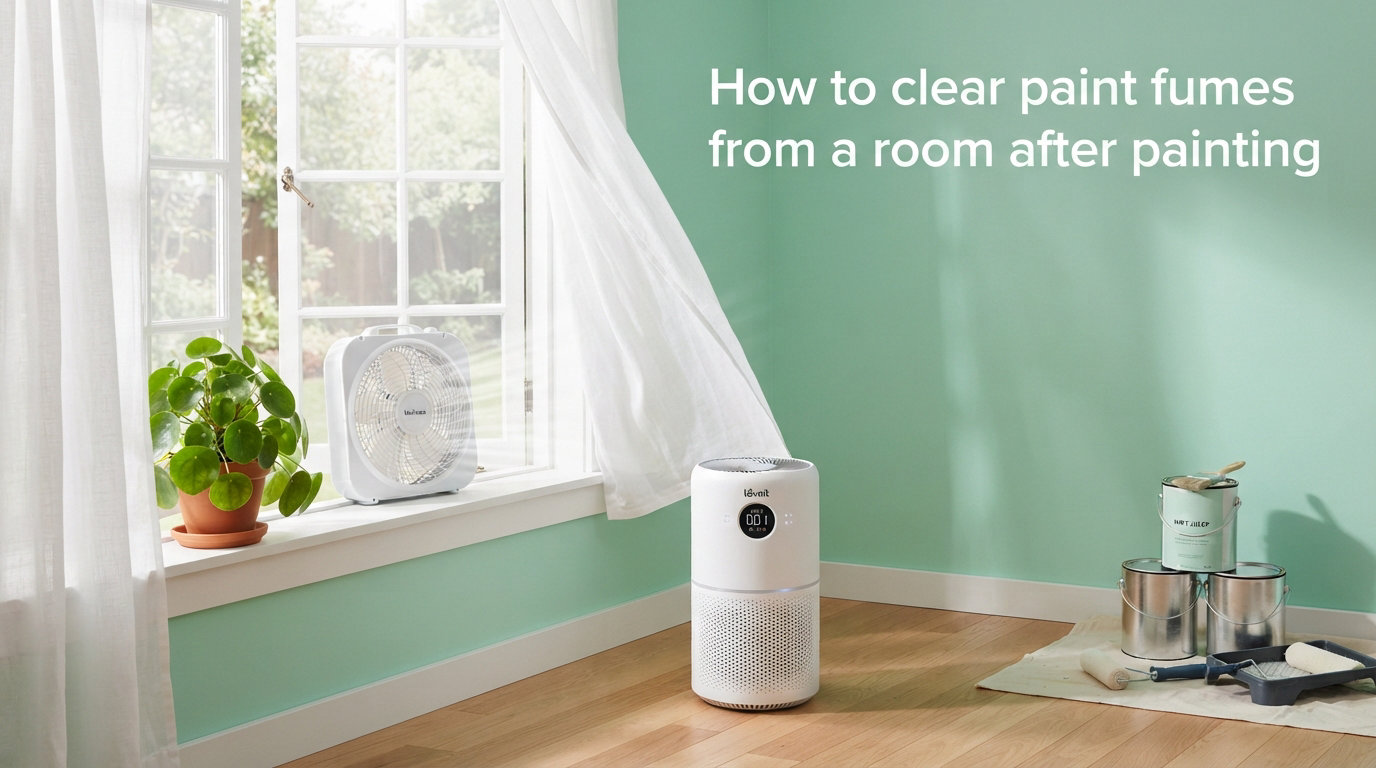
That fresh paint smell might feel like the satisfying sign of a finished project, but it is also a warning. The odor comes from gases released as the paint dries, and breathing them in for hours can trigger headaches, dizziness, and throat irritation. If you have just wrapped up a painting job, you probably want the room usable again as soon as possible.
Knowing how to clear paint fumes from a room after painting comes down to a simple layered approach: push the contaminated air out, capture what stays behind, and avoid adding more pollutants while you work. The methods below cost almost nothing, use items you likely already own, and most can be combined safely for faster results.
This guide breaks down what paint fumes actually are, how long they linger, the health risks to watch for, and a step-by-step plan you can follow the moment you set down your brush. We pulled the most reliable methods from painter forums, indoor air quality experts, and homeowners who have dealt with stubborn lingering odors in 2026.
Table of Contents
What Causes Paint Fumes (VOCs Explained)
Paint fumes come from chemicals called volatile organic compounds, or VOCs. These are carbon-based chemicals that evaporate easily at room temperature, which is exactly why you can smell them the moment you pop open a paint can. As the paint dries and cures, VOCs continue to release into the air in a process called off-gassing.
Common VOCs in paint include formaldehyde, benzene, toluene, and xylene. The exact mix depends on the paint formula. Oil-based paints and older solvent-based paints tend to carry the highest VOC loads, while modern water-based latex paints release far less.
Off-gassing does not stop when the paint feels dry to the touch. The chemical release continues for days or even weeks after application, slowing gradually as the paint fully cures. This is why a room can smell fresh again the next morning but still bother someone with asthma two days later.
VOC fumes concentrate fastest in small, closed rooms with poor airflow, which is why bathrooms, bedrooms, and closets often trap the strongest odors after a project.
How Long Do Paint Fumes Last
The duration depends mostly on paint type, room size, and ventilation. Here is a realistic timeline you can use as a reference:
Standard latex paint (water-based): Most noticeable odor fades within 24 to 48 hours with good airflow. Full off-gassing can continue at low levels for up to two weeks.
Low-VOC or zero-VOC paint: Smell usually disappears within 6 to 24 hours. Trace off-gassing may still occur for a few days.
Oil-based paint: Strong odor can linger for 3 to 7 days, with low-level off-gassing continuing for several weeks.
Primer and alkyd coatings: Similar to oil-based paint, often the longest to fully off-gas.
Humidity and temperature matter too. Paint cures faster in warm, dry air, which shortens the off-gassing window. A cold, damp basement room can hold paint smell for twice as long as a sunny, well-ventilated bedroom.
If the smell is still strong after two weeks despite good ventilation, something else may be going on. The paint may have been applied too thickly, the room may have hidden moisture issues, or a previous coat of oil-based paint may be reacting underneath. Forum users on r/HomeImprovement often discover that persistent odors come from a second hidden layer of old paint, not the new coat.
Are Paint Fumes Dangerous
Short-term exposure to paint fumes can cause headaches, dizziness, nausea, eye irritation, and throat discomfort. These symptoms usually clear up within hours of getting fresh air. The risk grows the longer you stay in a poorly ventilated painted room.
Certain groups should treat paint fumes more seriously. People with asthma or chemical sensitivities may experience wheezing and breathing trouble at much lower VOC levels. Pregnant women, infants, young children, and pets are also more vulnerable, and most health agencies recommend they avoid freshly painted rooms for at least 72 hours.
If you develop a persistent headache, dizziness that does not improve after leaving the room, or any difficulty breathing, step outside immediately and contact a healthcare provider if symptoms continue. Long-term, repeated exposure to high VOC levels has been linked to liver, kidney, and nervous system effects, which is why proper ventilation is not optional.
How to Clear Paint Fumes From a Room After Painting: Step-by-Step Methods
Here is the practical core of this guide. The steps below are ordered from most important to supporting methods. You do not need all of them, but the first three should be non-negotiable for any freshly painted room.
Step 1: Ventilate the Room Immediately
Ventilation is the single most effective way to clear paint fumes, because it physically removes the contaminated air rather than masking the smell. Open every window and door in and around the painted room to create cross-ventilation. Even a small crack on the windward side and a wider opening on the leeward side sets up an airflow loop.
Place a box fan in one window pointing outward to push stale air out, and position a second fan across the room pulling fresh air in. Reddit users on r/paint and r/HomeImprovement consistently report that this out-and-in fan setup clears a room in a fraction of the time compared to a single fan or just open windows. Run the fans continuously for at least 48 hours.
If outdoor temperatures or allergies make open windows difficult, run an exhaust fan (bathroom or kitchen) for as long as possible and supplement with the air purifier method below.
Step 2: Deploy Baking Soda Bowls
Baking soda (sodium bicarbonate) is a mild, natural odor absorber. Fill shallow bowls with about half a cup of baking soda each, and place them around the painted room, focusing on corners and closets where air moves slowly. Use one bowl per 50 square feet of floor space as a rough guide.
Leave the bowls out for at least 48 to 72 hours, stirring them gently once a day to refresh the surface. You can also sprinkle baking soda directly on carpets and vacuum it up the next day to pull odors out of soft surfaces.
Step 3: Use Activated Charcoal
Activated charcoal is far more effective than baking soda because its porous structure gives it a massive surface area for trapping VOC molecules through a process called adsorption. You can buy activated charcoal in bags, briquettes, or loose granules online or at pet stores.
Set charcoal pouches near the source of the smell and in any low-airflow corners. Most charcoal products last several months before needing reactivation (which you do by placing them in direct sunlight for a few hours). For serious fume problems, charcoal combined with the ventilation step above is the fastest natural combination.
Step 4: Run a Dehumidifier
This is a tip forum users discovered on their own, and most articles overlook it. Paint cures through a chemical process that slows down in humid air. If the room stays damp, the paint never fully sets, and off-gassing drags on for days longer than necessary.
A dehumidifier pulls moisture out of the air, helping the paint cure faster and shortening the off-gassing window. This is especially useful in basements, bathrooms, and coastal homes where humidity runs high. Run the dehumidifier alongside your fans for the first 48 to 72 hours after painting.
Step 5: Try White Vinegar Bowls
White vinegar is mildly acidic and helps neutralize alkaline VOC odors rather than just absorbing them. Fill small bowls with undiluted white vinegar and set them around the room, using the same placement strategy as the baking soda bowls.
You can also wipe down painted walls with a 50/50 mix of white vinegar and water once the paint is fully dry to the touch (usually 24 hours after application). This removes surface residue and can knock out lingering smell quickly. The vinegar odor itself fades within an hour.
Step 6: Consider an Air Purifier
An air purifier with a true HEPA filter and an activated carbon stage is one of the most reliable long-term tools for stubborn paint smell. The carbon layer adsorbs VOC gases, while the HEPA filter captures any airborne particles. Make sure the unit you use actually has a carbon filter, since a HEPA-only purifier will not touch VOC fumes.
Air purifiers are especially worth running if anyone in your household has asthma, allergies, or chemical sensitivity, or if you live in a climate where open windows are not practical. Reddit users on r/AirPurifiers consistently recommend running a carbon-filtered unit for the first full week after any interior paint job.
Bonus Methods: Coffee Grounds and Onions
Fresh coffee grounds absorb odors and leave behind a more pleasant scent. Spread dry used coffee grounds on shallow plates and place them around the room overnight. Replace every 24 hours.
The onion method is an old folk remedy that actually has some merit. Onions contain sulfur compounds that react with certain VOC molecules. Cut an onion in half and set it in a bowl of water in the center of the room. Replace it every 12 hours, and throw it away when done. The onion smell fades quickly once you remove the bowl, and it can take the edge off stubborn paint odor. Use this as a supplement, not a replacement for ventilation.
Preventing Paint Fumes Next Time
The easiest way to deal with paint fumes is to produce fewer of them in the first place. Modern low-VOC and zero-VOC paints perform almost as well as traditional formulas for most interior walls and trim, with off-gassing that finishes in under 24 hours. Look for paints labeled “Green Seal” or “GREENGUARD Gold” if indoor air quality is a priority.
Plan your project so you can ventilate aggressively from the start. Paint on days when you can keep windows open, schedule small rooms (like closets and bathrooms) for separate sessions, and avoid stacking multiple oil-based coats in the same week.
Finally, prep surfaces properly so you do not have to repaint sooner than necessary. A good primer, clean dry walls, and the right roller nap mean fewer coats, less paint used, and a faster, less smelly project overall.
Conclusion
Learning how to clear paint fumes from a room after painting really comes down to a simple stack: ventilate aggressively, absorb what remains, and speed up the curing process. Fans and open windows do most of the work, while baking soda, activated charcoal, vinegar, and a dehumidifier handle the lingering odors that airflow cannot reach.
For most latex-painted rooms, this combination delivers breathable air within 24 to 48 hours. For oil-based paints or sensitive spaces like nurseries, plan for a full week of ventilation before sleeping or spending long stretches in the room.
Next time you take on a painting project, start with low-VOC paint and a fan plan ready before you open the can. A little preparation beats every odor-removal trick on this list.
FAQs
How long does it take for paint fumes to go away after painting?
Most water-based latex paint fumes fade within 24 to 48 hours with good ventilation. Low-VOC and zero-VOC paints typically clear in 6 to 24 hours. Oil-based paints can take 3 to 7 days for noticeable odor to fade, with low-level off-gassing continuing for several weeks.
What will absorb paint fumes?
The most effective absorbers for paint fumes are activated charcoal, baking soda, white vinegar, and fresh coffee grounds. Activated charcoal is the strongest option because its porous structure adsorbs VOC molecules directly. Bowls of any of these placed around a freshly painted room can shorten the time it takes for odors to disappear.
How to air out a room after painting?
Open every window and door to create cross-ventilation, place a box fan in one window pointing outward to push stale air out, and position a second fan across the room to pull fresh air in. Run the fans continuously for at least 48 hours, and supplement with bowls of baking soda or activated charcoal in low-airflow corners.
How long do paint fumes stay in your system?
Most VOCs from paint leave your body within hours after you move to fresh air. Symptoms like headaches, dizziness, and throat irritation usually clear up within a few hours of leaving the painted room. If symptoms persist for more than 24 hours or you have trouble breathing, contact a healthcare provider.
Does baking soda really remove paint smell?
Yes. Baking soda is a mild natural odor absorber that helps reduce paint smell, especially in small enclosed spaces. Place shallow bowls of baking soda around the painted room for 48 to 72 hours. For stronger or faster results, pair baking soda with activated charcoal and active ventilation.
Can I sleep in a freshly painted room?
It is safest to wait at least 24 hours for low-VOC paint and at least 72 hours for standard or oil-based paint before sleeping in a freshly painted room. If anyone in your household is pregnant, an infant, or has asthma or chemical sensitivities, extend that wait time and run a carbon-filtered air purifier.