
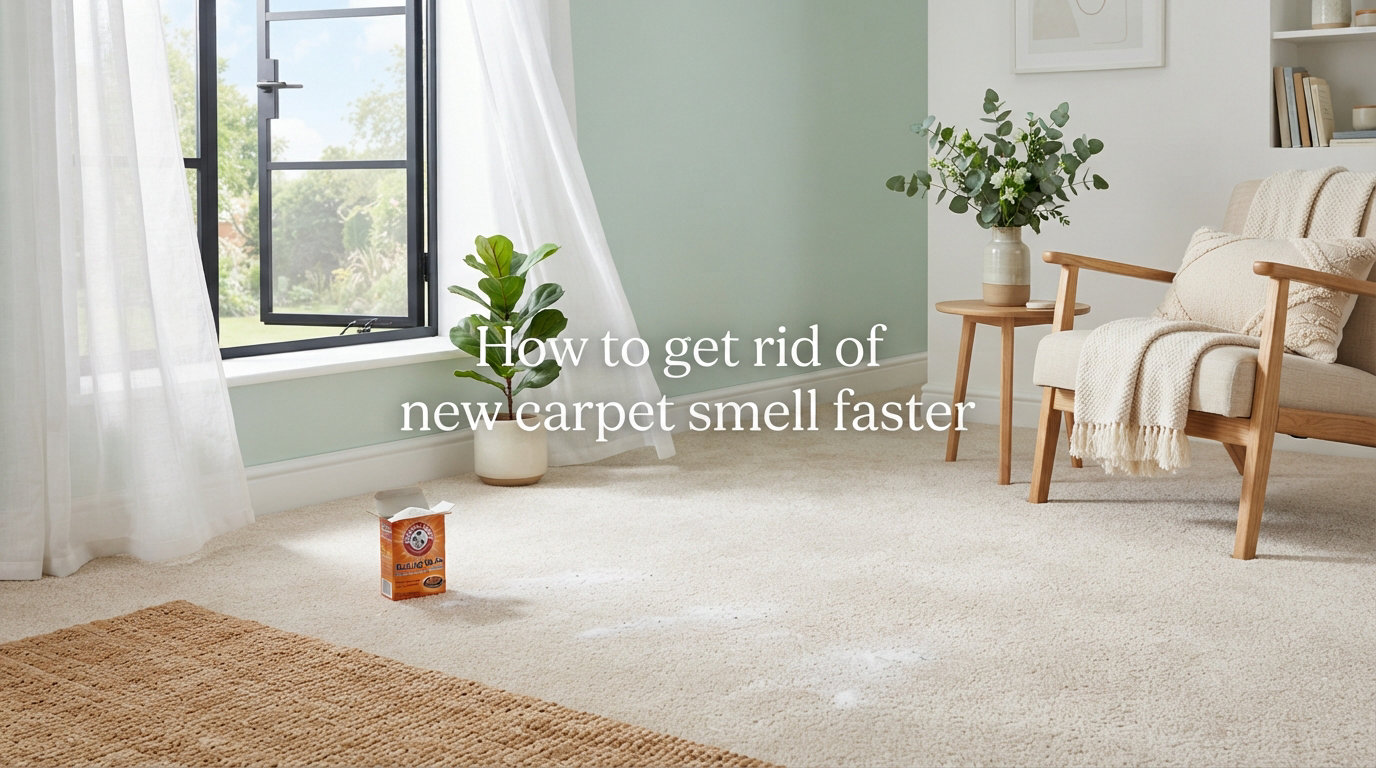
That fresh carpet looks fantastic, but the chemical odor that comes with it can be hard to live with. If you just had new flooring installed, you are probably searching for how to get rid of new carpet smell faster so you can use your rooms again. The good news is that the smell is temporary, and there are proven methods to clear the air in days rather than weeks.
The odor comes from volatile organic compounds, or VOCs, released by carpet fibers, latex backing, and installation adhesives. These chemicals evaporate at room temperature and produce that unmistakable “new carpet” scent. While the smell fades on its own eventually, waiting it out is not your only option.
In this guide, I will walk you through exactly what causes the smell, whether it is safe to breathe, and the fastest techniques to remove it. Our team reviewed manufacturer recommendations, scientific sources, and real homeowner experiences from forums to put together the most effective approach. Let us start with understanding what you are actually smelling.
Table of Contents
What Causes New Carpet Smell
New carpet smell is caused by volatile organic compounds (VOCs) off-gassing from the carpet’s synthetic fibers, latex backing, and adhesives. When a carpet is manufactured, various chemicals are used to bind fibers, create stain resistance, and attach the backing. Once the carpet is unrolled in your home, these compounds begin releasing into the air.
The most common VOCs found in new carpets include 4-phenylcyclohexene (4-PCH), formaldehyde, styrene, and benzene. 4-PCH is the chemical most responsible for the characteristic new carpet odor, and it is a byproduct of the latex backing manufacturing process. Styrene comes from the synthetic fibers themselves, while trace amounts of formaldehyde can come from adhesives and dyes.
The off-gassing process is simply these chemicals evaporating at room temperature. Think of it like a can of paint. When you open it, solvents evaporate into the air and produce a strong smell. Over time, the concentration drops as the chemicals dissipate. The same thing happens with carpet, just over a longer period.
Several factors influence how strong the smell is and how long it lasts. Carpets with thick latex backing tend to off-gas more than woven options. Glue-down installations release more VOCs than stretch-in installations because the adhesive adds its own chemical load. Tight, poorly ventilated rooms trap the compounds and intensify the odor.
Heat and humidity also play a major role. That is why new carpet often smells worse in summer or in rooms that get direct sunlight. The warmer the environment, the faster the VOCs evaporate and the more concentrated the smell becomes in the short term.
Is New Carpet Smell Harmful or Toxic
For most healthy adults, new carpet smell is unpleasant but not dangerous in typical home concentrations. The Carpet and Rug Institute states that the chemicals released are well below levels considered harmful. However, “not dangerous” does not mean “no symptoms,” and many people do experience short-term effects.
Common reactions to new carpet VOCs include headaches, dizziness, nausea, eye irritation, and throat discomfort. These symptoms are your body responding to the chemical exposure. Forum users on Reddit frequently report headaches and a groggy feeling during the first few days after installation, even with windows open.
Certain groups need to take extra precautions. Infants and young babies have developing respiratory systems and breathe more air per pound of body weight than adults, making them more sensitive to VOCs. If you have a nursery with new carpet, avoid having the baby sleep in that room for at least the first 72 hours and ideally the first week.
Pregnant women should also minimize exposure to VOCs during those first critical days. People with asthma, allergies, or chemical sensitivities may experience stronger reactions, including breathing difficulty and skin irritation. If you fall into any of these categories, treat the off-gassing period seriously.
A simple rule of thumb: if the smell gives you headaches, makes you dizzy, or irritates your breathing, leave the room and increase your ventilation efforts. Trust how your body feels rather than assuming the smell is harmless just because it is common.
How Long Does New Carpet Smell Last
New carpet smell typically lasts 3 to 7 days with proper ventilation, though traces can linger for weeks in some cases. The strongest emissions happen during the first 48 to 72 hours after installation. During this window, VOC concentrations are at their peak and the smell is most noticeable.
After the first week, the odor should fade significantly if you have been ventilating the space. Most homeowners report the smell becoming barely noticeable within 5 to 14 days. However, the timeline depends heavily on your specific carpet, room size, and how aggressively you work to clear the air.
Here is a general off-gassing timeline to set your expectations:
Days 1 to 3: Peak VOC emissions. The smell is strongest. This is when you should focus on maximum ventilation and avoid sleeping in the room.
Days 4 to 7: Emissions drop sharply. The smell is still present but noticeably weaker. Most chemical-sensitive individuals can return to the space.
Weeks 2 to 4: The odor is faint or gone for most carpets. Trace off-gassing continues but at levels most people cannot detect.
Months 1 to 3: In rare cases, poorly ventilated rooms or carpets with heavy backing may have faint residual smell. Continued air flow resolves this.
If the smell is still strong after two weeks of active ventilation, something else may be contributing. Check for trapped moisture, adhesive that did not fully cure, or a carpet pad that is holding odors. In these cases, professional cleaning can help break through the problem.
How to Get Rid of New Carpet Smell Faster
You can dramatically reduce the time it takes to clear new carpet smell by combining several methods at once. No single technique works overnight, but stacking ventilation, temperature control, odor absorbers, and air purification will cut your timeline significantly. Here are the most effective steps, in order of impact.
Step 1: Maximize Ventilation Immediately
Ventilation is the single most important step, and it works by physically carrying VOC molecules out of your home. Open every window in the carpeted room and set up fans to create a cross-breeze. Position one fan blowing fresh air in from a window, and another fan pushing air out through a different window or door.
Run this setup continuously for the first 48 to 72 hours. Reddit users consistently report that keeping windows open with fans running 24 hours a day for the first week is the standard and most effective approach. If outdoor air quality or weather makes open windows impossible, run exhaust fans in bathrooms and kitchens and use a box fan pointed out a single window.
Step 2: Raise the Temperature to Accelerate Off-Gassing
Heat speeds up the off-gassing process because VOCs evaporate faster at higher temperatures. Set your thermostat to 75 to 78 degrees Fahrenheit for the first two to three days after installation. This warmer environment forces the carpet to release its trapped chemicals more quickly rather than slowly over weeks.
The trick is to pair the higher temperature with strong ventilation. If you heat the room without venting the air, you simply concentrate the VOCs indoors. Heat the space to release the chemicals, then flush them out with open windows and fans. After the initial push, return your thermostat to normal.
Step 3: Treat the Carpet with Baking Soda
Baking soda is a natural odor absorber that pulls VOC molecules and smells out of carpet fibers. Liberally sprinkle a full box of baking soda across the entire carpeted surface, working it gently into the fibers with a broom or brush. Let it sit for at least several hours, or ideally overnight.
Vacuum thoroughly afterward, and repeat the process. Homeowners on cleaning forums report vacuuming the treated carpet 10 or more times during the first week to pull out absorbed odors. Use a vacuum with a clean HEPA filter so you are not blowing dust and trapped chemicals back into the air.
Step 4: Use White Vinegar to Absorb Odors
White vinegar neutralizes airborne odors without adding new chemicals to the room. Pour undiluted white vinegar into several shallow bowls and place them in the corners of the room and near windows. The vinegar absorbs VOCs from the air as it evaporates, and the vinegar smell itself dissipates within a day once you remove the bowls.
Replace the vinegar every 24 hours while the carpet smell is strong. You can also lightly mist the carpet with a 1-to-1 mixture of water and vinegar, but do not soak it. Excess moisture can damage the backing or lead to mold growth, which creates an entirely different odor problem.
Step 5: Run an Air Purifier with Activated Carbon
A quality air purifier with an activated carbon filter is one of the most effective tools for removing VOCs from indoor air. Standard HEPA filters capture particles like dust and pollen, but they do not trap gases or chemical molecules. Activated carbon, however, adsorbs VOCs and holds them in its porous structure.
Run the air purifier on its highest setting in the carpeted room for the first week. Forum communities on Reddit strongly recommend air purifiers with activated carbon filters for new carpet situations. Position the purifier in the center of the room for maximum coverage, and keep the windows open during the day so the purifier and ventilation work together.
Step 6: Steam Clean or Wet Vac the Carpet
A deep clean with a steam cleaner or wet vac pulls residual chemicals out of the carpet fibers and backing. The heat from steam helps release trapped VOCs while the extraction removes them from the material entirely. Several Reddit users note that wet vacuuming was more effective than dry vacuuming alone for stubborn carpet odors.
You can rent a steam cleaner or hire a professional service. If you do it yourself, use only water or a manufacturer-approved cleaning solution. Avoid adding perfumed cleaners, since those just mask the chemical smell with fragrance rather than removing the underlying VOCs. Let the carpet dry completely before walking on it.
Natural Remedies Ranked by Effectiveness
Not all natural remedies work equally well. Here is how the common options stack up based on homeowner reports and testing.
Most effective: Baking soda and activated charcoal. Both physically absorb odor molecules and VOCs from carpet fibers and the surrounding air. Baking soda is cheaper and easier to apply directly to the carpet. Activated charcoal in mesh bags works well for ongoing air absorption when placed around the room.
Moderately effective: White vinegar in bowls. Vinegar neutralizes airborne odors well but needs frequent replacement and only treats the air, not the carpet itself. It is best used as a complement to baking soda and ventilation.
Mildly effective: Houseplants. Certain plants like spider plants, peace lilies, and Boston ferns can absorb small amounts of VOCs. They help in a supporting role but cannot handle a strong new carpet smell on their own.
Avoid: Air fresheners, scented candles, and fragrance sprays. These products mask the chemical smell rather than removing the VOCs. Worse, they add their own volatile compounds to the air, increasing your total chemical exposure. Onions and apples are sometimes suggested as odor absorbers, but they are messy and far less effective than the methods above.
How to Prevent New Carpet Smell Before Installation
The best way to deal with new carpet smell is to prevent it before it starts. If you have not yet purchased your carpet, you have options that can dramatically reduce or eliminate the off-gassing problem.
Look for carpets certified by the Carpet and Rug Institute’s Green Label Plus program. This certification means the carpet has been tested and meets strict limits for VOC emissions. Green Label Plus carpets release significantly fewer chemicals than standard options, and many produce almost no noticeable odor after installation.
Ask the retailer to unroll and air out the carpet in their warehouse for 24 to 48 hours before delivery. This gives the carpet a head start on off-gassing before it ever enters your home. The strongest emissions happen in the first day, so letting the carpet breathe in a well-ventilated space removes a large portion of the chemicals upfront.
Choose a stretch-in installation over a glue-down method whenever possible. Stretch-in installations use tack strips instead of adhesive, which eliminates the VOCs that adhesives contribute. If you must use adhesive, ask for low-VOC or Green Label certified options.
Finally, schedule installation during a season when you can keep windows open. Installing carpet in 2026 during warmer months means you can ventilate aggressively from day one, which is the most important factor in how quickly the smell disappears.
FAQs
How long does it take for new carpet smell to go away?
New carpet smell typically lasts 3 to 7 days with proper ventilation. VOC emissions are strongest during the first 48 to 72 hours after installation. With windows open and fans running, most homeowners find the smell barely noticeable within 5 to 14 days. In rare cases with poor ventilation or heavy backing, faint traces can linger for several weeks.
How to speed up carpet off-gassing?
The fastest way to speed up off-gassing is to combine heat with ventilation. Set your thermostat to 75 to 78 degrees Fahrenheit to force VOCs to evaporate faster, then flush the air out with open windows and cross-breeze fans. Add baking soda on the carpet, vinegar bowls in corners, and an activated carbon air purifier to remove the chemicals from both the carpet and the air simultaneously.
Are new carpet fumes harmful?
For most healthy adults, new carpet fumes are not dangerous at typical home concentrations but can cause headaches, dizziness, and throat irritation. Infants, pregnant women, and people with asthma or chemical sensitivities should avoid the room for the first 72 hours. If you experience persistent symptoms, increase ventilation or leave the space until the smell fades.
Is it normal for new carpet to smell bad?
Yes, a strong chemical odor is normal for new carpet and comes from VOCs off-gassing from the fibers, latex backing, and adhesives. The smell should peak within the first 3 days and fade steadily after that. If the odor is still intense after two weeks of active ventilation, check for trapped moisture or uncured adhesive.
Conclusion
Getting rid of new carpet smell faster comes down to one core principle: remove the VOCs from both the carpet and the air as quickly as possible. Ventilation is your foundation, and adding heat, baking soda, vinegar, and an activated carbon air purifier accelerates the process dramatically. Stack these methods together during the first week, and you can cut your off-gassing timeline from weeks to days.
Remember that masking the smell with air fresheners does more harm than good. The goal is to eliminate the chemicals, not cover them up. If you are planning a future installation, choosing a Green Label Plus certified carpet and airing it out before delivery can prevent the problem entirely.
For sensitive groups like babies, pregnant women, and anyone with respiratory conditions, treat the first 72 hours as a no-go period. Prioritize fresh air, watch for symptoms, and trust your body. With the steps in this guide, your new carpet will smell like home instead of a factory in no time.