
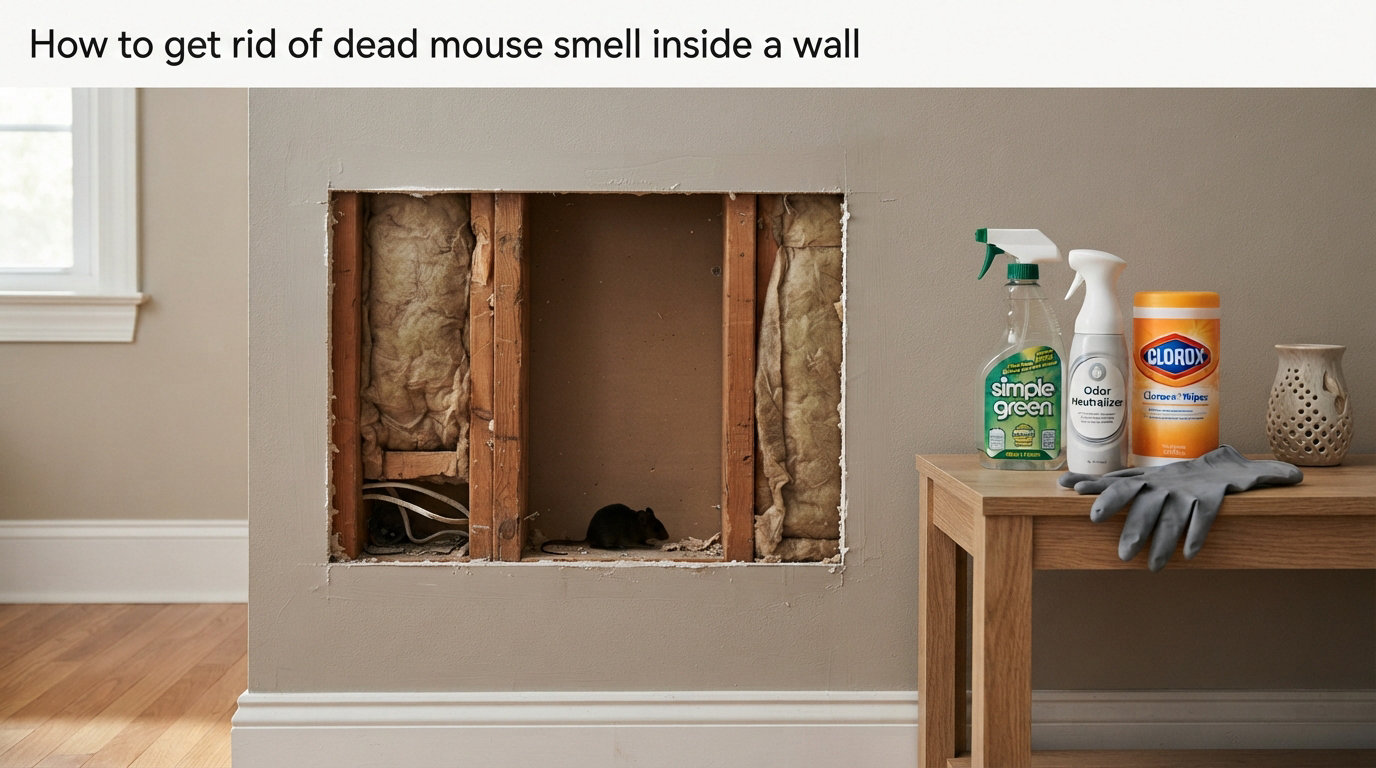
That lingering, sickly-sweet rot drifting from behind your drywall is one of the most stubborn odors a homeowner can face. Learning how to get rid of dead mouse smell inside a wall means understanding what causes the smell, how long it naturally lasts, and which remedies genuinely neutralize it versus which ones simply cover it up for a few hours.
Our team dug through dozens of homeowner forum threads, pest control references, and real-world experiences to build this guide. The encouraging news is that the odor almost always fades on its own within a few weeks, but there are proven steps you can take right now to speed up the process and breathe easier.
In this guide we cover everything from identifying the smell and pinpointing the source, to DIY odor neutralizers, enzyme sprays, ventilation strategies, health risks, seasonal timing, and knowing when paying a professional actually makes sense.
Table of Contents
What Causes Dead Mouse Smell and What It Smells Like
Dead mouse smell is caused by gases released during decomposition, primarily skatole and putrescine, which bacteria produce as they break down tissue inside the wall cavity.
Most people describe the odor as a heavy, sweet rot mixed with something sulfuric, similar to spoiled meat that has been left out too long. It is noticeably different from a natural gas leak, which smells like rotten eggs due to the added mercaptan odorant. A dead rodent smell leans sweeter and more organic, and it tends to intensify in waves rather than staying constant.
Homeowners on cleaning forums frequently mention that the scent hits hardest near baseboards, electrical outlets, and any small gaps where wall cavities connect to the room. If the smell seems to follow the wall rather than a single appliance or drain, a trapped and deceased mouse is the most likely culprit.
How Long Does the Smell Last in a Wall
A dead mouse smell typically lasts between two and six weeks inside a wall, with most cases peaking around week two before gradually fading as the body finishes drying out.
Several factors stretch or shorten that timeline. The size of the animal matters, since a larger rodent produces more tissue and therefore more odor over a longer period. Ambient temperature is the biggest variable, because warmth accelerates bacterial growth and decomposition. A mouse that dies during a heat wave can peak and pass through the worst phase faster, while one that dies in a cool, dry wall cavity may linger for the full six weeks.
Humidity plays a role too. Damp walls and high moisture slow the drying process and keep the bacteria active longer, which extends the smell. Good airflow in the room does not reach the sealed cavity itself, but it does help clear the gases that escape into your living space.
Why the Smell Comes and Goes Throughout the Day
The odor fluctuates because decomposition gases build up inside the sealed wall cavity and then escape in bursts driven by changes in air pressure and temperature.
When your heating system kicks on, warm air rises and creates pressure differences that can push gases out through tiny cracks around outlets and baseboards. The same thing happens when afternoon sun warms one side of the house. That is why many people notice the smell is worst in the morning, after the house has been closed up overnight, and seems to ease when windows are opened.
This on-and-off pattern is normal and does not mean the problem is gone. It simply reflects how the gases move. Understanding this helps you avoid the false reassurance that comes when the smell temporarily disappears.
How to Locate a Dead Mouse Inside Your Wall
Locating the source starts with your nose, because the strongest point of the odor usually corresponds to the closest section of wall to the carcass.
Here is a step-by-step approach that homeowners on forums have found effective:
Step 1: Walk slowly along the wall and pause every foot or two, sniffing near the baseboard. Mark the spot that smells strongest with a piece of tape.
Step 2: Check electrical outlets and switch plates on that wall. Remove the cover plate carefully and sniff near the opening, since these gaps connect directly to the cavity behind the drywall.
Step 3: Look for secondary signs. A small wet stain, fly activity, or a slight discoloration on the drywall can mark the area directly behind the body.
Step 4: Narrow the height. If the smell is strongest near the floor, the mouse likely died at the bottom plate. If it seems to come from higher up, it may have fallen between studs from the attic.
If you cannot pin it down after this process, do not start cutting randomly. Forum users repeatedly warn that guessing wrong means patching drywall for nothing. At that point, odor management is often more practical than a search-and-destroy mission.
How to Get Rid of Dead Mouse Smell Inside a Wall
The most effective way to get rid of dead mouse smell inside a wall is to combine odor absorbers placed near the source with active ventilation, while the body dries out on its own timeline.
You do not need expensive equipment for the core remedies. Most homeowners already have the materials on hand. The strategy is to absorb the gases that escape while you wait for decomposition to finish.
1. Baking soda: Place shallow bowls of baking soda as close to the strongest-smelling spot as possible, including inside cabinets or closets that back up to the affected wall. Replace it every three to four days as it absorbs odor and loses potency.
2. Activated charcoal packets: Charcoal is one of the most effective passive absorbers. Set several charcoal bags near baseboards and outlets. Homeowners on forums consistently rank charcoal alongside an air purifier as their most reliable temporary fix.
3. White vinegar: Set out bowls of undiluted white vinegar in the room. Vinegar neutralizes airborne odors rather than just masking them. The vinegar smell itself dissipates within a day, and many people refill the bowls every few days.
4. Coffee grounds: Used, dried coffee grounds scattered in shallow dishes provide a pleasant scent layer and a mild absorbing effect. They work best as a supplement to charcoal or baking soda rather than on their own.
5. Odor-neutralizing spray: Products that neutralize rather than mask odor, such as enzyme-based sprays, can be lightly misted near outlet gaps and baseboards. Avoid soaking the drywall, since trapped moisture slows the decomposition drying process.
Stack two or three of these methods together for the best results. A single remedy rarely handles a strong smell on its own, but a layered approach noticeably reduces the odor within a few days.
Enzyme Sprays vs Natural Remedies: Which Works Better
Enzyme sprays generally work faster and more completely than natural remedies because they break down the organic compounds causing the odor at a molecular level.
Natural options like baking soda, vinegar, charcoal, and coffee grounds are passive absorbers. They pull odor molecules from the air but do not neutralize the source gases still being produced inside the wall. This makes them excellent for managing the smell day to day, but they need constant refreshing.
Enzyme sprays contain proteins that digest the organic matter responsible for the smell. Pest control professionals and cleaning forums note that enzyme sprays are very effective at eliminating airborne odors quickly. The limitation is access, because the spray has to reach the carcass or the gases to work, and most of the body is sealed behind drywall.
The practical compromise most homeowners settle on is using natural absorbers for ongoing room-level management and reserving enzyme spray for outlet gaps, small openings, and any spot where the wall cavity is exposed.
Ventilation Techniques That Actually Help
Ventilation works by clearing the gases that escape the wall cavity before they concentrate in your room, and it is the single fastest way to get immediate relief.
Set up cross-ventilation by opening a window on one side of the room and placing a box fan pointing outward in another window. This pulls fresh air through and pushes odor-laden air out. Run it for at least an hour at a time, several times a day during the worst of the smell.
A room air purifier with an activated carbon filter is the most recommended powered solution on homeowner forums. The carbon captures odor molecules that a standard HEPA filter alone cannot. Keep it running continuously near the affected wall for the duration of the smell.
Health Risks of Dead Mouse Smell
For most people, the smell of a single dead mouse in a wall is unpleasant but not dangerous, though it does carry some health considerations worth knowing.
Decomposing tissue can release bacteria and potential pathogens into the immediate area. The risk to humans is low when the carcass is sealed behind drywall and you are only dealing with airborne gases. However, people with asthma, allergies, or compromised immune systems may notice respiratory irritation from prolonged exposure.
The smell becomes a more serious concern if you see flies, maggots, or liquid staining on the wall, since those signs indicate heavier decomposition that could attract additional pests. In those cases, physically removing the carcass is safer than waiting it out.
A persistent smell that spreads to multiple rooms or lasts well beyond six weeks can also point to a larger problem than a single mouse. That is worth investigating as a potential sign of a broader infestation rather than a one-off event.
Seasonal Factors That Change the Timeline
Temperature is the single biggest factor in how fast the smell resolves, which means the season matters a lot.
In summer, a warm house speeds up bacterial activity and decomposition. The smell hits harder and faster, but it also peaks and begins fading sooner, often clearing within two to three weeks. The trade-off is that the peak intensity is worse, and fly activity is more likely.
In winter, cooler wall cavities slow everything down. Bacteria work more slowly in the cold, so decomposition stretches out. Homeowners often report smells lingering five to six weeks during cold months, but the peak intensity is usually milder because gases are produced more gradually.
This seasonal difference explains why two people can have very different experiences with the same problem depending on when it happens. Setting expectations based on your season helps you avoid thinking something is wrong when the timeline simply runs longer.
When to Call a Professional for Wall Removal
Calling a professional makes sense when the smell is unbearable, lasts well beyond the typical window, or you have confirmed the location but are not comfortable cutting into drywall yourself.
Pest control companies and wildlife removal specialists can locate and extract the carcass, sanitize the cavity, and seal the opening. Forum users who went this route often mention that the relief is immediate once the source is physically removed, since the gases stop being produced.
Cost is the main consideration. Homeowners report a wide range depending on location and difficulty, with professional dead animal removal typically running from around $150 on the low end to $400 or more for cases that require cutting into walls and repairing them. Some companies bundle the drywall repair, while others leave patching to you.
As a rule of thumb, if you have tried absorbers and ventilation for two to three weeks with no improvement, or if the smell is so strong it is forcing you out of rooms, the cost of professional removal is usually justified.
Preventing Future Dead Mice in Your Walls
Prevention comes down to two things: sealing entry points and avoiding the use of poison bait indoors.
Mice can squeeze through gaps as small as a dime. Walk the perimeter of your home and seal cracks around the foundation, pipes, vents, and utility lines with steel wool or copper mesh backed by caulk. Pay attention to gaps where pipes enter walls, since those are common highways into wall cavities.
The biggest single tip from forums is to stop using rodenticide bait inside. Poisoned mice often retreat into walls and die there, which is exactly the problem you are dealing with now. Use snap traps placed along baseboards instead, so you can find and remove mice quickly before they end up decomposing somewhere inaccessible.
Finally, schedule a quick inspection each fall before mice start looking for warm indoor shelter. Catching and sealing a small gap in October is far easier than tracking down a smell in January.
Frequently Asked Questions
What can neutralize dead mouse smell?
Activated charcoal, baking soda, and white vinegar are the most effective household odor neutralizers for dead mouse smell. Enzyme sprays work even faster because they break down the organic compounds at a molecular level. Layering two or three of these methods near the affected wall produces the best results.
Will a dead mouse in the wall stop smelling?
Yes, the smell will stop on its own once the body finishes decomposing and drying out, which typically takes two to six weeks. No chemical can instantly eliminate the source gases while the carcass remains sealed in the wall, so the goal is managing the odor until natural decomposition completes.
How long will a dead mouse smell in the wall?
A dead mouse usually smells for two to six weeks, with the worst intensity peaking around the second week. The exact duration depends on temperature, humidity, and the size of the animal. Warm, humid conditions speed up decomposition but make the peak worse, while cool, dry walls stretch the timeline out.
How long does it take for dead mouse smell to go away?
Most cases resolve fully within three to four weeks, though some last up to six weeks in cool or damp wall cavities. Using charcoal, baking soda, vinegar, and ventilation can make the waiting period far more bearable, but they cannot shorten the underlying decomposition timeline.
How do you get rid of dead mouse smell in walls?
Place baking soda and activated charcoal near the strongest-smelling area, set out bowls of white vinegar, run an air purifier with a carbon filter, and use cross-ventilation with box fans. Add an enzyme spray near any gaps or outlets. These methods manage the odor while the carcass dries out on its own.
Does a dead mouse leave a smell?
Yes, a dead mouse leaves a strong, sweet, rotting smell caused by decomposition gases like skatole and putrescine. The odor is distinct from a gas leak and typically concentrates near baseboards, outlets, and gaps where the wall cavity meets the room.
What to do if you can smell a dead mouse but can’t find it?
Sniff along the baseboard to find the strongest point, check electrical outlets and switch plates for gap odors, and look for flies or small stains as secondary clues. If you cannot pinpoint it, focus on odor management with charcoal, vinegar, and an air purifier rather than cutting drywall blindly.
Conclusion
Dealing with that wall odor is miserable, but it is almost always temporary. Knowing how to get rid of dead mouse smell inside a wall comes down to layering absorbers like charcoal, baking soda, and vinegar, running ventilation and a carbon-filtered air purifier, and waiting out the two-to-six-week decomposition window.
If the smell is unbearable or drags on past six weeks, professional removal is a reasonable investment. Either way, seal your entry points and switch to snap traps so you never have to repeat the experience.