
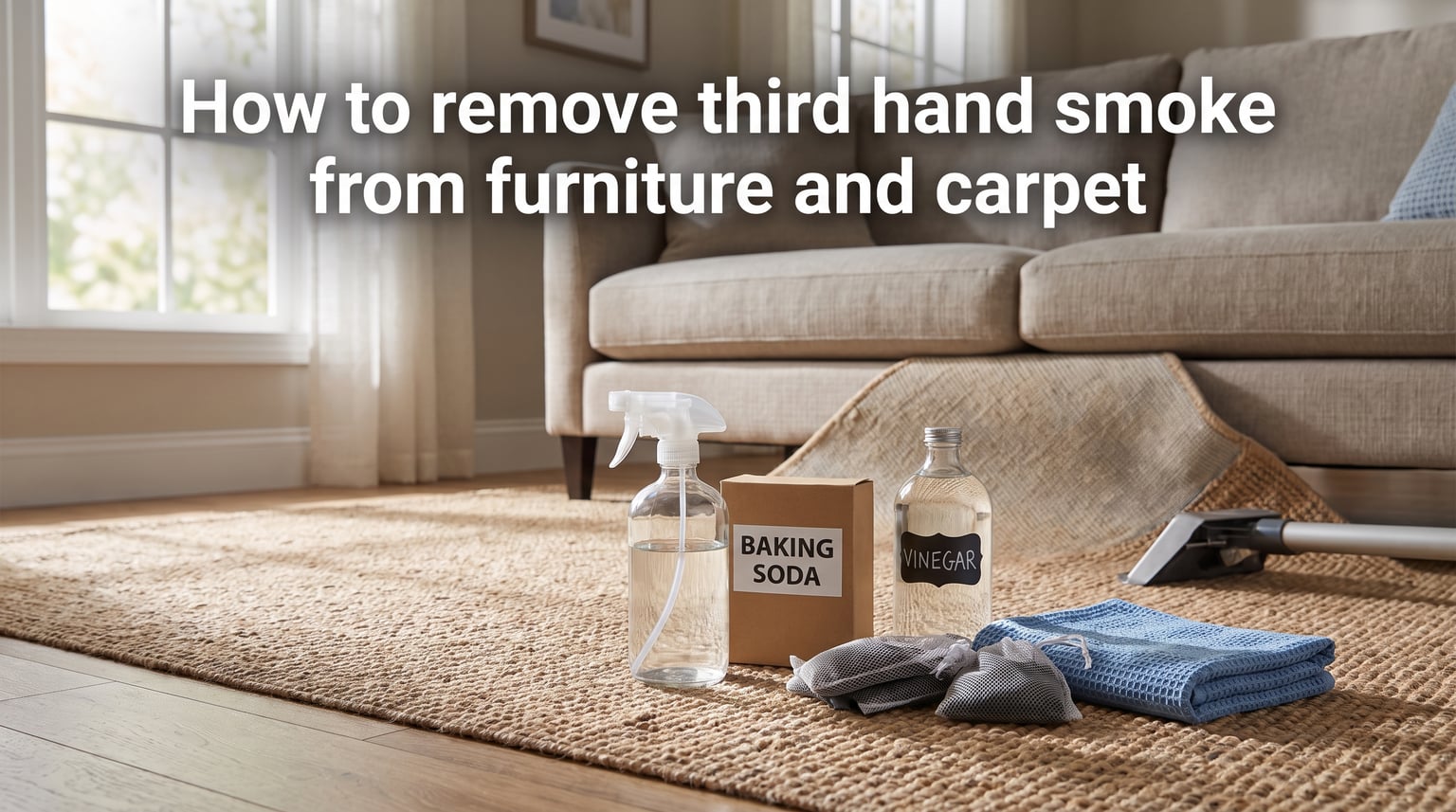
If you just moved into a home where the previous owner smoked, or you bought a vintage couch that reeks of stale tobacco, you are dealing with more than just a bad smell. You are dealing with thirdhand smoke, a stubborn chemical residue that clings to furniture fibers, carpet padding, walls, and even dust particles. Learning how to remove third hand smoke from furniture and carpet is essential if you want a truly clean home, not just one that smells better for a few days.
I have spent years researching and testing cleaning methods for smoke-damaged homes, and I can tell you upfront that this is not a one-and-done job. The toxic chemicals in tobacco smoke residue, including nicotine, formaldehyde, and naphthalene, bond with surfaces at a molecular level. Surface-level cleaning helps, but some items may need multiple treatments or even replacement.
This guide walks you through exactly what thirdhand smoke is, why it poses real health risks, and step-by-step methods to remove it from your furniture and carpet. I will also cover when cleaning is enough versus when you should replace items entirely.
Table of Contents
What Is Thirdhand Smoke?
Thirdhand smoke is the chemical residue left behind after tobacco burns and the smoke settles on indoor surfaces. Unlike secondhand smoke, which is the smoke you inhale while someone nearby is actively smoking, thirdhand smoke persists long after the cigarette is extinguished. It clings to furniture, carpets, drapes, clothing, walls, and even ceiling tiles.
According to the Mayo Clinic, thirdhand smoke builds up over time. Each time someone smokes indoors, more residue accumulates on surfaces, layer upon layer. The chemicals embed themselves into porous materials like upholstery foam and carpet fibers, making them extremely difficult to remove.
Here is what makes thirdhand smoke particularly tricky: these chemicals do not just sit on the surface. They bond with materials at a molecular level. Nicotine reacts with indoor air pollutants like nitrous acid to form new carcinogenic compounds called tobacco-specific nitrosamines. This means the residue actually changes chemically over time, sometimes becoming more harmful, not less.
The main toxic chemicals found in thirdhand smoke include nicotine, formaldehyde, naphthalene, and a range of volatile organic compounds (VOCs). These substances are known carcinogens, meaning they have been linked to cancer in humans.
Why Thirdhand Smoke Matters for Your Health
You might wonder whether thirdhand smoke is actually dangerous or just unpleasant. The science is clear: it poses real health risks, especially for children, pregnant women, and anyone with respiratory conditions.
Children are the most vulnerable because they crawl on floors, touch surfaces constantly, and put their hands in their mouths. A toddler playing on a smoke-contaminated carpet is directly ingesting nicotine and carcinogenic chemicals through skin contact and hand-to-mouth behavior. Research from the Thirdhand Smoke Research Consortium at San Diego State University has shown that children living in homes where smoking occurred have measurable levels of nicotine on their hands and in their urine.
Adults are not immune either. Thirdhand smoke chemicals off-gas back into the air over time, meaning you breathe them in even when no one is smoking. Opening windows and using fans does not remove these embedded chemicals. The only way to reduce exposure is through thorough cleaning or replacement of contaminated materials.
How Long Does Thirdhand Smoke Stay on Furniture and Carpet?
Thirdhand smoke does not go away on its own. It can linger on surfaces for months or even years if left untreated. The chemicals in tobacco smoke residue are remarkably persistent because they bond chemically with the materials they land on.
On hard, non-porous surfaces like sealed wood furniture or metal, thirdhand smoke residue can potentially be removed with thorough cleaning. On porous surfaces like upholstered furniture, carpet, and carpet padding, the chemicals penetrate deep into the fibers and foam. In these cases, the residue can persist indefinitely without aggressive intervention.
Several factors affect how long thirdhand smoke stays: the amount and duration of smoking that occurred, the type of materials in your home, ventilation patterns, temperature, and humidity levels. A home where someone smoked heavily for 20 years will have far deeper contamination than an apartment where a tenant smoked occasionally for six months.
How to Remove Third Hand Smoke from Furniture and Carpet: Preparation
Before diving into the cleaning steps, you need the right supplies. Different materials require different approaches, so I will break this into separate guides for furniture and carpet.
Gather these general supplies before you start:
White vinegar (1-2 gallons for whole-room treatment)
Baking soda (several boxes for large areas)
Trisodium phosphate (TSP) cleaner for hard surfaces
Enzyme-based cleaner for organic odor breakdown
Clean spray bottles, microfiber cloths, and scrub brushes
Activated charcoal bags for ongoing odor absorption
HEPA vacuum cleaner with attachments
Steam cleaner (rental or purchase) for carpets and upholstery
Gloves, mask, and eye protection
Always work in a well-ventilated area. Open windows and set up fans to pull air out of the room while you clean.
How to Remove Third Hand Smoke from Furniture
The approach for cleaning smoke-damaged furniture depends on whether you are dealing with hard surfaces like wood or soft surfaces like upholstered couches and chairs. I will cover both.
Method 1: Cleaning Wood and Hard-Surface Furniture
Hard-surface furniture is the easiest to clean because tobacco residue sits on the surface rather than penetrating deep into the material. Here is the step-by-step process:
Step 1: Mix a TSP solution following the manufacturer’s instructions. TSP is a heavy-duty cleaner that cuts through nicotine and tar residue effectively. Put on gloves, eye protection, and a mask before handling TSP.
Step 2: Wipe down all surfaces thoroughly with the TSP solution using a clean microfiber cloth. Pay special attention to corners, crevices, and the undersides of furniture where residue accumulates. Change cloths frequently to avoid spreading residue around.
Step 3: Rinse the surface with clean water and a fresh cloth to remove any TSP residue. TSP can leave a film if not rinsed properly.
Step 4: For remaining odors, wipe surfaces with undiluted white vinegar. Vinegar helps neutralize alkaline nicotine residue. Let it sit for 15 minutes, then wipe dry.
Step 5: Place activated charcoal bags inside drawers and cabinets. Charcoal absorbs ongoing off-gassed chemicals. Replace the charcoal bags every 30 days for three months.
Step 6: If odors persist after two full cleaning cycles, consider sealing the wood with a shellac-based primer like Kilz. This seals in remaining odors rather than removing them, but it is effective for stubborn cases. Forum users on Reddit consistently report that Kilz primer is the most reliable solution for wood furniture that will not stop smelling.
Method 2: Cleaning Upholstered Furniture
Upholstered furniture is significantly harder to clean because smoke chemicals penetrate deep into the foam and fabric fibers. Here is the process:
Step 1: Remove all cushions and vacuum every surface thoroughly using a HEPA vacuum. This removes loose particles and surface dust contaminated with nicotine.
Step 2: Sprinkle a generous layer of baking soda over all fabric surfaces. Work it into the fabric with a dry brush. Let it sit for at least 24 hours, then vacuum it up. Repeat this process two or three times.
Step 3: Mix equal parts white vinegar and water in a spray bottle. Lightly mist the fabric (do not soak it) and let it air dry. The vinegar smell will dissipate as it dries, taking some of the smoke odor with it.
Step 4: Use a steam cleaner with an upholstery attachment. Add an enzyme-based cleaner to the steam solution. Enzyme cleaners break down the organic compounds in tobacco residue at a molecular level. Move slowly across each section to allow the steam to penetrate.
Step 5: For removable cushion covers, wash them in hot water with 1 cup of vinegar and your regular detergent. Add 1 cup of baking soda to the wash cycle. Air dry in direct sunlight if possible, as UV light helps break down remaining chemicals.
Step 6: If the furniture still smells after two full cleaning rounds, the foam padding likely has deep contamination. You can replace the foam cushions while keeping the fabric, or call a professional upholstery cleaning service for ozone treatment.
How to Remove Third Hand Smoke from Carpet
Carpet is one of the most challenging surfaces to decontaminate because tobacco smoke residue works its way down through the carpet fibers and into the padding and subfloor underneath. Here is the step-by-step process.
Step 1: Vacuum the entire carpet thoroughly with a HEPA vacuum. Go over high-traffic areas multiple times. Empty the vacuum canister or replace the bag outdoors to avoid releasing trapped particles back into your home.
2: Sprinkle dry baking soda liberally across the entire carpeted area. Use approximately 1 pound of baking soda per 50 square feet. Work it deep into the fibers using a broom or brush. Let it sit for 24 to 48 hours.
Step 3: Vacuum up all the baking soda. You will likely notice a reduction in odor already. Repeat this baking soda treatment a second time for best results.
Step 4: Mix a solution of 1 cup white vinegar per gallon of hot water. Use this in a steam cleaner or carpet extractor. The acidic vinegar helps neutralize the alkaline nicotine residue embedded in carpet fibers.
Step 5: Add an enzyme-based carpet cleaner to your steam cleaning solution for the second pass. Enzyme cleaners contain live cultures that break down the organic compounds in tobacco residue. This is the step that targets the chemicals at a molecular level rather than just masking odors.
Step 6: Open windows and use fans to dry the carpet completely within 12 hours. Moisture trapped in carpet padding can lead to mold growth, which creates its own set of health problems.
Step 7: Place activated charcoal bags or bowls of dry coffee grounds around the room for ongoing odor absorption. Replace them every two weeks for at least two months after cleaning.
When Carpet Cleaning Is Not Enough
I want to be honest with you here: many Reddit users in r/CleaningTips and r/Home report that carpet cleaning only provides temporary relief. The smell often returns weeks later because the chemicals have penetrated through the carpet into the padding and sometimes the subfloor.
If you have steam cleaned twice and the odor persists after 30 days, the carpet padding almost certainly needs replacement. In heavily smoked-in homes, full carpet and padding removal is often the only permanent solution. You can save money by removing the old carpet and padding yourself, then having new padding and carpet installed professionally.
Natural Cleaning Solutions That Actually Help
Several natural cleaning agents can help reduce thirdhand smoke odors. While they may not fully eliminate all chemical residues on their own, they are effective as part of a multi-step cleaning approach.
White vinegar is mildly acidic, which helps neutralize nicotine, an alkaline compound. Use it full strength on hard surfaces and diluted 50/50 with water for fabrics and carpets.
Baking soda absorbs odors through a chemical reaction that neutralizes both acidic and alkaline compounds. It works best when left in contact with surfaces for extended periods, ideally 24 hours or more.
Activated charcoal is highly porous and traps chemicals through a process called adsorption. Unlike regular charcoal, activated charcoal has been treated to create millions of tiny pores that capture VOCs and other airborne chemicals. Place bags of activated charcoal in rooms, drawers, and closets for ongoing absorption.
However, I want to set realistic expectations. Forum users consistently report that natural solutions alone are temporary fixes. The smell returns because these methods neutralize odors but do not always break down the underlying chemical compounds. For lasting results, combine natural methods with enzyme cleaners and TSP.
When to Clean vs Replace Items
One of the most common questions I see on forums is whether it is worth trying to clean smoke-damaged items or if replacement is the better choice. Here is my practical decision guide.
Clean these items: Hard wood furniture with sealed finishes, metal furniture, glass surfaces, sealed tile or hardwood floors, washable fabrics, and clothing. These materials respond well to thorough cleaning with TSP, vinegar, and enzyme cleaners.
Consider replacing these items: Old upholstered furniture with deep smoke penetration, carpet and padding in rooms where heavy smoking occurred, mattresses exposed to long-term smoke, and untreated or unsealed wood that has absorbed odors.
Always replace these items: Carpet padding if the carpet itself still smells after two professional cleanings, fabric lampshades (they cannot be effectively cleaned), and disposable HVAC filters (replace them immediately when moving into a smoked-in home).
The cost question is real. Professional smoke remediation services typically charge between $200 and $1,000 per room depending on severity. Ozone treatment runs $200 to $500 per treatment. Compare that to replacing carpet and padding in an average room, which costs $500 to $1,500 including installation. For light contamination, cleaning wins. For heavy, years-long contamination, replacement is often more cost-effective long-term.
Preventing Thirdhand Smoke Buildup
If you are cleaning up after your own smoking habit or want to protect your home going forward, prevention is straightforward but requires commitment.
The only guaranteed prevention is a strict no-smoking policy indoors. This includes cigarettes, cigars, pipes, and e-cigarettes, all of which leave chemical residues. If household members smoke, require them to do so outside and change their outer clothing before sitting on furniture or handling items in the home.
Run a HEPA air purifier with an activated carbon filter continuously in main living areas. The carbon filter captures VOCs and other chemicals that off-gas from surfaces, while the HEPA filter traps contaminated dust particles. Replace filters according to the manufacturer schedule for best results.
Maintain a regular deep cleaning schedule that includes vacuuming with a HEPA vacuum, washing soft furnishings, and wiping down hard surfaces. Early intervention prevents the layer-upon-layer accumulation that makes thirdhand smoke so difficult to remove.
FAQs
How long does third hand smoke stay on furniture?
Thirdhand smoke can linger on furniture for months to years if left untreated. On hard, sealed surfaces it can be removed with thorough cleaning using TSP and vinegar. On upholstered furniture and foam cushions, the chemicals penetrate deep into the fibers and may persist indefinitely without aggressive cleaning or replacement of the foam padding.
How do you get rid of thirdhand smoke?
To get rid of thirdhand smoke, combine multiple cleaning methods: vacuum with a HEPA filter, clean hard surfaces with TSP, treat fabrics and carpets with baking soda followed by steam cleaning with an enzyme cleaner and vinegar solution, and place activated charcoal for ongoing odor absorption. For severe contamination, professional ozone treatment or replacement of porous items may be necessary.
Does sitting on furniture after smoking leave a smell in furniture?
Yes, sitting on furniture after smoking transfers thirdhand smoke residue directly from clothing and skin onto the furniture. The nicotine and other chemicals in tobacco smoke settle on fabric and upholstered surfaces, where they bond with the fibers and release odors over time. This is why thirdhand smoke builds up even when smoking occurs in a different room.
How to get second hand smoke smell out of furniture?
Remove secondhand smoke smell from furniture by first vacuuming all surfaces with a HEPA vacuum, then sprinkling baking soda and letting it sit for 24 hours before vacuuming again. Follow with a steam cleaning using a vinegar and enzyme cleaner solution. For wood furniture, wipe with TSP solution followed by white vinegar. Repeat the process twice if odors persist.
Can you get secondhand smoke from furniture?
Yes, you can be exposed to thirdhand smoke chemicals from furniture. The residue on contaminated furniture off-gasses back into the air over time, and skin contact with treated surfaces allows chemicals to be absorbed through the skin. Children are especially at risk because they touch furniture and put their hands in their mouths.
Is it possible to get smoke smell out of carpet?
Yes, it is possible to remove smoke smell from carpet, but success depends on how deep the contamination goes. Surface-level odor can be removed with baking soda, vinegar steam cleaning, and enzyme cleaners. However, if chemicals have penetrated into the carpet padding and subfloor, replacement of the padding and professional-grade treatment may be the only lasting solution.
Wrapping Up
Learning how to remove third hand smoke from furniture and carpet takes patience, the right supplies, and realistic expectations. The key takeaways are straightforward: use TSP for hard surfaces, combine baking soda with steam cleaning and enzyme cleaners for soft materials, and place activated charcoal for ongoing odor absorption.
Do not expect a single cleaning pass to solve deep contamination. Plan for multiple treatment rounds over several weeks. And if the odor returns after two thorough cleaning cycles, seriously consider replacing carpet padding or upholstered foam rather than spending more money on treatments that will not reach the chemicals embedded deep inside.
Your health and your family’s health are worth the effort. Thirdhand smoke is not just an odor problem. It is a chemical contamination issue that requires a real solution.