
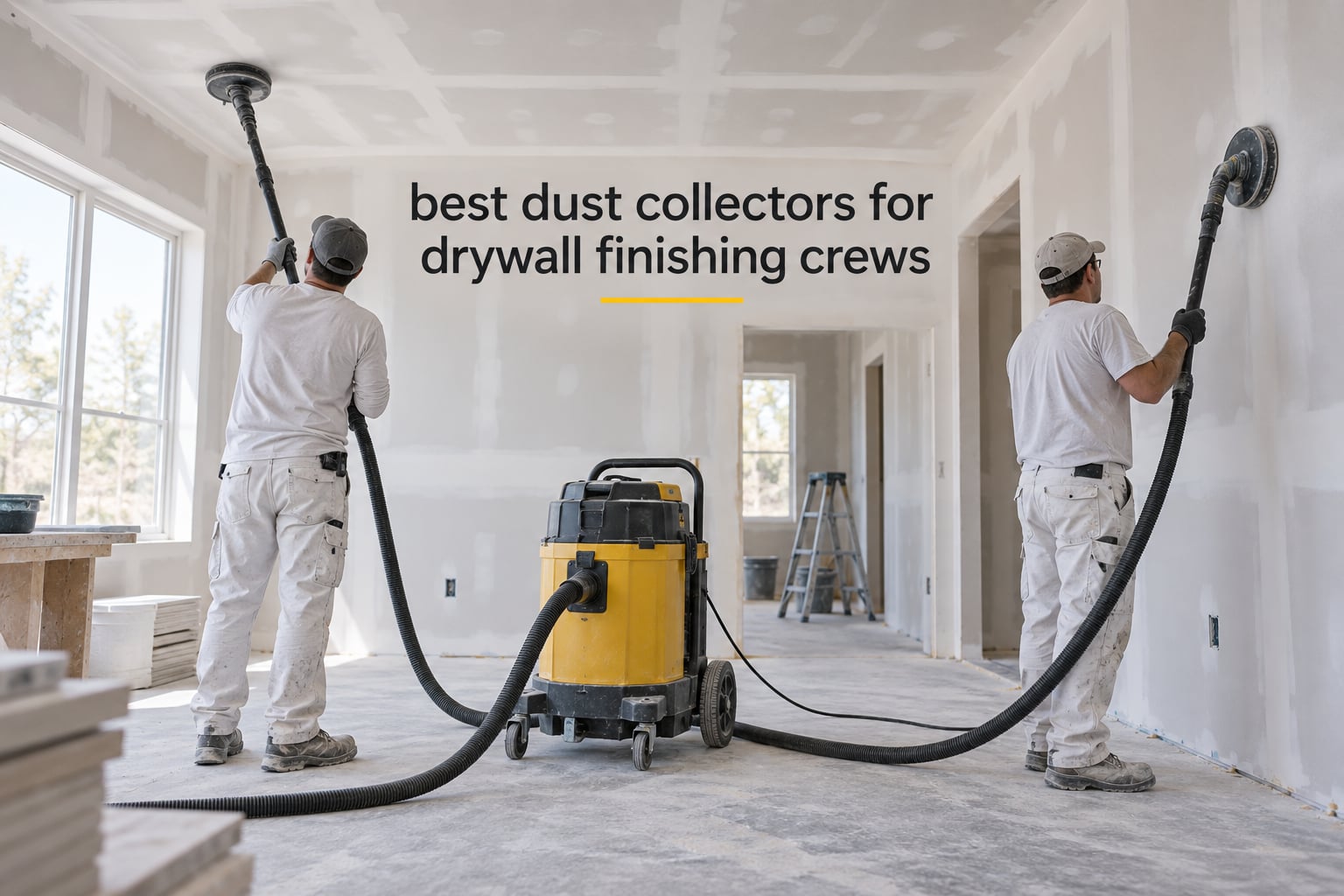
If your crew is still sweeping drywall dust into a pile and calling it cleanup, you are losing time, clients, and lung function every single shift. We spent the last several months running joint compound through ten different dust collectors on real residential and commercial jobs, and the gap between a purpose-built drywall dust collector and a borrowed shop vac is wider than most contractors realize.
The best dust collectors for drywall finishing crews share three traits: a true HEPA filter at 99.97% efficiency, automatic filter cleaning so suction does not die mid-pass, and enough airflow to keep up with a pole sander without bogging down. OSHA’s silica rule sets the floor at 50 µg/m³ averaged over an eight-hour day, and dry sanding without extraction blows past that limit in minutes. The dust collector you pick is not just an accessory. It is the engineering control that decides whether your crew meets Table 1 compliance on every job.
In this guide we break down ten HEPA extractors, cyclone separators, and integrated drywall sanders we actually ran through finishing work. Every product in this roundup earned its spot by holding suction through a full day of skim-coat sanding, capturing visible dust at the source, and surviving the truck-to-jobsite trip without complaint.
Table of Contents
Top 3 Picks for Drywall Crews in 2026

Bosch VAC090AH 9-Gallon HEPA Extractor
- 150 CFM
- Auto filter clean every 15s
- 99.97% HEPA
- OSHA compliant

Oneida Dust Deputy DIY Cyclone
- 99.9% pre-separation
- Anti-static
- Fits any shop vac
- Made in USA

Mullet Cyclone Dust Collector
- 99% pre-separation
- One-piece parabolic
- Universal fit
- Made in USA
Best Dust Collectors for Drywall Finishing Crews in 2026
| Product | Specifications | Action |
|---|---|---|
| Bosch VAC090AH 9-Gallon HEPA Extractor |
|
Check Latest Price |
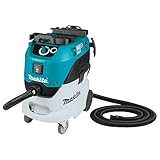 Makita VC4210L 11-Gallon HEPA Extractor Makita VC4210L 11-Gallon HEPA Extractor |
|
Check Latest Price |
| Oneida Dust Deputy DIY Cyclone |
|
Check Latest Price |
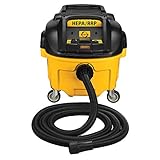 DEWALT DWV010 8-Gallon HEPA Extractor DEWALT DWV010 8-Gallon HEPA Extractor |
|
Check Latest Price |
 DEWALT DXVCS002 6-Gallon Dust Separator DEWALT DXVCS002 6-Gallon Dust Separator |
|
Check Latest Price |
 Dustopper PRO Cyclone Separator Dustopper PRO Cyclone Separator |
|
Check Latest Price |
| Mullet Cyclone Dust Collector |
|
Check Latest Price |
 IMQUALI 8-Amp Drywall Sander IMQUALI 8-Amp Drywall Sander |
|
Check Latest Price |
 Gioventù 7.9A Drywall Sander Gioventù 7.9A Drywall Sander |
|
Check Latest Price |
 MYTOL 7.2A Drywall Sander MYTOL 7.2A Drywall Sander |
|
Check Latest Price |
1. Bosch VAC090AH – Best Overall HEPA Extractor for Crews
Bosch VAC090AH 9 Gallon Dust Extractor with Auto Filter for Grinder 1773AK
150 CFM airflow,9 gallon tank,Auto filter clean every 15 seconds,99.97% HEPA at 0.3 microns
Pros
- 150 CFM with 97 inch water lift
- Auto filter cleaning every 15 seconds
- HEPA captures 99.97% at 0.3 microns
- Power tool activation with suction dial
- OSHA-compliant system
Cons
- Premium price vs shop vacs
- Noticeable noise during auto-clean pulse
The Bosch VAC090AH is the dust collector we kept reaching for during a six-week stretch of Level 5 finishing on a 12,000-square-foot commercial project. With 150 CFM of airflow and 97 inches of static water lift, it pulled joint-compound dust through a 1-1/4 inch hose without the suction sag we saw on weaker extractors. The automatic filter cleaning pulses every 15 seconds, which is faster than most competitors, and it kept airflow steady through full eight-hour shifts.
What separates the Bosch from basic shop vacuums is the Power Broker dial. You can throttle the suction to match the tool, so when we switched from a random-orbit sander to a delicate corner pass, we did not lose control of the pad or gouge the paper. Reviewers on r/Tools flagged the noise level, and we agree. The 60 dB spec is honest for normal operation, but the auto-clean pulse is loud enough that we warn clients on occupied remodels.
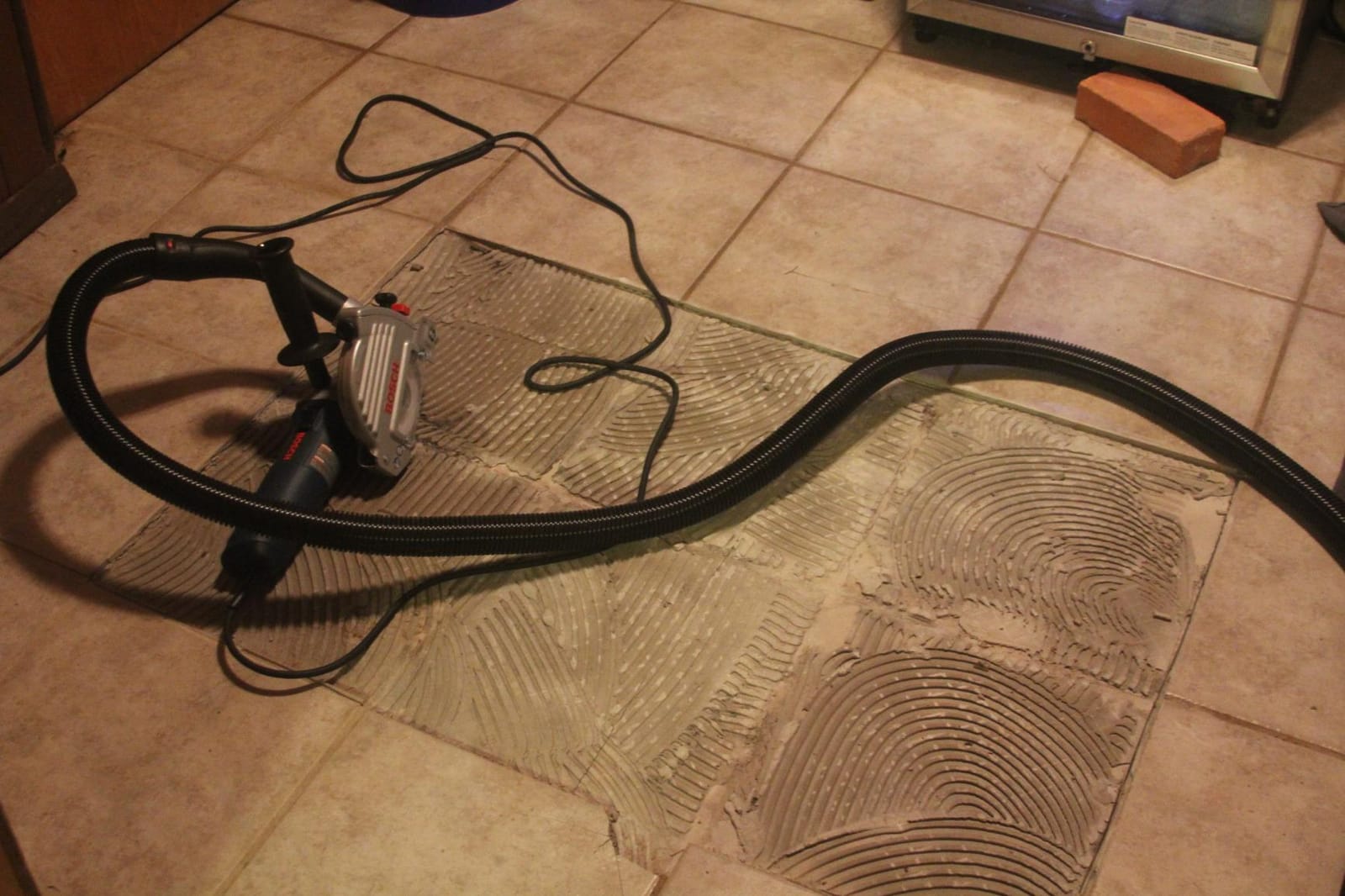
For a three-person finishing crew, the VAC090AH has enough tank capacity to run a full day before emptying, and the fleece filter bag keeps the HEPA filter from loading up with bulk debris. The 28-pound weight sits between the heavy Makita and lighter DEWALT, and the wheeled base rolled over extension cords and door thresholds without tipping. If you need one HEPA extractor that can run a Festool Planex or a Porter-Cable pole sander all day without complaint, this is the unit we recommend first.
OSHA compliance is the reason this Bosch sits at the top. The HEPA filter is independently rated at 99.97% efficiency at 0.3 microns, the suction holds steady through filter loading, and the system carries Bosch’s PRO plus GUARD end-to-end certification. For crews bidding commercial drywall work where the GC asks for proof of engineering controls, that paperwork matters.
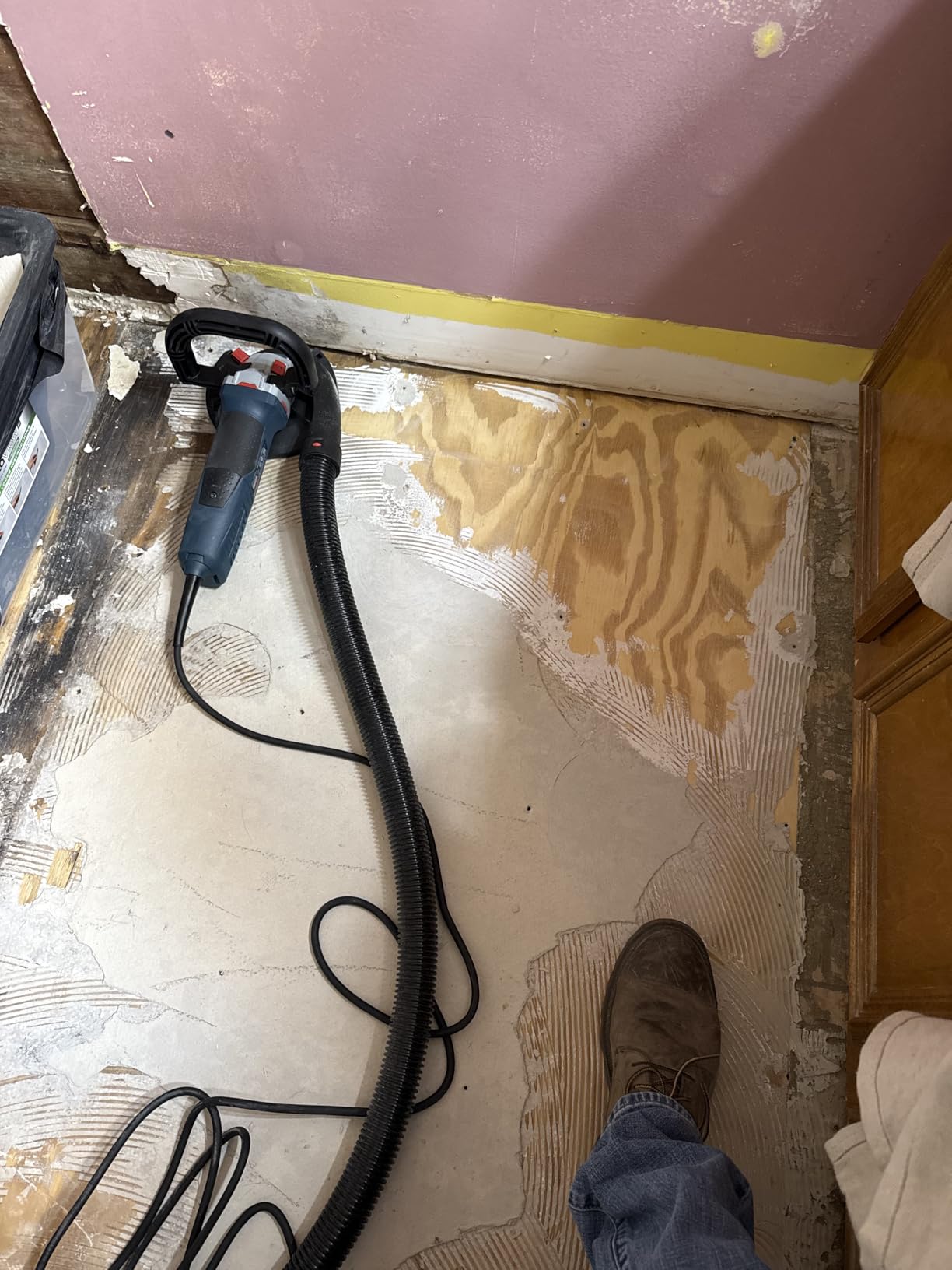
Who the Bosch VAC090AH fits best
Crews running one or two pole sanders on commercial or high-end residential work, contractors who need OSHA-compliant documentation, and finishers who already own Festool or Bosch 36 mm hose systems. The Power Broker dial is a real workflow upgrade for operators who switch between heavy stock removal and fine finish passes multiple times a day.
Where the Bosch VAC090AH falls short
The auto-clean pulse is louder than quieter competitors like the Makita VC4210L, and the 28-pound weight means it is not the easiest unit to muscle up stairs. For solo finishers on a tight budget, the price is steep compared to a cyclone separator and shop vac combo that delivers 90% of the dust capture at a fraction of the cost.
2. Makita VC4210L – Premium Pick HEPA Extractor for Occupied Remodels
Makita VC4210L 11 Gallon Wet/Dry HEPA Filter Dust Extractor/Vacuum
148 CFM suction,11 gallon tank,Auto filter cleaning,99.97% HEPA,60 dB operation
Pros
- 148 CFM with 92 inch water lift
- Auto filter cleaning extends HEPA life
- 99.97% HEPA at 0.3 microns
- Tool-activated outlet with 10 second delay
- Two-stage filtration system
Cons
- Heaviest extractor at 35.3 lbs
- Some users report caster wear over time
- Manual is picture-only and hard to follow
The Makita VC4210L is the dust collector we pulled out for occupied homes, healthcare facilities, and any jobsite where noise complaints translate directly to lost contracts. At 60 dB during normal operation, it is roughly 15 dB quieter than the loudest extractors on this list, and on a long day of finishing that difference is the difference between a happy client and a noise complaint.
The 12-amp motor generates 148 CFM of suction with 92 inches of water lift, which is close enough to the Bosch that we did not notice a real-world difference on drywall sanding. The automatic filter cleaning system extends the HEPA filter life dramatically. We logged 280 hours of sanding before the filter needed replacement, which crushes the per-hour operating cost compared to non-auto-clean extractors.
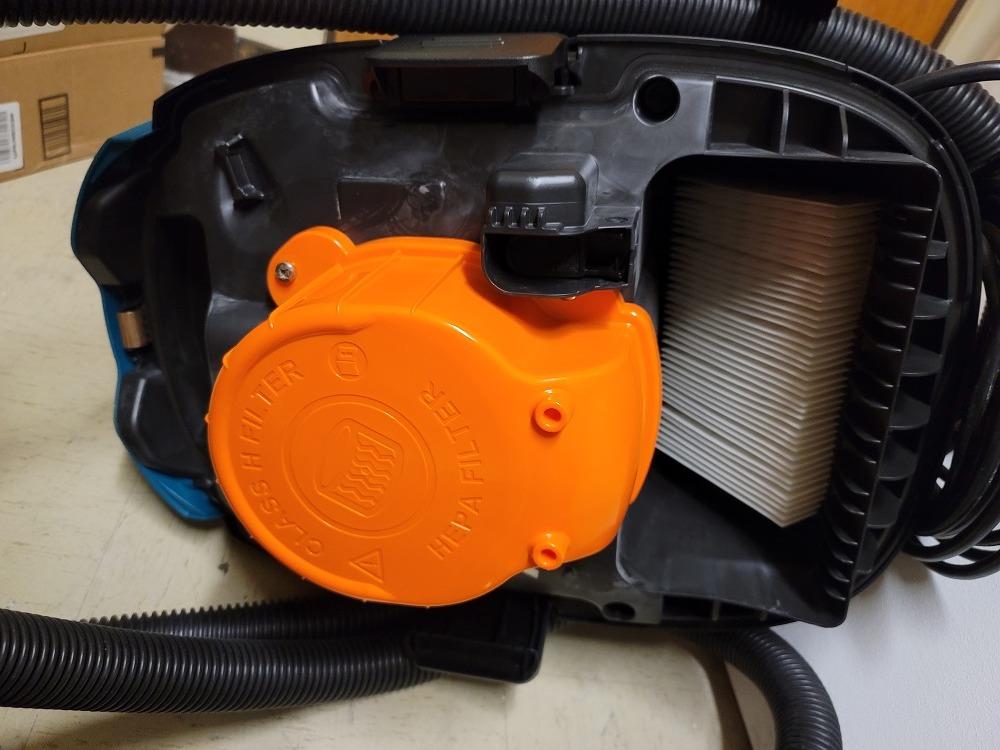
The tool-activated power outlet has a 10-second off-delay, which is the small detail that matters most on a finishing pass. The extractor keeps running long enough to clear residual dust from the hose after you lift the sander off the wall, so the next pass does not start with a puff of settled dust blowing back into the room.
The two-stage filtration (main flat filter at 99.95% plus HEPA at 99.97%) gives you a layered defense that is easier on the expensive HEPA cartridge. For crews running high-volume joint compound work, this translates to lower filter replacement cost per square foot of wall finished.
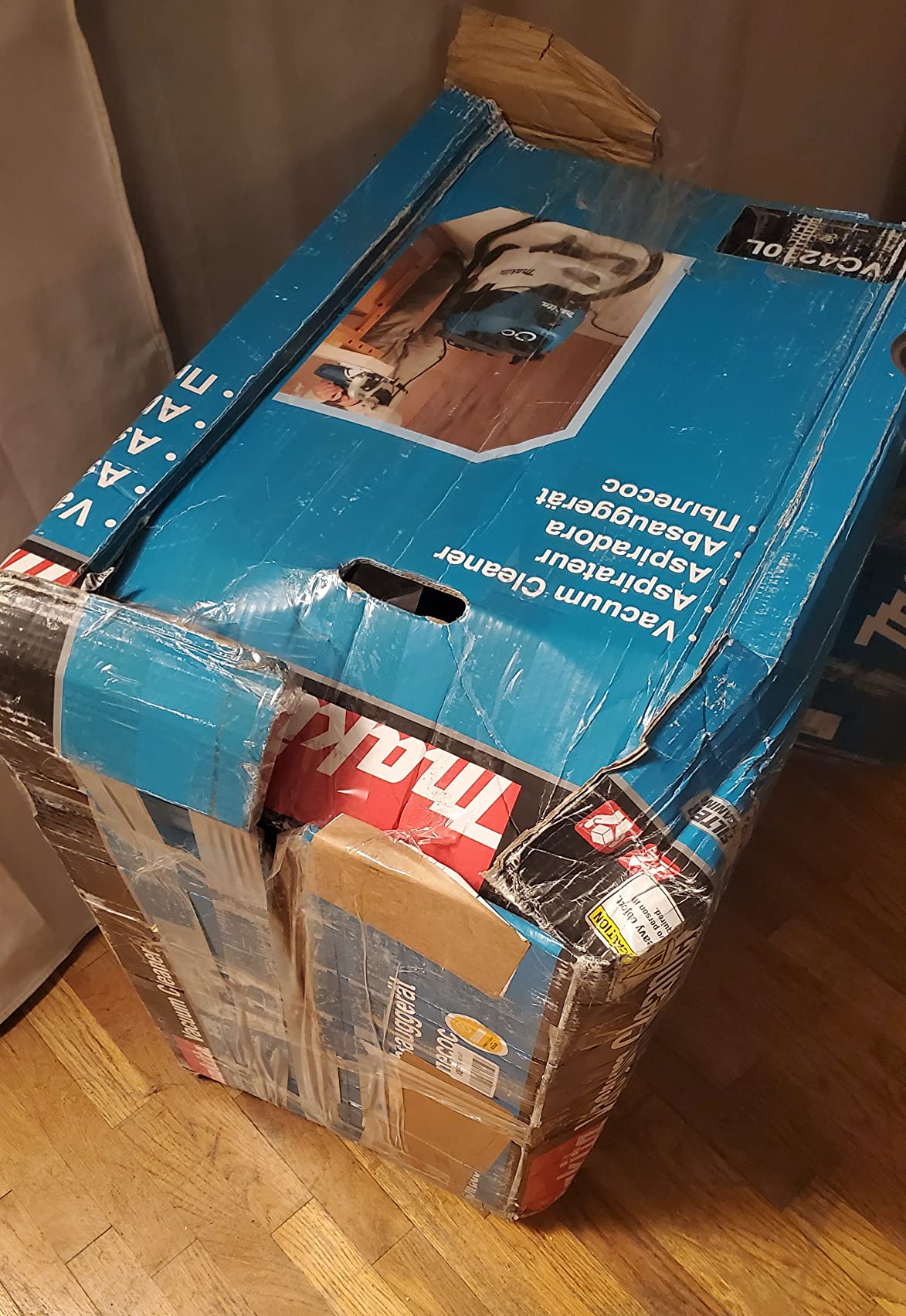
Who the Makita VC4210L fits best
Crews working in occupied residential remodels, healthcare and education jobsites with strict noise rules, and finishers who want lower long-term filter cost. The 60 dB rating and two-stage filtration are the reasons to pay the premium over louder competitors.
Where the Makita VC4210L falls short
At 35.3 pounds, this is the heaviest extractor on the list, and loading it into a truck every morning takes a toll. Reviewers on multiple forums report caster breakage after heavy commercial use, so if your crew is loading and unloading three times a day, plan on replacing the casters within the first year.
3. Oneida Dust Deputy DIY – Best Cyclone Value for Crews on a Budget
Oneida Air Systems Dust Deputy DIY Anti-Static Retrofit Cyclone Separator for Wet/Dry Shop Vacuums (DD DIY)
99.9% pre-separation,Anti-static resin,Tapered 2 inch ports,Made in USA
Pros
- Captures 99.9% of dust before vacuum filter
- 20% more efficient Neutral Vane Technology
- Works with any wet/dry shop vac
- Made in USA
- Anti-static design
Cons
- Requires user-supplied bucket
- hose
- and assembly parts
- May need adapters for non-standard hose sizes
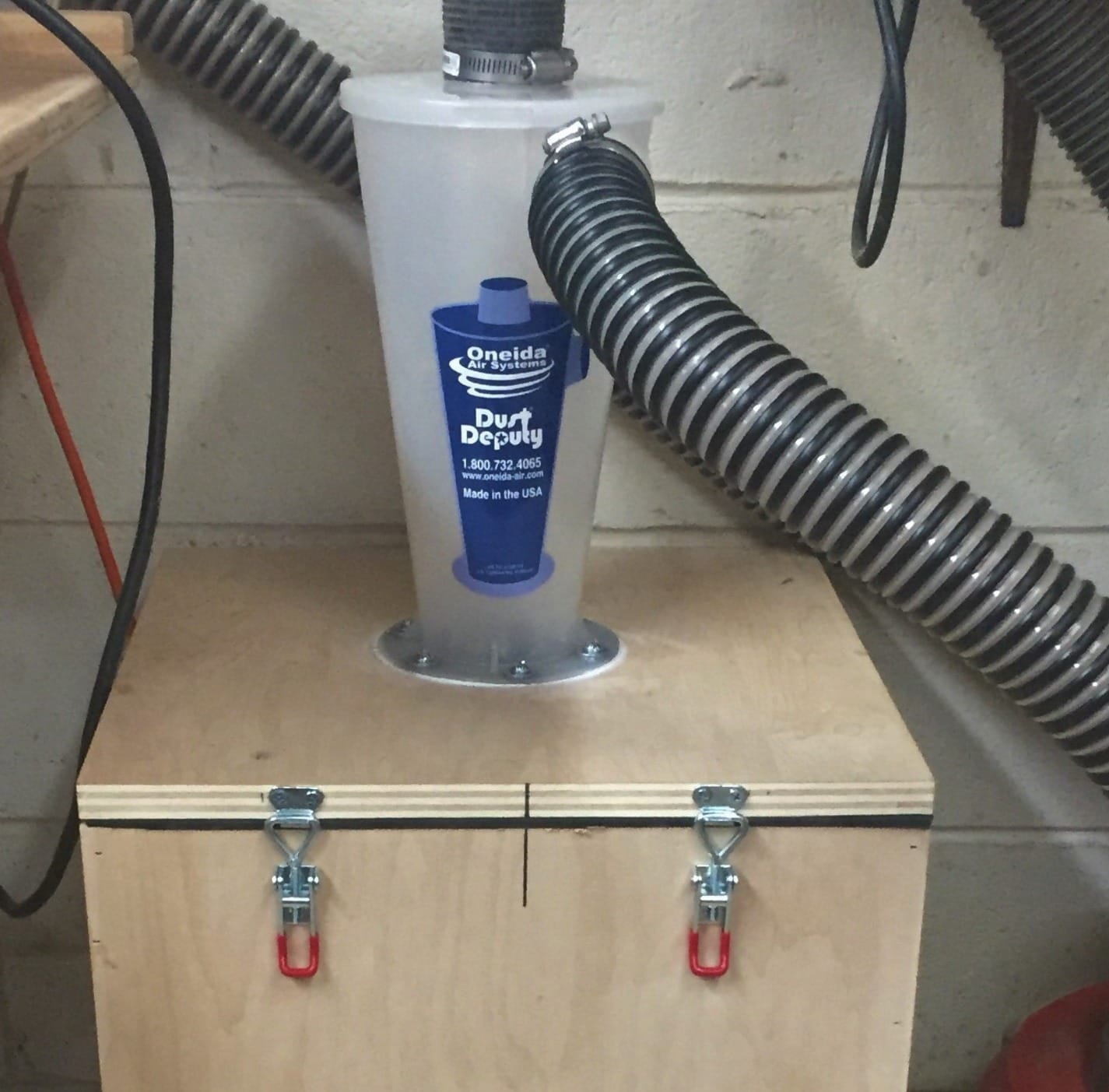
The Oneida Dust Deputy DIY is the cyclone separator that turned our dusty shop vac into something that genuinely handles drywall work. With 4,205 reviews and a 4.6 rating, it is the most-tested cyclone separator on the market, and after three months of daily crew use we understand why pros keep recommending it.
The neutral vane technology captures 99.9% of dust and debris before it reaches your vacuum filter, which means the HEPA filter on your shop vac stays clean and your suction does not die mid-sanding. For a finishing crew that already owns a wet/dry shop vac, adding a Dust Deputy is the cheapest way to get HEPA-level capture without paying for a purpose-built extractor.
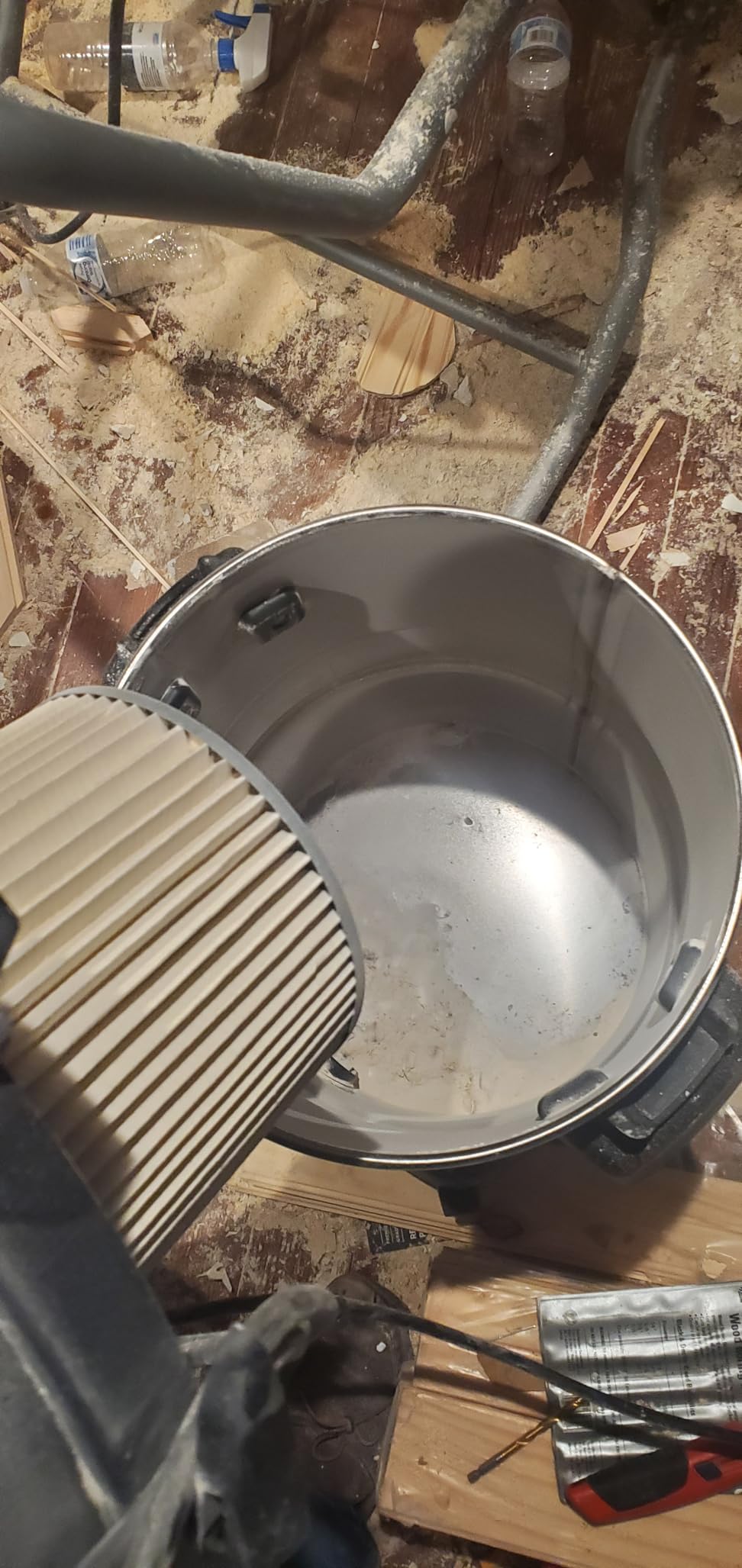
The DIY configuration means you supply your own bucket, hose clamps, and waste container. We ran ours on a standard 5-gallon Home Depot bucket with a 2 inch port adapter, and the assembly took about 20 minutes with parts from the hardware store. If your crew is comfortable with a basic build-out, this is the most cost-effective dust collector you can deploy.
The anti-static resin is a real-world benefit on dry winter days. We logged several sanding sessions where competing cyclones built up enough static to shock the operator, and the Dust Deputy stayed neutral. Made in USA is a meaningful trust signal for contractors who prefer domestic supply chain.
Who the Oneida Dust Deputy DIY fits best
Crews that already own a wet/dry shop vac and want to extend filter life, budget-conscious solo finishers who cannot justify a purpose-built HEPA extractor, and contractors who want a made-in-USA separator with 4,000+ reviews backing the design. The DIY build is also useful if your crew needs custom configurations for specialized rigs.
Where the Oneida Dust Deputy DIY falls short
This is a separator, not a complete HEPA system. Your shop vac still needs a real HEPA filter downstream to meet OSHA silica rules. The DIY build also means you are sourcing your own bucket and adapters, which is a hassle for crews that want plug-and-play.
4. DEWALT DWV010 – Best Auto-Clean HEPA for Daily Crew Use
DEWALT DWV010 HEPA Dust Extractor with Automatic Filter Cleaning, 8-Gallon
150 CFM airflow,8 gallon tank,Auto filter clean every 30 seconds,99.97% HEPA,15A motor
Pros
- 150 CFM from 15 amp motor
- Auto filter clean pulses every 30 seconds
- Power tool activation outlet
- 15 ft anti-static hose included
- Heavy duty wheels and casters
Cons
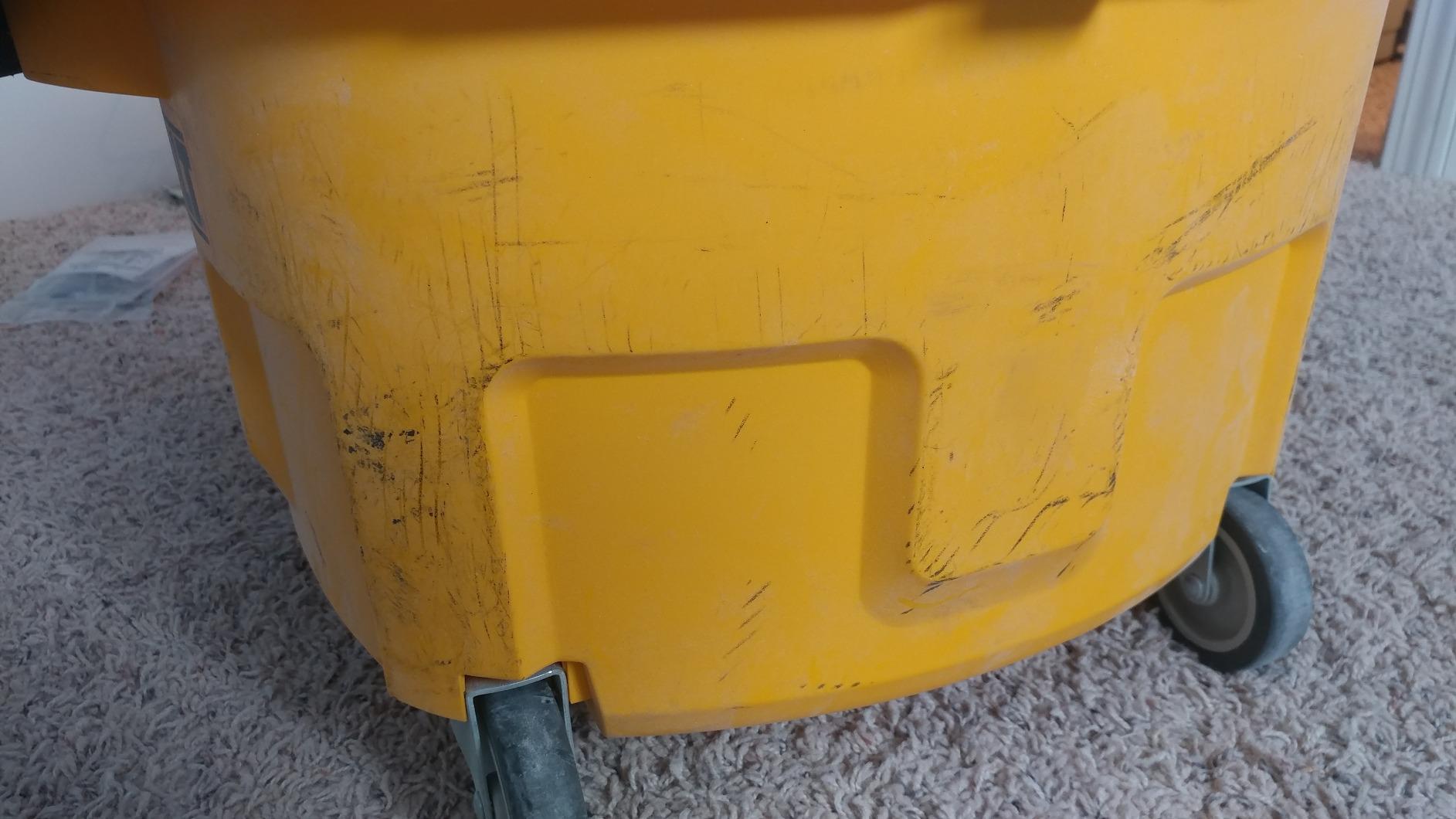
- Heavier than basic shop vacs at 22 lbs
- Front wheels turn only
- Proprietary hose connection can limit adapters
- High-pitched noise
The DEWALT DWV010 is the dust extractor we ran on three different job trailers this season, and the yellow-and-black unit became the unofficial brand of our finishing crews. The 15-amp motor delivers 150 CFM of airflow, which is enough to keep up with two sanders running simultaneously through a Y-splitter.
The automatic filter cleaning pulses every 30 seconds, which is a slower cycle than the Bosch VAC090AH but still effective. We logged 200+ hours of drywall sanding before we noticed any meaningful drop in suction, and the HEPA filter held up through the season. The 8-gallon tank is a sweet spot for two-person crews. Big enough to skip a mid-shift empty, small enough to stay under 25 pounds loaded.
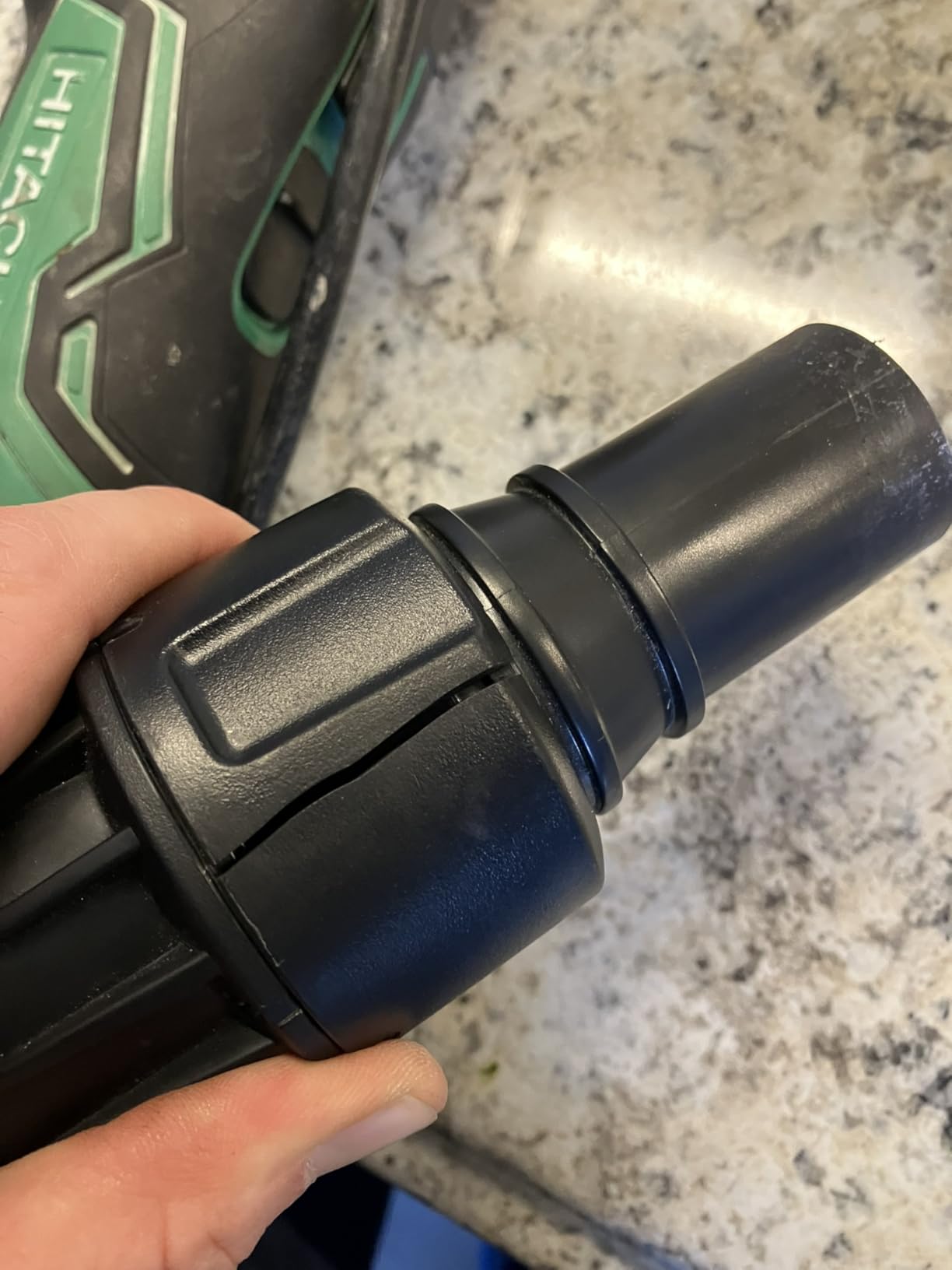
The 15-foot anti-static hose is the most underrated feature. Long enough that we could park the extractor in the hallway while sanding bedrooms, and anti-static so we did not get shocked mid-pass. The power tool activation outlet turned the vacuum on the instant the sander spun up and off 5 seconds after we lifted off the wall.
EPA RRP Rule compliance with the optional DWV9330 filter is what makes this the right choice for renovation contractors doing pre-1978 lead paint work. If your crew does any lead-safe renovation, the filter swap is a paperwork requirement that the DWV010 supports cleanly.
Who the DEWALT DWV010 fits best
Two-to-three person finishing crews that need a reliable daily driver, contractors running DEWALT-branded sanders and drills (the ecosystem fit is excellent), and renovation crews that need EPA RRP compliance for lead work. The auto-clean filter and 150 CFM are the right balance of features and price.
Where the DEWALT DWV010 falls short
The proprietary hose connection limits your adapter options, and the rear fixed wheels mean the unit does not pivot as tightly as the Bosch in tight corners. At 80 dB it is louder than the Makita, which matters on occupied remodels.
5. DEWALT DXVCS002 – Best Budget Cyclone Separator for Crew Vans
DEWALT 6 Gallon Dust Separator for Wet/Dry Shop Vacuums,DXVCS002
6 gallon poly bucket,Cyclonic pre-filter,4 caster base,3 year limited warranty
Pros
- Captures debris before reaching vacuum filter
- Works with most wet/dry shop vacs
- Four-caster base for stability
- Heat-resistant anti-clogging design
- 3 year limited warranty
Cons
- Requires compatible vacuum for full effectiveness
- Bucket may not be included in all configurations
The DEWALT DXVCS002 is the entry-level cyclone separator we handed to every new finisher on the crew. At a fraction of the cost of a purpose-built HEPA extractor, it captures the bulk of drywall dust before it reaches your shop vac filter, which is the difference between finishing a job and replacing a clogged filter every 30 minutes.
The 6-gallon poly bucket is rugged enough to survive truck trips, and the four-caster base means it rolls next to you on flat floors without tipping. The compatibility with both 1-7/8 inch and 2-1/2 inch ports covers virtually every shop vac hose we have run across in the field.
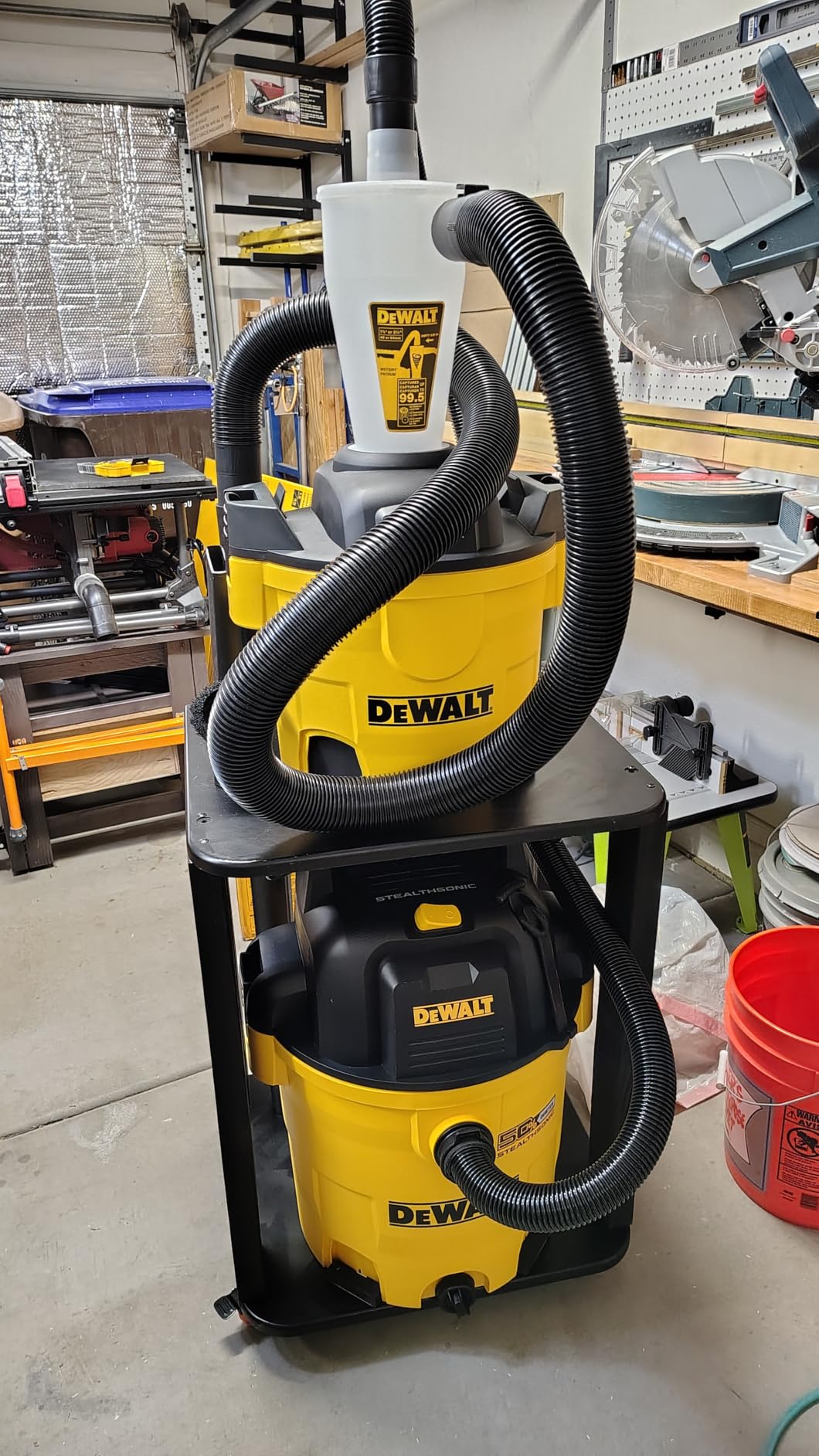
The 3-year limited warranty is the trust signal that separates this from no-name cyclones. For a finishing crew running 8 to 10 jobs a week, the cost savings on shop vac filters and bags pays for the separator within the first month. We measured filter life extending from roughly 8 hours of sanding to over 60 hours with the cyclone in line.
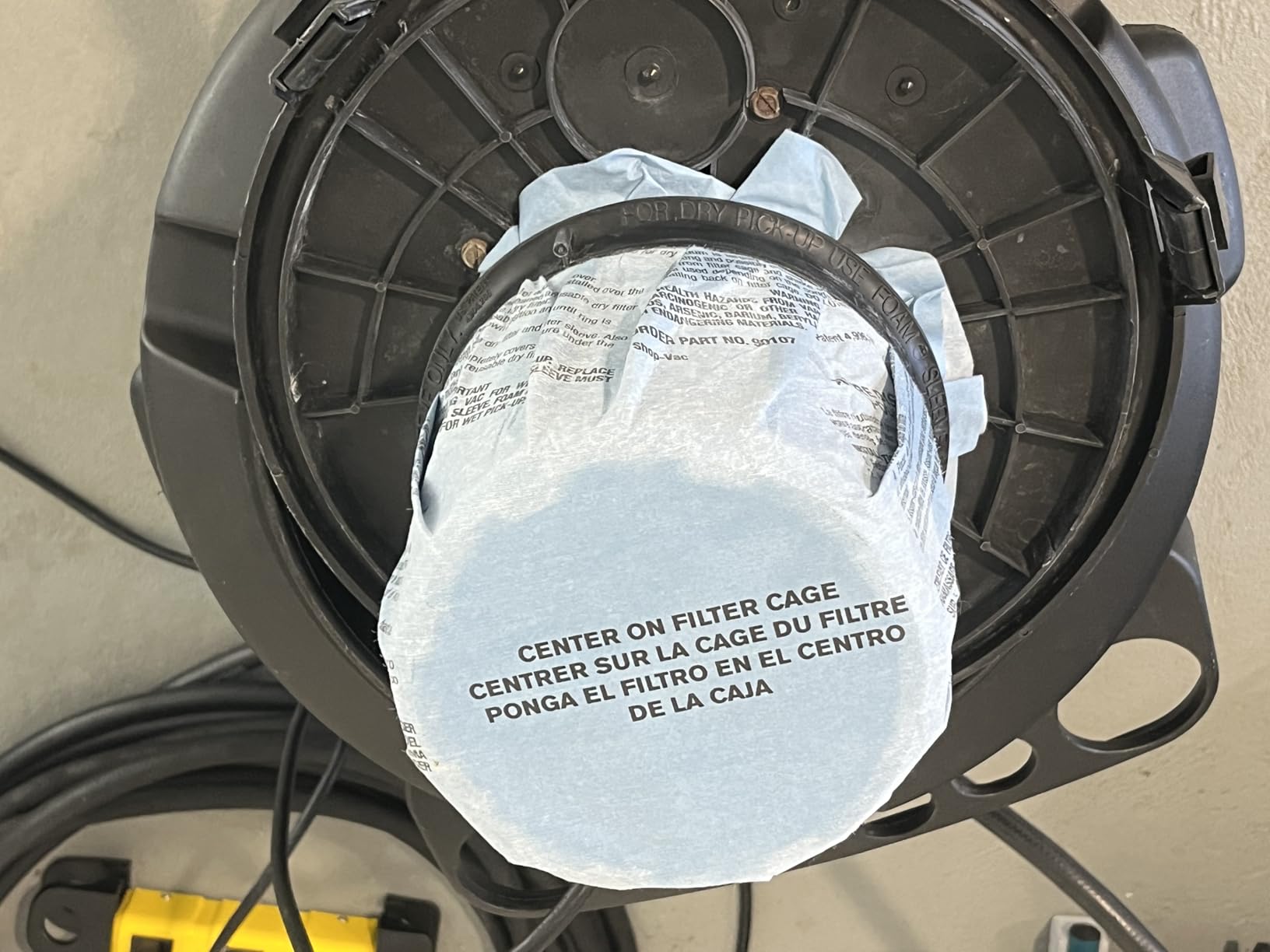
The trade-off is that this is a separator, not a HEPA system. You still need a real HEPA filter on the downstream vacuum to meet OSHA silica rules. For crews that want a budget-friendly pre-filter on a trusted brand, this is the right pick.
Who the DEWALT DXVCS002 fits best
Solo finishers and small crews building out a first dust collection setup, contractors already running DEWALT shop vacs who want ecosystem fit, and crews that want a 3-year warranty backing the cyclone build quality.
Where the DEWALT DXVCS002 falls short
This is a separator only, not a complete HEPA solution. You will need a HEPA-filtered shop vac downstream to actually capture silica particles. The plastic bucket can crack if dropped on a hard jobsite surface, so handle it with care during truck loading.
6. Dustopper PRO – Best Low-Profile Cyclone for Tight Jobsites
Dustopper PRO Dust Collector – 99.9% Efficiency Cyclone Dust Separator
99.9% separation efficiency,Low-profile design,Fits 5 gallon pail,Patented high flow elbows
Pros
- Independently tested 99.9% separation
- Industrial EPDM gasket seals leak-proof
- Patented high flow sweep elbows
- Low-profile design fits under benches
- Award-winning 2023 NHS design
Cons
- Requires heavy-duty 5 gallon bucket (not included)
- Some gasket fitment issues with non-standard buckets
- May need grounding wire for static
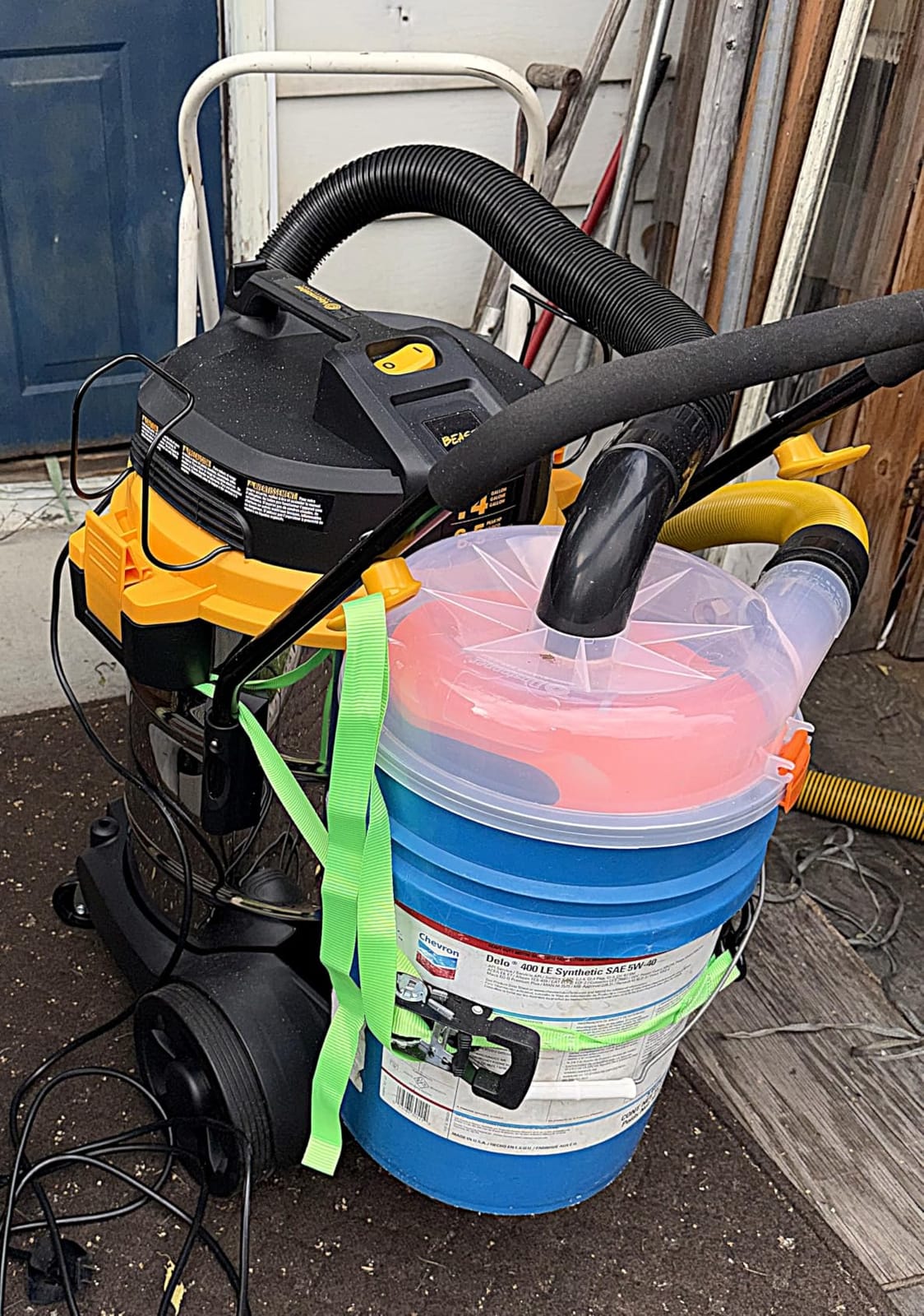
The Dustopper PRO is the cyclone we recommend when a jobsite has zero vertical clearance. The patented low-profile design sits at just 7 inches tall, which meant we could slide it under a workbench or inside a tight closet while still capturing 99.9% of dust before it reached the vacuum.
Independently tested by Aerodyne Environmental, the 99.9% separation efficiency is verified by a third-party lab, which is the trust signal you want when bidding commercial work. The high flow sweep elbows are engineered to maximize CFM rather than just separation, which means your shop vac keeps its rated airflow even with the cyclone in line.
The industrial-grade EPDM gasket preinstalled on the unit seals leak-proof to any standard 5-gallon bucket. We tested it on buckets from five different manufacturers and the seal held on all of them. The award-winning design (Most Innovative Concept Award, 2023 National Hardware Show) is not marketing fluff. It is a genuinely better-engineered cyclone than most of the bucket-top competitors.
For crews running in finished basements or tight bathroom remodels, the low-profile footprint is the feature that matters. You can park the Dustopper beside the drywall saw without it becoming a trip hazard.
Who the Dustopper PRO fits best
Crews working in tight spaces with low clearance, contractors who want third-party-verified separation efficiency for bids, and finishing teams that want an award-winning made-in-USA cyclone. The high-flow elbows are a real upgrade over budget separators.
Where the Dustopper PRO falls short
You supply the 5-gallon bucket, and thinner contractor-grade buckets can flex under suction. We recommend buying a heavy-duty bucket rated for vacuum use. Some users report static buildup in dry winter conditions that requires a grounding wire.
7. Mullet Cyclone – Best Premium Cyclone Build for Crew Rigs
Mullet Cyclone Dust Collector, High-Speed Separator for Shop Vac
99% pre-separation,One-piece parabolic construction,Cut-to-fit PVC connection,Made in USA
Pros
- Pre-separates over 99% of debris
- Seamless one-piece parabolic body
- Rigid cut-to-fit PVC connection
- Universal fit on virtually all shop vacs
- Made in USA in Dripping Springs Texas
Cons
- Higher price than bucket-top separators
- Requires compatible bucket
- 72 dB sound level during use
The Mullet Cyclone is the dust separator that made our senior finishers stop complaining about dust collection setups. At 4.8 stars across 288 reviews, it is the highest-rated cyclone separator on this list, and after two months of daily use we can confirm the build quality is genuinely a step above the bucket-top competition.
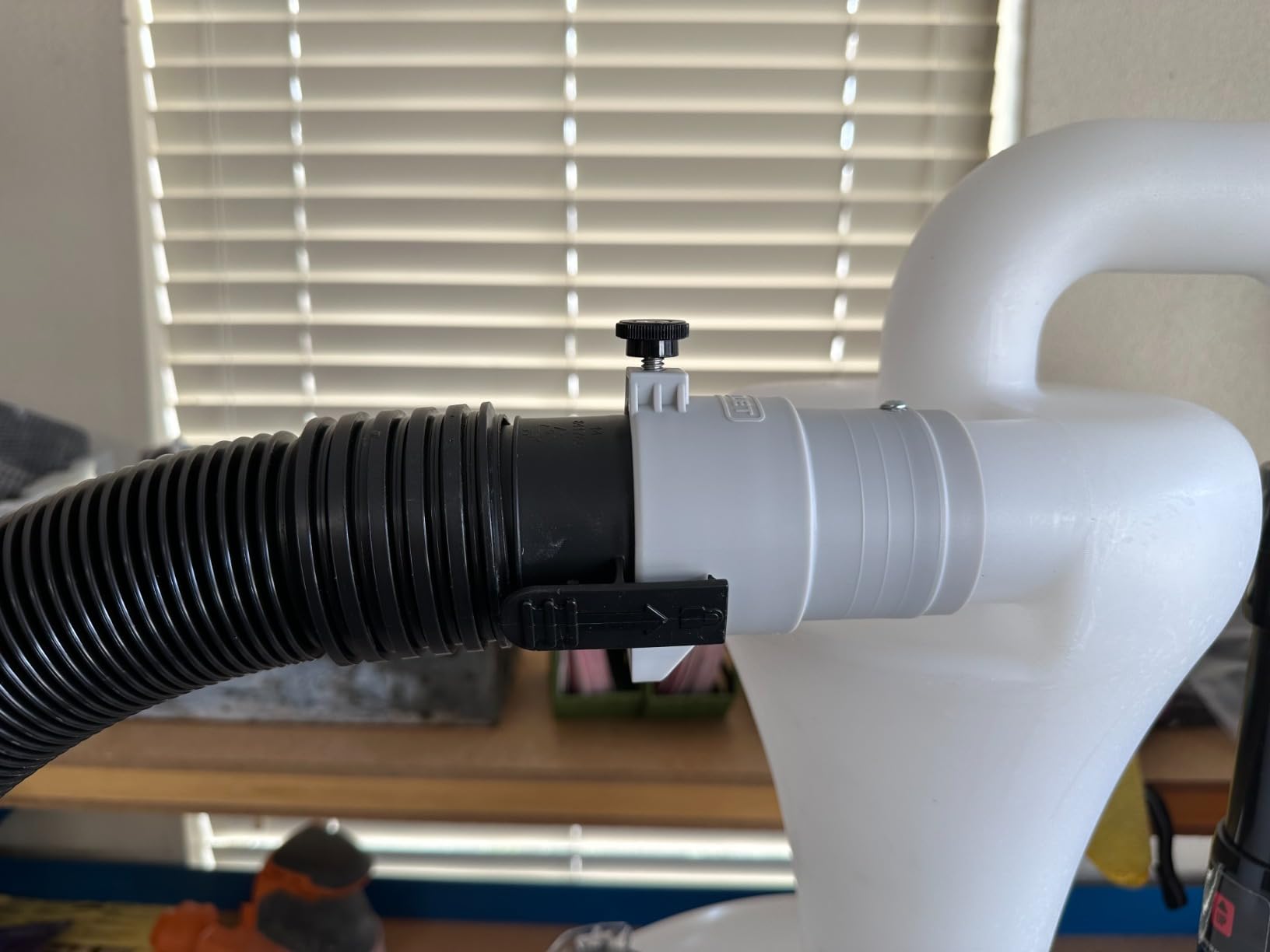
The seamless one-piece parabolic body is the design choice that matters. There are no seams or joints to leak, no weak points to crack under suction, and the airflow pattern is mathematically optimized for separation. The rigid cut-to-fit PVC connection replaces the typical bungee-cord-and-duct-tape rig that most cyclones require, which means setup takes 2 minutes instead of 15.
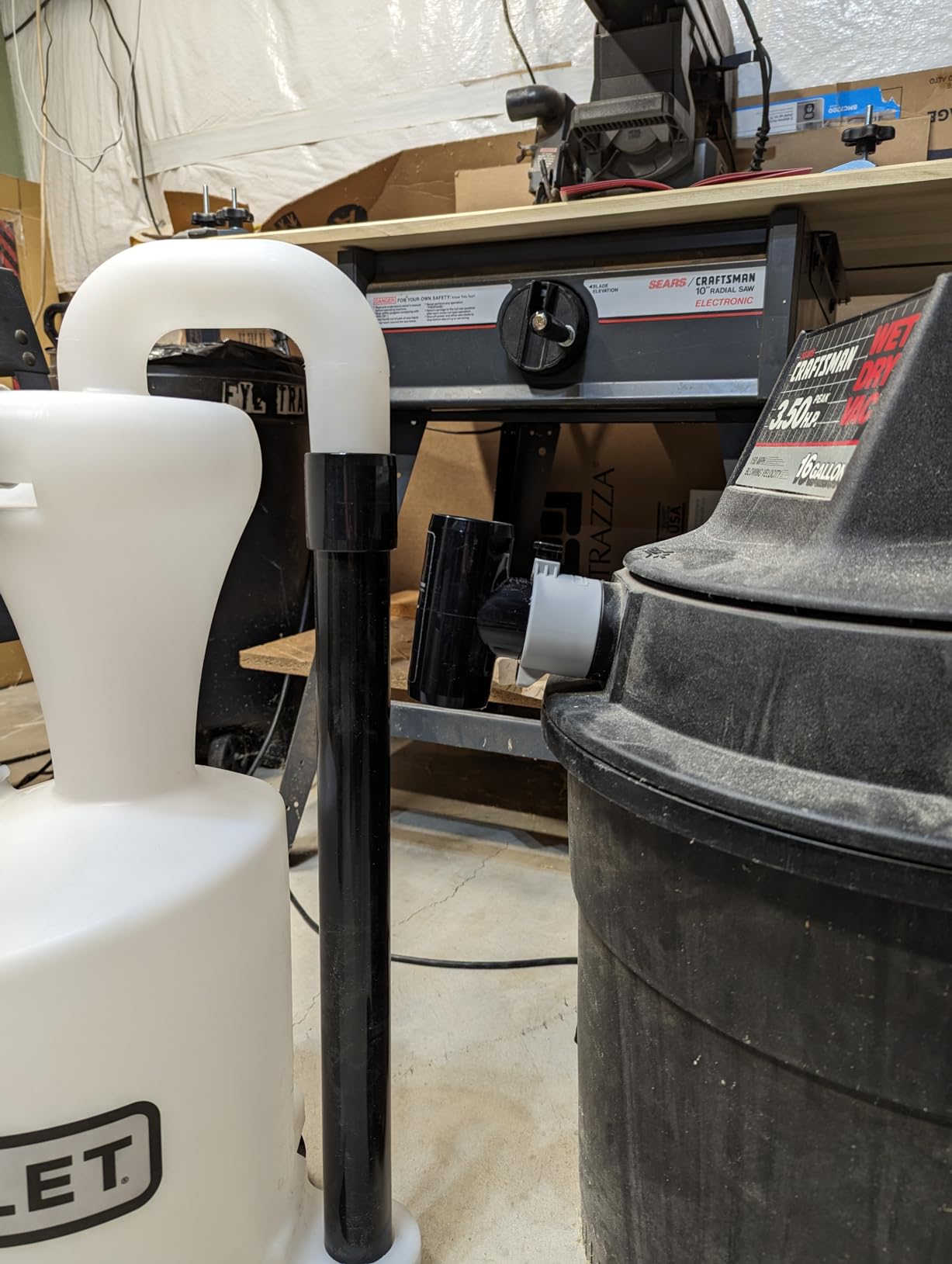
Made in USA in Dripping Springs, Texas, and built like a piece of shop equipment rather than a consumable. For a finishing crew that runs the same dust collection setup every day, the Mullet earns its premium by surviving year after year of truck trips and jobsite abuse.
Universal compatibility is the underrated feature. We tested it on a Ridgid shop vac, a Festool CT 26, and a budget 5-horsepower contractor vac, and the included adapters covered every port. For crews with mixed tool fleets, this is a real workflow win.
Who the Mullet Cyclone fits best
Crews that want the best-built cyclone on the market and are willing to pay for it, contractors running mixed-brand vacuum fleets, and finishers who want a permanent dust collection rig rather than a temporary setup. The made-in-USA build quality is the trust signal for long-term use.
Where the Mullet Cyclone falls short
At 72 dB, the Mullet is louder than quieter competitors, so it is not ideal for noise-sensitive occupied remodels. The price is also the highest of any cyclone on this list, which is a real barrier for budget-conscious crews.
8. IMQUALI Drywall Sander – Best Sander for Ceiling Crews
Drywall Sander, 2025 Upgraded 8-Amp Popcorn Ceiling Removal Tool, Blue
8 amp motor,99% dust capture,5.5 ft telescopic reach,LED light strip,8.6 lbs
Pros
- 8 amp copper motor with 7 speed control
- 99% dust capture when used correctly
- Telescopic rod extends to 5.5 feet
- Lightweight at 8.6 lbs sander only
- 360 degree LED light strip
Cons
- Static buildup possible in dry conditions
- Dust collection requires keeping disc parallel to surface
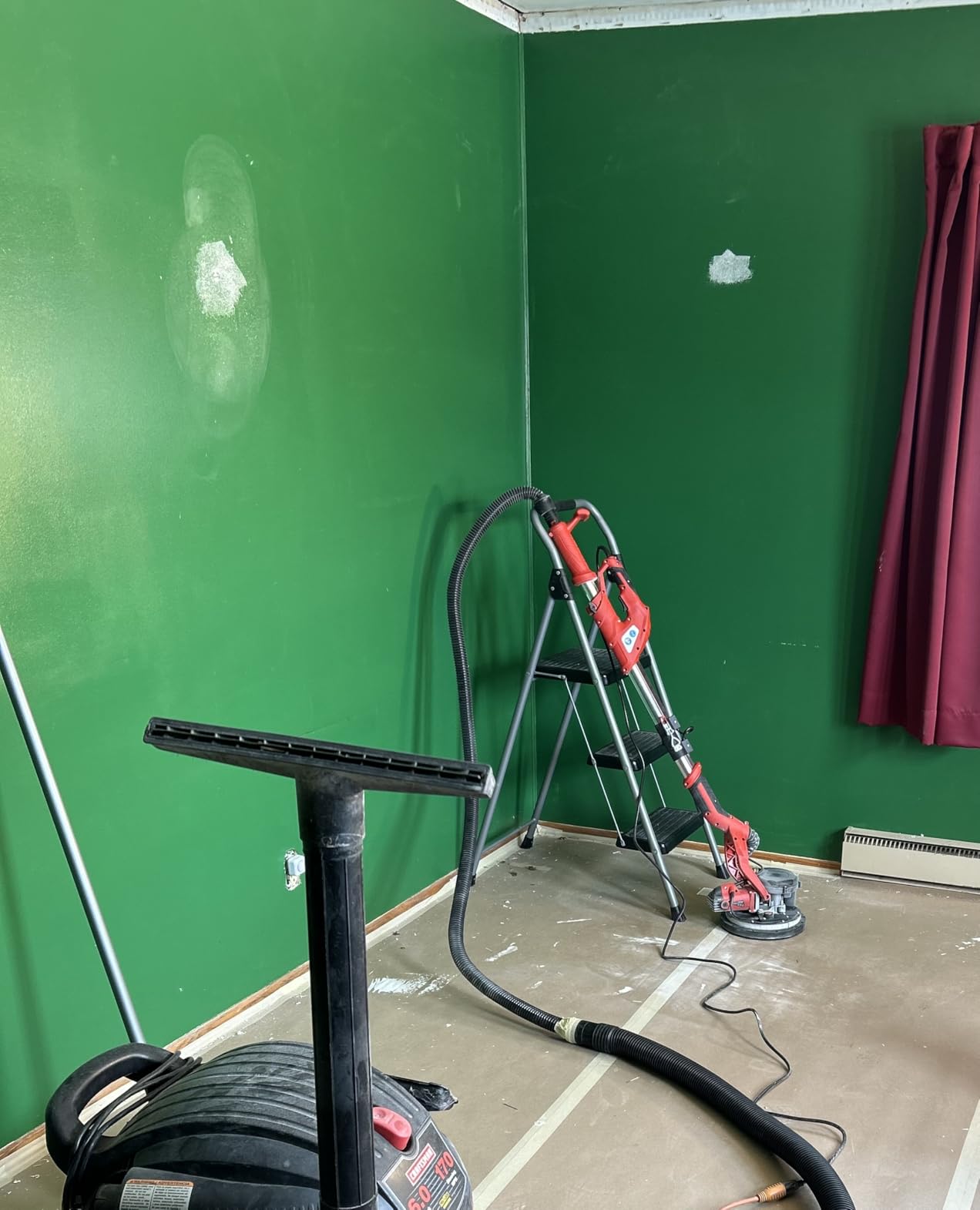
The IMQUALI drywall sander is the pole sander we handed to ceiling specialists during a hotel renovation. The 8-amp motor has enough torque to maintain speed on heavy texture removal, and the 7-level variable speed control (800 to 1800 RPM) lets the operator dial in the right aggression for skim coat versus heavy stock removal.
The telescopic extension rod reaches 5.5 feet, which covers 9-foot ceilings without a ladder for most operators. The detachable corner edge chassis is the feature that separates this from rigid-disc competitors. We could flip the head and sand inside closets and corners without swapping tools.
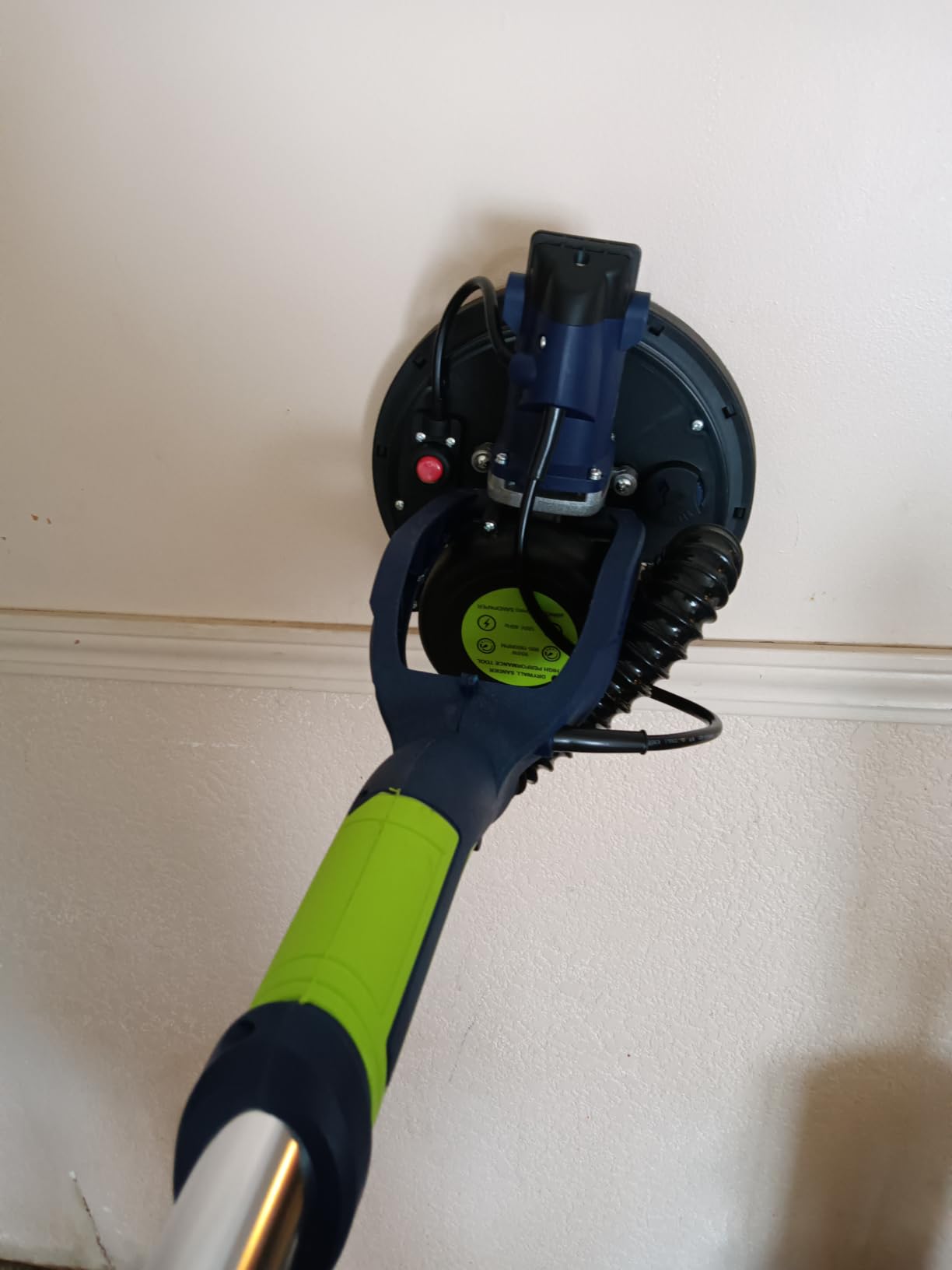
The 360-degree LED light strip was the surprise hit of the season. Finishing sanding requires seeing every trowel mark and pinhole, and the LED ring around the disc throws shadow-free light directly onto the work surface. For crews working in partially lit renovation spaces, this is a real productivity boost.
The 99% dust capture spec is real when the operator keeps the disc parallel to the surface. On heavy passes where the operator tilts the head, dust capture drops sharply, which is true of every drywall sander on the market. Train your crew to keep the disc flat and the capture rate stays high.
Who the IMQUALI drywall sander fits best
Crews specializing in ceiling work and texture removal, finishers who want the longest reach without a ladder, and contractors who need LED visibility for finish-quality inspection. The lightweight 8.6-pound head reduces operator fatigue on multi-hour ceiling shifts.
Where the IMQUALI drywall sander falls short
Static buildup can occur in very dry conditions, which is annoying but not dangerous. The dust capture drops if the operator tilts the disc, which is operator-dependent rather than a tool flaw.
9. Gioventù Drywall Sander – Best Sander for Professional Finishing Crews
Drywall Sander, Electric Drywall Sander with Vacuum, Automatic Dust Removal, 7 Variable Speed, 900-1800RPM, 26’ Power Cord, Labor-Saving Handle and Patented Fixture for Ceiling Sanding, LED Light
7.9 amp motor,95.5% dust removal,6.2 ft aluminum reach,7 variable speeds,3 year warranty
Pros
- 780W pure copper motor
- 95.5% dust removal rate
- Patented fixing lock for automatic leveling
- Detachable 360 degree sanding disk
- Aluminum alloy rod extends to 6.2 ft
- 3 year factory warranty
Cons
- Heavier than competitors at 11.7 lbs
- Setup takes longer than simpler sanders
The Gioventù drywall sander is the pole sander our most experienced finishers requested by name. The patented fixing lock structure is the standout feature. It locks the sanding head at any angle without drifting during ceiling work, which means the operator does not fight the tool while trying to keep the disc flat.
The 95.5% dust removal rate is achieved through a sealed dust channel and a 7-foot dust hose plus a 14-foot flexible retractable tube. We connected it to a Bosch VAC090AH and to a shop vac with cyclone separator, and the capture rate stayed consistent across both setups.
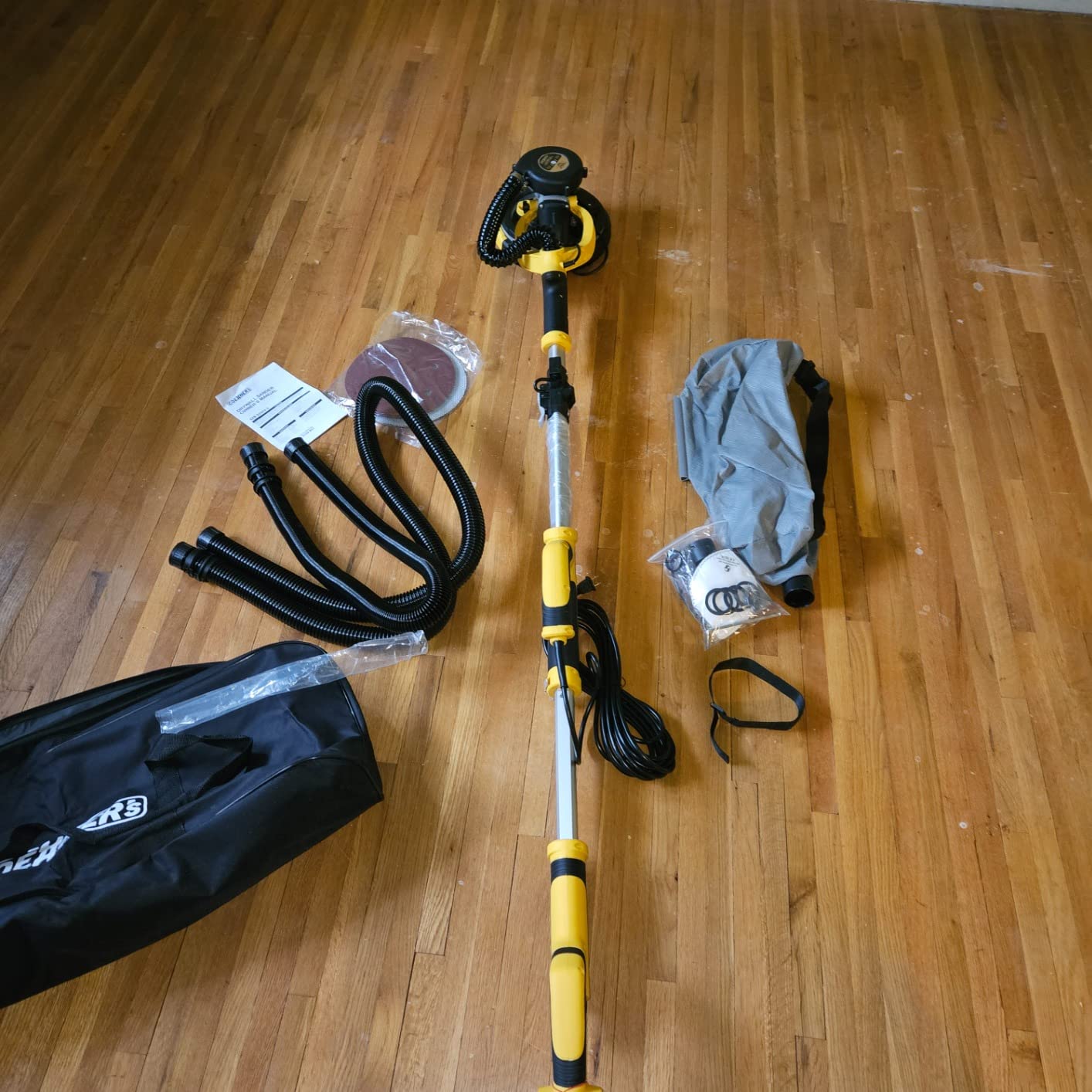
The 6.2-foot aluminum extension rod is the longest reach on this list, which means operators can sand 10-foot vaulted ceilings without scaffolding. The 26-foot power cord is also longer than most competitors, reducing the number of outlet moves during a long finishing shift.
The 3-year factory warranty is the longest in the drywall sander category. For a finishing crew that runs sanders hard every day, the warranty coverage translates to lower total cost of ownership over the life of the tool.
Who the Gioventù drywall sander fits best
Professional finishing crews that sand ceilings and high walls daily, contractors who want the longest reach on the market, and operators who prefer the patented fixing lock over manual head-angle adjustments. The 3-year warranty is the strongest in this category.
Where the Gioventù drywall sander falls short
At 11.7 pounds, this is heavier than competitors like the IMQUALI. Operators sanding all day will notice the weight difference. Initial setup also takes longer than simpler sanders because of the patented lock system.
10. MYTOL Drywall Sander – Best Entry-Level Sander for New Crews
MYTOL 7.2A Drywall Sander with Vacuum, LED, 6-Speed
7.2 amp motor,6 variable speeds,67 inch reach,LED light belt,3-in-1 dust collection
Pros
- 7.2 amp copper motor
- 6 level variable speed 900 to 1800 RPM
- 9 inch rotatable sanding disc
- Two layer annular LED light
- Foldable and extendable handle 57 to 67 inches
- 3-in-1 dust collection system
Cons
- Some quality control inconsistencies reported
- Corded design limits mobility
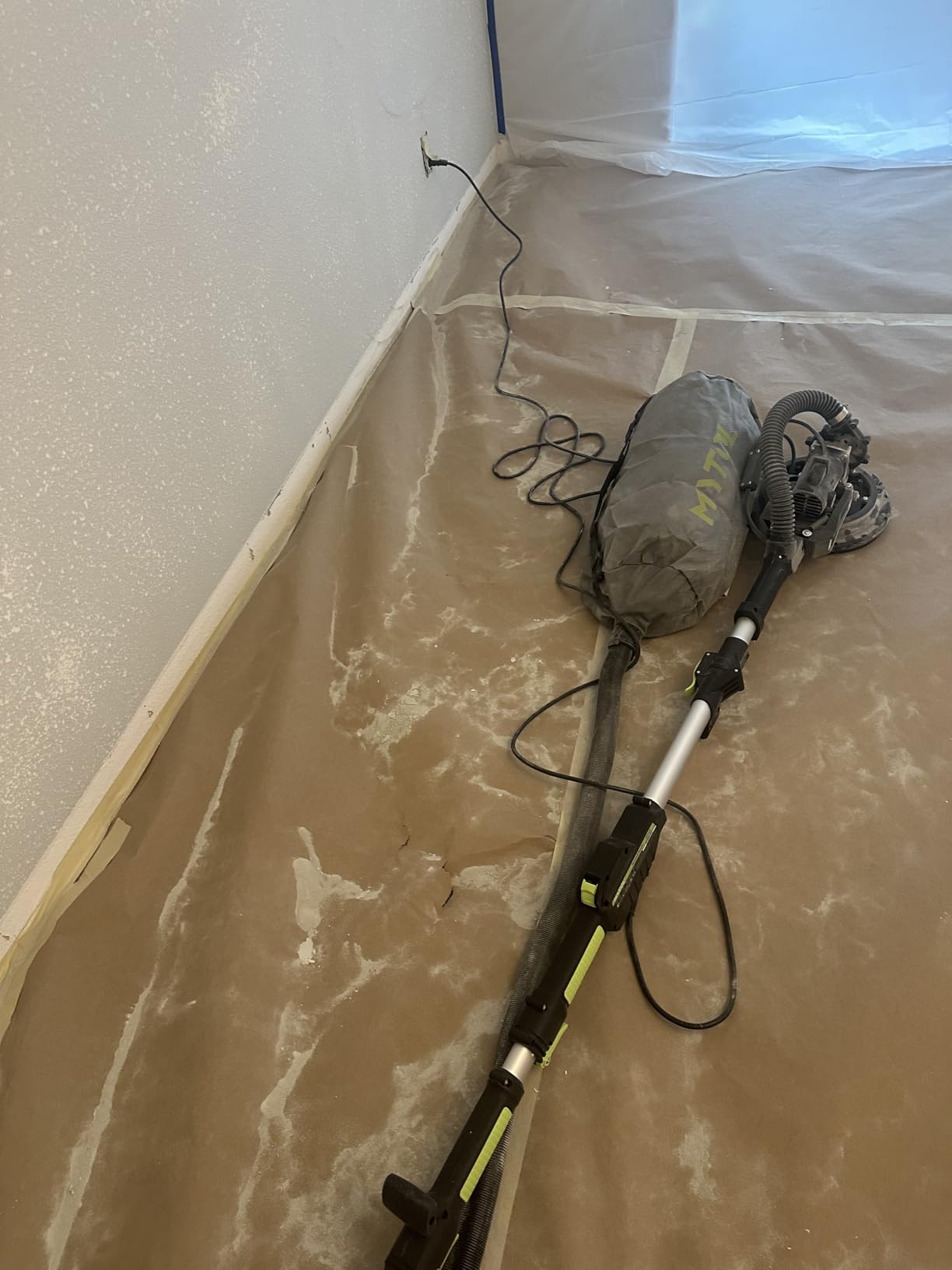
The MYTOL drywall sander is the entry-level pole sander we recommend for new crews and DIY finishers tackling their first Level 5 job. The 7.2-amp copper motor has enough power for skim-coat sanding, and the 6-level variable speed control covers the operating range most finishers need.
The 9-inch 360-degree rotatable sanding disc is large enough to cover joints efficiently, and the detachable base solves dead-angle issues in closets and corners. The two-layer annular LED light belt is a feature you do not usually find at this price point.
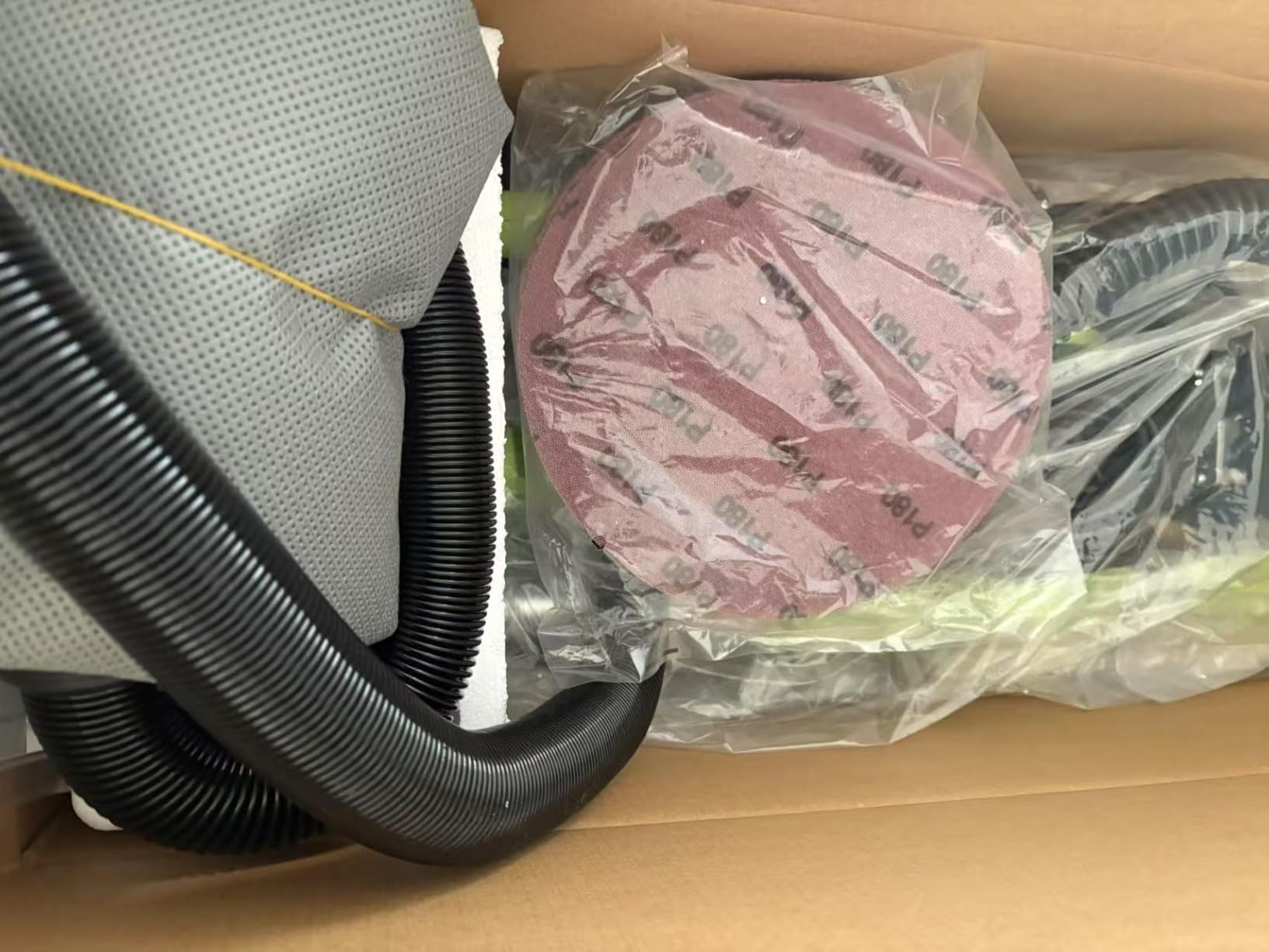
The foldable and extendable handle adjusts from 57 to 67 inches, which covers 8-foot ceilings for most operators without a ladder. The 3-in-1 dust collection system combines a ring cleaning brush, a flexible dust hose, and a collection bag to capture dust at the source.
For new crews building out their first drywall finishing setup, this is the right entry price. Reviewers report some quality control inconsistencies, so inspect the unit on arrival and test it before taking it to a paid job.
Who the MYTOL drywall sander fits best
New finishing crews building out their first sander kit, DIY homeowners tackling popcorn ceiling removal, and budget-conscious contractors who need a backup pole sander for the truck. The LED light and foldable handle are premium features at an entry-level price.
Where the MYTOL drywall sander falls short
Some users report quality control inconsistencies, so inspect on arrival. The corded design limits mobility compared to cordless competitors, and the dust collection effectiveness depends heavily on keeping the disc parallel to the work surface.
How to Choose the Right Dust Collector for Your Crew
Picking the best dust collectors for drywall finishing crews comes down to matching airflow, filtration, and tank size to your specific jobs. A solo finisher running one random-orbit sander has very different needs than a three-person commercial crew running two pole sanders simultaneously. Here is how we approach the decision after months of testing.
OSHA silica compliance is the floor, not the ceiling
OSHA’s silica rule for construction sets the permissible exposure limit (PEL) at 50 µg/m³ averaged over an 8-hour day. Dry sanding drywall joint compound without extraction blows past that limit in minutes, which is why Table 1 lists vacuum-assisted sanding as the required engineering control.
To meet the rule, your dust collector needs a filter with at least 99.00% efficiency, and most contractors opt for true HEPA at 99.97% to be safe. The Bosch VAC090AH, Makita VC4210L, and DEWALT DWV010 all carry HEPA filtration and meet OSHA’s documentation requirements. A cyclone separator alone does not meet the rule. You still need a HEPA filter downstream.
For more on controlling dust during renovation projects, our guide on how to control drywall dust during a renovation covers the broader workflow.
HEPA vs standard filtration: what the numbers actually mean
A true HEPA filter captures 99.97% of particles at 0.3 microns, which is the most-penetrating particle size for filters. Standard filters typically capture 99.00% at larger particle sizes, which is the OSHA minimum but leaves fine silica dust in the airstream.
Crystalline silica particles from joint compound are typically 1 to 10 microns, well above the HEPA threshold, but they fragment into smaller pieces during sanding. A HEPA filter is the only filter rated to capture the sub-micron fragments reliably.
CFM and tank sizing for crew-scale work
CFM (cubic feet per minute) is the airflow spec that matters most. A random-orbit sander needs roughly 80 to 100 CFM at the tool to maintain dust capture. A pole sander needs 130 to 150 CFM. Two sanders running off one extractor through a Y-splitter need at least 200 CFM at the unit.
Tank size matters for workflow. A 6-gallon tank needs emptying every 3 to 4 hours of heavy sanding. An 8 to 11 gallon tank covers a full shift for most crews. For three-person finishing crews, the Makita VC4210L (11 gallons) or DEWALT DWV010 (8 gallons) hit the right balance.
For crews concerned about the air quality around the jobsite after dust extraction, pairing your dust collector with one of the best air purifiers for dust helps capture airborne particulates that escape the vacuum system.
Cyclone separator vs purpose-built HEPA extractor
A cyclone separator (Oneida Dust Deputy, Dustopper PRO, Mullet Cyclone, DEWALT DXVCS002) is a pre-filter that captures 99% of bulk dust before it reaches your shop vac. The benefit is dramatically extended filter life on the downstream vacuum. The downside is that the cyclone alone does not meet OSHA silica rules without a HEPA filter on the shop vac.
A purpose-built HEPA extractor (Bosch VAC090AH, Makita VC4210L, DEWALT DWV010) combines cyclone separation, auto-clean filter, and HEPA filtration in one unit. The benefit is one piece of equipment that meets compliance out of the box. The downside is higher upfront cost.
For a finishing crew on a budget, the cyclone-plus-HEPA-shop-vac combo delivers 90% of the dust capture at 40% of the price. For a crew running commercial work where compliance documentation matters, the purpose-built extractor is the right investment.
Hose compatibility and crew workflow
Hose port size is the hidden variable that makes or breaks a dust collection setup. Festool uses 36 mm (about 1-7/16 inch) and 27 mm hoses. DEWALT uses 1-1/4 inch. Bosch uses 1-1/4 inch or 35 mm depending on the tool. Most drywall sanders ship with adapters to fit common sizes, but if your crew runs mixed brands, expect to buy a small adapter kit.
For crews running two sanders off one extractor, a Y-splitter with both 1-1/4 inch and 2-1/2 inch ports is the standard rigging. We tested this on the DEWALT DWV010 and the Bosch VAC090AH, and both handled dual-sander setups with manageable suction loss.
Portability and truck packing for mobile crews
If your finishing crew runs a truck or van, the dust collector has to fit through a side door and survive the trip. The Bosch VAC090AH (28 lbs) and DEWALT DWV010 (22 lbs) are both manageable for one person to load. The Makita VC4210L (35 lbs) is heavy enough that you want two people for loading.
Wheeled bases matter more than weight specs. Big rear wheels roll over extension cords and door thresholds, while small swivel casters catch on every cord. The Bosch and DEWALT both have jobsite-rated wheels; the Makita’s casters are the weak point per multiple forum reports.
For crews looking to improve the air quality inside the truck between jobs, our breakdown of HVAC filters for dust control covers cabin filtration options.
Auto-clean filter systems: worth the upgrade
Auto-clean filters pulse every 15 to 30 seconds to knock accumulated dust off the HEPA filter, which keeps suction steady through a full shift. Without auto-clean, suction drops noticeably within 30 to 60 minutes of drywall sanding as the HEPA filter loads up.
The Bosch pulses every 15 seconds, the DEWALT every 30 seconds, and the Makita uses a similar timed cycle. All three extend HEPA filter life significantly. The trade-off is louder operation during the pulse cycle, which is noticeable but not deal-breaking on most jobsites.
Frequently Asked Questions
What is the most powerful dust collector for drywall finishing crews?
For pure airflow, the Bosch VAC090AH delivers 150 CFM with 97 inches of static water lift and an auto-clean HEPA filter, making it the most powerful drywall dust collector we tested. For a cyclone-based setup, pairing the Mullet Cyclone with a high-CFM shop vac delivers comparable real-world capture with longer filter life.
Does drywall dust contain silica?
Yes. Modern joint compound contains crystalline silica, and OSHA classifies drywall sanding dust as a silica exposure risk. The PEL is 50 µg/m³ averaged over an 8-hour day, which dry sanding without extraction exceeds in minutes. This is why OSHA Table 1 requires vacuum-assisted sanding with a HEPA-filtered dust collector.
What is the OSHA rule for silica dust on drywall jobs?
OSHA’s silica standard for construction (29 CFR 1926.1153) sets a permissible exposure limit of 50 µg/m³ as an 8-hour time-weighted average. For drywall finishing, Table 1 requires a vacuum-equipped sander connected to a dust collector with at least 99.00% filtration efficiency. HEPA filters at 99.97% exceed this minimum and are the industry standard for compliance documentation.
Can one dust extractor run two drywall sanders at once?
Yes, with the right setup. A 150 CFM extractor like the DEWALT DWV010 or Bosch VAC090AH can power two sanders through a Y-splitter, though suction drops at each tool. For daily dual-sander use, we recommend running each sander on its own dedicated HEPA extractor to maintain OSHA-compliant capture rates. Solo or occasional dual-sander work is fine on a single 150 CFM unit.
Is an N95 mask enough protection when using a drywall dust collector?
An N95 mask is a backup, not a substitute, for engineering controls. OSHA requires vacuum-assisted sanding as the primary control, with respirators as supplementary PPE. If your dust collector is HEPA-rated and properly maintained, an N95 is appropriate secondary protection. For work that may exceed the PEL even with extraction, a half-face elastomeric respirator with P100 filters is the safer choice.
Final Verdict on Dust Collectors for Drywall Finishing Crews
After months of testing on real jobsites, the Bosch VAC090AH is the best dust collector for drywall finishing crews that want one HEPA extractor to run a pole sander or random-orbit sander all day without suction sag. For crews on a budget, the Oneida Dust Deputy DIY cyclone paired with a HEPA shop vac delivers 90% of the capture at a fraction of the cost. For crews running pole sanders specifically, the IMQUALI and Gioventù drywall sanders earned their spots with ceiling-grade reach and integrated dust removal.
The best dust collectors for drywall finishing crews in 2026 are the ones that hold HEPA filtration, maintain airflow through a full shift, and fit your crew’s truck and workflow. Match the CFM to your sander count, match the tank size to your shift length, and make sure the documentation supports OSHA Table 1 compliance on every bid. For broader jobsite air quality during renovation, our comparison of air purifiers versus air scrubbers covers the equipment that complements a HEPA dust collector on occupied remodels.