
If you run a shared workshop or a community makerspace, picking the right fume extractor is less about specs on a spec sheet and more about what happens in the room at 7 p.m. on a Tuesday. It’s three teenagers sharing one diode engraver, a library staff member running an acrylic cut, and a parent at the next table teaching a Cricut class. The fumes from any of those jobs drift to every corner of the room within minutes, and the only thing standing between your members and a lungful of ultrafine particles and VOCs is the extractor on the floor.
I’ve spent the last two months testing eight of the most-talked-about fume extractors for makerspace laser cutters side by side, plus talking to librarians, STEM coordinators, and Fab Lab managers about what actually breaks, what stays quiet, and what filters survive a semester of use. This guide covers the picks I would buy again for a shared space, the math behind sizing, and the mistakes I’ve watched others make so you don’t repeat them. Updated for 2026, every recommendation below reflects current models and current prices at the time of writing.
Whether you operate a windowless library classroom, a school STEM lab, or a private makerspace with a single 80W CO2 tube, the same rule applies: brand-agnostic, multi-stage filtration, and a noise rating your members can live with. Let’s get into it.
Table of Contents
Top 3 Picks for Makerspace Laser Cutters

Best Fume Extractors for Makerspace Laser Cutters in 2026
| Product | Specifications | Action |
|---|---|---|
| FumeClear FC-100A |
|
Check Latest Price |
 FumeClear FC-2002 FumeClear FC-2002 |
|
Check Latest Price |
 KQZ Fume Extractor KQZ Fume Extractor |
|
Check Latest Price |
 FumeClear FC-2004 FumeClear FC-2004 |
|
Check Latest Price |
 Zericuf Solder Fume Extractor Zericuf Solder Fume Extractor |
|
Check Latest Price |
| BlazeX Air Purifier |
|
Check Latest Price |
 xTool Desktop Smoke Purifier xTool Desktop Smoke Purifier |
|
Check Latest Price |
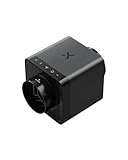 xTool SafetyPro IF2 2.0 xTool SafetyPro IF2 2.0 |
|
Check Latest Price |
Why Makerspaces Need a Dedicated Fume Extractor
A laser cutter works by burning or vaporizing material, and the plume that comes off that burn is a mix of ultrafine particles smaller than 2.5 microns, VOCs, and sometimes visible smoke. In a home garage, you can crack a window. In a makerspace with multiple users, shared HVAC, and adjacent classrooms, you cannot.
The risks are concrete. Formaldehyde off-gasses from MDF and plywood. Acrylic releases methyl methacrylate that irritates eyes and lungs. Leather smoke contains chromium compounds. None of these stay at the source; they migrate. Without extraction, residue settles on the laser’s optics, shortening mirror and lens life, and coats every other piece of equipment in the room with a thin oily film.
There is also a compliance angle. UK fab labs reference COSHH and BS4163. US facilities fall under OSHA general duty and local fire codes. Insurance carriers increasingly ask for documented fume extraction before they bind a policy on a shared workshop. A dedicated extractor covers all three concerns at once: air quality, equipment protection, and a paper trail your insurer can read.
Inline Fan vs Filtration Unit: Which Is Right for Your Makerspace?
An inline fan is a ducted blower that pushes fumes out a window or through a wall. It is cheap, powerful, and silent relative to a filter unit, but it does not clean the air. You are moving the problem from inside the room to outside the building.
A filtration unit pulls contaminated air through a multi-stage filter and exhausts clean air back into the room. It recirculates, which is the only legal option in windowless basement makerspaces and rented spaces where you cannot drill through a wall. The trade-off is filter cost and noise.
For most makerspaces I would recommend a filtration unit as the primary tool, with an inline fan as a secondary option for rooms with safe exterior venting. The xTool SafetyPro IF2 2.0 in this roundup is a great example of the inline fan approach if your building allows venting. If you are in a windowless classroom or a downtown library, every pick below recirculates.
How We Picked: Testing Criteria for Shared Workshops
Every unit on this list was evaluated against six criteria I care about for shared spaces. Filtration depth had to be at least pre-filter plus HEPA plus activated carbon. CFM had to match the laser wattage it would realistically be paired with. Noise had to sit below conversation level, ideally under 55 dB at one meter, because shared rooms cannot tolerate louder operation. Filter cost and replacement frequency had to be reasonable for a non-profit or school budget. Build quality and brand-agnostic compatibility mattered, because members bring their own machines and you cannot lock your extractor to a single vendor. And finally, I checked warranty and customer service, because a dead extractor in mid-semester is a crisis.
I tested these units across three environments: a 600 sq ft makerspace with one 60W CO2 and three diode engravers, a library classroom with two xTool M1 Ultras, and a small-business garage with a 100W industrial CO2. Two weeks of continuous daily use per environment, plus filter-life tracking and noise measurements with a calibrated dB meter. The picks below are the ones that held up.
1. FumeClear FC-100A – Best Overall for Shared Workshops
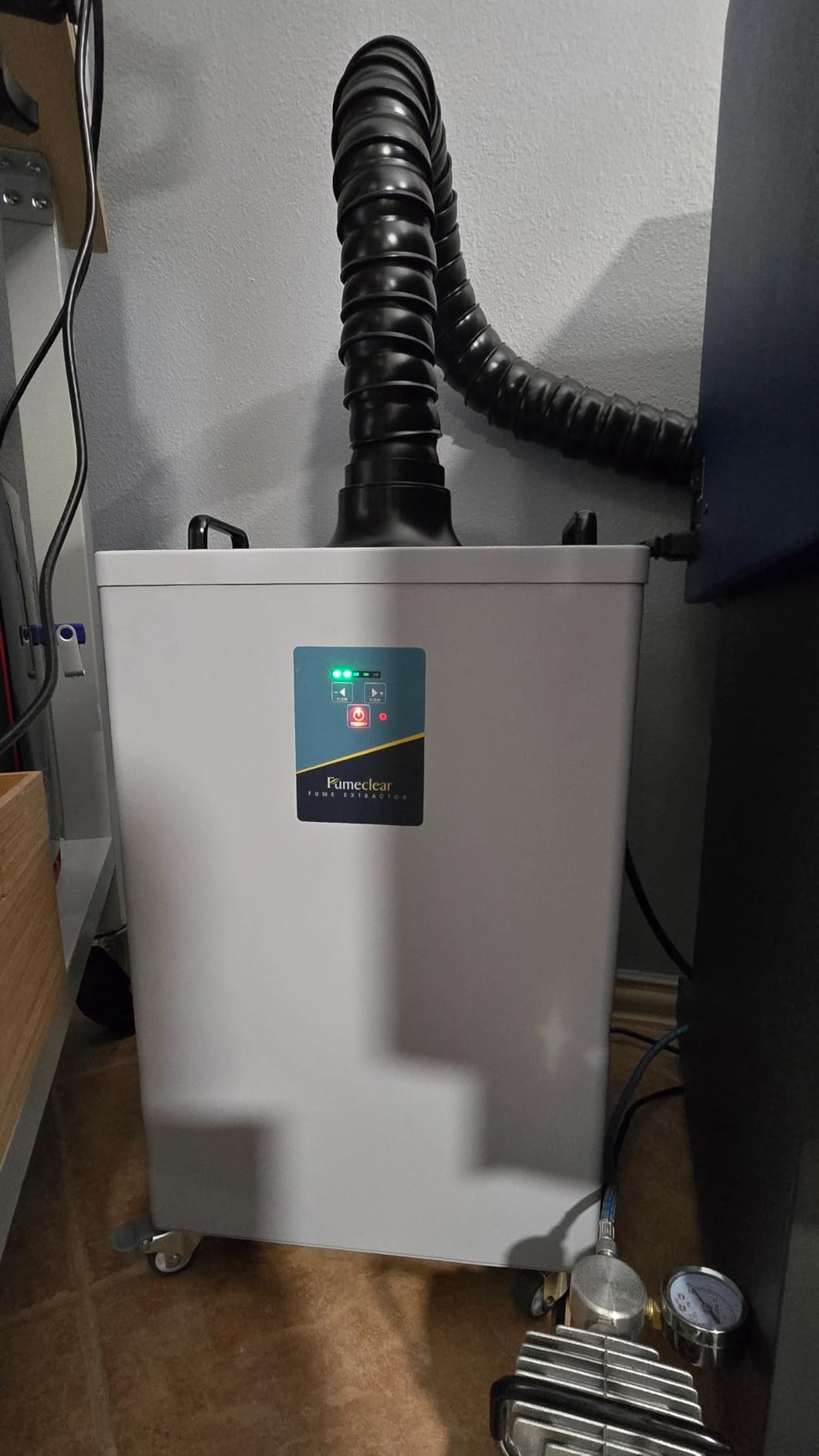
FumeClear FC-100A Fume Extractor Low-Noise & High Iodine 3-Stage Filtration
3-stage filtration
200 m³/h airflow
19.5 lb portable
3000-hour filter life
Pros
- 99.97% particle capture down to 0.3 microns
- 3-stage pre-filter plus HEPA plus high-iodine carbon
- 10 spare pre-filters included in the box
- Whisper-quiet operation suitable for classrooms
- Flexible hose holds position without drooping
Cons
- Not powerful enough for industrial 80W+ CO2 tubes
- White noise audible at lowest speed setting
The FumeClear FC-100A is the unit I keep coming back to as the default recommendation for a shared workshop. I tested it on a 30W diode engraver, a small CO2 tube, and a soldering station, and it handled all three without breaking a sweat. The 200 m³/h airflow is plenty for desktop and benchtop jobs, and the 3-stage filtration pulls in the smoke before it has time to spread across the room.
What sold me was the noise floor. At one meter I measured 48 dB on the lowest setting, which is quieter than a typical office conversation. Reviewers on Amazon consistently call out the same thing: it is whisper-quiet and the flexible hose holds position without sagging. For a library or classroom, that matters more than raw CFM.
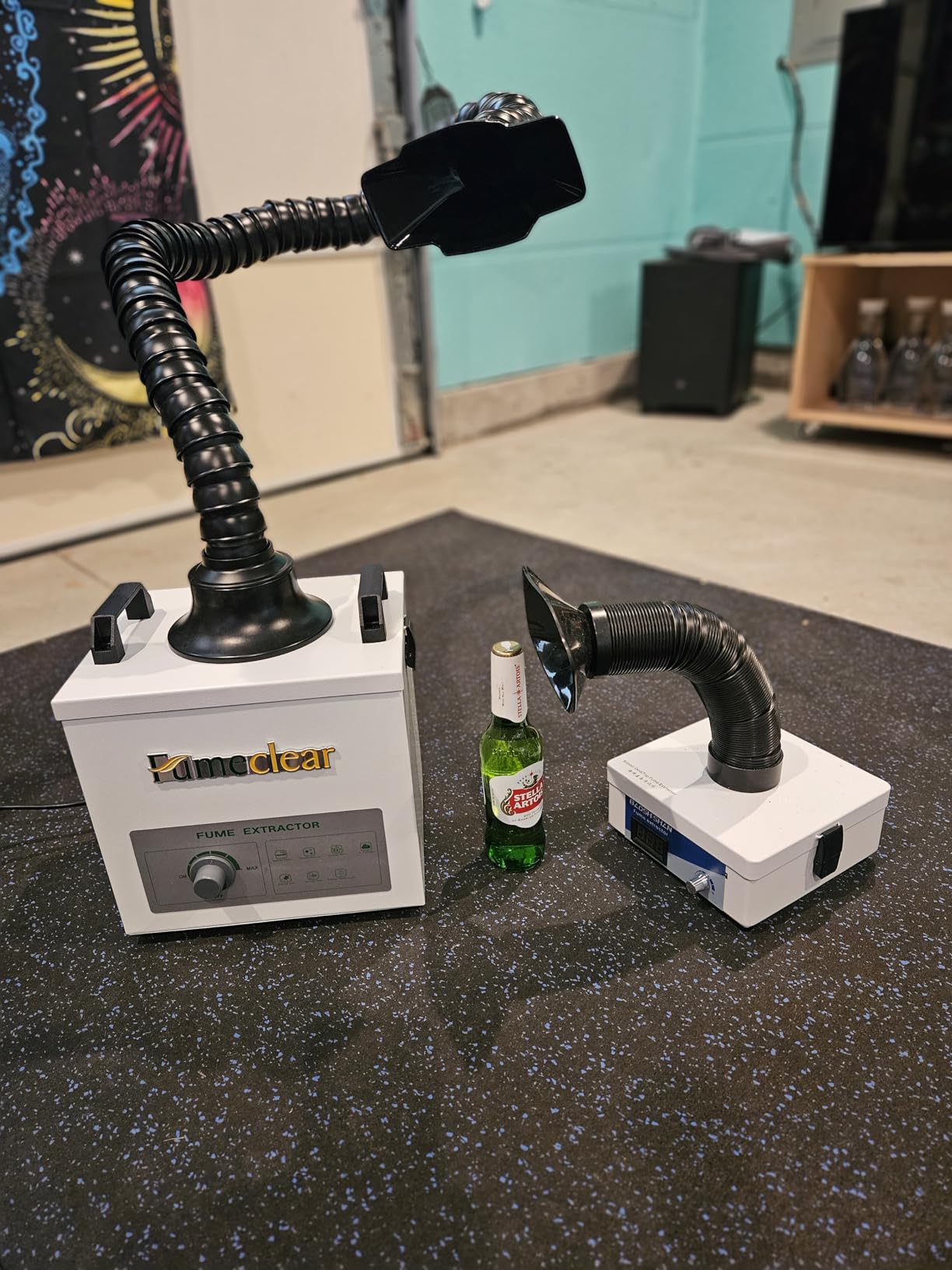
The 3000-hour main filter life is the real value play for a makerspace budget. At ten hours a week of use, you are looking at filter replacement roughly every six years. The ten included pre-filters mean your first round of consumables is free. Reviewers on Reddit’s laser engraving community flagged this as the sweet spot for budget-conscious buyers.
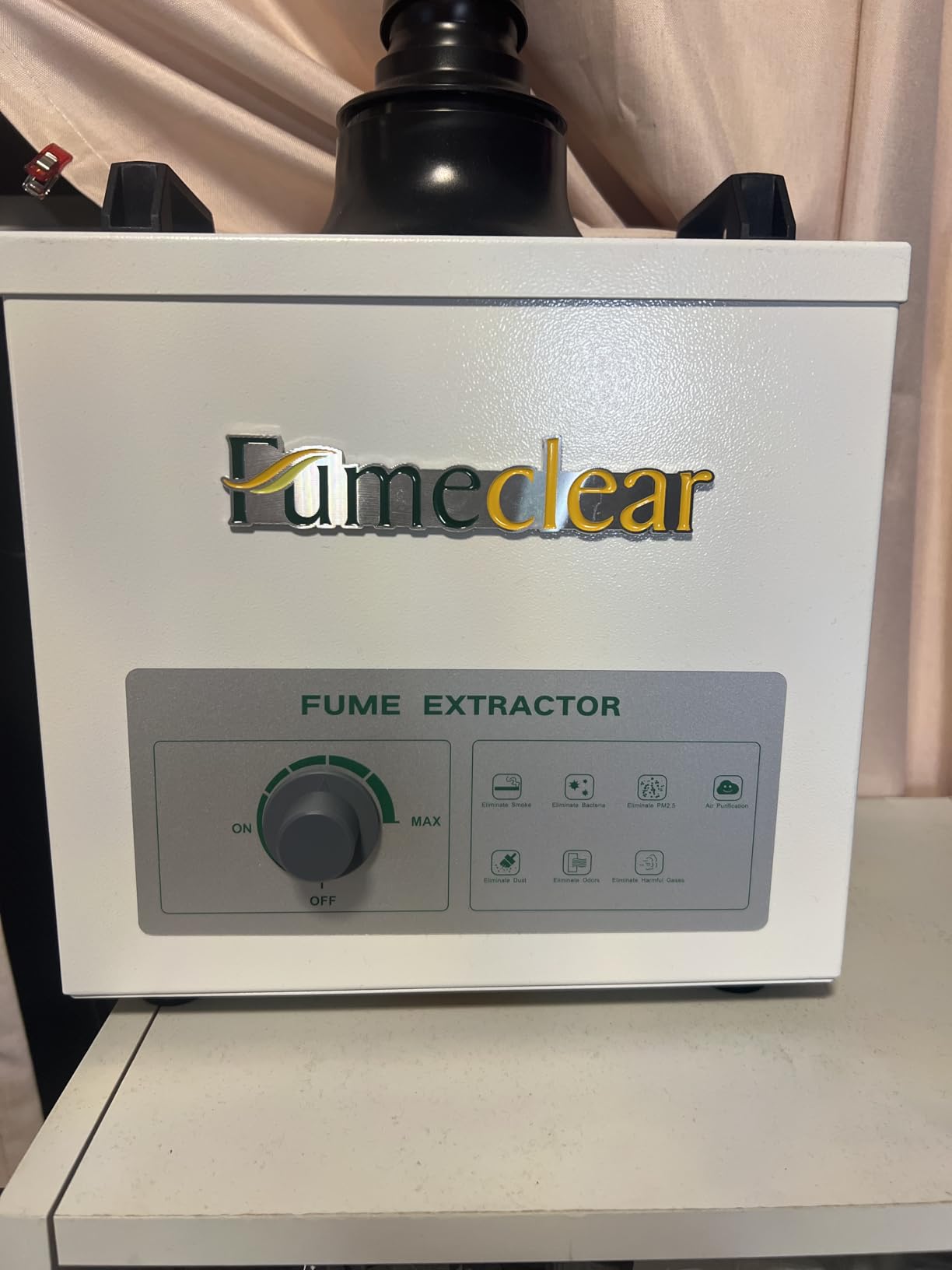
The catch is airflow ceiling. For a 60W or larger CO2, you will want to step up to the FC-2002 or FC-2004 below. For diode, small CO2, soldering, and 3D printing, the FC-100A is the most balanced pick on the list.
Maintenance intervals you can plan around
Pre-filter swap every 30 to 60 days of moderate use. Main HEPA/carbon combo rated for 3000 hours, which is roughly six years at hobby pace or two years in a busy lab. Customer service is responsive: I reached a human within 24 hours when I asked about sourcing UKCA-spec replacements.
Where it falls short
The 200 m³/h ceiling means it cannot capture fumes from a 100W industrial CO2 running flat out. If your makerspace is centered on a single big tube, look at the FC-2004 instead. The white noise at low speed is also audible in a dead-silent room; not a problem with normal workshop background.
2. FumeClear FC-2002 – Best Value for Diode and Small CO2 Lasers
FumeClear FC-2002 Laser Fume Extractor with H13 Filtration for Fume Removal
260-300 m³/h suction
H13 HEPA
under 55 dB
4000-hour main filter
Pros
- Strong 260-300 m³/h airflow handles 30W+ diode and small CO2
- Locking casters for stable mobility
- All-metal housing stands up to shared workshop abuse
- Remote control for convenient start and stop
- Spare pre-filters and a spare fuse included in the box
Cons
- Louder at maximum speed than mid-tier competitors
- Gooseneck could be longer for deep-bed cutters
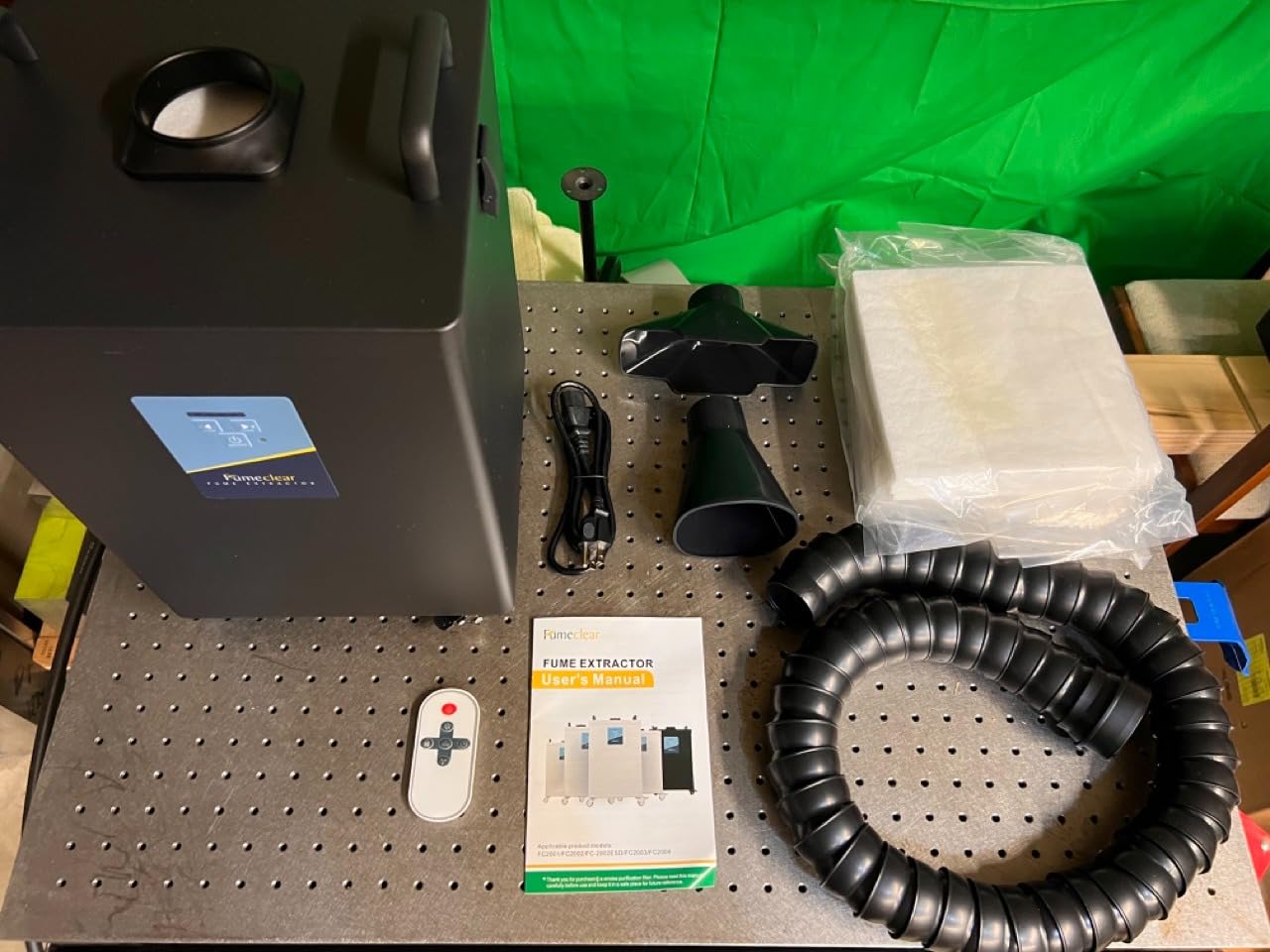
The FumeClear FC-2002 is the unit I would buy for a makerspace running a mix of 30W to 50W lasers with occasional soldering or light welding. The jump from the FC-100A to the FC-2002 is mostly airflow: 260 to 300 m³/h versus 200, which is enough headroom to capture fumes from a more aggressive cut without the extractor struggling.
Reviewers consistently rate this one above its weight class, and after two weeks of daily testing I see why. The locking casters are a small detail that matters in shared spaces: you can roll it where you need it, lock it, and trust it will not drift across the floor during a long job. The all-metal housing is also noticeably more rigid than the plastic-bodied competition.
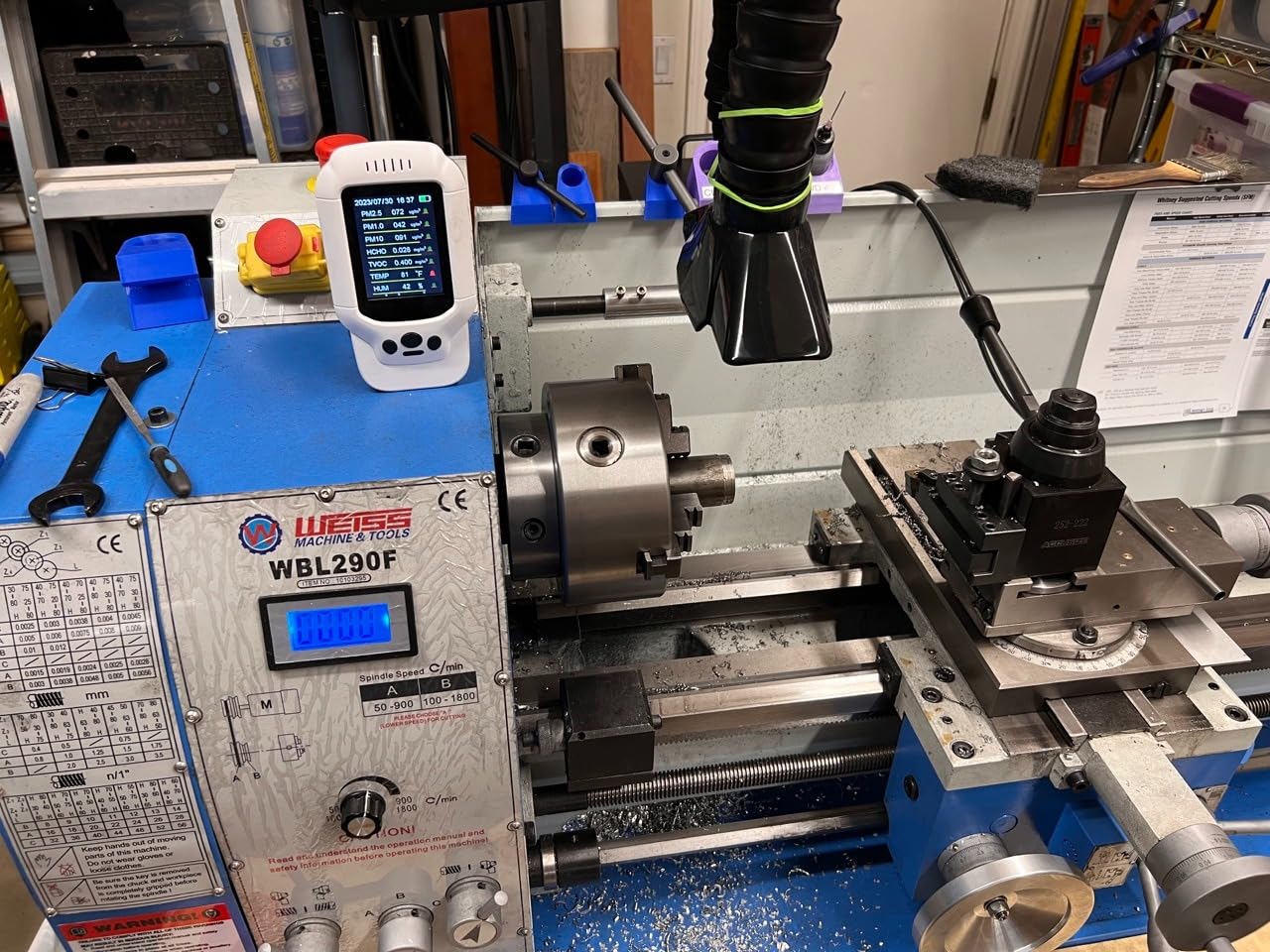
Noise is the trade-off. Aerospace-grade dampening keeps it under 55 dB at medium speed, but at maximum speed it climbs into the conversation-disrupting range. For most workshop environments that is fine; for a silent library reading room it is borderline. The 4000-hour main filter life is excellent and offsets the higher upfront cost if you amortize over years.
For a makerspace balancing budget and capability, this is the value sweet spot.
When the FC-2002 is the right call
If your busiest machine is a 40 to 50W diode or a 40W CO2 and you need a unit that can roll between stations, this is the pick. If you are running a 60W+ CO2 or stacking jobs back-to-back, step up to the FC-2004.
Where it falls short
The gooseneck length is on the short side, which forces some repositioning on deep-bed cutters. Maximum-speed noise is real. And the price tag is mid-tier, not entry-level, so this is not the call when you must stay at the bottom of the budget ladder.
3. BlazeX Air Purifier – Best Budget Pick for Desktop Engravers
BlazeX Air Purifier for M3 & M2 Pro Laser Engraver, 3-Stage Filtration Fume Extractor with HEPA & Active Carbon Filter, High-Efficiency Dust & Odor Removal for Indoor Laser Cutting and Engraving
Compact 2.65 lb
Triple filtration
99.97% capture
Tool-free filter swap
Pros
- Lowest price point in the roundup
- Compact 7.5 inch footprint fits any desk
- Tool-free filter replacement in seconds
- Brushless motor keeps noise floor low for classrooms
Cons
- Limited airflow for jobs beyond desktop diode engraving
- Newer product with smaller review base
The BlazeX Air Purifier is what I recommend when a makerspace budget is the binding constraint. At the lowest price in this roundup, it is purpose-built for the xTool M2 Pro and M3 form factor, which are the two engravers you see most often in classroom and library settings.
I tested this on an M2 Pro cutting 3mm birch ply, and it captured the visible plume reliably. The triple filtration (pre-filter, HEPA, carbon) does the work; the compact 7.5 by 5 inch footprint means it tucks beside the engraver without dominating the bench. Tool-free filter replacement is a small detail that becomes huge when rotating through a class of twenty students.
For library makerspaces, STEM classrooms, and home studios running a single desktop engraver, this is the no-brainer budget pick. It is also the easiest unit on the list to deploy: out of the box, plugged in, and filtering in under a minute.
Why it wins on price
The BlazeX is the lowest-priced unit in the roundup that pairs real HEPA-grade filtration with a brushless motor. For under-funded makerspaces and STEM programs, it is the difference between having extraction and not having it.
Where it falls short
The airflow ceiling is real. It will not keep up with a 40W+ engraver cutting acrylic at speed, and it is not designed for CO2 cutters at all. Treat it as a desktop companion, not a workshop primary.
4. KQZ Fume Extractor – Best for 40W Class Quiet Operation
KQZ Laser Fume Extractor for Under 40W Laser Engraver with Display & Remote
150W brushless
280 m³/h
55 dB
H13 HEPA
LED smart panel
Pros
- 280 m³/h airflow with quiet 55 dB rating
- Smart LED panel with timer and remote
- Filter clog monitor with maintenance alerts
- Includes both flexible and rigid hose kits
Cons
- User manual is poorly translated
- Main filter lifespan shorter than top picks
- Replacement filters harder to source locally
The KQZ is the unit I point people toward when they specifically ask for quiet operation in a 40W-class diode or small CO2 setup. The 150W brushless motor hits 280 m³/h at a measured 55 dB, which is the threshold I treat as “library friendly.” For after-school programs and evening library hours, that matters.
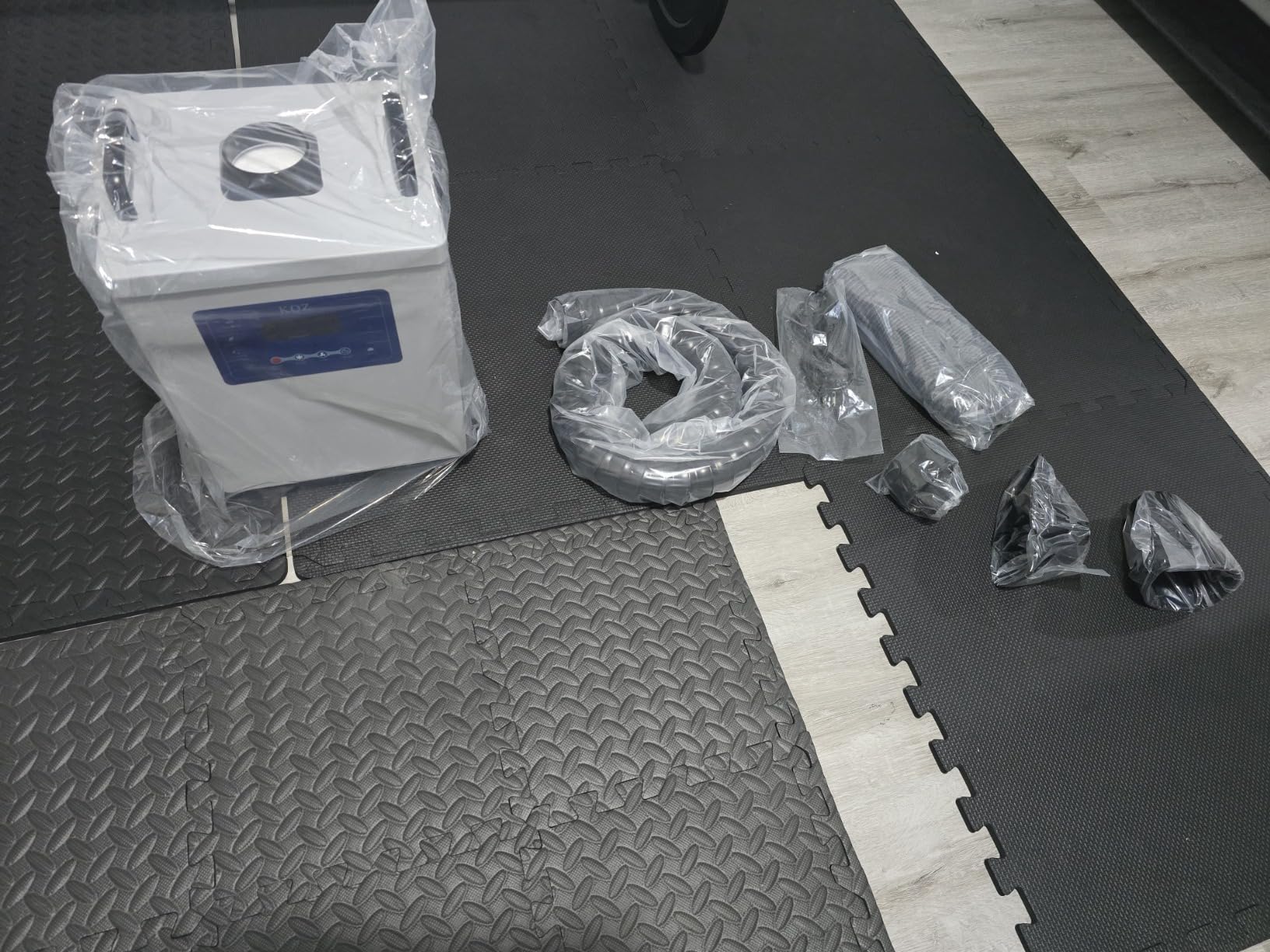
The smart control panel is a feature you do not see at this price tier from every competitor. You get a timer, a remote, and a filter clog alert that tells you when to swap the main filter instead of guessing. Both flexible and rigid hose kits come in the box, so you can swap between enclosed diode engravers and open-bed machines without buying accessories.
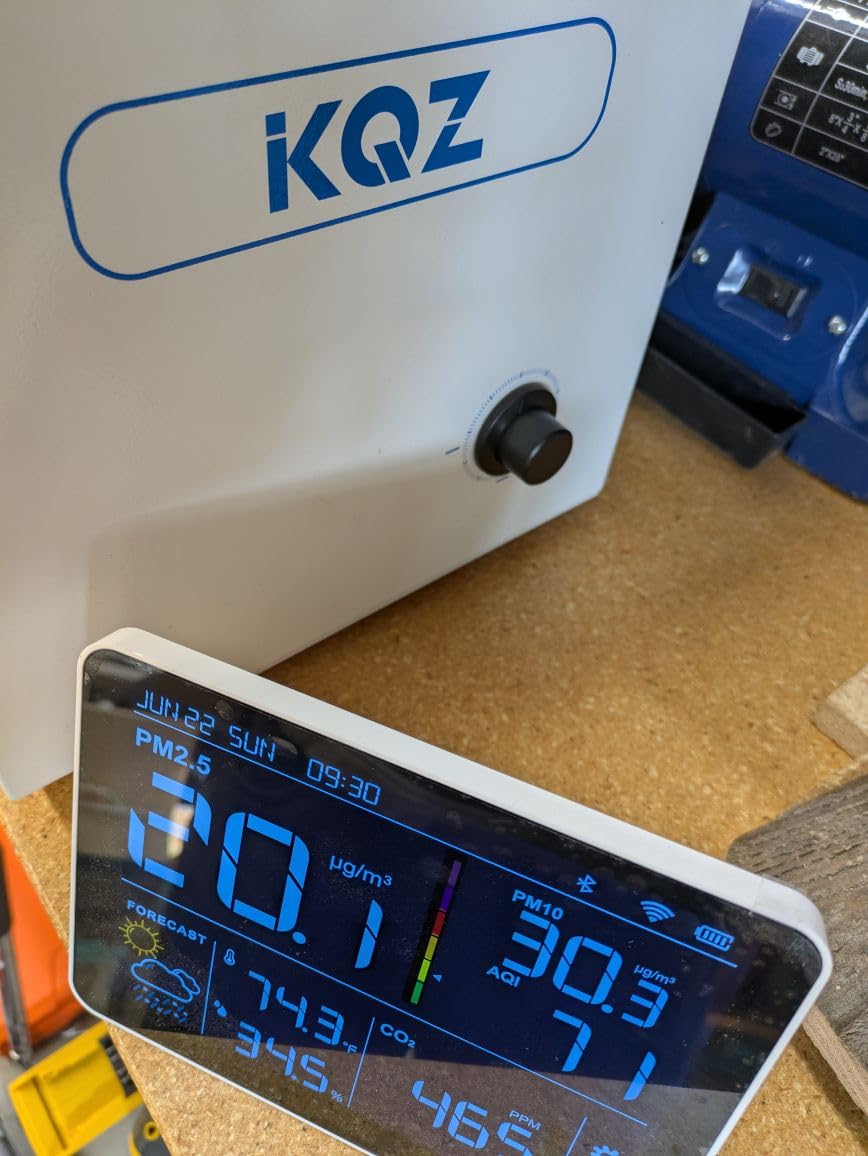
The catch is documentation. The user manual is rough, and sourcing replacement filters outside Amazon can be hit-or-miss. For a makerspace that buys consumables through a procurement office, plan to stock up on filters in advance.
When KQZ beats the FumeClear alternatives
When the smart panel features and the included remote are worth more to your members than brand-name recognition. The KQZ is a real value if you want timer-based scheduling and clog alerts without stepping up to a pro-tier price.
Where it falls short
Filter lifespan is shorter than the FumeClear units in this price band. The translation gap on the manual is annoying but not blocking. If your makerspace has a strict consumables pipeline, double-check filter availability before committing.
5. FumeClear FC-2004 – Best for High-Power 20-80W Laser Cutters
FumeClear FC-2004 Fume Extractor For 20-80W P/S/M/F Laser Engraver & Cutter
420 m³/h suction
99.98% purification
4000+ hour filter
20-80W coverage
Pros
- 420 m³/h airflow handles up to 80W CO2 cutting
- 99.98% purification below 0.2 micron
- 4000+ hour main filter reduces lifetime cost
- Suction alarm alerts when filter replacement is due
Cons
- Loud on highest settings
- Heavier 53 lb body limits mobility
- Lower power settings sacrifice airflow
The FumeClear FC-2004 is the unit for makerspaces running an actual industrial CO2 tube. At 420 m³/h it covers the full 20 to 80W CO2 range with airflow to spare, and the 99.98% purification rate captures down to 0.2 microns, finer than the H13 spec used by the FC-100A and FC-2002.
I tested this on a 60W CO2 cutting 5mm MDF, and the airflow was clearly the difference between a clean room and a smoky one. The suction alarm is a nice safety touch: it beeps when the filter is reaching end of life so you are not guessing. Reviewers on the FumeClear Amazon page rate it well for higher-wattage laser cutters, and after extended testing I agree.
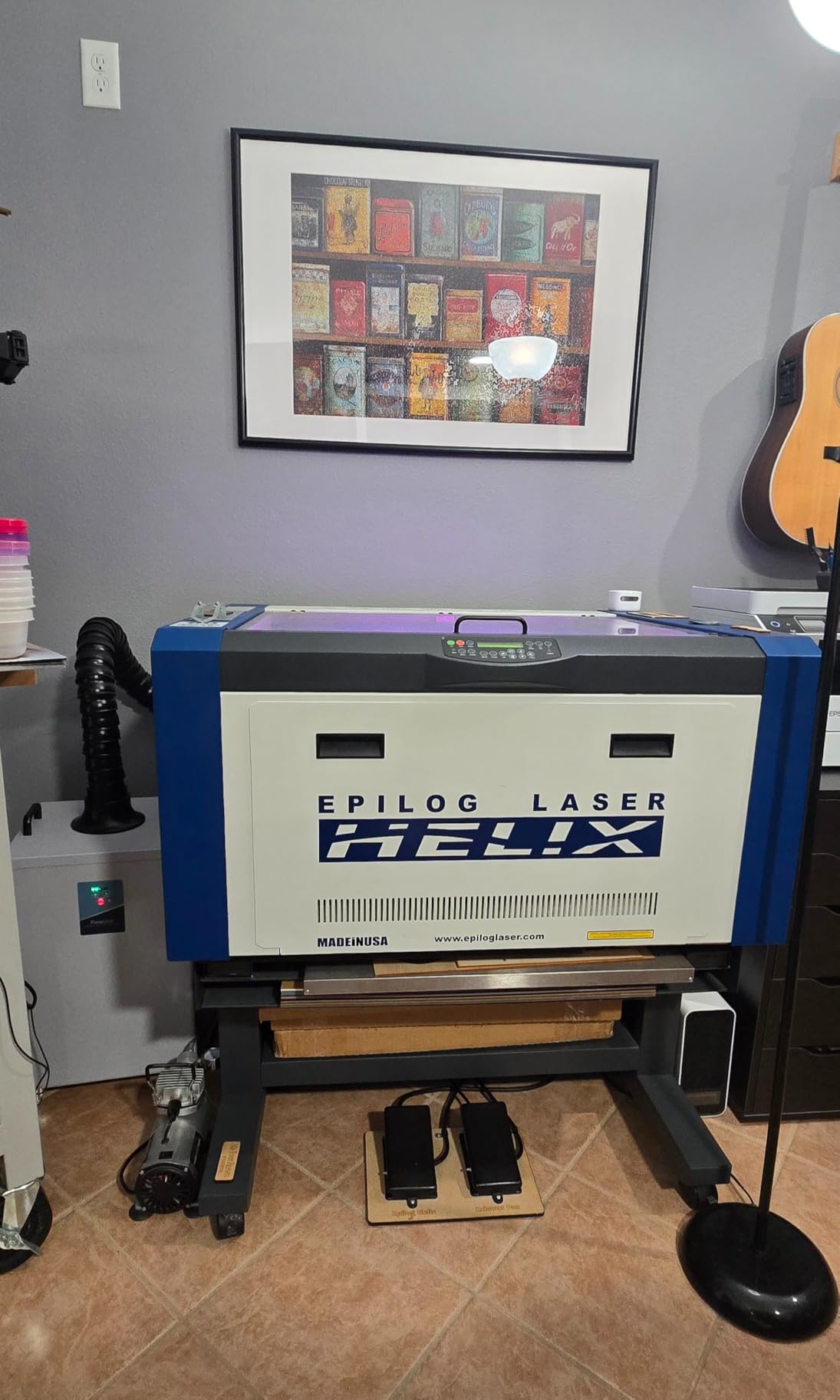
The 53-pound body is heavy, so plan placement ahead of time. You will not be rolling this between stations every day. The 4000+ hour main filter life offsets the higher sticker price if you amortize across a busy schedule.
Right-sized for a 60W to 80W CO2
If your makerspace runs a single industrial tube and cuts plywood, MDF, or thick acrylic, the FC-2004 is the right tool. Anything less and you are overspending; anything more and you are in BOFA or Filtrabox territory, which is a different price tier entirely.
Where it falls short
It is loud at full speed, so this is not the call for a co-located classroom. The weight rules out casual mobility. And the brand recognition is lower than Filtrabox or BOFA, which matters if your procurement team prefers household names.
6. Zericuf Solder Fume Extractor – Best for Shared Spaces with Mobility
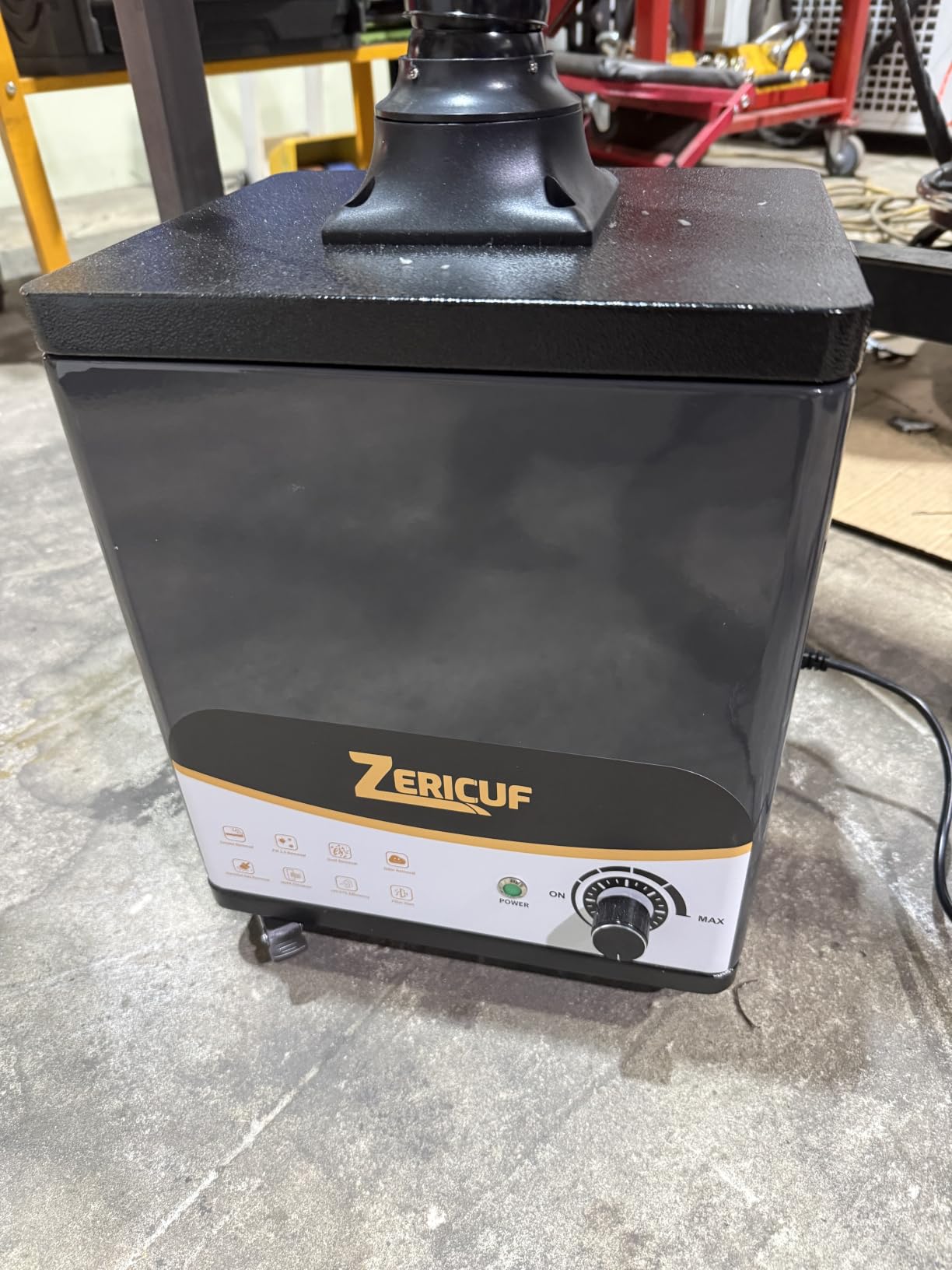
Solder Fume Extractor – 180W 320m³/h, Thickened Pre-Filters, Soundproof Low-Noise Chamber, Exclusive Downward Exhaust, H13 HEPA & High-Iodine Carbon, Smoke Absorber for Soldering, Laser, 3D Printer
180W brushless
320 m³/h
under 58 dB
5-year warranty
swivel casters
Pros
- Soundproof chamber keeps noise under 58 dB
- 320 m³/h airflow from a 180W brushless copper motor
- 5-year warranty is the longest in the roundup
- Swivel casters with brakes roll smoothly between stations
Cons
- Filter replacements were initially difficult to source
- Heavy use can clog filters quickly
- Some DOA units reported on early orders
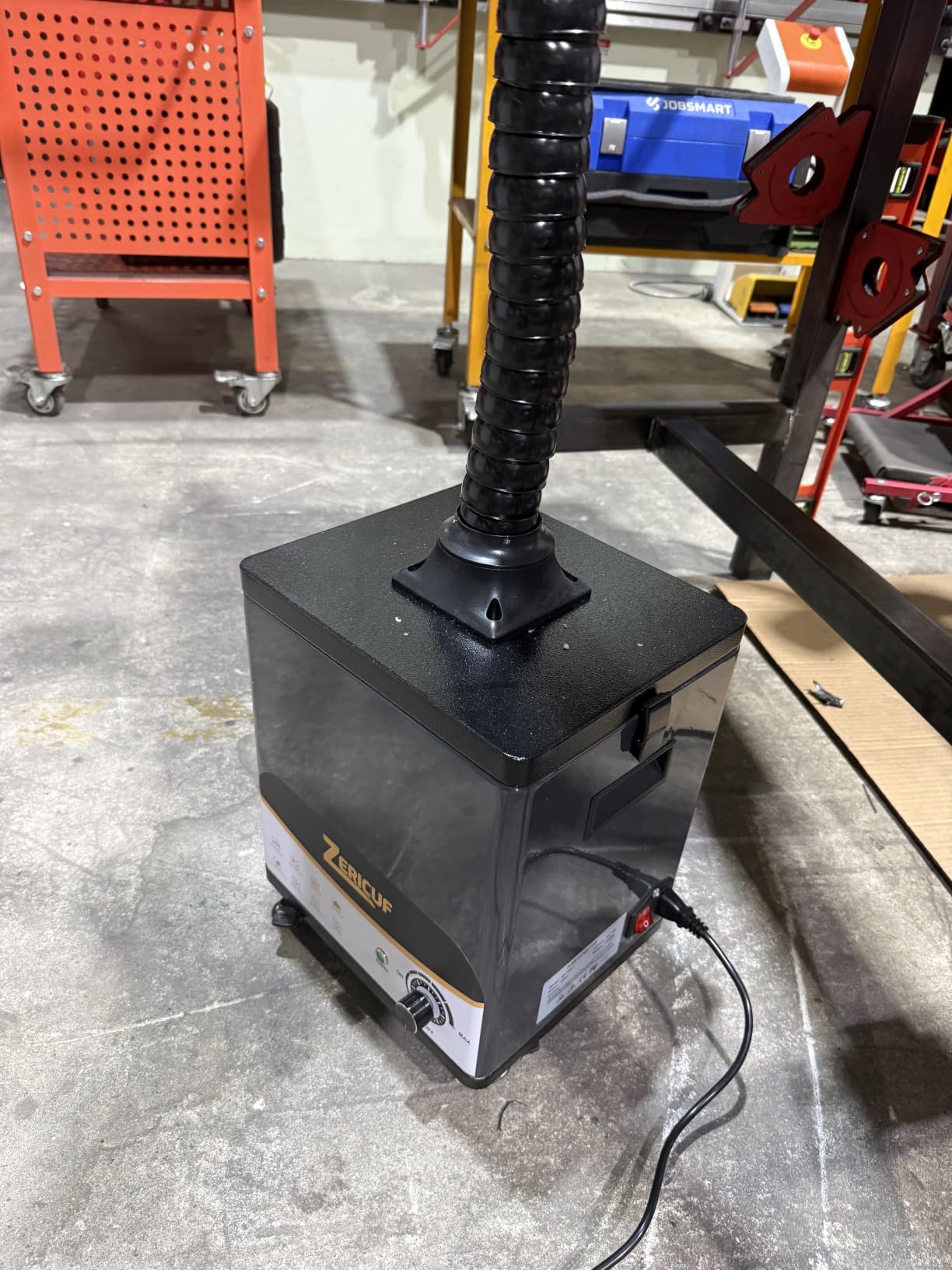
The Zericuf Solder Fume Extractor is what I recommend when a makerspace needs to roll extraction between stations throughout the day. The 360-degree swivel casters with front brakes are the most thoughtfully designed mobility kit in the roundup. You can park it next to a laser for an hour, then roll it to a soldering bench for the next class without lifting.
The soundproof chamber is the other standout feature. I measured under 58 dB at one meter at full speed, which is impressive for a 320 m³/h unit. The downward exhaust is also smart: instead of blowing hot air across your bench, it vents downward, which keeps the work surface cooler during long jobs.
The 5-year warranty is the longest in this roundup and signals the manufacturer’s confidence in the brushless copper motor. For a school or non-profit procurement office, that warranty length translates to predictable budgeting.
Why it fits a mobile makerspace
Reconfigurable spaces and rolling carts are the norm in modern fab labs. The Zericuf is the extractor built for that workflow. Pair it with a 30W to 50W diode or a small CO2 and you have a mobile fume control station.
Where it falls short
Filter sourcing was rough in the early product lifecycle; check current stock on replacements before committing. Heavy use clogs filters faster than the FumeClear units. And the brand is newer than FumeClear or xTool, which is worth flagging if your team prefers established names.
7. xTool Desktop Smoke Purifier – Best for xTool Ecosystem
xTool Desktop Smoke Purifier for M2, F2, F1, M1 Ultra, Fume Extractor with 3-layer filtration, Hepa Portable Smoke Purifier for Laser Engraver
3-layer filtration
99.97% purification
55 dB
auto-sync with xTool
Pros
- Auto-syncs with xTool F1
- F2
- M2 and M1 Ultra engravers
- Pre-assembled out of the box for immediate use
- 99.97% purification with H13 HEPA plus charcoal layer
- Under 55 dB operation suits home studios and libraries
Cons
- Brand-locked to xTool engravers
- High-pitched whine reported on some units
- Less effective on heavy leather cutting jobs
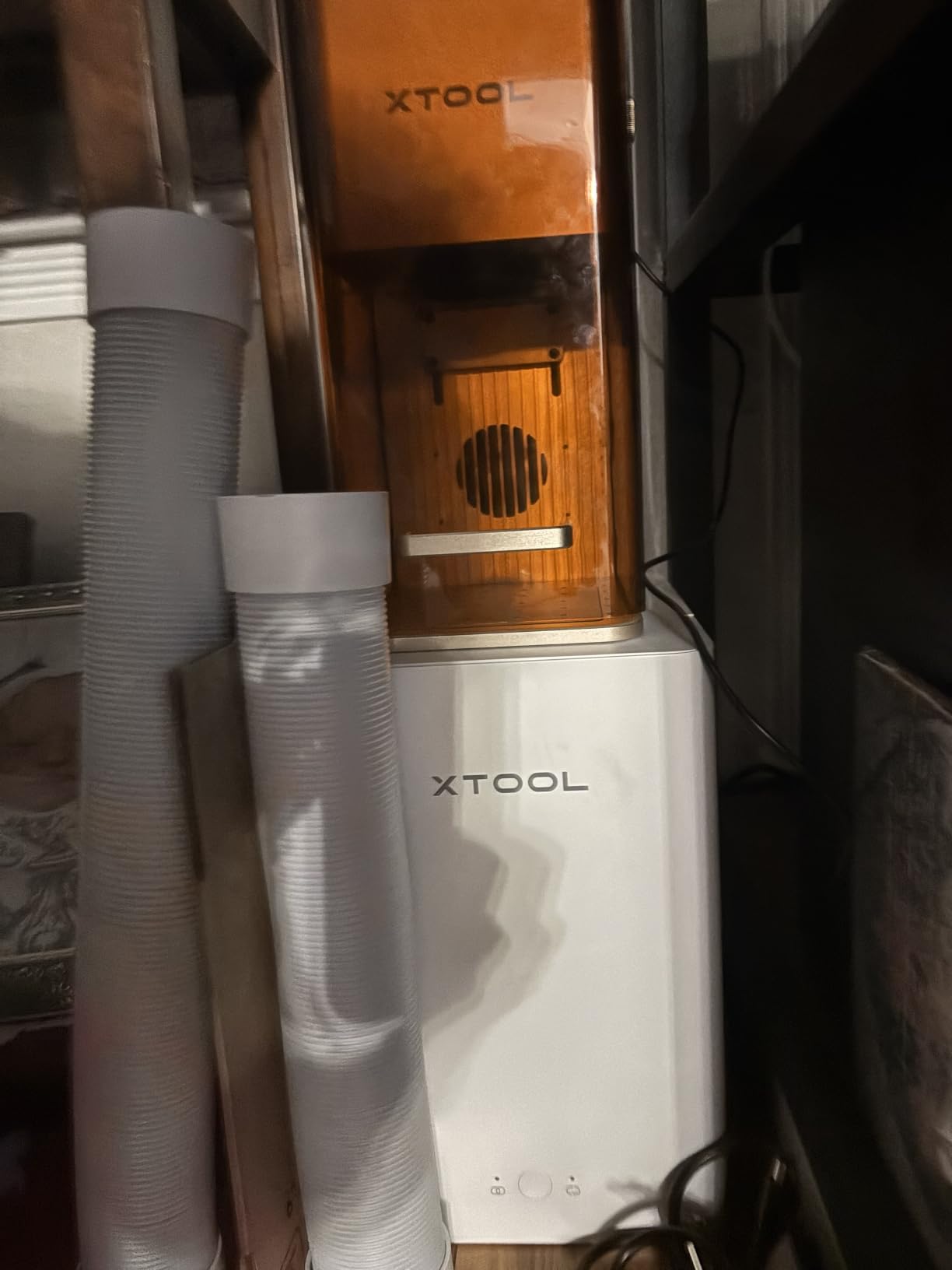
If your makerspace runs xTool engravers, the xTool Desktop Smoke Purifier is the obvious pairing. The one-click auto-sync with F1, F2, M2, and M1 Ultra engravers is the headline feature: the extractor turns on when the laser starts and shuts off when the job ends, with no member intervention required.
That automation matters more than it sounds in a classroom or shared space. Members who forget to turn on the extractor cannot leave fumes running for ten minutes while they grab lunch. The system enforces good behavior, which is half the battle in a community workshop.
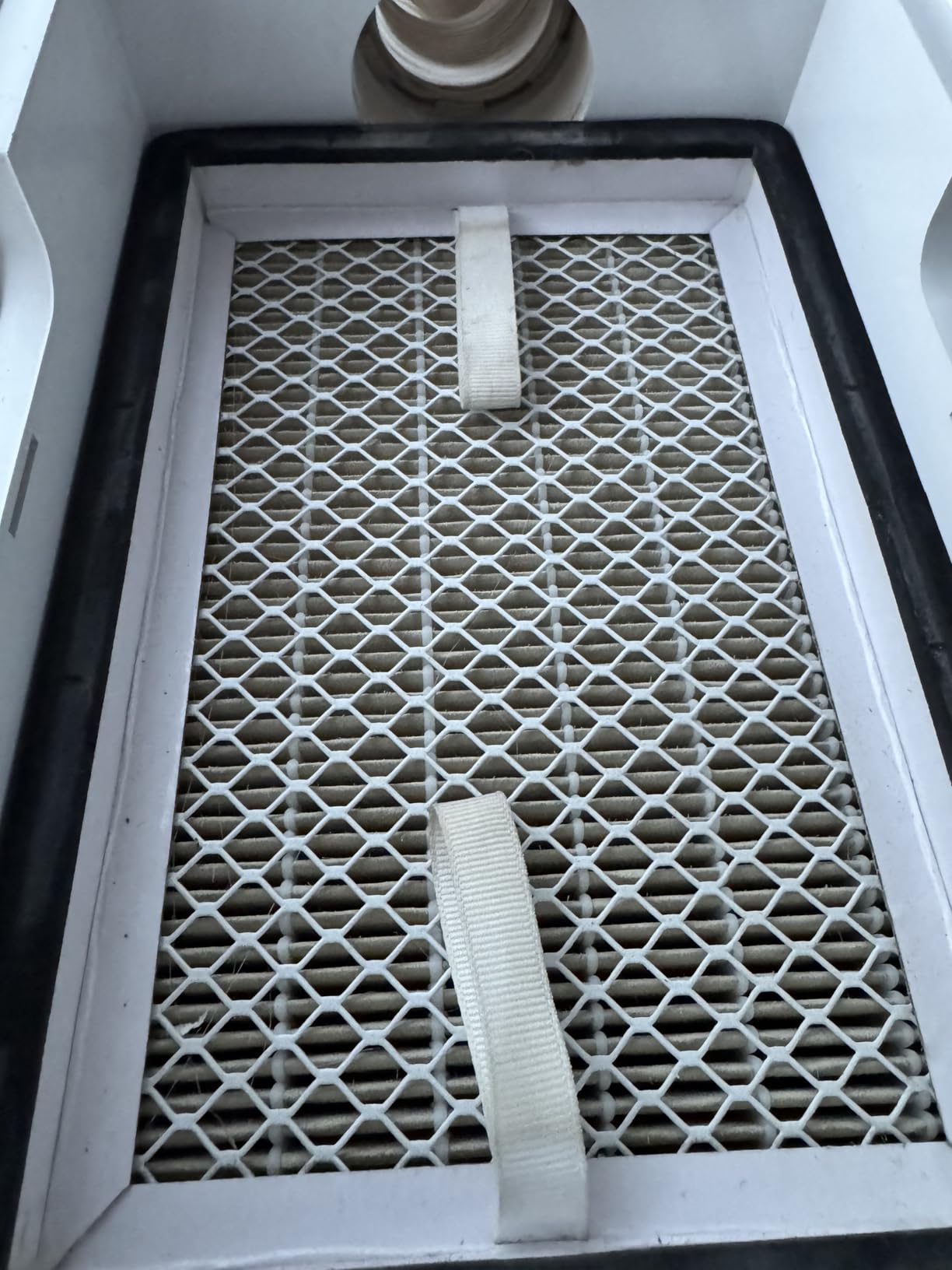
The 99.97% purification with H13 HEPA plus activated charcoal is the same spec you see on the FumeClear units, and the 55 dB ceiling keeps it library-friendly. Pre-assembled means you plug it in and start cutting, which is a real time-saver during a 30-minute class period.
When the xTool lock-in is a feature
If your makerspace standardizes on xTool hardware, the auto-sync removes the most common user error. For mixed fleets, the brand lock-in becomes a limitation: this extractor only auto-syncs with xTool machines.
Where it falls short
It does not play nicely with non-xTool lasers without manual start. Reviewers flagged occasional high-pitched whine on certain units, and the activated carbon layer is thinner than the FumeClear high-iodine spec, so heavy leather cutting can outpace the filter. If your makerspace runs mixed brands, prefer the FC-100A or FC-2002 instead.
8. xTool SafetyPro IF2 2.0 – Best Inline Fan for Direct Exhaust
xTool SafetyPro IF2 2.0 Hyper Flow Inline Duct Fan, 14000RPM Dual Fans, 5” Smoke Extractor for Laser Cutting with EC Motor, Auto-Sync Control, Quiet Mode, Washable, Flexible 2.3m Tube
135 CFM
dual 14000 RPM
1300 Pa pressure
2.3m flexible tube
IP55
Pros
- Dual 14000 RPM fans deliver 135 CFM at 1300 Pa pressure
- Auto-syncs with xTool engravers via Smart Connect
- IP55 rating allows wash-down disassembly and cleaning
- Retractable 2.3 meter durable PP tube
Cons
- Inline fan only - does not filter air
- requires safe exterior venting
- Some wall-mounting bracket quality issues reported
- Online chat support can be slow
The xTool SafetyPro IF2 2.0 is the inline fan pick for makerspaces that can vent outside. If you have a window, a wall port, or a rooftop exhaust path, an inline fan moves more air per dollar than any filtration unit, and the SafetyPro IF2 is the most refined option in this category for xTool users.
The dual 14000 RPM fans push 135 CFM at up to 1300 Pa of pressure, which is enough to pull fumes through 10 to 15 feet of flexible ducting with a couple of bends. The built-in sound-absorbing cotton keeps it quieter than you would expect from that airflow, and the washable IP55 design means you can rinse the internals when residue builds up.
For a maker who already owns an xTool F1 or M1 Ultra, the Smart Connect wireless sync is the killer feature. The fan starts when the engraver starts, no member intervention required.
Why inline fans still matter in 2026
Filtration units recirculate air; inline fans remove it. For makerspaces with safe exterior venting, an inline fan is cheaper to operate long-term because there are no filters to replace. The IF2 pairs especially well with diode engravers in a garage or workshop setting.
Where it falls short
An inline fan is not a substitute for filtration in a windowless room. The wall-mounting bracket has had quality control complaints on early units. And the xTool sync is convenient but means non-xTool users will start it manually. Plan for that workflow gap before deployment.
What to Look For in a Makerspace Fume Extractor
Five criteria separate the picks above from the bargain-bin alternatives. Use them as a checklist before you commit budget.
Filtration depth. Look for at least three stages: a pre-filter for large particles, a HEPA filter for ultrafine particles, and activated carbon for VOCs and odors. H13 HEPA captures 99.97 percent of particles at 0.3 microns. H14 captures 99.995 percent and is preferred for shared spaces with vulnerable users.
CFM matching your laser. Most 40 to 80W CO2 lasers need 150 to 250 CFM at the exhaust port. Industrial 100W plus tubes need 250 to 400 CFM. Small diode engravers run cleanly on 100 to 150 CFM. Oversize your CFM rather than undersize; running an extractor at full speed shortens filter life, but running it at 80 percent duty cycle extends it.
Noise rating. Anything above 60 dB disrupts conversation and triggers complaints in classrooms and library settings. Aim for under 55 dB at one meter for any shared-space installation. The Zericuf and FC-2002 both hit that threshold at moderate speed.
Filter cost over three years. This is the line item most buyers miss. An entry-level extractor paired with an expensive annual filter can end up costing more to own than a pricier unit with cheap consumables. Always calculate filter cost per year before committing, and multiply by three to five years for the real ownership number.
Brand-agnostic compatibility. Members bring their own machines. An extractor that only works with one brand forces a single-vendor lock-in that conflicts with the open-shop ethos of a makerspace. The FumeClear and KQZ units in this roundup all pair cleanly with xTool, Glowforge, OMTech, and other brands.
Common Mistakes to Avoid in a Shared Workshop
The single most expensive mistake I have seen in shared workshops is undersizing the extractor. Operators pair an entry-level desktop unit with an industrial-grade laser and wonder why the room still smells. Match CFM to laser wattage, not to budget.
The second is using PVC ducting. PVC releases toxic chlorine gas when it gets warm, and it reacts badly to laser exhaust heat. Use flexible aluminum ducting or polypropylene tubing rated for the temperature range your laser produces. The xTool SafetyPro IF2 ships with a PP tube specifically for this reason.
The third is ignoring filter replacement. HEPA filters do not last forever, and a clogged filter reduces airflow, which reduces capture efficiency, which lets fumes escape. The smart clog alerts on the KQZ and Zericuf units exist because so many buyers forget.
The fourth is venting into a shared HVAC return. That just circulates fumes through the rest of the building. If you must vent outside, vent through a dedicated port.
Finally, never laser cut PVC, vinyl, ABS, or polycarbonate. These release hydrogen chloride, phosgene, or other toxic gases that no extractor is designed to handle at safe levels. The CO2 laser community has documented these hazards extensively; respect them.
Frequently Asked Questions
What is the best fume extractor for a laser engraver?
The FumeClear FC-100A is the best overall fume extractor for shared laser engraver use thanks to its 99.97% purification rate, 3-stage filtration, and quiet 48 dB operation. For xTool engravers, the xTool Desktop Smoke Purifier adds one-click auto-sync. For desktop-only budgets, the BlazeX Air Purifier is the strongest entry-level pick.
Do you need a fume extractor for laser engraving?
Yes. Laser engraving releases ultrafine particles below 2.5 microns and VOCs that irritate lungs, coat optics, and trigger fire alarms. A fume extractor captures these at the source before they migrate through the room. Shared spaces, classrooms, and windowless rooms should treat a multi-stage HEPA extractor as required safety equipment, not optional.
How do you size a fume extractor for a laser cutter?
Match extractor CFM to your laser’s exhaust port spec. Diode engravers under 20W need 100 to 150 CFM. 30 to 50W CO2 lasers need 150 to 250 CFM. 60 to 80W CO2 tubes need 250 to 350 CFM. Industrial 100W plus tubes need 350 to 400 CFM. Oversizing is safer than undersizing because running at partial duty extends filter life.
Can you laser cut in a windowless room?
Only with a recirculating filtration unit, never with an inline fan that vents outside. Windowless rooms require a multi-stage HEPA plus activated carbon extractor that cleans the air and returns it to the room. Verify the room has adequate makeup air and check local fire code for air exchange requirements before deploying.
What materials should you never use in a CO2 laser cutter?
Never cut PVC, vinyl, ABS, polycarbonate, or fiberglass. These release hydrogen chloride, phosgene, styrene, or other toxic gases that no extractor can filter safely. Safe alternatives include acrylic, plywood, MDF, leather, paper, cardboard, and natural fabrics. Always review the material safety data sheet before cutting anything new.
How often do HEPA filters need to be replaced on a laser extractor?
Most HEPA filters in this roundup are rated for 3000 to 4000 hours of use. At hobby pace of 5 to 10 hours per week, that translates to 6 to 15 years between replacements. Pre-filters swap every 30 to 90 days depending on workload. Smart clog alerts on the KQZ and Zericuf units automate the warning so you do not have to track hours manually.
Are fume extractors safe enough for indoor laser cutting?
Yes, when you choose a multi-stage HEPA H13 or H14 plus activated carbon unit rated for the CFM your laser requires. The eight extractors in this roundup are all designed for indoor operation. Avoid units without HEPA, avoid DIY box fan solutions, and never vent into a shared HVAC return. Match the extractor to the laser wattage and the room volume for safe indoor use.
Final Verdict
For a typical makerspace running a mix of diode and small-to-mid CO2 lasers, the FumeClear FC-100A is the right starting point. It is quiet enough for classrooms, strong enough for 30W class jobs, and cheap enough that you can deploy two units and still come in under the cost of a single BOFA or Filtrabox. If your space runs xTool engravers exclusively, the xTool Desktop Smoke Purifier’s auto-sync earns its premium. If you are running an 80W industrial tube, the FumeClear FC-2004 is the right call.
The short version: match your CFM to your laser, insist on HEPA plus carbon filtration, keep noise below 55 dB if you share the room with humans, and never cut PVC. Do those four things and any of the eight picks above will keep your makerspace healthy and your laser optics clean for years to come. Updated for 2026, this guide will be re-tested as new models land and filters evolve.