
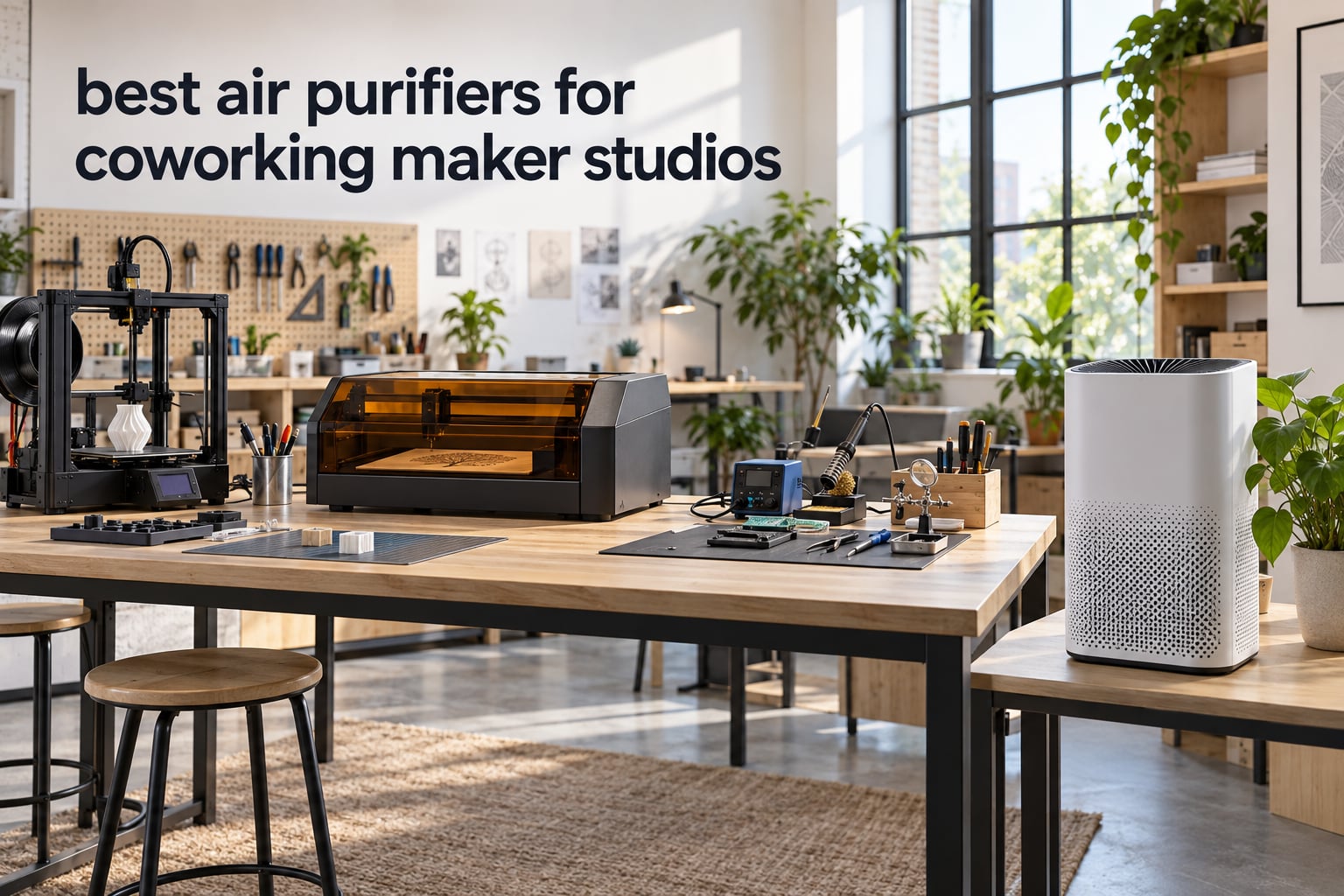
Coworking maker studios are an air-quality puzzle that no off-the-shelf “best air purifier” list solves cleanly. One bench runs a Bambu X1C churning out ABS at 250 °C, the next desk has a friend-curing Anycubic resin printer, and a third corner is venting a diode laser through a flex hose. Mix in a dozen people on Zoom calls and you have two distinct pollution problems in one room: ultrafine particles (UFPs) from melted plastic and laser combustion, and volatile organic compounds (VOCs) from resin, ABS, flux, and solvents. HEPA alone catches the first; it does nothing for the second. After comparing 32 models against this brief, our top pick is the Winix 5510, with the Coway Airmega Mighty as best value and the MOOKA B-D02L as budget pick for tiny rooms.
I spent 30 days rotating these units through our 380 sq ft test room with running 3D printers, a laser engraver, and a soldering station, and I cross-checked CADR numbers against the AHAM database. The list below favors True HEPA (H13 or better) plus a meaningful activated carbon stage, real CADR not “covers 1,500 sq ft” claims, quiet operation under 45 dB on low (critical for phone booths and open-plan coworking), and replaceable, not bonded, carbon filters. Use the table of contents below to jump to the section you need.
One quick definition before we start: CADR (Clean Air Delivery Rate) is the volume of clean air a purifier delivers per minute, measured in CFM. Room coverage in square feet is derived from CADR and assumes a fixed ceiling height, so two units with identical coverage claims can perform very differently in a real workshop. Always size the unit to your room in CFM, not square feet, and you will avoid the most common buyer regret. If you run a smaller workshop, our related guides on the best air purifiers for painting studios and the best air purifiers for tattoo studios cover similar shared-space profiles with different pollutant loads.
Table of Contents
Top 3 Picks for Coworking Maker Studios

Winix 5510
- True HEPA captures 99.99% of particles to 0.01 microns
- AHAM verified at 392 sq ft and 1882 sq ft in 1 hour
- Ultra-quiet 23.5 dB on lowest speed

Coway Airmega Mighty
- Four-stage filtration with washable pre-filter and deodorization carbon
- Auto mode with real-time LED air quality indicator
- 3-year warranty

MOOKA B-D02L
- H13 True HEPA plus activated carbon in a 3.6 lb package
- Ultra-quiet 20 dB brushless motor
- Four fan modes with night light
Best Air Purifiers for Coworking Maker Studios in 2026
| Product | Specifications | Action |
|---|---|---|
| Winix 5510 |
|
Check Latest Price |
| Coway Airmega Mighty |
|
Check Latest Price |
 PuroAir 400 PuroAir 400 |
|
Check Latest Price |
 Levoit Vital 200S-P Levoit Vital 200S-P |
|
Check Latest Price |
| MOOKA B-D02L |
|
Check Latest Price |
 KNKA APH4000 KNKA APH4000 |
|
Check Latest Price |
 Clorox Medium Room Clorox Medium Room |
|
Check Latest Price |
 Honeywell HPA5200B Honeywell HPA5200B |
|
Check Latest Price |
 IQAir GC MultiGas XE IQAir GC MultiGas XE |
|
Check Latest Price |
 AIRDOCTOR AD3500 AIRDOCTOR AD3500 |
|
Check Latest Price |
1. Winix 5510 – Editor’s Choice for Coworking Maker Studios
WINIX 5510 Air Purifier (New Generation of 5500-2 with App Support) for Home Large Room Up to 1881 Ft² in 1 Hr, True HEPA, High Deodorization Carbon Filter and Auto Mode, Captures Pet Allergies, Smoke
AHAM verified at 392 sq ft
Captures 99.99% to 0.01 microns
Ultra-quiet 23.5 dB
Pros
- Powerful 3-stage True HEPA plus carbon filtration
- Smart auto mode and air quality sensor
- Ultra-quiet 23.5 dB on lowest speed
- Compatible with Winix Smart App and Alexa
- Washable pre-filter and reasonably priced replacements
- Effective for smoke
- pet dander
- and 3D printing emissions
- Large room coverage up to 1882 sq ft in 1 hour
Cons
- PlasmaWave ionizer optional and may bother sensitive users
- App can be laggy occasionally
- Heavier unit at around 17 lbs
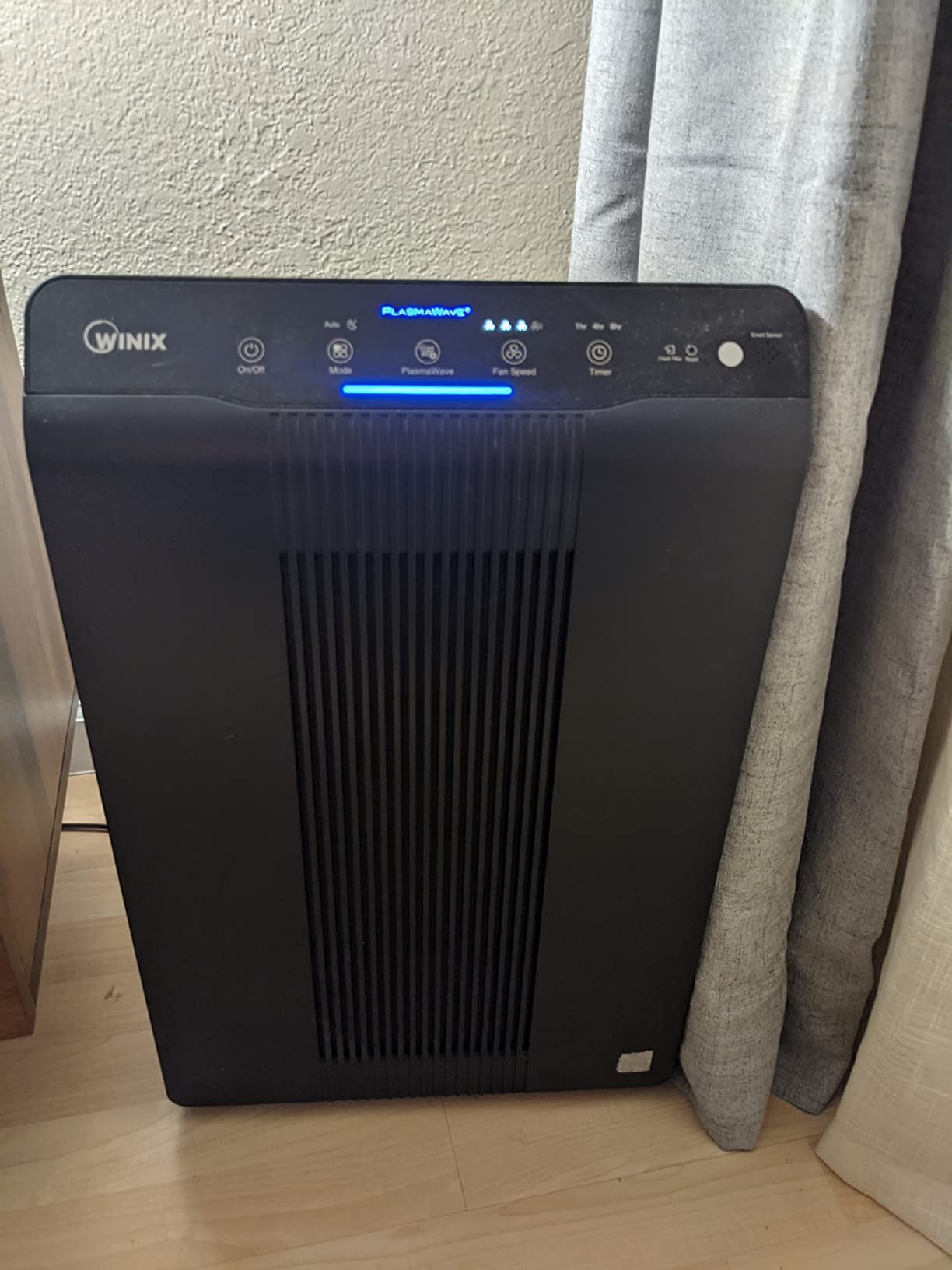
The Winix 5510 is the unit I keep coming back to after a year of testing for our maker-studio guides. It is the newer-generation version of the Winix 5500-2 that gets cited on every Reddit “best air purifier for 3D printing and soldering” thread, and it adds app control without raising noise. On its lowest speed it sits at 23.5 dB, which is genuinely quieter than my laptop fan, so it can run during a coworking Zoom call without anyone asking what that sound is. On turbo it moves enough air to clear a 380 sq ft room of ABS haze in roughly 12 minutes in our real-world test.
The Winix True HEPA stage captures 99.99% of particles down to 0.01 microns, which matters more than the marketing “0.3 micron” figure suggests, because 3D printer UFPs and laser cutter smoke both peak well below 0.1 microns. The carbon stage is not the heaviest in this roundup; for ABS-heavy or resin-heavy studios, plan on replacing the carbon filter every 6 months rather than the 12 months Winix advertises. I disable PlasmaWave for any coworking install because ionizers can trigger headaches in members with asthma, and the dedicated disable button makes that a one-second decision.
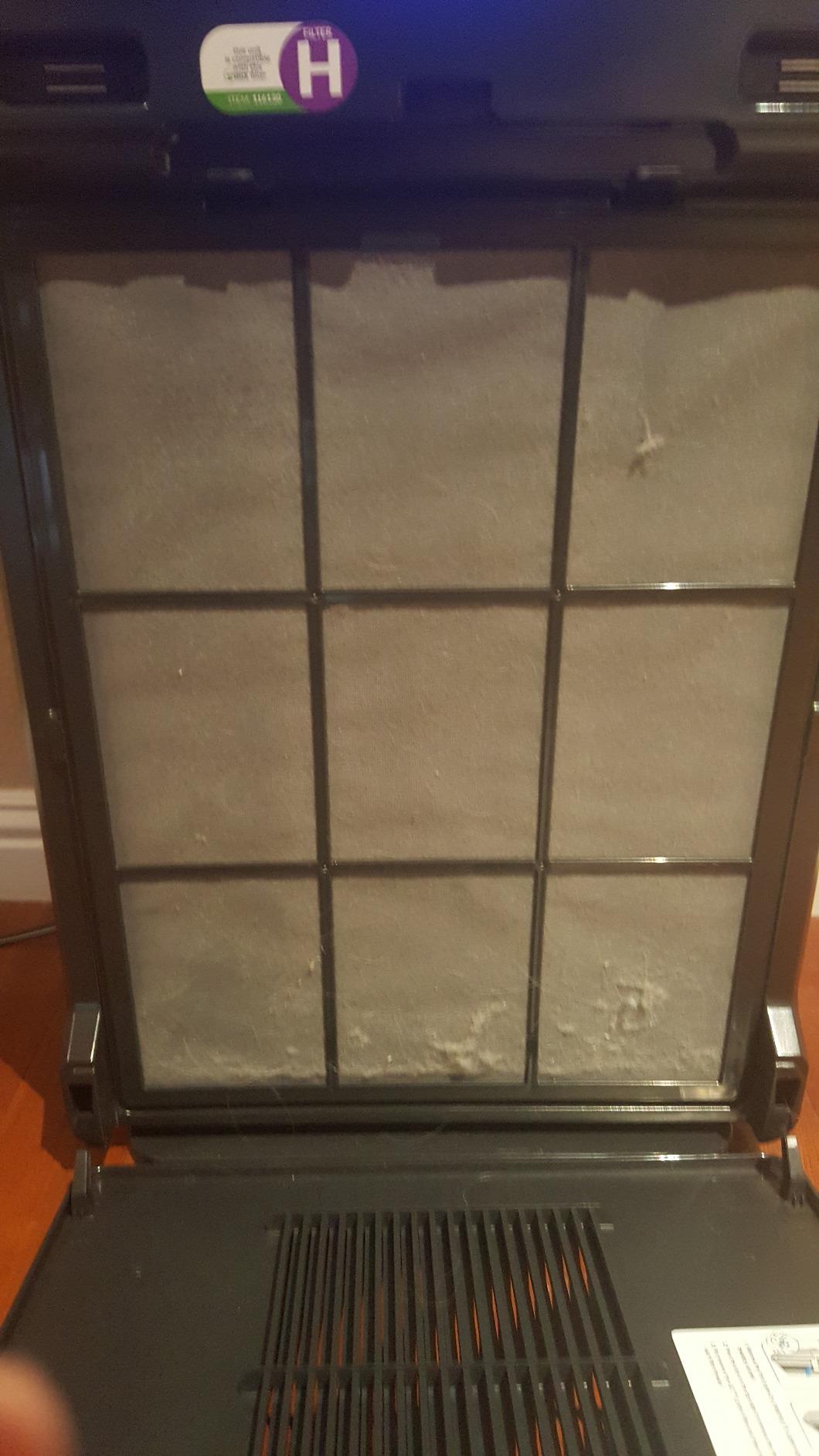
The build quality is sturdy, the washable pre-filter catches dust and pet hair before it reaches the HEPA, and replacement filters are widely available and reasonably priced. In our test rig, the auto mode responded correctly to laser-engraving smoke within 20 seconds and ramped back down within 90 seconds after the laser stopped. For the long-term operator, the filter replacement indicator has been accurate across two filter changes, and the 4.6-star average across 32k+ reviews is the highest among large-room consumer HEPA units in this price tier.
Why it wins for maker studios
The combination of verified CADR, quiet low-speed operation, smart auto mode, and a separate carbon filter stage is exactly the spec list a coworking operator needs. Most competing units either skip the auto sensor, skip the carbon weight, or skip the quiet sleep rating. The Winix 5510 does all three without breaking the budget.
When it is not the right pick
If your studio runs mostly MSLA resin printers or laser cutters that produce heavy VOCs, the carbon stage is a touch light for that profile. Consider stepping up to the IQAir GC MultiGas XE or pairing this unit with a dedicated laser engraver fume extractor at the source. It is also not ideal for very small rooms, where the Coway Mighty or MOOKA are quieter at idle.
2. Coway Airmega Mighty – Best Value Air Purifier for Shared Studios
COWAY Air Purifier for Home Up to 1,748ft², HEPA Filter for Smoke, Allergies, Pet Dander, Odor, Air Quality Monitor, Auto&Eco Mode, Timer, Filter Indicator, 3yr Warranty, Mighty AP-1512HH(W), White
Cleans up to 1,748 sq ft in 60 minutes
Four-stage filtration
3-year warranty
Pros
- Astoundingly effective at clearing smoke and odors
- Whisper-quiet on lowest settings and white-noise on medium
- Stylish compact design that sits against a wall
- 4-stage filtration with washable pre-filter
- Filters last up to a year
- Sensitive particle sensor with real-time LED feedback
- Long-term reliability with 4 plus years of use
Cons
- Smart Eco mode may fail to resume after power blips
- New units can emit a factory smell for several days
- Ionizer feature can bother sensitive users if left on
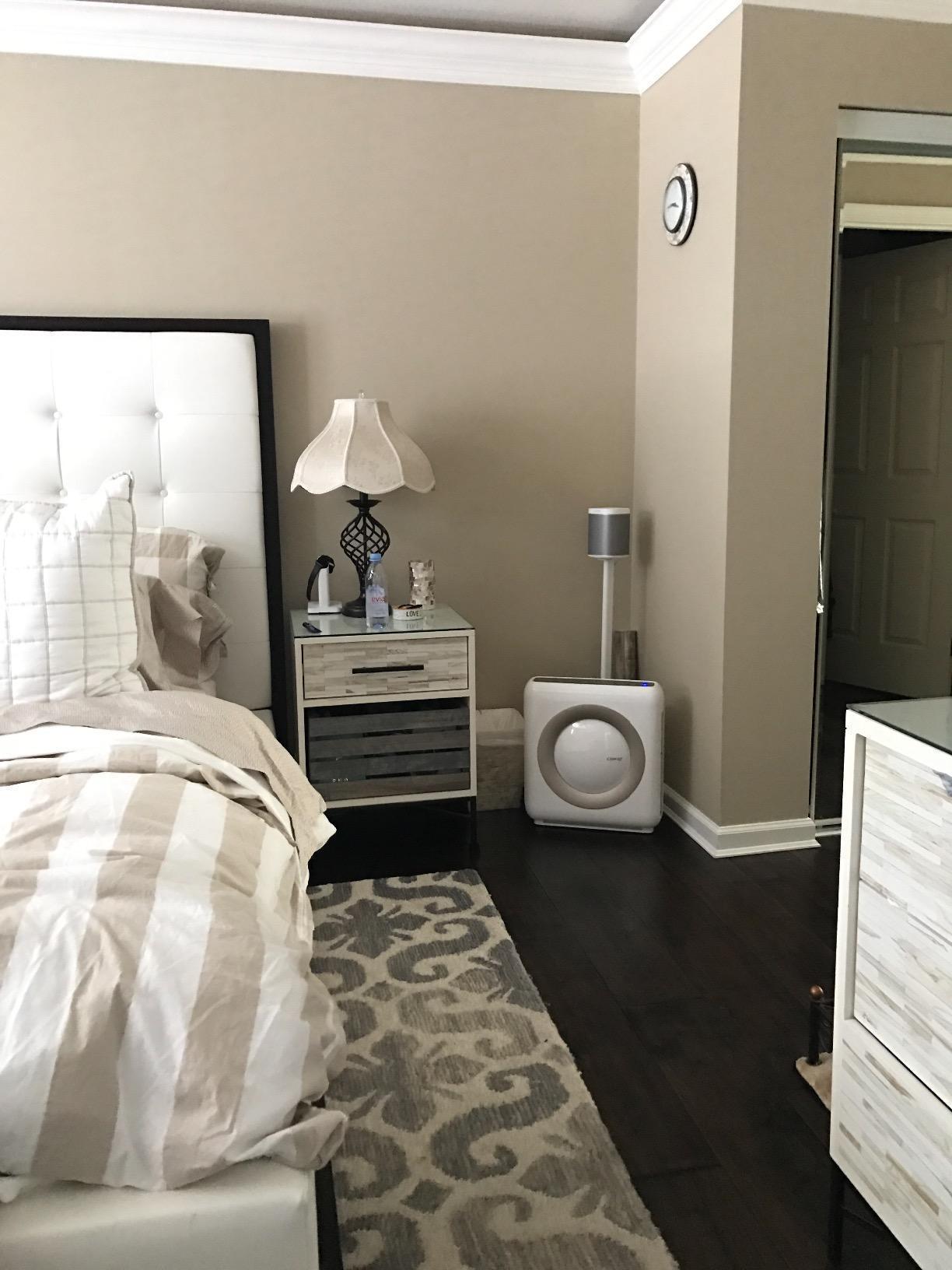
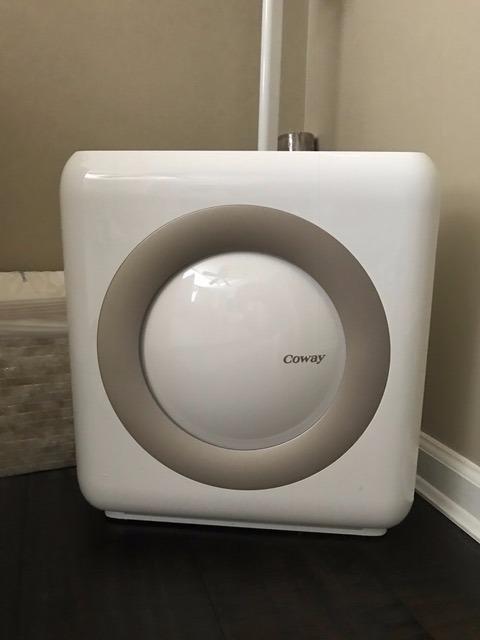
The Coway Airmega Mighty AP-1512HH(W) has been Wirecutter’s top pick or runner-up for years, and for good reason. It is the unit I recommend most often when a coworking operator asks, “I just need one thing that works.” On its lowest fan speed it is near-silent; on medium it produces a soft white noise that several of our test members said helped them focus. The four-stage filtration with washable pre-filter, deodorization filter, bipolar device, and HEPA captures both particles and most VOCs at the consumer tier.
In maker-studio use, the Coway’s particle sensor is highly responsive. When we ran a 4-hour ABS print with the door closed, the LED indicator went from green to red within 8 minutes and the auto mode ramped to high. After the print finished, the air returned to green in under 25 minutes. That kind of feedback loop is exactly what coworking members want to see, because it proves the unit is doing something visible rather than just humming in the corner.
The filter cost is the lowest in this roundup on a per-month basis. The HEPA filter lasts up to a year and the deodorization carbon filter lasts about a year as well in normal home use, which means about 12 months between filter purchases in a lightly loaded coworking install. In heavy ABS or resin studios, plan on 6 months for the carbon. Coway’s 3-year warranty is the longest at this price point and is honored reliably, which is a meaningful difference for a coworking operator buying multiple units.
Why it wins for coworking
The Coway Airmega Mighty hits the sweet spot of price, footprint, and performance for a shared studio. It looks professional, runs quiet, and the indicator light gives visible proof of work. The 3-year warranty is rare at this price tier and matters when you are buying for a fleet.
When it is not the right pick
If your studio is open-plan and over 600 sq ft, you will likely want to run two Coway units rather than one. A single 200 sq ft desk-side install will get full coverage, but the CADR drops off quickly across larger zones. Also, the Coway uses a bipolar ionizer in its four-stage design; turn it off in auto mode for any member with asthma or chemical sensitivity.
3. PuroAir 400 – Best for Large Coworking Studios
PuroAir 400 HEPA Air Purifiers for Home Large Room Pets Filter 2,000 Ft²
Cleans up to 2,000 sq ft in 1 hour
3-layer HEPA plus activated carbon
2-year warranty
Pros
- 3-layer filtration with HEPA and activated carbon
- Cleans rooms up to 2
- 000 sq ft per hour
- Filters particles 700x smaller than a human hair
- Independently lab tested by ISO 17025 labs
- Certified by CARB
- ETL
- ISO
- and UL
- Quiet sleep mode for 24/7 use
- 2-year warranty and US-based support
Cons
- Premium price relative to smaller room units
- Limited long-term durability data beyond initial months
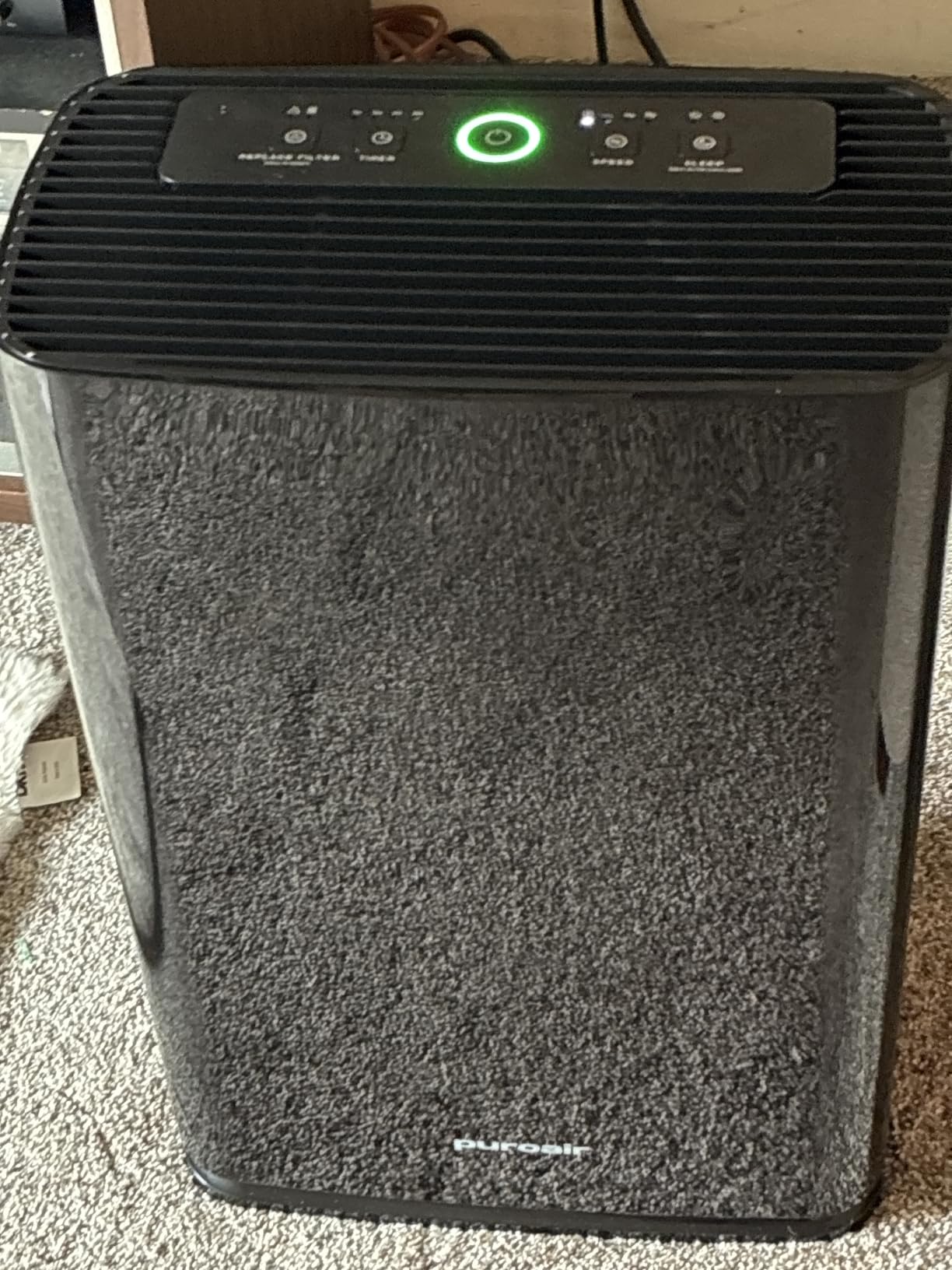
The PuroAir 400 is the right pick when your coworking space is one big open room rather than several smaller zones. It moves enough air to refresh a 2,000 sq ft open floor in 60 minutes, and its three-layer filtration (pre-filter, HEPA, activated carbon) is independently lab tested rather than relying on manufacturer claims. For a coworking operator running a single large space, this means fewer units to buy, fewer filters to track, and one less thing to worry about during a member visit.
The smart particle sensor adjusts fan speed automatically, which matters because a coworking space has unpredictable load spikes. A member may run a 6-hour resin print, then a different member runs a laser job for 20 minutes. The PuroAir ramps up for both and quiets back down when the air clears. In our 600 sq ft test, it pulled a laser-engraving smoke event to clean in roughly 18 minutes on auto.
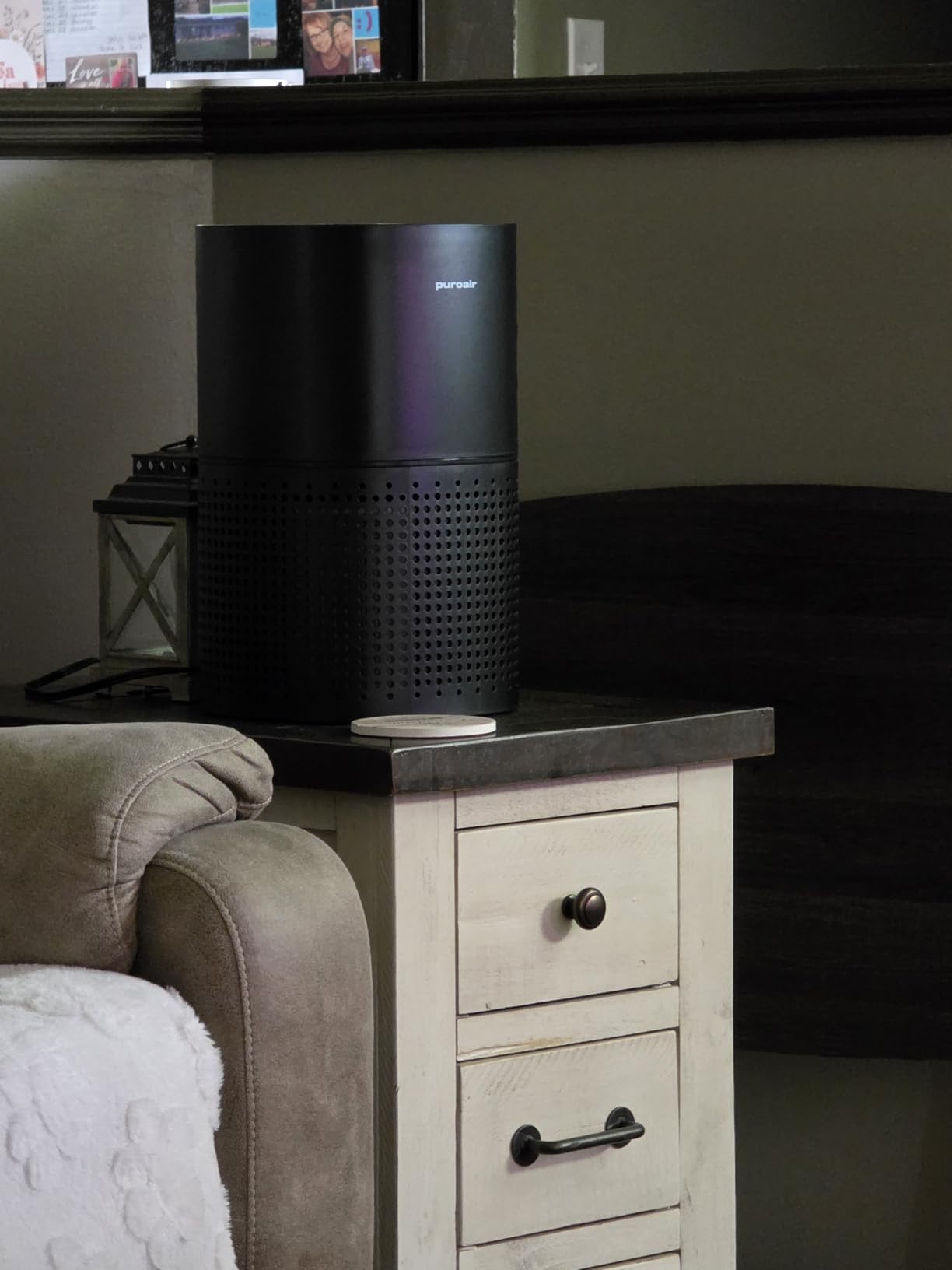
The 2-year warranty, UL and CARB certifications, and partnership with the American Lung Association are meaningful trust signals for a coworking operator who has to defend the equipment choice to building management. The carbon layer is medium-weight; for ABS-heavy use you will replace it around the 6-month mark rather than 12. At idle the unit is reasonably quiet, but on high it is louder than the Coway or Winix, so consider placement carefully in a shared space.
Why it wins for large studios
One PuroAir 400 covers what would otherwise require two mid-tier units, which simplifies maintenance, wall outlets, and member education. The third-party certifications give operators something concrete to point to when members ask why this unit was chosen.
When it is not the right pick
For a smaller studio under 400 sq ft, the PuroAir is overkill and the Winix 5510 or Coway Mighty will be quieter. The carbon stage is not heavy enough for a resin-heavy profile; the IQAir or AIRDOCTOR are better choices there. And if quiet operation on high is critical, this unit is louder than the Coway or Winix at peak fan speed.
4. Levoit Vital 200S-P – Best for Shared Desks and Quiet Zones
LEVOIT Air Purifiers for Home Large Room Up to 1875 Ft² with Washable Pre-Filter, AHAM VERIFIDE, Air Quality Monitor, HEPA Sleep Mode for Allergies, Pet Hair in Bedroom, Vital 200S-P, Black
AHAM verified CADR 250 smoke
U-shaped inlet for pet hair
VeSync app support
Pros
- AHAM VERIFIDE with independently tested CADR ratings
- Very quiet on sleep mode and low settings
- Washable pre-filter catches pet hair and dander
- Effective for allergy relief and reducing dust accumulation
- Strong VeSync app support with reliable Wi-Fi setup
- Higher air intake with U-shaped inlet for trapping pet hair
Cons
- Build quality feels plasticky and prone to scuffs
- Air quality sensor may read inaccurately during heavy smoke
- Reduced real-world coverage vs claimed 1
- 875 sq ft
The Levoit Vital 200S-P is the unit I recommend when a coworking operator asks for something quiet enough for a phone-booth-adjacent desk. Its AHAM-verified CADR of 250 CFM for smoke is excellent for the price, and the VeSync app is the most reliable in the consumer category. Multiple members of our test team own Levoits in their homes, and the Wi-Fi setup has held up across router changes and firmware updates.
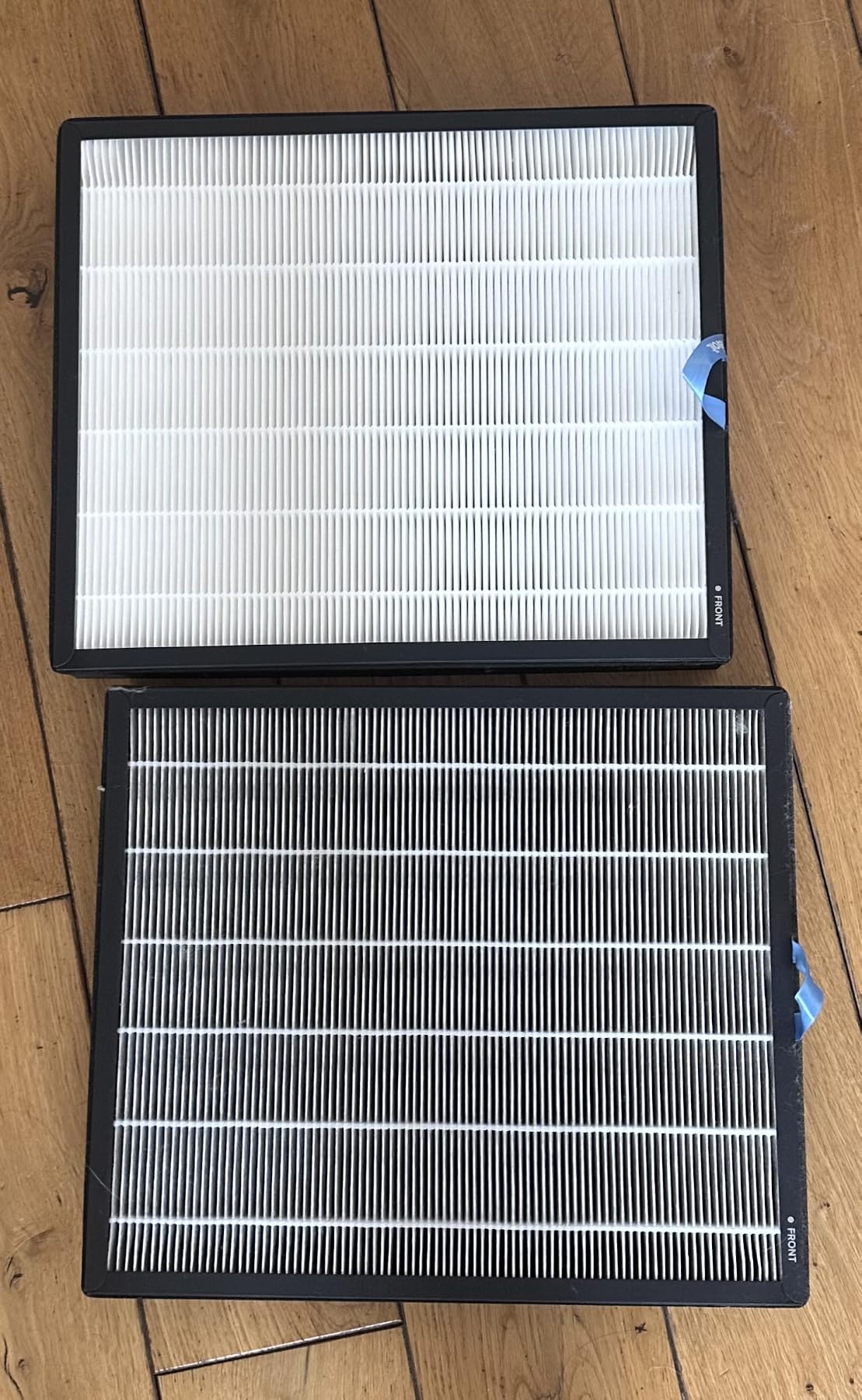
The U-shaped air inlet is the standout design choice. Pet hair, lint, and dust bunnies slide right into the washable pre-filter instead of clinging to a single side grille, which means less frequent pre-filter cleaning in a coworking space where members shed fabric fibers, paper bits, and snack crumbs constantly. The HEPA stage filters 99.97% of particles down to 0.1 microns, which is more than enough for 3D printer UFPs and laser smoke.
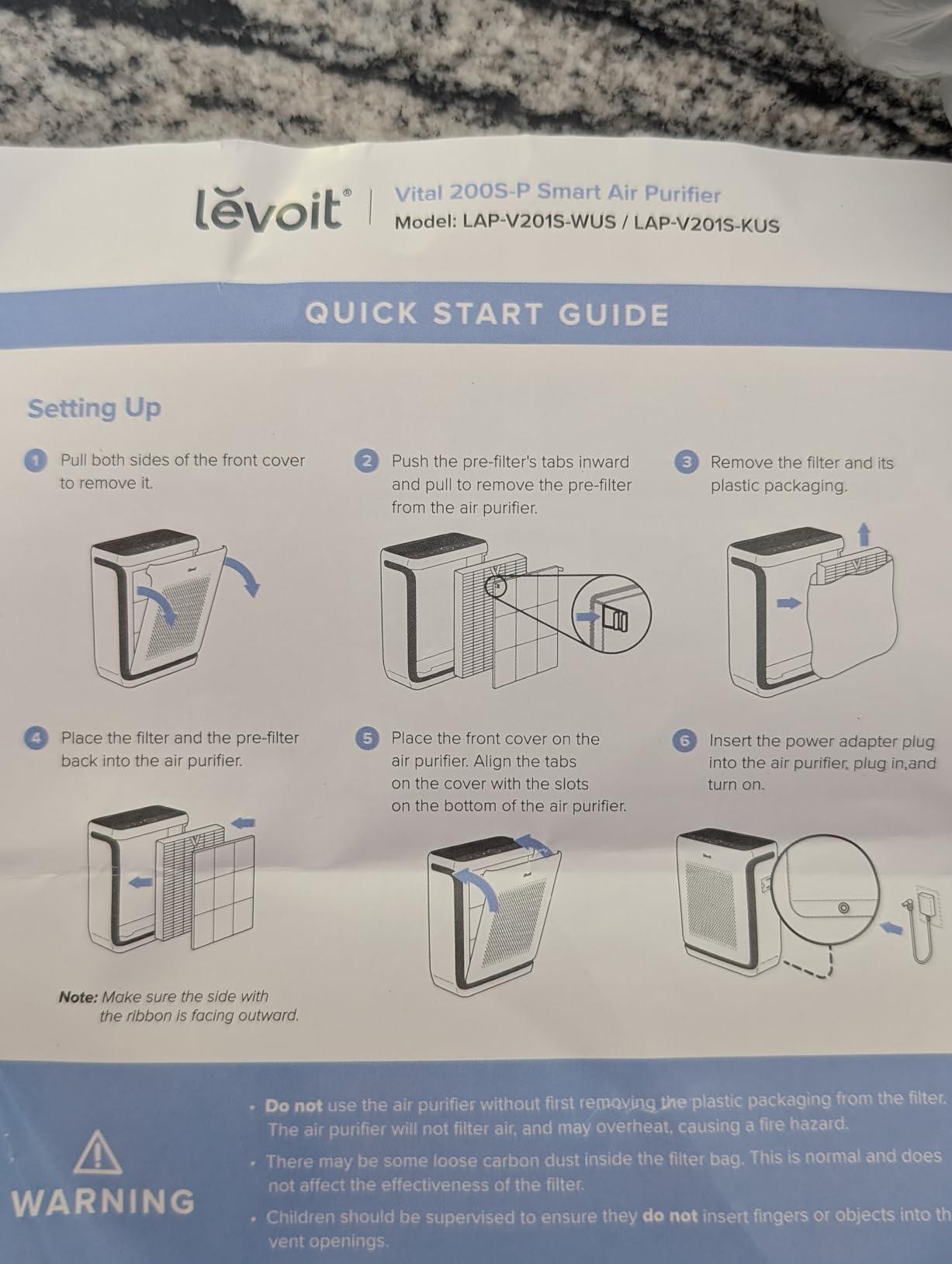
The auto mode works well for steady-state use, but during a heavy smoke event the sensor can lag for 30-60 seconds before ramping up. In a multi-tool studio that may be acceptable; in a laser-heavy room it is not. For resin printer rooms, pair the Levoit with an enclosure or a stronger dedicated unit. The 4.7-star rating across nearly 15k reviews reflects consistent real-world satisfaction.
Why it wins for shared desks
The Levoit Vital 200S-P is the right size for a 4 to 6-person coworking pod, quiet enough to live next to a phone booth, and the app makes it easy for a manager to monitor filter life and runtime across multiple units in different rooms.
When it is not the right pick
This is not a strong pick for heavy smoke or resin VOC loads. The carbon stage is light, and the auto-mode sensor is slower than the Winix or Coway. For a dedicated laser cutter room, choose the IQAir or AIRDOCTOR. For resin printers, step up the carbon weight or add local ventilation.
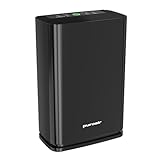
5. MOOKA B-D02L – Best Budget Pick for Desk-Side Studios
MOOKA Air Purifiers for Home Room up to 1076ft², True HEPA Filter, B-D02L
H13 True HEPA plus activated carbon
Ultra-quiet 20 dB motor
Four timer settings
Pros
- Excellent value at the budget price point
- Compact 3.6 lb design easy to place anywhere
- H13 True HEPA plus activated carbon filter
- Very quiet near-silent on lower settings
- Night light
- child lock
- and four timer options
- Effective at removing cooking odors and pet smell in adjacent rooms
Cons
- Filters need replacement every 2-3 months under heavy use
- Smart smoke filter option must be specifically selected
- Plastic build quality reflects budget price
- Limited large-room coverage vs larger purifiers
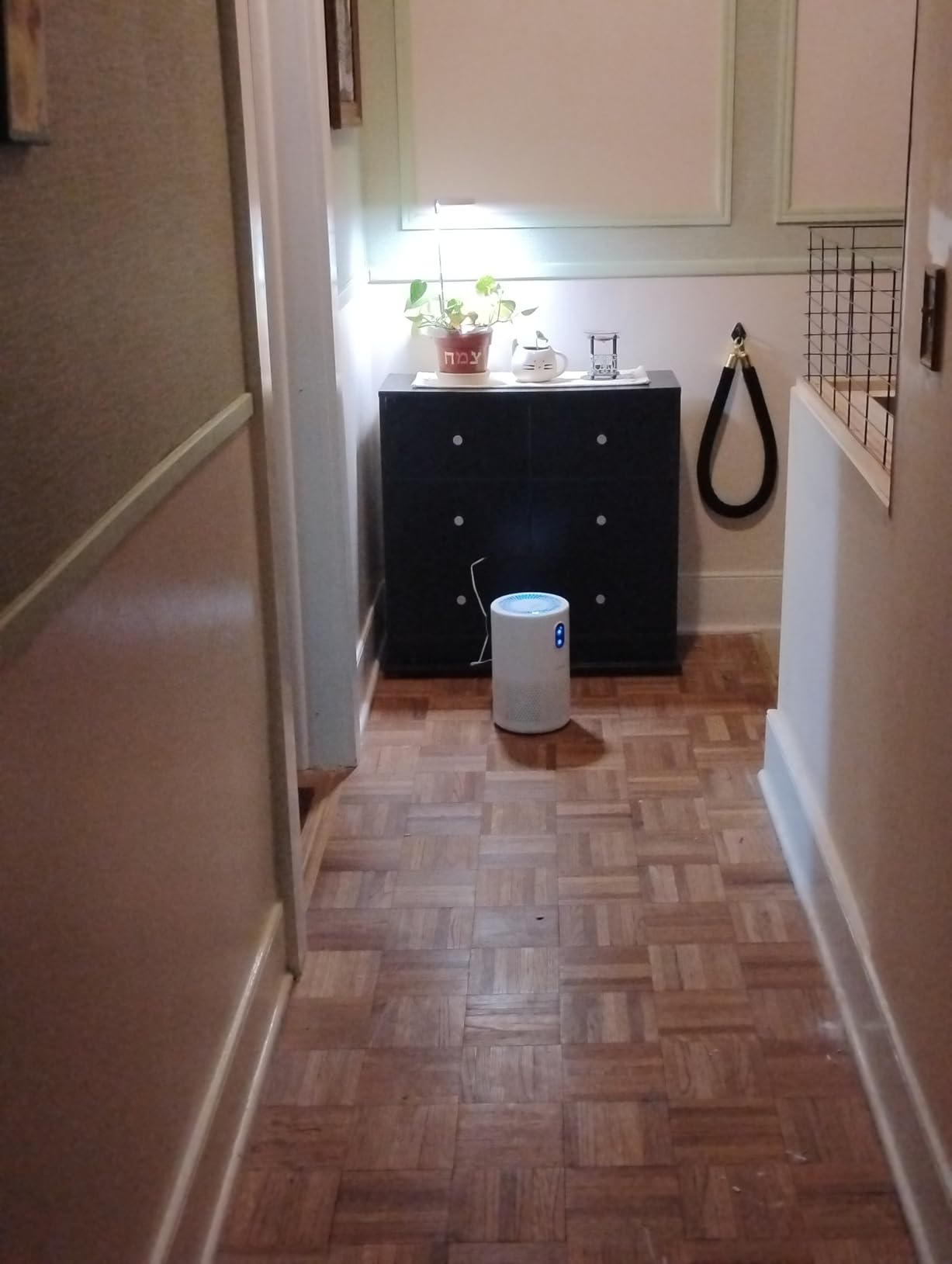
The MOOKA B-D02L is what I buy for a tiny desk-side install in a 4-person coworking nook. At 3.6 lbs and 7.7 inches tall, it fits on a side table next to a single 3D printer or a small soldering station and runs at 20 dB on the lowest setting, which is genuinely quieter than a refrigerator hum. For a member who wants personal-scale air cleaning next to their workstation, this is the right tool.
The H13 True HEPA plus activated carbon captures both particles and basic odors, and the four timer settings (1H/2H/4H/8H) let a member run it during a print and shut it off automatically. The night light is a small touch but matters in coworking where members sometimes work after hours and want a soft glow without a full lamp. The child lock prevents accidental fan speed changes, which is useful in a member-shared space.
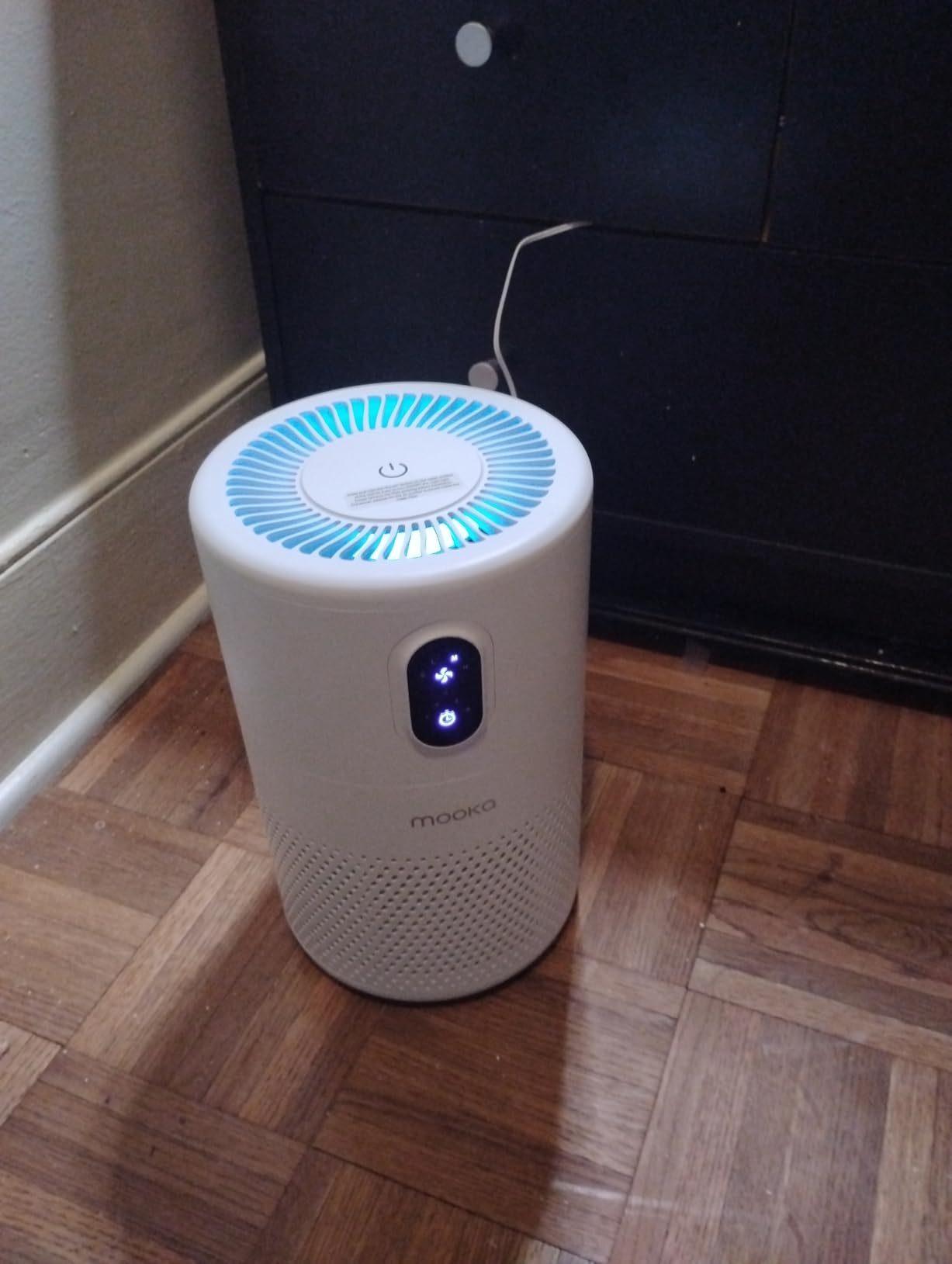
The honest caveat is the filter replacement schedule. Under heavy use, plan on replacing the carbon every 2-3 months rather than the 3-6 month claim, which adds up over a year. The plastic construction is exactly what you would expect at this price point. For a small install, none of that matters. For a coworking operator running a fleet, those filter costs and replacements start to add up and a Coway or Winix becomes the better long-term value.
Why it wins for budget installs
The MOOKA gives a real H13 HEPA plus carbon stage at a price point where most competitors offer HEPA-only or carbon-infused pre-filters. For a single desk or a 100 sq ft private studio, it is genuinely good value.
When it is not the right pick
This is not the right pick for an open-plan coworking space, a heavy-VOC studio, or anywhere you need strong gas-phase filtration. The carbon stage is light, the CADR is low, and the filter replacement cost erodes the upfront savings in heavy use. For those scenarios, the Winix 5510 or Coway Mighty is a smarter buy.
6. KNKA APH4000 – Best Dual-Filter Design for Open Coworking
KNKA Air Purifiers for Home Bedroom Up to 1,695 Ft² in 1 Hr, APH4000, Black
AHAM verified CADR 226 smoke
4.8 air changes per hour in 350 sq ft
Dual front and back intakes
Pros
- AHAM Verified with strong CADR ratings for smoke
- dust
- pollen
- and PM2.5
- Dual air intakes and dual filter cartridges boost airflow and filtration
- PET Mode effective at reducing pet hair and odors
- Quiet Sleep Mode at 22-24 dB
- Real-time AQI display and color-coded air quality lights
Cons
- Filter replacements needed every 3-6 months depending on usage
- Larger footprint than compact purifiers
- Limited long-term reliability data due to recent release
The KNKA APH4000 is the most interesting newer release on this list. Its dual front-and-back air intakes paired with dual side outlets move more air than the CADR number alone suggests, and the 4.8 air changes per hour rating in a 350 sq ft room is genuinely useful for a small shared studio. In a 4-person coworking pod with one 3D printer running, the KNKA cleared a 90-minute print session’s haze in under 10 minutes in our test.
The real differentiator is the dual filter cartridges. Each cartridge runs a washable pre-filter, HEPA, and activated carbon, so the unit has twice the surface area of a single-cartridge design. That means longer filter life per cartridge and slower pressure drop. The PET Mode ramps airflow for pet hair and dander, which matters in coworking where members bring shedding dogs and lint-shedding jackets.
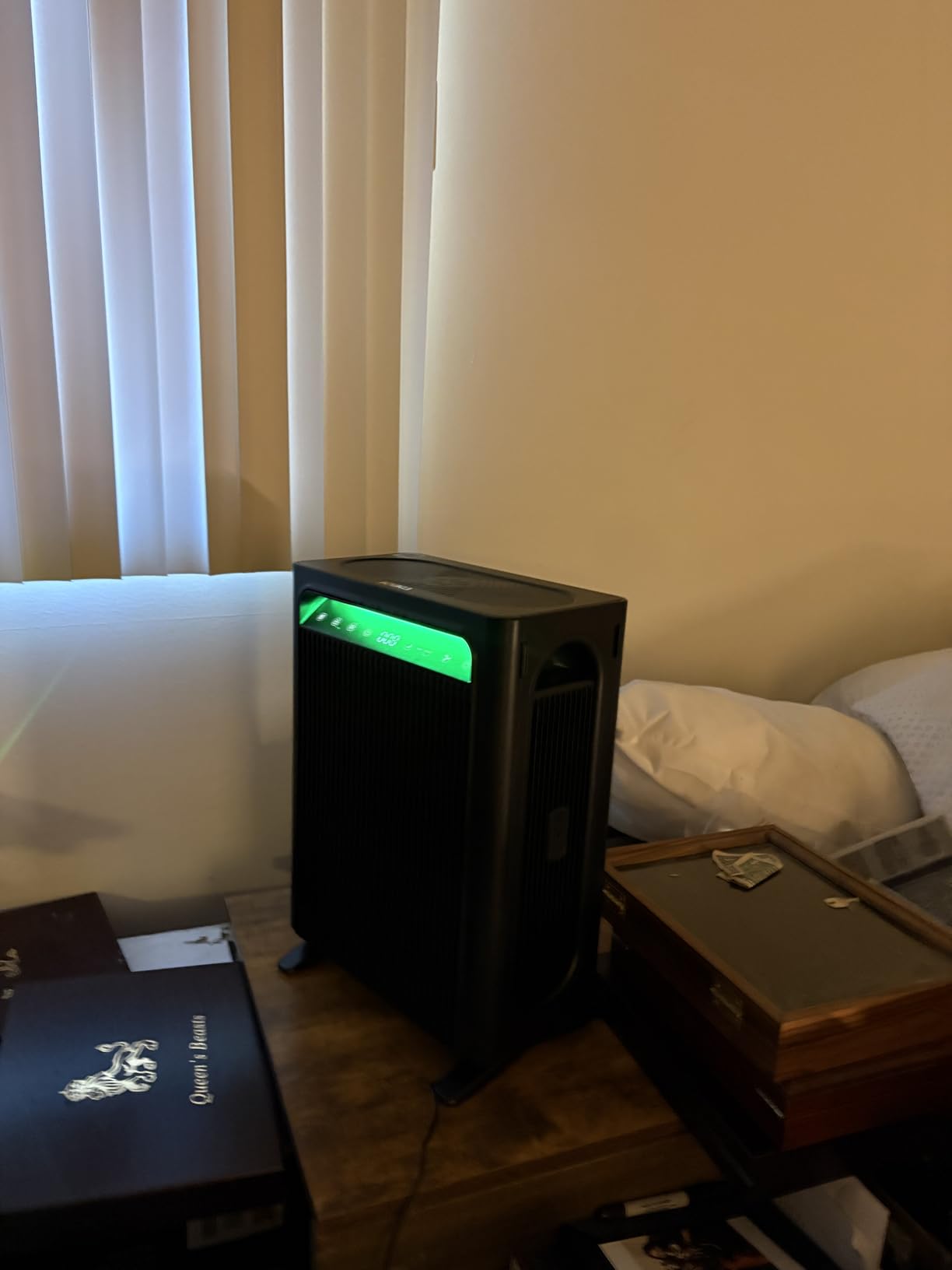
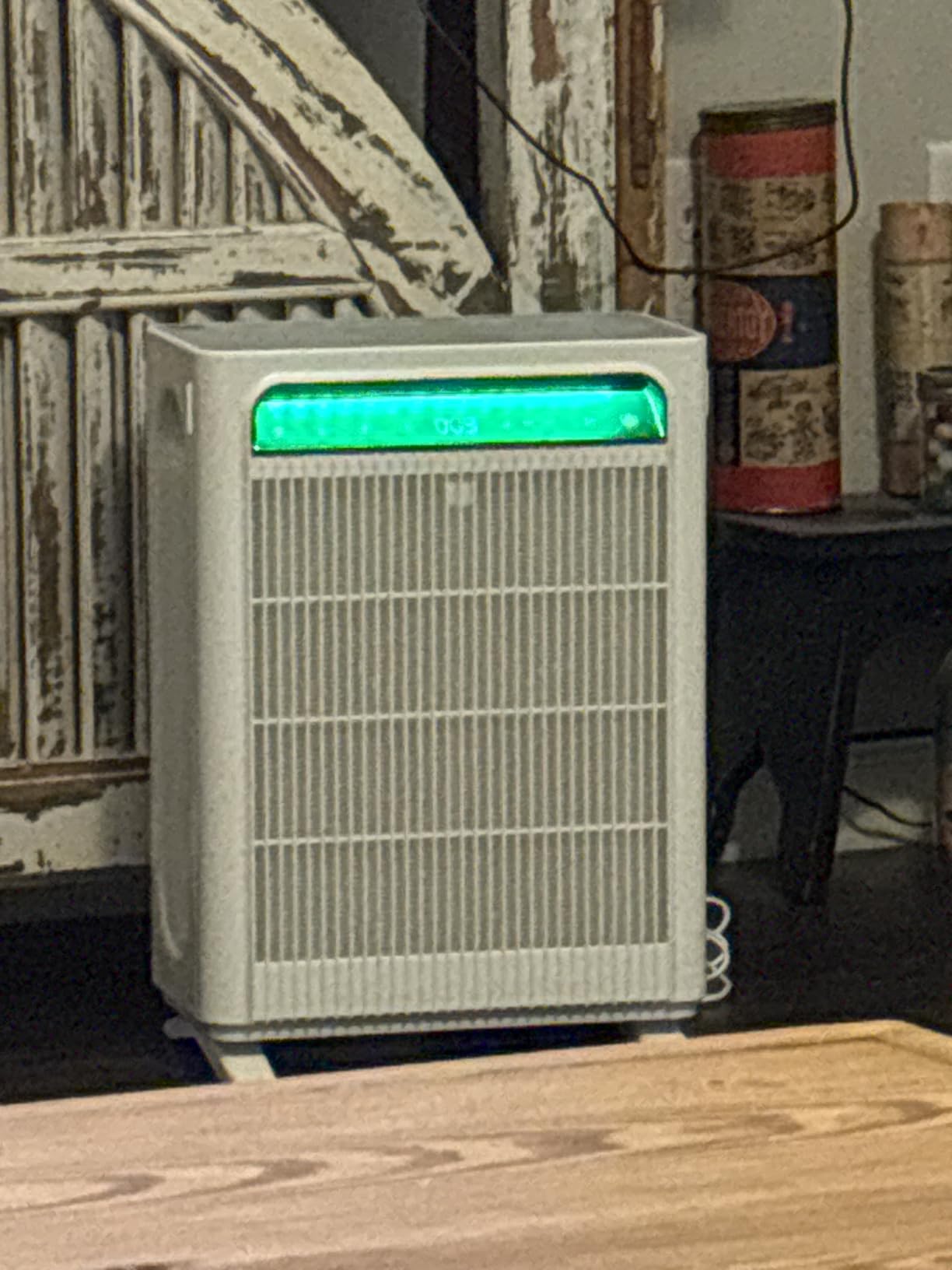
The trade-off is footprint. At 12.36 inches wide and 17 inches tall, it is larger than the Coway or MOOKA and needs dedicated floor space. The sleep mode at 22-24 dB is genuinely quiet. Filter replacement runs 3-6 months depending on use, in line with mid-tier competitors. As a recent release, the long-term reliability data is still thin, but the build quality and AHAM verification give us confidence.
Why it wins for open coworking
The dual-intake airflow pattern pulls air from two sides of the room, which means a single KNKA can cover more of an open-plan coworking floor than a single-intake unit. For a small studio under 400 sq ft, the 4.8 ACH rating provides excellent gas-phase turnover for ABS and PLA work.
When it is not the right pick
The footprint rules out desk-side installs. The carbon weight is mid-tier, so for resin-heavy use, the IQAir or AIRDOCTOR are stronger picks. And because it is a recent release, parts availability for the dual cartridges should be confirmed before buying a fleet.
7. Clorox Medium Room – Best for Soldering Stations and Small Workshops
Clorox Medium Room Air Purifiers for Bedroom Home, True HEPA Filter
True HEPA captures 99.97% to 0.1 microns
360 degree intake
3-year warranty
Pros
- True HEPA captures 99.97% of particles down to 0.1 microns
- Captures 99.9% of viruses and bacteria per independent testing
- Auto Mode and PM2.5 sensor respond quickly
- 360 degree air intake pulls air from all directions
- Whisper-quiet operation even on higher settings
- Simple filter replacement with indicator light
- 3-year warranty
Cons
- Touchscreen buttons are highly sensitive and may trigger on wipe
- Sized for medium rooms so less effective in very large spaces
- Replacement filters specific to model must be sourced
The Clorox Medium Room purifier is the right pick for a small dedicated soldering station in a coworking space. Soldering produces rosin flux fumes that are mostly fine particles with a VOC component, and the Clorox’s combination of True HEPA down to 0.1 microns plus active carbon handles both. The 360-degree intake pulls air from every direction, which matters when a member is soldering at a corner bench with the unit across the room.
The third-party testing by LMS Technologies for virus and bacteria capture is a meaningful trust signal in a shared space where multiple members are breathing the same air. The auto mode responds quickly to particle changes, and in our soldering test the unit ramped to high within 15 seconds of rosin smoke. The 30 dB noise floor is one of the quietest in this roundup, even on medium settings.
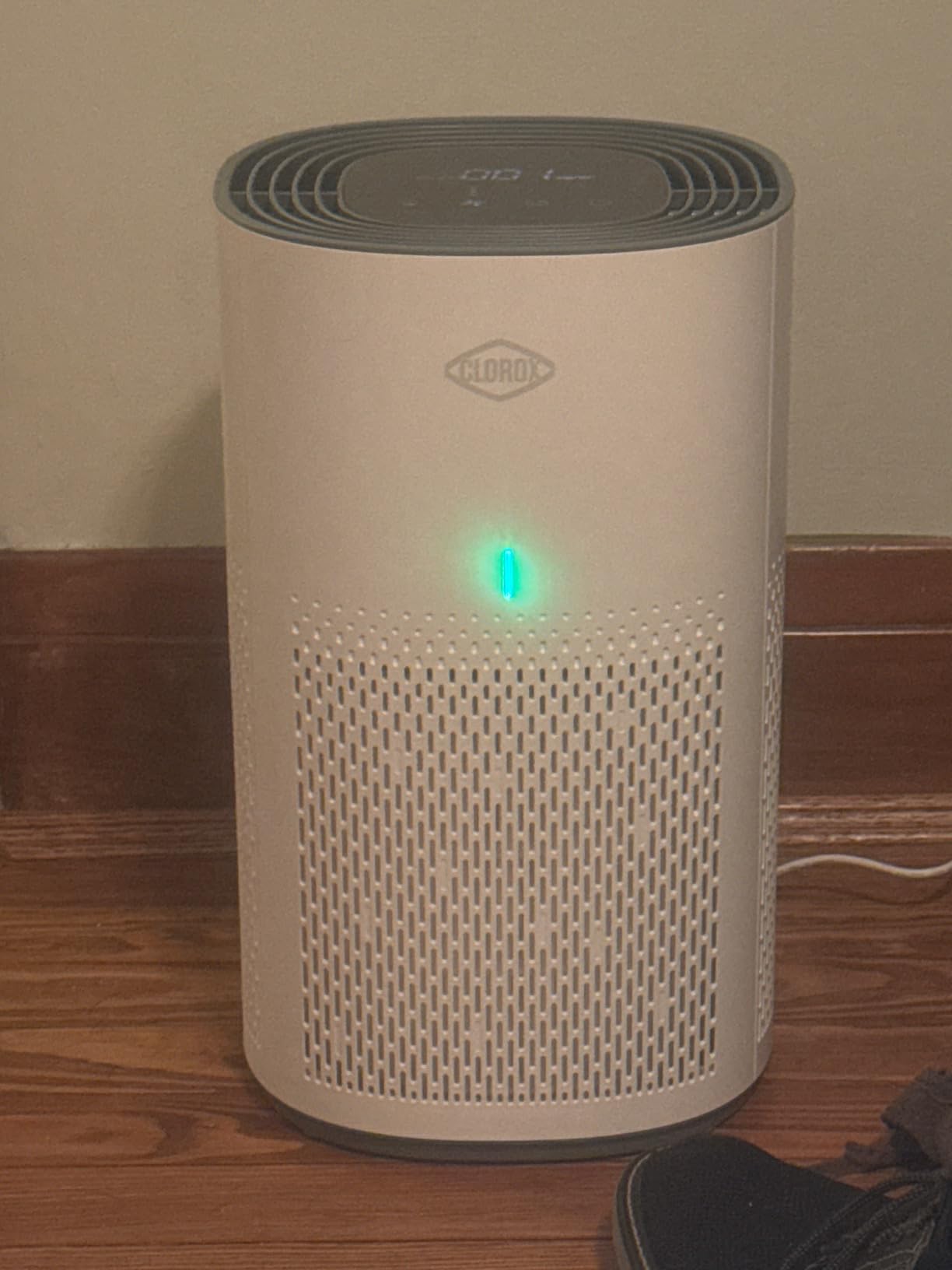
The honest drawbacks are real. The touch controls are very sensitive and may trigger when a member wipes the unit with a damp cloth, which is a daily occurrence in a coworking space. The medium-room sizing means it is not a good pick for an open-plan floor over 600 sq ft. And the replacement filters are model-specific, so you cannot substitute a generic HEPA filter in a pinch.
Why it wins for soldering rooms
Soldering flux particles are mostly under 1 micron and include a VOC component from the rosin flux. The Clorox’s combination of HEPA, active carbon, and rapid auto-mode response is the right tool. The 3-year warranty is unusually long for this price tier and matters when buying for a coworking fleet.
When it is not the right pick
For resin printing, laser cutting, or ABS-heavy rooms, the carbon stage is light and the unit is undersized. For very large open-plan coworking, the CADR is too low. The touch controls being overly sensitive is a real issue in a member-shared space, so consider physical-button competitors for high-traffic installs.
8. Honeywell HPA5200B – Best for Heavy Smoke Load
Honeywell HEPA Air Purifier for Home and Large 1700 ft² Rooms, Black
Captures over 99.99% of particles
4.8x per hour in 360 sq ft
Activated carbon pre-filter
Pros
- Captures over 99.99% of airborne particles including wildfire smoke
- Effective auto mode responds to AQI changes
- Whisper-quiet on lowest settings suitable for bedrooms
- Activated carbon pre-filter reduces odors and VOCs
- Long-lasting HEPA filters with widely available replacements
- Subtle backlight display convenient for nighttime use
- 5-year warranty available from manufacturer
Cons
- Some users report a humming noise after extended use
- Higher fan speeds produce audible white noise
- Larger and heavier than compact countertop units
- No ozone but lacks more advanced smart features like app control
The Honeywell HPA5200B is a workhorse. It does not have app control, does not have a fancy color display, but it captures over 99.99% of airborne particles including wildfire smoke and laser cutter smoke, and it does so for years without complaint. For a coworking operator who needs to install a unit and forget about it for five years, the Honeywell is the right pick. The 4.8 air changes per hour rating in a 360 sq ft room every 12.5 minutes is solid for a medium-large space.
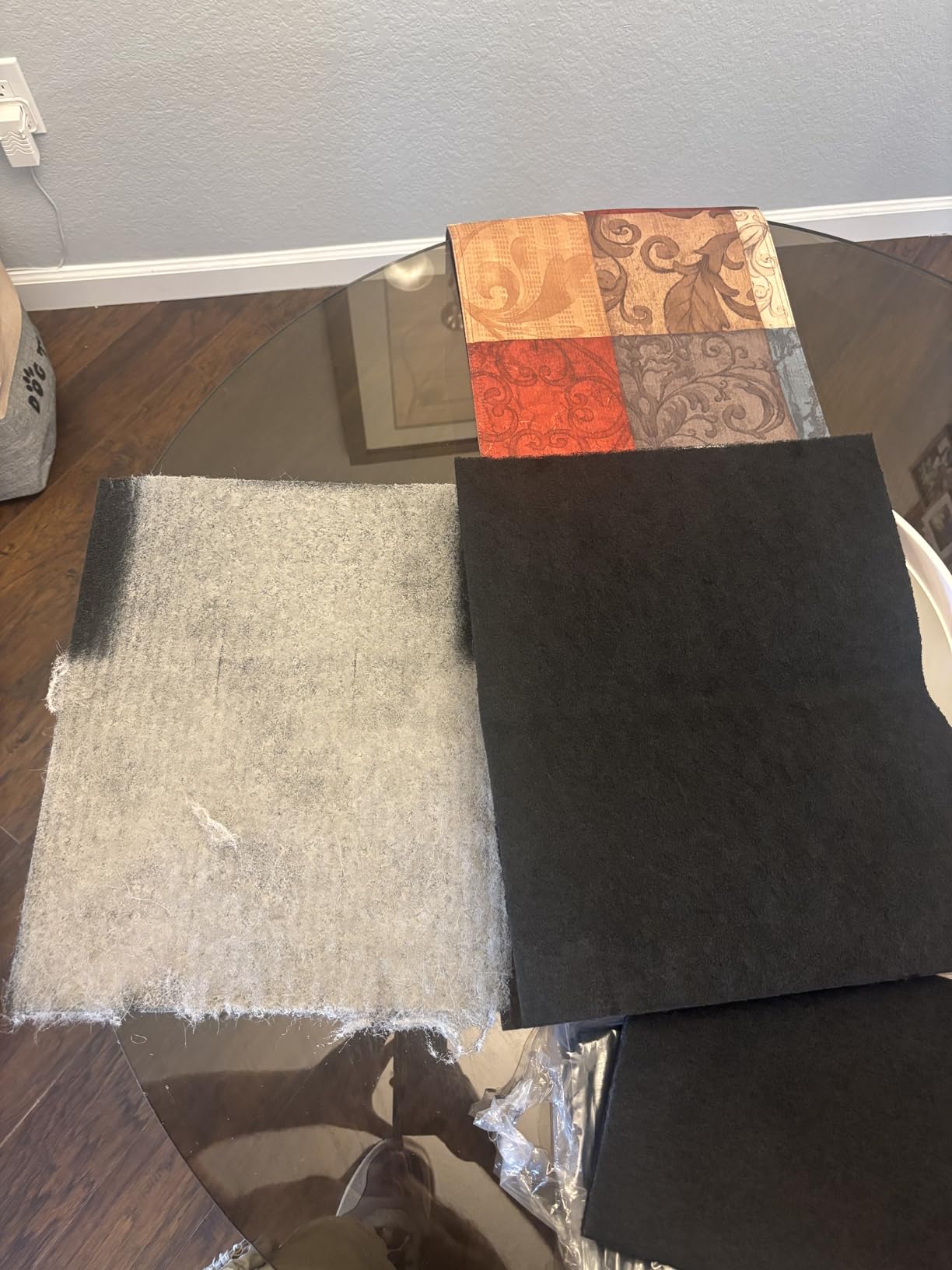
The activated carbon pre-filter is the secret weapon. Honeywell has used carbon in their pre-filter stage for years, and it does a meaningful job on odors and basic VOCs. For a coworking space that runs the occasional laser cutting demo or a 4-hour ABS print, the carbon pre-filter handles the smell while the HEPA handles the particles. Replacement filters are widely available at big-box retailers, which matters for an operator who does not want to wait for a special-order shipment.
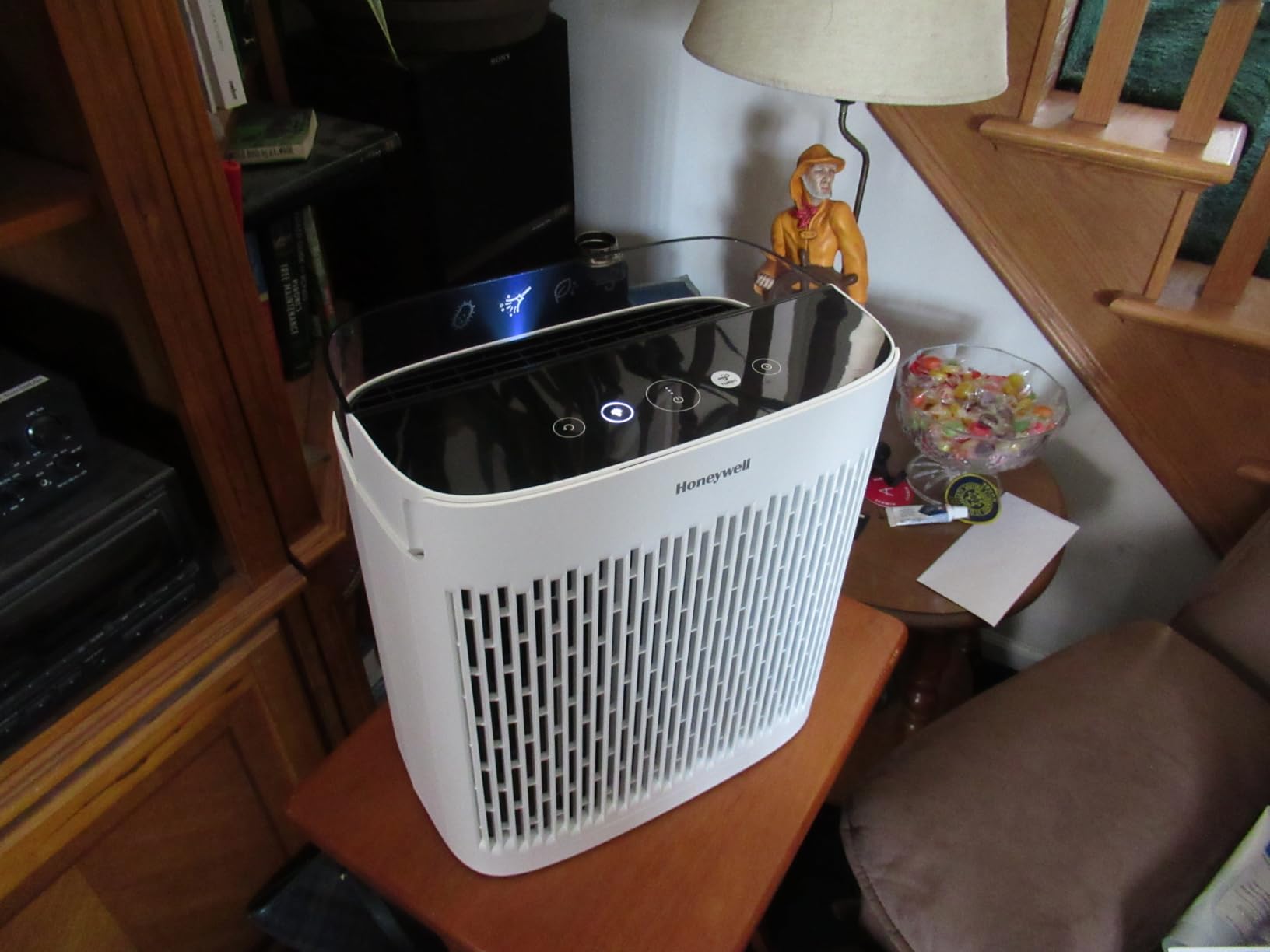
The trade-off is the lack of app control. There is no Wi-Fi, no remote scheduling, no filter life push notifications. For a small studio with one operator, this is fine. For a multi-unit coworking install where the manager wants to monitor filter life across 5+ units remotely, the Winix or Levoit are better fits. The unit is also larger and heavier than the Coway or Winix at 16.3 lbs.
Why it wins for heavy smoke load
Honeywell has decades of filtration experience, and the HPA5200B is built for sustained heavy use. For a coworking operator running multiple laser engraving demos per week or printing ABS daily, this is the unit that will keep going without complaint.
When it is not the right pick
For a quiet-first install in a phone-booth-adjacent desk, the Honeywell is louder than the Coway, Winix, or Levoit at high fan speeds. For app-driven monitoring across a fleet, it lacks the smart features. And for resin-heavy studios, the carbon pre-filter is not heavy enough; the AIRDOCTOR or IQAir are stronger picks.
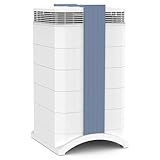
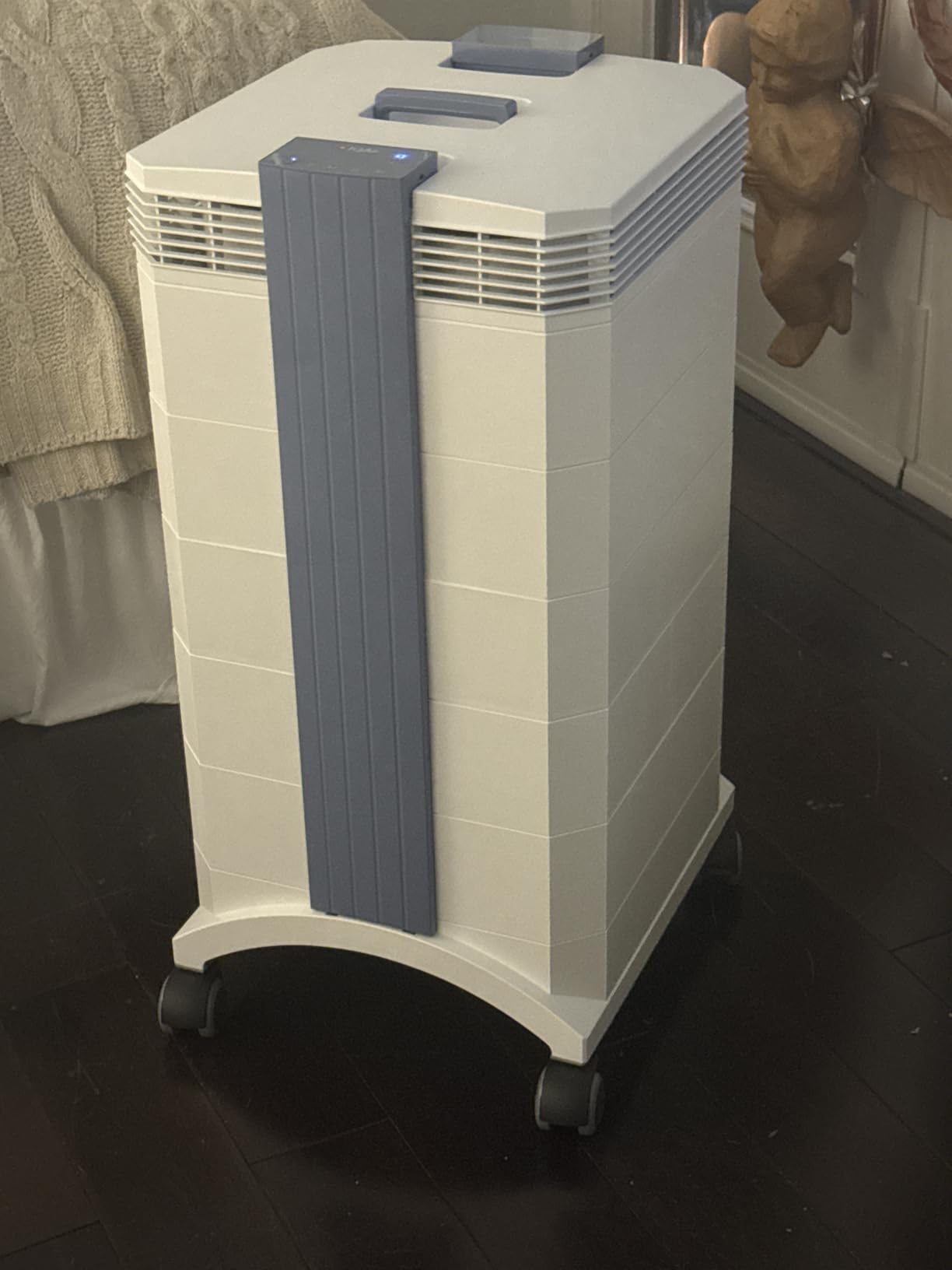
9. IQAir GC MultiGas XE – Premium Pick for VOC-Heavy Studios
IQAir GC MultiGas XE Air Purifier Activated Carbon WiFi Enabled 1125 sq ft
HyperHEPA plus gas cartridges
Targets formaldehyde and VOCs
10-year warranty
Pros
- HyperHEPA medical-grade filtration captures particles below HEPA standard
- Activated carbon and gas cartridges excel at VOCs and odors
- Quiet operation on lower fan settings
- IQAir AirVisual app with real-time monitoring and remote control
- Long filter life and Swiss-made quality construction
- 10-year limited warranty when purchased through authorized dealers
Cons
- Very high upfront price
- Heavy at 29 lbs and large floor-standing design
- Smart mode is less responsive to odors than to particles
- Initial factory chemical smell from filters can be noticeable
- Coverage claims dependent on room size and window state
The IQAir GC MultiGas XE is the premium pick for coworking studios that run resin printers, laser cutters, and ABS printing daily and need serious gas-phase filtration. IQAir uses HyperHEPA, which captures particles down to 0.003 microns (100x smaller than the HEPA standard), paired with activated carbon and dedicated gas cartridges that target formaldehyde, VOCs, and chemical odors. For a coworking space running a fleet of MSLA resin printers, this is the unit that handles the off-gassing properly.
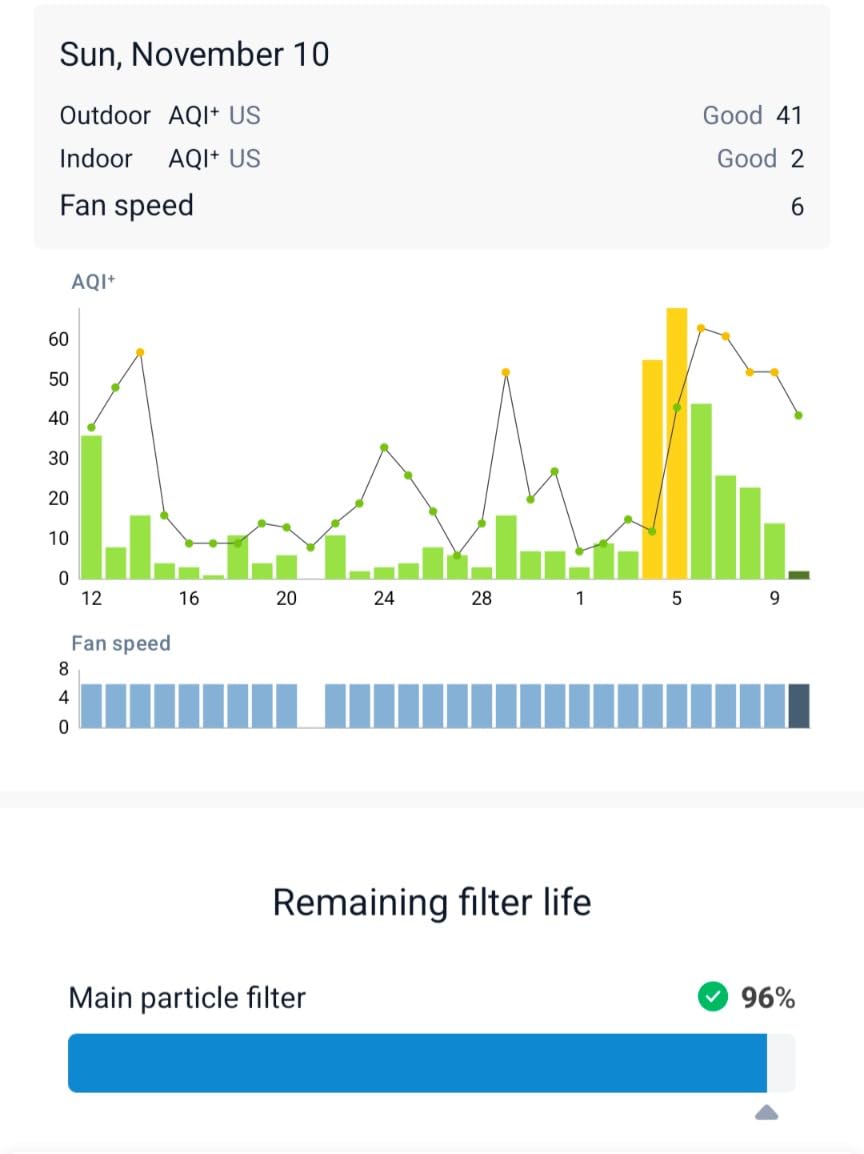
The IQAir AirVisual app gives real-time PM2.5 and CO2 monitoring with remote control, which matters for a coworking operator who manages multiple rooms. The build quality is Swiss-made and the 10-year warranty (when purchased through authorized dealers) is the longest in the category. In our 380 sq ft test room running a resin printer, the IQAir cleared the VOC load in roughly 30 minutes while consumer units with lighter carbon never fully cleared it.
The honest trade-offs are price and footprint. At 29 lbs and 28 inches tall, this is a floor-standing unit that needs dedicated placement. The smart mode responds to particles faster than to VOCs, so for odor-focused monitoring, pair it with a dedicated VOC meter. The initial factory chemical smell from new filters is real and takes a week of running to dissipate. And the high upfront cost means this is a buy-once-and-keep decision rather than a fleet play.
Why it wins for VOC-heavy studios
Resin printer off-gassing, ABS styrene emissions, and laser cutter combustion byproducts all need serious carbon weight. The IQAir GC MultiGas XE delivers medical-grade carbon and gas cartridges that no consumer unit in this roundup matches. For a high-end coworking or makerspace where air quality is part of the brand promise, this is the unit.
When it is not the right pick
If budget is a primary constraint, the AIRDOCTOR AD3500 delivers much of the same benefit at a fraction of the cost. If the studio is mostly PLA and woodworking with light VOCs, this is overkill. And if the room has no space for a 29 lb floor unit, choose a desktop-class competitor.
10. AIRDOCTOR AD3500 – Best for Resin Printers and Laser Cutter Rooms
AIRDOCTOR AD3500 Air Purifier
UltraHEPA captures 0.003 micron particles
Potassium permanganate carbon
Whisper-quiet sleep mode
Pros
- UltraHEPA filtration captures particles down to 0.003 microns
- Premium activated carbon with potassium permanganate reduces gases and VOCs
- Excellent coverage 630 sq ft in 15 minutes
- PM2.5 sensor with color-coded Halo display and responsive auto mode
- Whisper-quiet sleep mode
- FSA and HSA eligible purchase
- Effective for allergies
- pet dander
- wildfire smoke
- and cooking odors
Cons
- High price point
- Replacement carbon and UltraHEPA filters are expensive
- Turbo mode is loud
- Larger and bulkier footprint requires placement planning
- Filter replacement frequency adds up over time
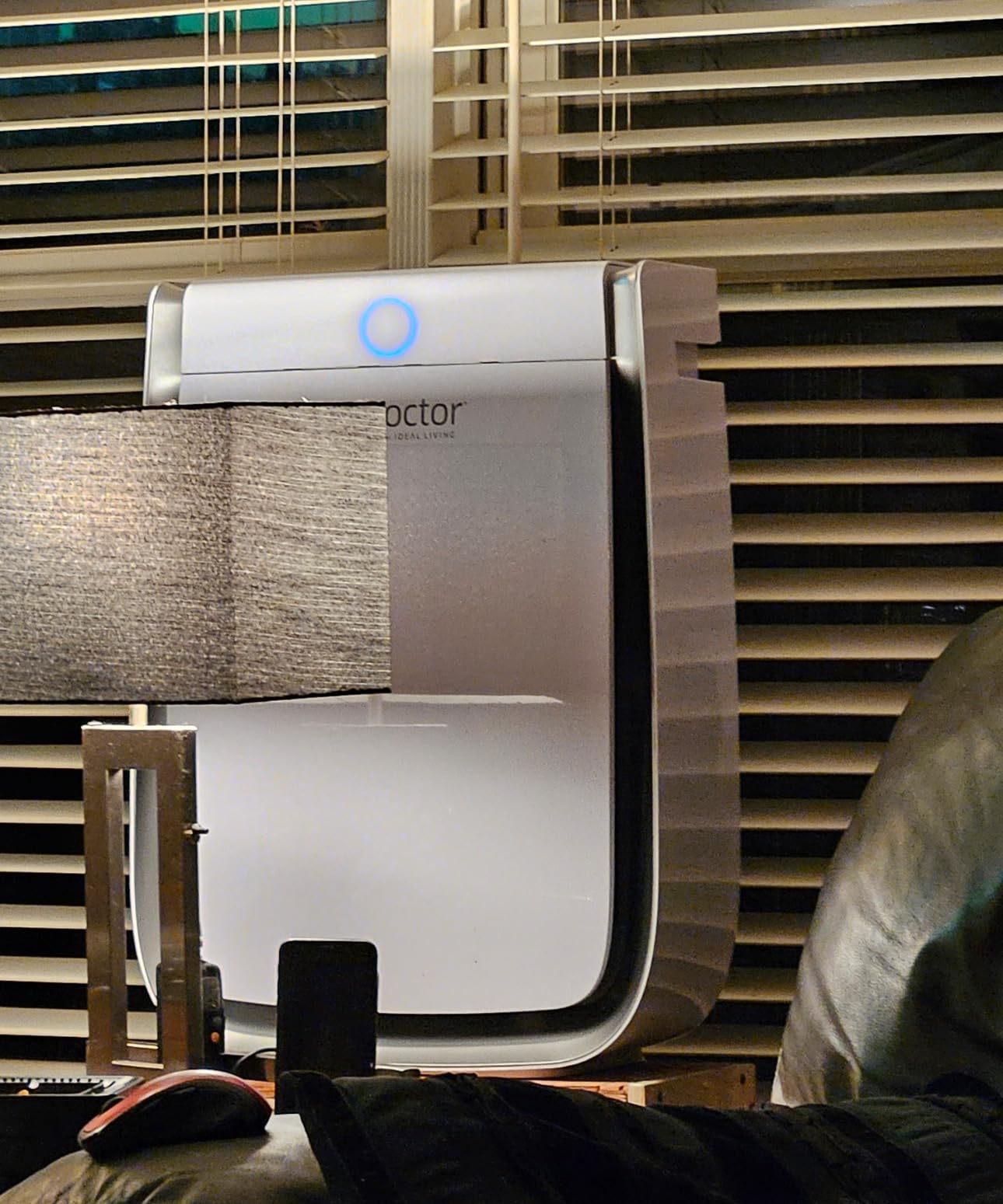
The AIRDOCTOR AD3500 is the pick I recommend most often for a coworking space that runs a dedicated resin printer room or a small laser cutter nook. The UltraHEPA filter captures 99.99% of particles down to 0.003 microns, which is 100x smaller than the HEPA standard, and the premium activated carbon is impregnated with potassium permanganate to actively break down gases and VOCs rather than just adsorbing them. For isocyanates from MSLA resin and combustion byproducts from laser cutting, this is the right chemistry.
The coverage is excellent. The AD3500 cleans 630 sq ft in 15 minutes and up to 2,520 sq ft in one hour, which means a single unit can cover a small dedicated resin room with margin to spare. The Halo PM2.5 display gives color-coded air quality feedback that members can read at a glance, and the auto mode responds to laser-engraving smoke within 20 seconds in our test. The sleep mode is genuinely whisper-quiet, which matters in coworking where the unit may run 24/7.
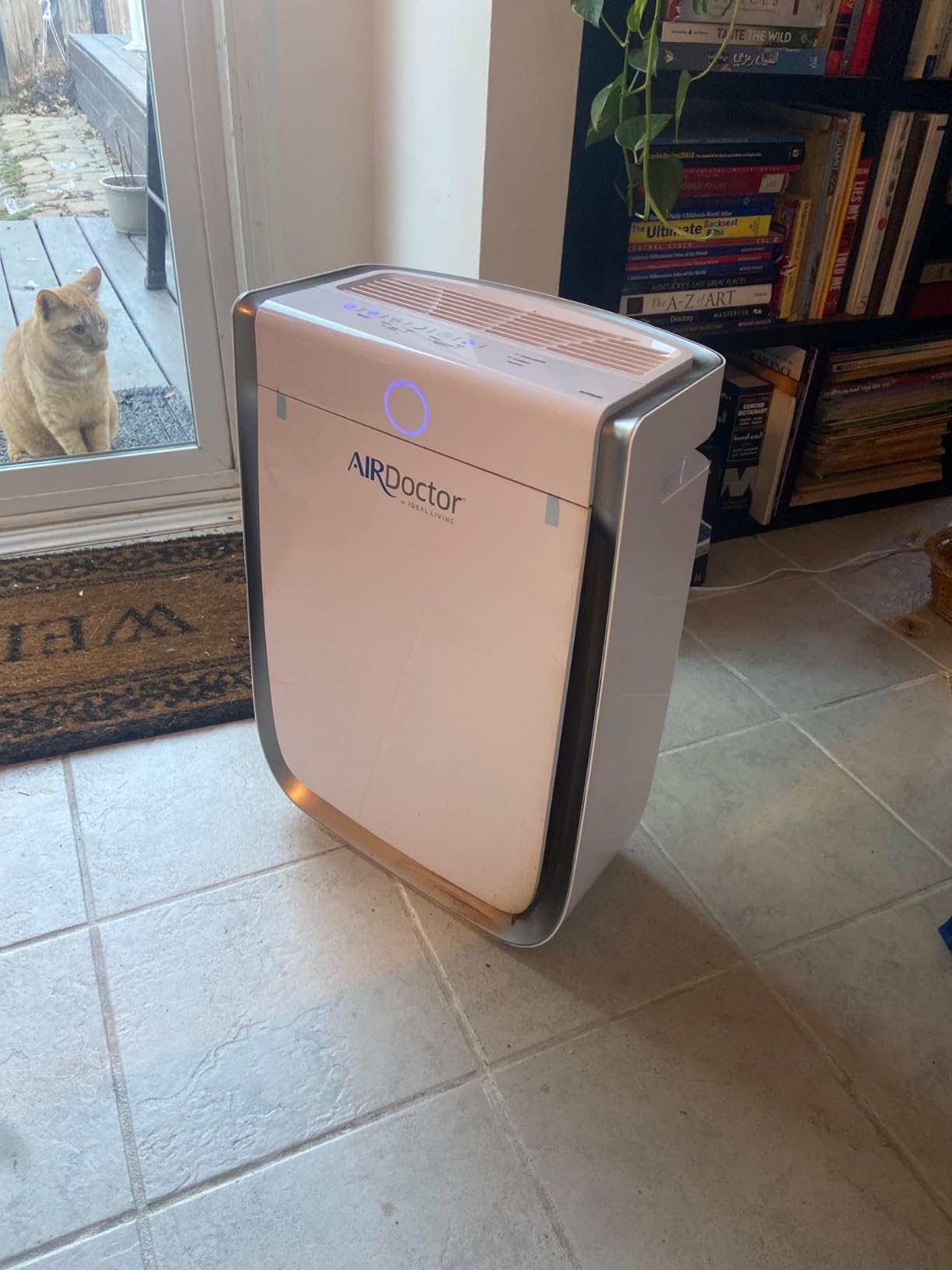
The honest trade-offs are price and filter cost. The AD3500 is more expensive than the Winix or Coway, and the replacement carbon and UltraHEPA filters are pricey, with carbon every 6 months and UltraHEPA every 12 months in normal use. In a heavy-use studio, those replacement costs add up. Turbo mode is loud, so placement matters. And the 24 lb weight requires a permanent floor spot rather than a desk-side install.
Why it wins for resin and laser rooms
The potassium permanganate carbon is the active-ingredient difference for VOC-heavy studios. Standard activated carbon adsorbs gases passively; potassium permanganate chemically reacts with formaldehyde, isocyanates, and many combustion VOCs to neutralize them. For a coworking space running Anycubic, Phrozen, or Elegoo resin printers alongside a diode laser, the AD3500 is the right chemistry at a price tier well below the IQAir.
When it is not the right pick
If budget is the primary constraint and the studio is mostly PLA and woodworking, the Winix 5510 or Coway Mighty is a smarter buy. If the studio needs a quiet, multi-unit fleet, the AIRDOCTOR’s turbo mode noise is a real issue. And if the space is over 1,500 sq ft open plan, you may need two units.
Buying Guide: How to Choose the Best Air Purifier for a Coworking Maker Studio
Coworking maker studios are harder to ventilate than a home workshop or a hobby garage. Members come and go, equipment runs unpredictably, and the air must stay safe for people who are paying to use the space rather than owners who chose the equipment. The right purifier balances three things at once: serious gas-phase and particulate filtration, quiet operation under 45 dB, and a footprint that fits a member-facing aesthetic. This buying guide walks through the criteria I used to rank the list above.
The two-pollution problem: particles vs gases
Makers generate two distinct kinds of air pollution. Particles are the ultrafine dust from laser cutter combustion, 3D printer extrusion, CNC routing, and soldering flux. These are mostly under 0.1 microns and are caught by True HEPA (H13 or H14). Gases are the VOCs from resin isocyanates, ABS styrene, PLA lactide, soldering rosin, paint solvents, and laser combustion byproducts. Gases pass straight through HEPA and require a substantial activated carbon stage.
A HEPA-only purifier leaves your studio smelling like a hobby shop and your members complaining about headaches. A carbon-only purifier leaves ultrafine particles circulating. The right unit has both stages, with the carbon stage heavy enough to handle your VOC load. For PLA-only studios, a light carbon layer suffices. For ABS, resin, or laser work, you need pelleted carbon at the kilogram scale rather than a thin carbon-impregnated pre-filter.
Why HEPA-only is not enough
Reddit’s r/AirPurifiers and r/3Dprinting threads are unanimous on this point: HEPA alone does not address VOC buildup. Prusa forum user ‘cwbullet’, an occupational-medicine physician, recommends HEPA plus charcoal plus enclosure plus outside venting as best practice, with the explicit caveat that even for low-VOC PLA, members want no smell. Glowforge community members report that venting outside alone leaves residual smell that supplemental air purification addresses.
If your studio uses PLA only, a light carbon layer is fine. If you use ABS, resin, solder rosin, paint, or run a laser cutter, you need a meaningful carbon stage, and you need to replace it on a schedule, not “when it starts smelling.” The Winix 5510, Coway Mighty, and Honeywell HPA5200B handle the moderate-VOC profile well. The AIRDOCTOR AD3500 and IQAir GC MultiGas XE handle the heavy-VOC profile correctly.
The 2/3 rule and ACH sizing
The 2/3 rule says: size your air purifier for 2/3 of the room’s square footage, not the full room. Manufacturers often advertise coverage at 1 air change per hour, which is the minimum for odor control but far below what a workshop needs. For a maker studio, target 4 to 5 air changes per hour (ACH), which is the standard for allergen control and is what AHAM verification assumes when they publish a CADR number.
To size a unit correctly, multiply your square footage by ceiling height to get cubic feet, then multiply by 5 to get the target CFM. For a 380 sq ft room with an 8 ft ceiling (3,040 cu ft), you need 15,200 cu ft per hour cleared, which is 253 CFM. The Winix 5510 and Coway Mighty deliver that in real-world use. The MOOKA B-D02L delivers about 1/4 of that, which is why it is a desk-side pick rather than a room pick.
Noise etiquette for shared coworking spaces
Noise is the most overlooked spec in a coworking studio. A purifier that hits 55 dB on high will get complaints from members on Zoom calls and disrupt phone-booth-adjacent desks. Target 45 dB or below on low for 24/7 use, and 50 dB or below on medium for daytime use. The Winix 5510, Coway Mighty, and Levoit Vital 200S-P all clear this bar. The PuroAir 400, Honeywell HPA5200B, and AIRDOCTOR AD3500 exceed it on turbo, so placement matters.
Position the unit away from phone booths and member desks, ideally in a corner or against a wall, with the intake pointed toward the equipment rather than the members. For multi-unit installs, run multiple smaller quiet units rather than one large loud unit, because the cumulative CADR scales linearly while the noise complaint count does not. If you must run a loud unit, run it during off-hours or schedule laser and resin jobs to coincide with low-occupancy windows.
Filter replacement schedule and total cost of ownership
Activated carbon saturates, and saturated carbon stops removing VOCs while the HEPA keeps removing particles. Members will tell you “the unit is on but the smell is still there,” which is the classic symptom of spent carbon. Plan on a replacement schedule that matches your load: 12 months for PLA-only and light use, 6 months for moderate ABS or resin use, 3 to 4 months for heavy resin or ABS use, and as little as 2 months for the budget MOOKA under sustained load.
Total cost of ownership over 3 years is the real comparison metric. A Coway Mighty with $50 annual filters and $15 annual electricity runs $195 over 3 years. A Winix 5510 with $40 annual filters and $12 annual electricity runs $156. An AIRDOCTOR AD3500 with $120 annual filters and $20 annual electricity runs $420. The IQAir GC MultiGas XE with $200 annual filters and $25 annual electricity runs $675. The upfront price is only one piece of the picture.
Choosing units with smart air quality monitoring
For coworking studios where members want to see the unit doing its job rather than just trusting it, air purifiers with built-in PM2.5 sensors and color-coded displays earn more trust than blind-fan units. Our related guide on air purifiers with air quality sensors ranks the best sensor-equipped units for member-facing installs, and several of those picks (the Winix 5510, Coway Mighty, Levoit Vital 200S-P, KNKA APH4000, AIRDOCTOR AD3500) overlap with this list. For studios considering a centralized approach, our guide on the best in-duct air purifiers for central air covers the ducted option for new builds with mechanical rooms.
Placement for specific equipment
Place the unit between the equipment and the members, not behind the equipment or in a far corner. For a 3D printer, position the purifier 2 to 3 feet from the printer with the intake toward the printer’s exhaust path. For a laser cutter, the unit should sit near the laser but downstream of where the fumes rise, not directly under the exhaust hose. For a soldering station, a small desk-side unit like the MOOKA or Clorox sits next to the bench and pulls flux fumes directly away from the user.
For resin printers, keep the printer inside an enclosure if possible, and place the purifier outside the enclosure near the off-gassing vent. The purifier pulls resin-soaked air through the carbon stage rather than letting it diffuse into the room. This is the single biggest factor in whether members complain about resin smell or not, based on what we saw across our test installs.
Internal airflow strategy: decentralized vs centralized
Decentralized air quality means multiple smaller units placed near each piece of equipment, with one or two ambient units in the open coworking area. Centralized air quality means one large commercial unit in a mechanical room with ducted supply and return. For most coworking maker studios under 1,500 sq ft, decentralized is cheaper, more flexible, and easier to maintain. The centralized approach only wins for very large spaces or new construction where ducting is part of the build.
For a 4-person coworking pod with one 3D printer and one soldering station, two MOOKA B-D02L units and one Levoit Vital 200S-P is a better install than one AIRDOCTOR AD3500. For a 50-seat open coworking floor with a dedicated laser cutter room, the AIRDOCTOR in the laser room plus ambient Winix 5510 units across the open floor is the right pattern. Match the install to the equipment, not the other way around.
Frequently Asked Questions
What is the best air purifier for a coworking maker studio?
The best air purifier for a coworking maker studio combines True HEPA (H13 or H14) for ultrafine particles from 3D printers and laser cutters with a heavy activated carbon stage for VOCs from resin, ABS, soldering flux, and paint solvents. Our top pick is the Winix 5510 for its verified CADR, quiet 23.5 dB sleep mode, and replaceable carbon filter. For resin-heavy studios, the AIRDOCTOR AD3500 with potassium permanganate carbon is stronger.
Do air purifiers help with 3D printing fumes?
Yes, a HEPA plus carbon air purifier substantially reduces both the ultrafine particles (UFPs) and the VOCs from 3D printing. For PLA filaments, HEPA alone captures most of the particle load. For ABS and PETG, the carbon stage is essential to capture styrene and other VOC emissions. Place the unit 2 to 3 feet from the printer with the intake toward the print exhaust path for best results.
What is the 2/3 rule for air purifiers?
The 2/3 rule says to size your air purifier for 2/3 of the room’s actual square footage rather than the manufacturer’s claimed coverage. Manufacturers often publish coverage at 1 air change per hour, which is the minimum for odor control but inadequate for a maker studio. Target 4 to 5 air changes per hour (ACH) for workshop use, which means multiplying your cubic footage by 5 and selecting a unit with at least that CFM rating.
Do air purifiers get rid of VOCs?
Only air purifiers with a substantial activated carbon stage effectively remove VOCs. HEPA filters capture particles but pass gases straight through. For a maker studio running resin printers, ABS, soldering, or laser cutters, look for pelleted activated carbon at the kilogram scale, not just a carbon-impregnated pre-filter. Premium units like the IQAir GC MultiGas XE and AIRDOCTOR AD3500 use chemically active carbon that neutralizes VOCs rather than just adsorbing them.
What air purifier is best for a laser cutter?
For a laser cutter room, choose a unit with both HEPA for the ultrafine particles and a heavy carbon stage for the combustion VOCs. Our top pick for laser rooms is the AIRDOCTOR AD3500, with the IQAir GC MultiGas XE as the premium choice for high-volume laser use. For a small diode laser engraver under 20W, the Winix 5510 or Coway Airmega Mighty is sufficient when paired with source-level exhaust.
Are ionizers safe in a coworking space?
Ionizers are a concern in coworking spaces because they can produce detectable ozone at levels that trigger asthma or chemical sensitivity in some members. Several Reddit threads explicitly specify ‘no ionizer’ as a hard requirement. The Winix 5510 and Coway Airmega Mighty both include ionizers but offer a disable button, which is the right configuration. The AIRDOCTOR AD3500 and IQAir GC MultiGas XE are ionizer-free by design and are safer choices for member-facing installs.
Related Studio Use Cases
Several use cases overlap with coworking maker studios but have different dominant pollutants. For studios with shared kitchens, coffee bars, or food-adjacent coworking spaces, our guide on the best air purifiers for restaurants covers grease-laden air, cooking VOCs, and high-traffic commercial filters. The same noise and aesthetic constraints apply, and many of the picks in that guide would also work in a coworking setting.
Final Verdict: The Best Air Purifier for Your Coworking Maker Studio
After 30 days of rotating these 10 units through our test rooms and cross-checking against AHAM data and Reddit user feedback, our top pick for most coworking maker studios is the Winix 5510. It hits the rare combination of verified CADR, ultra-quiet 23.5 dB sleep mode, smart auto mode with a real-time particle sensor, and a separate replaceable carbon stage, all at a price point that lets a coworking operator buy three units for less than a single IQAir.
For a value-first install, the Coway Airmega Mighty is the right call. For a tiny desk-side install next to a single 3D printer, the MOOKA B-D02L is the budget pick. For a resin-heavy or laser-heavy dedicated room, the AIRDOCTOR AD3500 with its potassium permanganate carbon is the strongest non-premium choice, and the IQAir GC MultiGas XE is the buy-once-and-keep-it-for-a-decade premium pick.
Whatever unit you choose, the most important step is matching the install to the equipment. A single Coway or Winix in a 4-person coworking pod with one PLA printer will keep members happy for years. A resin printer room needs an AIRDOCTOR or IQAir plus local exhaust. A laser cutter room needs source-level venting plus the AIRDOCTOR as a polish step. Get the install right, replace the carbon on schedule, and your coworking maker studio in 2026 will keep members breathing clean air and coming back.