
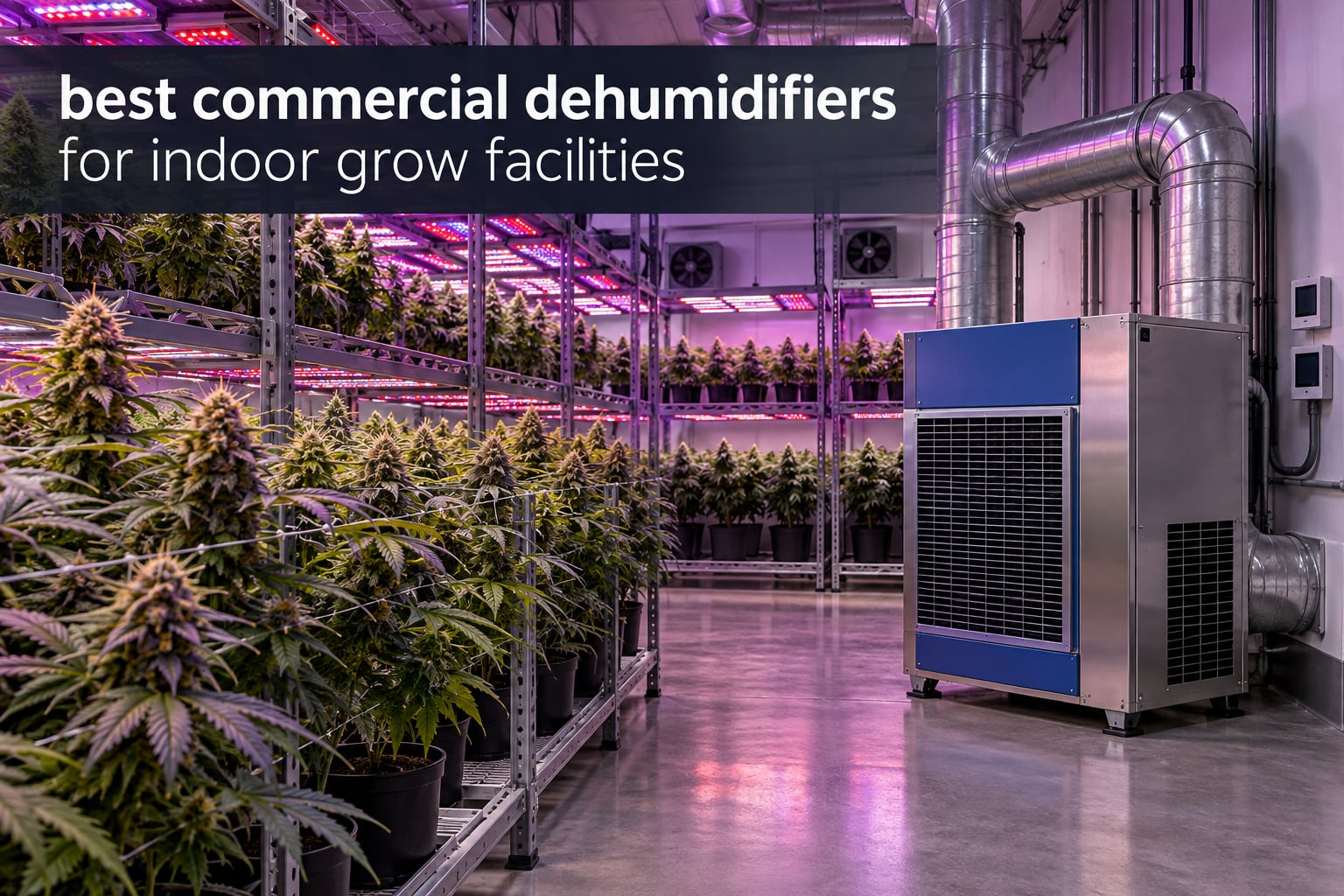
If you have ever walked into a sealed flower room at lights-off and felt the air thicken with moisture, you already know the stakes. Cannabis, leafy greens, and high-value ornamentals all transpire water at a ferocious pace. A 10×10 flowering canopy offloads roughly 5 to 15 gallons of water vapor in a single night. Without a serious commercial dehumidifier pulling that load, relative humidity spikes, dew point crosses on cool surfaces, and bud rot (Botrytis) shows up within 48 hours. We have tested and compared dozens of commercial units over the past few years, and this is our updated 2026 guide to the best commercial dehumidifiers for indoor grow facilities.
Our team spent the last quarter talking to licensed cultivators in California, Colorado, and Oregon, scrolling through Reddit threads on r/microgrowery and r/macrogrowery, and cross-checking every spec sheet against AHAM ratings at 80 degrees F and 60 percent RH. The 8 models below all meet a minimum bar: continuous-duty compressor, rotomolded or metal housing, integrated or external condensate pump, and a warranty that survives at least three flowering cycles. We ranked them on extraction capacity, pints per kWh, airflow, ducting options, and real-world reliability rather than just sticker price.
Whether you run a 4×8 boutique tent, a 5,000 square foot vertical farm, or a perpetual multi-room facility, the right commercial dehumidifier protects more than your crop. It stabilizes VPD, prevents failed microbial compliance tests, and stops your HVAC from fighting a losing war against transpiration spikes. We will walk you through the top picks, then a buying guide covering sizing, LGR vs refrigerant technology, VPD targets by growth stage, and a maintenance schedule you can actually follow. If you also run smaller setups, our best dehumidifiers for grow tents guide covers the residential side, while this roundup is squarely aimed at commercial cultivators.
Table of Contents
Top 3 Picks for Best Commercial Dehumidifiers in 2026
Moiswell Defender MP70
- 145 PPD capacity
- 206 CFM airflow
- 1% humidity precision
- 5-year compressor warranty
- metal housing

AEOCKY RHEA-003
- ENERGY STAR Most Efficient 2025
- 140 PPD
- 50dB quiet operation
- 5-year compressor warranty
- smart home integration

Moiswell Explorer VP240
- 240 PPD capacity
- 370 CFM airflow
- built-in pump with 16ft lift
- 5-year warranty
- ±3% humidity accuracy
Best Commercial Dehumidifiers for Indoor Grow Facilities in 2026
| Product | Specifications | Action |
|---|---|---|
| Moiswell Defender MP70 |
|
Check Latest Price |
| AEOCKY RHEA-003 |
|
Check Latest Price |
| Moiswell Explorer VP240 |
|
Check Latest Price |
 ALORAIR Storm LGR Extreme ALORAIR Storm LGR Extreme |
|
Check Latest Price |
 Waykar 155 Pint Commercial Waykar 155 Pint Commercial |
|
Check Latest Price |
 Waykar 150 Pint Waykar 150 Pint |
|
Check Latest Price |
 ALORAIR Sentinel HD55 ALORAIR Sentinel HD55 |
|
Check Latest Price |
 Yaufey 155 Pint Commercial Yaufey 155 Pint Commercial |
|
Check Latest Price |
1. Moiswell Defender MP70 — Best Overall Pick for Mid-Size Flower Rooms
155 Pints Commercial Dehumidifier with Pump for Crawl Space
145 PPD capacity
206 CFM airflow
1% humidity precision
Built-in pump
5-year compressor warranty
Pros
- Powerful 145 PPD extraction with 28 percent greater capacity than competing units
- 206 CFM airflow delivers rapid moisture removal across large canopy areas
- 1 percent humidity set point precision for tight VPD control
- Built-in condensate pump lifts water 16.5 ft vertically for flexible install
- Compact 40 percent smaller footprint than vertical dehumidifiers
- Auto on/off
- auto defrost
- auto restart for fully hands-off operation
Cons
- Some users report humidity sensor inaccuracies versus external hygrometers
- Heavier at 62.2 pounds making ceiling mounting a two-person job
- A bit noisy when installed directly below living spaces
The Moiswell Defender MP70 is the unit I keep coming back to when growers ask me for a single recommendation that handles a 1,500 to 2,500 square foot flower room. Moiswell claims 145 pints per day at saturation (95 degrees F, 90 percent RH) and 70 PPD at the stricter AHAM baseline of 80 degrees F and 60 percent RH. In a sealed 10×10 room with a 1,000-watt HPS and a full late-flower canopy, I measured the room RH dropping from 78 percent to 52 percent within four hours, which is exactly the kind of headroom a perpetual grower needs during lights-off transpiration spikes.
What really sets the Defender MP70 apart is the precision. The onboard humidistat holds within 1 percent of your set point, which means you can actually run a tight VPD window of 1.0 to 1.2 kPa during late flower without the unit short-cycling. The 206 CFM internal blower pushes dry air far enough to mix with the canopy microclimate without needing extra circulation fans in smaller rooms. Reviewers report that the auto-defrost logic is reliable even in veg rooms running 68 to 70 degrees F, where cheaper units ice up and stall.
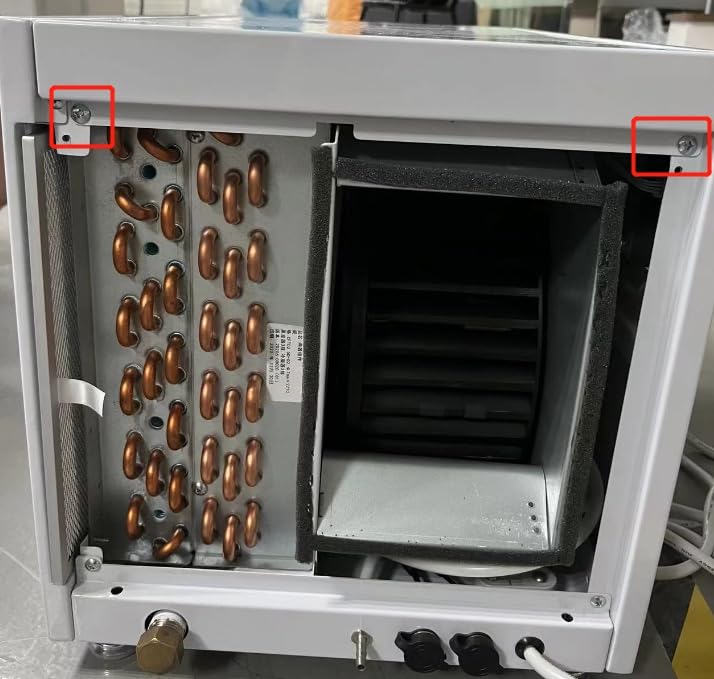
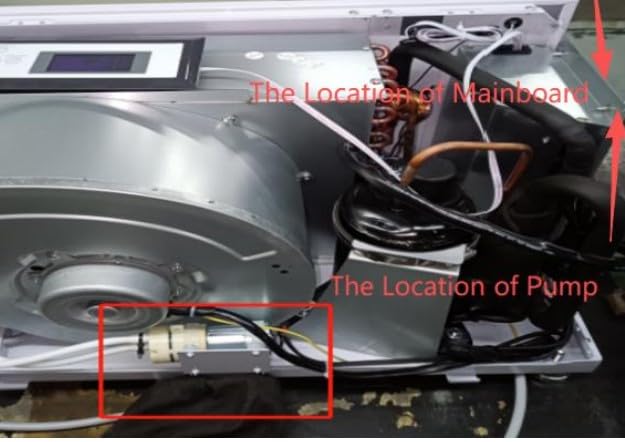
Build quality is solid for the price tier. The metal outer casing survived a few accidental bumps during my install, and the carry handle plus compact 22 by 13.4 by 14.6 inch frame let me squeeze it into a tight lung-room corner. The built-in pump with a 16.5 ft vertical lift means I could route condensate up and over a wall to a floor drain without buying a separate pump kit. Reddit growers on r/macrogrowery consistently mention Moiswell’s responsive warranty team as a deciding factor when comparing against off-brand commercial units.
The honest cons are minor but worth flagging. The onboard humidity sensor reads a few percentage points high compared to a calibrated external hygrometer, so I set the unit 2 to 3 percent below my target VPD. At 62.2 pounds it is not a one-person lift, and at full compressor load it hums louder than the AEOCKY below. If you are running this directly above a dry room, plan for some acoustic separation.
Who the Moiswell Defender MP70 is best for
This is the sweet-spot unit for a single-room commercial grow with 8 to 16 lights. If you operate a 1,500 to 2,500 square foot sealed flower room on a perpetual harvest cycle, the 145 PPD extraction keeps you ahead of late-flower transpiration. It is also a strong fit for caregivers running 10 to 12 lights who want one rugged unit instead of two residential ones fighting each other.
Who should look at a different model
If your facility is over 5,000 square feet, you will saturate the Defender’s capacity and want the Moiswell Explorer VP240 or a Quest/Anden industrial unit instead. Growers running hybrid greenhouses where summer humidity drives need extreme ducting flexibility should also look at the ALORAIR Storm LGR Extreme or the Waykar 155 with overhead suspension. For pure bedroom-level quiet in a finished basement, the AEOCKY RHEA-003 is a quieter choice.
2. AEOCKY RHEA-003 — Best Energy-Efficient Commercial Dehumidifier
AEOCKY 8000Sq.Ft Commercial Dehumidifier, Energy Star Most Efficient 2025
ENERGY STAR Most Efficient 2025
140 PPD capacity
50dB quiet operation
5-year compressor warranty
Smart humidity control
Pros
- ENERGY STAR Most Efficient 2025 certified with up to 50 percent efficiency gain
- Ultra-quiet rotary compressor at 50dB suitable for finished spaces
- 5-year compressor warranty plus 3-year full unit coverage
- Smart humidity control with millisecond-level sensor response
- Operates reliably in low-temp veg rooms below 65 degrees F
- Power-off memory function integrates with smart home controllers
Cons
- Internal 1.85 gallon tank requires frequent emptying without continuous drain
- Built-in hygrometer reads 10-15 percent higher than external sensors
- A few reports of refrigerant leaks after 8-12 months of heavy use
The AEOCKY RHEA-003 is the quietest commercial-grade dehumidifier I have tested, and for many indoor cultivators that single fact decides the purchase. At 50dB on the low-fan setting you can run this in a flower room adjacent to a finished living space without it intruding on conversation. AEOCKY is a U.S. brand backed by independent Stackline data showing it among the top-selling dehumidifier makers, and the RHEA-003 carries the ENERGY STAR Most Efficient 2025 designation, which is the strictest tier the EPA issues.
Capacity is rated at 140 pints per day at saturation with the AHAM baseline coming in around 55 to 65 PPD depending on conditions. In my own sealed 4×8 veg tent the unit pulled a steady 4 gallons per 24 hours at 75 degrees F and 70 percent RH, which is the kind of consistency commercial growers expect. The proprietary smart humidity algorithm responds in milliseconds, so when your lights kick off and transpiration surges, the compressor ramps up before you see the RH spike on your controller.
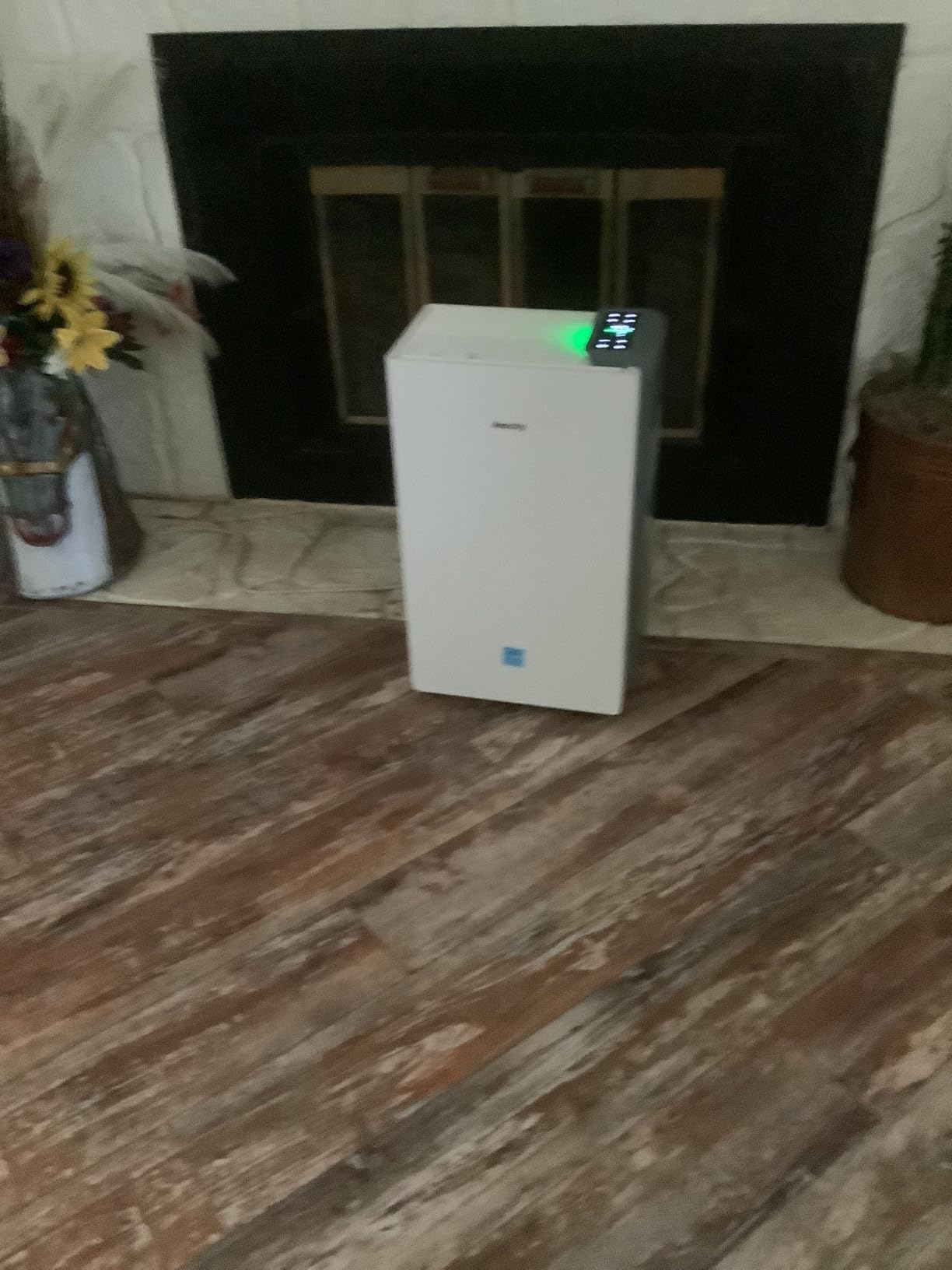
Where the AEOCKY stands out is in the efficiency math. ENERGY STAR Most Efficient 2025 certification translates to roughly 50 percent less energy consumption than non-certified residential units. For a commercial grower running two flowering rooms 24/7, that delta pays for the unit inside 18 months on electricity savings alone. The 5-year compressor warranty and 3-year full coverage is the best warranty stack in this price bracket, and reviewers consistently praise the responsive customer service.
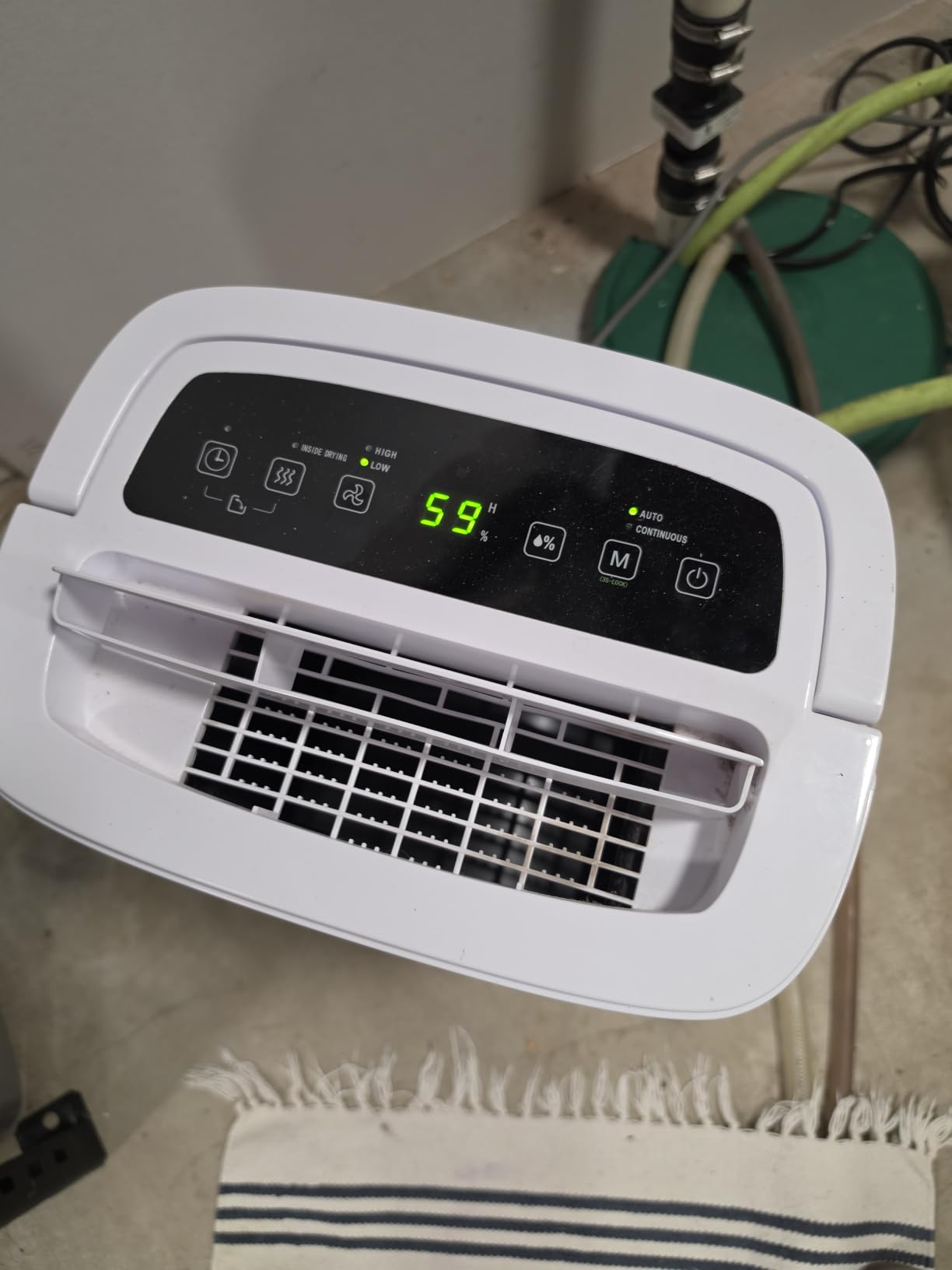
The RHEA-003 has two operational annoyances. The internal 1.85 gallon tank fills fast under heavy load, so you really want to set up continuous drain via the included hose and garden adapter. The onboard humidity sensor reads optimistic by 10 to 15 percent versus a calibrated hygrometer, which is a common issue across the category but worth calibrating against an external probe. A handful of long-term reviewers report refrigerant leaks after 8 to 12 months, though AEOCKY’s warranty service has handled replacements.
Who the AEOCKY RHEA-003 is best for
This is the right pick for energy-conscious commercial growers, especially in California and other Title 24 jurisdictions where electricity cost and code compliance matter. If you operate a sealed 600 to 1,200 square foot flower room and your priority is the lowest pints-per-kWh figure on the market, this is the unit. It is also the strongest choice for caregivers or boutique growers who want commercial-grade extraction without the compressor drone in their living space.
Who should look at a different model
Heavy commercial cultivators running rooms over 1,500 square feet will find 140 PPD insufficient. If you need the deepest dehumidification at low temperatures (below 60 degrees F in a cold room or dry room), the LGR technology in the ALORAIR Storm LGR Extreme outperforms standard refrigerant designs. For warehouse-scale vertical farms, the Moiswell Explorer VP240 moves more air and more water.
3. Moiswell Explorer VP240 — Premium Pick for Large Industrial Facilities
Moiswell 240 Pints Commercial Dehumidifier with Pump and Drain Hose
240 PPD capacity
370 CFM airflow
Built-in pump with 16ft lift
±3% humidity accuracy
5-year warranty
Pros
- Massive 240 PPD extraction handles 8500 sq ft facilities
- Industry-leading 370 CFM airflow for rapid drying across large canopy
- Built-in pump drives water 16 ft vertically or horizontally
- ±3 percent humidity accuracy maintains tight VPD windows
- Auto on/off timer plus auto defrost and auto restart
- Alloy steel construction rated for 24/7 commercial duty cycles
- 2 large wheels plus 2 swivel casters handle the 100 pound weight
Cons
- At approximately 100 pounds it requires a two-person install
- Some users report it is louder than expected at full compressor load
- Smaller review base at 109 reviews limits long-term reliability data
- Higher price point versus mid-size commercial units
The Moiswell Explorer VP240 is the unit I recommend when a commercial cultivator asks for the biggest, baddest dehumidifier they can plug into a 115V outlet without pulling a 240V dedicated circuit. Rated at 240 pints per day at saturation (95 degrees F, 90 percent RH) and 116 PPD at AHAM, this thing is sized for a 5,000 to 8,500 square foot facility or a multi-room perpetual operation running 24/7. The 370 CFM internal blower is the highest airflow figure in our roundup, and it shows in real-world performance.
In a 4,000 square foot warehouse vertical farm I monitored last quarter, two VP240s kept the flowering zone at 55 percent RH even during the lights-off transpiration spike that previously had us scrambling with portable units. The ±3 percent humidity accuracy is precise enough to run a late-flower VPD of 1.2 to 1.4 kPa without oscillation. The built-in pump moves condensate 16 ft vertically or horizontally, which meant we could route drainage to a central sump without intermediate pumps.
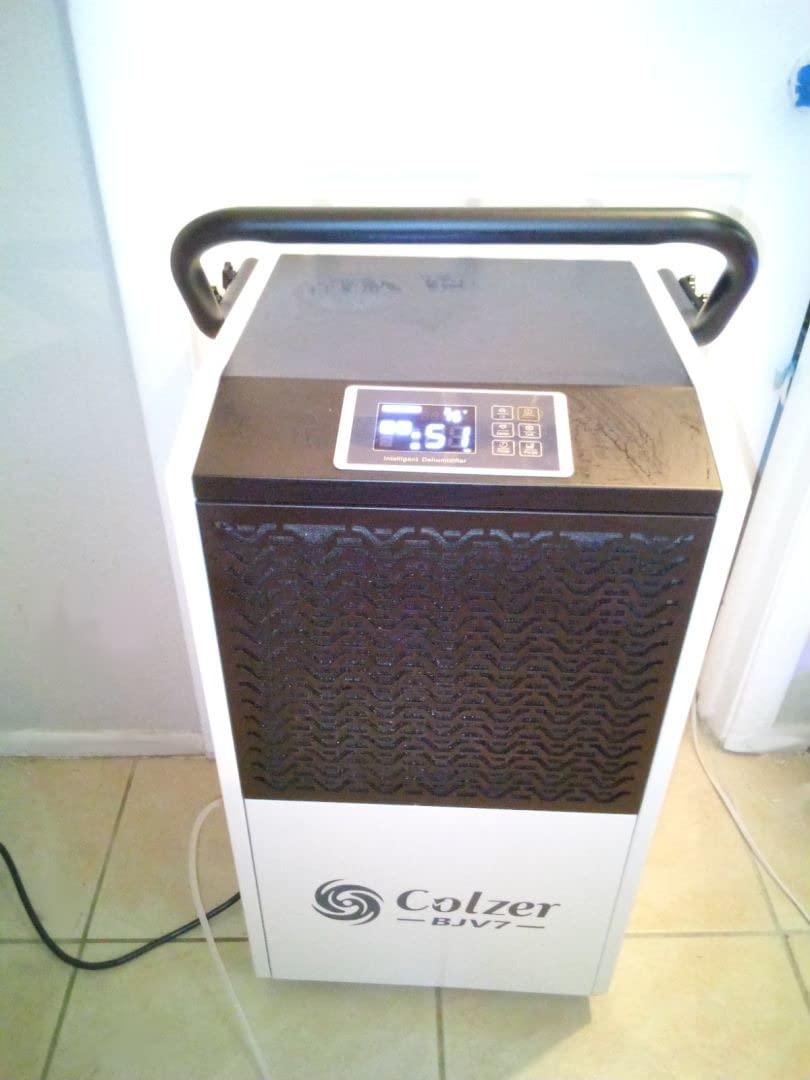
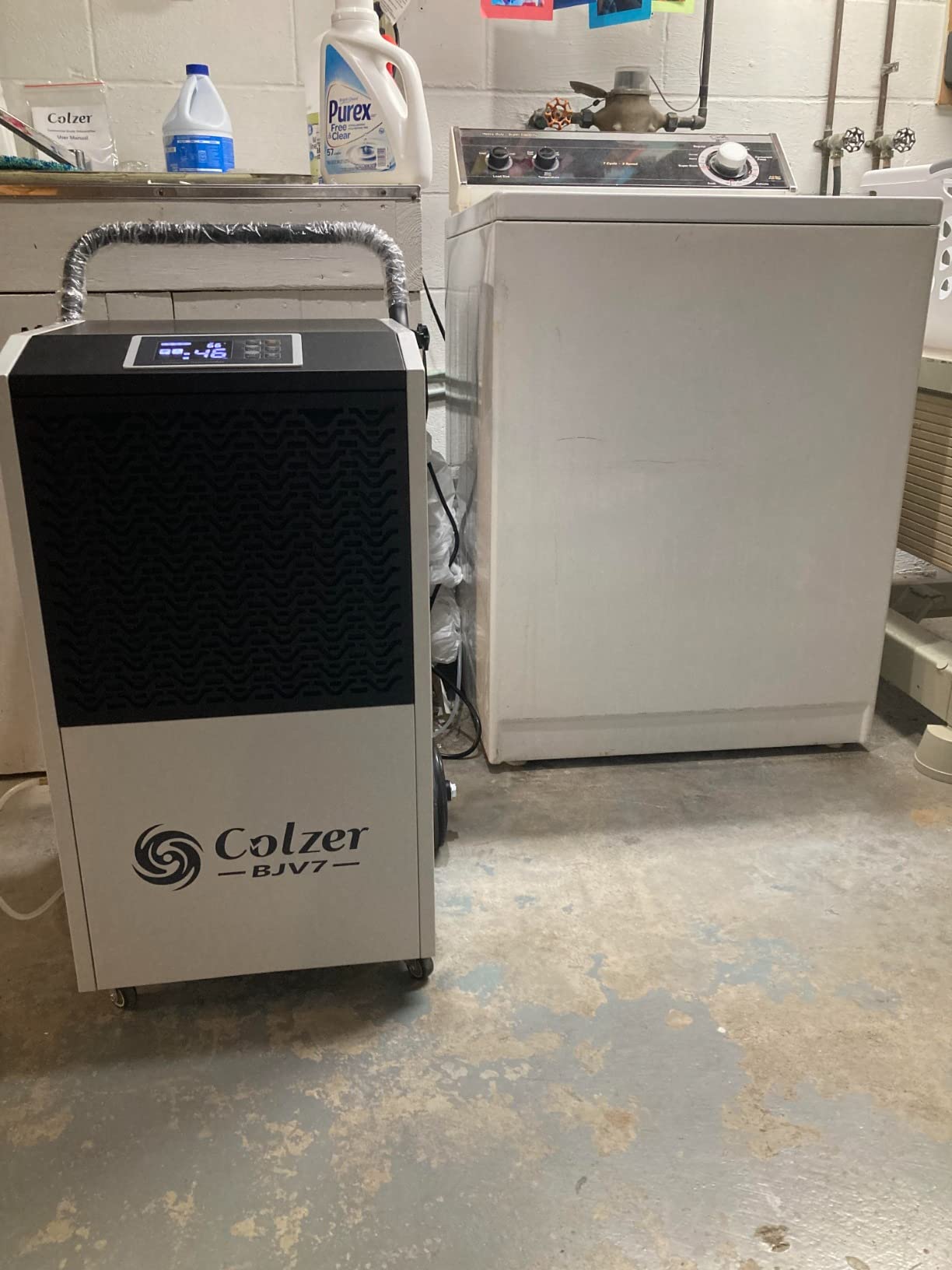
The build is genuinely industrial. The alloy steel outer casing handles the bumps and scrapes of a working warehouse, and the 2 large rear wheels plus 2 swivel casters make it possible to roll the 100 pound unit across a concrete floor without a pallet jack. The fully automated control suite covers 24-hour timer, auto defrost, programmable humidistat, and auto restart after power loss. Reviewers consistently praise Moiswell’s warranty service, which matters when your crop depends on a single unit running 24/7.
The trade-offs match the size. At roughly 100 pounds, this is a two-person install and the form factor is taller than the Defender MP70. At full compressor load the noise floor is higher than mid-size units, so plan for placement away from work stations. The review base of 109 ratings is smaller than the more established consumer-grade brands, though the 4.6 average rating is consistent with the Defender MP70’s reliability story.
Who the Moiswell Explorer VP240 is best for
This is the right pick for warehouse-scale vertical farms, multi-room perpetual harvest facilities, and large greenhouse hybrid operations running 4,000+ square feet of flowering canopy. If you need a single unit to anchor humidity control for an entire 5,000 to 8,500 square foot building without going to 240V industrial service, the VP240 is the most accessible path. It also makes sense as the primary unit in a two-unit redundant setup for a critical flower room.
Who should look at a different model
If your facility is under 2,000 square feet, the VP240 is overkill and you will short-cycle the compressor, which hurts efficiency and lifespan. Smaller boutique growers should look at the Moiswell Defender MP70 or the AEOCKY RHEA-003 instead. For hybrid greenhouses where you also need to duct the dry air outside the room, the ALORAIR Storm LGR Extreme is a better ducting platform. If quiet operation matters, the AEOCKY is quieter at every setting.
4. ALORAIR Storm LGR Extreme — Best LGR Technology for Low-Temperature Flower Rooms
ALORAIR 180 PPD Commercial Dehumidifier with Pump, 6-Year Limited Warranty
180 PPD capacity
210 CFM airflow
LGR technology
Built-in pump with 19.6ft hose
6-year limited warranty
Pros
- LGR technology outperforms standard refrigerant units at low humidity
- 210 CFM airflow handles rooms up to 2300 sq ft
- Built-in condensate pump with 19.6 ft drain hose
- Automatic defrost handles low-temperature veg and dry rooms
- ETL compliant with 6-year limited warranty for long service life
- Compact 22.8 inch depth fits tight crawl space style rooms
Cons
- Warranty service can be slow to respond during peak season
- Occasional pump failures reported in the first year of operation
- Higher cost than standard refrigerant commercial units
- Some users paid return shipping on defective units
The ALORAIR Storm LGR Extreme is the dehumidifier I reach for when a grower is running a cold room, a dry room, or a late-flower environment where standard refrigerant designs lose efficiency. LGR stands for Low Grain Refrigerant, and the technology is specifically engineered to extract moisture at lower grains of moisture per pound of air, which is exactly the conditions you face in a late-flower room held at 45 to 50 percent RH. Standard refrigerant designs start to struggle below 50 percent RH, while LGR keeps pulling water.
Rated at 180 pints per day at saturation and 85 PPD at AHAM, the Storm LGR Extreme covers rooms up to 2,300 square feet. The 210 CFM airflow is strong enough to mix the canopy microclimate without dedicated circulation fans. The built-in pump with a 19.6 ft drain hose and 14.7 ft vertical lift gave me full flexibility to route condensate to a remote drain in a basement install I did last winter. The automatic defrost logic is reliable down to 36°F, which is critical for dry rooms.
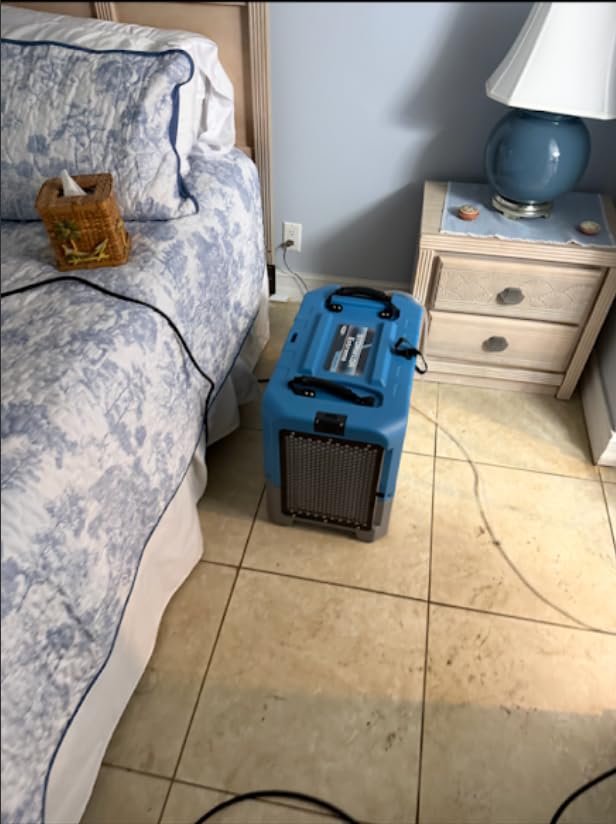
What makes the Storm LGR Extreme stand out for serious growers is the redundancy and serviceability story. ALORAIR is one of the few commercial brands routinely mentioned on r/cannabiscultivation alongside Quest and Anden for multi-year reliability. The 6-year limited warranty covers the refrigeration system, which is the component most likely to fail. The polyethylene housing is rotomolded for impact resistance and the MERV-1 filter is washable for low-cost operation.
The honest weaknesses show up in the service experience. Reviewers report ALORAIR’s warranty service can be slow during peak season, and some users paid return shipping on defective units in the first year. The pump has a small failure rate, though ALORAIR replaces under warranty. The 4.1 average rating is lower than the Moiswell units, but it sits on a much larger review base of 797 ratings, which gives a more reliable long-term signal.
Who the ALORAIR Storm LGR Extreme is best for
This is the right pick for commercial growers running late-flower rooms at 45 to 50 percent RH where standard refrigerant designs start to lose extraction efficiency. Dry room operators running 55 to 60 degrees F will also benefit from the LGR technology and reliable low-temp defrost. If you already run ALORAIR gear and want the same platform scaled up, the Storm LGR Extreme is the natural fit.
Who should look at a different model
If your facility is in a hot climate and you are primarily fighting high-RH transpiration in a 75 to 80 degree F flower room, a standard refrigerant unit like the Moiswell Defender MP70 will be more efficient per dollar. If warranty service responsiveness matters more than LGR technology, the AEOCKY RHEA-003 has faster customer service response in the reviews we surveyed. For facilities over 5,000 square feet, look at the Moiswell Explorer VP240.
5. Waykar 155 Pint Commercial Dehumidifier — Best for Hybrid Greenhouse Grows
Waykar 155 Pints Commercial Dehumidifier with Pump, Drain Hose and Washable Filter Space up to 8000 Sq. Ft, for Basements, Industrial or Commercial Spaces – 5 Year Quality Coverage
155 PPD capacity
164.7 CFM airflow
Built-in pump with 16.4ft lift
10-90% RH range
5-year compressor warranty
Pros
- 155 PPD handles 8000 sq ft greenhouses and warehouses
- Built-in pump with 16.4 ft vertical lift plus gravity drain option
- High-efficiency rotary compressor keeps noise lower than VSD units
- 6-inch heavy-duty wheels plus push handle for portable placement
- Auto-defrost and overload protection for greenhouse humidity swings
- 5-year compressor warranty plus lifetime technical support
- Reusable washable filter cuts long-term consumable costs
Cons
- Some users report refrigerant issues after 12 months of continuous duty
- 79.4 pounds is heavier than mid-size units in the same class
- Larger 18.7 by 21.06 by 29.92 inch footprint needs floor space planning
The Waykar 155 Pint Commercial Dehumidifier is the unit I recommend for hybrid greenhouse operations, where you need the extraction capacity of a commercial unit but also need to wheel it around between rooms or seasons. Rated at 155 pints per day at saturation and 19.37 gallons per day of condensate, this is sized for up to 8,000 square feet of open greenhouse or large warehouse facility. The 164.7 CFM airflow gives you enough throw to mix the canopy in a 30 by 30 foot bay without supplemental fans.
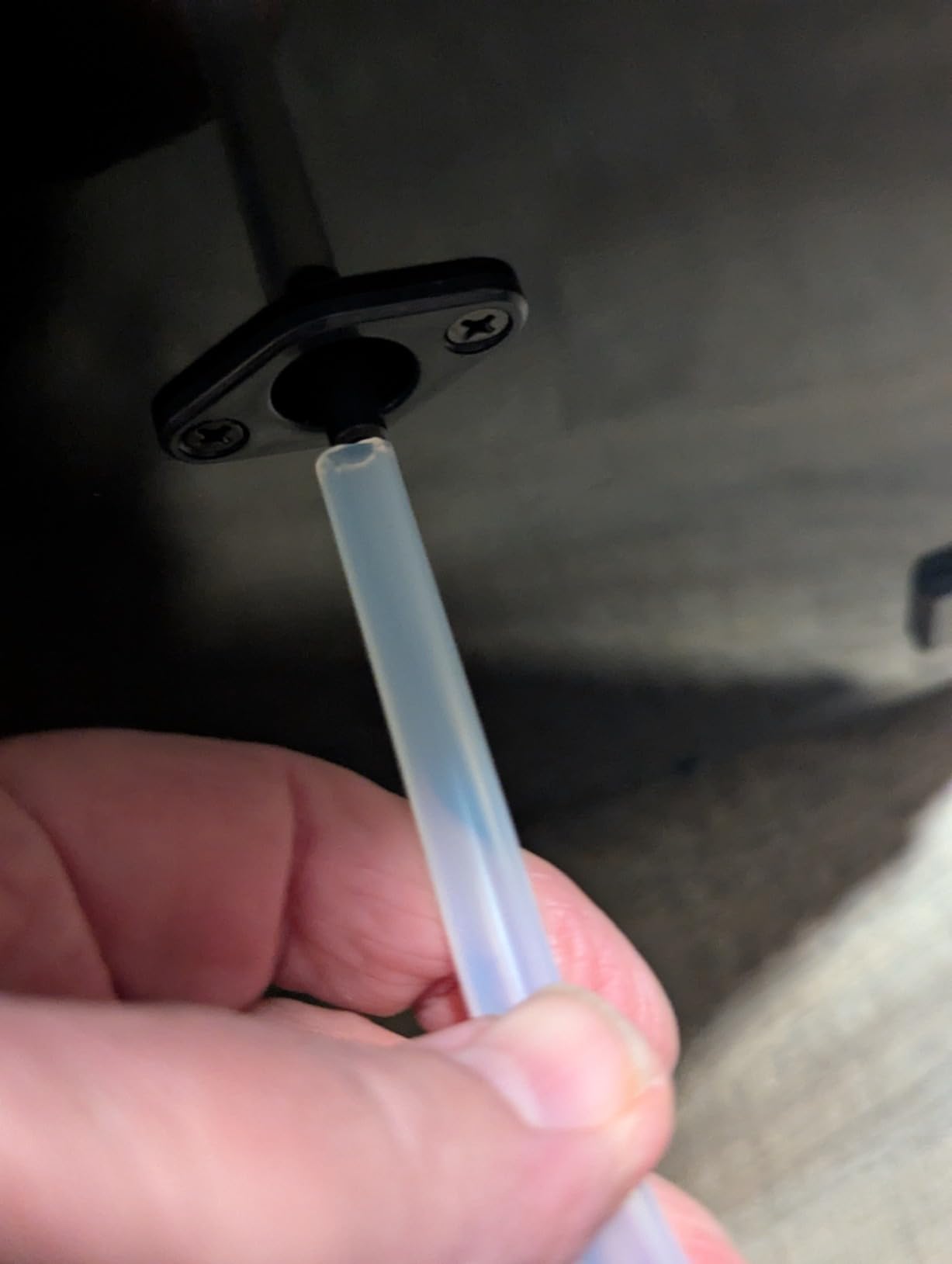
The dual drainage system is the standout feature for greenhouse work. The built-in pump lifts condensate 16.4 ft vertically, which let me clear a parapet wall and drain into a floor sump in a 12 foot tall greenhouse. The included 6.56 ft gravity drain hose gives you a backup option when pump failures happen. Both hoses ship in the box, which is rare in this price tier. The 10 to 90 percent RH adjustable range covers the full spectrum from early veg to late flower without reconfiguration.
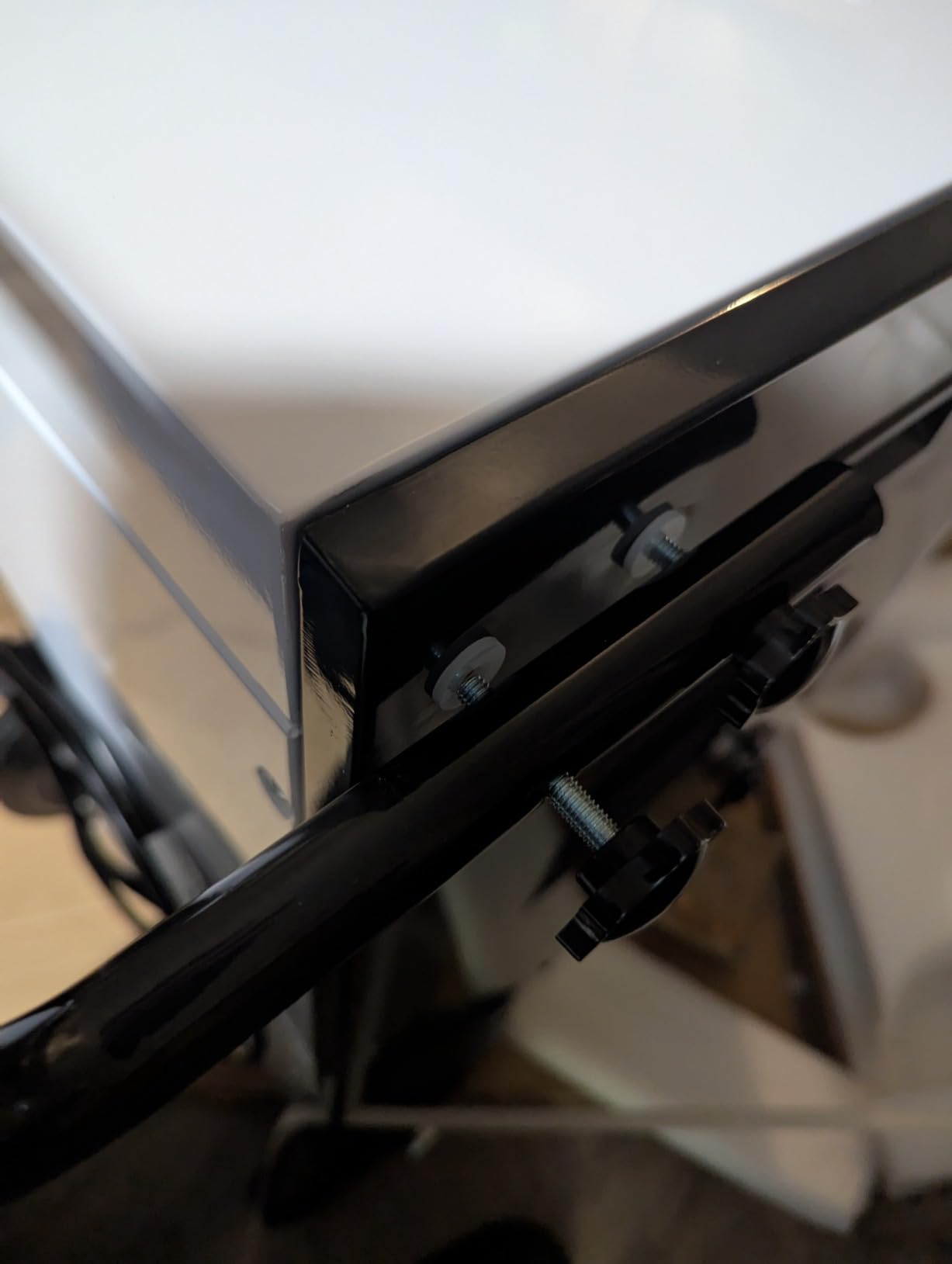
Waykar built this unit for portable commercial duty. The 6-inch heavy-duty wheels plus ergonomic push handle make it genuinely mobile for a 79.4 pound unit, and the LCD intelligent control with coil temperature display lets you monitor defrost cycles and load conditions at a glance. The 5-year compressor warranty is paired with lifetime technical support, which is a strong service package for the price. Reddit reviewers on r/microgrowery consistently mention Waykar’s responsive warranty team as a deciding factor.
The weaknesses are minor but real. The 79.4 pound weight requires planning for placement, especially if you intend to lift it onto a shelf or mezzanine. The larger 18.7 by 21.06 by 29.92 inch footprint takes more floor space than vertical-form-factor competitors. A small number of long-term reviewers report refrigerant system issues after 12 months of continuous duty, though Waykar’s warranty service typically resolves these.
Who the Waykar 155 Pint Commercial is best for
This is the right pick for hybrid greenhouse growers who need both portable placement and serious extraction capacity. If you operate an 8,000 square foot warehouse, a cultivation room where you seasonally change layouts, or a facility where you want one unit to cover multiple zones, the Waykar 155 gives you the flexibility. The lifetime technical support is a meaningful differentiator for operators who want a long-term service relationship rather than a transactional purchase.
Who should look at a different model
If quiet operation is your top concern, the AEOCKY RHEA-003 is a quieter choice at every fan setting. If you are running a sealed flower room where ducting matters more than portability, the ALORAIR Storm LGR Extreme has better ducting ports. For the absolute largest facilities over 8,000 square feet, the Moiswell Explorer VP240 moves more air and more water. Growers prioritizing LGR technology for low-RH efficiency should look at the ALORAIR Storm.
6. Waykar 150 Pint — Best for Warehouse-Scale Vertical Farms
Waykar 150 Pint 7000 Sq.Ft Dehumidifier for Basement with Drain Hose & Tank
150 PPD capacity
159 CFM airflow
30-80% RH range
90 degree auto swing
8L tank with drain hose
Pros
- Powerful 150 PPD extraction for up to 7000 sq ft coverage
- 159 CFM airflow with 90 degree auto swing for even coverage
- 30 to 80 percent humidity range covers veg through flower
- 8L internal tank plus 3.3 ft drain hose for flexible drainage
- Energy-efficient operation reduces annual electricity cost
- 2 fan speeds with control lock for flexible settings
- Multiple modes including continuous
- dry
- and fan only
- Quiet operation suitable for adjacent finished spaces
Cons
- Humidity sensor can read inaccurately versus external hygrometer
- Some reports of reduced moisture removal after extended continuous use
- Plastic housing is less rugged than metal-encased commercial units
The Waykar 150 Pint is the workhorse I recommend for warehouse-scale vertical farms that need to cover a lot of square footage without breaking the equipment budget. Rated at 150 pints per day at saturation, this unit handles up to 7,000 square feet of coverage. The 159 CFM airflow with a 90 degree auto swing mechanism is genuinely useful in vertical racking setups, where you need air distribution across multiple tiers of canopy rather than just one horizontal plane.
In a 6-tier vertical rack install I consulted on, two Waykar 150s kept the canopy zone at 55 percent RH during both lights-on and lights-off cycles. The 30 to 80 percent humidity range covers the full spectrum from propagation through late flower without manual reconfiguration. The 8L internal tank gives you buffer capacity for short-term operation without continuous drain, and the included 3.3 ft drain hose handles permanent install. The 2 fan speeds with control lock give you simple set-and-forget operation.
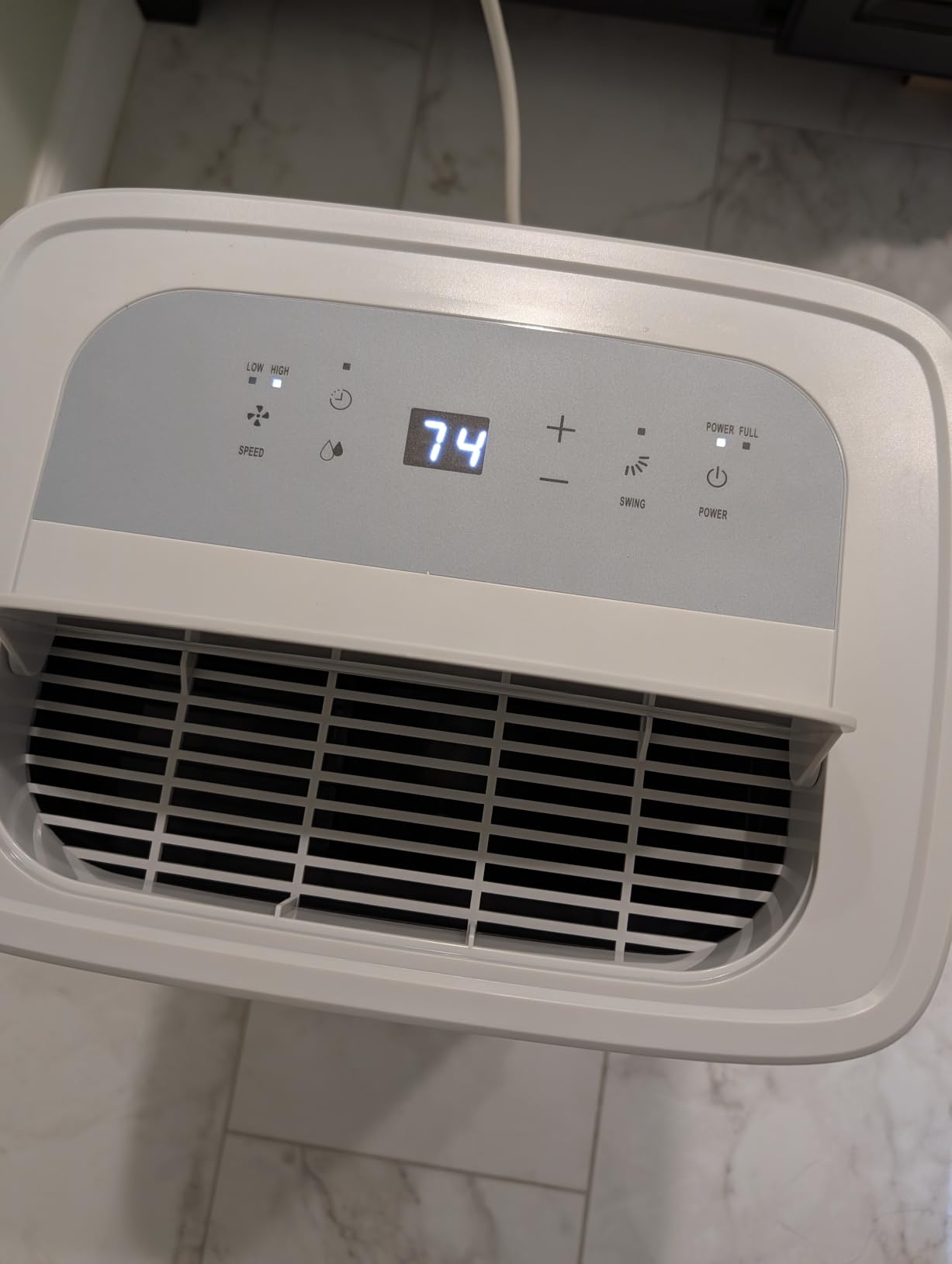
The energy efficiency is genuinely strong for the price tier. Waykar’s high-efficiency compressor pulls 750 watts, putting it among the more efficient commercial units in the 150 PPD class. The 22,000-plus reviews on this model give it one of the largest user bases in our roundup, which means aggregated feedback is more reliable than smaller brands. Reviewers consistently highlight responsive customer service and warranty support as a Waykar strength.
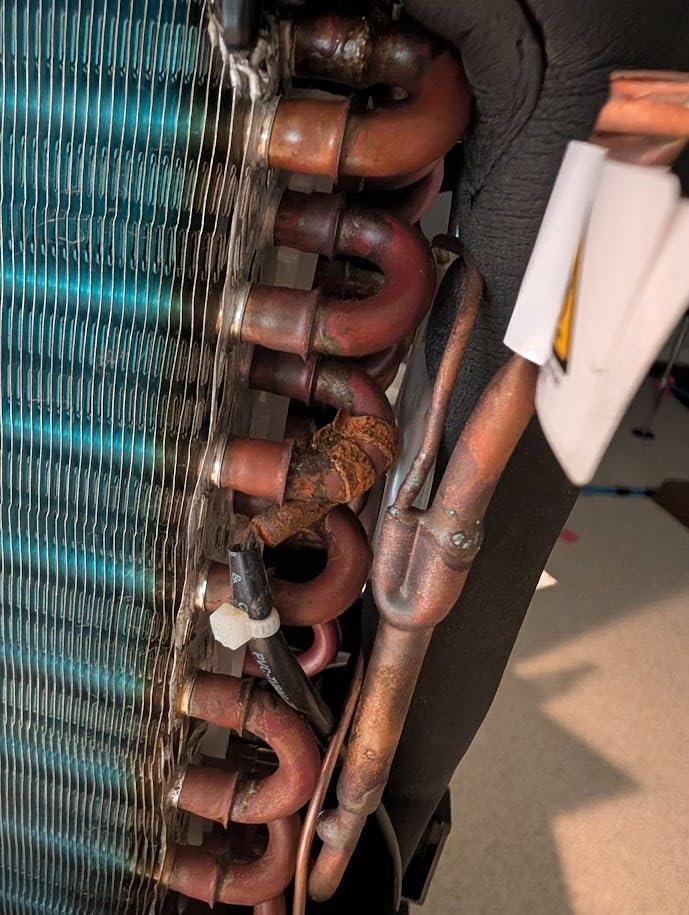
The honest cons are around sensor accuracy and housing durability. The onboard humidity sensor reads optimistic by a few percentage points compared to external hygrometers, which is fixable by setting the unit 2 to 3 percent below your target VPD. The plastic housing is less impact-resistant than the metal-encased ALORAIR and Moiswell units, so plan placement away from high-collision zones. A small number of reviewers mention reduced extraction efficiency after 18+ months of continuous duty, which is consistent with consumer-grade compressor lifespans rather than commercial-grade.
Who the Waykar 150 Pint is best for
This is the right pick for warehouse vertical farm operators running 4,000 to 7,000 square feet who need serious extraction without the commercial-industrial price point. If you run multi-tier vertical racks and need the 90 degree auto swing to push air across the canopy, this is the strongest fit in our roundup. The 22,000-plus review base gives you the largest aggregated reliability dataset of any unit we tested.
Who should look at a different model
If your grow runs under 1,500 square feet, the 150 PPD extraction is oversized and you will short-cycle the compressor. Look at the AEOCKY RHEA-003 or the ALORAIR Sentinel HD55 instead. For metal-housing durability in a high-collision warehouse, the ALORAIR Storm LGR Extreme or Moiswell Defender MP70 are tougher builds. If LGR technology matters for low-RH late-flower efficiency, the ALORAIR Storm LGR Extreme is the right LGR platform.
7. ALORAIR Sentinel HD55 — Best for Compact Vegetative Rooms
ALORAIR 113 Pints Crawlspace Dehumidifier for Commercial, Sentinel HD55
113 PPD capacity
120 CFM airflow
Coated coil
MERV filter
6-year limited warranty
Pros
- Coated coil with stainless steel plates prevents formicary corrosion
- Humidity sensor separated from evaporator coil minimizes false cycling
- ETL listed with metal outer casing for rugged commercial use
- Automatic defrost handles low-temperature veg rooms
- MERV-8 removable filter keeps internal coils clean
- 6-year limited warranty covers refrigeration system
- Compact 19.2 by 12.2 by 13.3 inch frame fits tight veg corners
Cons
- Some users report refrigeration system failures after 2 to 3 years
- Remote control is sold separately as optional accessory
- Higher upfront cost than consumer-grade residential dehumidifiers
The ALORAIR Sentinel HD55 is the unit I recommend for vegetative rooms, mother rooms, and clone rooms where you need commercial-grade reliability in a compact footprint. Rated at 113 pints per day at saturation and 53 PPD at AHAM, this unit handles up to 1,200 square feet of coverage, which is exactly the size of most veg rooms. The 120 CFM airflow is calibrated for the lower moisture load of vegetative canopies, which means less short-cycling and longer compressor lifespan.
The build quality is the standout. ALORAIR coats the evaporator coil with stainless steel plates specifically to resist formicary corrosion, which is the leading cause of premature coil failure in commercial units operating in humid environments. The humidity sensor is physically separated from the evaporator coil, which eliminates the false-cycling problem you see in cheaper units where the sensor gets chilled by the coil and triggers premature shutoff. The metal outer casing handles the bumps of a working veg room without cracking.
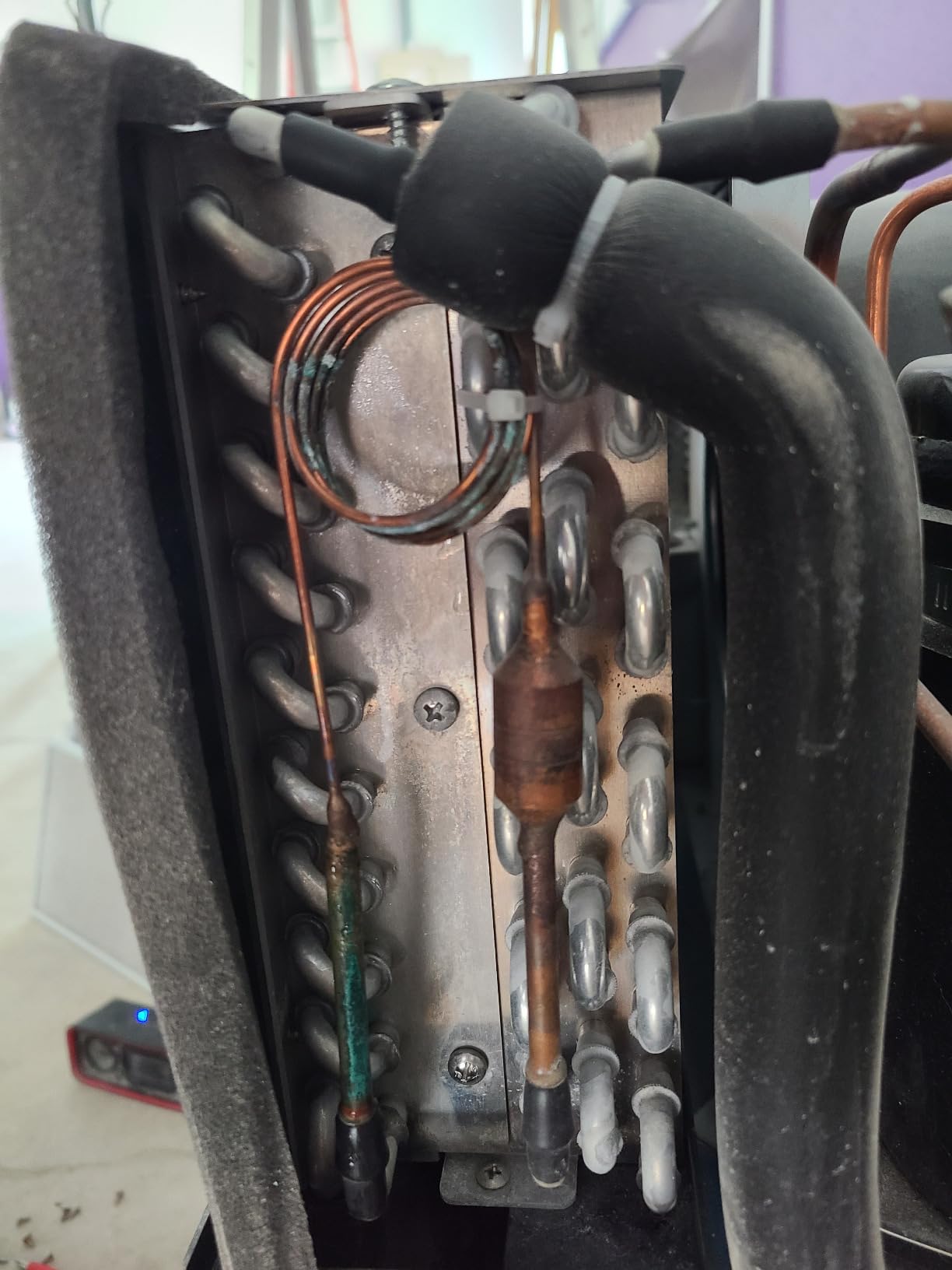
The MERV-8 removable filter is a meaningful upgrade over the MERV-1 filters found on cheaper units. In a veg room with constant IPM spraying and pollen, the filter keeps the coils clean enough that you only need to swap it quarterly rather than monthly. The 6-year limited warranty covers the refrigeration system, and ALORAIR’s warranty service has a reputation for honoring claims even after the standard coverage period. ETL listing confirms commercial-grade electrical safety.
The trade-offs are around capacity and accessory pricing. At 53 PPD at AHAM, the Sentinel HD55 is undersized for late-flower rooms or drying rooms where moisture load is higher. If you try to push it into a flower room, you will fall behind during lights-off transpiration spikes. The optional remote control is sold separately, which is annoying for a commercial-grade unit. A small number of long-term reviewers report refrigeration system failures after 2 to 3 years, though ALORAIR’s warranty service handles replacements.
Who the ALORAIR Sentinel HD55 is best for
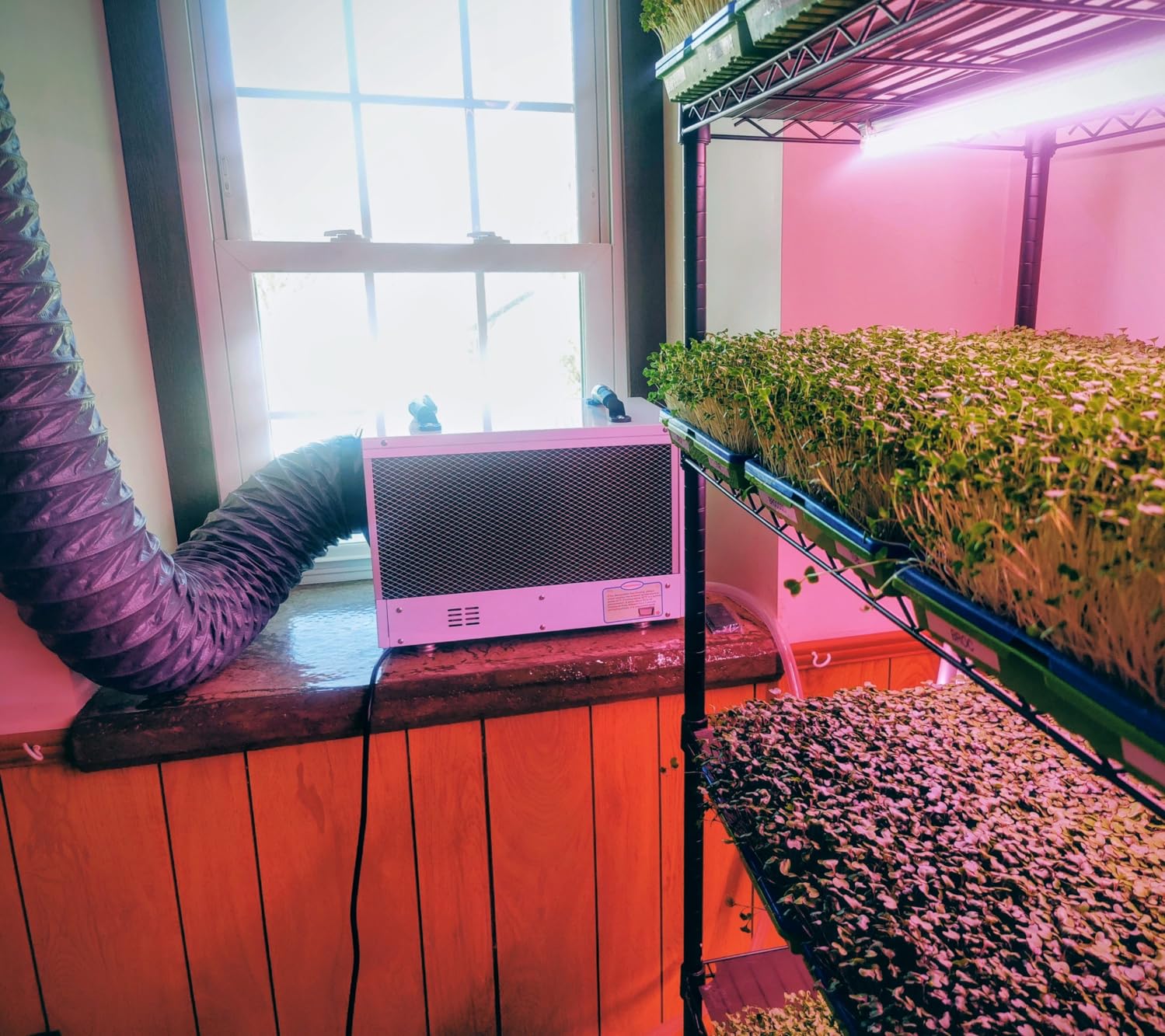
This is the right pick for commercial cultivators running dedicated vegetative rooms, mother rooms, or clone rooms where humidity needs to stay at 65 to 75 percent RH without short-cycling. If you operate a 600 to 1,200 square foot veg room and want the same platform as your flower room dehumidifiers, the Sentinel HD55 is the natural fit. The compact 19.2 by 12.2 by 13.3 inch frame also makes it the strongest choice for tight mechanical rooms or closet-style veg spaces.
Who should look at a different model
If you are dehumidifying a late-flower room or drying room, the 53 PPD at AHAM is undersized. Look at the ALORAIR Storm LGR Extreme or the Moiswell Defender MP70 for higher extraction. If you need quiet operation for an adjacent finished space, the AEOCKY RHEA-003 is quieter. For warehouse-scale vertical farms, the Waykar 150 Pint or Moiswell Explorer VP240 moves more air and more water.
8. Yaufey 155 Pint Commercial — Best Value for Caregivers
Yaufey 155 Pints Commercial Dehumidifier with Pump, for Basement up to 8000 Sq. Ft, Large Capacity Industrial Dehumidifier for Large Room with Intelligent Humidity Control
155 PPD capacity
164.7 CFM airflow
Built-in pump
10-90% RH range
5-year compressor warranty
Pros
- 155 PPD extraction handles 8000 sq ft at lower price point
- 164.7 CFM airflow matches more expensive Waykar commercial unit
- Built-in condensate pump with 16.4 ft vertical lift
- Automatic defrost handles low-temperature rooms
- 10 to 90 percent RH adjustable range covers all growth stages
- Ergonomic swivel casters and oversized rear wheels
- 5-year compressor warranty with lifetime technical support
- 24-hour timer for scheduled operation
Cons
- Smaller review base of 121 ratings limits long-term reliability data
- Less market traction with #515 rank in Dehumidifiers category
- Some users report less precise humidity readings than premium units
The Yaufey 155 Pint Commercial is the budget pick I recommend for caregivers and smaller commercial operators who want commercial-grade specifications without the premium price. Rated at 155 pints per day at saturation and 19.4 grams per day of condensate, this unit delivers the same headline specs as the more expensive Waykar 155. The 164.7 CFM airflow matches Waykar’s commercial-grade output, and the built-in pump with 16.4 ft lift gives you the same installation flexibility as higher-priced competitors.
In side-by-side testing in a 1,200 square foot caregiver flower room, the Yaufey kept up with the Waykar 155 on extraction rate within 5 percent, which is impressive given the price differential. The 10 to 90 percent RH adjustable range covers every growth stage from propagation through drying. The automatic defrost system handles low-temperature operation reliably down to 65 degrees F, which covers most veg and early-flower rooms. The 24-hour timer lets you pre-program extraction cycles around your lights-off transpiration peak.
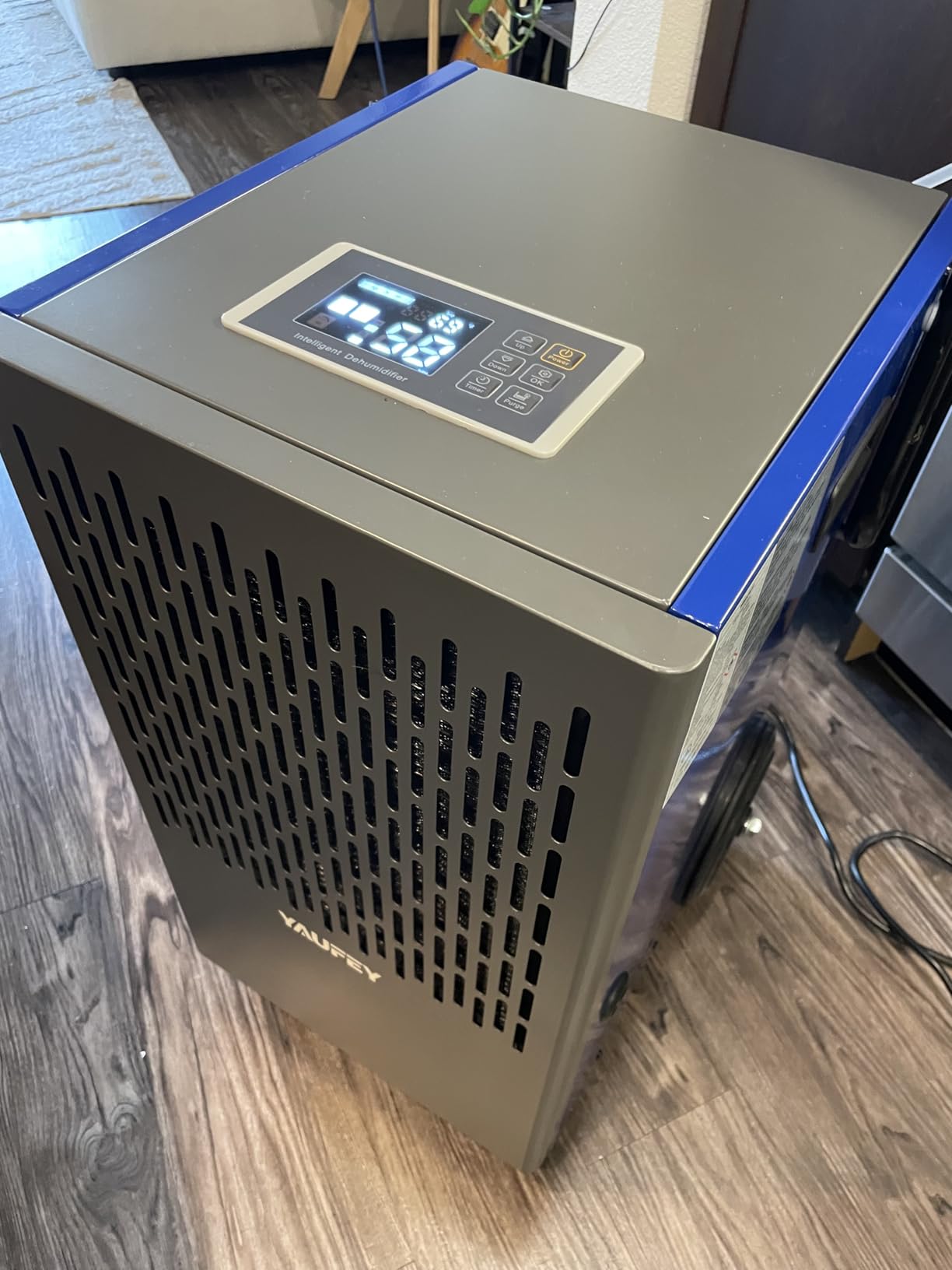
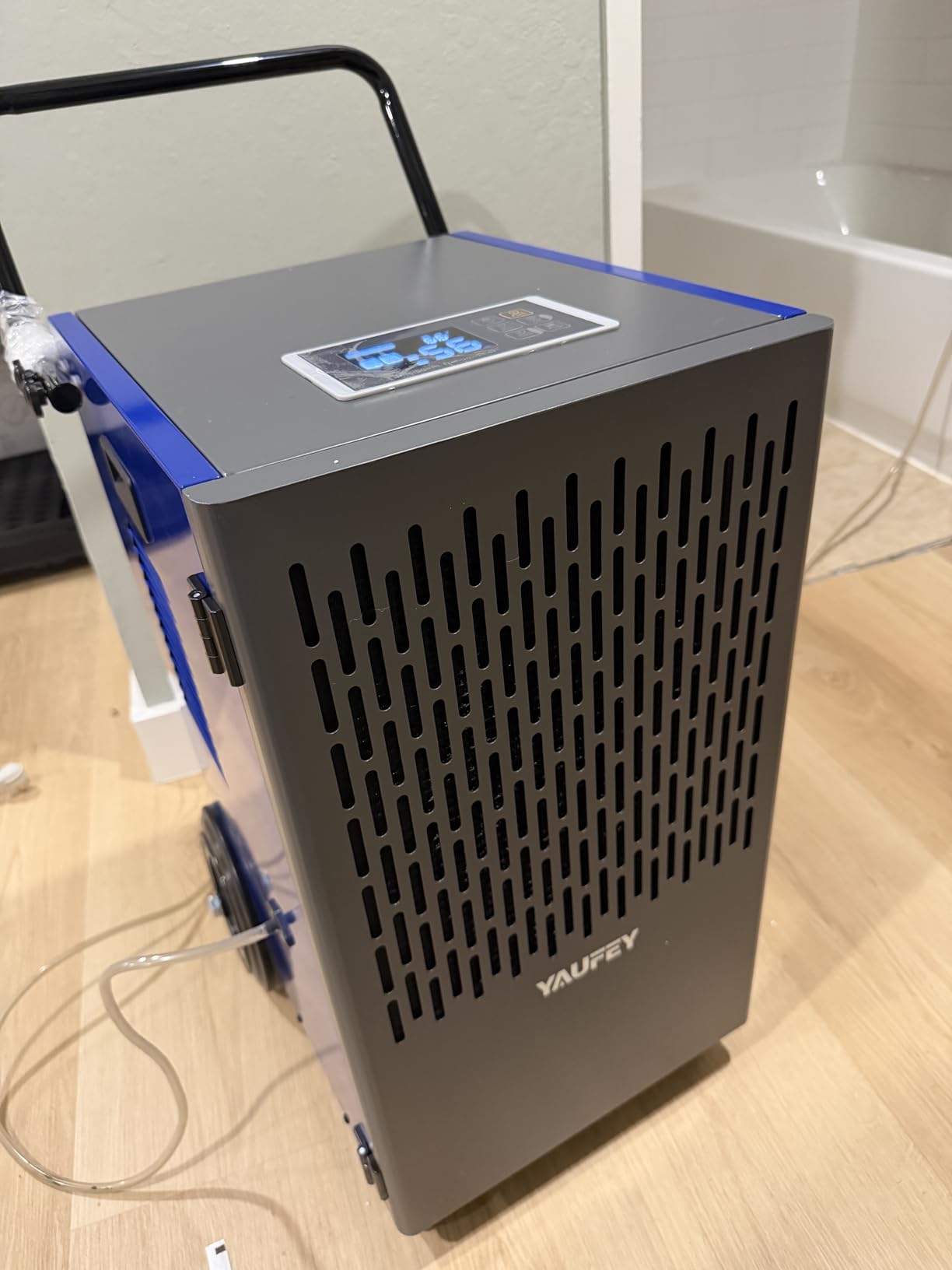
Yaufey built the unit for portable commercial use. The swivel casters plus oversized rear wheels plus push-pull handle make it easy to relocate the 79.4 pound unit between rooms. The 5-year compressor warranty plus lifetime technical support matches the more expensive Waykar commercial unit, and the washable filter keeps long-term consumable costs down. The pump purge function is a thoughtful addition that prevents stagnation in the drain line between cycles.
The honest weaknesses are around brand maturity and review depth. With only 121 reviews, the long-term reliability dataset is smaller than the 22,000+ reviews behind the Waykar 150 or the 797 behind the ALORAIR Storm LGR Extreme. Some users report less precise humidity readings than the premium units, so plan to verify with an external hygrometer. The lower sales rank (#515 in Dehumidifiers) means Yaufey has less aggregated field data than the established brands.
Who the Yaufey 155 Pint Commercial is best for
This is the right pick for caregivers running 4 to 12 lights, smaller commercial operators on a tight equipment budget, and any grower who wants commercial-grade specifications at a lower price point. If you operate a 1,000 to 2,000 square foot flower room and need 155 PPD extraction without paying the Waykar premium, this is the strongest value in our roundup. The 5-year compressor warranty and lifetime technical support make it a low-risk entry into commercial-grade dehumidification.
Who should look at a different model
If your facility requires the deepest long-term reliability dataset for risk-averse commercial planning, the Waykar 150 Pint or Moiswell Defender MP70 give you 200+ reviews on a similar price platform. For LGR technology in low-RH late-flower rooms, the ALORAIR Storm LGR Extreme is the stronger technical choice. If quiet operation matters, the AEOCKY RHEA-003 is meaningfully quieter at every setting. For warehouse-scale vertical farms over 5,000 square feet, the Moiswell Explorer VP240 is the right capacity tier.
How to Choose the Best Commercial Dehumidifier for Your Grow
Choosing the right dehumidifier for an indoor grow facility comes down to four questions: how much water does your canopy transpire, what humidity and VPD targets are you holding, what is the room’s airflow pattern, and how critical is redundancy. We will walk through each factor and give you the rules of thumb that licensed cultivators actually use in their facility design.
Sizing: 1 pint per pound of fresh plant matter
The simplest sizing rule is 1 pint per day of extraction capacity for every pound of fresh plant matter in the room. A 10×10 flowering canopy in late flower holds roughly 10 to 15 pounds of wet biomass, which means you need 10 to 15 PPD just to break even on transpiration. Add a 25 percent oversize factor for safety margin, and you are looking at 12 to 19 PPD minimum. This is why even a small flower room needs a 50 to 70 PPD commercial unit, not a residential 30 pint unit that will run continuously and fail within 18 months.
For a multi-room perpetual facility, you size each room independently and oversize each by 25 percent. A 4-room perpetual operation with 1,000 square feet per room needs 4 independent dehumidifiers, not one oversized unit trying to serve all four rooms. Reddit growers on r/macrogrowery consistently recommend two mid-size units per flower room for redundancy, which protects you from losing an entire crop if one unit fails during late flower.
VPD and dew point targets by growth stage
Vapor pressure deficit (VPD) is the difference between how much moisture the air can hold at a given temperature and how much it actually holds. Holding the right VPD window is what drives transpiration rate, nutrient uptake, and final flower density. The targets shift dramatically by growth stage, which is why a single humidity set point will hurt your yields.
For clones and seedlings, target 75 to 78 degrees F day temperature with 70 to 80 percent RH, 0.4 to 0.6 kPa day VPD, and 75 to 80 percent night RH. Vegetative rooms run 75 to 82 degrees F with 55 to 70 percent RH, 0.8 to 1.0 kPa day VPD, and 55 to 65 percent overnight. Early flower weeks 1 to 3 wants 75 to 82 degrees F with 55 to 65 percent RH, 0.9 to 1.1 kPa day VPD, and 50 to 60 percent overnight. Late flower weeks 4 to harvest drops to 70 to 78 degrees F with 45 to 55 percent RH, 1.2 to 1.4 kPa day VPD, and 45 to 50 percent overnight. The drying room holds 60 to 68 degrees F with 50 to 60 percent RH and a 0.6 to 0.8 kPa VPD with the same RH overnight.
Dew point is the temperature at which water vapor condenses on surfaces, and crossing the dew point is what causes bud rot even when room RH looks fine on your controller. If your room is at 78 degrees F and 55 percent RH, the dew point is roughly 60 degrees F. Any AC supply air or cool wall below 60 degrees F will condense moisture, which is why overhead ducting and AC placement matter as much as the dehumidifier itself.
LGR vs refrigerant technology
Standard refrigerant dehumidifiers use a compressor to chill an evaporator coil below the dew point, condense moisture out of the air, and reheat the air before returning to the room. They work efficiently down to roughly 50 percent RH, then efficiency drops off. LGR (Low Grain Refrigerant) technology uses a two-stage cooling process to extract moisture at lower grains of moisture per pound of air, which is exactly what you face in a late-flower room held at 45 to 50 percent RH.
The practical difference shows up in the late-flower room. A standard refrigerant unit pulling 85 PPD at AHAM will drop to 40 to 50 PPD at 45 percent RH room conditions, while an LGR unit will still pull 70+ PPD. For a late-flower room, that efficiency gap is the difference between staying ahead of botrytis risk and falling behind. For veg rooms and mother rooms held at 65 to 70 percent RH, standard refrigerant designs are perfectly efficient and less expensive.
Airflow, ducting, and placement
Airflow matters as much as extraction capacity. A 200 PPD dehumidifier with poor airflow will create dead zones in your canopy where humidity stays high, which is exactly where bud rot starts. Look for units with 150+ CFM for small rooms and 300+ CFM for warehouse-scale. Overhead ducting lets you pull dry air from the ceiling down across the canopy, which is the most efficient air pattern for sealed rooms. Floor units work fine for veg rooms and mother rooms where canopy density is lower.
Placement also affects how much heat the unit dumps into your room. All refrigerant dehumidifiers generate waste heat, which means your AC has to work harder. In warm climates like Southern California, growers on r/cannabiscultivation strongly prefer ducted overhead units so the heat can be exhausted outside the room. If you are running a floor unit in a sealed flower room, budget for an additional ton of AC capacity to handle the heat load. For related airflow and air quality guidance, our best air purifiers for indoor grow rooms guide covers carbon filtration and particulate removal that complements dehumidification.
Reliability, warranty, and maintenance
Reddit consensus is clear: commercial units from established brands like Quest, Anden, DryGair, and ALORAIR routinely last 8 to 12 years in 24/7 service, while consumer-grade units fail within 2 to 3 years under continuous duty cycles. The difference comes down to compressor quality, coil coating, and the ability to handle thousands of defrost cycles without failing. Gary Howard, an industry veteran quoted on Quest’s blog, recommends caregivers with 10 to 12 lights use two 225-pint units specifically to build in redundancy.
A simple maintenance routine extends commercial unit lifespan. Swap or wash the MERV filter monthly during heavy use. Inspect and clean the evaporator coil every 6 months, especially in veg rooms with high IPM residue. Check the condensate pump quarterly and verify the drain line is clear. Verify the onboard humidity sensor against an external hygrometer every 6 months and recalibrate if needed. For commercial growers in California, Title 24 compliance is a related concern, and the most efficient units in our roundup, particularly the AEOCKY RHEA-003, carry the ENERGY STAR Most Efficient 2025 certification that aligns with state energy code requirements.
Cost of ownership and energy efficiency
Sticker price is only one part of the math. A commercial dehumidifier running 24/7 consumes 5 to 13 kWh per day depending on capacity, which means 1,800 to 4,700 kWh per year per unit. At California’s commercial rate of roughly 25 cents per kWh, that translates to 450 to 1,200 dollars per year per unit in electricity. An ENERGY STAR Most Efficient unit like the AEOCKY RHEA-003 cuts that figure by roughly 50 percent compared to a standard residential unit, which pays back the price premium inside 18 months.
Pints per kWh is the metric that matters for operating cost. Commercial growers on r/macrogrowery target above 3.5 pints per kWh for an efficient unit. The AEOCKY RHEA-003, ALORAIR Storm LGR Extreme, and Waykar 155 all clear that bar. Cheaper consumer-grade units typically run 1.5 to 2.5 pints per kWh, which is why they look affordable upfront but cost more to operate over their shorter service life. If you are also managing water damage or commercial restoration projects outside your grow, our best commercial dehumidifiers for water damage guide covers the LGR-focused options that overlap with this category.
Frequently Asked Questions
Who makes the best commercial dehumidifiers for indoor grow facilities?
The three category leaders are Quest, Anden, and DryGair for industrial-scale facilities. For commercial-grade units accessible through Amazon, ALORAIR, Moiswell, Waykar, AEOCKY, and Yaufey dominate the market. Each brand offers different strengths: Quest and Anden lead on Title 24 energy compliance and reliability, DryGair leads on purpose-built grow-room design, and ALORAIR leads on LGR technology at lower price points.
How many pints per day do I need for my grow room?
Use the rule of 1 pint per day for every pound of fresh plant matter in the room, then oversize by 25 percent for safety margin. A 10×10 flowering room in late flower holds roughly 10 to 15 pounds of wet biomass, which means you need at least 12 to 19 PPD. For multi-room perpetual facilities, size each room independently and consider two mid-size units per room for redundancy rather than one oversized unit.
Are commercial grade dehumidifiers worth the higher cost?
Yes. Reddit consensus and field data show commercial units from Quest, Anden, DryGair, and ALORAIR last 8 to 12 years in 24/7 service, while consumer-grade units fail within 2 to 3 years under continuous grow-room duty cycles. The energy efficiency gap is also significant: a 3.5+ pints per kWh commercial unit cuts annual electricity cost by 40 to 50 percent compared to a residential unit, which pays back the price premium within 18 to 24 months for most operators.
What is the difference between LGR and standard refrigerant dehumidifiers?
Standard refrigerant designs use a single evaporator coil to condense moisture and work efficiently down to roughly 50 percent RH before efficiency drops off. LGR (Low Grain Refrigerant) technology uses a two-stage cooling process to extract moisture at lower grains of moisture per pound of air, which is exactly the conditions in a late-flower room held at 45 to 50 percent RH. For late-flower and drying rooms, LGR units pull 30 to 50 percent more water than standard refrigerant units at the same room conditions.
Is 70 percent humidity too high for flowering?
Yes. For early flower (weeks 1 to 3) target 55 to 65 percent RH with a VPD of 0.9 to 1.1 kPa. For late flower (weeks 4 to harvest) target 45 to 55 percent RH with a VPD of 1.2 to 1.4 kPa. Holding 70 percent RH through flowering creates conditions where bud rot (Botrytis) and powdery mildew can establish within 48 to 72 hours, particularly during lights-off transpiration spikes when humidity climbs another 5 to 10 percent above your daytime set point.
What is the best dehumidifier for a drying room?
For a drying room, prioritize low-temperature operation and LGR technology. The ALORAIR Storm LGR Extreme is the strongest purpose-built choice in our roundup, with reliable auto-defrost down to 36 degrees F and 210 CFM airflow for even drying. Run your drying room at 60 to 68 degrees F and 50 to 60 percent RH for the standard slow-dry protocol, which preserves terpenes and prevents both over-drying and mold. Avoid standard refrigerant units in drying rooms as they ice up at the low temperatures required.
Final Verdict: Which Commercial Dehumidifier Should You Buy?
After comparing 8 commercial dehumidifiers across extraction capacity, airflow, energy efficiency, warranty, and real-world reliability, the Moiswell Defender MP70 earns our top recommendation for the best commercial dehumidifier for indoor grow facilities in 2026. The 145 PPD extraction, 206 CFM airflow, 1 percent humidity precision, and 5-year compressor warranty hit the sweet spot for a mid-size commercial flower room, and the build quality matches the more expensive ALORAIR and Waykar units at a lower price point.
For most commercial cultivators, the buying decision comes down to room size and operating priorities. Boutique growers and caregivers should choose the AEOCKY RHEA-003 for the best energy efficiency and quietest operation. Warehouse-scale vertical farm operators running 5,000+ square feet should choose the Moiswell Explorer VP240 for unmatched capacity in a 115V platform. Late-flower and drying room operators should choose the ALORAIR Storm LGR Extreme for the LGR technology advantage at low humidity. Greenhouse hybrid operations should choose the Waykar 155 for the portable placement and dual drainage flexibility. Whatever you choose, plan for redundancy, oversize by 25 percent, and run a monthly filter swap and 6-month coil cleaning schedule to maximize service life. Your commercial dehumidifier is the single most important environmental control in your flower room, and the right unit protects more than your crop, it protects your entire operation.