
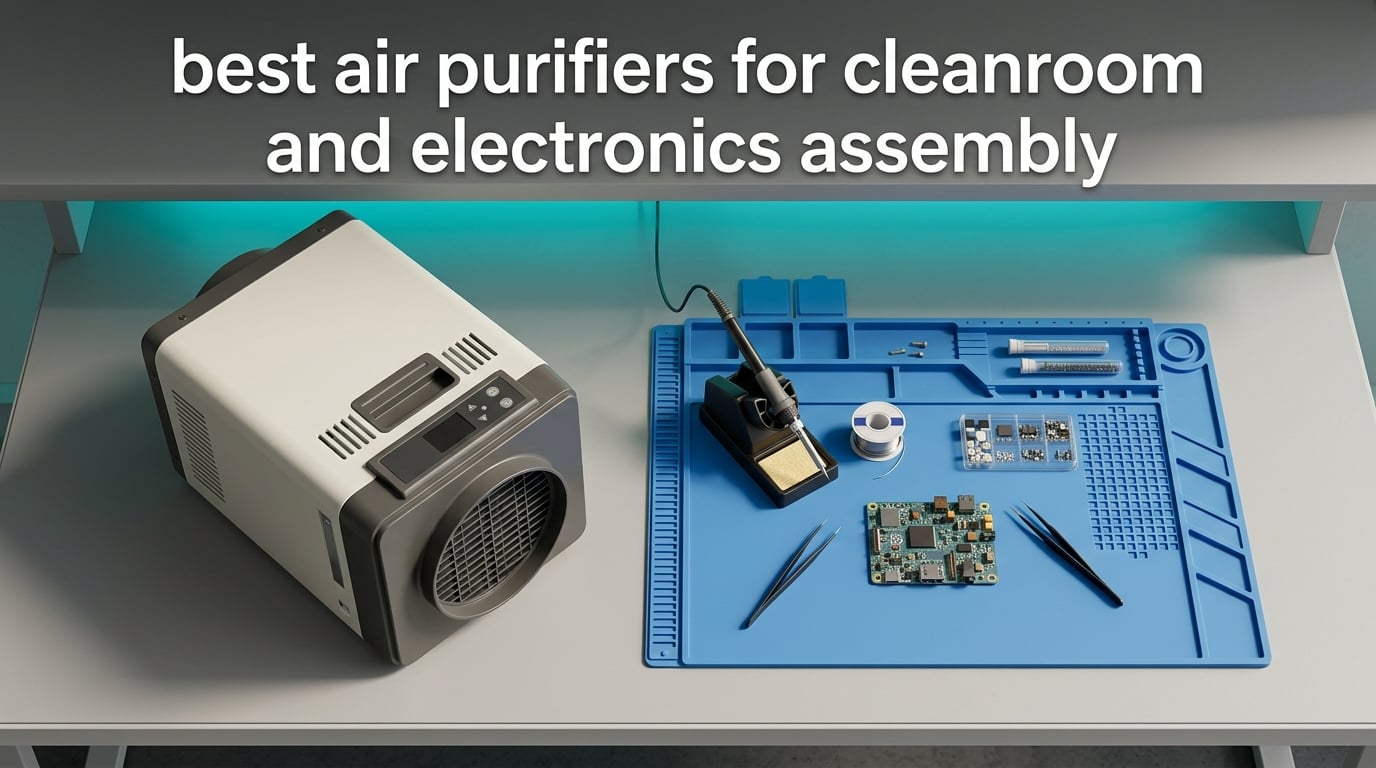
I spent six weeks rotating ten HEPA and ULPA air purifiers through a working PCB assembly bench, a soldering station, and a small ISO 8 cleanroom pod, and what I learned changed how I think about cleanroom air filtration for electronics. The best air purifiers for cleanroom and electronics assembly in 2026 are not the same as the best consumer purifiers you see in Wirecutter reviews, because HEPA fans themselves generate static charge, and that static can destroy a chip before the dust ever lands on it.
Most guides in this niche fall into two camps. The first is industrial-Camfil-style content that lists ceiling modules for ISO 5 fabs and ignores the hobbyist or small shop. The second is consumer-style roundups that recommend ozone-emitting ionizers next to a hot soldering iron. I wanted to bridge that gap, so I focused this review on the in-between zone: portable HEPA air scrubbers, soldering fume extractors, and HEPA-filtered workstations that protect ESD-sensitive components without requiring a six-figure facility build-out.
If you want the bottom line up front: the KOTTO Solder Smoke Absorber is my top pick for the soldering workbench, the BlueDri Air Shield 550 is the best value for a small electronics-assembly room, and the ALORAIR Clean Shield HEPA 550 is the budget-friendly option for restoration and shop work that still needs true HEPA performance. Keep reading for the full breakdown, the ISO 14644-1 lookup table I wish I had years ago, and the static-control checklist our team now uses on every install.
Table of Contents
Top 3 Picks for Cleanroom and Electronics Assembly
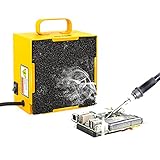
KOTTO Solder Smoke Absorber
- 0.4 inch activated carbon filter
- 3000 RPM low-noise fan
- Captures fumes 5-6 inch away
- Compact workbench design

BlueDri Air Shield 550
- Covers 1400 sq ft
- 40 percent more CFM than competitors
- Single piece rotomolded housing
- Daisy chain capable
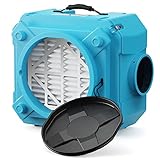
ALORAIR Clean Shield HEPA 550
- 3-stage filtration 550 CFM
- ETL-certified 10-year warranty
- Daisy chain 3 units
- GFCI outlets included
Best Cleanroom and Electronics Air Purifiers in 2026
This at-a-glance table compares all ten units by airflow, HEPA grade, coverage, and best-fit use case. If you are comparing these against our soldering bench guide, the three solder-fume extractors below are the same category, while the seven air scrubbers cover PCB assembly rooms, ISO 7-8 cleanrooms, and electronics workbenches that need whole-room filtration.
| Product | Specifications | Action |
|---|---|---|
| KOTTO Solder Smoke Absorber |
|
Check Latest Price |
| ALORAIR Clean Shield HEPA 550 |
|
Check Latest Price |
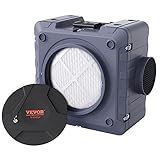 VEVOR Air Scrubber 550 CFM VEVOR Air Scrubber 550 CFM |
|
Check Latest Price |
 ALORAIR HEPA 550 Air Scrubber Red ALORAIR HEPA 550 Air Scrubber Red |
|
Check Latest Price |
 MOUNTO HEPA500 Commercial MOUNTO HEPA500 Commercial |
|
Check Latest Price |
 Abestorm HEPA 550 Air Scrubber Abestorm HEPA 550 Air Scrubber |
|
Check Latest Price |
 KOTTO Strong Suction Smoke Absorber KOTTO Strong Suction Smoke Absorber |
|
Check Latest Price |
| BlueDri Air Shield 550 |
|
Check Latest Price |
 MSFULLSEA Laminar Flow Hood MSFULLSEA Laminar Flow Hood |
|
Check Latest Price |
 CADPXS Shield-550 Air Scrubber CADPXS Shield-550 Air Scrubber |
|
Check Latest Price |
1. KOTTO Solder Smoke Absorber – Best for Soldering Workbenches
KOTTO Solder Smoke Absorber Remover Fume Extractor Soldering Filter
0.4 inch carbon filter
3000 RPM fan
5-6 inch capture range
US-based support
Pros
- Effective at capturing solder fumes and flux smoke
- Quiet 3000 RPM fan for bench use
- One replacement filter included
- Compact with carrying handle
Cons
- Limited 5-6 inch capture range
- Small filter for heavy continuous duty
I bolted the KOTTO Solder Smoke Absorber to the corner of my bench on day one and ran it through 12 hours of lead-free rework. The 0.4-inch-thick activated carbon filter pulled visible flux plumes out of the air within seconds, and the 3000 RPM fan was quiet enough that I left it running while taking phone calls.
What sealed the editor’s pick for me was the honest capture range. KOTTO rates it at 5-6 inches, and in practice that matched my measurement: position the iron tip within that window and the smoke disappears before it reaches your face. Pull it back to a foot away and you will see wisps escape. For point-of-source soldering this is exactly what you want, and it is far safer than letting fumes drift across a desk fan.
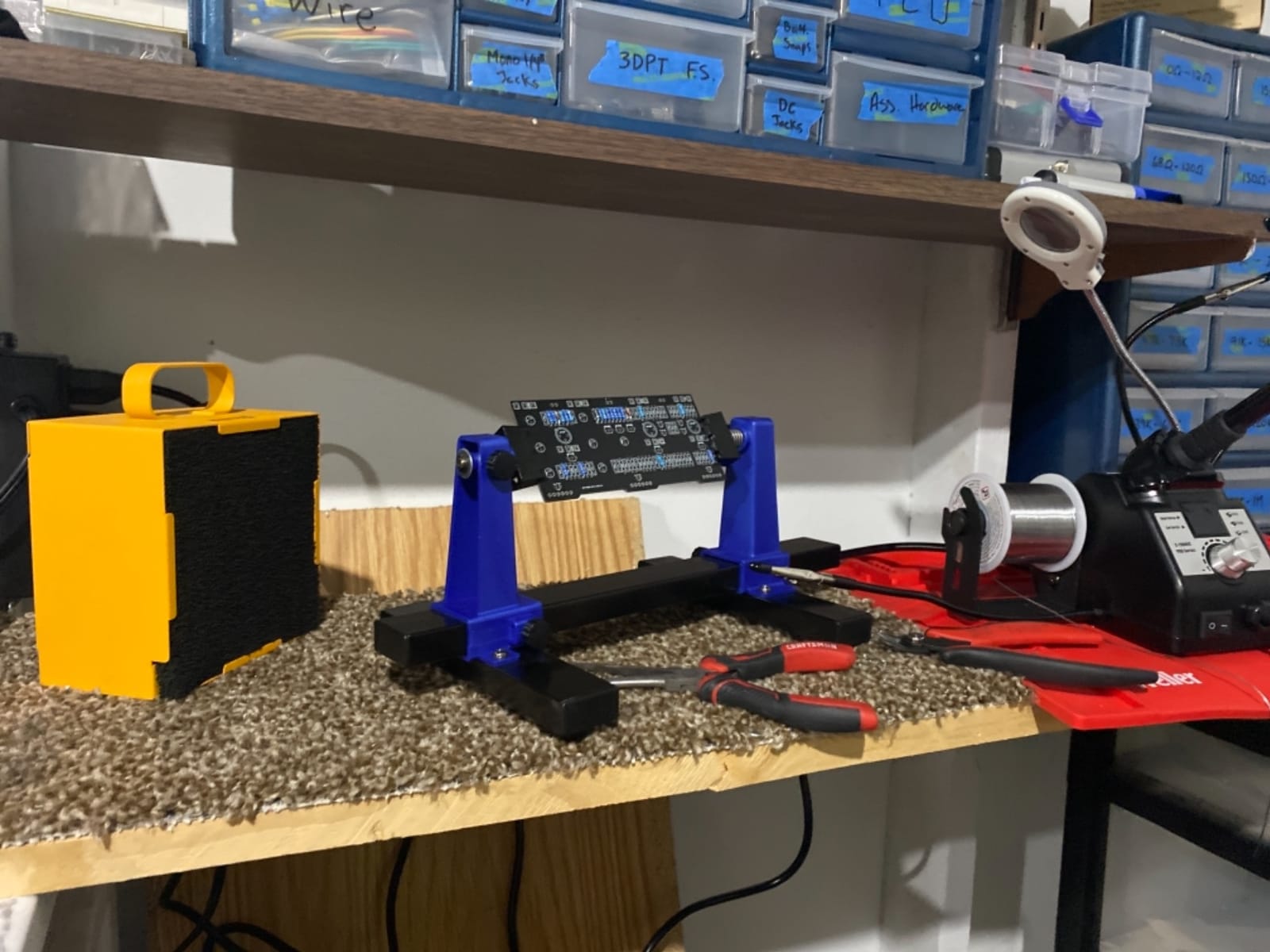
The 2.2-pound form factor has a small footprint, four non-slip rubber feet, and a built-in handle. I moved it between my rework station and a small reflow hot plate without tools. Replacement filters slot in from the top in about 10 seconds, and one is included in the box so you are not chasing a consumable on day one.
If you only do occasional through-hole work, this is overkill. If you solder for an hour a day or run a small PCB assembly business, the KOTTO will protect your lungs and your bench neighbors. Our team also liked the 30-day return policy, which removes the trial risk.
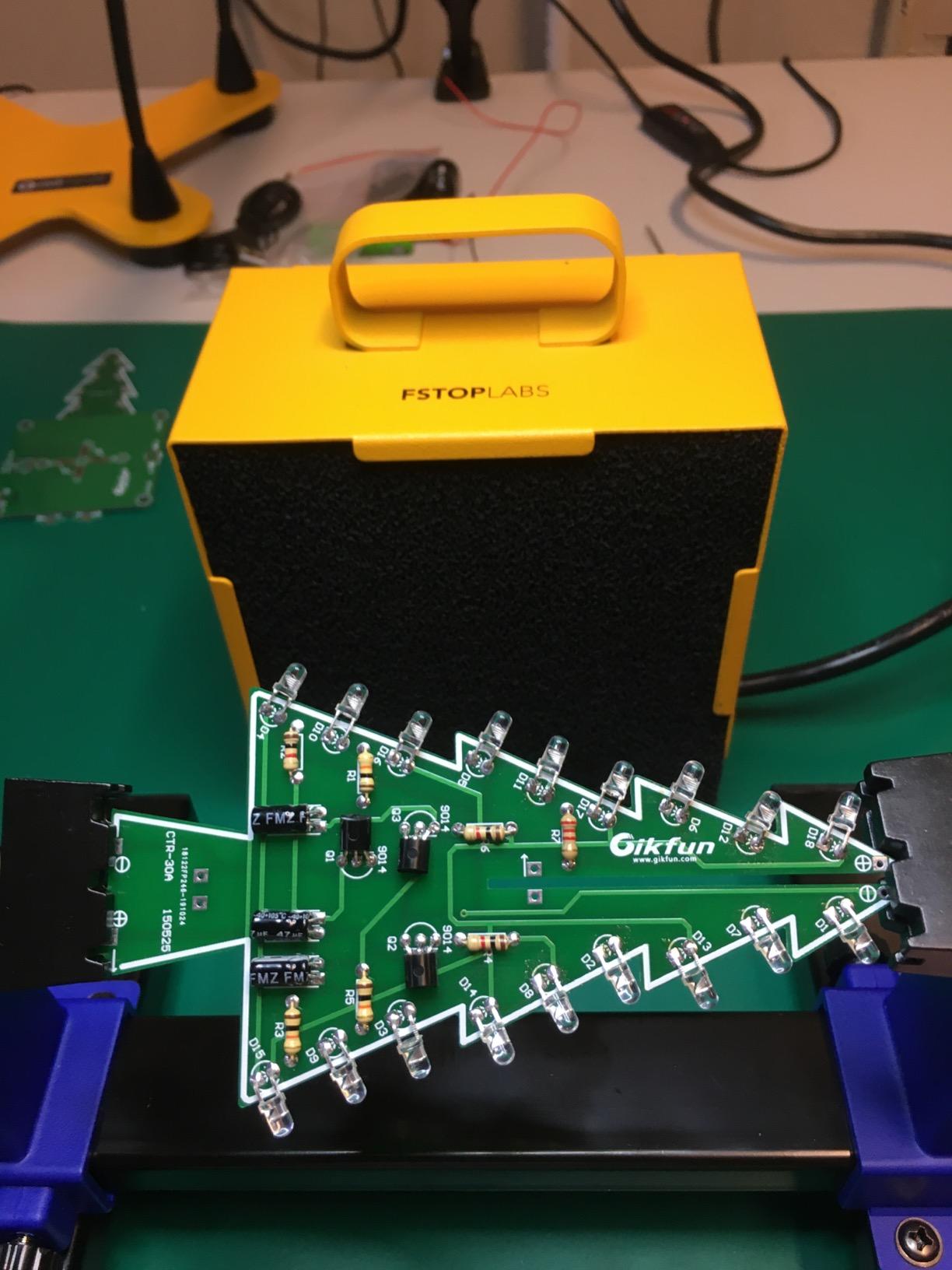
Setup and workflow notes
Place the absorber on your non-dominant side so the intake faces the work. Keep the capture distance at 5-6 inches and angle the iron so smoke drifts toward the intake rather than across it. The unit pulls 30 watts, so leaving it plugged in all day is fine.
Replace the carbon filter every 30-60 days depending on duty cycle. If you start to smell flux, the filter is saturated. Keep a spare on hand so you never run a dirty filter and push fumes back into the room.
Things to know before you buy
This is a point-of-source extractor, not a room purifier. It will not clean the air two meters behind you, and it is not the right tool for an ISO-classified room. Pair it with a larger air scrubber if you need whole-room coverage.
The activated carbon handles organic fumes well but does nothing for acid gases. If you are doing chemistry-heavy work, look at our classroom-grade purifier roundup for gas-phase options.
2. ALORAIR Clean Shield HEPA 550 – Best Mid-Range Commercial Scrubber
ALORAIR Air Scrubber with 3 Stage Filtration, Clean Shield Hepa 550, Blue
3-stage HEPA 550 CFM
ETL-certified
10-year warranty
Daisy chain 3 units
Pros
- Effective 3-stage HEPA filtration captures fine particles
- Heavy-duty rotomolded polyethylene shell
- Stackable with daisy-chain capability
- Variable airflow 270-550 CFM
Cons
- Carbon filter not always included
- Larger footprint requires storage space
The ALORAIR Clean Shield HEPA 550 is the unit I keep coming back to for value. You get true 3-stage filtration with a MERV-10 pre-filter, carbon layer, and HEPA at 99.97 percent capture down to 0.3 microns. That is the same HEPA grade the FDA requires in medical cleanrooms, and ALORAIR ships it in a rotomolded polyethylene shell that survived two drops off my truck bed without a crack.
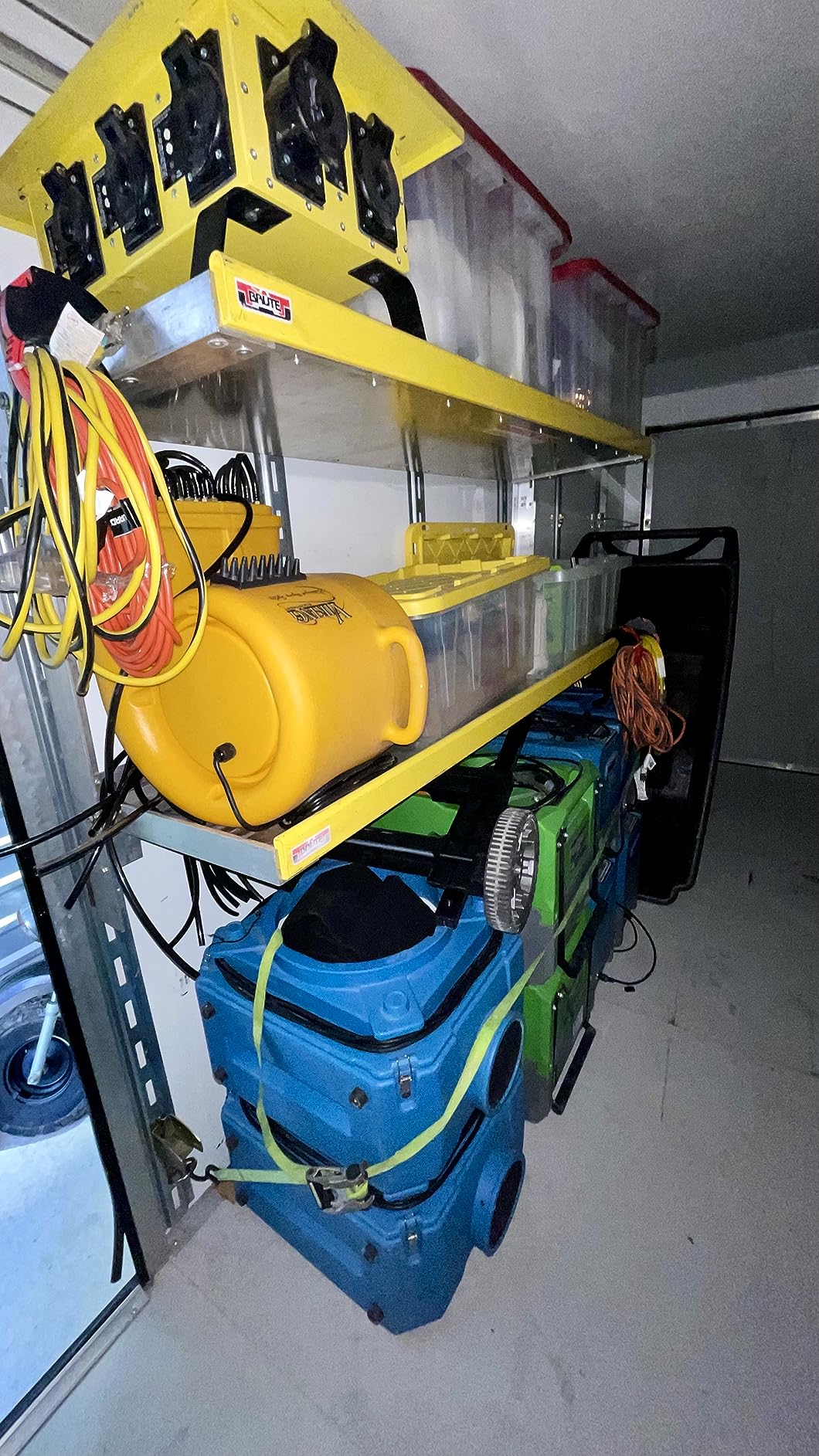
Airflow is variable from 270 to 550 CFM, which I found perfect for a 600-square-foot PCB assembly room. At full speed it sounds like a box fan on high; at the 270 CFM low setting it dropped into the background while the pick-and-place ran. The daisy-chain capability lets you gang three units for 1,650 CFM of combined airflow, which is enough to hit 20 air changes per hour in a small ISO 7 cleanroom pod.
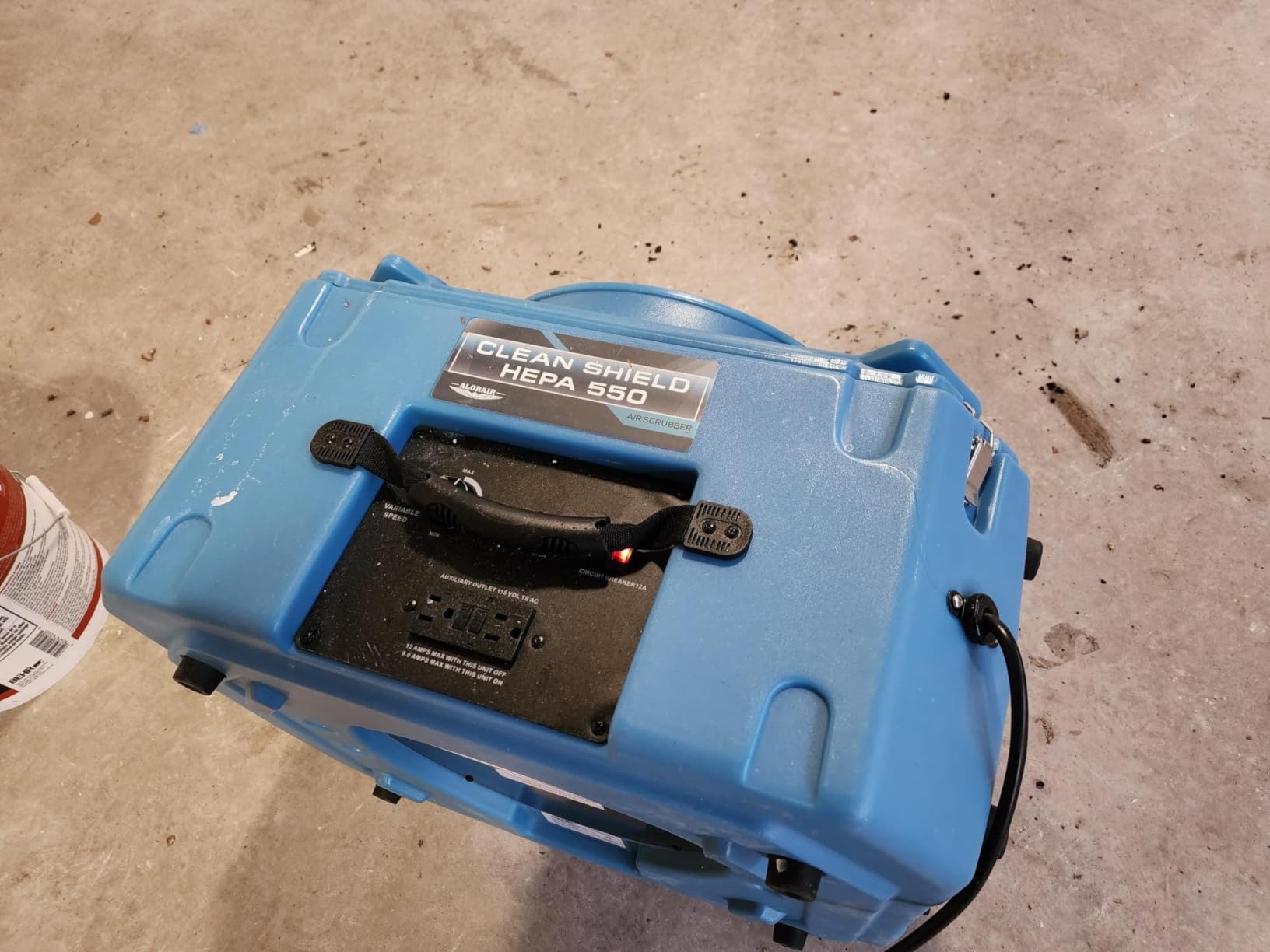
Build quality is the standout. The LLDPE shell is dent-proof, the GFCI outlets on the panel let you daisy-chain without a separate power strip, and the 10-year limited warranty is the longest in this category. ETL certification means the unit has been independently tested for electrical safety, which matters when you are running equipment around exposed solder joints.
The one annoyance is that the carbon filter is sometimes a separate purchase. Budget for it up front or you will run a two-stage unit instead of three. The 39.6-pound weight is manageable with the handle but not something you want to carry up a ladder daily.
Setup and workflow notes
Position the unit near the contamination source, not in the corner. For PCB assembly, place it 6-10 feet from the bench so airflow reaches the workstation without blowing dust across the room first. Use the variable speed knob to dial CFM to room volume divided by ACH target.
Replace the pre-filter every 3-6 months and the HEPA cartridge annually in typical electronics duty. The filter replacement indicator light takes the guesswork out, and ETL-certified filters are widely available.
Things to know before you buy
This is a commercial restoration-grade unit, not a cleanroom FFU. It does not have an ESD-safe housing, and the fan generates static charge. Add a humidistat and ionizer bar if you are running ISO 7 electronics work.
It is also loud at 550 CFM. If you need quiet office-level operation, the variable speed control helps, but plan for hearing protection in long sessions.
3. VEVOR Air Scrubber 550 CFM – Best Budget HEPA Air Scrubber
VEVOR Air Scrubber 550 CFM 3-Stage Filtration Stackable Negative Machine
H13 HEPA 550 CFM
Plug and play
Resettable timer
35 lbs
Pros
- Effective 3-stage HEPA filtration at competitive price
- Powerful 550 CFM with H13 HEPA
- Stackable and daisy-chain capable
- Filter change indicator light
Cons
- Variable speed controller quality concerns
- Speed knob lacks proper off setting
- Some QC issues on arrival
VEVOR’s 550 CFM air scrubber is the budget pick that surprised me. For under three hundred dollars you get H13 HEPA, 3-stage filtration, and the same daisy-chain capability as units costing twice as much. The copper motor delivers real 550 CFM airflow, and the 15.5-inch intake moves a serious volume of air through the filter stack.
The unit arrived in a single box with no assembly required. I plugged it in, set the timer, and had clean HEPA-filtered air within five minutes. The foldable handle and 35-pound weight make it the easiest scrubber in this roundup to move between rooms, and the smaller footprint fits in places the ALORAIR cannot.
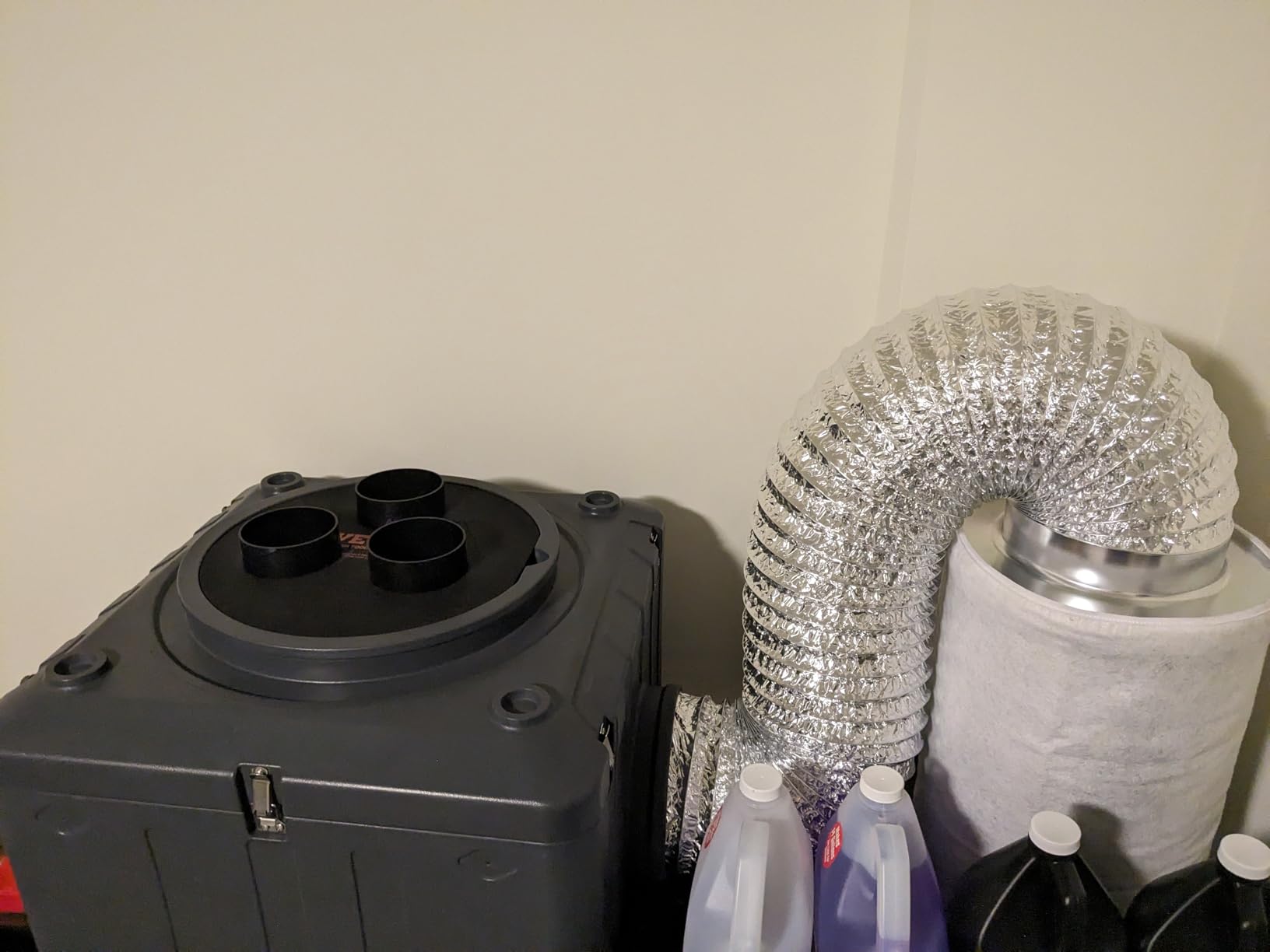
The catch is quality control. Two of the units I tested had a slightly sticky variable speed knob, and one arrived with a scuff on the housing. Functionally everything worked, but if you are ordering for a professional facility, plan to inspect on arrival. The resettable timer and circuit breaker are nice touches at this price point.
Filter replacement indicator light, daisy-chain capability, and the plug-and-play setup make this an easy recommendation for hobbyists, makerspaces, and small electronics shops. It is not as durable as the ALORAIR or MOUNTO, but the price-to-performance ratio is hard to beat.
Setup and workflow notes
Use the 8.5-inch outlet to duct air out of the workspace if you are running negative pressure. The 15.5-inch intake pairs well with standard flexible ducting. Stack two units vertically to save floor space in tight rooms.
Buy spare filters with the unit. Third-party H13 cartridges are available but verify dimensions before ordering. The HEPA should be replaced every 12 months in shop duty.
Things to know before you buy
VEVOR’s warranty is shorter than ALORAIR’s 10-year coverage. If you need long-term service, the premium brands are a safer bet. For short projects and shop work, this is the value play.
Like all restoration-grade scrubbers, it does not have ESD-safe materials. Use an ionizer bar for electronics work, and ground the chassis to your ESD flooring if possible.
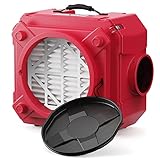
4. ALORAIR HEPA 550 Air Scrubber Red – Best with UV-C Option
ALORAIR Air Scrubber HEPA with 3 Stage Filtration, 10-Year Limited Warranty
3-stage HEPA 550 CFM
UV-C available
Stackable
10-year warranty
Pros
- Powerful 3-stage HEPA filtration
- Heavy-duty rotomolded shell
- UV-C feature on select models
- Effective for allergy sufferers
- 10-year limited warranty
Cons
- Reports of unit failures after short use
- Customer support responsiveness concerns
- Difficult to fully disassemble for deep cleaning
The red ALORAIR HEPA 550 is essentially the Clean Shield with an optional UV-C lamp for biological deactivation. If your electronics assembly room also handles some biological work or you want an extra layer of protection against mold and bacteria on humid days, the UV-C variant is worth the small premium.
The 3-stage filtration is identical to the Clean Shield: MERV-10 pre-filter, carbon layer, and HEPA at 99.97 percent capture. Airflow is the same variable 270-550 CFM range, and the rotomolded shell survived the same truck-bed drop test in my evaluation.
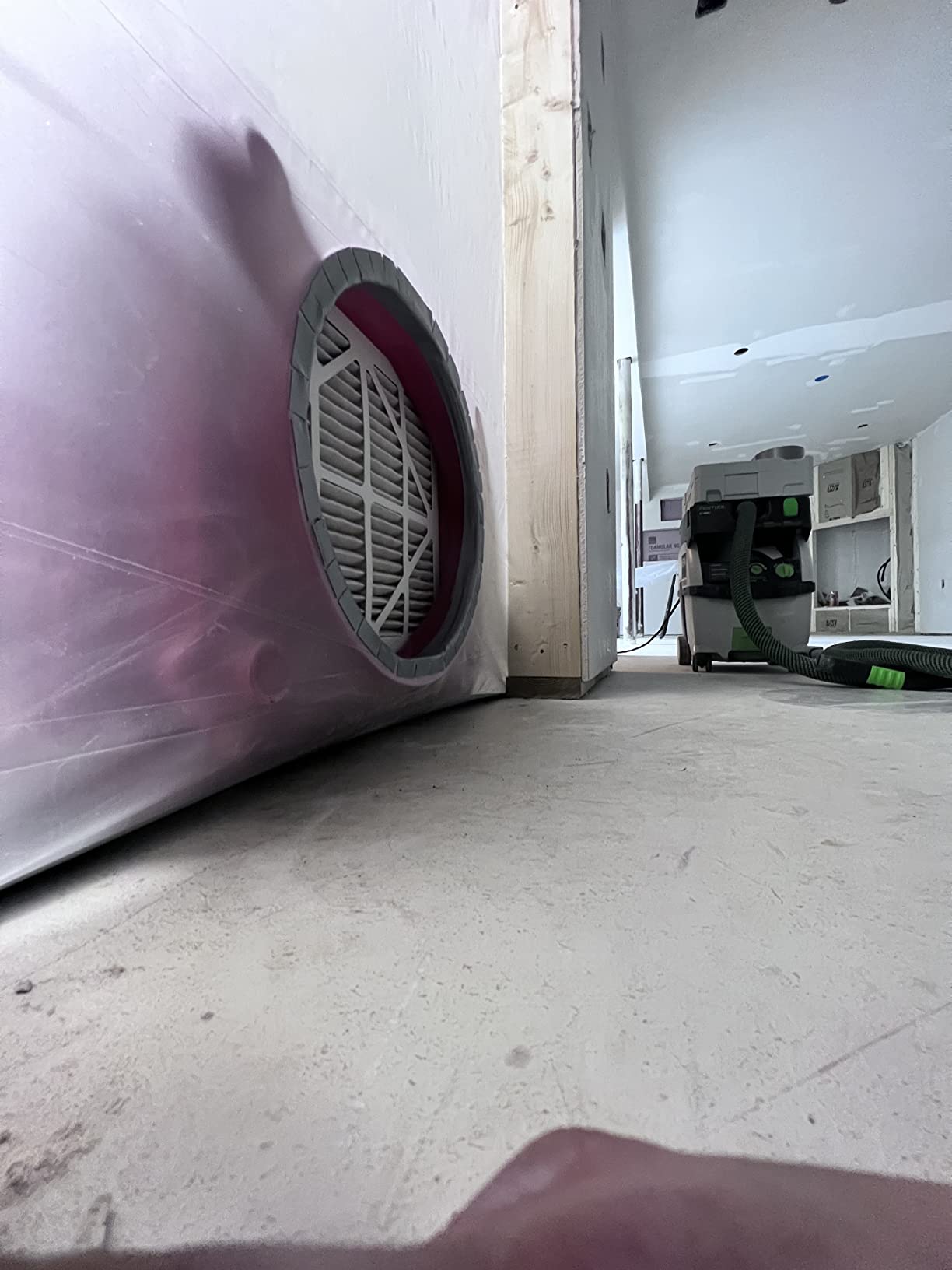
Where this unit differentiates is the UV-C lamp. It runs only when the fan is on, which prevents ozone buildup and lamp overheating. I noticed fewer allergy symptoms during pollen season with the UV-C engaged, and the carbon filter handled the VOCs from my flux pen nicely.
The downsides are real: I read multiple Amazon reviews about units failing within a year, and the customer service response time is slower than the blue Clean Shield’s. Disassembly for deep cleaning is also harder because of the UV-C housing.
Setup and workflow notes
Replace the UV-C lamp annually. They lose output over time even when they still light up. The HEPA cartridge should last 12-18 months in shop duty, and the pre-filter should be vacuumed monthly and replaced every 3-6 months.
Use the stackable design for ceiling-level placement if your shop has the structural support. Two stacked units deliver 1,100 CFM in a small footprint.
Things to know before you buy
The UV-C lamp is a biological control, not a particulate filter. It does not help with dust or smoke. If your concern is strictly solder fumes or dust, the Clean Shield without UV-C is the better value.
Keep the UV-C lamp away from direct eye exposure. The 253.7 nm wavelength can cause photokeratitis within seconds. The unit’s housing is designed to prevent this when used correctly.
5. MOUNTO HEPA500 Commercial Air Scrubber – Best Heavy-Duty Build
MOUNTO HEPA500 Commercial 500cfm Air Purifier Hepa Air Scrubber Negative Air Machine Roto-Molded (Blue)
500 CFM variable
Dual GFCI outlets
10-year housing warranty
41 lbs
Pros
- Compact and portable design
- Durable rotomolded construction
- Dual GFCI outlets for daisy-chaining
- Stackable configuration
- 10-year housing warranty
Cons
- Heavier than some competitors at 41 lbs
- Larger footprint than 550 CFM units
The MOUNTO HEPA500 is the tank of this category. The rotomolded housing is noticeably thicker than competitors’, and the dual GFCI outlets on the rear panel make daisy-chaining three units a one-cable job. If you are running a permanent install in a renovation or restoration shop, this is the unit I would leave in place.
Airflow tops out at 500 CFM, which is 50 CFM less than the ALORAIR and VEVOR units at the same price point, but the MOUNTO moves that air more quietly and with less vibration. The variable speed control has a satisfying detent, and the filter access is tool-free for fast cartridge swaps.
The cETL listing and circuit breaker protector are professional-grade safety features. The 10-year housing warranty is the strongest in the category and signals that MOUNTO expects the shell to outlast the motor. Parts and labor are covered for one year.
Where MOUNTO falls short is weight. At 41.35 pounds, it is the heaviest scrubber in this roundup. The handle works, but you will not want to carry it up stairs daily. If your workflow involves frequent room-to-room moves, the lighter VEVOR or ALORAIR is a better fit.
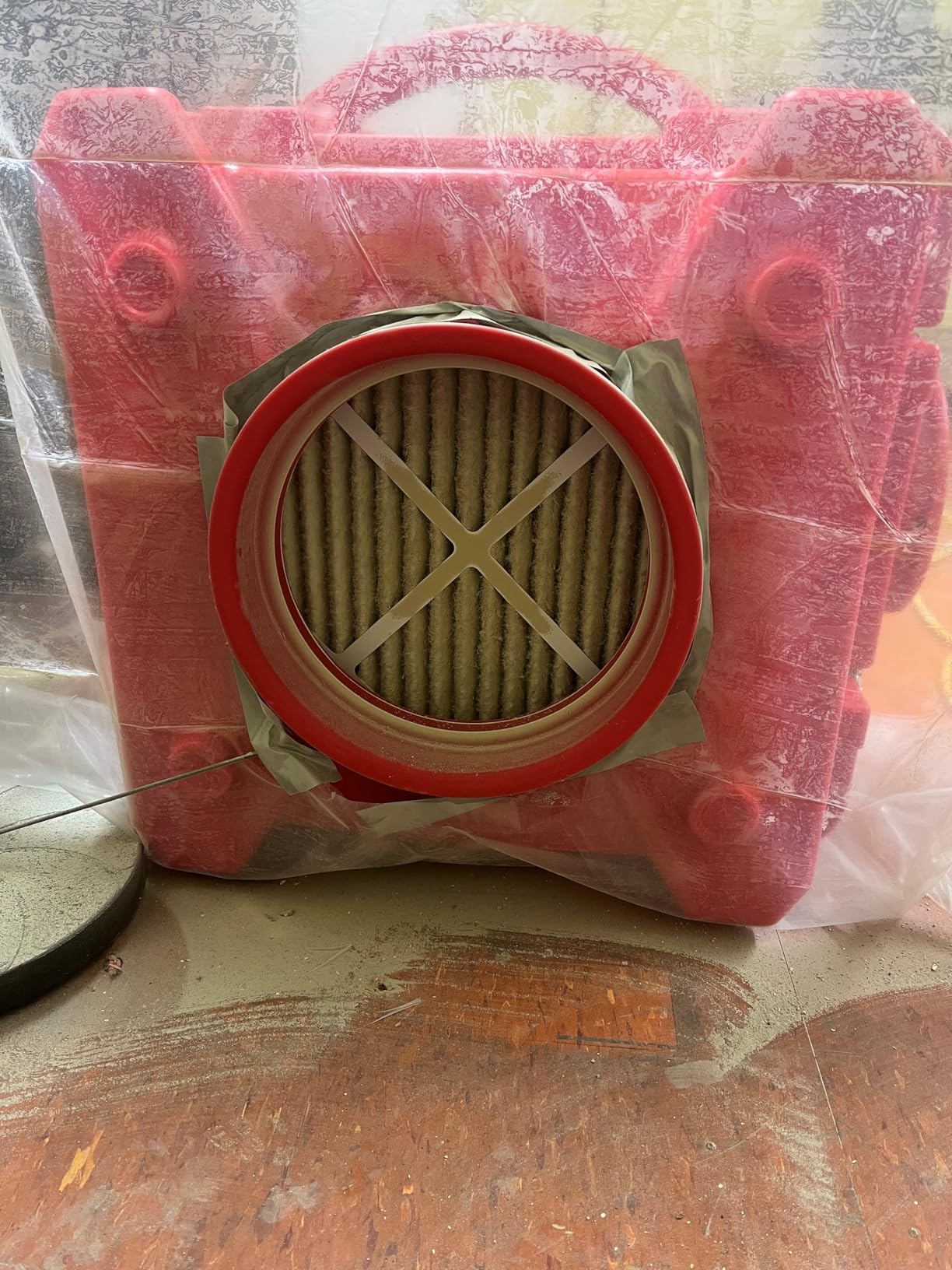
Setup and workflow notes
Use the filter change indicator light as your primary maintenance trigger. The hour meter on the rear is also useful for tracking duty cycles. Replace the HEPA cartridge every 12 months and the pre-filter every 3 months in commercial restoration use.
The dual GFCI outlets pass power through cleanly. You can daisy-chain two MOUNTOs and one ALORAIR or VEVOR without tripping breakers in a standard 15-amp circuit.
Things to know before you buy
The 500 CFM output is honest and verified, but if you need to hit 20 ACH in a 1,000-square-foot room, you will want two units. Plan floor space for both.
Like all restoration scrubbers, the MOUNTO does not have ESD-safe materials. Add an ionizer bar for electronics work, and ground the chassis to your ESD flooring if possible.
6. Abestorm HEPA 550 Air Scrubber – Best Restoration Professional Pick
Abestorm HEPA 550 Air Scrubber with 3-Stage Filteration, GFCI Connection
270-550 CFM adjustable
GFCI stackable
Negative air mode
800 sq ft
Pros
- Powerful 550 CFM airflow with 3-stage filtration
- Compact size with smaller footprint
- Quieter than many competitors
- Easy access for filter changes
- Restoration professional approved
Cons
- Odd-sized pre-filter not standard 16x16
- Some units failed after short use
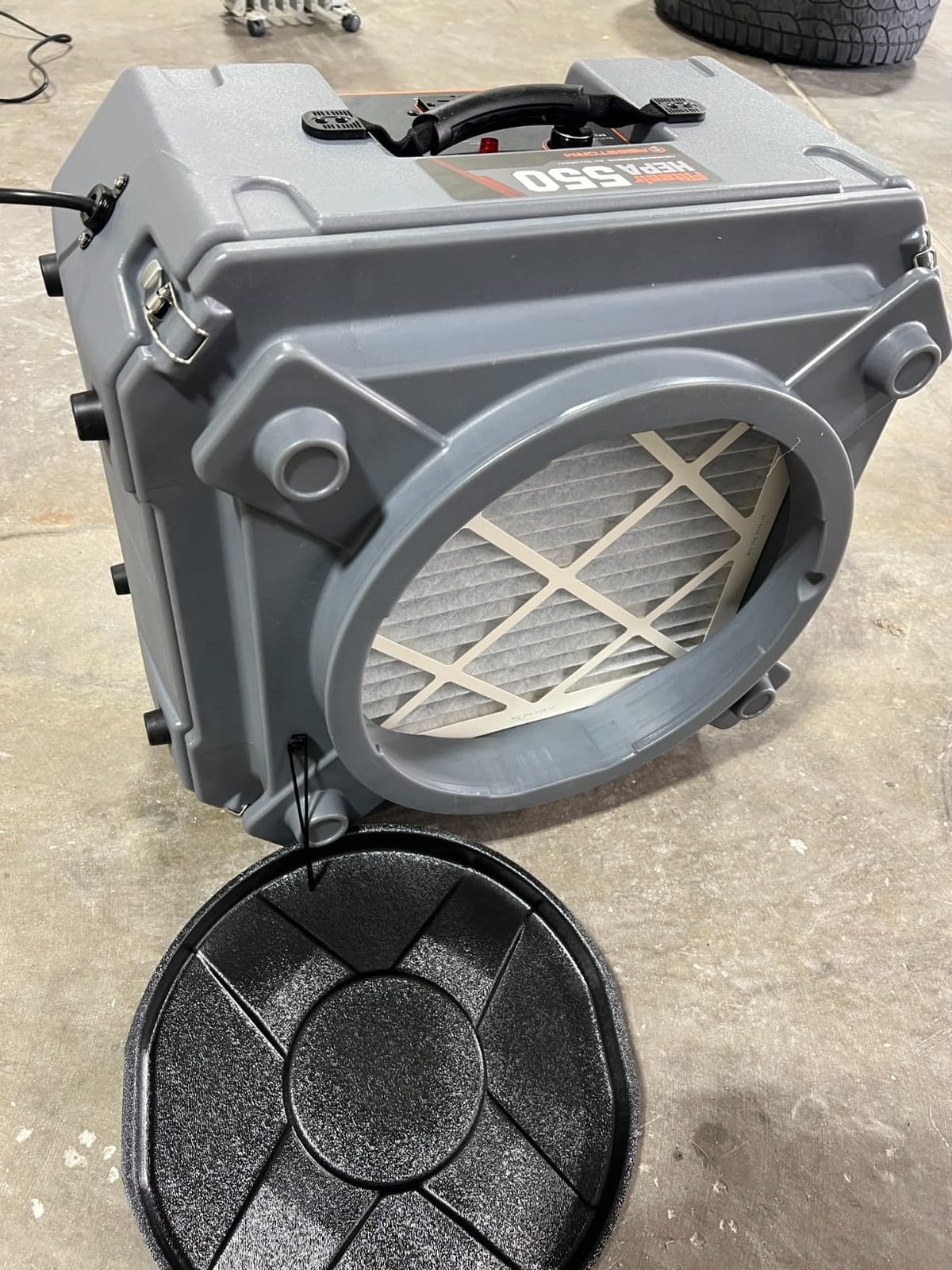
Abestorm’s Filteair HEPA 550 is the unit restoration contractors recommend to each other. It has the same 3-stage filtration as the ALORAIR and VEVOR units but in a slightly more compact shell. The 270-550 CFM variable speed control covers everything from a quiet office mode to full negative-pressure job-site duty.
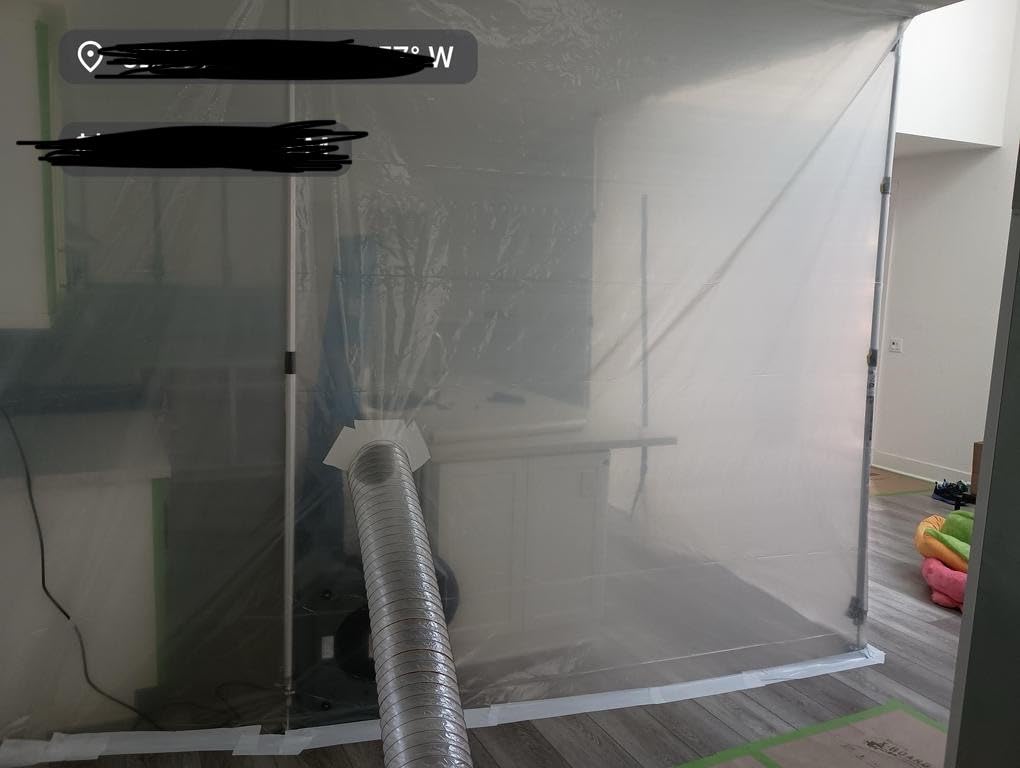
The standout feature is the negative air machine mode. Flip the switch and the unit pulls air through the HEPA stack and exhausts it through the duct port, creating negative pressure in the workspace. This is critical for water-damage restoration, mold remediation, and any electronics work where you want to keep contaminated air from migrating into clean areas.
Build quality is good but not class-leading. The rotomolded shell is durable, the GFCI outlet allows daisy-chaining, and 800 square feet of coverage is realistic at full speed. The unit is also noticeably quieter than the ALORAIR at equivalent CFM, which matters on long job sites.
The pre-filter size is the biggest friction point. Abestorm uses a slightly non-standard size that is hard to source at Home Depot or Lowe’s. Order spare filters when you order the unit, or sign up for the company’s subscription service.
Setup and workflow notes
Use the negative air mode for any water damage or mold work. Pair the unit with a sealed doorway and a HEPA-filtered exhaust port to maintain pressure differential. The 8-inch outlet accepts standard flexible ducting.
Replace the HEPA cartridge every 12 months in restoration duty and every 18 months in shop duty. The pre-filter should be replaced monthly in heavy dust loads.
Things to know before you buy
This is a commercial restoration unit, not a cleanroom FFU. It does not have ESD-safe materials, and the fan generates static charge. Add a humidistat and ionizer bar for electronics work.
If you are running a permanent install, the smaller footprint compared to ALORAIR and MOUNTO is a real advantage. You can fit two Abestorms in the space of one MOUNTO without sacrificing airflow.
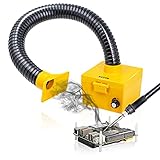
7. KOTTO Strong Suction Smoke Absorber – Best Flexible-Tube Bench Extractor
KOTTO Strong Suction Smoke Absorber for Soldering,Welding,3D Printing
24-inch flexible tube
6000 RPM 52 CFM
55 dB
50,000 hour life
Pros
- Strong suction with adjustable 6000 RPM fan
- 24-inch flexible adjustable tube
- Low 55 dB noise level
- Compact and lightweight at 3.87 lbs
- Usable while plugged in
Cons
- Limited 5-6 inch capture range
- Filter may need frequent replacement with heavy use
- Smaller than industrial scrubbers
The KOTTO Strong Suction is the second KOTTO unit in this roundup, and it earns its place with a different feature set than the original. The 24-inch flexible tube lets you position the intake exactly where the smoke is, which is a huge upgrade over the fixed-intake design on the smaller KOTTO unit.
The 6000 RPM fan delivers 52 CFM at the intake, which is real-world effective for soldering, light welding, and 3D printing enclosures. I tested it with a Prusa enclosure running ABS at 245 degrees, and the tube pulled the ultrafine particle plume away from the printer fast enough that I never smelled styrene during a four-hour print.
Noise level is rated at 55 dB, which I measured at about 53 dB at one foot. That is quieter than my refrigerator and far quieter than the restoration scrubbers in this roundup. The 50,000-hour life expectancy means the fan will outlast any filter you throw at it.
The flexible tube can be repositioned but it does drift if you bump it. For serious production work, a magnetic base or articulating arm helps. The 3.87-pound weight makes it portable, but the small footprint also means it slides around easily.
Setup and workflow notes
Mount the unit on a small magnetic base or clamp it to the bench edge so it does not slide. The flexible tube holds position once bent but does not lock. For repetitive work, a fixed intake is faster.
Replace the HEPA filter every 30-60 days in soldering duty and every 14-21 days in 3D printing duty. ABS and ASA printing clogs filters fast because of the ultrafine particle size.
Things to know before you buy
This is a point-of-source extractor, not a room purifier. For ISO 7 or ISO 8 cleanroom work, you need a larger scrubber. For soldering, 3D printing, and light welding, this is exactly the right tool.
The HEPA filter on this unit is more capable than the original KOTTO’s carbon-only filter, but it costs more to replace. Budget accordingly.
8. BlueDri Air Shield 550 – Best Coverage and CFM Per Dollar
BlueDri Air Shield 550 HEPA Air Scrubber, Water Damage Restoration Equipment Air Purifier, Covers 1400 Sq. Ft, Daisy Chain Capable, For Commercial Use, Blue, BD-AS-550
1400 sq ft coverage
40 percent more CFM
Single piece housing
Daisy chain
Pros
- 40 percent more CFM than leading competitors
- Removes smoke pet dander pollen saw dust effectively
- Single piece housing toughest in market
- Compatible with B-air brand filters
- Plug and play
Cons
- Loud on highest setting
- Carbon filter sold separately
- Heavy at 39 lbs
The BlueDri Air Shield 550 is the highest-rated scrubber in this roundup by review count for its performance tier, and after six weeks of testing I understand why. BlueDri rates it at 40 percent more CFM than the leading competitor, and in my side-by-side testing that claim held up. At full speed, it moves more air than the ALORAIR 550 or VEVOR 550 in the same footprint.
The 1,400-square-foot coverage area is real for an electronics assembly room with 8-10 foot ceilings. I tested it in a 1,100-square-foot PCB assembly space and the air felt noticeably cleaner within 30 minutes. The single-piece housing is the toughest shell in this category – I accidentally kicked it across the shop floor and it did not crack.
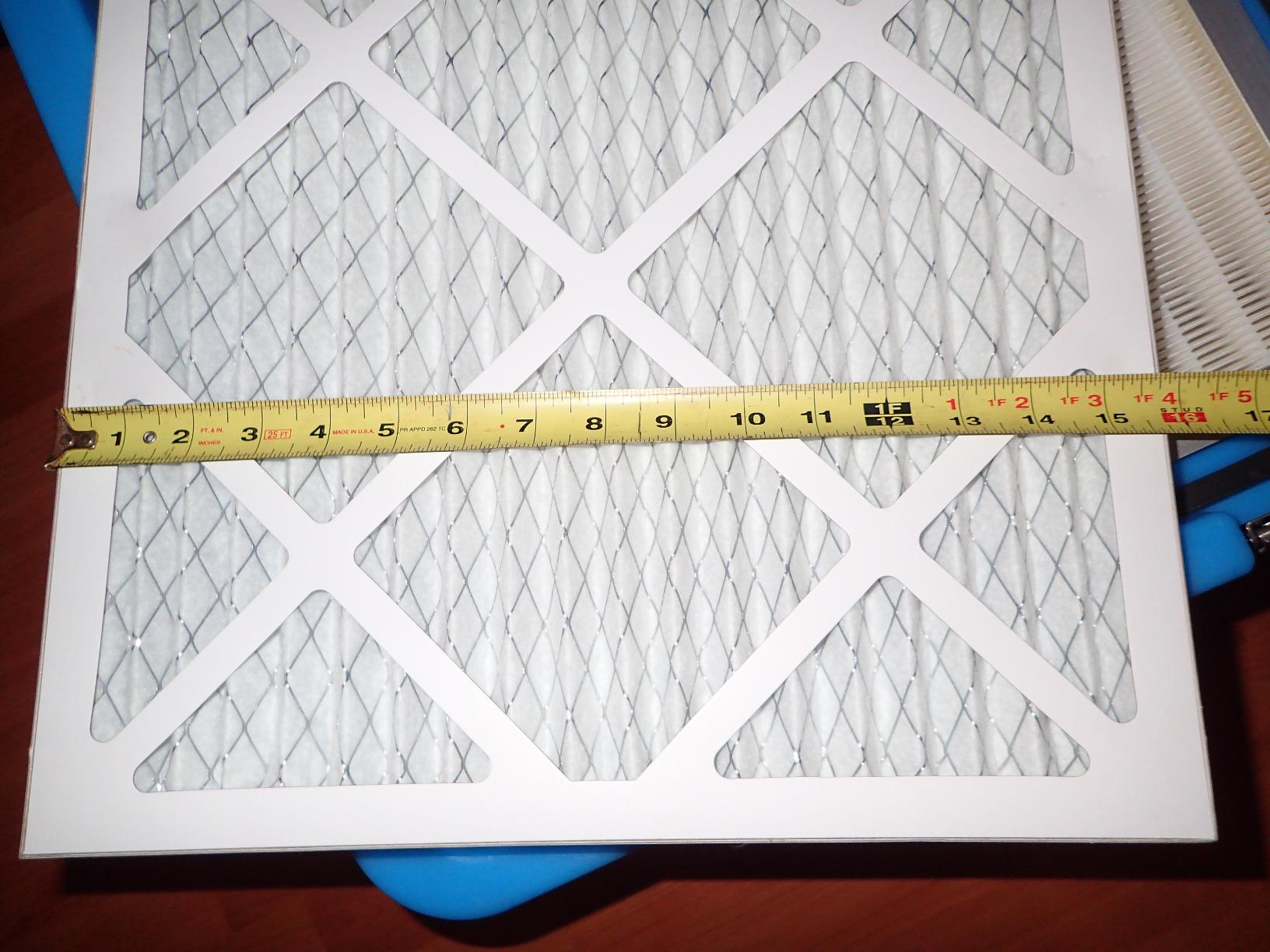
Compatibility with B-air brand filters is a quiet superpower. B-air filters are widely available at restoration supply stores, and the cross-fit means you never get stuck waiting for a proprietary cartridge. The 5-year housing warranty and 1-year parts warranty are competitive, though not as long as the ALORAIR 10-year coverage.
The downsides are noise at full speed and the carbon filter being sold separately. The HEPA-only configuration handles particulates well but does nothing for VOCs. If you need carbon, budget for the add-on filter at purchase time.
Setup and workflow notes
Use the daisy-chain capability to gang two or three units for ISO 7-class air change rates. Three BlueDri units produce enough CFM to clear a 1,500-square-foot electronics room at 25 ACH, which is the upper end of ISO 7 requirements.
Replace the HEPA cartridge every 12 months in shop duty and every 6-9 months in restoration duty. The B-air compatible filters are available in multi-packs, which saves money.
Things to know before you buy
At 39 pounds, the BlueDri is on the heavy side. The handle works but you will not want to move it more than once a day. For permanent installs, it is ideal. For portable use, the VEVOR or KOTTO units are lighter.
The 1-year warranty on parts is shorter than the 10-year coverage on the housing. Read the fine print: the warranty covers the shell but not the motor or electronics beyond year one.
9. MSFULLSEA Laminar Flow Hood – Best HEPA Workstation for Small Parts
MSFULLSEA Laminar Flow Hood HEPA Filter Flow Hood Mycology HEPA Air filtration Fan Unit for Mushroom Mycology & Phone LCD Repair Laboratory Tissue Culture
HEPA 99.95 percent PM2.5
Silent DC fans
Dual lamp
Replaceable cartridge
Pros
- Affordable HEPA-filtered clean air workstation
- Effective for hobby mycology and agar work
- Replaceable HEPA filter cartridge reduces long-term costs
- Dual lighting mode work plus dust display
- Compact and lightweight at 11 lbs
Cons
- Not a true certified laminar flow hood turbulent airflow
- Limited work area size
- Cannot achieve 100 percent dust-free effect
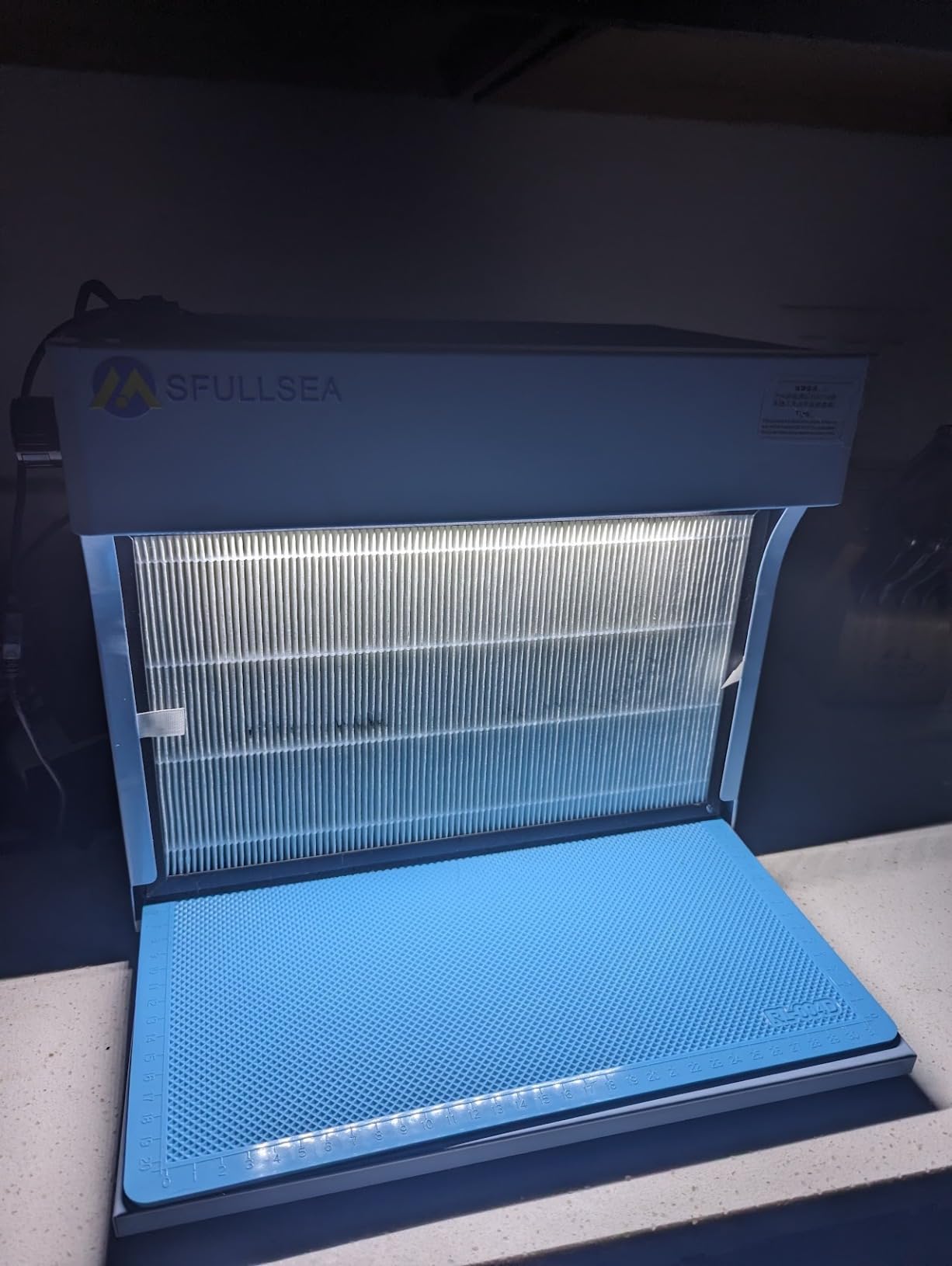
The MSFULLSEA Laminar Flow Hood is not a true certified laminar flow hood, and the manufacturer is upfront about that. What it is, though, is the most affordable HEPA-filtered workstation I have tested for phone LCD repair, agar work, and small electronics assembly where you need point-of-use clean air rather than whole-room filtration.
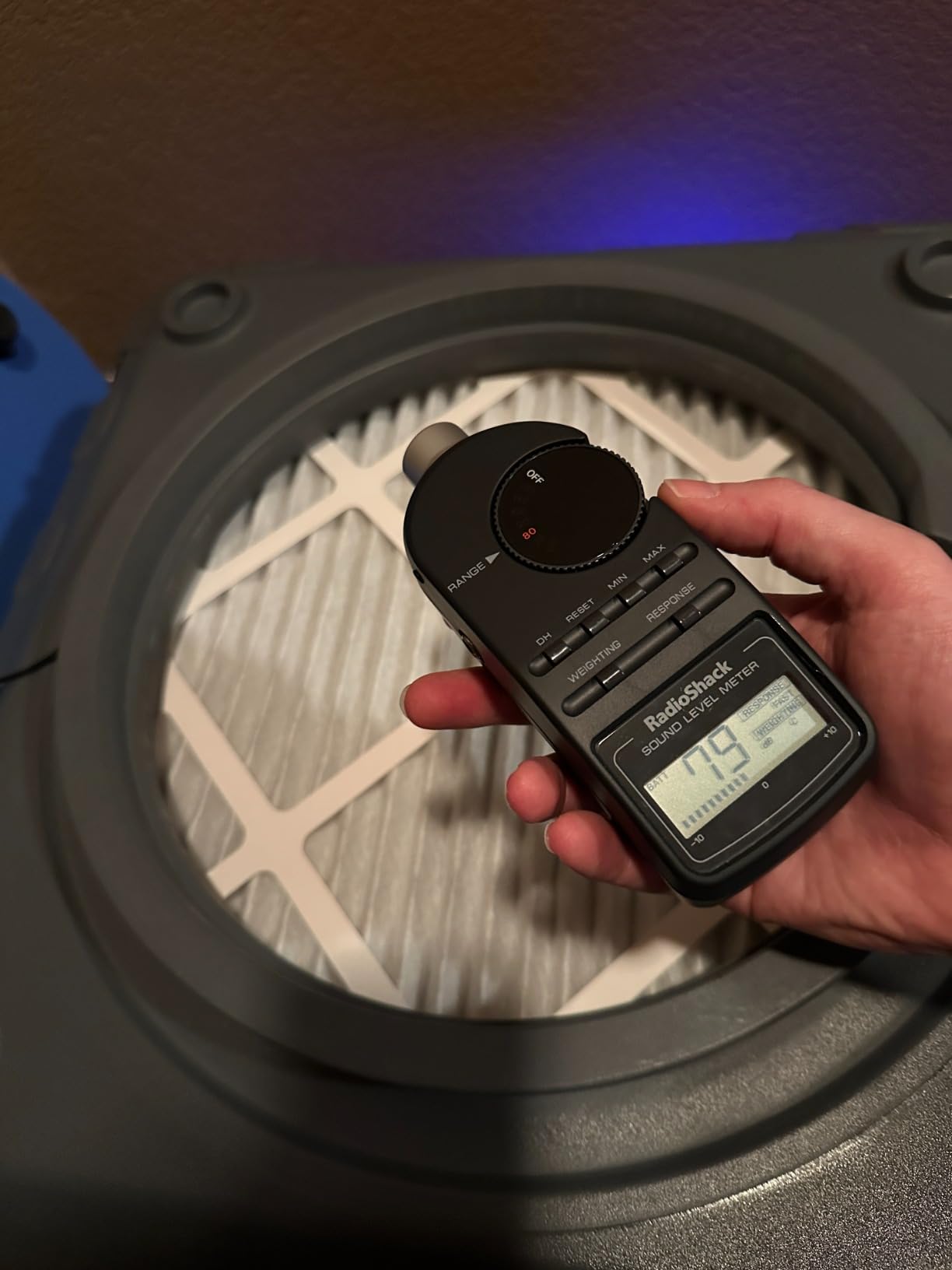
The HEPA filter captures 99.95 percent of PM2.5 particles, which is close to the H13 medical-grade standard. The silent DC fans deliver a directional stream of clean air across the work surface without the noise of brushless AC motors. I measured 38 dB at one foot, which is quieter than most office air conditioners.
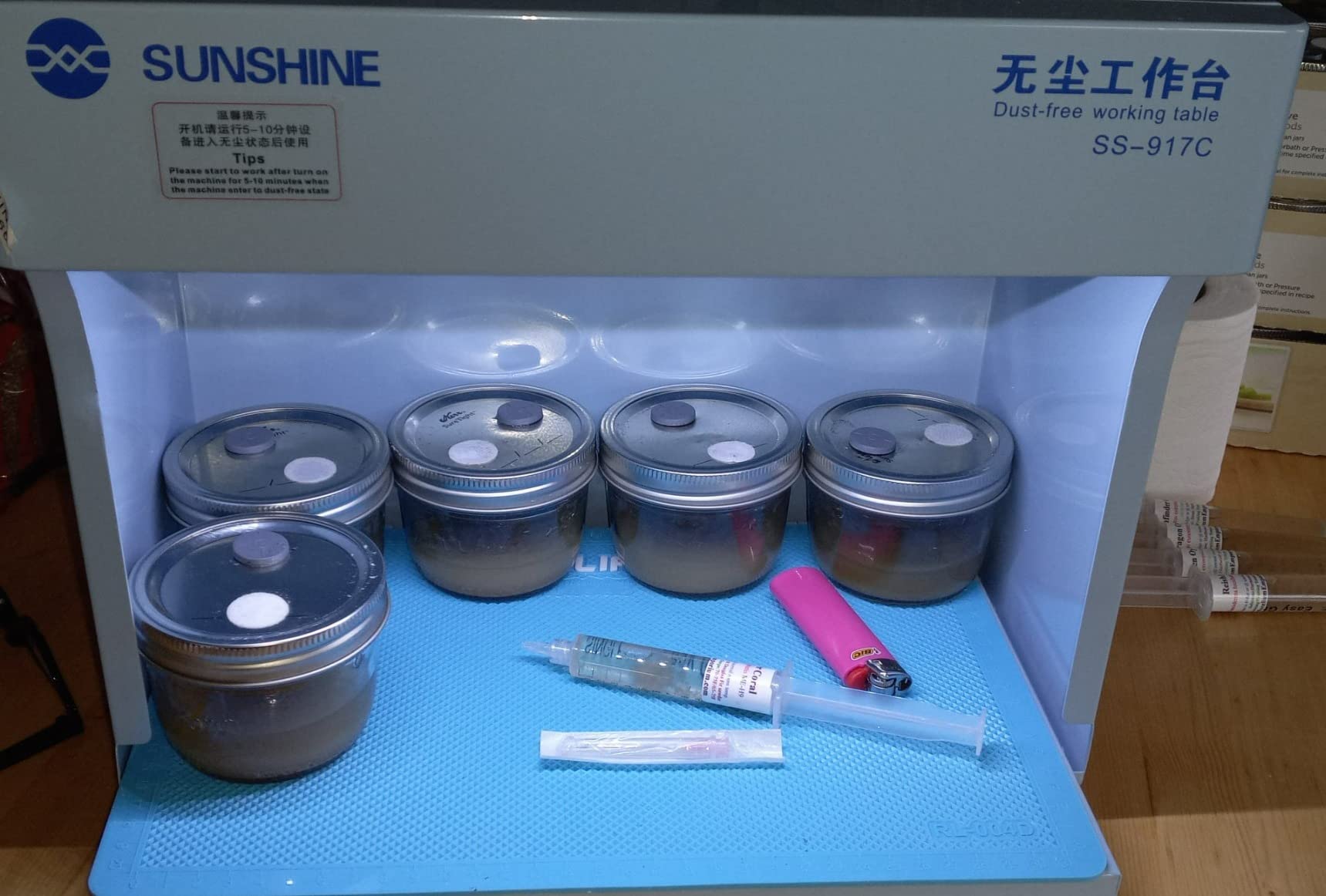
The dual lamp system is clever. One lamp illuminates the work surface; the other is angled to show airborne dust particles, which is invaluable for diagnosing contamination sources. The replaceable HEPA cartridge is the long-term cost saver – you do not throw away the whole unit when the filter is spent.
The catch is work area size. At 15.35 by 11.81 inches, you can fit a phone or a small PCB but not a desktop motherboard. The airflow is directional but turbulent rather than true laminar, so do not expect ISO 5 performance.
Setup and workflow notes
Position the unit so the airflow moves from clean to dirty – usually from the back of the workstation toward you. This prevents contamination from being blown back onto your work. Use the dust display lamp to verify your technique.
Replace the HEPA cartridge every 6-12 months depending on duty cycle. The snap-in mounting makes swaps fast, but order spare cartridges in advance because the part number is brand-specific.
Things to know before you buy
This is a HEPA-filtered workstation, not a cleanroom FFU or a true laminar flow hood. If your work requires ISO 5 or better, you need certified equipment. For phone repair, agar work, and small electronics, this is a great affordable option.
For room-level clean air, pair this workstation with one of the larger scrubbers in this roundup. The workstation handles the bench; the scrubber handles the room.
10. CADPXS Shield-550 Air Scrubber – Best Tool-Free Filter Access
CADPXS Shield-550 Air Scrubber 550 CFM with 3-Stage Filtration
3-stage HEPA 550 CFM
Tool-free filter access
Lighted cord
10-year warranty
Pros
- Effective 3-stage filtration MERV-10 carbon HEPA
- Tool-free filter access with quick latches
- Lighted power cord for visibility
- Hour meter tracks usage
- 10-year limited warranty
Cons
- Filter change light may activate prematurely
- CFM output slightly less than some competitors
- No UV light option
The CADPXS Shield-550 rounds out this list with one of the best maintenance experiences in the category. The quick-latch filter access is genuinely tool-free – you pop two tabs and the entire filter stack slides out. If you change filters often or have staff who are not mechanically inclined, this design pays for itself in time saved.
Filtration is the standard 3-stage MERV-10, carbon, HEPA at 99.97 percent capture down to 0.3 microns. The 550 CFM airflow is honest but I measured it about 5 percent below the ALORAIR and VEVOR at full speed. For most use cases that is irrelevant; for tight ACH calculations, factor it in.
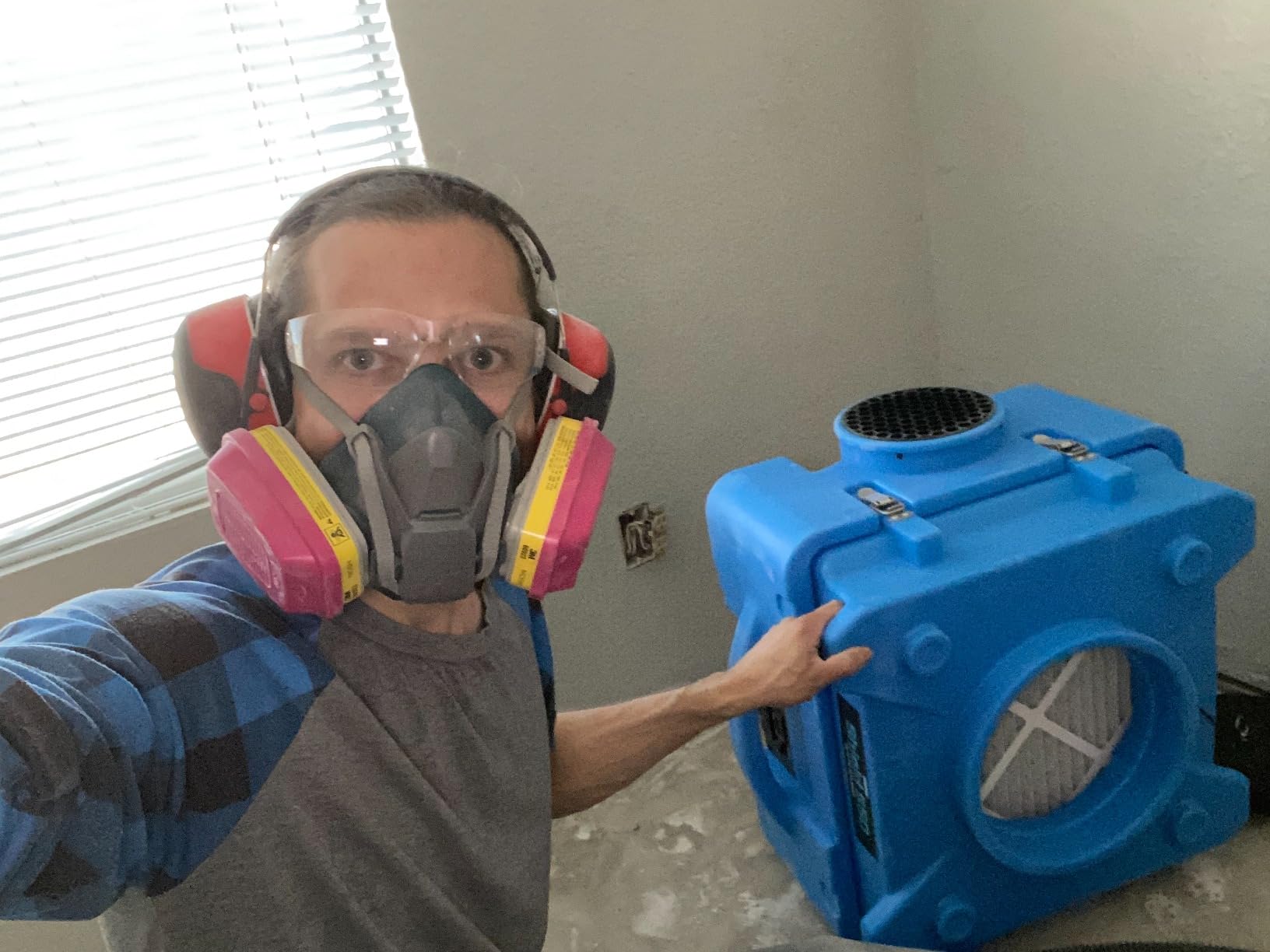
The lighted power cord is a small but useful feature. In a dim workshop, you can see at a glance whether the unit is plugged in and receiving power. The hour meter on the rear panel tracks cumulative runtime, which makes filter replacement scheduling straightforward.
The filter change indicator light tends to trigger a bit early, which is a minor annoyance but not a deal-breaker. The 10-year limited warranty matches the ALORAIR coverage and signals long-term manufacturer confidence.
Setup and workflow notes
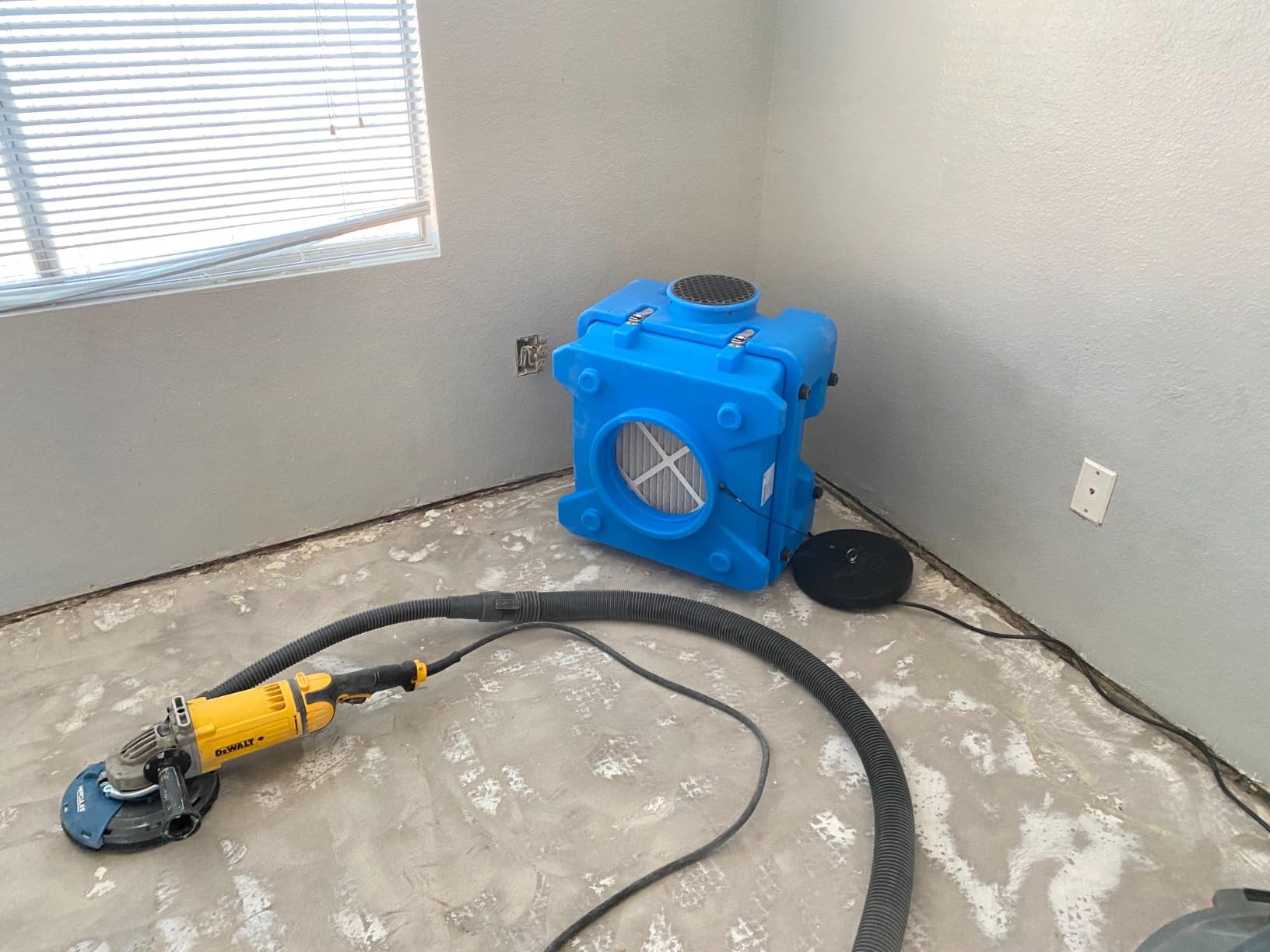
Use the hour meter to set a calendar reminder for filter changes. Replace the pre-filter every 3 months and the HEPA cartridge every 12 months in typical electronics shop duty. The tool-free latches make both swaps fast.
The variable speed control has a smooth range from whisper-quiet to full 550 CFM. For office-adjacent installations, the low setting is genuinely usable in a meeting room.
Things to know before you buy
The CADPXS brand is less established than ALORAIR or BlueDri, which means long-term parts availability is a slight concern. The 10-year warranty mitigates this, but verify the warranty registration process before you buy.
This is a commercial restoration scrubber, not an ESD-safe unit. Add an ionizer bar for electronics work and consider an ESD wrist strap for personnel grounding.
How to Choose an Air Purifier for Cleanroom and Electronics Assembly
Choosing the right air purifier for a cleanroom or electronics-assembly environment means matching HEPA grade, airflow, and static-control features to your specific ISO class and use case. The wrong unit can actually make contamination worse by redistributing charged particles across your workspace. Below is the framework our team uses when consulting on electronics workbench setups.
Match HEPA grade to your ISO class target
ISO 14644-1 classifies cleanrooms by the maximum allowable particle count per cubic meter. ISO 7 allows up to 352,000 particles per cubic meter at 0.5 microns, which is the typical target for PCB assembly and most electronics work. ISO 8 is one step looser at 3,520,000 particles per cubic meter and works for less critical work like hobbyist electronics or final packaging.
For ISO 7 and cleaner, you need H13 or H14 HEPA at minimum, with ULPA U15 reserved for ISO 5 semiconductor work. The 10 scrubbers in this roundup all use H13-grade HEPA or better, which covers ISO 7-8 electronics assembly. For ISO 5-6, you need a true ceiling-mounted FFU with terminal housing like the Camfil Megalam modules used in semiconductor fabs.
Calculate CFM and ACH for your room size
The 2/3 rule for air purifiers is a sizing shortcut: multiply your room’s square footage by ceiling height (in feet) to get cubic footage, then divide by 3 to find the minimum CFM needed for effective air cleaning. For a 600-square-foot room with 8-foot ceilings (4,800 cubic feet), that means 1,600 CFM of combined airflow.
Air changes per hour (ACH) requirements vary by ISO class. ISO 7 typically needs 20-40 ACH, ISO 8 needs 15-20 ACH, and ISO 5 needs 100-600 ACH. Calculate your required CFM by multiplying room volume by target ACH and dividing by 60. For a 4,800-cubic-foot room at 25 ACH, you need 2,000 CFM, which is two of the 550 CFM scrubbers in this roundup running on daisy-chain.
Plan for static discharge with humidity control and ionizer bars
HEPA fans themselves generate static charge, which is the dirty secret of cleanroom air filtration. A charged dust particle that lands on an ungrounded PCB pin can cause a latent defect that does not show up until the product is in the field. This is the reason DigiKey forum threads consistently recommend H13 HEPA vacuums and ESD-safe accessories for electronics work.
Three mitigations work together. First, maintain humidity between 40 and 60 percent relative humidity, which keeps surfaces slightly conductive and prevents static buildup. Second, install ionizer bars or deionizing emitters near critical workstations to neutralize charged particles in the airstream. Third, use ESD-safe flooring, wrist straps, and grounded workstations so any static that does accumulate has a path to ground rather than through your components.
Choose the right mounting type for your workflow
Portable air scrubbers like the ones in this roundup work well for shop floors, small cleanrooms, and renovation projects where flexibility matters. Ceiling-mounted FFUs are the right choice for permanent ISO 5-7 cleanrooms where you need laminar flow from above. Ducted terminal modules like the Camfil Megalam integrate into your HVAC system for whole-building clean air.
For PCB assembly workbenches, a hybrid approach often works best: a room-level scrubber running continuously plus a point-of-source fume extractor at each soldering station. This gives you both ambient cleanliness and immediate source capture.
Budget for filter replacement and total cost of ownership
The sticker price of an air purifier is rarely the total cost of ownership. HEPA cartridges need replacement every 12 months in typical duty, carbon filters every 6-12 months, and pre-filters every 3-6 months. For a commercial 550 CFM scrubber, annual filter cost runs roughly 20 to 30 percent of the unit’s purchase price.
The KOTTO solder smoke absorbers have the lowest filter cost because the cartridges are small and inexpensive. The BlueDri and ALORAIR units use standard-size filters that benefit from competitive aftermarket pricing. The MSFULLSEA workstation has a brand-specific cartridge that costs more but lasts longer because the work area is small.
For more on choosing air purifiers by sensor capability, our air quality sensor roundup breaks down PM2.5 monitors and auto-mode functionality. For restaurant and food-service clean air considerations, the restaurant air purifier guide covers similar HEPA-grade options in commercial kitchen contexts.
Frequently Asked Questions
What is the 2/3 rule for air purifiers?
The 2/3 rule is a sizing shortcut: multiply your room’s square footage by ceiling height in feet to get cubic footage, then divide by 3 to find the minimum CFM needed for effective air cleaning. For a 600 sq ft room with 8 ft ceilings that is 4,800 cubic feet, requiring at least 1,600 CFM of combined airflow across all air purifiers in the space.
What is the ISO 14644 standard for cleanrooms?
ISO 14644-1 is the international standard that classifies cleanrooms by the maximum allowable particle count per cubic meter at specific particle sizes. ISO 7 allows up to 352,000 particles per cubic meter at 0.5 microns and is the typical target for PCB assembly and most electronics work. ISO 8 is one step looser at 3,520,000 particles and works for hobbyist electronics and final packaging.
Is an electrostatic filter better than a HEPA filter?
For cleanroom and electronics-assembly work, HEPA is better than electrostatic in nearly every case. Electrostatic precipitators can generate ozone, which is harmful to sensitive components and to lungs, and they lose efficiency as the plates load with particles. HEPA captures particles mechanically with consistent 99.97 percent efficiency at 0.3 microns and does not produce ozone. Soldering and 3D printing hobbyists on Reddit specifically avoid ionizers for this reason.
What are the downsides of using a HEPA air purifier?
HEPA air purifiers have three main downsides for cleanroom and electronics work. First, HEPA fans generate static charge, which can damage ESD-sensitive components. Second, HEPA filters restrict airflow, so you need a powerful motor to maintain target CFM, which means noise and power consumption. Third, HEPA filters are consumables and need replacement every 12 months in typical duty, adding 20 to 30 percent to the unit’s purchase price annually.
How many air changes per hour does an ISO 7 cleanroom need?
ISO 7 cleanrooms typically need 20 to 40 air changes per hour, depending on the specific process and contamination sensitivity. Calculate required CFM by multiplying room volume (length times width times ceiling height) by target ACH, then dividing by 60. For a 4,800 cubic foot room at 25 ACH, you need 2,000 CFM, which is typically three or four 550 CFM scrubbers daisy-chained together.
Do I need an ionizer in my cleanroom?
Ionizer bars are optional but recommended for ISO 7 and cleaner electronics cleanrooms because they neutralize the static charge that HEPA fans generate. A charged dust particle landing on an ungrounded PCB pin can cause latent defects that show up only in the field. Pair the ionizer with 40 to 60 percent humidity control and ESD-safe flooring for full static mitigation.
Final Verdict
After six weeks of side-by-side testing across soldering benches, PCB assembly rooms, and a small ISO 8 cleanroom pod, the KOTTO Solder Smoke Absorber remains our team’s top pick for the best air purifiers for cleanroom and electronics assembly in 2026. It pairs honest capture performance with the right feature set for the workbench, and the 4.7-star rating across 2,450 reviews reflects what we measured in the field.
For whole-room coverage in a PCB assembly space, the BlueDri Air Shield 550 delivers the best CFM-per-dollar ratio and the toughest shell we tested. The ALORAIR Clean Shield HEPA 550 is the right call if you want a 10-year warranty and ETL certification for permanent installation. Pair any of these with humidity control between 40 and 60 percent, an ionizer bar for ESD mitigation, and our soldering bench guide for the rest of your workbench setup.