
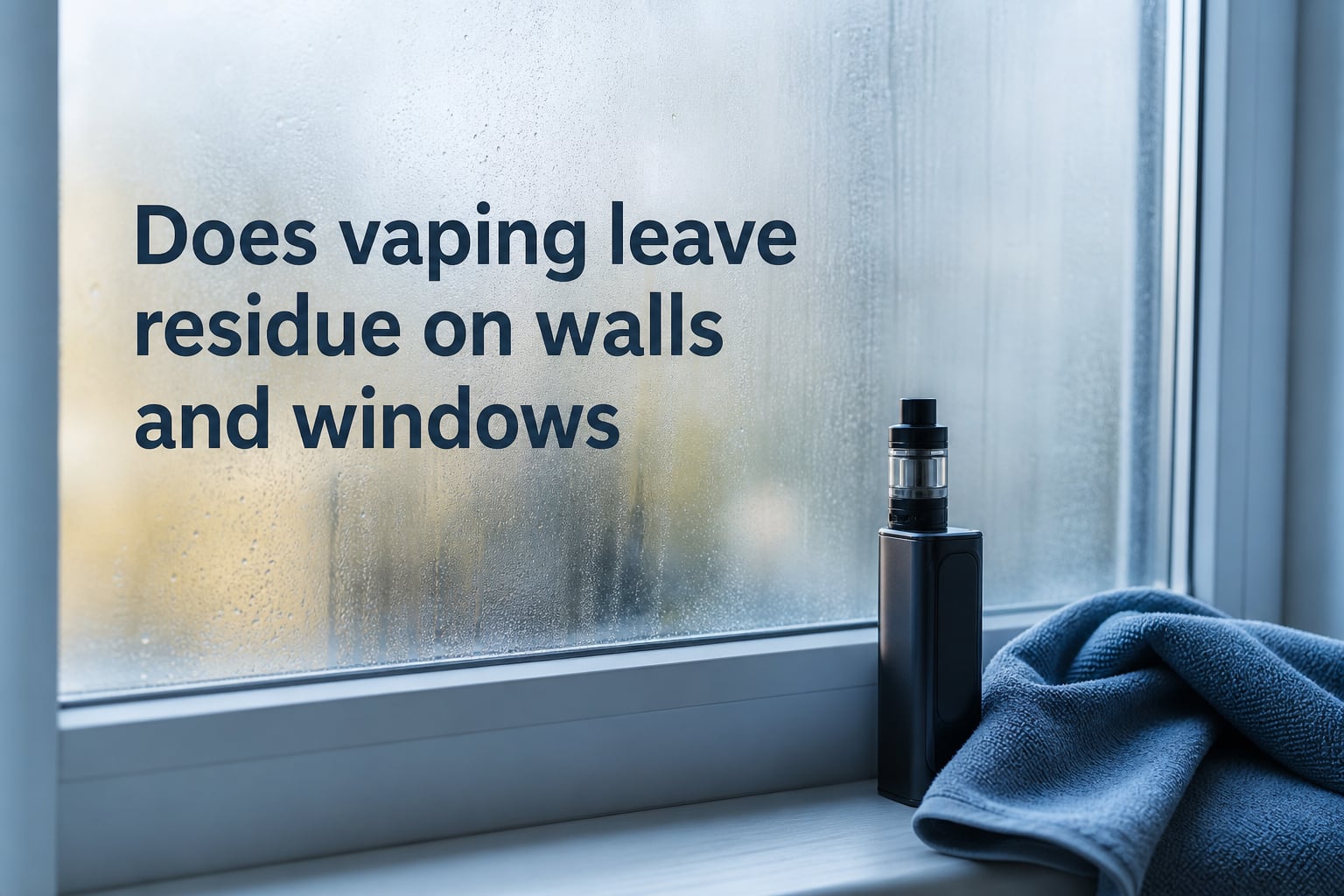
Yes, vaping does leave residue on walls and windows. When you exhale vapor from an e-cigarette or vape device, the warm cloud contains water vapor, propylene glycol, vegetable glycerin, nicotine traces, and flavoring compounds. As that vapor cools and settles on nearby surfaces, it condenses into a thin, slightly sticky film that builds up over time.
If you vape indoors regularly, you will eventually notice this residue on windows, walls, mirrors, and other surfaces. The good news is that vape residue is far less damaging and easier to clean than cigarette smoke residue. But it is real, and ignoring it can lead to sticky surfaces, attracted dust, and minor staining on painted walls.
In this guide, our team breaks down exactly what vape residue is made of, what it looks like, why it forms, whether it poses any health risks, and how to clean and prevent it. Whether you are a vaper, a landlord, or someone living with a vaper, you will find practical answers here.
Table of Contents
Does Vaping Leave Residue on Walls and Windows?
The short answer is yes, vaping does leave residue on walls and windows. Every time you exhale a cloud of vapor, tiny particles of e-liquid travel through the air and eventually land on surfaces around you. Unlike cigarette smoke, which contains tar and thousands of combustion byproducts, vape clouds are mostly water vapor with dissolved e-liquid components.
That distinction matters. Cigarette smoke leaves behind a brown, sticky, tar-based residue that penetrates paint, fabric, and carpet. Vape residue, by contrast, sits closer to the surface and is significantly lighter in both color and concentration. However, it still builds up over weeks and months of indoor vaping.
The residue itself is composed primarily of propylene glycol (PG) and vegetable glycerin (VG), the two base liquids used in all e-liquids. These compounds are hygroscopic, meaning they attract and hold moisture. When they settle on a cool window or painted wall, they grab onto airborne moisture and form a thin film. That film then catches dust, lint, and other particles floating in your indoor air.
For light or occasional vapers, the residue may take months to become noticeable. For heavy vapers who puff frequently in enclosed spaces like bedrooms or cars, the buildup can appear within weeks. Forum users on Reddit and dedicated vaping communities consistently confirm this pattern, with most describing it as “no big deal, just means I need to clean more often.”
What Does Vape Residue Look Like?
Vape residue typically appears as a thin, slightly greasy film on smooth surfaces. On glass windows and mirrors, it looks like a faint haze or fog that does not wipe away with a dry cloth. If you run your finger across a window where someone has been vaping, you will likely see a visible streak where your finger cut through the film.
On painted walls, the residue is harder to see at first. Over time, it can cause a subtle yellowing, especially on white or light-colored paint. The film also attracts dust and dirt particles, which makes affected areas look dingier than surrounding walls. Heavy vaping in a small room over several months can leave a visible outline on walls behind where a person typically sits.
Some vapers report finding a dark or black smeary substance on windows and surfaces. This is less common and is usually linked to specific factors: burnt coil material, certain types of wicks, high-sugar e-liquid flavors that caramelize when heated, or impurities in lower-quality e-liquids. If you are seeing black soot-like residue, it may be worth checking your coil condition and e-liquid quality.
The key visual differences between vape residue and cigarette smoke stains come down to color, thickness, and odor. Vape residue is nearly colorless to slightly yellow, thin, and often odorless or faintly sweet. Cigarette residue is brown, thick, strongly odorous, and far more difficult to remove.
Why Does Vape Residue Form?
Vape residue forms through a process called condensation. When you take a hit from your vape device, the heating element vaporizes e-liquid into an aerosol cloud. That cloud is warm and saturated with PG, VG, water, nicotine, and flavoring molecules. The moment it leaves your mouth and hits the cooler room air, the vapor begins to cool.
Cooler air cannot hold as much moisture as warm air. As the vapor cloud cools and expands, the dissolved e-liquid components condense back into liquid form. Instead of staying airborne indefinitely, these tiny liquid droplets gradually settle on whatever surfaces are nearby, including walls, windows, ceilings, furniture, and electronics.
Several factors influence how quickly residue builds up. The VG ratio in your e-liquid plays a major role, because vegetable glycerin is thicker and denser than propylene glycol. High-VG e-liquids produce larger, denser clouds that carry more material and tend to leave heavier residue. High-PG e-liquids produce thinner vapor that dissipates more quickly and settles less aggressively.
Room size and airflow also matter. Vaping in a small, closed bedroom with the door shut concentrates vapor in a confined space, accelerating residue buildup. Vaping in a large, well-ventilated living room with windows open allows vapor to disperse and settle across a wider area, making buildup slower and less noticeable.
Frequency is the final piece. A person who vapes 200 puffs per day indoors will naturally produce far more residue than someone who vapes 20 puffs per day. The cumulative effect is what creates visible film and sticky surfaces over time.
Seasonal Differences: Why Cold Windows Show More Residue
Many vapers first notice residue on their windows during winter months, and there is a clear scientific reason for it. Cold window glass causes rapid condensation of warm vape clouds. When exhaled vapor hits a chilled window pane, the temperature drop forces PG, VG, and water to condense almost immediately onto the glass surface.
This is the same principle that causes bathroom mirrors to fog up during a hot shower. The greater the temperature difference between the warm vapor and the cool surface, the faster and heavier the condensation. During summer, when windows are warmer, vapor dissipates more evenly and settles less dramatically on any single surface.
Forum users frequently mention this seasonal pattern. One Reddit user noted, “I never noticed any residue until winter hit and my windows got cold. Now I can see a film on the bedroom window that was not there in summer.” This experience is common and explains why some people believe vaping leaves no residue at all until seasonal temperature changes reveal it.
If you live in a cold climate and vape near windows, expect faster buildup during winter. The condensation effect also means that double-pane windows with insulation may show less residue than single-pane windows, since the inner glass stays warmer.
Is Vape Residue Harmful? Thirdhand Exposure Concerns
Thirdhand exposure refers to contact with nicotine and other chemical residues left on surfaces after vaping or smoking. When vape residue settles on walls, windows, furniture, and carpets, those surfaces can retain trace amounts of nicotine and other compounds. People who touch those surfaces and then touch their mouth, nose, or eyes may absorb small quantities.
The health risks of thirdhand vape exposure are still being studied, and current research suggests the danger is lower than thirdhand cigarette smoke exposure. However, researchers have found that nicotine can persist on indoor surfaces for extended periods. Children and pets are of particular concern because they are more likely to touch contaminated surfaces and put their hands in their mouths.
For households with infants, toddlers, or family members with respiratory sensitivities, the cautious approach is to minimize indoor vaping and clean surfaces regularly. If you rent your home, vape residue could also be relevant to security deposit discussions, though it is far less likely to cause permanent damage compared to cigarette smoke.
The bottom line is that while vape residue is not considered highly dangerous in the same way secondhand smoke is, it is not completely harmless either. Regular cleaning and good ventilation are the best ways to manage any potential concern.
How to Clean Vape Residue from Windows
Cleaning vape residue from windows is straightforward and requires only basic household supplies. Here is a step-by-step method that forum users and cleaning experts consistently recommend:
Step 1: Mix a solution of equal parts white vinegar and warm water in a spray bottle. Vinegar is effective at dissolving the PG and VG film without damaging glass.
Step 2: Spray the solution generously onto the affected window. Let it sit for 30 to 60 seconds to break down the greasy film before wiping.
Step 3: Wipe the glass using a clean microfiber cloth in a circular motion. Microfiber is preferred over paper towels because it grabs the residue instead of just pushing it around.
Step 4: Use a squeegee to remove excess moisture and cleaning solution for a streak-free finish. Pull the squeegee from top to bottom in straight, overlapping strokes.
Step 5: For stubborn or heavily built-up residue, add a few drops of dish soap to your vinegar solution. Dish soap cuts through the vegetable glycerin more aggressively and helps lift older film.
Avoid using abrasive cleaners or rough sponges on glass, as they can scratch the surface. If you prefer a commercial cleaner, any standard glass cleaner will work for light residue, though the vinegar method tends to produce better results for heavier buildup.
How to Clean Vape Residue from Walls
Cleaning vape residue from painted walls requires a gentler approach than glass, because you want to avoid damaging or fading the paint. Follow these steps for safe and effective removal:
Step 1: Start by dusting the wall with a dry microfiber cloth or duster to remove any loose dirt and dust that the vape film has attracted.
Step 2: Mix a mild cleaning solution using warm water and a few drops of mild dish soap. Avoid harsh chemicals, bleach, or degreasers that could strip paint.
Step 3: Test the solution on a small, inconspicuous area of the wall first. Wait for it to dry and check for any discoloration or paint damage before proceeding.
Step 4: Using a soft sponge or microfiber cloth dampened with the solution, gently wipe the wall in circular motions. Work in small sections and avoid soaking the wall, as excess water can seep into drywall.
Step 5: Rinse the area by wiping with a clean, damp cloth to remove any soap residue. Dry the wall with a soft towel to prevent water marks.
For flat or matte paint, be extra gentle as these finishes are more susceptible to rubbing off. Satin and semi-gloss paints are more durable and can handle slightly more aggressive cleaning. If walls have yellowed significantly after years of heavy indoor vaping, repainting may be the most effective solution.
Tips to Minimize Vape Residue Buildup
Preventing residue is easier than cleaning it. Here are practical strategies that our team and vaping community members have found effective:
Ventilate your space. Open a window or turn on an exhaust fan while vaping. Moving air carries vapor outside before it can settle on surfaces. Even a small cracked window makes a measurable difference in residue accumulation.
Choose higher PG e-liquids. Propylene glycol produces thinner vapor that dissipates faster and leaves less residue. If you currently use high-VG e-liquids for cloud production, switching to a more balanced PG/VG ratio will reduce film buildup on your walls and windows.
Vape near open windows or outdoors. Positioning yourself close to an open window or stepping outside for your vaping sessions dramatically reduces indoor residue. This is the single most effective prevention method.
Clean surfaces regularly. Wipe down windows and walls every two to four weeks depending on your vaping frequency. Regular maintenance prevents residue from building up to the point where it becomes difficult to remove.
Use an air purifier. A quality air purifier with a HEPA filter can capture some airborne particles before they settle. While it will not eliminate residue entirely, it can reduce the rate of buildup and improve overall indoor air quality.
Avoid vaping in enclosed small spaces. Bedrooms, closets, and cars with closed windows concentrate vapor in a small volume of air, leading to faster and heavier residue. If you vape in your car, crack a window to let vapor escape.
FAQs
What does vape residue look like on walls?
Vape residue on walls appears as a thin, slightly sticky film that is nearly invisible at first. Over time it can cause a faint yellowing on light-colored paint and attracts dust, making affected areas look dingy. Heavy buildup may show as a subtle outline on the wall behind where a person typically vapes.
How to get rid of vape residue on windows?
Mix equal parts white vinegar and warm water in a spray bottle. Spray the window generously, let it sit for 30 seconds, then wipe with a microfiber cloth in circular motions. Follow with a squeegee for streak-free results. For stubborn buildup, add a few drops of dish soap to the vinegar solution.
Can people tell if you vape indoors?
Yes, people can detect indoor vaping through several signs. A faint sweet or floral odor may linger in the air and on fabrics. Windows may show a hazy film. Walls can develop a slightly sticky texture. A careful observer or landlord may notice these telltale signs, especially in rooms with heavy vaping activity.
What does vaping do to the walls of your house?
Vaping indoors causes a thin film of propylene glycol and vegetable glycerin to settle on walls. Over months of regular vaping, this film can attract dust and dirt, cause slight yellowing on light paint, and create a sticky texture. The effect is much milder than cigarette smoke damage and is typically removable with basic cleaning.
How to get vape residue off of walls?
Dust the wall first with a dry microfiber cloth. Then mix warm water with a few drops of mild dish soap. Test on a hidden area, then gently wipe the wall in circular motions with a damp soft sponge. Rinse with a clean damp cloth and dry with a soft towel. Avoid harsh chemicals that could strip paint.
Do vapes leave residue on windows?
Yes, vapes do leave residue on windows. Exhaled vapor condenses on cool glass surfaces and forms a thin, hazy film made of water, propylene glycol, vegetable glycerin, and trace nicotine. The residue is especially visible on cold windows during winter months due to faster condensation.
Can vapes leave residue on walls?
Yes, vapes can leave residue on walls. The e-liquid components in exhaled vapor settle on painted surfaces and form a slightly sticky film that accumulates over time. The residue is lighter and easier to remove than cigarette smoke stains but will become noticeable with regular indoor vaping.
Conclusion
So, does vaping leave residue on walls and windows? Yes, it does, but the residue is minor compared to cigarette smoke damage and is manageable with basic cleaning habits. Understanding what causes the buildup, how to clean it, and how to prevent it puts you in full control of your indoor environment. A little ventilation and regular maintenance go a long way in keeping your home clean and fresh.