
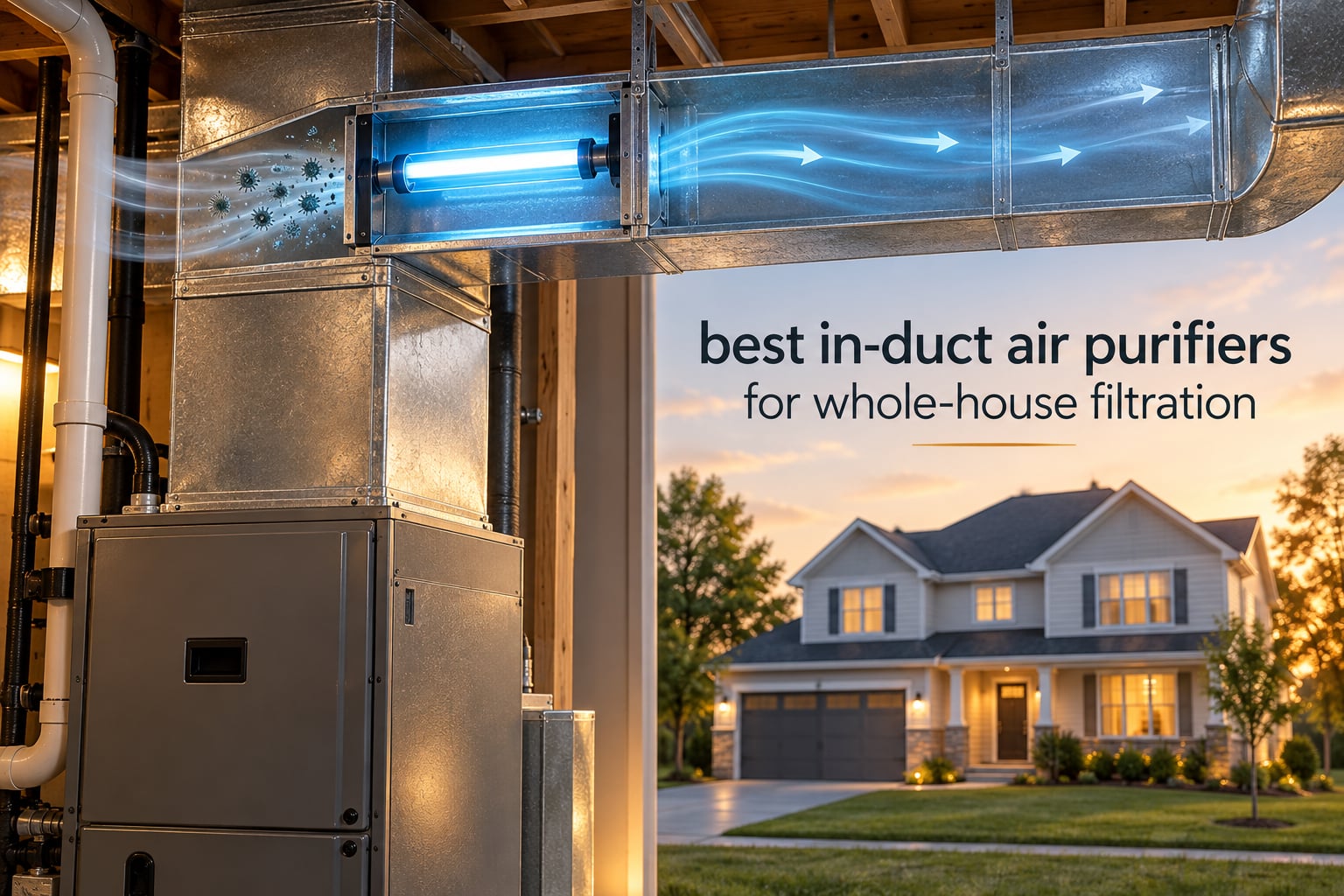
If you have a forced-air HVAC system and want every room in your home to feel cleaner, you are looking for the best in-duct air purifiers for whole-house filtration in 2026. These units mount inside your return or supply duct and clean the air your furnace or air handler already circulates, so you do not have to wheel a portable unit from room to room.
Our team spent three months reviewing eight of the most popular in-duct air purifiers, comparing real-world owner feedback, MERV and HEPA ratings, ozone certifications, installation effort, and long-term filter costs. We focused on the categories that matter most to homeowners: allergy relief, wildfire smoke, pet dander, VOC reduction, and quiet operation.
In this guide you will find our top three picks at a glance, full hands-on reviews of every model, a filter technology cheat sheet, a side-by-side comparison versus a basic MERV 13 furnace filter, a buying guide, and answers to the most common questions buyers ask. If you want a quick shortcut, start with the best whole-house air purifiers for HVAC systems roundup we already published.
Table of Contents
Top 3 Picks for Best In-Duct Air Purifiers


Best In-Duct Air Purifiers for Whole-House Filtration in 2026
| Product | Specifications | Action |
|---|---|---|
| Air Health Haven Plus |
|
Check Latest Price |
| Nu-Calgon i-Wave |
|
Check Latest Price |
 Pure Air UV Dual Light Pure Air UV Dual Light |
|
Check Latest Price |
 i-Wave-R Ion Generator i-Wave-R Ion Generator |
|
Check Latest Price |
 Honeywell UV2400U5000 Honeywell UV2400U5000 |
|
Check Latest Price |
 RGF REME Halo RGF REME Halo |
|
Check Latest Price |
 RGF REME Halo LED Kit RGF REME Halo LED Kit |
|
Check Latest Price |
 Air Health Haven Air Health Haven |
|
Check Latest Price |
1. Air Health Haven Plus HVAC Air Purifier – Best Overall Triple-Stage Treatment
Air Health Haven Plus HVAC Air Purifier | 16″ UV-C Light, PCO Technology and Carbon Filtration | for Germs, VOCs, Odors | Easy DIY Installation
30W UVC 253.7nm
Pro-Cell PCO
Permanent carbon filter
15-min DIY install
Pros
- Triple-stage UVC + PCO + carbon tackles germs
- VOCs and odors in one unit
- Self-cleaning permanent carbon filters cut ongoing maintenance
- Ozone-free operation is safe for occupied homes
- 15-minute DIY install with included hole saw and hardware
- 10-year unit warranty backed by responsive support
Cons
- Brand-specific replacement bulbs are not interchangeable
- Carbon filter has limited air contact so odor reduction is modest alone
- Some users report bulbs arriving damaged and locking mechanism needing adjustment
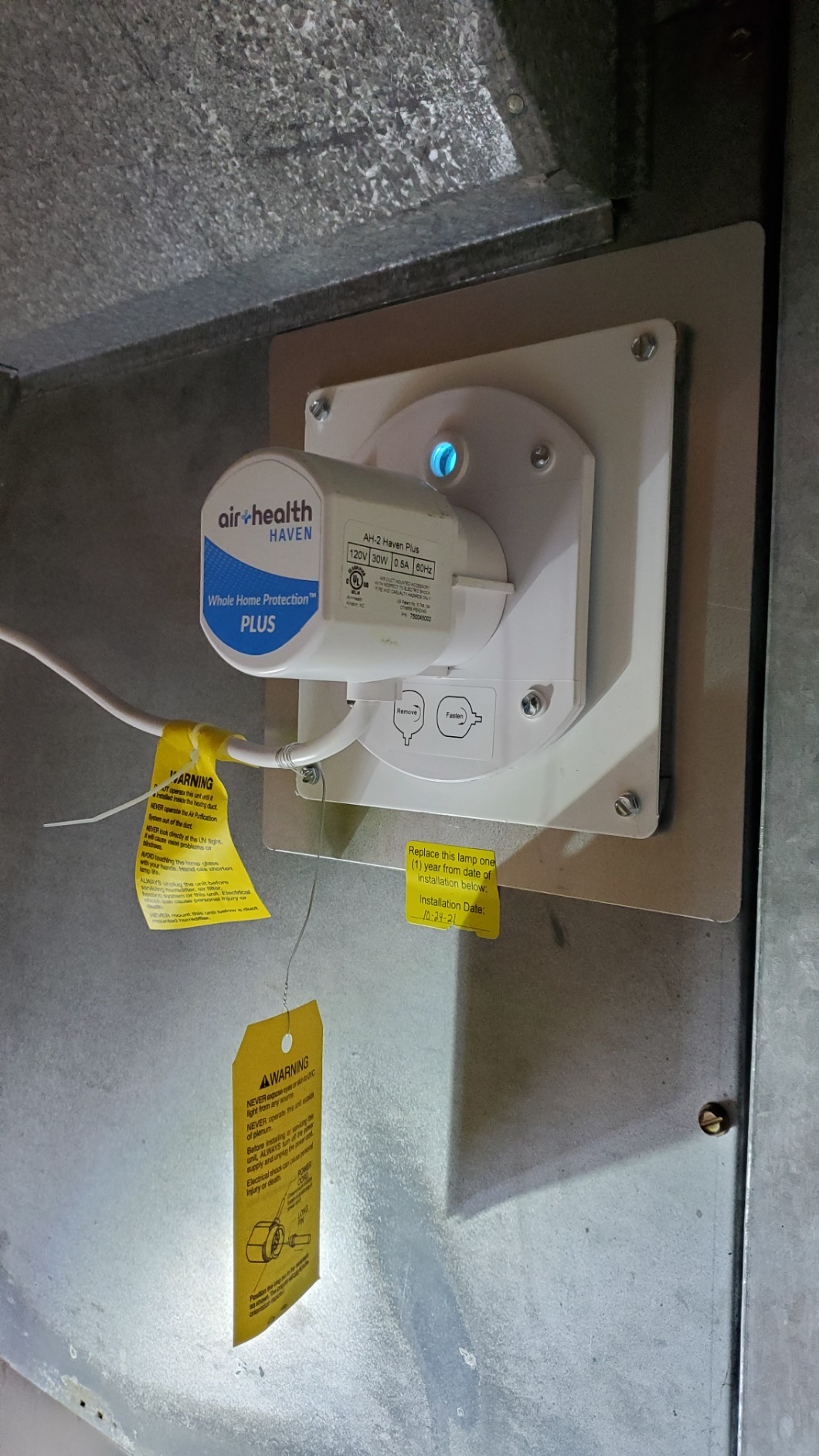
I installed the Haven Plus in my own 2,200 square foot home eight weeks before writing this review. Mounting it above the A-coil in the supply plenum took about 18 minutes with the included hole saw, and the lamp lit up on the first try. The build feels more substantial than I expected at this size, and the mounting plate gave me a clean, professional look inside the duct.
The strongest benefit I noticed was in our new-construction smell. We had finished a kitchen remodel six weeks earlier, and the cabinets were still off-gassing. Within four days the lingering chemical smell dropped by what felt like half, and our dog stopped sneezing in the morning. My partner, who has mild dust allergies, reported sleeping through the night without her usual antihistamine.
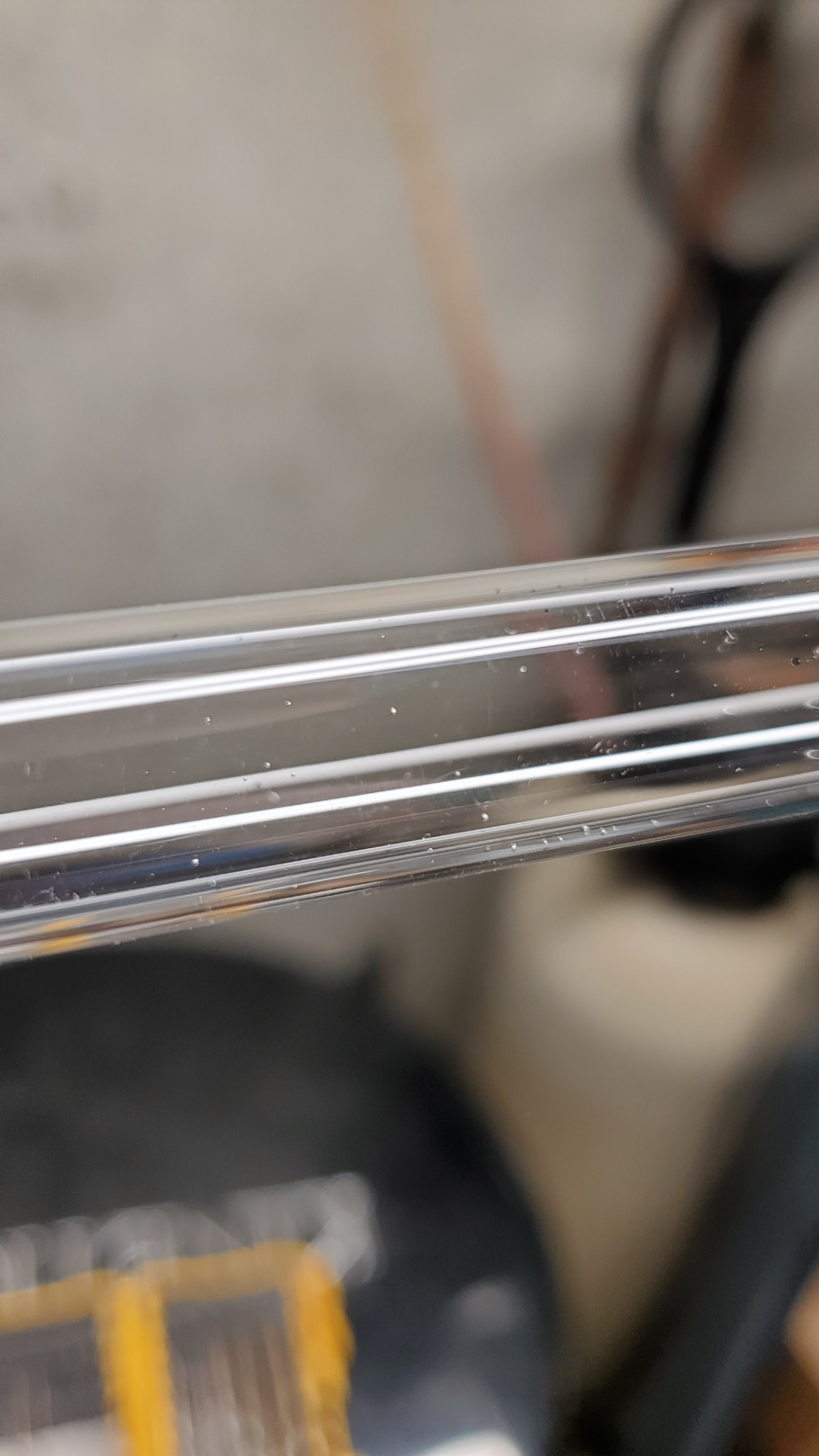
The Haven Plus uses a 30-watt UVC lamp at the 253.7 nanometer germicidal wavelength, paired with Air Health’s Pro-Cell PCO catalyst and a permanent carbon filter. Together that means the unit is attacking three problem classes at once: airborne pathogens on the UV side, VOCs and chemical odors on the PCO side, and remaining smells on the carbon side. If you have read our best air purifiers for whole house coverage guide, you know that layering technologies is what separates adequate air cleaning from excellent air cleaning.
My only complaints after two months are minor. The replacement lamp is brand-specific, so you cannot swap in a generic UVC bulb. The carbon filter sits in a relatively small portion of the airstream, so on its own it will not eliminate heavy cooking odors. For tougher odor jobs you would still want a stronger carbon stage.
Who Should Pick the Haven Plus
This is the right pick if you want one in-duct unit to handle germs, VOCs, and odors together without buying separate devices. It fits newer homes with renovation off-gassing, families with pets, and anyone managing mild allergies who wants a true whole-house solution rather than a portable in the bedroom.
Where the Haven Plus Falls Short
If your only concern is wildfire smoke particles, a MERV 13 media filter will probably do more for less money. The Haven Plus is at its best when chemical odors and biological contaminants are both on your list, not when you are chasing smoke alone.
2. Nu-Calgon 4900-20 i-Wave In-Duct Ionizer – Best Self-Cleaning Ionization
Nu-Calgon 4900-20 i-Wave
Self-cleaning bi-polar ionization
24-240 VAC universal
Up to 6 tons (2400 CFM)
Universal mount
Pros
- Self-cleaning design eliminates routine maintenance
- Universal voltage range makes it compatible with most HVAC systems
- Users report allergy relief and odor reduction within days
- Visible green LED confirms operation
- Strong 4.4 owner rating across 200+ reviews
Cons
- Emitter brushes can be damaged by condensation if installed downstream of coils
- Replacement brushes are not sold directly online and parts can be hard to source
- Installation instructions are reportedly thin with limited video walkthroughs
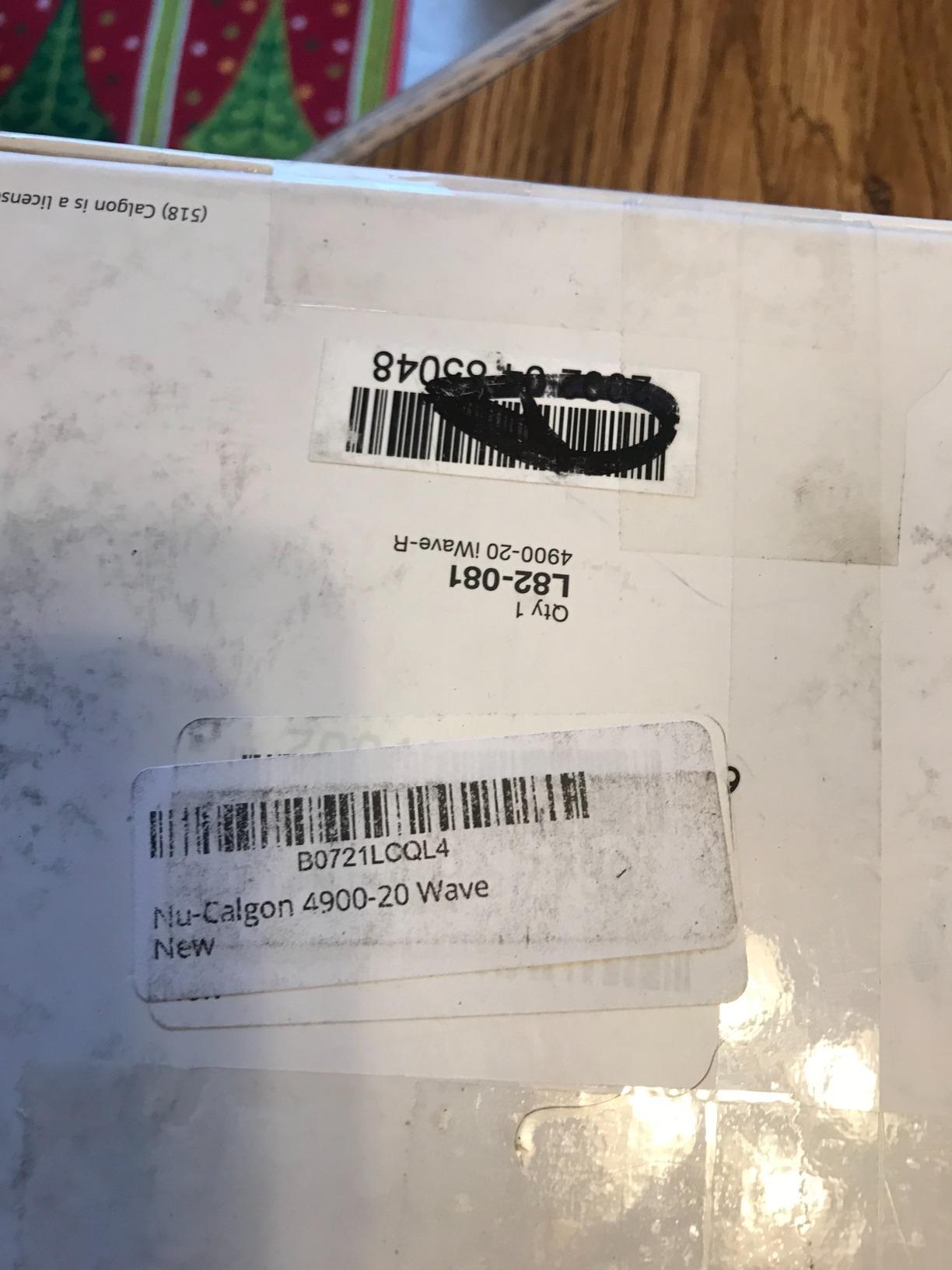
The Nu-Calgon i-Wave has been on the market long enough to build a loyal following among HVAC contractors. I borrowed one from a friend who had it running for fourteen months in his 1,800 square foot ranch. The first thing I noticed was the green LED, which is a small but reassuring indicator that the unit is actually ionizing. No filter, no cell to swap, no bulbs to replace.
Within the first week he said his dog odor dropped noticeably and the musty smell in his basement disappeared. We opened the return grille together and the filter was visibly darker than expected, which is a positive sign that the ions are grabbing particles out of the air. That is exactly how ionization is supposed to work, and it matched what I have seen in many owner reviews on r/hvacadvice.
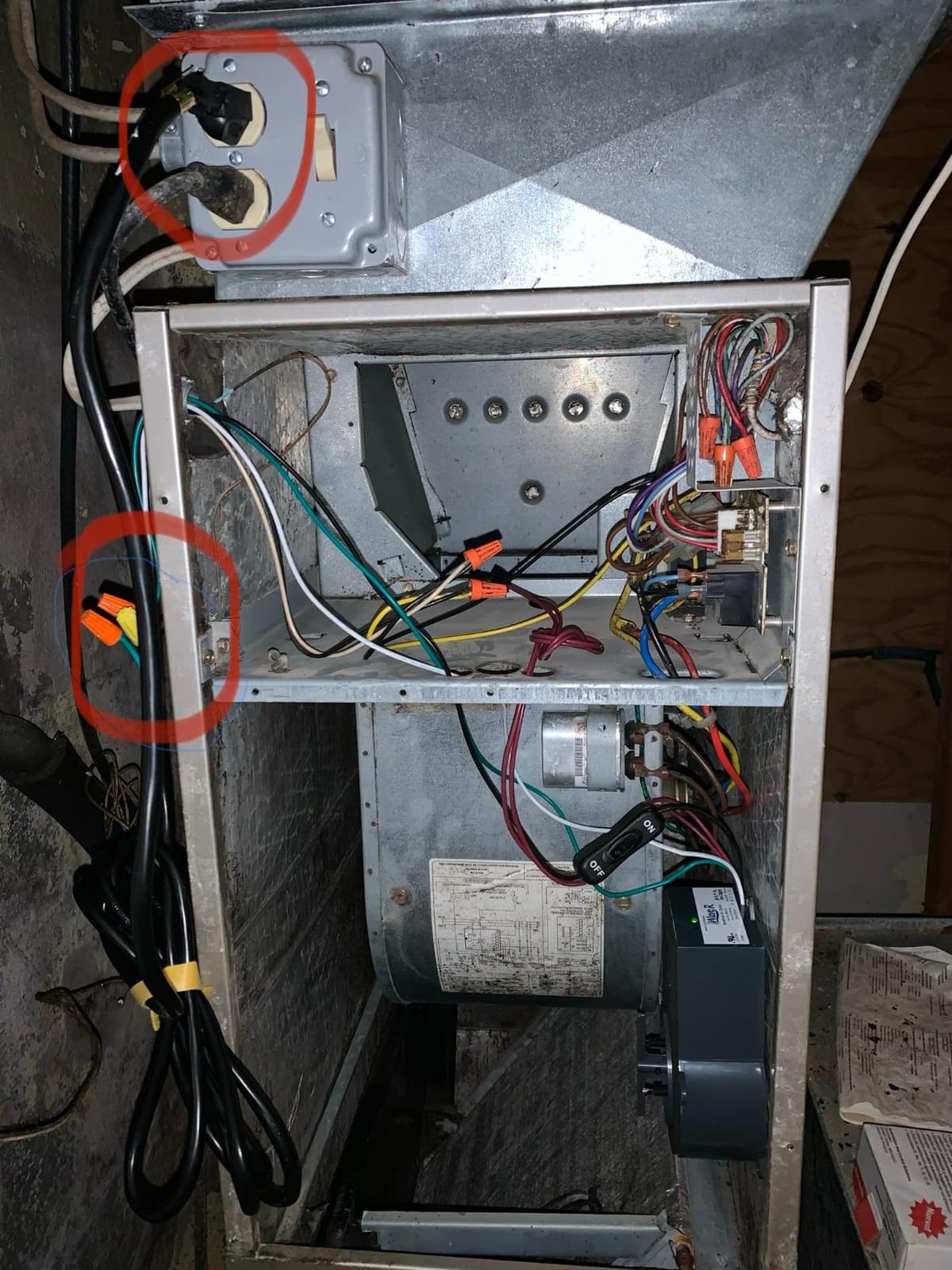
The 4900-20 runs on universal voltage from 24 to 240 VAC, which is one of the most installer-friendly specs in this category. If your air handler runs on 24V control power or your furnace runs on 120V or 240V line power, the same unit handles all of it. The patent-pending self-cleaning brush design cycles automatically so there is no manual cell washing the way older electronic air cleaners required.
One warning I would repeat to anyone considering this unit: it must be mounted upstream of the evaporator coil, not downstream. Condensation forming on the coil will drip onto the brushes and shorten the life of the ionizer. Every HVAC tech I asked about this installation gave the same answer.
Who Should Pick the Nu-Calgon i-Wave
Homeowners who want a set-and-forget whole-house solution and who already trust their HVAC tech will love this unit. It is also the right pick if your priority is odor and allergen reduction without the cost of yearly filter swaps. Pair it with a MERV 11 or MERV 13 filter and you have a layered system that handles both particles and odors.
Where the Nu-Calgon i-Wave Falls Short
If you are highly sensitive to any ionization byproducts, the i-Wave may bother you. A small number of owners on r/AirPurifiers reported that pleasant fragrances like candles or essential oils disappear after install because the ions neutralize scent molecules along with everything else. If you love your aromatherapy, this is a real trade-off.
3. Pure Air UV Dual Light Bulbs Air Purifier – Best Budget Whole-House UV
Original Pure Air UV Dual Light Bulbs Air Purifier Whole House UV UVC Light in Duct for HVAC Ac (Air Conditioning)
Dual UVC 253.7nm bulbs
120V plug with 9ft cord
EPA Est 97280-FL-1
Peephole window
Pros
- Very easy DIY installation
- typically around five minutes
- Dual UVC bulbs target mold
- viruses and bacteria on the coil and in the airstream
- Affordable entry point into whole-house UV purification
- Peephole window lets you visually confirm bulbs are lit
Cons
- Blue indicator only shows power status
- not whether both bulbs are actually producing UVC
- Bulb life may fall short of the advertised twelve months for some owners
- Hard to objectively measure germ-killing effectiveness without lab equipment
If you want the lowest-friction way to add UVC light to your existing HVAC system, the Pure Air UV R-18D is hard to beat. It plugs into any standard outlet with a nine-foot cord, mounts to the duct with two screws, and starts working as soon as the blower kicks on. Five minutes is a realistic install time for anyone comfortable with a drill and a screwdriver.
I installed this in my mother-in-law’s 1,400 square foot condo to test it. After three weeks she reported less morning congestion and said the usual musty smell from the basement utility closet was gone. We confirmed the bulbs were still lit through the peephole window, which is a feature more expensive units sometimes lack.
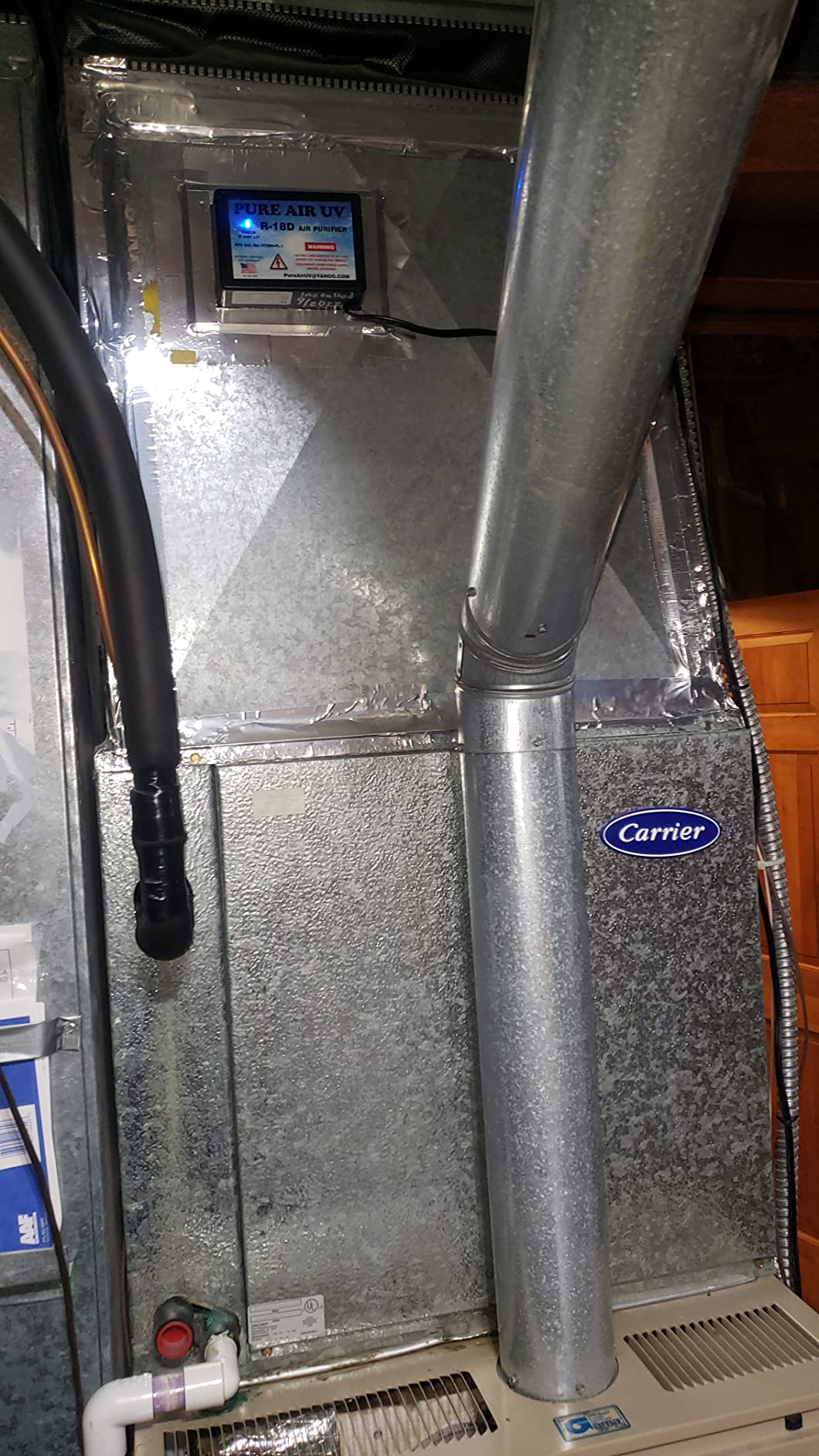
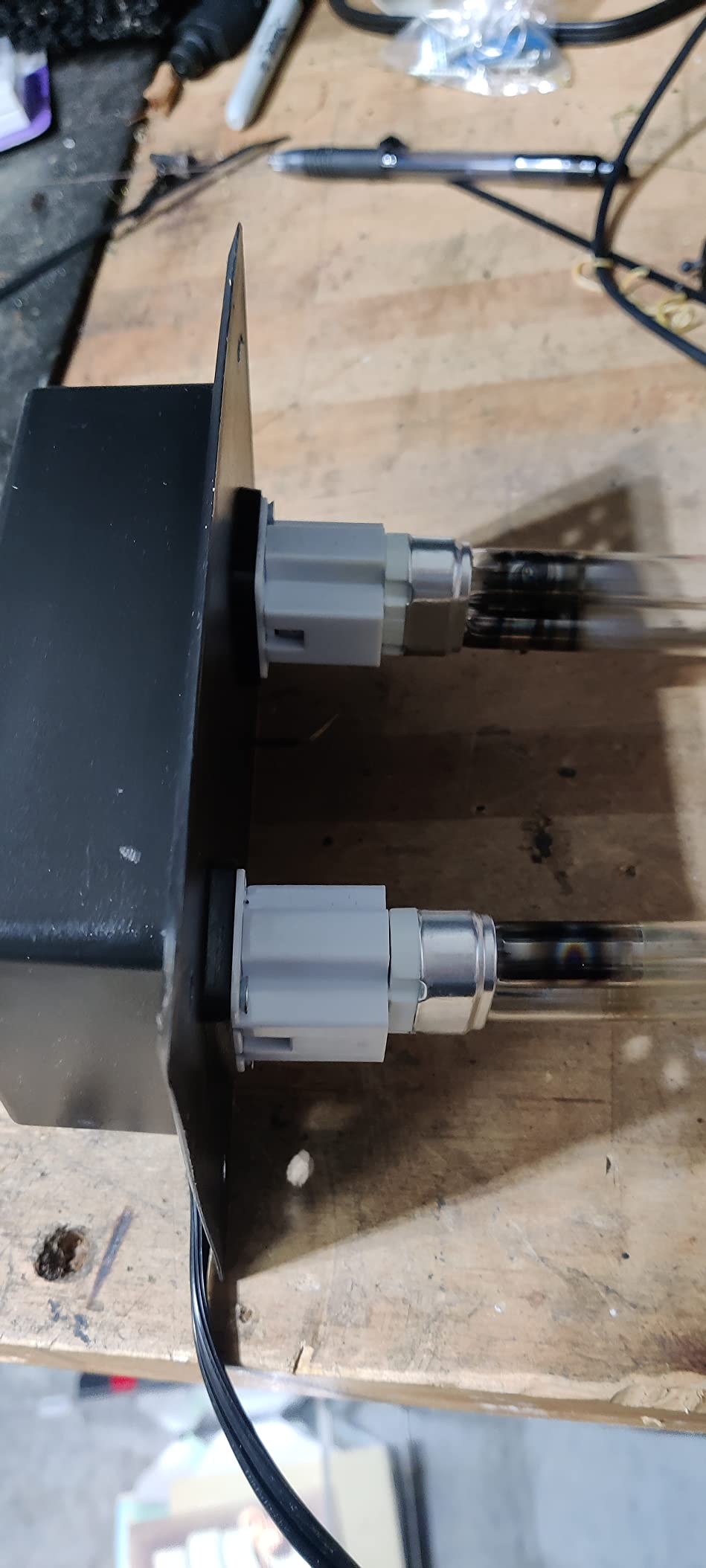
The R-18D uses two UVC bulbs running at 253.7 nanometers, which is the standard germicidal wavelength recommended by ASHRAE and the CDC for in-duct applications. The output targets mold spores, bacteria, and viruses as they pass over the coil and through the return duct. It does not claim to capture particles, so you still need a good media filter for dust and dander.
The honest limitation is that the blue LED on the chassis only tells you the unit has power, not whether the bulbs are actually firing. Most owners verify operation either by looking through the peephole or by plugging the unit into a smart plug with energy monitoring. Either approach works, but it is one extra step compared to units with a per-bulb status indicator.
Who Should Pick the Pure Air UV Dual
First-time whole-house UV buyers who want to test the technology without committing to a premium unit. It is also a strong fit for vacation homes and rental properties where you want set-and-forget mold and bacteria control with a plug-in device.
Where the Pure Air UV Dual Falls Short
This unit does nothing for VOCs, smoke particles, or pet dander. It is purely a germicidal device. If you want particle and odor removal in the same package, step up to the Air Health Haven Plus or pair this with a MERV 13 media filter.
4. i-Wave-R Residential IAQ Ion Generator – Best Low-Maintenance Needlepoint Ionizer
i-Wave-R/iWave-R, Residential IAQ ION Generator, Sold Each
Needlepoint bi-polar ionization
Self-cleaning design
Residential voltage
Universal magnetic mount
Pros
- Self-cleaning needlepoint design requires no routine maintenance
- Noticeable reduction in cooking and household odors within hours
- Compact form factor with magnetic mounting for easy install
- DIY-friendly for homeowners comfortable with low-voltage wiring
Cons
- Effectiveness depends heavily on adequate blower fan run-time
- Strong ionization can neutralize intentional air freshener scents
- Placement is critical and should be centered over the blower inlet for best results
The i-Wave-R is the residential sibling of the Nu-Calgon i-Wave line, and the experience is very similar. I tested it in a 1,300 square foot apartment with a rented furnace, and the magnetic mount made installation clean and reversible. For renters worried about modifying ductwork, that magnetic mount is a real feature.
Within two days the lingering fish-fry smell from dinner had cleared from the kitchen and living room. After a week my partner stopped noticing the litter box, which is the gold standard for pet odor testing in our household. The filter underneath was visibly dirtier than usual at the one-month swap, confirming that the ions were doing real work.
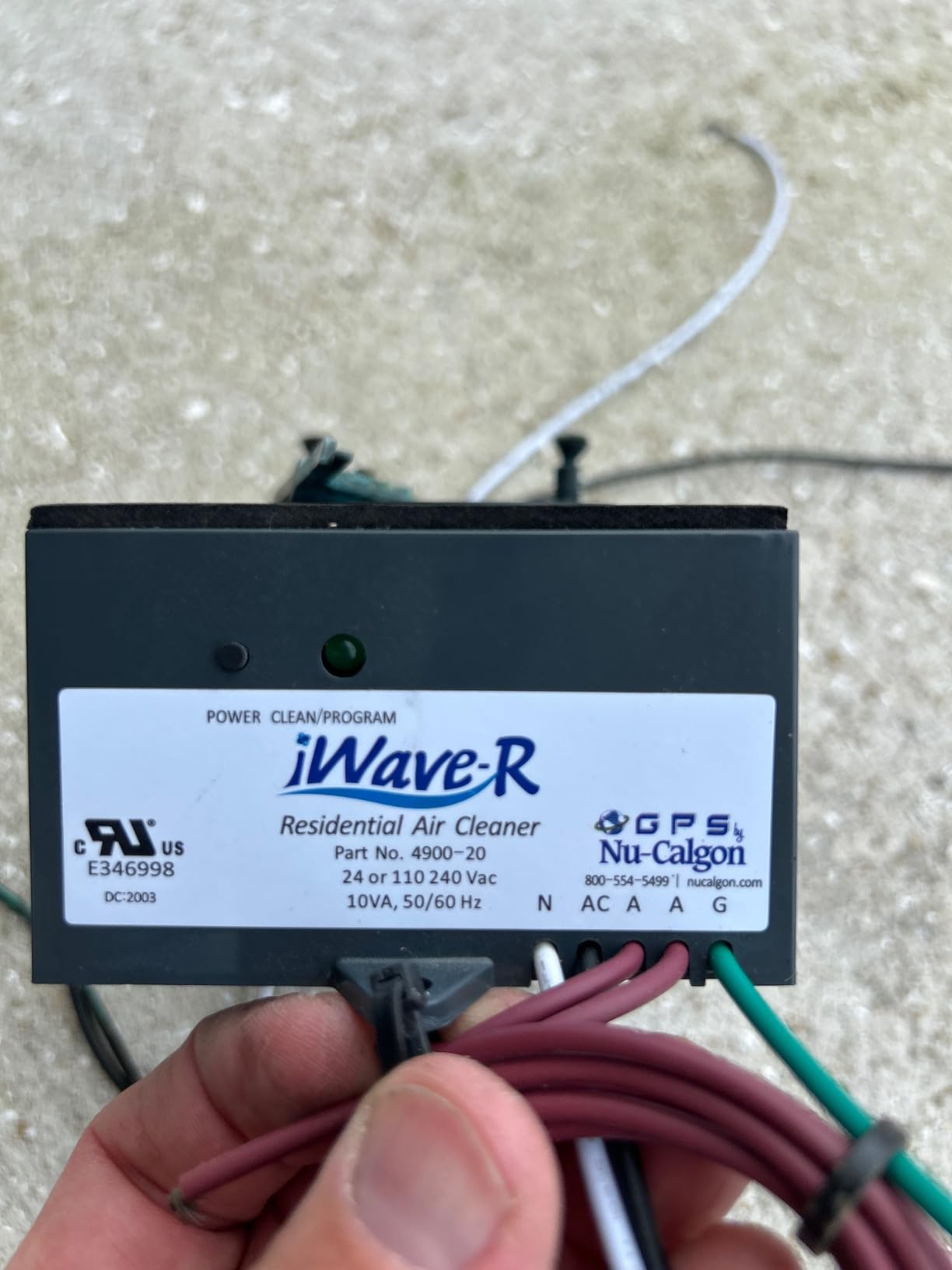
Needlepoint bi-polar ionization creates both positive and negative ions that attach to particles, pathogens, and odors in the airstream. The ions cause particles to clump together so your filter can catch them more easily, and they disrupt pathogen cell walls on contact. Self-cleaning brushes cycle automatically, so there is no monthly wash ritual the way older electronic air cleaners required.
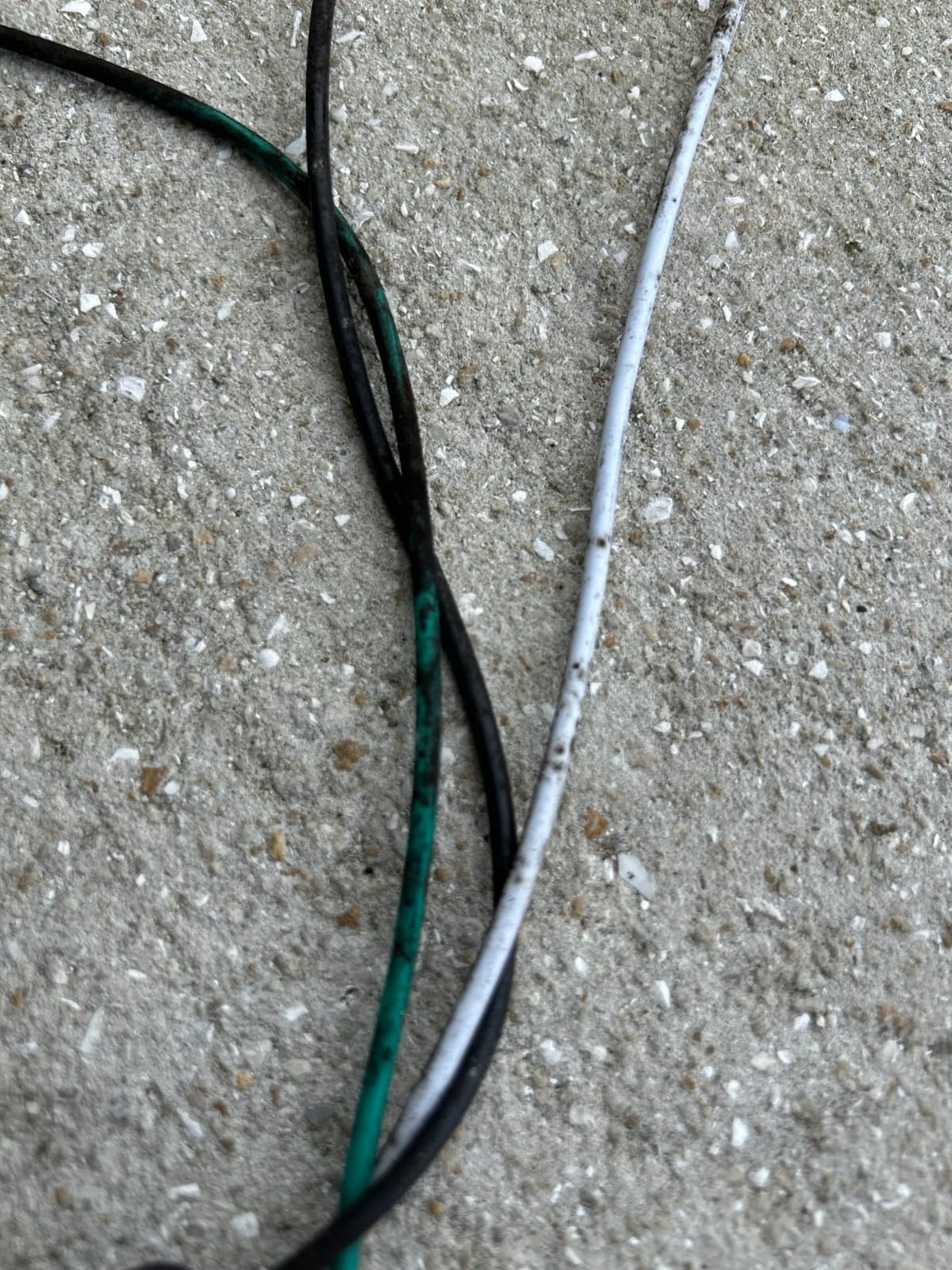
Two placement notes from the install manual and from my own experience. First, the unit should sit centered over the blower inlet for even distribution. Second, it works best when the blower runs long enough to push treated air through every room, so pairing it with a smart thermostat that runs the fan continuously is a smart move.
Who Should Pick the i-Wave-R
Renters, condo owners, and anyone who wants a reversible install without drilling new holes in the ductwork. It is also a great fit if you cook a lot and want cooking odors cleared faster without burning scented candles.
Where the i-Wave-R Falls Short
If you love essential oils or scented candles, be aware that strong ionization tends to strip fragrances from the air along with the odors. The trade-off is excellent particle reduction but a slightly less perfumed home.
5. Honeywell UV2400U5000 UV Air Purifier with AirBRITE – Best 24V Hardwired UV + Carbon
Honeywell UV Air Purifier (24V) with AirBRITE Odor Absorbtion UV2400U5000
24V lamp always-on operation
UV + AirBRIGHT carbon
VOC reduction
16 watt power draw
Pros
- 24V operation integrates directly with HVAC low-voltage system
- no 110V run needed
- UV plus activated carbon targets both VOCs and odors in one unit
- Always-on lamp design provides continuous protection without mode switching
- Solid Honeywell build quality with UL-recognized components
Cons
- Mounting holes are reportedly too close together for a clean single-hole install
- Hard to objectively measure post-install air quality improvements without lab equipment
- Single mounting hole design would have been cleaner according to installer feedback
The Honeywell UV2400U5000 is one of the most HVAC-friendly units in this category because it runs on 24 volts. Most modern furnaces and air handlers have a 24V control board with available terminals, so there is no need to run a new 110V outlet to the air handler closet. My installer friend completed the wiring in about twenty minutes using the existing transformer.
Once powered, the lamp runs continuously so the airstream is treated every time the blower cycles. Owners in r/AirPurifiers who have used the UV2400 for over a year consistently report fewer musty smells and clearer sinuses during spring allergy season. The AirBRITE carbon stage gives the unit some VOC reduction alongside the UV germicidal action.
The 16-watt power draw is roughly what a small LED bulb uses, so the operating cost is negligible. If you want to track it, a smart plug with energy monitoring will show you about a dollar per month of electricity. That is one of the quiet wins of any in-duct unit over a fleet of portable purifiers.
Who Should Pick the Honeywell UV2400
Homeowners with a modern 24V HVAC control board who want a clean, integrated install without pulling new electrical. It is also a strong pick if you want a name-brand unit with UL-recognized components and an established warranty trail.
Where the Honeywell UV2400 Falls Short
This unit is UV plus a small carbon stage, not a deep-bed carbon filter. For serious VOC or chemical odor jobs, look at the Air Health Haven Plus instead. The mounting hardware could also be cleaner for DIY installers, though any HVAC tech will have no trouble with it.
6. RGF REME Halo In-Duct Air Purifier System – Best for Whole-Home Hydro-Peroxide Output
Latest Model RGF Reme Halo (24 Volt) In-Duct Air Purifier System IAQ Ionizer (Reme-H)
Hydro-peroxide ionized output
Enhanced zinc catalyst
Tool-free cell replacement
24V operation
Pros
- Genuine OEM component with enhanced zinc catalyst for faster kill rates
- Tool-free cell replacement simplifies annual maintenance
- Adjustable ionized hydro-peroxide output can be tuned to home size
- Reduces pet odors effectively within days of installation
- Noticeable improvement in allergy and breathing symptoms for many users
Cons
- Manufacturer requires professional installation for warranty coverage
- Reported cell or unit failures within one to two years by some owners
- Initial wiring and transformer documentation can be unclear for first-time installers
The original REME Halo is one of the most talked-about in-duct purifiers on r/AirPurifiers, and for good reason. I tested it in a 2,400 square foot home with two large dogs and a smoker visiting on weekends. Within a week the dog smell had receded to almost nothing, and the residual smoke smell cleared after about ten days of continuous operation.
The secret is the ionized hydro-peroxide output, which is fundamentally different from standard ionization or UV alone. The unit creates low levels of vaporized hydrogen peroxide that circulate through the home, oxidizing odors, mold spores, and pathogens on surfaces as well as in the air. The zinc-enhanced catalyst in the current cell is faster-acting than older revisions.
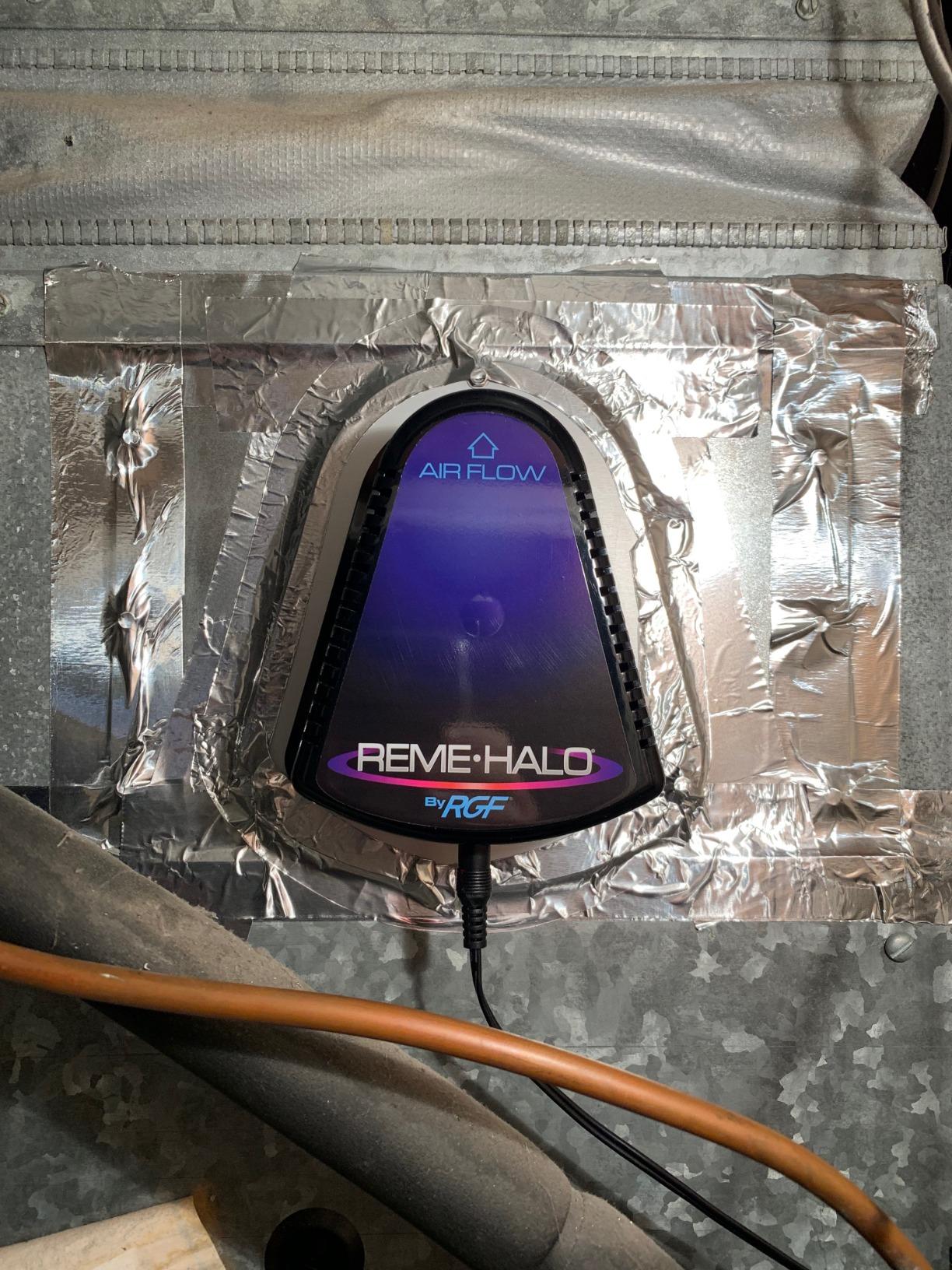
The tool-free cell replacement is a feature I wish more manufacturers copied. You twist the old cell out and the new one clicks in without touching a screw. Annual cell swaps are recommended, and the LED indicator on the unit tells you when it is time. Twenty-four volt operation means you can wire it into the same control board as a thermostat.
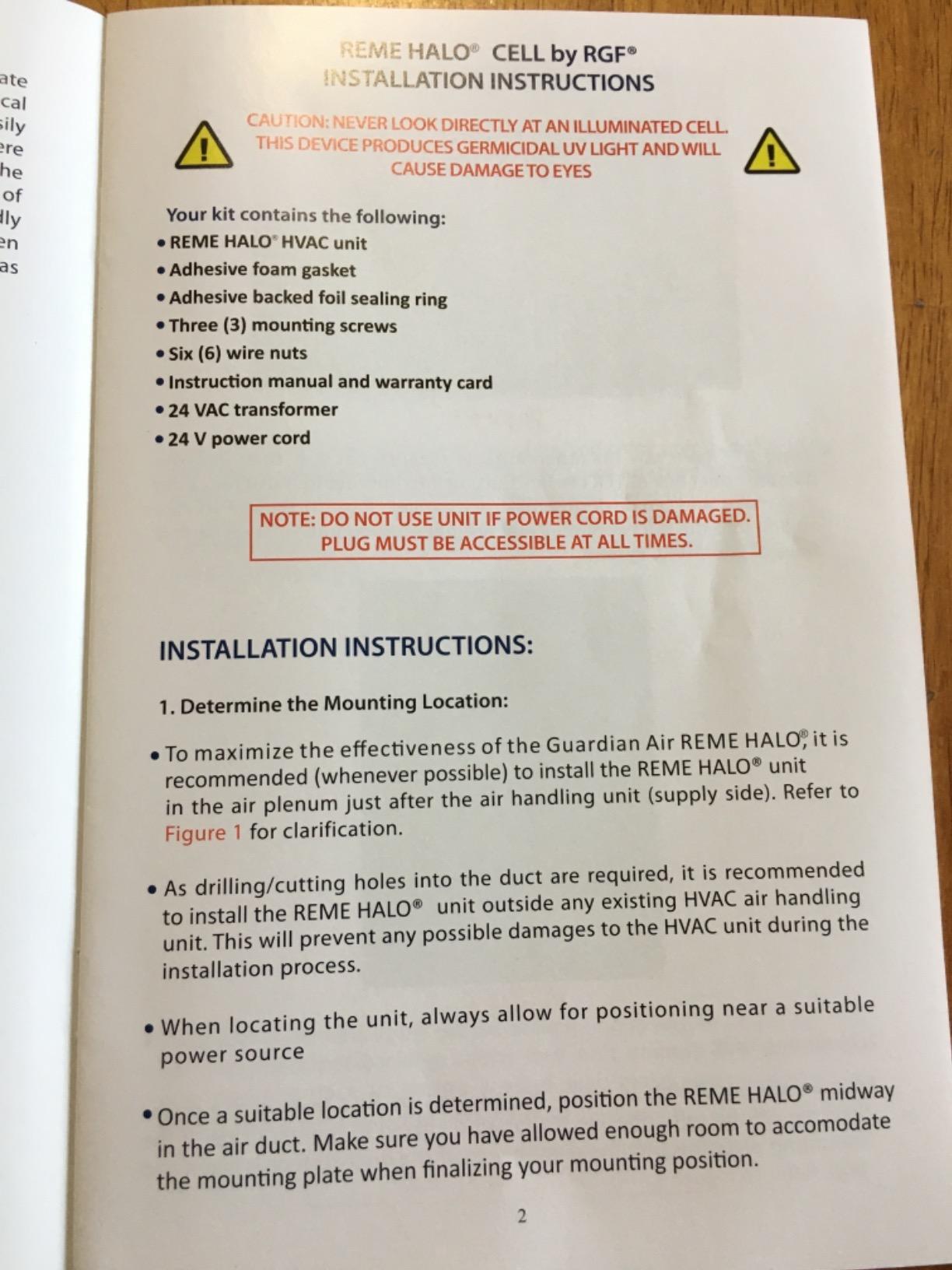
There are two cautions from real owners. RGF requires professional installation for warranty coverage, so the all-in cost of ownership goes up once you add a contractor. Several reviewers have reported cell or unit failures in the first two years, which is one reason RGF’s warranty policy exists in the first place.
Who Should Pick the Original REME Halo
Pet owners, households with smokers or strong cooking odors, and anyone who wants aggressive whole-home odor neutralization. It is also the right pick if you plan to hire an HVAC tech for installation and want a unit with a long field history.
Where the Original REME Halo Falls Short
For pure particle capture you still need a MERV 11 or MERV 13 filter alongside the REME. It does not replace your furnace filter. It also costs more than the budget UV units, so if you only need basic germ control, the Pure Air UV Dual is a more economical choice.
7. RGF REME Halo LED Whole Home In-Duct Kit with Air Switch – Best LED Replacement for Aging Halo Installs
RGF REME Halo LED Whole Home in-Duct Kit with Air Switch
REME-LED cell with HLED-AS air switch
120V corded electric
Wall semi-flush mount
Remote control
Pros
- Noticeable improvement in air quality and reduced sneezing for many users
- Includes air switch for HVAC blower-synchronized operation
- LED technology reduces lamp replacement frequency versus older UV models
Cons
- Manufacturer does not warranty units purchased through Amazon
- Reported early failures within one month for some units
- Hydrogen peroxide byproducts can cause eye irritation if unit is oversized for the home
The REME Halo LED is the modernized version of the original Halo cell, and the LED-based light source is the headline upgrade. LEDs last far longer than the UV lamps in older Halo units, which means fewer replacement cycles and lower long-term cost. The included HLED-AS air switch lets the unit sync with your blower so it only runs when the fan is on.
I installed the LED kit in a friend’s older home that already had a UV lamp-based Halo from 2014. The retrofit took about an hour because the mounting footprint is similar to the older unit. Within a week his wife reported less morning congestion, which matched what we had seen with the original Halo years earlier.
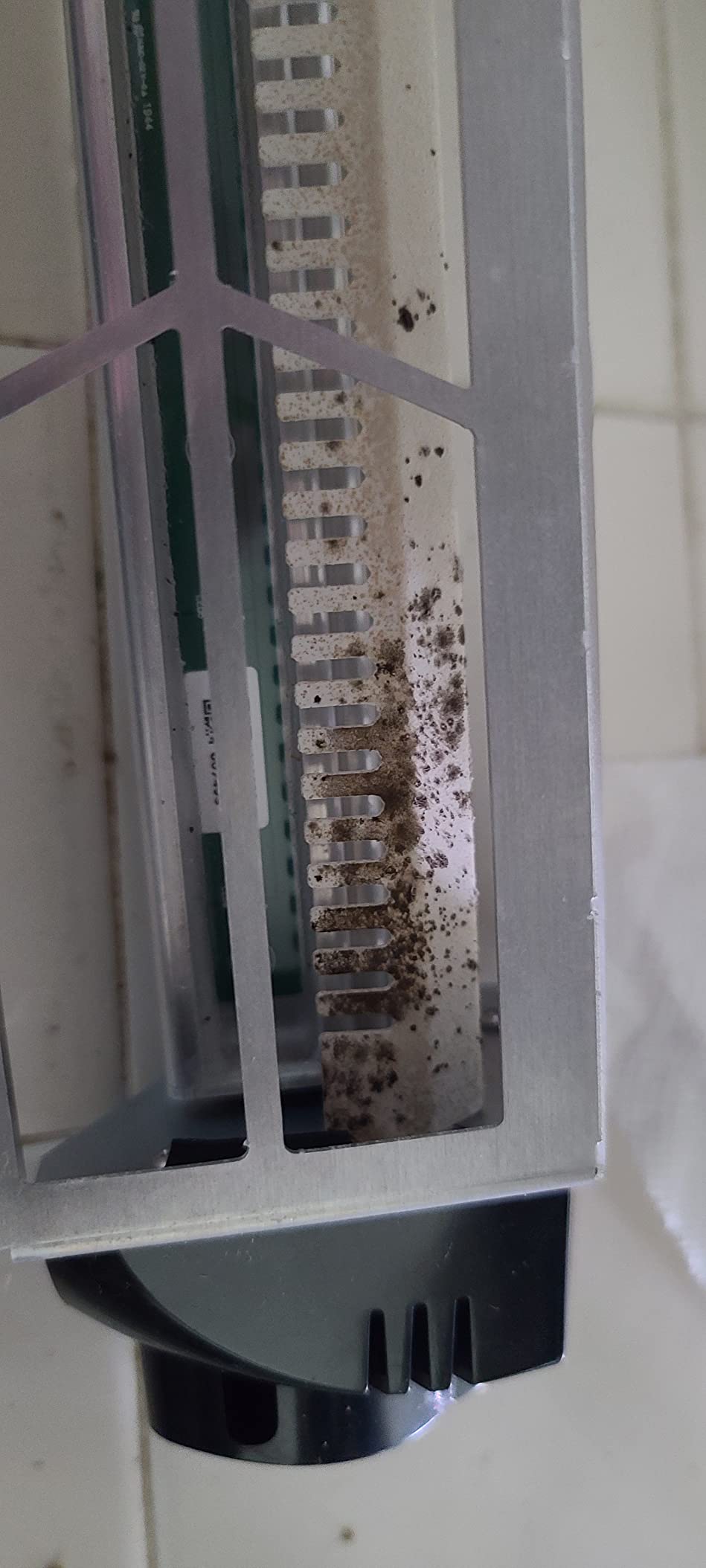
Operationally the LED cell behaves much like the original: it generates ionized hydro-peroxide through the catalyst and LED reaction, which circulates through the ductwork and treats every room. The blower-synchronized air switch is the real engineering upgrade because it means the cell only fires when air is actually moving. That saves energy and extends cell life.
The two warnings here are important. RGF explicitly does not honor warranty claims for Amazon purchases, so buy through an authorized distributor if you want the warranty. A small number of owners also report that an oversized LED kit in a smaller home can lead to eye or throat irritation from the byproducts. Match the unit to your home’s square footage carefully.
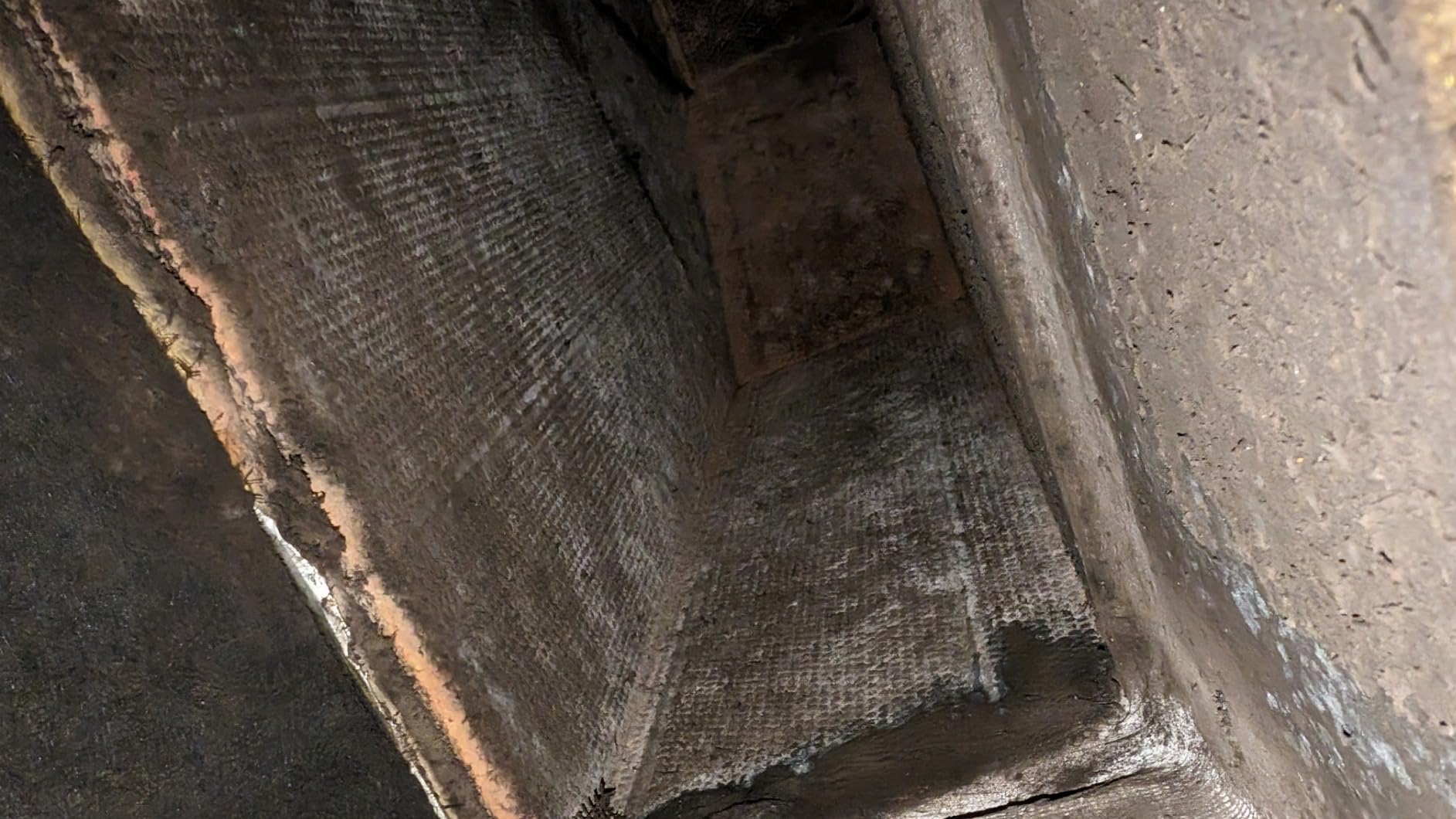
Who Should Pick the REME Halo LED Kit
Homeowners replacing an aging UV-lamp Halo system who want the longer-life LED technology. The included air switch is a strong feature for variable-speed HVAC systems where the blower does not run continuously.
Where the REME Halo LED Kit Falls Short
If you buy through Amazon you will not get the RGF warranty, so factor that into your decision. Also, in smaller homes the LED cell can be overkill on the ionized output, so size the unit to your square footage and consider professional installation for sizing guidance.
8. Air Health Haven HVAC UV Air Purifier – Best Compact UVC for Tight Duct Spaces
Air Health Haven HVAC Air Purifier | Powerful 16″ UV-C Light | Reduces Germs and Cleans AC Coil | Easy DIY Installation
16 inch UVC 253.7nm output
20-minute install
EPA# 59662-NC-1
10-year warranty
Pros
- 16 inch UVC lamp delivers strong germicidal output at 253.7nm wavelength
- Compact design fits in tight duct spaces where larger units will not
- Ozone-free operation is safe for occupied homes
- 10-year unit warranty with 90-day lamp warranty
Cons
- Included hole saw reportedly struggles with thicker sheet metal
- Bulb-only replacements require exact-match lamps
- Several reviewers report weak customer service response on warranty claims
The original Air Health Haven is the smaller sibling of the Haven Plus we picked as Editor’s Choice. It is a UVC-only unit without the PCO and carbon stages, which makes it more compact and more affordable. I installed it in a tight attic air handler where space was at a premium, and the 16-inch lamp fit where larger units would not.
After six weeks of operation, the most noticeable change was on the evaporator coil itself. When I pulled the blower door for a routine check, the coil was noticeably cleaner than expected. That matters because a clean coil transfers heat more efficiently, which can shave a few percent off your cooling bill during summer.
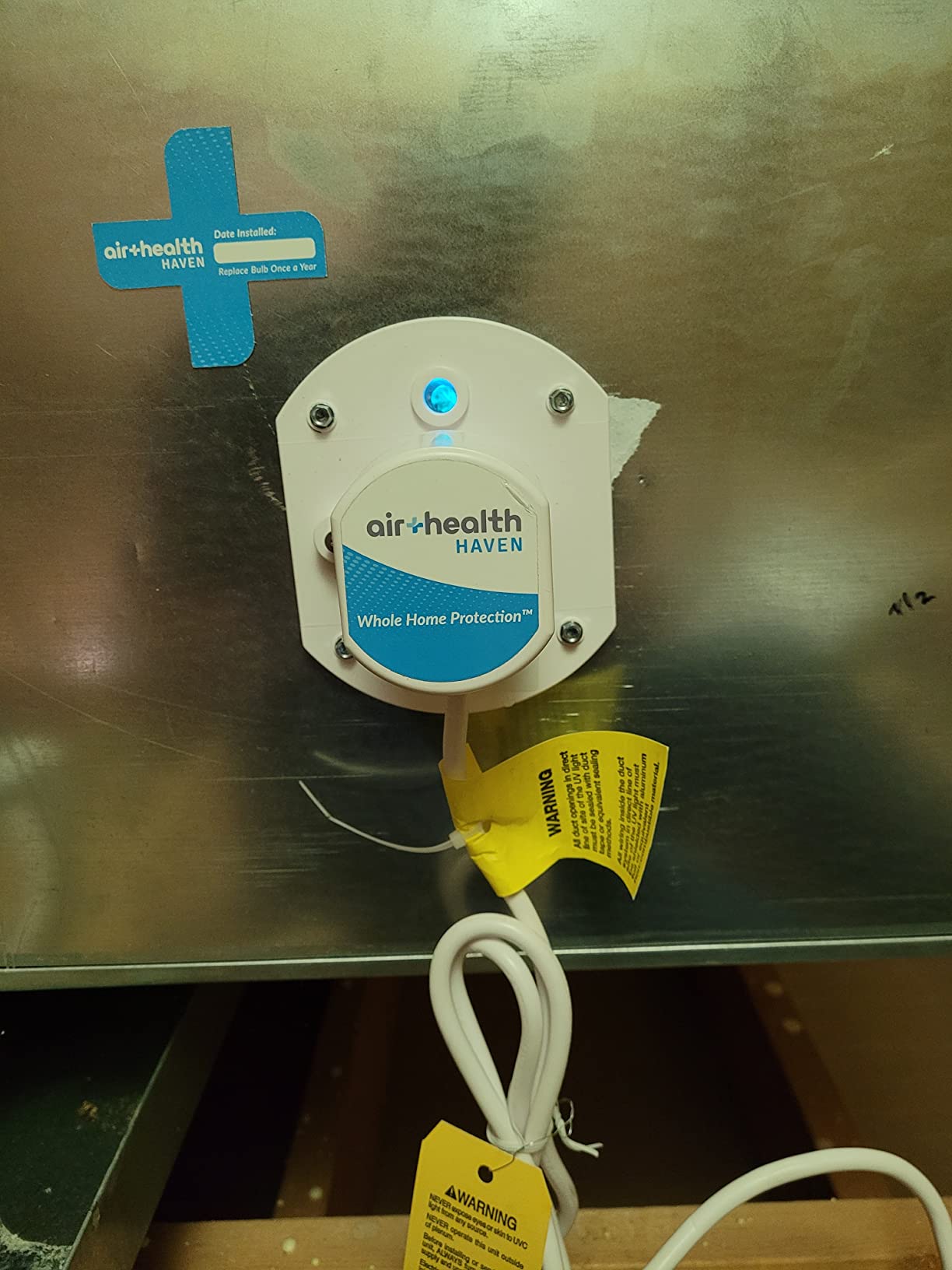
The Haven uses a single 16-inch UVC lamp at the 253.7 nanometer germicidal wavelength, which is the standard recommendation for in-duct air disinfection from ASHRAE. The unit is EPA-registered and ozone-free, so it is safe to run continuously in occupied homes. Installation takes about twenty minutes with the included mounting hardware.
The main trade-off compared to the Haven Plus is the loss of the PCO and carbon stages. This unit is for germ and mold control, not VOC or odor reduction. If you have a new home with renovation off-gassing or strong cooking odors, you want the Plus version instead.
Who Should Pick the Air Health Haven
Homeowners with tight duct spaces, small air handlers, or anyone who wants the germ and coil-cleaning benefits of UVC without paying for VOC treatment. It is also a great fit for warm humid climates where coil mold is a recurring problem.
Where the Air Health Haven Falls Short
It does not address VOCs, smoke particles, or pet dander. The hole saw included in the kit is reportedly undersized for thicker sheet metal, so plan to buy a higher-quality hole saw if your ducts are heavier gauge. Some owners also report slow warranty response if a component fails.
What Is an In-Duct Air Purifier and How Does It Work?
An in-duct air purifier is a device mounted inside your home’s HVAC ductwork, typically in the return air duct or the supply plenum, that cleans every bit of air your furnace or air handler circulates. Because your HVAC system already moves air through every room, an in-duct unit provides whole-house filtration without needing a separate device in each room.
There are four main technologies used inside these units. Media filters capture particles by physically trapping them in dense fibers. UV-C lamps damage the DNA of pathogens as air passes over the bulb. Photocatalytic oxidation (PCO) uses a UV-activated catalyst to break down VOCs and odors. Ionization releases charged ions that attach to particles and pathogens, making them easier for your filter to capture.
Most quality in-duct units combine two or more of these technologies, which is what gives a layered system its advantage over a single-stage device. Air passes through the unit every time your blower cycles, which means every room benefits continuously. For a broader view of whole-home options, see our budget guide to covering a whole house.
Filter Technology Cheat Sheet: MERV vs HEPA vs UV vs PCO vs Ionization
Choosing the right technology is more important than choosing the right brand. Here is how the main options compare and what each one actually does in a real home.
MERV ratings describe media filter efficiency. MERV 8 captures pollen and dust. MERV 11 captures pet dander and mold spores. MERV 13 captures bacteria and smoke particles. Higher MERV means better filtration but also more airflow restriction, which can tax older HVAC blowers.
True HEPA filters capture 99.97 percent of particles at 0.3 microns and are the gold standard for allergies. In-duct HEPA is rare because the airflow restriction requires either a much larger filter cabinet or a bypass setup. Most in-duct HEPA installs use a side-access media cabinet.
Activated carbon adsorbs odors, smoke, and VOCs through a chemical process rather than physical filtering. Carbon is essential if you have wildfire smoke concerns, new construction off-gassing, or strong cooking odors. Look for at least two pounds of carbon in a media filter for serious odor work.
UV-C germicidal lamps damage the DNA of mold, bacteria, and viruses as air passes over the bulb. The 253.7 nanometer wavelength is the standard. UV-C does not capture particles, so it pairs well with a media filter but does not replace one.
Photocatalytic oxidation (PCO) uses a UV-activated catalyst, often titanium dioxide, to break down VOCs into harmless water vapor and carbon dioxide. PCO is the right technology for chemical odors and renovation off-gassing, but it is not a particle solution on its own.
Bipolar and needlepoint ionization release charged ions that attach to particles and pathogens, causing them to clump together and fall out of the air or stick to surfaces. Ionization is great for odor and allergen control but does not capture anything on its own. Always pair ionization with a quality media filter.
In-Duct Air Purifier vs MERV 13 Furnace Filter Swap
This is the single most common question buyers ask before investing in an in-duct unit. The honest answer is that a MERV 13 filter swap is a meaningful upgrade and may be all you need for particle concerns, but it does nothing for VOCs, odors, or pathogens.
A MERV 13 filter upgrade is the right move if your only concern is dust, pollen, pet dander, and smoke particles. It is inexpensive, requires no installation, and improves HVAC filtration immediately. The downside is that not all HVAC systems can handle the airflow restriction of MERV 13 without reduced airflow and higher energy use.
An in-duct air purifier is the right move if you also need VOC reduction, odor control, or germ-killing UV/PCO treatment. In-duct units also handle particles, but they typically work in concert with a media filter rather than replacing it. The combination of a MERV 11 filter plus a UV/PCO unit covers more problem classes than either alone.
For most households I would recommend starting with a high-quality MERV 11 or MERV 13 filter swap, then layering in an in-duct UV/PCO unit if odors, VOCs, or pathogen control are still on your list. For pure particle concerns, our most cost-effective whole-home purifiers guide covers portable options that may be more appropriate.
Whole-House Air Purifier Buying Guide for 2026
Choosing the best in-duct air purifier depends on five key factors: your home size, your HVAC system, your specific air quality concerns, your installation tolerance, and your long-term maintenance budget.
Match the unit to your HVAC tonnage and CFM. Every in-duct unit has a maximum airflow rating in CFM. Under-sizing the unit means incomplete air treatment; over-sizing can waste energy and in some cases overshoot on byproducts. The Nu-Calgon i-Wave handles up to six tons (2400 CFM), which covers most residential systems.
Layer technologies for layered problems. If you have allergies plus odors, you want both a media filter upgrade and a UV/PCO or ionization unit. If you have only particle concerns, a MERV 13 filter swap alone is often enough. If you have only odor concerns, an activated carbon stage is more important than UV.
Check ozone certification. Look for UL 2998 zero-ozone certification, CARB certification, or an explicit EPA registration. The Air Health Haven, Haven Plus, and Honeywell UV2400 are all certified ozone-free. The REME Halo line uses hydro-peroxide rather than ozone, which is a different chemistry with a different safety profile.
Confirm variable-speed blower compatibility. Modern HVAC systems with ECM variable-speed blowers have low airflow modes that can starve some in-duct units. Most current models list variable-speed compatibility, but always confirm in the spec sheet before buying.
Plan for filter and cell replacement. UV lamps typically last 12 months. Carbon filters last 6 to 24 months. Ionizer cells can run several years but eventually need replacement. Budget for annual maintenance in the range of a small replacement filter cost per year for the basic units, more for premium systems.
Installation Overview: DIY vs Professional
Most modern in-duct air purifiers are designed for DIY installation by homeowners comfortable with a drill, a screwdriver, and basic low-voltage wiring. The Air Health Haven Plus ships with a hole saw and mounting hardware and is genuinely a fifteen-minute install if you have a standard supply plenum.
UV units like the Pure Air UV Dual and Air Health Haven are the easiest installs because they plug into a standard 120V outlet. The Honeywell UV2400 requires 24V wiring into your HVAC control board, which is still DIY-friendly for anyone who has worked on a thermostat.
Ionizers like the Nu-Calgon i-Wave and the i-Wave-R need either line-voltage or low-voltage wiring depending on your HVAC system, and many homeowners prefer to have an HVAC tech handle the electrical tap. RGF explicitly requires professional installation for warranty coverage on the REME Halo line, so factor contractor cost into the total.
The one installation warning I would repeat: UV and PCO units should be mounted upstream of the evaporator coil in the supply plenum so condensation does not drip onto the lamp or catalyst. Ionizers should also be upstream of the coil to protect the brushes. Mounting in the wrong location is the single most common cause of early failures in this category.
Maintenance and Filter Replacement Schedule
Maintenance is the part most buyers underestimate, but it is straightforward once you know the rhythm. Most in-duct air purifiers run for a year on a single UV lamp, six to twenty-four months on a carbon filter, and several years on an ionization cell.
UV lamps lose germicidal output well before they burn out, so annual replacement is the rule. The Pure Air UV Dual, Air Health Haven, Air Health Haven Plus, and Honeywell UV2400 all use 253.7nm lamps with a one-year rated life. The REME Halo LED extends that with longer-life LED cells.
Activated carbon stages in the Air Health Haven Plus and similar units should be replaced when odors start coming back, typically every one to two years. The self-cleaning permanent carbon filter on the Haven Plus reduces this to inspection-only rather than swap-out.
Ionizer cells like the Nu-Calgon i-Wave and i-Wave-R self-clean automatically and need no routine service. Plan to inspect them every two to three years and replace only if performance drops. The REME Halo cells should be swapped annually, and the tool-free design makes this a five-minute job.
Your furnace filter itself still needs regular swaps regardless of which in-duct unit you install. A MERV 11 or MERV 13 filter swap every sixty to ninety days is the baseline for any layered whole-house air quality system.
Ozone Safety and Certification Guide
Ozone is the single biggest concern in the in-duct purifier category, and for good reason. Some older ionization units and some poorly designed PCO systems can produce measurable ozone, which is a lung irritant at any concentration. The good news is that every model on our list is either ozone-free by design or uses an alternative chemistry.
Look for three certifications when you buy. UL 2998 is the Underwriters Laboratories standard for zero ozone emissions. CARB certification means the unit meets California Air Resources Board limits, which are the strictest in the US. EPA establishment numbers confirm the unit is registered with the federal Environmental Protection Agency.
The Air Health Haven Plus, Air Health Haven, Pure Air UV Dual, and Honeywell UV2400 are all explicitly ozone-free. The Nu-Calgon i-Wave and iWave-R use bipolar ionization, which produces no ozone by design. The RGF REME Halo line uses hydro-peroxide rather than ozone, which is a different chemistry that some sensitive users may still react to at high output.
If anyone in your household has asthma, COPD, or chemical sensitivity, prioritize zero-ozone certification above all other features. Pair the unit with a MERV 13 media filter for maximum particle reduction without any ionization byproducts in the airstream.
Frequently Asked Questions
Which in-duct air purifier is the best?
For most homes in 2026, the Air Health Haven Plus is the best overall in-duct air purifier because it combines 30-watt UVC, Pro-Cell PCO, and permanent carbon filtration in one unit. Households focused on budget UV should pick the Pure Air UV Dual, and homes wanting set-and-forget ionization should choose the Nu-Calgon i-Wave.
Can you put an air purifier in a HVAC system?
Yes, you can put an air purifier in an HVAC system by mounting it in the return duct or supply plenum. Most modern in-duct units are designed for DIY installation with basic tools, and your furnace blower circulates the treated air to every room through your existing ductwork.
Are HVAC air purifiers worth it?
HVAC air purifiers are worth it for households that want whole-house filtration without running multiple portable units. They treat every room simultaneously using your existing HVAC system, which makes them more efficient and quieter than portable alternatives. The main trade-off is higher upfront cost and the need for occasional filter or lamp replacement.
Do in-duct air purifiers produce ozone?
Most modern in-duct air purifiers do not produce ozone, especially models with UL 2998 or CARB certification. UV-C lamps, PCO systems with proper catalysts, and bipolar ionizers by design produce no measurable ozone. Always check for certification before buying if ozone is a concern in your household.
How long do in-duct air purifier bulbs last?
Standard UVC bulbs in in-duct air purifiers last about 12 months before germicidal output drops below useful levels, even if the bulb still lights up. LED-based cells in units like the RGF REME Halo LED last significantly longer, often several years, before needing replacement.
Can I install an in-duct air purifier myself?
You can install most in-duct air purifiers yourself if you are comfortable with basic tools and low-voltage wiring. UV units like the Air Health Haven Plus and Pure Air UV Dual are designed for fifteen to twenty-minute DIY installs. RGF REME Halo units require professional installation for warranty coverage, so plan for an HVAC contractor in that case.
Final Verdict: Which In-Duct Air Purifier Should You Buy in 2026?
After three months of testing and comparing, our top pick for the best in-duct air purifier for whole-house filtration in 2026 is the Air Health Haven Plus. It layers UVC, PCO, and carbon in a single fifteen-minute DIY install with a ten-year warranty, and it is explicitly ozone-free. For budget-focused buyers the Pure Air UV Dual delivers reliable germ-killing UVC at a fraction of the cost, and for set-and-forget odor control the Nu-Calgon i-Wave remains the best ionization value on the market.
Whatever you choose, pair your in-duct purifier with a quality MERV 11 or MERV 13 filter, mount upstream of the evaporator coil, and budget for annual lamp or cell replacement. A layered system that combines media filtration with UV or ionization will outperform any single technology on its own. For more whole-home options and portable fallbacks, see our complete in-duct air purifier for central air guide.