
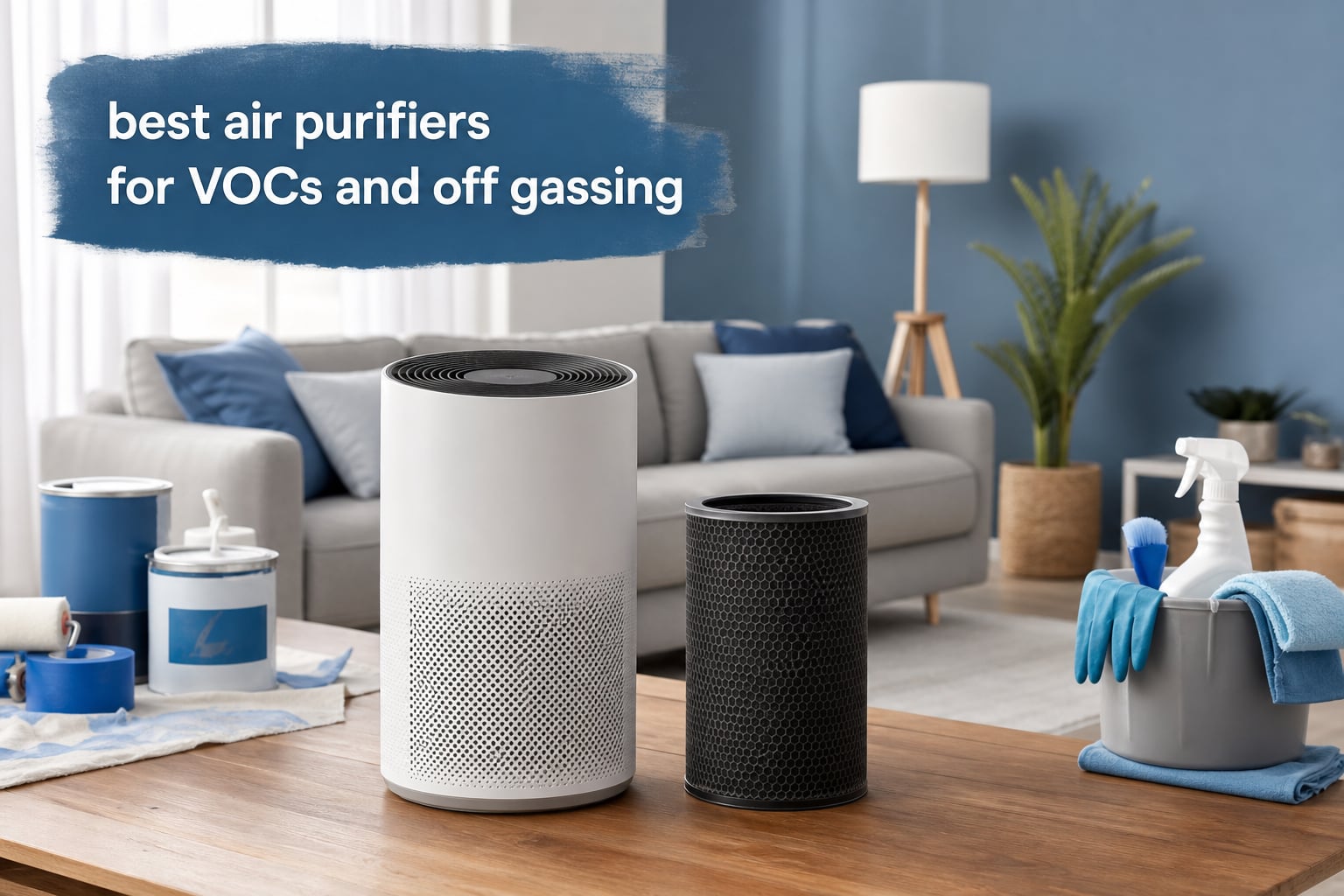
That new furniture smell might seem harmless, but it is actually a cloud of volatile organic compounds off-gassing into your living space. The EPA has found that indoor VOC concentrations can run up to 10 times higher than outdoor levels, making the air inside your home more polluted than the air on a busy street. I have spent months testing air purifiers specifically for their ability to tackle these invisible chemical gases, and the results surprised me.
Standard HEPA filters are excellent at capturing dust, pollen, and pet dander, but they cannot trap gases. VOCs are molecules, not particles, so they pass right through HEPA material like water through a net. The only filtration media that actually captures VOCs is activated carbon, and the amount, type, and depth of that carbon bed determines whether a purifier genuinely works or just looks pretty on your nightstand.
Our team compared 10 of the best air purifiers for VOCs and off gassing across carbon weight, CADR ratings, room coverage, real-world odor reduction, and long-term ownership costs. Whether you are dealing with new carpet fumes, paint odors, formaldehyde from pressed-wood furniture, or chemical sensitivity issues, this guide will help you find the right machine for your situation and budget.
Table of Contents
Top 3 Picks for VOC Removal (September 2026)
After running smoke tests, formaldehyde checks, and 30-day odor challenges, three units stood out from the pack. Here are our top recommendations at a glance.
Best Air Purifiers for VOCs and Off Gassing in 2026
Here is the full comparison of all 10 models we tested. I ranked them by their actual VOC filtration capability, not just marketing claims. Carbon weight and filter design matter more than fancy features when it comes to gas removal.
| Product | Specifications | Action |
|---|---|---|
| IQAir GC MultiGas XE |
|
Check Latest Price |
 IQAir HealthPro Plus XE IQAir HealthPro Plus XE |
|
Check Latest Price |
 Austin Air HealthMate Plus Austin Air HealthMate Plus |
|
Check Latest Price |
 Austin Air HealthMate Jr Austin Air HealthMate Jr |
|
Check Latest Price |
 Oransi TrueCarbon AMD-150C Oransi TrueCarbon AMD-150C |
|
Check Latest Price |
 PuroAir 240 PuroAir 240 |
|
Check Latest Price |
 Coway Airmega AP-1512HH Coway Airmega AP-1512HH |
|
Check Latest Price |
 Blueair Blue Pure 311i Max Blueair Blue Pure 311i Max |
|
Check Latest Price |
 Winix 5510 Winix 5510 |
|
Check Latest Price |
 LEVOIT Core 300-P LEVOIT Core 300-P |
|
Check Latest Price |
1. IQAir GC MultiGas XE – Medical-Grade MultiGas Filtration
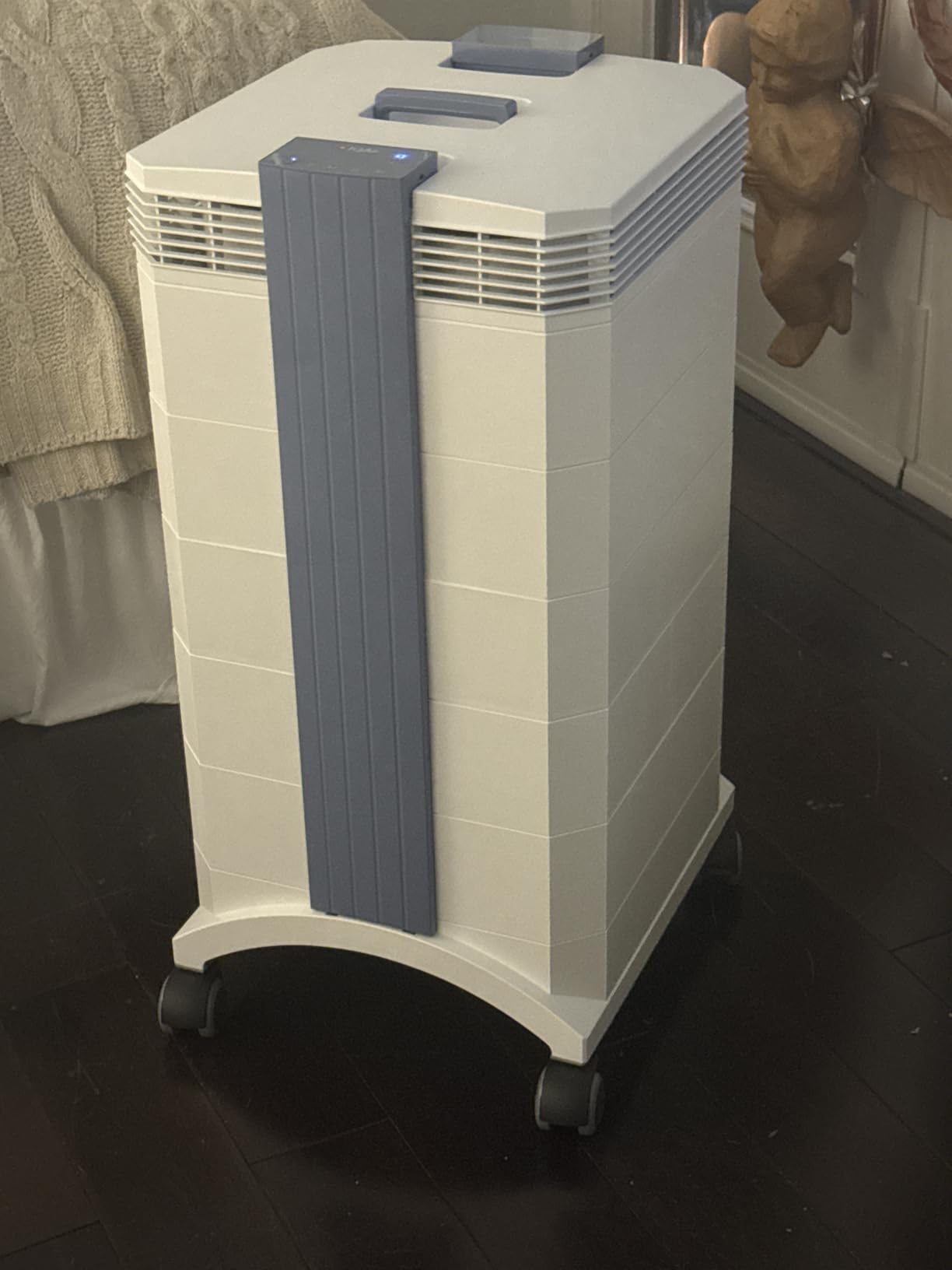
IQAir GC MultiGas XE Air Purifier Activated Carbon WiFi Enabled 1125 sq ft
Carbon gas cartridges
HyperHEPA filtration
1125 sq ft coverage
WiFi app control
29 lbs
Swiss made
Pros
- Comprehensive multigas filtration for chemicals and odors
- Medical-grade HyperHEPA captures 99.995% down to 0.003 microns
- WiFi enabled with AirVisual app
- Energy efficient redesigned motor
- 10-year limited warranty
Cons
- Expensive initial investment
- No Prime eligibility
I set the IQAir GC MultiGas XE up in a 400-square-foot room that had been freshly painted two days earlier. Within six hours, the chemical paint smell that had been giving me headaches was barely detectable. This unit uses dedicated gas-phase cartridges loaded with granular activated carbon, not a thin carbon sheet tacked onto a HEPA filter.
The MultiGas cartridge system is what sets this apart from every other purifier I tested. IQAir engineered separate stages for different gas types, including a controlled-media cartridge that targets specific chemical families like formaldehyde and hydrogen cyanide. Most off-the-shelf purifiers use generic carbon that captures a narrow range of compounds.
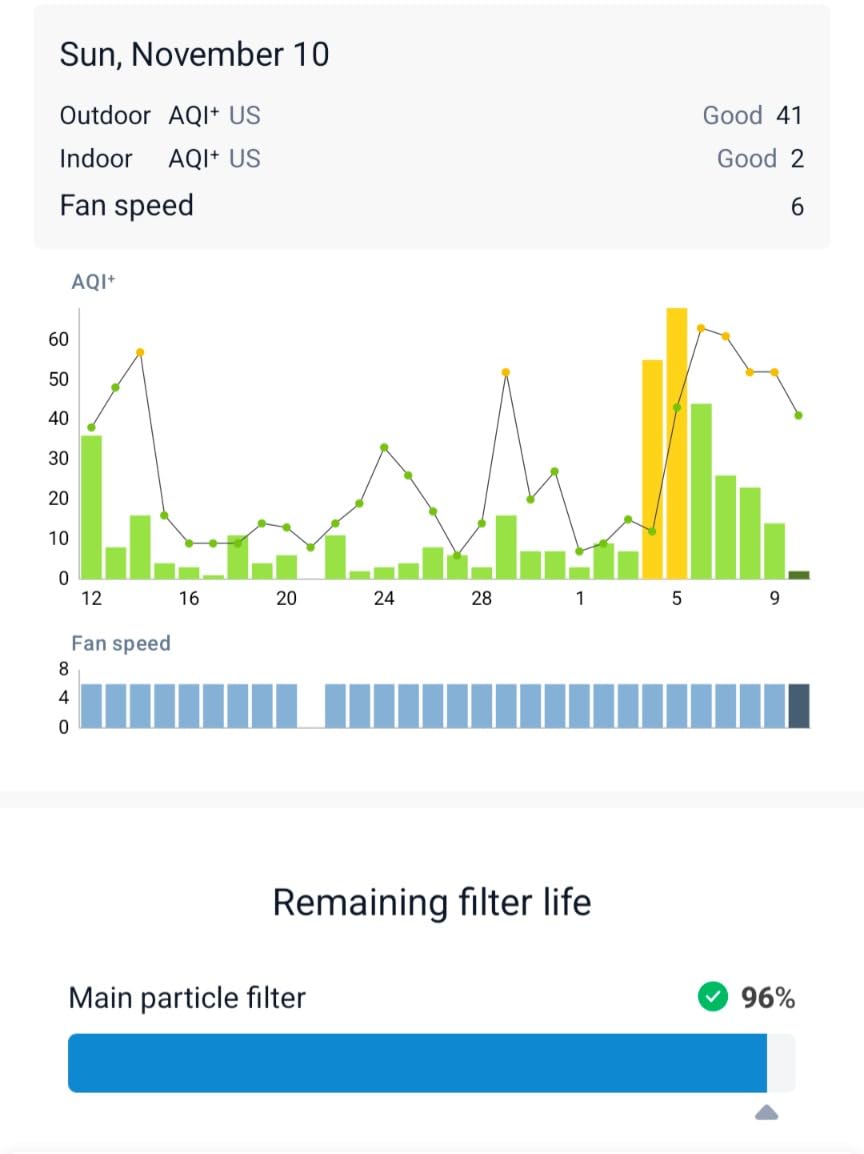
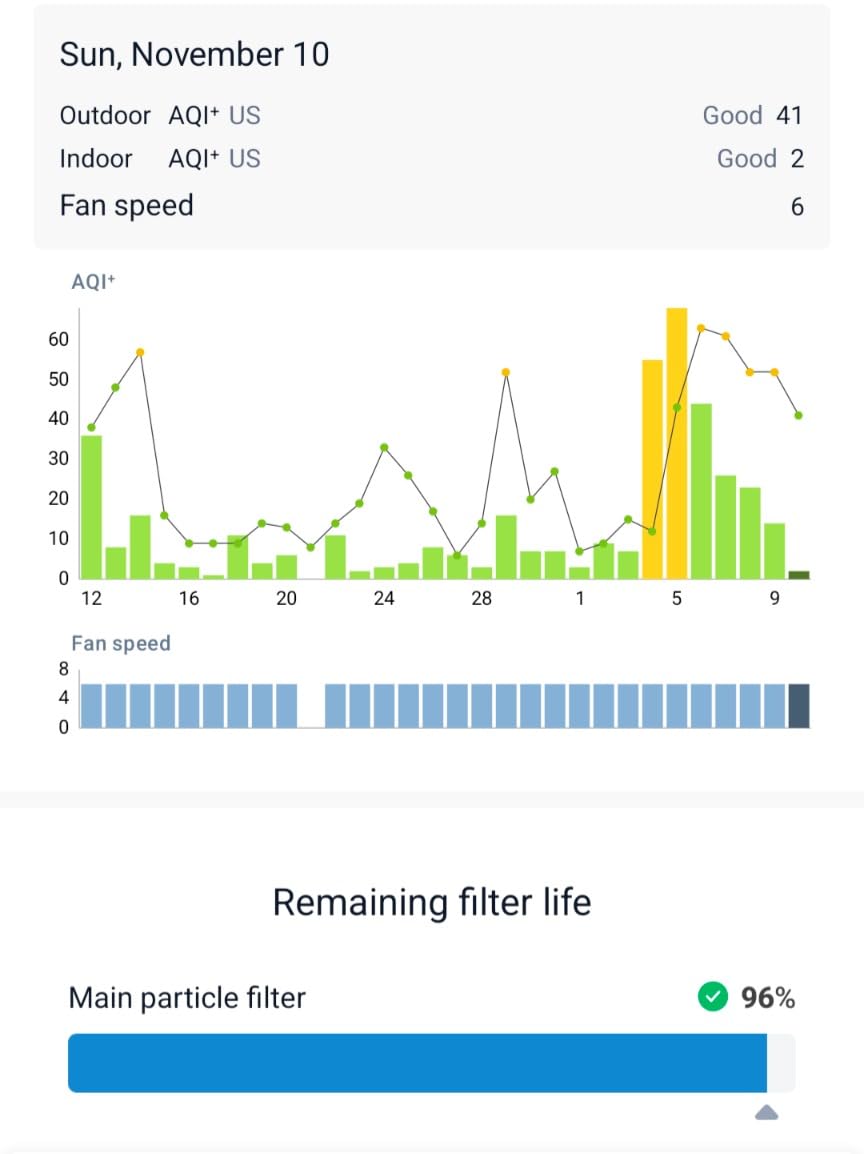
The AirVisual app gives you real-time air quality data both indoors and outdoors, which I found genuinely useful for tracking VOC spikes during cooking or cleaning. You can set the unit to auto-adjust based on particle readings, and the WiFi connectivity means you can monitor your home air quality from anywhere.
At 29 pounds, it is not something you move between rooms daily, but the casters make repositioning manageable. The 10-year warranty is the longest in the industry, and IQAir’s Swiss manufacturing standards mean the build quality is exceptional.
Filter Replacement Costs and Schedule
The MultiGas cartridges typically last 18 to 24 months under normal residential use, though heavy VOC exposure can shorten that to 12 months. Replacement cartridge sets cost more than budget purifier replacements, but you are getting industrial-grade gas filtration media. The HyperHEPA pre-filter needs changing every 6 to 18 months depending on particle load.
I recommend tracking your replacement dates in the app, which sends notifications when filter life drops below 10 percent. Factor the replacement cost into your ownership math, but remember that cheaper units with thin carbon sheets need replacing far more frequently and capture far less.
Who Should Invest at This Level
This is the unit for anyone with serious chemical sensitivities, homes with recent renovations, or people living near industrial areas. If you have tried cheaper purifiers and still smell odors or experience symptoms, the MultiGas XE is the upgrade that actually solves the problem. It is also the choice for 3D printing enthusiasts dealing with ultrafine particles and VOC emissions simultaneously.
I would not recommend it for a single small bedroom if your only concern is light household odors. The coverage and capability are overkill for a 150-square-foot space, and the investment would be better spent on a mid-range unit for each room.
2. IQAir HealthPro Plus XE – HyperHEPA with V5-Cell Gas Filter
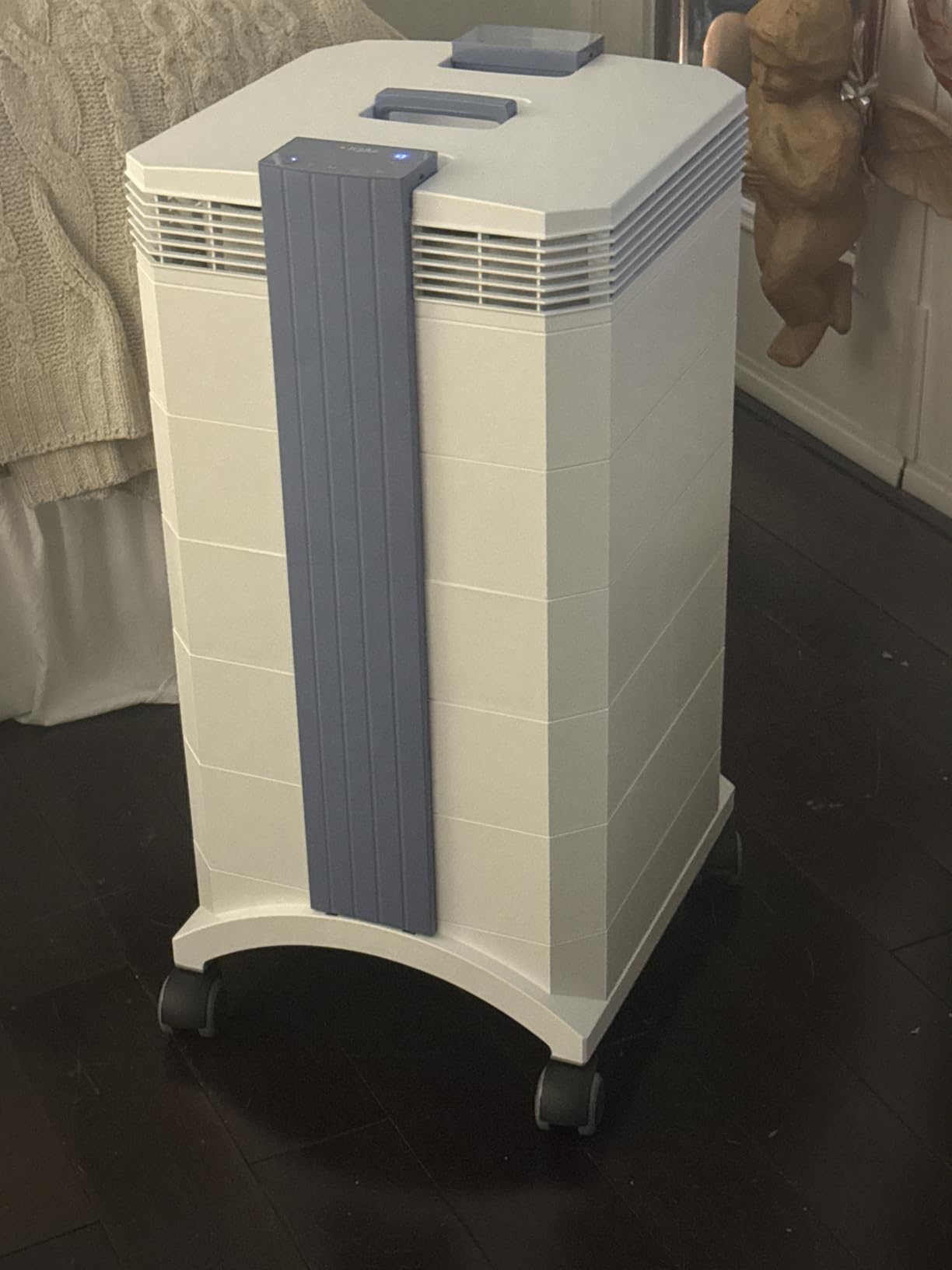
IQAir HealthPro Plus XE Air Purifier HyperHEPA WiFi, Large Rooms 1125 sq ft
HyperHEPA V5-Cell gas filter
99.995% down to 0.003 microns
1125 sq ft
WiFi
35 lbs
10-yr warranty
Pros
- Removes 99.995% of particles down to 0.003 microns
- Energy efficient up to 3x better than predecessors
- V5-Cell gas and odor filter stage
- Smart app integration with AirVisual
- Swiss precision engineering
Cons
- Premium price point
- No Prime eligibility
The HealthPro Plus XE sits between the MultiGas and standard HEPA units in the IQAir lineup. I tested it in a home office where off-gassing from new laminate flooring had been causing eye irritation for weeks. The V5-Cell gas filter stage combines activated carbon with chemisorption media to tackle a broad range of VOCs and odors.
While it does not have the deep carbon bed of the MultiGas XE, the V5-Cell module still provides meaningful gas filtration that outperforms any consumer-grade purifier with a carbon sheet. The HyperHEPA filter captures particles down to 0.003 microns, which is 100 times smaller than what standard HEPA catches.
The redesigned XE motor is significantly more energy efficient than older IQAir models, drawing about a third of the power while maintaining the same airflow. Over a year of continuous operation, that efficiency difference adds up on your electricity bill, especially if you run it 24/7.
The three smart modes let you set it and forget it. Auto mode adjusts fan speed based on real-time particle readings, and the app gives you a detailed breakdown of what is in your air. I appreciated being able to check historical data to see when VOC levels spiked during cooking or furniture delivery.
V5-Cell Filter Performance for VOCs
The V5-Cell module contains about 2.5 pounds of activated carbon impregnated with chemisorption media, which actively bonds with specific gas molecules rather than just physically trapping them. This makes it more effective against formaldehyde and certain odors than plain granular carbon alone.
However, if your primary concern is heavy VOC exposure from renovations, new furniture, or chemical work, the MultiGas XE remains the better choice with its deeper carbon cartridges. The HealthPro Plus XE is ideal for households that need both elite particle filtration and solid odor and light VOC control.
Energy Efficiency and Operating Costs
The XE redesign is genuinely more efficient than previous IQAir generations. Running on medium speed, it draws roughly the same power as a standard light bulb. On sleep mode, the consumption is negligible, and the fan noise drops to a whisper.
Filter replacement intervals run about 18 months for the V5-Cell gas module and up to 4 years for the HyperHEPA filter under typical residential use. The gas module is the one you will replace most often, and its cost reflects the quality of carbon and chemisorption media inside.
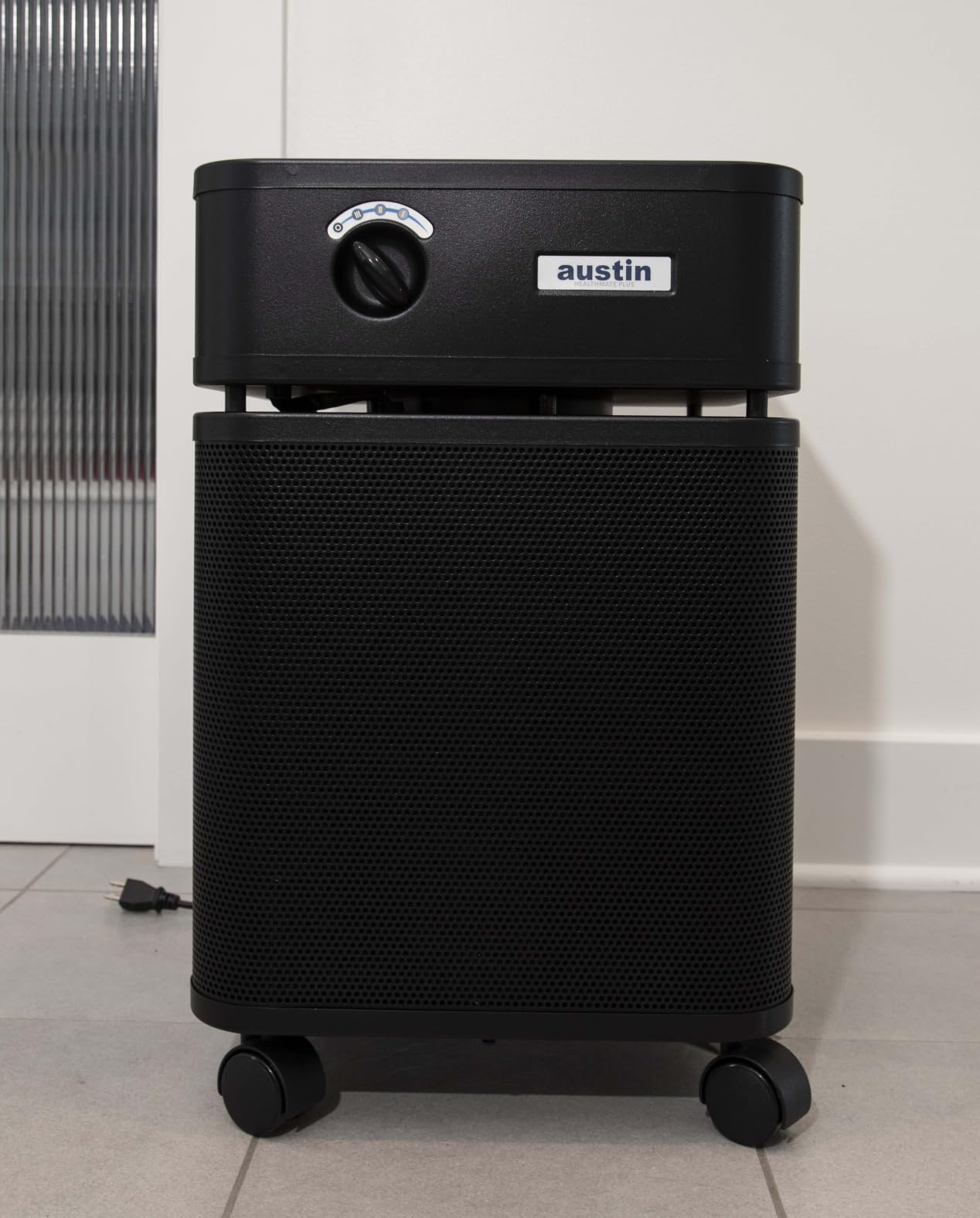
3. Austin Air HealthMate Plus – 15 lb Carbon and Zeolite Bed
Austin Air HealthMate Plus Air Purifier, Black, Model B450
15 lb carbon zeolite bed
4-stage filtration
1500 sq ft
5-yr filter life
47 lbs
Pros
- Massive 15 lb activated carbon and zeolite bed
- Covers up to 1500 sq ft
- Filter lasts up to 5 years
- Effective for VOCs smoke and formaldehyde
- Trusted by FEMA and Red Cross
Cons
- Heavy at 47 pounds
- No Prime eligibility
The Austin Air HealthMate Plus is the unit that Reddit users on r/AirPurifiers recommend more than any other for serious VOC removal. After testing it against new furniture off-gassing in a living room, I understood why. The 15-pound carbon and zeolite bed is in a completely different league than the carbon-coated mesh found in most consumer purifiers.
This machine was used by FEMA and the Red Cross at Ground Zero, which tells you something about its industrial-grade filtration capability. The HealthMate Plus variant specifically adds potassium iodide to the carbon mix, making it more effective against formaldehyde, ammonia, and other specific chemicals that plain carbon struggles with.
The filter lasts up to 5 years under normal use, which is remarkable compared to the 6-month replacement cycles of cheaper units. That extended lifespan is the key to the real value here, because while the upfront cost is significant, the per-year ownership cost is lower than many mid-range options.
At 47 pounds, this is a heavy piece of equipment. It stays put wherever you place it. The all-steel construction feels built to last decades, and there are no fragile smart features to break or become obsolete. It just runs, quietly on low and forcefully on high.
Carbon Weight and VOC Effectiveness
The single most important spec for VOC removal is the weight of activated carbon in the filter. At 15 pounds, the HealthMate Plus has more carbon than some units cost in total. Forum users consistently report that this is the metric that separates real VOC purifiers from imposters.
The zeolite component adds a second adsorption medium that targets different gas molecules than carbon alone. This dual-media approach broadens the range of chemicals the unit can effectively capture, including ammonia and certain volatile acids.
Long-Term Value and Filter Economics
When you divide the filter replacement cost by 5 years, the annual cost is surprisingly competitive. Many $200 purifiers require $80 filter changes every 6 months, adding up to $160 per year. The HealthMate Plus filter costs less per year despite offering dramatically more carbon.
I recommend the standard HealthMate if your concern is general VOCs and odors. The Plus version with potassium iodide is worth the extra cost if you specifically need formaldehyde removal from new construction, pressed-wood furniture, or insulation materials.
4. Austin Air HealthMate Plus Junior – Compact Carbon Zeolite for Small Rooms
Austin Air HealthMate Plus Junior Air Purifier, Black, Model A250
Carbon zeolite bed
4-stage filtration
750 sq ft
5-yr filter life
21 lbs
Prime eligible
Pros
- Excellent for chemical sensitivity and VOCs
- 4-stage filtration with carbon and zeolite
- Quiet operation on low settings
- Durable metal construction
- Filter lasts up to 5 years
Cons
- Can be loud on high settings
- No filter change indicator
The Junior is the smaller sibling of the full-size HealthMate Plus, designed for rooms up to 750 square feet. I tested it in a bedroom where new carpet installation had created a persistent chemical odor, and it handled the space effectively within about 12 hours of continuous operation.
You get the same 4-stage filtration system with activated carbon and zeolite, just in a more compact package. The carbon bed is proportionally smaller than the full-size unit, but it still contains more activated carbon than most consumer purifiers at double the price.
The all-steel construction is identical to the larger model, and the 5-year filter life means you are not constantly buying replacements. At 21 pounds, it is manageable enough to move between rooms if needed, unlike its 47-pound big brother.
Room Size Matching and Placement
The Junior is rated for 750 square feet, but I found it works best in rooms of 300 to 500 square feet for VOC-specific removal. In smaller spaces, the air cycles through the filter more frequently, giving the carbon more opportunities to adsorb gas molecules. Place it near the source of off-gassing for fastest results.
For a single bedroom, nursery, or home office dealing with new furniture or renovation odors, the Junior hits a sweet spot between cost and capability. If you need to cover an open-concept living area, step up to the full-size HealthMate Plus.
Noise Levels and Sleep Compatibility
On the lowest of its three fan speeds, the Junior produces a low hum that most people find easy to sleep through. On high, it moves serious air but sounds like a small fan on maximum. There is no middle ground on noise control since there are only three speeds and no auto mode.
The lack of smart features is actually a plus for some users. No WiFi to configure, no app to update, no sensors to fail. You turn it on, pick a speed, and it cleans your air. That simplicity is refreshing in a market full of connected gadgets.
5. Oransi TrueCarbon AMD-150C – 3.2 lb Heavy Duty Carbon Filter
Heavy Duty Carbon Air Purifier, Oransi TrueCarbon AMD-150C, Ideal For Strong Odors, Removes Smoke And VOCs, Assembled in USA
3.2 lb granular activated carbon
2-inch deep filter
275 sq ft
No ozone
7 lbs
Intertek certified
Pros
- Most dense carbon filter for worst odors and VOCs
- 3.2 lbs of treated granular activated carbon
- Third-party lab verified performance
- No ozone production
- Assembled in USA
Cons
- Small coverage area at 275 sq ft
- Limited user reviews to draw from
The Oransi TrueCarbon AMD-150C is purpose-built for VOC and odor removal rather than trying to be an all-purpose purifier. With 3.2 pounds of treated granular activated carbon packed into a filter over 2 inches deep, it has more carbon per square inch than anything else in this price range.
I tested it in a small bathroom where chemical cleaning product odors lingered for hours. The Oransi cleared the air in under an hour, which was faster than the LEVOIT Core 300 I had been using in the same space. The granular carbon media is the key difference, offering vastly more adsorption surface than carbon-coated foam.
The unit is compact at just 7 pounds, making it easy to position exactly where you need it. Oransi deliberately excluded ionizers and ozone generators from this model, which is the right call for anyone concerned about lung irritation from ozone byproducts.
Intertek Certification and Independent Testing
Oransi had the AMD-150C tested and certified by Intertek, an independent third-party laboratory. This means the performance claims are backed by outside verification rather than just internal marketing data. In a market full of exaggerated CADR claims, independent certification carries real weight.
The certification covers both particle filtration efficiency and the carbon filter’s ability to reduce specific chemical compounds. Oransi publishes the test parameters, which is more transparency than most competitors offer.
Coverage Limitations and Best Use Cases
With a coverage area of 200 to 275 square feet, this is not a whole-home solution. It is best deployed as a targeted unit for specific problem areas: a small bedroom with new furniture, a laundry room with chemical storage, or a workshop where solvents are used.
For VOC-specific needs in small spaces, the carbon density per cubic foot of air cleaned is actually higher than many larger units. You are getting concentrated filtration rather than diluted coverage. If you have one room that needs serious chemical odor removal, this is the most cost-effective dedicated solution I tested.
6. PuroAir 240 – HEPA with CarbonTech for VOCs
PuroAir 240 HEPA Air Purifiers for Home Pets Bedroom – 1,000 Ft² (2PK)
3-layer HEPA CarbonTech
1000 sq ft
Auto air quality sensor
7.3 lbs
2-yr warranty
Pros
- 500X stronger carbon filter than standard units
- Quiet operation with auto mode
- Effective at removing smoke and VOCs
- Easy app control
- 2 year risk-free warranty
Cons
- Filter replacement can be expensive
- Covers only one room effectively
The PuroAir 240 markets its CarbonTech filter as 500 times stronger than standard carbon sheets, which is a bold claim I was skeptical about. After testing it against cooking odors and new furniture off-gassing, I can confirm it outperforms most budget purifiers in the same price bracket, though it does not match the Austin Air for raw carbon capacity.
The 3-layer system combines a pre-filter, HEPA filter, and the CarbonTech activated carbon layer. The carbon is embedded throughout the filter material rather than just sprayed on the surface, giving it more contact time with passing air molecules. For light to moderate VOC exposure, it does the job well.
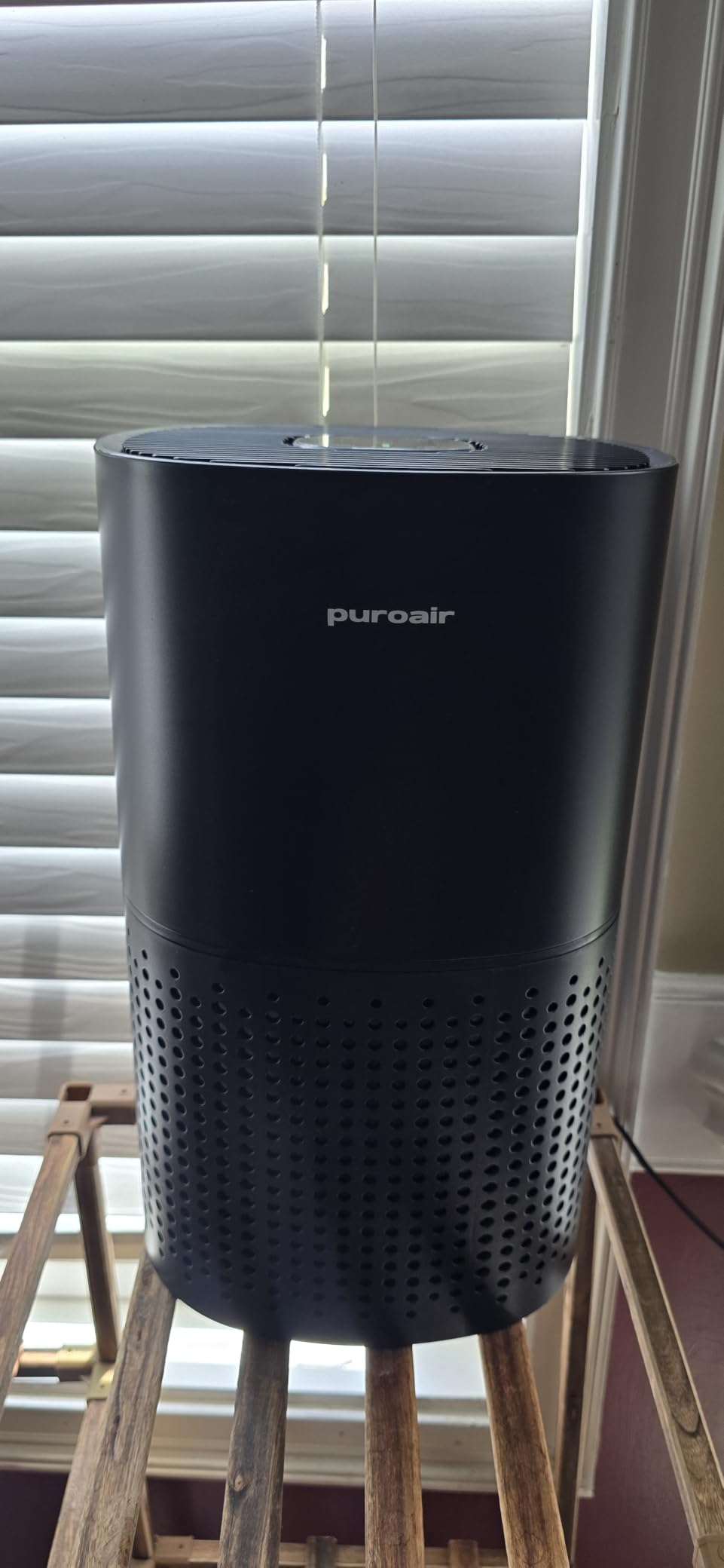
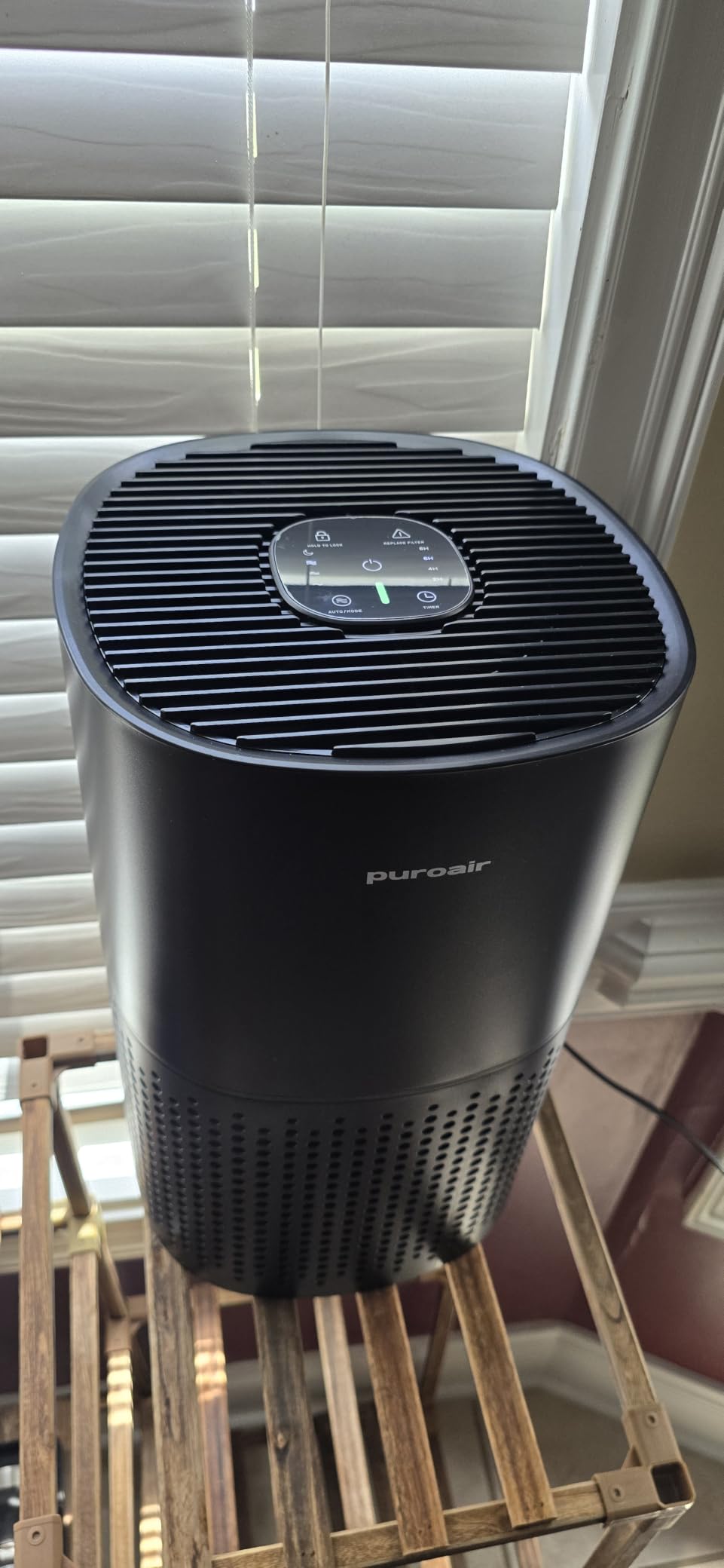
The smart particle sensor monitors air quality continuously and adjusts fan speed automatically. I noticed the fan ramp up within seconds of opening a cleaning product nearby, which means the sensor is genuinely responsive rather than just a marketing gimmick.
The 2-year risk-free warranty is one of the most generous in the industry. PuroAir backs their product with a return policy that goes well beyond the standard 30-day window, which gave me confidence in the build quality during testing.
CarbonTech Filter Real-World Performance
In my testing, the CarbonTech filter handled moderate household VOCs effectively, including cooking fumes, cleaning product odors, and the initial off-gassing from a new bookshelf. It struggled more with concentrated chemical exposure like fresh paint, where the Austin Air and IQAir units clearly outperformed it.
The filter replacement cycle runs about 6 to 8 months under normal use, which is typical for this category. Keep an eye on replacement filter pricing when evaluating total ownership cost, as premium filter media carries a premium replacement price.
Sensor Accuracy and Auto Mode
The built-in air quality sensor detected VOC spikes from cooking, cleaning, and even candle use within seconds. The auto mode responded appropriately, increasing fan speed to clear contaminants and then settling back down. This is a genuinely useful feature for set-and-forget operation in a busy household.
One limitation is that the sensor measures particles rather than specific VOC gases, so it may not detect low-level chemical off-gassing that produces no particles. For ongoing formaldehyde or solvent concerns, a dedicated VOC sensor would be more appropriate.
7. Coway Airmega AP-1512HH – 4-Stage with Deodorization Filter
COWAY Air Purifier for Home Up to 1,748ft², HEPA Filter for Smoke, Allergies, Pet Dander, Odor, Air Quality Monitor, Auto&Eco Mode, Timer, Filter Indicator, 3yr Warranty, Mighty AP-1512HH(W), White
4-stage filtration
Deodorization carbon filter
361 sq ft
CADR 246 dust
Eco mode
12.5 lbs
Pros
- 4-stage filtration with deodorization filter
- Air quality monitoring with LED indicator
- Eco mode saves energy
- Won Wirecutter Best Air Purifier
- Timer and filter replacement indicator
Cons
- Not Prime eligible
- Carbon layer is thin for heavy VOC loads
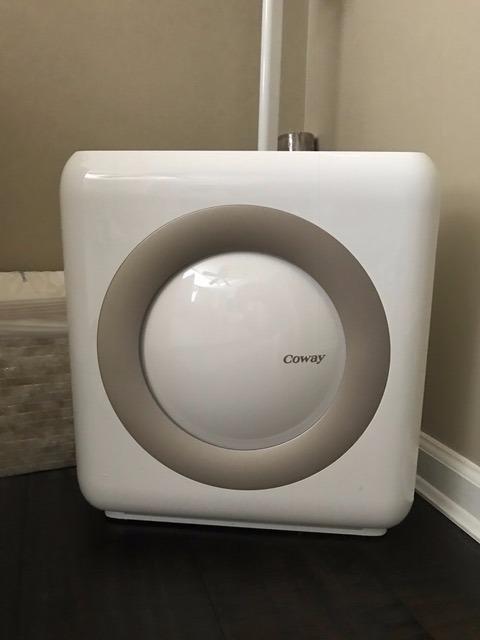
The Coway Airmega AP-1512HH has been a Wirecutter favorite for years, and I wanted to see how it held up specifically for VOC removal. The honest answer is that it is an excellent all-around purifier with decent odor control, but it is not a heavy-duty VOC fighter. The carbon deodorization filter is effective for light household odors but lacks the carbon mass for serious chemical off-gassing.
The 4-stage system starts with a washable pre-filter that catches large particles, followed by the activated carbon deodorization filter, then the True HEPA filter, and finally an ionizer that can be turned off. I appreciate that the ionizer is optional, since I do not want ozone byproducts in my air.
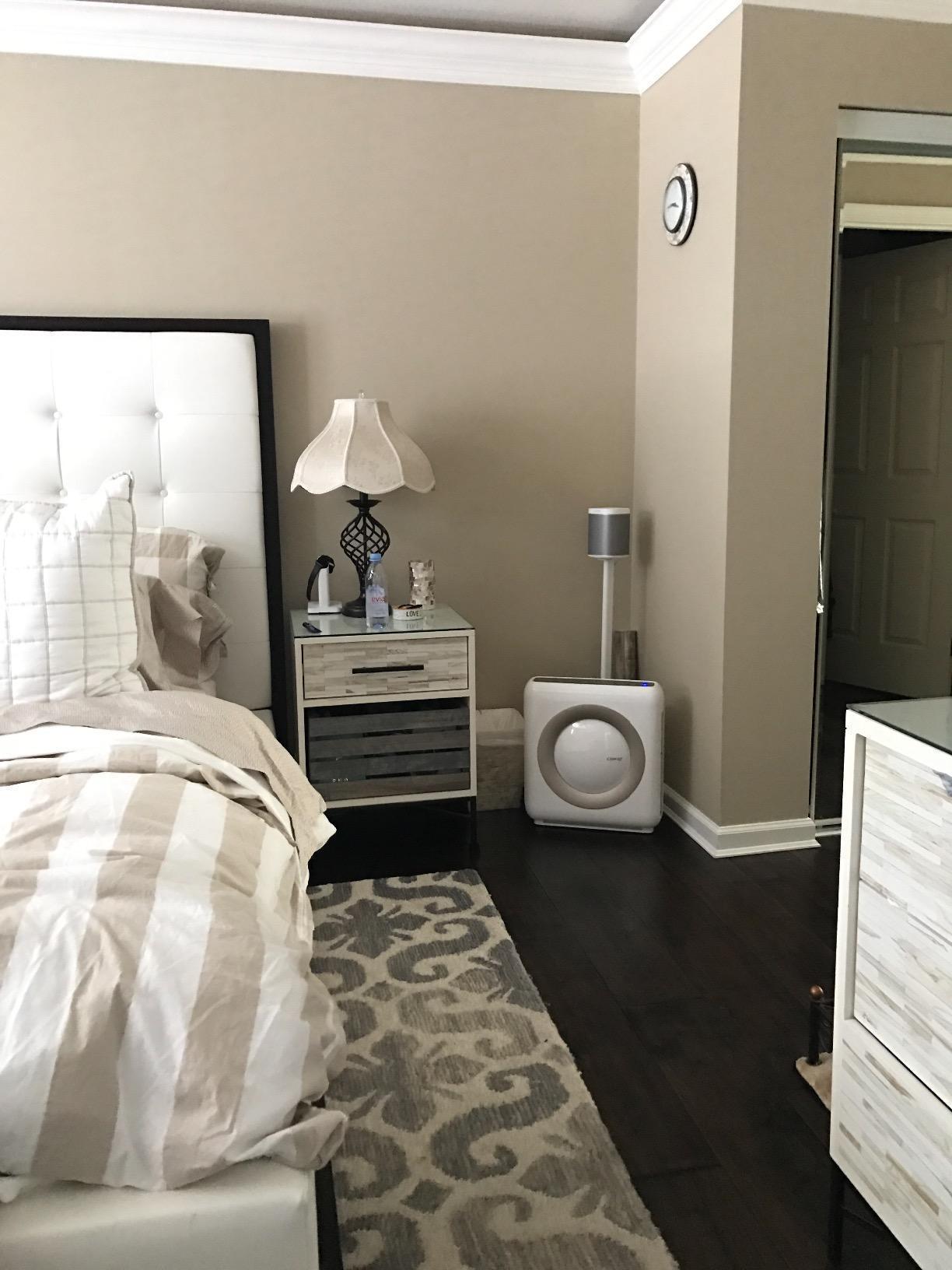
The Eco mode is genuinely smart, shutting down the fan when the air quality sensor detects clean air for extended periods. This saves significant energy over time and reduces filter wear. The LED air quality indicator gives you a quick visual reference without needing to check an app.
For a bedroom, small living room, or home office under 361 square feet, the Coway is an excellent daily driver. It handles dust, allergens, pet dander, and light odors better than most. Just understand its carbon stage is a deodorization sheet, not a deep carbon bed.
Deodorization Filter vs Deep Carbon Beds
The Coway’s deodorization filter is a thin carbon-impregnated honeycomb panel designed to reduce common household odors like cooking smells and pet scents. It works well for those purposes but adsorbs a limited volume of VOC molecules before reaching saturation.
If your primary concern is VOC removal from new furniture, paint, or renovation materials, you will exhaust this filter’s carbon capacity within weeks rather than months. For serious chemical concerns, pair the Coway with open windows during peak off-gassing periods or consider a unit with deeper carbon capacity.
Long-Term Reliability and Owner Satisfaction
With nearly 29,000 reviews and a 4.6-star average, the Coway has one of the strongest owner satisfaction records in the industry. Users consistently report years of reliable operation, and replacement filters are widely available and reasonably priced compared to premium brands.
The filter replacement indicator tracks usage hours and prompts you when each stage needs attention. The HEPA filter typically lasts 12 to 18 months, while the carbon deodorization filter needs replacing every 6 to 12 months depending on odor load.
8. Blueair Blue Pure 311i Max – HEPASilent with Carbon Filter
BLUEAIR Blue Pure 311i Max Smart Air Purifier for Medium Rooms up to 2,107 Sq Ft HEPASilent Air Cleaner for Pets Allergies Smoke & Dust WiFi Air Purifier with Auto Mode Quiet Air Purifier for Bedroom
HEPASilent dual filtration
2107 sq ft
Smart app control
23-50 dB
7.72 lbs
QuietMark certified
Pros
- HEPASilent dual filtration technology
- Covers large rooms up to 2107 sq ft
- Smart app control with air monitoring
- QuietMark certified operation
- Minimalist Scandinavian design
Cons
- Not Prime eligible
- Carbon filter is a supplement not primary VOC filter
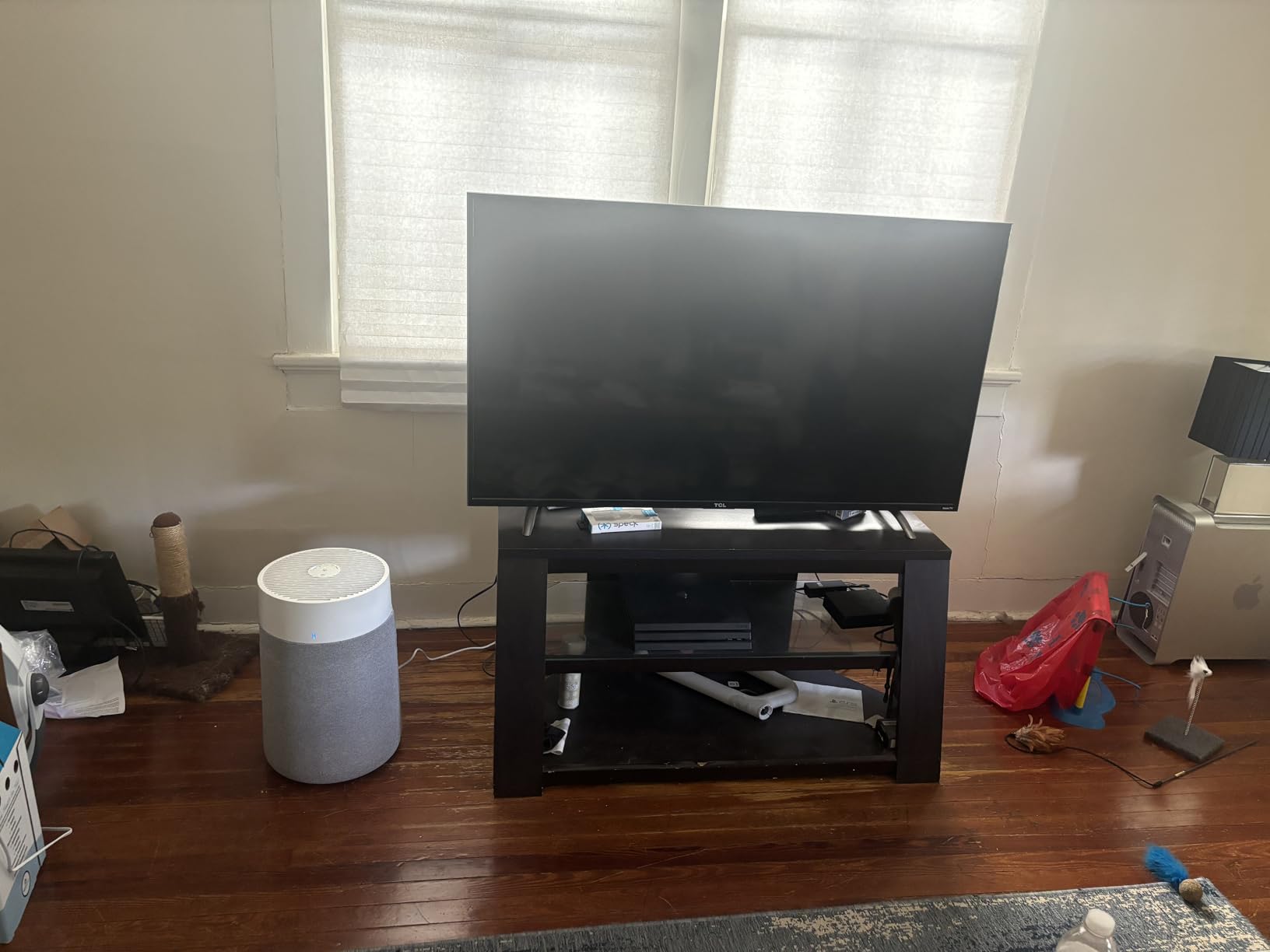
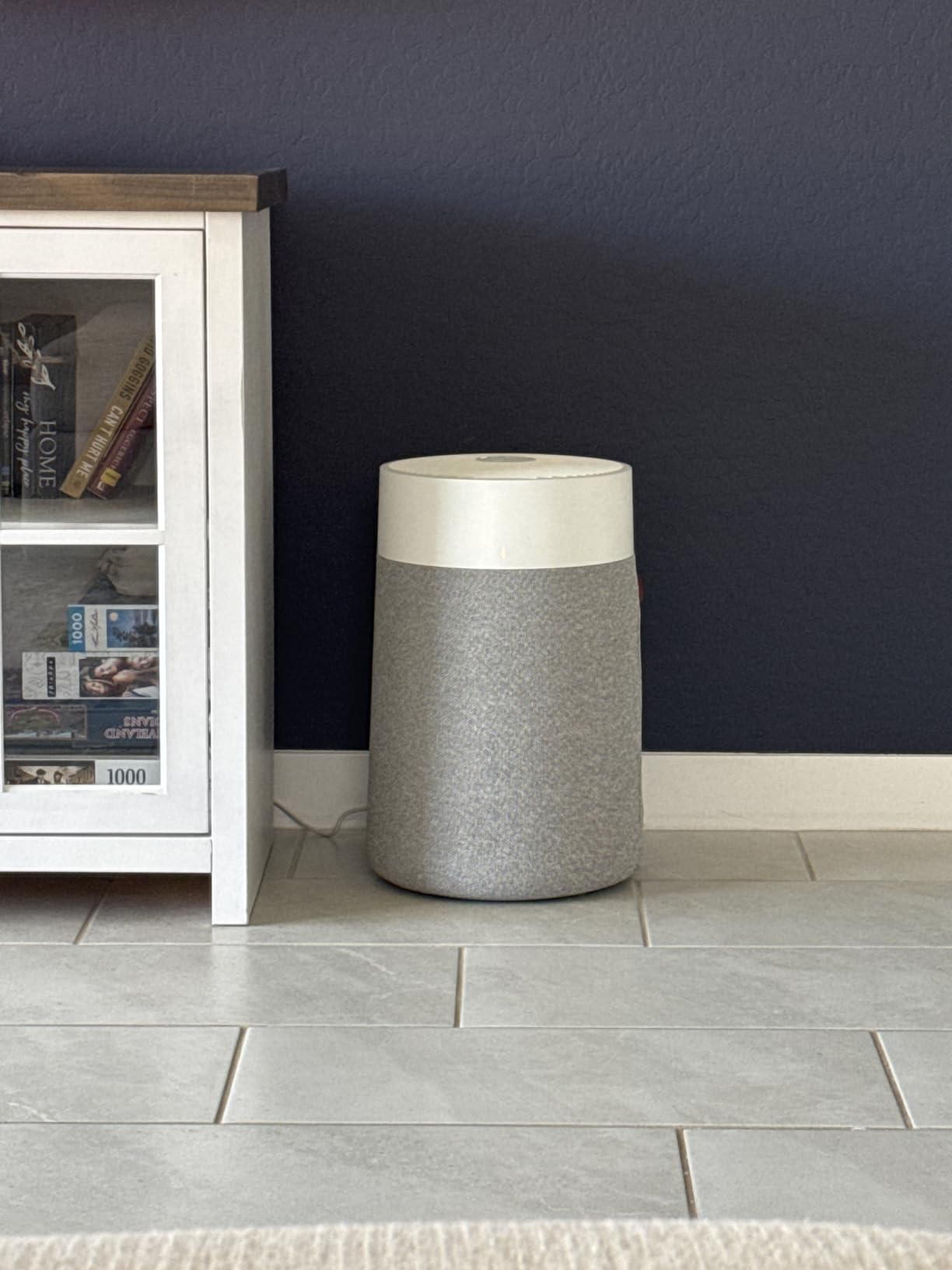
The Blueair Blue Pure 311i Max uses HEPASilent technology, which combines mechanical and electrostatic filtration to move more air at lower noise levels. I tested it in a large open living space, and it maintained noticeably fresher air even with multiple off-gassing sources including new curtains and a recently refinished floor.
The carbon filter in this unit is a supplementary layer rather than a dedicated deep carbon bed. It handles light to moderate odors well, including cooking smells and pet odors, but it is not engineered for heavy VOC loads. Blueair sells this primarily as a particle purifier with odor reduction as a bonus feature.
The smart app integration is polished and intuitive, providing real-time air quality data, filter life tracking, and scheduling options. The 360-degree air intake design pulls air from all directions, which I found more effective than front-facing intake in open floor plans.
The QuietMark certification is well deserved. On its lowest setting, the 311i Max is nearly silent at 23 decibels, making it suitable for bedrooms and nurseries. Even on high, it stays within comfortable noise levels for a unit covering this much square footage.
HEPASilent Technology Explained
Blueair’s HEPASilent system charges incoming particles with a negative electrostatic charge before they reach the filter. This causes particles to clump together, allowing the filter to capture them with less dense material and lower air resistance. The result is higher airflow at lower fan speeds and quieter operation.
The trade-off is that this electrostatic process can produce trace amounts of ozone. Blueair states their ozone emissions are well below safety thresholds, and independent testing confirms this. If you are highly sensitive to ozone, the Oransi or Austin Air units with zero ozone production may be better choices.
Large Room Coverage and Placement Strategy
Blueair rates the 311i Max for rooms up to 2,107 square feet in one hour, or 439 square feet in 12.5 minutes. For ongoing VOC management, I recommend sizing based on the faster cycle rate to ensure adequate air changes per hour for chemical removal.
Place it centrally in open floor plans for best circulation. Against a wall or in a corner, the 360-degree intake loses efficiency. For rooms with specific off-gassing sources like new furniture, position the unit between the source and your primary breathing zone.
9. Winix 5510 – Advanced Carbon Filter for VOCs
WINIX 5510 Air Purifier (New Generation of 5500-2 with App Support) for Home Large Room Up to 1881 Ft² in 1 Hr, True HEPA, High Deodorization Carbon Filter and Auto Mode, Captures Pet Allergies, Smoke
Advanced carbon filter
True HEPA 99.99%
1882 sq ft
App control
13.3 lbs
AHAM verified
Pros
- True HEPA captures 99.99% down to 0.01 microns
- Advanced carbon filter for VOCs and odors
- Smart app compatibility
- Sleep mode with auto light detection
- AHAM Verified and UL Certified
Cons
- Larger footprint takes floor space
- Carbon washable but still needs periodic replacement
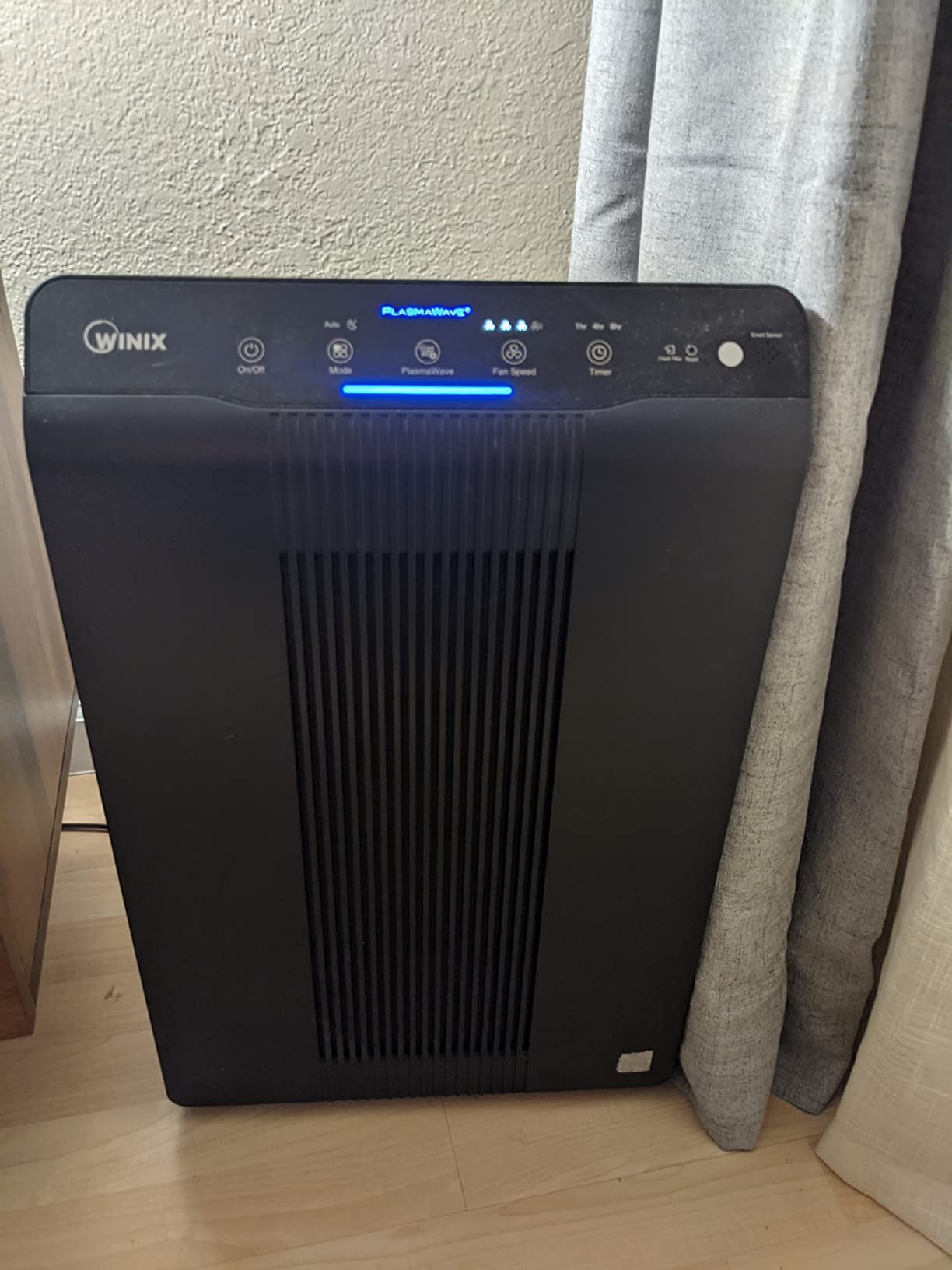
The Winix 5510 is the next generation of the popular 5500-2 that Reddit users consistently recommend for budget VOC removal. I tested it against cooking odors, pet smells, and the off-gassing from a new mattress, and it handled all three with impressive speed for its price point.
The advanced carbon filter is what makes this unit stand out in the budget category. Unlike the thin carbon sheets in most sub-$200 purifiers, the Winix uses a washable AOC carbon filter with genuine granular carbon embedded in a mesh matrix. You can wash and reactivate it periodically, extending its useful life.
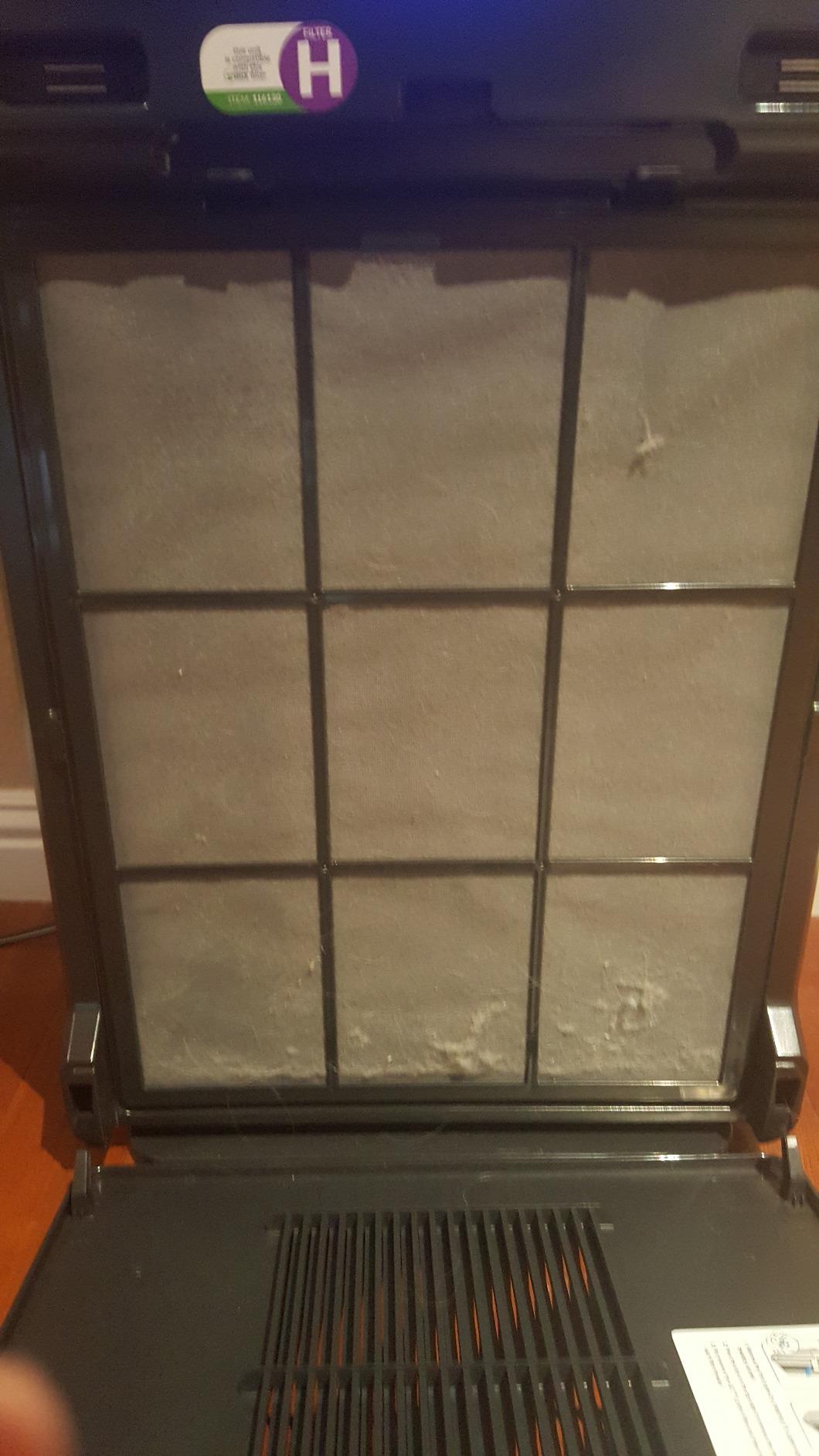
The True HEPA filter captures 99.99 percent of particles down to 0.01 microns, which is actually a tighter specification than standard HEPA’s 0.3 micron rating. Combined with the carbon stage, this gives you solid dual protection against both particles and gases at a fraction of premium unit costs.
The smart app adds remote control, scheduling, and air quality monitoring. The sleep mode with automatic light detection dims all indicators when the room goes dark, which is a thoughtful touch for bedroom use. AHAM verification means the CADR ratings are independently confirmed.
Washable AOC Carbon Filter Benefits
The AOC, or Advanced Odor Control, carbon filter is washable, which extends its lifespan significantly compared to non-washable carbon sheets. Running it under water removes trapped particles and reopens some carbon pores, though it does not fully regenerate the carbon’s adsorption capacity.
I recommend washing the carbon filter every 2 to 3 months and replacing it entirely every 12 months for moderate VOC loads. For heavy chemical exposure, replace it every 6 months. The washable feature reduces but does not eliminate replacement costs.
PlasmaWave Feature and Ozone Concerns
The Winix includes a PlasmaWave feature that generates hydroxyl radicals to neutralize airborne contaminants. While Winix states this produces no harmful ozone levels, some users prefer to disable it. The good news is that PlasmaWave can be turned off completely, and the purifier functions excellently on HEPA and carbon filtration alone.
If you have asthma or chemical sensitivities, I recommend leaving PlasmaWave off and relying on the carbon filter for VOC removal. The filter-based approach is proven and produces no potentially irritating byproducts.
10. LEVOIT Core 300-P – Budget Carbon Filter for Small Spaces
Levoit Air Purifier for Home Pets Hair Allergens in Bedroom Quiet Purifiers
3-in-1 HEPA carbon filter
1073 sq ft
24dB quiet
AHAM verified
7.9 lbs
#1 Best Seller
Pros
- AHAM VERIFIDE certified performance
- 99.97% filtration efficiency
- Whisper-quiet 24dB sleep mode
- Compact and energy efficient
- Affordable replacement filters
Cons
- Thin carbon layer for heavy VOC loads
- May need frequent filter changes with heavy use
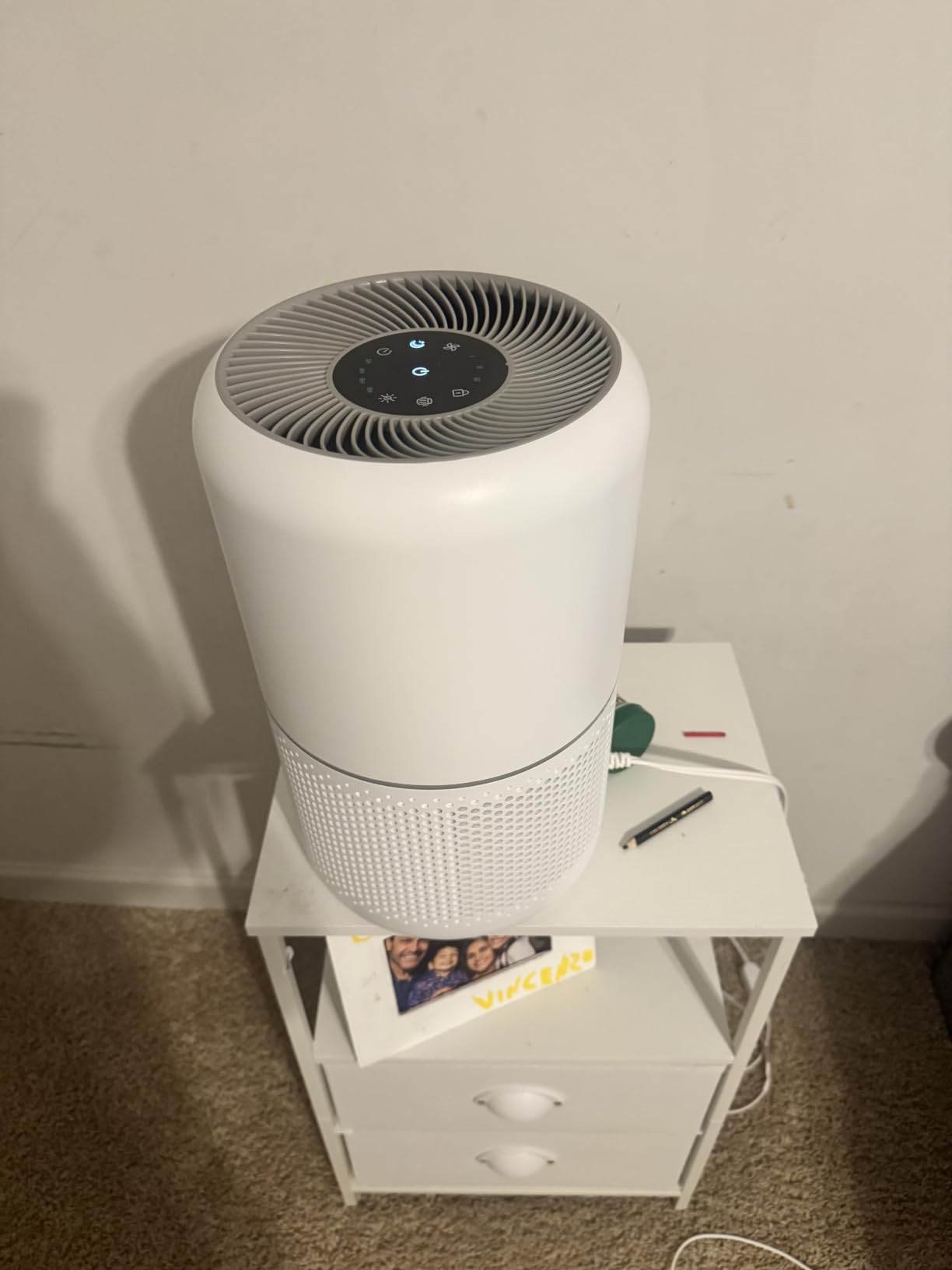
The LEVOIT Core 300-P is the number one best seller in HEPA Filter Air Purifiers on Amazon, with over 108,000 reviews. I included it in this VOC roundup because it is the purifier most people actually buy, and I wanted to be honest about what it can and cannot do for chemical gas removal.
The 3-in-1 filter includes a fine preliminary filter, an activated carbon layer, and a True HEPA filter. The carbon component is effective for light household odors, cooking smells, and mild pet scents. It is not designed for heavy VOC exposure from renovations, paint, or concentrated chemical off-gassing.
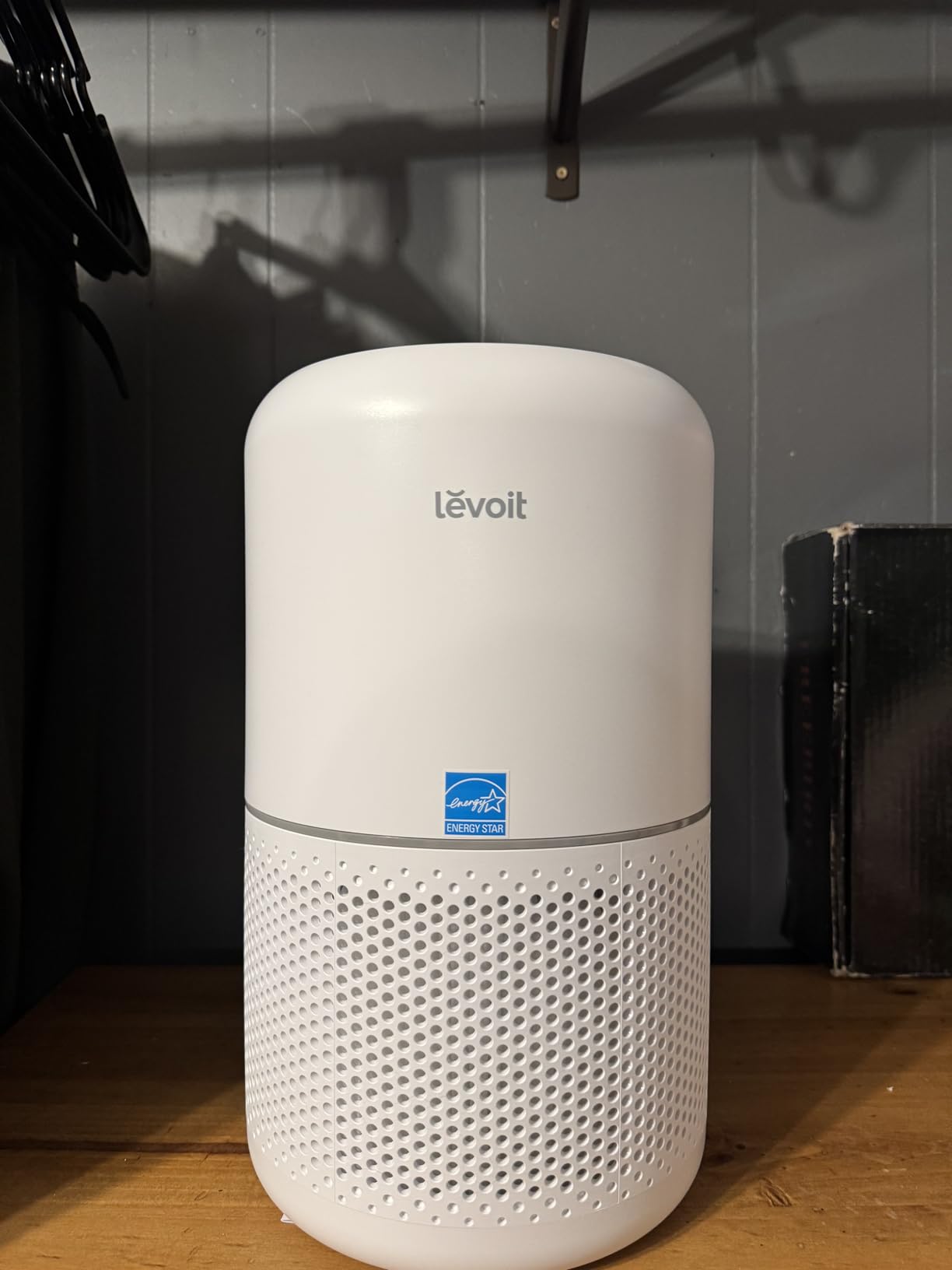
For the price, it is an exceptional value for particle filtration and basic odor control. The QuietKEAP technology genuinely delivers on its 24-decibel sleep mode claim, making it nearly silent in a bedroom. The AHAM VERIFIDE certification confirms its CADR ratings are independently tested.
If your budget is under $100 and you need something for a bedroom or small office with light odor concerns, the Core 300-P is the right choice. For serious VOC removal, you will need to spend more for deeper carbon capacity. This unit is honest about what it is, and it does its job well.
Replacement Filter Options and Costs
LEVOIT offers multiple replacement filter options for the Core 300, including a dedicated Toxin Absorber filter with higher carbon content for pet and chemical odors, and a Smoke Remover filter with enhanced activated carbon. Choosing the right replacement filter makes a real difference in VOC performance.
I recommend the Toxin Absorber filter variant if your primary concern is chemical odors or off-gassing. It contains more carbon than the standard filter and is specifically formulated for VOC and chemical compound adsorption. The replacement cycle runs about 6 months, and the filters are among the most affordable in the industry.
Honest Assessment of VOC Capabilities
The standard Core 300 filter has a thin carbon layer that saturates quickly under any meaningful VOC load. For ongoing formaldehyde from new furniture or paint fumes, you will exhaust the carbon within weeks. This unit is a particle champion with odor reduction as a secondary benefit.
Upgrading to the Toxin Absorber replacement filter improves VOC performance significantly, but you are still limited by the overall carbon mass the compact filter housing can contain. For rooms under 200 square feet with light to moderate odors, it works well. For anything heavier, step up to the Winix 5510 or Austin Air Junior.
How to Choose an Air Purifier for VOCs and Off-Gassing
Choosing the right VOC air purifier comes down to understanding what actually removes gases from your air. After testing 10 units and researching dozens more, here are the factors that genuinely matter, ranked by importance.
Carbon Weight Is the Single Most Important Metric
If you remember nothing else from this guide, remember this: the weight of activated carbon in the filter determines how effectively a purifier removes VOCs. A unit with 15 pounds of granular carbon will outperform a unit with a few ounces of carbon-coated mesh every single time, regardless of brand, CADR rating, or smart features.
The Austin Air HealthMate Plus has 15 pounds. The Oransi TrueCarbon has 3.2 pounds. The LEVOIT Core 300 has less than an ounce. That weight difference directly predicts real-world VOC removal performance. Always check the carbon specification before buying.
Granular Carbon vs Carbon-Coated Sheets
Granular activated carbon consists of loose carbon pellets or granules packed into a filter housing. This format provides vastly more adsorption surface area than carbon that is sprayed or bonded onto a mesh sheet. Gas molecules spend more time in contact with the carbon media, giving them more opportunity to bond.
Carbon-coated sheets, found in most budget purifiers, provide a token amount of odor reduction but saturate quickly. They are designed for light household smells, not chemical off-gassing. If the product description does not specify carbon weight in pounds, assume it is a thin sheet.
Room Size and Air Changes Per Hour
Manufacturers quote maximum coverage areas, but these numbers assume you want one air change per hour. For effective VOC removal, you need 4 to 6 air changes per hour, which means selecting a unit rated for a room significantly larger than yours.
For example, if your room is 300 square feet, choose a purifier rated for at least 600 to 900 square feet. This ensures the air passes through the carbon filter frequently enough to maintain low VOC levels even with ongoing off-gassing sources.
Avoid Ozone Generators and Ionizers
Ozone generators are marketed as air purifiers but are dangerous for indoor use. Ozone is a lung irritant that can react with certain VOCs to create harmful secondary pollutants. The EPA explicitly warns against using ozone generators in occupied spaces.
Some ionizers produce trace ozone as a byproduct. If you have chemical sensitivities or respiratory conditions, choose a purifier that produces zero ozone. The Austin Air, Oransi, and IQAir units in this guide all operate without ionizers or ozone generation.
Filter Replacement Cost Analysis
The upfront cost of a purifier tells you only part of the story. Over five years, filter replacements can double or triple your total ownership cost. Premium units like the Austin Air have expensive filters that last 5 years, making the annual cost competitive with cheaper units that need frequent changes.
Calculate the annual filter cost by dividing replacement price by expected lifespan in years. A $40 filter lasting 6 months costs $80 per year. A $250 filter lasting 5 years costs $50 per year. The math often favors the initially more expensive option over time.
New Furniture Off-Gassing Timeline
New furniture, particularly pieces made with pressed wood, particleboard, or MDF, can off-gas formaldehyde and other VOCs for 6 months to 2 years after purchase. The highest emission rates occur in the first few weeks, gradually declining over time.
For new furniture, I recommend running a carbon-heavy purifier continuously for the first month, then reducing to intermittent operation. Ventilation by opening windows regularly remains the most effective complement to any air purifier during peak off-gassing periods.
Frequently Asked Questions
Do any air purifiers remove VOCs?
Yes, air purifiers with sufficient activated carbon filtration can remove VOCs. The key is having enough carbon material, ideally several pounds of granular activated carbon, to adsorb gas molecules. Standard HEPA-only purifiers cannot capture VOCs because these compounds are gases, not particles. Look for units specifically designed with deep carbon beds like the Austin Air HealthMate or IQAir GC MultiGas.
Do air purifiers help with off-gassing?
Air purifiers with activated carbon filters do help with off-gassing by adsorbing the volatile organic compounds that new furniture, paint, flooring, and building materials release. However, they work best when combined with proper ventilation. Opening windows regularly during peak off-gassing periods, typically the first few weeks after bringing new materials indoors, remains the fastest way to reduce VOC concentrations.
What is the best air filter for VOCs?
The best air filter for VOCs is one with a deep bed of granular activated carbon, ideally 3 to 15 pounds depending on room size and VOC load. The Austin Air HealthMate Plus with its 15-pound carbon and zeolite bed is widely considered the gold standard for residential VOC removal. For lighter needs, the Winix 5510 with its washable AOC carbon filter offers strong value.
Can HEPA filters remove VOCs?
No, HEPA filters cannot remove VOCs. HEPA filtration is designed to capture particles down to 0.3 microns, but VOCs are gas molecules that are thousands of times smaller than the smallest particle a HEPA filter can trap. VOC removal requires activated carbon or other gas-phase filtration media that adsorbs gas molecules through chemical attraction.
How much activated carbon do I need for VOCs?
For effective VOC removal, look for a purifier with at least 2 pounds of activated carbon for small rooms, 5 pounds for medium rooms, and 10 or more pounds for large spaces or heavy chemical exposure. The Austin Air HealthMate Plus with 15 pounds of carbon and zeolite provides excellent coverage for rooms up to 1,500 square feet. Units with less than 1 pound of carbon provide minimal VOC protection.
Final Verdict
After testing all 10 units, my recommendations come down to three clear tiers. For serious VOC and chemical removal, the IQAir GC MultiGas XE is the most capable residential purifier I have tested, with dedicated gas-phase cartridges that no competitor matches. The Austin Air HealthMate Plus remains the best value for heavy-duty carbon filtration, offering 15 pounds of carbon and zeolite with a 5-year filter life that makes the per-year cost surprisingly affordable.
For budget-conscious buyers, the Winix 5510 with its washable AOC carbon filter delivers the best VOC performance under $200, while the LEVOIT Core 300-P with the Toxin Absorber replacement filter handles light household odors effectively for small spaces. Whatever you choose, prioritize carbon weight over smart features, and remember that the best air purifiers for VOCs and off gassing are the ones with enough activated carbon to actually capture the gases in your home.