
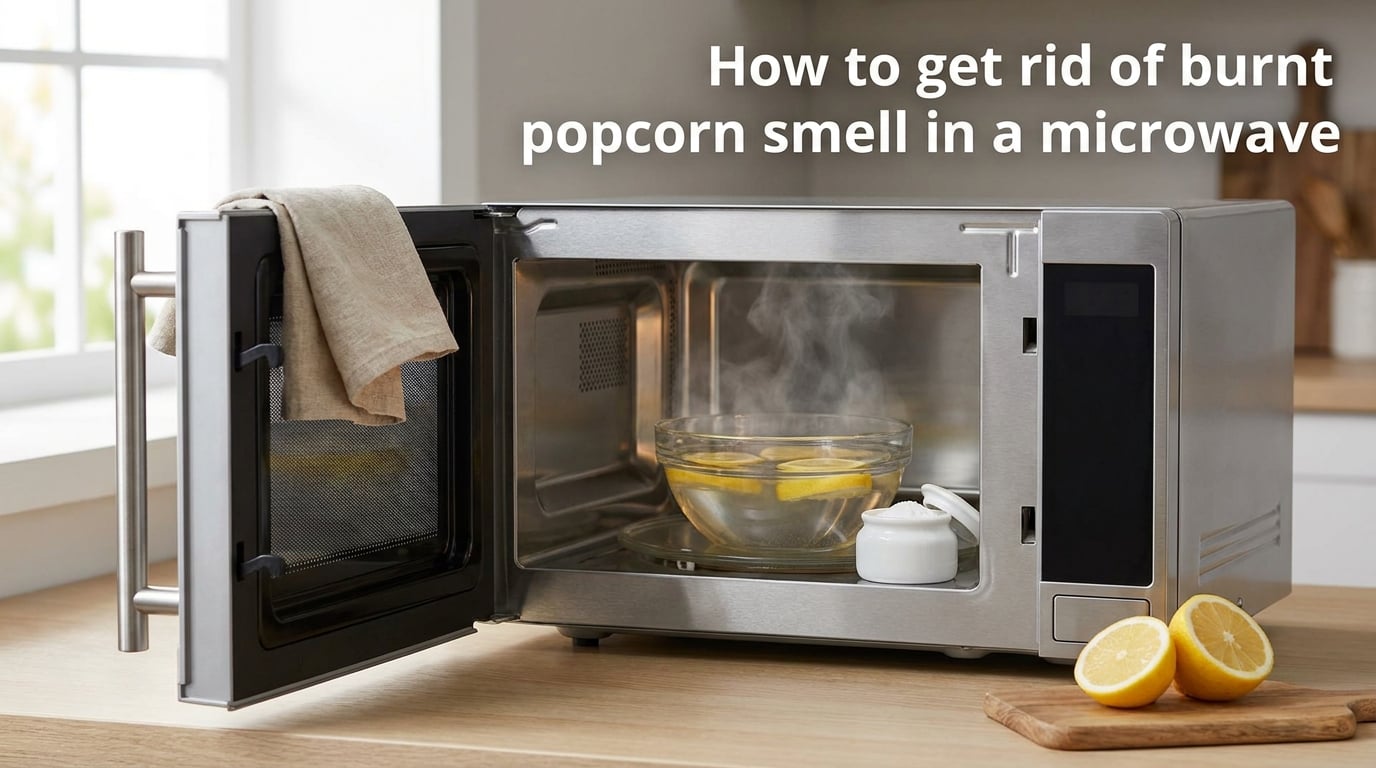
We have all been there. You toss a bag of popcorn in the microwave, hit the popcorn button, and get distracted for what feels like ten seconds. The next thing you know, smoke is billowing out and your entire kitchen smells like a campfire gone wrong. Learning how to get rid of burnt popcorn smell in a microwave is practically a rite of passage for anyone who uses one.
The good news is that this is one of the most common microwave problems people face, and it has some of the most reliable solutions. You almost certainly already have everything you need in your kitchen right now. No special cleaners, no expensive gadgets, no calling a professional.
In this guide, I will walk you through four proven methods to eliminate that stubborn burnt popcorn odor from your microwave. I will also cover what to do when the smell has spread to your entire house, how to prevent future popcorn disasters, and whether your microwave is still safe to use. Everything here comes from tested methods and real user experiences, not guesswork.
Table of Contents
Quick Summary: The Four Methods at a Glance
If you are in a rush and need the short version, here are the four most effective ways to get burnt popcorn smell out of your microwave:
Lemon Steam: Mix 1 cup of water with the juice of 1 lemon in a microwave-safe bowl. Microwave on high for 5 minutes, let sit for 5 minutes, then wipe clean. Best for mild burns.
Vinegar Steam: Combine 1 cup of water with 3 tablespoons of white vinegar in a microwave-safe bowl. Microwave for 5 minutes, let sit for 15 minutes with the door closed, then wipe. Best for stubborn smells.
Baking Soda Overnight: Place 1 cup of baking soda in an open container inside the microwave. Leave overnight with the door closed. Replace every 2 to 3 hours for severe odors.
Coffee Grounds: Spread half a cup of dry, used coffee grounds on a plate. Leave inside the closed microwave for several hours or overnight to absorb odors.
For most situations, start with the lemon or vinegar steam method. If the smell persists, layer in baking soda or coffee grounds overnight. Severe burns may require all four methods combined, plus a manual deep clean.
Why Burnt Popcorn Smell Is So Stubborn
Understanding why this smell clings so aggressively helps you know what you are fighting against. Burnt popcorn smell is not just a surface issue. It is a combination of burnt oil residue and microscopic smoke particles that penetrate every porous surface inside your microwave.
When popcorn burns, the oils in the kernels reach their smoke point and release fine particles into the air. These particles settle on the microwave walls, ceiling, turntable, door seals, and especially the waveguide cover, which is that small square panel usually on the side of the interior. The waveguide cover is made of a material that absorbs odors more than smooth metal walls do.
Multiple Reddit users in the r/CleaningTips community have reported that the waveguide cover is the hidden culprit when standard cleaning methods fail. One user discovered that even after thoroughly cleaning the walls, the smell persisted until they carefully wiped down or replaced that small panel. The door seals are another common hiding spot, as the rubbery material traps oily residue.
Every time you run the microwave, the heat reactivates those trapped oils and releases the odor again. This is why the smell does not just fade on its own over time. You have to actively break down and remove the oily residue, which is exactly what steam cleaning accomplishes.
How to Get Rid of Burnt Popcorn Smell in a Microwave: Method 1: Lemon Steam
The lemon steam method is the most popular and most recommended approach for a reason. It works well for mild to moderate burns, uses ingredients you already have, and leaves your microwave smelling fresh instead of like a chemical cleaner. The citric acid in lemon juice cuts through the oily residue that traps burnt odors.
What you need:
1 microwave-safe bowl (glass or ceramic)
1 cup of water
1 fresh lemon (or 3 tablespoons of bottled lemon juice)
A clean microfiber cloth or sponge
Step-by-step instructions:
Step 1: Pour 1 cup of water into your microwave-safe bowl. Cut the lemon in half and squeeze the juice from both halves into the water. Drop the squeezed lemon halves into the bowl as well. The rinds release additional oils when heated.
Step 2: Place the bowl in the center of your microwave and turn it on. Microwave on high for 5 minutes. The water needs to come to a full boil and produce thick steam that coats the interior surfaces.
Step 3: When the 5 minutes are up, do not open the door. Let the bowl sit inside for 5 additional minutes. This resting period is when the steam does its hardest work, loosening the burnt oil residue from the walls, ceiling, and every corner.
Step 4: Carefully open the door and remove the hot bowl using oven mitts. The steam will be hot, so keep your face back as you open the door.
Step 5: Take your clean microfiber cloth or sponge and wipe down the interior. Start with the ceiling, then the sides, then the back, and finally the floor. The loosened residue should wipe away easily. Do not forget to wipe inside the door and around the door seals.
Step 6: Remove the turntable tray and its support ring. Wash them in warm, soapy water in your sink, dry them, and put them back.
If the smell persists after one round, repeat the process. Some users on the r/lifehacks subreddit report needing two or three rounds for moderate burns. This is normal and does not mean the method is not working.
Method 2: Vinegar Steam
White vinegar is a powerhouse when it comes to microwave odor removal. It is slightly more aggressive than lemon juice at breaking down oily residue, and its own smell dissipates within an hour or two after cleaning. This is my go-to method when the lemon approach does not fully do the job.
What you need:
1 microwave-safe bowl (glass or ceramic)
1 cup of water
3 tablespoons of white vinegar
A wooden toothpick or wooden spoon
A clean cloth or sponge
Step-by-step instructions:
Step 1: Combine 1 cup of water and 3 tablespoons of white vinegar in your microwave-safe bowl. Stir briefly.
Step 2: Place a wooden toothpick or the wooden spoon handle in the bowl. This prevents superheating, which is when water heats past its boiling point without actually bubbling and can suddenly erupt when disturbed.
Step 3: Microwave on high for 5 minutes. Watch through the door to confirm the water is boiling and producing steam. If your microwave has a rotating turntable, the steam will distribute evenly.
Step 4: Once the timer goes off, leave the door closed for 15 minutes. This longer resting period is what sets the vinegar method apart from the lemon method. A user on the r/CleaningTips subreddit who dealt with a double popcorn burn in one night swears by this extended sit time.
Step 5: Open the door carefully and remove the bowl with oven mitts. Take your cloth and wipe down every interior surface. The vinegar steam will have softened even stubborn, baked-on residue.
Step 6: Wash the turntable and support ring in the sink with dish soap. Dry and replace them.
Step 7: If the vinegar smell bothers you, leave the microwave door open for 30 minutes to air out. The vinegar odor will fade completely on its own.
For extremely stubborn cases, one forum user recommended leaving the vinegar steam bowl inside the closed microwave for a full hour after heating. The extended exposure gives the acidic steam more time to break down deeply embedded oil particles.
Method 3: Baking Soda Overnight Absorption
Baking soda is nature’s odor absorber. While lemon and vinegar steam actively break down residue, baking soda works passively by absorbing odor molecules from the air. This makes it the ideal follow-up method after you have already done a steam clean. Think of it as the cleanup crew that catches whatever the steam missed.
What you need:
1 small, open container (a shallow bowl or open plastic container)
1 cup of baking soda
Step-by-step instructions:
Step 1: After completing one of the steam cleaning methods above, pour 1 cup of baking soda into your open container. Spread it evenly so the maximum surface area is exposed.
Step 2: Place the container on the turntable inside the microwave. Close the door.
Step 3: Leave it overnight, or for at least 8 to 12 hours. Do not run the microwave during this time.
Step 4: In the morning, remove the container and discard the used baking soda. You can dump it down your sink drain with hot water to freshen the drain as a bonus.
For severe odors, multiple Reddit users in the r/CleaningTips community recommend replacing the baking soda every 2 to 3 hours rather than leaving the same batch overnight. Fresh baking soda absorbs odors more aggressively than baking soda that has already been pulling in smells for hours. If you have the time, swap it out two or three times throughout the day.
You can also combine baking soda with a few drops of water to create a paste, then use that paste to scrub the interior walls of the microwave. This gives you both the mechanical cleaning action and the odor absorption in one step.
Method 4: Coffee Grounds Odor Absorption
Coffee grounds are a surprising but highly effective odor absorber. If you are a coffee drinker, you already have a free supply. The nitrogen in coffee grounds helps neutralize odor molecules rather than just masking them. Many people prefer this method because it avoids the vinegar smell and adds a pleasant coffee aroma instead.
What you need:
Half a cup of used, dry coffee grounds
A small plate or shallow bowl
Step-by-step instructions:
Step 1: After brewing coffee, spread the used grounds on a plate and let them dry completely. Wet grounds can grow mold if left in an enclosed space.
Step 2: Once dry, place the plate of coffee grounds inside the microwave on the turntable.
Step 3: Close the door and leave the grounds inside for several hours or overnight. The longer they sit, the more odor they absorb.
Step 4: Remove and discard the grounds. Wipe the plate clean.
One thing to keep in mind is that coffee grounds work best as a secondary method. Use them after a steam clean to catch lingering odors, not as your primary approach. The steam cleaning is what removes the source of the smell, while the coffee grounds polish off whatever remains.
Some users in the r/Cooking subreddit also recommend simmering coffee grounds in water on the stovetop to help clear burnt popcorn smell from the surrounding kitchen. Just add half a cup of grounds to two cups of water in a small pot and simmer on low for 30 minutes.
Extreme Cases: When the Burn Is Really Bad
Sometimes the standard methods are not enough. If you had an actual small fire, if the interior is coated in soot, or if you burned popcorn twice in the same night (it happens more than you would think), you need to escalate your approach. A Reddit user who described themselves as a “burnt popcorn superstar” had to do a full deep clean after a popcorn fire left soot throughout their microwave.
Step 1: Remove loose debris first. Before doing anything else, use a dry paper towel to gently wipe away any loose charred pieces and soot. Do this before applying any liquid so you do not smear the soot around.
Step 2: Use cooking oil to lift burnt residue. This sounds counterintuitive, but a paper towel dipped in a small amount of cooking oil will lift stubborn burnt-on residue more effectively than scrubbing alone. The oil dissolves the burnt oils stuck to the surface. Gently rub the oily areas in circular motions. Follow up immediately with dish soap and warm water to remove the cooking oil you just applied.
Step 3: Clean the waveguide cover. That small panel on the interior wall is a major odor trap. Gently wipe it with a damp cloth. If it is scorched, warped, or has visible holes, it needs to be replaced. Waveguide covers are inexpensive and can be ordered online or from the manufacturer. One forum user reported that replacing this single part eliminated a smell that had persisted for weeks despite repeated cleaning.
Step 4: Use a melamine eraser for stubborn soot. A magic eraser can remove soot stains from the interior walls that regular sponges cannot. Use it gently and only on smooth surfaces. Avoid using it on the waveguide cover or door seals.
Step 5: Run multiple steam cycles. After the manual deep clean, run the vinegar steam method two or three times. Follow with a baking soda overnight session. For the worst cases, combine all four methods in sequence over the course of a day or two.
Step 6: Clean around and under the microwave. One Reddit user discovered that smoke oil had spread to the counter underneath their microwave and even up the wall behind it. If you had significant smoking, wipe down the surfaces around and behind the microwave with warm soapy water as well.
Step 7: Leave the door open between uses. For the first few days after a severe burn, keep the microwave door open when you are not using it. This allows air circulation that helps residual odors dissipate faster.
How to Get Burnt Popcorn Smell Out of Your House
The problem with burning popcorn in the microwave is that the smell rarely stays contained. It spreads through your kitchen, into adjoining rooms, and sometimes through your entire home. If your house reeks of burnt popcorn, you need a multi-pronged approach that goes beyond just cleaning the microwave.
Open windows and create cross-ventilation. This is your first and most effective step. Open at least two windows on opposite sides of your home to create airflow. If you have a kitchen exhaust fan, turn it on and leave it running for several hours. Box fans in windows can accelerate the process significantly.
Boil vinegar or lemon water on the stove. Fill a pot with 4 cups of water and half a cup of white vinegar, or the juice and rinds of two lemons. Bring it to a boil on the stovetop, then reduce the heat and let it simmer for 30 minutes. The steam will travel through your home and help neutralize airborne odor particles. This is one of the most frequently recommended solutions on r/CleaningTips.
Place bowls of baking soda around the kitchen. Set small bowls of baking soda on your counters, near the microwave, and in any rooms where the smell is strongest. White vinegar in shallow bowls works similarly. Leave them out overnight and replace them the next day if the smell persists.
Check for oil residue on surfaces. As one forum user discovered, smoke from burnt popcorn can deposit a thin, nearly invisible film of oil on your counters, cabinets, and walls near the microwave. Wipe these surfaces with warm soapy water or a mixture of equal parts water and vinegar.
Run an air purifier if you have one. An air purifier with a carbon filter will help remove odor molecules from the air. If you do not have one, it is not essential, but it speeds up the process considerably.
Use activated charcoal. Activated charcoal is more aggressive than baking soda at absorbing odors. Place pouches or bowls of activated charcoal in your kitchen and near the microwave for 24 to 48 hours.
In most cases, a combination of ventilation and the stovetop simmer method will clear the smell from your house within a few hours. Severe cases may take one to two days of repeated efforts.
How to Prevent Burning Popcorn in the Future
The best way to deal with burnt popcorn smell is to avoid burning it in the first place. None of the top-ranking competitor articles cover prevention, so I want to make sure you have this information. Here are the most effective prevention tips, including several gathered from real user experiences on cooking and appliance forums.
Use 50% power instead of full power. This is the single most effective tip I found. Multiple users in the r/Cooking subreddit report that lowering the power to 50% and adding a minute or two to the cooking time nearly eliminates the risk of burning. Popcorn pops more evenly at lower power because the heat penetrates the kernels gradually instead of scorching the outer layer immediately.
Do not trust the popcorn button. Microwave popcorn buttons are notoriously unreliable because they use a humidity sensor that may not work correctly for all bag sizes and brands. Instead of using the button, set the timer manually and stop the microwave the moment you hear the popping slow down to 2 to 3 seconds between pops.
Stay in the kitchen. This sounds obvious, but the vast majority of burnt popcorn incidents happen because someone walked away. Popcorn goes from perfectly popped to completely burnt in under 30 seconds. Stand near the microwave and listen for the popping to slow.
Pay attention to the bag size. Standard microwave popcorn bags are designed for microwaves with 600 to 1000 watts of power. If you have a high-wattage microwave, like 1200 watts or more, your popcorn will cook much faster than the package instructions suggest. Reduce the time accordingly.
Leave the door open after heating. After you make popcorn or heat any food, leave the microwave door open for a minute or two. This allows trapped steam and odors to escape instead of settling on the interior surfaces.
Clean spills immediately. If any food spills or splatters inside the microwave, wipe it up right away. Dried, baked-on food residue absorbs odors and makes future smells worse. A quick wipe with a damp cloth after each use takes 15 seconds and saves you from deep cleaning sessions later.
Is It Safe to Use a Microwave That Smells Burnt?
This is one of the most common questions people ask after a popcorn incident, and the answer is reassuring in most cases. Burnt food residue typically does not damage your microwave. The smell is unpleasant, but it is not inherently dangerous.
In the vast majority of cases, your microwave is safe to use after burning popcorn. The burnt residue is just carbonized food, which is not toxic in the small amounts left after a popcorn incident. However, there are a few situations where you should inspect more carefully before using the microwave again.
Check the waveguide cover for damage. If it is scorched, has holes, or appears warped, do not use the microwave until you replace it. A damaged waveguide cover can allow moisture and food particles to enter the internal components, which could cause sparks or damage the magnetron.
Look for scorch marks on the interior walls or ceiling. Light discoloration is normal and harmless, but deep burn marks or paint that has peeled away from the metal underneath could be a problem. If you can see bare metal, contact the manufacturer or an appliance repair professional before using the microwave.
Sniff the electrical components. If you smell something acrid or chemical rather than just burnt food, there may be an internal component issue. Unplug the microwave and have it inspected by a professional.
If none of these warning signs are present, your microwave is safe to use. Just clean it using the methods above, and the smell will fade. The burnt food residue itself will not affect the taste of food you heat afterward once you have cleaned the interior.
FAQs
How to make a microwave stop smelling like burnt popcorn?
To make a microwave stop smelling like burnt popcorn, combine 1 cup of water with 3 tablespoons of white vinegar in a microwave-safe bowl. Microwave on high for 5 minutes, let it sit with the door closed for 15 minutes, then wipe the interior clean. For stubborn smells, follow up by leaving an open cup of baking soda inside overnight.
What neutralizes burnt popcorn smell?
White vinegar, lemon juice, baking soda, and coffee grounds all neutralize burnt popcorn smell effectively. Vinegar and lemon work by cutting through the oily residue that traps odors, while baking soda and coffee grounds absorb odor molecules from the air. For best results, use a steam cleaning method first, then follow with an overnight absorber.
How long does it take for the smell of burnt popcorn to go away?
With active cleaning using steam methods, the smell can be eliminated in as little as 30 minutes to a few hours. Without cleaning, the smell may linger for days or even weeks, recurring each time you use the microwave. Severe burns that require deep cleaning may take one to two days of repeated treatment to fully eliminate.
Will burnt microwave smell go away?
Yes, the burnt microwave smell will go away, but it requires active cleaning rather than passive airing out. The smell persists because burnt oils coat the interior surfaces and reactivate with heat each time you use the microwave. Steam cleaning with vinegar or lemon breaks down these oils and removes the smell permanently.
Is it safe to use a microwave that smells burnt?
In most cases, yes, it is safe to use a microwave that smells burnt. The burnt popcorn residue is just carbonized food and is not toxic. However, you should inspect the waveguide cover for holes or warping, check for deep scorch marks on the interior, and make sure you do not smell any chemical or electrical odors. If any of these issues are present, have the microwave inspected before using it.
Why did microwave popcorn burn?
Microwave popcorn burns when it is cooked at full power for too long, or when the microwave wattage is higher than the package instructions account for. The popcorn button on most microwaves is unreliable because its humidity sensor may not work correctly for all bag sizes. To prevent burning, use 50% power, stay nearby, and stop the microwave when popping slows to 2 to 3 seconds between pops.
Final Thoughts
Getting rid of burnt popcorn smell in a microwave is completely doable with ingredients you already have in your kitchen. Start with a vinegar or lemon steam clean for immediate results, then follow with baking soda or coffee grounds overnight to catch any lingering odors. For severe burns, combine multiple methods and do not skip the waveguide cover.
The key takeaway is that passive airing out will not work because the burnt oils need to be actively broken down. Steam is your best weapon, and patience pays off. And next time, try using 50% power and staying nearby so you never have to deal with this again.