
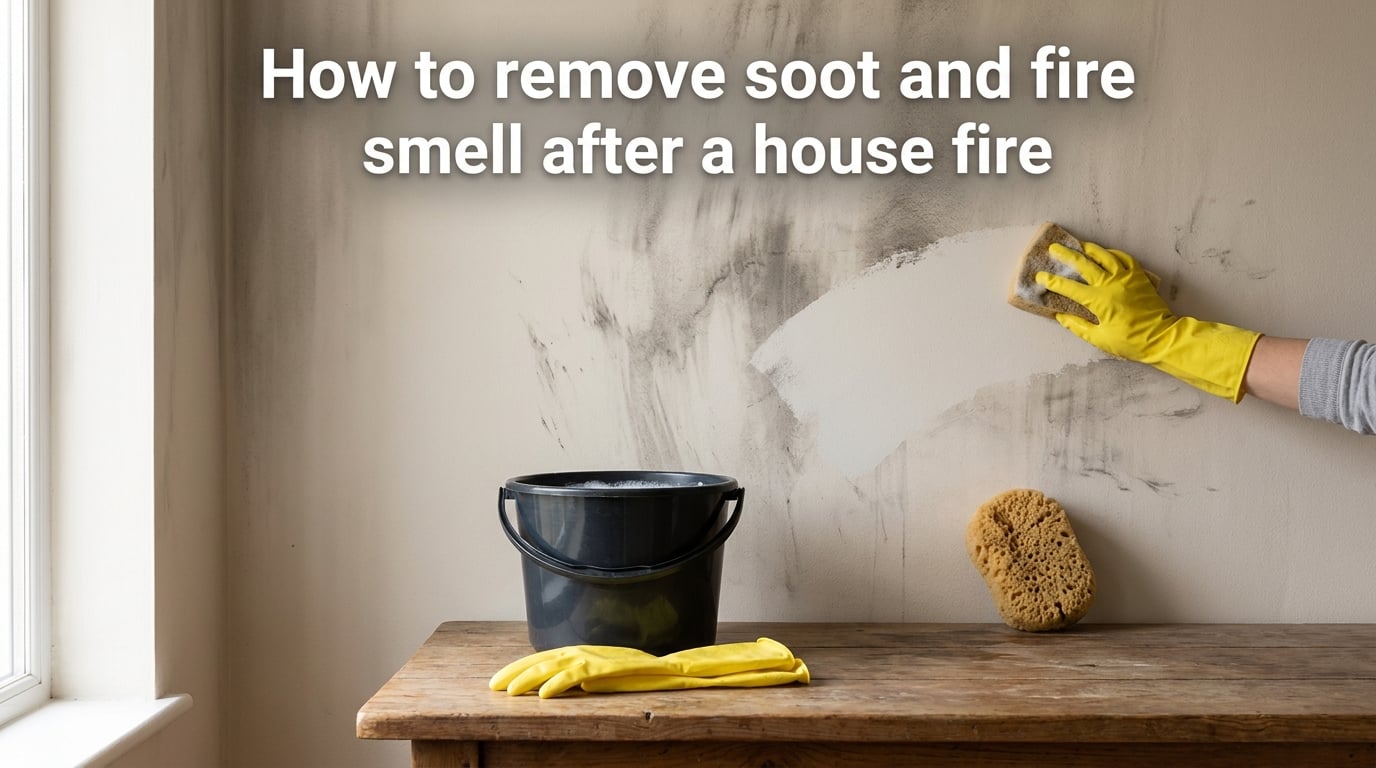
After a house fire, the lingering smell of smoke and the stubborn soot coating your walls can feel just as overwhelming as the fire itself. These particles penetrate deep into fabrics, stick to surfaces, and circulate through your HVAC system, making the odor seem impossible to eliminate. Learning how to remove soot and fire smell after a house fire requires a systematic approach that combines proper safety precautions, the right cleaning solutions, and patience throughout the process.
Smoke particles are microscopic and can travel into every corner of your home, settling in places you might not initially see. The smell persists because these particles bond with surfaces and continue releasing odors long after the fire is out. This guide walks you through each step of the cleanup process, from protecting yourself to choosing between DIY methods and professional remediation.
Table of Contents
Safety First: Protect Yourself Before Cleaning
Soot contains harmful chemicals, carcinogens, and toxic particles that can cause serious health problems if inhaled or touched. Before you begin any cleaning, protect yourself with the proper gear and understand the hazards present in a fire-damaged home.
Essential Protective Equipment
Wear an N95 respirator mask or a properly fitted respirator to filter out fine soot particles. Standard dust masks are not sufficient for smoke damage cleanup. Pair this with heavy-duty rubber gloves, safety goggles, and long sleeves to minimize skin contact with contaminated surfaces.
Check that the home has been cleared for reentry by fire officials before starting cleanup. Structural damage, weakened floors, and exposed electrical wiring may still pose dangers even after the flames are out.
Ventilation Safety
Open all windows and doors to create cross-ventilation before disturbing any soot. This helps flush out residual airborne particles and reduces your exposure to concentrated contaminants. Set up box fans in windows blowing outward to push contaminated air outside rather than circulating it throughout the house.
If the fire affected your HVAC system, do not turn it on until it has been professionally inspected and cleaned. Running a contaminated system spreads soot particles throughout your home and makes the cleanup significantly harder.
Assess the Damage: What to Throw Away vs What to Save
Not everything in a fire-damaged home can be salvaged. Knowing which items to discard and which to attempt cleaning saves time and prevents health risks from contaminated belongings.
Items You Must Discard
Throw away all food, medications, and cosmetics exposed to smoke or heat. Even sealed containers may have been compromised by heat or smoke penetration. Perishable foods can harbor bacteria from temperature fluctuations during the fire, and non-perishables may absorb toxic chemicals from the smoke.
Burned or charred structural materials, furniture with visible fire damage, and items melted by heat should be documented for insurance and disposed of properly. Do not attempt to clean items with deep burn damage.
Items That Can Be Cleaned
Hard surfaces like walls, floors, countertops, and metal fixtures can typically be cleaned of soot and smoke residue. Clothing, curtains, and linens can often be saved with multiple wash cycles. Upholstered furniture may require professional cleaning depending on the severity of smoke penetration.
Electronics can sometimes be salvaged if they were not directly exposed to water or fire. However, smoke particles can damage internal components, so have a professional inspect expensive electronics before attempting to power them on.
Document Everything for Insurance
Take photos and video of all damaged items before disposal. Create a written inventory including estimated values. This documentation supports your insurance claim and helps ensure you receive appropriate compensation for lost belongings.
Step 1: Ventilate the Space
Proper ventilation is the first and most important step in smoke odor removal. Fresh air helps dilute and remove concentrated smoke particles from your home.
Creating Airflow
Open all windows and exterior doors to establish cross-ventilation. Position box fans in windows facing outward to pull contaminated air from inside and push it outside. Run fans continuously for several days during the cleaning process.
Consider using positive pressure ventilation if the odor is severe. This technique involves blowing fresh outdoor air into the home at a higher rate than air escapes, forcing contaminated air out through cracks and vents.
Air Purifiers and HEPA Filtration
Run air purifiers with HEPA filters throughout the cleaning process and for weeks afterward. HEPA filters capture particles as small as 0.3 microns, including many smoke particles that would otherwise remain airborne. Multiple units may be needed for larger homes.
Replace your HVAC air filter immediately and continue replacing it frequently during the cleanup period. Filters clog quickly when processing smoke-damaged air.
Step 2: Remove Soot from Walls, Ceilings, and Floors
Cleaning soot from hard surfaces requires a careful approach to avoid spreading the residue and making stains permanent.
Dry Cleaning Sponges for Initial Removal
Start with dry cleaning sponges, also called chemical sponges or soot sponges, to lift loose soot from surfaces before applying any liquid. These special sponges capture soot without smearing it. Work in one direction, typically from the top down, and avoid rubbing back and forth which can embed soot deeper into surfaces.
Dispose of sponges or rinse them frequently as they become saturated with soot. Using a dirty sponge simply spreads the contamination.
TSP Cleaning Solution Formula
For walls, ceilings, and floors, a tri-sodium phosphate (TSP) solution effectively cuts through smoke residue. Mix 4 to 6 tablespoons of TSP with 1 gallon of warm water and add a small amount of mild dish detergent. TSP is a heavy-duty cleaner that breaks down the oily residue left by smoke.
Wear gloves and eye protection when using TSP, as it can irritate skin and eyes. Test the solution on a small, inconspicuous area first to ensure it does not damage the surface or paint.
Wall Washing Technique
Wash walls working from the ceiling downward to prevent streaking and ensure dirty water does not run over already-cleaned areas. Work in small sections, about 3 to 4 feet square, rinsing your cloth or sponge frequently. Dry each section with a clean cloth before moving to the next.
For painted walls, you may need to repaint after cleaning. Smoke residue can seep into paint, and priming with an odor-blocking primer before repainting helps seal in any remaining odor.
Ceiling and Floor Cleaning
Ceilings collect significant soot because smoke rises. Use a long-handled brush or mop with your cleaning solution, working from one end of the room to the other. Avoid over-wetting ceilings, which can cause water damage or paint peeling.
For floors, vacuum thoroughly with a HEPA-filtered vacuum before wet cleaning. Mop hard floors with your TSP solution, changing the water frequently to avoid spreading soot around.
Step 3: Clean Fabrics, Clothing, and Furniture
Fabrics absorb smoke odors deeply, often requiring multiple cleaning attempts and specialized techniques.
Washing Smoke-Damaged Clothing
Sort clothing by color and fabric type, then wash in the hottest water safe for each item. Add 1 cup of white vinegar to the wash cycle to help neutralize odors. Vinegar cuts through smoke residue and helps remove the smell from fibers.
Run items through multiple wash cycles if the smell persists after the first wash. Do not dry clothes in a dryer until the smoke smell is completely gone, as heat can set odors into fabric permanently.
For persistent odors, try adding baking soda to the wash cycle or using a commercial odor eliminator designed for smoke damage. Some homeowners report success with products like Febreze In-Wash Odor Eliminator specifically formulated for tough smells.
Furniture and Upholstery Cleaning
Vacuum upholstered furniture thoroughly with a HEPA-filter vacuum, using attachments to reach into crevices. For fabric upholstery, spot clean with a mixture of equal parts white vinegar and water. Test on an inconspicuous area first.
Leather furniture can be wiped down with a damp cloth and mild soap, followed by a leather conditioner. Smoke residue can dry out leather, making conditioning important after cleaning.
Professional Dry Cleaning
Delicate fabrics, heavily smoke-damaged items, and valuable clothing often require professional dry cleaning. Dry cleaners have specialized solvents and techniques not available for home use. Inform the cleaner that the items have smoke damage so they can apply appropriate treatments.
Step 4: Use Natural Odor Absorbers
After physical cleaning, natural odor absorbers help eliminate lingering smells that cling to the air and surfaces.
Baking Soda for Carpets and Surfaces
Sprinkle baking soda liberally over carpets, rugs, and upholstery. Let it sit for several hours or overnight to absorb odors, then vacuum thoroughly. Repeat as needed until the smell diminishes. You can also place bowls of baking soda around rooms to absorb airborne odors.
Baking soda works by neutralizing acidic smoke particles, chemically reducing the odor rather than just masking it.
Activated Charcoal
Activated charcoal absorbs odors even more effectively than baking soda due to its highly porous structure. Place bowls of activated charcoal in rooms throughout the house, replacing them every few days until the smell improves. Activated charcoal is available at pet stores and hardware stores.
This method works gradually but can significantly reduce lingering smoke odors without adding any chemicals to your home.
White Vinegar Bowls
Place bowls of white vinegar around your home to absorb smoke odors from the air. Replace the vinegar daily until the smell fades. Vinegar neutralizes many odors and its own smell dissipates quickly once removed.
Coffee Grounds
Dry coffee grounds can help absorb odors in enclosed spaces like closets, cabinets, and drawers. Place bowls of fresh, dry coffee grounds inside these areas and replace them every few days.
Step 5: Clean HVAC Systems and Electronics
Your HVAC system and electronics are often overlooked during smoke cleanup but can be sources of persistent odor if not addressed.
HVAC System Cleaning
Replace all air filters immediately and schedule professional duct cleaning if smoke entered your HVAC system. Smoke particles settle in ductwork and continue circulating throughout your home every time the system runs.
A professional HVAC cleaning service can inspect the system, clean the ducts, and ensure no smoke residue remains in the unit. This step is particularly important for central air and forced-air heating systems.
Cleaning Electronics
Smoke residue can damage electronics by coating internal components and interfering with heat dissipation. For small electronics, wipe exterior surfaces with a damp cloth and mild cleaner. Avoid spraying liquid directly onto electronics.
For valuable electronics, professional cleaning may be worth the cost. Some restoration companies specialize in cleaning smoke-damaged electronics. Avoid powering on electronics until they have been assessed, as residual soot can cause short circuits.
Step 6: Advanced Odor Removal (Ozone and Thermal Fogging)
For severe smoke damage, advanced treatments go beyond what standard cleaning can achieve.
Ozone Generators
Ozone generators produce ozone gas that neutralizes smoke odors by breaking down odor-causing molecules. This method is effective but requires caution. Ozone is harmful to breathe, so homes must be vacated during treatment and thoroughly aired out before reentry.
Rental ozone generators are available for DIY use, but many homeowners prefer hiring professionals who understand proper application and safety protocols. Ozone treatment typically takes several hours to a full day depending on severity.
Be aware that ozone can damage some materials including rubber, certain plastics, and electronics. Remove or protect these items before treatment.
Thermal Fogging
Thermal fogging uses a heated deodorizing fog that penetrates the same areas smoke traveled, neutralizing odors at their source. This professional technique reaches into cracks, crevices, and porous materials that liquid cleaners cannot access.
Professional restoration companies typically perform thermal fogging as part of comprehensive smoke damage remediation. It is more effective than surface cleaning alone for severe smoke penetration.
DIY vs Professional Restoration: When to Call the Experts
Not all smoke damage requires professional help, but knowing when to call experts saves time, protects your health, and ensures thorough remediation.
When DIY Is Sufficient
Minor smoke damage from small kitchen fires, fireplace incidents, or brief exposure often responds well to DIY methods. If the smoke smell is confined to one or two rooms and you can see visible improvement after cleaning, continuing on your own may be reasonable.
Having the time, energy, and proper protective equipment also makes DIY more feasible. Start with ventilation and surface cleaning before deciding whether you need additional help.
Signs You Need Professional Help
Call professional restoration services if smoke permeates multiple floors, the odor persists after thorough cleaning, or you see heavy soot deposits throughout the home. Structural fires, fires that burned for extended periods, and homes with significant contents all benefit from professional remediation.
Professional restoration companies have equipment and expertise not available to homeowners, including industrial air scrubbers, specialized cleaning agents, and experience identifying hidden smoke damage.
Insurance Considerations
Check your homeowners insurance policy for smoke damage coverage. Many policies cover professional restoration services, temporary housing during cleanup, and replacement of unsalvageable items. Document all damage and keep receipts for cleaning supplies and professional services to support your claim.
How Long Does Smoke Smell Removal Take?
The timeline for complete smoke odor removal varies based on the severity of damage and methods used.
For minor smoke exposure, expect the smell to dissipate within a few days to a week with consistent ventilation and cleaning. Moderate smoke damage typically requires 1 to 3 weeks of ongoing cleaning, odor absorption, and air purification.
Severe smoke damage from significant fires may require weeks to months of professional remediation. The process involves multiple cleaning passes, advanced treatments like thermal fogging, and ongoing monitoring to ensure the odor does not return.
Patience is essential. Smoke particles can continue releasing odors for weeks after initial cleaning, so maintaining ventilation and odor absorption methods throughout the recovery period improves results.
FAQs
How to get smoke smell out of your house after a fire?
To remove smoke smell, start by ventilating thoroughly with open windows and fans. Clean all hard surfaces with a TSP solution. Wash fabrics multiple times with vinegar. Place baking soda or activated charcoal to absorb lingering odors. For severe damage, consider ozone treatment or professional remediation.
How long does soot stay in the air after a fire?
Soot particles can remain airborne for several hours to days after a fire, depending on ventilation and particle size. Fine particles stay suspended longer. Proper ventilation and HEPA air filtration help remove airborne soot more quickly.
What to throw out after a house fire?
Discard all food, medications, and cosmetics exposed to smoke or heat. Throw away burned or charred items, melted plastics, and items with deep fire damage. When in doubt, prioritize safety over salvage, especially for consumables and items touching your skin.
How to get rid of fire smoke smell in house from fireplace?
For fireplace smoke smell, clean the fireplace and chimney professionally. Wipe down surrounding walls and surfaces with vinegar solution. Place bowls of baking soda or activated charcoal near the fireplace. Ensure proper ventilation and check that the damper is fully open during use.
Conclusion
Removing soot and fire smell after a house fire takes patience, proper technique, and the right cleaning solutions. Start with safety precautions, then work through ventilation, surface cleaning, fabric care, and odor absorption systematically. For severe damage, professional restoration services provide the equipment and expertise needed to fully recover your home.
The process may take days or weeks depending on the severity of smoke penetration. Stay consistent with your cleaning efforts and air purification throughout the recovery period. With methodical effort, your home can be restored to a clean, safe, and odor-free condition.