
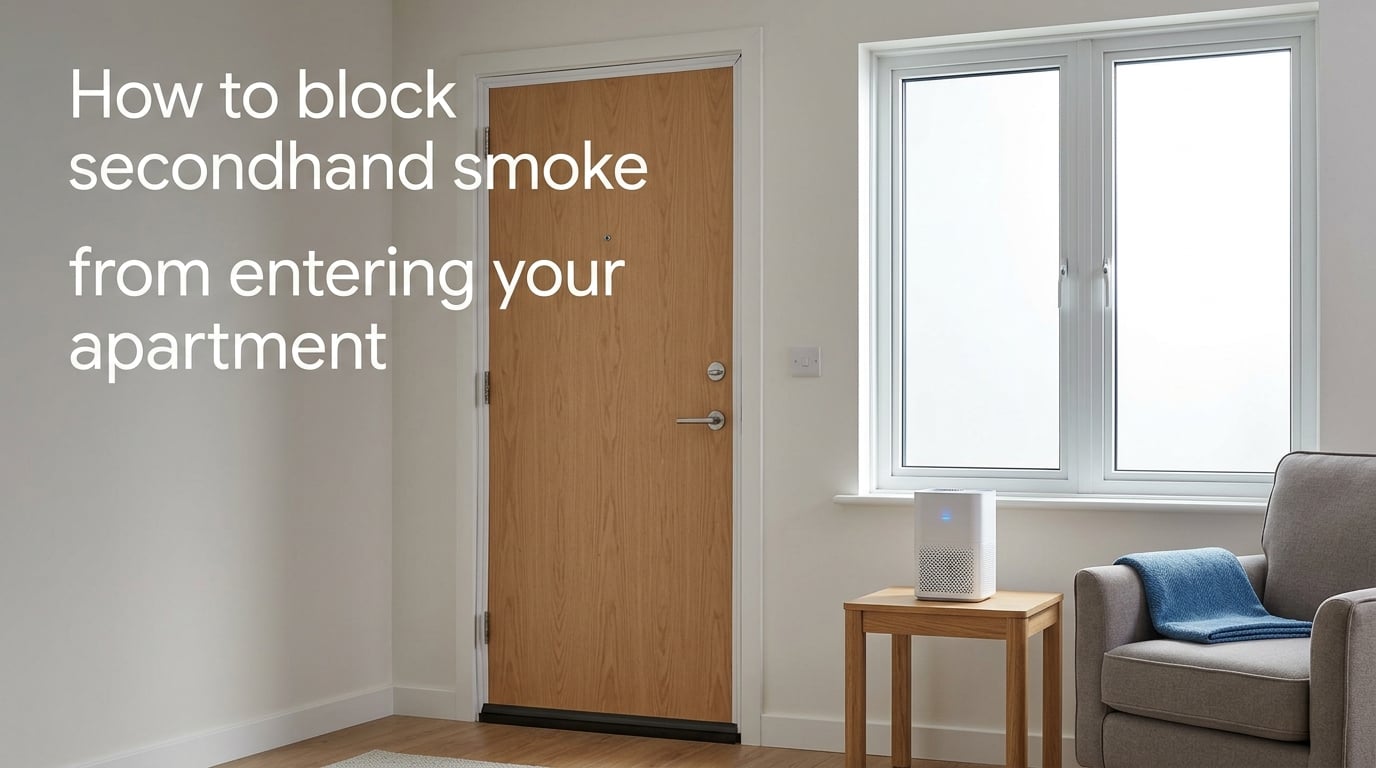
If you can smell cigarette smoke in your apartment but you do not smoke yourself, you are dealing with secondhand smoke infiltration from a neighboring unit. Learning how to block secondhand smoke from entering your apartment requires a multi-layered approach that includes sealing physical gaps, managing airflow, using air filtration, and communicating with both your neighbor and your landlord.
Secondhand smoke contains more than 7,000 chemicals, including hundreds that are toxic and about 70 known to cause cancer. In multi-unit housing like apartments and condominiums, smoke does not stay inside the unit where it originates. It travels through shared walls, ventilation systems, electrical outlets, and tiny gaps you might not even notice.
This guide walks you through every actionable step you can take, from quick DIY fixes you can do this weekend to long-term solutions involving your landlord and your legal rights as a tenant. I have pulled together insights from tenant advocacy forums, EPA recommendations, and real-world experiences from apartment dwellers who have successfully reduced or eliminated smoke intrusion.
Table of Contents
How Secondhand Smoke Enters Your Apartment
Before you can stop smoke from coming in, you need to understand how it travels between units. Smoke moves through the path of least resistance, following air pressure differences and tiny structural gaps that connect your apartment to your neighbor’s space.
The most common entry points include gaps under and around your front door, poorly sealed windows, shared ventilation and HVAC ductwork, electrical outlets and switch plates on shared walls, plumbing penetrations in kitchens and bathrooms, and hairline cracks where walls meet floors or ceilings. Research from the American Lung Association confirms that up to 65 percent of air between adjacent apartment units can be exchanged through these hidden pathways.
Smoke also enters through what building science professionals call the stack effect. Warm air rises and escapes through upper floors, drawing replacement air (and smoke) in from lower units. This means if your neighbor below you smokes, their smoke naturally migrates upward into your living space through every available gap.
Understanding these pathways tells you exactly where to focus your sealing efforts. Let us go through each solution step by step.
Step 1: Seal Every Entry Point (Doors, Windows, and Walls)
Sealing gaps is the single most effective physical action you can take to block secondhand smoke from entering your apartment. Start with the most obvious entry points and work your way to the hidden ones.
Install a Door Sweep on Your Entry Door
The gap under your apartment’s front door is one of the largest and most common pathways for smoke infiltration. A door sweep attaches to the bottom of your door and bridges the gap between the door and the threshold. Most sweeps are peel-and-stick or screw-on, meaning you can install one in under ten minutes with no special tools.
Look for a door sweep with an adjustable height and a rubber or silicone blade that makes full contact with the floor. Foam-based draft guards that slide onto the bottom of the door also work well for renters who cannot permanently modify their doors. Multiple users on apartment living forums report that this single upgrade dramatically reduced smoke smell in hallways-facing units.
Apply Weatherstripping to Doors and Windows
Weatherstripping creates an airtight seal around the perimeter of doors and windows where they meet the frame. For doors, adhesive foam tape or V-strip (tension seal) works well along the frame. For windows, foam tape or rope caulk seals the gaps between the sash and the frame.
Clean the surface thoroughly before applying any adhesive weatherstripping, and measure carefully so you do not leave gaps at the corners. If you are renting, choose removable options like rope caulk or silicone weather seals that will not damage the frame when you move out.
Seal Electrical Outlets and Switch Plates on Shared Walls
This is one of the most overlooked smoke entry points. Electrical boxes in shared walls have holes where wires pass through, and those holes connect directly to the space inside your wall, which connects to your neighbor’s wall cavity. Smoke travels freely through these hidden channels.
You can buy foam outlet gaskets (also called electrical sealers) for just a few dollars at any hardware store. Turn off the power at the breaker, remove the outlet cover plate, place the pre-cut foam gasket over the outlet, and screw the cover back on. Do this for every outlet and light switch on walls you share with a smoking neighbor.
Caulk and Foam Seal Larger Gaps
Walk around your apartment and look for visible gaps where walls meet floors, where pipes enter the wall in kitchens and bathrooms, and around any vents or ductwork. Use acrylic latex caulk for gaps up to a quarter inch wide. For larger gaps, use expandable polyurethane foam sealant.
Pay special attention to the area behind your stove, under your sinks, and around your bathroom vanity. These plumbing penetrations are often poorly sealed in apartment construction and serve as direct channels for smoke and odors between units.
Step 2: Create Positive Air Pressure to Keep Smoke Out
Sealing gaps is only half the battle. If the air pressure inside your apartment is lower than the pressure outside or in the hallway, smoke will be pulled through even the smallest remaining gaps. You can counteract this by creating positive air pressure that pushes air out rather than drawing it in.
Use Window Fans Strategically
Place a box fan or window fan in a window facing away from your smoking neighbor (ideally on the opposite side of the apartment). Set the fan to blow air inward, bringing fresh air into your unit. This increases the air pressure inside your apartment and helps prevent smoke-laden air from seeping in through shared walls and doors.
Alternatively, you can place a fan in a window near the smoke source set to blow outward, creating an exhaust path that pulls air away from shared walls. Experiment with both configurations to find what works best for your apartment’s layout. Forum users on r/ApartmentHacks consistently recommend this approach as a budget-friendly immediate fix.
Adjust Your HVAC System
If your apartment has a forced-air HVAC system, check whether your unit has a fresh air intake. If it does, make sure it is drawing air from a clean source, not from a location near your neighbor’s windows or balcony. You can also close or partially block HVAC return vents on shared walls to reduce smoke being pulled through the ductwork.
Keep your HVAC fan running on a low continuous setting. This keeps air circulating and maintains consistent air pressure throughout your unit. Some tenants have found that running the fan continuously reduced smoke odors significantly even without other changes.
Keep Interior Doors Open for Balanced Airflow
Closed interior doors create pressure imbalances within your apartment that can actually draw smoke in from the hallway or neighboring units. Keep doors open when possible to allow air to circulate freely. If you need to close a bedroom door for privacy, leave it cracked or install a louvered vent in the door to maintain airflow.
Step 3: Use Air Purifiers with Activated Carbon Filters
Even after sealing and managing airflow, some smoke particles and gases will still make it into your apartment. An air purifier acts as your last line of defense by capturing airborne contaminants before you breathe them in.
Why HEPA Alone Is Not Enough for Smoke
Standard HEPA filters are excellent at capturing solid particles like dust, pollen, and pet dander. However, tobacco smoke consists of both particles and gases. The gaseous components of secondhand smoke, which include the compounds responsible for the smell, pass right through a HEPA filter.
This is where activated carbon comes in. Activated carbon filters adsorb gaseous pollutants and volatile organic compounds (VOCs) that HEPA cannot capture. For smoke specifically, you need an air purifier that combines a true HEPA filter with a thick bed of activated carbon pellets or a carbon-impregnated filter.
What to Look for in an Air Purifier for Smoke
Look for a unit with a high Clean Air Delivery Rate (CADR) specifically rated for tobacco smoke. The CADR for smoke should be at least two-thirds of your room’s square footage. For example, a 300-square-foot room should have an air purifier with a smoke CADR of at least 200.
Replace the carbon filter regularly, as saturated carbon loses its ability to adsorb gases. Most manufacturers recommend replacing carbon filters every 3 to 6 months, but if smoke is a persistent issue, you may need to replace them more frequently.
Step 4: Talk to Your Neighbor About the Smoke
Sometimes the simplest solution works. Many smokers genuinely do not realize that their smoke travels into neighboring apartments. A polite, non-confrontational conversation can sometimes resolve the issue without any further action needed.
How to Approach the Conversation
Choose a time when you are both calm and not rushed. Lead with curiosity rather than accusation. You might say something like: “I wanted to mention that I have been noticing cigarette smoke in my apartment, and I think it might be coming through the shared wall. I know you probably were not aware of it, but it is affecting my air quality.”
Frame the conversation around your health and comfort rather than blame. If you have asthma, allergies, children, or pets, mention that as context for why the smoke matters to you. Avoid demands or ultimatums in the first conversation.
Suggest Practical Alternatives
Instead of just asking your neighbor to stop, suggest specific alternatives. They might be willing to smoke on their balcony, near an open window with a fan blowing outward, or at a designated smoking area away from the building. Smokers are more likely to cooperate when you offer a workable solution rather than a blanket complaint.
Be prepared for the possibility that your neighbor will not be receptive. Forum experiences show that neighbor conversations work about half the time. If the problem continues, move on to the next step.
Step 5: Work with Your Landlord or Property Manager
If direct communication with your neighbor does not resolve the issue, your landlord or property manager is your next point of contact. Building management has the authority to make structural changes and enforce building policies that you cannot enforce on your own.
Document Everything Before You Complain
Before approaching your landlord, gather evidence. Keep a log of when you smell smoke, how strong it is, and which rooms are affected. Take photos of visible smoke if possible. Note any health symptoms you experience, such as coughing, headaches, or asthma flare-ups.
Landlords respond far better to documented complaints than vague grievances. A log showing smoke intrusion at specific times on specific dates over several weeks paints a clear picture that property management cannot ignore. This documentation also strengthens your case if you eventually need to pursue legal options.
Request Specific Building Modifications
Ask your landlord to seal gaps between units, install door sweeps on hallway doors, weatherstrip windows, or upgrade the building’s ventilation system. Frame these as building improvements that benefit all tenants, not just you. Some landlords are willing to make these changes, especially if they prevent larger legal or health issues down the road.
Advocate for a Smokefree Building Policy
According to the American Lung Association, the number of smokefree multi-unit housing properties has increased significantly in recent years. Talk to your landlord about adopting a smokefree policy for the entire building. Smokefree policies are legal, enforceable through lease agreements, and can increase property values by reducing turnover and cleaning costs between tenants.
You can also connect with other residents in your building who may share your concerns. A petition or group complaint carries more weight than a single voice.
Step 6: Know Your Legal Rights as a Tenant
If your landlord refuses to act and the smoke continues to affect your health and quality of life, you have legal options. Tenant rights regarding secondhand smoke vary by state and municipality, but several federal protections may apply to your situation.
Fair Housing Act Protections
Under the federal Fair Housing Act, landlords must provide reasonable accommodations for tenants with disabilities. If you have a documented health condition such as asthma, COPD, or another respiratory illness that is aggravated by secondhand smoke, you can request a reasonable accommodation. This might include requiring the landlord to enforce smokefree rules, transferring you to a different unit, or making structural modifications to reduce smoke infiltration.
The Americans with Disabilities Act (ADA) provides similar protections for individuals whose respiratory conditions qualify as disabilities. Your landlord cannot retaliate against you for requesting an accommodation.
State and Local Smokefree Laws
Many states and cities have passed laws restricting or prohibiting smoking in multi-unit housing. Some jurisdictions require landlords to disclose smoking policies before you sign a lease. Others have outright bans on smoking in common areas and, in some cases, inside individual units. Research the smokefree laws in your state and city to understand what protections apply to you.
Legal Action and Lease Termination
In some cases, tenants have successfully sued neighbors or landlords over secondhand smoke exposure, arguing breach of the implied warranty of habitability or nuisance laws. If the smoke makes your apartment uninhabitable, you may have grounds to break your lease without penalty. Consult a tenant rights attorney or a local legal aid organization before taking this step, as laws vary widely.
Many cities have tenant rights hotlines or legal aid societies that offer free consultations. The American Lung Association also maintains resources and can connect you with local advocacy groups.
FAQs
How long does secondhand smoke stay in the air?
Secondhand smoke can linger in the air for up to 5 hours after a cigarette is extinguished, depending on ventilation and room size. In enclosed spaces with poor airflow, toxic particles can remain suspended even longer and settle into fabrics, carpets, and walls, continuing to release odors for days or weeks.
Can you sue a neighbor for second-hand smoke?
Yes, in some cases you can take legal action against a neighbor for secondhand smoke. Tenants have successfully sued under nuisance laws, the implied warranty of habitability, and trespass claims. However, success depends heavily on your state and local laws, the strength of your documentation, and whether your lease or building has a smokefree policy. Consult a tenant rights attorney for guidance specific to your situation.
How do I stop my neighbor’s smoke smell from seeping into my house?
Start by sealing all entry points: install door sweeps, apply weatherstripping to doors and windows, place foam gaskets behind electrical outlets on shared walls, and caulk gaps around pipes and baseboards. Then add an air purifier with both a HEPA filter and activated carbon to capture smoke particles and gases. Finally, create positive air pressure with a window fan to push smoke back toward the source.
How to prove second hand smoke in apartment?
Keep a detailed log recording the date, time, duration, and intensity of smoke odors, along with which rooms are affected and any health symptoms you experience. Take photos or videos of visible smoke. Save copies of any complaints you file with your landlord and responses you receive. You can also use an indoor air quality monitor that measures particulate matter (PM2.5) to provide objective data showing smoke intrusion events.
Take Action Against Secondhand Smoke in Your Apartment
Blocking secondhand smoke from entering your apartment is not a one-step fix. It takes a combination of physical sealing, airflow management, air purification, communication, and persistence. Start with the quick wins like door sweeps and outlet gaskets this weekend, add an air purifier with activated carbon, and document everything so you have the evidence you need if you have to escalate to your landlord or pursue your legal rights.
You deserve clean air in your own home. By following the steps in this guide, you now know exactly how to block secondhand smoke from entering your apartment and protect your health for the long term.