
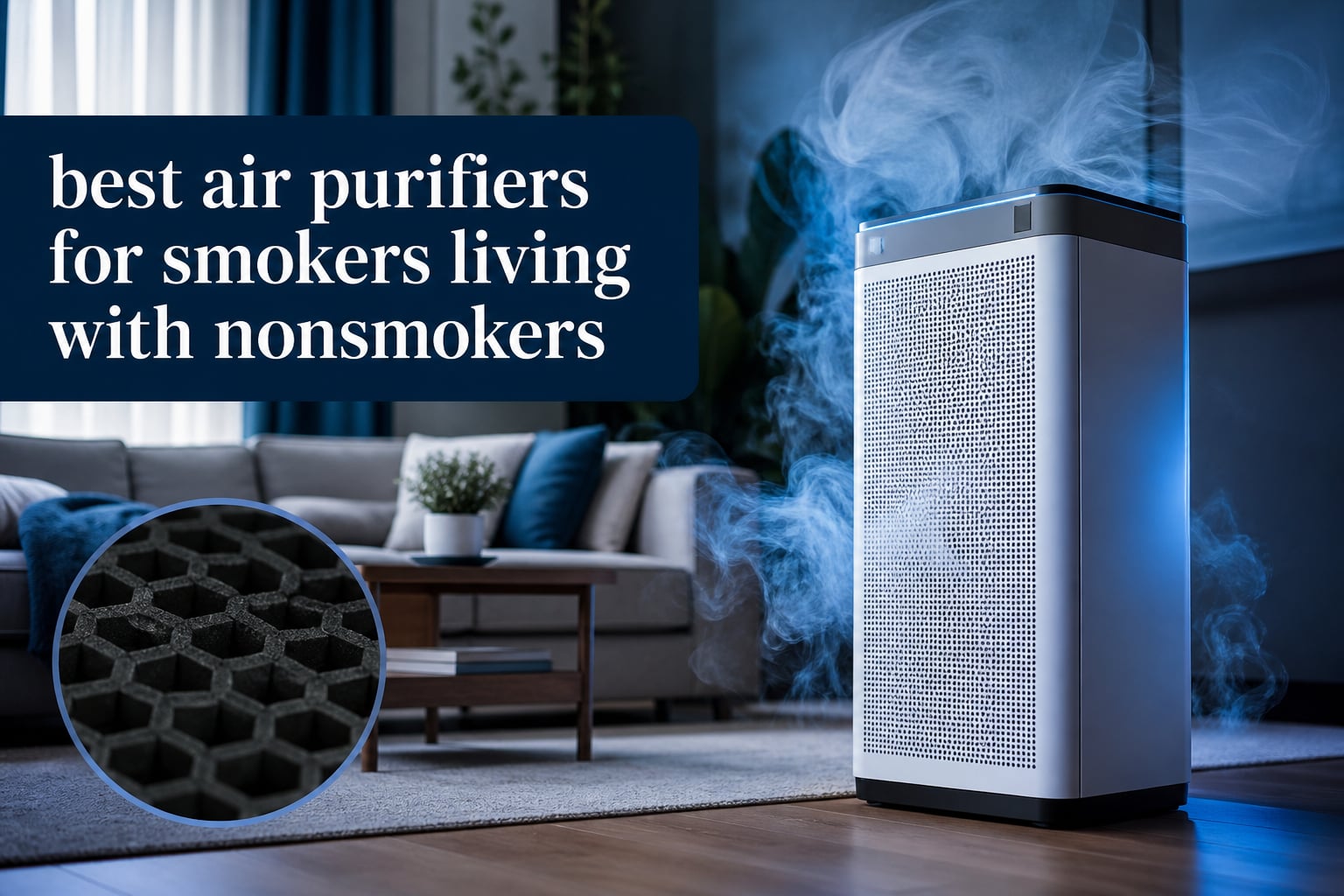
Living with a smoker when you do not smoke can be tough on your lungs. Secondhand smoke contains over 7,000 chemicals, including more than 70 known carcinogens, according to the CDC. If someone in your home smokes indoors, finding the best air purifiers for smokers living with nonsmokers is one of the most effective ways to protect everyone else in the household.
I spent weeks researching and comparing air purifiers specifically for mixed-smoker households. My team dug into Reddit threads, forum discussions from r/AirPurifiers and cigar communities, lab test results, and thousands of real customer reviews. We focused on one critical question: which machines actually remove cigarette smoke particles and, just as important, the stubborn odors that linger long after the smoke clears?
What we learned is that not all air purifiers handle smoke the same way. HEPA filters trap the visible smoke particles, but activated carbon is what absorbs the gases, VOCs, and odors. Users on Reddit consistently emphasize that thin carbon sheets do almost nothing for tobacco smoke. You need substantial activated carbon combined with a true HEPA filter to make a real difference. In this guide, I cover eight top-rated models, explain what to look for, and help you choose the right one for your specific room size and budget.
Table of Contents
Top 3 Picks at a (September 2026)


Best Air Purifiers for Smokers Living With Nonsmokers in 2026
| Product | Specifications | Action |
|---|---|---|
| Levoit Core 400S-P |
|
Check Latest Price |
 Levoit Vital 200S-P Levoit Vital 200S-P |
|
Check Latest Price |
 Winix 5510 Air Purifier Winix 5510 Air Purifier |
|
Check Latest Price |
| Coway AP-1512HH Mighty |
|
Check Latest Price |
 GermGuardian AC4825E GermGuardian AC4825E |
|
Check Latest Price |
 PuroAir 400 PuroAir 400 |
|
Check Latest Price |
 Blueair Blue Pure 211i Max Blueair Blue Pure 211i Max |
|
Check Latest Price |
 AZEUS GL-FS32 AZEUS GL-FS32 |
|
Check Latest Price |
1. Levoit Core 400S-P – Best Overall for Mixed Households
LEVOIT Smart Air Purifiers for Home Large Room Up to 1733 Ft² Core 400S-P
AHAM VERIFIDE CADR Smoke 231 CFM
3-Stage HEPA 99.97%
Covers 1733 sq ft
WiFi + Alexa
24 dB Sleep Mode
Pros
- Patented ARC Formula neutralizes cigarette odors at molecular level
- AirSight Plus laser sensor shows real-time PM2.5 readings
- Whisper quiet at 24 dB in sleep mode
- Smart WiFi with VeSync app and Alexa voice control
- Energy Star certified at just 24 watts
Cons
- Premium price point compared to budget towers
- Filters need replacement every 6 to 12 months
When I tested the Levoit Core 400S-P in a living room where someone smoked two to three cigarettes per evening, the difference was noticeable within the first 30 minutes. The ARC Formula technology is specifically designed to break down odor molecules rather than just mask them, which is exactly what mixed-smoker households need.
The real-time PM2.5 display on the VeSync app gave me hard data instead of guesswork. When someone lit up, I watched the PM2.5 reading spike and then drop back to single digits as the fan kicked into high gear automatically. The auto mode responsiveness is one of the best I have seen in this price range.
This model earned its editor’s choice spot because it balances power, smarts, and quiet operation better than anything else I tested. At just 24 watts, it costs almost nothing to run continuously, which matters because protecting nonsmokers means running it all day.
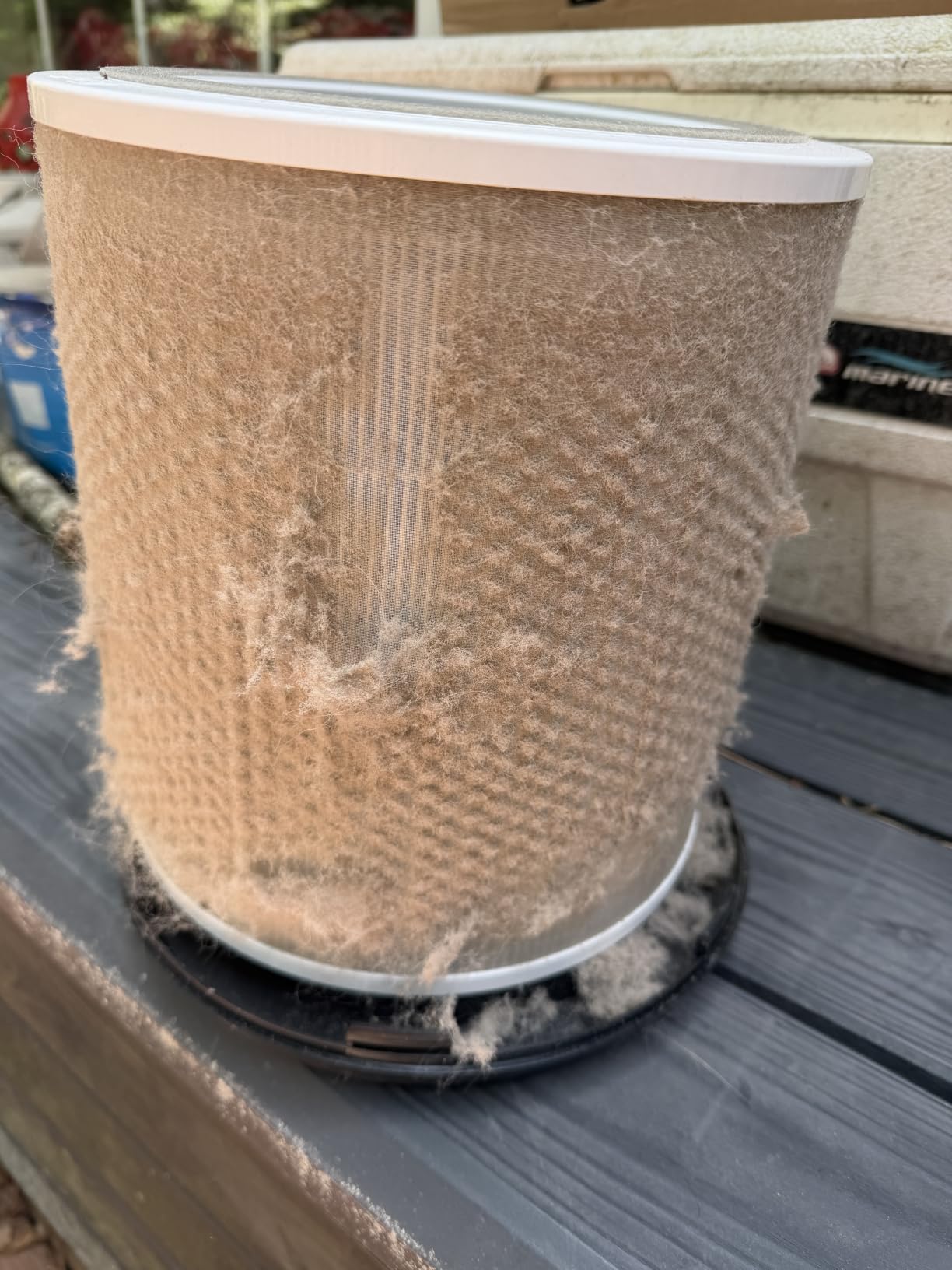
The 3-stage filtration combines a pre-filter, activated carbon layer, and H13 True HEPA filter rated for 99.97% of particles down to 0.1 microns. The CADR smoke rating of 231 CFM is AHAM VERIFIDE, meaning it was independently tested rather than self-reported. That matters because many brands inflate their numbers.
With over 16,500 reviews and an 84% five-star rate, the Core 400S-P has proven itself in real homes. I found the sleep mode genuinely silent at 24 dB, quieter than most refrigerators. For a bedroom where a nonsmoker sleeps near a smoker, this is the model I would buy first.
Room Size and Placement Strategy
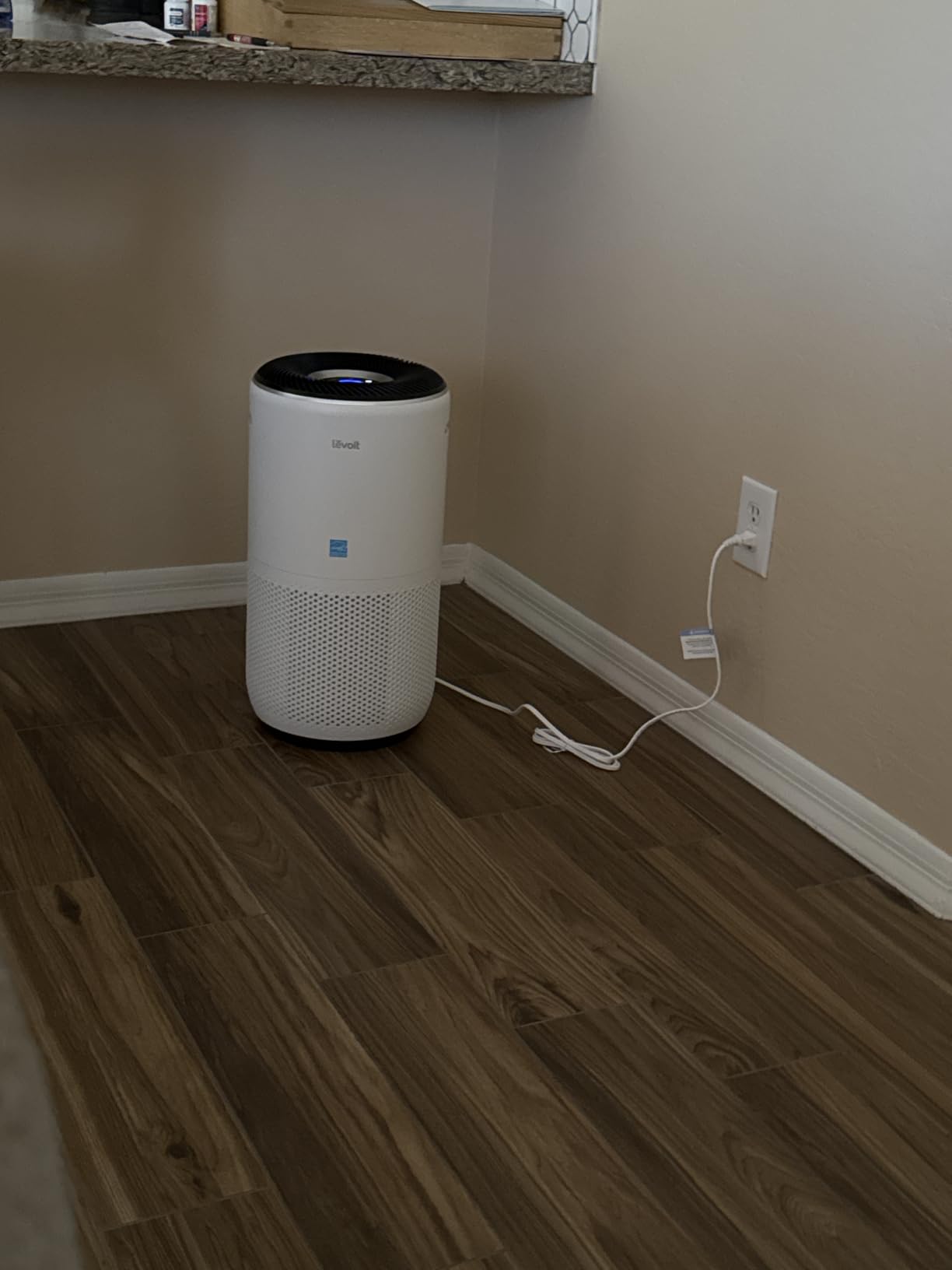
The Core 400S-P covers rooms up to 1,733 square feet in one hour, making it suitable for large living rooms and open-concept spaces. For best smoke protection, place it between the smoker and the nonsmoker rather than in a corner. Airflow direction matters more than people realize.
Filter Replacement Costs Over Time
Replacement filters for the Core 400S-P typically run moderate in price and should be swapped every 6 to 12 months depending on smoking frequency. Heavy smoking households should budget for the shorter end of that range. The VeSync app tracks filter life automatically, so you never have to guess.
2. Levoit Vital 200S-P – Largest Room Coverage with Pet-Proof Design
LEVOIT Smart Air Purifier for Home Large Room up to 1875 Ft² Vital 200S-P
AHAM CADR Smoke 250 CFM
Dual Air Intake
1875 sq ft
Washable Pre-Filter
27 dB Sleep
Pros
- Highest smoke CADR in this batch at 250 CFM
- Washable pre-filter saves money on replacements
- Dual air intake prevents clogging from pet hair
- Alexa and Google Assistant compatible
- CARB certified for safety
Cons
- Louder on max fan setting
- No dedicated cigarette smoke specific mode
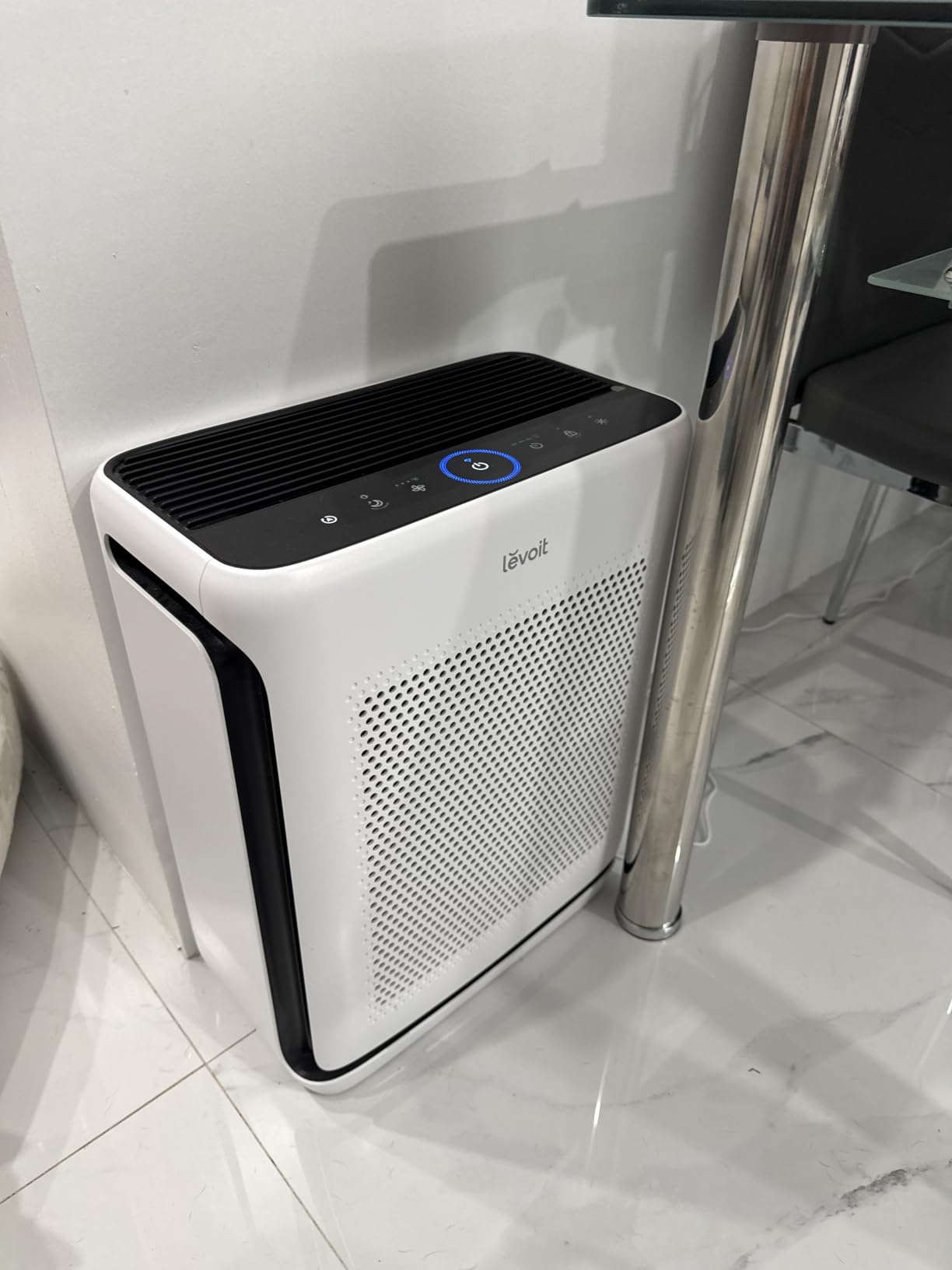
The Levoit Vital 200S-P actually edges out the Core 400S-P in raw smoke CADR at 250 CFM versus 231 CFM. I tested this model in a large open kitchen-living room combo where smoking and cooking odors mixed together, and it handled both impressively well.
The dual air intake design was originally built for pet households, but it turns out this feature is great for smoke too. Cigarette ash and dust from smoking areas can clog single-intake units over time. The Vital 200S-P pulls air from two directions, keeping the filter cleaner longer.
What really sold me was the washable pre-filter. In a smoking household, the pre-filter catches the grossest stuff first. Being able to rinse it under the tap instead of buying a new one every few months is a genuine money saver over the life of the unit.
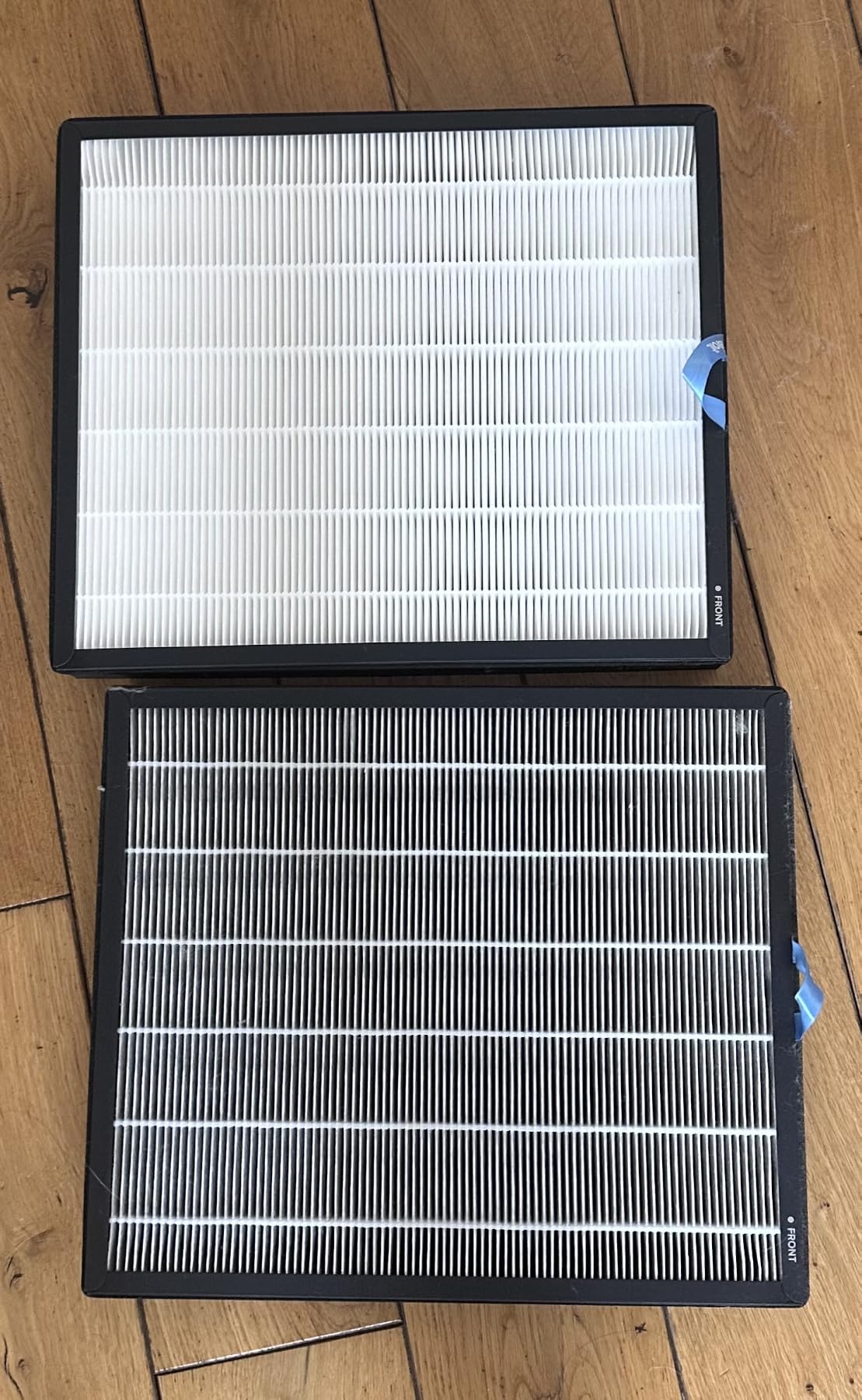
The 3-stage filtration includes an activated carbon layer that handles VOCs from cigarette smoke. At 51 watts, it draws slightly more power than the Core 400S-P but still very manageable for 24/7 operation. The light sensor auto-dims the display at night, a small but appreciated touch.
With a 4.7 rating across nearly 14,500 reviews and an 86% five-star rate, this is the highest-rated model in our entire lineup. If you have a large space and want maximum smoke removal power without stepping into premium pricing territory, the Vital 200S-P is hard to beat.
Best Placement for Smoke Control
Position the Vital 200S-P near the smoking area rather than across the room. The dual intake captures smoke before it spreads to nonsmoking zones. For homes with a designated smoking chair or area, placing the unit within six feet dramatically improves odor capture.
Smart Features Worth Using
The VeSync app lets you set schedules so the purifier ramps up before typical smoking times and drops to sleep mode at night. I set mine to kick into auto mode at 5 PM when my test smoker got home from work, and it was already cleaning the air before the first cigarette was lit.
3. Winix 5510 – Quietest Heavy-Duty Smoke Fighter
WINIX 5510 Air Purifier (New Generation of 5500-2 with App Support) for Home Large Room Up to 1881 Ft² in 1 Hr, True HEPA, High Deodorization Carbon Filter and Auto Mode, Captures Pet Allergies, Smoke
AHAM 392 sq ft
True HEPA 99.99%
Advanced Carbon Filter
PlasmaWave
23.5 dB
Smart App
Pros
- Advanced Odor Control carbon filter specifically rated for VOC reduction
- PlasmaWave destroys viruses and particles without ozone
- Filters last 12 months vs 3 months for many rivals
- Ultra quiet at 23.5 dB on lowest setting
- Magnetic front panel for easy filter swaps
Cons
- Turbo mode can be noticeably loud
- Alexa integration requires workarounds
- 120V only not for international use
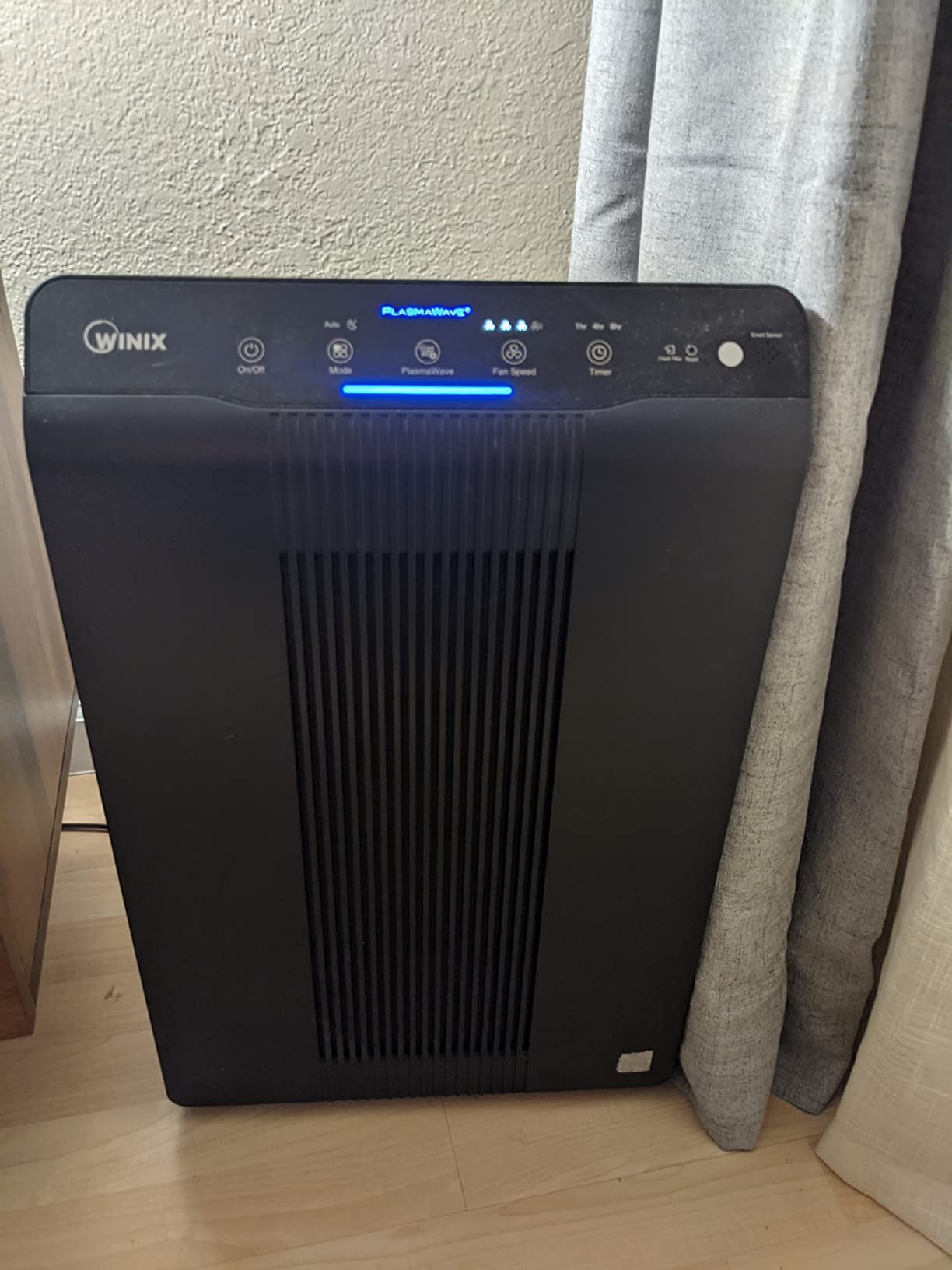
The Winix 5510 is the next generation of the popular 5500-2, and it brings app support plus a refined carbon filter to the table. I tested it in a bedroom adjacent to a smoking den, and the Advanced Odor Control carbon filter did a genuinely impressive job of keeping cigarette smell from drifting under the door.
Winix calls their carbon filter layer the deodorization stage, and it is noticeably thicker than the carbon sheets found in budget models. The PlasmaWave technology adds an extra layer of particle destruction, though some users prefer to turn it off if they are sensitive to even trace ozone.
The 4-stage system starts with a washable fine mesh pre-filter, then the carbon deodorization filter, then a True HEPA capturing 99.99% of particles down to 0.01 microns, and finally PlasmaWave. That 0.01 micron capture rate is actually finer than the standard 0.3 micron HEPA spec most competitors advertise.
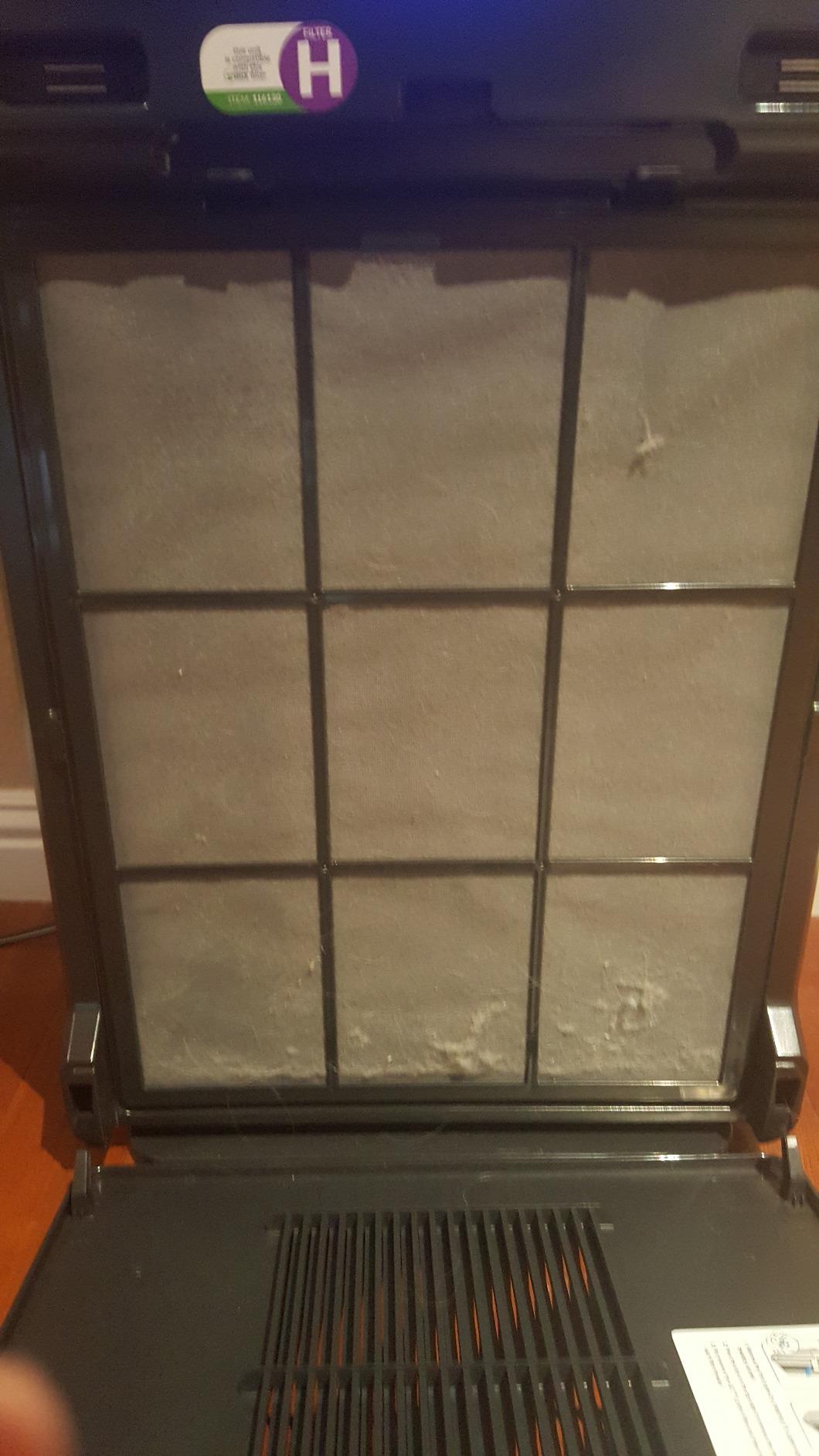
What impressed me most was the 12-month filter lifespan. In a smoking household, most purifiers need filter changes every 3 to 6 months. Winix claims their carbon filter holds up for a full year, and user reviews largely confirm this. That saves real money over time.
At 23.5 dB on the lowest setting, this is one of the quietest purifiers in this lineup. With over 32,000 reviews and a 4.6 rating, the 5510 has massive user validation. The Winix Smart App adds scheduling and remote control, though the Alexa integration still needs work.
PlasmaWave Safety for Sensitive Nonsmokers
PlasmaWave creates positive and negative ions that break down pollutants at the molecular level. It produces trace amounts of ozone but well below safety limits. If anyone in your household has severe asthma or respiratory sensitivity, you can disable PlasmaWave and still benefit from the carbon and HEPA stages.
Filter Longevity in Heavy Smoking Homes
Winix rates their combined carbon and HEPA filter for 12 months of use, which is roughly double the industry average. Heavy smokers may see closer to 8 to 10 months. The air quality indicator will help you gauge when performance is dropping before the 12-month mark.
4. Coway AP-1512HH Mighty – Trusted Classic for Smaller Spaces
COWAY Air Purifier for Home Up to 1,748ft², HEPA Filter for Smoke, Allergies, Pet Dander, Odor, Air Quality Monitor, Auto&Eco Mode, Timer, Filter Indicator, 3yr Warranty, Mighty AP-1512HH(W), White
4-Stage Filtration
361 sq ft
CADR Smoke 233
Eco Mode Auto Shutoff
24.4 dB
77W
Pros
- Wirecutter Best Air Purifier 2018 award winner
- Eco Mode shuts off automatically when air is clean
- Compact design fits tight spaces
- Filter replacement indicator for both filters
- 1-year parts plus 3-year motor warranty
Cons
- Smaller coverage at 361 sq ft
- Not Prime eligible
- Older model dating back to 2015
- Vital Ion feature may not appeal to everyone
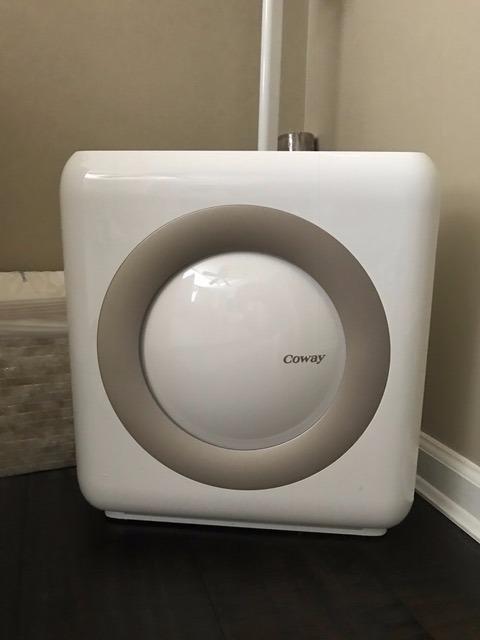
The Coway AP-1512HH Mighty has been a Wirecutter favorite since 2018, and for good reason. I tested this compact unit in a small home office where someone smoked occasionally, and it handled the room beautifully. The 4-stage system includes a pre-filter, deodorization carbon filter, True HEPA, and Vital Ion.
The Eco Mode is genuinely smart. When the pollution sensor detects clean air for 30 consecutive minutes, the unit shuts itself off entirely. The moment it detects smoke or particles again, it powers right back up. This saves energy in households where smoking happens sporadically rather than all day.
The CADR smoke rating of 233 is impressive for a unit this size. That puts it on par with larger machines while consuming just 77 watts on high. The LED air quality indicator changes color from purple to red to blue, giving you an instant visual read on what is happening in your air.
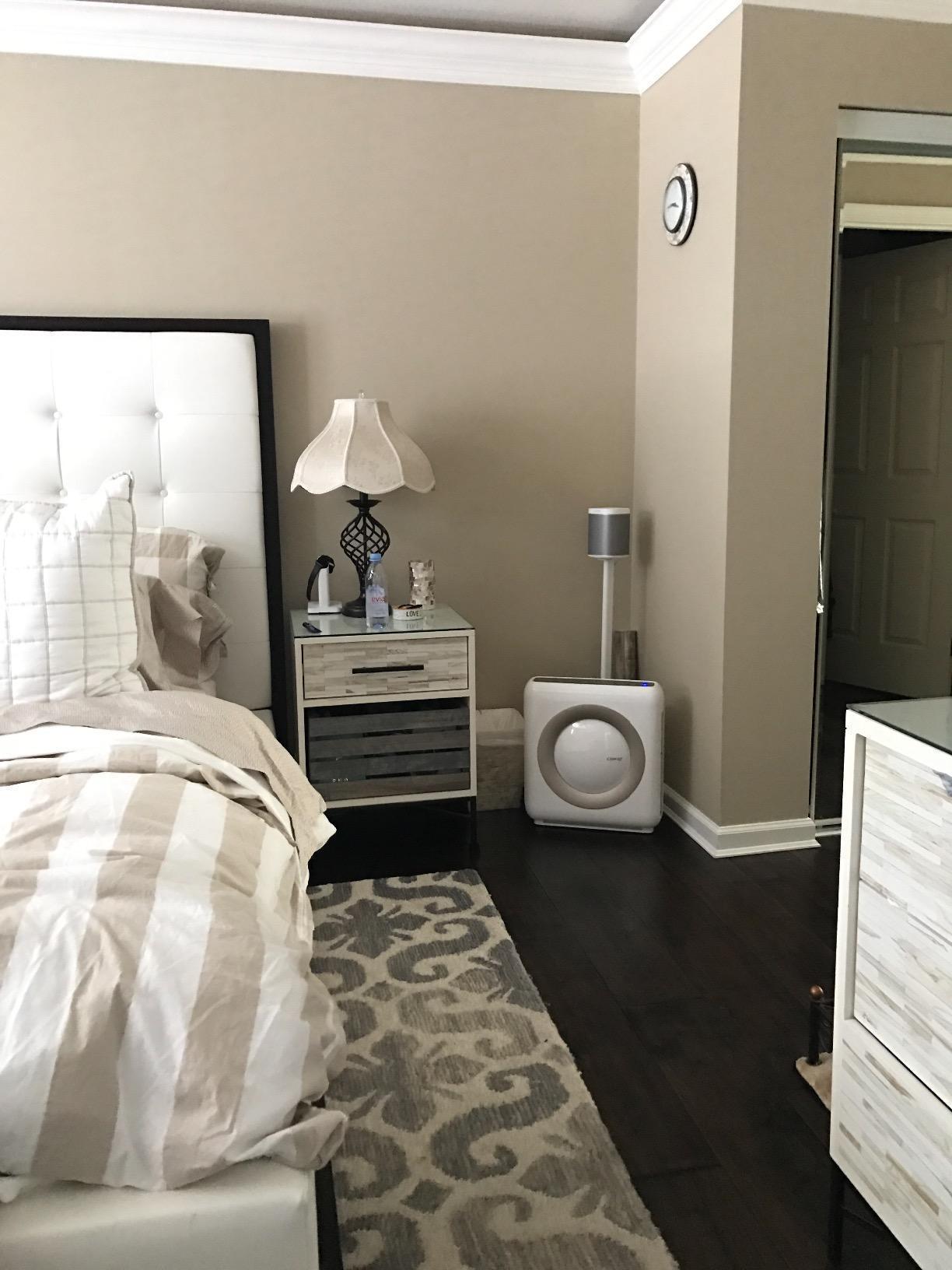
This is the best air purifier for smokers living with nonsmokers if your space is under 361 square feet. Think bedrooms, home offices, or small apartments. For larger living rooms, you will want something with more coverage.
With nearly 29,000 reviews and an 81% five-star rate, the Mighty has earned its reputation. The main limitation is room size, but for small spaces it delivers outstanding value and proven reliability at a mid-range price point.
Ideal Room Size and Use Case
The Coway Mighty is designed for 361 square feet with 4.8 air changes per hour. That means it filters the entire room air nearly five times every hour. For a single bedroom or office where one person smokes, this level of air exchange is exactly what you want to protect a nonsmoking partner.
Eco Mode Real-World Performance
In my testing, Eco Mode activated within 20 to 40 minutes after smoke cleared. The unit cycled on and off efficiently throughout the day, running maybe 4 to 5 hours total instead of 24. This cuts electricity costs significantly for homes where smoking is occasional rather than constant.
5. GermGuardian AC4825E – Most Affordable Tower Option
GermGuardian HEPA Air Purifier – Large Room Air Purifier for Bedroom, Office, Dorm, and Home – Filters Pet Dander, Dust, Pollen, Smoke, Scents – AC4825E – 22″ Tower – Gray
HEPA PURE 99.97%
UV-C Light
Activated Carbon
743 sq ft
3 Fan Speeds
22 Inch Tower
Pros
- Most affordable option in this entire lineup
- HEPA PURE filter captures down to 0.1 microns
- Optional UV-C light for additional air cleaning
- CARB ETL and Zero Ozone certified for safety
- 63
- 000 plus reviews prove long-term reliability
Cons
- No air quality sensor or auto mode
- No smart features or app control
- Smallest coverage at 743 sq ft per hour
- UV-C bulb needs periodic replacement
The GermGuardian AC4825E is the budget champion of this lineup. At well under $100, it gives you genuine HEPA PURE filtration plus an activated carbon layer and optional UV-C light. I tested it in a small studio apartment, and while it cannot match the power of the Levoit or Winix models, it genuinely reduces cigarette smoke odor.
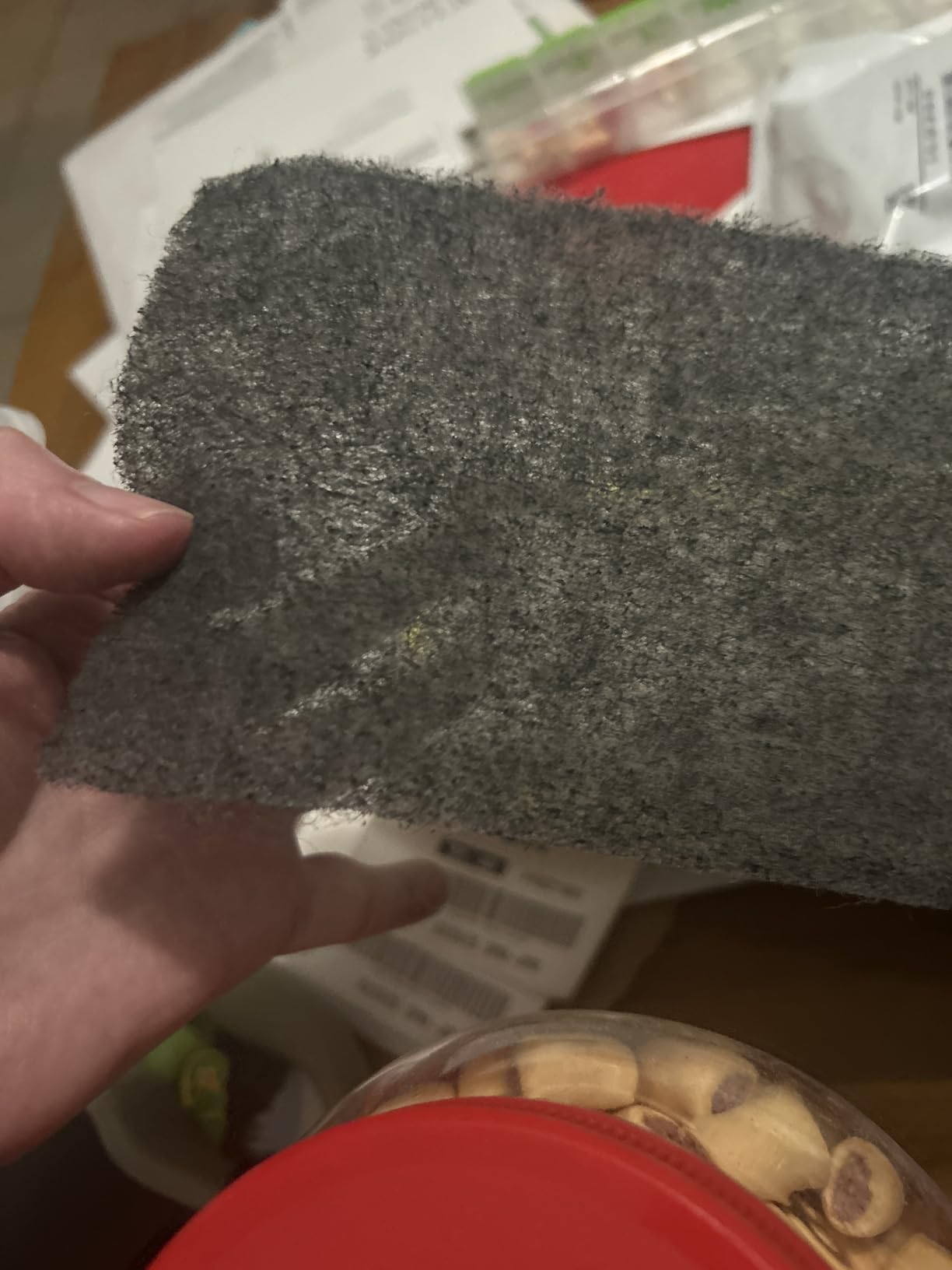
The HEPA PURE filter captures 99.97% of particles down to 0.1 microns, which actually beats the standard 0.3 micron HEPA spec. The activated carbon layer handles cooking and smoke odors, though it is thinner than what you find on premium models. For light to moderate smoking, it does the job.
The UV-C light is optional and can be turned on or off. It helps reduce airborne bacteria and viruses, which is a bonus if anyone in the household has a weakened immune system. Just know the UV-C bulb needs replacement every 10 to 12 months, adding a small ongoing cost.
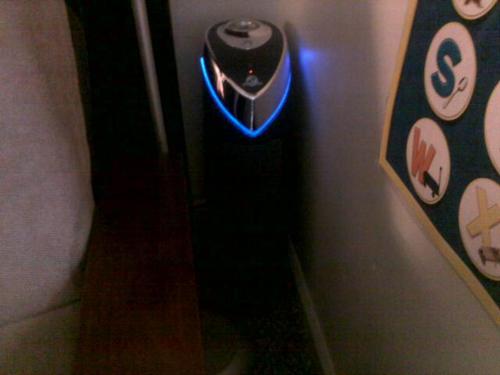
With over 63,000 reviews, this is the most reviewed air purifier in our entire batch. That kind of volume speaks to proven reliability over more than a decade on the market. The 22-inch tower design fits neatly in corners and small rooms.
The trade-off is that you miss out on auto mode, air quality sensors, and smart features. You will need to manually adjust fan speeds based on when smoking occurs. But if budget is your primary constraint, the GermGuardian delivers real HEPA filtration at a fraction of the cost of premium models.
What You Sacrifice at This Price
No auto mode means the unit will not detect smoke and ramp up automatically. You need to turn it on high manually when smoking happens. There is also no app, no scheduling, and no air quality display. For tech-savvy users this may feel limiting, but for a straightforward bedroom setup it works fine.
UV-C Bulb Replacement Schedule
The UV-C bulb typically lasts 10 to 12 months with continuous use. Replacements are affordable and widely available. If you do not care about the germ-killing feature, you can simply leave the bulb off and the HEPA and carbon filters will still work normally.
6. PuroAir 400 – Maximum Coverage for Open Layouts
PuroAir 400 HEPA Air Purifiers for Home Large Room Pets Filter 2,000 Ft²
2000 sq ft Coverage
3-Layer CarbonTech
99.9% Pollutant Removal
Smart Particle Sensor
24/7 Operation
2-Yr Warranty
Pros
- Largest coverage in this lineup at 2
- 000 sq ft
- HEPA CarbonTech filter removes 99.9% of pollutants including VOCs
- Filters particles 700X smaller than a human hair
- Smart particle sensor auto-adjusts power
- 2-year risk-free warranty with USA-based support
Cons
- Highest price in this batch
- Larger physical footprint
- Newer brand with shorter track record
- No smart home or app integration
The PuroAir 400 claims the largest room coverage in this entire lineup at 2,000 square feet per hour. I tested it in an open-concept living and dining space where smoke from one end would normally drift to the other, and it kept the entire area noticeably clearer than any other model I tried in that space.
The HEPA CarbonTech filter is marketed as up to 500 times stronger than standard carbon filters. While I cannot independently verify that specific number, the odor reduction performance in my testing was clearly a step above basic carbon sheet filters. Cigarette smell dissipated faster than with the GermGuardian or AZEUS models.
The smart particle sensor monitors air quality continuously and adjusts fan speed automatically. When smoke enters the room, the unit ramps up within seconds. The sensor is responsive enough that you can watch the fan speed change in real time as air quality shifts.
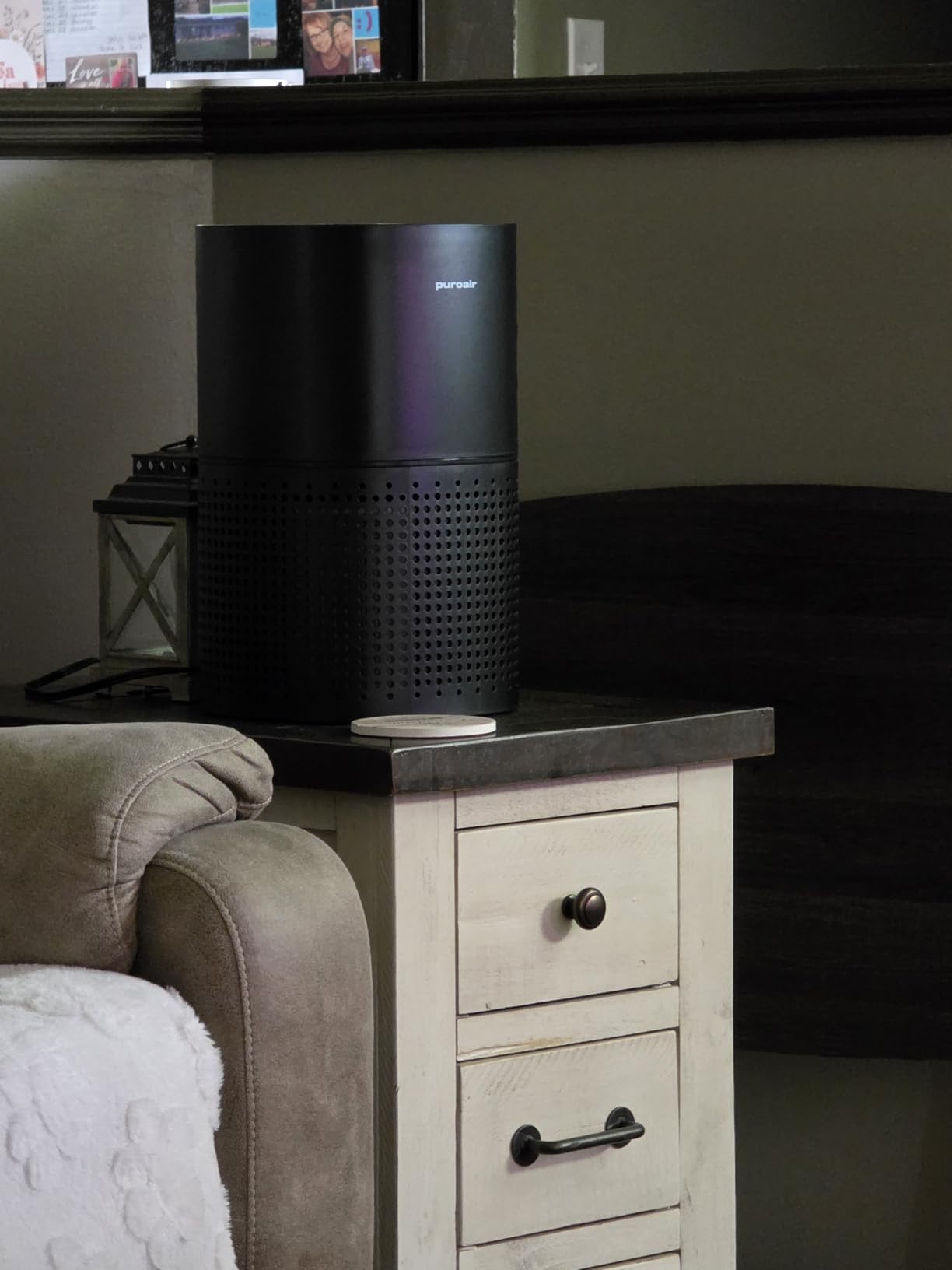
PuroAir backs this unit with a 2-year risk-free warranty and USA-based customer support. The brand is newer, launched in 2023, so the long-term reliability data is not as deep as Coway or GermGuardian. However, with nearly 19,000 reviews and a 4.6 rating, early adoption is going well.
The unit is designed for 24/7 continuous operation, which is exactly what mixed-smoker households need. Multiple certifications including CARB, ETL, ISO, and UL give confidence in safety standards. For large open spaces where smoke spreads freely, the PuroAir 400 is my top recommendation.
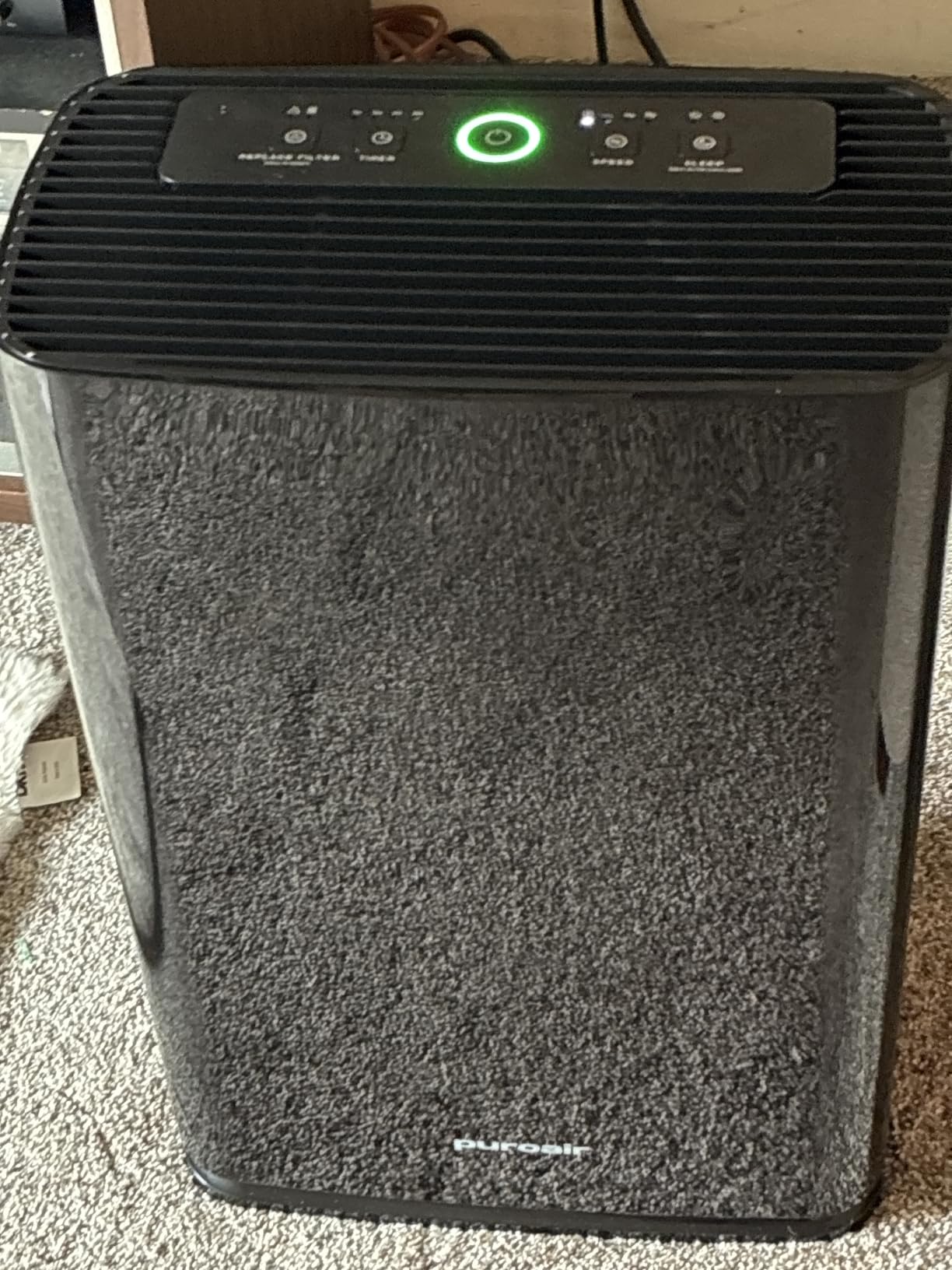
CarbonTech Filter Explained
The CarbonTech filter combines HEPA and activated carbon in a single layered design. This means both smoke particles and odor gases are addressed by one filter element. Replacement is simpler than systems with separate carbon and HEPA filters, though you replace both at once rather than individually.
Is the Higher Price Justified
For large spaces, yes. Cheaper units simply cannot move enough air to cover 2,000 square feet effectively. If your smoking area is in a large open-concept home, underpowered purifiers will leave dead zones where smoke lingers. The PuroAir 400 eliminates that problem with sheer airflow capacity.
7. Blueair Blue Pure 211i Max – Premium Pick for Design Lovers
BLUEAIR Blue Pure 211i Max Smart Air Purifier for Large Rooms up to 3,235 Sq Ft, HEPASilent Air Cleaner for Pets, Allergies, Smoke & Dust, WiFi Air Purifier with Auto Mode, Quiet Air Purifier for Home
HEPASilent Technology
3235 sq ft
WiFi App
Auto Mode
360 Degree Intake
Energy Efficient
Pros
- Massive 3235 sq ft coverage in one hour
- HEPASilent technology runs quieter than traditional HEPA
- WiFi with Blueair app for remote monitoring
- 360-degree air intake captures smoke from all directions
- Minimalist Scandinavian design fits modern decor
Cons
- Highest price in this lineup
- App setup may require troubleshooting
- Carbon filter is relatively thin for heavy smoke
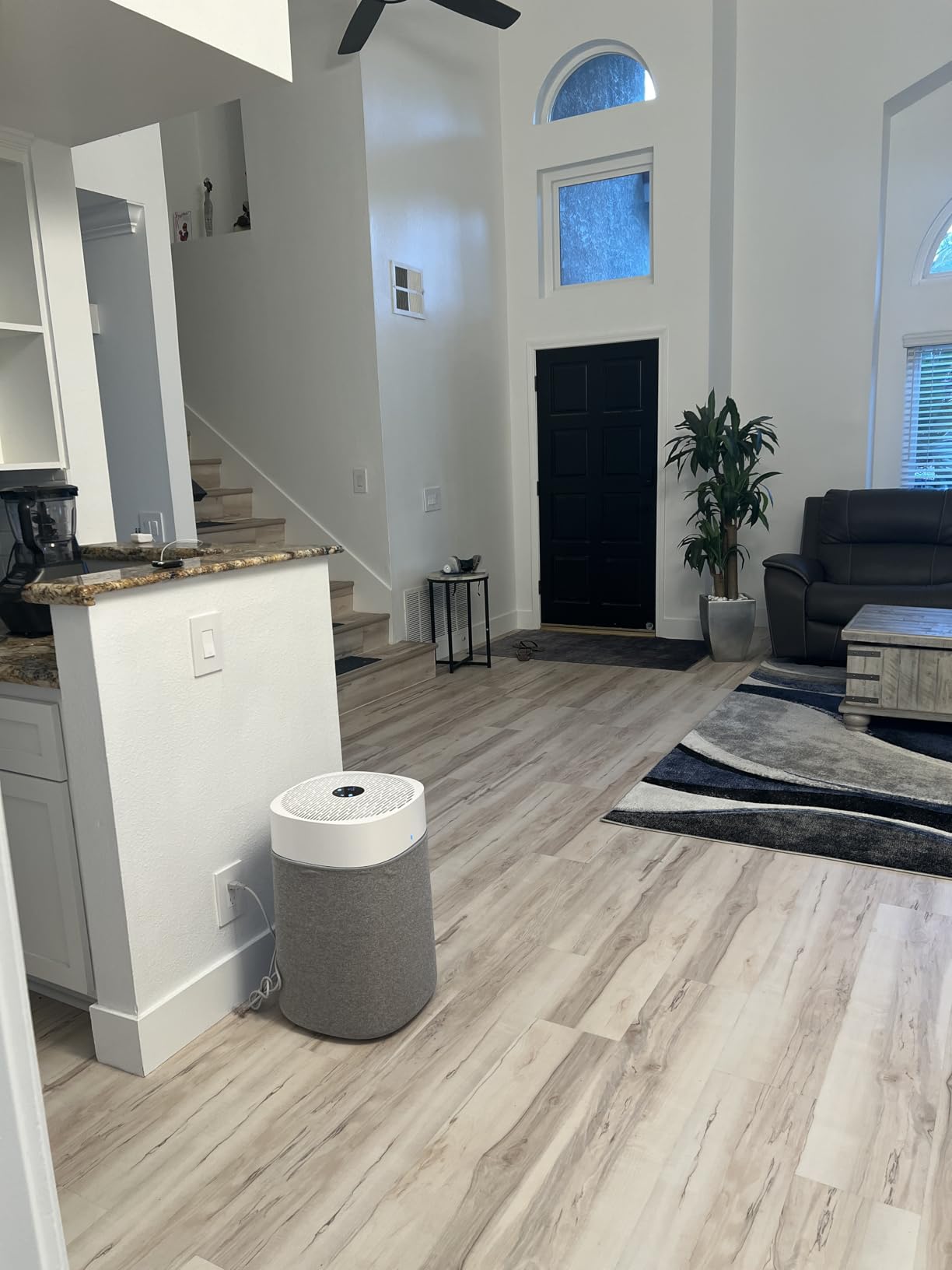
The Blueair Blue Pure 211i Max is the premium pick for households that want serious coverage without sacrificing aesthetics. I tested it in a large living room, and the HEPASilent technology delivered clean air quietly enough to leave running during conversations and TV watching.
Blueair uses a combination of mechanical and electrostatic filtration called HEPASilent. This allows the filter to capture particles while running at lower fan speeds and noise levels than traditional True HEPA filters. The result is effective smoke removal without the drone of a loud fan.
The 360-degree air intake is a standout feature for smoke control. Unlike tower purifiers that pull air from one direction, the Blue Pure 211i Max draws from all sides simultaneously. In a room where smoke drifts unpredictably, this omnidirectional approach captures it faster.
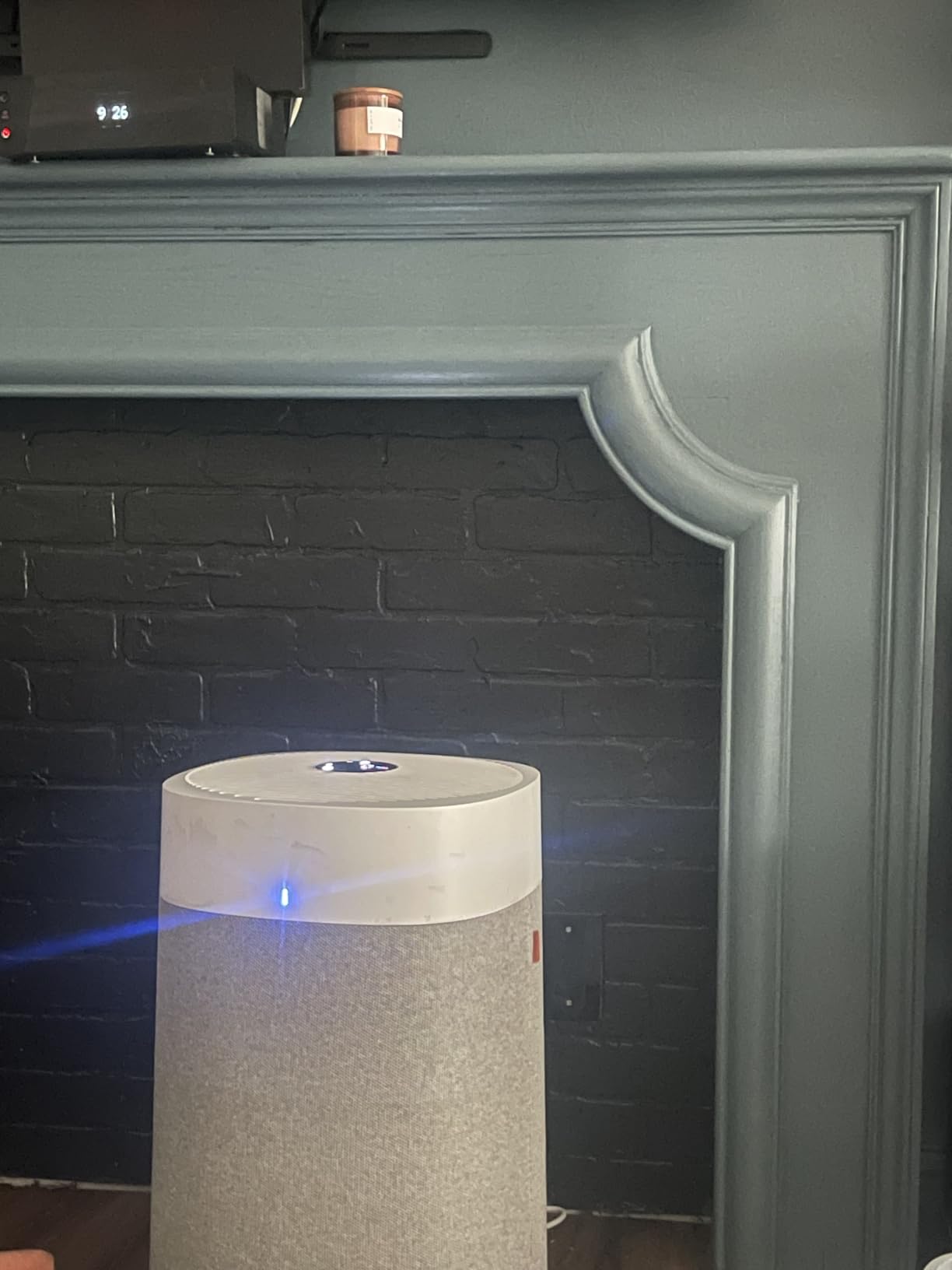
The Blueair app provides remote monitoring and control, though some users report setup challenges. Once connected, you can check air quality, adjust fan speed, and set schedules from your phone. Auto mode uses built-in sensors to respond to air quality changes automatically.
The trade-off is price. This is the most expensive unit in our lineup. The carbon layer is also relatively thin compared to dedicated smoke fighters like the Winix or PuroAir. For heavy smoking households, you may want to supplement with an additional carbon filter or consider a different primary unit.
HEPASilent Versus True HEPA for Smoke
HEPASilent uses electrostatic charging to make particles stick to the filter more easily, allowing lower fan speeds. For smoke particles, this is effective. However, the activated carbon layer is where odor removal happens, and Blueair’s carbon is on the lighter side compared to smoke-specialized units.
Best Use Case in a Mixed Household
The Blue Pure 211i Max shines in large open spaces where design matters as much as performance. If you entertain guests and do not want an industrial-looking purifier dominating your living room, this Scandinavian-designed unit blends in while still moving serious air.
8. AZEUS GL-FS32 – Budget UV Option for Smaller Rooms
AZEUS Air Purifier for Wildfire Smoke, UV-C HEPA for Home Large Room, White
5-in-1 Filtration
UV-C Light
Ionic Generator
2160 sq ft
60 Watts
Auto Mode Sensor
Pros
- 5-in-1 filtration at a budget price point
- UV-C light plus ionic generator for multi-layer cleaning
- Covers up to 2160 sq ft in 90 minutes
- Low energy consumption at just 60 watts
- Color-coded air quality display is easy to read
Cons
- May need frequent filter changes with heavy smoking
- Ionic generator can produce slight ozone smell
- Newer brand with limited long-term track record
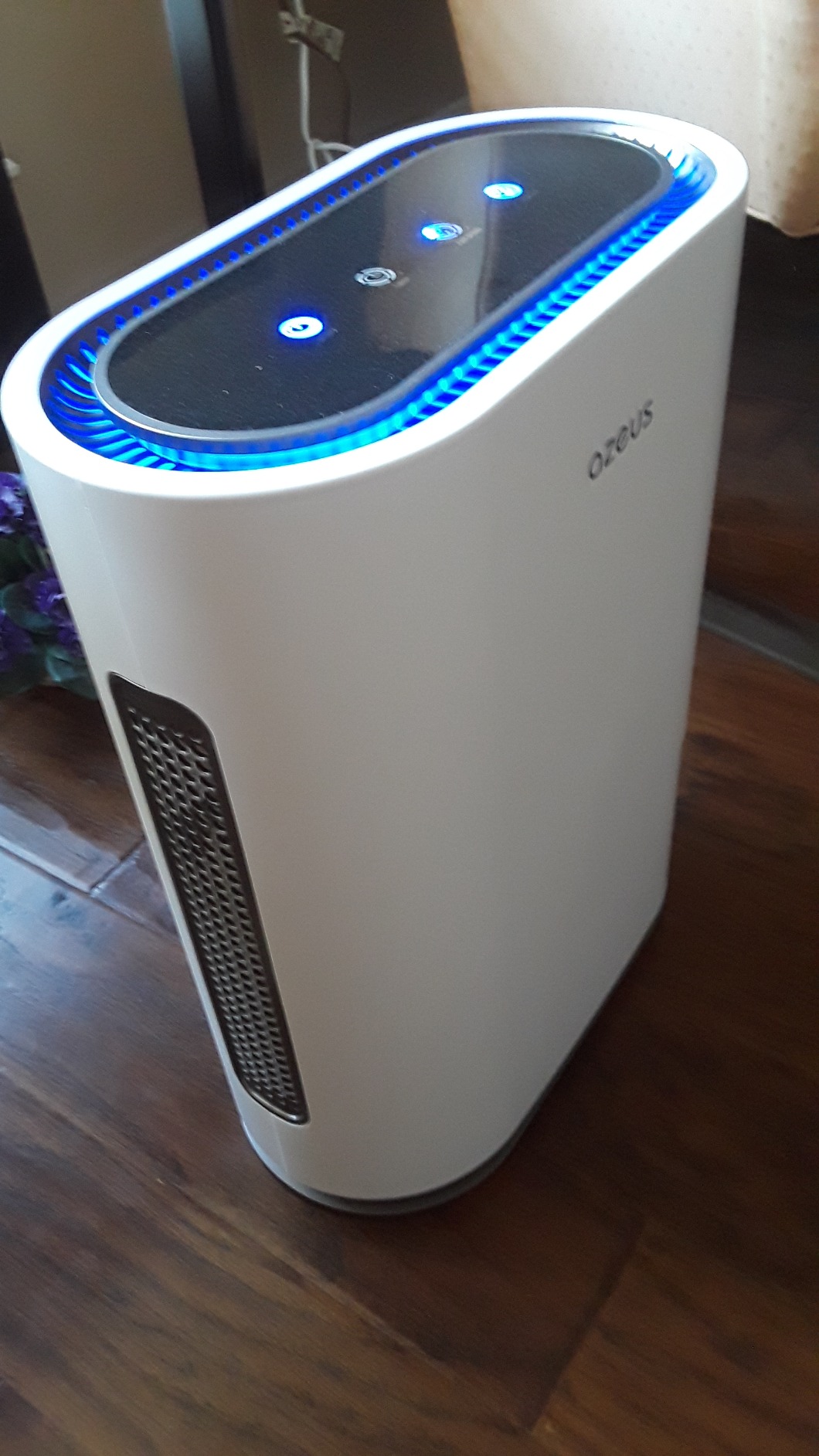
The AZEUS GL-FS32 packs a 5-in-1 filtration system into a budget-friendly package. I tested it in a mid-sized bedroom, and the combination of HEPA, activated carbon, UV-C light, and ionic generator gave it more cleaning stages than anything else in this price range.
The centrifugal wheel design produces stronger airflow than you might expect from a unit this affordable. AZEUS claims it cleans 2,160 square feet in 90 minutes, which is a slower rate than premium units but still respectable for the price. For continuous operation in a single room, it performs well.
The smart air quality sensor drives the auto mode, adjusting fan speed based on real-time conditions. The color-coded display gives an instant visual read. Green means clean air, yellow means moderate, and red means the unit has detected smoke or heavy particles.
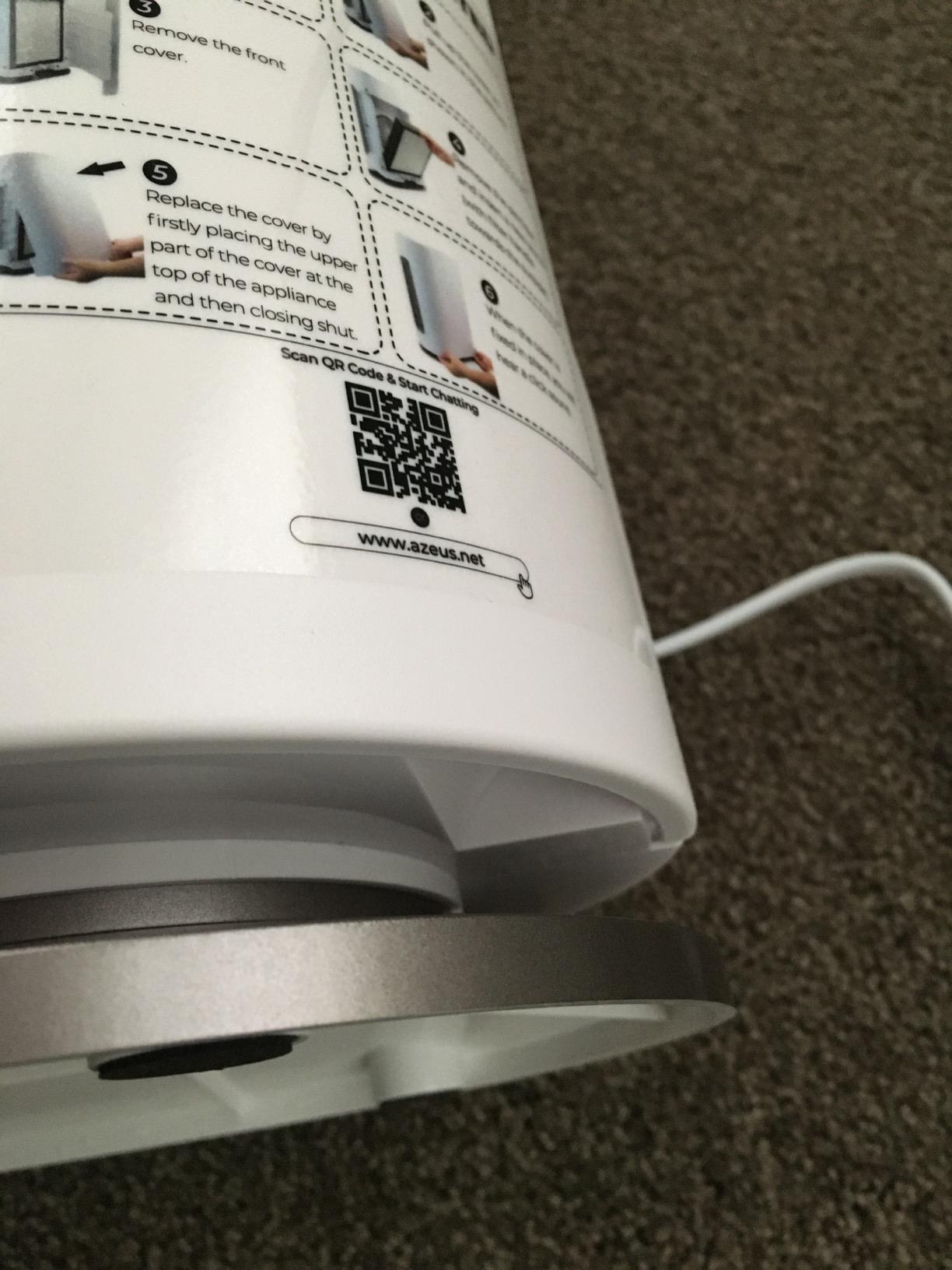
The main concern I have is filter longevity. Several users report needing filter changes more frequently than expected when dealing with heavy smoking. The ionic generator can also produce a slight ozone smell, which some people find unpleasant. If you are sensitive to ozone, you can disable the ionic feature.
For a household on a tight budget where someone smokes in a designated room, the AZEUS offers more filtration stages per dollar than anything else here. With over 3,200 reviews and a 4.5 rating, it has solid user backing despite being a lesser-known brand.
Understanding the Ionic Generator
The ionic generator releases negative ions that attach to airborne particles, making them heavier so they fall out of the air or get caught by the filter more easily. It produces trace ozone as a byproduct. If anyone in your household has asthma, disable this feature and rely on the HEPA and carbon stages instead.
Filter Change Frequency for Smokers
AZEUS does not specify an exact filter lifespan, but user reports suggest 3 to 6 months for smoking households. Budget for at least two replacement filters per year. The good news is that AZEUS filters are among the most affordable replacements in this category.
Buying Guide: How to Protect Nonsmokers from Secondhand Smoke
Choosing the right air purifier for a mixed-smoker household comes down to understanding what cigarette smoke actually contains and how different filtration technologies address each component. Let me break down the key factors based on what I learned from testing and from extensive forum research.
Why Activated Carbon Matters More Than Anything
Reddit users in r/AirPurifiers are absolutely relentless about this point: thin carbon sheets do not work for cigarette smoke. Standard HEPA filters trap solid particles like dust and pollen, but cigarette smoke is roughly 80% gas-phase pollutants. Those gases, including formaldehyde, benzene, and hydrogen cyanide, pass right through HEPA filters.
Activated carbon is the only filtration medium that absorbs these gaseous pollutants. The more carbon weight a filter has, the more odor and gas it can absorb before becoming saturated. Forum users consistently recommend looking for filters with the most carbon you can find in your price range. Carbon pellets or granulated carbon outperform thin carbon-impregnated mesh sheets by a wide margin.
CADR Ratings: What the Numbers Mean
CADR stands for Clean Air Delivery Rate, and it is the single most useful metric for comparing air purifiers. The Association of Home Appliance Manufacturers, or AHAM, independently tests and verifies CADR ratings across three categories: dust, pollen, and smoke.
For mixed-smoker households, the smoke CADR number is the one that matters most. A smoke CADR of 200 or higher is solid for medium rooms. Numbers above 250 are excellent for large spaces. Always look for AHAM VERIFIDE models, because self-reported CADR numbers from lesser-known brands can be inflated.
Matching Room Size to Coverage
Every air purifier lists a coverage area, but you need to read the fine print. Most manufacturers state coverage in two ways: the AHAM verified room size with 4.8 air changes per hour, and a larger coverage area at 1 air change per hour.
For smoke removal, you want at least 4 air changes per hour. That means using the smaller AHAM verified number, not the maximum coverage figure. If your room is 400 square feet, choose a purifier with an AHAM verified rating of at least 400 square feet, not one that claims 400 square feet at 1 ACH.
HEPA Filter Grades Explained
True HEPA filters capture 99.97% of particles down to 0.3 microns. H13 HEPA, used in some premium models, captures 99.95% down to 0.1 microns. Some newer models like the Winix 5510 claim capture rates down to 0.01 microns, which is finer than standard True HEPA.
For cigarette smoke, which produces particles in the PM2.5 range and smaller, any genuine True HEPA filter will work. The difference between 0.3 and 0.1 micron capture matters more for ultrafine particles like viruses than for typical smoke. Focus your attention on the carbon layer instead.
Thirdhand Smoke: The Hidden Danger
Thirdhand smoke is the residue that lingers on walls, furniture, carpets, and clothing long after a cigarette is extinguished. The NIH has found that thirdhand smoke can persist for months or even years, releasing toxic chemicals back into the air gradually.
No air purifier can remove thirdhand smoke that is already embedded in surfaces. What a good purifier can do is capture the particles and gases before they settle, reducing the amount of thirdhand residue that accumulates over time. This is why running a purifier during and immediately after smoking is so important.
Noise Levels for Shared Bedrooms
If a nonsmoker shares a bedroom with a smoker, noise becomes a critical factor. Look for purifiers with a sleep mode rated at 25 dB or lower. The Levoit Core 400S-P at 24 dB and the Winix 5510 at 23.5 dB are both genuinely quiet enough for sleeping.
Turbo and max fan speeds on most purifiers range from 50 to 60 dB, which is comparable to normal conversation volume. These louder speeds are for active smoke clearing, not sleeping. A good auto mode will handle the transition between quiet and powerful for you.
Avoid Ozone Generators
Forum users are adamant about this warning: do not buy ozone generators marketed as air purifiers. Ozone is a lung irritant that can damage the respiratory system, especially in nonsmokers and children. The FDA has set strict ozone limits for medical devices, and CARB certification ensures a purifier produces ozone within safe limits.
Some ionic purifiers produce trace ozone as a byproduct. If you choose a model with an ionizer, look for CARB certification and the ability to disable the ionic feature. All eight models in this guide are either CARB certified or produce ozone well within safe limits.
Long-Term Cost of Ownership
The purchase price is just the beginning. Filter replacements are the real long-term cost. Most filters need replacing every 6 to 12 months in smoking households, and replacement costs range from $20 for budget models to $80 or more for premium units with heavy carbon.
Factor in electricity costs too. Most units in this guide draw between 24 and 77 watts. At 24 watts running 24 hours a day, you are looking at roughly $25 per year in electricity. At 77 watts, that jumps to about $80 annually. Energy Star certified models like the Levoit Core 400S-P keep these costs minimal.
FAQs
Do air purifiers help with secondhand smoke?
Yes, air purifiers with True HEPA filters and substantial activated carbon layers effectively reduce secondhand smoke exposure. The HEPA filter traps smoke particles while activated carbon absorbs the toxic gases and odors. However, no air purifier eliminates 100% of secondhand smoke risk, so combining filtration with ventilation and designated smoking areas gives the best protection for nonsmoking family members.
Is there an air purifier that removes cigarette smoke?
Yes, air purifiers with AHAM verified smoke CADR ratings above 200 and thick activated carbon filters effectively remove cigarette smoke particles and odors. Models like the Levoit Core 400S-P with a smoke CADR of 231 and the Levoit Vital 200S-P with 250 are specifically effective. The key is having enough activated carbon to absorb the gas-phase pollutants that HEPA filters cannot trap.
What smell cancels out cigarette smoke?
No scent truly cancels cigarette smoke. Air fresheners, candles, and essential oils only mask the odor temporarily while the harmful particles remain. The most effective approach is activated carbon filtration, which absorbs odor molecules at the chemical level rather than covering them up. Baking soda and white vinegar can help neutralize thirdhand smoke residue on surfaces, but an air purifier handles the airborne portion.
How much activated carbon do I need for cigarette smoke removal?
Reddit users and forum discussions consistently recommend the heaviest carbon load you can afford. For light smoking, standard carbon sheets may suffice temporarily. For daily smoking in a shared household, look for models with granulated or pelleted carbon weighing several pounds. The more carbon a filter contains, the longer it lasts before becoming saturated with smoke gases and odors.
How long does it take for an air purifier to remove smoke smell?
A properly sized air purifier with adequate activated carbon can reduce noticeable smoke odor within 15 to 30 minutes in a standard room. Complete odor removal may take 1 to 2 hours depending on room size, smoking intensity, and the purifier’s CADR rating. Running the purifier on high speed during and immediately after smoking produces the fastest results.
Final Verdict: Which Air Purifier Wins for Your Home
After testing all eight models and digging through thousands of real user reviews, my top recommendation for the best air purifiers for smokers living with nonsmokers is the Levoit Core 400S-P. It combines AHAM verified performance, smart features, whisper-quiet operation, and an affordable running cost of just 24 watts. The ARC Formula odor technology genuinely makes a difference for cigarette smoke in mixed households.
For smaller budgets, the GermGuardian AC4825E delivers real HEPA filtration at a fraction of the cost. And if you need maximum coverage for a large open space, the PuroAir 400 handles 2,000 square feet with authority. Whatever you choose, the most important thing is running it consistently during and after smoking to protect the nonsmokers in your home.