
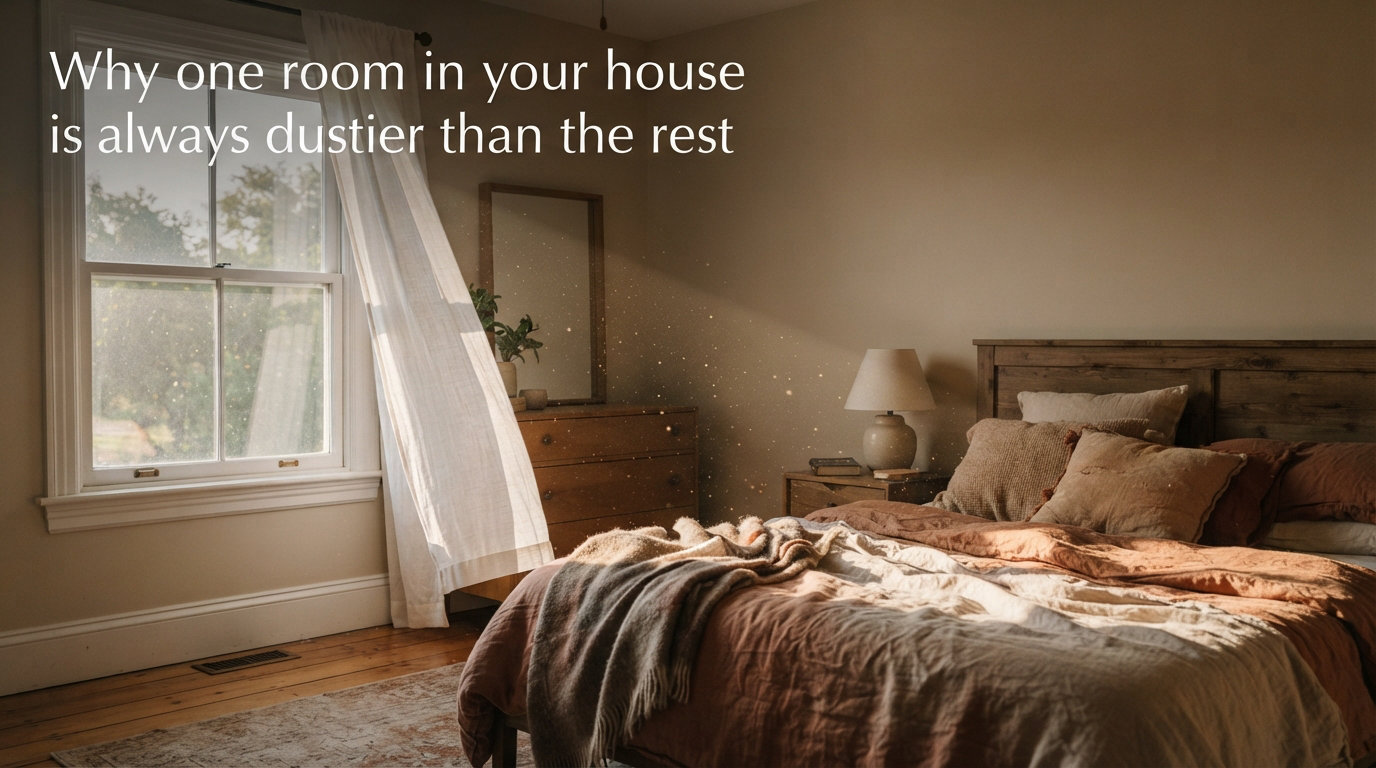
One room in your house is always dustier than the rest because of how textiles, air circulation, humidity, and daily activity combine inside that specific space. Bedrooms usually lead the pack thanks to bedding fibers and skin cells, while basements and sun-facing rooms have their own dust traps. Understanding the root cause is the only way to stop chasing dust with a feather duster forever.
I have lived in three apartments and two houses, and I have watched the same drama unfold in every single one. The guest bedroom sits untouched for weeks and looks fine. The bedroom where I actually sleep? A thin gray film on the nightstand within three days of cleaning. So I started digging into the science, talked to cleaning professionals, and pulled insights from cleaning forums. What I found changed how I approach dust entirely.
Table of Contents
Why One Room in Your House Is Always Dustier Than the Rest
One room collects more dust because it usually contains more textiles, sits in a specific airflow pattern inside your HVAC system, and gets more hours of human (or pet) activity than the rest of the house. Rooms with bedding, carpet, curtains, and upholstered furniture are essentially dust factories because fabric sheds fibers constantly. Add in low humidity, poor air exchange, and a return vent pulling air through the space, and you have a perfect dust storm.
That is the short version. The long version is where things get interesting, and where you can actually fix the problem instead of just dusting on repeat.
The Science of Dust: Where It Actually Comes From
Dust is not just dirt that drifted in. It is a mix of dead skin cells, textile fibers, pet dander, pollen, soil particles, dust mite debris, and microscopic bits of whatever else is in your indoor environment. A study often cited in cleaning research found that the majority of household dust is generated indoors, not tracked in from outside.
Here is the rough breakdown of what makes up the dust on your shelves:
- Skin cells — Humans shed roughly 0.5 grams of skin per day. That adds up.
- Textile fibers — Cotton, polyester, wool, and microfiber all shed tiny particles.
- Pet dander — Cats and dogs constantly release proteins and hair that feed dust loads.
- Pollen and soil — These enter on shoes, clothing, and through open windows.
- Dust mite debris — Microscopic bugs that eat skin cells and leave droppings everywhere.
Every room has these ingredients in different amounts. The room with the most fabric and the most hours of human presence is going to win the dust race every time.
Why Bedrooms Are Usually the Dustiest Room in the House
Bedrooms consistently top the dust charts for a simple reason: they are loaded with textiles and you spend about a third of your life there. Pillows, sheets, comforters, mattress pads, curtains, and rugs all shed fibers nonstop. Even worse, your body sheds skin cells while you sleep, and your movement in bed kicks particles into the air.
A study referenced by researchers at Delft University found that pollutant concentrations right under your sheets can be up to 50 times higher than outdoor air in some homes. That stat alone explains why your nightstand looks dusty again two days after you wipe it down.
Bedrooms also tend to be closed off during the day. Doors shut, windows sealed, ceiling fan off. That stillness lets particles settle onto every flat surface, where they collect until you disturb them again. I tested this by leaving a fan running overnight in my own bedroom for two weeks. The dust on the dresser dropped noticeably, because the air never had a chance to settle.
How Air Circulation and HVAC Spread Dust Unevenly
Your HVAC system is basically a dust distribution network. Air gets pulled into a room through supply vents, swirls around, then exits through return vents. Every cycle moves dust from one surface to another, and rooms with strong return vent pulls end up with more dust circulating through them.
If a room has its own return vent or sits at the end of a duct run, it will collect more dust than rooms closer to the air handler. Ducts that have never been cleaned can also blow years of accumulated dust into specific rooms when the system kicks on. Forum users on r/CleaningTips have reported that professional duct cleaning completely eliminated their “mystery dusty room” overnight.
Three quick HVAC checks you can do right now:
- Look at your air filter. If it is gray and clogged, it is no longer catching dust effectively.
- Check which rooms have supply vents versus return vents. Returns pull air through more aggressively.
- Run your system on fan-on mode for a few hours. Rooms that fill with visible dust likely have dirty ductwork.
Room-by-Room Dust Patterns: Basements, Living Rooms, and More
Different rooms collect dust for different reasons. Bedrooms win on textile load and dwell time. Basements win on a completely different set of factors.
Bedrooms: Textiles + sleep cycles + closed doors + skin shedding. The classic dustiest room.
Living rooms: Upholstery, curtains, decorative pillows, frequent foot traffic, and often the most electronics (which attract dust via static).
Basements: Concrete dust, mustiness, low air circulation, and pressure differences that pull unfiltered air in through cracks. Basements also tend to have higher humidity, which makes dust stick to surfaces more aggressively.
Kitchens: Surprisingly low dust, because grease and cooking activity weigh particles down before they can settle.
Home offices: Electronics generate static that pulls dust toward screens, keyboards, and cables. Printers and paper also shed particles.
If your dusty room is the basement, the fix is more about humidity control and sealing cracks than cleaning surfaces.
Common Dust-Accelerating Factors You Can Control
Some dust sources are baked into your home. Others are habits that quietly make the problem worse.
Pets: A single cat adds measurable dander to every room it enters. Dogs more so. If your pet spends most of its time in one specific room, that room will collect dust faster than the rest.
Shoes indoors: Soil particles are heavy and stick to shoe soles. Walk them across carpet and you are essentially dusting your floor with garden dirt.
Drafty windows and doors: Gaps around frames pull in outdoor dust even when the window is “closed.” Good Housekeeping suggests the flashlight test: shine a flashlight around a closed window at night. If you see light leaking through, dust is leaking through too.
Low humidity: Dry air lets particles stay airborne longer and become static-charged, so they cling to everything. Ideal indoor humidity for dust control sits between 40% and 50%.
Clutter: Every object on a surface is a dust trap. Cluttered shelves and crowded nightstands need more frequent cleaning, not less.
Dust-catching decor: Macrame, dried flowers, knickknacks, and woven baskets all collect dust quickly. They look great, but they are silent dust anchors.
Quick Checklist: 7 Signs Your Room Has a Dust Problem
If you are not sure whether your room is dustier than it should be, here is a quick diagnostic list.
- Visible film on dark surfaces within 48 hours of cleaning
- Musty smell that returns after airing out
- Allergy symptoms (sneezing, itchy eyes) worse in that room
- Ceiling fan blades visibly gray
- Pet hair clings to fabric within hours of vacuuming
- Light beams from windows show floating particles
- Static shocks when you touch metal surfaces
Three or more of these in the same room means dust has become an air quality issue, not just a cleaning issue.
How to Fix the Dustiest Room in Your House
Once you know why your room collects dust, the fixes get a lot more targeted. Here is the order that worked in my own home and matches what cleaning experts recommend.
1. Vacuum before you dust. Dry dusting first kicks particles into the air, where they resettle. Vacuum first, then damp mop, then wipe with a damp microfiber cloth.
2. Switch to microfiber cloths. Cotton rags push dust around. Microfiber actually grabs it.
3. Upgrade to a HEPA vacuum. Vacuums without sealed filtration can blow fine dust back into the room. HEPA bags and filters trap particles down to 0.3 microns.
4. Vacuum your mattress. Once a month. Use an upholstery attachment. Your mattress doubles in dust weight over a few years if you skip this.
5. Run a dehumidifier or humidifier as needed. Aim for 40 to 50 percent humidity. Below that, dust stays airborne. Above that, dust mite populations boom.
6. Change HVAC filters on schedule. Every 60 to 90 days for standard filters. Every 6 to 12 months for high-efficiency pleated filters.
7. Wash bedding weekly in hot water. 130 degrees Fahrenheit or higher kills dust mites. Cold water just relocates them.
These are not expensive upgrades. Most cost nothing beyond a microfiber cloth and a few minutes of habit change.
Seasonal Variations in Indoor Dust
Dust levels shift with the seasons, even in the same room. Spring and fall bring open windows, pollen, and construction dust. Winter traps people indoors with dry heated air that keeps particles airborne. Summer humidity can make dust clump and stick more aggressively.
If your dusty room seems to spike at certain times of year, the season is probably a bigger factor than the room itself.
Frequently Asked Questions
Why does only one room in my house get dusty?
One room collects more dust because of the specific combination of textiles, airflow, humidity, and activity inside it. Bedrooms with bedding, carpet, and closed doors are the most common culprits, but rooms with strong HVAC return vents or basement pressure leaks also collect dust faster than the rest of the house.
How do I stop my room from being so dusty?
Vacuum before dusting, switch to damp microfiber cloths, run a HEPA vacuum, wash bedding weekly in hot water above 130F, keep humidity between 40 and 50 percent, and change HVAC filters every 60 to 90 days. These steps target the root causes rather than just redistributing visible dust.
Do bedrooms get dustier than other rooms?
Yes, bedrooms are usually the dustiest room because of the high textile load from bedding, pillows, and curtains, plus the hours of skin shedding that happen during sleep. A study cited by cleaning researchers found pollutant concentrations under sheets can be up to 50 times higher than outdoor air in some homes.
Why do some homes get dustier than others?
Homes vary in dust levels based on HVAC design, humidity, pet ownership, footwear habits, window sealing, and the amount of fabric and clutter in each room. Older homes with drafty windows and homes with pets or wall-to-wall carpet typically see faster dust buildup than newer, sealed homes with hard floors.
Final Thoughts on Why One Room Gets Dustier Than the Rest
One room always pulls ahead on dust because it is doing more dust-producing work than the others. Textiles, airflow, humidity, and time spent in the room all add up. Once you identify which factors dominate your dusty room, the cleanup stops being a daily chore and becomes a quick weekly routine.
Start with one room this week. Check your HVAC filter, switch to a damp microfiber cloth, and vacuum your mattress. Small changes like these are what actually fixed the mystery dust problem in my home, and they will do the same for yours.