
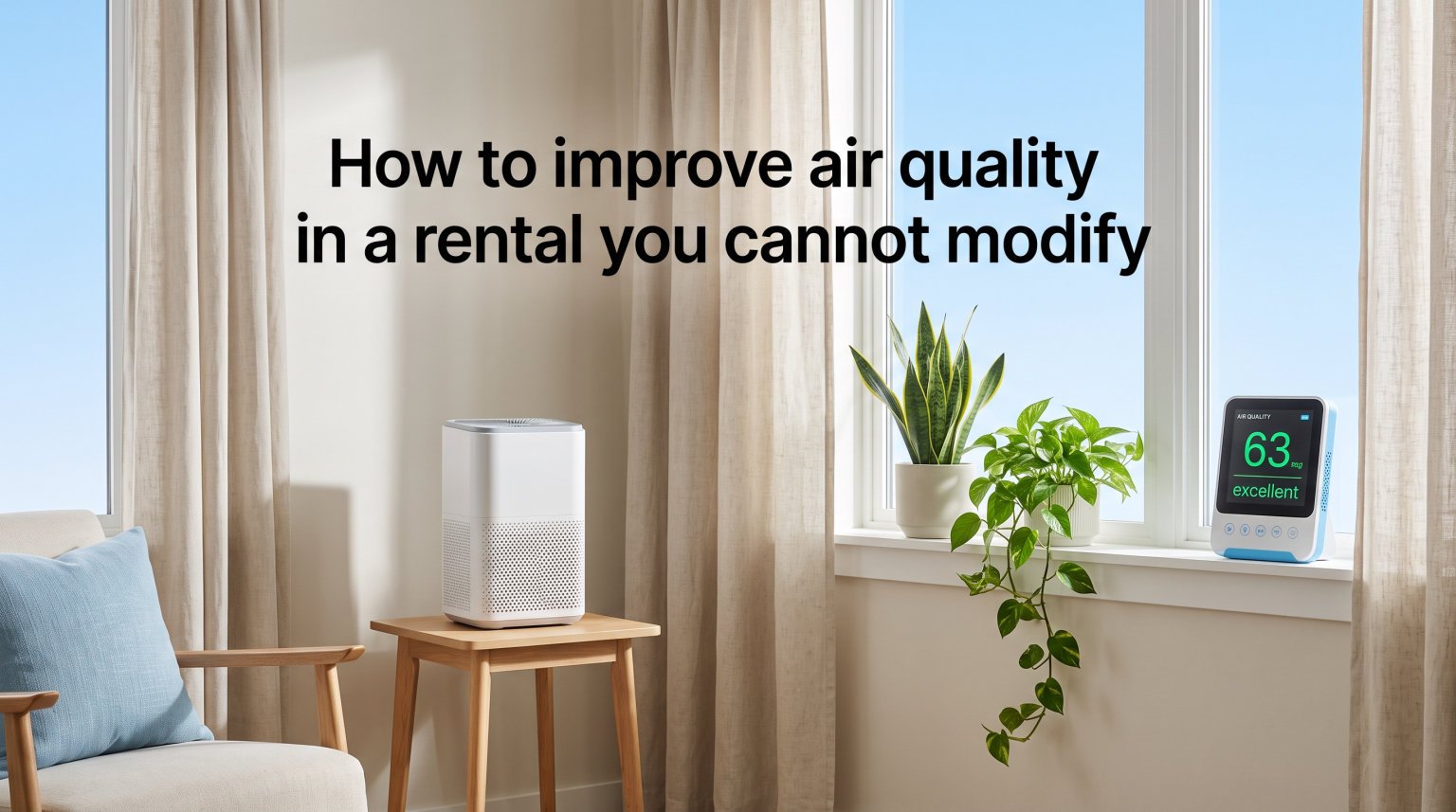
If you have ever woken up with a stuffy nose, dry throat, or itchy eyes in your apartment and blamed it on allergies, the real culprit might be the air you breathe indoors. Americans spend roughly 90% of their time inside, and the EPA has found that indoor pollutant levels can run 2 to 5 times higher than outdoor air. When you rent and cannot knock down walls, install permanent ventilation, or replace the HVAC system, improving air quality in a rental you cannot modify feels impossible.
It is not. Our team has spent months researching renter-friendly air quality strategies, digging through Reddit threads from r/ApartmentHacks and r/AirQuality, and reviewing EPA and American Lung Association guidance. The solutions below require zero permanent modifications, zero landlord approval, and most cost under $100.
This guide covers everything from ventilation timing and humidity control to portable air purifiers, air-purifying plants, and what to do when your landlord ignores a mold problem. Every strategy works whether you are in a studio apartment, a shared duplex, or a basement unit.
Table of Contents
Understanding Indoor Air Quality in Rentals
Indoor air quality (IAQ) refers to the cleanliness of the air inside your living space and how it affects your health and comfort. Poor IAQ builds up from a mix of particles, gases, and moisture that get trapped inside. Rentals are especially vulnerable because you often cannot replace old carpeting, upgrade ventilation systems, or seal gaps around windows.
Common indoor pollutants found in rental apartments include particulate matter from dust and cooking smoke, volatile organic compounds (VOCs) off-gassing from paint and new furniture, mold spores from moisture buildup, dust mites and pet dander, radon seeping through foundations, and carbon monoxide from faulty gas appliances. Secondhand smoke drifting in from neighboring units is one of the most frustrating and under-discussed pollutants renters face.
The EPA identifies three main strategies for improving indoor air: eliminate the source, improve ventilation, and clean the air. Renters need to adapt all three to work within lease restrictions, which is exactly what the rest of this guide does.
How to Improve Air Quality in a Rental You Cannot Modify
The most effective approach combines four pillars: remove pollution sources you control, increase fresh air exchange, filter the air mechanically, and keep humidity in the safe range. None of these require drilling, wiring, or permanent changes.
If you want five quick wins to start today: open windows on opposite walls for 10 minutes each morning, run your bathroom exhaust fan during and after every shower, vacuum with a HEPA-filter vacuum twice weekly, add a portable HEPA air purifier to your bedroom, and switch from chemical spray cleaners to vinegar and water. These five actions alone reduce the most common apartment pollutants by a meaningful margin.
The sections below break down each pillar in detail, with specific steps, product types, and numbers you can act on immediately.
Ventilation Strategies You Can Use Without Tools
Ventilation is your first line of defense and costs nothing. The goal is simple: replace stale indoor air with fresher outdoor air. Even 10 to 15 minutes of cross-ventilation can significantly lower indoor pollutant levels.
Cross-ventilation works best when you open windows or doors on opposite sides of your apartment at the same time, creating a pathway for air to flow through. If you only have windows on one wall, place a box fan in one window blowing out and open another window elsewhere to pull fresh air in. This creates artificial cross-ventilation without any installation.
Timing matters. Check your local Air Quality Index (AQI) before opening windows. When outdoor AQI is below 50, ventilation is ideal. Between 51 and 100, it is still generally beneficial but less so if you have respiratory conditions. At AQI above 150, keep windows closed and rely on indoor air cleaning instead. You can check real-time AQI at AirNow.gov or through most weather apps.
Your kitchen and bathroom exhaust fans are powerful tools many renters underuse. Run the kitchen fan every time you cook, especially when using a gas stove, because gas combustion releases nitrogen dioxide and fine particles. Run the bathroom fan during showers and for at least 20 minutes afterward to pull out moisture before it feeds mold growth. These fans already exist in most rentals and require no modification to use more aggressively.
One common question is whether to run your air conditioner when outdoor air quality is bad. The answer is yes. Your AC recirculates and partially filters indoor air, and keeping it running during poor outdoor AQI days helps maintain cleaner indoor conditions. Just remember that window AC units do not bring in fresh air, so still ventilate on good AQI days.
Humidity Control Without Renovations
Mold and dust mites thrive when indoor humidity climbs above 60%. The ideal range for a healthy rental is between 30% and 50% humidity, with 30% to 40% being best during winter months when condensation is more likely. Keeping humidity in this range is one of the highest-impact things you can do without touching a single wall.
Buy a hygrometer first. This small, inexpensive device (often under $15) measures humidity and tells you exactly where your apartment stands. Without a hygrometer, you are guessing. Place one in your main living area and another in the bathroom or basement where moisture tends to concentrate.
If your humidity reads above 55%, a portable dehumidifier is your best renter-friendly fix. These plug into standard outlets, collect water in a removable tank, and you can take them with you when you move. Size the dehumidifier to your space: a 30-pint unit handles a moderately damp 500-square-foot area, while a 50-pint unit covers larger or very humid spaces.
For rooms that run too dry, especially in winter, a portable humidifier can bring levels up to the comfortable range. Dry air below 30% irritates airways, worsens sore throats, and increases static that attracts dust. The key is monitoring: do not overshoot, because high humidity creates its own set of problems.
Additional moisture control habits cost nothing. Run exhaust fans during cooking and showering, fix slow plumbing leaks even if your landlord is slow to respond, avoid drying clothes on indoor racks during humid seasons, and keep furniture slightly away from exterior walls to prevent condensation pockets where mold takes hold.
Cleaning Practices That Actually Reduce Pollutants
Cleaning is the single most underappreciated air quality strategy. Dust is not just dirt; it is a mixture of dead skin cells, dust mite waste, pollen, pet dander, and tracked-in particles that become airborne every time you walk through a room. Regular, methodical cleaning removes these sources before they enter your lungs.
Reddit users across r/AirQuality and r/ApartmentHacks consistently rank HEPA-filter vacuums as the top investment for renters with air quality issues. A vacuum with a true HEPA filter traps 99.97% of particles down to 0.3 microns, meaning captured dust stays in the machine instead of blowing back into the air. Standard vacuums without HEPA filtration often recirculate fine particles, making air quality worse. Vacuum carpets and rugs at least twice a week, and tackle upholstered furniture monthly.
For dusting, skip the feather duster. It scatters particles back into the air. Use a damp microfiber cloth instead, which traps dust rather than relocating it. Work from top to bottom so dislodged particles fall to surfaces you have not yet cleaned. Follow up with your HEPA vacuum on floors.
Switching to natural cleaning products is one of the fastest ways to cut VOC exposure. Conventional spray cleaners, air fresheners, and disinfectants release VOCs that linger for hours. A simple mix of equal parts white vinegar and water handles most cleaning tasks. Add baking soda for scrubbing and a few drops of essential oil if you want fragrance, though use oils sparingly since they can also affect sensitive individuals.
Wash bedding weekly in hot water to kill dust mites, which are among the most common indoor allergens. If your rental has carpets you cannot remove, consider a portable carpet cleaner for periodic deep cleaning. Pet owners should groom animals regularly and keep litter boxes in well-ventilated areas.
Portable Air Cleaning Solutions for Renters
A portable air purifier is the most effective single purchase a renter can make for indoor air quality. Unlike built-in systems, a portable unit moves with you, requires zero installation, and starts working the moment you plug it in.
Look for a purifier with a true HEPA filter, which captures 99.97% of particles at 0.3 microns including dust, pollen, pet dander, smoke particles, and some bacteria. Many purifiers add an activated carbon layer that absorbs VOCs, odors, and gases, which HEPA alone cannot catch. For renters dealing with cooking odors, secondhand smoke, or chemical off-gassing from new furniture, the carbon layer matters.
Match the purifier to your room size using the Clean Air Delivery Rate (CADR). The Association of Home Appliance Manufacturers recommends a CADR rating equal to at least two-thirds of your room’s square footage. For a 150-square-foot bedroom, aim for a smoke CADR of 100 or higher. For a 300-square-foot living room, look for 200 or higher. Running a purifier rated too small for your space wastes energy without delivering clean air.
Placement affects performance. Position the purifier in the room where you spend the most time, which for most people is the bedroom. Keep it at least a foot away from walls and furniture so air can circulate freely on all sides. Run it on a higher setting when you are out of the room and drop to a quieter setting overnight.
A portable air quality monitor is a worthwhile companion device. These pocket-sized sensors measure particulate matter (PM2.5), VOCs, humidity, and sometimes CO2, giving you real-time feedback on whether your strategies are working. Multiple Reddit users report that seeing live numbers motivated them to ventilate and clean more consistently, and the data helped them identify which rooms needed the most attention.
Air-Purifying Plants: Do They Actually Work?
The idea that houseplants clean indoor air comes from a famous 1989 NASA study, and it has been widely overstated since. The short answer: plants do remove trace amounts of VOCs and produce oxygen, but you would need an unrealistic number of plants, approaching a jungle density, to match the effect of a single portable air purifier.
That said, plants are still worth adding to your rental. They improve mood, add humidity through transpiration, and do contribute modestly to air cleaning. The key is setting realistic expectations. Think of plants as a supplement to mechanical air cleaning, not a replacement.
Good low-maintenance choices for renters include spider plants, peace lilies, snake plants, pothos, and Boston ferns. Snake plants and pothos are nearly indestructible and tolerate low light, making them ideal for apartments with limited window access. Avoid plants if you have pollen allergies, and always check pot drainage to prevent mold growth in the soil, which can ironically worsen air quality.
Reducing VOCs and Chemical Pollutants
Volatile organic compounds are gases emitted by a surprising number of everyday items: paint, new furniture, pressed wood, carpet, cleaning products, air fresheners, dry-cleaned clothes, and even printer ink. In a sealed rental apartment, VOCs accumulate to levels far higher than what you would encounter outdoors.
The fastest VOC reduction costs nothing: increase ventilation after bringing any new item home. Air out new furniture on a balcony or near an open window for at least 48 hours. Let dry-cleaned garments off-gas outside their plastic bag in a ventilated area before hanging them in your closet. Avoid plug-in air fresheners, scented candles, and aerosol sprays, which continuously release VOCs and particulate matter.
When buying decor or storage for your rental, look for low-VOC or GREENGUARD-certified products. Solid wood emits fewer VOCs than particleboard and MDF. If you must use pressed-wood shelving, let it air out thoroughly before bringing it into your main living space. These choices matter more in small apartments where there is less air volume to dilute emissions.
Store paints, solvents, and chemicals outside your living area if possible. If your rental only has indoor storage, keep chemical products in a sealed bin and ventilate that area regularly. Even sealed containers can release fumes over time.
Handling Difficult Situations: Smoke, Mold, and Unresponsive Landlords
Not every air quality problem has a simple fix you can handle alone. Forum discussions reveal that secondhand smoke from neighbors, persistent mold, and unresponsive landlords are the three biggest frustrations renters face. Here is how to handle each.
Secondhand smoke traveling through shared walls, vents, or hallways is a serious health hazard with no perfect renter-level solution. Start by sealing obvious entry points: use removable weatherstripping tape around door frames, stuff removable foam rodent blockers into pipe gaps under sinks, and place a towel at the base of your front door. Run a HEPA air purifier with an activated carbon filter continuously in affected rooms. Carbon filters absorb some smoke compounds, though they need frequent replacement when smoke is heavy. Document the issue in writing with dates and health symptoms, because in many jurisdictions landlords have a legal duty to address smoke intrusion.
Mold is both a health hazard and a legal issue. If you spot mold covering more than 10 square feet, or if it returns after you clean it, the underlying moisture problem likely requires professional remediation that is your landlord’s responsibility. Clean small patches yourself with vinegar (not bleach, which only masks surface growth). Take photos, keep a written log with dates, and send a formal written request to your landlord requesting repair of the moisture source. Most states require landlords to provide habitable living conditions, and mold from building defects typically falls under that duty.
If your landlord ignores written requests, you have escalation options. Contact your local housing or health department to request an inspection. Many cities have free tenant complaint hotlines. Keep copies of every communication. In serious cases, tenants may have legal grounds to break a lease or withhold rent until repairs are made, though you should consult a tenant rights organization or attorney before taking that step.
Carbon monoxide is a life-threatening pollutant that no cleaning routine or air purifier addresses. If your rental has any gas appliances and lacks a CO detector, buy a plug-in or battery-operated carbon monoxide alarm immediately. Radon, a naturally occurring radioactive gas, is another invisible threat. Radon test kits cost around $15 and take a few days to deliver results. Both are worth testing regardless of what your landlord does.
How to Test Your Air Quality in a Rental
You cannot fix what you cannot measure. Several renter-friendly testing options exist that require no installation or professional visit.
A portable air quality monitor gives you ongoing data on PM2.5, VOCs, humidity, and sometimes CO2. Prices range from $40 for basic models to $200 for advanced multi-sensor units. Use one to establish a baseline before making changes, then track improvements over weeks. This data also strengthens any case you build with your landlord, because documented numbers carry more weight than subjective complaints.
Radon test kits are inexpensive and critical if your rental is at ground level or below. The EPA recommends testing all homes below the third floor. Short-term kits take 2 to 7 days and mail-in results arrive within weeks. Long-term kits give a more accurate picture over 3 to 12 months.
Mold test kits are available at hardware stores, though their usefulness is debated. Air sampling mold kits can identify spore types and concentrations, but visible mold already tells you what you need to know: find and fix the moisture source. Save your money for a dehumidifier rather than confirming what you can already see.
If you suspect a serious issue and want professional-grade data, an indoor air quality professional can run comprehensive testing for several hundred dollars. This is usually a last resort but may be worthwhile if you are experiencing persistent health symptoms and suspect your rental is the cause.
Renter’s Daily Habits Checklist
Small daily actions compound into cleaner air over time. Print this checklist or save it to your phone.
- Open windows for 10 minutes each morning when outdoor AQI is below 100
- Run the bathroom exhaust fan during and 20 minutes after every shower
- Run the kitchen exhaust fan every time you cook, especially with gas
- Check your hygrometer and adjust humidifier or dehumidifier settings as needed
- Run your HEPA air purifier continuously in the bedroom and main living space
- Wipe down bathroom surfaces after showering to prevent moisture buildup
- Avoid burning candles or using aerosol air fresheners
- Take out kitchen trash daily to prevent odors and fruit fly attraction
- Wash bedding in hot water weekly
- HEPA-vacuum high-traffic areas twice weekly
Frequently Asked Questions
How to fix bad air quality in an apartment?
Fix bad apartment air quality by doing four things: remove sources you control (switch to natural cleaners, avoid candles), ventilate daily by opening windows for 10 minutes when outdoor AQI is good, run a portable HEPA air purifier in your bedroom and living room, and keep humidity between 30% and 50% using a hygrometer and portable dehumidifier. Vacuum with a HEPA-filter vacuum twice weekly to remove dust and allergens at the source.
What are 5 ways to improve air quality?
The five most effective renter-friendly strategies are: (1) ventilate daily with cross-ventilation for 10 to 15 minutes, (2) run a HEPA air purifier in your main living spaces, (3) keep humidity between 30% and 50% with a portable dehumidifier or humidifier, (4) vacuum twice weekly using a HEPA-filter vacuum and dust with damp microfiber cloths, and (5) switch from chemical cleaners and air fresheners to natural alternatives like vinegar and water.
What can make air quality bad in an apartment?
Common causes of poor apartment air quality include dust and pet dander accumulation, VOCs from cleaning products and new furniture, mold spores from excess humidity, cooking smoke especially from gas stoves, secondhand smoke from neighboring units, dust mites in carpet and bedding, radon in ground-level units, and off-gassing from pressed-wood furniture. Poor ventilation traps these pollutants indoors where they concentrate.
At what AQI should you stay inside?
When the outdoor Air Quality Index reaches 151 or higher (the Unhealthy range), sensitive groups should stay inside. At AQI above 101, anyone with respiratory conditions should limit outdoor exposure. Keep windows closed when outdoor AQI exceeds 150 and rely on indoor air purifiers and your AC to maintain cleaner air. Check real-time AQI at AirNow.gov.
How to test for toxic air in an apartment?
Start with a portable air quality monitor ($40 to $200) to measure PM2.5, VOCs, and humidity continuously. Buy a radon test kit (around $15) if your unit is below the third floor. Install a battery-operated carbon monoxide detector if your rental has gas appliances. For persistent health symptoms, hire an indoor air quality professional for comprehensive testing. Document all readings in writing to support any discussions with your landlord.
What are the symptoms of bad air quality in apartments?
Common symptoms of poor indoor air quality include frequent headaches, unexplained fatigue, stuffy or runny nose, sneezing, dry or irritated throat, itchy or watery eyes, skin irritation, worsened allergy or asthma symptoms, and lingering cough. If these symptoms improve when you leave your apartment and return when you come back, your indoor air is likely a contributing factor.
Should I turn on AC when air quality is bad?
Yes. When outdoor air quality is poor, running your air conditioner helps because it recirculates and partially filters indoor air rather than pulling in polluted outside air. Window and portable AC units do not bring in fresh air, so they are beneficial on bad AQI days. On good AQI days, still open windows for 10 to 15 minutes to exchange stale indoor air. Replace or clean AC filters regularly for best results.
Breathing Easier in Your Rental
Learning how to improve air quality in a rental you cannot modify comes down to four actions you can start today: ventilate on good AQI days, control humidity between 30% and 50%, clean regularly with HEPA tools and natural products, and run a portable air purifier where you spend the most time. None of these require your landlord’s permission or a single tool.
Start with the cheapest wins first. Open your windows for 10 minutes tomorrow morning. Buy a $15 hygrometer to check your humidity. Run your bathroom fan longer after showers. Add a HEPA air purifier to your bedroom when budget allows. Track your symptoms over two weeks and you will likely notice the difference.
Your air quality is not locked behind a lease agreement. With the right habits and a few portable tools, you can breathe cleaner air in any rental you call home.