
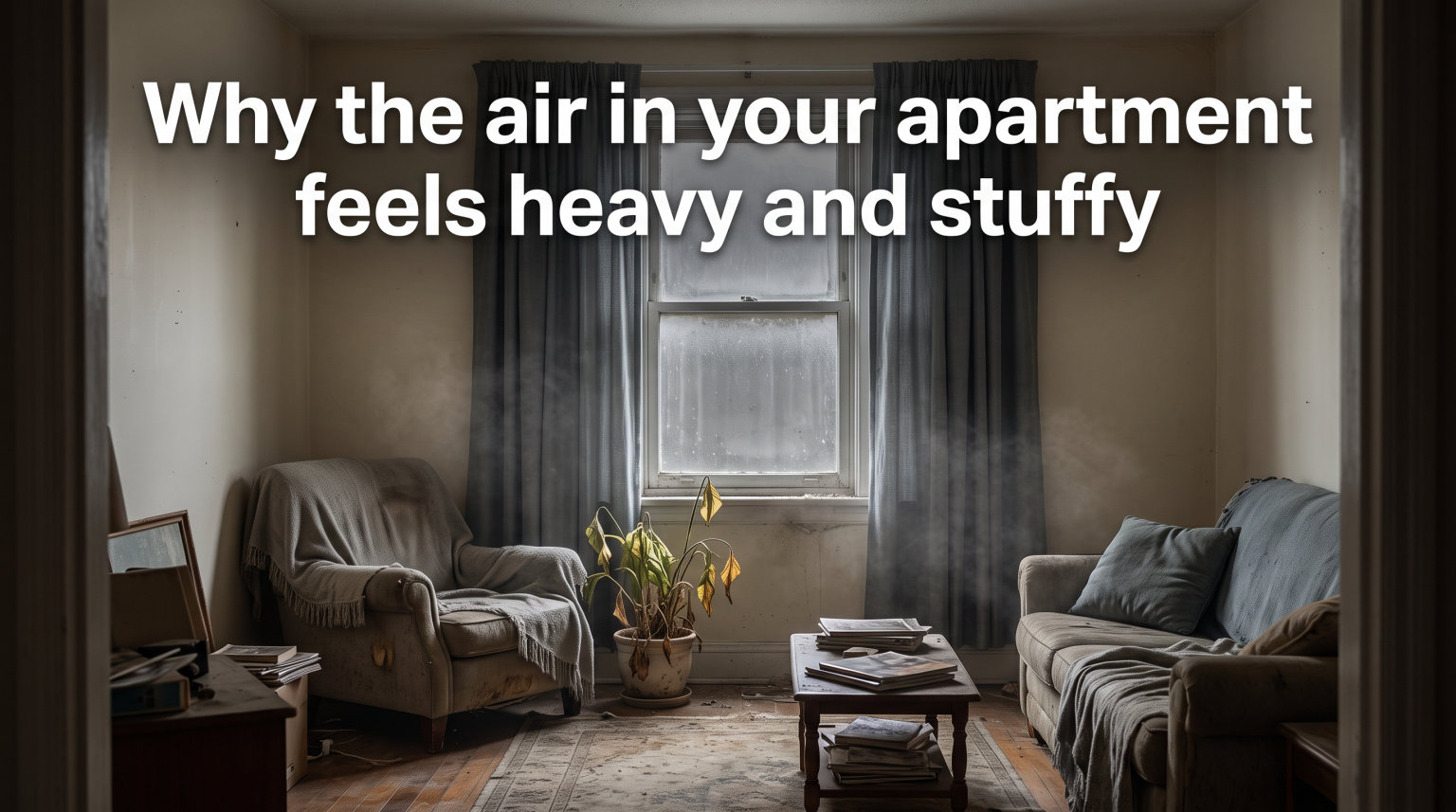
The air in your apartment feels heavy and stuffy because of poor air circulation combined with carbon dioxide buildup from breathing, excess humidity, and a lack of fresh air exchange with the outdoors. Modern apartments are tightly sealed for energy efficiency, which traps all of those things inside with nowhere to go.
If you walk through your front door and immediately notice the air feels thick, or you wake up with a dry throat and a foggy head, you are dealing with a real indoor air quality problem. It is not just in your head.
Our team has spent months researching apartment ventilation, testing quick fixes, and reading through hundreds of forum discussions from renters who describe that exact heavy-air feeling. The good news is that almost every cause is fixable, and most solutions cost well under $100.
In this guide, we break down exactly why the air in your apartment feels heavy and stuffy, how apartments differ from houses when it comes to ventilation, and what you can do today to make your space feel fresh again.
Table of Contents
Why the Air in Your Apartment Feels Heavy and Stuffy
There are four main culprits behind that heavy, thick sensation. Almost every stuffy apartment has at least two of them working together at the same time.
Carbon Dioxide Buildup
Every time you exhale, you release carbon dioxide (CO2) into the air. In a closed room, those levels climb steadily with no way out.
Outdoor air sits around 400 parts per million (ppm). A stuffy bedroom after a full night with the door closed can easily hit 2,000 to 3,000 ppm. Research and forum discussions consistently point to CO2 as the primary reason air physically “feels” heavy.
At levels above 1,000 ppm, people report grogginess, poor concentration, and that thick-air sensation. Above 2,500 ppm, headaches and fatigue become common. The connection between CO2 and that oppressive feeling is one of the most well-documented findings in indoor air quality research.
Excess Humidity
When relative humidity climbs above 60 percent, the air literally holds more water vapor. That moisture traps odors, makes the room feel warmer than it actually is, and creates that sticky heaviness you can almost touch.
Cooking, showering, drying clothes indoors, and even just breathing all add moisture to apartment air. Without an exhaust fan or open window to carry it away, humidity builds up day after day.
Poor Ventilation and Stagnant Airflow
If air has nowhere to go, it just sits. Many apartments have a single return vent, or none at all in smaller units.
Closed interior doors block whatever natural circulation might exist. Without regular air exchange, CO2, humidity, and pollutants keep accumulating hour after hour. Forum users often mention that six air changes per hour is the target for air that feels healthy and clean, and most sealed apartments fall well short of that.
Indoor Pollutants and Dust
Pet dander, cooking particles, cleaning chemical residues, candle soot, and everyday dust all build up in still air. Older buildings add their own layer of mustiness from aging materials and settling dust in hidden spaces.
Together, these create the “stale” quality that makes a room feel unwelcoming the moment you walk in. The heavier the buildup, the more noticeable that feeling becomes.
Why Apartments Get Stuffy Faster Than Houses
Apartments face air quality challenges that standalone houses simply do not. Understanding these differences explains why your space might feel worse than a friend’s house even when the temperature is identical.
Most apartment buildings constructed in the last few decades are sealed aggressively for energy efficiency. That keeps heating and cooling costs down, but it also blocks the tiny air leaks that once provided natural ventilation. You are essentially living in a well-insulated box.
Shared walls, floors, and ceilings mean you cannot simply add vents or modify ductwork. Your air quality is partly tied to your neighbors’ cooking, smoking, and humidity levels whether you realize it or not.
Many apartments have windows on only one or two walls, which makes cross-ventilation nearly impossible. Interior rooms, bathrooms, and kitchens often have no exterior window at all.
High-rise units deal with the stack effect, where warm air rises through the building and pulls air between units through gaps and shafts. Ground-floor and basement apartments face higher humidity and far less natural airflow. Neither setup is ideal without active ventilation running regularly.
Signs Your Apartment Has an Air Quality Problem
Sometimes the signs are obvious. Other times you feel off without knowing why, and the connection to your apartment never crosses your mind.
You wake up with a dry throat, stuffy nose, or dull headache that clears up within an hour of leaving your apartment. You feel unusually tired or foggy while working from home but energized the moment you step outside.
The air has a stale or musty smell that never fully goes away no matter how much you clean. Windows develop condensation on cold days. Your allergies act up indoors more than they do outdoors.
Cooking or bathroom odors linger for hours instead of minutes. Forum users describe this pattern perfectly: “I just assumed I was always tired until I spent a weekend at my parents’ house and felt completely fine.”
If you notice a consistent link between being home and feeling unwell, your apartment’s air is almost certainly the cause.
Is Stale Apartment Air Actually Bad for You?
Yes, and probably more than you think. Short-term exposure to poor indoor air causes headaches, fatigue, dry eyes, and concentration problems.
These symptoms are easy to dismiss because they build up so gradually. You blame stress, poor sleep, or a long week instead of the air you breathe for hours every day.
People with asthma, allergies, or respiratory conditions feel the effects faster and more intensely. High CO2 levels alone can reduce cognitive performance significantly in enclosed spaces, according to Harvard research on indoor environments.
The heaviest impacts tend to hit at night. A closed bedroom with two people sleeping can reach CO2 levels that disrupt sleep quality and leave you groggy the next morning, even after a full eight hours in bed.
That groggy, foggy feeling is your body’s early warning system telling you the air around you needs refreshing.
Humidity vs Stale Air vs Irritants: How to Tell the Difference
Heavy air can come from three completely different sources, and each one needs a different fix. Here is how to figure out which problem you are dealing with.
If the air feels sticky, mirrors fog up, and the room smells musty or mildewy, your problem is humidity. You need a dehumidifier or better exhaust ventilation to pull that moisture out.
If the air feels thick, you feel drowsy, and the room improves the moment you open a window or step outside, your problem is CO2 buildup from poor ventilation. You need more air exchange with fresh outdoor air.
If you sneeze, your eyes water, and your throat tickles, your problem is airborne irritants like dust, dander, pollen, or cleaning chemicals. You need filtration, which means an air purifier with a true HEPA filter.
Many apartments have all three problems overlapping at once. A CO2 monitor paired with a cheap hygrometer for humidity gives you real numbers instead of guessing.
Quick Fixes for Immediate Relief
These solutions work within minutes and require little to no money. Start here when your apartment air feels unbearable right now.
1. Create cross-ventilation. Open windows on opposite walls for ten minutes to create a wind tunnel through your apartment. Even in winter, a short burst of fresh air drops CO2 levels fast.
2. Use the box fan trick. Point a box fan out of one window to push stale air out while fresh air enters from another opening. This is the single most recommended quick fix across every forum we reviewed.
3. Run exhaust fans longer. Keep your bathroom exhaust fan running during and after showers for at least twenty minutes. Do the same with your kitchen range hood while cooking. These are your apartment’s built-in air exchange systems, and most people turn them off too soon.
4. Open interior doors during the day. Let air circulate freely throughout your unit. At night, leave your bedroom door cracked or run a small fan pulling air from the hallway.
5. Try the ice bowl trick. Fill a shallow bowl with ice and place it in front of a fan for a quick, makeshift cooling and circulation boost on hot, stagnant days.
These are bandages, not permanent cure. For lasting improvement, move on to the long-term solutions below.
Long-Term Solutions for Apartment Dwellers
Since you cannot remodel a rented apartment, your options focus on portable, removable equipment you can take with you when you move.
Get a HEPA air purifier for your bedroom. This handles dust, pollen, pet dander, and other particulate irritants. Size it correctly for your room’s square footage, and run it continuously while you sleep.
Add a dehumidifier if needed. If your apartment regularly reads above 55 percent humidity on a hygrometer, a dehumidifier is essential. Small units work for single rooms, while 30-pint models handle studios and one-bedroom apartments.
Replace your HVAC filter regularly. Swap it every two to three months instead of waiting for your landlord. A clogged filter chokes whatever airflow your system provides. Check with your building manager first, but most allow tenant filter changes.
Install a reversible window fan. Two-speed reversible fans let you pull fresh air in or push stale air out depending on the time of day and outdoor temperature. They are cheap, effective, and removable.
Track your air with a CO2 monitor. A small desktop monitor shows real-time readings. When levels spike above 1,000 ppm, you know exactly when to ventilate instead of relying on how you feel.
Your Apartment Air Quality Action Plan
Here is a practical, room-by-room plan you can start today. Each step is designed for renters and requires no permanent modifications.
Bedroom
This is where you spend eight hours breathing, so it matters most. Leave the door cracked at night or run a small fan pulling hallway air in. Open the window for ten minutes before bed to flush out the day’s CO2 buildup. Keep a HEPA air purifier running continuously while you sleep.
Living Room
Keep a window slightly open during the day when weather allows. Run a ceiling fan or oscillating fan to keep air moving. Avoid scented candles and plug-in air fresheners, which add volatile organic compounds to already-stale air and make the heaviness worse.
Kitchen
Always use the range hood when cooking, and let it run for twenty minutes afterward. Wipe down surfaces regularly to prevent grease and food particles from becoming airborne dust that lingers for days.
Bathroom
Run the exhaust fan during every shower and for thirty minutes after. If your fan is weak or sounds like it is struggling, leave the bathroom door open afterward to let moisture escape into better-ventilated rooms instead of trapping it inside.
Talking to Your Landlord
You have the right to ask about HVAC maintenance, filter replacement schedules, and exhaust fan functionality. Put all requests in writing.
If your apartment has visible mold, a non-functional exhaust fan, or a broken HVAC system, those are habitability issues, not cosmetic complaints. Most leases include a warranty of habitability that covers basic ventilation and air quality.
Document your concerns with photos and dates. A $30 CO2 monitor that logs readings gives you concrete data to back up your request instead of a vague complaint about “stuffy air.”
Using a CO2 Monitor
A small desktop CO2 monitor costs between $30 and $60 and gives you real-time air quality data in plain numbers. Look for readings below 800 ppm as your daily target.
Anything above 1,200 ppm means it is time to open a window or run a fan. The monitor turns a vague, hard-to-describe feeling into an actionable number you can respond to immediately.
Over a week of tracking, you will learn exactly which activities and times of day push your apartment’s air into the danger zone. That knowledge makes every fix far more effective.
FAQs
Why does the air feel heavy in my apartment?
The air feels heavy because of carbon dioxide buildup from breathing, excess humidity, and poor ventilation that traps stale air indoors. Modern apartments are tightly sealed for energy efficiency, which prevents natural air exchange and allows CO2, moisture, and indoor pollutants to accumulate until the air feels thick and oppressive.
How to tell if an apartment is making you sick?
Watch for symptoms that appear at home and clear up when you leave: morning headaches, dry throat, grogginess, itchy eyes, worsened allergies, and poor concentration. Lingering odors, window condensation, and a persistent musty smell are environmental warning signs. A CO2 monitor and hygrometer give you objective numbers to confirm the problem.
How to fix stuffy air in an apartment?
Open windows on opposite walls for ten minutes to create cross-ventilation. Run bathroom and kitchen exhaust fans for at least twenty minutes after use. Keep interior doors open during the day. Add a HEPA air purifier in your bedroom and a dehumidifier if humidity reads above 55 percent. Replace your HVAC filter every two to three months.
How to fix heavy air?
Address the root cause: if it is CO2 buildup, increase ventilation with open windows and fans. If it is humidity above 60 percent, use a dehumidifier and run exhaust fans longer. If it is dust and irritants, run a HEPA air purifier. A CO2 monitor helps you identify which fix your apartment actually needs.
Breathing Easier Starts Today
Heavy, stuffy apartment air is not something you have to live with. The problem almost always comes down to a combination of CO2 buildup, excess humidity, stagnant airflow, and trapped pollutants, and each one has a straightforward fix.
Start with the free quick fixes tonight. Open a window, run your exhaust fans longer, and keep interior doors open during the day. Then add a HEPA air purifier and a CO2 monitor to turn guesswork into measurable improvement.
Once you understand why the air in your apartment feels heavy and stuffy, the solutions become simple. Your apartment should feel like a place where you can breathe easy, and with a few changes, it will.