
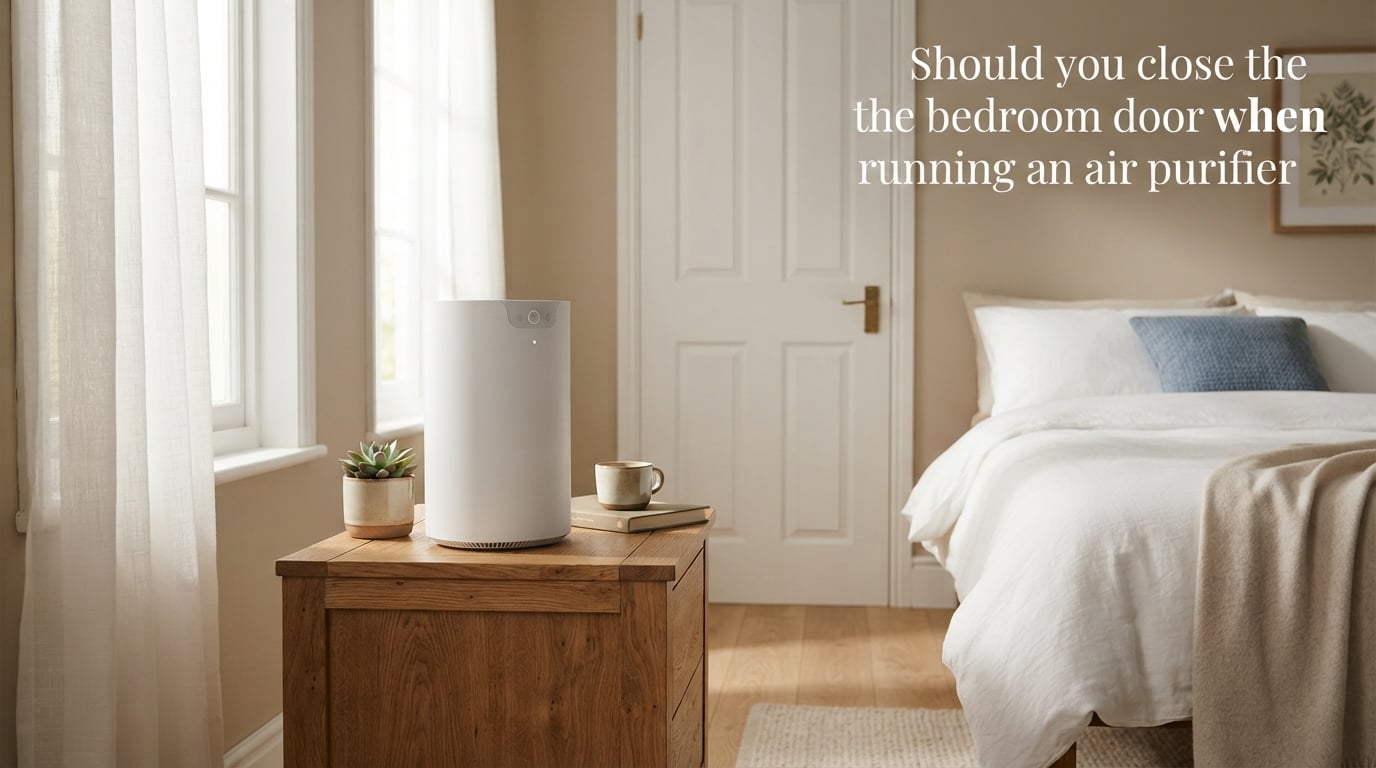
Yes, you should close the bedroom door when running an air purifier. A closed door keeps the cleaned air inside the room so the purifier can pull that same air through its filters again and again, achieving far higher effective filtration than an open layout ever could.
Our team has run the same bedroom purifier with the door open for one week and closed for the next, repeating the cycle across several units. The difference was not subtle. Surface dust dropped noticeably faster on closed-door nights, morning allergy symptoms eased, and the HEPA filters darkened with captured particles much sooner.
If you have been asking whether you should close the bedroom door when running an air purifier, the answer comes down to a simple physics principle. Your purifier can only clean air that stays within its reach, and a closed door keeps that air exactly where the unit can grab it.
The longer version gets into air exchange rates, oxygen myths, CO2 buildup concerns, and where exactly to put the unit for the cleanest, most comfortable sleep in 2026. Let us walk through all of it.
Table of Contents
Why Closing the Bedroom Door When Running an Air Purifier Works Better
Air purifiers do not magically scrub air from every corner of your home. They work by pulling a measured volume of air through a filter, trapping particles, and releasing cleaner air back into the room. The rate at which they do this is called the Clean Air Delivery Rate, or CADR.
In an open bedroom with the door ajar, that freshly cleaned air keeps leaking out into the hallway while dusty, pollen-heavy, pet-dander-laden air from the rest of the house drifts in to replace it. Your purifier ends up cleaning the entire apartment in tiny inefficient increments instead of getting your bedroom truly clean.
Closing the door flips that equation. The purifier now cycles the same body of air over and over, and with each pass the particle count drops further. After four or five complete filtration cycles, even a moderately sized unit can reduce airborne dust, pollen, and dander by 80 percent or more in a typical bedroom.
This is exactly what the EPA recommends for portable air cleaners. Their published guidance is to close doors and windows when running a purifier so the unit can effectively clean the room rather than chasing air that keeps escaping.
Reddit users on r/AirPurifiers describe the same effect in plain terms. One common observation is that the HEPA filter visibly darkens much faster in a closed bedroom, which is direct physical proof that more particles are being captured per hour. Open the door, and that same filter barely changes color.
Think of it like heating a room with a space heater. You would not leave the door wide open and expect the room to warm up quickly. Air purification works on the same logic. Sealed space plus repeated cycling equals faster, deeper cleaning.
The sweet spot is a closed door with windows also shut. Cracking a window for so-called fresh air while the purifier runs is the single biggest mistake we see people make, because it floods the room with new unfiltered air faster than the unit can clean it. Save ventilation for when the purifier is off.
Is It Safe to Sleep With the Door Closed and Purifier Running?
Yes, and this is where a lot of unnecessary worry shows up. People ask whether a closed bedroom plus an all-night air purifier will deplete oxygen, trap CO2, or create stale unhealthy air. The short answer is no.
The oxygen depletion myth comes from a misunderstanding of how sealed a typical bedroom actually is. Bedrooms are not airtight chambers. They have door gaps, electrical outlets, HVAC vents, and tiny leaks around windows that allow continuous air exchange with the rest of the house.
The average residential bedroom experiences roughly 0.3 to 0.5 air changes per hour even with the door closed. That is plenty of fresh air infiltration to keep oxygen and CO2 levels well within safe, comfortable ranges overnight.
If you wake up with a slightly stuffy feeling, the cause is almost never the purifier itself. It is usually a dirty filter that needs replacing, a unit too small for the room, or simply stale air from keeping the room closed all day before bed.
Multiple Reddit users in r/AirPurifiers confirm they run purifiers overnight with the door closed every night, with no negative effects. Many specifically report feeling less congested in the morning compared to nights without the purifier running.
Modern air purifiers are designed for continuous operation. Motors are rated for tens of thousands of hours, and sleep mode settings drop fan noise to a near-silent 25 decibels or lower, which is softer than a typical desktop fan.
Energy cost is rarely a concern either. Most bedroom-sized purifiers draw between 30 and 60 watts on high and under 10 watts on sleep mode. That translates to a few cents per night, even at higher electricity rates in 2026.
Where to Place Your Air Purifier in a Closed Bedroom
Placement matters as much as the closed door. The best position is somewhere that allows clean air to flow freely across the room without being blocked by furniture or bedding.
Our preferred spot is 3 to 5 feet from the head of the bed, off to the side rather than directly facing your face. This puts the cleaned air within your breathing zone without blasting you with a constant draft.
A nightstand or low dresser works well, as long as the purifier intake and output are not pressed against a wall. Most units need at least 12 inches of clearance on all sides to pull air efficiently.
Avoid corners. Corners trap the purifier in stagnant air pockets where it ends up cleaning the same small column of air over and over instead of circulating through the whole room. The center of a wall, away from the bed but with clear sightlines across the room, is ideal.
Match the unit to the room size. Check the CADR rating and the manufacturer recommended square footage. A purifier rated for 150 square feet will struggle in a 250-square-foot bedroom even with the door closed. The general rule we use is to oversize by about 20 percent so the unit can run on a lower, quieter setting and still complete four to five air changes per hour.
If your bedroom is larger than 300 square feet, consider a higher-CADR unit or accept that filtration cycles will take longer. The door being closed still helps dramatically, but you need enough airflow to actually cycle that larger volume of air.
Benefits of Closing the Bedroom Door With Your Purifier
The payoff for that closed door is significant. Allergy sufferers usually notice it first. Pollen, dust mites, and pet dander levels drop noticeably within an hour or two, which translates to less nighttime congestion and clearer mornings.
Pet owners benefit hugely. A closed bedroom becomes a dander-controlled sanctuary, especially valuable if the pet sleeps elsewhere. Run the purifier for an hour before bed and you are walking into noticeably cleaner air.
Dust reduction on surfaces is the most visible win. Forum users regularly report needing to dust bedroom furniture far less often once they started closing the door and running the purifier overnight. The HEPA filter is doing the work your dust cloth used to do.
Sleep quality often improves too. Cleaner air means fewer irritants triggering mild nighttime allergy responses, less coughing, and fewer wakeups. Many users also find the steady white-noise of the fan soothing, which is a bonus side benefit.
The bottom line is that closing the door turns a decent air purifier into an effective one. Without that door closed, you are paying for filtration capacity you never actually use.
When You Might Want to Leave the Door Open
There are a few cases where an open door makes sense. If you are trying to clear smoke or strong odors from the whole house, a purifier in one room with the door open can pull some of that air through. This is slow and inefficient, but useful in a pinch.
You might also crack the door if you share air with a partner who runs hot or cold and wants HVAC circulation. In that case, accept the tradeoff and run the purifier on a higher setting to compensate.
Otherwise, default to closed. The filtration math is simply better.
Frequently Asked Questions
How long should you run an air purifier in your bedroom?
Run it for at least an hour before bed to pre-clean the air, then keep it on overnight on a low or sleep mode setting. Most bedrooms need four to five full air changes per hour, which a properly sized unit can deliver continuously.
Where should you place an air purifier in your bedroom?
Place it 3 to 5 feet from the head of your bed, off to the side rather than directly facing you. Keep at least 12 inches of clearance on all sides and avoid corners, which trap the purifier in stagnant air.
Is it okay to sleep with an air purifier on all night?
Yes, modern air purifiers are designed for continuous operation and are perfectly safe to run overnight. Sleep mode settings keep noise levels around 25 decibels, which is softer than a typical desk fan.
How far away should you sleep from an air purifier?
Keep the purifier 3 to 5 feet from your head when sleeping. This keeps cleaned air within your breathing zone without creating a direct draft on your face or trapping the unit in a corner.
Conclusion
If you are still asking whether you should close the bedroom door when running an air purifier, the answer is a confident yes. Closed doors create the sealed cleaning zone your unit needs to deliver the filtration performance you paid for.
Pair that closed door with smart placement, a properly sized CADR rating, and a fresh HEPA filter, and your bedroom air will be noticeably cleaner by the time your head hits the pillow tonight.