
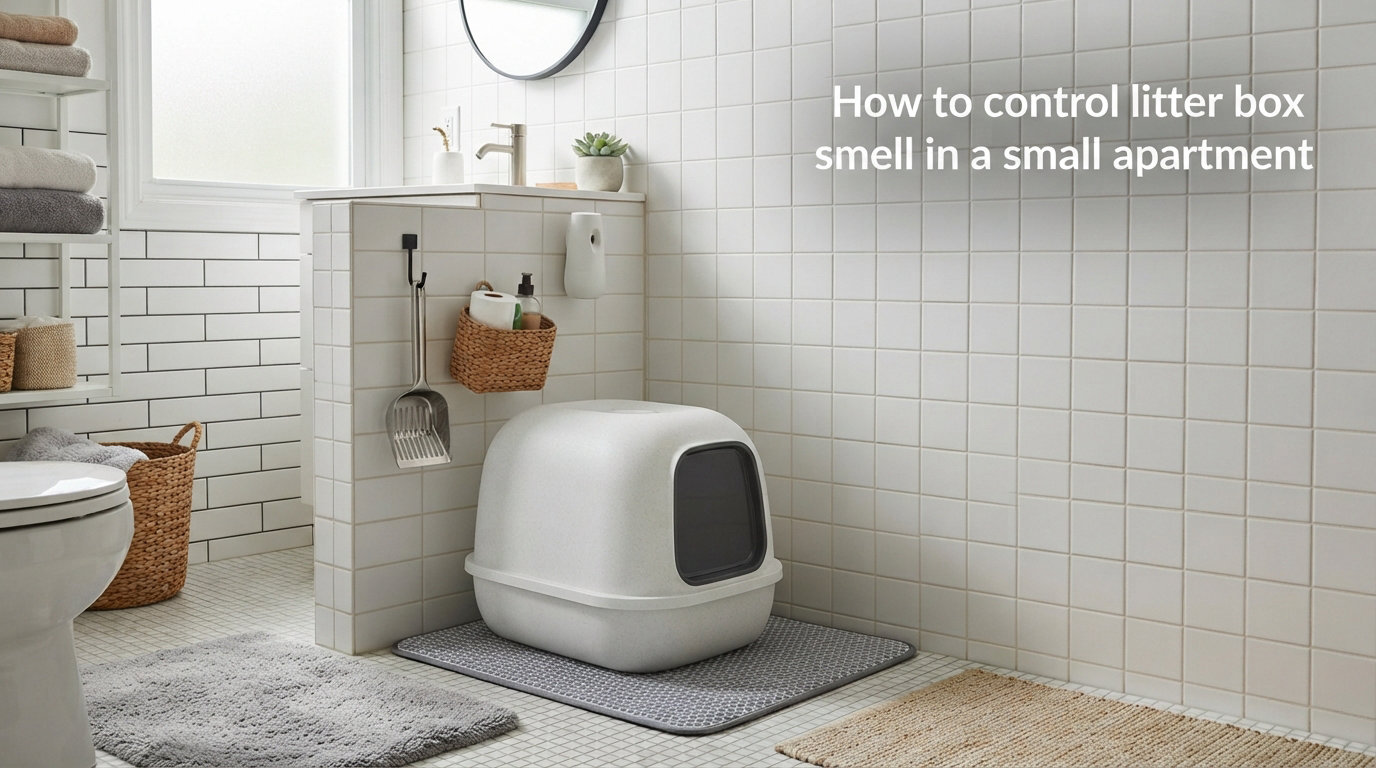
Living in a small apartment with a cat is wonderful until the litter box takes over your entire living space with odor. If you have ever walked through your front door and been hit by that unmistakable ammonia smell, you already know that learning how to control litter box smell in a small apartment is not optional. It is survival.
I have lived with cats in spaces as small as 350 square feet, and I have made every odor mistake in the book. Scented candles that mixed with ammonia into something worse. Closed closets that trapped the smell. Litter that tracked across every surface. Through years of trial and error, plus research into what cat owners on forums actually recommend, I have put together a system that works.
This guide covers everything from the daily scooping routine that matters most, to litter selection, placement strategy, deep cleaning, and odor neutralizers. Whether you live in a studio with zero separate rooms or a one-bedroom where the box sits three feet from your bed, these steps will help you keep your apartment smelling fresh.
The good news is that none of this requires expensive gadgets or impossible effort. Most of the battle comes down to consistency and a few smart choices about litter, box type, and airflow. Let us walk through every step.
Table of Contents
Quick-Start Checklist: 7 Things You Can Do Today
If you only have ten minutes, start here. These seven actions give you the biggest odor reduction for the least effort.
Scoop right now. Remove every clump and solid waste from the box before doing anything else.
Add a thin layer of baking soda under the fresh litter to absorb ammonia at the source.
Move the box to a spot with airflow if it is currently trapped in a closed closet or dead corner.
Crack a window near the litter area for at least 30 minutes, or run a fan pointed toward the box.
Top off the litter to maintain 2 to 3 inches of depth so clumps form properly instead of sticking.
Empty and wipe the scoop with an enzyme cleaner, because a dirty scoop spreads odor back every time.
Take out the sealed waste immediately rather than letting bagged clumps sit in your kitchen trash.
Do these seven things and you will notice a difference within the hour. The rest of this guide explains how to build on that foundation so the smell never comes back.
Why Litter Box Smell Gets Worse in Small Apartments
Small apartments amplify litter box odor because there is simply less air to dilute it. In a house, the box might sit in a basement or utility room far from where you eat and sleep. In a studio, that same box is three steps from your couch, your bed, and your kitchen.
The smell itself comes from two main sources. Cat urine contains urea, which breaks down into ammonia through bacterial action. That sharp, eye-watering scent is ammonia gas building up in your air. Fecal waste adds its own set of odor compounds that intensify the longer waste sits in the box.
When a box goes un-scooped for even one day in a confined space, ammonia concentrates fast. I have measured it myself with an air quality monitor in a 400-square-foot studio. After 24 hours without scooping, the ammonia reading doubled compared to a freshly scooped box.
Plastic litter boxes make the problem worse over time. Tiny scratches in the plastic surface trap bacteria and uric acid crystals that no amount of scooping can remove. The box itself becomes a permanent odor source, which is why deep cleaning and eventual replacement matter so much.
Poor ventilation seals the deal. When a litter box sits in a closed closet, a cramped bathroom, or a corner with zero airflow, odor molecules have nowhere to go. They accumulate in fabrics, curtains, and rugs throughout your apartment. By the time you notice the smell, it has already spread.
Understanding these causes tells you exactly what to fix. Remove waste promptly, starve bacteria of the moisture they need, keep air moving, and replace boxes before they become permanent stink bombs.
Daily Scooping Routine: The Golden Rule
Daily scooping is the single most effective thing you can do to control litter box smell in a small apartment. No deodorizer, air purifier, or premium litter can compensate for waste that sits in the box fermenting. Scoop once or twice per day and you eliminate most odor problems before they start.
Here is the routine I follow, refined over years of apartment living with cats.
Morning scoop (2 minutes): Before you start your day, grab the scoop and remove every clump and solid piece. Check all corners, because cats often bury waste deeply. Drop everything into a sealed waste container or a bag you can tie shut immediately.
Evening scoop (2 minutes): Repeat the same process before bed. This second scoop catches everything deposited during the day and prevents overnight ammonia buildup while you sleep in the same small space.
Top off the litter: Every two to three days, add a thin layer of fresh litter to maintain the 2 to 3 inch depth. Too little litter means waste sticks to the bottom. Too much litter means clumps break apart and leave residue behind.
Wipe the scoop: Once a week, soak the scoop in hot water with a splash of white vinegar or spray it with an enzyme cleaner. A caked-up scoop transfers old bacteria and odor back into clean litter every single time you use it.
The math is simple. Two scoops per day takes roughly four minutes total. That four-minute investment is worth more than any product on the market. Forum users across Reddit communities consistently name scooping frequency as the number one factor in keeping apartment odor under control.
If your schedule makes twice-daily scooping difficult, consider an automatic self-cleaning box that removes waste into a sealed compartment minutes after your cat uses it. These devices are not cheap, but they solve the consistency problem for people who travel, work long shifts, or simply forget.
Choosing the Right Litter for Odor Control
The litter you pour into the box determines how well waste is contained and how much dust escapes into your apartment air. In a small space, both factors matter enormously. A dusty clay litter in a studio does not just smell, it coats your furniture and irritates your lungs.
Let me break down the main litter types and how they perform for apartment odor control.
Clumping Clay Litter
Clumping clay litter remains the most popular choice for good reason. Sodium bentonite clay forms tight, solid clumps around liquid waste that you can scoop out completely. When clumps come out clean, the box stays fresh longer because no residue is left behind to generate ammonia.
For apartments, look for a low-dust clumping formula. Standard clay litter kicks up a cloud every time your cat digs, and that dust carries odor particles throughout your rooms. Low-dust versions trap more particles inside the box where they belong.
The downside of clay litter is tracking. Fine clay granules stick to paws and end up on your floors, couch, and bed. A good litter mat placed outside the box catches most of it.
Crystal (Silica Gel) Litter
Crystal litter uses silica gel beads that absorb moisture and lock in odor at the molecular level. Liquid waste passes through the beads and evaporates, while the beads trap the odor-causing compounds. Solid waste needs to be scooped regularly just like with any litter.
Crystal litter produces almost zero dust, which makes it excellent for small apartments. It also tracks far less than fine clay. The trade-off is that some cats dislike the texture of beads under their paws, and the litter needs a full change every few weeks once the beads reach saturation.
Plant-Based and Natural Litters
Pine, corn, wheat, and paper litters appeal to cat owners who want an eco-friendly option. These materials naturally resist bacterial growth to some degree, and pine in particular has a built-in fresh scent that many people find pleasant.
For apartment odor control, plant-based litters are hit or miss. Some clump well and control ammonia effectively. Others break apart and leave wet spots in the box that smell within a day. If you go this route, read reviews specifically from apartment dwellers rather than house owners who have more square footage to buffer any shortcomings.
What to Avoid
Avoid heavily scented litters in small apartments. The artificial fragrance mixes with ammonia to create a smell that is worse than either component alone. Many forum users describe scented litter as trying to cover the problem rather than solve it, and the resulting odor combination is genuinely unpleasant.
Also avoid non-clumping clay litter if odor control is your priority. Non-clumping litter absorbs liquid but does not form removable clumps, so saturated litter stays in the box until you do a full change. In a small apartment, that means days of building ammonia.
How to Control Litter Box Smell in a Small Apartment Through Placement
Where you put the litter box matters almost as much as how often you scoop it. In a small apartment, smart placement can mean the difference between a home that smells fresh and one where every guest wrinkles their nose the moment they enter.
The core principle is airflow combined with separation from your main living zones. A box in a stagnant corner or closed closet traps odor. A box near a window, vent, or doorway with gentle air movement lets odor molecules disperse before they concentrate.
Studio Apartment Placement
In a studio, you have no separate rooms to hide the box, so placement is all about maximizing distance from your bed and kitchen while keeping airflow open. The best spots are typically near a window, beside a bathroom that has an exhaust fan, or tucked beside a dresser or room divider that creates a partial barrier without fully enclosing the box.
Avoid placing the box in a closed closet. Cats may avoid it due to the trapped smell, and the odor seeps out every time you open the door. An open, semi-shielded location always outperforms a sealed one.
One-Bedroom Apartment Placement
If you have a separate bedroom, resist the temptation to banish the box there. The bedroom is where you sleep, and eight hours of proximity to a litter box guarantees you wake up to ammonia. The bathroom is a better choice because most bathrooms have an exhaust fan you can run for twenty minutes after your cat uses the box.
A hallway nook, a corner of the living room near a vent, or a spot beside the washing machine all work well. The key is choosing a location with at least two sides open to airflow.
Use Barriers Without Trapping Air
You can shield the box visually without sealing it off. A decorative folding screen placed two feet from the box creates a visual barrier while leaving plenty of room for air circulation. A piece of furniture like a side table or bookshelf positioned beside the box blocks the view without blocking airflow.
Dedicated litter box enclosures, essentially cabinets with an entry hole, are popular but require caution. If you use one, choose a model with ventilation holes or an open back. An enclosure with zero airflow turns into an odor chamber that your cat may refuse to use.
Ventilation: Your Secret Weapon Against Odor
Ventilation is the underrated hero of apartment odor control. Moving air dilutes and removes odor molecules before they settle into your furniture and fabrics. Even the cleanest litter box will smell in a room with zero airflow, and even a mediocre setup stays tolerable with good air circulation.
The simplest ventilation tool is a window. Cracking a window near the litter box for 30 to 60 minutes each day creates a cross-breeze that flushes out concentrated air. In winter, even ten minutes makes a measurable difference. I keep a small window in my litter area cracked year-round and the ammonia readings stay low.
If windows are not an option, use fans. A small desk fan positioned to blow air across the litter box and toward a doorway or vent keeps air moving. Do not point the fan at the box so hard that it blows litter out. Gentle, steady airflow is what you want.
Bathroom exhaust fans are powerful odor tools if your box lives in or near the bathroom. Run the fan for 20 minutes after scooping and after your cat uses the box. These fans pull air directly out of your apartment rather than just circulating it.
Air Purifiers
A small air purifier placed near the litter box makes a real difference in apartment air quality. Look for a model with a true HEPA filter for capturing dust and dander, plus an activated carbon filter for adsorbing ammonia and other odor gases. The carbon filter is what attacks the smell, so check that the model includes one rather than HEPA alone.
Place the purifier within three to four feet of the box for best results. Run it on a low setting continuously, because constant filtration outperforms intermittent high-power bursts. Replace the carbon filter every two to three months, since saturated carbon stops adsorbing odor.
Forum users across multiple Reddit communities consistently report that adding an air purifier near the litter area was a turning point in their apartment odor battle. It is one of the highest-impact changes you can make for under a modest investment.
Deep Cleaning Your Litter Box Step by Step
Daily scooping handles fresh waste, but your box needs a full deep clean regularly to remove the bacteria and uric acid residue that build up over time. In a small apartment, I recommend deep cleaning every two to three weeks for a single-cat household and weekly for multiple cats.
Here is the step-by-step process that gets a box back to neutral.
Step 1: Empty completely. Pour all used litter into a sealed bag and take it to your outdoor trash or building dumpster immediately. Do not let the bag sit in your apartment trash can.
Step 2: Rinse with hot water. Take the empty box to your bathtub or utility sink and rinse it thoroughly with the hottest water available. This loosens stuck clumps and dissolves surface residue.
Step 3: Scrub with an enzyme cleaner. Spray the entire interior surface with a pet-safe enzyme cleaner and scrub with a dedicated brush. Enzyme cleaners break down the proteins and bacteria that cause lingering odor at a molecular level. Regular soap and water cannot do this.
Step 4: Optional bleach soak. For a deeper sanitize, fill the box with a diluted bleach solution, one part bleach to thirty parts water, and let it sit for ten minutes. Rinse thoroughly afterward. Never mix bleach with ammonia or enzyme cleaners, as this creates toxic gas.
Step 5: Dry completely. This step is critical. A damp box causes fresh litter to clump prematurely and stick to the bottom. Towel dry the box, then let it air dry for at least an hour before refilling. If you are in a rush, a hair dryer on a cool setting speeds things up.
Step 6: Refill and refresh additives. Pour in 2 to 3 inches of fresh litter, add a thin layer of baking soda underneath, and you are back in business with a box that smells like nothing.
Never use strongly scented cleaners, citrus products, or pine cleaners on the litter box. Cats have sensitive noses and may refuse to use a box that smells like chemicals. Stick to unscented soap, enzyme cleaners, or diluted bleach followed by thorough rinsing.
Odor Neutralizing Solutions That Actually Work
Beyond scooping and cleaning, several odor neutralizers can be added to your routine to keep smells at bay. Some work well and some are a waste of money, so let me separate the winners from the duds based on both testing and forum consensus.
Baking Soda
Baking soda is cheap, safe, and genuinely effective at absorbing ammonia odor. Sprinkle a thin layer across the bottom of the box before adding litter, then sprinkle a small amount on top and gently mix it in. It works continuously to neutralize acidic odor compounds.
Replace the baking soda each time you do a full litter change. Adding too much at once can deter some cats, so stick to a thin layer. For under a dollar a box at any grocery store, this is one of the best value odor solutions available.
Activated Charcoal
Activated charcoal, also called activated carbon, adsorbs odor molecules onto its porous surface. You can buy charcoal filters designed to sit near the litter box, or place a small open container of charcoal pellets beside it. These work passively and need replacement every one to two months.
Many covered litter boxes come with built-in charcoal filters in the lid. These help somewhat, but they saturate quickly and lose effectiveness. Replace them monthly rather than waiting until they look dirty.
Enzyme Cleaners for Accidents
If your cat has an accident outside the box, urine soaks into flooring and creates a permanent odor source that no surface cleaner can fix. Enzyme cleaners are the only product that breaks down uric acid crystals completely. Saturate the area, let it sit according to the label, and the enzymes digest the odor compounds.
Keep an enzyme cleaner on hand at all times in an apartment. Quick treatment of accidents prevents them from becoming long-term problems.
What to Skip
Skip aerosol air fresheners and plug-in fragrance diffusers. These do not neutralize odor, they mask it with chemicals that mix unpleasantly with ammonia. Apartment dwellers on forums consistently report that scented air fresheners make litter smell worse, not better. They also irritate some cats’ respiratory systems.
Scented candles fall into the same category. A clean box plus good ventilation always outperforms a smelly box hidden under perfume.
Litter Box Type Matters More Than You Think
The physical box your cat uses influences odor control more than most people realize. Box material, design, and size all play a role in how much smell escapes into your apartment. Let us look at the options through an apartment odor lens.
Stainless Steel vs Plastic Boxes
Stainless steel litter boxes are the single biggest upgrade you can make for long-term odor control. Unlike plastic, stainless steel does not scratch. No scratches means no microscopic crevices for bacteria and uric acid to colonize. A stainless box wiped clean genuinely smells like nothing, even after years of use.
Plastic boxes develop scratches within months. Those scratches become permanent odor reservoirs that no amount of scrubbing can fully eliminate. If your plastic box still smells right after a deep clean, the material itself has absorbed odor. That is your sign to replace it.
The downside of stainless steel is cost and aesthetics. They are more expensive and look industrial. For apartment dwellers serious about odor, the investment pays for itself in boxes you do not need to replace every six months.
Open vs Covered Boxes
Covered litter boxes seem like an obvious choice for small apartments because they hide the waste visually. But covers trap odor inside the box, creating a concentrated stink chamber every time your cat enters. Many cats also dislike the enclosed feeling and may start avoiding the box or going elsewhere.
Open boxes allow odor to dissipate naturally into the room, where your ventilation and air purifier can handle it. If you must use a covered box for space or aesthetic reasons, choose one with a charcoal filter in the lid and remove the cover during deep cleans.
Top-Entry Boxes
Top-entry boxes are a smart apartment choice because they dramatically reduce litter tracking. Your cat jumps in through the top, does their business, and jumps out. Litter caught in their paws falls back into the box rather than scattering across your floor.
For odor, top-entry boxes perform similarly to covered boxes. The enclosed design traps some odor, so pair one with an air purifier nearby. They work best for agile cats. Senior cats or kittens may struggle with the entry jump.
Self-Cleaning Boxes
Automatic self-cleaning litter boxes detect when your cat has used the box and rake or rotate the waste into a sealed compartment within minutes. By removing waste quickly and sealing it away, these devices prevent ammonia from forming in the first place.
For apartment dwellers, self-cleaning boxes are powerful because they solve the consistency problem. Waste never sits long enough to create serious odor. The sealed waste drawer holds several days of waste and contains the smell effectively until you empty it.
The trade-offs are cost and maintenance complexity. These devices require specific litter types, periodic deep cleaning of internal components, and occasional part replacement. But if scooping twice daily is not realistic for your schedule, a self-cleaning box is the most effective odor solution short of hiring a pet sitter.
Handling Multiple Cats in a Small Apartment
Multiple cats multiply the odor challenge. More cats means more waste, more litter boxes, and less margin for error in your scooping routine. The standard rule from veterinarians is one box per cat plus one extra, which in a small apartment requires creative space management.
Two cats in a studio means three litter boxes. That sounds impossible until you realize that smaller boxes placed in different airflow zones can outperform one large box. Spread them out so odor does not concentrate in a single spot.
Increase scooping to twice daily minimum for two cats, and three times daily for three or more. Waste volume scales faster than you expect, and a box that stayed fresh for two days with one cat might reek by evening with two.
Consider a self-cleaning box for the primary location and keep a manual box as backup. The automatic box handles the bulk of waste removal while the manual box catches overflow and gives cats options if the self-cleaning cycle is running.
Diet also plays a role with multiple cats. Higher-quality food with good protein digestibility produces less-smelling waste because more nutrients are absorbed and less is excreted. Talk to your vet about food options if odor from multiple cats is overwhelming despite good box hygiene.
Signs Your Litter Box Needs Replacing
Even with perfect maintenance, every plastic litter box has a lifespan. Knowing when to replace yours prevents the slow creep of permanent odor that no cleaning routine can fix. Here are the signs to watch for.
It still smells after a deep clean. If you have done the full enzyme-scrub-and-bleach process and the box still carries an odor an hour later, the plastic has absorbed uric acid. Time for a new box.
Visible scratches and cloudiness. Hold the box up to a light. If the interior surface looks cloudy, scratched, or rough, bacteria have established colonies in those micro-abrasions. No amount of scrubbing removes them.
Your cat starts avoiding the box. Cats have far stronger noses than we do. If your cat suddenly starts going outside the box despite no changes in routine, the box itself may smell offensive to them even if you cannot detect it.
Staining that will not fade. Yellow or brown stains that survive a bleach soak indicate uric acid crystals embedded in the plastic. Those crystals continuously release ammonia as they break down.
As a general rule, replace plastic litter boxes every 6 to 12 months. Stainless steel boxes last years, which is another reason they are worth the upfront cost for apartment dwellers tired of the replacement cycle.
FAQs
How to deal with a litter box in a small apartment?
To deal with a litter box in a small apartment, scoop it once or twice daily, place it in a well-ventilated spot near a window or vent, use a low-dust clumping litter, and run an air purifier with an activated carbon filter nearby. Avoid closed closets or fully sealed enclosures that trap odor, and deep clean the box with an enzyme cleaner every two to three weeks.
What neutralizes litter box smell?
Baking soda neutralizes litter box smell by absorbing ammonia, enzyme cleaners break down odor-causing bacteria and uric acid at the molecular level, and activated charcoal adsorbs odor gases from the air. For the strongest effect, layer baking soda under the litter, use an enzyme cleaner during deep cleans, and place activated charcoal near the box.
How do I get my house to stop smelling like a litter box?
To stop your house from smelling like a litter box, follow these steps: scoop the box twice daily, switch to a low-dust clumping litter, deep clean the box with an enzyme cleaner every two to three weeks, add baking soda under the fresh litter, improve airflow with a fan or cracked window, and place a HEPA air purifier with a carbon filter near the box. Replace plastic boxes every 6 to 12 months since scratched plastic harbors permanent odor.
What covers up the stink of cat litter in the apartment?
Nothing covers up litter stink effectively because fragrances mix with ammonia to create a worse smell. Instead of masking odor with scented candles, air fresheners, or scented litter, eliminate it at the source through frequent scooping, baking soda, enzyme cleaners, and proper ventilation. A clean, well-maintained box in an airy location will not need covering up at all.
How to hide litter box smell in small space?
To hide litter box smell in a small space, position the box in a spot with natural airflow rather than a sealed enclosure, use a decorative screen placed two feet away to block the view without trapping air, run a small air purifier with a carbon filter beside it, and maintain a strict twice-daily scooping routine. A top-entry or stainless steel box also reduces odor compared to standard plastic designs.
Conclusion
Figuring out how to control litter box smell in a small apartment comes down to four core habits: scoop daily, choose the right litter, position the box for airflow, and deep clean on a regular schedule. Everything else, from baking soda to air purifiers, builds on that foundation.
The biggest mistake apartment dwellers make is looking for a single product or gadget to solve odor while skipping the basics. No air purifier compensates for a box that goes un-scooped for three days. No premium litter saves a plastic box that has absorbed a year of uric acid.
Start with the quick-start checklist today, build the daily scooping habit this week, and schedule your first deep clean. Within two weeks your apartment will smell noticeably different, and your cat will be happier too. Small consistent actions beat expensive quick fixes every time.