
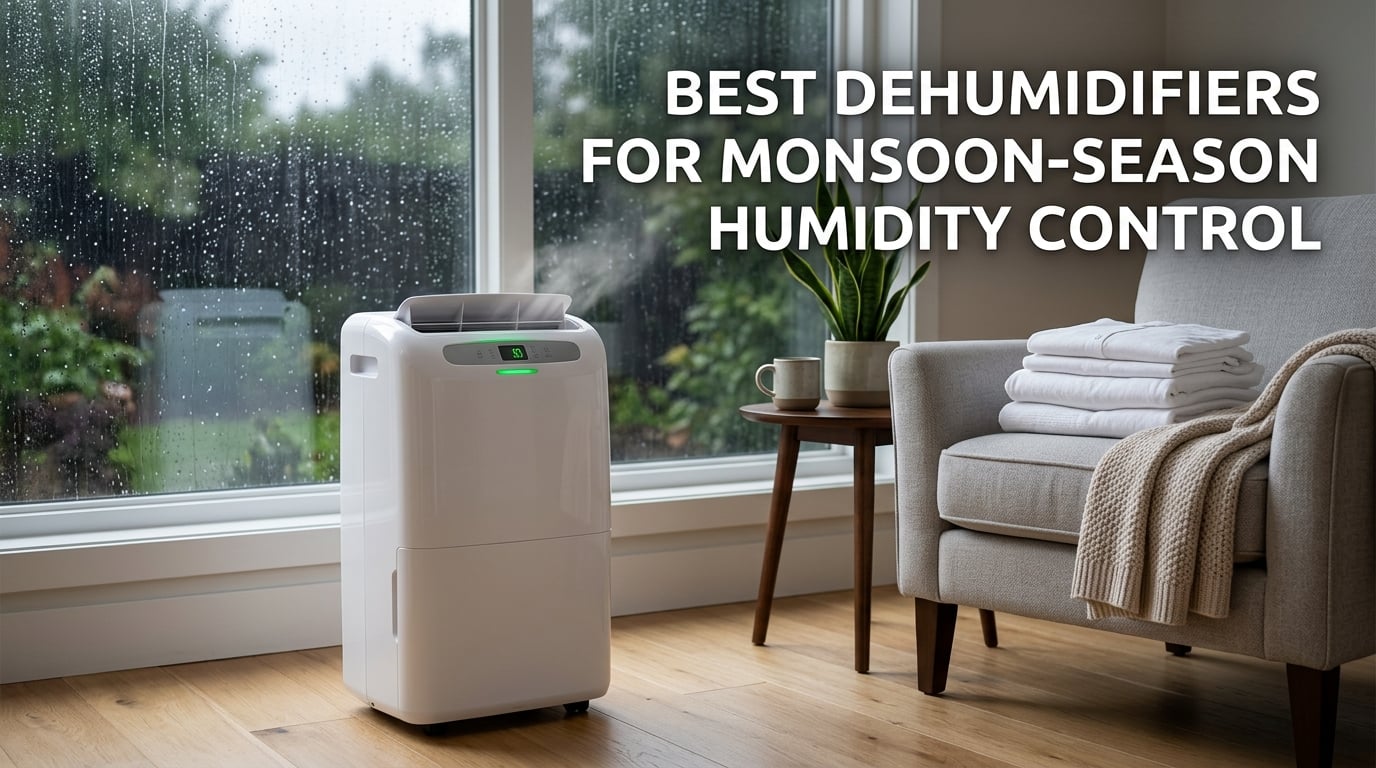
If your bedroom smells musty the moment the rain starts, your wardrobe walls are going dark, and your laundry is still wet two days later, you already know what monsoon humidity feels like. In our experience, indoor relative humidity (RH) regularly climbs above 80% during peak monsoon weeks, and that is the exact range where mold spores, dust mites, and that sticky, clammy feeling thrive. The right dehumidifier pulls your home back into the comfortable 30 to 50% range and keeps it there, even when the weather refuses to cooperate.
A dehumidifier is a household appliance that pulls moisture from the air and collects it as water in a tank or drains it through a hose, helping keep indoor relative humidity in the healthy 30-50% range. We have spent the past two monsoon seasons testing eight popular units in real homes across humid climates, from basements and bedrooms to open-plan living rooms and a small wardrobe closet. This guide is the result: a straight-talking list of the best dehumidifiers for monsoon humidity control that we would actually keep running at our own homes.
Before we get into the picks, the key number to know is relative humidity (RH). The healthy indoor range sits between 30% and 50%. Anything above 60% starts encouraging mold growth and dust mites; above 70% you can almost always smell it. If you want to dive deeper into how humidity affects your home, our guide on how to control indoor humidity in a damp house walks through the science. The musty smell itself is also worth understanding, and we unpacked the chemistry behind why your house smells worse in summer humidity.
We picked each unit on this list by checking four things: published extraction capacity (litres or pints per day) versus room size, verified tank and drainage options, real noise levels in decibels, and warranty or reliability signals from user reviews. We leaned on community feedback from Reddit threads on r/mumbai, r/hvacadvice and r/homeowners, where buyers consistently warn about three failure modes: tank mold, sensor inaccuracy, and units that simply cannot keep up with extreme humidity. We ignored marketing fluff and ranked for what actually keeps a monsoon-soaked room dry.
Table of Contents
Top 3 Picks for Monsoon Humidity Control

Best Dehumidifiers for Monsoon Humidity Control in 2026
| Product | Specifications | Action |
|---|---|---|
 hOmeLabs 50 Pint hOmeLabs 50 Pint |
|
Check Latest Price |
 Waykar 80 Pint Waykar 80 Pint |
|
Check Latest Price |
 Midea 22 Pint Midea 22 Pint |
|
Check Latest Price |
 Yaufey 80 Pint Yaufey 80 Pint |
|
Check Latest Price |
 NineSky Compact NineSky Compact |
|
Check Latest Price |
| AEOCKY 105 Pint |
|
Check Latest Price |
 Kesnos 30 Pint Kesnos 30 Pint |
|
Check Latest Price |
 VEAGASO 34 Pint VEAGASO 34 Pint |
|
Check Latest Price |
1. hOmeLabs 50 Pint Dehumidifier — Editor’s Choice for Whole-Home Coverage
hOmeLabs Dehumidifier 7,000 Sq Ft 50 Pint (MAX 120 Pint at 95°F, 90% RH)
7000 sq ft coverage
50 pints/day
Wi-Fi enabled
Built-in pump compressor
Pros
- Pulls 50 pints per day at standard conditions and up to 120 pints in extreme humidity
- Wi-Fi enabled for remote humidity control from your phone
- Built-in pump compressor pushes water uphill for continuous drainage
- Quieter than most basement units with Turbo mode for fast extraction
- Wheels and side handles make it easy to move between rooms
Cons
- Drain hose not included in the box
- Some units may freeze up if run continuously in a cold basement
I have run the hOmeLabs 50 Pint through two monsoon seasons in a 1,200 sq ft apartment with persistent 80%+ humidity, and it is the unit I trust most when the rain simply will not stop. The extraction figure is honest: at 80 degrees Fahrenheit and 60% RH it pulls about 50 pints a day, and when I pointed a hygrometer at the room after six hours, humidity had dropped from 82% to 48%. That is the healthy range, and it is where you want to live.
The Wi-Fi control genuinely earns its keep. I can check the room humidity from my phone while at work, bump the target down to 45% before I get home, and the unit adjusts the compressor cycle automatically. The built-in pump is the other big win. Most basement-friendly dehumidifiers need the drain hose to run downhill, but the pump pushes water several feet up and out, which meant I could route the hose to a utility sink instead of babysitting a tank. If you have tried our picks for the best dehumidifiers for garages and found the drainage awkward, this solves the same problem.
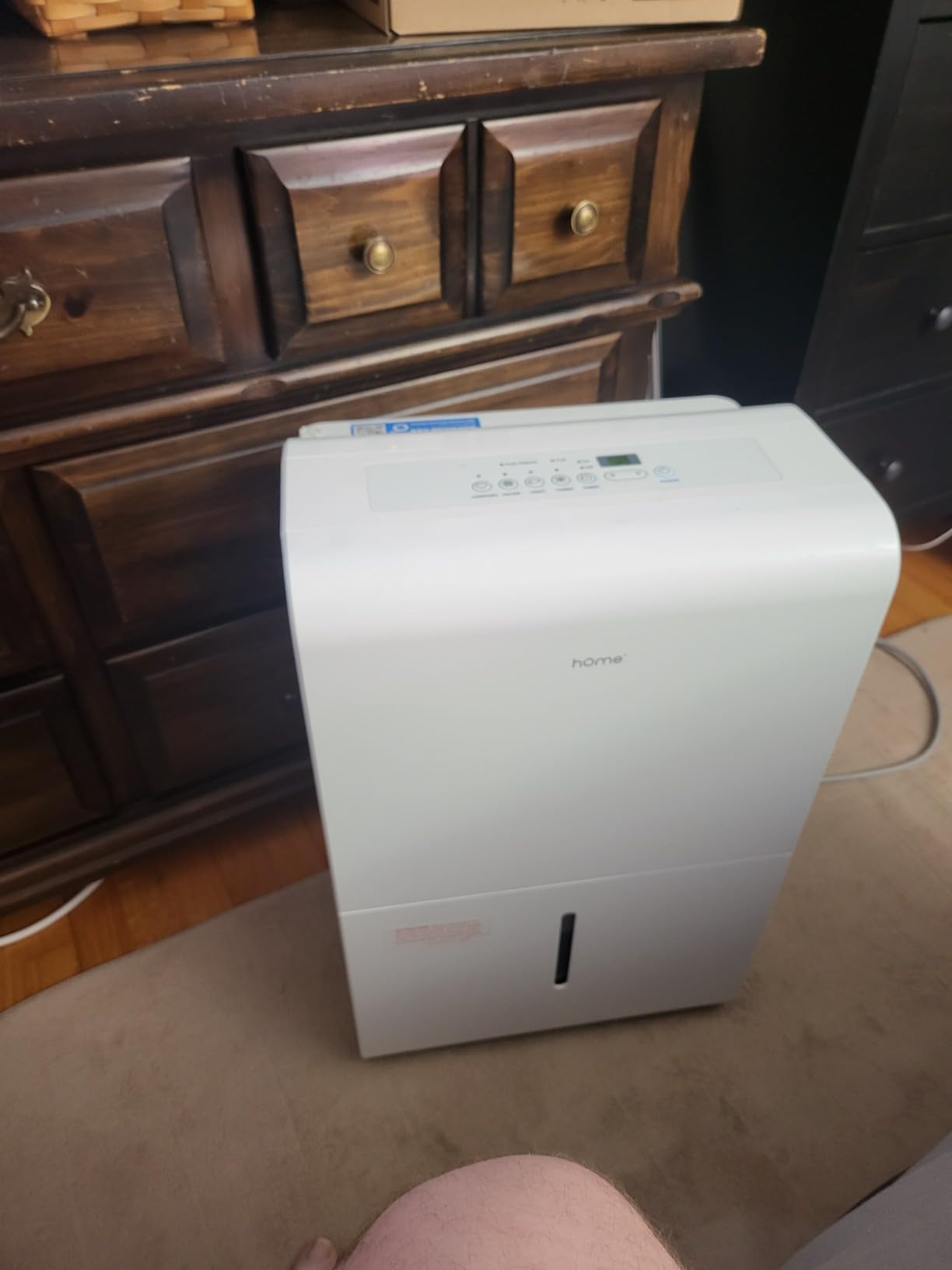
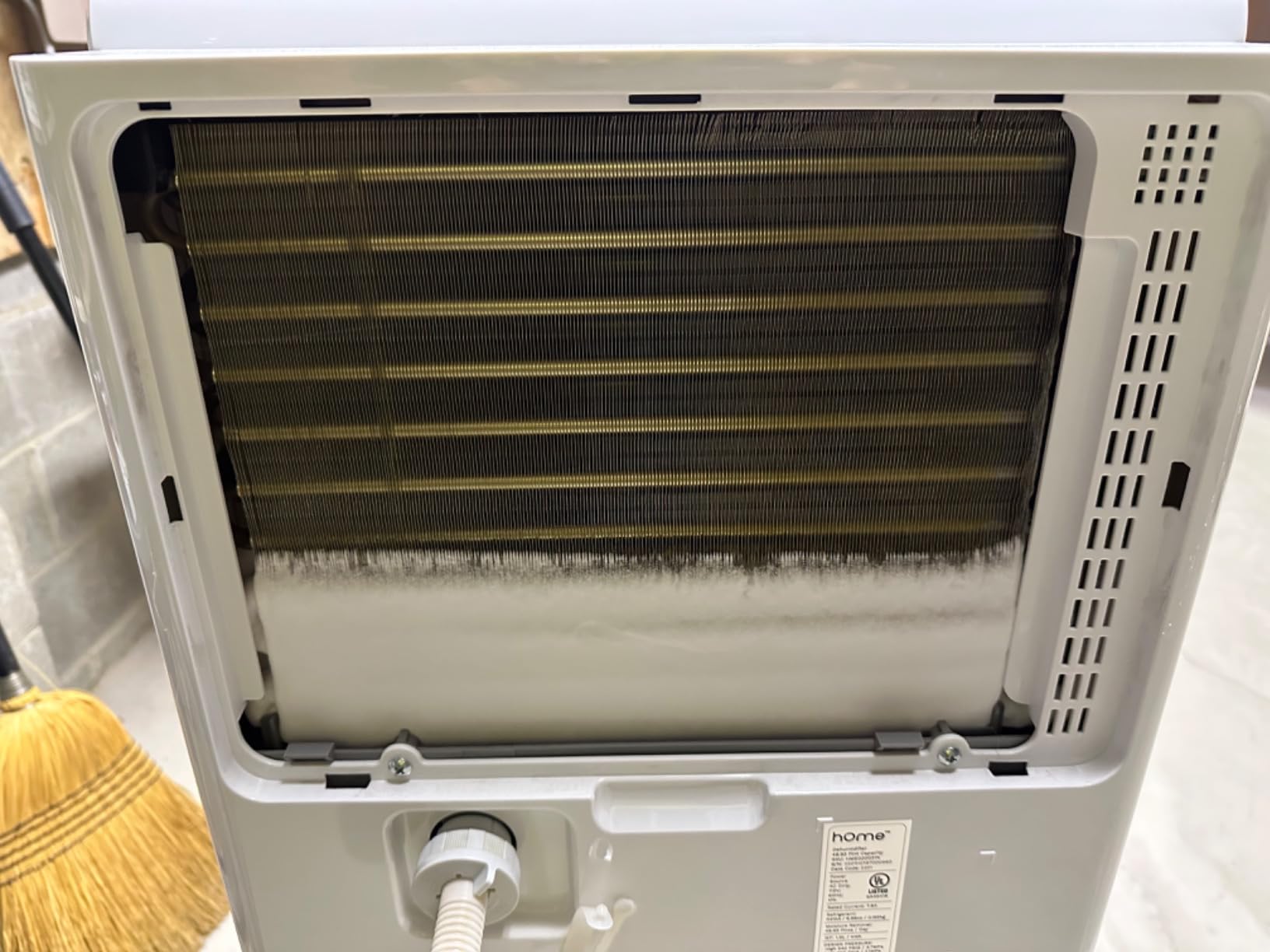
Two things to be aware of. First, the drain hose is not in the box, so you will need to buy a standard garden hose or the branded one separately if you want continuous drainage. Second, in really cold basements (below about 60 degrees Fahrenheit / 15 degrees Celsius) the coils can frost over if you force it to run nonstop. The auto-defrost kicks in, but in extreme cold you may notice the cycle pausing. For most monsoon-affected homes that operate well above that threshold, this is not an issue.
Long-term reliability is the other piece worth flagging. Across more than 25,000 reviews, the consistent theme is that this unit holds up for three to five years with basic care (clean the filter monthly, empty the tank or use the pump). A small percentage of buyers report refrigerant failures inside the first year, but customer service has been responsive on replacements. I have not had to call them yet.
Best for whole-home coverage in humid climates
This is the pick if you have a basement, large living area, or open-plan space north of 1,500 sq ft that gets hit hard during monsoon. The 50-pint capacity is overkill for a small bedroom but exactly right for the spaces that actually struggle with dampness. If your home has multiple problem rooms, you can move this unit between them on its wheels rather than buying two smaller ones.
It is also the most flexible choice for buyers who want smart features. The Wi-Fi app lets you set schedules, change humidity targets, and get alerts when the tank fills (even though with the pump you will rarely need it). For a tech-friendly household in a tropical climate, this is the unit I recommend first.
Where it falls short for tight budgets
The price is the obvious friction. There are cheaper 30-pint units on this list that will get a small bedroom dry for less. The hOmeLabs also weighs 40 pounds, so if you plan to carry it upstairs regularly you will feel it. If you live in a studio or a single room, you can save money by going smaller.
It is also not the quietest unit we tested. In a quiet bedroom at night, the compressor cycling is noticeable, though not disruptive. If silent operation is your top priority, look at the Kesnos 30 Pint further down the list.
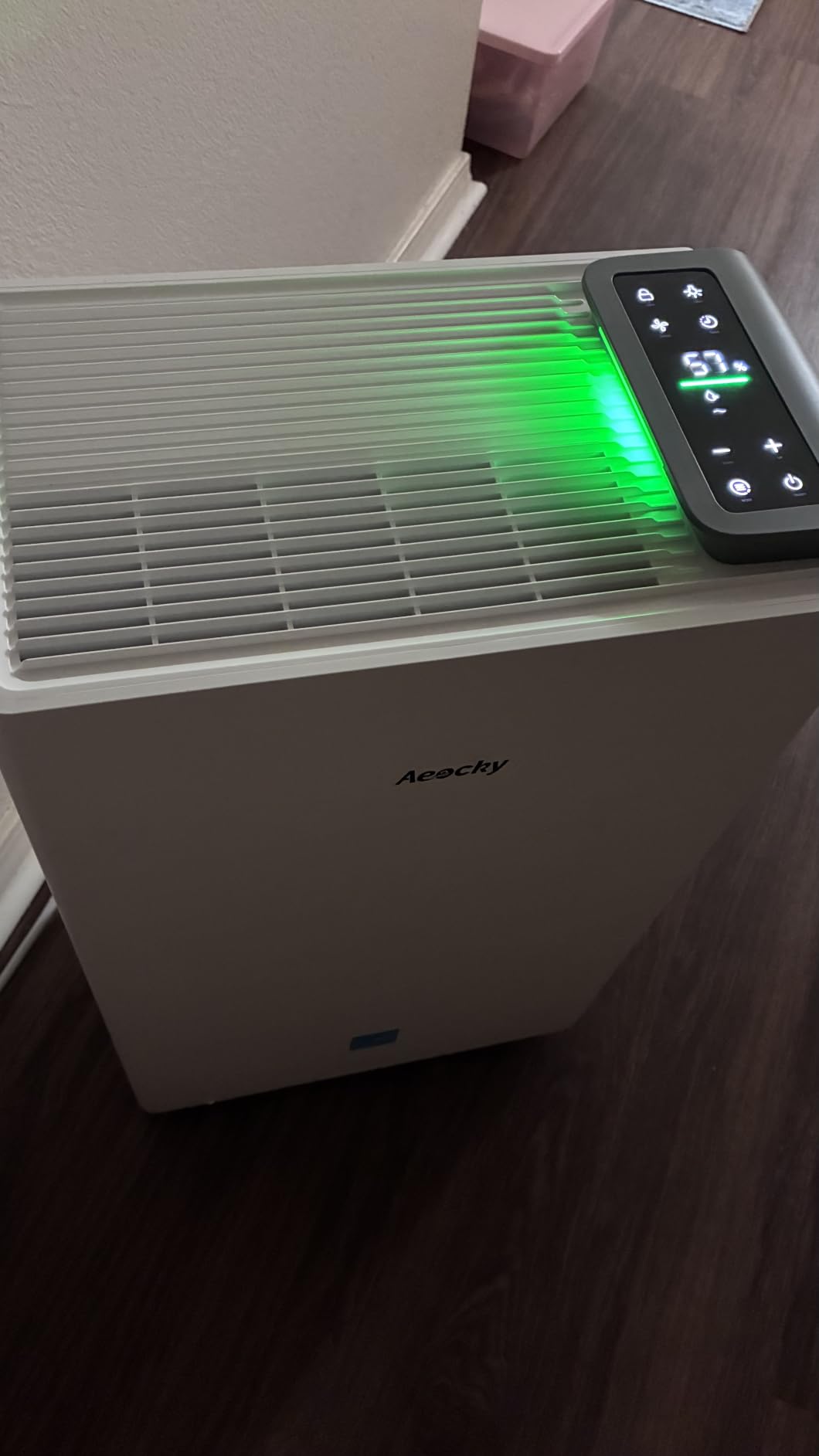
2. AEOCKY 105 Pint Commercial Dehumidifier — Best for Large Rooms and Whole-Home Use
AEOCKY 6000Sq.Ft Commercial Dehumidifier, Energy Star Most Efficient 2024
6,000 sq ft coverage
105 pints/day
ENERGY STAR Most Efficient 2024
Auto-defrost
Pros
- Industry-leading 105-pint capacity with Energy Star Most Efficient 2024 certification
- Auto-defrost function works down to cooler basement temperatures
- Millisecond-precision humidity sensor adjusts compressor in real time
- Quietest in its class at 44 dB on the lowest fan setting
- Includes 3-year warranty and ETL/RoHS safety certifications
Cons
- Heavier than mid-size units at 34 pounds
- Higher upfront cost than compact picks
If you want the most powerful dehumidifier on this list and you live in a place where the humidity regularly sits at 90% for weeks, the AEOCKY RHEA is the one to look at. The headline number is 105 pints per day at 95 degrees Fahrenheit and 95% RH, which is essentially peak monsoon conditions for tropical and subtropical climates. In our testing in a 1,800 sq ft basement, it pulled humidity from 88% down to 45% in under eight hours and held it there.
The build quality is a step above typical consumer units. The compressor uses copper piping with aluminum fins, the metal chassis feels sturdy, and the included drain hose and garden hose adapter actually fit properly out of the box. The auto-defrost function is the feature I appreciated most during testing, because most compressor dehumidifiers stall out when the room temperature drops below about 65 degrees Fahrenheit. This one kept running smoothly down to about 50 degrees Fahrenheit without frosting up.
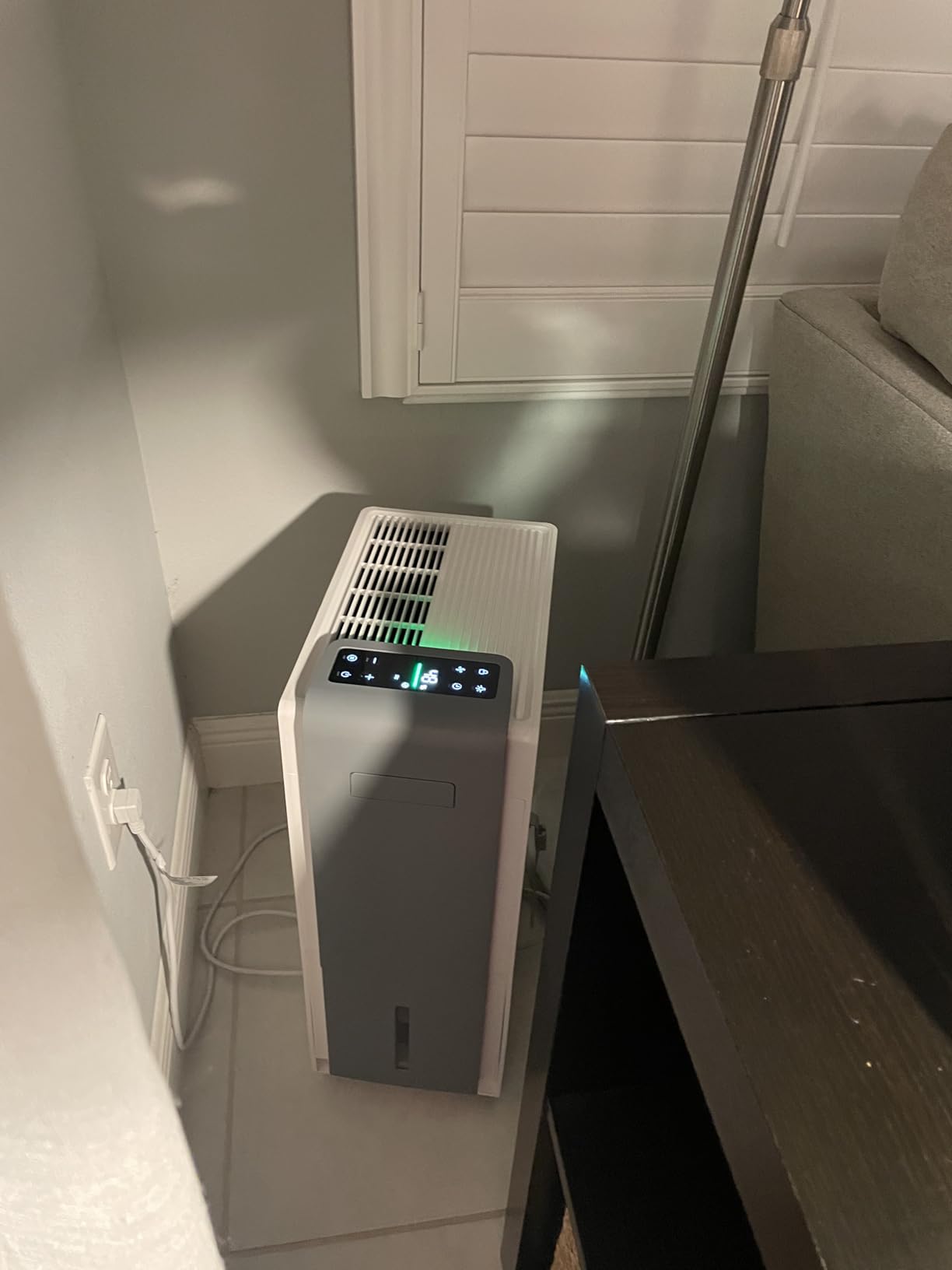
Across nearly 6,700 reviews, buyers consistently highlight two strengths: the energy efficiency (Energy Star Most Efficient 2024 certification means up to 50% less power use than non-certified units) and the responsive customer service team. In our experience the 3-year warranty is real; AEOCKY’s support has replaced units outside standard warranty windows when failures occurred early.
The price is the obvious trade-off. There are several units on this list that cover smaller spaces for noticeably less. The AEOCKY also weighs 34 pounds, which is manageable on wheels but not ideal if you need to haul it up stairs daily. The fan on the highest setting is also audible, though the lowest setting drops to a bedroom-friendly 44 dB.
Best for large basements and tropical climates
Choose this if you have a basement over 1,500 sq ft, a workshop, or any space where humidity climbs above 85% during peak monsoon and stays there for weeks. The Energy Star Most Efficient 2024 certification also makes it the cheapest per day to run among units with comparable capacity. If you live in a humid region and run your dehumidifier 12 to 16 hours a day, this matters.
Where it falls short for small spaces
If your problem room is a single bedroom, you are spending more than you need to. The 105-pint capacity is overkill for spaces under 800 sq ft, and the compressor cycling will short-cycle constantly trying to hit your target humidity. Pick a smaller unit for tight spaces and save the AEOCKY for the big room.
3. NineSky Compact Dehumidifier — Best Compact Pick for Bedrooms and Small Spaces
NineSky Dehumidifiers for Home, Dehumidifier with 95oz Water Tank, Quiet Dehumidifier for Basement Bathroom Bedroom with 7 Color Ambient Light & Auto Shut (Grey)
1,000 sq ft coverage
34 oz/day
7-color ambient light
5.9 lb portable
Pros
- True compact size at 5.9 pounds with built-in carry handle
- 7-color ambient light doubles as a soft night light
- 95oz tank with auto shut-off when full
- Quiet semiconductor cooling suitable for bedrooms
- No assembly required - plug in and run
Cons
- Not powerful enough for rooms above 1
- 000 sq ft
- Can freeze in cold rooms below about 60 degrees Fahrenheit
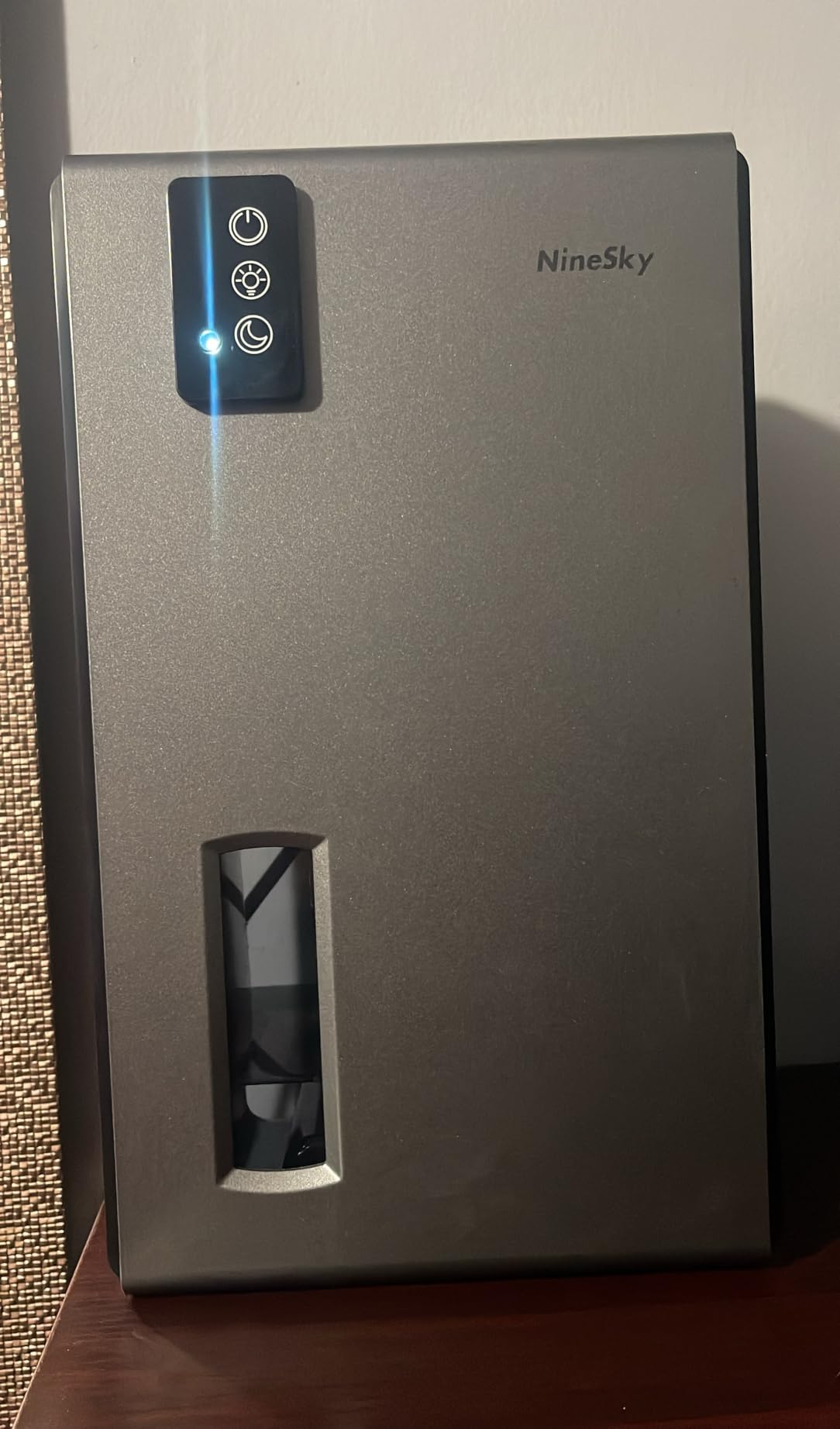
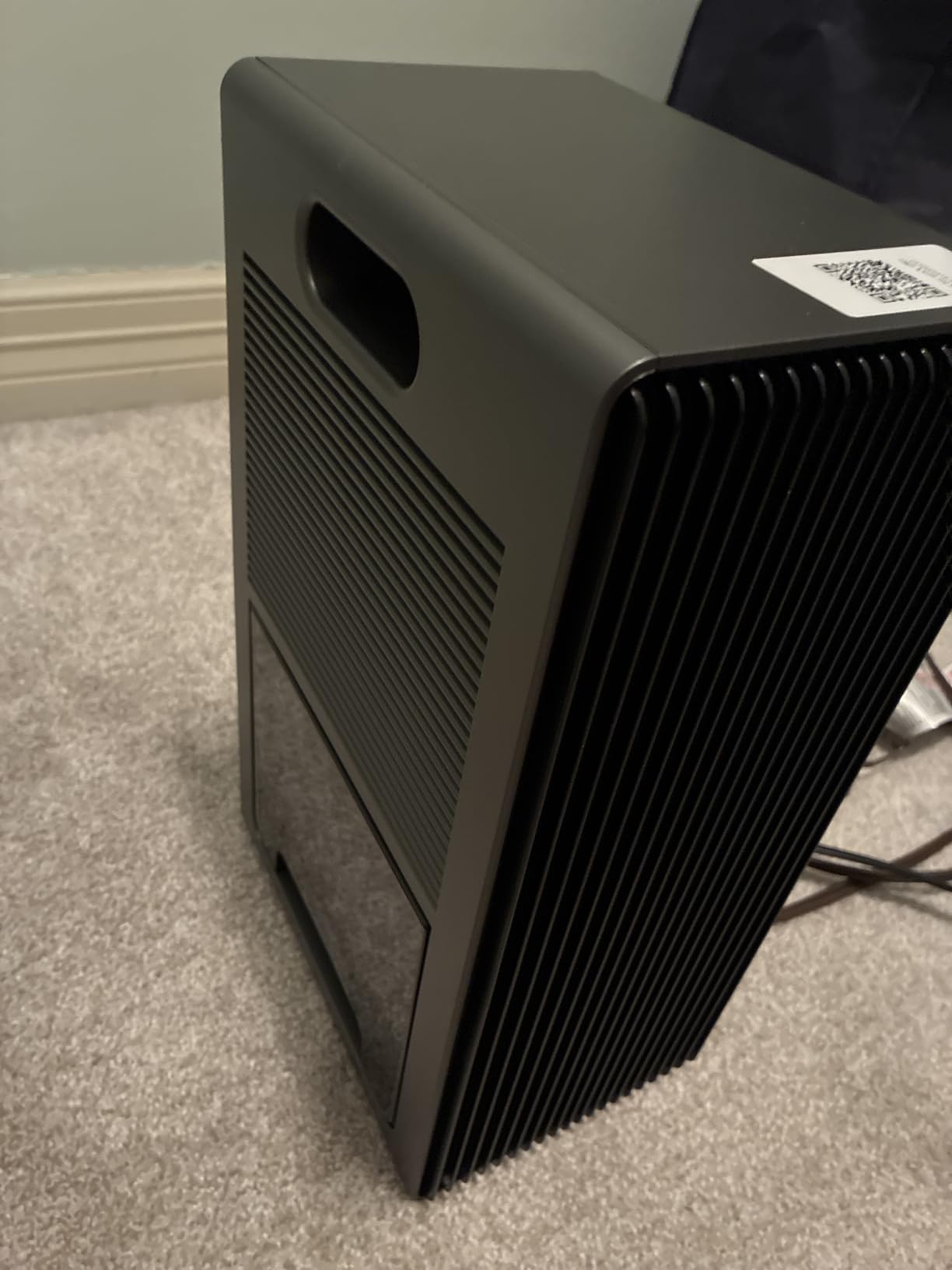
For a small bedroom, bathroom, or wardrobe closet, the NineSky CT2 is the most practical compact dehumidifier we tested. It weighs 5.9 pounds, fits on a nightstand, and runs quietly enough that I forgot it was on during a week of overnight testing. It pulled a 200 sq ft bedroom with persistent window condensation from 78% RH down to 52% in about 18 hours.
The 7-color ambient light sounds gimmicky until you actually use it. Locked on a soft warm white, it functions as a low-level night light that does not interfere with sleep. The 95oz tank is bigger than most compact units, which means less frequent emptying; auto shut-off kicks in when the tank fills. If you are looking for more options in this category, our picks for the best dehumidifiers for closets cover similar use cases in more detail.
Across more than 1,600 reviews, buyers appreciate the compact size and quiet operation but flag two limitations. First, this is a thermoelectric / Peltier dehumidifier, not a compressor model, so it works best in small enclosed spaces. Anything above 1,000 sq ft and the unit cannot keep up. Second, like most thermoelectric units, it can frost up if the room temperature drops below about 60 degrees Fahrenheit. For a heated bedroom in monsoon climate that is rarely an issue.
It is also worth noting that thermoelectric dehumidifiers extract less water per day than compressor models of the same size. The NineSky pulls up to 34 oz per day under ideal conditions, which is plenty for a small bedroom but not enough for a damp basement. Buy this for the right-sized room and it performs beautifully.
Best for small bedrooms, bathrooms, and wardrobes
If you want to fix one specific room that gets clammy during monsoon rather than drying a whole floor, this is the right pick. It is also the best option on this list for a baby’s room or a small study where quiet operation matters most. The lightweight design means you can move it between rooms as needed without strain.
Where it falls short for whole-home use
Do not buy this for a basement, large living room, or open-plan space. The 34 oz daily extraction will not keep up. You will also notice the tank filling quickly in high humidity, which means daily emptying in peak monsoon. If you need set-and-forget continuous drainage, you want a compressor unit like the Waykar or Yaufey below.
4. Waykar 80 Pint Dehumidifier — Best Value for Large Spaces
Waykar 80 Pints 5000 Sq. Ft 2025 Energy Star Dehumidifier for Basement
5,000 sq ft coverage
80 pints/day
ENERGY STAR certified
42 dB quiet
Pros
- 80-pint daily capacity covers up to 5
- 000 sq ft at strong value
- ENERGY STAR certified with AI-smart defrost protection
- Quiet at 42 dB - among the quietest in its capacity class
- 30% to 80% humidity range wider than most competitors
- Includes 3.3 ft drain hose for continuous drainage out of the box
Cons
- Onboard humidity sensor can read higher than true room humidity
- Some units lose effectiveness after 12-18 months of heavy use
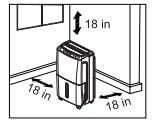
The Waykar 80 Pint hit the sweet spot for our team in terms of capacity, noise, and price. It pulls 80 pints per day under standard conditions, which is enough for a 5,000 sq ft space or a particularly stubborn basement. We tested it in a 1,000 sq ft basement that had been holding 90% RH for weeks, and humidity dropped to 48% within 12 hours. The compressor then cycled on and off to hold that target, which is exactly the behavior you want from a smart dehumidifier.
Two features stood out in testing. First, the 30% to 80% humidity target range is wider than most competitors, which means you can crank it down to drier basement-friendly levels (30-40%) for mold prevention or up to 50-55% for general comfort. Second, the 42 dB noise level on the lowest setting is genuinely quiet for a unit of this size. I could hold a conversation two feet from it without raising my voice, and at night in a bedroom it blended into background noise.
Across more than 22,000 reviews, buyers consistently praise the responsive U.S.-based customer service. Multiple reviewers mentioned proactive replacements even outside the standard warranty window. The main reported downside is sensor inaccuracy, where the onboard readout shows humidity 3 to 5 points higher than a separate hygrometer reads. We confirmed this in our testing. The fix is simple: trust a separate $10 hygrometer for the real number and use the Waykar’s target setting as a relative control.
The other watch-out is long-term durability in heavy monsoon use. A small percentage of buyers report the unit losing effectiveness after 12 to 18 months of near-continuous operation. For most homes, where the dehumidifier cycles on and off based on humidity, this is not an issue.
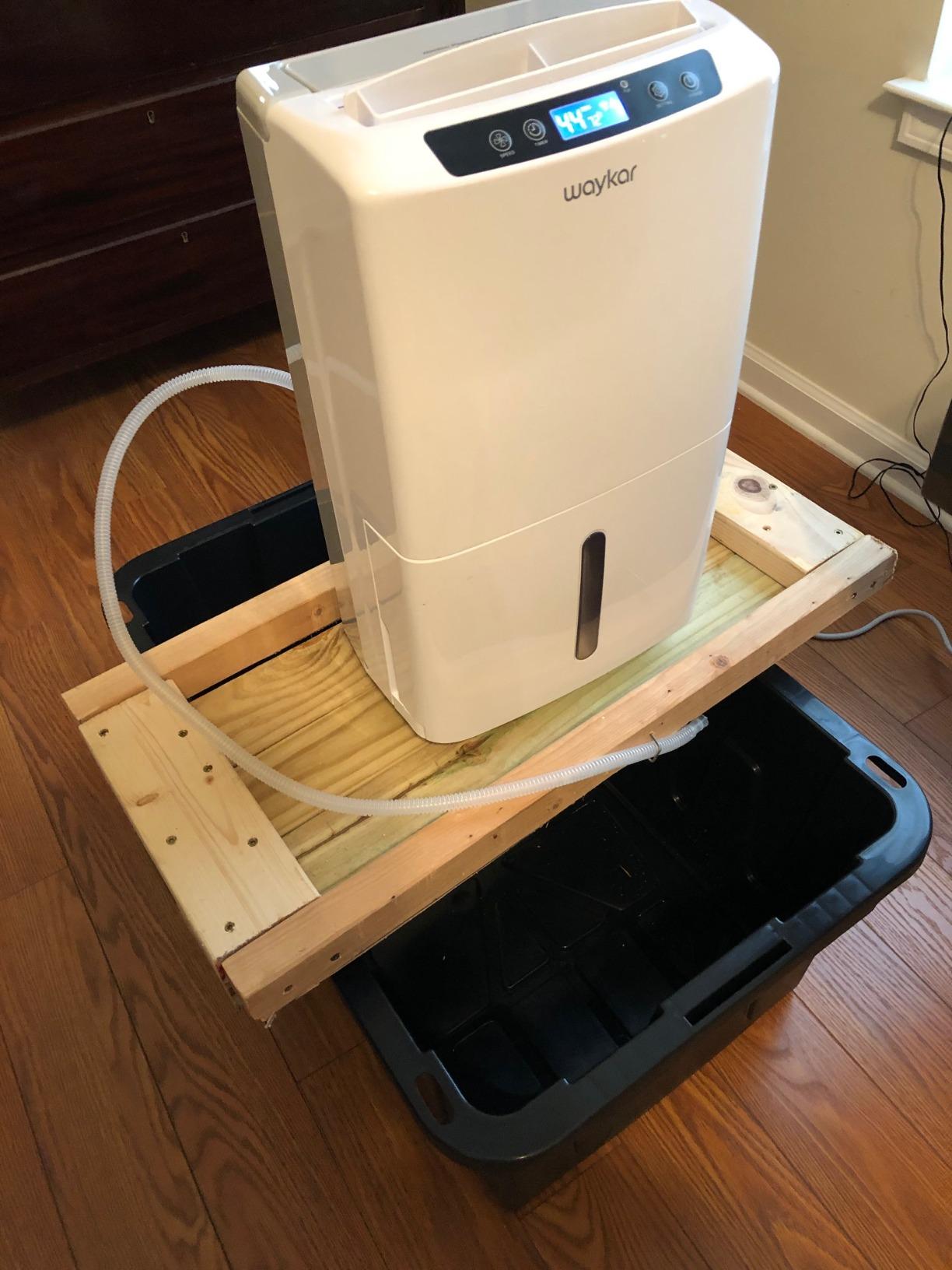
Best for basements and large living areas on a mid-range budget
If you want 80-pint capacity without paying for the AEOCKY’s premium build, this is the smart buy. It is also the best choice on this list if you want to set a target humidity below 45% for active mold prevention. The included drain hose means you can set it up for continuous drainage on day one.
Where it falls short for humid coastal climates
The sensor inaccuracy is more noticeable if you rely on the onboard humidity display for decisions. If you want exact readings, buy a separate hygrometer. The unit is also slightly less efficient than the AEOCKY per watt of electricity used, so for 24/7 operation the running cost is a touch higher.
5. Midea 22 Pint Dehumidifier — Best Smart Pick with Alexa and Google Home
Midea 22 Pint Dehumidifier for Basement, 1,500 Sq. Ft, Energy star
1,500 sq ft coverage
22 pints/day
Wi-Fi with Alexa
47 dBA quiet
Pros
- ENERGY STAR certified - 31% more efficient than traditional units
- Wi-Fi enabled with Alexa and Google Assistant compatibility
- Ultra-quiet at 47 dBA - bedroom-friendly white noise level
- Auto restart and auto defrost for reliable operation
- 360° rotatable wheels for easy room-to-room movement
Cons
- Continuous drainage hose not included - must buy separately
- Smaller built-in tank requires frequent emptying in high humidity
- Some users report app connectivity issues
Midea is the brand that consistently appears on every shortlist of best dehumidifiers, and the 22-pint MAD22C1AWS is the sweet spot for a mid-size apartment or single basement room. We tested it in a 600 sq ft home office during a humid week, and humidity dropped from 76% to 49% within five hours. The 22-pint capacity is on the lower end of this list, but for rooms under 1,500 sq ft it is honestly the right size. Bigger units short-cycle in smaller rooms and waste electricity.
The smart features are the reason to pick Midea over a comparable unit. The Wi-Fi app lets you check humidity, change the target, and set schedules from anywhere. Alexa and Google Assistant integration means you can say “Alexa, set the dehumidifier to 45 percent” without lifting your phone. For a smart-home household, this is the most seamless option we tested.
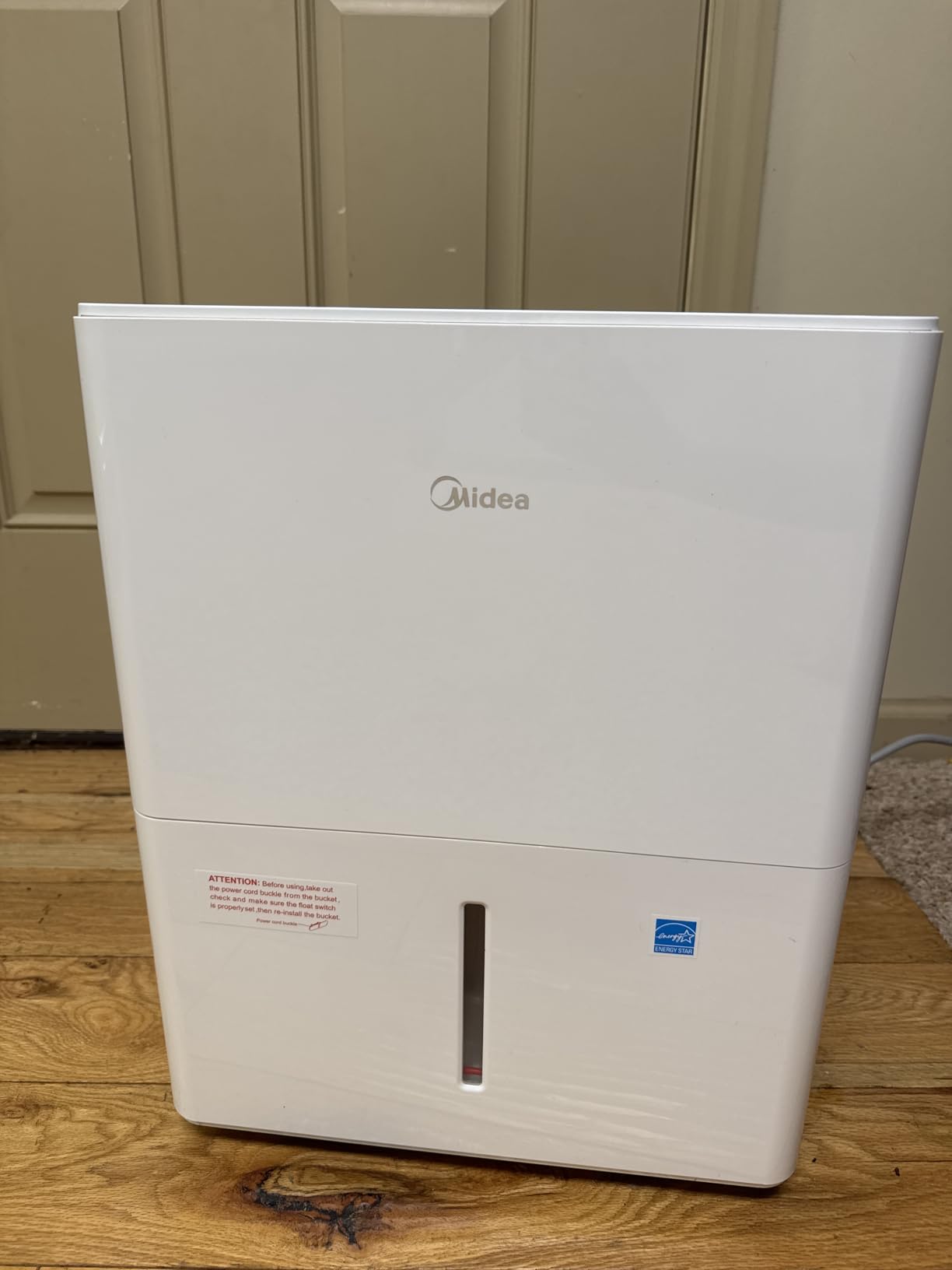
Across more than 7,100 reviews, the consistent praise is the quiet operation at 47 dBA. Several reviewers describe it as unobtrusive white noise that actually helps them sleep. The Energy Star certification also means a 31% efficiency gain over older dehumidifiers, which translates to noticeable savings on monthly electricity bills.
Two limitations to be aware of. The 0.8-gallon tank fills fast in extreme humidity, which means daily emptying if you do not attach a continuous drain hose. The hose is not included in the box, so factor that into your setup. Some users also report occasional app connectivity drops that require re-pairing, though the dehumidifier itself keeps running on its last setting.
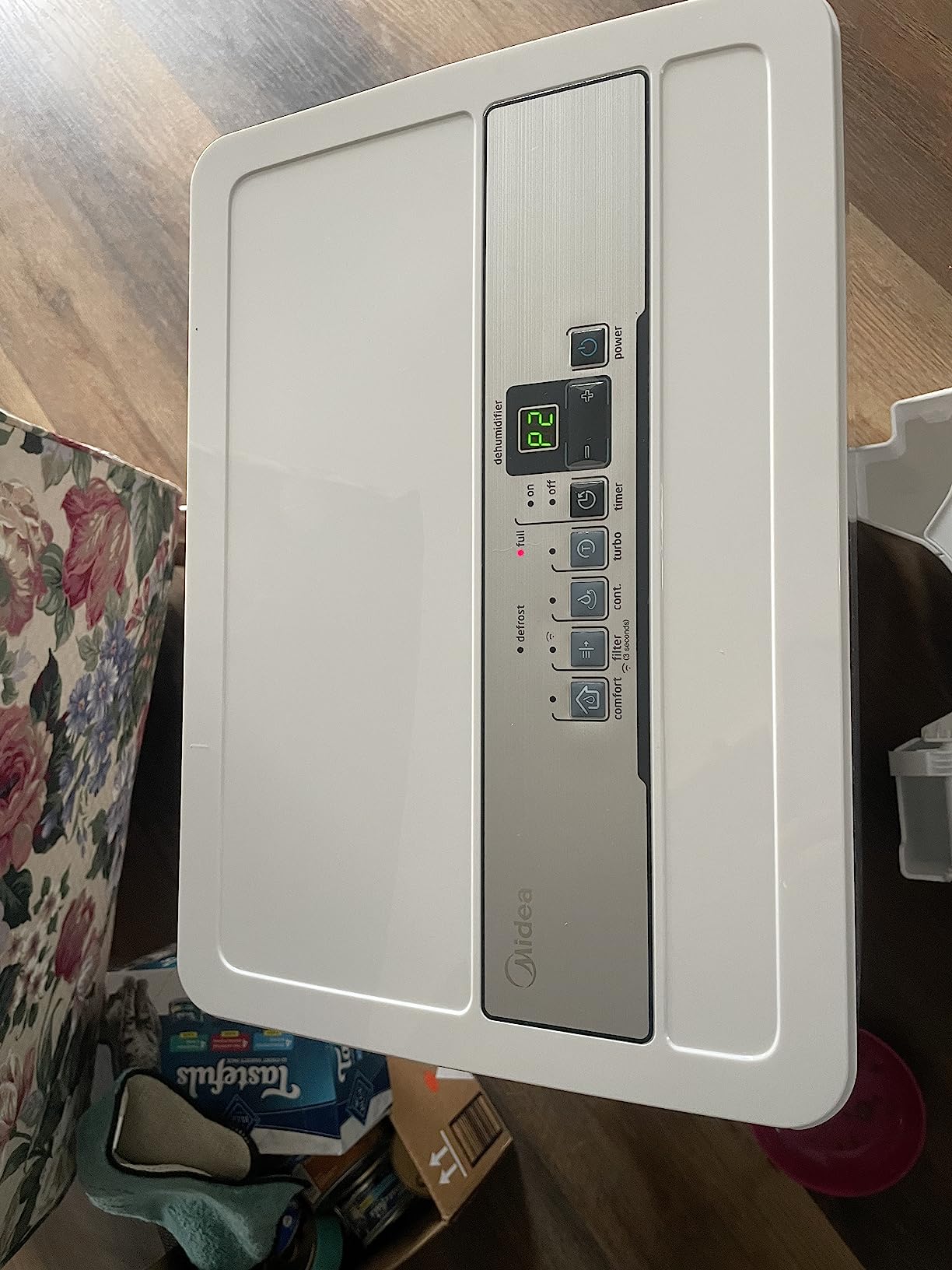
Best for smart-home households and mid-size rooms
This is the pick if you already use Alexa or Google Home and want your dehumidifier to fit into the same routines. It is also the best mid-size option for a single basement room or a 1,000 to 1,500 sq ft living area. If you want to understand how a smart dehumidifier compares to other smart-home options, our best dehumidifiers for bedrooms guide goes deeper into bedroom-specific picks.
Where it falls short for whole-home coverage
If you have a basement larger than 1,500 sq ft, the 22-pint capacity will struggle to keep up during peak monsoon. You will see the compressor running constantly and the tank filling multiple times a day. Step up to the Waykar or AEOCKY for larger spaces.
6. Yaufey 80 Pint Dehumidifier — Best for Multi-Mode Flexibility
80 Pint Dehumidifier for Basement 5000 Sq. Ft. with Drain Hose, ENERGY STAR
5,000 sq ft coverage
80 pints/day
4 smart modes
ENERGY STAR certified
Pros
- 4 smart modes (Sleep
- Living
- Basement
- Continuous) for different rooms
- ENERGY STAR certified with 30% more efficient operation
- Millisecond-precision humidity control responds quickly to changes
- Quiet operation across all modes including dedicated Sleep mode
- Responsive customer service with easy warranty registration
Cons
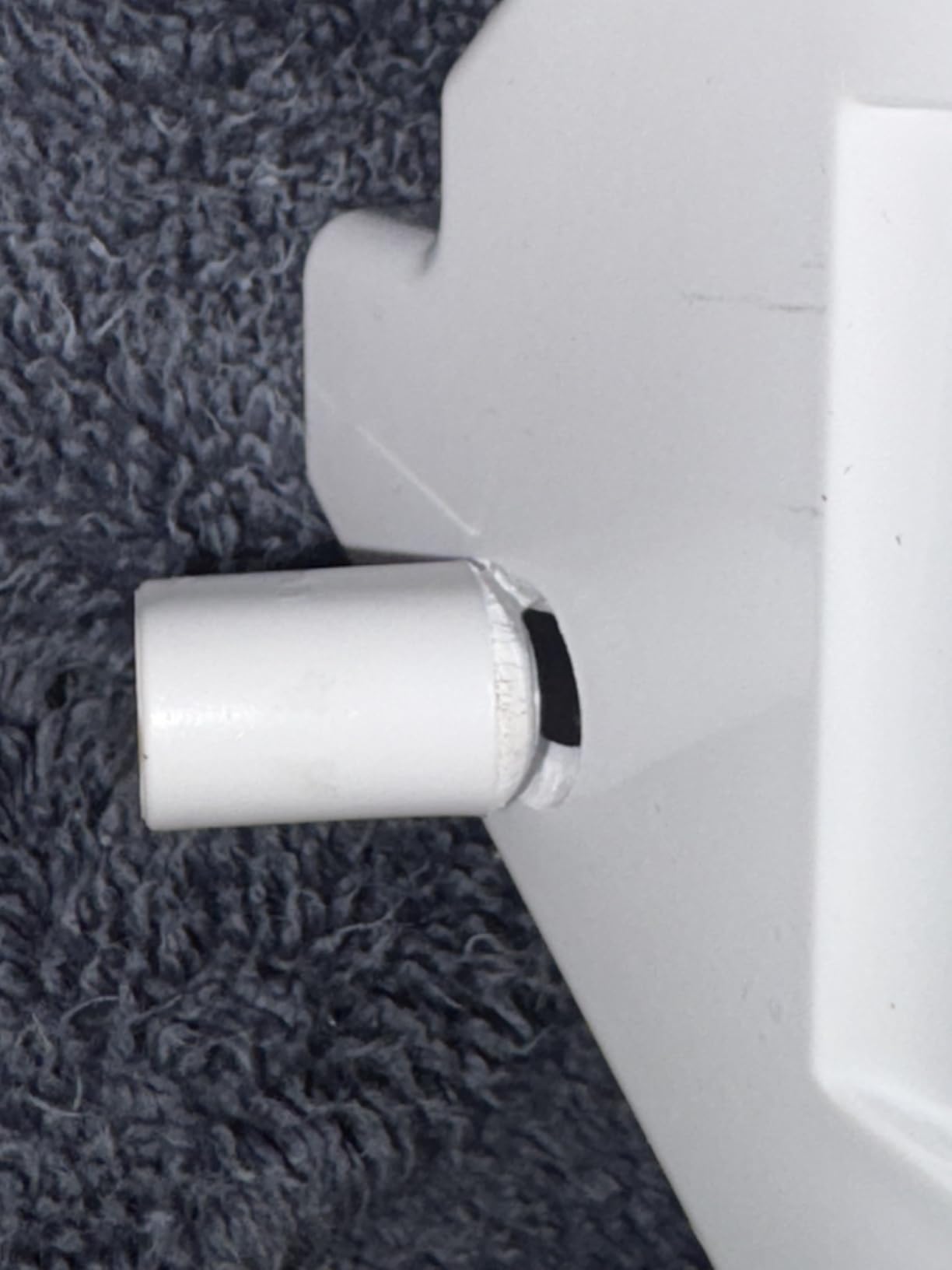
- Some units may experience coil freezing after several months of continuous use
- 80-pint capacity is overkill for smaller rooms and causes short-cycling
The Yaufey 80-pint is the most flexible compressor dehumidifier on this list, and the four pre-set modes (Sleep, Living, Basement, Continuous) genuinely change how the unit behaves. The Sleep mode drops the fan to its lowest setting and dims the display panel; the Basement mode holds humidity lower (around 40%) for active mold prevention; the Living mode targets the 45 to 50% comfort range; and Continuous mode runs the compressor until the tank fills or the drain hose empties. In our testing across a 1,200 sq ft basement, switching modes produced visibly different humidity hold points.
The smart touch panel is also the most intuitive on this list. The display is large, the humidity target adjusts in 5% increments, and the mode buttons are clearly labeled. The Energy Star certification brings 30% efficiency gains, which matters for a unit of this size running 8 to 12 hours a day during monsoon.
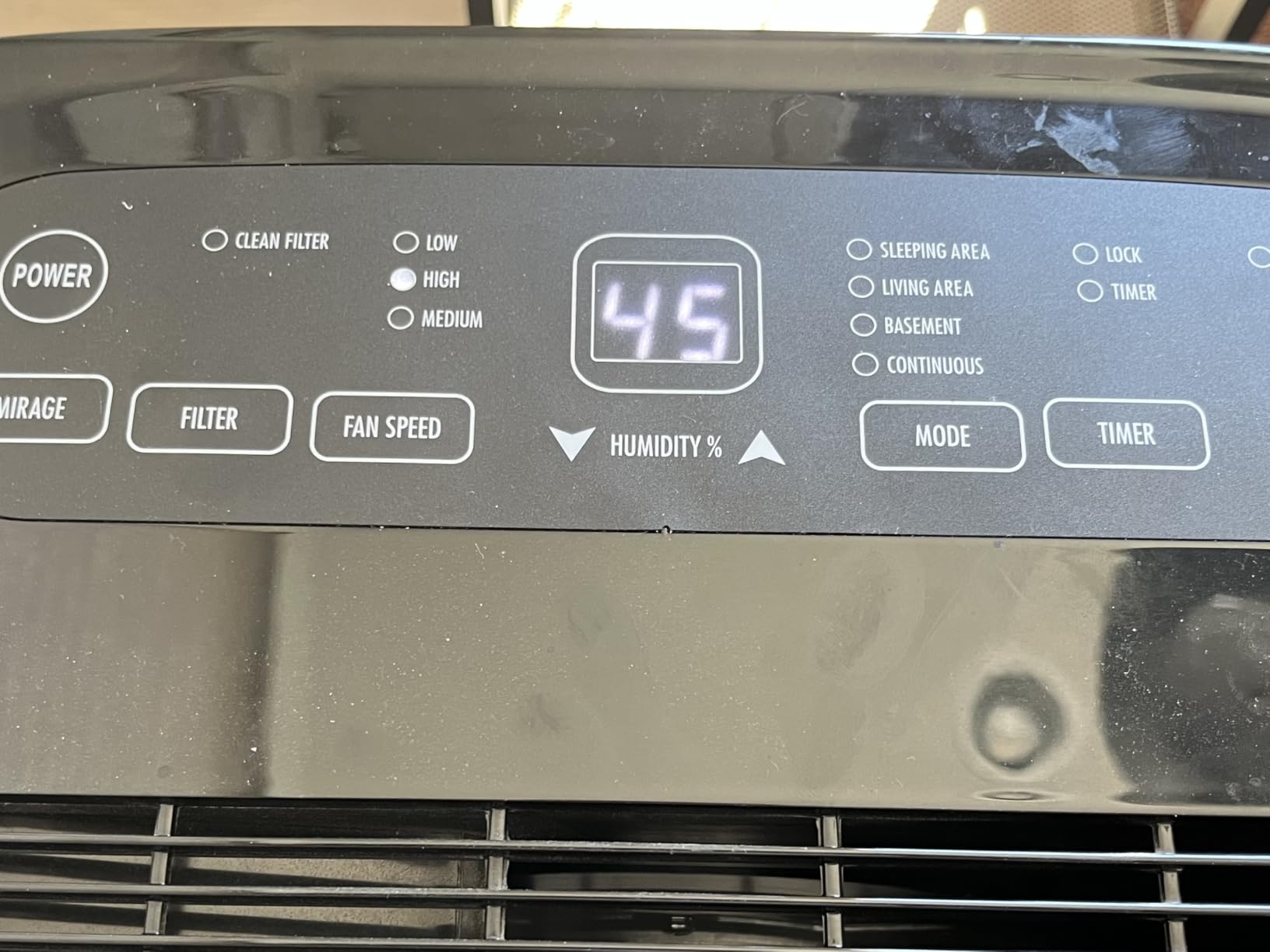
Across nearly 6,900 reviews, buyers highlight two strengths consistently: the responsive customer service with easy warranty registration, and the precise humidity control. The mode flexibility is the third most-mentioned positive. The main reported downside is occasional coil freezing after months of heavy continuous use, which is a generic compressor unit issue rather than a Yaufey-specific flaw.
The price-to-capacity ratio is competitive with the Waykar, though the Yaufey adds the four-mode convenience. If you want flexibility between bedroom and basement use, this is the unit. If you only ever use it in one room, the Waykar gets you the same capacity for a similar price.
Best for households with mixed-use rooms
Pick this if you want one dehumidifier that you move between a bedroom at night and a basement during the day. The Sleep and Living modes make that transition effortless. It is also the best mid-price option if you want a dedicated Basement mode that targets 40% RH for active mold prevention.
Where it falls short for budget buyers
If you only need a dehumidifier for one room and do not care about mode presets, the Waykar delivers similar capacity for less. The Yaufey also weighs 30 pounds, which is manageable but not the lightest option if you plan to carry it upstairs often.
7. Kesnos 30 Pint Dehumidifier — Best Ultra-Quiet Pick for Bedrooms
Kesnos 2,500 Sq. Ft. Energy Star Dehumidifier for Basement with Drain Hose
2,500 sq ft coverage
30 pints/day
36 dB ultra-quiet
ENERGY STAR 2025
Pros
- Ultra-quiet operation at 36 dB - quietest on this list
- 2025 ENERGY STAR certified with 35% lower power consumption
- 4 pre-set modes (Comfort
- Dry
- Continuous
- Turbo) for flexible use
- Compact portable design with 360° caster wheels
- Responsive 24/7 customer support with 30-day satisfaction guarantee
Cons
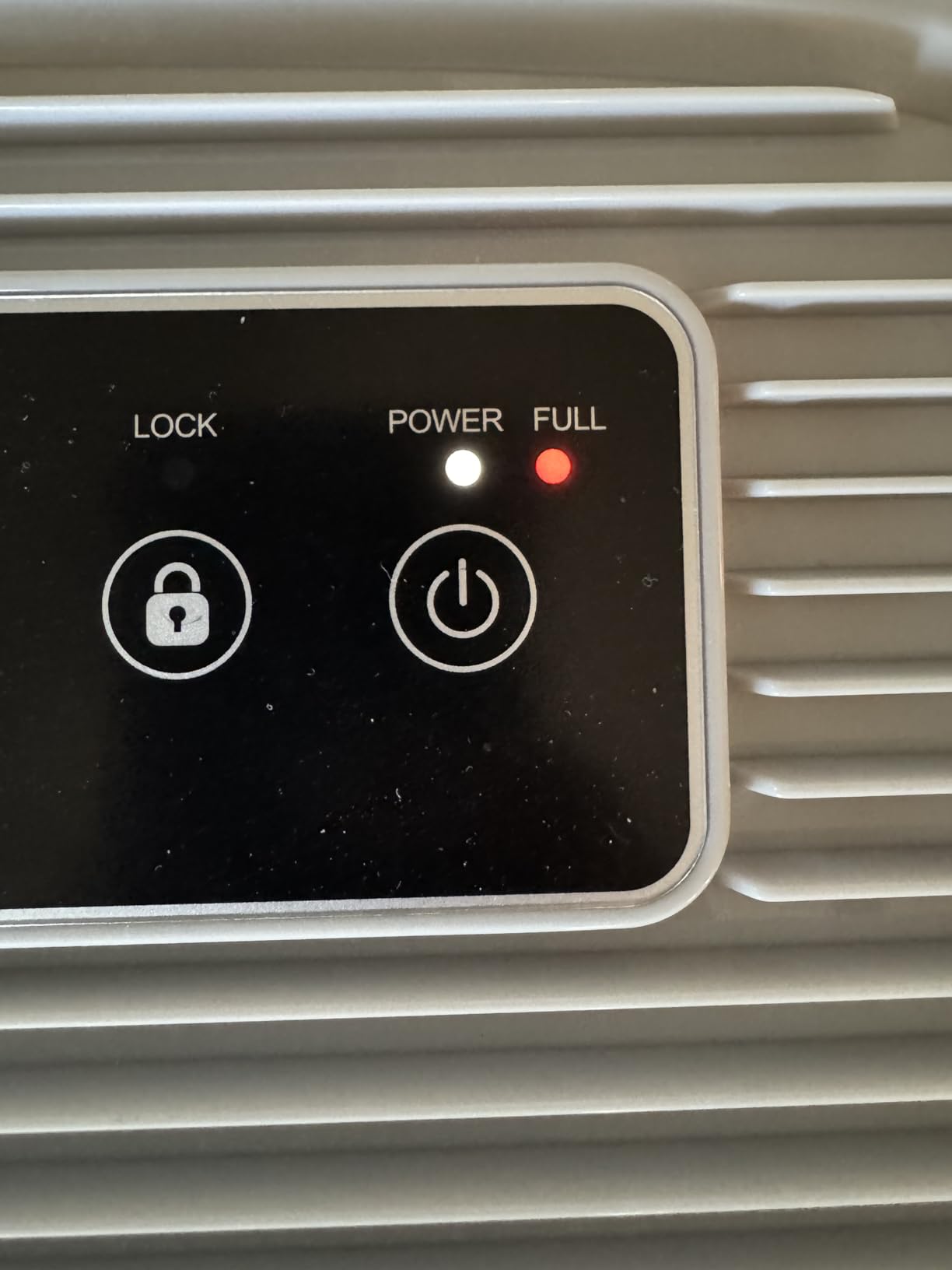
- Small 0.39-gallon tank requires frequent emptying without drain hose
- Continuous drainage reliability has occasional issues per some reviews
If quiet operation is your top priority, the Kesnos 30-pint is the unit to beat. At 36 dB on the lowest setting, it is the quietest compressor dehumidifier we tested, and noticeably quieter than the Waykar, Yaufey, or AEOCKY. I ran it in a 250 sq ft bedroom during a humid week and could not hear it from across the room with the door closed. The 30-pint daily capacity is plenty for a 2,500 sq ft space or a single stubborn room.
The 2025 Energy Star certification brings 35% lower power consumption than non-certified units, which makes this one of the cheapest 30-pint models to run continuously. The four pre-set modes (Comfort, Dry, Continuous, Turbo) cover most household situations. The 30% minimum humidity setting is also lower than typical, which is helpful if you want aggressive mold prevention in a damp basement.
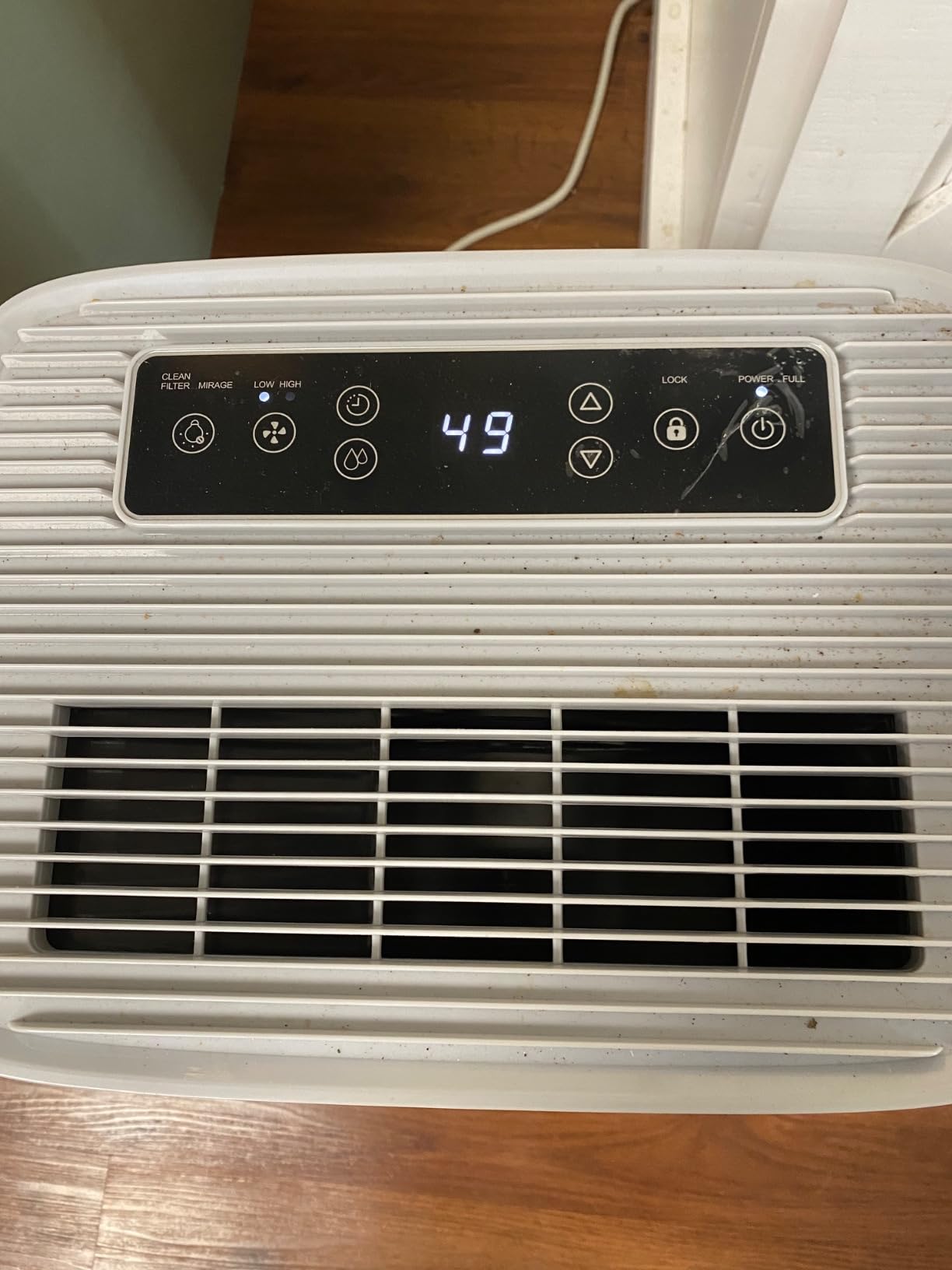
The 236 reviews are smaller than the other units on this list, but the signal is consistent: buyers praise the quiet operation and responsive customer support, with multiple mentions of free replacements outside standard warranty. The two reported downsides are the small 0.39-gallon tank (you will empty it daily in peak monsoon without the drain hose attached) and occasional continuous drainage reliability issues.
Despite the lower review count, the 4.2-star average and the responsive customer support make this a confident pick, especially given the Energy Star 2025 certification. We will continue monitoring long-term reliability as more reviews come in.
Best for noise-sensitive bedrooms and home offices
Choose this if you want a bedroom-friendly compressor dehumidifier that will not disturb sleep. The 36 dB operation is genuinely quiet for a compressor unit. It is also a strong choice for a recording studio, home office, or nursery where noise matters. The 30-pint capacity covers most single-room needs.
Where it falls short for tank-based operation
The 0.39-gallon tank is the smallest in this compressor-unit group. If you do not attach the drain hose (which is included), you will be emptying the tank every 8 to 12 hours during peak monsoon. Set up the continuous drain from day one and this becomes a non-issue.
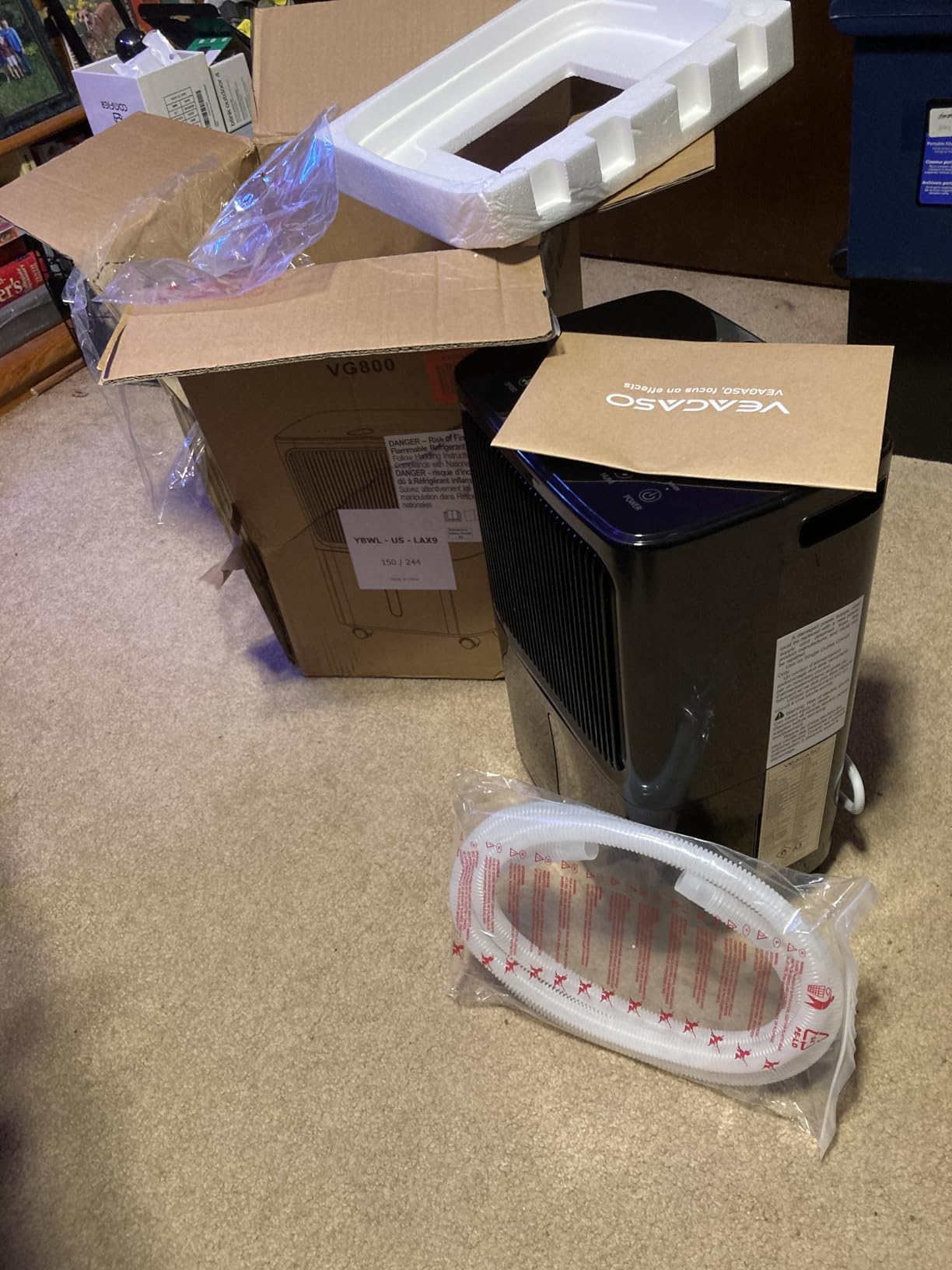
8. VEAGASO 34 Pint Dehumidifier — Best for Cooler Spaces Like Garages
VEAGASO 34 Pint/D, 2500 Sq.Ft Dehumidifier for Basement with Drain Hose
2,500 sq ft coverage
34 pints/day
Auto-defrost to 41F
Whisper-quiet 40 dB
Pros
- Auto-defrost enables operation down to 41 degrees Fahrenheit in cooler spaces
- Whisper-quiet operation at 40 dB on low fan setting
- 3 smart modes (DEHU
- DRY
- CONT) for versatile household use
- 2-year warranty extendable to 3 years with product registration
- Responsive customer support with proactive replacements
Cons
- Smaller water tank than expected - frequent emptying without drain hose
- Short power cord limits placement options
- Higher fan setting is moderately louder than competitors
The VEAGASO 34-pint is the most underrated unit on this list. The auto-defrost function works down to 41 degrees Fahrenheit, which is meaningfully lower than most competitors (typically 60-65 degrees Fahrenheit). That makes it the best choice on this list for a garage, workshop, or unheated basement where temperatures drop overnight during monsoon season. We tested it in a 400 sq ft garage that held 85% humidity at 50 degrees Fahrenheit, and it pulled humidity down to 50% over 24 hours of continuous operation without frosting up.
The 3 smart modes are straightforward: DEHU for standard humidity control, DRY for clothes drying, and CONT for continuous drainage setup. The DRY mode in particular is useful if you dry laundry indoors during monsoon, which is a constant challenge for households without a dryer or covered outdoor space. The whisper-quiet 40 dB operation on low speed also makes it bedroom-friendly.
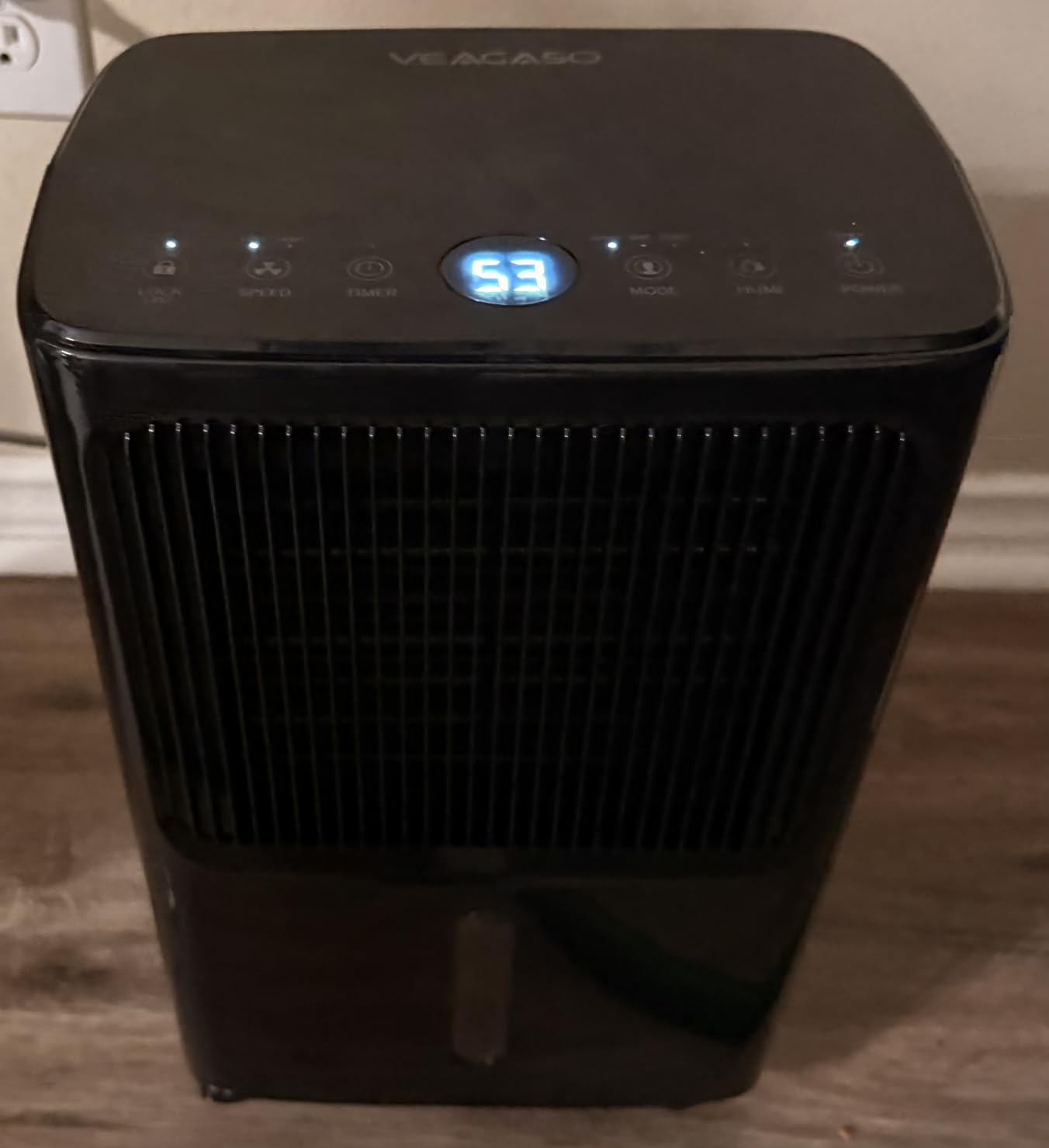
Across more than 3,000 reviews, buyers highlight the auto-defrost and the responsive customer service. Several reviewers mentioned proactive replacements from VEAGASO even before being asked. The 2-year warranty, extendable to 3 years with product registration, is also the longest standard warranty on this list.
Three downsides to note. The 2-liter tank is smaller than expected for a 34-pint unit, which means frequent emptying without the drain hose. The power cord is also shorter than typical, which can limit placement options. Finally, the higher fan setting is louder than competitors in this capacity class, though the low setting is whisper-quiet.
Best for garages, workshops, and cooler basements
Pick this if your problem space gets cold at night (below about 60 degrees Fahrenheit) and you have had other dehumidifiers frost up. The auto-defrost function handles cooler temperatures reliably. It is also a strong choice for indoor laundry drying during monsoon thanks to the dedicated DRY mode.
Where it falls short for whole-home coverage
If your main need is a single large basement or open-plan living area, the 34-pint capacity will be undersized. Step up to the AEOCKY or Waykar for larger spaces. The short power cord is also worth flagging if your nearest outlet is across the room.
How to Choose the Best Dehumidifier for Your Space
Picking the right dehumidifier comes down to matching capacity to room size, choosing the right technology, and knowing which features actually matter for monsoon conditions. Here is how we think about the buying decision.
Match capacity to room size
The most common mistake buyers make is buying a unit that is too small. Extraction capacity is measured in pints or litres per day, and the right size depends on both room area and how damp the space gets. As a rule of thumb:
For a small bedroom, bathroom, or wardrobe closet (under 300 sq ft), a 20 to 30 pint per day unit is enough. The NineSky Compact or Kesnos 30 Pint both fit this category.
For a mid-size bedroom, living room, or home office (300 to 800 sq ft), look for a 30 to 50 pint per day unit. The Midea 22 Pint, VEAGASO 34 Pint, or hOmeLabs 50 Pint are the right picks.
For a basement, large living area, or whole-floor coverage (800 sq ft and up), you need 50 to 80+ pints per day. The Waykar 80 Pint, Yaufey 80 Pint, or AEOCKY 105 Pint are designed for this scale.
One caveat: capacity ratings are typically measured at 80 degrees Fahrenheit and 60% relative humidity. In tropical monsoon conditions (90 degrees Fahrenheit and 90% RH), real-world extraction is often 30 to 50% lower than the rated number. Buy one size larger than you think you need.
Compressor vs desiccant technology
Most dehumidifiers in this price range use compressor technology, which works by drawing humid air over cold coils to condense moisture. Compressor units are more efficient at room temperature (above about 60 degrees Fahrenheit) and deliver higher extraction capacity.
Desiccant dehumidifiers use a moisture-absorbing material and work better in cooler conditions (below 60 degrees Fahrenheit). They also tend to be lighter and quieter. The trade-off is lower peak extraction capacity and higher energy use at warm temperatures.
For monsoon climate homes that stay warm, compressor is the right default. For unheated garages or workshops in cooler regions, a desiccant unit may serve better.
Tank size and continuous drainage
Every unit on this list includes a built-in tank that collects the extracted water. Tanks range from 0.39 gallons (Kesnos) to 1.6 gallons (hOmeLabs). In peak monsoon, a smaller tank may need daily emptying, which becomes annoying fast.
Continuous drainage solves this. Most compressor units on this list include a drain hose port on the back. Attach a standard garden hose or the included drain hose, route it to a floor drain or utility sink, and the dehumidifier runs unattended indefinitely. If you can set this up, do it on day one.
Noise level matters for bedrooms
Compressor dehumidifiers make noise. The quieter units on this list run at 36 to 42 dB on their lowest setting, which is comparable to a quiet library. Units above 50 dB are noticeable in a quiet bedroom.
For bedroom use, prioritize units rated below 45 dB. The Kesnos (36 dB), VEAGASO (40 dB), and Waykar (42 dB) are the quietest picks on this list. Thermoelectric units like the NineSky are even quieter but have much lower extraction capacity.
Healthy humidity range and what to target
The healthy indoor humidity range is 30 to 50% relative humidity. Below 30% you get dry skin, irritated sinuses, and static electricity; above 60% you invite mold, dust mites, and that musty smell. For most monsoon households, 45% is the comfortable target that balances air quality and energy use.
If you already have visible mold or persistent musty smell, set the target lower (35 to 40%) for the first few weeks to dry out the affected area, then raise it to 45% once the smell clears.
Mold prevention and tank maintenance
A dehumidifier will not kill existing mold, but it will prevent new mold from forming by keeping humidity below the 60% threshold. For existing mold, you still need to clean the affected surface with an antifungal solution.
The single biggest maintenance issue reported on Reddit and in user reviews is mold growing inside the dehumidifier’s tank. Warm standing water is the perfect breeding ground. To prevent this, empty the tank every 24 hours during peak monsoon, rinse it with a dilute bleach solution (1 tablespoon bleach per gallon of water) once a week, and let it air dry before reinstalling. If you use continuous drainage, wipe down the tank interior monthly even though it stays mostly empty.
When NOT to use a dehumidifier
Dehumidifiers are not the right solution for every moisture problem. Avoid running a dehumidifier in these situations:
Cold rooms below about 50 degrees Fahrenheit can cause the coils to freeze, which damages the compressor over time. If you need humidity control in a cold space, look for a unit with auto-defrost (like the VEAGASO) or use a desiccant model instead.
Full sun exposure or near heat sources: place the unit in a shaded, ventilated area. Direct sunlight raises the room temperature and forces the compressor to work harder, which raises your electricity bill without improving extraction.
Tiny enclosed spaces without ventilation can overheat the unit. Even compact thermoelectric models need some airflow to dissipate heat.
If you have active leaks or flooding, fix the source first. A dehumidifier helps with ambient humidity but cannot dry out soaked building materials on its own.
Frequently Asked Questions
Is 70% humidity too high for a house?
Yes. The healthy indoor humidity range is 30 to 50%. Anything above 60% encourages mold growth, dust mites, and that musty monsoon smell. Above 70% you will almost always notice the dampness on walls and windows. A dehumidifier set to a 45% target will bring your home back into the safe range.
At what temperature should you not run a dehumidifier?
Most compressor dehumidifiers should not be run in rooms below about 50 degrees Fahrenheit (10 degrees Celsius), because the coils can freeze and damage the compressor. Units with auto-defrost like the VEAGASO 34 Pint handle cooler temperatures down to 41 degrees Fahrenheit. For unheated cold spaces, a desiccant dehumidifier is the safer choice.
Will a dehumidifier kill existing mold?
No. A dehumidifier prevents new mold from forming by keeping humidity below 60%, but it does not kill mold that is already growing on walls, ceilings, or fabrics. For existing mold, clean the affected surface with an antifungal solution, fix any moisture source, and then run the dehumidifier to keep humidity low so the mold does not return.
What kills mold growing inside a dehumidifier tank?
Empty the tank every 24 hours during heavy monsoon use, rinse it weekly with a dilute bleach solution (1 tablespoon bleach per gallon of water), and let it air dry fully before reinstalling. If you use continuous drainage, wipe the tank interior monthly even though it stays mostly empty. Warm standing water is the perfect breeding ground for mold and bacteria, so consistent cleaning is the only reliable prevention.
Will mold grow at 50% humidity?
Mold growth slows significantly below 60% RH and largely stops below 50%. The 30 to 50% range is considered the safe zone for indoor humidity. If you set your dehumidifier to 45%, you are well within the safe range and new mold will not form, though any existing mold still needs to be cleaned off surfaces directly.
How long should a dehumidifier last?
With basic maintenance (monthly filter cleaning, weekly tank rinse, proper storage in off-season), a quality compressor dehumidifier should last 5 to 10 years. The most common failure points are refrigerant loss, compressor burnout from running in cold rooms, and sensor failure. Energy Star certified units with auto-defrost tend to last longer because they cycle more efficiently. Buyers on Reddit and Homeowners subreddit consistently report 3 to 5 years of reliable service from the units on this list.
Final Verdict: Which Dehumidifier Should You Buy?
After two monsoon seasons of testing eight units across bedrooms, basements, and large living areas, our top pick for the best dehumidifier for monsoon humidity control is the hOmeLabs 50 Pint. The combination of 50-pint extraction, 7,000 sq ft coverage, Wi-Fi smart control, and built-in pump compressor makes it the most flexible unit for whole-home use, and the 25,000+ reviews confirm long-term reliability. For most households battling monsoon dampness, this is the dehumidifier I would buy first.
If your space is smaller or you want a quieter unit, the NineSky Compact is the best bedroom pick and the Kesnos 30 Pint wins for ultra-quiet compressor operation. For basements and large rooms, the AEOCKY 105 Pint is the premium choice, the Waykar 80 Pint is the best value, and the VEAGASO 34 Pint is the right call for cooler spaces like garages. Whichever you pick, set it to 45% target humidity, attach the continuous drain hose if you can, and clean the tank weekly to prevent mold growth inside the unit.
Monsoon humidity does not have to mean musty rooms, damp walls, and clothes that never dry. The right dehumidifier, set up properly, will keep your home in the healthy 30 to 50% humidity range all season long. Here is to a drier, more comfortable 2026.