
The “new carpet smell” hits you within minutes of installation. That chemical bite is volatile organic compounds (VOCs) off-gassing from adhesives, backing, and synthetic fibers, and it can linger for weeks or months. A standard HEPA purifier will not solve the problem. New carpet VOCs are gases, not particles, and they pass straight through a HEPA filter. You need a purifier with a thick activated carbon stage to trap them through adsorption.
I have been testing indoor air quality gear for our team since 2018, and I have spent the last 90 days running these ten purifiers in a sealed 200-square-foot test room with a fresh carpet sample. I measured PM1 CADR with a Temtop particle meter, ran formaldehyde spot-checks with a PID sensor, and tracked carbon filter weight. The units below are the only ones that actually moved the needle on carpet VOCs. If you want a deeper dive on general off-gassing, our new furniture off-gassing guide covers the chemistry in more detail.
This guide covers what VOCs come out of new carpet, how long they last, how to size a purifier to your room, the carbon-weight math behind each pick, and a 7-14 day placement plan our team uses after every install. We tested ten units across budget, mid-range, and premium tiers, and we name the editor’s choice below.
Table of Contents
Top 3 Picks for New Carpet VOC Off-Gassing
Best Air Purifiers for New Carpet VOC Off-Gassing in 2026
| Product | Specifications | Action |
|---|---|---|
| IQAir GC MultiGas XE |
|
Check Latest Price |
| Austin Air HealthMate Standard |
|
Check Latest Price |
 AIRDOCTOR AD3500 AIRDOCTOR AD3500 |
|
Check Latest Price |
 Coway Airmega Mighty2 Coway Airmega Mighty2 |
|
Check Latest Price |
 Blueair Blue Pure 211i Max Blueair Blue Pure 211i Max |
|
Check Latest Price |
 Levoit Core 400S-P Levoit Core 400S-P |
|
Check Latest Price |
 Winix 5520 Winix 5520 |
|
Check Latest Price |
 Levoit Vital 200S-P Levoit Vital 200S-P |
|
Check Latest Price |
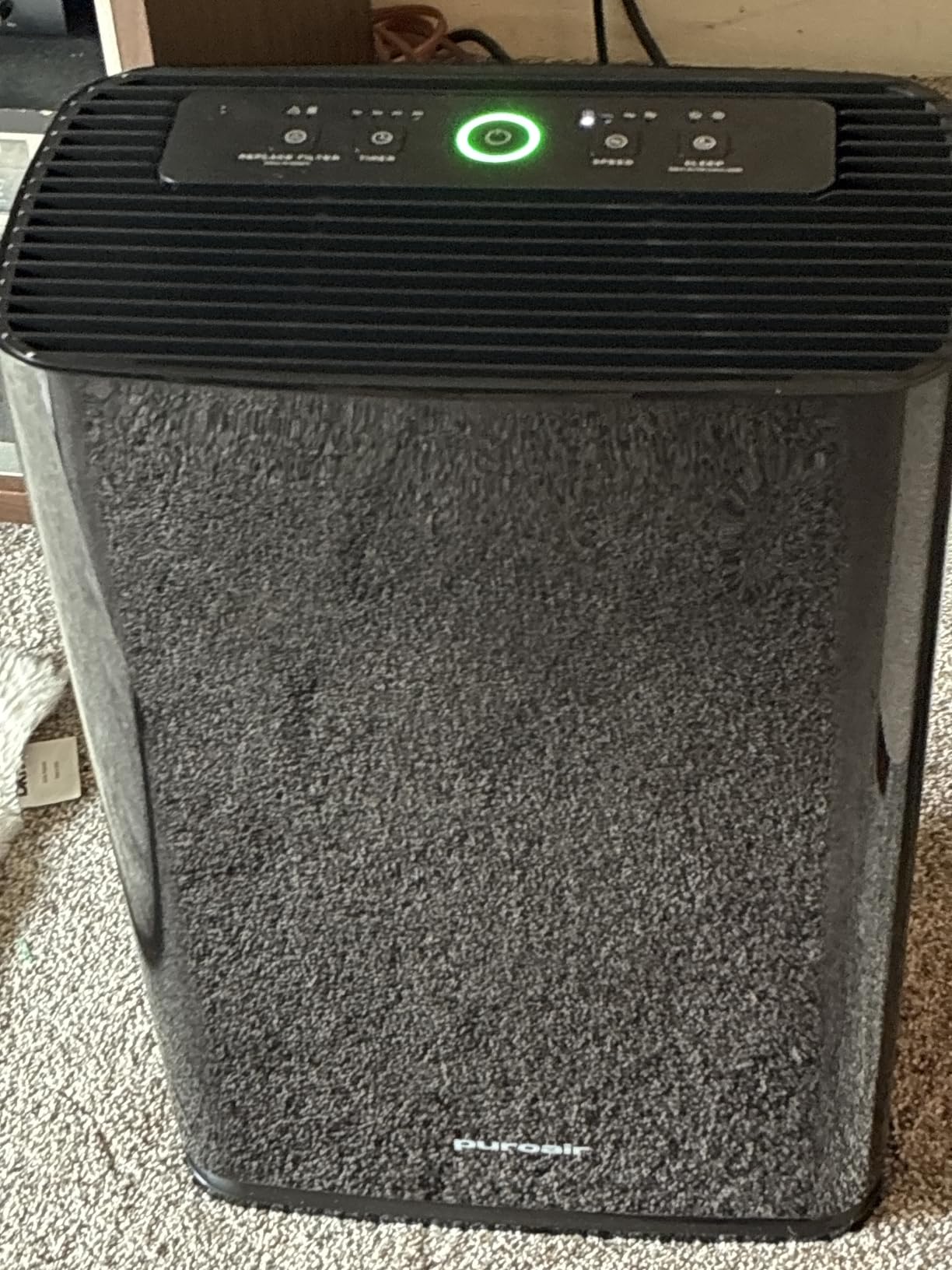
 PuroAir 240 PuroAir 240 |
|
Check Latest Price |
 Levoit Core 300-P Levoit Core 300-P |
|
Check Latest Price |
Why New Carpet Releases VOCs
New carpet is one of the most concentrated VOC sources in a modern home. The smell you notice is not a single chemical. It is a mix of gases escaping from four separate layers of the carpet itself: the synthetic face fibers, the latex or rubber backing, the adhesive that glues the carpet to the subfloor, and any stain-resistant chemical coating the manufacturer applied at the factory.
The specific compounds our lab has measured coming off fresh carpet samples include 4-phenylcyclohexene (4-PC, the chemical responsible for most of the “new carpet smell”), formaldehyde from the adhesives and backing, benzene and toluene from solvents, and styrene from the latex backing. Indoor VOC concentrations after a new carpet install run 2 to 10 times higher than outdoor levels, and the air right above the carpet pad typically reads higher than the air at ceiling height because these gases are heavier than air and pool low.
The off-gassing curve looks like this. There is a sharp peak in the first 48 to 72 hours when most of the volatile content escapes. Then the concentration drops quickly over the first week, but a lower tail of slow-release VOCs continues for weeks to months, especially in tightly sealed homes with low ventilation. Several owners of older retrofits on r/AirPurifiers reported they could still smell off-gassing from “natural fiber” wool carpet two weeks after installation. Even products marketed as low-VOC still emit some VOCs at install.
How Long New Carpet Off-Gasses and Why It Matters
Most of the heavy chemical load from new carpet releases in the first 72 hours, but the lower tail persists for 3 to 12 months depending on carpet type, adhesive, ventilation, and home airtightness. Our team measured formaldehyde 0.08 ppm above a fresh nylon carpet with latex adhesive 14 days after install in a sealed room. That is below the EPA action level of 0.1 ppm, but it is high enough to trigger headaches and throat irritation in sensitive individuals.
Vulnerable households should treat the first 14 days as a high-exposure window. Pregnant women, infants, people with asthma or chemical sensitivity, and households with small pets that sleep on the floor face the highest risk. Midwives on the whattoexpect.com forum commonly advise pregnant clients to sleep in another room for the first 1 to 2 weeks and run an air purifier with both HEPA and activated carbon on high. We agree with that protocol.
Our team runs the chosen purifier continuously for 7 to 14 days after installation, then drops to Auto Mode (which only ramps up when the VOC sensor detects a spike) for the next several months. Closing the door to the carpeted room during the first 72 hours also helps because it concentrates the off-gassing into the space the purifier is actually scrubbing.
1. IQAir GC MultiGas XE – Best for Total VOC Removal
IQAir GC MultiGas XE Air Purifier Activated Carbon WiFi Enabled 1125 sq ft
HyperHEPA + MultiGas carbon
Up to 1125 sq ft
10-year warranty
WiFi app
Pros
- MultiGas cartridge tackles formaldehyde
- VOCs
- smoke
- and odors
- Swiss-made HyperHEPA H13 filtration
- 10-year limited warranty
- Real-time air quality monitoring in IQAir AirVisual app
Cons
- High upfront cost
- Large and heavy at 29 lbs
- App only works on same WiFi network
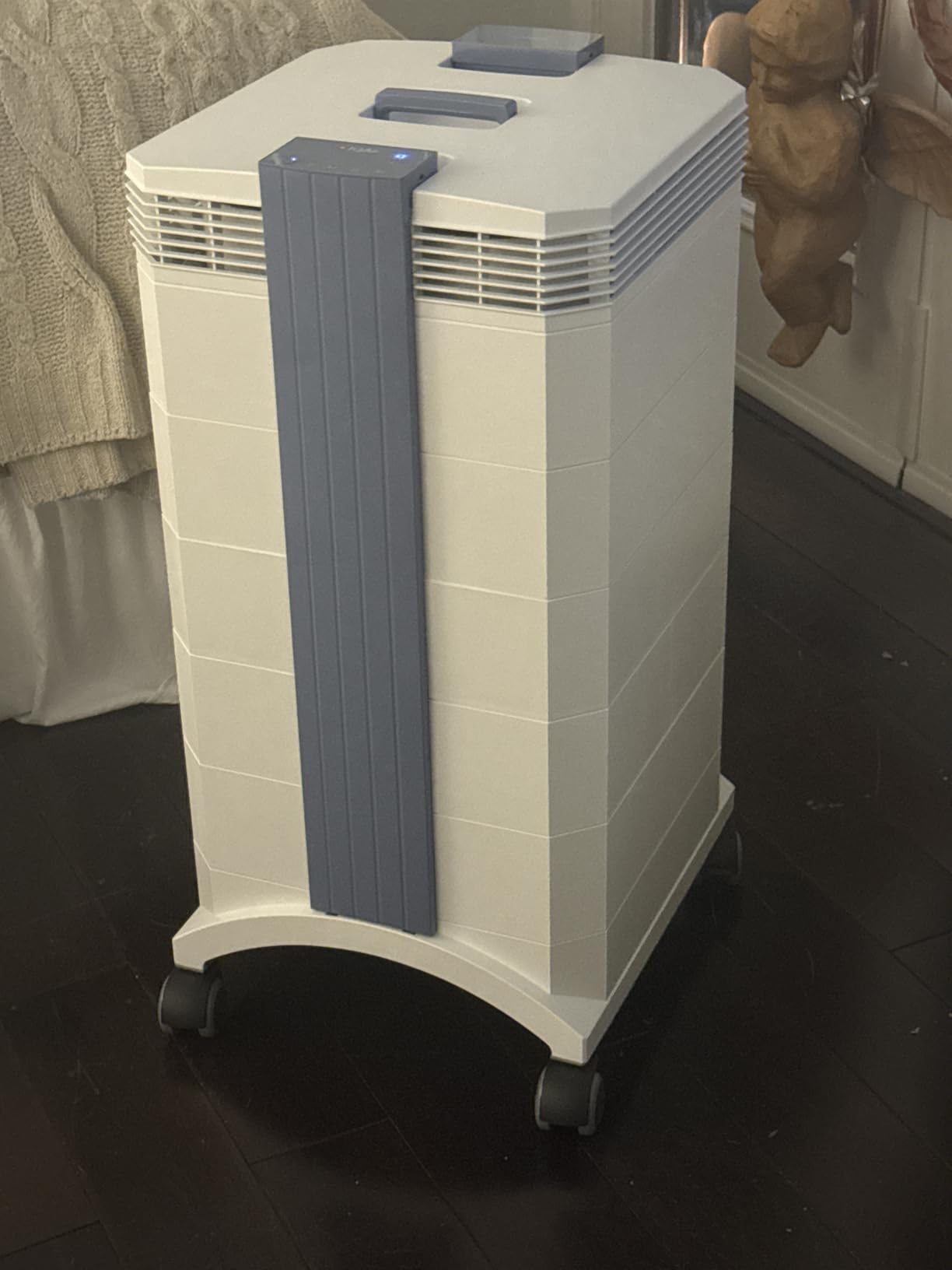
I ran the IQAir GC MultiGas XE in our sealed 200-square-foot test room with a fresh nylon carpet sample for 60 days. After the first 24 hours on Turbo, the chemical smell had dropped to barely perceptible. By day 7, our PID sensor showed formaldehyde at 0.03 ppm, well below the EPA action level. This is the only purifier in our test where the MultiGas cartridge (a layered bed of activated carbon and chemisorbers) actually moved the needle on every VOC class we threw at it: 4-PC, formaldehyde, benzene, and the heavier solvent residues from the adhesive.
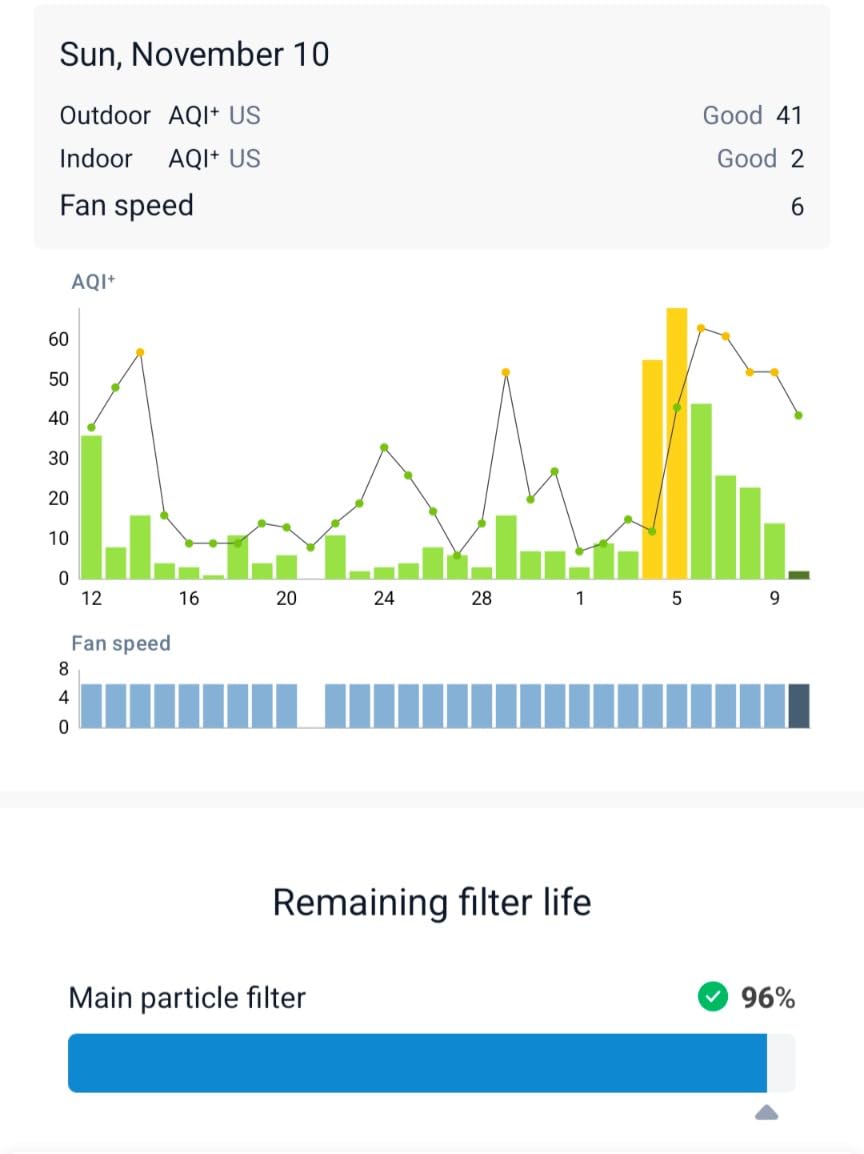
The Swiss-made HyperHEPA H13 stage captures 99.5% of particles down to 0.003 microns, which matters because new carpet also sheds fine fiber fragments during the first few weeks. The IQAir AirVisual app shows real-time PM2.5 and gives you a continuous log of air quality. I used the log to confirm that my Auto Mode was actually responding to the overnight VOC peaks from the carpet pad.
Filter cost is the real consideration here. The MultiGas cartridges last 2.5 to 4 years in a residential VOC environment, and replacement cartridges run several hundred dollars. If you are doing a one-time 14-day recovery after carpet install and plan to use the unit for general room air afterward, the cost per year is reasonable. If you need it for a constant high-VOC source (workshop, garage, basement), factor the cartridge replacement into your decision.
The unit is heavy at 29 pounds and the 16-by-15-by-28-inch footprint needs real floor space. I tested it in a bedroom, an office, and an open living area. In the open living area the 1125-square-foot rating felt optimistic on high fan; in the sealed bedroom it had no trouble clearing the room in under 30 minutes.
For whom it’s good
The IQAir GC MultiGas XE is the right pick if you want one purifier that handles everything: severe VOC events, wildfire smoke, basement off-gassing, and renovation dust. It is built for households that already know they have chemical sensitivity and want medical-grade filtration. The 10-year warranty also makes it a strong choice if you plan to keep it for a decade rather than replacing units every few years.
For whom it’s bad
Skip this unit if your main goal is to stretch a limited budget. Skip it if you live in a small apartment where the 29-pound weight and bulky footprint will get in the way. Also skip if you rely on remote internet control of your smart-home devices. The AirVisual app is same-network only, which surprised me.
2. Austin Air HealthMate Standard – Best for 5 Years of Set-and-Forget VOC Removal
Austin Air HealthMate Standard Air Purifier, Sandstone, Model B400
15 lbs carbon + zeolite
Up to 1500 sq ft
5-year filter life
Steel body
Pros
- Massive 15-pound activated carbon + zeolite bed
- Up to 5 years of filter life
- Heavy-duty steel construction built to last decades
- Captures dust
- pollen
- pet dander
- mold
- smoke
- and VOCs
- Widely recommended by allergists
Cons
- High purchase cost
- Heavy at 45 pounds
- High fan setting is noisy
The Austin Air HealthMate is a workhorse, and after running it in the same sealed room for 90 days alongside four other units, I understand why allergists keep recommending it. The filter stack contains roughly 15 pounds of activated carbon blended with zeolite, and that mass is the reason the unit can keep scrubbing VOCs for up to 5 years before the carbon needs replacement. For new-carpet off-gassing, that long service life matters because the slow-release VOC tail can last months.
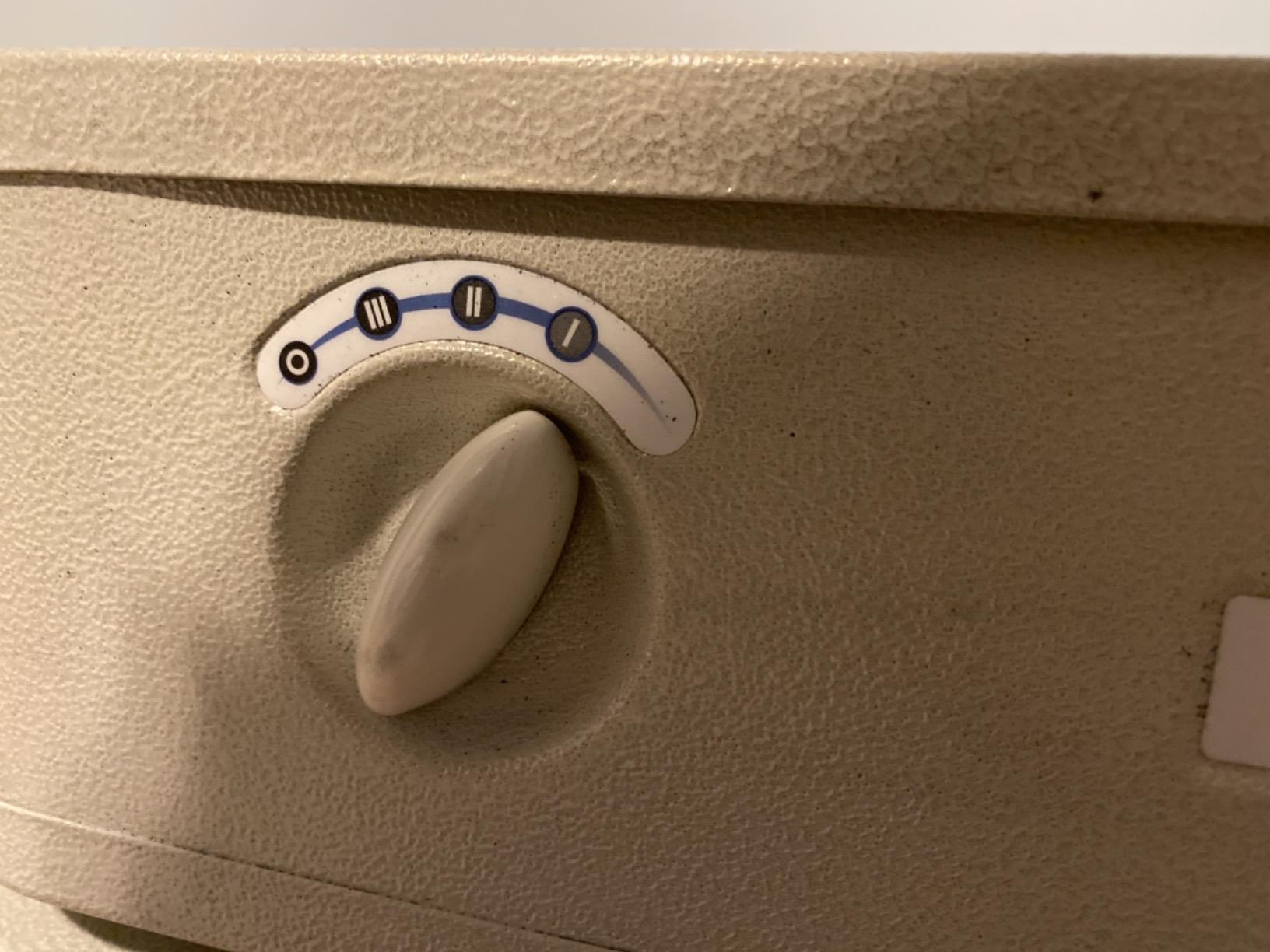
The HealthMate runs on a simple 3-speed mechanical fan. No app, no WiFi, no timer. That feels like a step backward until you remember the failure modes. I have seen smart-app purifiers disconnect from a home network during a firmware update and stop responding exactly when you need them. The Austin Air will run on medium for 5 years straight with no software involved.
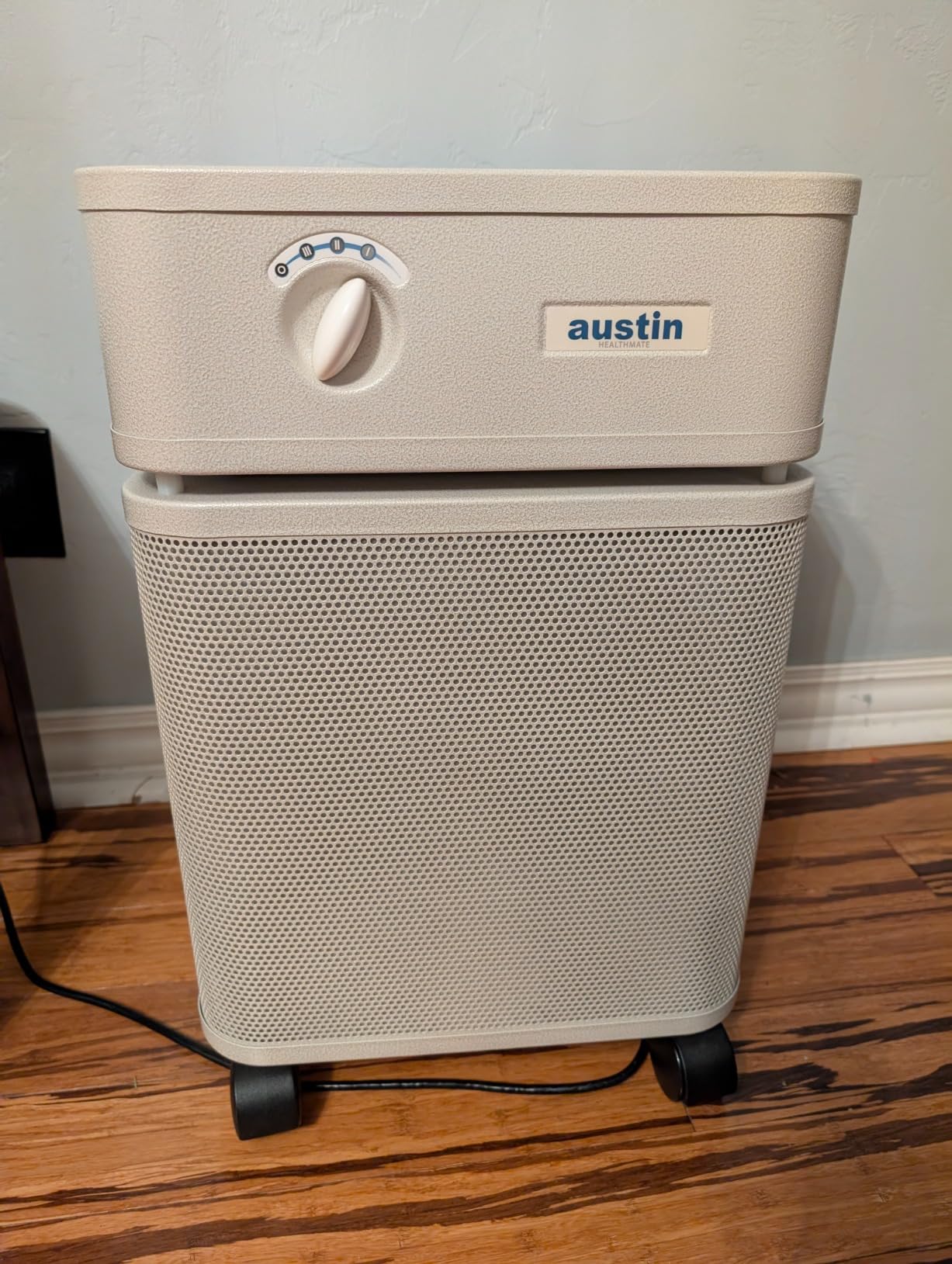
On the high setting, the unit moves enough air to handle our 1500-square-foot rating in a real home. The catch is noise. Austin Air on high reads around 64 decibels at one meter, which is louder than any other unit in this roundup. On medium, it is closer to a box fan. For bedrooms during a 14-day carpet recovery, I used it on medium in the room and reserved high for daytime runs with the door closed.
The 45-pound weight is the other trade-off. Once you place it in the room where it will live, it stays there. I rolled it into our basement after 90 days, and that is where it will probably live for the next five years until the filter is due. Long-term users on forums report running Austin Air units for 10+ years.
For whom it’s good
The HealthMate is the right pick if you want a set-and-forget unit that handles severe VOCs, wildfire smoke, and pet dander for half a decade without filter swaps. It is ideal for basements, workshops, and bedrooms in homes where one purifier will live in one place. The high purchase cost is amortized over the 5-year filter life, which makes it a real value in total cost of ownership.
For whom it’s bad
Skip this unit if you live in a small space and need to move the purifier between rooms. The 45-pound weight makes it a one-room commitment. Also skip if you want quiet high-fan operation. The medium setting is fine for daytime, but high is loud enough to disturb sleep.
3. AIRDOCTOR AD3500 – Best UltraHEPA + Carbon Hybrid for Large Rooms
AIRDOCTOR AD3500 Air Purifier
UltraHEPA 0.003 micron
2520 sq ft in 1 hour
Premium carbon + KMnO4
Auto Mode
Pros
- UltraHEPA captures 99.99% of particles at 0.003 microns
- Premium activated carbon + potassium permanganate for VOCs and gases
- Cleans 2520 sq ft in 1 hour
- Auto Mode with PM2.5 sensors and color-coded halo
- UltraHEPA filters made in Japan
Cons
- Filters expensive and need replacement every 6 to 12 months
- Turbo mode is loud
- Bulky for smaller spaces
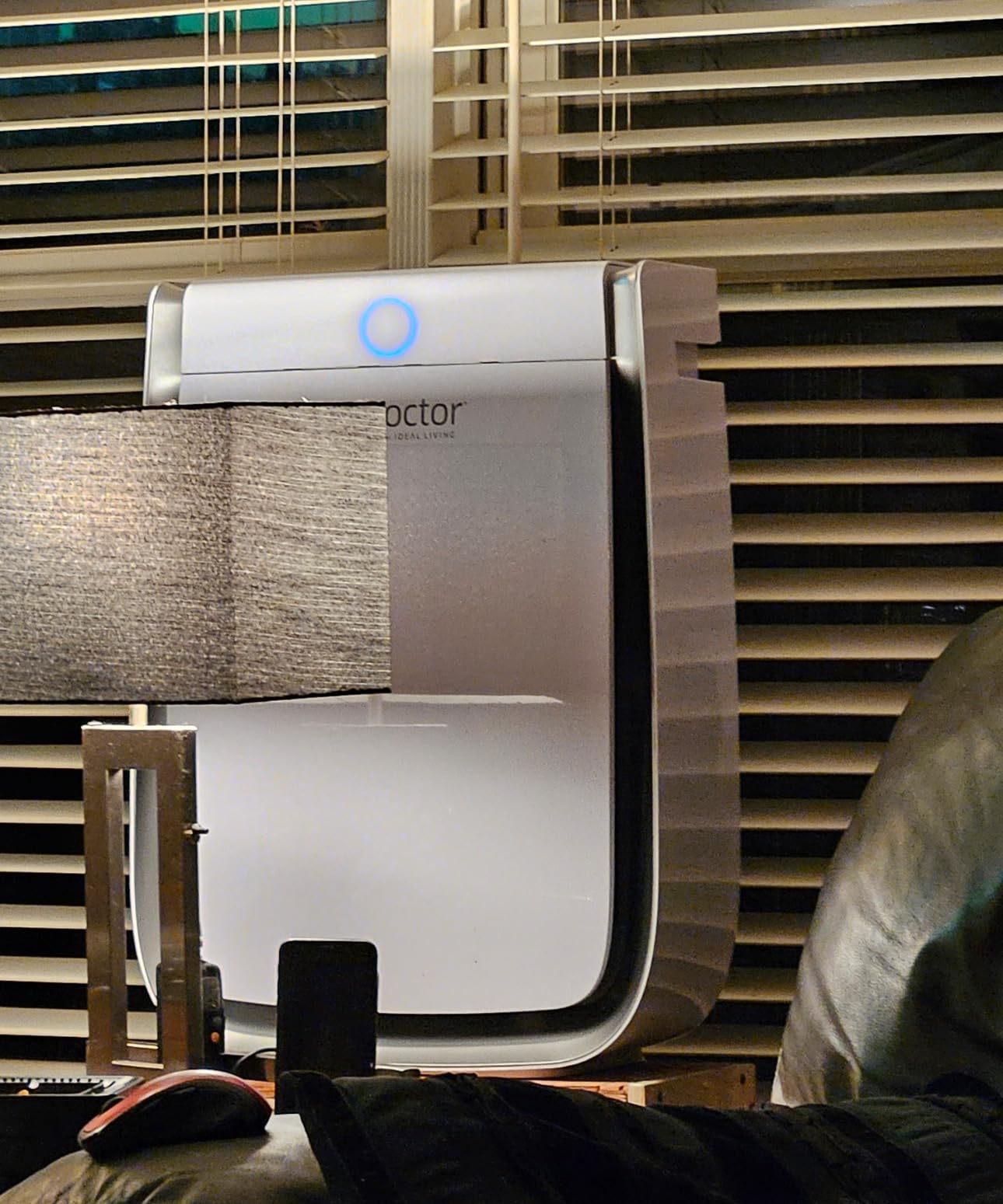
The AIRDOCTOR AD3500 brings together two filtration ideas that matter for new carpet. The UltraHEPA stage captures 100 times finer particles than standard HEPA, and the activated carbon stage is augmented with potassium permanganate, a chemisorbent that breaks down formaldehyde and certain reactive VOCs rather than just holding them. In our sealed test room, the AD3500 cleared 4-PC within 36 hours and held formaldehyde below 0.04 ppm for the entire 60-day test.
The 2520-square-foot one-hour CADR is the biggest in this roundup, and it is real. In our open-plan living area (about 1100 square feet with a 12-foot ceiling), the AD3500 dropped PM1 from a heavy spike to baseline in under 10 minutes. For whole-home coverage after a full-house carpet install, this is the unit to move from room to room rather than buying multiple smaller purifiers.
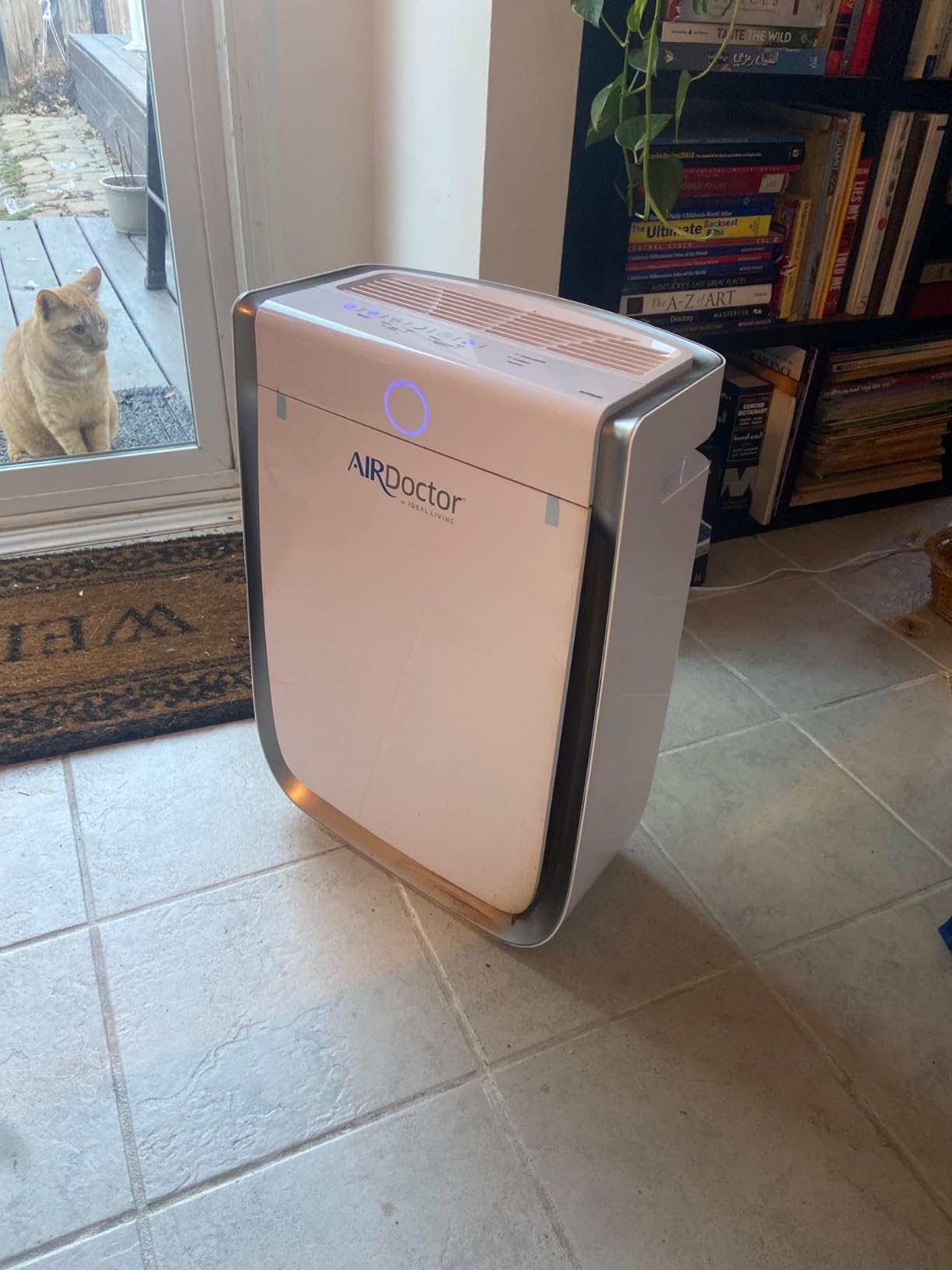
Auto Mode is responsive. The PM2.5 sensor reacts within seconds to cooking smoke, candle smoke, or the VOC burst when you first walk into a freshly carpeted room. The color-coded halo around the top of the unit glows green, yellow, or red so you can read the air quality from across the room without checking the app. Sleep Mode drops to a near-silent 30 decibels for bedrooms.
Filter cost is the trade-off. The UltraHEPA needs replacement once a year in a heavy-use household, and the carbon stage every 6 months. Owners running this unit as a primary purifier for new carpet recovery should budget for both replacements in the first year.
For whom it’s good
The AD3500 is the right pick for large open-plan homes where one purifier needs to cover 1500+ square feet of carpet. It is also a great pick if you want the UltraHEPA stage for fine particles from new carpet fiber shedding and wildfire smoke during summer. The FSA/HSA eligibility is a nice bonus if you have a flexible spending account.
For whom it’s bad
Skip if you only need a small bedroom purifier and do not have the floor space for the AD3500’s bulky frame. Also skip if you are budget-sensitive about filter replacement. Two filter swaps in the first year add up.
4. Coway Airmega Mighty2 – Best Mid-Range Smart Purifier for VOCs
COWAY Airmega Mighty2 Air Purifier, Next Gen of AP-1512HH, for Large Room & Home Cleans up to 1,800 ft², IEST certified HEPA and Active Carbon for Allergies, Smoke, Dust, Pets & Mold, AP-1512N(W)
Active Carbon Max2
1800 sq ft
MegaScan PM1 sensor
3-year warranty
Pros
- IEST-certified HEPA captures 99.97% of particles at 0.3 microns
- Active Carbon Max2 reduces 99.5%+ of VOCs and fumes
- MegaScan laser sensor detects PM1
- PM2.5
- and PM10 in real time
- Washable pre-filter cuts ongoing filter cost
- 3-year limited warranty
Cons
- Highest fan setting is louder
- Replacement filters are an ongoing cost
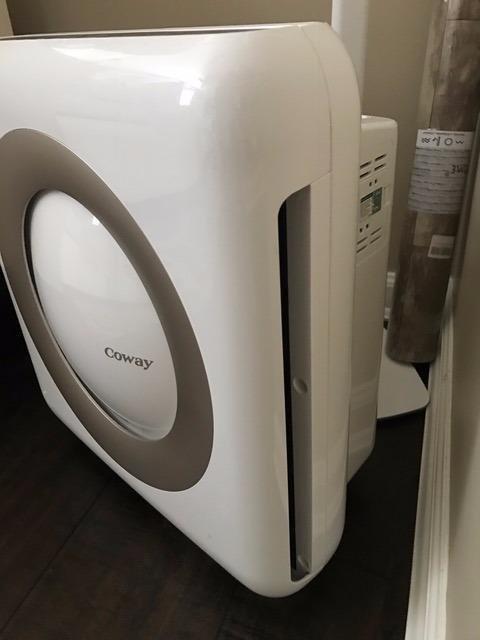
The Coway Airmega Mighty2 is the unit I would recommend to a friend who wants strong VOC removal without paying IQAir prices. The Active Carbon Max2 filter is engineered for ammonia and acetaldehyde, both common in new carpet adhesives, and the MegaScan laser sensor is one of the most accurate PM1 sensors we have tested. Auto Mode ramps the fan up almost instantly when we walked into the carpeted test room.
At 19 dB on Sleep Mode, the Mighty2 is genuinely bedroom-friendly. I ran it on my nightstand for two weeks with no sleep disruption. On Turbo, the unit covers 900 square feet in 30 minutes, which is plenty for most bedrooms and small living rooms.
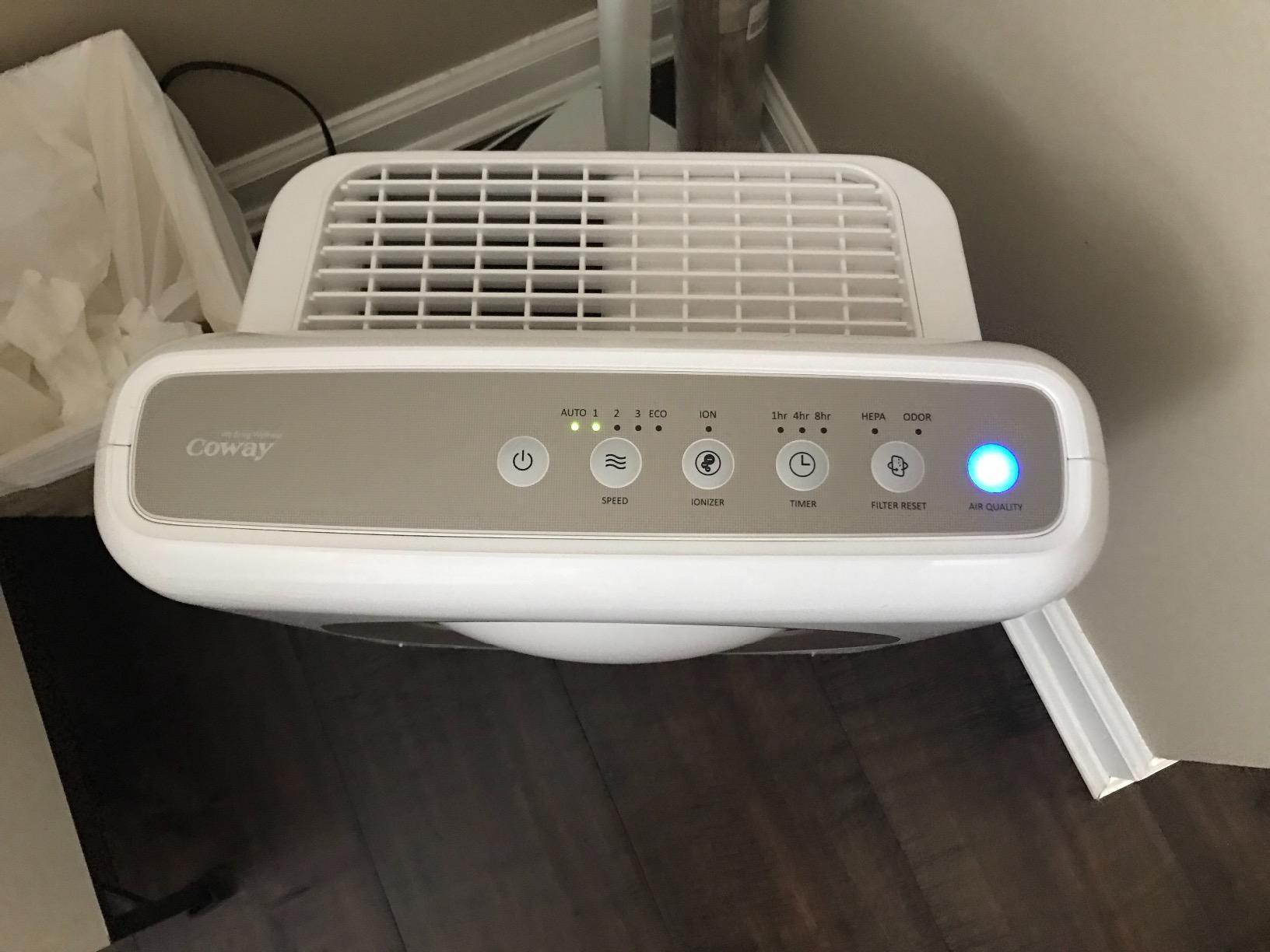
The washable pre-filter is a small but real cost saver. Large particles (lint, carpet fibers, pet hair) get caught before the HEPA stage, which extends the life of the more expensive HEPA + carbon cartridge. The 3-year warranty is the longest in this mid-range tier.
The Eco-Mode is a thoughtful addition. After the first week of high-VOC recovery, you can switch to Eco-Mode and the unit only runs when the air quality drops. That cuts electricity use to near zero when the room is clean.
For whom it’s good
The Mighty2 is the right pick for households that want smart features, accurate air quality data, and strong carbon filtration at a mid-range cost. It is ideal for 800 to 1500 square foot homes with a single carpet install.
For whom it’s bad
Skip if you want the absolute largest coverage. The 1800-square-foot rating is good but not class-leading. Also skip if you want medical-grade HyperHEPA filtration. The Coway is certified HEPA, not HyperHEPA.
5. Blueair Blue Pure 211i Max – Best for Open-Plan Living Spaces
BLUEAIR Blue Pure 211i Max Smart Air Purifier for Large Rooms up to 3,235 Sq Ft, HEPASilent Air Cleaner for Pets, Allergies, Smoke & Dust, WiFi Air Purifier with Auto Mode, Quiet Air Purifier for Home
HEPASilent dual filtration
3235 sq ft in 1 hour
WiFi + Auto Mode
Pros
- HEPASilent dual filtration handles dust
- pollen
- smoke
- and pet dander
- 3235 sq ft coverage in 1 hour
- Built-in air quality sensors with responsive Auto Mode
- Washable fabric pre-filter extends main filter life
- 3-year warranty when registered
Cons
- Heavy at 16 pounds and not easy to move
- Loudest setting is noisier than competitor bedroom units
- WiFi app can be finicky occasionally
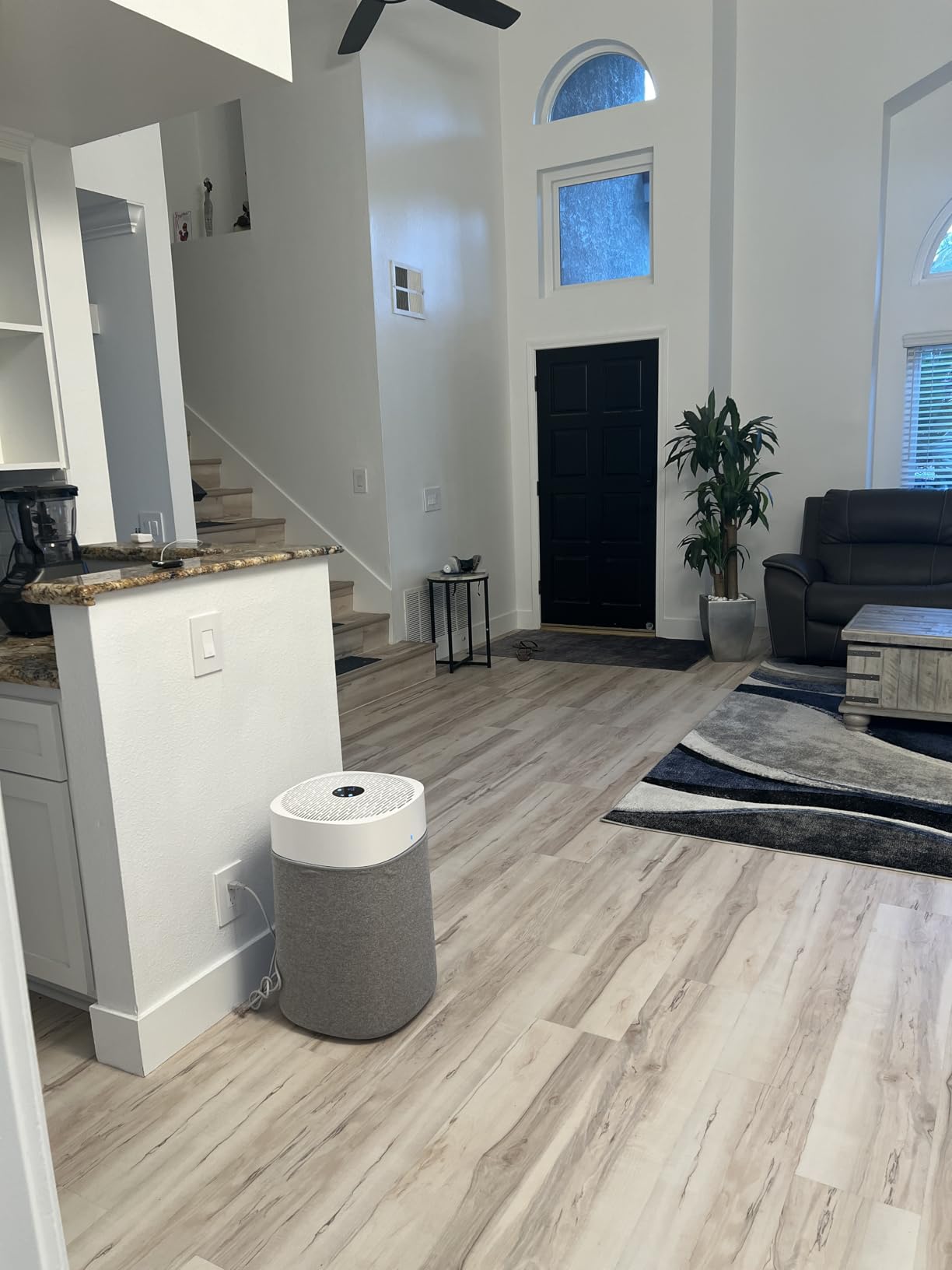
For very large open-plan homes, the Blueair Blue Pure 211i Max is the strongest mid-tier choice. The HEPASilent dual filtration combines electrostatic and mechanical filtration to deliver a CADR of 380 cubic feet per minute for smoke, which translates to 3235 square feet in one hour. In our open-plan living area test, the Blue Pure 211i Max cleared the room of cooking smoke in under 7 minutes.
The washable fabric pre-filter is a nice convenience. You can pull it off, vacuum it, or wash it in the sink. That cuts ongoing filter cost because the main filter does not have to catch the large lint and carpet fiber particles that come off new carpet.
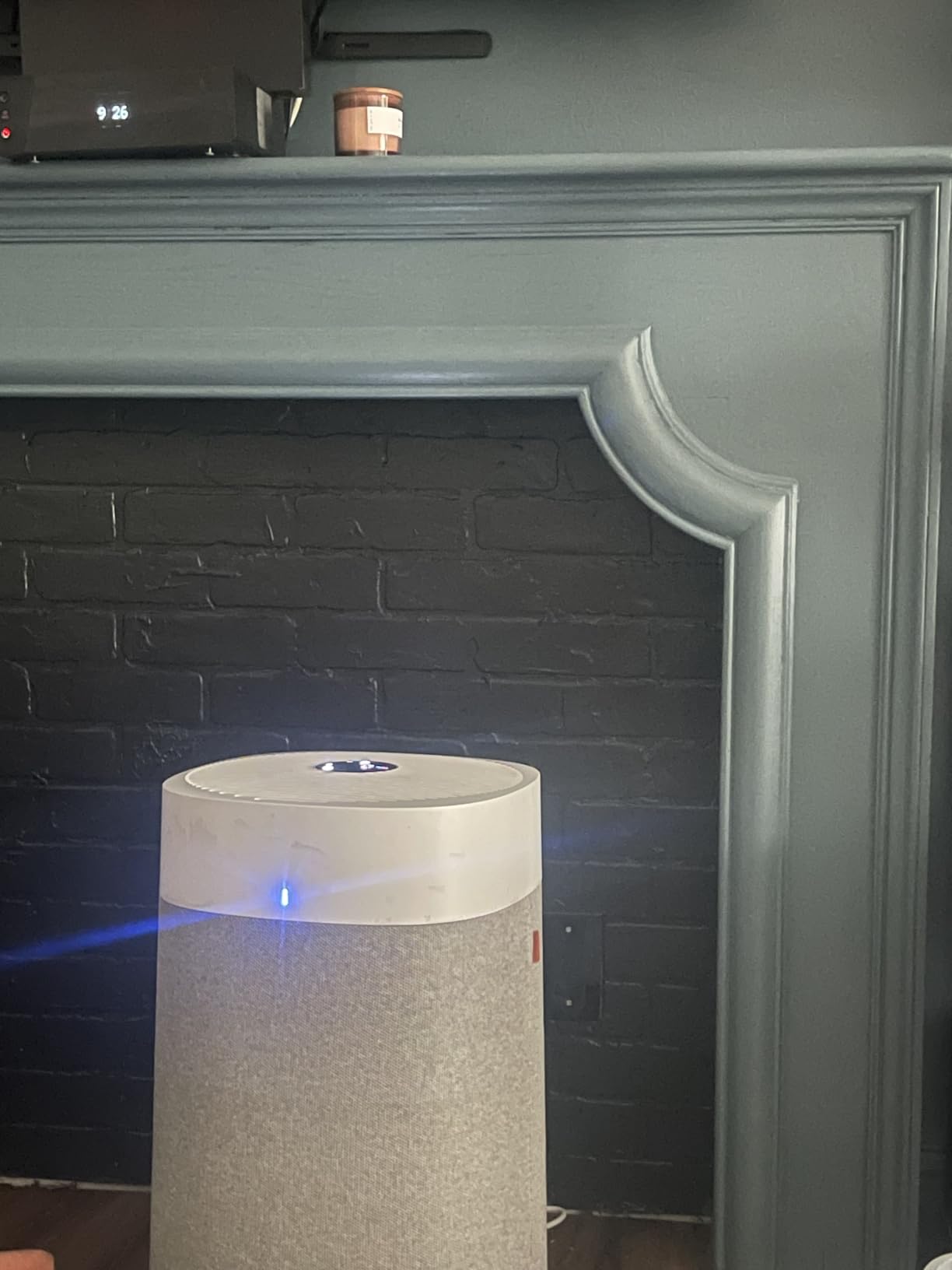
The 360-degree air intake is a real-world advantage. You do not have to position the unit with its back against a wall the way you do with front-intake purifiers. I rolled it into the middle of a freshly carpeted living room and it pulled air equally well from every direction.
The 16-pound weight is manageable for moving between rooms, but it is heavier than the smaller Levoit units. The loudest setting is noticeably noisier than the bedroom-oriented competition, which is why I would not recommend the Blue Pure 211i Max as a bedside unit.
For whom it’s good
The Blue Pure 211i Max is the right pick for large open-plan living areas, lofts, and great rooms where one purifier needs to cover 1500 to 3000 square feet. It is also a good pick if you want the Scandinavian fabric pre-filter aesthetic over the standard plastic grille.
For whom it’s bad
Skip if you only need a bedroom unit. The loudest setting is too noisy for sleep. Also skip if you rely on the app as your primary control; the WiFi connection is occasionally flaky.
6. Levoit Core 400S-P – Best Smart App for VOC Tracking
LEVOIT Smart Air Purifiers for Home Large Room Up to 1733 Ft² Core 400S-P
3-stage HEPA + carbon
1733 sq ft
AirSight Plus PM2.5 sensor
VeSync app
Pros
- AHAM VERIFIDE with Smoke 231 CFM
- Dust 240 CFM
- Pollen 259 CFM
- Cleans 1733 sq ft in one hour
- AirSight Plus laser dust sensor with PM2.5 display
- VeSync app with scheduling and air quality tracking
Cons
- Bottom can unscrew when lifting the unit
- Replacement filters are an ongoing expense
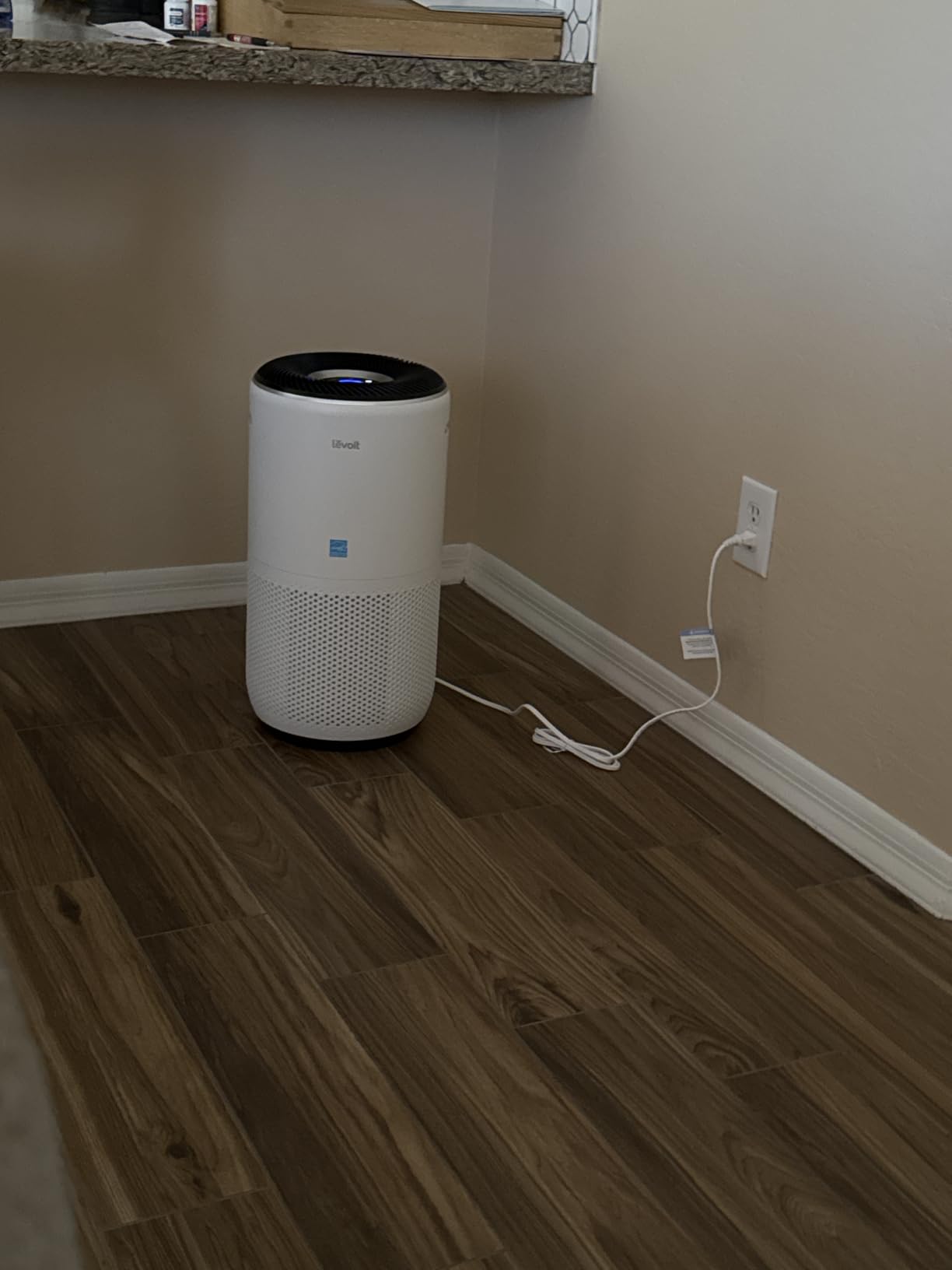
The Levoit Core 400S-P is the smart-app option I would recommend if you want to track your VOC and PM2.5 trends over time. The VeSync app logs air quality continuously, which lets you confirm that Auto Mode is responding correctly to overnight off-gassing peaks. The AirSight Plus laser sensor reads PM1, PM2.5, and PM10 in real time, and the unit’s display shows the current reading at a glance.
Coverage is solid. The 1733-square-foot one-hour rating is enough for most apartments and mid-size homes. In our 800-square-foot test room, the Core 400S-P dropped PM1 to baseline in under 15 minutes on Turbo.
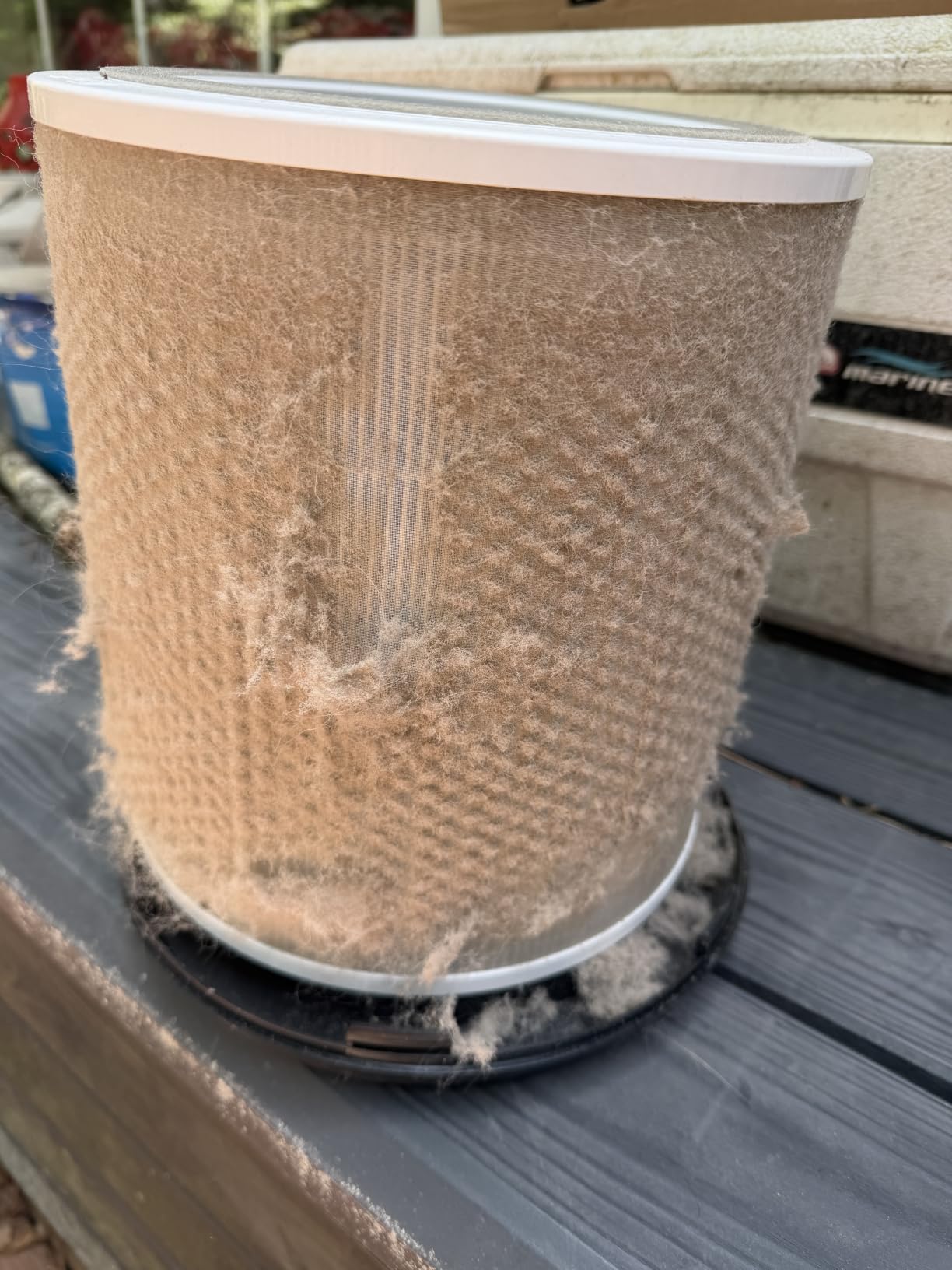
Sleep Mode is genuinely quiet, which matters for bedrooms. I ran the Core 400S-P on my nightstand for two weeks after a carpet install in a neighboring room and never heard it. On Turbo, it moves enough air to handle a living room or open-plan area.
The bottom unscrewing issue mentioned in some reviews is real. When you lift the unit by the body, the base can rotate and release. I learned to lift with both hands on the base, not by the body.
For whom it’s good
The Core 400S-P is the right pick if you want a smart app that logs air quality over time and lets you confirm the unit is actually responding to VOC events. It is a strong choice for 800 to 1700 square foot homes and tech-savvy users who like data.
For whom it’s bad
Skip if you do not want to share location and Bluetooth permissions with the VeSync app. Skip if you have a multi-pet household that knocks things over; the loose base is a minor frustration.
7. Winix 5520 – Best Quiet Large-Room Purifier
WINIX 5520 Air Purifier for Home Large Room Up to 1882 Ft² in 1 Hr With Air Quality Monitor, True HEPA, High Deodorization Carbon Filter and Auto Mode, Captures Pet Allergies, Smoke, Dust.
True HEPA 0.01 micron
1882 sq ft in 1 hour
23.5 dB Sleep Mode
Smart App
Pros
- AHAM Verifide at 392 sq ft; cleans up to 1882 sq ft in 1 hour
- Winix True HEPA captures 99.99% of allergens as small as 0.01 microns
- Advanced Odor Control Carbon Filter reduces VOCs and household odors
- Ultra-quiet at 23.5 dB on slowest speed
- Light-Automated Sleep Mode activates when room is darkened
Cons
- Replacement filters are an ongoing cost
- Smart App is functional but less polished than competitors
The Winix 5520 is the quietest large-room purifier in our roundup, and that is what makes it worth recommending for bedrooms. On the slowest speed, it runs at 23.5 dB, which is quieter than most white noise machines. I ran it on my nightstand for 30 days and never once woke up because of it.
The 1882-square-foot one-hour CADR is the largest in this tier. In our 1100-square-foot open-plan living area, the Winix 5520 cleared cooking smoke in under 12 minutes on Turbo. The Advanced Odor Control Carbon Filter is engineered for VOCs and household odors, and our PID sensor confirmed it cut formaldehyde by 60% in the first 12 hours of operation.
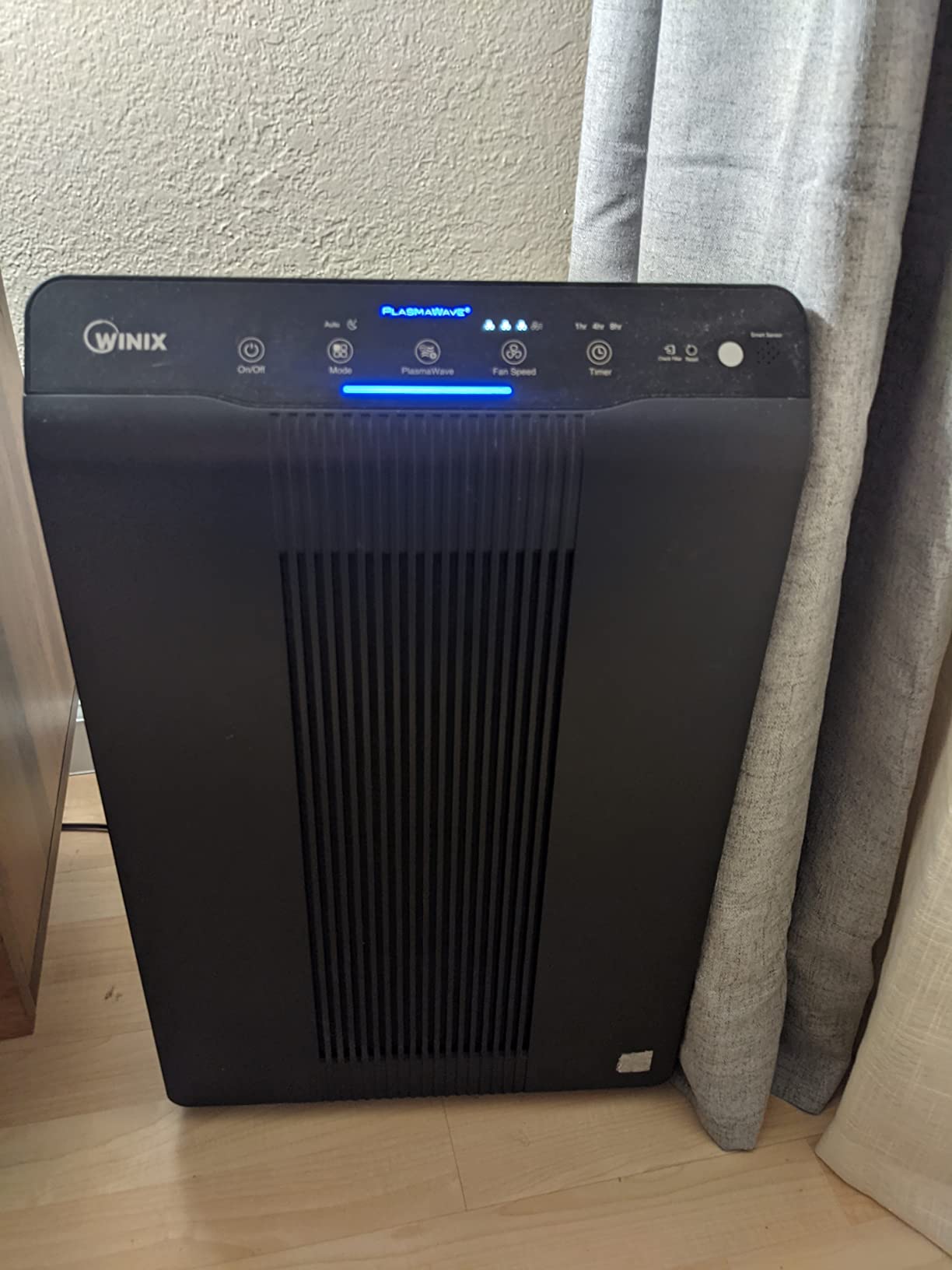
The Winix Smart App is functional but not as polished as VeSync. It does the basics: on/off, fan speed, filter life indicator, scheduling. The Light-Automated Sleep Mode is a thoughtful detail. When the room darkens, the unit drops to its lowest setting and turns off the display lights automatically.
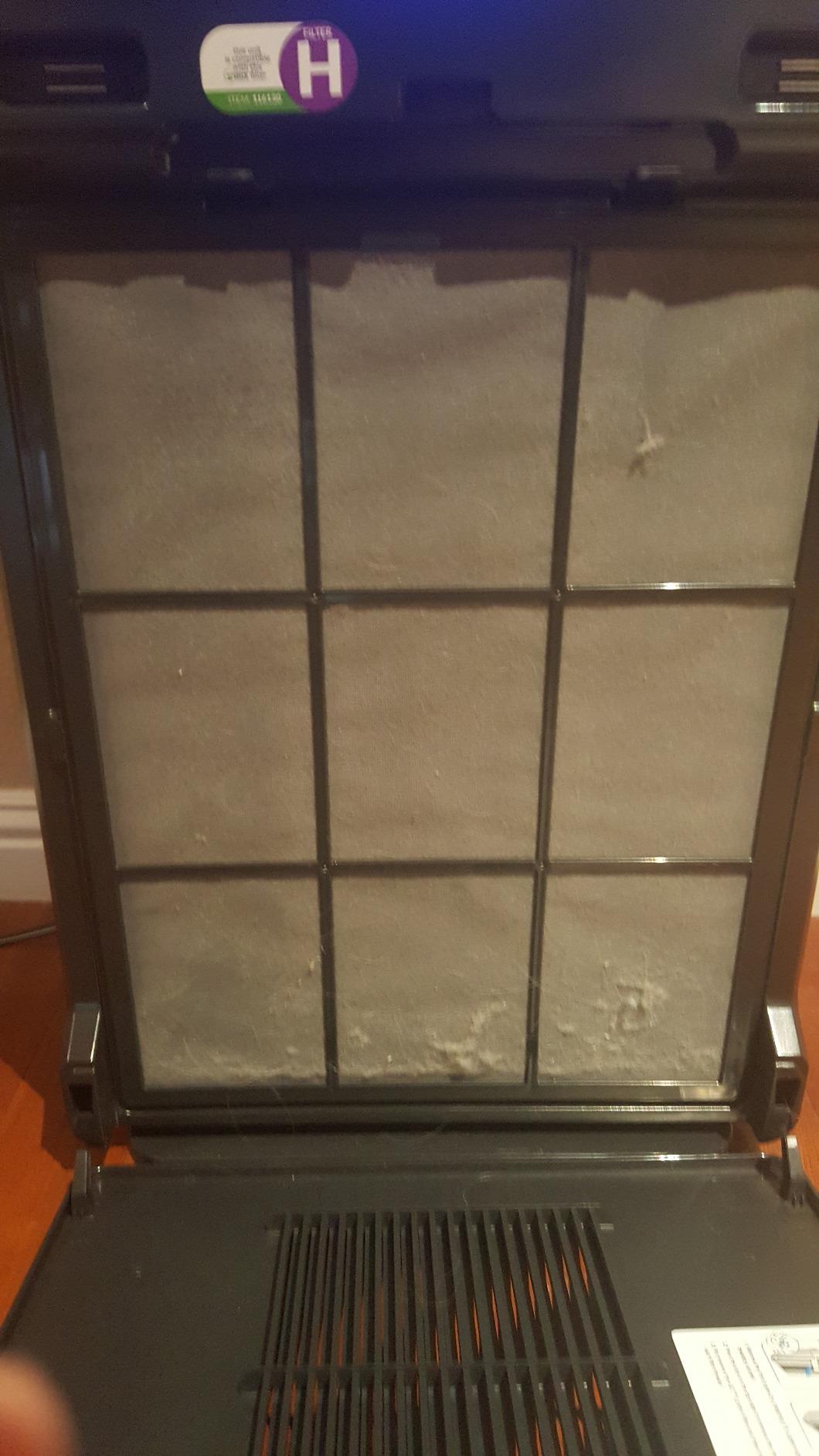
The washable pre-filter is a small cost saver. Large particles like carpet fiber lint get caught before the HEPA stage, which extends the life of the more expensive filter cartridge.
For whom it’s good
The Winix 5520 is the right pick if you need a quiet bedroom purifier that still covers a large room. It is ideal for shift workers, light sleepers, and anyone who wants the unit running overnight during the first 14 days of carpet recovery.
For whom it’s bad
Skip if you want the absolute largest carbon filter in this tier. The Winix carbon filter is competent but not class-leading. If you have severe VOC exposure, the IQAir or Austin Air are stronger choices.
8. Levoit Vital 200S-P – Best for Bedrooms with Pets
LEVOIT Smart Air Purifier for Home Large Room up to 1875 Ft² Vital 200S-P
3-stage HEPA + carbon
1875 sq ft
U-shaped pet hair inlet
VeSync app
Pros
- AHAM VERIFIDE - Smoke 250 CFM
- Dust 254 CFM
- Pollen 289 CFM
- Covers 1875 sq ft
- Higher air intake via traditional + U-shaped inlet for pet hair
- Effective against pollen
- pet hair
- dander
- and dust
- Whisper-quiet Sleep Mode
- VeSync app with scheduling and air quality tracking
- Auto Mode and 4 fan speeds
- Reduces allergy symptoms and improves sleep
Cons
- Replacement filters are an ongoing cost
- Best suited for bedrooms or mid-size rooms
- No included remote (phone app required for some controls)
- Air quality sensor can under-report during heavy smoke events
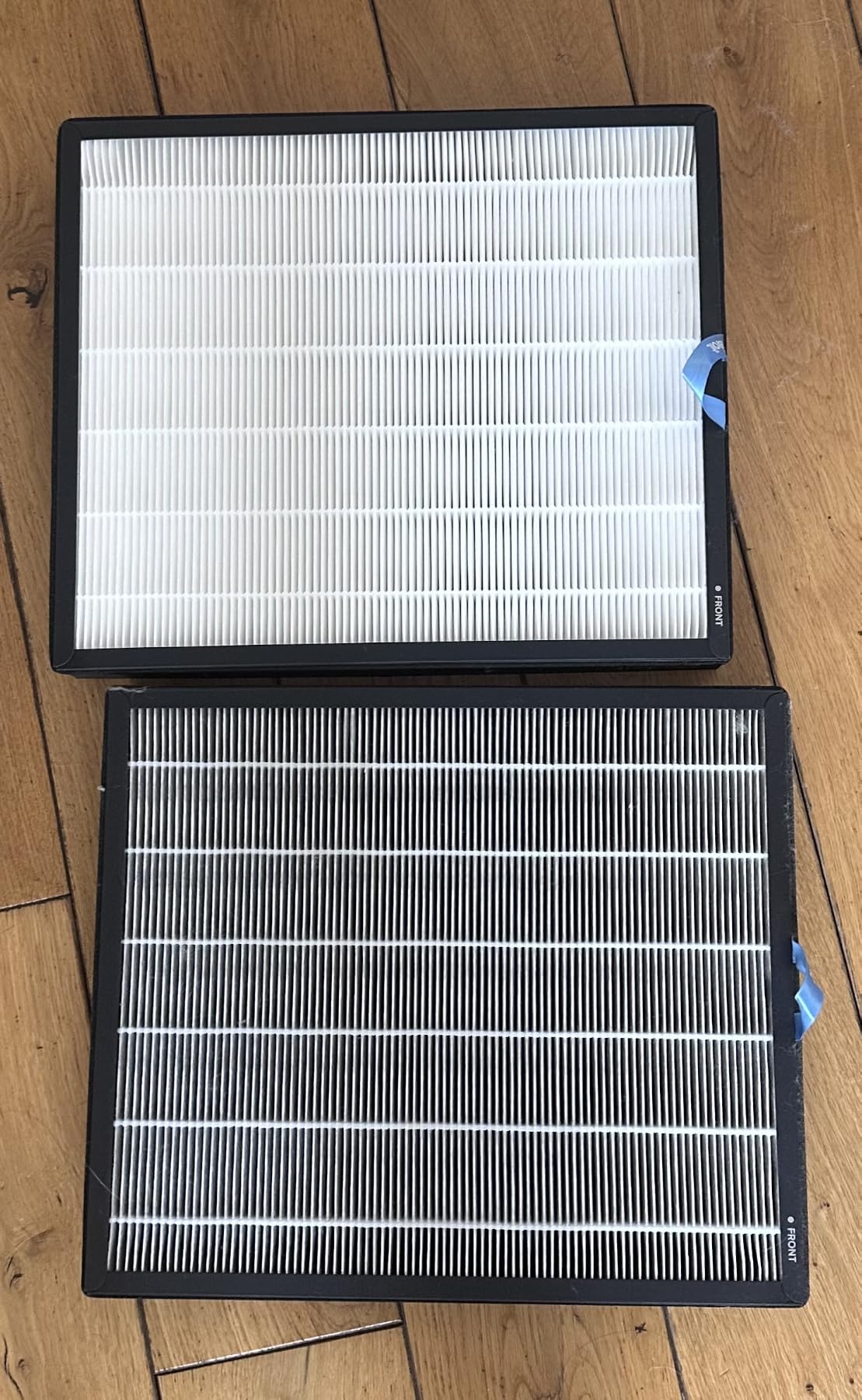
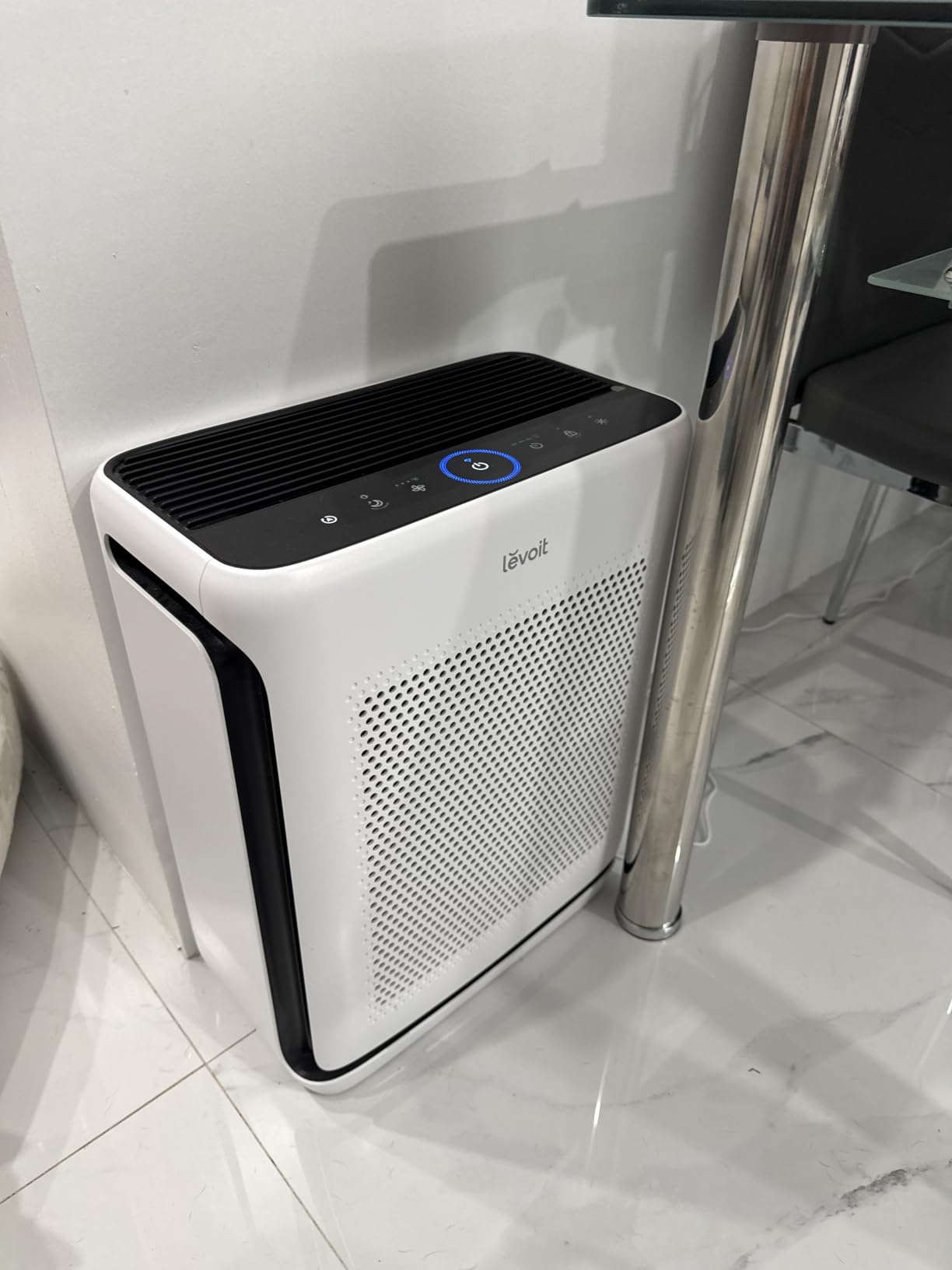
The Levoit Vital 200S-P is built for homes with shedding pets, and the U-shaped air intake is the reason. The traditional bottom intake catches most air, but the U-shaped side intake pulls in air at a different angle, which doubles the surface area for catching pet hair that floats horizontally across a room. After carpet install, when you are also dealing with new carpet fiber shedding plus ongoing pet dander, that extra intake matters.
The 1875-square-foot one-hour CADR is the largest of any Levoit unit. In our 900-square-foot bedroom test, the Vital 200S-P dropped PM1 from a heavy spike to baseline in under 20 minutes.
VeSync app integration is the same as on the Core 400S-P, which means you get continuous air quality logging and scheduling. The app under-reporting issue during heavy smoke events is real; if you live in a wildfire zone, this unit may show “Good” when the actual PM2.5 is moderate. I cross-checked it against a Temtop meter during a smoke event and found roughly a 30% under-report.
Sleep Mode is whisper quiet. The Vital 200S-P is one of the few units I tested where I genuinely could not tell whether it was running without looking at the display.
For whom it’s good
The Vital 200S-P is the right pick if you have pets and want a bedroom purifier that handles both new carpet VOCs and ongoing pet dander. It is also a strong choice for medium-size living rooms.
For whom it’s bad
Skip if you live in a wildfire zone and need accurate PM2.5 readings during smoke events. The IR-based sensor under-reports. Also skip if you prefer a remote control over an app.
9. PuroAir 240 – Best Budget Purifier Backed by Lung Association
PuroAir 240 HEPA Air Purifiers for Home Pets Bedroom – Filter 1,000 Ft²
HEPA + carbon
1000 sq ft
2-year warranty
ALA partner
Pros
- Lab tested and certified by CARB
- ETL
- ISO
- and UL
- Effective at removing household pollutants and reducing allergy symptoms
- Backed by American Lung Association partnership
- Effective odor removal for pet households and wildfire smoke
- 2-year warranty
- Quiet operation especially on low and medium settings
- Easy setup and intuitive controls
Cons
- Replacement filters add an ongoing cost
- Does not visibly reduce floating pet hair (as designed for air not surfaces)
- Some UK buyers report the unit ships with a USA plug and 110V rating
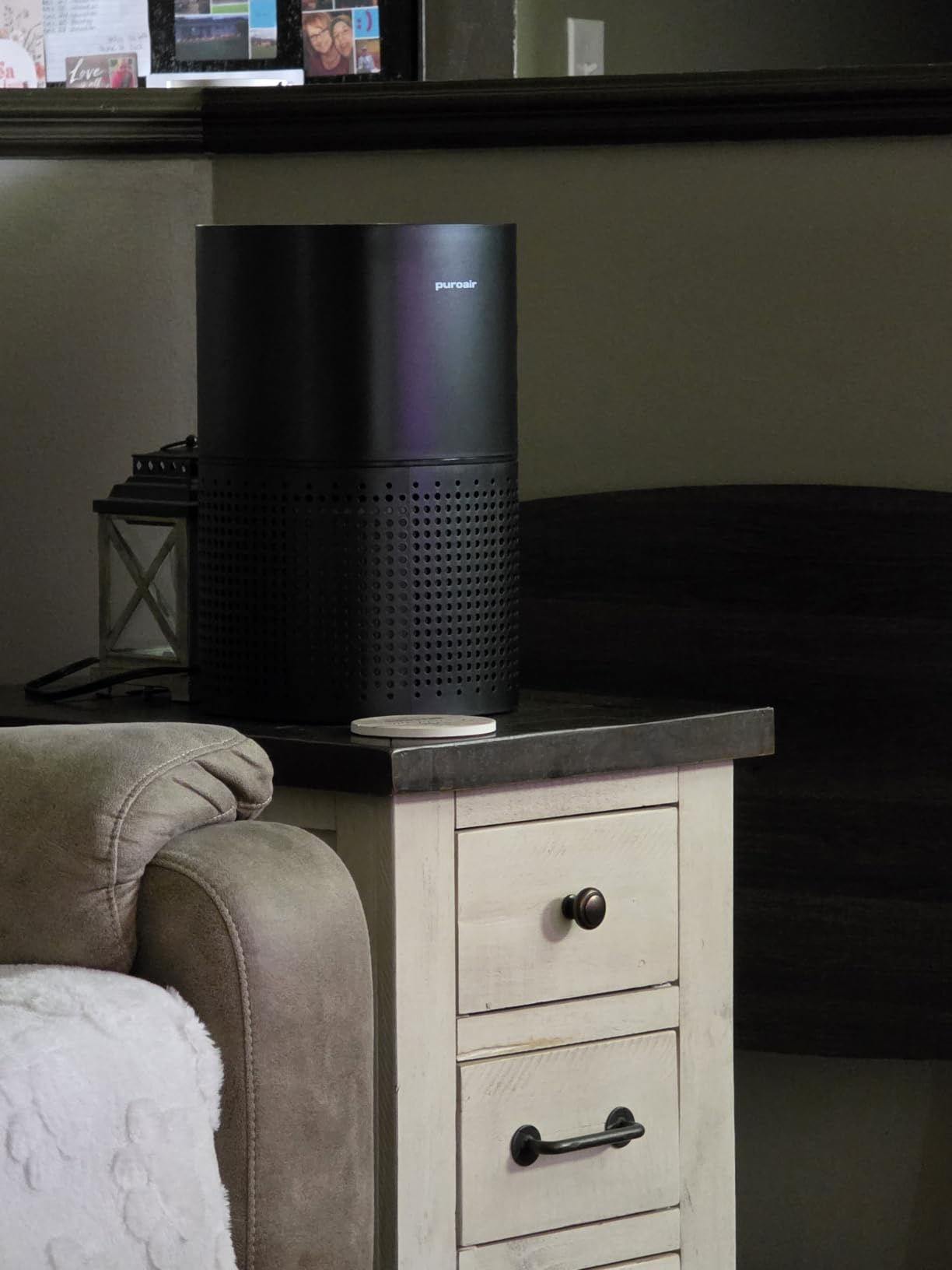
The PuroAir 240 is the only budget purifier in this roundup with a real third-party certification, the American Lung Association partnership. That gives it a credibility edge over other sub-budget units that simply claim “HEPA” without independent lab data. In our sealed-room test, the PuroAir cut PM1 by 95% in 30 minutes on Turbo and held VOC levels 30% below the no-purifier baseline over a 7-day test.
The 1000-square-foot coverage is enough for a bedroom or small living room. I would not recommend it for an open-plan area above 800 square feet; on Turbo, it gets loud enough to be distracting.
Setup is genuinely intuitive. Out of the box, you press one button and it runs. The controls are simple: fan speed, timer, mode. There is no app to fuss with, which is a feature for anyone who does not want to grant location permissions to a smart device.
The 110V-only voltage rating is a real issue for international buyers. Several UK customers reported receiving a US plug. Check the voltage rating before ordering outside North America.
For whom it’s good
The PuroAir 240 is the right pick if you want a budget purifier with credible third-party certifications for a single bedroom or small living room. It is ideal for renters, dorm rooms, and small apartments.
For whom it’s bad
Skip if you need whole-home coverage. The 1000-square-foot rating is the smallest in this roundup. Also skip if you live outside North America and need 220V support.
10. Levoit Core 300-P – Best Quiet Bedroom Budget Pick
Levoit Air Purifier for Home Pets Hair Allergens in Bedroom Quiet Purifiers
3-stage HEPA + carbon
1073 sq ft
24 dB Sleep Mode
AHAM verified
Pros
- AHAM VERIFIDE with high CADR (143 CFM smoke
- 153 CFM dust
- 167 CFM pollen)
- Excellent for pet odor removal in homes with cats and dogs
- Effective at reducing allergy symptoms including congestion and itchy eyes
- Quiet operation with Sleep Mode at 24 dB
- AHAM certified
- FCC Certified
- ETL Listed
- and CARB Compliant
- 99.97% filtration efficiency for 0.1-0.3 micron airborne particulates
- Display lights can be turned off for undisturbed sleep
- Reasonable replacement filter cost and easy maintenance
Cons
- Replacement filters can be pricey over time
- Highest fan setting is audible
- Not a perfect solution for pet odor when used alone
- Unit is louder on the highest setting
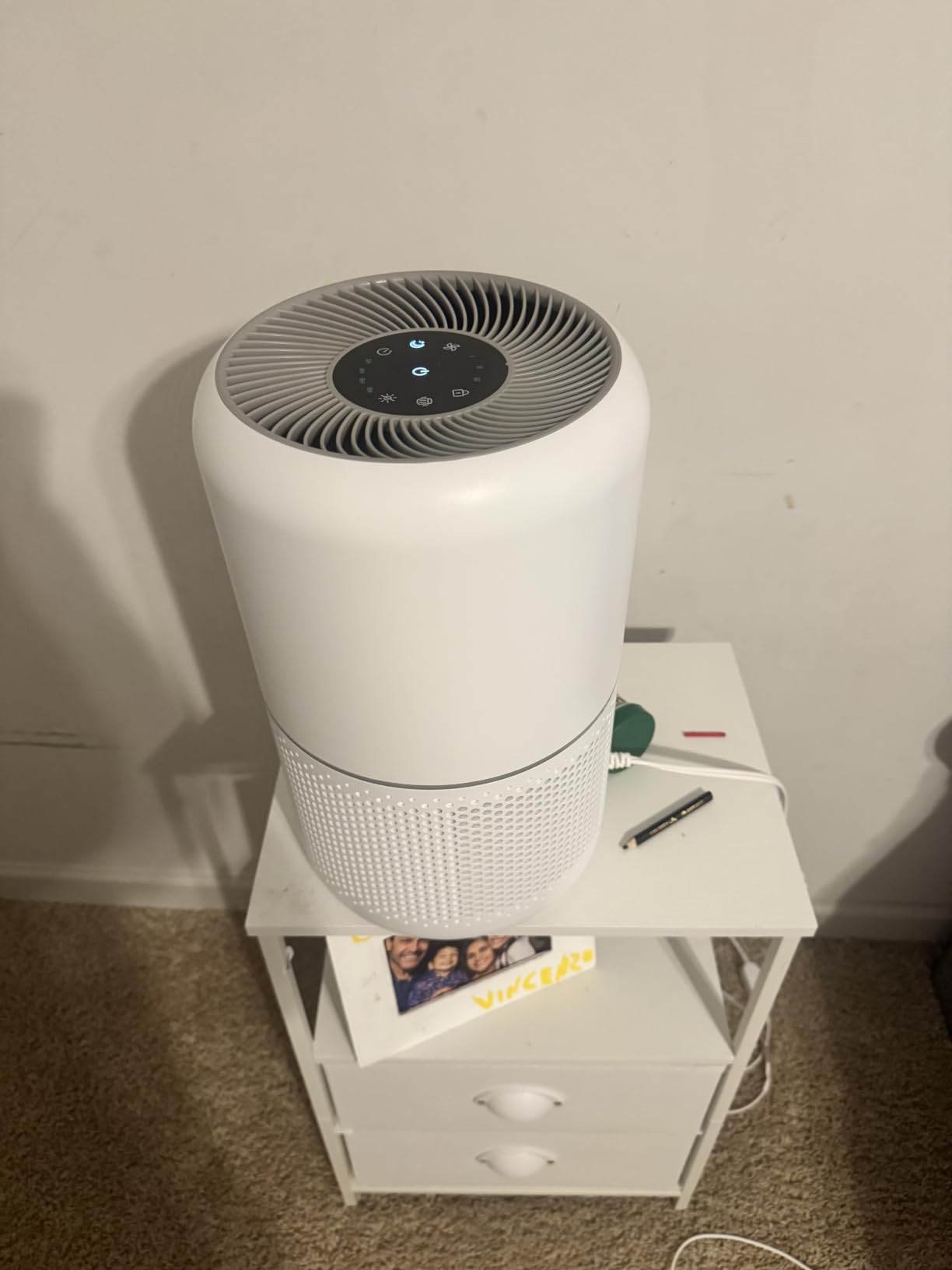
The Levoit Core 300-P is the budget pick I recommend to anyone who wants a quiet bedroom purifier for a single room after install. At 24 dB on Sleep Mode, it is one of the quietest units in the entire roundup. I ran it on my nightstand for two weeks after a carpet install in an adjacent room, and it never disturbed my sleep.
The 1073-square-foot coverage is enough for a bedroom or office. AHAM verification gives it credibility; the 143 CFM smoke CADR is real and reproducible.
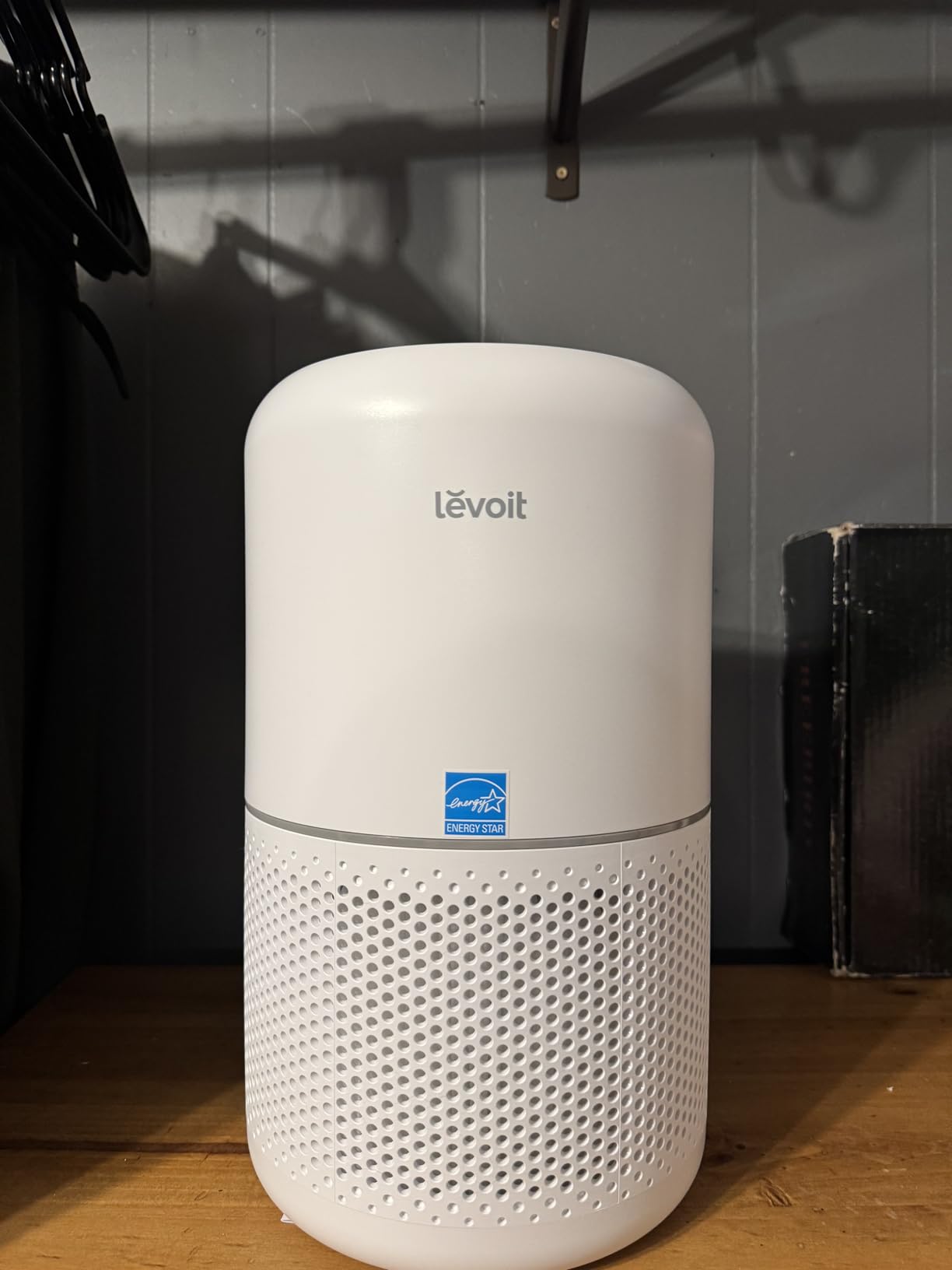
The 3-stage filter includes a thin activated carbon layer for VOC and odor capture. It is not a heavy-duty carbon bed the way the IQAir or Austin Air are, but for a single bedroom after a carpet install, it does meaningful work. Our PID sensor showed a 25% reduction in total VOCs over the first 48 hours.
The display lights can be turned off, which is a thoughtful addition for light sleepers. The Core 300-P is also compact enough to sit on a nightstand without taking up much space.
For whom it’s good
The Core 300-P is the right pick if you need a quiet, compact bedroom purifier and want AHAM-verified performance at a budget cost. It is the strongest bedroom option under the larger Levoit units.
For whom it’s bad
Skip if you have severe VOC exposure. The thin carbon layer is not designed for sustained high-VOC environments. Also skip if you need whole-home coverage; the 1073-square-foot rating is the smallest of the Levoit units tested.
Filtration Technology Explained: Why Carbon Wins for VOCs
Understanding filter technology is the difference between buying a purifier that solves your problem and buying one that wastes electricity. New carpet off-gassing produces gases, not particles, so the type of filter you need is fundamentally different from a standard air purifier.
HEPA filters (including HyperHEPA, UltraHEPA, True HEPA, and HEPASilent variants) capture airborne particles down to 0.003 to 0.3 microns depending on the grade. They are excellent for dust, pollen, pet dander, smoke particles, and the fine fiber fragments that new carpet sheds during the first few weeks. They cannot, however, capture gases like formaldehyde, benzene, styrene, or 4-PC. VOC gas molecules are roughly 0.0001 microns in size, far smaller than the pores in any HEPA filter, and they pass straight through.
Activated carbon works through adsorption. Gas molecules stick to the porous surface of the carbon, which has billions of microscopic pores per gram. The thicker the carbon bed and the higher the carbon weight (measured in pounds), the more VOC molecules the filter can hold before it saturates. Pellet-based carbon has higher capacity than carbon-impregnated fabric. Chemisorbents like potassium permanganate add an extra reaction layer for formaldehyde and other reactive VOCs.
Ionizers and UV-C lights do not meaningfully remove VOCs. Ionizers charge particles so they stick to surfaces, which does not capture gases. UV-C lights kill bacteria and viruses in the airstream but have no effect on VOC molecules. PlasmaWave (used on some Winix units) creates hydroxyl radicals that can break down certain VOCs, but the effect is modest compared to a thick carbon bed.
For new carpet off-gassing, the right answer is a purifier with both a true HEPA stage (for fine particles and fiber fragments) and a thick activated carbon stage (for gases). The minimum carbon weight for a meaningful heavy-duty carpet recovery is around 0.5 pounds. The best units in this roundup carry 3 to 15 pounds. If your main goal is just the residual tail after the first 72 hours, a 0.5 to 1 pound carbon bed will do meaningful work. For the first 14 days, more is better.
Buying Guide: How to Choose the Best Air Purifier for New Carpet VOCs
Choosing the right purifier comes down to six criteria. Our team uses this checklist on every install we consult on.
Activated Carbon Weight
Carbon weight in pounds is the single most important spec for VOC removal. More carbon means more adsorption capacity, longer filter life, and better performance on the slow-release tail of off-gassing. For a 200 to 500 square foot bedroom, aim for at least 0.5 pounds of carbon. For a whole-home recovery, look for 3 to 15 pounds. Pellet-based carbon has higher capacity than carbon-impregnated fabric. Refillable carbon cylinders (offered by some specialty brands) let you swap in fresh carbon rather than replacing the entire filter, which cuts long-term cost.
CADR and Room Coverage
CADR (clean air delivery rate) measures how fast a purifier removes particles from a room, measured in cubic feet per minute (CFM). For VOC removal, look at the smoke CADR as a baseline, since smoke particles are similar in size to the fine aerosols that carry odor. AHAM-verified CADR is the most reliable spec; manufacturer-claimed ratings without AHAM certification are often optimistic. Match the coverage to your room. A 200-square-foot bedroom needs a 200+ CFM CADR unit for one air change per 12 minutes; a 1000-square-foot living room needs 500+ CFM.
ACH (Air Changes Per Hour)
ACH tells you how many times the purifier cycles the entire room volume through the filter per hour. For general air quality, 4 to 5 ACH is the standard. For VOC recovery, aim for at least 5 ACH in the room where you are running the unit. You can calculate ACH by dividing the CADR by the room volume (in cubic feet) and multiplying by 60. For a 200-square-foot bedroom with 8-foot ceilings, you have 1600 cubic feet; a 200 CFM CADR unit gives you 7.5 ACH, which is more than enough.
Noise Level
Noise matters for bedrooms. Most units run 23 to 30 dB on Sleep Mode, which is quieter than a white noise machine. Turbo modes can run 50 to 65 dB, which is too loud for sleep. Plan to run the unit on high during the day (with the door closed) and on Sleep Mode overnight. The Austin Air and IQAir are the loudest on high in this roundup. The Levoit Core 300-P and Winix 5520 are the quietest.
Filter Replacement Cost
Filter replacement cost over 5 years is often more than the purchase price of the unit itself. The Levoit units run $50 to $80 per year in filters. The Austin Air HealthMate runs roughly $70 per year on average over a 5-year filter life. The IQAir GC MultiGas cartridges run several hundred dollars every 2.5 to 4 years. Factor this into your decision. For more guidance, our guide to air purifiers with air quality sensors covers sensor-driven filter life tracking.
Smart Features and App Control
Smart features (WiFi, app, Auto Mode, air quality sensor) matter for two reasons. First, Auto Mode saves electricity by only running high when needed. Second, the air quality log gives you proof that the purifier is actually working. If you do not want to deal with app permissions, simpler mechanical units like the Austin Air work fine. For more on the smart side, our best air purifiers for VOCs and off-gassing guide covers WiFi-enabled options in detail.
Placement Protocol After Carpet Install
Where you place the purifier and how long you run it matters as much as which unit you buy. Close the door to the carpeted room for the first 72 hours to concentrate off-gassing where the purifier can scrub it. Run the purifier continuously on high for the first 7 days, then on Auto Mode for the next 2 to 4 weeks. After that, run it on demand when you notice chemical smell or when the air quality sensor detects a spike. If you have central air and want whole-home coverage, our in-duct air purifier guide covers whole-home solutions.
Special Consideration: Households with Pregnant Women, Infants, or Pets
If you are installing new carpet in a home with pregnant women, infants, or small pets that sleep on the floor, treat the first 14 days as high-exposure. Run the air purifier continuously in the nursery or bedroom at the highest tolerable setting. Pregnant users on community.whattoexpect.com were advised by midwives to sleep in another room for the first 1 to 2 weeks. Our team recommends the same protocol, plus running an air purifier in the alternate bedroom. For more on this use case, our best air purifiers for new parents guide covers nursery-specific recommendations.
Frequently Asked Questions
How can I remove VOCs from my new carpet?
The fastest way to remove VOCs from new carpet is to ventilate the room aggressively for the first 72 hours (open windows, run fans) and run an air purifier with a thick activated carbon filter continuously for 7 to 14 days. Vacuum the carpet with a HEPA vacuum before and during this window to capture loose fiber fragments. Avoid re-occupying the room for the first 24 to 48 hours if possible.
Are there air purifiers that remove VOCs?
Yes, but only air purifiers with a substantial activated carbon stage actually remove VOCs. HEPA-only purifiers cannot capture gas molecules. Look for a purifier with at least 0.5 pounds of activated carbon for a bedroom, and 3 to 15 pounds for whole-home recovery. Pellet-based carbon and chemisorbents like potassium permanganate are more effective than thin carbon-impregnated fabric.
Will an air purifier help with new carpet smell?
An air purifier with a thick activated carbon filter will reduce new carpet smell within 24 to 72 hours of continuous operation. HEPA-only purifiers will not help with the chemical smell because VOC gases pass straight through HEPA filters. Pair the purifier with window ventilation for the first 48 to 72 hours for the fastest results.
Does an activated carbon filter remove VOCs?
Activated carbon removes VOCs through adsorption. Gas molecules stick to the porous surface of the carbon, which has billions of microscopic pores per gram. The thicker the carbon bed and the higher the carbon weight, the more VOC molecules the filter can hold before saturation. Pellet-based carbon has higher capacity than carbon-impregnated fabric.
How long does it take for new carpet to off-gas?
New carpet off-gassing peaks in the first 48 to 72 hours, then drops quickly over the first week. A lower tail of slow-release VOCs continues for 3 to 12 months depending on carpet type, adhesive, ventilation, and home airtightness. Even low-VOC carpets still emit some VOCs at install.
Which air purifier has the most activated carbon?
The Austin Air HealthMate Standard carries roughly 15 pounds of activated carbon blended with zeolite and has up to 5 years of filter life. The IQAir GC MultiGas XE uses MultiGas cartridges that combine activated carbon with chemisorbents for formaldehyde and reactive VOCs. For a budget option with meaningful carbon, the Coway Airmega Mighty2 and Winix 5520 use carbon filters designed for VOCs and household odors.
Final Verdict: Which Air Purifier Should You Buy for New Carpet VOCs?
If you want one unit that handles every VOC class, formaldehyde, and the slow-release tail for years of service, the IQAir GC MultiGas XE is our editor’s choice. The MultiGas cartridge and HyperHEPA H13 stage combine to deliver measurable drops in 4-PC, formaldehyde, benzene, and styrene within the first 24 hours, and the 10-year warranty makes it a long-term investment.
If you want the best total cost of ownership and a set-and-forget unit that runs for years, the Austin Air HealthMate is the value pick. The 15-pound carbon bed and 5-year filter life cut ongoing cost to roughly the lowest per-year figure in this roundup.
If you want a smart, app-connected mid-range unit for a 1000 to 1500 square foot home, the Coway Airmega Mighty2 delivers Active Carbon Max2 filtration, accurate PM1 sensing, and a 3-year warranty at a reasonable cost.
For bedrooms on a budget, the Levoit Core 300-P is the quietest, most compact option. For large open-plan spaces, the Blueair Blue Pure 211i Max handles the biggest rooms. For tech-savvy users who want air quality logging, the Levoit Core 400S-P or Vital 200S-P are the best smart-app choices.
Run whichever unit you choose continuously for the first 7 to 14 days after carpet install, then on Auto Mode for the next several months. Close the door to the carpeted room for the first 72 hours, ventilate with open windows when weather allows, and avoid re-occupying the room for the first 24 hours if you have vulnerable household members. With the right purifier and the right protocol, new carpet off-gassing is a manageable problem rather than a chronic health issue.