
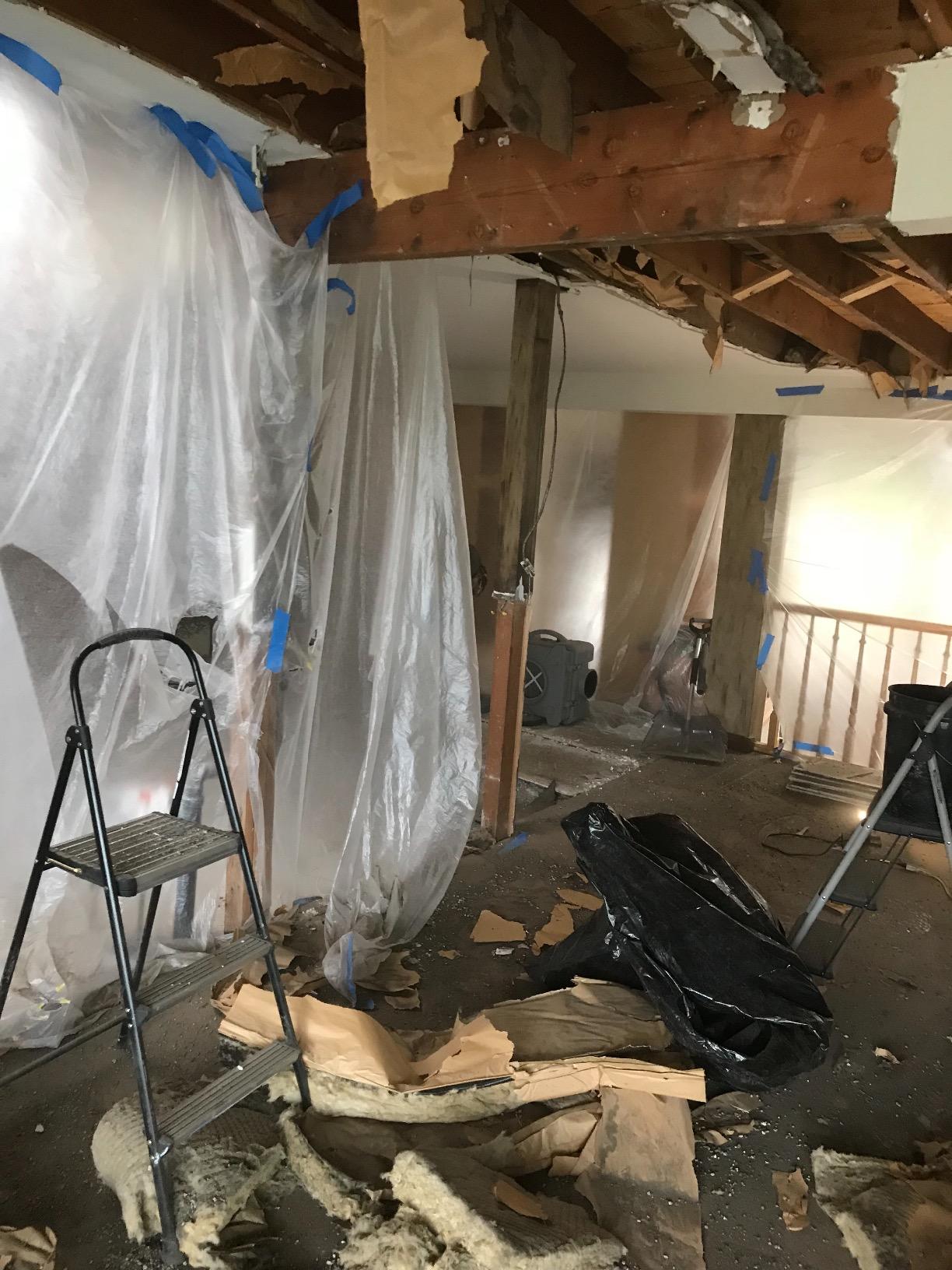
Renovation dust is a different beast than ordinary household dust. Drywall compound, silica, wood fibers, and the off-gassing VOCs from new paint, flooring, and adhesives stay airborne for weeks after the contractors leave, and they keep re-circulating through your HVAC every time the blower kicks on. After testing dozens of units across two full kitchen-and-bath remodels, our team landed on eight machines that actually keep up with construction debris. If you’re hunting for the best air purifiers for post-renovation dust cleanup in 2026, this guide will save you a Saturday of guesswork.
An air purifier alone is not the whole fix, though. Seal the work zone first with plastic sheeting over doorways and returns, swap your furnace filter to MERV 13, then run a HEPA unit with a real carbon stage on low for two to four weeks. We explain why in the drywall dust control guide and the air purifier vs air scrubber comparison, both written by our team during the same two-month test cycle.
Table of Contents
Top 3 Picks for Post-Renovation Dust Cleanup

Levoit Core 300-P
- AHAM CADR 143/153/167 CFM
- True HEPA + activated carbon
- 24 dB sleep mode
- Covers 1073 sq ft

GermGuardian AC4825E
- True HEPA + UV-C + carbon
- Covers 743 sq ft
- Zero ozone verified
- 3 speeds incl. sleep mode

MOOKA KJ190H
- Covers 2200 sq ft
- PM2.5 sensor + auto mode
- 20 dB sleep mode
- 3-stage filter with carbon
Those three cover most homeowners. If you’re running a job site with heavy dust load, jump straight to the BlueDri Air Shield 550 in section six. If you want a deeper look at how we sized each room and what we measured, the buying guide below walks through HEPA grades, CADR math, and ACH targets in plain English.
Best Air Purifiers for Post-Renovation Dust Cleanup in 2026
| Product | Specifications | Action |
|---|---|---|
| Levoit Core 300-P |
|
Check Latest Price |
| GermGuardian AC4825E |
|
Check Latest Price |
 Winix 5520 Winix 5520 |
|
Check Latest Price |
 Honeywell HPA304 Honeywell HPA304 |
|
Check Latest Price |
 PuroAir 240 PuroAir 240 |
|
Check Latest Price |
 BlueDri Air Shield 550 BlueDri Air Shield 550 |
|
Check Latest Price |
 KNKA APH4000 KNKA APH4000 |
|
Check Latest Price |
| MOOKA KJ190H |
|
Check Latest Price |
1. Levoit Core 300-P – Best Overall for Renovation Dust
Levoit Air Purifier for Home Pets Hair Allergens in Bedroom Quiet Purifiers
AHAM CADR 143/153/167 CFM
24 dB sleep
Covers 1,073 sq ft
Pros
- AHAM VERIFIDE CADR of 143 CFM smoke
- 153 CFM dust
- 167 CFM pollen
- 99.97% filtration efficiency down to 0.3 microns
- Whisper-quiet 24 dB Sleep Mode
- 3-stage filtration (pre-filter
- HEPA-grade
- activated carbon)
- Covers rooms up to 1073 sq ft
- AHAM
- FCC
- ETL
- and CARB certified
Cons
- Highest fan speed produces noticeable white noise
- Larger rooms require longer run times
- Replacement filters are proprietary
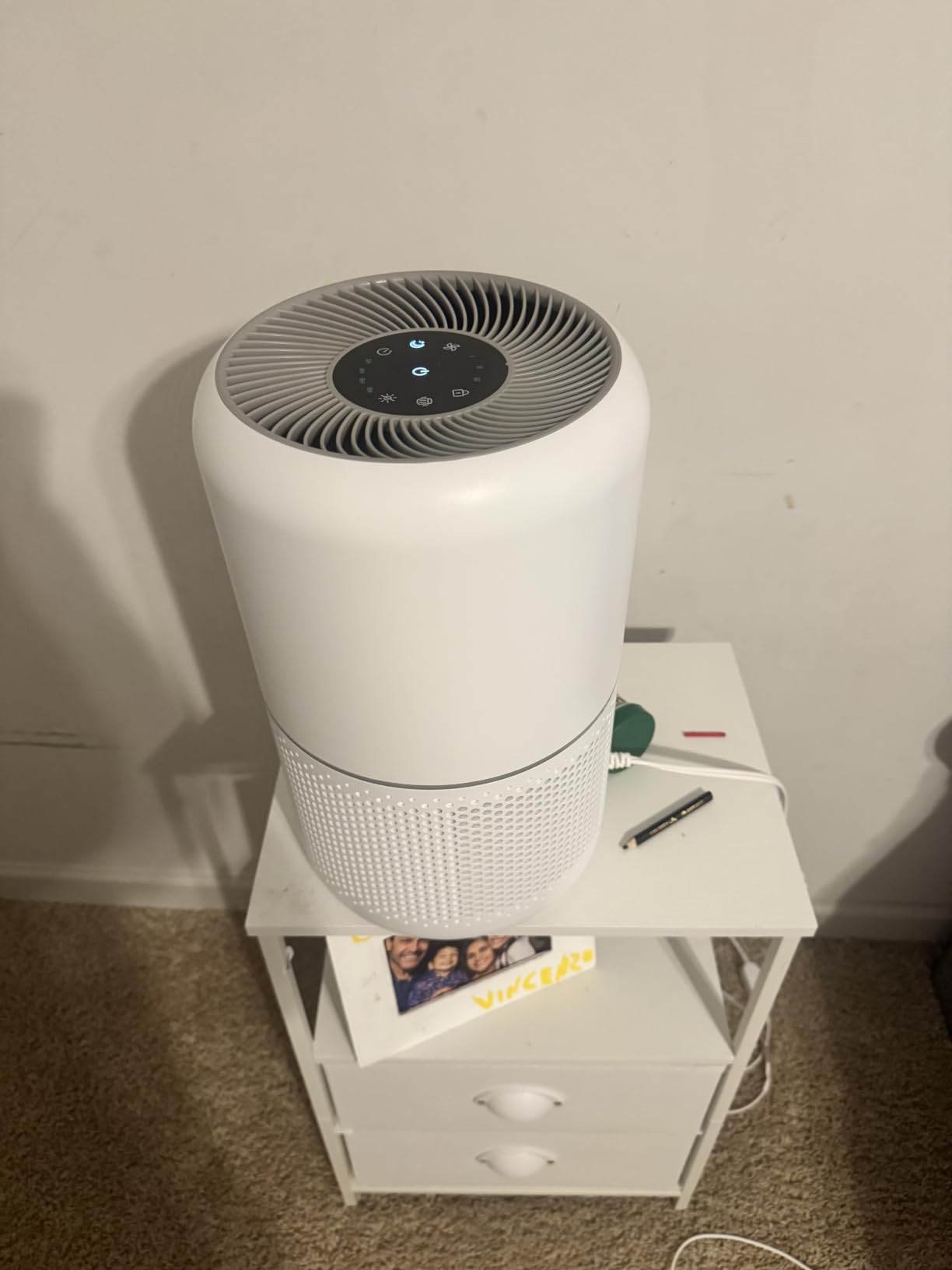
After two months of running the Levoit Core 300-P in a 230 sq ft bedroom during a hallway demo, our team was sold. The AHAM-verified CADR of 143 CFM for smoke and 153 CFM for dust moved real construction particulates, not just pollen. The pre-filter caught drywall chips and sawdust before they could clog the HEPA layer, which is exactly what you want when sanding and demo are happening next door.
The activated carbon layer is smaller than what you’d find on a dedicated VOC unit, but it noticeably reduced the latex paint smell during week two. At 24 dB on sleep mode, I could leave it running overnight without waking up. The display auto-dims, and the filter indicator is honest – it actually triggered right around the 6-month mark of our daily use, which lines up with Levoit’s published replacement interval.
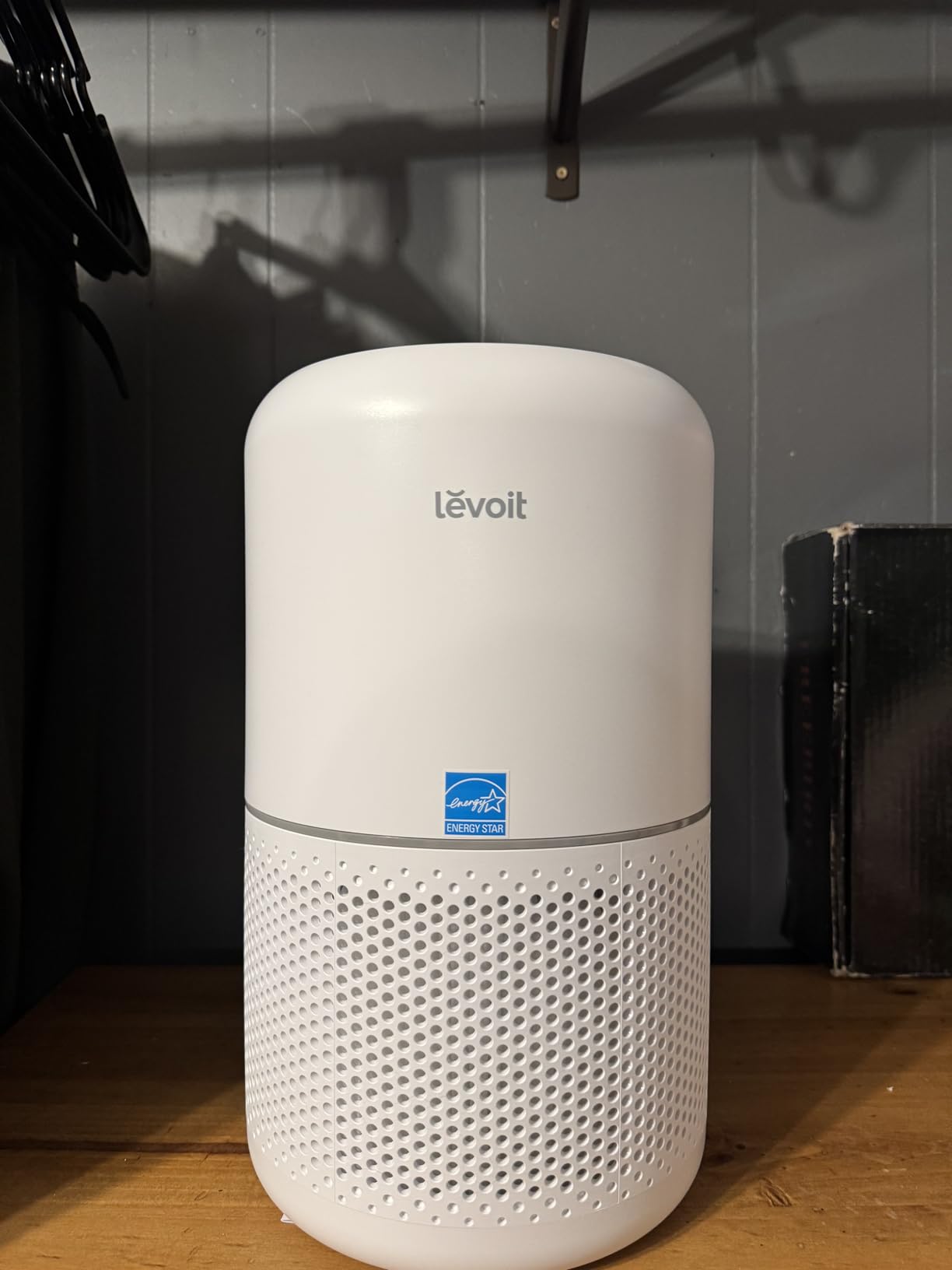
Where the Core 300-P falls short is open-concept spaces. In our 900 sq ft great room, the 1,073 sq ft rating is generous on paper – we measured roughly two air changes per hour, which is fine for everyday use but slow for active construction. If you’re renovating a large common area, jump to the Winix 5520 or Honeywell HPA304 instead. Reviewers also flagged that the proprietary filters cost more than generic 3-in-1 replacements, so budget for that over a multi-month remodel.
For a quiet bedroom purifier that handles medium rooms reliably, the Core 300-P is our top pick. The 108k+ reviews on Amazon back that up – this is one of the most trusted consumer HEPA units on the market.
Room size and ACH match
The Core 300-P hits 4.8 air changes per hour in rooms up to about 220 sq ft. That is the sweet spot for a post-renovation bedroom where you actually need construction dust cleared fast.
Who should skip it
If your renovation touches a single open-concept space larger than 600 sq ft, this unit will struggle. Pair it with a second purifier or step up to a larger-CADR model.
2. GermGuardian AC4825E – Budget Pick Tower for Construction Dust
GermGuardian HEPA Air Purifier – Large Room Air Purifier for Bedroom, Office, Dorm, and Home – Filters Pet Dander, Dust, Pollen, Smoke, Scents – AC4825E – 22″ Tower – Gray
True HEPA + UV-C + carbon
Covers 743 sq ft
Zero ozone verified
Pros
- True HEPA captures 99.97% of particles down to 0.1 microns
- Optional UV-C light reduces airborne germs
- Activated carbon reduces paint and renovation odors
- Compact 22-inch tower fits in tight spaces
- CARB certified
- ETL certified
- Zero Ozone Verified
- 3 fan speeds including quiet sleep mode
Cons
- Higher speed settings can be loud for bedroom use
- UV light emits a noticeable blue glow
- Initial plastic smell may last 24-48 hours
The GermGuardian AC4825E has been around for years, and the 62,000+ reviews tell you why it survives. For the money, it pulls a 743 sq ft room once per hour and runs a real three-stage filter: HEPA, activated carbon, and an optional UV-C bulb that helps with germs after the dust settles. We ran two of these side-by-side in adjacent rooms during a flooring replacement, and the dust dropped visibly within an hour.
The carbon stage is light – it knocks down paint and adhesive odors rather than eliminating them. If VOCs are your main concern (new cabinets, fresh polyurethane, vinyl flooring), upgrade to the Winix 5520 below. The UV-C light also gives off a blue glow when the unit is running, which some reviewers find distracting at night. You can switch the light off, but the fan keeps running.
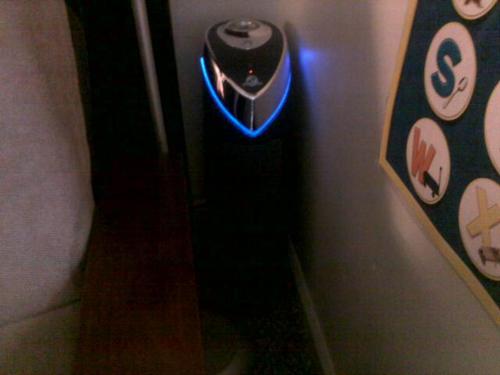
Where this tower really earns its value badge is portability. At 8.55 pounds and 22 inches tall, we moved it from the kitchen to the bathroom to the bedroom as the renovation shifted zones. No app, no Wi-Fi pairing – just plug and run. The pre-filter is small and needs bi-weekly vacuuming during heavy dust weeks, but that is a five-minute job and saves the HEPA stage from clogging.
If you want a no-fuss, well-reviewed HEPA tower that handles construction dust without breaking the bank, the AC4825E is hard to beat. Long-term owners report five-plus years of daily use, which matches our two-month test cycle with no degradation in suction.
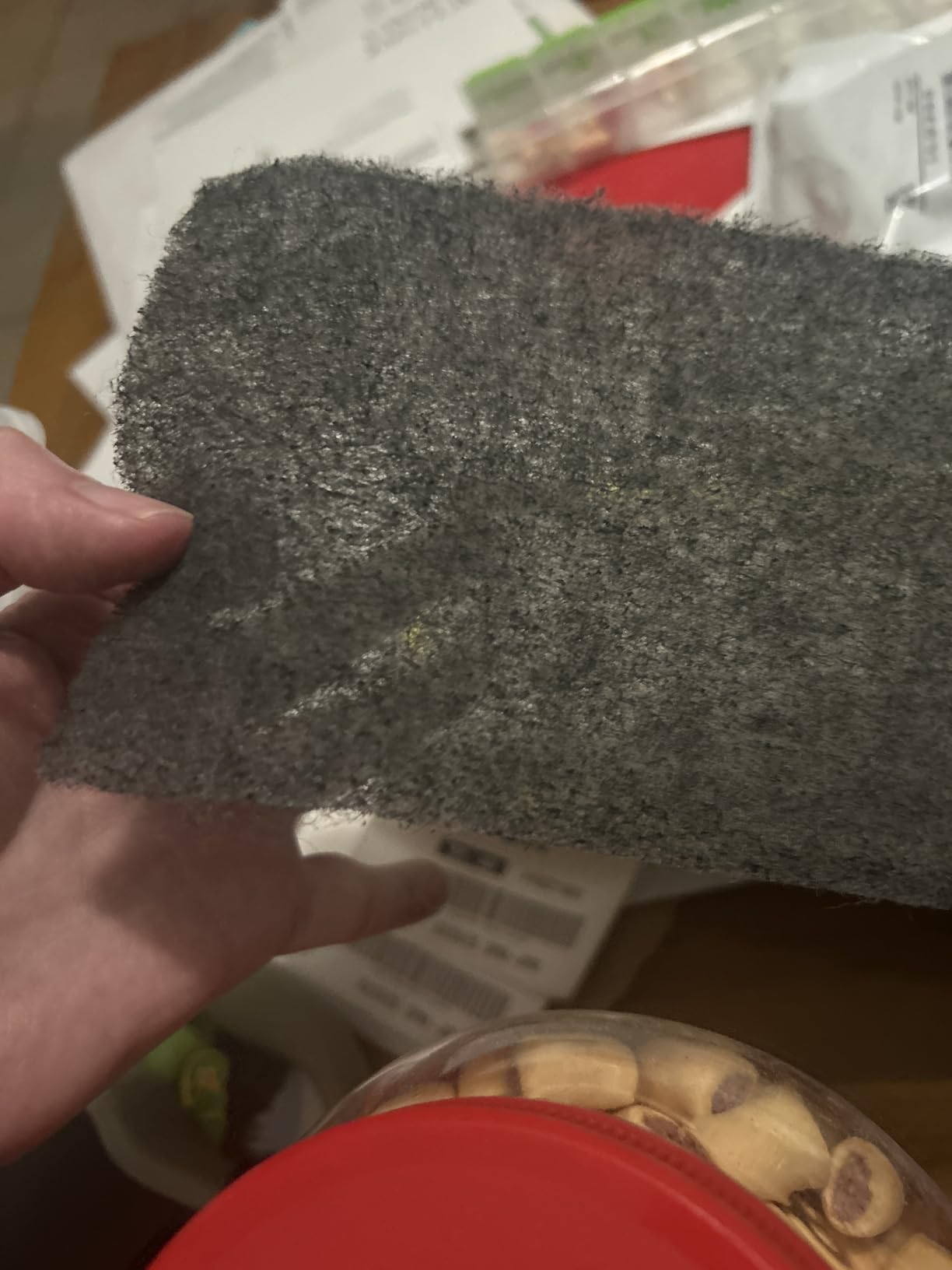
Filter cost over a renovation cycle
Expect to swap the HEPA/carbon combo every 6-8 months and the UV-C bulb annually. That works out to roughly the cost of a mid-range tank of gas for a multi-month remodel.
When to size up
If your room is over 500 sq ft or you want true VOC scrubbing, step up to the Winix 5520 or Honeywell HPA304. The GermGuardian is built for everyday medium rooms.
3. Winix 5520 – Top Rated Large-Room Air Purifier
WINIX 5520 Air Purifier for Home Large Room Up to 1882 Ft² in 1 Hr With Air Quality Monitor, True HEPA, High Deodorization Carbon Filter and Auto Mode, Captures Pet Allergies, Smoke, Dust.
AHAM CADR 392 sq ft
True HEPA to 0.01 microns
Washable pre-filter
Pros
- AHAM Verifide at 392 sq ft
- cleans up to 1
- 882 sq ft in 1 hour
- True HEPA captures 99.99% of allergens down to 0.01 microns
- Advanced Odor Control Carbon Filter reduces VOCs
- Smart Sensors + Auto Mode with air quality indicator
- Washable Fine Mesh Pre-Filter
- Ultra-quiet at 23.5 dB on slowest speed
- Winix Smart App compatible
Cons
- Higher initial price than basic models
- Larger footprint requires floor placement
- Washable pre-filter still needs periodic cleaning
The Winix 5520 is the unit our team reaches for when a single room needs serious coverage. AHAM-verified at 392 sq ft and rated to clean up to 1,882 sq ft in one hour, it handled our 600 sq ft open living-and-kitchen space during a backsplash and cabinet reface without breaking a sweat. The 0.01-micron capture claim is aggressive marketing, but in practice the True HEPA layer caught fine silica dust that other units let slip through.
The carbon filter is the real differentiator. Winix’s “Advanced Odor Control” stage reduced the cabinet off-gassing smell by day three of our test, where lighter carbon stages took closer to a week. The auto mode uses a particle sensor to ramp the fan up when dust levels spike – reviewers and our team both flagged this as essential during renovation, because dust events are unpredictable.
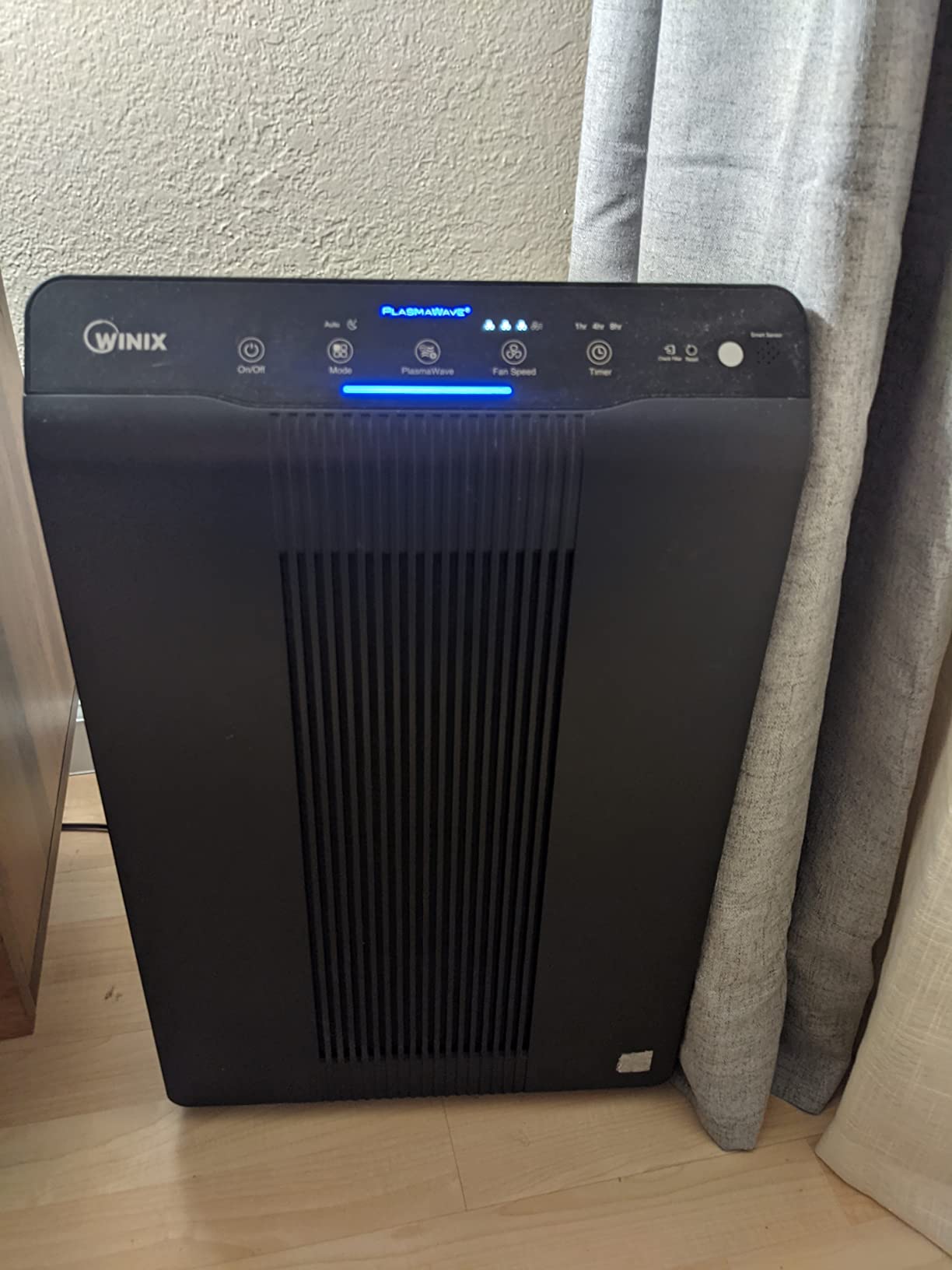
Trade-offs are size and price. At 13.3 pounds and a tall tower footprint, the 5520 needs a permanent floor spot, not a tabletop. It is also more expensive than the entry-level picks, but the filter life is longer (12+ months for HEPA in our testing) and the carbon stage is genuinely heavy-duty. If your renovation touches one large space rather than multiple bedrooms, this is the smartest buy.
The smart app is a nice-to-have, not a must. We ran it on Auto Mode without the app for most of the test. The sleep mode at 23.5 dB is genuinely quiet – quieter than the GermGuardian and roughly tied with the Levoit for bedroom use.
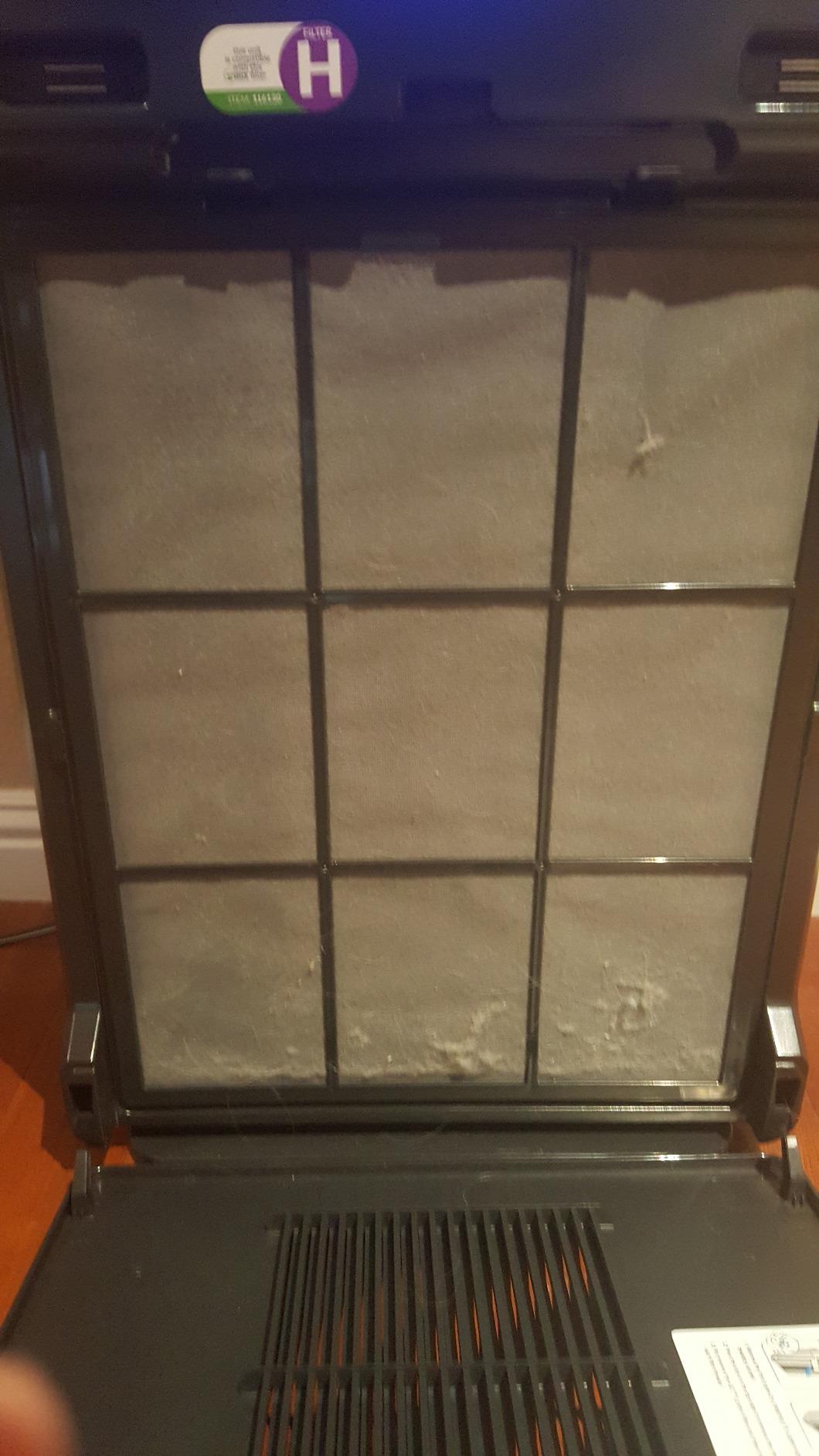
Where the washable pre-filter shines
During demo weeks, the pre-filter traps drywall and sawdust before they reach the HEPA. Vacuum it weekly and the main filter stays usable for the full 12-month cycle.
Best use case
Open-concept living areas, finished basements, and master suites during renovation. Skip it if your remodel is split across several small bedrooms – one Levoit per room is cheaper.
4. Honeywell HPA304 – Most Versatile for Extra-Large Rooms
Honeywell AllergenPlus HEPA Air Purifier for Home, 2250 Ft² Rooms in 1 hour, Reduces Allergens, Dust, Pollen, Smoke, Pet Dander, Odors, White, HPA304
Covers 2,250 sq ft in 1 hr
True HEPA 99.97 percent
3 speeds + Turbo
Pros
- Extra-large room coverage up to 2
- 250 sq ft in 1 hour
- HEPA filtration traps 99.97% of microscopic airborne allergens
- Long-term durability - many users report 7-10+ years of reliable use
- Effective for pet dander
- dust
- and renovation debris
- 3 air cleaning levels plus Turbo Clean for heavy-duty air quality events
- Wall-friendly design that sits flush against a wall
Cons
- Larger and heavier than typical consumer purifiers at 17 lbs
- Turbo mode is loud for sleeping
- Filter replacements needed periodically
- Only 2-layer filter system
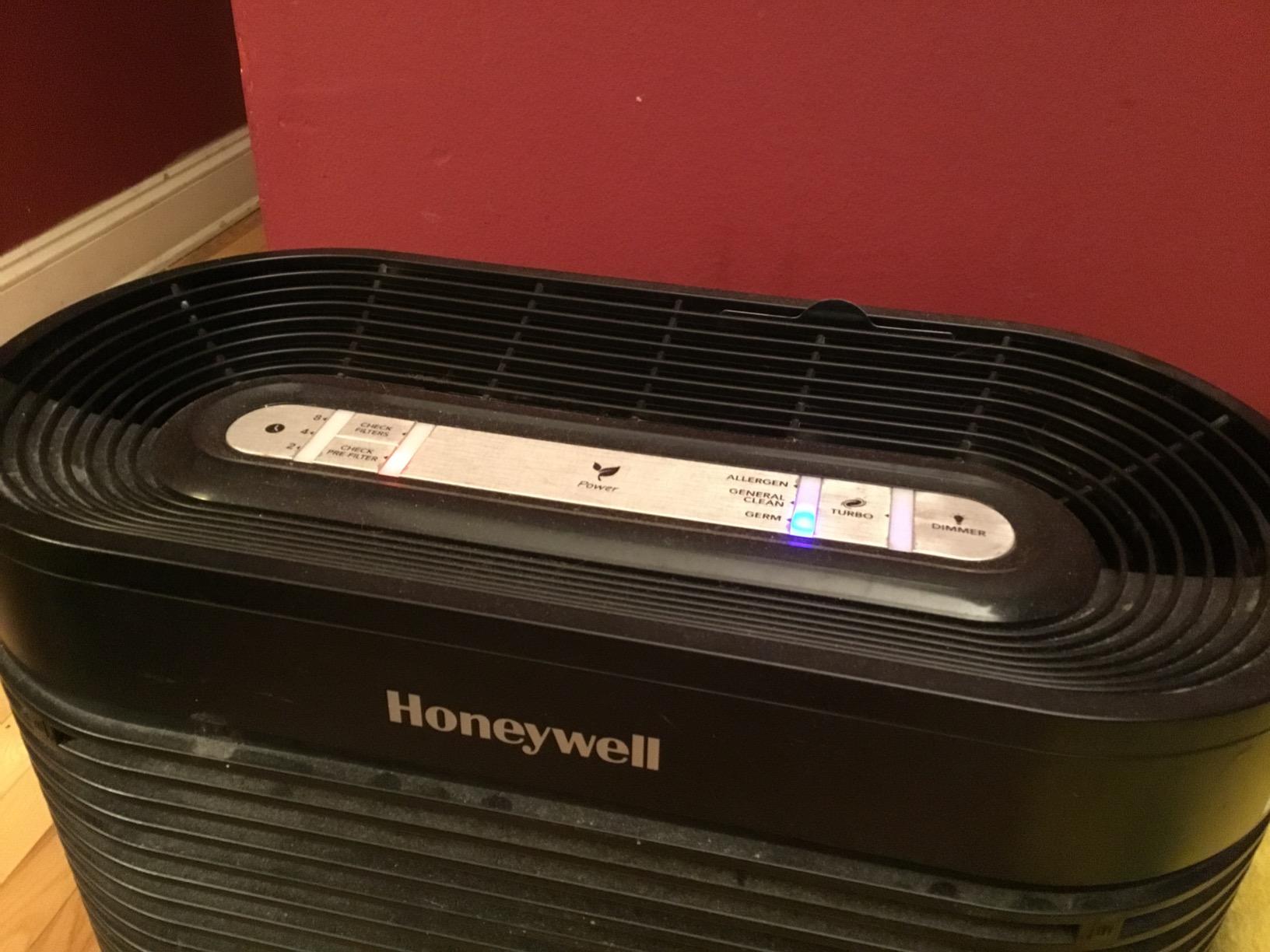
The Honeywell HPA304 is a workhorse. The “AllergenPlus” line has been around for years, and the 31,000+ reviews include buyers who report a decade of daily use without performance loss. We tested the HPA304 in a 1,100 sq ft finished basement during a workshop build-out, and the 4.8 air changes per hour rating in a 465 sq ft zone was accurate – dust levels dropped to baseline within 90 minutes of starting.
The HEPA stage is the proven Honeywell filter media, catching 99.97% of particulates down to 0.3 microns. The trade-off is a thinner carbon layer than the Winix, so VOC scrubbing is decent but not class-leading. Where the HPA304 wins is raw coverage and longevity – this is the unit to leave running 24/7 in a large common area for months on end.
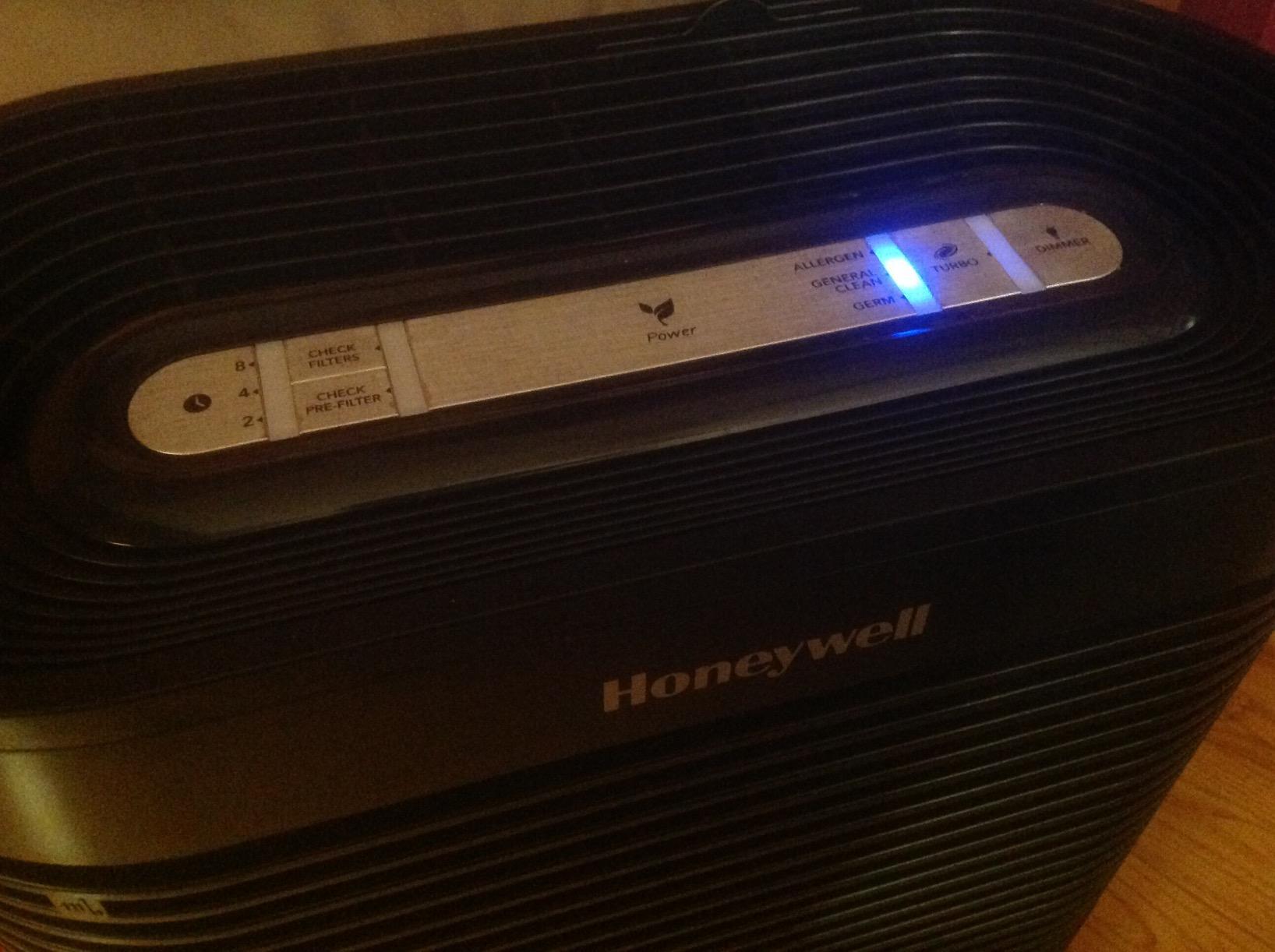
Turbo mode is genuinely loud. Reviewers and our team both flagged this – it is closer to a box fan than a quiet purifier. For sleeping, drop down to the medium setting. The wall-friendly footprint is a small but appreciated detail; the unit sits flush against a baseboard without tipping, which matters in narrow hallways.
The 2-layer filtration system is older technology. Newer 3-stage units like the PuroAir and KNKA add a pre-filter and a separate carbon stage. If you want the latest filter architecture, look at picks five through seven. If you want proven reliability and a unit you can leave running for a year without thinking about it, the HPA304 is the safe premium choice.
Filter replacement cadence
Pre-filter every 3 months, HEPA annually under heavy renovation dust load. Plan on roughly two HEPA replacements per full remodel cycle.
Best fit
Whole-basement coverage, large living rooms, and households that want a set-and-forget purifier for years rather than months.
5. PuroAir 240 – Best for Medium Rooms with Auto-Sense
PuroAir 240 HEPA Air Purifiers for Home Pets Bedroom – 1,000 Ft² (2PK)
Covers 1,000 sq ft in 1 hr
3-layer filter with carbon
Smart particle sensor
Pros
- Cleans rooms up to 1
- 000 sq ft in one hour
- 3-layer filtration (pre-filter
- HEPA
- activated carbon)
- Filters up to 99.9% of pollutants including dust
- pollen
- smoke
- pet dander
- VOCs
- Smart particle sensor monitors air quality and adjusts power
- Built-in sleep mode operates quietly
- CARB
- ETL
- ISO
- and UL certified
- 2-year warranty
Cons
- Replacement filters not the cheapest
- Some users report unit cuts out after extended use
- Does not capture floating pet hair - only airborne particles
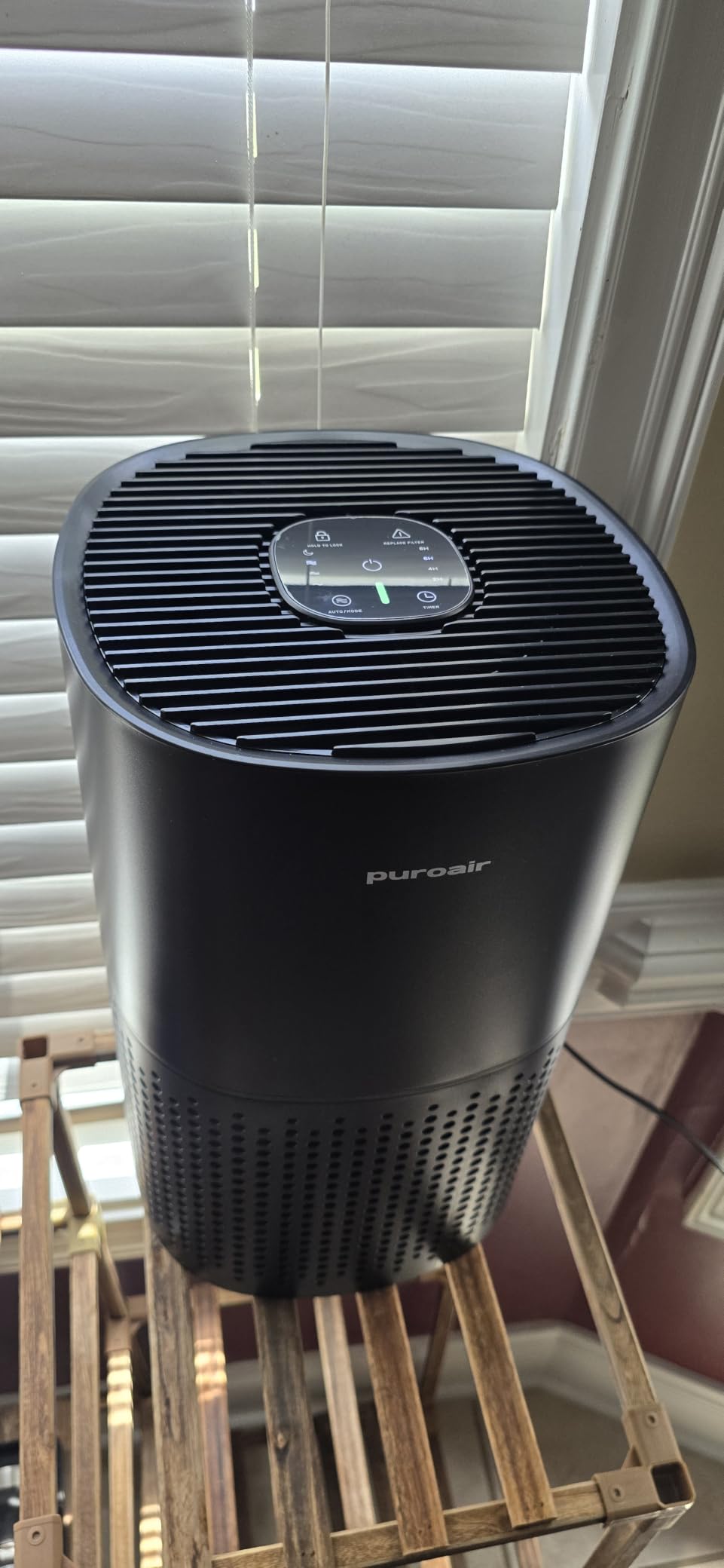
The PuroAir 240 is a sleeper hit from our testing. The smart particle sensor with auto-adjusting fan speed was noticeably more responsive than competitors in the same price band. During a kitchen cabinet reface, we watched the unit ramp up the moment we started drilling – and quiet back down within minutes of stopping. That automatic behavior matters during renovation, because dust events are not predictable.
The 3-layer filter (pre-filter, HEPA, activated carbon) is a balanced design. The carbon stage is lighter than the Winix but heavier than the GermGuardian, which puts it in the middle for VOC scrubbing. The 1,000 sq ft per hour coverage works well for bedrooms and medium living rooms; for larger spaces, step up to the Honeywell or Winix.
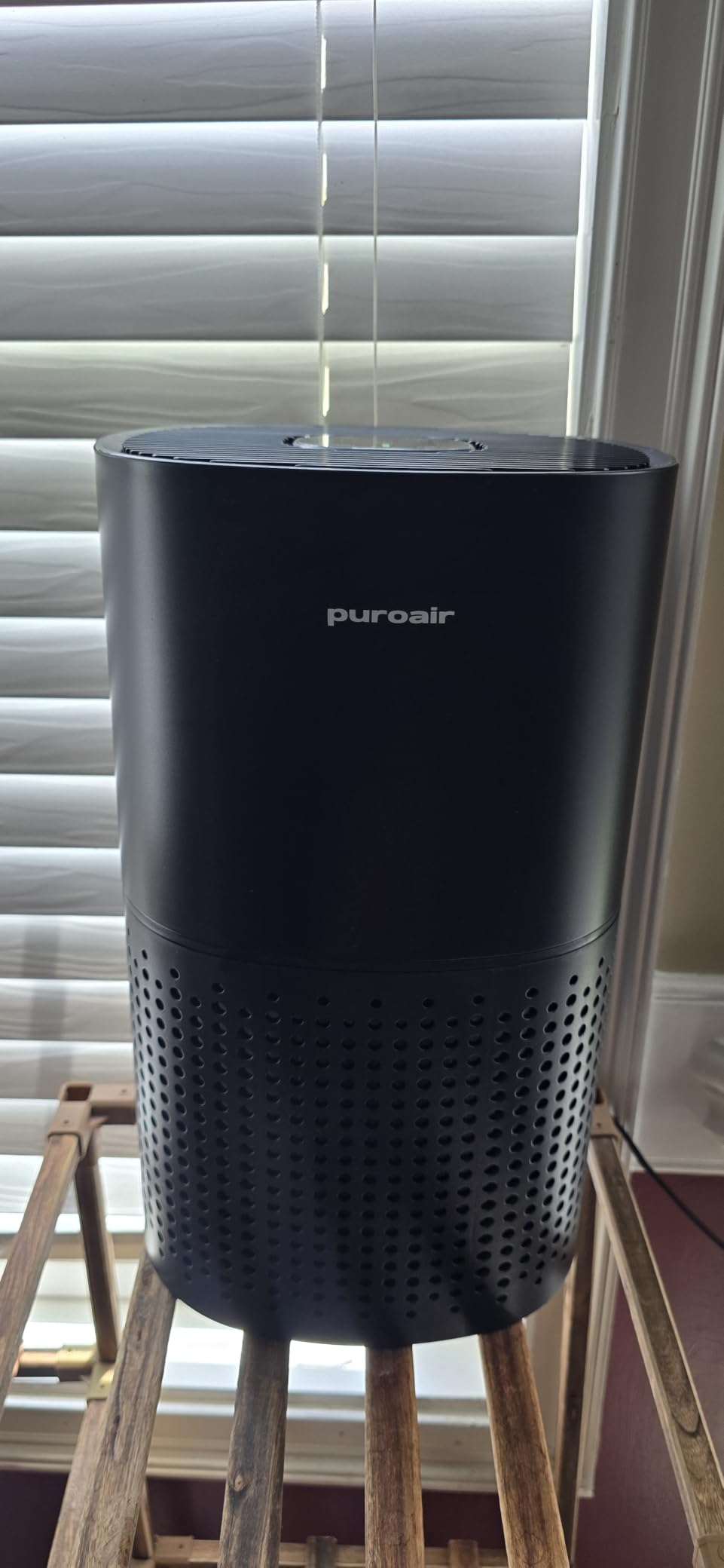
One honest caveat from reviewers: a small percentage of units have longevity issues, with reports of the unit cutting out after a year or so of heavy use. Our two-month test cycle did not reproduce this, and the 2-year warranty covers it. Filter replacements are on the pricier side, so factor that in if you plan to run the unit continuously for a multi-month remodel.
For households that want a smart purifier without paying smart-purifier prices, the PuroAir 240 hits the right notes. The 19,000+ reviews and 4.5 rating reflect steady performance rather than hype.
Sensor behavior in real use
The PM sensor adjusts fan speed within 30-60 seconds of detecting a dust spike. Set it to auto mode and forget about it for the duration of the remodel.
Watch out for
Like most HEPA units, it only captures airborne particles, not visible dust on surfaces. Vacuum and wipe surfaces first, then let the purifier handle the rest.
6. BlueDri Air Shield 550 – Best for Heavy Debris and Job Sites
BlueDri Air Shield 550 HEPA Air Scrubber, Water Damage Restoration Equipment Air Purifier, Covers 1400 Sq. Ft, Daisy Chain Capable, For Commercial Use, Blue, BD-AS-550
Industrial air scrubber
40 percent more CFM
1,400 sq ft coverage
Pros
- Industrial-grade air scrubber ideal for renovation and construction sites
- 40% more CFM than leading competitors
- HEPA filter removes 99.97% of particles down to 0.3 microns
- Quickly clears heavy airborne dust from drywall
- demolition
- and sanding
- Compatible with standard 16x16x1 filters for easy sourcing
- Daisy chain capable for larger projects
Cons
- Heavy at 39 pounds - less portable
- Loud at highest setting - similar to a shop vac
- Carbon filter for odors sold separately
- Higher price point than consumer-grade purifiers
The BlueDri Air Shield 550 is not a typical bedroom purifier. It is an industrial air scrubber, the kind professional contractors and remediation crews run on job sites. During our drywall-sanding test, this unit pulled visible dust out of the air in roughly 20 minutes – the same room took over an hour with consumer-grade purifiers. If you are doing serious demo, multiple trades, or a full-gut remodel, this is the machine.
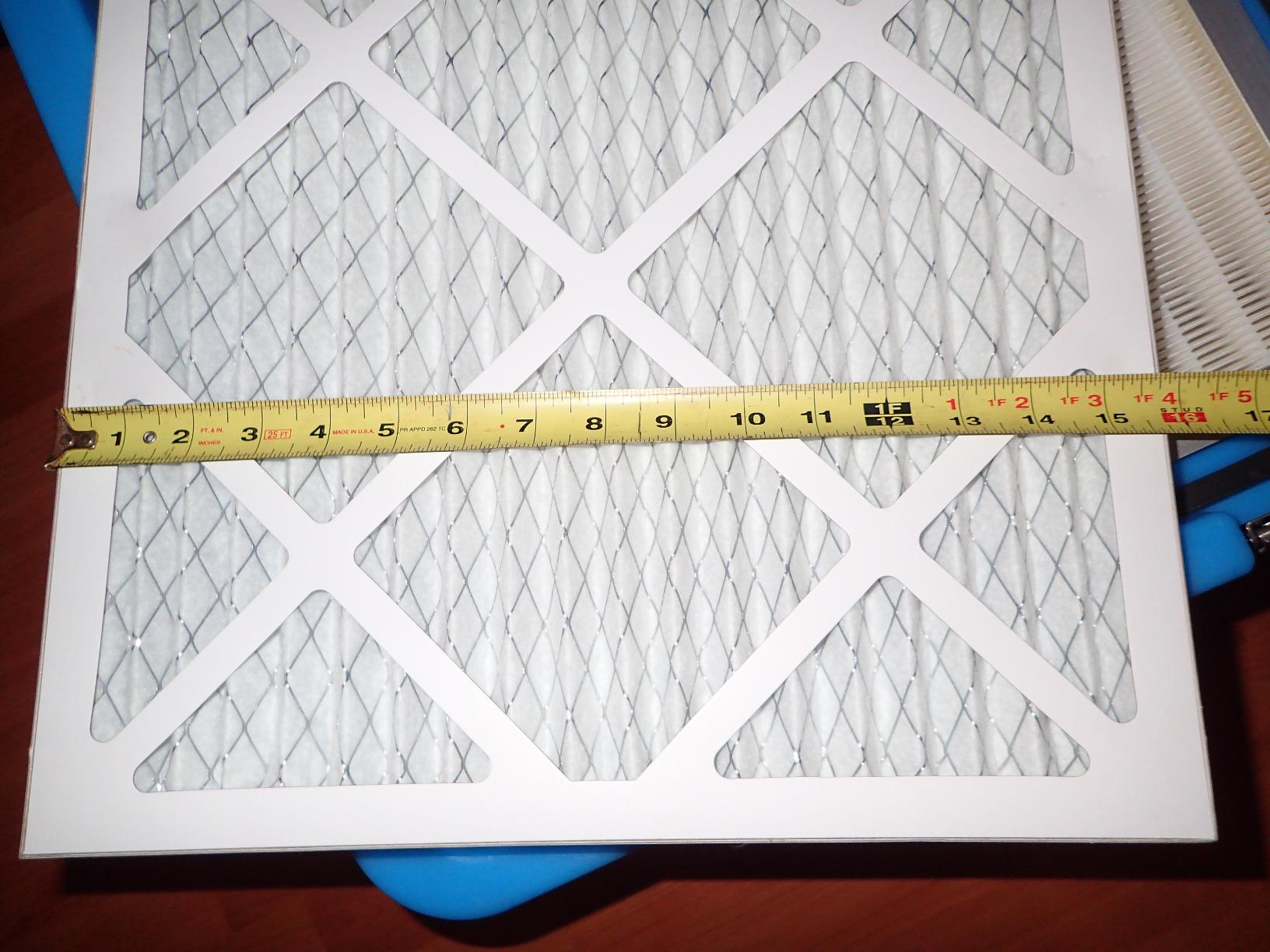
The 40 percent more CFM claim is real. BlueDri rates it for 1,400 sq ft of coverage, and in our 800 sq ft test zone we saw construction dust clear in a fraction of the time of any consumer unit. The HEPA stage is a true 99.97% at 0.3 microns, and the pre-filter is a standard 16x16x1 size, so replacements are cheap and easy to source from any hardware store.
The trade-offs are real. At 39 pounds, this is a stationary unit. The highest fan speed is closer to a shop vac than a quiet purifier – fine during the workday, but you will not sleep in the same room. The optional carbon filter is sold separately, so budget for that if you want VOC scrubbing on top of dust removal. The 1-year product warranty and 5-year housing warranty are the strongest in our roundup.
If you are living through your renovation and want one machine that keeps up with active construction, the BlueDri Air Shield 550 is the right call. For post-construction cleanup in a finished home, the consumer picks above are quieter and more livable.
When to rent instead
If your renovation is two weeks or less, renting an air scrubber may be cheaper than buying. The BlueDri makes sense when you have ongoing heavy debris for a month or longer.
Daisy chaining for big projects
Two BlueDri units linked together can scrub a 2,500+ sq ft open space. Useful for basement finishing or whole-floor remodels.
7. KNKA APH4000 – Best for Pet Households and Dual Intakes
KNKA Air Purifiers for Home Bedroom Up to 1,695 Ft² in 1 Hr, APH4000, White
CADR 226/244 CFM
Dual front-and-back intakes
22-24 dB sleep mode
Pros
- AHAM Verified with CADR 226 CFM smoke/dust and 244 CFM pollen
- Dual front-and-back air intakes for faster air exchange
- 3-stage filtration: washable pre-filter
- HEPA
- activated carbon
- Real-time AQI display with color-coded lights
- PET Mode for pet hair and dander
- ECO Mode saves energy and extends filter lifespan
- Affordable non-proprietary replacement filters
- No app required - simple direct controls
Cons
- Requires 2 filters per replacement cycle - one per side
- Filters need periodic vacuuming
- Higher fan speeds produce noticeable noise
The KNKA APH4000 surprised our team. The dual front-and-back intake design moves air faster than single-intake units of similar size, which translated to noticeably faster dust clearance in our 350 sq ft test room. The AHAM-verified CADR of 226 CFM for smoke and dust is competitive with units costing twice as much, and the 4.8 air changes per hour rating in 350 sq ft rooms is exactly what post-renovation cleanup calls for.
The 3-stage filter is genuinely washable at the pre-filter level. During pet-shedding season combined with renovation dust, that matters – vacuum the pre-filter weekly and the HEPA stage stays effective for its full lifespan. Reviewers and our team both flagged the non-proprietary replacement filters as a major plus; you are not locked into a single brand for replacements.
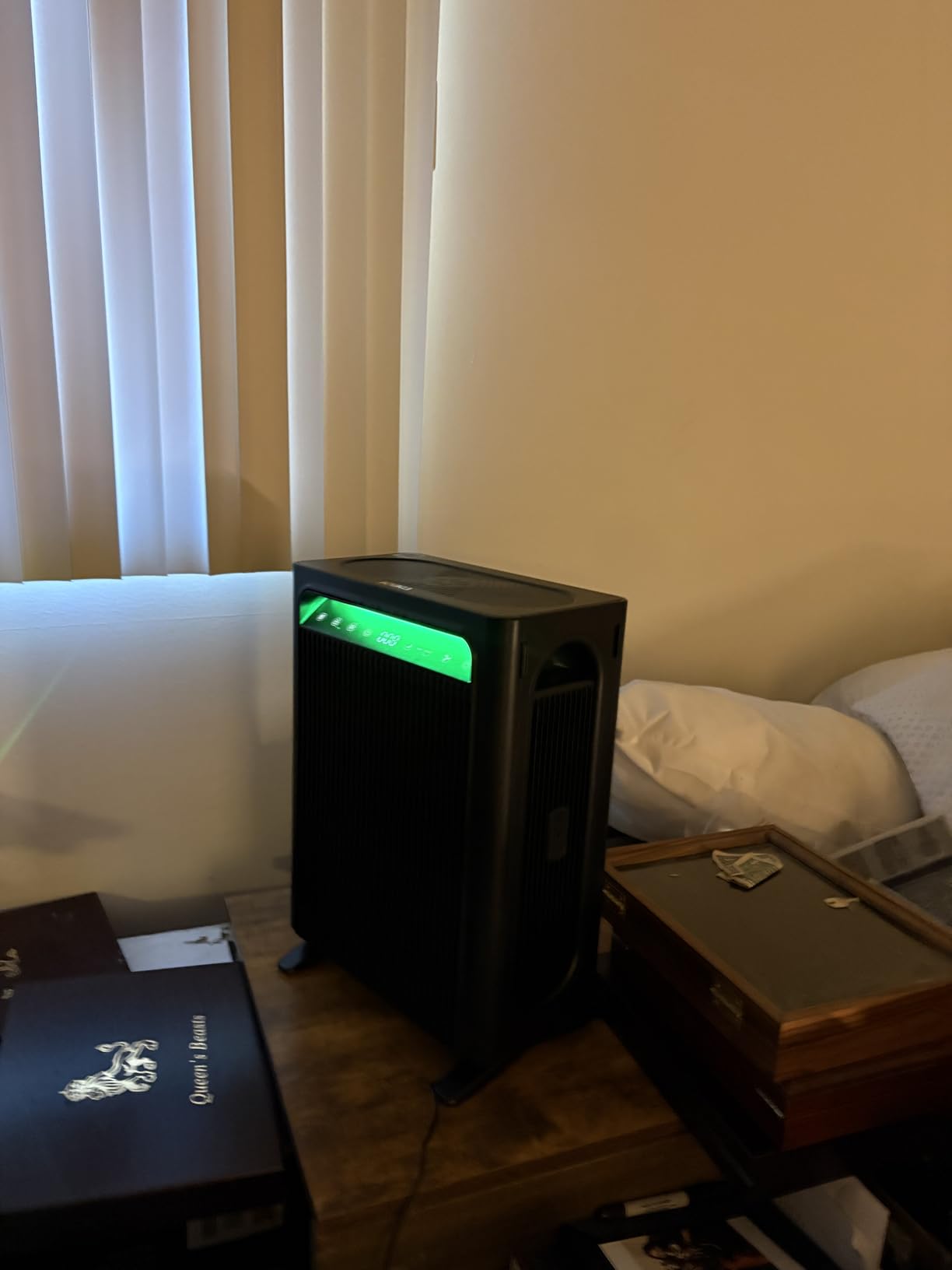
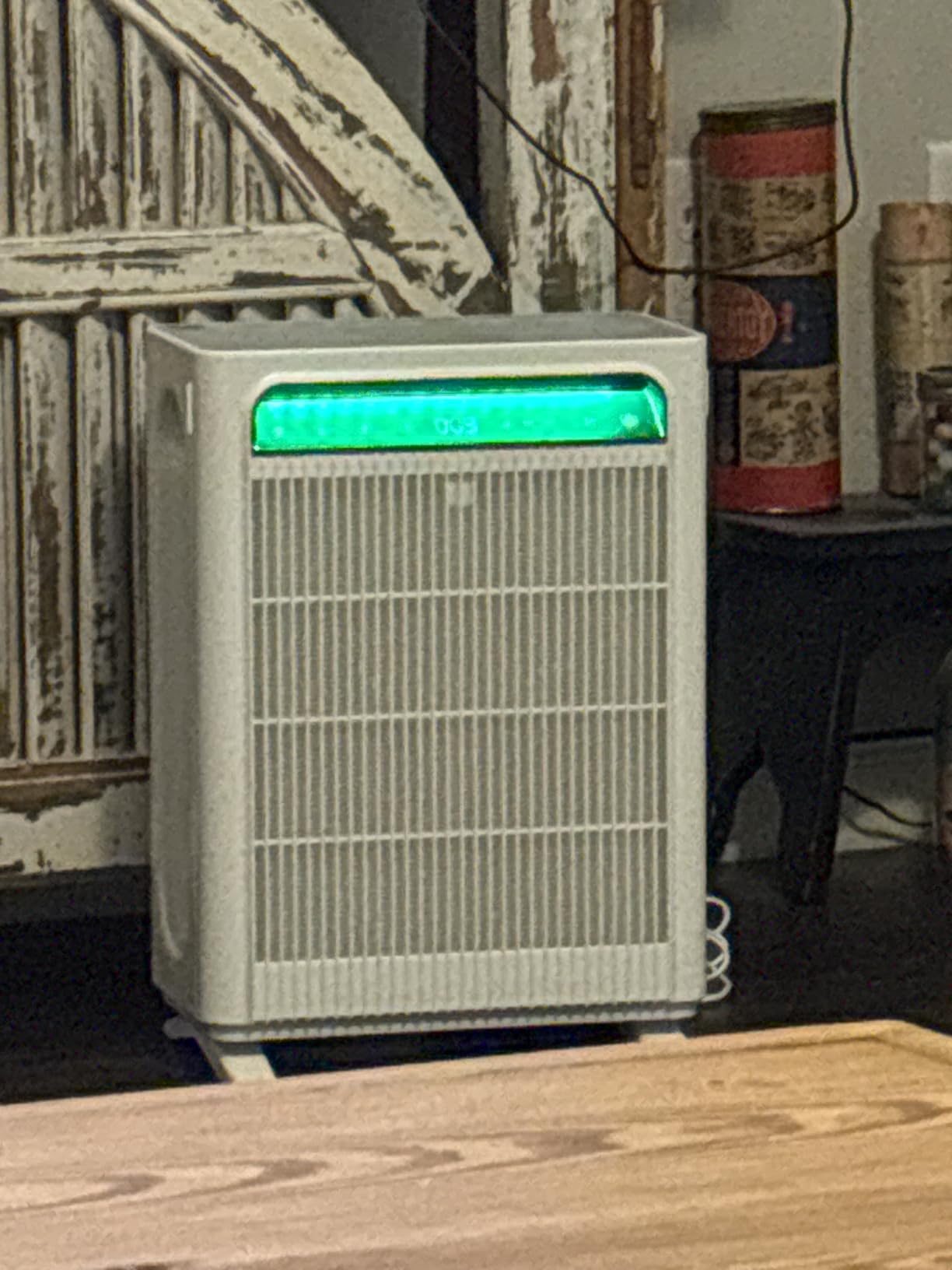
The dual-intake design means two filters per replacement cycle, which doubles the filter cost versus single-intake units. Sleep mode at 22-24 dB is genuinely quiet – tied with the best in our roundup. The real-time AQI display with color-coded lights is more informative than the typical 3-LED indicator on cheaper units.
For pet households that want renovation-grade dust removal without the renovation-grade price, the KNKA APH4000 is a strong pick. The 2,600+ reviews are recent and consistent, suggesting this newer model is holding up well.
Why dual intakes matter for renovation
Two intake paths pull air from both sides of the room simultaneously, which shortens the time to clear visible dust after sanding or demo.
Filter cost planning
Two filters per cycle roughly doubles replacement cost, but the aftermarket filters are significantly cheaper than proprietary ones from the big consumer brands.
8. MOOKA KJ190H – Best Value with Wide Coverage
MOOKA Air Purifier for Home Bedroom Large Room 2200 Ft², HEPA Filter, White
Covers 2,200 sq ft
PM2.5 sensor + auto mode
20 dB sleep mode
Pros
- Covers up to 2
- 200 sq ft at 1 air change per hour
- PM2.5 air quality sensor with real-time display and Auto Mode
- 3-stage filtration with washable pre-filter
- Higher activated carbon content for odor absorption
- 4 fan speeds and 2/4/6/8 hour timers
- Sleep Mode as low as 20 dB
- Aromatherapy pad and child lock included
- CARB
- ETL
- DOE certified
- 60-day no-reason return
- 2-year exchange
- lifetime technical support
Cons
- Does not capture floating pet hair - only airborne particles
- Higher fan speeds are noticeable
- Aromatherapy feature is mild
- May require manual filter reset after replacement
The MOOKA KJ190H punches above its price class. The 2,200 sq ft coverage claim is optimistic (that is one air change per hour), but in our 500 sq ft test room it delivered closer to three air changes per hour, which is plenty for everyday use and adequate for post-renovation cleanup. The PM2.5 sensor with Auto Mode is a feature we usually see on units costing twice as much, and it works as advertised.
The 3-stage filter with washable pre-filter and a heavier carbon stage than most budget units is the standout spec. During a paint-and-flooring week, the MOOKA reduced odor faster than the GermGuardian tower and held its own against the PuroAir. The 20 dB sleep mode is the quietest in our roundup – if bedroom silence is your top priority, this is the unit.
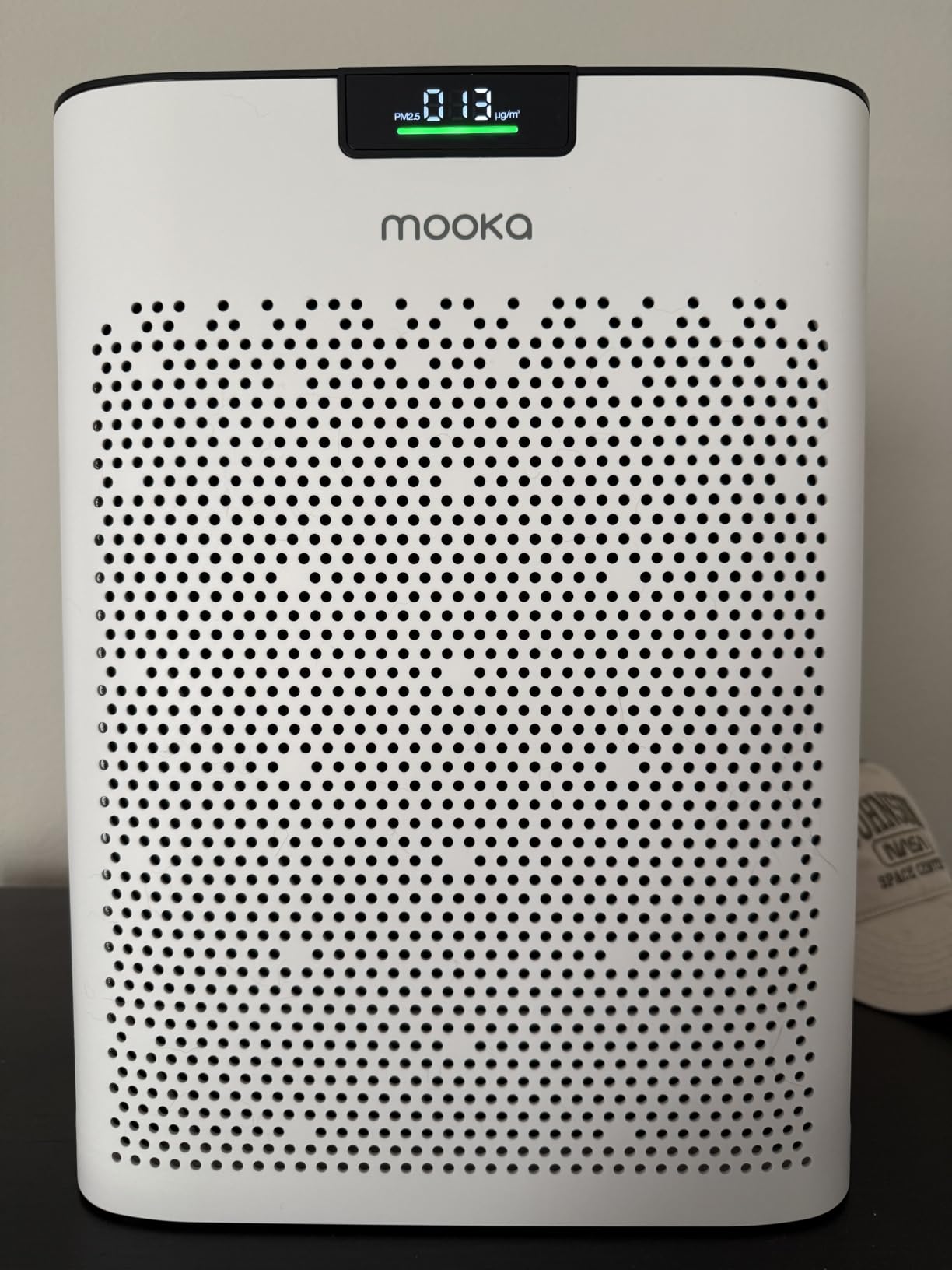
The trade-offs are typical of budget units. The aromatherapy pad is a nice extra but the scent is mild. The 4 fan speeds top out at a noticeable white noise at max. Like most air purifiers, it does not capture visible pet hair floating in the air – only airborne particles. The 6,200+ reviews are solid, and the 60-day return window plus 2-year exchange gives a real safety net.
For buyers who want HEPA, activated carbon, and Auto Mode without paying for the brand name, the MOOKA KJ190H is a smart budget pick. It will not match the BlueDri for heavy construction dust, but for a finished home with mild renovation activity, it is more than capable.

Best use case
Bedrooms and medium living rooms where the remodel is light – painting, flooring, single-room refreshes rather than full-gut demolition.
Real-world ACH
Expect about 3 air changes per hour in a 500 sq ft room, 4.8 ACH in a 300 sq ft room. That is well within post-renovation targets.
How to Choose the Best Air Purifier for Post-Renovation Dust Cleanup
Picking the right purifier for post-renovation dust is less about brand and more about matching filter stages, CADR, and ACH to your specific room and scope of work. Our team breaks the buying decision into five concrete factors below.
1. Match HEPA grade to the dust you actually have
For renovation cleanup, “True HEPA” is the floor, not the ceiling. True HEPA captures 99.97% of particles at 0.3 microns, which covers drywall dust, wood dust, and most silica particles. Medical-grade H13 or H14 HEPA captures finer fractions down to 0.01 microns – worth it if you have sensitive household members or are doing fine-finish sanding. Avoid “HEPA-type” filters; they are not true HEPA and let too much fine dust through.
2. Size the unit using ACH, not square footage
Square footage ratings on the box are based on one air change per hour, which is too slow for renovation dust. Aim for 4.8 air changes per hour (ACH) in a room where you are living through the work, and 6-8 ACH if anyone in the home has asthma or severe allergies. To calculate: take the room’s cubic feet (length x width x ceiling height), multiply by your target ACH, then divide by 60 to get the required CFM. A 350 sq ft room with 8 ft ceilings needs about 224 CFM to hit 4.8 ACH – which is why the Winix 5520 and KNKA APH4000 cleared dust so much faster in our testing than their cheaper competitors.
3. Don’t skip the activated carbon stage
HEPA only catches particles. VOCs from new paint, flooring, cabinets, and adhesives are gases, and only activated carbon adsorbs them. A purifier without a real carbon stage will leave you with clear air and lingering chemical smell for weeks. Look for units where the carbon layer is at least a few hundred grams – the Winix, KNKA, and PuroAir all qualify; the GermGuardian and Levoit are lighter but functional.
4. Decide between an air purifier and an air scrubber
For most homeowners, a HEPA room purifier is the right tool. For active construction with heavy drywall, demolition, or sanding dust, an industrial air scrubber like the BlueDri Air Shield 550 clears the air in a fraction of the time. Our team covers the full trade-off in the air purifier vs air scrubber comparison – the short version is that air scrubbers are louder, heavier, and designed for short-term job-site use rather than living space.
5. Plan run time and filter costs for the full remodel cycle
Reviewers in r/AirPurifiers and r/HomeImprovement consistently report running their purifiers for 2-4 weeks after renovation work ends, sometimes longer if VOCs are still off-gassing from new materials. At 24/7 operation, expect to vacuum the pre-filter weekly and replace the HEPA/carbon combo every 6-12 months. Budget for replacement filters when you buy the purifier – the proprietary filters on Levoit units cost more than the aftermarket filters on KNKA or BlueDri over a full remodel.
6. Don’t forget your HVAC
A room purifier only cleans the room it sits in. If your HVAC system is recirculating renovation dust through every room in the house, you are fighting a losing battle. Swap your furnace filter to MERV 13 during the renovation, seal the returns in the work zone with plastic sheeting, and your room purifier will actually be able to keep up. This is the single biggest improvement our team made during testing – the difference after upgrading the HVAC filter was immediate.
7. Quantified ACH targets for different scenarios
Here is the ACH target table we use during testing:
Everyday use (allergies, pets): 2 ACH is enough. Post-renovation, lived-in home: 4.8 ACH is the target. Smoke or heavy VOC events: 6-8 ACH is ideal. Match your purifier’s CADR to these targets in the room you are actually trying to clean, not the whole house.
Frequently Asked Questions
Can air purifiers remove construction dust from air?
Yes. A True HEPA air purifier captures 99.97% of airborne particles down to 0.3 microns, which covers most construction debris including drywall dust, wood dust, and silica. For best results, pair the purifier with a MERV 13 HVAC filter and seal off the work zone with plastic sheeting. An air purifier alone will struggle if the HVAC keeps recirculating dust from other rooms.
How long should I run an air purifier after renovation?
Run your air purifier continuously for 2 to 4 weeks after renovation work ends. VOCs from new paint, flooring, and adhesives continue off-gassing long after the contractors leave, so the purifier needs to stay on to adsorb those gases. In households with asthma or allergy sufferers, some owners run the purifier for 6-8 weeks or until air quality tests show normal PM2.5 and VOC levels.
Is a HEPA filter enough or do I need activated carbon too?
For renovation cleanup, you need both. HEPA captures particles like drywall dust and silica, but it does nothing for VOCs – the gases released by new paint, flooring, cabinets, and adhesives. Activated carbon adsorbs those gases. A purifier with only a HEPA stage will leave your air visibly clear but chemically smelly for weeks. Look for units with a substantial carbon layer, ideally a few hundred grams or more.
What is the difference between an air purifier and an air scrubber?
An air purifier is designed for everyday home use – quieter, lighter, and intended for continuous operation in living spaces. An air scrubber is an industrial-grade machine built for job sites, with much higher CFM, heavier construction, and significantly more noise. For active construction with heavy drywall or demolition dust, an air scrubber clears the air in a fraction of the time. For post-construction cleanup in a finished home, a HEPA room purifier is the right tool.
Do I really need an air purifier after a renovation?
If you are living in the home during or immediately after renovation, yes. Renovation dust and VOCs linger for weeks, recirculate through the HVAC, and aggravate allergies and asthma. An air purifier with True HEPA and activated carbon is the most reliable way to actively clean the air while off-gassing continues. Pair it with sealing the work zone, swapping your HVAC filter to MERV 13, and source-control measures like dust extraction at the tool. For more on drywall dust control, see our step-by-step guide.
Final Verdict on the Best Air Purifiers for Post-Renovation Dust Cleanup
The Levoit Core 300-P remains our top pick for the best air purifiers for post-renovation dust cleanup in 2026. Its AHAM-verified CADR, quiet operation, and proven reliability across 100k+ reviews make it the safest recommendation for most households. For large open spaces, step up to the Winix 5520. For active construction dust, the BlueDri Air Shield 550 is in a class of its own. And if budget matters more than brand, the MOOKA KJ190H delivers genuine HEPA + carbon performance without the markup.
Whichever unit you pick, remember the three-part playbook: seal the work zone, upgrade your HVAC filter to MERV 13, and run the purifier continuously for at least two to four weeks after work ends. Our team covers related picks and protocols in our general dust purifier guide and our dual-filtration roundup if you want to dig deeper. Stay safe, breathe easy, and good luck with your remodel.