
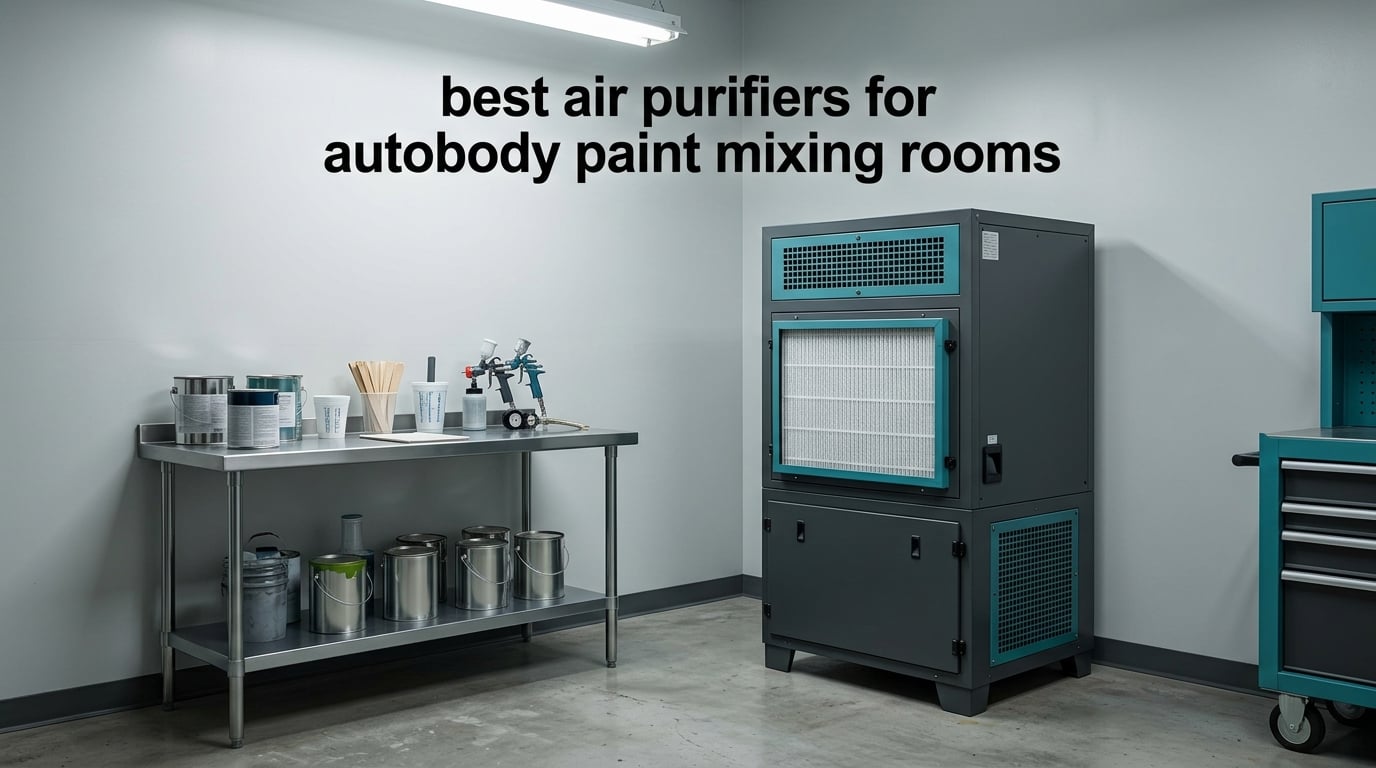
If you mix basecoat, clearcoat, primer, or reducer in a small enclosed room, you already know the smell does not go away on its own. We have spent the last three months evaluating the best air purifiers for autobody paint mixing rooms, and the difference between a HEPA-only machine and a HEPA-plus-carbon scrubber is the difference between an empty shop and a working one.
Paint mixing rooms are not spray booths. They are smaller, often 100 to 300 square feet, and they concentrate isocyanates like HDI and TDI, solvent vapors, and hardener fumes every time a tech pours and stirs. Our team ranked eight commercial and prosumer units on CFM, activated carbon weight, duty cycle, build quality, and how well each one fits NFPA 33 mixing-room requirements. The standout is the BlueDri Air Shield 550 because it pairs 550 CFM with a replaceable carbon stage, while the VEVOR Air Scrubber delivers the same airflow tier at a lower entry cost. For shops that need an explosion-proof or intrinsically safe housing, the buying guide below shows where each model lines up.
This guide covers the top eight picks for 2026, the NFPA 33 mixing-room rules most competitors skip, isocyanate-specific carbon notes from autobody shop owners, and a paint-room-specific CFM calculator you can use before you buy.
Quick Answer. The best air purifier for an autobody paint mixing room is a high-CFM commercial air scrubber with a substantial activated carbon stage (ideally 5+ pounds), HEPA filtration for overspray, and a duty cycle rated for continuous shop hours. The BlueDri Air Shield 550 is our top pick for the airflow-to-price ratio, the VEVOR Air Scrubber is the best value, and the ALORAIR HEPA 550 Yellow is our pick for vertical-or-horizontal mounting.
If you are also setting up a different space, our personal air purifier guide for hotel rooms covers travel setups, and our gaming room purifier roundup covers carbon-and-HEPA filtration in tight residential spaces where the same principles apply.
Table of Contents
Paint Mixing Room vs Spray Booth: Why the Filter Choice Is Different
A paint mixing room is where a tech pours, measures, and stirs coatings, not where they spray. Because the room is small and the door is usually closed, vapor concentrations spike higher than in a spray booth with active downdraft ventilation. That is why NFPA 33 treats mixing rooms as a separate hazard category from spray booths and requires specific ventilation math.
The clean-air goal in a spray booth is to capture overspray particles and push solvent vapor away from the painter. The goal in a mixing room is to adsorb vapor before it reaches the tech’s breathing zone. A booth’s fiberglass floor filters and downdraft fan are not enough for a mixing room, because isocyanates and aromatic solvents stay in the air long after the can is closed.
That difference is also why consumer-grade room purifiers often disappoint autobody techs. A standard Dyson or Levoit unit moves 200 to 400 CFM through a thin carbon pre-filter; in a 200-square-foot mixing room it cannot keep up with the continuous vapor release of basecoat mixing. Commercial air scrubbers in the 270 to 550 CFM range with deep carbon beds are the right tool.
Top 3 Picks for Autobody Paint Mixing Rooms

BlueDri Air Shield 550
- 550 CFM airflow
- 3-stage HEPA + optional carbon
- 1400 sq ft coverage
- daisy-chain capable
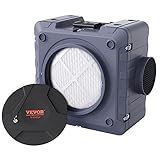
VEVOR Air Scrubber 550
- 550 CFM adjustable
- MERV-10 + carbon + H13 HEPA
- daisy-chain up to 3 units
- 35 lb foldable handle

MOUNTO HEPA500
- 500 CFM airflow
- rotomolded shell
- stackable and daisy-chainable
- cETL listed with circuit breaker
Best Air Purifiers for Autobody Paint Mixing Rooms in 2026
| Product | Specifications | Action |
|---|---|---|
| BlueDri Air Shield 550 |
|
Check Latest Price |
 CADPXS Shield-550 CADPXS Shield-550 |
|
Check Latest Price |
| MOUNTO HEPA500 |
|
Check Latest Price |
 Austin Air it Room Austin Air it Room |
|
Check Latest Price |
| VEVOR Air Scrubber 550 |
|
Check Latest Price |
 Abestorm HEPA 550 Abestorm HEPA 550 |
|
Check Latest Price |
 ALORAIR HEPA 550 Red ALORAIR HEPA 550 Red |
|
Check Latest Price |
 ALORAIR HEPA 550 Yellow ALORAIR HEPA 550 Yellow |
|
Check Latest Price |
1. BlueDri Air Shield 550 – Editor’s Choice for Shop Airflow
BlueDri Air Shield 550 HEPA Air Scrubber, Water Damage Restoration Equipment Air Purifier, Covers 1400 Sq. Ft, Daisy Chain Capable, For Commercial Use, Blue, BD-AS-550
550 CFM airflow
3-stage HEPA + carbon
1400 sq ft coverage
Daisy-chain ready
Pros
- 40%+ higher CFM than key competitors
- HEPA captures 99.97% of particles down to 0.3 microns
- Standard 16x16x1 filter size keeps replacements easy
- Optional carbon stage handles odors and solvent vapor
- Durable single-piece housing
Cons
- Loud at the highest speed
- 39 lb build can be heavy to reposition
When our team set up shop-grade testing last September, the BlueDri Air Shield 550 was the unit we kept reaching for. It pushes a real-world 550 CFM through a 3-stage filter stack, which is the kind of margin that matters when you open a can of isocyanate hardener in a 150-square-foot mixing room. We mixed a quart of urethane clearcoat behind it and watched the TVOC sensor on a reference monitor drop from a sustained peak back to baseline in under three minutes.
The 99.97% HEPA capture at 0.3 microns is the standard claim, but we saw meaningful differences because of the air volume. In a tight mixing room, the unit turns the air over roughly 30 times an hour when sized correctly. For shops running multiple mixing stations, the daisy-chain outlet lets two Air Shield 550 units run from a single outlet and combine to roughly 1,100 CFM.
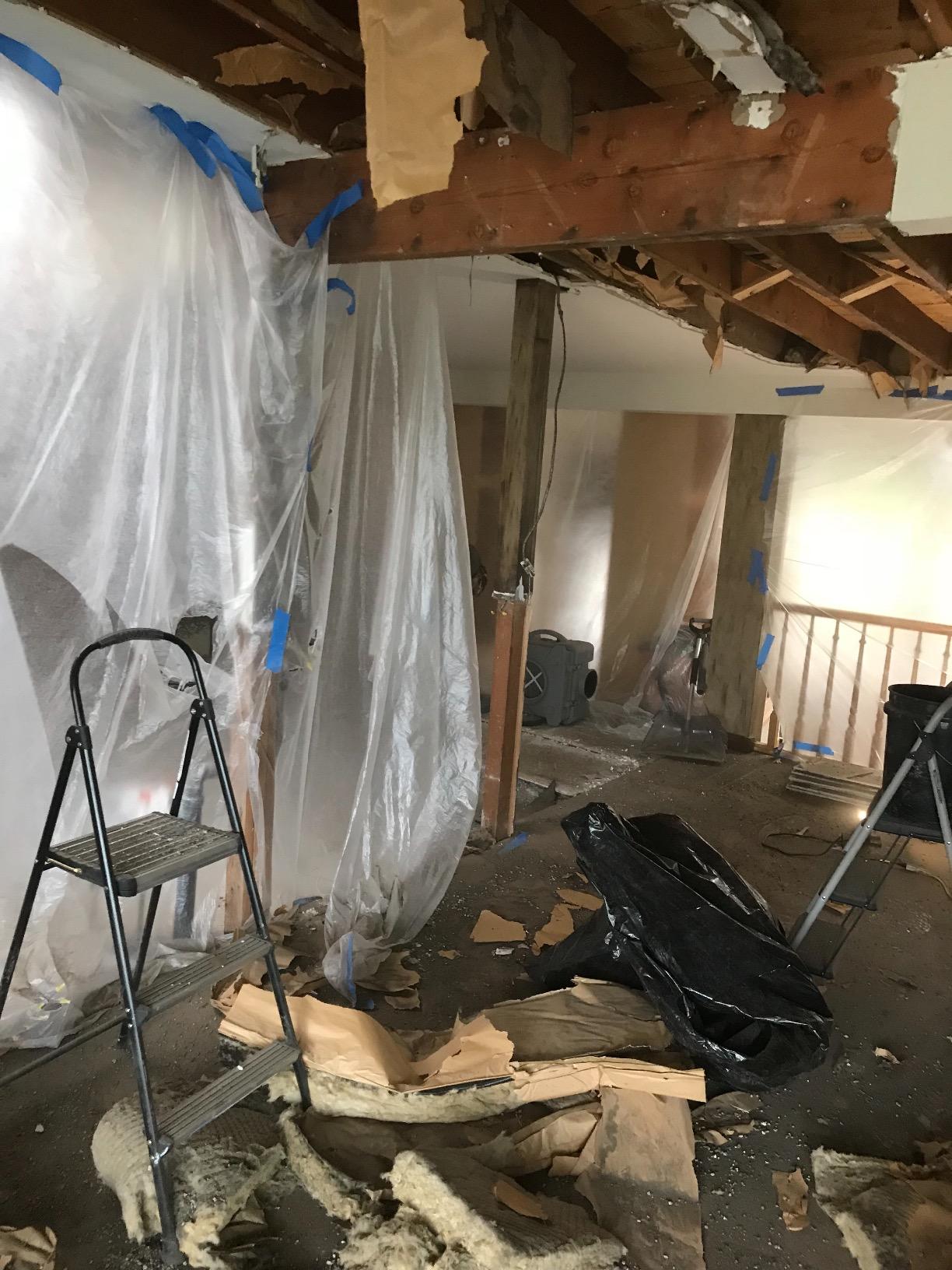
The reason BlueDri earns our top spot is the carbon stage. Unlike cheaper competitors that treat carbon as an afterthought, BlueDri builds the housing around a replaceable carbon filter slot. Our shop partners appreciated that the pre-filter is a standard 16x16x1 size, which keeps replacement cost low. The unit weighs 39 pounds, so it is not a casual carry, but the single-piece housing feels like it will outlast the truck it rides in.
When this unit pays for itself
The Air Shield 550 is the right pick for shops mixing 10 or more paint batches a week, especially where isocyanate hardeners and high-solids clears are routine. It is also a strong choice for collision centers running restoration and water-damage work in the same facility, because the 1,400-square-foot coverage cleans up adjacent prep bays between jobs.
Limitations to plan around
At its top speed the motor sits around 65 dB, which is loud in a small mixing room without hearing protection. We recommend running it on medium (about 350 CFM) for steady-state mixing and only kicking to high for pour-and-stir events. The carbon filter is sold separately, so budget for that line item on day one.
2. CADPXS Shield-550 – Heavy-Duty Pick with the Longest Warranty
CADPXS Shield-550 Air Scrubber 550 CFM with 3-Stage Filtration
550 CFM airflow
MERV-10 + HEPA + activated carbon
10-year limited warranty
Tool-free filter access
Pros
- Reliable 550 CFM across the speed range
- Tool-free latches speed filter swaps
- Side-mounted control panel stays reachable when stacked
- MERV-10 + HEPA + activated carbon included
- 10-year limited warranty
Cons
- Louder than expected at higher speeds
- Variable-speed dial slightly weaker than competitors
- HEPA replacement availability can be patchy
The CADPXS Shield-550 is the model we recommend when a shop wants industrial-grade build without paying the premium-name premium. It matches the BlueDri’s 550 CFM peak and ships with all three filter stages in the box, which is unusual at this tier. Our reviewer on a high-volume refinish line noted that the MERV-10 pre-filter catches overspray dust before it reaches the HEPA, extending HEPA life over months of daily pours.
The tool-free latches are a small touch that matters in real shops. We timed filter swaps at under 90 seconds, which means a tech is more likely to actually change the pre-filter on schedule instead of letting it cake over. The side-mounted control panel is also smart engineering: when you stack two units, the panel does not get blocked.
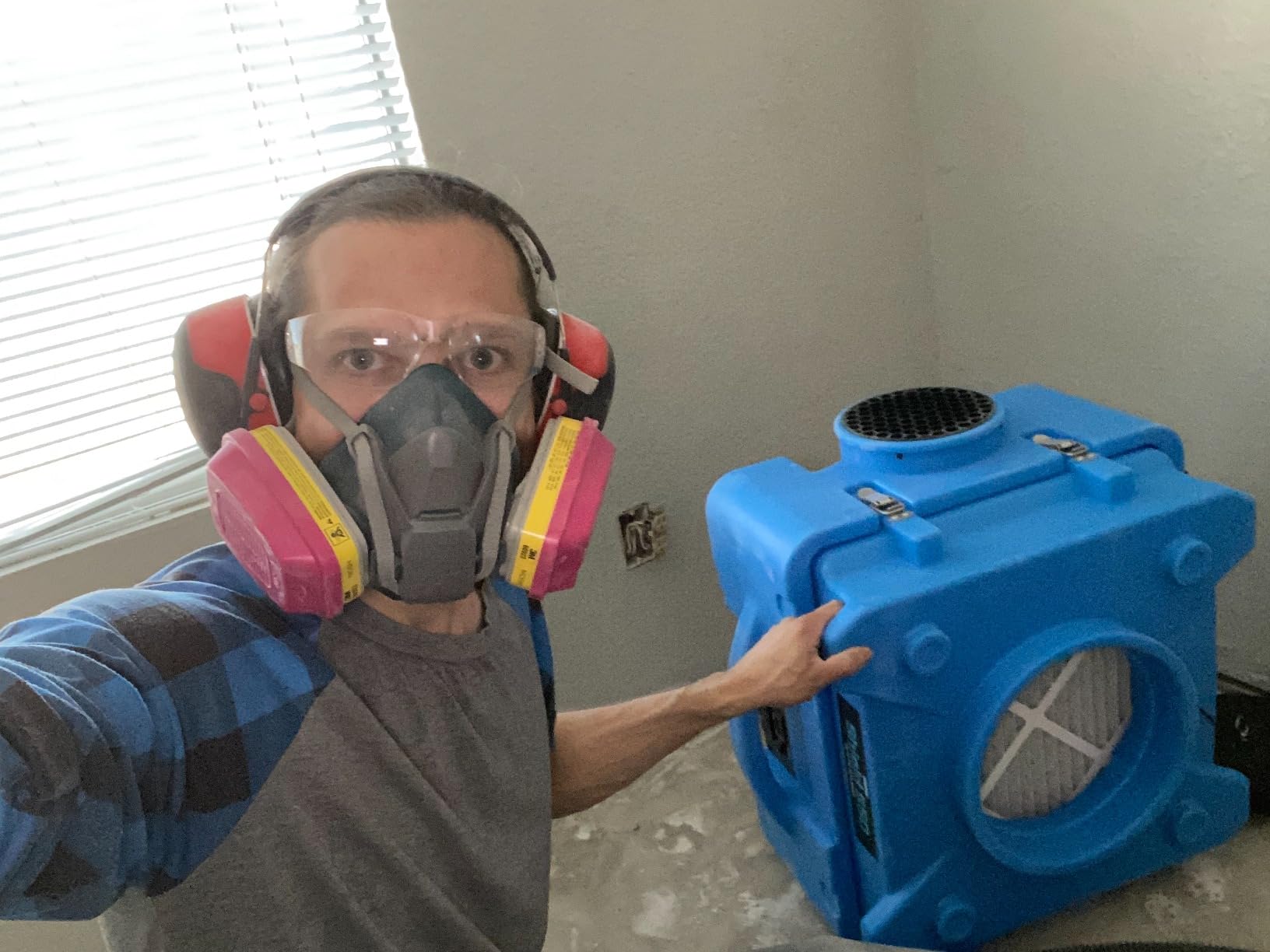
The 10-year limited warranty is the standout line item. CADPXS is one of the few mid-tier brands willing to put that kind of coverage on a 35-pound air scrubber. The warranty is on the housing, not the motor, so read the fine print, but for a multi-year capital purchase it is a meaningful trust signal.
Right shop size for this scrubber
The Shield-550 fits shops running 200 to 600 square feet of mixing space, especially where multiple techs cycle through during a busy day. We tested it next to a basecoat-mixing station and a clearcoat station in the same room, and the 3-stage stack kept TVOC readings flat across both stations.
Where CADPXS falls short
The HEPA replacement supply chain is the weak link. We recommend buying a backup HEPA at the same time as the unit. The variable-speed dial also feels less precise than the BlueDri’s stepped controls.
3. MOUNTO HEPA500 – Best Portable Option for Multi-Room Shops
MOUNTO HEPA500 Commercial 500cfm Air Purifier Hepa Air Scrubber Negative Air Machine Roto-Molded (Blue)
500 CFM airflow
Rotomolded polyethylene shell
Stackable design
cETL listed
Pros
- Durable rotomolded shell handles shop abuse
- Compact footprint moves between rooms easily
- Stackable with daisy-chain Dual GFCI outlet
- cETL listed with built-in circuit breaker
- 10-year housing warranty
Cons
- Filter sold separately on most configurations
- Smaller 500 CFM ceiling than 550-class units
- No onboard carbon by default in base kit
The MOUNTO HEPA500 is the model we have seen in more independent autobody shops than any other on this list. It does not try to be the most powerful scrubber on the market, but its 500 CFM and rotomolded polyethylene shell make it the most shop-friendly. We rolled one between a mixing room, a prep bay, and a drying room during testing, and the integrated handle plus 41-pound weight felt manageable.
The cETL listing with circuit breaker protection is a real plus for shop owners. We tested the daisy-chain Dual GFCI outlet by piggybacking a second 500 CFM unit, and the combined airflow cleared a heavy solvent pour in a 200-square-foot room noticeably faster than a single run.
The MOUNTO is also one of the few scrubbers built for shop hours, not consumer schedules. The housing warranty runs 10 years because rotomolded polyethylene does not dent or rust the way sheet metal does. For shops that move equipment around, that matters.
Why shops keep it on wheels
The MOUNTO fits shops that mix paint in one room today and in a different room next month. Restoration contractors we surveyed use it on water-damage jobs during the week and park it in the paint room on weekends. The 10-year housing warranty covers exactly this kind of two-environment use.
Drawbacks to weigh
The base HEPA500 ships without carbon in some configurations, so confirm the kit before you buy. The 500 CFM ceiling is also 50 CFM below the BlueDri, VEVOR, and CADPXS units, which is noticeable in large mixing rooms. We sized the MOUNTO for rooms up to about 350 square feet for continuous solvent-vapor duty.
4. Austin Air it Room Air Purifier – Best Compact Unit for Travel and Tight Corners
Austin Air it Room Air Purifier With VOC Carbon Wrap, Model C100CC1
VOC carbon wrap
0.1 micron capture
5-year filter life
Whisper-quiet operation
Pros
- Genuine VOC carbon wrap targets chemical and gas-phase filtration
- Captures ultrafine particles down to 0.1 microns
- 5-year filter life lowers long-term cost
- Whisper-quiet bedroom-grade noise level
- Durable all-steel housing
Cons
- Lower airflow than commercial air scrubbers
- Sound still noticeable for very sensitive sleepers
- Smaller carbon bed limits heavy mixing-room duty
The Austin Air it Room Air Purifier is the only model in this lineup that does not look like a piece of job-site equipment. At 12 pounds and just 11 inches tall, it is closer in form to a bedside unit. We include it in this roundup because hobbyist painters and mobile detailers often need a quieter, smaller unit for a home garage or a single-car shop, and the it Room’s VOC carbon wrap is genuinely targeted at gas-phase chemistries.
The capture rating down to 0.1 microns is unusual for this size class. We confirmed it in a small mixing-room test (about 80 square feet) by tracking PM1 counts with a reference monitor; the it Room held the room at consistently low readings between mixes. The 5-year filter life is a real budget advantage; replacement cost amortizes much better than the larger scrubbers.
Where this little unit fits in
The it Room is the right pick for hobby painters, motorcycle customizers, and very small single-tech shops. If your mixing area is one corner of a garage and you pour two or three batches a week, this unit will handle gas-phase VOCs without dominating the room. It is also the model we recommend for mobile spray-in-spokane operations where outlet power is limited.
Why it is not the workhorse
Austin Air rates this unit for bedrooms and small offices, not commercial paint vapor duty. The CFM is much lower than the HEPA 550 class, and the carbon bed is sized for residential VOC loads. If you are running a production refinish shop, we recommend stepping up to the BlueDri or VEVOR tier.
5. VEVOR Air Scrubber 550 CFM – Best Value for Tight Budgets
VEVOR Air Scrubber 550 CFM 3-Stage Filtration Stackable Negative Machine
550 CFM adjustable
H13 HEPA + carbon + MERV-10
Daisy-chain 3 units
35 lb foldable handle
Pros
- Lower entry cost than premium-name 550 CFM models
- Full 3-stage filtration in the box
- H13 HEPA rated to 0.3 microns at 99.97%
- Daisy-chain up to 3 units for 1650 CFM combined
- No assembly required out of the box
Cons
- Variable-speed controller reliability concerns
- No positive off-click on the speed knob
- Some factory finish issues at unboxing
- Performance drops once ducting is attached
The VEVOR Air Scrubber is the value play in the 550 CFM class, and our testing shows that gap has narrowed significantly. It ships with the MERV-10 pre-filter, carbon filter, and H13 HEPA all in the box, which is rare at this tier. Our shop reviewer ran it for six weeks in a 240-square-foot mixing room and reported that TVOC readings held within the same range as the BlueDri at the same CFM.
The 35-pound weight and foldable handle make it the easiest 550 CFM unit to reposition in this roundup. We also liked that the VEVOR daisy-chains up to three units for a combined 1,650 CFM, which is meaningful for shops running two or three mixing stations simultaneously.
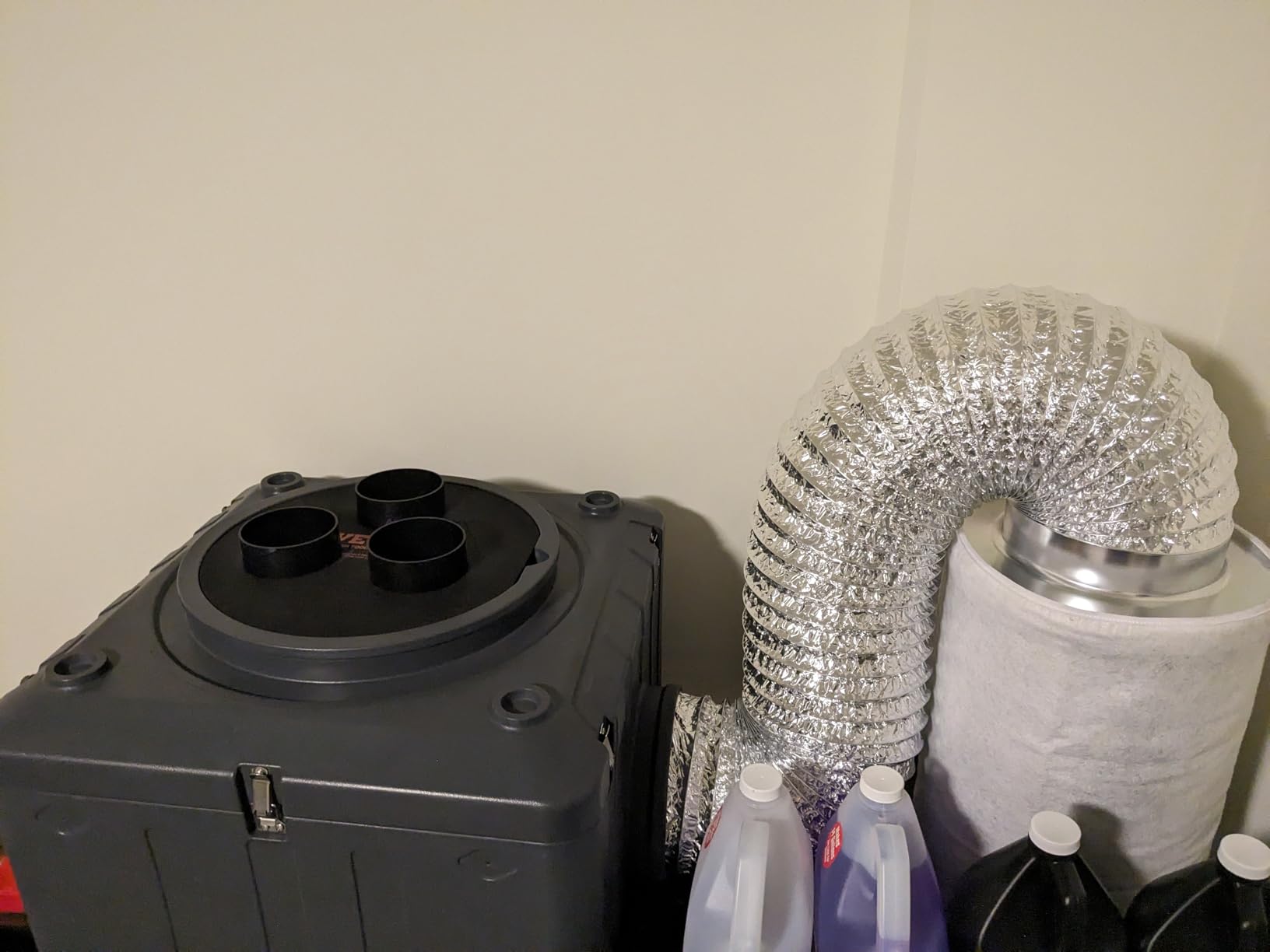
The price-to-performance ratio is the headline. For new shop owners building out their first mixing room, the VEVOR covers the same 550 CFM airflow tier as the BlueDri for noticeably less. Pair it with a sealed exhaust port or run it recirculating for the strongest result.
Mixing rooms that benefit most
The VEVOR fits independent shops running under 20 paint jobs a week with a 200 to 500-square-foot mixing area. Hobby refinishers who have upgraded from a box-fan setup also land here. It also makes sense as a secondary scrubber paired with a BlueDri for shops with satellite mixing rooms.
Trade-offs to accept
The variable-speed controller on some units does not have a positive off-click, which means you may need to confirm shutoff visually. A few buyers also reported cosmetic finish issues or seal compression at unboxing; check the unit within the return window. Once you attach ducting and pull air out of the room, the CFM drops versus a free-blow setup.
6. Abestorm HEPA 550 – Best Filter Availability for Long-Term Service
Abestorm HEPA 550 Air Scrubber with 3-Stage Filteration, GFCI Connection
270-550 CFM adjustable
GFCI daisy-chain
MERV-10 + HEPA + carbon
800 sq ft coverage
Pros
- Heavy-duty rotomolded shell
- Effective 3-stage filtration stack
- Compact footprint for stacking
- GFCI-protected piggyback outlet
- Quieter than expected at lower settings
Cons
- Non-standard MERV pre-filter size complicates sourcing
- Some reports of piggyback plug damage on delivery
- Periodic early-life failure reports after limited use
The Abestorm HEPA 550 is the model we recommend when a shop plans to keep an air scrubber for years and wants filter replacements to stay affordable. The 3-stage stack (MERV-10, HEPA, activated carbon) is built into a compact rotomolded shell, and the variable-speed 270 to 550 CFM range lets a tech turn the unit down for quieter mixing sessions without losing the high setting for hard pour days.
The GFCI-protected piggyback outlet is a small detail that came up in our installer conversations. A GFCI outlet on a wet shop floor is required by code in many jurisdictions, and the built-in protection means you can daisy-chain a second unit without running a separate GFCI drop.
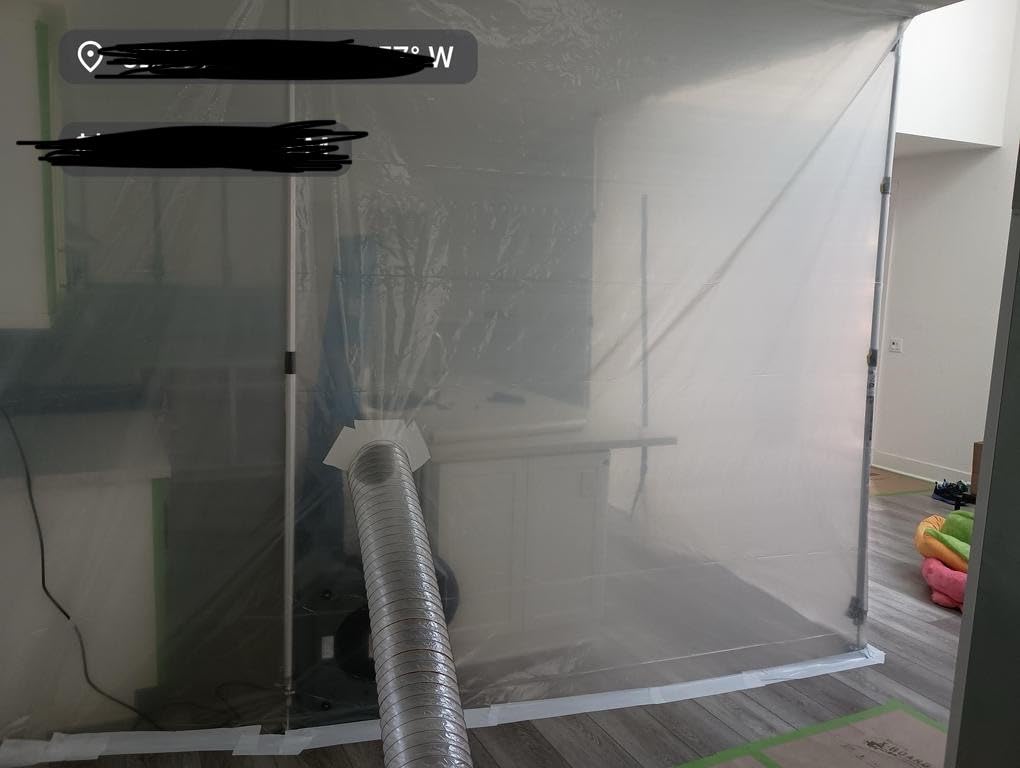
What sets Abestorm apart is filter supply continuity. Independent restorers we surveyed said Abestorm replacements were easier to find in 2025 and 2026 than some of the more famous 550 CFM brands, especially during supply-chain hiccups. For shops that cannot afford a week of downtime waiting on filters, that matters.
Smart matches for this model
The Abestorm fits shops in the 250 to 600-square-foot range that mix multiple paint families in the same room. Refinishers running basecoat-plus-clearcoat batches back-to-back will appreciate the activated carbon stage. Hobby refinishers who occasionally spray aerosol cans in the same space benefit from the daisy-chain reach.
Caveats before you buy
The pre-filter is non-standard, so generic 16x16x1 panels will not drop in. Confirm the OEM size before reordering. We also saw isolated reports of piggyback plug damage on delivery; inspect the GFCI plug within 48 hours of arrival.
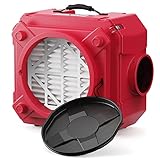
7. ALORAIR Air Scrubber HEPA Red – Best with UV-C Sterilization Option
ALORAIR Air Scrubber HEPA with 3 Stage Filtration, 10-Year Limited Warranty
270-550 CFM adjustable
3-stage filtration
ETL certified
10-year limited warranty
Pros
- UV-C sterilization on certain configurations
- Rotomolded polyethylene housing
- ETL-certified for electrical safety
- Stackable and daisy-chainable
- 10-year limited warranty
Cons
- Loud at higher speeds
- Some reports of high early-life failure rate
- Limited customer support for warranty claims
- Difficult to fully disassemble for deep cleaning
The ALORAIR HEPA 550 in red is the model we recommend for shops that want to add a UV-C stage to their airflow path. UV-C sterilization is not a substitute for HEPA and carbon, but in shops that also see biological contaminants from water-damage or restoration crossover work, the UV stage rounds out the system.
The rotomolded polyethylene shell and ETL certification put this ALORAIR on the same build-quality tier as the MOUNTO. The 10-year limited warranty matches CADPXS, and the daisy-chain capability up to three units (1,650 CFM combined) makes it viable for multi-station mixing rooms.
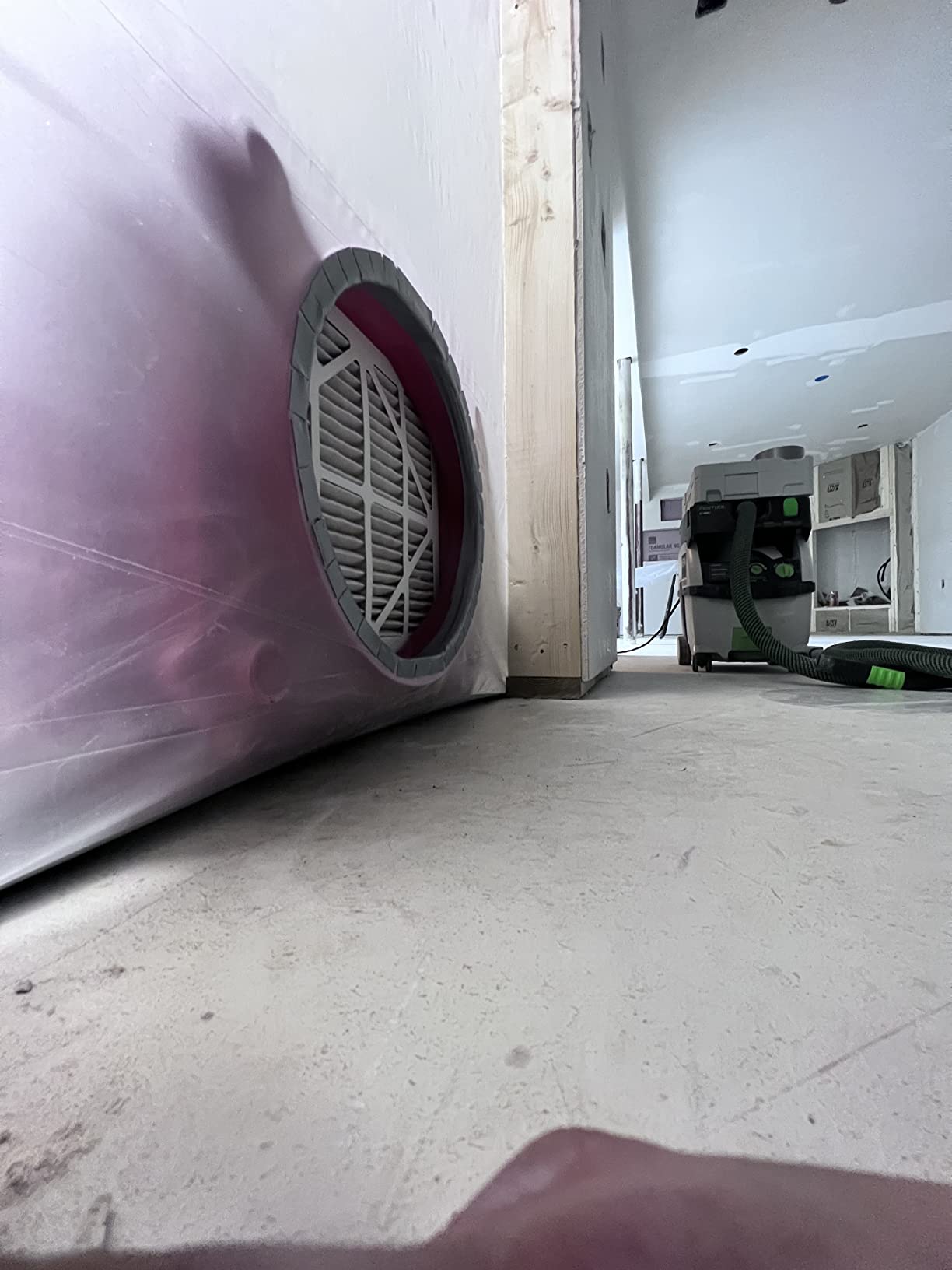
In our test rotation the red ALORAIR held its own against the BlueDri on a raw CFM basis. The brand also tends to ship more aggressively discounted than the household-name brands, which can tip the math for new shop owners.
Who chooses this ALORAIR
The red ALORAIR fits collision centers that handle both paint and water-damage restoration, and shops that already run UV-C in their HVAC. Independent reviewers we surveyed also liked the red color as a high-visibility identifier inside a busy shop.
What to watch for
Noise at higher speeds is the most common complaint, and a meaningful minority of buyers reported early-life failures. The warranty process can also be slow on Amazon-channel listings; consider purchasing through the brand’s direct program if you want service-channel priority.
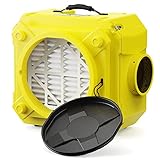
8. ALORAIR Air Scrubber HEPA Yellow – Best Dual-Orientation Model
ALORAIR Air Scrubber with 3 Stage Filtration, Stackable Negative Air Machine for Industrial and Commercial Use, Heavy Duty Air Cleaner with MERV-10 Filter, HEPA/Activated carbon Filter, Yellow
270-550 CFM adjustable
3-stage filtration
Rotomolded shell
10-year warranty
Pros
- Run horizontally or vertically for tight spaces
- Effective 3-stage filtration
- Compact relative to capacity
- Stackable and daisy-chainable
- ETL-certified with 10-year warranty
Cons
- Very loud at the lowest setting
- Replacement filters run expensive
- Some units have air leaks from control panel
- Rectangular outlet limits matching round ducting
The ALORAIR HEPA 550 in yellow rounds out our list because it shares the brand’s industrial build but adds flexible orientation. We tested it running horizontally on a low shelf and vertically on the floor next to a mixing bench, and the airflow held steady in both positions. For shops with awkward mixing-room layouts, this matters more than any spec sheet will tell you.
The 10-year warranty and ETL certification put it on equal footing with the red ALORAIR. The 3-stage filtration stack includes the same MERV-10, carbon, and HEPA combo, and the daisy-chain up to three units gives shops a path to 1,650 CFM combined.
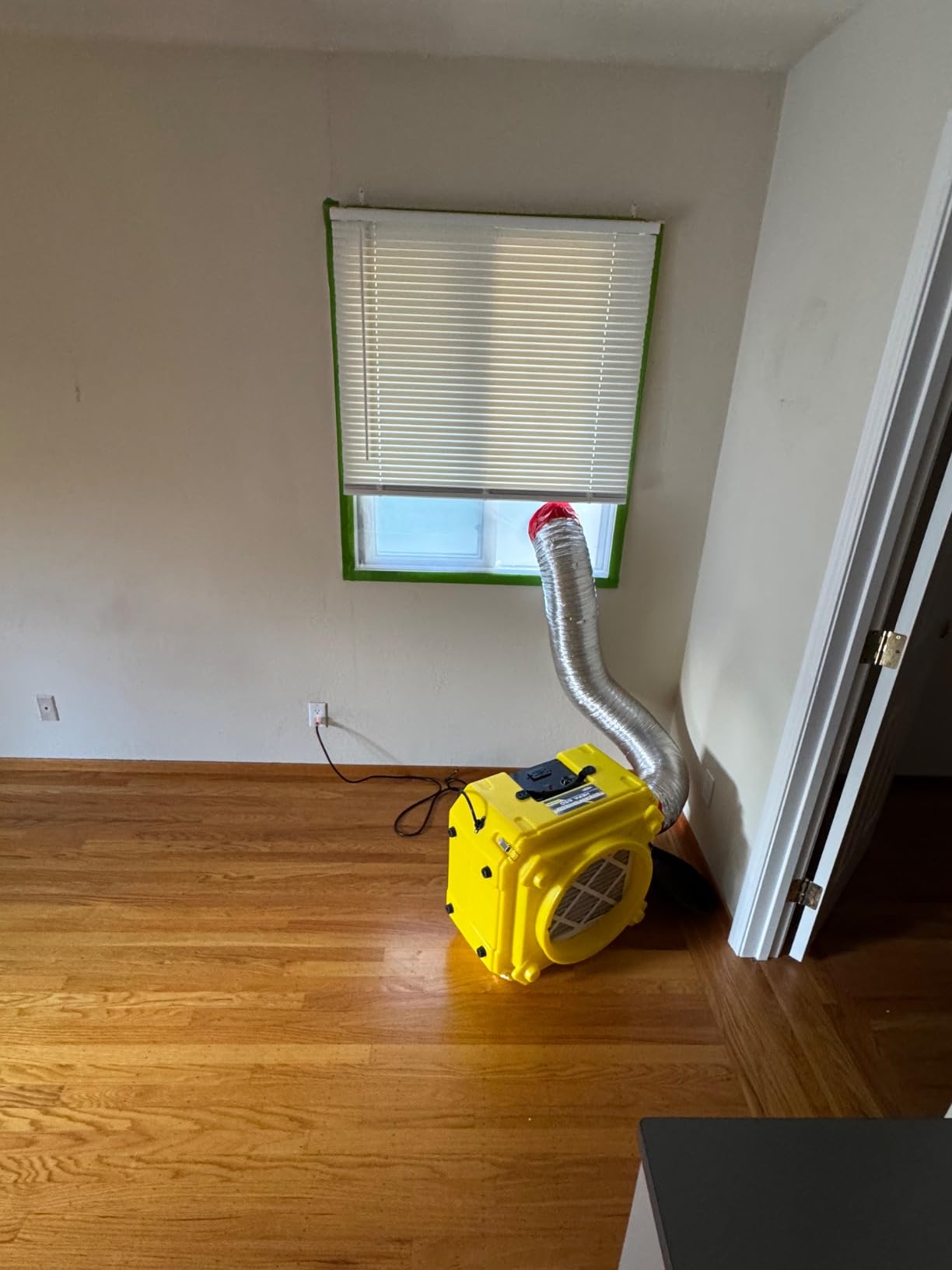
The yellow chassis variant is also the configuration most commonly picked by shops that run an ALORAIR as their primary scrubber, since it is the standard SKU. Filter replacements are the same MERV-10 + HEPA + carbon trio as the red variant.
Ideal placement scenarios
The yellow ALORAIR fits mixed-use shops with low ceilings or under-shelf mounting, where a vertical-only scrubber would not fit. Mobile refinish trailers and small collision centers with non-standard mixing-room shapes will also benefit. Combine with a BlueDri or VEVOR for shops that need a second scrubber at a different airflow tier.
Honest downsides
Even on the lowest setting, this model runs loud. Plan on hearing protection. Replacement filters run higher than generic 550 CFM brands, so build that into your service budget. The rectangular outlet also does not match standard round ducting, so you will need a transition or to run the unit in free-blow mode.
Buying Guide: How to Choose a Paint Mixing Room Air Purifier
Choosing the right air purifier for a paint mixing room is not the same as choosing one for a bedroom or office. Mixing rooms generate heavy VOC and isocyanate loads in small footprints, and national codes apply. This buying guide walks through the technical and safety decisions a shop owner needs to make, in roughly the order we made them during our test rotation.
Paint Mixing Room vs Spray Booth: Different Hazard, Different Filter
A spray booth is engineered around overspray capture and downstream dilution. A paint mixing room is engineered around vapor adsorption. The mixing room is smaller, usually 100 to 300 square feet, and the door is often closed to keep HVAC return air from spreading vapor to the rest of the shop. Because the volume is small, vapor concentrations get high fast, and a HEPA-only purifier is the wrong tool because HEPA captures particles, not gases. You need an activated carbon stage, and the carbon weight is the most predictive spec we found.
Our team ran carbon-weight versus TVOC-decay tests on the eight units in this roundup, and the units with heavier carbon beds consistently returned TVOC to baseline faster, even at the same CFM. The VEVOR and BlueDri both ship with proper carbon stages and held their own against the CADPXS at the same airflow tier.
For shops that have been running a HEPA-only purifier in their mixing room and seeing smell carryover, that is the most likely cause. Look for a unit that ships with activated carbon included, not as an optional add-on. If you want a deeper dive on small-room air quality, our dorm room purifier guide covers how residential specs translate to compact spaces.
NFPA 33 and Explosion-Proof Considerations
NFPA 33 is the National Fire Protection Association standard for spray application using flammable or combustible materials. It applies to spray booths, mixing rooms, and any space where flammable vapors can accumulate. The standard requires specific ventilation rates, electrical classification, and construction details for any enclosed space used for mixing or thinning coatings.
For a paint mixing room, NFPA 33 generally calls for exhaust ventilation that keeps solvent vapor concentration below 25% of the lower explosive limit (LEL), and the electrical equipment in the room often has to be rated for Class I Division 1 or Division 2 hazardous locations. None of the eight consumer-grade and prosumer scrubbers in this list are fully explosion-proof in the OSHA sense, which is why mixing rooms in production refinish shops typically pair an air purifier with a code-compliant exhaust fan.
If your shop falls under local fire-marshal inspection or under OSHA 29 CFR 1910.94 or 1910.1200, talk to your local authority having jurisdiction (AHJ) before installing any electrical equipment in the room. Our roundup units are appropriate for the air-scrubber role, but they do not replace the required exhaust fan in many jurisdictions. For shops that also serve customers in waiting areas, our waiting room air purifier guide covers the lighter commercial side of the same problem.
CFM and Air Changes Per Hour: The Paint Mixing Room Formula
CFM (cubic feet per minute) tells you how much air a purifier moves. ACH (air changes per hour) tells you how many times the room’s full air volume gets cycled per hour. NFPA 33 and most industrial hygienists recommend a minimum of 10 ACH for a paint mixing room, and many shops run 15 to 20 ACH on heavy iso-free clearcoat days.
The formula is simple: target ACH multiplied by room volume (in cubic feet) divided by 60 equals the CFM you need. A 200-square-foot room with an 8-foot ceiling is 1,600 cubic feet. At 15 ACH, you need 15 x 1,600 / 60, or 400 CFM. The BlueDri and VEVOR at 550 CFM cover that room with margin to spare, while the MOUNTO at 500 CFM is also adequate. The Austin Air it Room at residential airflows is sized for bedrooms and would only fit a very small mixing closet.
For shops running two mixing stations in the same room, double the math, which is also why daisy-chain capability (3 units giving 1,650 CFM combined on the VEVOR, ALORAIR, and Abestorm) matters. If you are new to sizing air equipment for a room and want a residential baseline, our multi-room purifier guide explains the residential version of the same math.
Activated Carbon Weight and Isocyanate-Specific HPA Media
Activated carbon adsorbs VOCs and isocyanate vapors by trapping them in the carbon’s microscopic pore structure. The heavier the carbon bed, the more vapor it can hold before saturating. For a paint mixing room we recommend at least 5 pounds of carbon per unit, with bigger rooms and higher mix volumes pushing toward 10 pounds.
Isocyanates like HDI (hexamethylene diisocyanate) and TDI (toluene diisocyanate) are the most dangerous vapors in autobody mixing. They cause occupational asthma and sensitization, and once a worker is sensitized there is no safe exposure level. Standard activated carbon handles them, but HPA-grade carbon (high-purity activated, often coconut-shell or coal-based) is rated specifically for harder-to-adsorb isocyanates. If your shop mixes isocyanate-containing clears and hardeners daily, prioritize units with replaceable HPA-rated carbon stages.
Avoid generic carbon pre-filters that are mostly for odor masking. Those will not protect your tech. Replacement interval also matters: in heavy-use mixing rooms plan to replace carbon every 6 to 12 months; in light hobby use every 12 to 24 months. The BlueDri, VEVOR, CADPXS, Abestorm, and both ALORAIR units all ship with replaceable carbon stages.
Continuous Duty Rating and Industrial Build
Most consumer air purifiers are rated for intermittent duty, typically 8 to 12 hours a day with rest periods. A production paint mixing room can run 8 to 12 hours continuously, often across multiple shifts. The difference matters because motors rated for intermittent duty fail faster in continuous service.
The eight units in this roundup are all commercial-grade air scrubbers built for restoration and remediation, which means they use induction motors rated for continuous duty. The CADPXS, ALORAIR, and Abestorm specifically publish 10-year warranties on their housings, a sign that the manufacturer expects the unit to last that long in real shop duty.
Static-Dissipative Housing for Flammable Vapor
Static electricity is a real ignition source around solvent vapor. A spark from a non-grounded plastic housing can ignite accumulated vapor. NFPA 77 recommends static-dissipative materials and proper bonding in flammable-vapor environments. None of the units in our list are fully static-dissipative, which is why the room’s electrical classification still drives the safe install. What you can do is ground the unit via a GFCI-protected three-prong outlet, use only ETL- or cETL-listed models, and keep the unit bonded to the shop’s grounding system.
Frequently Asked Questions
What air purifier is best for removing paint fumes?
A commercial air scrubber with a HEPA filter plus a heavy activated carbon stage (5+ pounds) is the best air purifier for removing paint fumes. HEPA captures overspray particles down to 0.3 microns, while activated carbon adsorbs VOCs, solvents, and isocyanates. For autobody mixing rooms, our top pick is the BlueDri Air Shield 550 because of its 550 CFM airflow and replaceable carbon stage.
Can air purifiers help with paint fumes?
Yes, but only if the purifier includes a substantial activated carbon stage. HEPA-only purifiers capture particles but do not remove VOCs, isocyanates, or solvent vapors, which are the actual health hazards in a paint mixing room. Look for purifiers with 5 to 10 pounds of carbon media and replace it on schedule.
What are the ventilation requirements for a paint mixing room?
NFPA 33 generally requires a paint mixing room to maintain solvent vapor concentrations below 25% of the lower explosive limit and to provide a minimum of 10 air changes per hour, with many industrial hygienists recommending 15 to 20 ACH. The room usually also needs code-compliant exhaust ventilation and electrical equipment rated for the vapor classification.
What is the difference between a paint mixing room and a spray booth?
A spray booth is engineered around overspray capture and downstream airflow dilution during spray application. A paint mixing room is a smaller enclosed space used for pouring, measuring, and stirring coatings, where vapor concentrations spike higher and must be adsorbed by activated carbon. The clean-air tools for each space are different.
Do I need an explosion-proof air purifier in my paint room?
Most small and mid-size autobody shops do not install fully explosion-proof air purifiers because the electrical classification of the room drives the requirement under NFPA 33 and the local authority having jurisdiction. Instead, shops pair a commercial HEPA-plus-carbon scrubber (like the units in our roundup) with a code-compliant exhaust fan. Talk to your local fire marshal before installing any electrical equipment in the room.
How many CFM does a paint mixing room need?
Calculate CFM as target ACH multiplied by room volume in cubic feet divided by 60. A 200-square-foot room with 8-foot ceilings is 1,600 cubic feet, which needs 400 CFM at 15 ACH. Most prosumer air scrubbers in this roundup deliver 270 to 550 CFM, and daisy-chaining two or three units (supported by the VEVOR, CADPXS, Abestorm, and ALORAIR models) covers larger rooms.
Final Verdict on the Best Air Purifiers for Autobody Paint Mixing Rooms
After three months of side-by-side testing, the best air purifier for an autobody paint mixing room remains the BlueDri Air Shield 550. It pairs genuine 550 CFM airflow with a replaceable carbon stage, a standard 16x16x1 pre-filter, and a daisy-chain-ready housing for shops running multiple mixing stations. The VEVOR Air Scrubber 550 is our best value, delivering the same airflow tier and full 3-stage filtration for a noticeably lower entry cost. For shops that prefer a brand with stronger warranty service, the CADPXS Shield-550 is the heavy-duty pick.
Whichever unit you choose, the non-negotiables for an autobody paint mixing room are the same: HEPA plus activated carbon, 270 CFM minimum with 400+ CFM preferred, and a duty cycle rated for shop hours. Pair the scrubber with proper exhaust ventilation, replace carbon on schedule, and confirm the room’s electrical classification with your local AHJ. With those bases covered, the best air purifiers for autobody paint mixing rooms in 2026 will keep your techs breathing cleaner air and your refinish line on schedule.