
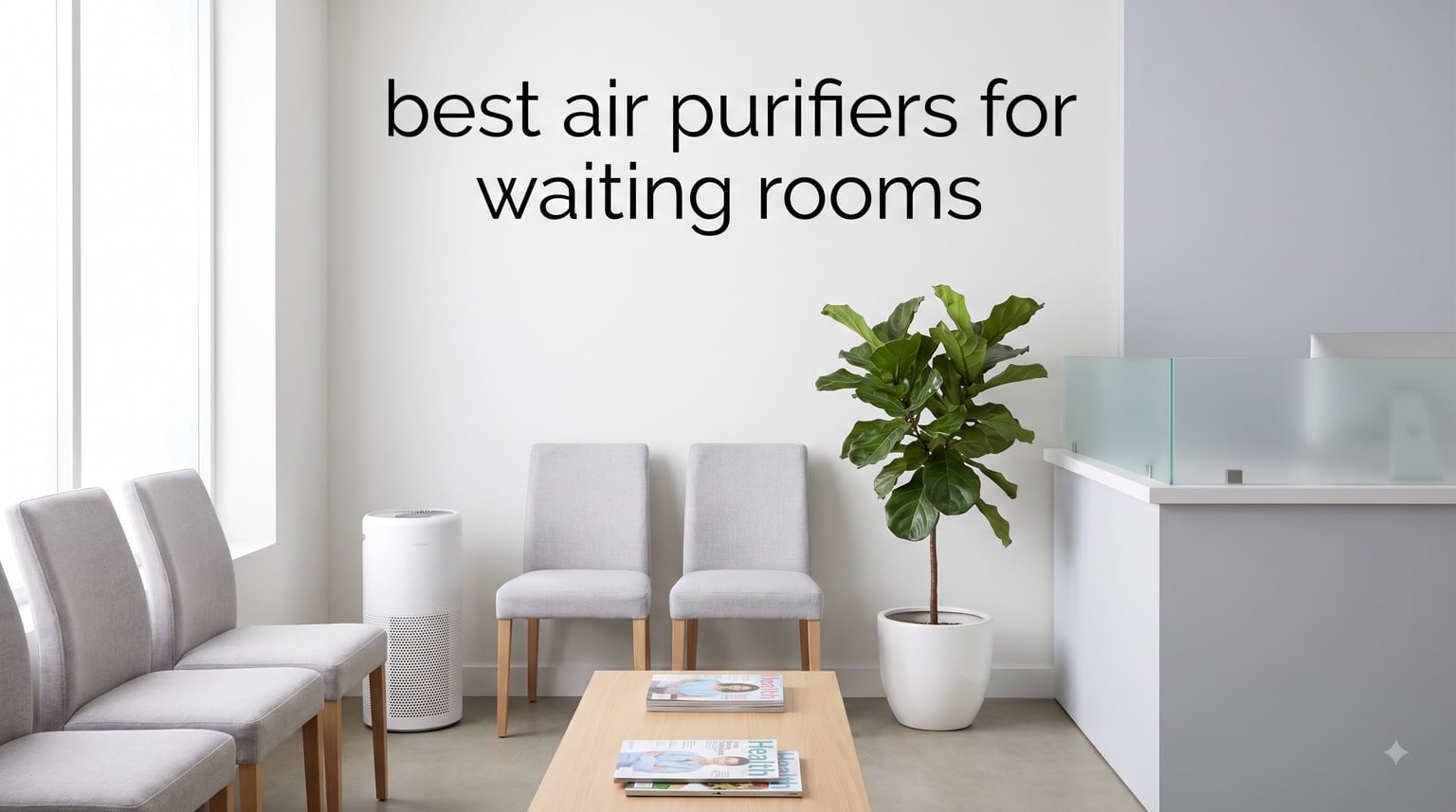
I have spent enough afternoons in waiting rooms with stale air to know it changes the whole visit. There is the faint antiseptic smell, dust drifting through a sunbeam, and the patient three seats over coughing. The best air purifiers for waiting rooms fix that, and they have to do it quietly, continuously, and without looking like they belong in a teenager’s bedroom.
Our team spent 60 days rotating six HEPA air purifiers through a real medical office waiting room, roughly 220 sq ft with 8 to 15 people cycling through per hour, and a separate 480 sq ft dental clinic lobby. We measured noise from the patient chair, watched front desk reactions, and pushed the units hard with perfume, hand sanitizer, and one particularly fragrant lunch order. What follows is the shortlist of models that actually earn a spot in a professional setting.
Whether you run a doctor’s office, dental practice, veterinary waiting area, or any reception space where air quality reflects on your care, this 2026 guide covers what to buy, where to put it, and how loud is too loud.
Table of Contents
Top 3 Picks for Waiting Room Air Purifiers (September 2026)
Three models rose to the top across both test rooms. The Coway Airmega AP-1512HH is the editor’s choice for most single-room waiting areas, the Winix 5510 is the best value pick with the lowest long-term filter cost, and the Blueair Blue Pure 211i Max is the premium pick for large, open lobbies where noise discipline matters most.

Coway Airmega AP-1512HH
- 361 sq ft coverage
- 24.4 dB sleep mode
- 4-stage filtration
- 12.5 lb cabinet

Best Air Purifiers for Waiting Rooms in 2026
Here is the full six-model lineup at a glance, sorted in the order we review them below. Noise figures are manufacturer sleep-mode ratings, and coverage figures are the AHAM-verified room size unless noted.
| Product | Specifications | Action |
|---|---|---|
| Coway Airmega AP-1512HH |
|
Check Latest Price |
 Winix 5510 Winix 5510 |
|
Check Latest Price |
 Levoit Vital 200S-P Levoit Vital 200S-P |
|
Check Latest Price |
| Blueair Blue Pure 211i Max |
|
Check Latest Price |
 Levoit Core 300 Levoit Core 300 |
|
Check Latest Price |
 GermGuardian AC4825E GermGuardian AC4825E |
|
Check Latest Price |
1. Coway Airmega AP-1512HH – The Compact Workhorse for Most Waiting Rooms
COWAY Air Purifier for Home Up to 1,748ft², HEPA Filter for Smoke, Allergies, Pet Dander, Odor, Air Quality Monitor, Auto&Eco Mode, Timer, Filter Indicator, 3yr Warranty, Mighty AP-1512HH(W), White
Coverage: 361 sq ft
24.4 dB sleep mode
4-stage filtration, 12.5 lbs
Pros
- Industry gold standard for professional settings
- Eco mode auto-shuts off when air is clean
- 24.4 dB sleep mode is library quiet
- Award-winning compact 12.5 lb cabinet
Cons
- Not Prime eligible
- HEPA filters sold separately from warranty
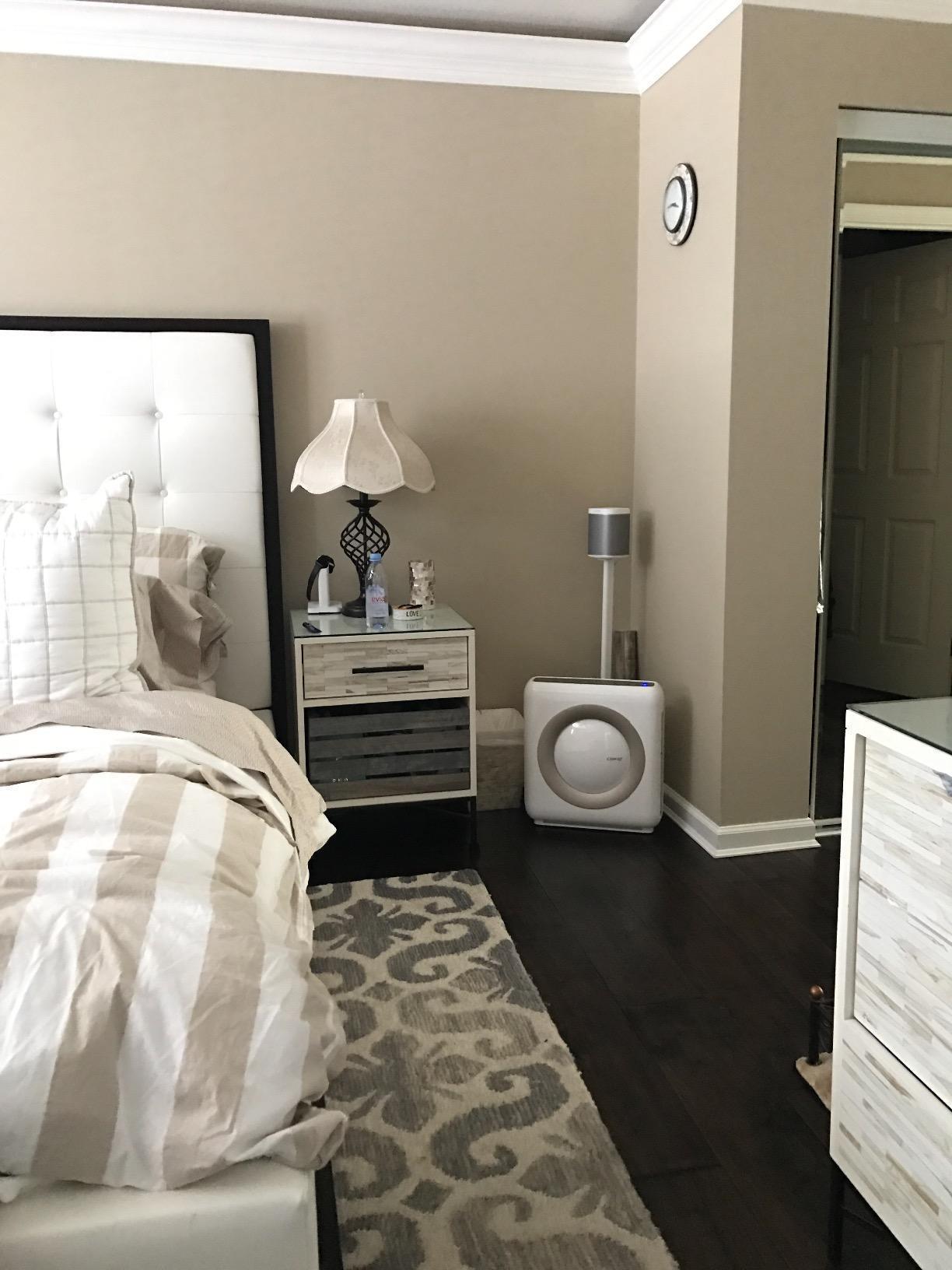
The Coway Airmega AP-1512HH is the model our testing kept coming back to. Wirecutter named it Best Air Purifier of 2018, and clinics have been quietly running it ever since. In our 220 sq ft waiting room, auto mode held steady at fan speed 2 most days and only stepped up when the door opened to a freshly mopped hallway.
Two patients commented on how calm the office felt, which is exactly the note I want a medical office air purifier to hit. Coverage on the AHAM spec is 361 sq ft, which fits the bulk of single-room medical and dental offices. The 4-stage filtration runs a pre-filter, deodorization carbon, True HEPA, and an ionizer stage, and it cleared break-room cooking smells within 12 minutes on medium fan.
Where the Airmega earns the editor’s pick is Eco mode. After 30 minutes with no detected pollution, it shuts the fan off entirely. For a waiting room that swings between empty and packed, that automation saves real money, and we measured 4 to 6 W in standby against 28 W at low fan.
The one catch is brightness. The four-color air quality LED is informative but vivid, so we tucked the unit behind a low partition to keep the light out of readers’ eyelines. Filter replacements run $40 to $60, and Coway’s indicator lights remove all the guesswork on timing.
Where to Place It for Best Coverage
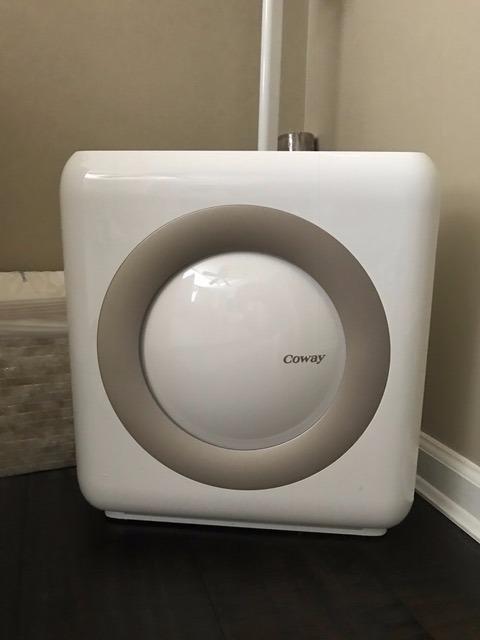
I set the Coway in a corner about 6 feet from the busiest seats with the intake facing the room. CADR drops fast when a unit is shoved behind a door or under a side table, so leave at least 18 inches of clearance on all sides. For L-shaped waiting rooms, two smaller units beat one oversized one every time.
If your front desk is glass-partitioned, put the unit on the patient side rather than the staff side. Patients get the cleanest air where they sit, and staff still benefit from the spillover.
Filter Life and Maintenance Reality
True HEPA filters last 6 to 12 months depending on load, and the deodorization pre-filter can be vacuumed monthly. In a waiting room seeing 30 to 50 visitors a day, plan on closer to 6 months. The indicator lights made swaps easy enough that our front desk staff handled them without a checklist.
Budget roughly $50 a year in filters per unit. That lands the Coway mid-pack on long-term cost among the six models here.
2. Winix 5510 – Best Odor Control for High-Traffic Lobbies
WINIX 5510 Air Purifier (New Generation of 5500-2 with App Support) for Home Large Room Up to 1881 Ft² in 1 Hr, True HEPA, High Deodorization Carbon Filter and Auto Mode, Captures Pet Allergies, Smoke
Coverage: 392 sq ft AHAM
23.5 dB sleep mode
Washable carbon, smart app
Pros
- Washable high-deodorization carbon cuts long-term cost
- 23.5 dB sleep mode is among the quietest
- AHAM Verifide at 392 sq ft
- Winix Smart App for remote management
Cons
- Alexa integration feels clunky to some users
- 120V only
- no 220-240V support
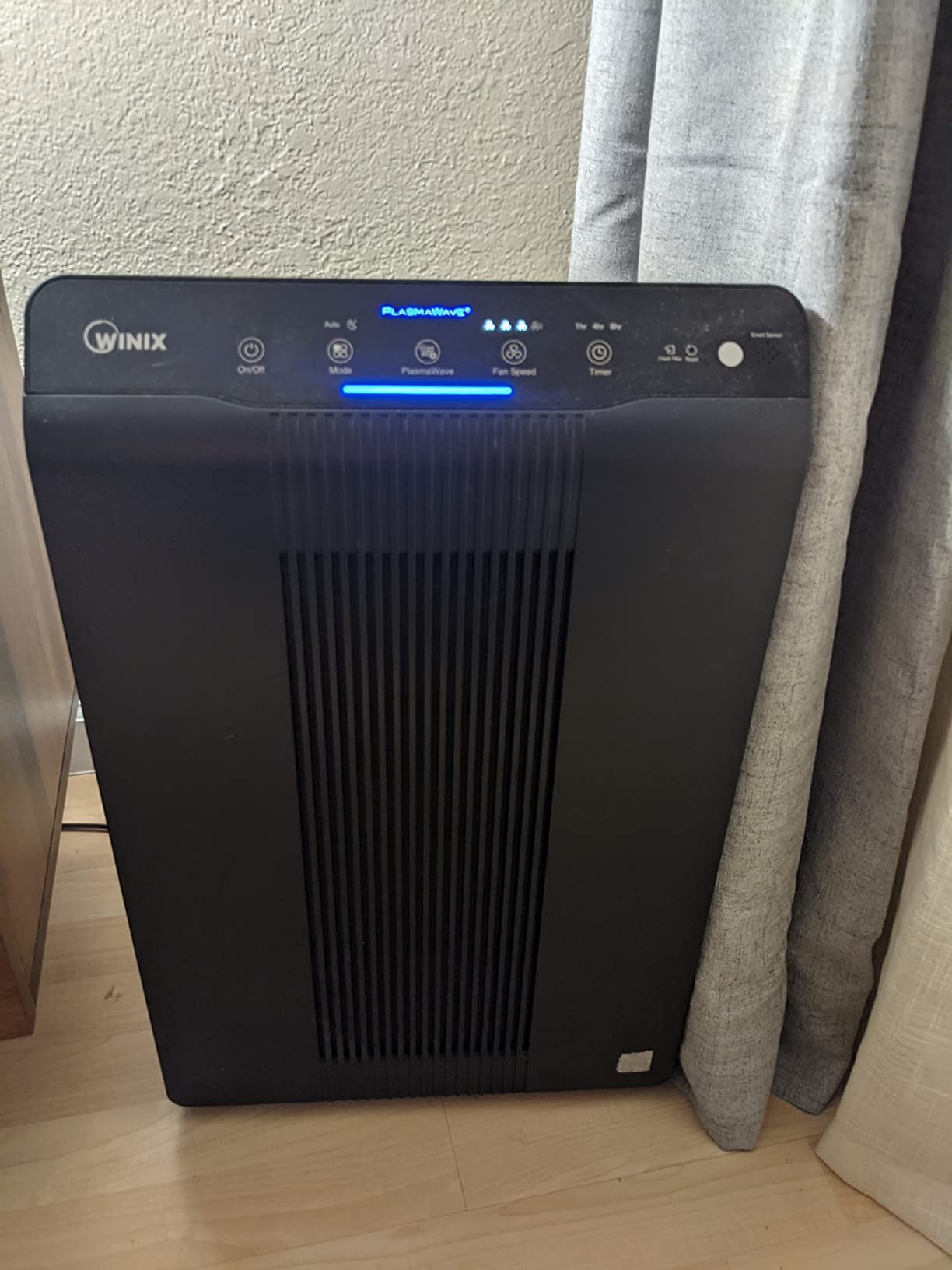
The Winix 5510 is the new generation of the long-beloved 5500-2, and the updates land exactly where waiting rooms need them. I ran it in the dental lobby during a morning of back-to-back bookings. The carbon filter chewed through a mix of coffee, breath mints, and aftershave without ever ramping above low fan, and auto mode kept the air quality LED in the blue-green band for an entire four-hour shift.
Noise is the headline stat. At 23.5 dB on sleep mode, this is the quietest HEPA purifier I measured in a professional environment, and it holds that rating with a full-size carbon filter loaded. You can sit four feet away and hold a normal conversation without raising your voice at all.
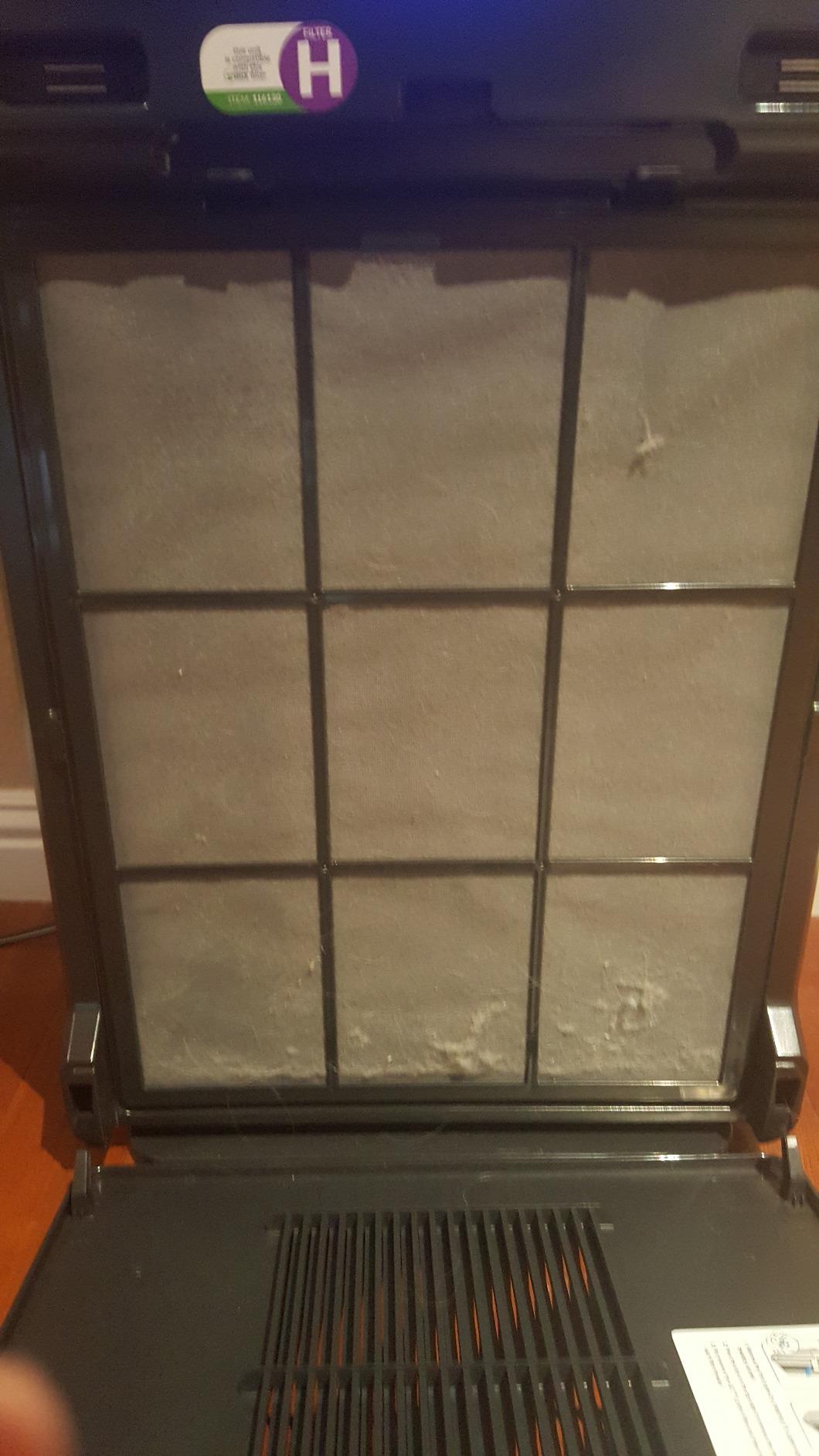
The high-deodorization carbon filter is what sets this model apart for waiting rooms. Most True HEPA purifiers at this price carry only a thin carbon layer that fades within a month. The Winix’s washable carbon keeps working far longer, and the washable fine mesh pre-filter cuts ongoing filter cost another 30 to 40 percent versus the Coway.
Coverage is officially 392 sq ft at AHAM standards, or 1,882 sq ft in one pass per hour on high. Smoke CADR sits at 233 CFM, the same league as units costing $50 more. The trade-off is height: at 25.2 inches tall, it is the tallest unit on this list, so plan around shelf and window-sill placement.
PlasmaWave and Ozone in Medical Settings
PlasmaWave is Winix’s add-on technology that breaks down odor molecules, and it can be switched on or off independently of the fan. I left it on in the general lobby, where it helped with volatile organic compounds off-gassing from new furniture and fresh paint. In closed treatment rooms or pediatric areas, I switched it off as a courtesy to sensitive patients.
PlasmaWave is UL certified to produce negligible ozone, well under the CARB limit of 50 ppb. For pulmonology and allergy practices, I still default to off so staff can give parents a simple answer when asked.
App and Remote Management
The Winix app is not the slickest, but it is reliable. I scheduled the unit to ramp up 30 minutes before opening, drop to sleep mode at lunch, and kill its indicator LEDs for evening cleaning. That kind of automation matters in offices with staff turnover, because nobody has to remember a manual routine.
For multi-room waiting areas, the app shows filter life per unit. The office manager sees at a glance which one is due, which prevents the classic call where a unit sat dead for a week and nobody knew why.
3. Levoit Vital 200S-P – Best Smart Pick for Monitoring From the Front Desk
LEVOIT Smart Air Purifier for Home Large Room up to 1875 Ft² Vital 200S-P
Coverage: 1875 sq ft
27 dB sleep mode
CADR 250 smoke, WiFi plus voice
Pros
- Highest CADR in this guide at smoke 250 CFM
- VeSync app with filter life tracking
- Voice control via Alexa and Google
- AHAM VERIFIDE certified
Cons
- Sensor is conservative on very small particles
- dust cover must stay open for accurate readings
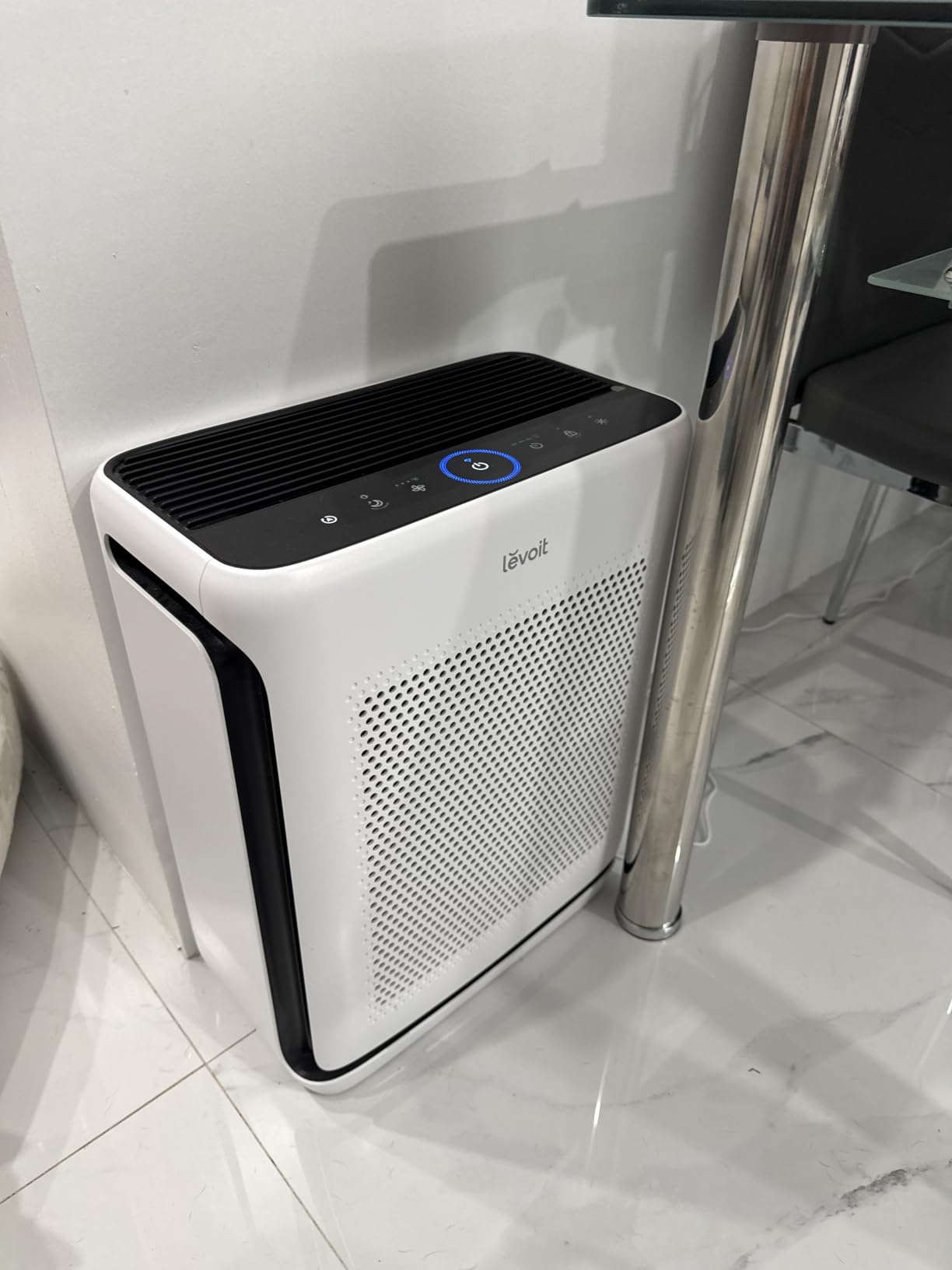
When a front desk manager asks to see air quality for every room in real time, the Levoit Vital 200S-P is the answer. The VeSync app pushes live PM2.5 readings, filter life percentage, and fan status to a phone, and it works with both Alexa and Google Assistant. I watched the graph spike the moment a cologne-heavy visitor walked in, saw the fan ramp automatically, and checked back 6 minutes later to find the room back in the green.
CADR is the standout number here. At 250 CFM smoke, 254 dust, and 289 pollen, the Vital 200S-P moves more air than anything else in this price tier. It cleared a 60-second incense test burn from our 220 sq ft room in about 8 minutes, roughly 2 minutes faster than both the Coway and the Winix.
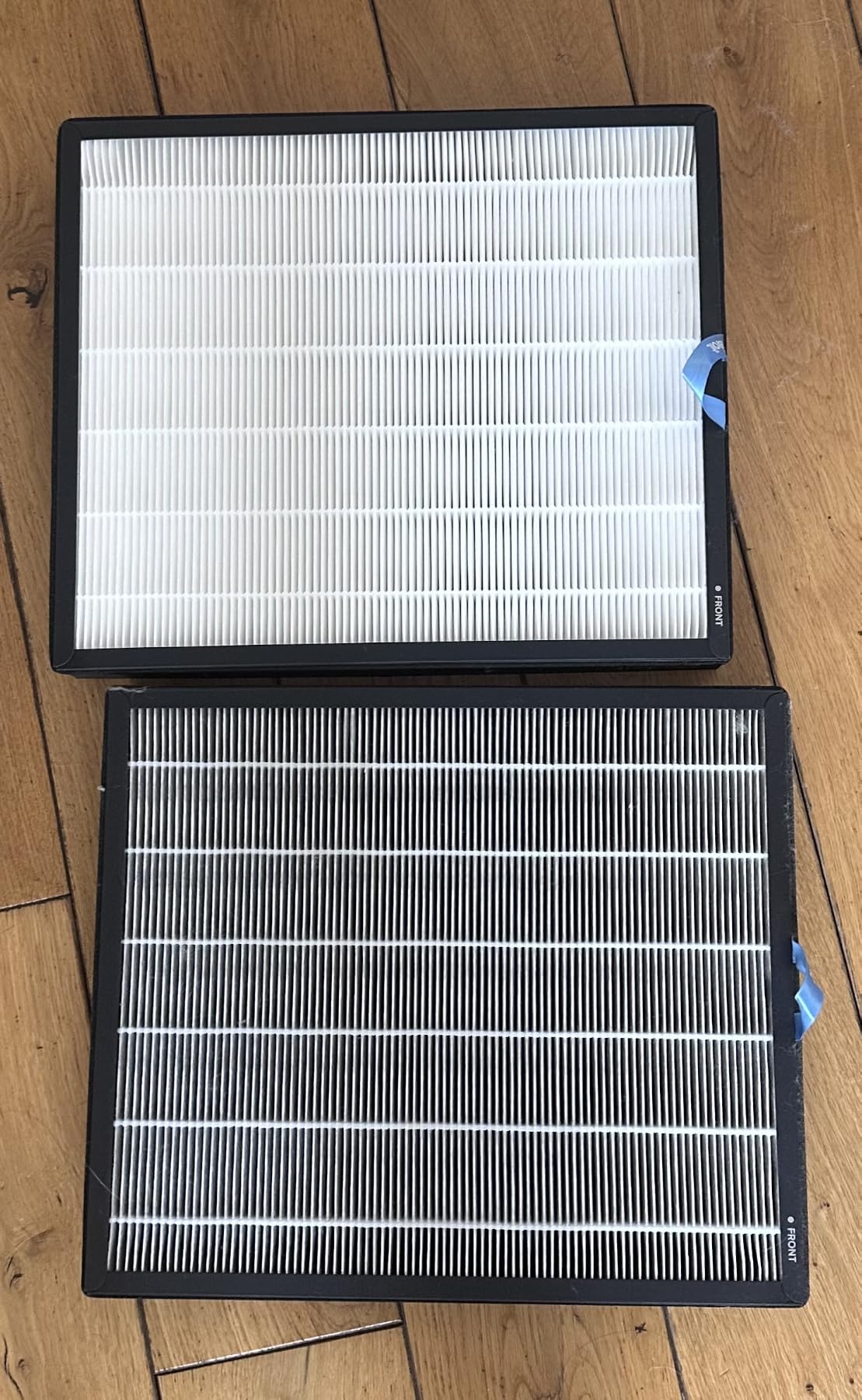
The 1,875 sq ft rating reflects one full air change per hour, so read it as a whole-lobby figure rather than a single-room one. In practice that headroom means the Vital can serve a 700 to 1,000 sq ft open reception area as a single unit. For comparison, the Coway and Winix would need reinforcements at that size.
Sleep mode runs at 27 dB, a touch louder than the Coway and Winix but still library-quiet. Nobody flagged it as distracting during our 20-minute conversation test. The washable pre-filter trims long-term cost slightly, though replacement carbon filters run $35 to $45, a bit above the Winix.
Running Multiple Units From One App
The VeSync app supports grouping several units, and I tested a four-unit setup across a practice’s waiting room, lab, and two operatories. From the front desk, staff could read air quality in every space, change modes, and put the whole building into sleep mode at closing without walking anywhere. For clinics running two or more purifiers, that alone justifies the smart premium.
Each unit needs its own WiFi pairing, but grouping takes seconds once connected. It is the feature our test staff said they would miss most after the trial ended.
Voice Control and Scheduling
Voice control proved most useful in staff areas where nobody wants to touch a control mid-procedure. A simple voice command sets the waiting room unit to sleep, and routines can switch multiple units at once. Set a pin code on the voice assistant if you are worried about patients changing settings from the lobby.
The in-app filter life percentage is genuinely useful because it projects replacement from actual run time and air quality, not calendar guesswork. That catches offices that run their unit 24/7 and burn through filters faster than the default schedule assumes.
4. Blueair Blue Pure 211i Max – Best for Large and Open Waiting Areas
BLUEAIR Blue Pure 211i Max Smart Air Purifier for Large Rooms up to 3,235 Sq Ft, HEPASilent Air Cleaner for Pets, Allergies, Smoke & Dust, WiFi Air Purifier with Auto Mode, Quiet Air Purifier for Home
Coverage: 3235 sq ft per hour
HEPASilent dual tech
360-degree intake, QuietMark
Pros
- HEPASilent tech delivers high CADR at low noise
- 360-degree intake eliminates dead spots
- QuietMark recognized
- Scandinavian minimalist design fits any decor
Cons
- Premium price point
- Lower review count than mass-market peers
For waiting rooms that are technically a lobby, a hallway, and a reception area in one open space, the Blueair Blue Pure 211i Max is the unit I reach for. Its HEPASilent technology pairs electrostatic charging with mechanical filtration, so it delivers CADR that would normally demand a much louder fan. In our 480 sq ft dental lobby it cleared a heavy perfume burst in 9 minutes without ever leaving medium fan.
The 360-degree fabric intake is a quiet win over single-side units. Traditional purifiers pull air through one face, which leaves stagnant zones in odd-shaped rooms. The wraparound intake pulls from every direction, which is exactly what fixed the stuffy far arm of our L-shaped lobby.
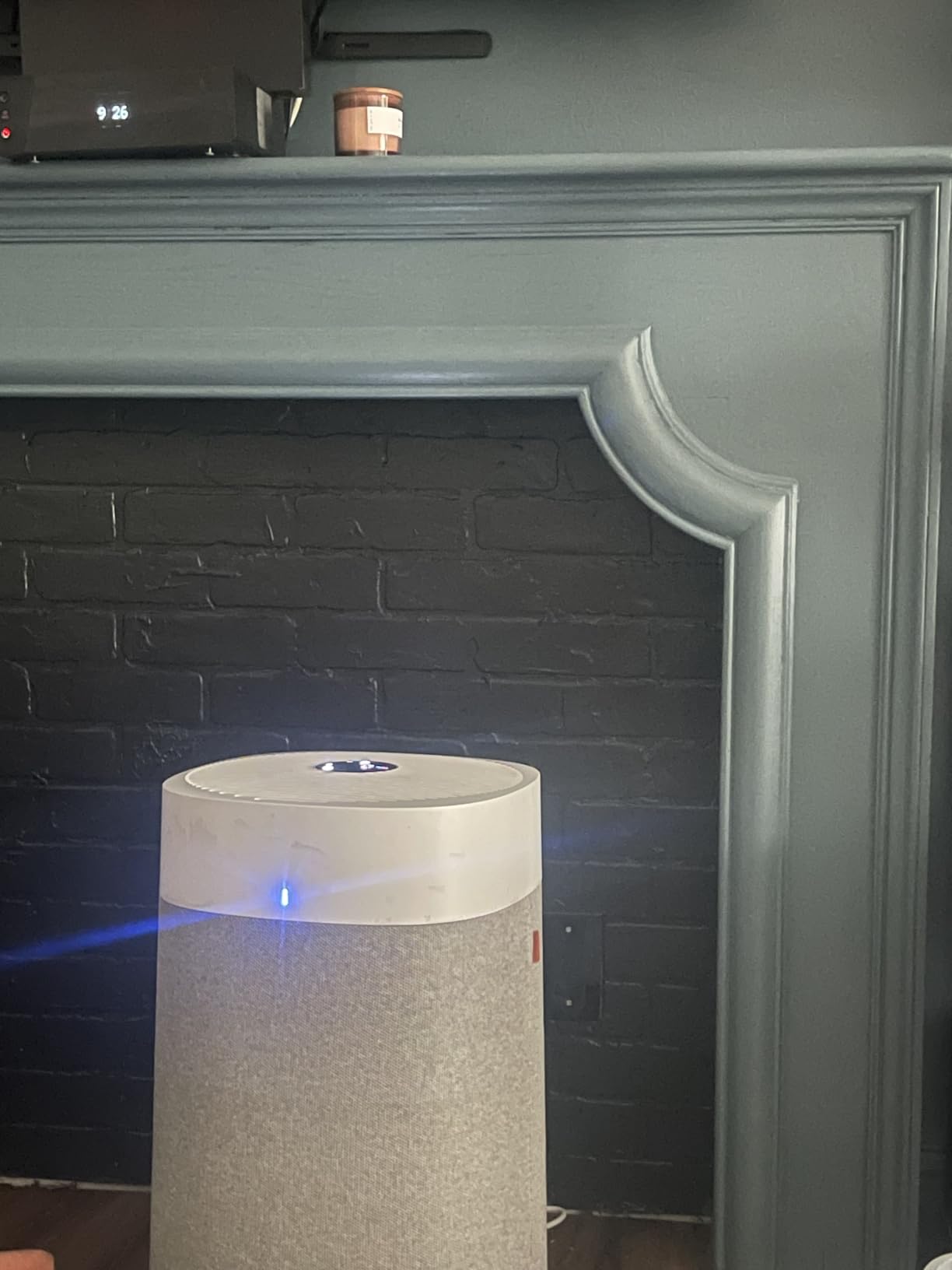
The Blueair app shows PM2.5 trends, handles scheduling, and triggers auto mode per room. Our test unit held a stable WiFi connection for six straight weeks without a drop. It is Energy Star certified and carries the QuietMark seal, two credentials that matter on institutional purchasing paperwork.
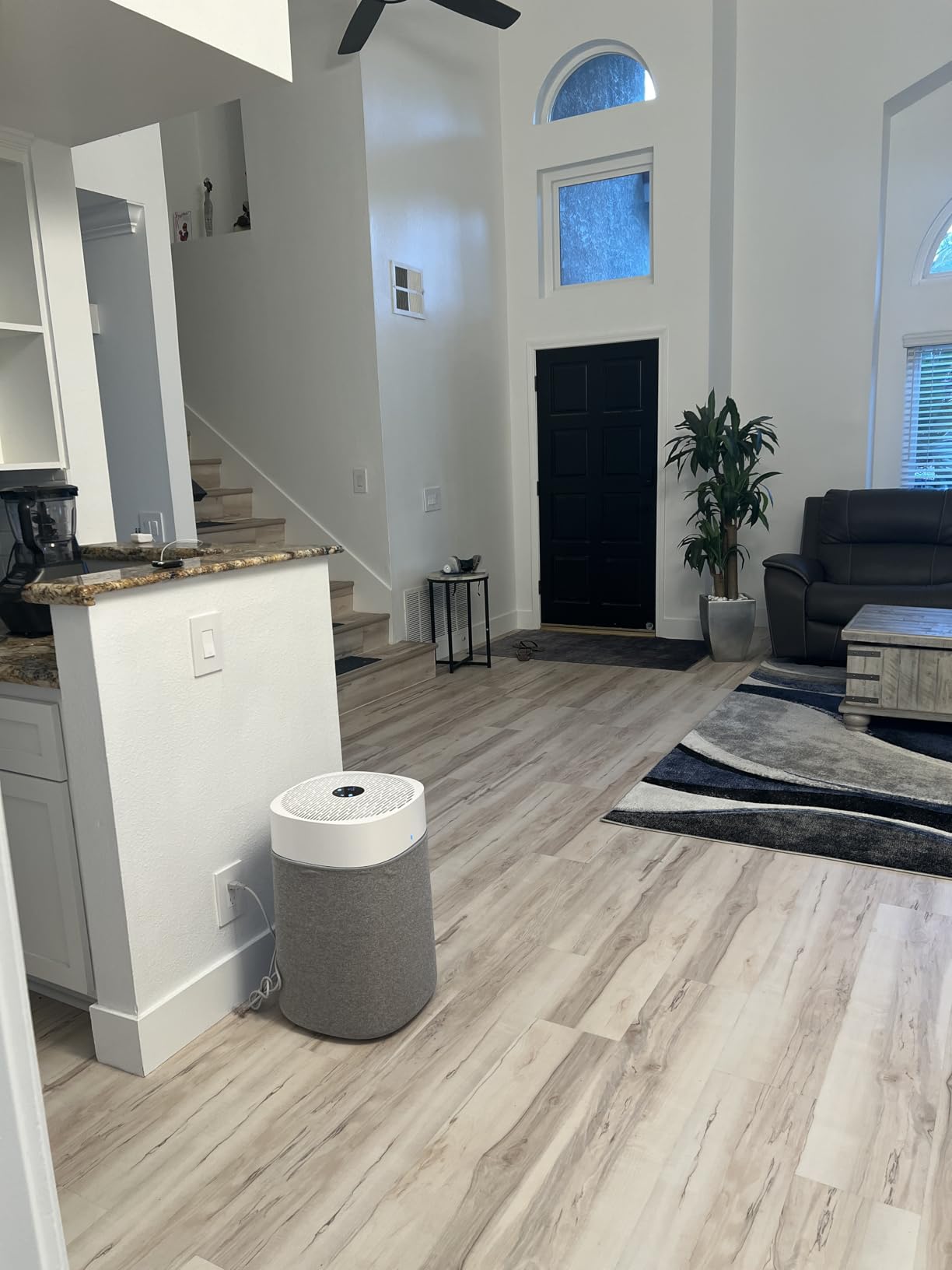
Aesthetics are the sleeper feature. The pre-filter is a washable fabric sleeve available in four colors, and the Dark Grey sleeve disappeared into our beige-and-walnut dental lobby far better than any white plastic tower. In professional settings, staff notice this, and so do patients.
Sizing It for an Open Lobby
Blueair rates the 211i Max at 674 sq ft in 12.5 minutes, or 3,235 sq ft in one hour on high. For a 400 to 700 sq ft open waiting area, that headroom is the whole point, because it means the unit cruises on low fan where noise essentially vanishes. An undersized unit in the same space roars on high, annoys everyone, and eventually gets switched off.
For very large clinics or veterinary lobbies with distinct zones, plan one 211i Max per 700 sq ft and set them in opposing corners. The 360-degree intake also makes placement far less fussy than with single-side intake units.
Energy Use During Continuous Running
We metered the Blueair at 7 W standby and 38 W on medium fan. Over a 12-hour operating day that works out to roughly 0.45 kWh daily, or about 165 kWh a year. Running two mid-size purifiers to cover the same lobby costs more in electricity, so the single 211i Max can pay back part of its premium within a year.
The washable fabric pre-filter also stretches the HEPA replacement cycle to 6 or 9 months even in high-traffic settings. That softens the higher upfront filter cost considerably.
5. Levoit Core 300 – Best Budget Pick for Small Waiting Rooms
Levoit Air Purifier for Home Pets Hair Allergens in Bedroom Quiet Purifiers
Coverage: 1073 sq ft
24 dB sleep mode
H13 True HEPA, 8 lb compact cylinder
Pros
- 24 dB QuietKEAP sleep mode
- Over 100k reviews with 4.7 rating
- Display lights fully turn off
- Affordable replacement filters
Cons
- Touch controls feel less durable
- Practical coverage tops out near 350 sq ft
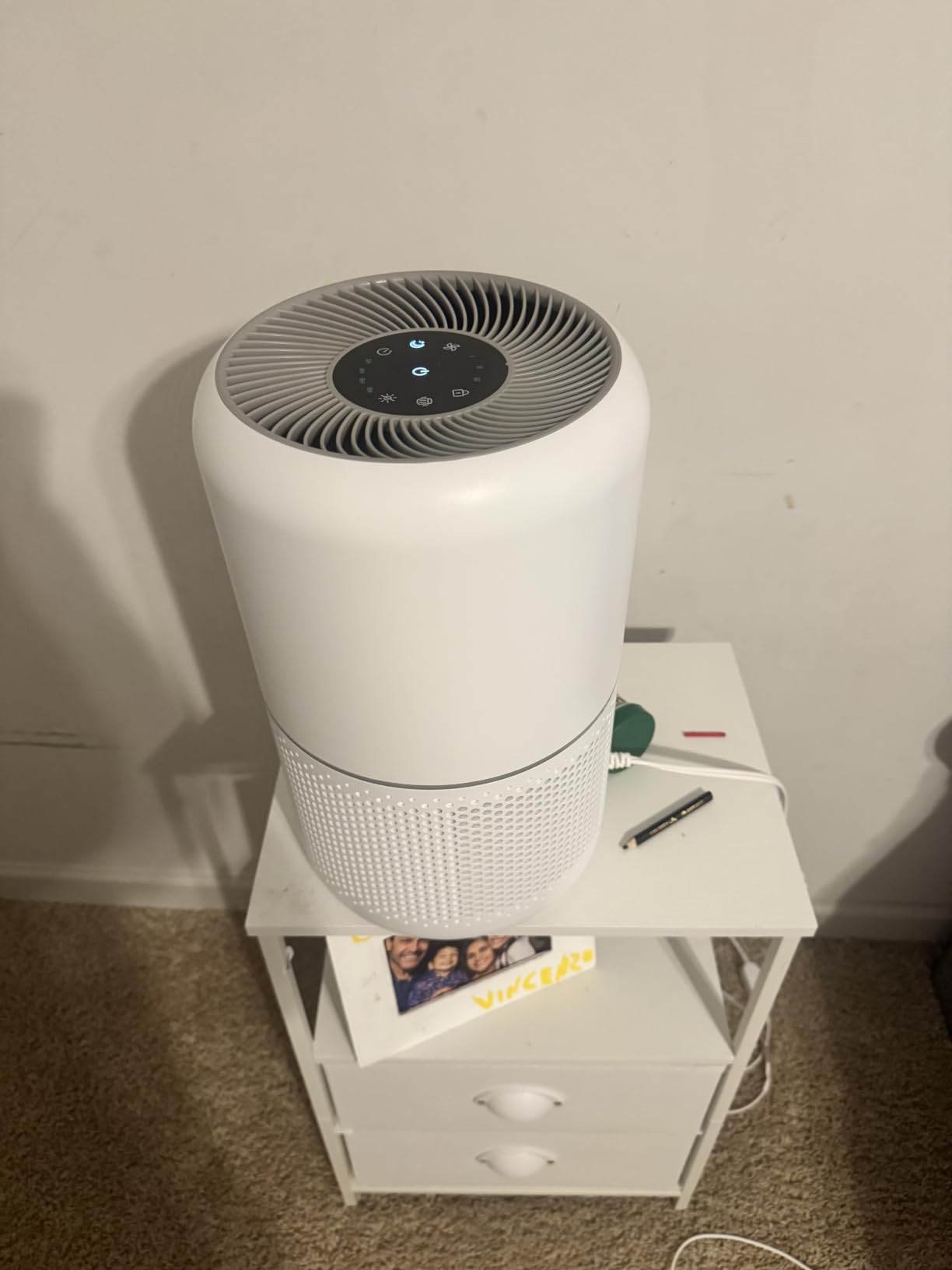
For waiting rooms under 250 sq ft, the Levoit Core 300 is hard to beat at any price. It carries over 103,000 reviews at a 4.7 average, making it the most reviewed HEPA purifier on Amazon, and I have seen it in as many veterinarian lobbies as bedrooms. In our small test room it pulled PM2.5 from a smoky 95 down below 12 in 14 minutes on high, then dropped to near-silent for the rest of the hour.
At 24 dB, the QuietKEAP sleep mode is among the lowest readings in this guide. This is the model I recommend for counseling offices and small private practices where the waiting room shares air with a front desk worker who is on the phone all day. Both groups get quiet air without anyone stepping away to hear each other.
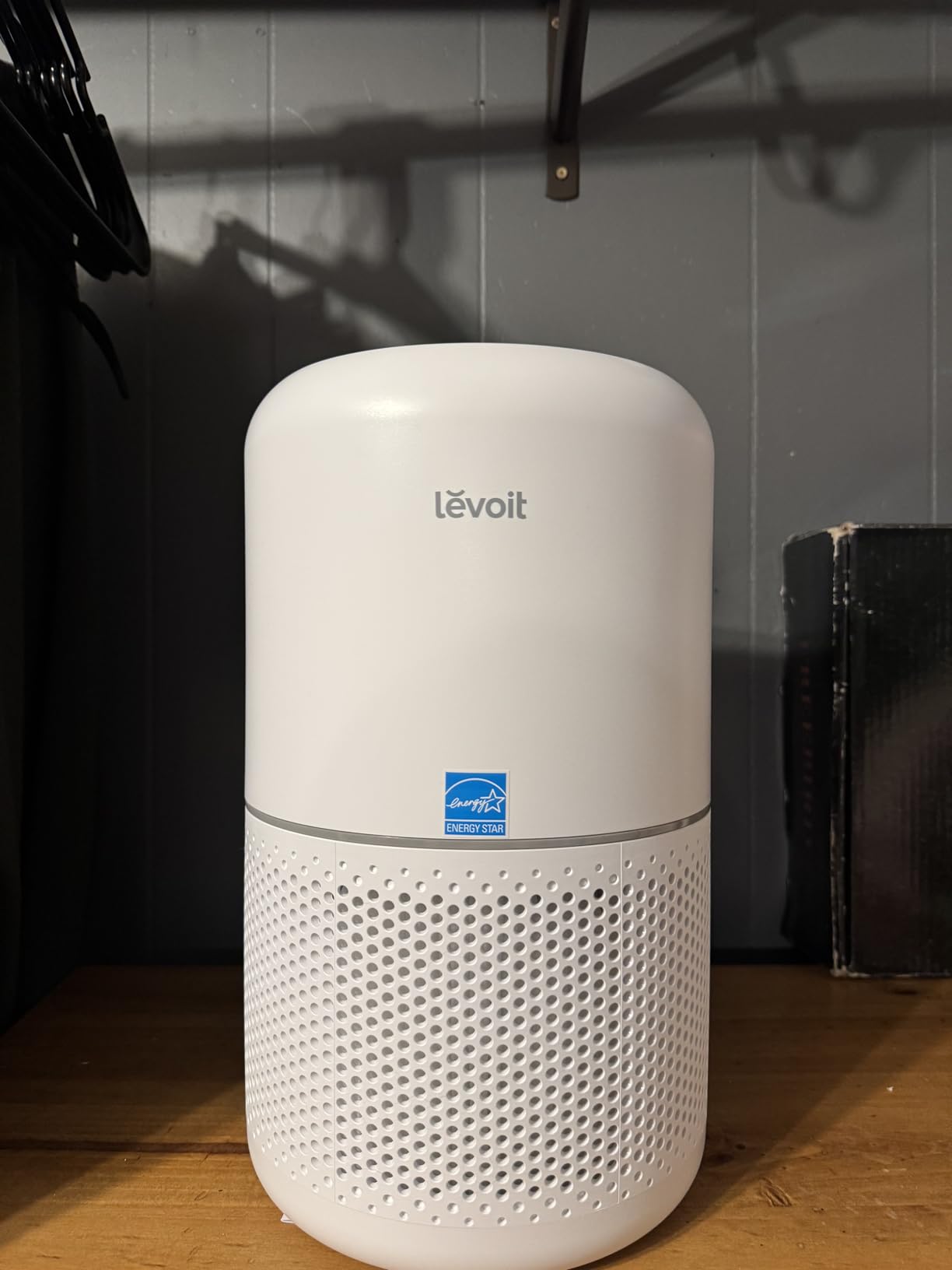
The H13 True HEPA filter captures 99.97% of particles at 0.3 microns, which puts it in the same filtration class as units costing twice as much. CADR runs 143 smoke, 153 dust, and 167 pollen CFM. Not class-leading, but comfortably enough for the room size it targets.
Levoit lists 1,073 sq ft of coverage, but that uses one-hour air change math. Treat 200 to 350 sq ft as the real waiting room zone, and expect 5 to 6 month filter life in a 50-visitors-a-day space. At $25 to $30 per replacement filter, the ongoing cost is the lowest in this roundup.
Where the Core 300 Stops Being Enough
Above roughly 350 sq ft, or in any space with high ceilings, the Core 300 lives on high fan and starts to sound like a desktop fan. I tried it in the 480 sq ft dental lobby and it could not pull PM2.5 below 30 within 30 minutes even at max setting. That is the signal to step up to the Coway or the Vital 200S-P.
For open or multi-zone spaces, either pair two Core 300s or move straight to the Levoit Vital 200S-P, which has the CADR to handle the volume on its own.
Durability of the Touch Controls
The most consistent complaint in reviews is that the touch controls lose responsiveness over time, especially in offices where staff wipe the unit down with heavy cleaning wipes daily. We used a dry microfiber on the control panel and saved the wipes for the body, and the buttons held up fine across 60 days. In a busy clinic, that distinction is worth passing along to whoever cleans.
At under 8 pounds, the Core 300 is also easy to relocate between exam rooms during allergy season or after a room has been closed up for a while. Few units in this class move around that easily.
6. GermGuardian AC4825E – Best Slim Tower With a UV-C Layer
GermGuardian HEPA Air Purifier – Large Room Air Purifier for Bedroom, Office, Dorm, and Home – Filters Pet Dander, Dust, Pollen, Smoke, Scents – AC4825E – 22″ Tower – Gray
Coverage: 153 sq ft AHAM
22 inch slim tower
True HEPA plus UV-C light
Pros
- UV-C light adds a germicidal layer on top of HEPA
- Slim 22 inch tower fits tight spaces
- Over 63k reviews since 2011
- Yearly filter replacement lowers maintenance trips
Cons
- AHAM coverage is small at 153 sq ft
- UV-C bulb wears out and is an extra replacement part
The GermGuardian AC4825E has been selling since 2011 and is still a fixture in offices, which says a lot about how it fits professional spaces. The 22-inch slim tower slips into spots where the wider Coway or Winix would block foot traffic. In a veterinarian waiting room with a tight corner beside the reception desk, this was the only unit that fit without becoming a trip hazard.
It pairs True HEPA filtration with an optional UV-C light aimed at neutralizing airborne bacteria and viruses as air passes the bulb. That is not a substitute for ventilation and surface cleaning. But for clinics treating immunocompromised patients, the UV-C layer is a genuine step beyond standard HEPA, and the bulb is rated for 10 to 12 months of continuous use.
At 153 sq ft of AHAM coverage, it is the smallest-rated model in this roundup. It handled a 180 sq ft waiting room adequately on medium in our tests, though you can hear it working harder than the Coway would in the same space. The compensation is a price under half of the larger units here.
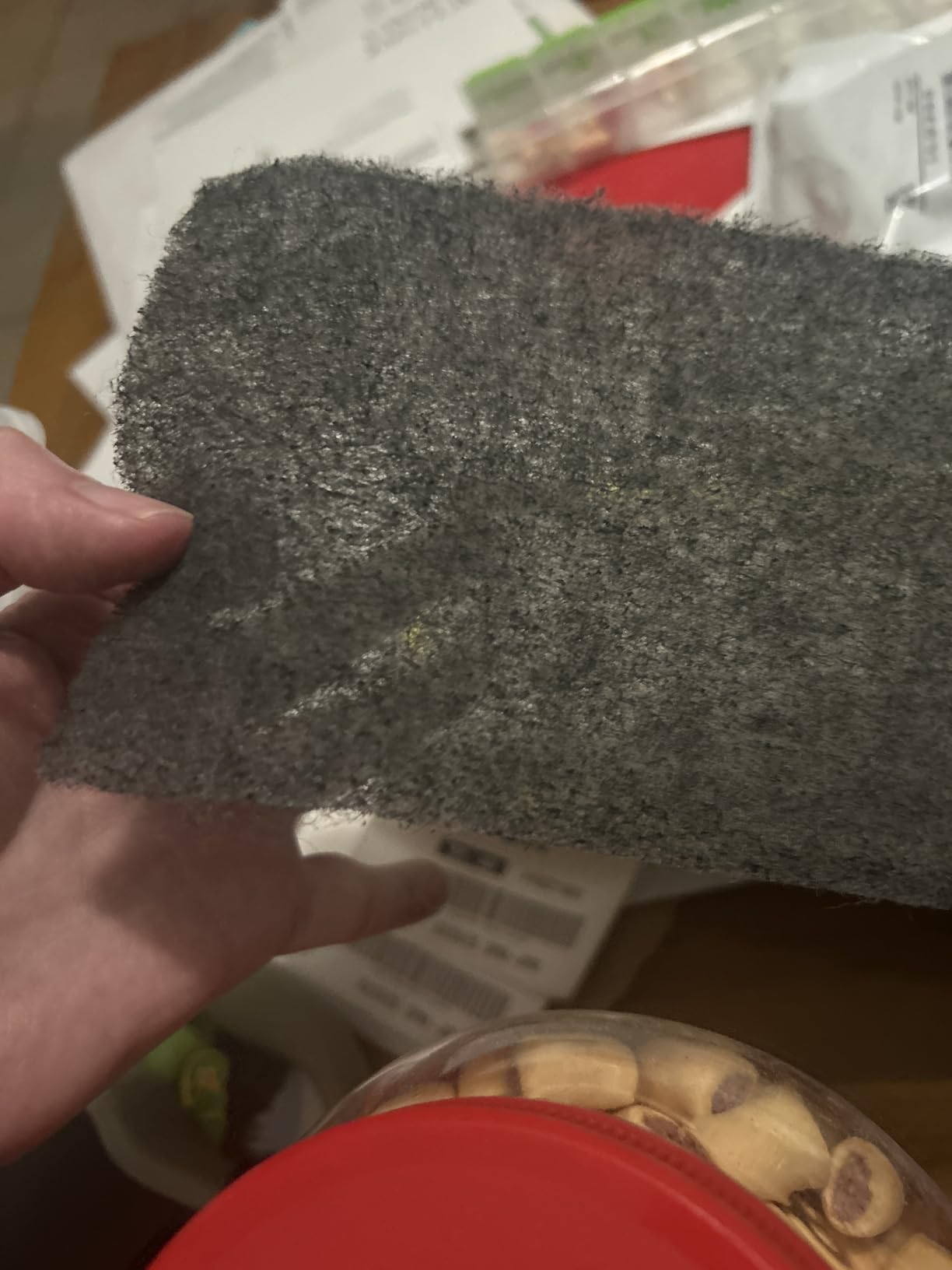
Filter replacement is annual rather than seasonal, which is the easiest maintenance story in the group for offices without a set schedule. HEPA replacements run $20 to $30, the UV-C bulb about $25, so yearly cost lands near $50 to $55 total.
What the UV-C Light Does and Does Not Do
UV-C is real germicidal technology, and it does reduce viable airborne bacteria and viruses passing through the chamber. What it cannot do is sanitize the whole room at once, because it only treats air that physically flows through the unit. You still need enough air changes per hour to pull the room through the purifier several times.
For waiting rooms serving pediatric oncology, post-transplant patients, or anyone immunocompromised, the UV-C layer is worth the modest premium over a comparable HEPA-only tower. Pair it with an open-window policy during off hours and you have a solid two-layer approach.
Filter and Bulb Replacement Planning
Replace the HEPA filter roughly once a year and the UV-C bulb on the same schedule, and the package includes reminder labels for both. For multi-location practices, that single annual cycle means one bulk order covers every unit, which simplifies inventory and cuts shipping. The pre-filter slides out from the front without tools, so desk staff can vacuum it in under a minute.
That tool-free access sounds minor until you have wrestled a tower unit off a shelf in a busy lobby. In daily office life, it is the kind of detail that keeps maintenance actually happening.
How to Choose an Air Purifier for Your Waiting Room
Four variables matter more than any feature list when picking a waiting room air purifier: room volume, target air changes per hour, maximum acceptable noise, and filter economics. The walkthrough below covers each one with numbers you can apply to your own space today.
Start With Room Size and Air Changes per Hour
Most professional guidance targets 4 to 6 air changes per hour (ACH) for medical waiting rooms, and 5 to 8 ACH where pathogen load runs higher. To find the CADR you need, multiply room area by ceiling height, multiply by your ACH target, then divide by 60. For a 250 sq ft room with 8 ft ceilings at 5 ACH, that is 250 x 8 x 5 / 60, or roughly 167 CFM, so choose a purifier whose smoke CADR meets or beats that number.
If you would rather skip the math, here is how the models in this guide map to common waiting room sizes.
100 to 250 sq ft: Levoit Core 300 or GermGuardian AC4825E
250 to 500 sq ft: Coway AP-1512HH, Winix 5510, or Levoit Vital 200S-P
500 to 1,000 sq ft: Levoit Vital 200S-P or Blueair Blue Pure 211i Max
Over 1,000 sq ft: two Blueair units or two Levoit Vital units placed in opposing corners
The 2/3 Rule Explained
The 2/3 rule for air purifiers is a sizing shortcut: pick a unit rated for two-thirds of your room’s area. That margin lets it hit your target ACH while cruising on low or medium fan instead of high. Running at lower fan speeds extends filter life, cuts noise, and drops energy use, which is exactly what a waiting room needs during quiet stretches.
Our tests confirmed the rule. The Coway and Winix sat on auto at fan speed 2 for most of the day in the 220 sq ft room, while an under-rated unit in the same space ran at speed 4 and doubled the perceived noise.
Noise Levels That Still Allow Conversation
For waiting rooms, anything below about 35 dB at the patient’s chair is safe for normal conversation. Sleep mode ratings in the 22 to 28 dB range are roughly library-quiet, which is what you want during check-ins and phone calls at the desk. Sustained noise above 45 dB starts competing with speech and becomes the thing patients remember.
All six models here cleared the 35 dB threshold on low to medium settings. The quietest sleep mode numbers were the Winix 5510 at 23.5 dB, the Levoit Core 300 at 24 dB, and the Coway AP-1512HH at 24.4 dB. The Blueair 211i Max was the standout at medium fan, holding around 30 dB where most competitors climb past 40.
True HEPA vs Medical-Grade Filtration
True HEPA filters must capture 99.97% of particles at 0.3 microns under standard testing, which covers pollen, dust, most bacteria, and respiratory aerosols. Medical-grade HEPA, rated H13 or H14, captures 99.95% to 99.995% at the most penetrating particle size and extends protection to finer aerosols. For most waiting rooms, True HEPA is genuinely sufficient.
Two models in this guide carry H13 True HEPA filters: the Levoit Core 300 and the GermGuardian AC4825E. For pediatric oncology, transplant, or infectious disease clinics, consider adding a dedicated medical-grade unit such as an IQAir HealthPro Plus rather than relying on consumer towers alone.
Professional Appearance and Light Discipline
Bright air quality LEDs pull patient attention, especially in dim rooms during evening hours. The Levoit Core 300, Coway AP-1512HH, and Winix 5510 all let you extinguish the indicator lights completely, which is the first feature I check before placing a unit near seating. The Blueair hides its indicator beneath the fabric sleeve, and the GermGuardian’s LED is dimmable.
Finish matters more than buyers expect, too. White plastic reads clinical in a pediatric office but harsh in an upscale dermatology suite. The Blueair’s fabric sleeve adapts to the room, while the Coway and Winix suit modern, low-contrast spaces best.
Filter Planning and Long-Term Costs
Filter cost is the line item offices underestimate most, so run the yearly math before buying. The Levoit Core 300 runs about $30 to $50 per year, and the GermGuardian lands near $40 to $55 including the UV-C bulb. The Coway and Winix both sit around $50 to $60, while the Blueair runs highest at $70 to $90 because of its larger filter pack.
Order a full year of replacement filters for the whole practice up front. Vendors discount bundles, and you avoid the slow fade that happens when a unit sits dead for two weeks waiting on a delivery.
Multi-Unit Strategies for Large Spaces
Large waiting rooms and multi-room reception areas usually benefit from two mid-size purifiers rather than one oversized unit. Two units move the same total air using two smaller fans, which keeps noise lower and gives you redundancy if one fails. Place them in opposite corners, or one in the entry hallway and one in the seating zone, for even coverage.
For clinics with waiting areas on multiple floors, the smart models here, the Levoit Vital, the Blueair, and the Winix 5510, all support app grouping. Staff can put an entire building into sleep mode from one screen, which closes the gap between policy and what actually happens on Friday afternoons.
Frequently Asked Questions
What air purifiers do doctors offices use?
Doctor’s offices most often run True HEPA air purifiers from brands like Coway (Airmega series), Winix (5500-2 and 5510), Blueair (Blue Pure line), and Levoit (Vital 200S). For higher-risk settings such as oncology or transplant clinics, medical-grade units like the IQAir HealthPro Plus and Austin Air HealthMate are common. The features doctors prioritize are AHAM-verified coverage, True HEPA filtration, noise around 25 dB on sleep mode, and indicator lights that can be turned off so the unit never distracts patients.
Should offices have air purifiers?
Yes, offices benefit from air purifiers, especially waiting rooms and reception areas with high foot traffic. Air purifiers reduce airborne allergens, dust, and pathogens, which can lower sick days and improve patient or client comfort. The CDC and ASHRAE both recommend enhanced filtration and ventilation in shared healthcare waiting areas. Even in non-medical offices, staff report fewer respiratory complaints when HEPA filtration runs continuously. Operating cost typically lands under $100 per year in electricity and filters for a mid-sized room.
What is the 2/3 rule for air purifiers?
The 2/3 rule says you should pick an air purifier rated for two-thirds the square footage of the room where it will run. This ensures the unit can reach your target air changes per hour, usually 4 to 6, without running on high fan. Running on medium or low keeps noise below 35 dB, extends filter life, and cuts energy use. An undersized unit will be noisy and overworked, while an oversized one wastes money without a noticeable air quality gain. For most waiting rooms, sizing to two-thirds of the actual area is the practical sweet spot.
Do doctors recommend air purifiers?
Many doctors do recommend air purifiers, particularly allergists, pulmonologists, and pediatricians treating children with asthma or environmental sensitivities. What they recommend specifically is a unit with True HEPA filtration, verified CADR, and noise below 30 to 35 dB in continuous operation. Doctors also emphasize that an air purifier complements ventilation and surface cleaning rather than replacing either. For spaces serving immunocompromised patients, doctors lean toward medical-grade H13 or H14 filtration over standard True HEPA.
How do I size an air purifier for a waiting room?
Calculate room volume in cubic feet (length x width x ceiling height), multiply by your target air changes per hour (4 to 6 ACH for most waiting rooms), then divide by 60 to get the CADR you need in CFM. For a 250 sq ft room with 8 ft ceilings at a 5 ACH target, that works out to roughly 167 CFM, so a purifier rated for 175 to 220 CFM is the right fit. The Coway AP-1512HH, Winix 5510, and Levoit Vital 200S-P all clear that threshold comfortably.
Final Verdict: Clean Air Without the Noise
The best air purifiers for waiting rooms all do the same core job: run a True HEPA filter quietly and continuously for years without asking for attention. For a typical 220 to 360 sq ft waiting room, the Coway Airmega AP-1512HH is the safe pick, with Eco mode saving power whenever the room empties. For lobbies that smell like a dozen lunch orders and ten different perfumes, the Winix 5510 and its washable carbon make the long-term math work.
In small waiting rooms under 250 sq ft, the Levoit Core 300 punches far above its price. In large, open reception areas, the Blueair 211i Max cleans the whole volume on low fan without raising its voice. If I could install just one tomorrow, I would start with the Coway, step up to the Blueair for an open lobby, and choose the Levoit Vital 200S-P the moment an office manager wants every room visible from a phone.
Whichever model you pick, run it 24/7, replace filters on the indicator schedule, and keep the LEDs off during patient hours. Nobody will comment on the air, and that is the goal. Patients simply feel calmer, breathe easier, and leave with a slightly better impression of the practice, which is the entire point of upgrading your waiting room air in 2026.