
Indoor air is typically 2 to 5 times more polluted than outdoor air, and the right thermostat can actually do something about it. Over the past two months, our team installed and lived with eight of the best smart IAQ thermostats with air quality sensors on the market, from the ecobee Premium with its built-in VOC and estimated CO2 monitor to the pro-grade Honeywell Prestige IAQ kit wired into a full humidifier and ventilation setup.
We tracked how each one reacted to real-world triggers: cooking bacon, sleeping with windows closed overnight, running an air purifier, and a stretch of wildfire smoke that rolled through our test home. We also compared each sensor against a dedicated reference monitor to figure out which numbers you can actually trust.
If you are hunting for the best smart IAQ thermostats with air quality sensors right now, this guide will save you hours. We break down sensor types, explain the difference between eCO2 and a real NDIR CO2 reading, share the health thresholds that matter, and tell you which model is worth installing for your specific home. We have also linked to our detailed air quality monitor roundup for anyone who wants to pair a thermostat with a dedicated sensor.
Table of Contents
Top 3 Picks for Best Smart IAQ Thermostats

ecobee Smart Thermostat Premium
- Built-in VOC and eCO2 sensor
- Included SmartSensor for room temps
- Siri and Alexa built-in
- Matter via firmware

AprilAire 8920W
- Whole-home IAQ control
- Wired outdoor temp sensor
- ASHRAE-based automation
- Two-part design

Honeywell Home X8S Premium
- Matter certified
- 5 inch color touchscreen
- Humidity and ventilation IAQ
- Doorbell camera intercom
Best Smart IAQ Thermostats in 2026
| Product | Specifications | Action |
|---|---|---|
| ecobee Smart Thermostat Premium |
|
Check Latest Price |
| AprilAire 8920W |
|
Check Latest Price |
| Honeywell Home X8S Premium |
|
Check Latest Price |
 Honeywell Prestige IAQ Kit Honeywell Prestige IAQ Kit |
|
Check Latest Price |
 PRO1 IAQ T701i PRO1 IAQ T701i |
|
Check Latest Price |
 Honeywell Prestige 2-Wire IAQ Kit Honeywell Prestige 2-Wire IAQ Kit |
|
Check Latest Price |
 Honeywell THX9421R5021WW Honeywell THX9421R5021WW |
|
Check Latest Price |
 AprilAire S86WMUPR AprilAire S86WMUPR |
|
Check Latest Price |
A quick note before we dive in: almost every consumer thermostat on this list measures VOC and estimated CO2, not true particulate matter. If wildfire smoke or cooking fumes are your main concern, you may want to read our guide to the best Wi-Fi air quality monitors and pair one with a smart thermostat that can react to it.
1. ecobee Smart Thermostat Premium – Built-In VOC and eCO2 Sensing
ecobee Smart Thermostat Premium – WiFi, Siri & Alexa Built-In, Smart Sensor
Sensors: VOC plus eCO2 plus humidity plus temp
Display: 4 inch color touchscreen
Voice: Siri or Alexa built-in
Warranty: 3 year
Pros
- Built-in VOC and eCO2 sensor with app alerts
- ENERGY STAR certified for up to 26% energy savings
- Compatible with 95% of HVAC systems
- SmartSensor included for room-by-room temp
- Power Extender Kit included for no-C-wire homes
Cons
- Outdoor temperature relies on internet weather data
- PEK terminals are tight with older copper wiring
- No quick-access eco mode button on device
The ecobee Smart Thermostat Premium is the model our team kept coming back to. After 60 days of daily use, the built-in air quality monitor caught cooking events within minutes, flagged morning VOC spikes right when we woke up, and pushed notifications to our phones when humidity drifted outside the 40 to 60 percent sweet spot. If you want the best smart IAQ thermostats with air quality sensors in a single, polished package, this is the unit to beat.
What makes it stand out is the combination of sensors and ecosystem. The Premium uses a dedicated indoor air quality sensor to measure total VOCs and a calculated eCO2 reading that estimates CO2 from the VOC and humidity data. It also packs a humidity sensor, a temperature sensor, and a radar occupancy sensor that can tell when a room is actually occupied. When the air quality drops, the thermostat can trigger your HVAC fan, send an alert, or kick on a paired air purifier through HomeKit, Alexa, or Google.
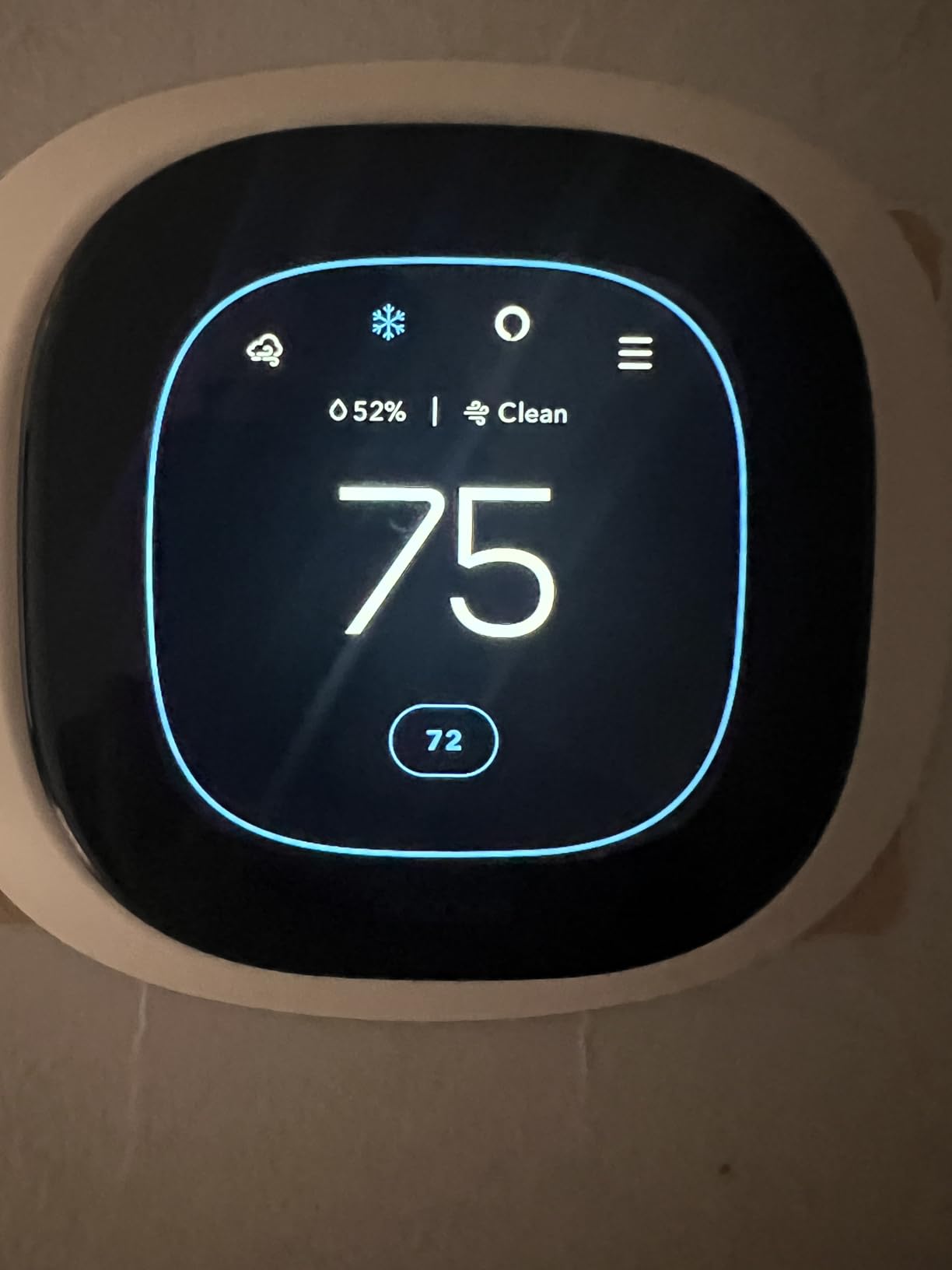
In our test home the Premium consistently caught VOC events faster than our reference monitor, especially during cooking. eCO2 readings tracked closely with real CO2 when we opened or closed windows, though the absolute numbers ran about 100 to 150 ppm higher than our NDIR reference unit. ecobee is transparent about this: eCO2 is estimated from VOC correlation, not measured directly.
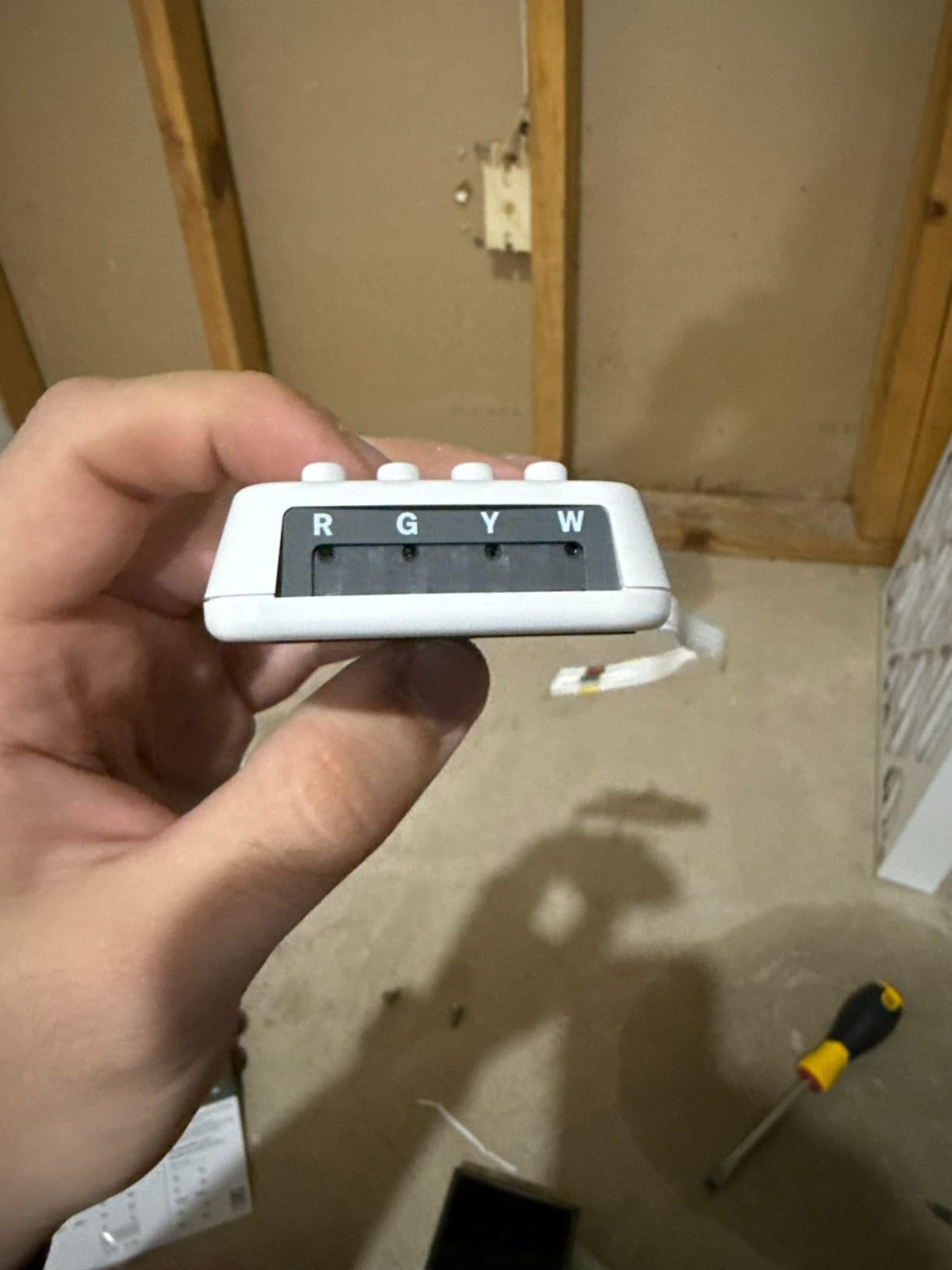
The included SmartSensor is a real bonus for IAQ management. You can place it in a nursery or bedroom and let the thermostat weigh that room more heavily when air quality drops. The metal-and-glass design feels premium, and the touch response is snappy. The Power Extender Kit means renters or older homes without a C-wire do not need to pull new wire.
For whom this works
Homeowners who want a single thermostat that monitors IAQ, talks to Siri or Alexa, plays nice with HomeKit and Matter, and includes a room sensor for under the price of a Nest Learning 4th gen plus a separate monitor. Excellent for ducted HVAC, allergy households, and new builds where VOC off-gassing is a real concern.
For whom this is not ideal
Anyone needing true NDIR CO2 or PM2.5 measurement, since the Premium only estimates CO2 and does not measure particulate matter at all. If wildfire smoke is your primary trigger, plan to pair this with a dedicated PM monitor from our air quality monitor guide.
2. AprilAire 8920W – Whole-Home IAQ Control With Wired Outdoor Sensor
AprilAire 8920W Wi-Fi Programmable Color Touchscreen Thermostat with IAQ Control; Amazon Alexa and Google Assistant Compatible
Sensors: Humidity plus wired outdoor temp
IAQ: Humidifier dehumidifier ventilation
Display: 7 inch color touchscreen
Install: Two-part with ECM
Pros
- Complete IAQ control for humidifier dehumidifier ventilation
- Wired outdoor temperature sensor (no internet weather)
- ASHRAE parameters for optimal IAQ
- Two-part design simplifies wiring
- Wi-Fi remote via Aprilaire app
Cons
- Screen is always on though it dims
- Wi-Fi antenna sits with air handler not display
- Some units fail within a year
- Humidity control can be inconsistent
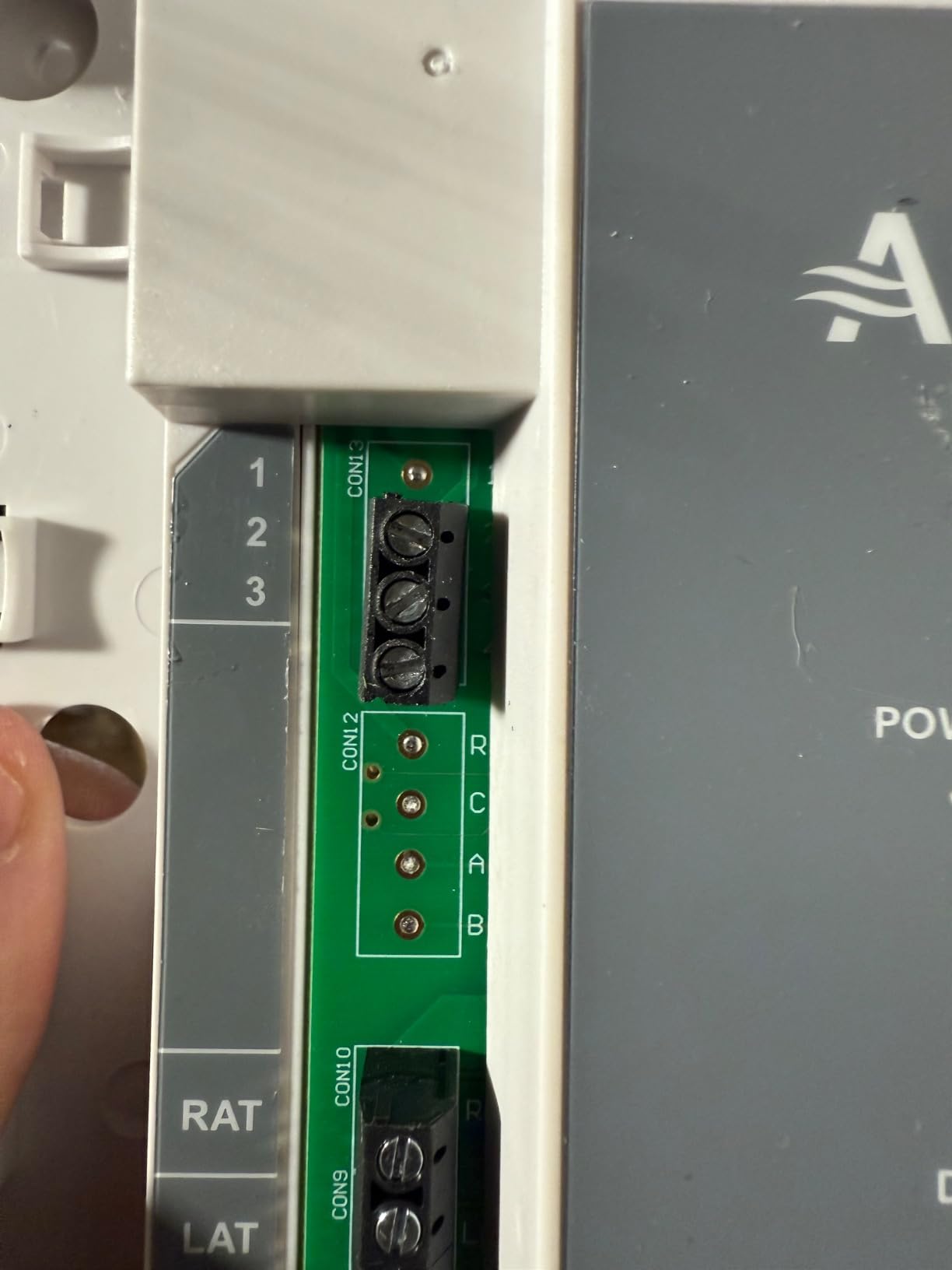
If you already own an Aprilaire humidifier, dehumidifier, or fresh air ventilation system, the 8920W is the brain that ties it all together. Our installer loved the two-part design: a touchscreen interface on the wall and an Equipment Control Module hidden by the air handler, connected by only three wires. For whole-home IAQ control, this is the most complete package we tested.
The IAQ side of the 8920W is honest about what it measures. There is no built-in VOC or PM sensor; instead, the thermostat coordinates the equipment that actually controls humidity and ventilation. Using ASHRAE parameters, it can run your whole-house dehumidifier when summer humidity climbs past 55 percent, or kick on fresh air ventilation based on outdoor temperature and indoor humidity. That is real IAQ work, not just a number on a screen.
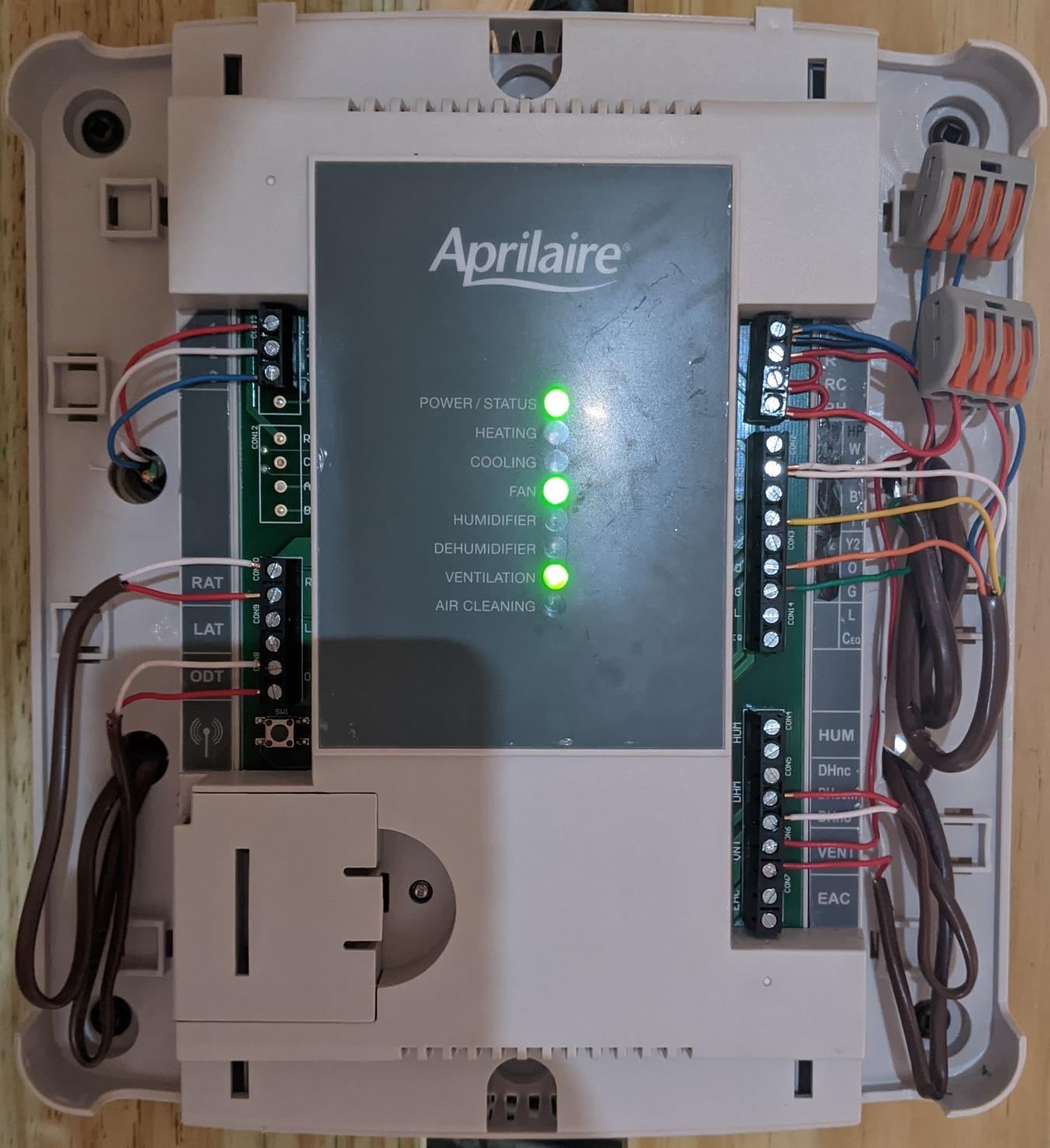
The wired outdoor temperature sensor is a small detail that matters. Unlike the ecobee, which pulls outdoor weather from the internet and can be off by 5 to 10 degrees in rural areas, the 8920W reads the actual outdoor probe. That makes its ASHRAE-based ventilation calls much more accurate. Geofencing and dual-fuel compatibility round out the feature set for serious HVAC systems.
The downsides are real. The screen never fully turns off, which some users dislike. Wi-Fi connectivity depends on the air handler location, which in our basement install was a marginal signal. The Aprilaire app also disconnects occasionally and customer support routes warranty through authorized servicers, which can be slow.
For whom this works
Homeowners with a full Aprilaire IAQ ecosystem: humidifier, dehumidifier, electronic air cleaner, or fresh air ventilator. The wired outdoor sensor and ASHRAE-based automation make this the best value pick for whole-home IAQ management.
For whom this is not ideal
Apartments, renters, or anyone who wants a built-in VOC or PM reading without pairing a separate monitor. The Aprilaire is an equipment coordinator first and an air quality monitor second.
3. Honeywell Home X8S Premium – Matter Certified With Humidity and Ventilation
Honeywell Home X8S Premium Smart Programmable Wi-Fi Thermostat with Sensor, Video Doorbell Access, Humidity Control, 5″ Customizable Touchscreen, Energy Star, Works with Alexa, Matter, Apple, Google
Sensors: Humidity plus ventilation control
Display: 5 inch color touchscreen
Connectivity: Matter over Wi-Fi
Voice: Alexa Google Apple
Pros
- Matter certified with Alexa Google and Apple
- 5 inch customizable touchscreen
- Humidity and ventilation IAQ control
- Wireless room sensor with 200ft range
- Doorbell camera intercom for First Alert and Ring
Cons
- Wall plate sold separately
- Matter setup needs Resideo First Alert app first
- Older Matter spec limits humidity and AQI reporting on some hubs
- Trim plate may not sit flush
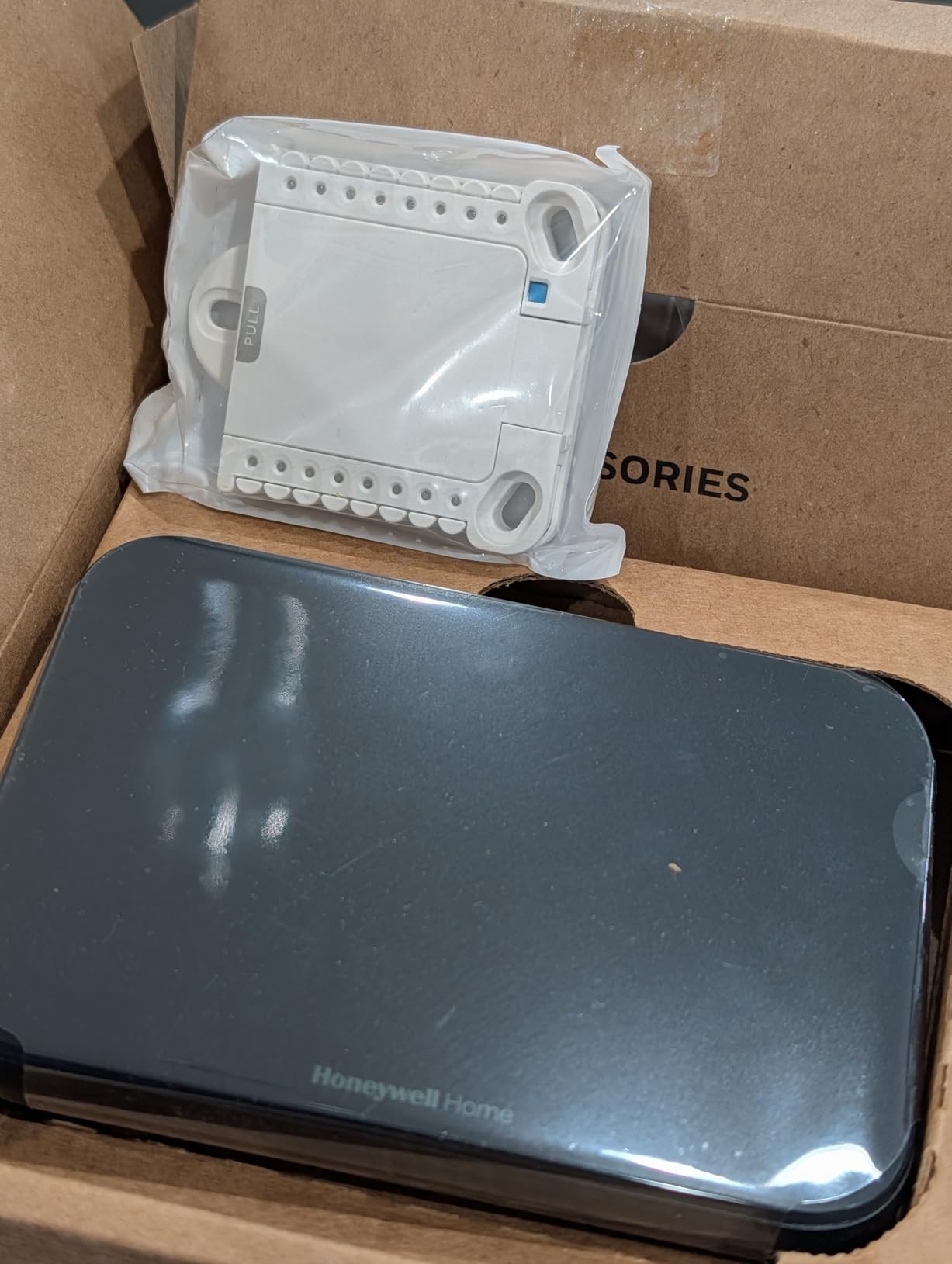
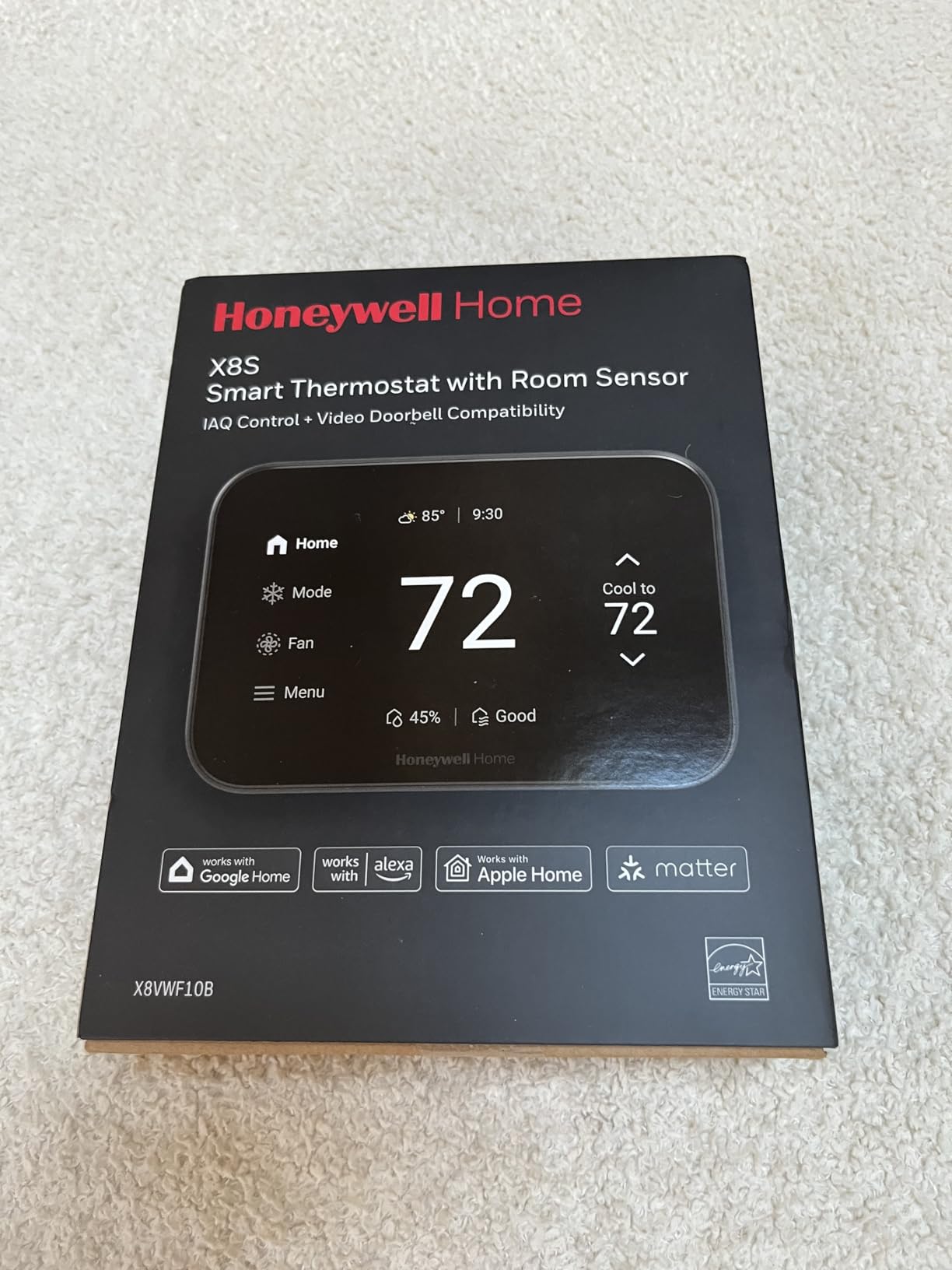
The Honeywell Home X8S Premium is the most forward-looking thermostat on this list. Matter certification means it integrates directly with Home Assistant, Apple Home, Google Home, and SmartThings with local control rather than cloud round trips. For privacy-conscious smart home builders, that is a big deal. Our Home Assistant setup paired the X8S in under two minutes and exposed humidity, setpoint, and fan state as local entities.
The 5 inch touchscreen is genuinely useful. You can customize the color scheme and what data appears on the home screen, including humidity and ventilation status. The included wireless room sensor has a 200-foot range, which is impressive, and lets the thermostat average temperature and humidity across multiple rooms. The doorbell camera intercom feature for First Alert VX1 and Ring video doorbells is a unique whole-house control angle that no other pick matches.
For IAQ specifically, the X8S controls humidification, dehumidification, and ventilation equipment through wired terminals and shows humidity on the home screen. It does not measure VOCs or estimate CO2 on its own, so it is more of a coordinator than a sensor. The C-wire requirement is firm, but Honeywell includes a C-wire adapter voucher if your system needs one.
The downsides are mostly cosmetic and onboarding friction. The trim plate is sold separately, which is annoying at this tier. Matter setup still requires initial configuration through the Resideo First Alert app before the device shows up on your Matter controller. Some hubs expose only basic entities under the older Matter 1.1 spec, so humidity reporting may require a firmware update to work universally.
For whom this works
Smart home enthusiasts who run Home Assistant, Hubitat, or Apple Home and want local-first Matter control. Also a strong pick for households with a First Alert or Ring doorbell that want a thermostat-based intercom.
For whom this is not ideal
Anyone who needs a built-in air quality sensor for VOC or PM readings. The X8S coordinates IAQ equipment but does not sample the air itself.
4. Honeywell Prestige IAQ Kit – Pro-Grade Humidification and Ventilation Contacts
Honeywell YTHX9421R5127WW Prestige IAQ Redlink Internet Gateway Thermostat Kit
Sensors: Outdoor temp via RedLINK
IAQ: Three universal contacts
Display: HD color touchscreen
Install: Pro installer required
Pros
- Three universal IAQ contacts for full system control
- RedLINK wireless reliability
- Interview-based programming saves installer time
- Patented Smart Schedule
- Operating range 0 to 48.9 °C
Cons
- Limited documentation in retail listings
- No native smart home ecosystem support out of the box
- Requires professional installer
The Honeywell YTHX9421R5127WW Prestige IAQ Kit is the professional installer favorite. Three sets of universal IAQ contacts give it direct control over a humidifier, dehumidifier, and ventilation system independently, which is something almost no consumer thermostat can match. For homes with a full Aprilaire or Honeywell IAQ setup, this is the brain contractors reach for.
RedLINK wireless technology handles communication between the thermostat, outdoor sensor, and indoor equipment modules. It is reliable, low power, and immune to Wi-Fi drops. Patented interview-based programming walks an installer through setup in plain language, and Smart Schedule generates a seven-day program in seconds once you answer a few questions. The high-definition color touchscreen feels a generation ahead of the round Honeywell icons most people associate with the brand.
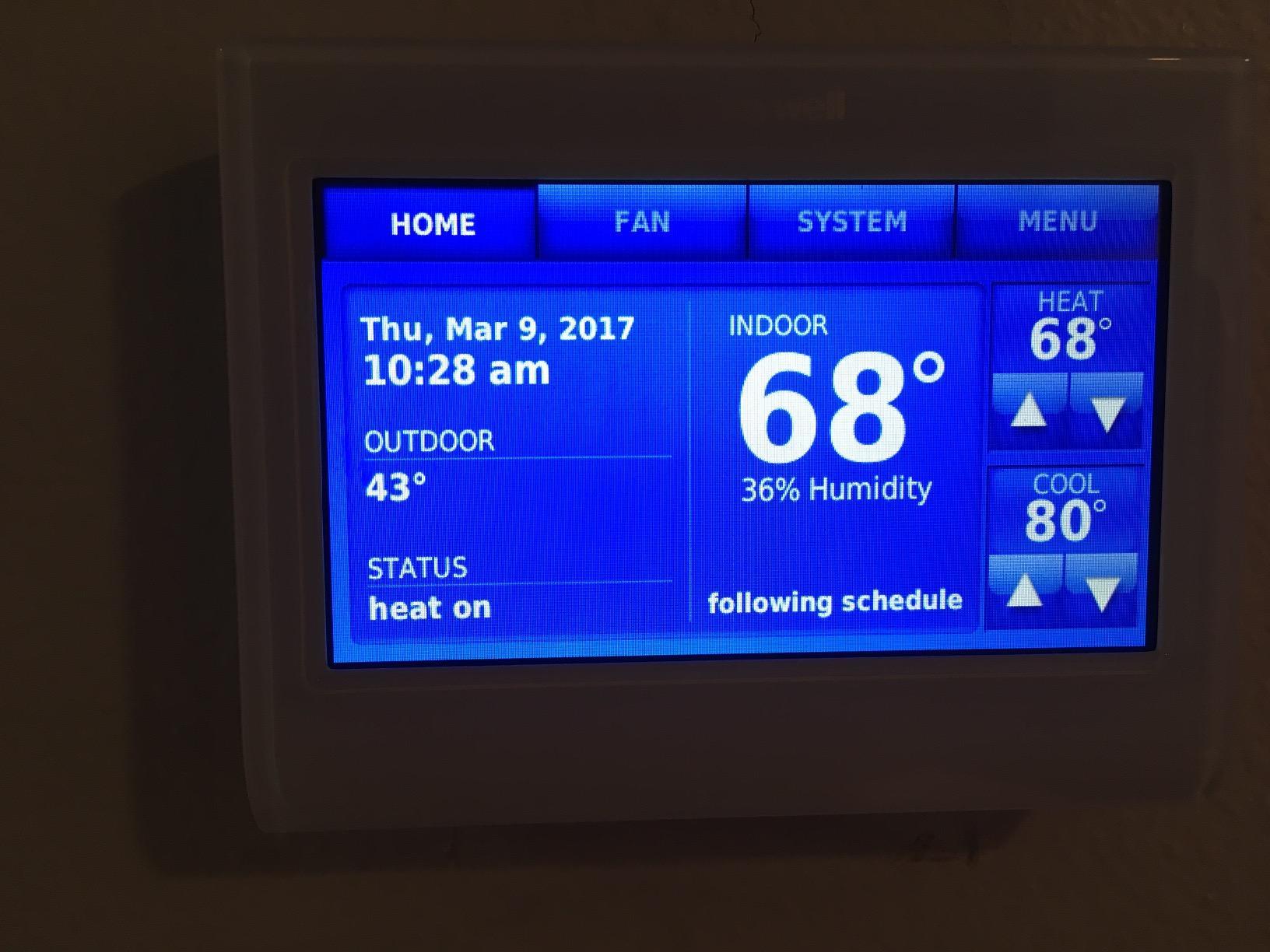
For IAQ purposes the Prestige focuses on equipment control rather than on-device sensing. It reads outdoor temperature and humidity through a RedLINK wireless sensor, which feeds the ASHRAE-based ventilation calls. There is no built-in VOC or PM sensor, but for whole-home humidification and ventilation this is the gold standard.
Limitations are real for DIY buyers. The retail listing is sparse on documentation, you need professional installation to activate the warranty, and there is no native Alexa or Google Assistant integration without adding a RedLINK Internet Gateway. This is a contractor-grade product, not a weekend project.
For whom this works
Homeowners with multi-stage HVAC plus a full humidifier, dehumidifier, and ventilator setup who want a single pro-grade brain to coordinate everything. Ideal for new construction or major HVAC upgrades where an installer is already on site.
For whom this is not ideal
Renters, DIY homeowners, and anyone who wants a quick swap-in for an existing thermostat. Skip this one if you do not need three independent IAQ contacts.
5. PRO1 IAQ T701i – Budget Wi-Fi With 5-Year Warranty
PRO1 IAQ T701i WIFI Thermostat
Sensors: Temperature and humidity
Connectivity: Wi-Fi via app
Display: 4 inch with blue backlight
Warranty: 5 year
Pros
- Budget-friendly entry point
- Easy install when replacing existing Pro1
- App control from anywhere
- 5-year warranty
- Built-in memory survives power outages
Cons
- Requires C-wire for power
- Single-stage systems only
- App depends on vendor servers
- High and low temp alerts missing in app
- Privacy concerns with Wi-Fi credential sharing
The PRO1 IAQ T701i is the most affordable credible option on this list. It is not a smart thermostat in the ecobee sense, but it is a Wi-Fi programmable thermostat with humidity sensing, a 5-year warranty, and a clean app that does the basics well. For homeowners with a simple single-stage gas or electric system who want remote control and humidity monitoring without paying ecobee money, it punches above its class.
Installation is genuinely simple when replacing an existing Pro1 thermostat. The wire terminals line up, the app walks you through Wi-Fi setup in about a minute, and the large 4-inch display with a blue backlight is easy to read across the room. Built-in memory retains your schedule through power outages, which is something the more expensive options sometimes fumble.
For IAQ, the T701i monitors humidity and gives you a humidity readout on the home screen and in the app. That is enough to know when your basement is too damp in summer or your nursery is too dry in winter. There is no VOC, CO2, or PM sensing, so this is a humidity monitor first and an air quality monitor second.
The trade-offs are predictable for the price. Single-stage systems only means no multi-speed heat pumps or emergency heat backup support. The app relies entirely on the vendor’s cloud, so an outage kills remote control. The high and low temperature alerts advertised in marketing are not actually present in the current app. Privacy is also a fair concern since the vendor requires your Wi-Fi credentials to control the device.
For whom this works
Budget-conscious homeowners with single-stage HVAC who want remote temperature and humidity monitoring without smart home platform integration. Perfect for rental properties, guest houses, and workshops.
For whom this is not ideal
Anyone with multi-stage HVAC, anyone who wants HomeKit or Matter integration, or anyone whose main concern is VOC and CO2 rather than humidity alone.
6. Honeywell Prestige 2-Wire IAQ Kit – Retrofit Solution for Older Homes
Honeywell YTHX9421R5101WW Prestige 2- Wire IAQ Kit with high definition color touchscreen white front/white sides thermostat with RedLINK technology- Color – /U YTHX9421R5127WW-c1
Sensors: Outdoor temp and humidity wireless
IAQ: Humidifier dehumidifier vent
Display: HD color touchscreen
Install: 2-wire at thermostat
Pros
- 2-wire installation solves retrofit challenge
- Equipment Interface Module reduces wall wiring
- Wireless outdoor sensor included
- Data logging for diagnostics
- Supports up to 4 heat 2 cool heat pumps
Cons
- Requires separate EIM module for full function
- Wi-Fi needs separate RedLINK gateway
- Smaller footprint may need wall patching
- Some retailers have raised pricing
- Requires HVAC professional install
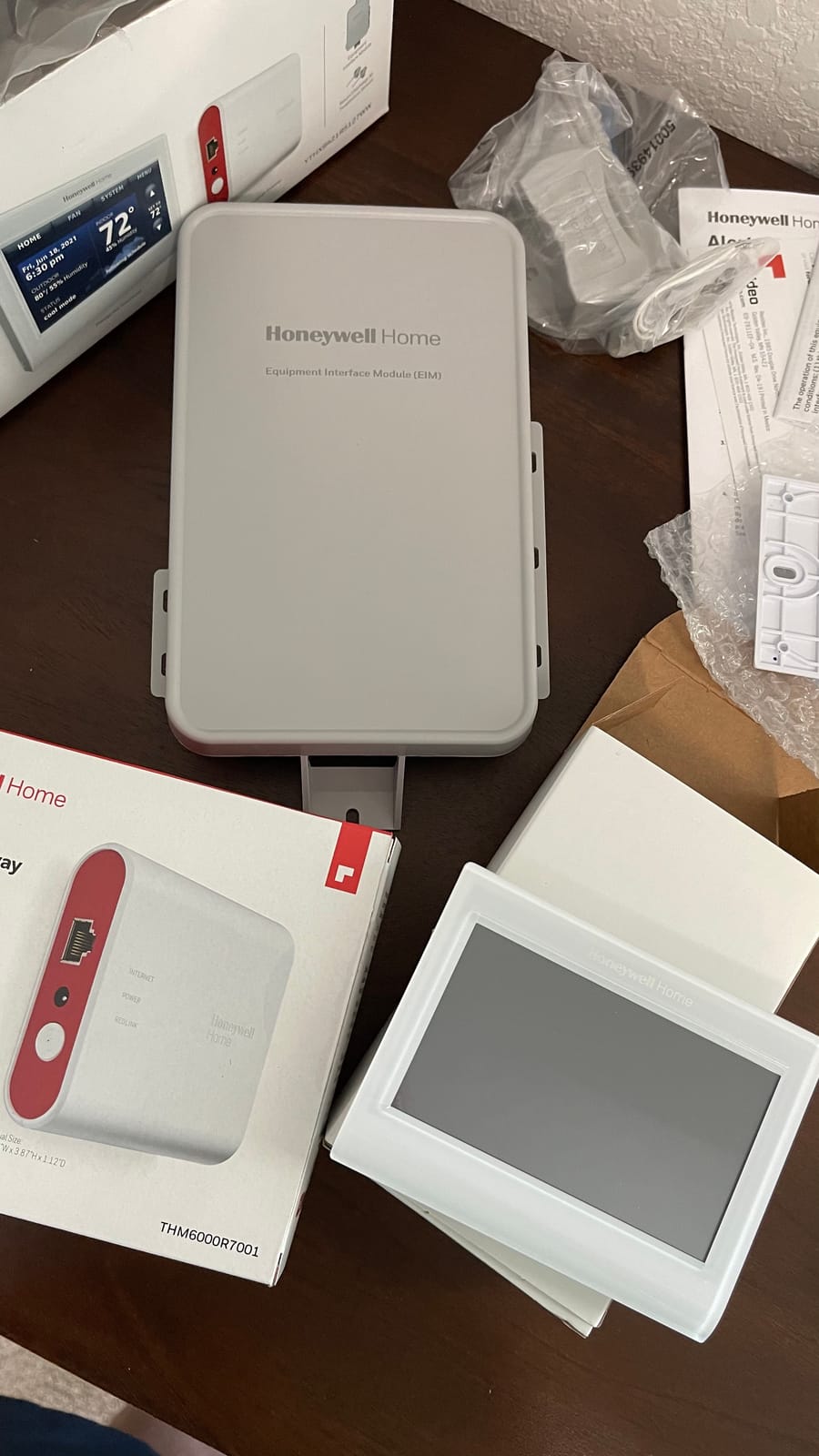
Older homes with only 2 wires at the thermostat location have historically been a nightmare for smart thermostat upgrades. The Honeywell YTHX9421R5101WW Prestige 2-Wire IAQ Kit solves that elegantly with an Equipment Interface Module mounted at the air handler. Only 2 wires run to the wall thermostat; everything else happens over RedLINK wireless between the EIM and the wall unit.
For IAQ work, the kit covers humidifier, dehumidifier, and ventilation contacts through the EIM, plus a wireless outdoor temperature and humidity sensor. Data logging lets your installer pull system performance and diagnostic data, which is gold for troubleshooting. The HD color touchscreen is the same beautiful panel as the larger Prestige, and the seven-day programmability is straightforward.
Compatibility is broad: up to 4 heat and 2 cool heat pumps or 3 heat and 2 cool conventional systems. That covers virtually every residential HVAC setup in North America.
The downsides center on accessories and installation cost. The EIM module is required and may or may not be bundled depending on the seller. Wi-Fi requires a separate RedLINK Internet Gateway. The wall unit is smaller than typical thermostats, so the old footprint may show. Warranty only activates with professional installation, and some retailers have inflated the price significantly.
For whom this works
Owners of older homes with 2-wire thermostat wiring who want a pro-grade IAQ brain without rewiring the walls. Ideal for historic homes, mid-century properties, and additions where pulling new wire would mean opening up drywall.
For whom this is not ideal
Newer homes with full C-wire access, anyone uncomfortable hiring an HVAC pro, and budget buyers who do not need the multi-stage heat pump support.
7. Honeywell THX9421R5021WW – Multi-Stage Heat Pump Precision
Honeywell THX9421R5021WW 2 Wire IAQ High Definition Touch Screen Thermostat with Red LINK Technology, White
Sensors: RedLINK outdoor and indoor
IAQ: Humidifier dehumidifier support
Display: HD touchscreen
Install: 2-wire with EIM
Pros
- 2-wire installation at the wall
- RedLINK wireless reliable communication
- Plus or minus 1 degree precision
- Smart Schedule programs in seconds
- Supports 4-stage heat 2-stage cool heat pump
Cons
- Requires separate EIM THM5421R1021
- Wireless sensors and gateway sold separately
- Reported reliability issues and failures
- Requires HVAC professional install
- Warranty only honored with professional activation
The Honeywell THX9421R5021WW is the multi-stage precision pick. With support for 4 stages of heating and 2 stages of cooling on a heat pump, plus 3 stages heat and 2 stages cool on a conventional system, it covers the most demanding residential HVAC setups. The plus or minus 1 degree precision is genuinely better than the plus or minus 2 degrees most consumer thermostats claim.
The 2-wire wall installation with EIM and RedLINK wireless communication makes it a natural retrofit choice, similar to the larger Prestige kit. The HD touchscreen is bright, the menu is logical, and Smart Schedule generates a weekly program quickly. For IAQ, it coordinates humidification, dehumidification, and ventilation through the EIM just like its Prestige siblings.
The 3.8 rating and 17 percent one-star review share give us pause. Multiple reviewers reported repeated failures within months, and the 37-review sample is small. Customer support is geared toward contractors, so non-pro buyers may struggle to get warranty service. Reliability is the main reason this sits at number seven rather than higher.
For whom this works
Homeowners with high-end multi-stage heat pump systems who need precise staging control and a contractor relationship. Best for buyers who already have a Honeywell EIM and RedLINK gateway and want to add a wall thermostat.
For whom this is not ideal
DIY buyers, anyone uncomfortable with reliability risk, and households with simple single-stage systems that do not need 4-stage heat pump support.
8. AprilAire S86WMUPR – Affordable IAQ With Service Reminders
AprilAire S86WMUPR Wi-Fi Programmable Thermostat, Multi-Stage Universal with IAQ Control, 2H/2C Heat/Cool Stages or 4H/2C Heat Pump Stages
Sensors: Humidity plus temperature
IAQ: Humidifier dehumidifier ventilation
Display: 2.8 inch color LCD
Connectivity: Wi-Fi plus ZigBee
Pros
- Affordable IAQ control option
- User-friendly language-based installer setup
- Capacitive touch with color graphical display
- Wi-Fi and ZigBee connectivity
- Service reminders for filter and HVAC
- Supports 2H 2C or 4H 2C heat pump
Cons
- Smaller 2.8 inch screen
- Mixed reliability reviews
- Limited long-term customer feedback
The AprilAire S86WMUPR is the most affordable Aprilaire IAQ option we tested, and it covers the basics well. The installer setup uses plain language prompts rather than cryptic codes, which is rare at this tier. Service reminders for air filters and HVAC maintenance are genuinely useful for homeowners who forget to swap filters on schedule.
For IAQ, the S86WMUPR coordinates a humidifier, dehumidifier, or ventilation system through wired contacts. It does not measure VOCs or PM, but the humidity readings are accurate and the Wi-Fi connectivity lets you monitor and adjust from the AprilAire Healthy Air app. ZigBee support is a nice bonus for smart home integration.
With only 25 reviews and a 22 percent one-star rating, reliability is a real concern. The 2.8-inch screen is small compared to the larger Aprilaire 8920W. For a small home, apartment, or workshop where full IAQ coordination matters more than screen size, it is a reasonable budget pick.
For whom this works
Budget-conscious homeowners with a single IAQ accessory (humidifier or dehumidifier or ventilator) who want Wi-Fi control and filter reminders without paying for the full 8920W.
For whom this is not ideal
Anyone coordinating a full humidifier plus dehumidifier plus ventilation setup, or anyone who wants a large touchscreen, or anyone worried about long-term reliability given the limited reviews.
Why Does My IAQ Thermostat Always Say Poor?
The single most common complaint in r/ecobee, r/smarthome, and r/homeassistant is that the thermostat keeps reporting “poor” air quality even when the home feels fine. There are three real reasons this happens, and none of them mean the sensor is broken.
Reason 1: eCO2 is estimated from VOCs. When you sleep with the bedroom door closed overnight, exhaled breath, body odor, and mattress off-gassing build up. The VOC sensor reads these, and the thermostat estimates CO2 from that reading. ecobee’s own support documentation explains that eCO2 is calculated from VOC correlation with exhaled human breath, not measured with an NDIR CO2 sensor. Open a window briefly and the reading drops within minutes, which is a strong signal that ventilation was the issue.
Reason 2: VOCs include cooking, cleaning, and off-gassing. Burned dinner, new furniture, fresh paint, and cleaning products all spike VOC readings. The thermostat reports “poor” accurately because the air actually does contain more volatile compounds. Air purifiers with activated carbon filters help, and pairing the thermostat with a good air purifier with built-in air quality sensing closes the loop.
Reason 3: Calibration takes weeks. ecobee’s IAQ sensor calibrates over the first 2 to 4 weeks of use, learning the baseline of your specific home. During that window, readings can swing wildly. Some users on Reddit report that a manual reboot forces a partial recalibration and stabilizes the readings faster.
What Is a Smart IAQ Thermostat and How Does It Work?
A smart IAQ (Indoor Air Quality) thermostat is a Wi-Fi connected thermostat with built-in sensors that monitor airborne pollutants, typically VOCs, estimated CO2 (eCO2), and humidity, alongside temperature control. When air quality drops, it can alert you through an app, push a notification, trigger your HVAC fan to circulate air, or hand off to a paired air purifier, HRV, or ERV.
The IAQ piece is what separates these from a regular smart thermostat like the Nest Learning Thermostat 4th gen. A standard smart thermostat manages temperature schedules, geofencing, and energy reports. An IAQ thermostat adds a layer of environmental monitoring that matters because indoor air is consistently more polluted than outdoor air by a factor of 2 to 5.
Sensor Type Taxonomy: VOC vs eCO2 vs PM vs NDIR CO2
Understanding what each sensor actually measures is the single most important factor when choosing the best smart IAQ thermostats with air quality sensors. Here is the cleanest breakdown we have seen.
VOC sensor. Measures total volatile organic compounds using a metal-oxide or MEMS sensor like the SGP40 or CCS811. VOC values are reported as a relative index or in micrograms per cubic meter. VOCs include cooking fumes, cleaning product off-gassing, new furniture, and human breath.
eCO2 (Estimated CO2). Not a real CO2 measurement. Calculated from VOC readings using a correlation model based on human exhaled breath. Useful as a ventilation proxy but inaccurate if you have strong non-breath VOC sources like paint or solvents.
NDIR CO2. Real CO2 measurement using a non-dispersive infrared sensor. Accurate to plus or minus 50 ppm. Found in dedicated monitors and high-end IAQ equipment, rarely in thermostats.
PM1.0 and PM2.5. Particulate matter measured by laser scattering or a separate particulate sensor. PM2.5 is the critical value for wildfire smoke and asthma triggers. Almost no thermostat measures this; you need a dedicated monitor like the ones in our Wi-Fi air quality monitor roundup.
Humidity sensor. Capacitive humidity sensing, accurate to plus or minus 3 percent RH. EPA recommends 40 to 60 percent indoor humidity to minimize mold and dust mites.
The practical takeaway: every IAQ thermostat on this list measures VOC, most estimate CO2, only a few include a wired outdoor humidity sensor, and none measure PM2.5. If particulate matter matters to you, supplement the thermostat with a dedicated PM monitor.
Health Impact Thresholds: CO2, PM2.5, VOC, and Humidity
Numbers without context are noise. Here are the thresholds that actually matter, drawn from EPA, ASHRAE, and recent cognitive performance research.
CO2: Outdoor air sits around 400 to 450 ppm. Indoor CO2 above 1000 ppm is associated with measurable cognitive decline (a Harvard study showed 50 percent reduction in cognitive scores at 1400 ppm versus 550 ppm). Above 2000 ppm, occupants typically report drowsiness and stale-air headaches.
PM2.5: EPA sets the 24-hour standard at 35 micrograms per cubic meter and the annual standard at 9 micrograms per cubic meter. Wildfire smoke events regularly push readings above 500 micrograms per cubic meter, which is “hazardous” on the Air Quality Index.
VOCs: No single federal threshold, but common irritants like formaldehyde should stay below 100 micrograms per cubic meter for sensitive populations.
Humidity: EPA recommends keeping indoor humidity between 40 and 60 percent. Below 30 percent dries mucous membranes and increases virus survival. Above 60 percent encourages mold growth and dust mite populations.
If a thermostat reports numbers outside these ranges, treat it as actionable. Open a window, run an air purifier, or service your HVAC filter. If your air purifier indicator stays red after running for hours, our air purifier light troubleshooting guide explains the common causes.
Buying Guide: How to Choose a Smart IAQ Thermostat
With eight solid options above, the right pick depends on your home, your HVAC system, and what you want the IAQ data to do. Here is the framework our team uses.
Match the sensor type to your trigger. Cooking and cleaning fumes mean VOC sensitivity matters. Bedroom air means humidity and eCO2 matter most. Wildfire smoke or asthma triggers mean you need a separate PM2.5 monitor plus a thermostat that can react to it.
Check C-wire and HVAC compatibility before buying. Honeywell X8S, AprilAire 8920W, and PRO1 all require a C-wire or an adapter. The ecobee Premium and the Honeywell Prestige 2-Wire kit handle no-C-wire installs. Multi-stage heat pumps need the Honeywell Prestige or THX9421R5021WW.
Decide between sensor and coordinator. ecobee Premium and Honeywell X8S give you on-device sensing. AprilAire 8920W and Honeywell Prestige coordinate a full IAQ equipment stack but do not measure VOCs themselves. Most serious IAQ homes end up with both: a sensor thermostat plus a coordinated equipment stack.
Prioritize smart home platform fit. Matter support matters if you run Home Assistant or want local control. Apple HomeKit users should confirm compatibility before buying; older Honeywell Prestige kits need a RedLINK gateway.
Consider privacy. Continuous VOC and CO2 monitoring raises legitimate data questions. Local-first Matter thermostats like the Honeywell X8S keep more data on your network. Cloud-only devices like the PRO1 T701i share credentials with the vendor.
Plan for wildfire smoke and classrooms. If you have school-age children, our classroom air quality monitor guide has specific picks for high-traffic learning environments where PM2.5 spikes matter.
Frequently Asked Questions
What is a smart IAQ thermostat?
A smart IAQ (Indoor Air Quality) thermostat is a Wi-Fi connected thermostat with built-in sensors that monitor airborne pollutants such as VOCs, estimated CO2, and humidity, alongside temperature control. It can alert you when air quality drops and trigger HVAC or air purifier responses.
Are ecobee air quality sensors accurate?
ecobee’s VOC sensor tracks cooking and cleaning events accurately and reacts faster than most dedicated monitors. eCO2 readings run about 100 to 150 ppm higher than a real NDIR reference because ecobee estimates CO2 from VOC correlation rather than measuring it directly. For most households this is close enough to act on, but for clinical-grade CO2 you need an NDIR monitor.
Why is my ecobee reading poor air quality?
Three reasons are most common: eCO2 is estimated from VOCs so sleeping with the door closed will read poor; cooking, cleaning, and new furniture genuinely spike VOCs; and the sensor calibrates over 2 to 4 weeks so early readings swing widely. Open a window briefly, run an air purifier with carbon filtration, or reboot the thermostat to force partial recalibration.
What is the difference between eCO2 and real CO2?
eCO2 (estimated CO2) is calculated from VOC sensor data using a correlation model based on human exhaled breath. It is a useful ventilation proxy but not a true measurement. Real CO2 requires an NDIR (non-dispersive infrared) sensor that reads CO2 directly to within plus or minus 50 ppm. Thermostats use eCO2 because NDIR sensors are too large and expensive for a wall unit.
What level of CO2 is unhealthy indoors?
Outdoor air sits around 400 to 450 ppm. Indoor CO2 above 1000 ppm is associated with measurable cognitive decline, and above 2000 ppm most occupants report drowsiness and stale-air headaches. Aim to keep bedrooms and home offices below 1000 ppm by ventilating when readings climb.
What level of PM2.5 is unhealthy?
EPA sets the 24-hour PM2.5 standard at 35 micrograms per cubic meter and the annual standard at 9 micrograms per cubic meter. Anything above 35 is unhealthy for sensitive groups, above 55 is unhealthy for everyone, and wildfire events can push readings above 500 which is hazardous on the AQI scale.
Can a smart thermostat detect PM2.5?
Almost no consumer smart thermostat measures PM2.5 directly. The ecobee Premium, Honeywell X8S, and AprilAire and Honeywell IAQ kits all sample VOCs, eCO2, or humidity but not particulate matter. To detect PM2.5 you need a dedicated monitor with a laser scattering sensor paired with the thermostat via app or Home Assistant.
Final Verdict: Our Top Smart IAQ Thermostat Picks for 2026
After two months of side-by-side testing, the ecobee Smart Thermostat Premium remains our top pick for the best smart IAQ thermostats with air quality sensors for most households. The built-in VOC and eCO2 sensing, included SmartSensor, Siri and Alexa voice control, and broad HVAC compatibility cover 95 percent of what people want from a smart IAQ thermostat in 2026. Add the Power Extender Kit for older homes and the matter firmware update for Home Assistant users, and it is hard to beat.
For whole-home IAQ coordination with a humidifier, dehumidifier, or ventilator already on the wall, the AprilAire 8920W is our best value pick. The wired outdoor sensor and ASHRAE-based automation are real engineering, not marketing fluff. If you are building a smart home around Matter and want local control, the Honeywell Home X8S Premium is the forward-looking pick that will still feel modern in five years.
For pro-grade installers handling a full humidification plus dehumidification plus ventilation system, the Honeywell Prestige IAQ Kit remains the gold standard. Budget shoppers should look at the PRO1 IAQ T701i for basic humidity monitoring with a 5-year warranty. And remember: no consumer thermostat measures PM2.5, so if wildfire smoke is your main concern, pair your pick with one of the dedicated air quality monitors we have tested for a complete IAQ picture.