
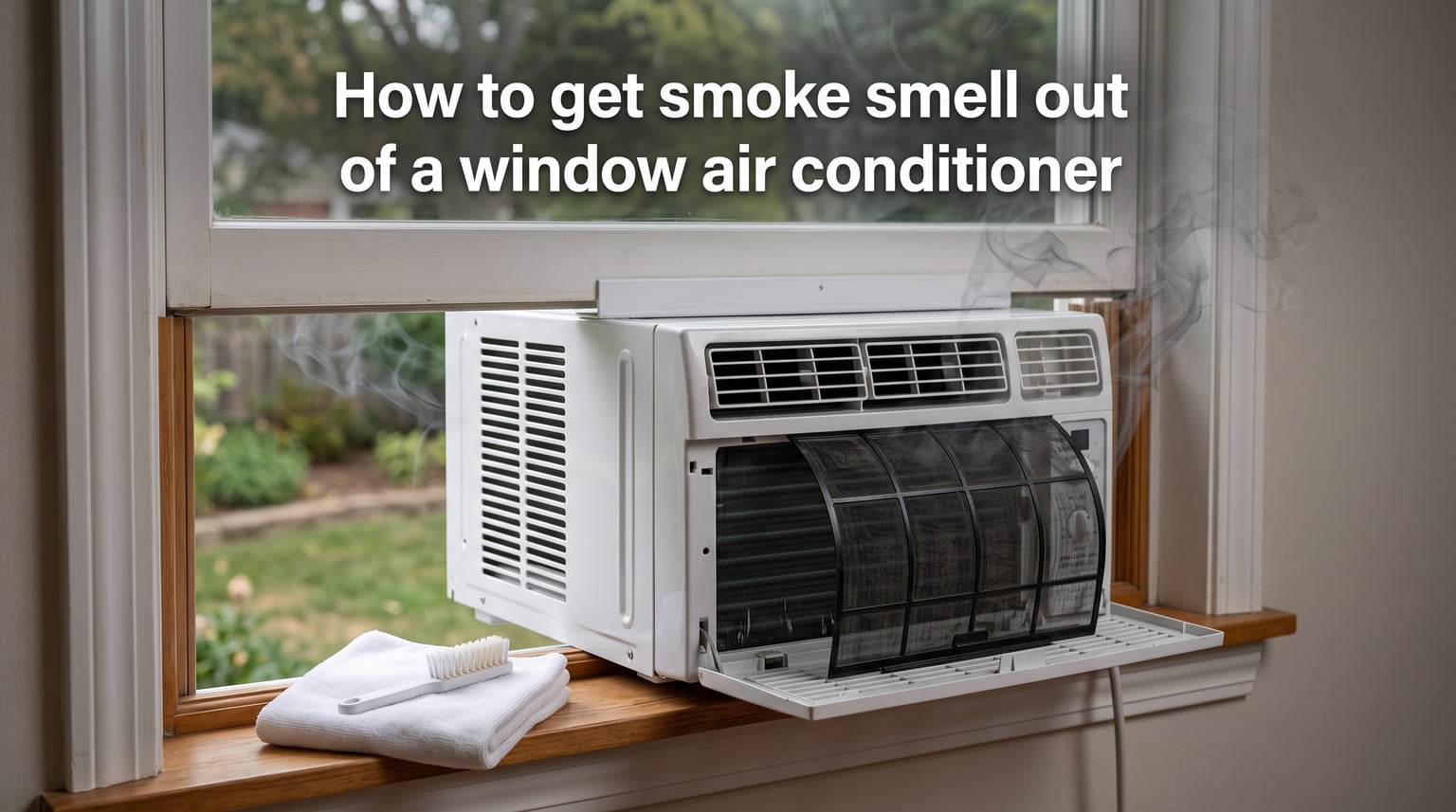
To get smoke smell out of a window air conditioner, unplug it, remove and wash or replace the filter, then clean smoke residue from the front grille, evaporator coil, drain area, and accessible blower surfaces. Let every cleaned part dry fully before reassembly, because a damp unit can trade a tobacco smell AC problem for a musty odor.
Smoke odor removal window AC cleaning takes more than spraying fragrance into the vents. Cigarette smoke, wildfire smoke, and heavy cooking smoke leave sticky particles behind, so the smell returns whenever air moves across the residue.
Table of Contents
Smoke odor lingers because residue coats the air path, not just the filter
A window AC smells like smoke when air passes over particles trapped on more than one surface. The air filter catches larger dust, but finer smoke residue can settle on the front grille, evaporator coil, blower wheel, louvers, and drip pan.
The evaporator coil is the cold, indoor-facing coil behind the filter. Condensation forms there during cooling, and smoke film can hold onto that moisture and keep releasing odor into the room.
A used air conditioner from a smoker’s home can need a deeper clean than a unit exposed to one brief smoke event. Community discussions often describe a filter clean that helps at first but does not finish the job; that usually means residue remains on the coil, drain pan, or fan area.
To get smoke smell out of a window air conditioner, follow these seven cleaning steps
Work slowly and stop if you cannot reach a part without forcing the cabinet or touching electrical components. The exact panel layout varies by model, so use the owner’s manual for panel and filter locations.
Step 1: Disconnect the power and move the unit only if it is safe
Turn the unit off, unplug it from the wall, and wait a few minutes. If the air conditioner is installed securely in a window, you can do much of the work from indoors without removing it.
Place towels below the front of the unit to catch drips. If you do remove a window unit, have another adult help: these units are awkward, heavy, and can damage the window or tip unexpectedly.
Step 2: Remove the filter and decide whether to wash or replace it
Slide out the air filter and inspect it in daylight. A washable mesh filter with gray dust or a light smoke film can usually be rinsed with lukewarm water and a little mild dish soap.
Rinse from the cleaner side toward the dirtier side, then let the filter air-dry completely. Do not run the AC with a wet filter, and do not put a cardboard-framed disposable filter under water; replace that type instead.
If the filter is yellowed, brittle, greasy, or still smells strongly of smoke after washing, replacement is the sensible next move. A clean filter improves airflow, but it cannot remove residue already sitting inside the machine.
Step 3: Wash the front grille, louvers, and filter compartment
Use a vacuum with a soft brush to lift loose dust from the grille and air intake. Then wipe plastic louvers, the filter door, and the filter compartment with a cloth dampened in warm water and mild soap.
Use a second cloth dampened with plain water to remove soapy film, then dry the surfaces. Smoke deposits are often slightly tacky, so this simple wipe-down matters more than it looks.
Keep water away from the display, control board, switches, and any wiring. A lightly damp cloth is safer than spraying cleaner directly into the front of a window unit.
Step 4: Clean the evaporator coil gently without bending the fins
With the filter out, locate the indoor-facing evaporator coil. It looks like a dense field of thin aluminum fins; it is not the same as the outdoor condenser coil at the back of the unit.
First, vacuum lightly with a soft brush attachment, moving in the direction of the fins. Do not press hard, use a metal brush, or push a vacuum nozzle into the coil, because bent fins restrict airflow.
For visible smoke film, apply a cleaner specifically labeled for indoor evaporator coils according to its label, keeping liquid off electrical parts. If you prefer a low-moisture approach, wipe only the reachable frame and surrounding plastic with a barely damp cloth rather than trying to flood the coil.
Do not scrape the coil or attempt to open sealed refrigerant tubing. A damaged coil or refrigerant line is a technician job, not a cleaning task.
Step 5: Clean the drain path and drip pan where odor can hide
Find the drip pan or drain channel below the indoor coil if your model gives safe access. It collects condensation, and standing water mixed with dust and smoke residue can produce a musty air conditioner smoke smell even after other surfaces look clean.
Blot standing water with paper towels, then wipe the accessible pan and channel with mild soapy water. Follow with a clean damp cloth, and check that the unit has its normal slight tilt toward the outside so condensate can drain as designed.
Do not poke wire, picks, or sharp objects into a drain opening. If water keeps pooling, the drain path may be blocked or the unit may be installed at the wrong angle.
Step 6: Clean reachable fan surfaces and the outdoor side
Look through the front opening for any accessible blower wheel or fan blades. Use a soft brush and vacuum to remove dry dust, then wipe only surfaces you can reach without disassembling motor supports or wiring.
From outside, brush or vacuum loose debris from the condenser coil and rear grille. The condenser coil rejects heat, so a dirty outdoor side can reduce performance, though smoke odor is more often concentrated on the indoor coil and air path.
Avoid hosing the whole unit while it is in the window. People sometimes report doing this, but uncontrolled water can reach electronics, soak the room side, or leave moisture trapped where it should not be.
Step 7: Dry, reassemble, and test the unit in fan mode first
Leave the filter, grille, and all wiped surfaces dry before putting the unit back together. Reinstall the filter in its original direction, close the panel, plug the unit in, and run fan-only mode for 15 to 30 minutes with a window open if outdoor conditions allow.
Fan mode moves room air without creating fresh condensation on the evaporator coil. After that test, run cooling and notice whether the odor is gone, weaker, unchanged, or replaced by a musty smell.
A clearly weaker odor means you removed part of the source; repeat the gentle cleaning on missed plastic surfaces and let the unit dry again. An unchanged or acrid smell calls for the troubleshooting steps below rather than more random spraying.
Mild soap and approved coil cleaner are the safest first choices for smoke residue
Warm water with a small amount of mild dish soap works well on removable filters, plastic grilles, louvers, and accessible drip-pan surfaces. It removes the oily film that lets cigarette smoke air conditioner odors cling to those parts.
For the evaporator coil, use a product made and labeled for that location, following its directions exactly. The coil has delicate fins, and ordinary household cleaners can leave residue, cause corrosion, or create fumes when the unit runs.
Vinegar can help on accessible plastic surfaces, but it is not a complete smoke treatment
A cloth lightly dampened with a diluted vinegar solution may help cut odor on washable plastic parts after they have been cleaned of grime. It is not a substitute for cleaning the filter, coil, and drain area, and it should not be sprayed onto electronics or into a running AC.
Do not mix vinegar with bleach or any other cleaner. Mixing household chemicals can create hazardous gases, and a stronger smell is not proof that a cleaner is working better.
Bleach and ozone are poor DIY answers for a window AC interior
Bleach can damage metal and irritate lungs, especially in a small room where the unit circulates air. It is not needed for ordinary smoke residue, and it should never be mixed with ammonia-containing products, acids, or vinegar.
Ozone generators are also not a casual fix for a tobacco smell AC. Ozone can irritate the lungs and damage some materials, and it does not replace physical removal of the smoke film; do not operate one in an occupied home.
A persistent smell points to missed residue, moisture, outdoor fumes, or a fault
If the smoke odor returns only when cooling starts, the evaporator coil, condensate area, or blower wheel is the most likely source. Recheck the filter direction, the coil face, and the drip pan after the unit has been off and unplugged.
If the unit smells musty after cleaning, something may still be wet or the drain path may be holding water. Allow more drying time, clean the pan again, and confirm the window unit slopes slightly outward as its manufacturer specifies.
An exhaust, fish, or burning smell needs a different response than smoke residue
Car exhaust can be drawn toward a window AC from traffic, idling vehicles, generators, or a nearby vent. Turn the unit off and close the window if outside fumes are entering; cleaning the AC will not solve an outdoor-air source.
A fishy, hot-plastic, sparking, or burning odor can signal an electrical issue rather than old smoke. Unplug the unit immediately, do not restart it, and arrange professional inspection or replacement as appropriate.
After a structure fire or heavy wildfire exposure, residue can be deep in foam insulation, wiring spaces, and inaccessible fan surfaces. If careful cleaning does not make a meaningful difference, a qualified appliance or HVAC technician can assess whether professional service is practical.
Regular filter care and dry storage keep smoke odors from returning
Check a washable filter monthly during active use and clean it whenever dust is visible or airflow drops. If someone smokes near the unit, move that activity away from the window and keep the intake side protected from drifting smoke.
At the end of the cooling season, run fan-only mode long enough to dry the interior, then unplug the unit and clean the filter before storage. A dry, clean air path is much less likely to develop the stale odor that people mistake for smoke later.
Call a professional when access requires major cabinet disassembly, a drain stays blocked, fins are badly bent, water reaches electrical parts, or the unit has a burning odor. There is no benefit in risking injury or a damaged window AC to reach one hidden surface.
The common questions below answer the remaining smoke-smell concerns
How do I get cigarette smoke out of my window air conditioner?
Unplug the unit, wash or replace the filter, wipe the grille and louvers, gently clean the accessible evaporator coil with an appropriate coil cleaner, and clean the accessible drip pan or drain channel. Let all parts dry completely, then test in fan-only mode before cooling.
Why does my AC smell like cigarette smoke?
Smoke particles and oily residue can cling to the filter, plastic grille, evaporator coil, blower area, and drip pan. Cleaning only the filter may reduce the smell temporarily, but the odor returns when airflow passes over residue left inside the unit.
Can I use vinegar to clean smoke smell from AC?
A diluted vinegar solution on a cloth can help deodorize accessible plastic parts after cleaning, but it is not a complete treatment for smoke inside an AC. Do not spray it onto electrical parts or mix it with bleach, and use an approved coil cleaner for the coil.
How do I clean the coils on my window AC?
Unplug the AC, remove the filter, and gently vacuum loose dust from the indoor evaporator coil with a soft brush attachment. Apply only a cleaner labeled for that coil as directed, avoid bending fins or wetting electrical parts, and do not disturb refrigerant tubing.
Why does my window AC smell musty after cleaning?
A musty odor usually means moisture remains on the coil, in the drip pan, or in a blocked drain path. Let the unit dry fully, clean the accessible pan, check its outward tilt, and seek service if water repeatedly pools or the smell persists.