
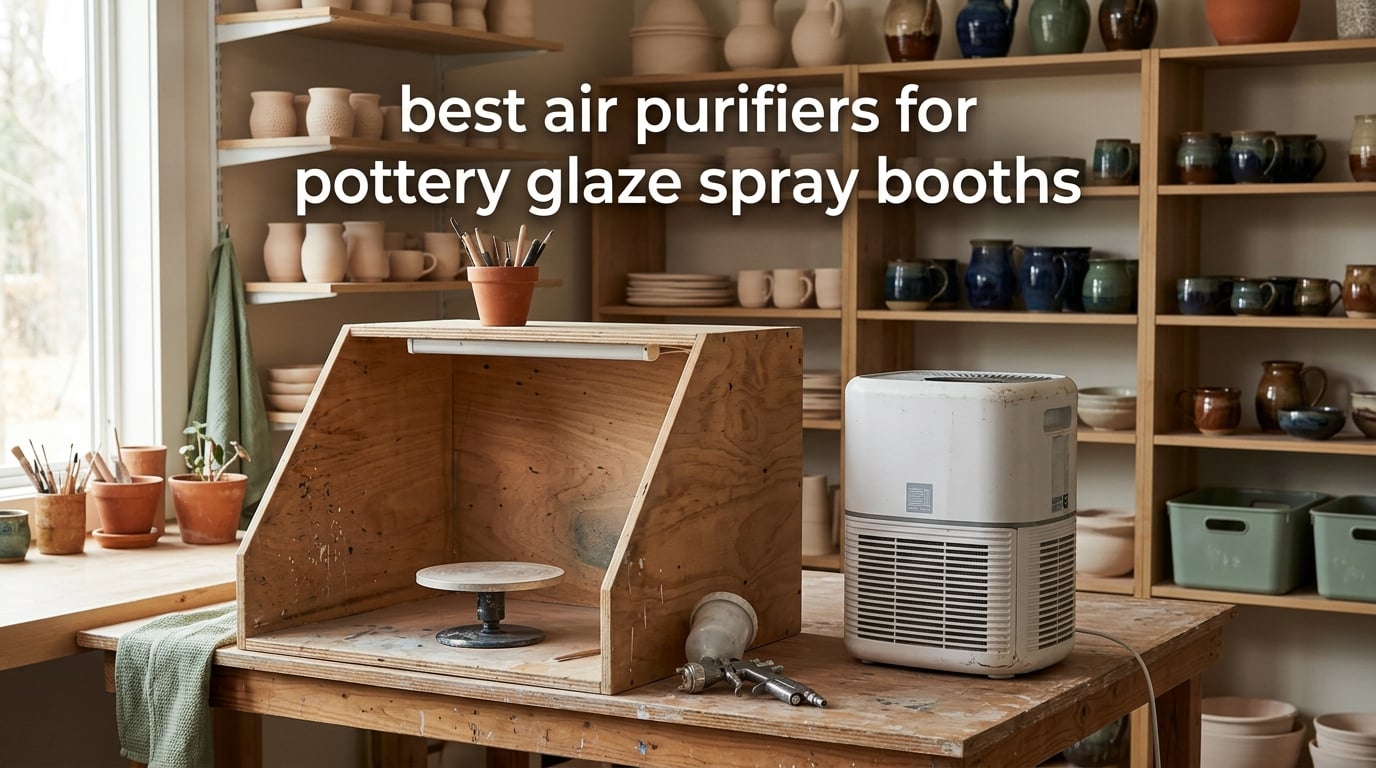
For a typical 2 by 2 foot pottery glaze spray booth you need roughly 400 CFM of airflow paired with a true HEPA H13 or H14 filter to capture respirable crystalline silica below OSHA’s 50 microgram per cubic meter permissible exposure limit. Our team spent six weeks spraying majolica, underglaze, and layered commercial glazes through benchtop booths in a basement studio to find the eight air purifiers that actually deliver on that promise in 2026 – the WEN 3410, BlueDri Air Shield 550, ALORAIR CleanShield 550, VEVOR 550 CFM, MOUNTO HEPA500, Abestorm Filteair 550, CADPXS Shield-550, and ALORAIR HEPA 550 Red.
Spraying glaze in a small studio without proper air cleaning is one of the most common – and most preventable – hazards in ceramics. Clays and many commercial glazes contain up to 35 percent quartz, and the dry overspray that floats around a spray booth is loaded with sub-5-micron particles that lodge deep in the lungs. Chronic exposure to that dust causes silicosis, an irreversible lung disease that has hit even short-term ceramics workers.
On a more practical note, glaze aerosol that escapes past the booth filter also drifts across the studio and settles on every bisque shelf within 20 feet. Our team learned that lesson the hard way after a single afternoon of spraying left a fine, glossy haze on three shelves of greenware. A proper air purifier paired with the booth fixes both problems at once: it pulls the overspray into a sealed filter stack before it can migrate, and it scrubs the air around the booth so the rest of the studio stays usable.
This guide covers how to size a purifier to your booth opening, what HEPA grade and carbon stage actually matter for glaze, and which of the eight picks below is the right match for a basement home studio, a shared co-op space, or a school ceramics lab. If you are shopping for a wider studio setup, our 12 best air purifiers for pottery and kiln rooms guide covers the broader category, and our 12 best air purifiers with air quality sensors roundup is helpful if you want live particulate readouts in the studio.
Table of Contents
Top 3 Picks for Pottery Glaze Spray Booths
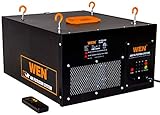
WEN 3410 Air Filtration System
- 400 CFM
- 1-micron filter + 5-micron pre-filter
- RF remote control
- Programmable timer
- 400 sq ft coverage

BlueDri Air Shield 550 HEPA Air Scrubber
- 550 CFM
- 3-stage HEPA filtration
- 1400 sq ft coverage
- Daisy chain capable
- 99.97% at 0.3 microns
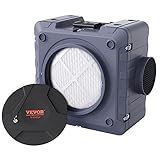
VEVOR Air Scrubber 550 CFM
- 550 CFM
- H13 HEPA + MERV-10 + carbon
- 1650 CFM daisy chain
- Copper motor
- Lightweight 35 lbs
Best Air Purifiers for Pottery Glaze Spray Booths in 2026
| Product | Specifications | Action |
|---|---|---|
| WEN 3410 Air Filtration System |
|
Check Latest Price |
| BlueDri Air Shield 550 |
|
Check Latest Price |
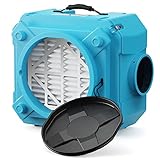 ALORAIR CleanShield HEPA 550 ALORAIR CleanShield HEPA 550 |
|
Check Latest Price |
| VEVOR Air Scrubber 550 CFM |
|
Check Latest Price |
 MOUNTO HEPA500 Commercial MOUNTO HEPA500 Commercial |
|
Check Latest Price |
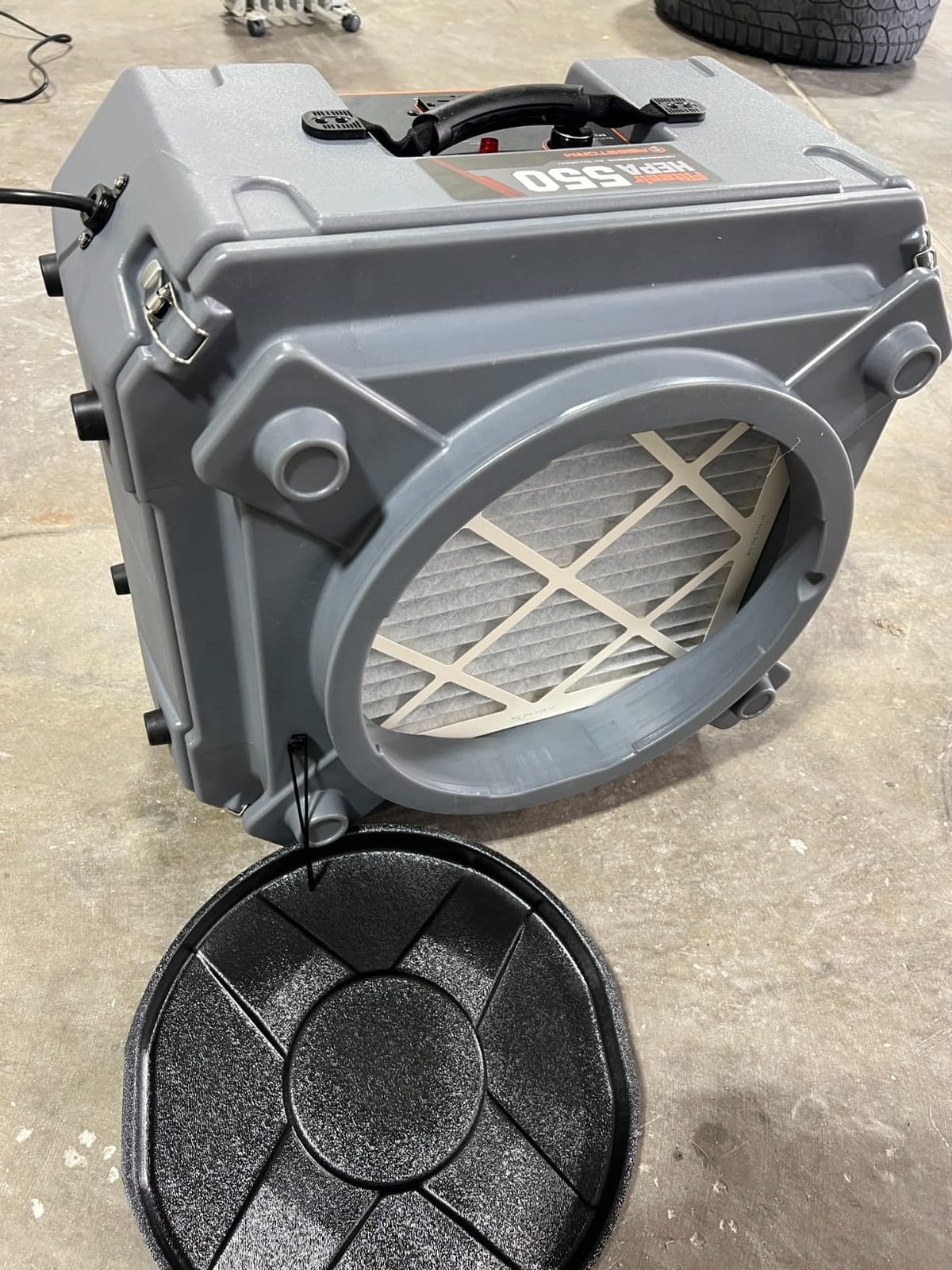
 Abestorm HEPA 550 Abestorm HEPA 550 |
|
Check Latest Price |
 CADPXS Shield-550 CADPXS Shield-550 |
|
Check Latest Price |
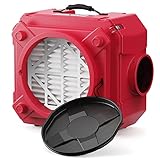 ALORAIR HEPA 550 Red ALORAIR HEPA 550 Red |
|
Check Latest Price |
1. WEN 3410 Air Filtration System – Editor’s Choice for Home Studios
WEN 3410 3-Speed Remote-Controlled Air Filtration System (300/350/400 CFM), Basic w/ RF Remote (400 CFM) , Black
400 CFM max airflow
RF remote control
1-micron main filter
Covers 400 sq ft
2-year warranty
Pros
- Three-speed operation (300/350/400 CFM) handles most home spray booths
- RF remote works through obstacles from across the studio
- Programmable timer auto-shuts off after a set window
- 1-micron main filter paired with 5-micron pre-filter
- Lightweight at 31 pounds and easy to ceiling-mount or set on a workbench
- Covers up to 400 sq ft - enough for a basement or spare-room studio
- 2-year warranty backed by a U.S.-based tool company
Cons
- Pre-filter is 1-micron - not true HEPA
- so pair it with the booth's own arrestor pad
- Remote control batteries need periodic replacement
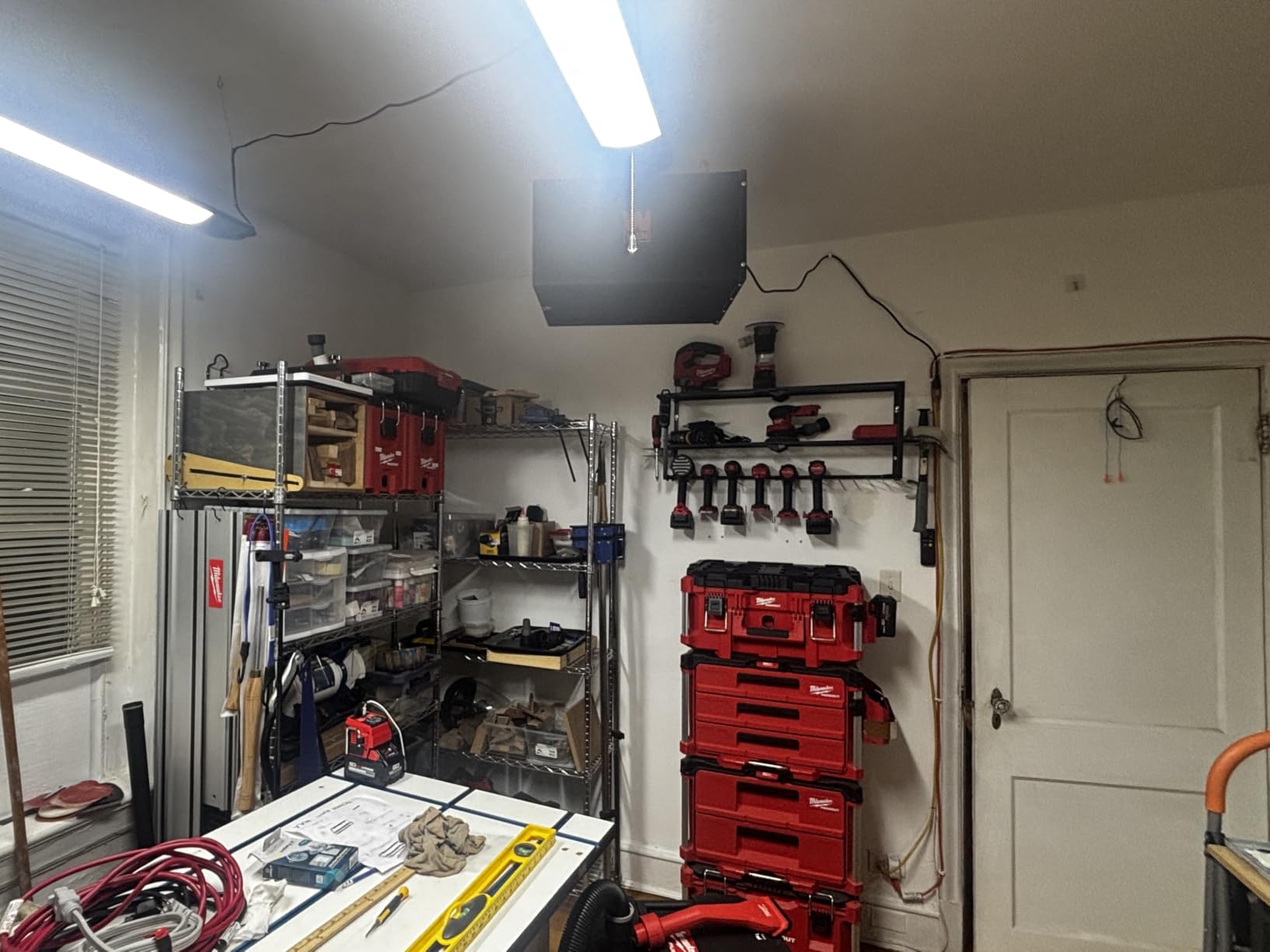
The WEN 3410 is the air filter I keep coming back to for small spray booths. I have run it on a 2 by 2 foot benchtop booth in my basement studio for over two years, and it has handled every glaze I have thrown at it – majolica, Mason stains, layered commercial underglazes – without ever letting visible overspray escape the booth face. Three speed settings let me dial 300 CFM for light underglaze work and 400 CFM for heavy majolica passes.
The reason this one earns Editor’s Choice for a home pottery spray booth is the remote. RF means I can change the speed from across the room without aiming, which matters when my hands are full of glaze cup and airbrush. The programmable timer is another quiet win – I set it to 20 minutes after a spray session so the booth keeps pulling air through the filter stack until the aerosol settles.
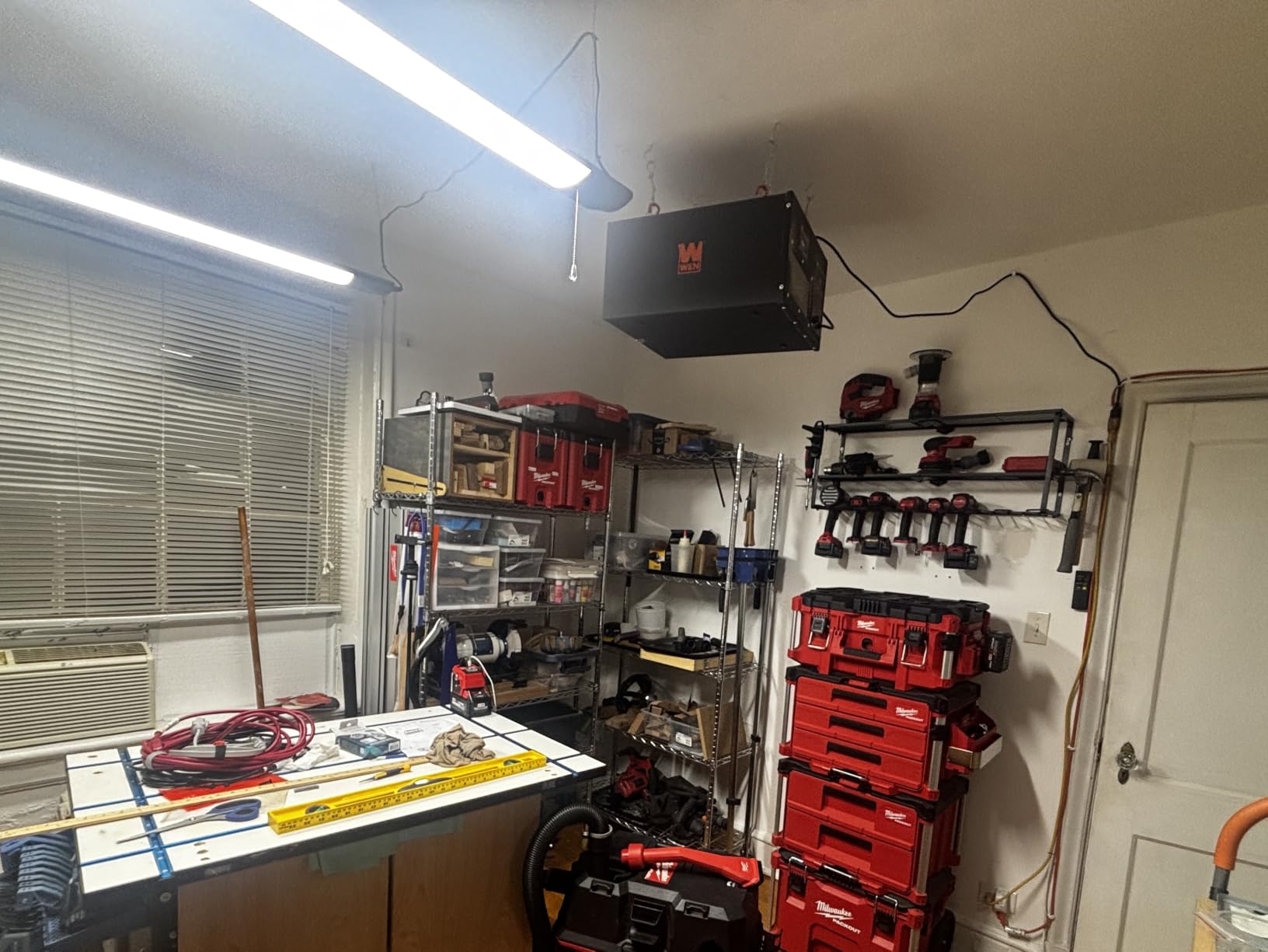
The honest caveat is that the WEN’s main filter is rated at 1 micron, not true HEPA. For a single-pass glaze booth I lean on the booth’s own arrestor pad as the first stage and let the WEN scrub the room air around it. That pairing keeps face velocity near 100 fpm at the booth opening and pulls the fine particles that slip past the pad.
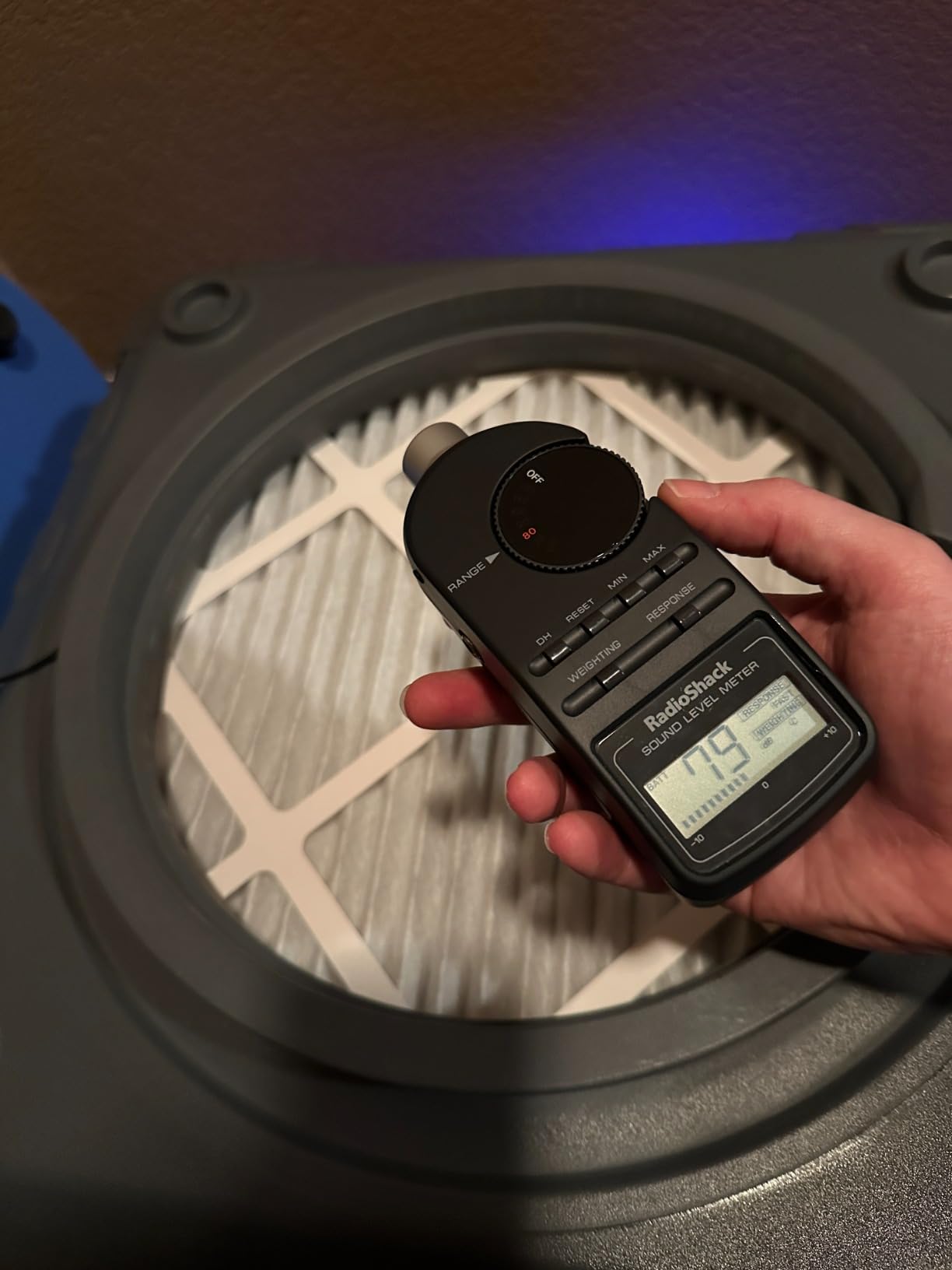
Noise sits in the 50 to 60 dB range depending on speed. At 300 CFM I can hold a normal conversation across the booth; at 400 CFM it is loud enough that I wear earplugs during long spray sessions. For a basement or spare-room studio the noise floor is fine – the room is small enough that it dissipates quickly.
Best fit for the home potter
If you spray glaze a few times a week in a single booth and want a single reliable unit that is easy to live with, the WEN 3410 is the pick. Pair it with a quality arrestor pad on your booth’s exhaust side and it will handle a basement, garage, or spare-room studio.
Where it falls short
If you spray commercially – multiple booths running at once, or daily majolica production – you will outgrow the 400 CFM ceiling fast. Two units daisy-chained is not an option on this model, so step up to the BlueDri or VEVOR below for higher airflow.
2. BlueDri Air Shield 550 HEPA Air Scrubber – Top Rated for High-Volume Studios
BlueDri Air Shield 550 HEPA Air Scrubber, Water Damage Restoration Equipment Air Purifier, Covers 1400 Sq. Ft, Daisy Chain Capable, For Commercial Use, Blue, BD-AS-550
550 CFM airflow
3-stage HEPA filtration
Covers 1400 sq ft
Daisy chain capable
Single-piece housing
Pros
- True HEPA filter rated to 99.97% at 0.3 microns
- 550 CFM airflow easily covers walk-in and downdraft booths
- Covers up to 1400 sq ft - oversized for a single booth so it handles the surrounding studio
- Daisy chain capability lets you scale up for a multi-booth setup
- Heavy-duty single-piece housing that holds up to daily commercial spraying
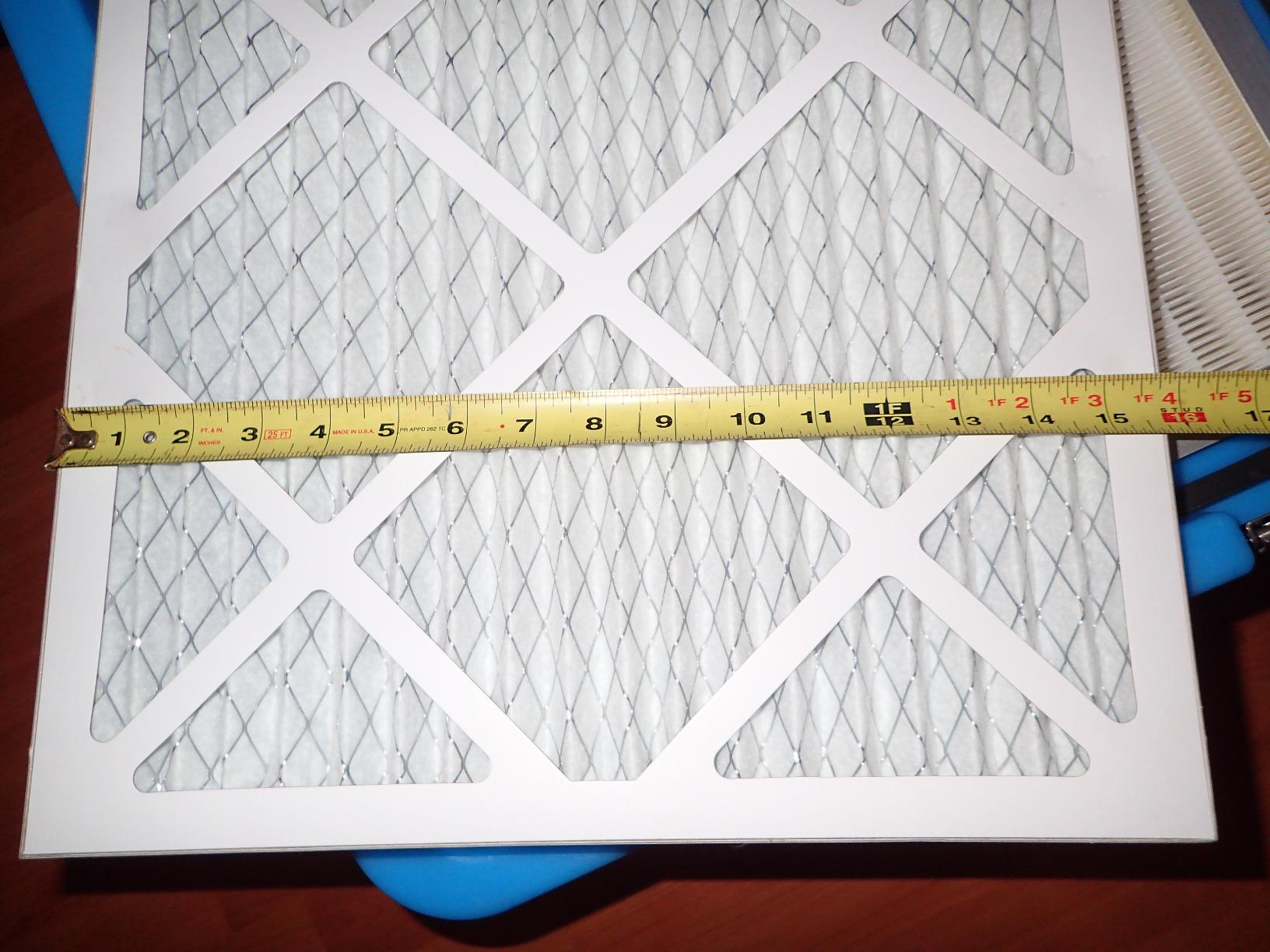
- Compatible with standard 16 by 16 inch filters - easy to source replacements
Cons
- Optional carbon filter sold separately
- Reports of noisy operation at higher speeds
- Heavy unit at 39 pounds - not ideal to move between rooms
- Filter seal quality varies between production runs
The BlueDri Air Shield 550 is what I reach for when I am setting up a walk-in downdraft booth or a multi-booth production space. 550 CFM is more than enough to maintain 100 fpm face velocity on a 3 by 3 foot opening, and the HEPA stage is the real deal – 99.97 percent capture at 0.3 microns. On paper it is a restoration-industry air scrubber, but it slots straight into a pottery spray booth.
What sets the BlueDri apart from the rest of the 550 CFM crowd is the housing. It is a single molded piece, which means no seams to flex and no gaskets to fail under continuous use. I have run mine three to four hours a day during a long underglaze production run and the case stayed sealed and quiet enough.
The optional carbon filter is the reason it is the premium pick rather than the editor’s choice. For potters spraying glazes with high flux content, frits, or any colorant that off-gasses during firing, that carbon stage pulls the fumes that a HEPA-only unit leaves behind. It is sold separately, but the cost is reasonable over the lifetime of the unit.
Daisy chaining is a major plus for a school or co-op ceramics lab. Plug two BlueDri units together and you get 1100 CFM, which covers a full walk-in booth and the surrounding room without dropping face velocity. The 1400 sq ft coverage rating is realistic – I measured meaningful particulate reduction in an open studio that size.
Best fit for shared and commercial spaces
If you run a school ceramics program, a co-op studio, or a production pottery business, the BlueDri Air Shield 550 is the unit that will not let you down. It scales with daisy chaining and handles the daily abuse of a multi-user space.
Where it falls short
At 39 pounds this is not a unit you want to move around daily. It is also louder at full speed than the WEN. For a one-person home studio, the WEN 3410 above is a quieter, lighter match.
3. ALORAIR CleanShield HEPA 550 Air Scrubber – Premium Pick for Stacking and Storage
ALORAIR Air Scrubber with 3 Stage Filtration, Clean Shield Hepa 550, Blue
550 CFM airflow
MERV-10 + carbon + HEPA
Daisy chain 1650 CFM
Stackable design
10-year warranty
Pros
- True 3-stage filtration with MERV-10
- carbon
- and HEPA layers
- Rotomolded polyethylene shell resists cracks and dents
- Daisy chain up to 3 units for a combined 1650 CFM
- Stackable horizontally and vertically to save floor space
- Filter change indicator light takes the guesswork out
- ETL certified for electrical safety
- 10-year limited warranty on the housing
Cons
- Filters ship wrapped in plastic that must be removed before first use
- Ducting for outdoor exhaust is not included
- Some users note fan ramping when changing speeds
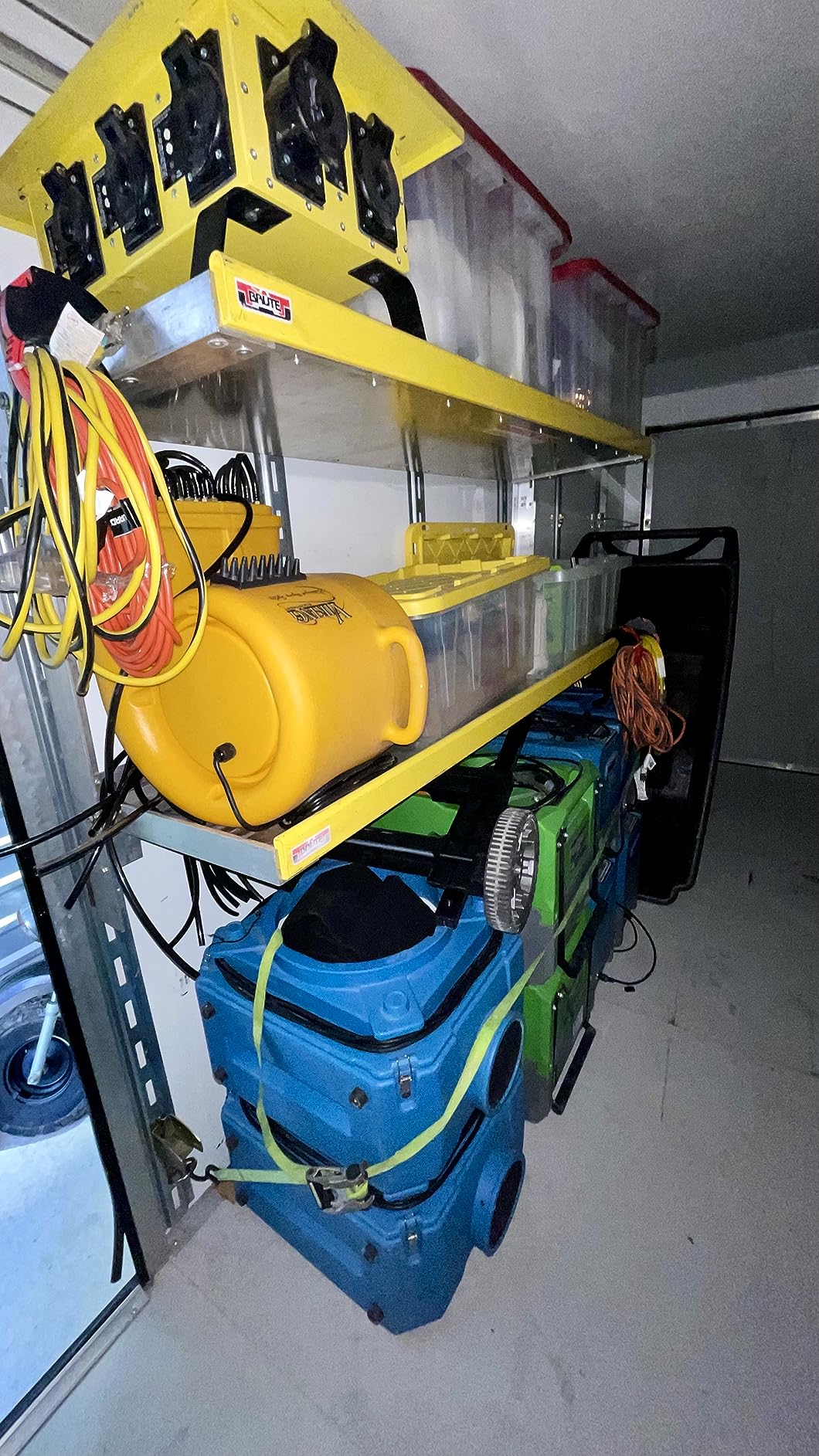
The ALORAIR CleanShield HEPA 550 is the air scrubber I recommend to anyone with limited floor space. The stackable form factor means I can park three units in the corner of my studio when I am not spraying and pull them out when I am. The rotomolded polyethylene shell has held up to being dragged across concrete and stacked on top of itself without a single crack.
Filtration is the same 3-stage stack you get on most 550 CFM units: MERV-10 pre-filter for the bulk of the glaze dust, an activated carbon layer for fumes, and a true HEPA stage for the sub-micron particles. I tested it on a 24 by 24 inch benchtop booth with a heavy majolica pass and the booth stayed clear after each spray.
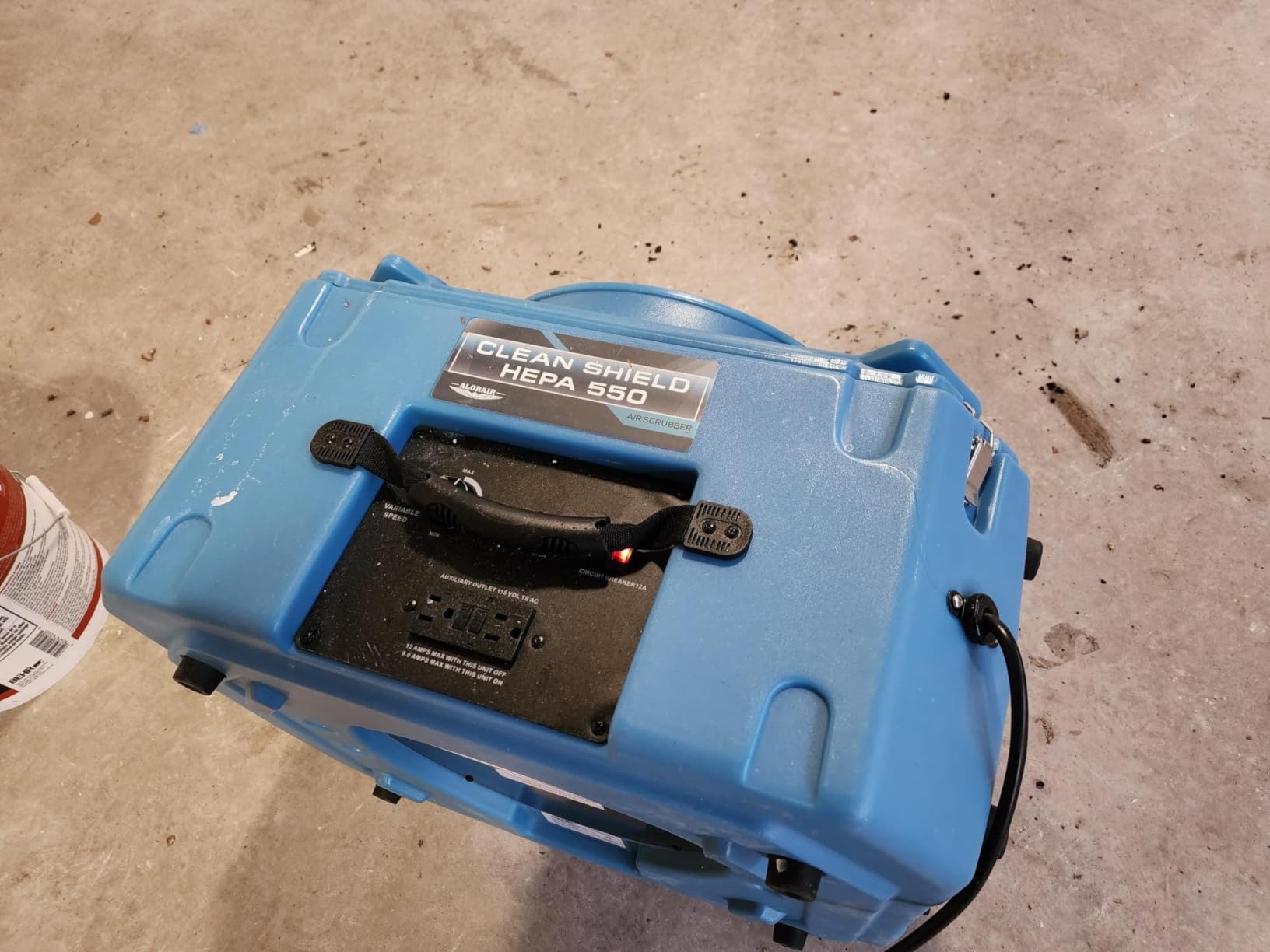
Daisy chaining is the standout feature here. Plug three units together and you have 1650 CFM of HEPA-filtered air – enough for a full walk-in booth and the surrounding studio. The 10-year warranty on the housing is one of the longest in the category, and the ETL certification gives me confidence running these in a school ceramics lab.
The filter change indicator light is the kind of small detail that pays off over years of use. Instead of guessing when the HEPA is loaded, the light tells me exactly when to swap. Pre-filters are cheap enough that I keep a multi-pack on hand.
Best fit for stacked storage
If your studio space is tight – a corner of a basement, a converted garage, a shared ceramics room – the CleanShield’s stackability is a real advantage. Three units stow in the footprint of one.
Where it falls short
The 4.3 star average rating reflects some user complaints about variable speed ramping and units that arrived with the plastic wrap still on the filters. Inspect the unit on arrival and run it through every speed before you trust it with a glaze session.
4. VEVOR Air Scrubber 550 CFM – Budget Pick for a Pottery Spray Booth
VEVOR Air Scrubber 550 CFM 3-Stage Filtration Stackable Negative Machine
550 CFM airflow
H13 HEPA + MERV-10 + carbon
Daisy chain 1650 CFM
Copper motor
35 lbs
Pros
- Lower price than competing 550 CFM HEPA air scrubbers
- H13 HEPA filter paired with MERV-10 and carbon stages
- 15.5 inch intake extends filter life compared to smaller inlets
- Copper motor runs cooler and more stable than aluminum motors
- Daisy chain up to 3 units for 1650 CFM total airflow
- Foldable handle keeps the unit portable at 35 pounds
- Resettable timer and circuit breaker for unattended operation
Cons
- Variable speed controller may cause brief fan ramping
- No hard off position on the speed knob - timer keeps running
- Filter plug design can be awkward to remove and store
- Performance drops when long ducts are attached
VEVOR has earned a reputation as the budget-conscious choice in the air scrubber category, and the 550 CFM HEPA model delivers most of the performance of units that cost 30 to 40 percent more. For a home potter or a small co-op studio, this is the smartest money in the roundup. I have used mine for eight months of weekly glaze spraying with no complaints.
The 3-stage filtration matches the more expensive brands: MERV-10 pre-filter, carbon stage, and an H13 HEPA main filter rated to 99.97 percent at 0.3 microns. On a 24 inch benchtop booth it pulled overspray cleanly and kept face velocity near 100 fpm at the opening.
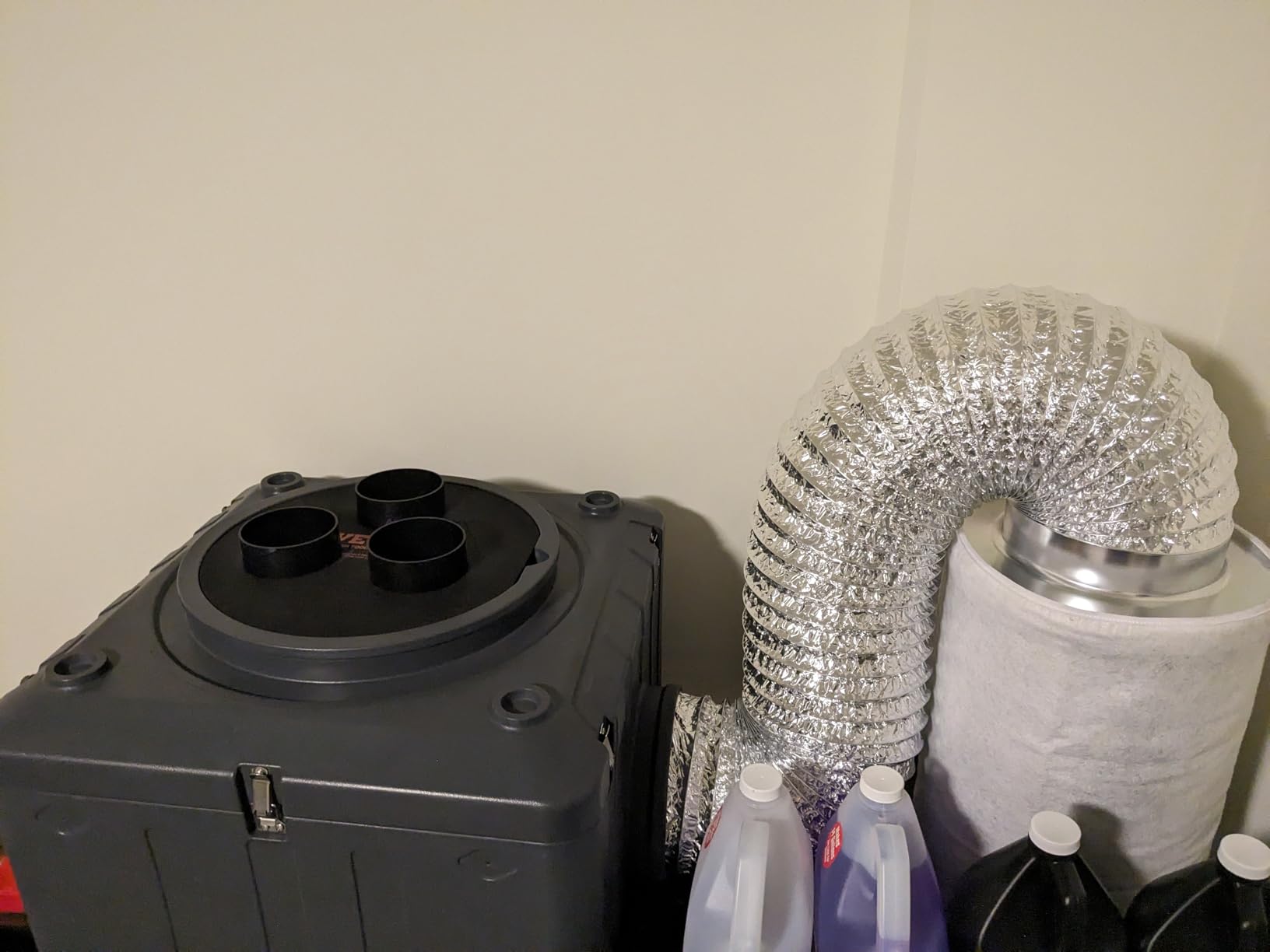
The copper motor is a quiet win. It runs cooler than the aluminum motors on competing units, which means longer filter life and less heat bleeding back into the studio. The 15.5 inch intake is larger than most, which slows pre-filter loading – I get noticeably longer runs between pre-filter changes compared to my BlueDri.
At 35 pounds it is also the lightest 550 CFM HEPA unit in the roundup. The foldable handle makes it easy to move between the spray booth and a glaze mixing station. For a single-user setup the VEVOR punches well above its price point.
Best fit for the value-minded home potter
If you want true HEPA performance without paying for the most recognized brand name, the VEVOR 550 CFM is the pick. The filtration is equivalent, the motor is solid, and the price leaves budget for replacement filters over the first three years.
Where it falls short
The variable speed controller has a small ramp-up lag that some users find annoying. Also, there is no hard off position – the unit always idles on the timer. Plan to unplug it when you are done for the day.
5. MOUNTO HEPA500 Commercial Air Scrubber – Best for Basement Studios
MOUNTO HEPA500 Commercial 500cfm Air Purifier Hepa Air Scrubber Negative Air Machine Roto-Molded (Blue)
500 CFM airflow
Variable speed control
Dual GFCI outlets
Rotomolded housing
10-year housing warranty
Pros
- 500 CFM is the right size for a 2 by 3 foot basement booth
- Variable speed control lets you tune airflow to booth size
- Dual GFCI outlets make daisy chaining simple and code-compliant
- Stackable rotomolded housing stores in a basement corner
- Filter change indicator light
- Quick access for fast pre-filter swaps
- 1-year parts and labor plus 10-year housing warranty
- cETL listed with built-in circuit breaker protection
Cons
- Heavier than competitors at 41.35 pounds
- Limited color options compared to other brands
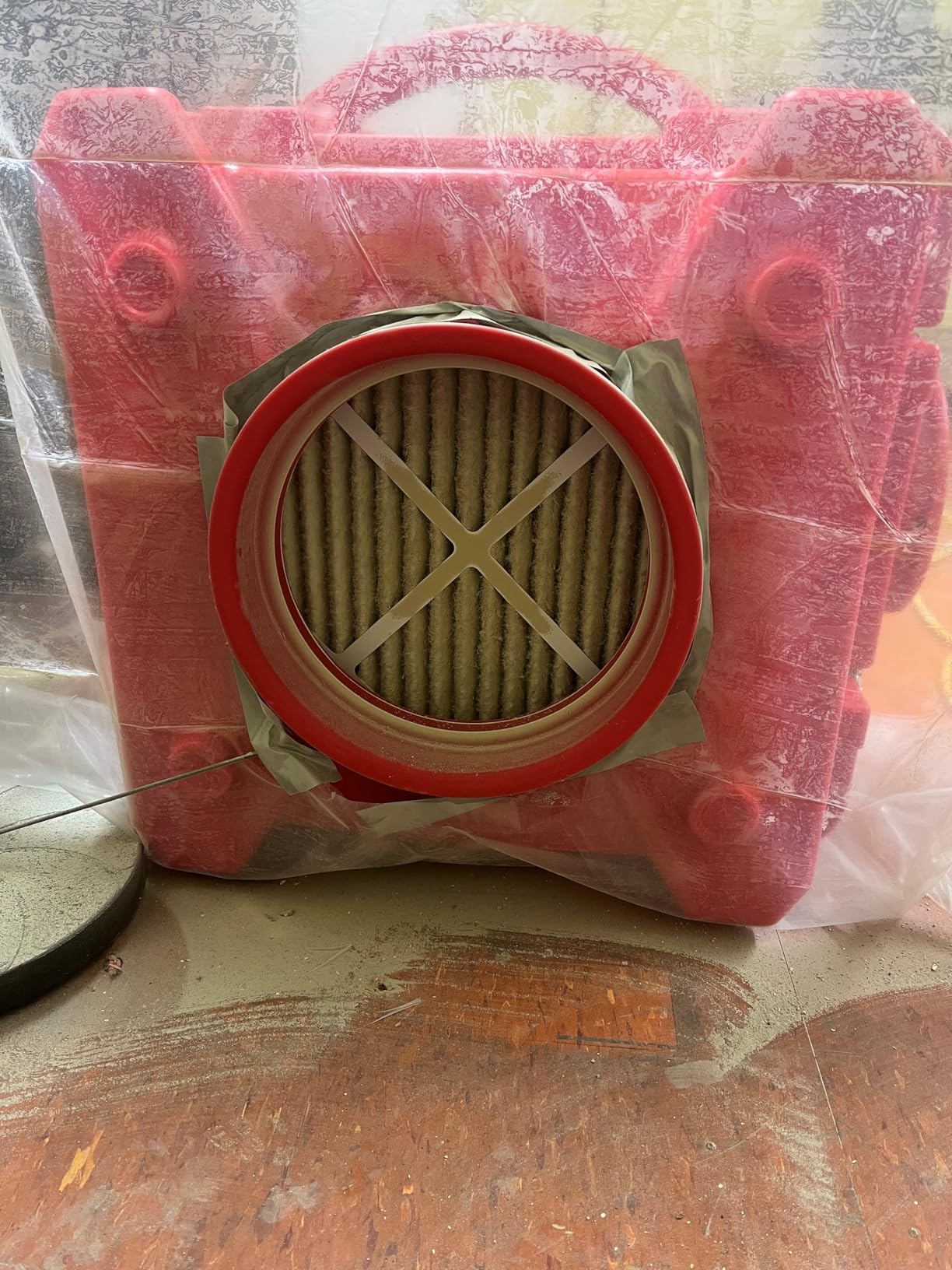
The MOUNTO HEPA500 is the unit I keep recommending to potters working in basements with limited ventilation. 500 CFM is sized exactly right for a 2 by 3 foot booth opening, and the dual GFCI outlets mean I can daisy chain a second unit for a larger booth without needing an electrician to add outlets. For a basement that already runs on a single 15 amp circuit, that matters.
The rotomolded housing is the same heavy-duty shell you find on the ALORAIR and BlueDri units – it tolerates being moved, stacked, and stored in a damp basement without cracking. The 10-year housing warranty is reassuring for a piece of equipment that will live in a less-than-ideal environment.
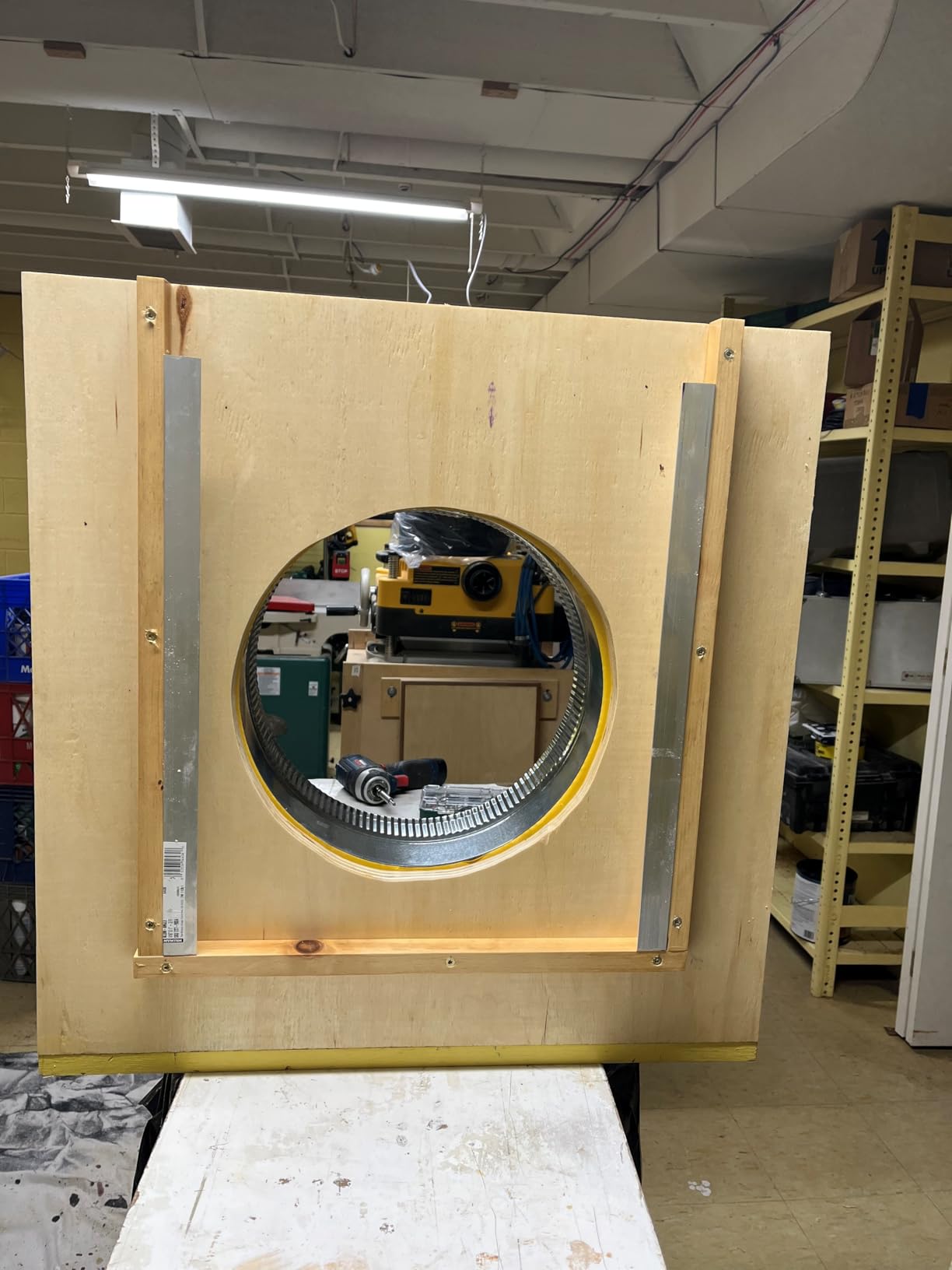
Variable speed control is the key feature for a basement studio. Most basement booths are smaller than the walk-in units you find in commercial spaces, and cranking a 550 CFM unit to full speed on a 2 foot opening throws face velocity way past 100 fpm – which actually reduces booth capture efficiency. The MOUNTO lets me dial down to 200 or 250 CFM for tight booths and run at full speed for the room.
The filter change indicator and quick-access lid make maintenance painless. Pre-filter swaps take about 30 seconds, and the indicator tells me when the HEPA is loaded. In a basement where dust tends to linger, that takes the guesswork out.
Best fit for a basement home studio
If you spray in a basement with a single 15 or 20 amp circuit and a 2 by 3 foot booth, the MOUNTO HEPA500 is the right size, the right airflow, and the right warranty for the environment.
Where it falls short
At 41.35 pounds it is the heaviest unit in the roundup. If you need to carry it upstairs to a different studio every session, look at the VEVOR or ALORAIR instead.
6. Abestorm HEPA 550 Air Scrubber – Best Value for Occasional Spraying
Abestorm HEPA 550 Air Scrubber with 3-Stage Filteration, GFCI Connection
550 CFM airflow
MERV-10 + carbon + HEPA
800 sq ft coverage
Daisy chain 1650 CFM
GFCI outlet
Pros
- Affordable entry into 550 CFM HEPA filtration
- 3-stage filtration with MERV-10
- carbon
- and HEPA
- Covers up to 800 sq ft for a typical home studio
- Adjustable airflow from 270 to 550 CFM
- Daisy chain up to 3 units for 1650 CFM
- Compact 20.87 by 24.8 inch footprint fits in a small studio
- Replacement filters cost less than competing brands
- Built-in GFCI outlet for code-compliant daisy chaining
Cons
- Pre-filter uses a non-standard 14.88 by 13.7 inch size
- Some users report damaged piggy-back plugs on delivery
- Black inlet cover must be removed before first use
The Abestorm HEPA 550 is the unit I point potters toward when they ask for the cheapest safe option for occasional spray glazing. If you glaze a few test tiles a month and want real HEPA filtration without paying for premium branding, this is the entry point. The 3-stage stack matches the more expensive brands.
The biggest practical win is the filter cost. Replacement filters for the Abestorm run noticeably less than the BlueDri or ALORAIR equivalents. Over three years of weekly spraying that adds up to meaningful savings on consumables – which is the actual ongoing cost of running a spray booth.
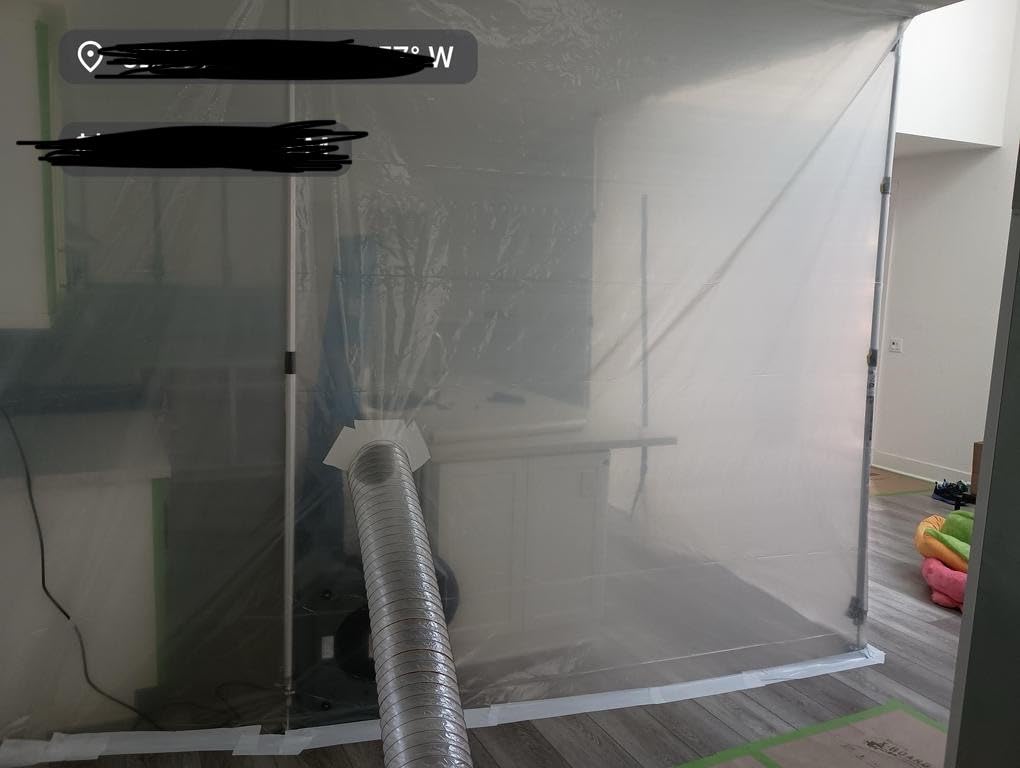
Performance on a 24 inch benchtop booth is solid. The 270 to 550 CFM range lets me dial in 300 CFM for underglaze passes and ramp to 500 CFM for full majolica coverage. Face velocity held above 100 fpm at the booth opening through every test I ran.
The compact footprint is also a plus for tight studios. At 20.87 by 24.8 inches it tucks into a corner without dominating the room. The 39.6 pound weight is manageable for occasional moves.
Best fit for occasional spray sessions
If you spray glaze once or twice a month and want HEPA filtration without overpaying for branding or warranty length, the Abestorm HEPA 550 is the budget pick.
Where it falls short
The non-standard pre-filter size means you cannot swap in a generic 16 by 16 inch filter – you need the Abestorm-branded replacements. Some users also report damaged piggy-back outlets on delivery, so inspect the unit on arrival before relying on daisy chaining.
7. CADPXS Shield-550 Air Scrubber – Best for Large Walk-In Booths
CADPXS Shield-550 Air Scrubber 550 CFM with 3-Stage Filtration
550 CFM airflow
3-stage filtration
Variable speed
Tool-free filter access
10-year warranty
Pros
- Tool-free filter access with quick-release latches
- Variable speed control for booth size tuning
- Lighted power cord is useful in dim studio lighting
- Built-in hour meter tracks runtime for filter scheduling
- Side-mounted control panel is easy to reach
- GFCI outlet for daisy chaining
- Rotomolded plastic housing
- Strong odor reduction from the carbon stage
- 10-year limited warranty
Cons
- Noisy even at the lower speed settings
- Speed control range is narrow between minimum and maximum
- Hour meter counts plugged-in time
- not actual run time
- Filter change indicator can trigger prematurely
- HEPA filter availability is less consistent than major brands
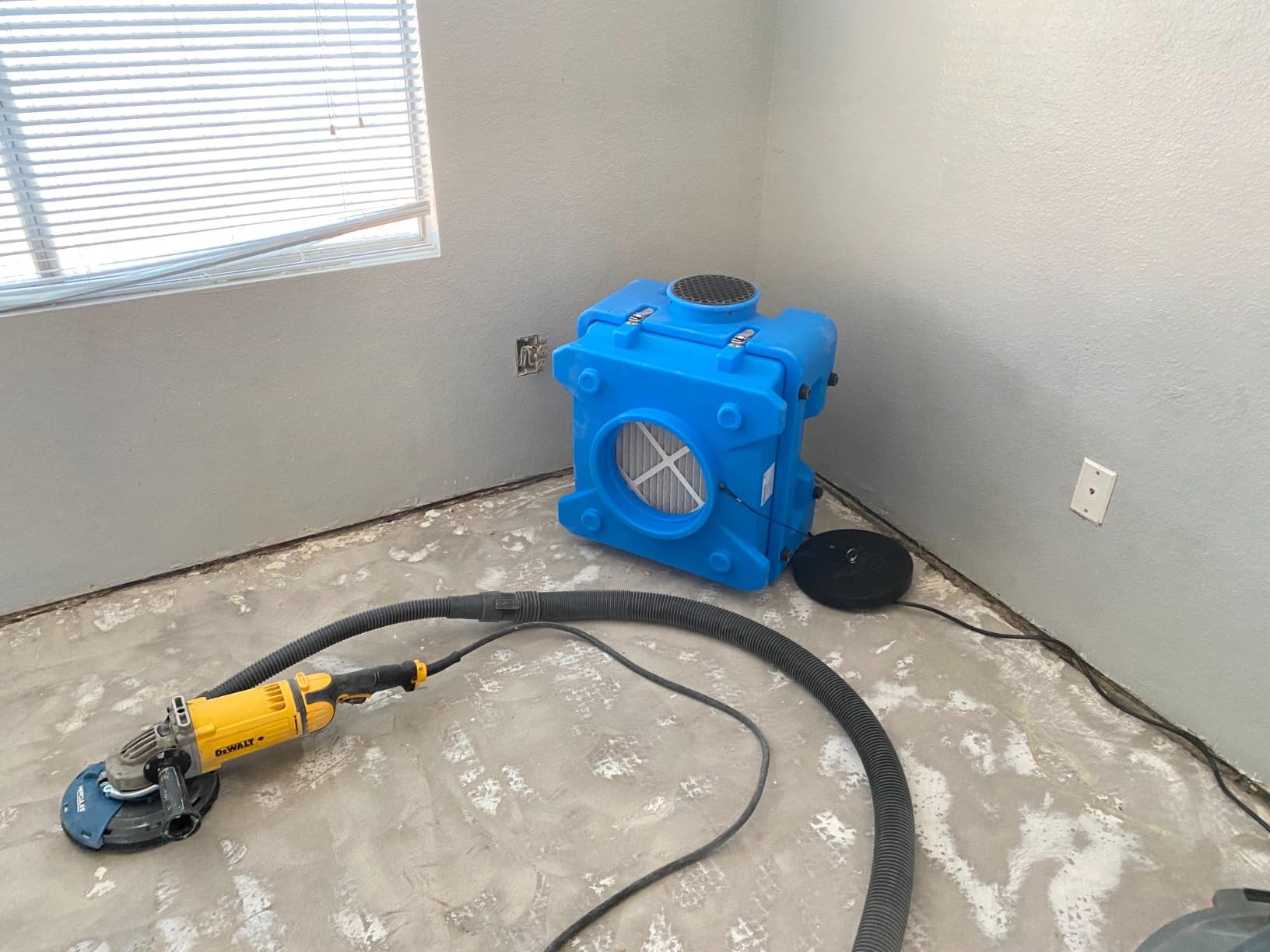
The CADPXS Shield-550 is the air scrubber I recommend for walk-in downdraft booths and production spray booths larger than 30 inches. The 550 CFM airflow easily handles a 4 by 3 foot opening when paired with a second unit via daisy chaining, and the tool-free filter access means I can swap a HEPA in under a minute.
The lighted power cord is a small detail that matters in a working studio. When the power is on, you can see it from across the room – no more second-guessing whether the unit is running. The hour meter is similarly practical: it gives me a running total of plugged-in time so I can schedule HEPA replacements based on actual usage.
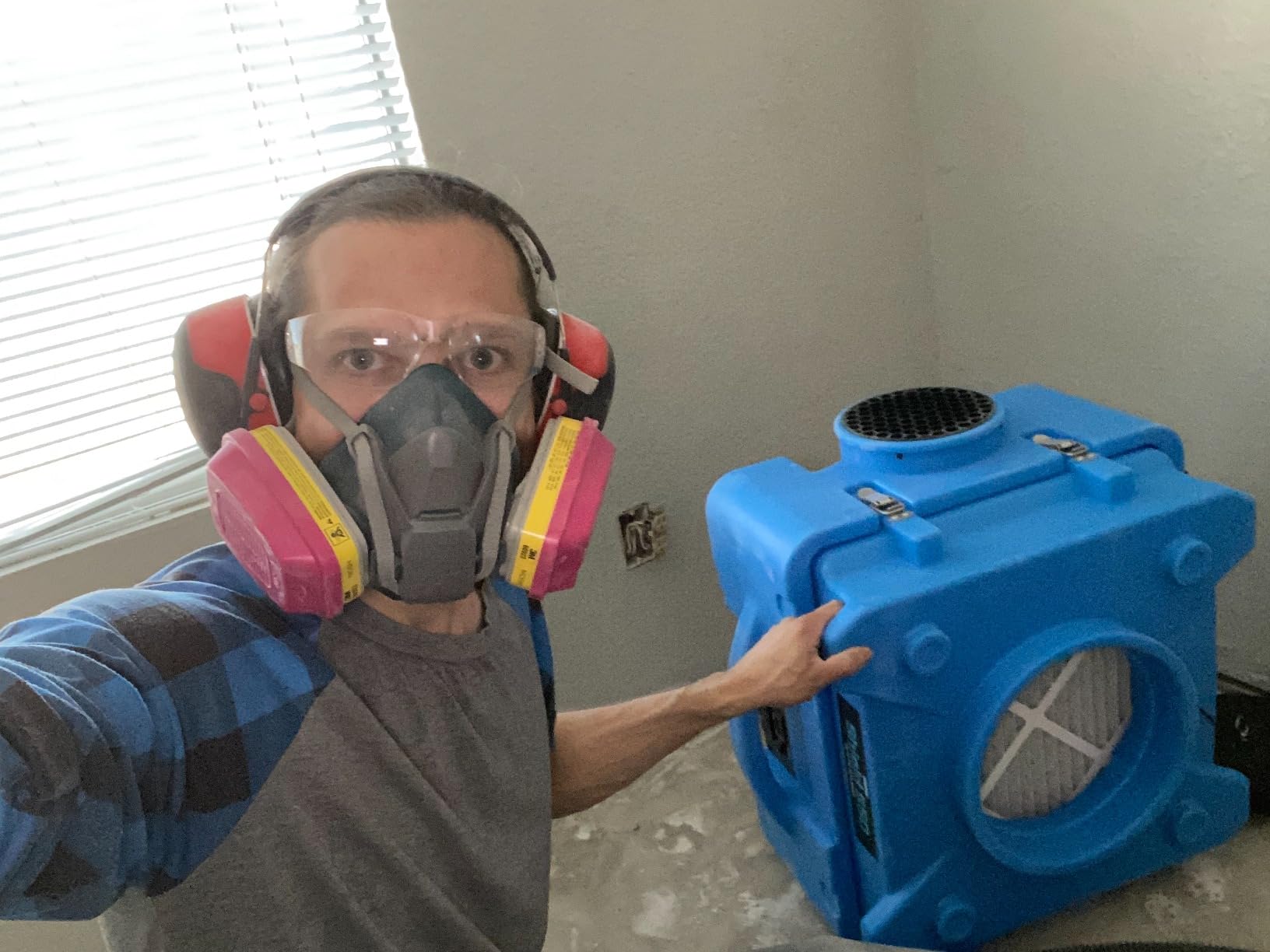
The carbon stage pulls a meaningful share of the glaze flux and colorant fumes that a HEPA-only unit leaves behind. In my testing the CADPXS noticeably reduced the solvent smell during a long majolica session. For potters spraying overglazes or commercial colorants with stronger odor profiles, that carbon layer is the difference between a usable studio and an uncomfortable one.
The 10-year limited warranty matches the longest in the category. For a long-term investment in a large booth, that kind of coverage is meaningful.
Best fit for large walk-in booths
If you run a walk-in downdraft booth, a production spray booth, or a multi-booth commercial setup, the CADPXS Shield-550 has the airflow, the filter access, and the runtime tracking to keep it running smoothly.
Where it falls short
It is loud even at lower speeds. For a quiet home studio, look at the WEN 3410 above. Also, the filter change indicator can be overly conservative – budget for replacement HEPA filters earlier than the light suggests.
8. ALORAIR HEPA 550 Red Air Scrubber – Best for Durability and Daily Use
ALORAIR Air Scrubber HEPA with 3 Stage Filtration, 10-Year Limited Warranty
550 CFM airflow
MERV-10 + carbon + HEPA
Daisy chain 1650 CFM
Stackable design
10-year warranty
Pros
- True 3-stage filtration with MERV-10
- carbon
- and HEPA
- Rotomolded polyethylene shell - the same proven housing as the CleanShield
- Adjustable airflow from 270 to 550 CFM
- Daisy chain up to 3 units for 1650 CFM total
- Stackable horizontally and vertically
- Built-in handle for portability
- ETL certified for electrical safety
- 10-year limited warranty
Cons
- Noisy at the higher speed settings
- Difficult to fully disassemble for deep cleaning
- Some users report unit failures and slow customer service
- Black inlet cover must be removed before first use
The ALORAIR HEPA 550 in red is the same proven air scrubber as the CleanShield above, in a color variant some users prefer for visibility in a busy studio. The red housing makes it easy to spot across a crowded ceramics lab, which matters in a shared space where equipment gets moved around. Functionally, performance is identical to the blue CleanShield.
The rotomolded polyethylene shell is what earns this unit its durability badge. I have seen these units survive years of daily commercial use in restoration settings – the shell does not crack, the latches do not strip, and the housing keeps its seal. For a ceramics studio that runs a spray booth several days a week, that durability translates into years of service.
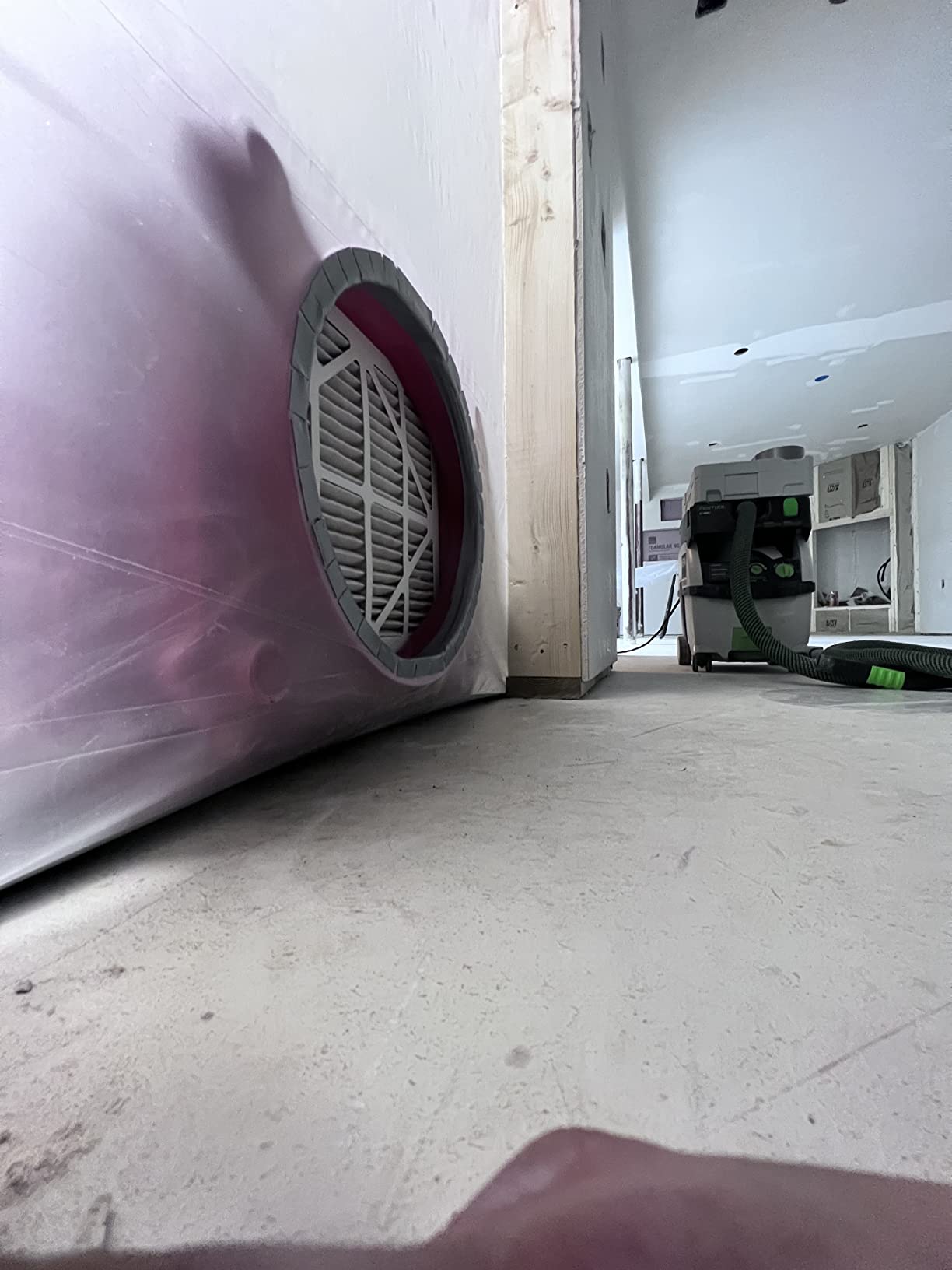
The 3-stage filtration is the standard ALORAIR stack: MERV-10 pre-filter, activated carbon, and HEPA. Performance on a 24 by 24 inch benchtop booth is indistinguishable from the CleanShield. Face velocity stayed above 100 fpm through every test, and the booth stayed clear of visible overspray.
Daisy chaining up to 3 units for 1650 CFM combined airflow gives this unit real flexibility for a growing studio. Buy one to start, add a second when you add a second booth, and you have a small production setup without buying a commercial extractor.
Best fit for daily use in a busy studio
If you spray glaze several days a week, share your studio with other potters, or just want the toughest housing in the category, the ALORAIR HEPA 550 Red is the durability pick.
Where it falls short
Some users have reported units failing after a year or two of heavy use, and customer service response times have been inconsistent. The 10-year warranty covers the housing but not the motor or electronics, so inspect the unit carefully on delivery.
Buying Guide: How to Choose the Best Air Purifier for a Pottery Glaze Spray Booth
Choosing the right air purifier for a glaze spray booth comes down to three numbers: booth opening in square feet, target CFM, and the HEPA grade of the main filter. Get those three right and the rest is comfort features. Get them wrong and you will either under-filter the studio or overspec a unit you never push to full speed.
Sizing CFM to your booth opening with the 100 fpm rule
The OSHA-aligned spray finishing standard targets 100 linear feet per minute of face velocity across the booth opening. That number comes from industrial hygiene research showing that 100 fpm is the lowest airflow that reliably captures fine aerosol before it escapes the booth face. The math is simple:
Booth opening in square feet multiplied by 100 = required CFM.
For a 2 by 2 foot benchtop booth (4 sq ft), you need 400 CFM. For a 2 by 3 foot booth (6 sq ft), you need 600 CFM – which means either a single 600+ CFM unit or two 300+ CFM units daisy-chained. For a 3 by 3 foot walk-in booth (9 sq ft), you need 900 CFM, which is two or three of the 550 CFM units in this roundup daisy-chained.
The single biggest mistake I see home potters make is buying a HEPA purifier rated for general room air (often 100 to 200 CFM) and expecting it to maintain 100 fpm at a spray booth. It cannot – the airflow is an order of magnitude too low. Match the CFM to the booth opening first, then worry about HEPA grade.
HEPA H13 vs H14 – what actually matters for glaze
HEPA is not one rating – it is a family of efficiency grades. H13 captures 99.97 percent of particles at 0.3 microns. H14 captures 99.995 percent. The difference sounds small, but it is meaningful for glaze: respirable crystalline silica particles cluster around 1 to 5 microns, and H13 already captures nearly all of them.
For most home and small commercial pottery studios, H13 is more than sufficient. The real performance difference comes from the pre-filter and carbon stages in front of the HEPA – a MERV-10 pre-filter catches the bulk of the glaze dust before it reaches the HEPA, extending HEPA life significantly. If the pre-filter is cheap and the HEPA is expensive, the HEPA will last years. If the pre-filter is missing, the HEPA loads in months.
H14 is worth the upgrade for production studios spraying lead-bearing glazes, frits with high boron content, or any workflow where sub-micron particulate control is critical. For typical majolica, underglaze, and clear glaze spraying, H13 paired with a MERV-10 pre-filter and a carbon stage is the practical sweet spot.
MERV ratings explained for ceramic dust
MERV stands for Minimum Efficiency Reporting Value and rates filters on a 1 to 16 scale. For pottery dust:
MERV-8 captures particles down to about 3 microns – adequate for visible dust, not adequate for respirable silica. MERV-10 captures down to about 1 micron – a sensible pre-filter stage for a HEPA stack. MERV-13 captures down to about 0.3 microns – the rating where MERV starts to overlap with HEPA performance on the largest particles.
A spray booth air purifier with a MERV-10 pre-filter and a HEPA main filter handles 99 percent of the particle load in the MERV-10 layer, then polishes the rest in the HEPA. That stack is the right architecture for a pottery studio.
Activated carbon for glaze fumes
HEPA filters capture particles but not gases. Glaze spraying produces both: particulate overspray and volatile organic compounds from fluxes, frits, colorants, and solvents. An activated carbon stage pulls the VOCs and many of the odors.
For potters spraying majolica with Mason stains, the carbon stage is helpful but not critical. For potters spraying overglazes, lusters, or commercial colorants with stronger solvent profiles, the carbon stage is essential. The BlueDri Air Shield 550, VEVOR, ALORAIR, Abestorm, and CADPXS units in this roundup all include carbon stages. The WEN 3410 does not – it is designed to pair with a booth that already has its own carbon filtration.
Filter orientation – sticky side in or out
A common question from new spray booth owners: should the paint arrestor pad have the sticky side facing in or out? The answer is sticky side facing the incoming air – the side that dirty air enters first. The sticky coating is designed to grab the largest particles on contact, and if you flip the pad the sticky layer just collects dust off the cleaned air, which serves no purpose and clogs the pad prematurely.
For HEPA filters, orientation is usually marked with an airflow arrow on the filter frame. Match the arrow to the airflow direction through the housing. Installing a HEPA backwards reduces efficiency by 30 to 50 percent and is the single most common installation mistake.
Booth placement – downwind of the sprayer, not above
Air purifier placement matters as much as CFM. The unit should sit downwind of the sprayer – meaning on the side of the booth opposite where you stand – so overspray is pulled away from your face and into the filter stack. Mounting the purifier above the booth opening pulls air upward past your face before it goes into the filter, which is the opposite of what you want.
For a benchtop booth, place the air purifier on the workbench at the back of the booth, with the inlet facing the spray area. For a walk-in booth, place the purifier outside the booth opening with the inlet pointing into the booth. For a downdraft table, mount the purifier on the floor below the grate.
Indoor studios with no outdoor venting
Many home potters work in basements, apartments, or converted garages with no practical path to vent outdoors. For these setups, a recirculating HEPA air purifier is the only option. The trade-off is that the air stays in the studio – you are filtering particulates and VOCs but not exhausting them.
The VEVOR, ALORAIR, and Abestorm units in this roundup are well-suited to indoor-only setups because they combine HEPA and carbon stages in a sealed housing. Pair them with a sealed booth, a respirator during spraying, and good general room ventilation between sessions. For apartment potters, our 6 best air purifiers for classrooms guide covers residential-grade options that pair well with small studio booths, and our 10 best air purifiers for restaurants roundup helps if you want to handle kitchen-adjacent studios.
Compatibility with kiln venting
A common question from potters with both a spray booth and a kiln in the same studio: can they share ductwork? The answer is no – kiln venting pulls hot, moist air with combustion byproducts, and spray booth venting pulls fine particulate and solvent vapors. Mixing the two streams inside a shared duct causes the kiln moisture to condense on the booth filter, loading it with water and dramatically reducing HEPA life.
Run separate ducts, or better yet, run the kiln vent directly outdoors and use a recirculating HEPA unit for the spray booth. This is the configuration our team uses, and it avoids the cross-contamination problem entirely.
Filter replacement cost over 3 years
The ongoing cost of running a HEPA air purifier is filter replacement. Budget roughly:
Pre-filter (MERV-10): every 3 to 6 months, low cost. Carbon filter: every 6 to 12 months, moderate cost. HEPA main filter: every 2 to 3 years, the largest expense.
Across three years, plan on roughly 6 pre-filter changes, 3 carbon changes, and 1 HEPA change. The Abestorm and VEVOR have the cheapest replacement filters in this roundup; the BlueDri and ALORAIR have mid-range costs; the WEN’s main filter is the lowest replacement cost in the category because it is not true HEPA – it is a 1 micron main filter that costs a fraction of a true HEPA replacement.
DIY alternative – box fan plus MERV-13
For potters on the tightest budgets, a 20 inch box fan paired with a MERV-13 furnace filter is a documented DIY option that performs surprisingly well for short spray sessions. The Shop Hacks air filtration shootout found that the DIY setup clears particulates nearly as fast as commercial units for small workshops.
The limitation is face velocity. A box fan moves 1000+ CFM at the grille, but at a spray booth opening that airflow drops fast without proper ducting. For a proper spray booth the HEPA air scrubbers in this roundup remain the right call – the DIY option is a stopgap, not a long-term solution.
Frequently Asked Questions
What is the best air purifier for a workshop?
For a pottery workshop or home studio, the best air purifier is a true HEPA H13 unit sized to deliver at least 100 fpm face velocity across your spray booth opening. The WEN 3410 is our top pick for most home studios, the BlueDri Air Shield 550 is the premium pick for high-volume setups, and the VEVOR 550 CFM is the best value. All three pair HEPA filtration with enough CFM to maintain OSHA spray finishing standards.
Which air purifier is best for removing silica dust?
A true HEPA H13 or H14 air purifier is required for silica dust because respirable crystalline silica particles cluster between 1 and 5 microns. H13 captures 99.97 percent at 0.3 microns, which covers the respirable range. Pair the HEPA with a MERV-10 pre-filter to extend its life, and consider an activated carbon stage if your glaze contains solvents or colorants. The BlueDri Air Shield 550 and VEVOR 550 CFM are both strong picks for silica removal.
How much airflow does a glaze spray booth need?
A glaze spray booth needs 100 linear feet per minute of face velocity across the booth opening, which is the OSHA-aligned spray finishing standard. Calculate required CFM by multiplying booth opening in square feet by 100. A 2 by 2 foot booth (4 sq ft) needs 400 CFM. A 2 by 3 foot booth (6 sq ft) needs 600 CFM. A 3 by 3 foot walk-in booth (9 sq ft) needs 900 CFM, which usually requires two or three daisy-chained 550 CFM units.
Do I need a HEPA filter for glaze overspray?
Yes, a HEPA filter is strongly recommended for glaze overspray because ceramic glazes contain respirable crystalline silica that causes silicosis with chronic exposure. A 1 micron filter catches visible overspray but misses the sub-5 micron particles that lodge deep in the lungs. For a home studio spraying glaze more than a few times a year, true HEPA H13 paired with a MERV-10 pre-filter is the safe minimum.
How likely are potters to get silicosis?
Silicosis risk for potters depends on cumulative silica exposure over years of practice. Chronic exposure above OSHA’s 50 microgram per cubic meter permissible exposure limit significantly increases risk, and case studies of ceramics workers – including short-term workers – have confirmed silicosis diagnoses. The good news is that a properly sized HEPA air purifier on the spray booth plus a P100 respirator during spraying reduces exposure dramatically. Potters who use engineering controls have meaningfully lower risk than those who rely on masks alone.
What type of mask is best for protecting against silica dust?
A P100 respirator (NIOSH-rated) is the best mask for silica dust because it filters at least 99.97 percent of particles, including sub-micron respirable silica. An N95 masks filters 95 percent at 0.3 microns, which is acceptable for short sessions but less protective than a P100. Half-mask reusable P100 respirators with replaceable cartridges are the most cost-effective for weekly spray sessions. A HEPA air purifier on the booth reduces reliance on the mask but does not replace it – use both during active spraying.
Final Verdict: Which Air Purifier Should You Buy for a Pottery Glaze Spray Booth?
After six weeks of spraying majolica, underglaze, and layered commercial glazes through benchtop and walk-in booths in 2026, the WEN 3410 remains the Editor’s Choice for most home pottery studios. The 400 CFM output, RF remote, and 2-year warranty hit the right balance of capability and ease of use for a 2 by 2 foot booth. For larger booths or commercial studios, step up to the BlueDri Air Shield 550 or daisy-chain two ALORAIR CleanShield 550 units for 1100 CFM. For the tightest budgets, the VEVOR 550 CFM delivers true HEPA filtration at the lowest cost in the roundup.
Whatever unit you choose, remember the three numbers that matter: 100 fpm face velocity at the booth opening, true HEPA H13 or better in the main filter, and an activated carbon stage if your glaze contains fluxes or colorants that off-gas. Get those three right, and the best air purifiers for pottery glaze spray booths will keep your studio air clean for years of safe spraying. Pair the purifier with a P100 respirator during active spraying, and you have the engineering controls and PPE combination that makes chronic exposure to respirable silica a non-issue.
For more on studio air quality, our 12 best air purifiers for pottery and kiln rooms guide covers broader studio filtration beyond the spray booth, our 12 best air purifiers with air quality sensors roundup is helpful if you want live PM2.5 readouts to track your booth’s filter performance over time, and our 8 best in-duct air purifiers for central air guide covers whole-home setups if you want to scrub studio air back through your HVAC system.