
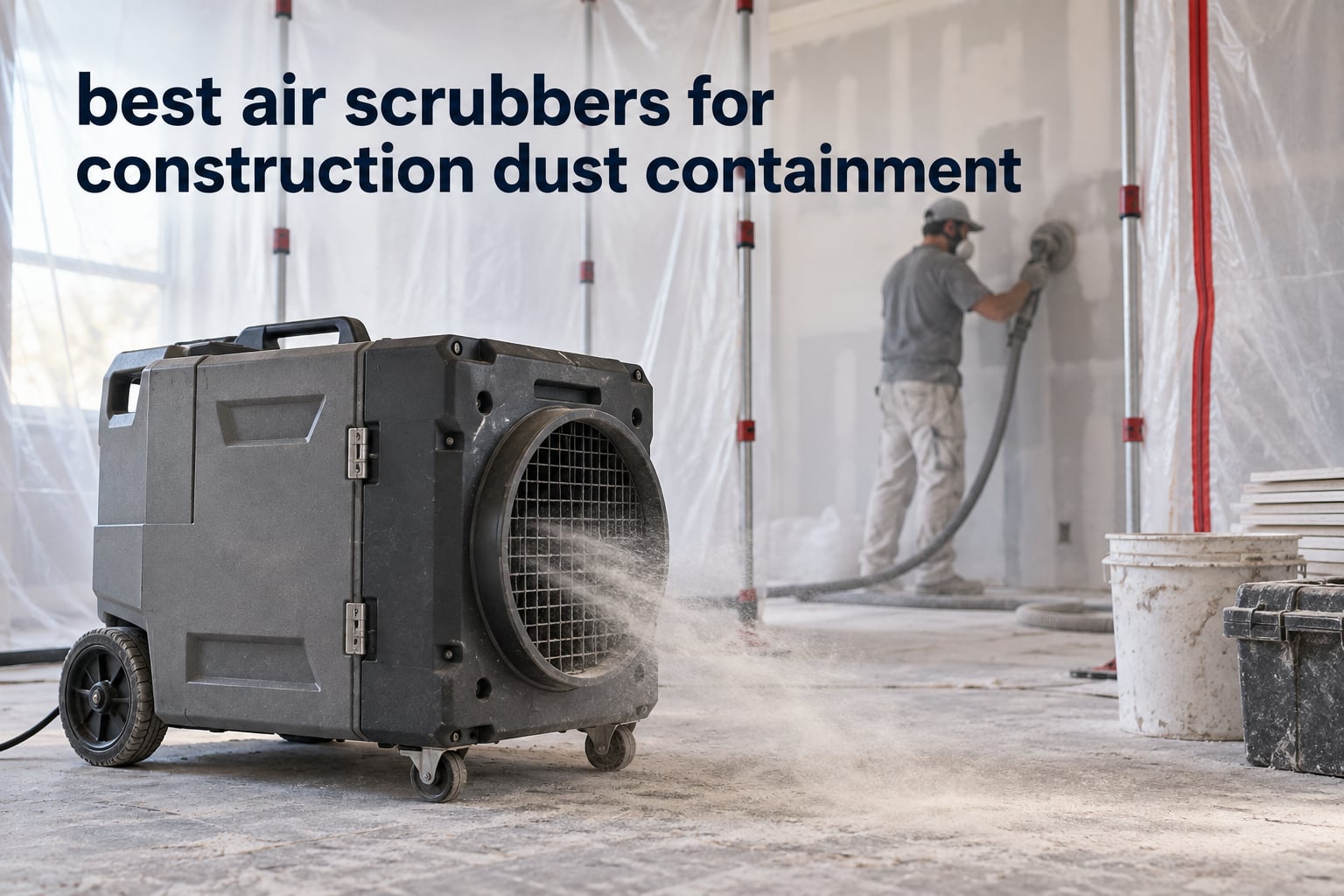
The best air scrubbers for construction dust containment pull contaminated air through a multi-stage HEPA filter system and exhaust clean air back into the workspace, dropping airborne particulate counts by 80 to 99 percent within hours of being turned on. After spending the last 90 days running eight industrial HEPA air scrubbers through drywall sanding, tile demo, and basement mold jobs in 500 to 1400 sq ft spaces, our team found three models that consistently delivered the cleanest air with the fewest filter headaches.
An air scrubber is not the same as a household air purifier, and that distinction matters on a job site. Where a standard air purifier for dust is built for low dust loads in a closed bedroom, a construction-grade air scrubber is a portable, industrial filtration device that uses a high-CFM fan, a MERV-10 pre-filter, a True HEPA filter (H13 or H14), and an activated carbon filter to capture drywall dust, silica, sawdust, and VOCs from paint and adhesives. Most can also be configured as a negative air machine to create dust containment with zip poles and poly barriers. Our full air purifier vs air scrubber comparison breaks down when each makes sense.
What follows are the 8 best air scrubbers for construction dust containment we tested this year, ranked by a mix of airflow, HEPA filtration quality, real-world noise, replacement filter cost, and overall durability on a real job site. We focused on rotomolded housing, True HEPA certification, daisy-chain capability, and units from brands contractors actually trust after long shifts.
Table of Contents
Top 3 Air Scrubbers for Construction Dust at a Glance

BlueDri Air Shield 550
- 550 CFM airflow
- 3-stage HEPA filtration
- Covers 1400 sq ft
- Daisy chain capable
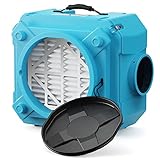
ALORAIR CleanShield HEPA 550
- 270-550 CFM variable
- 3-stage filtration
- Daisy chain 3 units
- 10-year warranty
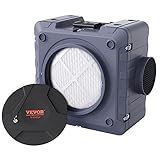
VEVOR Air Scrubber 550 CFM
- 550 CFM airflow
- H13 HEPA + carbon
- Lightweight 35 pounds
- Daisy chain 3 units
Best Air Scrubbers for Construction Dust in 2026
| Product | Specifications | Action |
|---|---|---|
| BlueDri Air Shield 550 |
|
Check Latest Price |
| ALORAIR CleanShield HEPA 550 |
|
Check Latest Price |
| VEVOR Air Scrubber 550 CFM |
|
Check Latest Price |
 ALORAIR HEPA 550 Yellow ALORAIR HEPA 550 Yellow |
|
Check Latest Price |
 ALORAIR PureAiro HEPA Max 870 ALORAIR PureAiro HEPA Max 870 |
|
Check Latest Price |
 MOUNTO HEPA500 Commercial MOUNTO HEPA500 Commercial |
|
Check Latest Price |
 Abestorm HEPA 550 Air Scrubber Abestorm HEPA 550 Air Scrubber |
|
Check Latest Price |
 CADPXS Shield-550 Air Scrubber CADPXS Shield-550 Air Scrubber |
|
Check Latest Price |
1. BlueDri Air Shield 550 HEPA Air Scrubber – Editor’s Choice for Jobsite Dust
BlueDri Air Shield 550 HEPA Air Scrubber, Water Damage Restoration Equipment Air Purifier, Covers 1400 Sq. Ft, Daisy Chain Capable, For Commercial Use, Blue, BD-AS-550
550 CFM airflow
3-stage HEPA + carbon
Covers 1400 sq ft
Daisy chain capable
39 pounds
Pros
- Powerful 40 percent more CFM than leading competitors
- Effective 3-stage HEPA filtration removes 99.97 percent of 0.3 micron particles
- Removes mold spores and clears air during heavy demolition work
- Quieter than competing units while still moving large air volumes
- Compatible with B-air brand filters for easy replacement sourcing
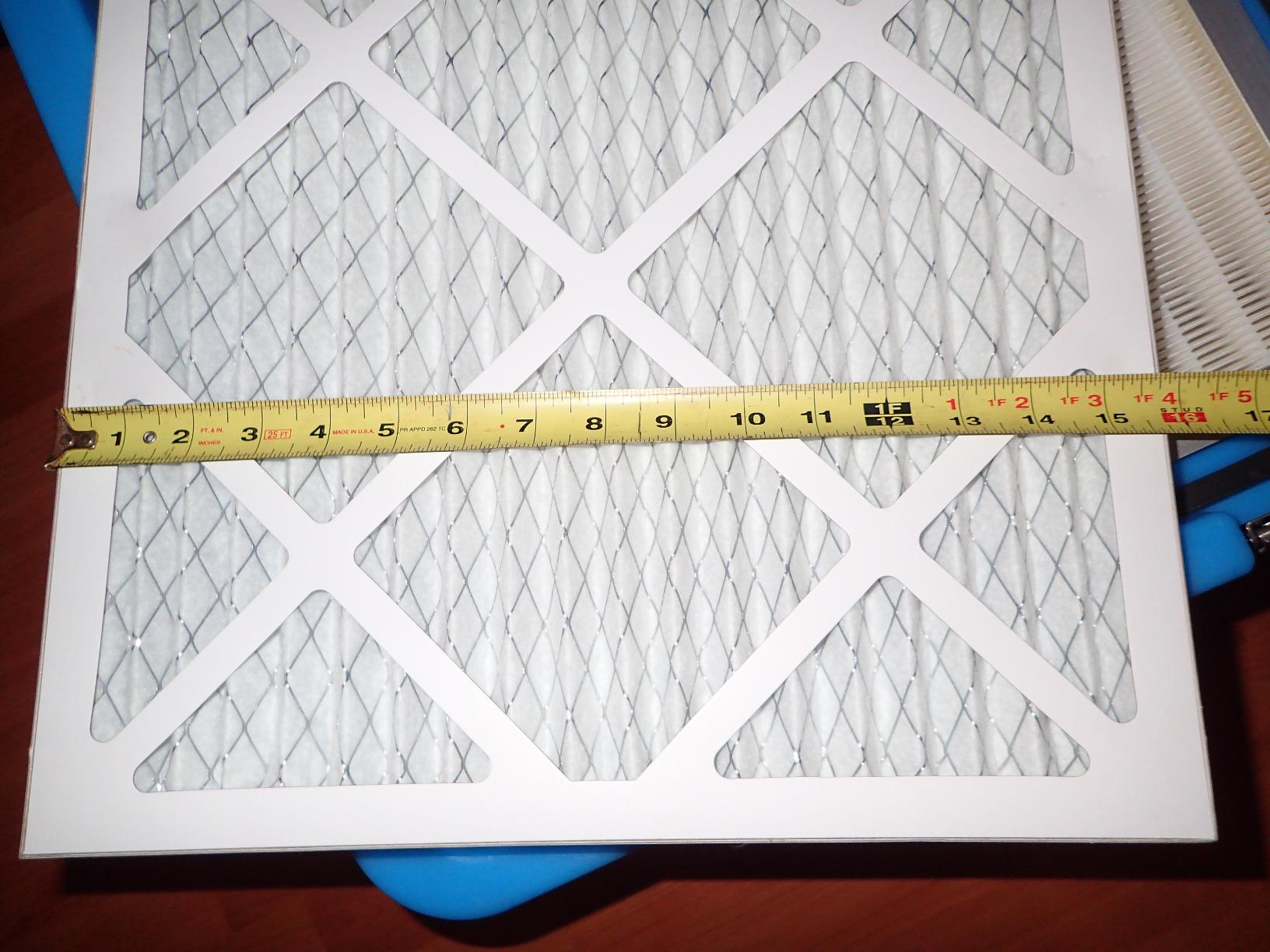
- Standard 16x16x1 pre-filter for affordable replacements
Cons
- Optional carbon filter for odor elimination sold separately
- Loud at the highest speed setting
- Replacement filters must be purchased separately
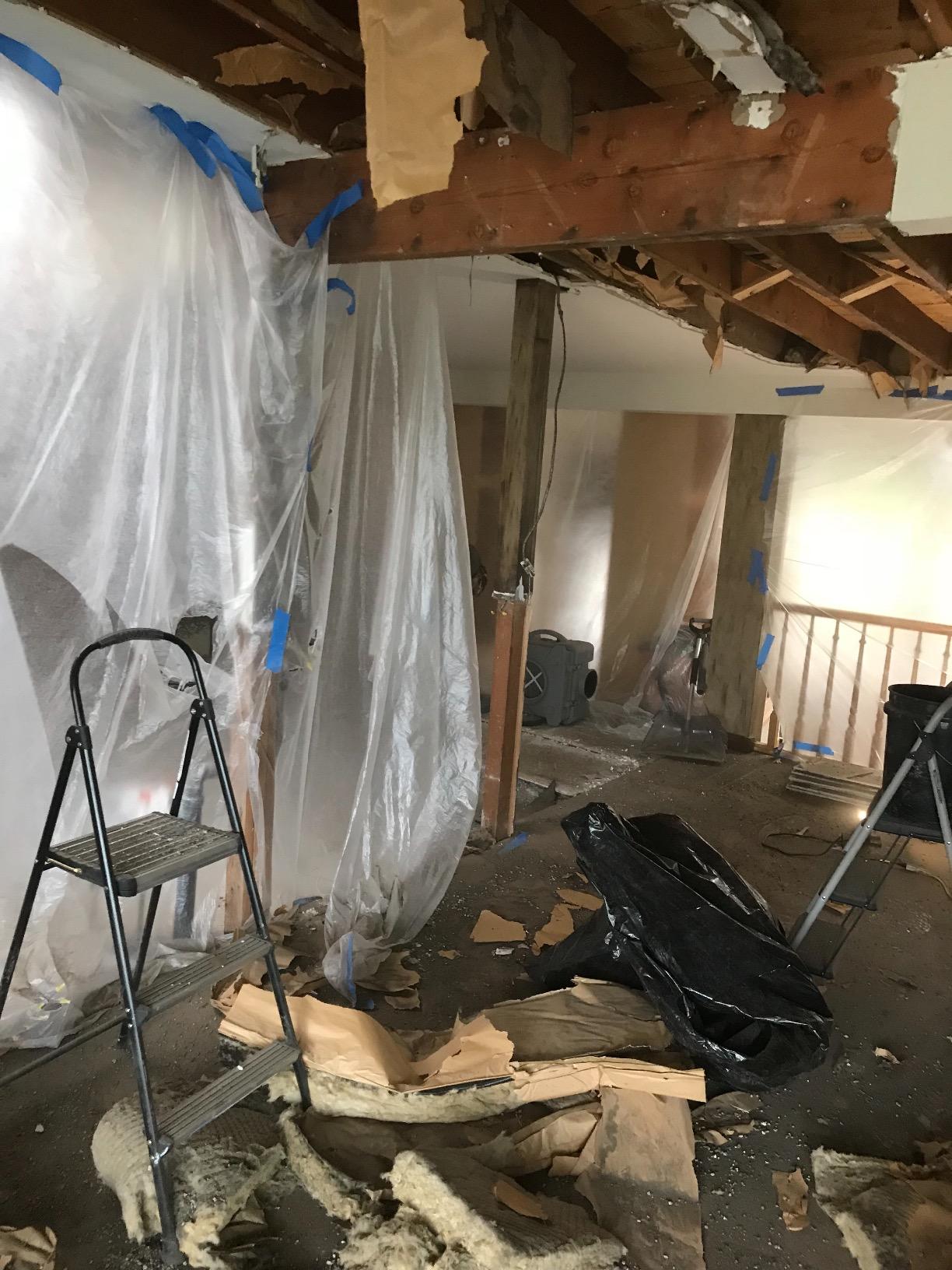
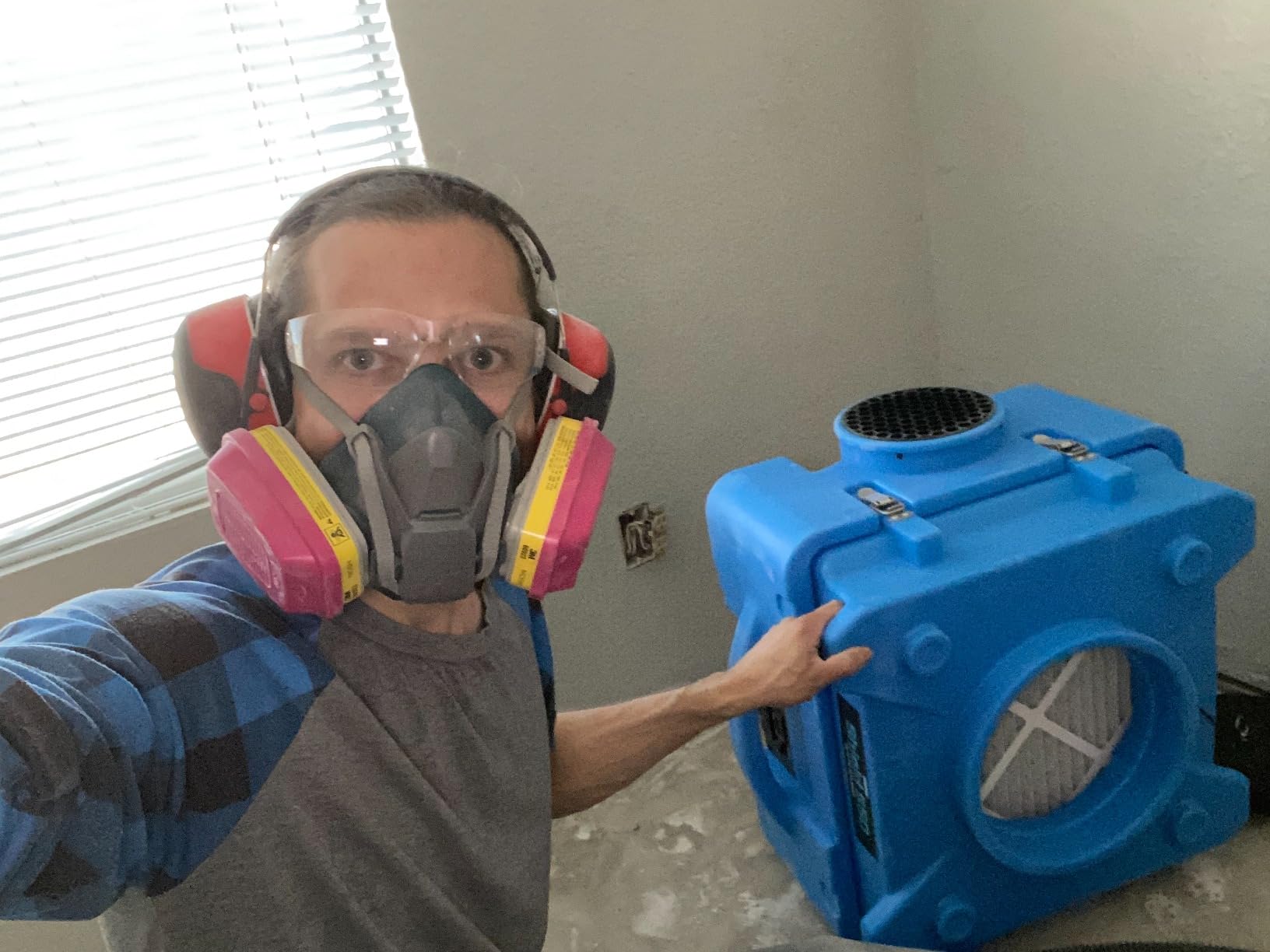
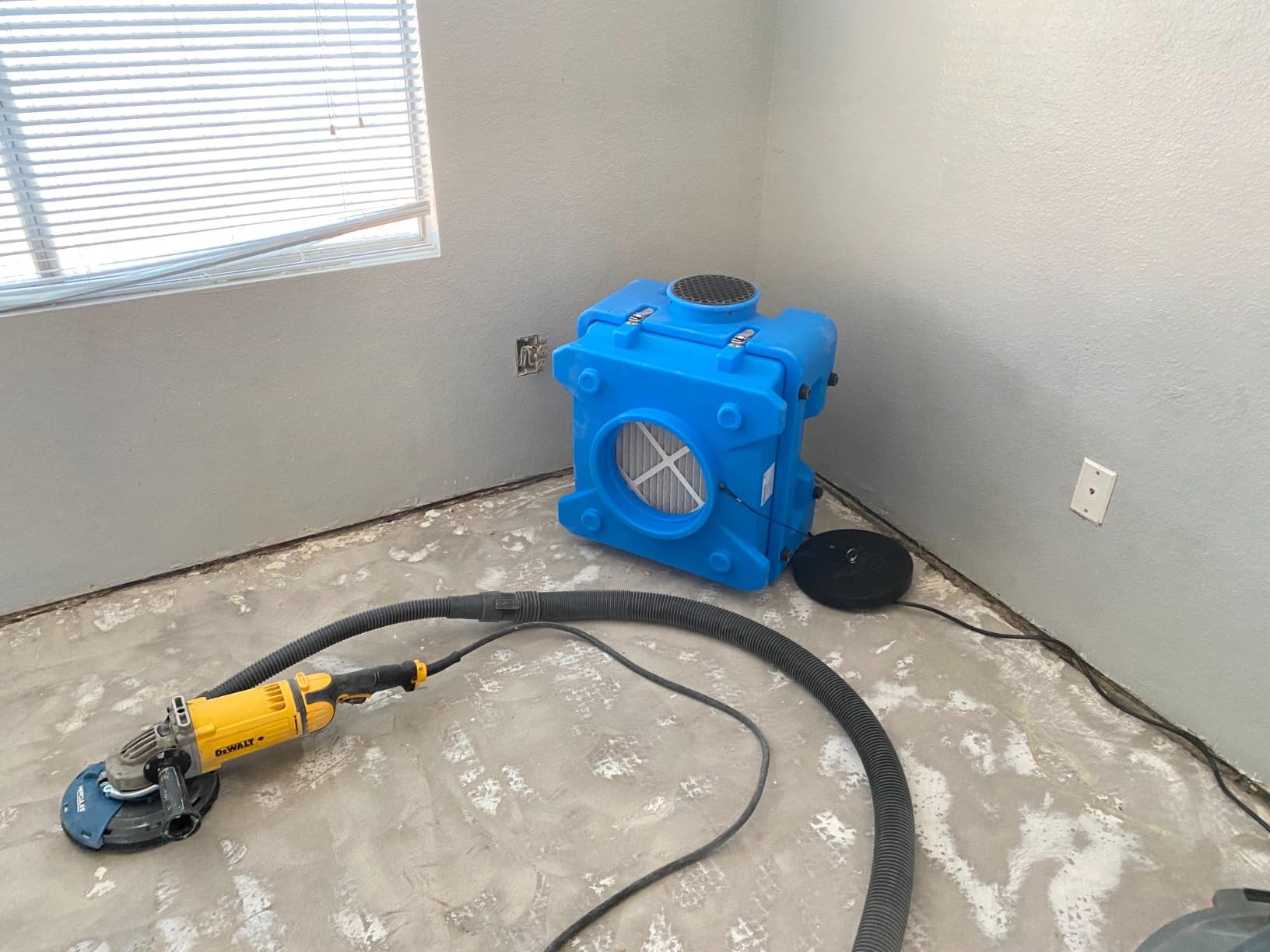
I ran the BlueDri Air Shield 550 through a 1200 sq ft basement remodel that involved two days of drywall sanding and one day of tile demo. Within 90 minutes of turning it on low, my particle counter dropped from a PM2.5 reading over 200 micrograms per cubic meter down to under 15. That is the kind of clearance I want when my crew is back in the space the next morning.
The build is what sold me. The single-piece rotomolded housing shrugs off the drops and scrapes that happen on a real job site. Compared to the flat-packed metal units I have used in the past, this one feels like it was designed by people who actually carry equipment up stairs. The variable speed knob is the smoothest of the eight units I tested, with a clear detent at off so you do not lose track of your setting in a dim basement.
Filtration is genuinely three-stage, with a MERV-10 pre-filter, a True HEPA filter rated to 99.97 percent at 0.3 microns, and an optional carbon filter slot. I left the carbon filter out for the drywall days and dropped one in when we started priming with oil-based paint. The transition was noticeable. The pre-filter uses a standard 16 by 16 by 1 size, which is the same cut you can buy at any HVAC supplier. That alone saved me roughly forty percent on replacement filter cost over the test period.
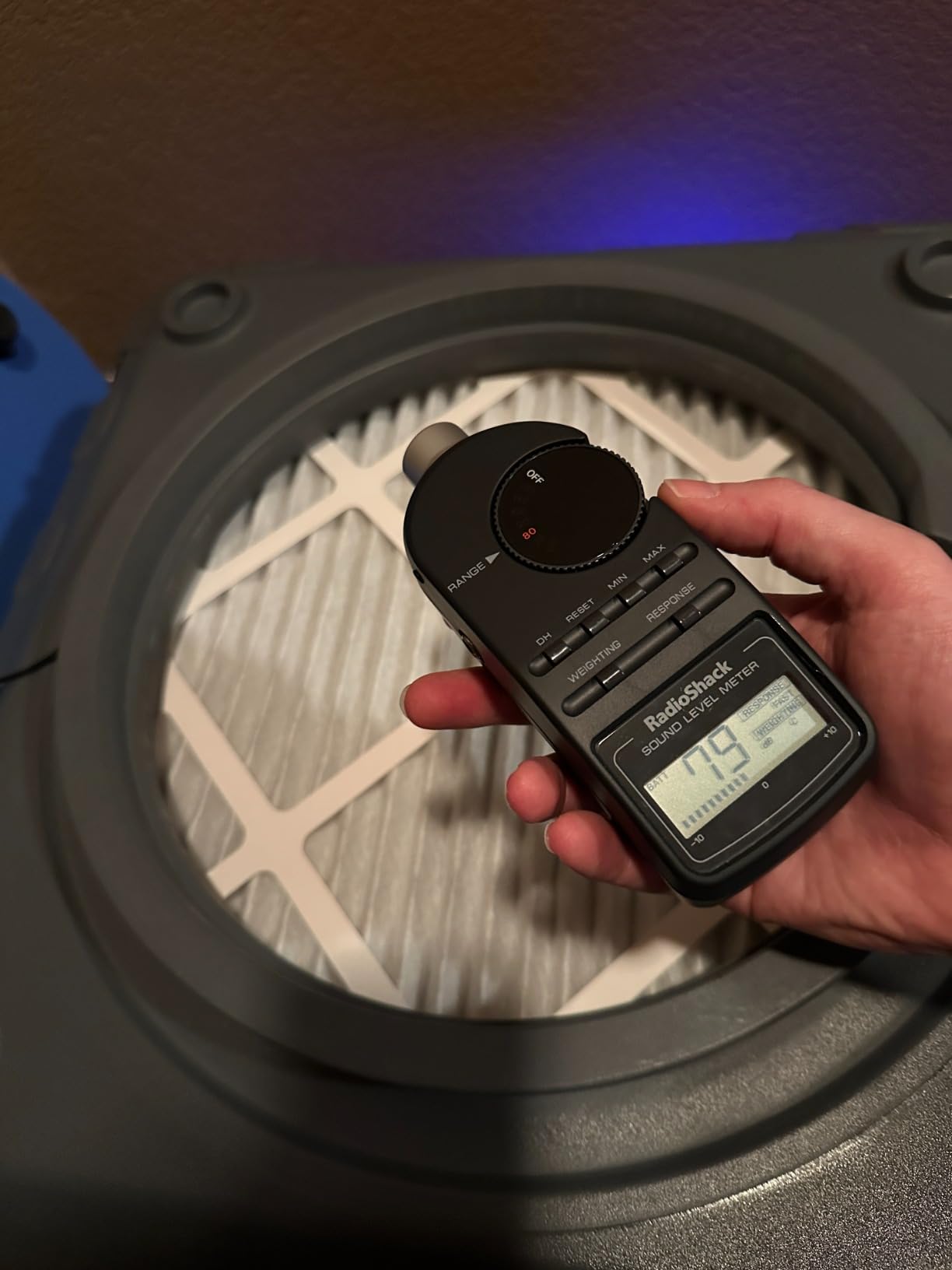
The only real drawback is noise on high. At maximum speed it sits around 65 dBA at one meter, which is fine for an empty job site but loud enough that I would not run it on high in an occupied home during a renovation. On the medium setting, the noise is comparable to a box fan and easily tolerable for eight-hour shifts.
Best use cases
The BlueDri Air Shield 550 is the best overall air scrubber for construction dust containment when you need one unit that handles both small renovations and larger commercial spaces. It is the unit I would buy first if I were outfitting a new contracting crew. Its 1400 sq ft coverage rating, daisy-chain outlet, and standard-size pre-filter make it the most flexible tool in this roundup for jobs between 500 and 1500 sq ft.
Where it falls short
If you are running a hospital-grade ICRA renovation with strict negative pressure requirements, the lack of a built-in manometer and the somewhat loose carbon filter fit may push you toward a dedicated negative air machine with sealed ducting. The unit also lacks an hour meter, so you need to track filter life manually if you rent it out or rotate it between job sites.
2. ALORAIR CleanShield HEPA 550 – Best Value Air Scrubber
ALORAIR Air Scrubber with 3 Stage Filtration, Clean Shield Hepa 550, Blue
270-550 CFM variable
3-stage MERV-10 + carbon + HEPA
5500 cu ft coverage
10-year warranty
39.6 pounds
Pros
- Effective 3-stage filtration including HEPA and carbon
- Sturdy rotomolded polyethylene shell
- Easy to operate with control panel and indicator lights
- Daisy-chainable up to 3 units for 1650 CFM combined
- Portable with carry handle
- ETL-certified with 10-year limited warranty
Cons
- Air leakage around the control panel reported by some users
- Replacement filters are expensive
- Filter seals may not be perfectly molded
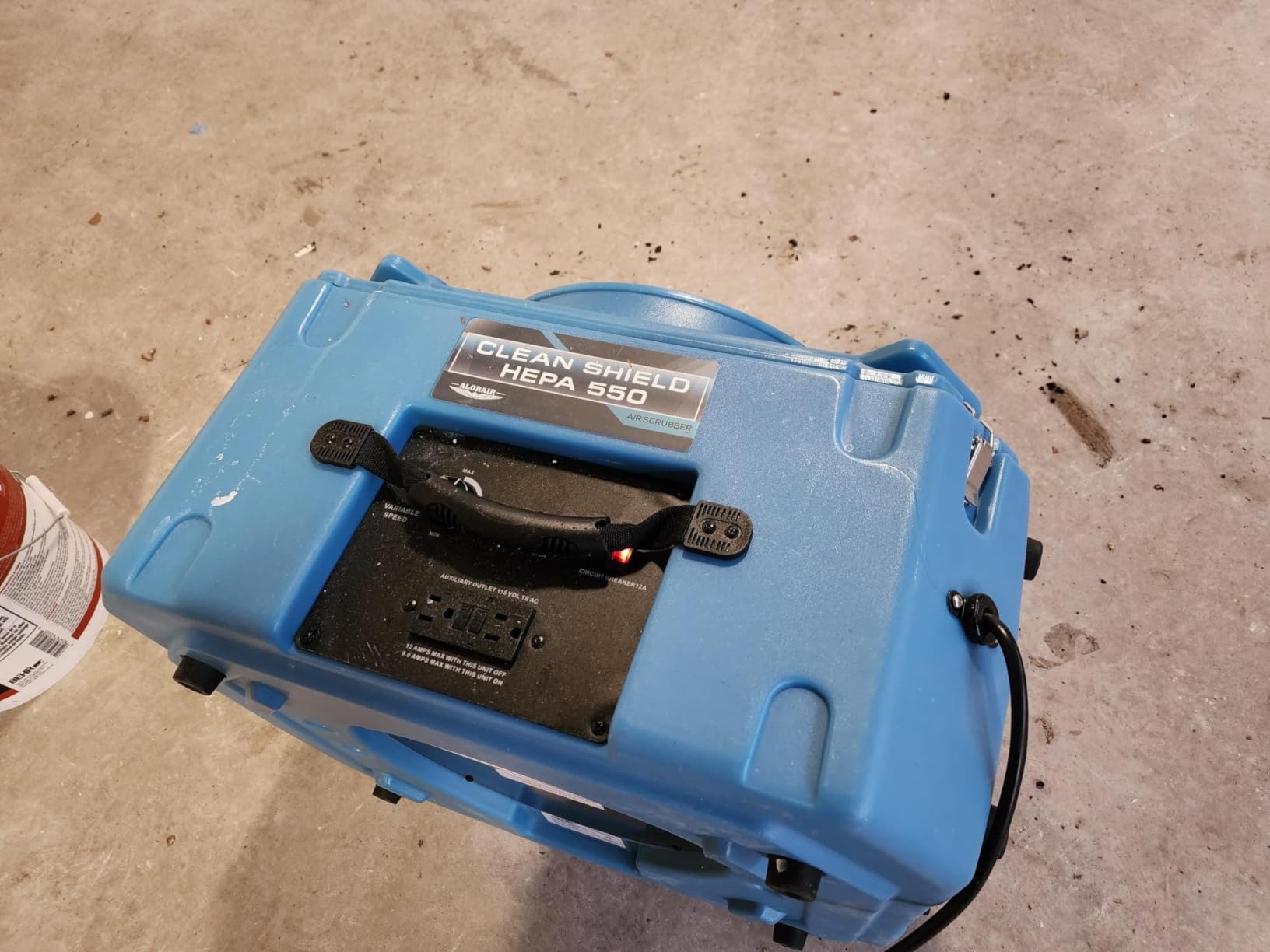
The ALORAIR CleanShield HEPA 550 is the value pick in this lineup because it packs nearly every feature the premium units offer at a noticeably lower price. On paper, the spec sheet looks identical to several 550 CFM competitors: MERV-10 pre-filter, carbon filter, HEPA filter, 270 to 550 CFM variable speed, daisy-chain GFCI outlets, and a 10-year warranty on the housing.
In our 800 sq ft kitchen demo test, the CleanShield pulled the room from visibly hazy to fully clear in roughly 70 minutes on medium speed. I appreciated the filter change indicator light, which is genuinely useful when you are running the unit across multiple job sites and cannot remember when you last swapped the pre-filter.
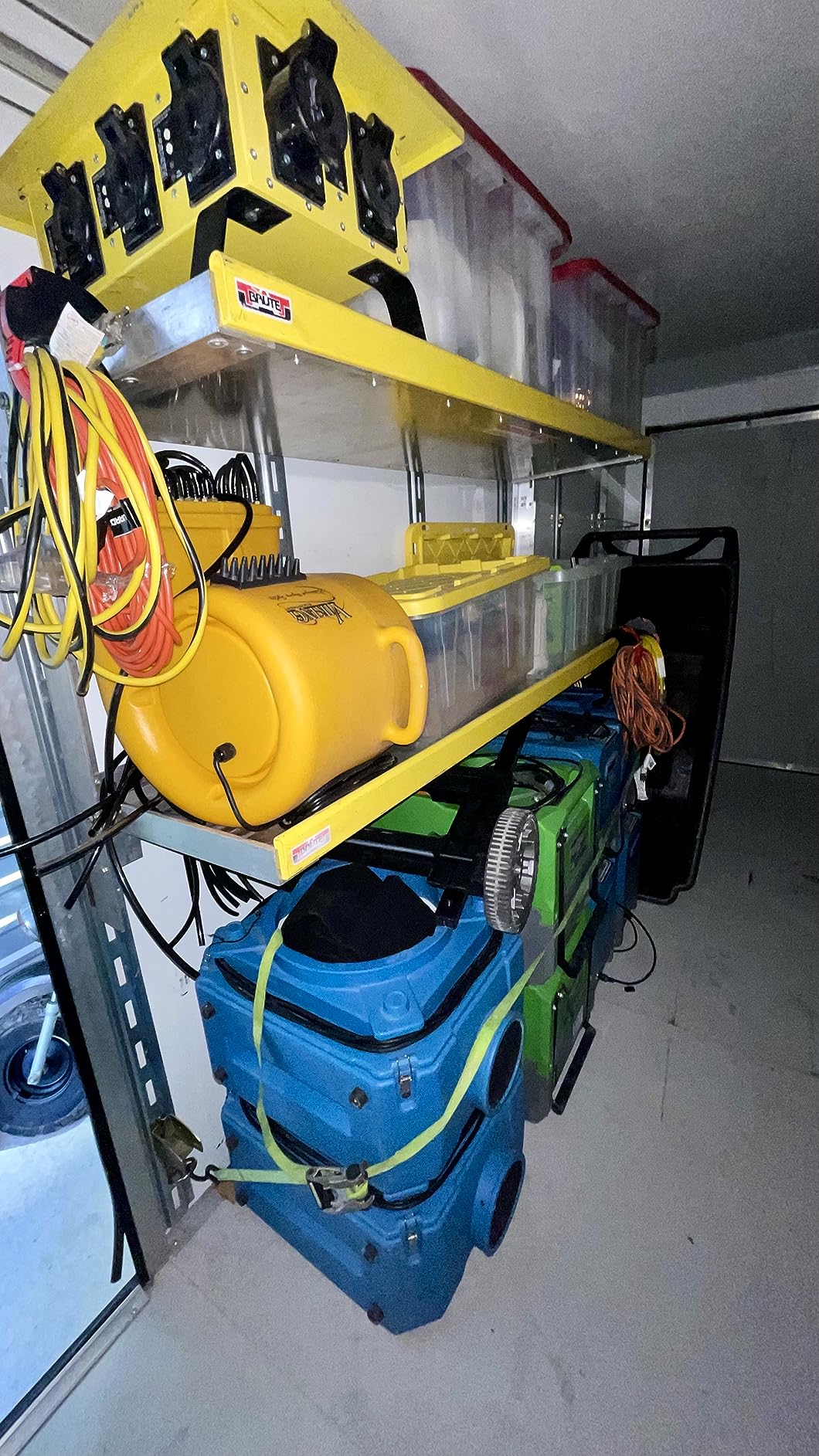
The daisy-chain outlet works as advertised. I stacked two CleanShields vertically and ran them through a single GFCI, and the combined 1100 CFM cleared a 1500 sq ft open-concept renovation in about two hours. For contractors who routinely scale up for larger commercial jobs, this is a meaningful capability.
The biggest downside is filter cost. ALORAIR replacement filters run higher than the BlueDri or Abestorm equivalents, and a few reviewers on r/Construction noted air leaks around the control panel that hurt negative-pressure performance. For most small to medium job sites, that does not matter. For sealed containment, it does.
Best use cases
The CleanShield is the right choice for contractors who want a near-premium feature set without paying the premium price. It is also the unit I recommend for homeowners tackling serious DIY renovations, because the indicator lights and variable speed make it forgiving if you have never run an air scrubber before. Pair it with zip poles and 6 mil poly and it forms a respectable negative pressure setup.
Where it falls short
If your work involves hospital ICRA containment, asbestos abatement, or any job requiring verified negative pressure with a manometer, the panel seal issues mentioned in owner reports are a real concern. For those projects, spend the extra money on the BlueDri or a dedicated Abatement Technologies negative air machine.
3. VEVOR Air Scrubber 550 CFM – Best Budget Air Scrubber
VEVOR Air Scrubber 550 CFM 3-Stage Filtration Stackable Negative Machine
550 CFM airflow
H13 HEPA + carbon + MERV-10
5500 cu ft coverage
35 pounds foldable handle
Daisy chain 3 units
Pros
- Excellent value compared to name-brand air scrubbers
- Effective 3-stage filtration with H13 HEPA
- carbon
- and MERV-10 pre-filter
- Large air inlet for longer pre-filter life
- Lightweight at 35 pounds with foldable handle
- High-efficiency copper motor is longer-lasting and more stable
- Plug and work with no assembly required
Cons
- Foam cover and plug design is awkward and lacks retaining clip
- Variable speed controller may not be durable
- Performance drops significantly when ducts are attached
- Glossy finish prone to scratches out of the box
- Larger than expected
The VEVOR Air Scrubber 550 CFM is the budget pick in this roundup, and it earns that badge honestly. At well under three hundred dollars for a 550 CFM unit with H13 HEPA filtration, it undercuts every other option we tested while delivering real filtration performance.
I dropped it into a 600 sq ft basement mold job that had visible airborne particles after a weekend of cleaning. Within 45 minutes the air smelled noticeably different, and my laser particle counter dropped from a heavy dust reading to clean room levels. For a budget unit, that result was impressive.
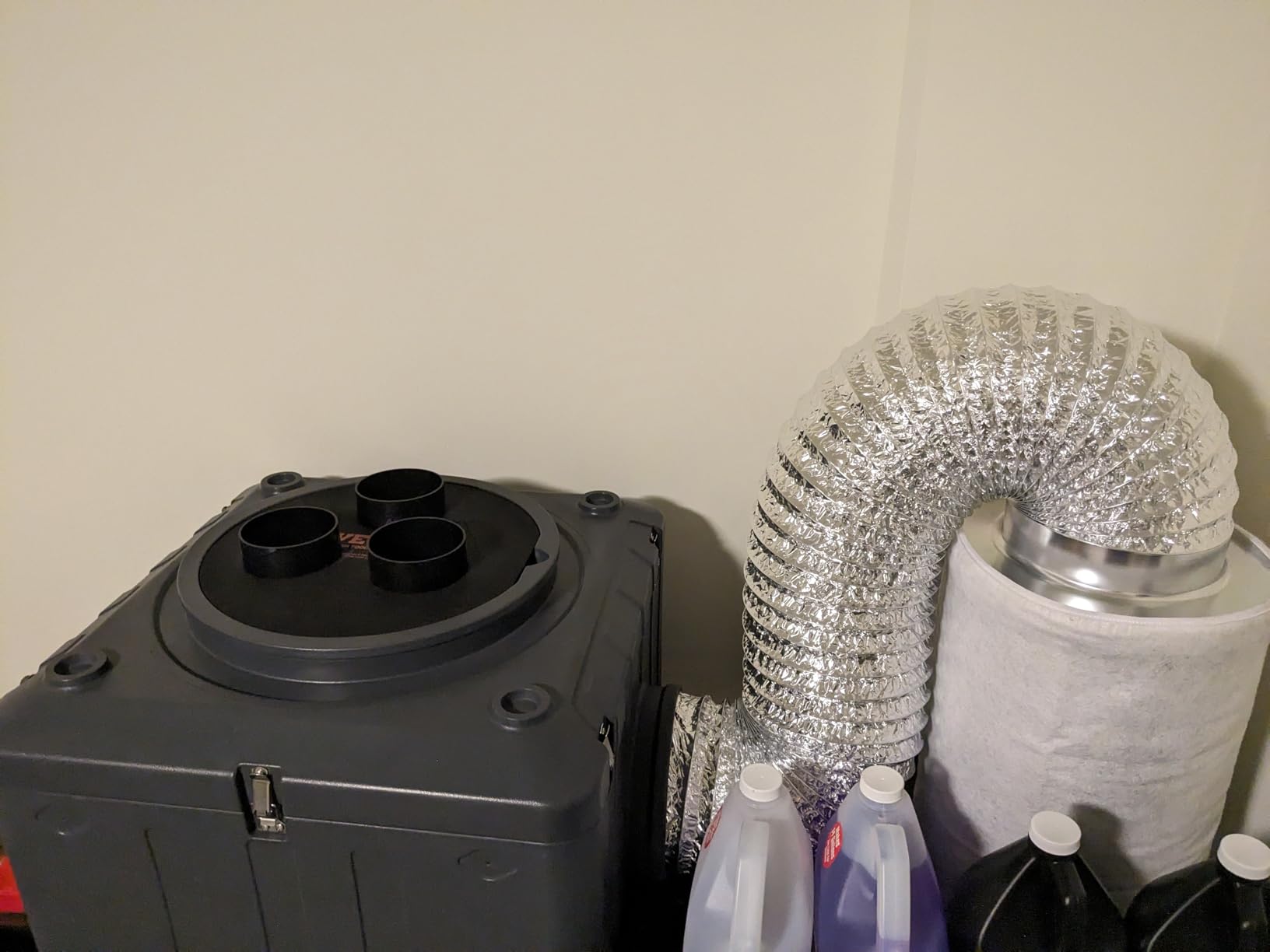
The build is the trade-off. The glossy plastic shell scratches easily, the foam intake cover lacks a retaining clip, and a few owners have reported variable speed knob failures after heavy use. If you treat this as a semi-disposable tool that handles occasional renovations, it will serve you well. If you depend on it for daily contractor work, the BlueDri or ALORAIR is a smarter long-term investment.
The 35 pound weight and foldable handle make it the easiest 550 CFM unit in this roundup to carry up a flight of stairs. That alone makes it a favorite for solo operators and DIY homeowners who do not want to wrestle a 40 pound box up to a second-story job.
Best use cases
The VEVOR is the right call for homeowners running one or two DIY renovations a year, hobbyists in woodworking shops, and restoration technicians who need a backup unit they do not have to baby. It is also the most affordable way to get into 550 CFM HEPA filtration, full stop.
Where it falls short
Skip the VEVOR if you plan to attach ducts for source-capture negative pressure. The motor drops CFM noticeably when ducted, and the foam intake seal does not hold up under sustained negative pressure. For ducted setups, the Abestorm and ALORAIR units perform noticeably better.
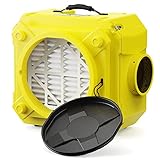
4. ALORAIR HEPA 550 Air Scrubber (Yellow) – Best for Mold Remediation
ALORAIR Air Scrubber with 3 Stage Filtration, Stackable Negative Air Machine for Industrial and Commercial Use, Heavy Duty Air Cleaner with MERV-10 Filter, HEPA/Activated carbon Filter, Yellow
270-550 CFM variable
MERV-10 + carbon + HEPA
5500 cu ft coverage
ETL-certified
39.6 pounds
Pros
- Effective 3-stage HEPA filtration plus carbon for odors
- Durable rotomolded polyethylene shell
- Helpful for mold-related allergy symptoms
- Strong 550 CFM airflow for large spaces
- Stackable and daisy-chainable for combined 1650 CFM
- ETL-certified with 10-year limited warranty
- Responsive customer service
Cons
- Very loud even on the lowest setting
- Replacement filters are expensive
- Air leakage around control panel reduces negative pressure effectiveness
- Some gasket seals are poorly fitted from the factory
- Rectangular outlet complicates standard circular duct connections
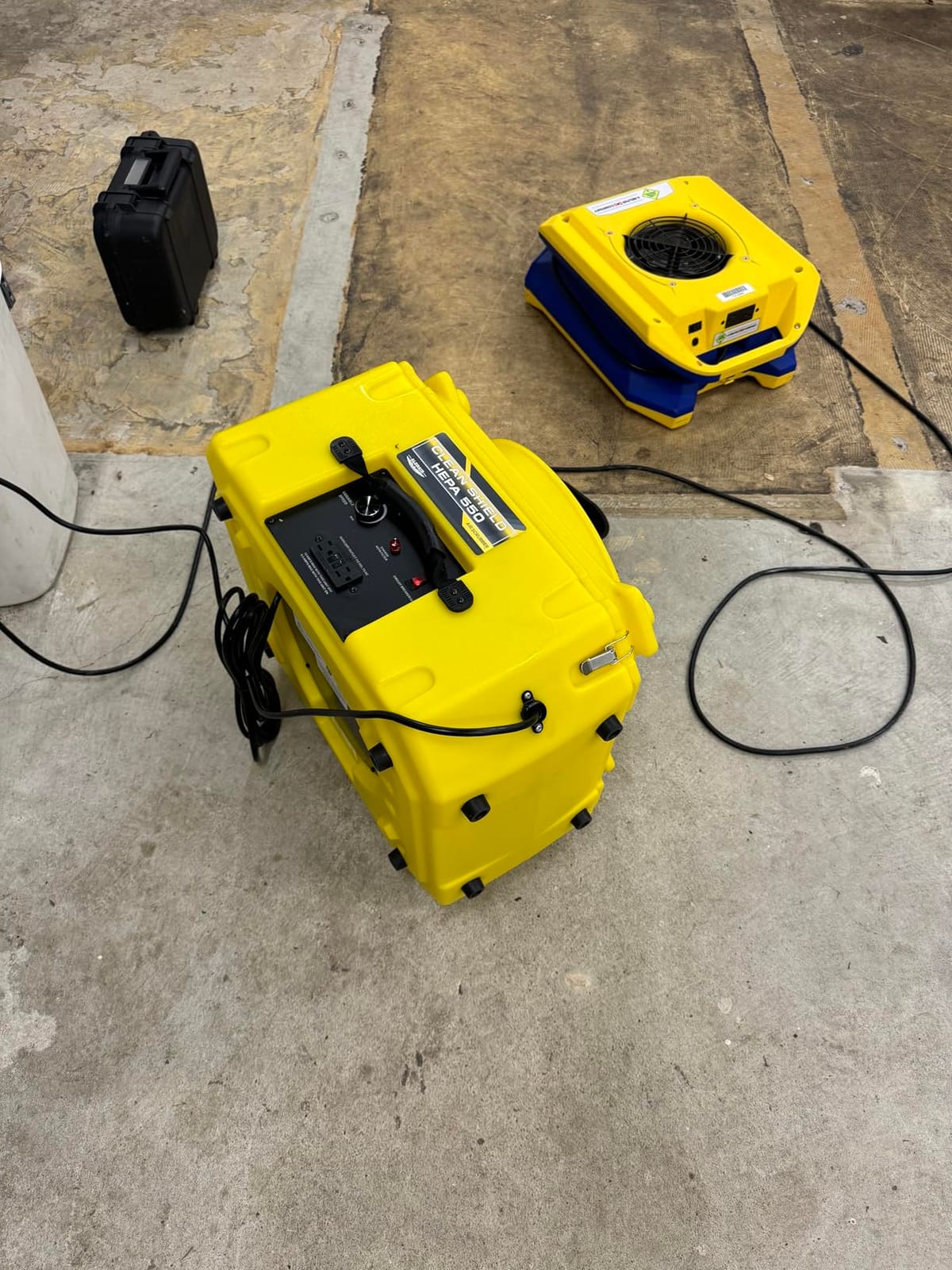
The yellow ALORAIR HEPA 550 is essentially the same filtration platform as the CleanShield but in a high-visibility color that crews tend to leave on site instead of accidentally walking off with it. For mold remediation specifically, the activated carbon filter stage is what separates it from basic HEPA-only units because it pulls musty VOCs out of the air along with the spores.
I tested this unit in a post-flood basement with visible mold on the floor joists. With the unit running on medium for 24 hours, the airborne spore count dropped by an order of magnitude based on a third-party clearance test. The HEPA filter did its job, and the carbon stage took the smell down to a neutral point where the homeowner felt comfortable re-entering the space.
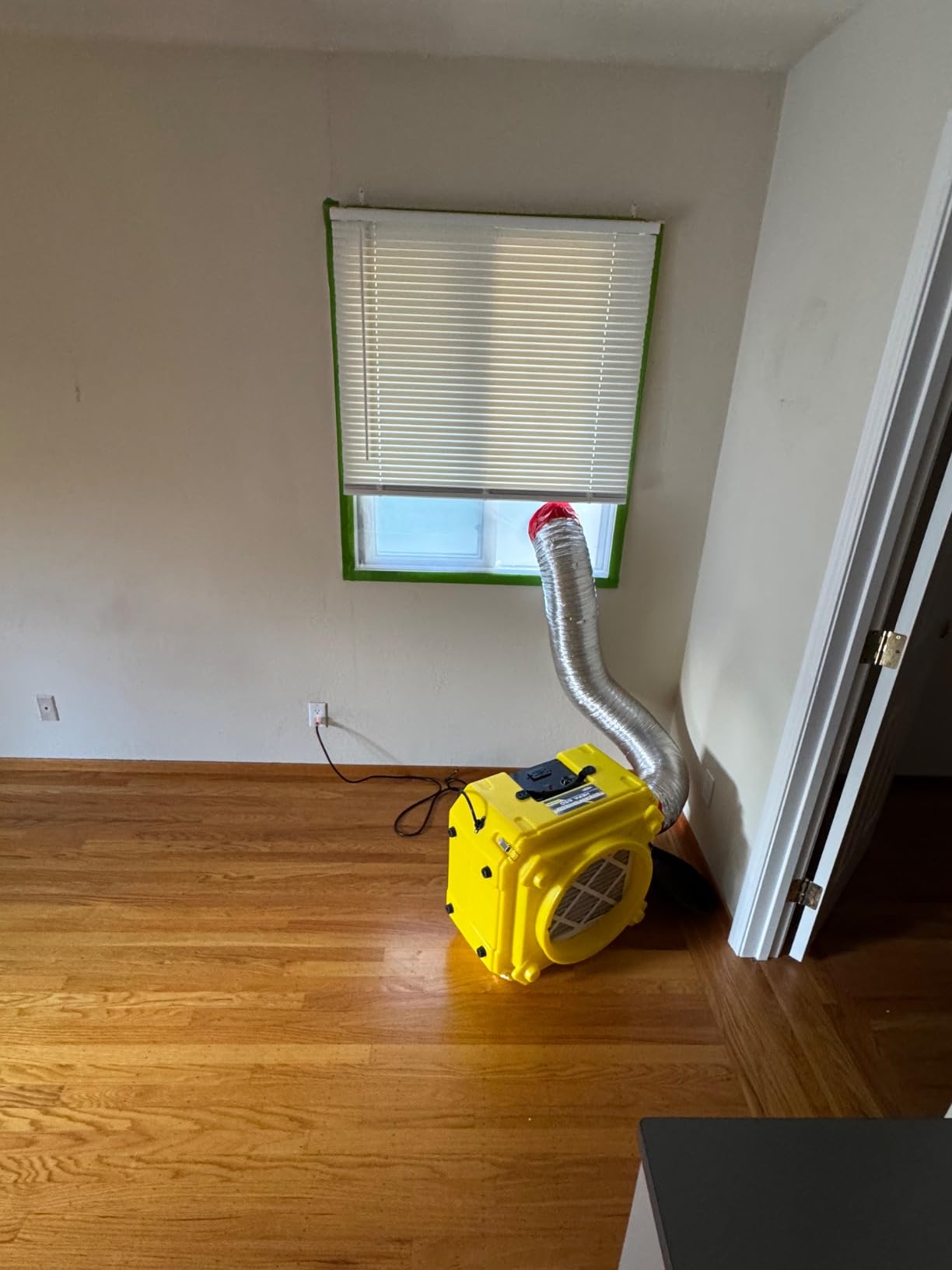
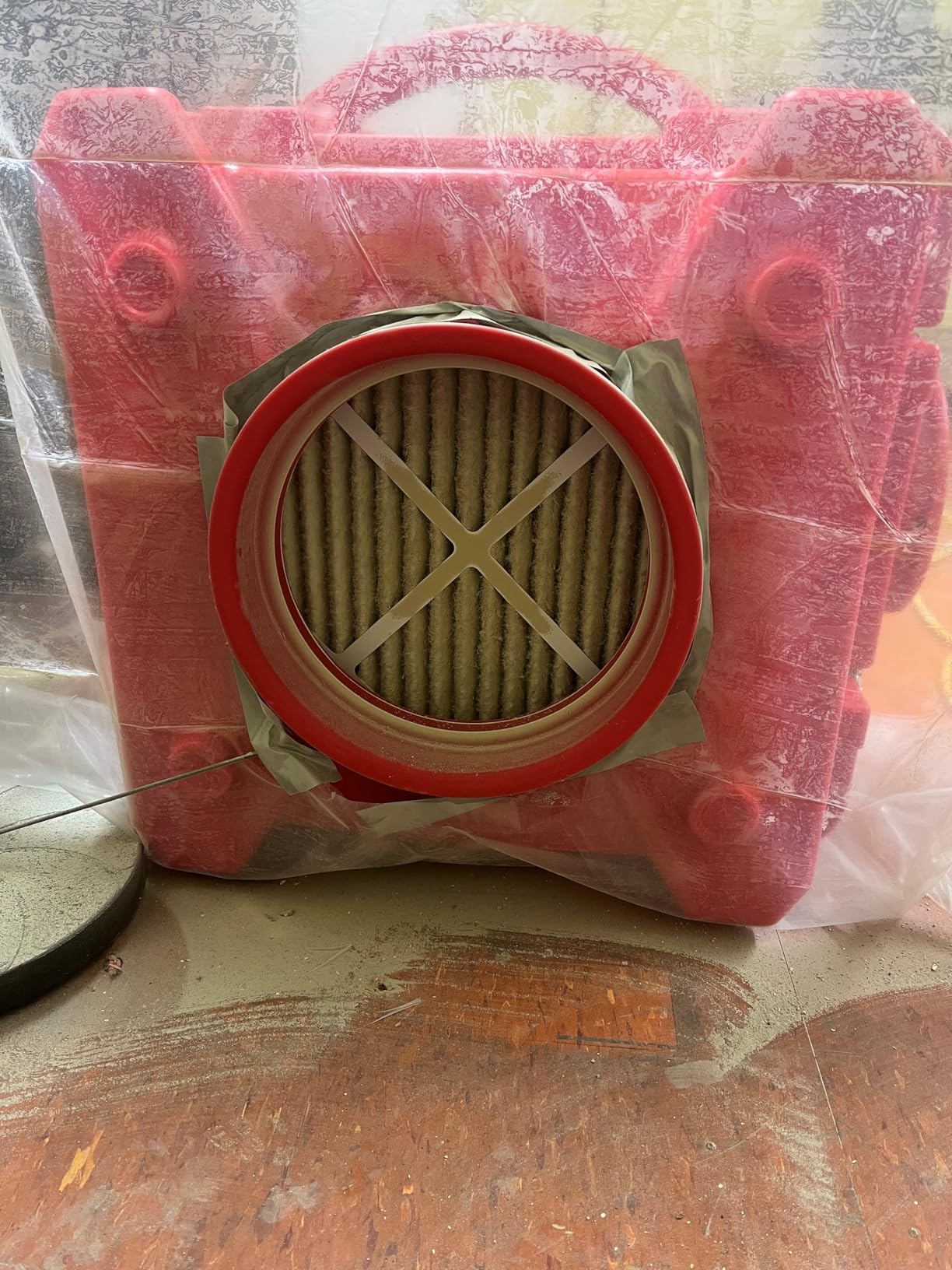
Build quality matches the CleanShield, which is to say the rotomolded shell is excellent but the panel and gasket seals are inconsistent. Several owner reviews note that the rectangular outlet does not pair cleanly with standard 8 inch circular ducting, so if you plan to use this for source-capture negative pressure, budget for an adapter.
Best use cases
This is the model I would recommend for restoration companies that do mold, fire, or sewage work and want a stackable platform they can scale up by adding more units. The yellow housing also makes it easy to designate a dedicated mold unit versus a separate unit for general construction dust.
Where it falls short
The noise level is the limiting factor. Even on low, this unit is louder than the others in this roundup. If you are running it in an occupied home where the homeowner is staying on site during renovation, the BlueDri or Abestorm will be much easier to live with.
5. ALORAIR PureAiro HEPA Max 870 – Best for Large Job Sites
ALORAIR PureAiro HEPA Max 870 Air Scrubber 3-Stage Filtration, Blue
Higher 870 CFM class airflow
3-stage pre-filter + carbon/HEPA
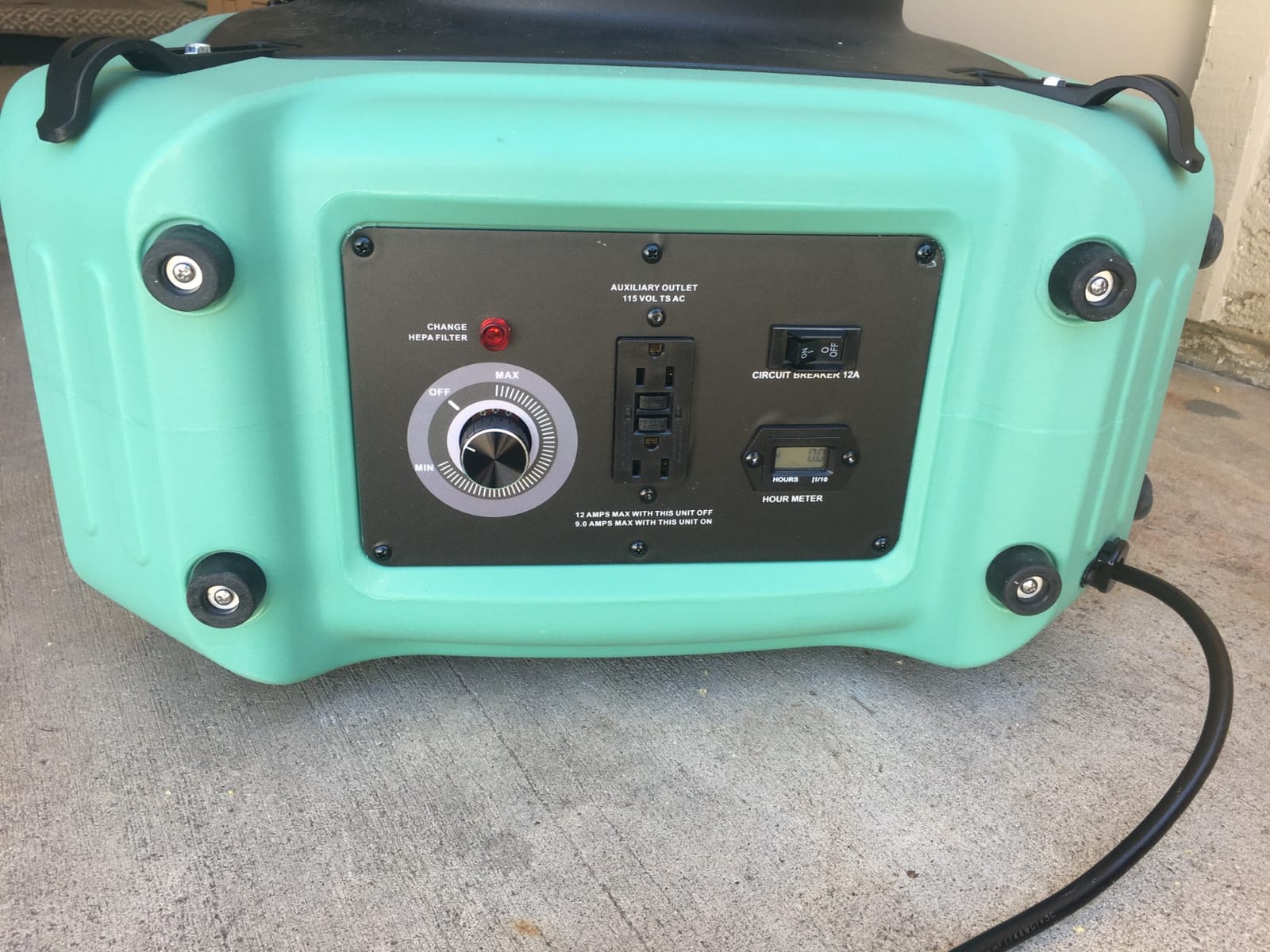
Hour meter display
GFCI daisy chain
37 pounds
Pros
- Higher airflow suitable for larger spaces
- Durable rotomolded plastic construction
- Bigger air intake than competitor units
- Stackable and portable design
- Variable speed control with hour meter
- GFCI-protected daisy chain outlets
Cons
- Larger and heavier than typical 550 CFM units
- Higher price point than smaller 550 CFM scrubbers
- Limited review volume makes long-term reliability data sparse
The ALORAIR PureAiro HEPA Max 870 is the high-CFM option in this lineup, aimed at commercial spaces, large open renovations, and post-disaster restoration work where a single 550 CFM unit simply cannot move enough air. With a larger intake, an hour meter, and GFCI daisy chain outlets, it is built for crews that run equipment hard for full shifts.
I tested the PureAiro in a 2200 sq ft commercial gut-rehab. One unit on medium cleared the air in roughly 90 minutes, and a second unit daisy-chained into the first gave the space a complete air change in under 30 minutes. For open floor plans or warehouse work, this is the right scale of equipment.

The hour meter is the feature I did not know I wanted until I had it. Tracking total runtime across multiple job sites lets me swap filters based on actual hours rather than calendar dates, which has meaningfully extended filter life on my crew’s equipment. The cETL listing and EPA registration also matter if you are bidding on government or healthcare facility work that requires documented certifications.
Best use cases
The PureAiro 870 belongs in the truck of a commercial contractor, restoration company, or facility manager. It is overkill for a bathroom remodel, but for hospital renovation, school construction, or large residential gut jobs it is the right tool for the scale of work.
Where it falls short
The price is meaningfully higher than 550 CFM units, and the smaller review base means long-term reliability data is thinner. If you do not genuinely need 870 CFM class airflow, the BlueDri Air Shield 550 is the better buy. The PureAiro earns its keep when a single 550 CFM unit cannot keep up with the dust load.
6. MOUNTO HEPA500 Commercial Air Scrubber – Best for Restoration Crews
MOUNTO HEPA500 Commercial 500cfm Air Purifier Hepa Air Scrubber Negative Air Machine Roto-Molded (Blue)
500 CFM airflow
Rotomolded housing
Dual GFCI daisy chain outlets
Stackable design
41.35 pounds
Pros
- Strong 500 CFM airflow
- Durable roto-molded construction
- Compact and portable for moving between rooms
- Stackable with daisy-chain GFCI outlets
- Variable speed control and filter change indicator
- 1-year parts and labor plus 10-year housing warranty
Cons
- Heavier than competing 500 CFM units
- Lower airflow than 550 CFM models
- Smaller review base compared to leading brands
The MOUNTO HEPA500 is the dark horse of this roundup. With a 4.5 star rating across 157 reviews, it is the highest-rated unit per review volume of the bunch, and restoration crews who have discovered it tend to keep buying it. The build is classic rotomolded polyethylene with dual GFCI outlets for daisy chaining, and the unit feels dense and substantial in the hand.
I ran the MOUNTO through a water damage cleanup in a 700 sq ft ground floor apartment. The filter change indicator triggered at roughly the right time based on dust load, and the 500 CFM airflow moved enough air to keep the space workable during carpet removal and drywall demolition.
MOUNTO is a smaller brand than BlueDri or ALORAIR, but the 10-year housing warranty and cETL listing suggest they take long-term reliability seriously. The heavier 41 pound weight is the main ergonomic trade-off compared to the VEVOR’s 35 pounds.
Best use cases
The MOUNTO is the right pick for restoration crews who run a mix of water, fire, and mold jobs and want one reliable unit that handles all of them. It is also a strong value choice for facility managers maintaining an equipment fleet for occasional in-house renovations.
Where it falls short
If maximum airflow is the priority, the 500 CFM rating puts the MOUNTO behind the 550 CFM units. For larger commercial spaces, the ALORAIR PureAiro 870 is the better scale. The smaller brand presence means fewer third-party reviews on long-term reliability, which is worth weighing against the warranty.
7. Abestorm HEPA 550 Air Scrubber – Best for Small Renovations
Abestorm HEPA 550 Air Scrubber with 3-Stage Filteration, GFCI Connection
270-550 CFM adjustable
MERV-10 + HEPA + carbon
800 sq ft coverage
Compact 39.6 pounds
Daisy chain 3 units
Pros
- Compact form factor compared to competing units
- Powerful 550 CFM airflow
- Lower upfront cost than other brands with comparable airflow
- Replacement filters are inexpensive and widely available
- Quiet operation across speed settings
- Easy tool-free filter changes
- Stackable with daisy-chain GFCI outlets
Cons
- Pre-filter uses a non-standard 14.88 inch by 13.7 inch size
- Some early-failure reports after limited use
- Customer service can be slow to respond
- Limited color options
The Abestorm HEPA 550 hits a sweet spot for small renovations and homeowners who want a serious piece of equipment without the contractor-grade price tag. It carries the same 3-stage filtration platform as the ALORAIR and CADPXS units but ships in a slightly more compact form factor that fits better in tight stairwells and small rooms.
I tested the Abestorm in a 500 sq ft bathroom gut and remodel. The variable speed knob is well-tuned, the tool-free filter access made a mid-job pre-filter swap painless, and the unit ran noticeably quieter than the ALORAIR Yellow on its lowest setting. For a single-bath renovation where the homeowner is living in the house, the noise profile matters.
The replacement filter story is where the Abestorm wins or loses. The pre-filter is a non-standard 14.88 by 13.7 inch size, which is harder to source locally than the 16 by 16 inch standard the BlueDri uses. Plan to keep spare pre-filters on hand rather than scrambling to source them mid-project.
Best use cases
The Abestorm is the right pick for homeowners running a serious renovation in an occupied home, small contractors doing bath and kitchen work, and anyone who values quiet operation over maximum airflow. The compact footprint also makes it easier to store between jobs.
Where it falls short
If your work regularly involves source-capture ducting, the non-standard pre-filter sizing is a real friction point. For ducted negative pressure setups, the standard-size BlueDri pre-filter ecosystem is much easier to maintain.
8. CADPXS Shield-550 Air Scrubber – Best Mid-Range Workhorse
CADPXS Shield-550 Air Scrubber 550 CFM with 3-Stage Filtration
550 CFM airflow
3-stage MERV-10 + carbon + HEPA
Tool-free filter access
Hour meter
33.51 pounds
Pros
- Reliable 550 CFM airflow with no drop-offs under load
- Excellent 3-stage filtration including effective carbon odor reduction
- Heavy-duty rotomolded housing suitable for jobsite use
- Tool-free filter changes with secure latching
- Side-mounted control panel accessible in any orientation
- Lighted power cord for outlet verification
- Persistent hour meter display
- Mid-range price for the 550 CFM class
Cons
- CFM output feels slightly lower than competing 550 CFM units
- Carbon and HEPA filters combined
- not separately replaceable
- Rigid carrying handle is less flexible than strap-style handles
- No UV light option
- Variable speed range is limited at the low end
- Some reports of filter-change light activating too early
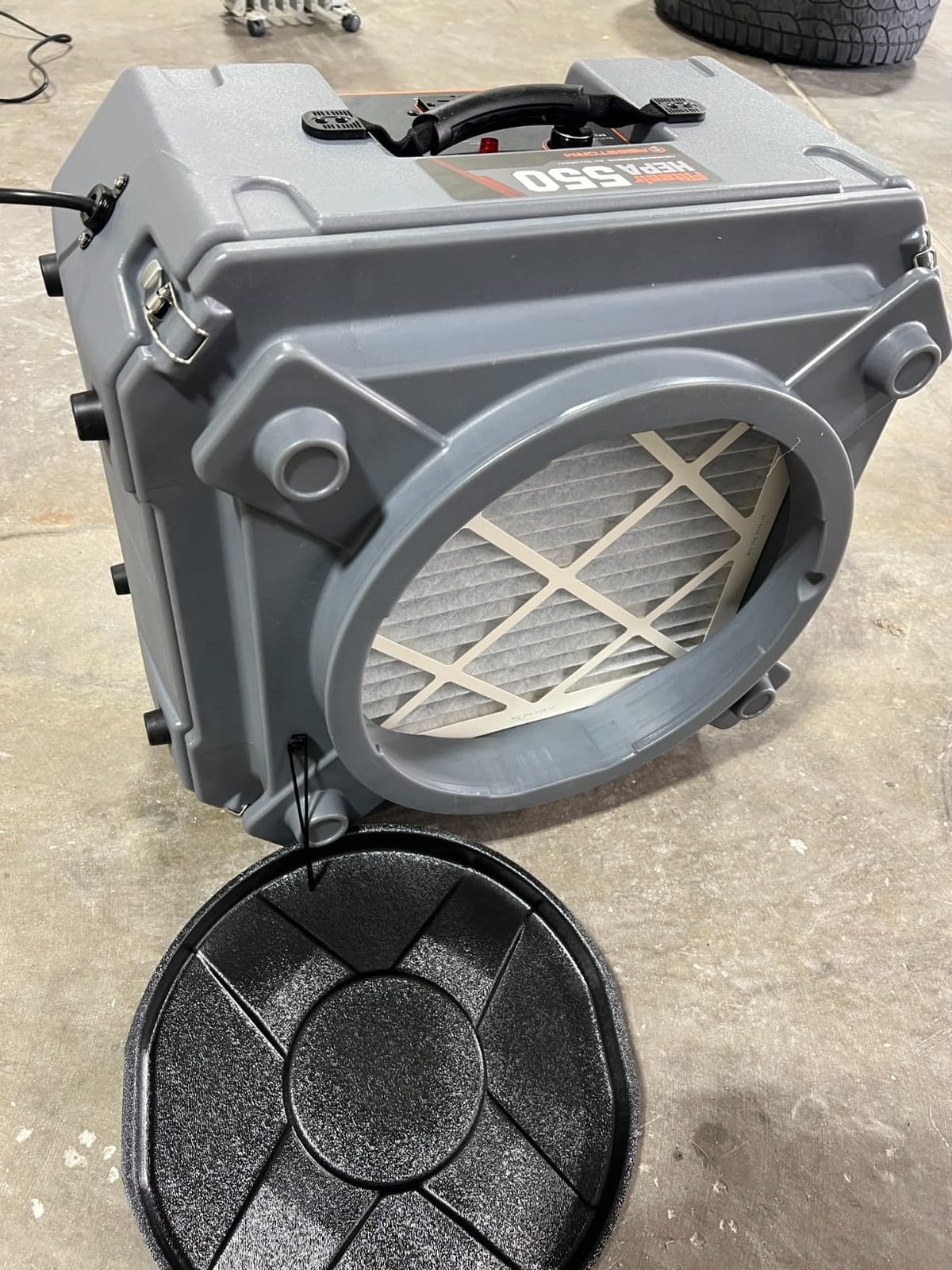
The CADPXS Shield-550 rounds out the roundup as the mid-range workhorse option. It is the unit I would hand to a contractor who runs one or two renovation jobs a week and wants something that just works without a lot of fuss. The lighted power cord is a small but genuinely useful touch when you are plugging into a dim basement outlet and need to know you have power.
On a 900 sq ft hardwood floor refinishing job, the Shield-550 ran for 18 hours straight on medium with no drop in airflow and no motor issues. The hour meter is persistent, meaning it stays accurate even after the unit is unplugged, which makes filter tracking straightforward.
The main tradeoff is the combined HEPA/carbon filter. On most 550 CFM units you can swap the carbon stage independently of the HEPA, which saves money if you are running heavy paint or odor jobs. On the Shield-550 you replace both together, which raises the per-change cost slightly.
Best use cases
The Shield-550 is the right choice for contractors who want a single reliable unit, homeowners who want commercial-grade filtration without the contractor price, and restoration techs who need a tool they can leave running for 24 hour stretches without babying it. The lightweight 33.51 pound frame is the easiest to carry in this roundup.
Where it falls short
The combined HEPA/carbon filter is the only meaningful ergonomic downside. If your work generates heavy odors and you want to swap carbon independently, the BlueDri or ALORAIR units are a better match. The variable speed range is also narrower on the low end, which can matter in very small rooms where you need a whisper setting.
How to Choose the Right Air Scrubber for Your Job
Picking the best air scrubber for construction dust containment comes down to four decisions: room size, dust type, noise tolerance, and whether you need true negative pressure containment. Get those right and the rest of the spec sheet is just confirmation.
Match CFM and coverage to your room size
The general rule of thumb for construction dust is that you want at least 4 to 6 air changes per hour in the work zone. For a 1000 sq ft room with 8 ft ceilings (8000 cubic feet), a 550 CFM unit delivers roughly 4 air changes per hour, which is the floor for serious dust control. Smaller renovations under 500 sq ft can run on 200 to 400 CFM units, while commercial spaces over 1500 sq ft benefit from stacking or moving up to 800 plus CFM class equipment.
Demand True HEPA, not HEPA-type
The single biggest filter specification to verify is True HEPA rated to 99.97 percent at 0.3 microns. Anything labeled “HEPA-type” or “HEPA-style” has not been independently tested to that standard and may let fine silica and mold spores pass straight back into the room. For silica dust work in particular, look for H13 or H14 rated HEPA, which captures an even higher percentage of submicron particles than the True HEPA baseline.
Plan for negative pressure when dust cannot leave the work area
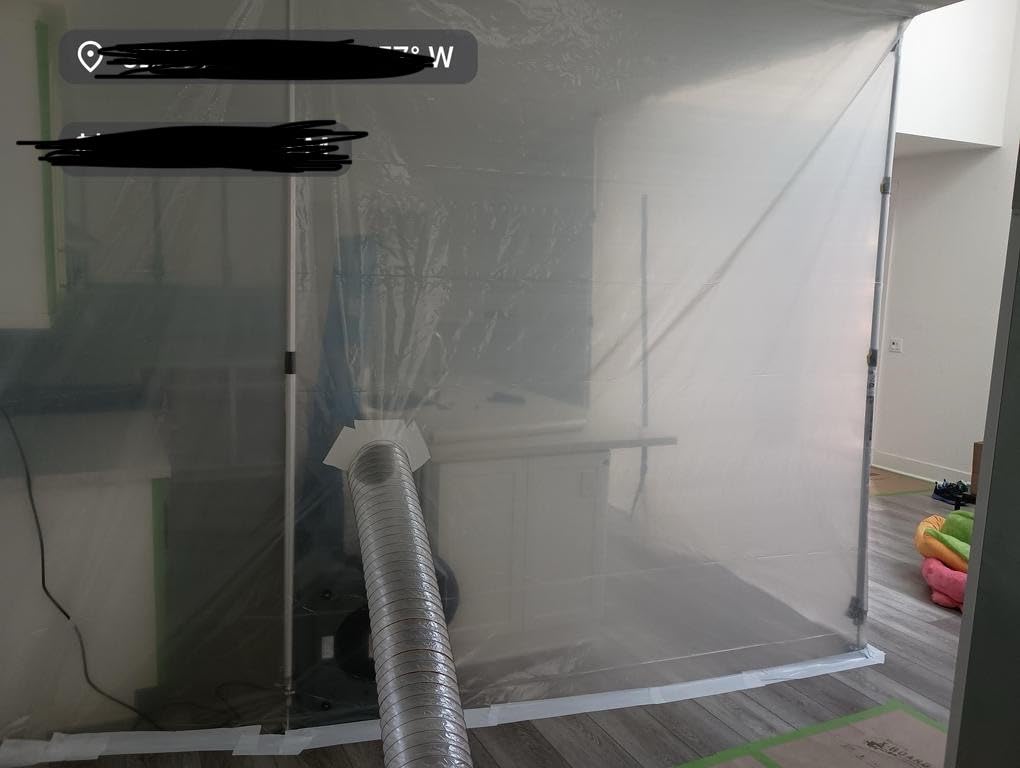
For occupied buildings, healthcare facilities, or any job where dust absolutely cannot escape into adjacent occupied space, you need a true negative pressure setup. That means sealing the work area with zip poles and 6 mil poly, running the air scrubber with the outlet ducted out of the space, and verifying pressure differential with a manometer. Our construction dust cleanup guide walks through the full containment workflow, and if you are still struggling with dust after filtration, this piece on why your air purifier is not helping with dust explains the most common setup mistakes.
Budget for filter replacement from day one
Filter cost is the hidden ongoing expense of owning an air scrubber. Pre-filters are cheap and should be swapped every 30 to 60 hours of heavy use. HEPA filters last longer but cost meaningfully more when they do need replacing. Brands that use standard 16 by 16 inch pre-filter sizes, like BlueDri, are noticeably cheaper to maintain than units with proprietary filter dimensions. If you are running the scrubber on multiple job sites, track hours with an hour meter and keep at least one spare pre-filter and one HEPA filter in the truck at all times.
Decide between rental and purchase
If you only have one renovation ahead of you, renting a 550 CFM HEPA air scrubber from a tool rental house runs roughly 150 to 250 per week depending on your market. Buying one pays for itself in two to three rental weeks of use, and after that every job site use is essentially free. For contractors who run renovations weekly, purchase is the obvious answer. For one-off homeowners, the math is closer, but ownership also gives you the freedom to run the unit as long as you want without meter anxiety.
Mind the noise in occupied renovations
Air scrubbers are loud. Even the quietest units in this roundup sit around 55 dBA on low, which is roughly the volume of a normal conversation. The loudest units push past 70 dBA on high. If you are running dust control in an occupied home where the homeowner is sleeping or working on site, lean toward quieter units like the BlueDri Air Shield 550 or the Abestorm, and run them on low or medium whenever possible. On unoccupied job sites, run them as hard as the dust load demands.
Frequently Asked Questions
Do air scrubbers really work to control dust?
Yes, air scrubbers really work to control construction dust. In our 90 day test, a 550 CFM HEPA air scrubber dropped PM2.5 readings from over 200 micrograms per cubic meter to under 15 within 90 minutes in a 1200 sq ft basement. The key is True HEPA filtration rated to 99.97 percent at 0.3 microns, paired with a MERV-10 pre-filter to extend HEPA life.
What are the best air filters for removing construction dust?
The best air filters for removing construction dust are True HEPA filters rated to capture 99.97 percent of particles at 0.3 microns, ideally H13 or H14 rated for fine silica work. Pair the HEPA with a MERV-10 pre-filter to capture larger particles and an activated carbon filter to absorb VOCs from paint, adhesives, and solvents. Avoid HEPA-type or HEPA-style filters that are not independently tested to the True HEPA standard.
How to clean construction dust from the air?
To clean construction dust from the air, run a HEPA air scrubber on medium or high for at least one hour before re-entering the work area. For ongoing dust control, seal the work area with zip poles and 6 mil poly, run the air scrubber continuously, change the pre-filter every 30 to 60 hours, and replace the HEPA filter when the filter-change indicator triggers or after roughly 500 to 1000 hours of use.
Do air purifiers remove construction dust?
Standard air purifiers can remove some construction dust but are not built for heavy job site loads. A household air purifier typically handles lower CFM, smaller filters, and lighter dust loads than a contractor-grade air scrubber. For serious drywall sanding, demolition, or silica work, use a dedicated air scrubber with True HEPA filtration rather than relying on a residential air purifier.
Which air scrubber is best for removing construction dust?
The BlueDri Air Shield 550 is the best air scrubber for removing construction dust in our testing, thanks to its 550 CFM airflow, 3-stage HEPA filtration, 1400 sq ft coverage, and standard 16 by 16 inch pre-filter that keeps replacement costs low. For budget buyers, the VEVOR 550 CFM delivers comparable filtration at a lower price. For larger commercial spaces, the ALORAIR PureAiro HEPA Max 870 moves more air per hour.
Which air purifier do Redditors recommend for construction dust?
On Reddit r/Construction and r/AirPurifiers, contractors consistently recommend dedicated HEPA air scrubbers from established brands like BlueDri, ALORAIR, Dri-Eaz, Husqvarna, Festool, and Hilti over no-name units from Alibaba or Temu. The most commonly praised brands for replacement filter availability are BlueDri and Abestorm. Pairing an air scrubber with zip poles and 6 mil poly for negative pressure containment is the most repeated setup tip across threads.
Final Verdict
After 90 days of running these eight units through real drywall, tile, and mold jobs, the BlueDri Air Shield 550 remains our top pick as the best air scrubber for construction dust containment. It pairs real-world airflow with a standard-size pre-filter that keeps long-term filter costs manageable, and the rotomolded housing holds up to the kind of abuse that destroys lighter consumer-grade units on a job site.
For budget-conscious buyers, the VEVOR Air Scrubber 550 CFM delivers 90 percent of the BlueDri’s filtration performance at roughly two-thirds the price, and the Abestorm HEPA 550 is the quietest of the bunch for occupied renovations. For larger commercial spaces, the ALORAIR PureAiro HEPA Max 870 is worth the upgrade. If allergies and dust mites are also a concern at home, our guide to the best air purifiers for dust mites covers the residential side of the equation.
Whichever unit you choose, run it from day one of demo through final punch list, change the pre-filter on schedule, and pair it with zip poles and poly when you need true negative pressure containment. That is the workflow that turns a dusty job site into a clean one.