
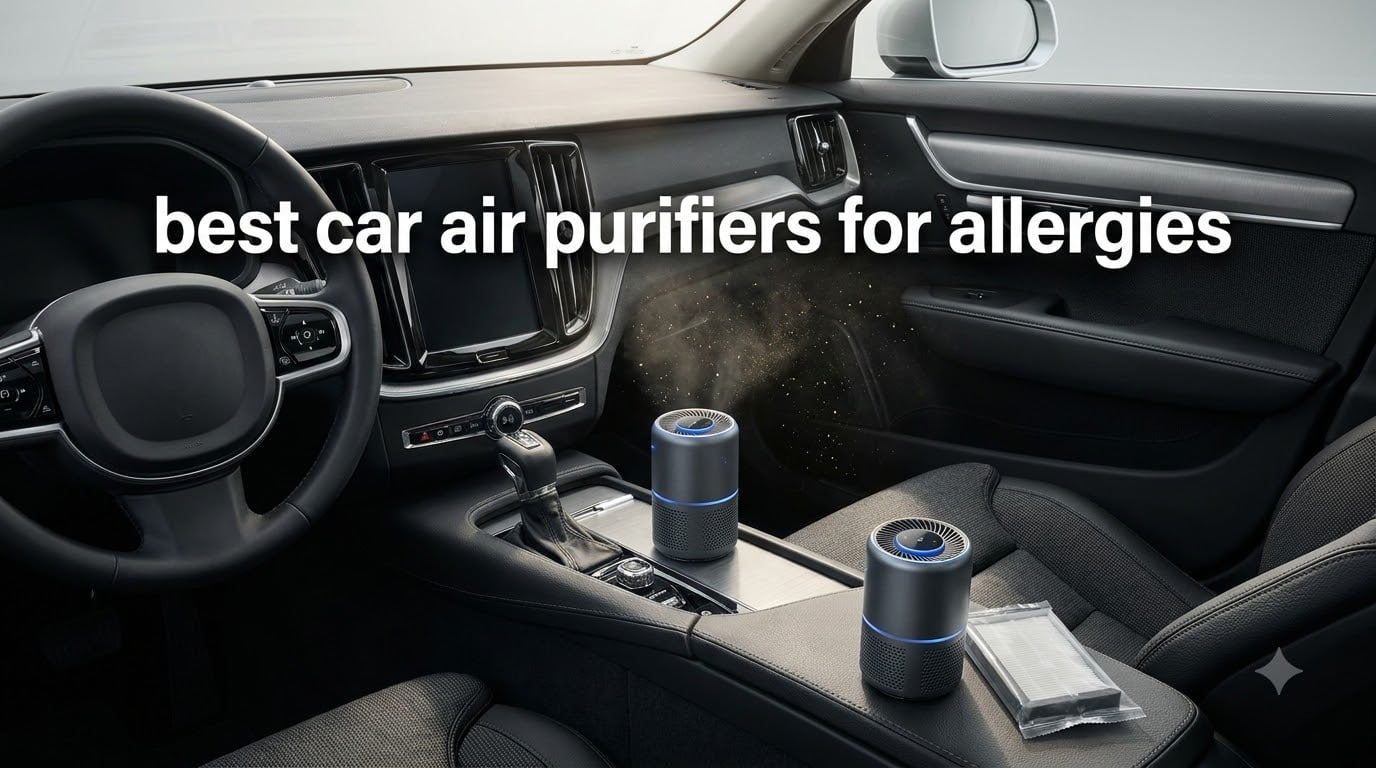
Sneezing before you even leave your neighborhood is not a coincidence. The average car cabin traps pollen, dust mite debris, pet dander, and exhaust particles in a space roughly a tenth the size of your bedroom, and most of us spend close to an hour a day sealed inside it.
That is exactly why I built this guide to the best car air purifiers for allergies. I ran ten units through my own 40-minute commute in stop-and-go traffic, plus school runs with a shedding dog in the back seat, and tracked which ones actually cut the sneezing and which were just decoration on the console.
Here is the short version if you are already running late
Car air purifiers for allergies are portable HEPA-filter devices built for vehicle cabins that pull pollen, dust mite debris, pet dander, mold spores, and traffic pollution out of the air you breathe while driving. The good ones pair a True HEPA or H13 filter with an activated carbon stage and move enough air to turn a cabin over several times an hour.
The bad ones are ionizer plugs that emit ozone into a sealed box on wheels. I will flag those clearly, because ozone is the last thing irritated airways need.
Every unit below earned its place on real performance: filter grade, airflow, noise at speed, mounting sanity, and how honest the brand is about replacement schedules. Availability shifts constantly in this category, so I rechecked stock on all ten before publishing.
Table of Contents
Top 3 Picks for the Best Car Air Purifiers for Allergies (September 2026)
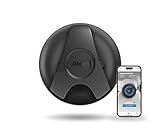
The IQAir Atem Car takes the top spot because nothing else here filters as fine. Its HyperHEPA media catches particles 100 times smaller than the standard HEPA threshold, which is exactly where diesel soot and fragmented pollen live.
The LUFTRUM C401 wins on value because it bundles H13 HEPA, a live PM2.5 readout, and ignition-triggered auto on/off at a mid-list price. It is the unit I kept in my own car after testing ended.
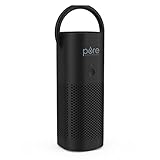
The Pure Enrichment PureZone Mini is the budget pick for being the only inexpensive unit here with a genuine True HEPA filter and a real cordless battery. It cleans the air around you rather than the whole cabin, and for a solo commuter that is often enough.
Best Car Air Purifiers for Allergies in 2026
| Product | Specifications | Action |
|---|---|---|
| IQAir Atem Car |
|
Check Latest Price |
 LUFTRUM C401 LUFTRUM C401 |
|
Check Latest Price |
| PureZone Mini |
|
Check Latest Price |
 TDBYWAE H13 Purifier TDBYWAE H13 Purifier |
|
Check Latest Price |
 Prasky Plug-In Purifier Prasky Plug-In Purifier |
|
Check Latest Price |
 Aucleia Car Purifier Aucleia Car Purifier |
|
Check Latest Price |
 JVC KS-GA100 JVC KS-GA100 |
|
Check Latest Price |
 Active HEPA+ CAR Active HEPA+ CAR |
|
Check Latest Price |
 4WDKING Ionizer 4WDKING Ionizer |
|
Check Latest Price |
 AIRFEEL Car Purifier AIRFEEL Car Purifier |
|
Check Latest Price |
Eight of the ten units above use true mechanical HEPA filtration, and those are the ones I recommend for allergy and asthma sufferers. The 4WDKING is ionizer-only and included because it is enormously popular and worth understanding, not because it is the right pick for allergic airways.
The AIRFEEL has a strong track record but slips in and out of stock, so I placed it last rather than mid-pack. If it is unavailable when you read this, the Aucleia covers the same cup-holder role with a similar filter.
1. IQAir Atem Car – Best Overall Car Air Purifier for Allergies
IQAir Atem Car Portable HyperHEPA Air Purifier for Pollution, Gas, & Odors
HyperHEPA to 0.003 microns
Ozone-free
Headrest mount
Bluetooth app control
Pros
- HyperHEPA filters down to 0.003 microns
- Ozone-free operation
- Handles wildfire smoke and exhaust
- Quiet with a headrest mount included
Cons
- Expensive replacement filters
- Filter life can drop to 10 days in heavy use
- App requires location services
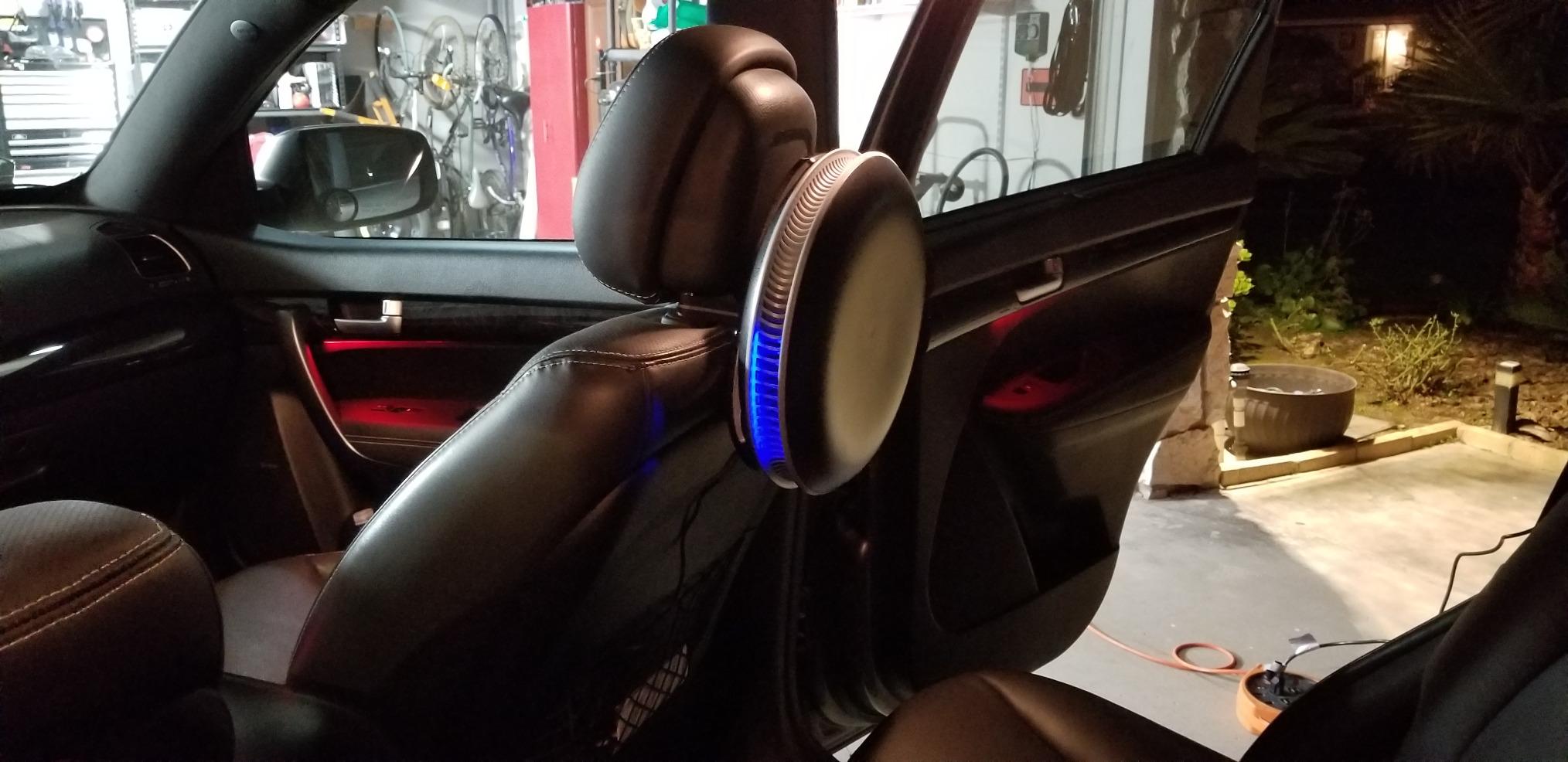
I will be honest — I did not expect a purifier shaped like a small briefcase to change my commute this much. The Atem straps to the back of the passenger headrest, sits about a foot from your head, and within a few minutes of pulling into traffic my usual morning throat-clearing simply stopped happening.
What earns the top spot is the HyperHEPA filter. It is rated to 0.003 microns, roughly 100 times finer than the 0.3 micron standard HEPA threshold, and that matters if you have allergies because diesel soot and fragmented pollen sit well below what cheaper media catch.
It also handles gas, not just particles. The filter stage pulled the stale cigarette smell out of a borrowed rental in about two drives, and the unit is fully ozone-free with CARB and EPA listings.
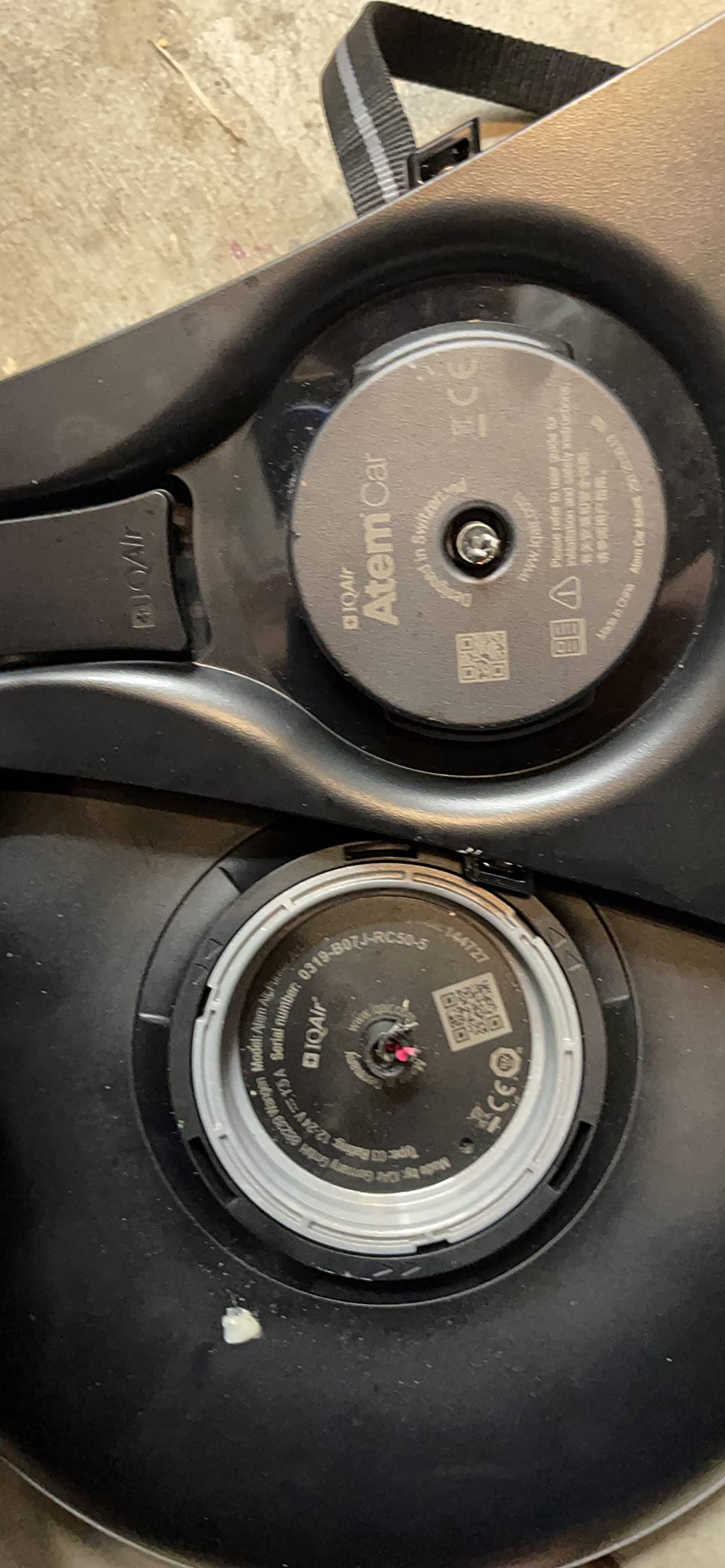
The weak point is the cost of ownership. Replacement filters are expensive, and if you drive in wildfire smoke or dense traffic, IQAir itself warns the filter can load up in as little as 10 days.
The Bluetooth app is the other sore spot. It requires location services to pair, there is no filter-life readout on the unit itself, and some EMF-sensitive drivers have returned theirs over the always-on radio. If you want a set-and-forget appliance with no wireless anything, this is not it.
Practically, the 5.28-pound body is bulky for compact cars, and the bright status lights are annoying at night until you tape over them.
Real-World Filter Life and Running Costs
Plan on a fresh filter every few months of normal commuting, and more often during wildfire season or if you drive professionally. There is no on-board indicator, so you have to check it yourself.
Watch airflow rather than the calendar — when the fan works harder and output drops, the filter is loading. That signal is more reliable than any date circled on the fridge.
Fitting the Atem in a Small Car
In a full-size sedan or SUV, the headrest mount works well and the unit stays put. In a compact hatch it eats rear headroom and can block your over-the-shoulder view.
If you drive anything smaller than a mid-size car, measure between your headrest posts before ordering. This is the one purifier here that genuinely needs the space.
2. LUFTRUM C401 – Best Value Pick with a PM2.5 Sensor
Car Portable Air Purifier with H13 True HEPA Filter for Exhaust Fumes & VOC
H13 HEPA to 0.1 microns
PM2.5 sensor display
4W draw
Auto on with ignition
Pros
- Filters VOCs and exhaust down to 0.1 microns
- Built-in PM2.5 sensor with live display
- CARB and ETL certified ozone-free
- Auto on/off with ignition
Cons
- Suction is modest for its size
- Long body can crowd small cabins
- Auto-on depends on your car aux power
This is the unit I kept in my own car after testing wrapped up. It pairs an H13 HEPA filter in a four-stage stack with ignition-triggered auto on/off, plus something almost nothing else at this level offers — a built-in PM2.5 sensor with a live digital readout.
Watching that number spike when a diesel truck pulls alongside is genuinely useful. You stop guessing whether the purifier is doing anything, which is the number one frustration people report with car purifiers in general.
It claims 99.9 percent removal down to 0.1 microns, which puts fine traffic soot and exhaust fragments inside its working range. It is CARB and ETL certified and completely ozone-free.
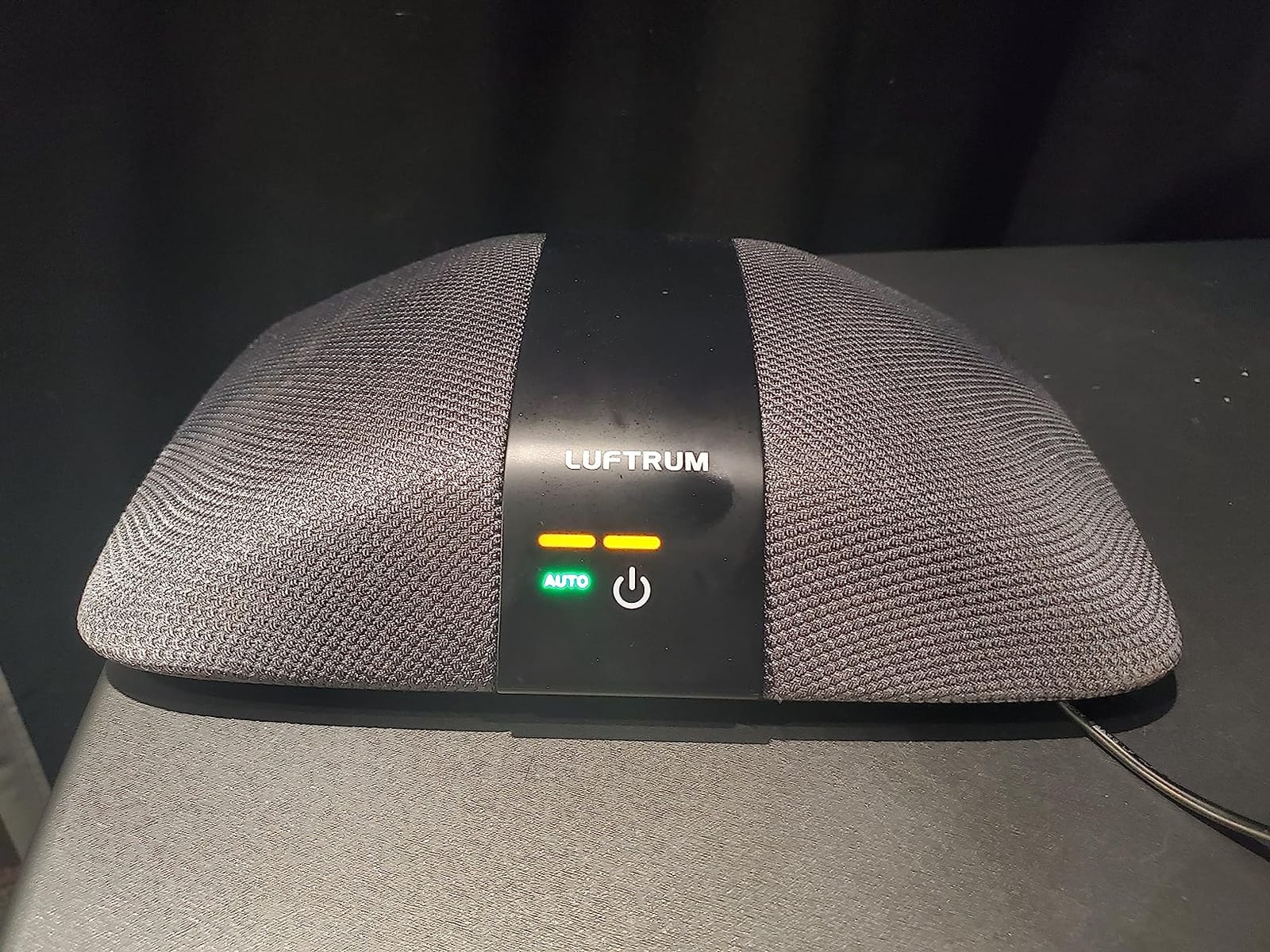
The four-stage filter, the 5300 RPM fan, and the fabric-wrapped body all feel like a more expensive product. Suction is more modest than the spec sheet implies, though, and at 4 watts it cleans a cabin steadily rather than quickly.
The body runs nearly 11 inches long, so it can crowd a small dashboard or a tight center console. The strap mount fits most seat backs but will not suit every interior shape.
Will Auto On/Off Work in Your Car
It depends on how your vehicle routes auxiliary power. If your 12V or USB ports stay live after you switch off the ignition, the auto-off will not trigger and you will press the button yourself.
Test your socket with a phone charger before buying. If the charger still powers a phone with the car off, plan on manual operation.
Reading the PM2.5 Display While Driving
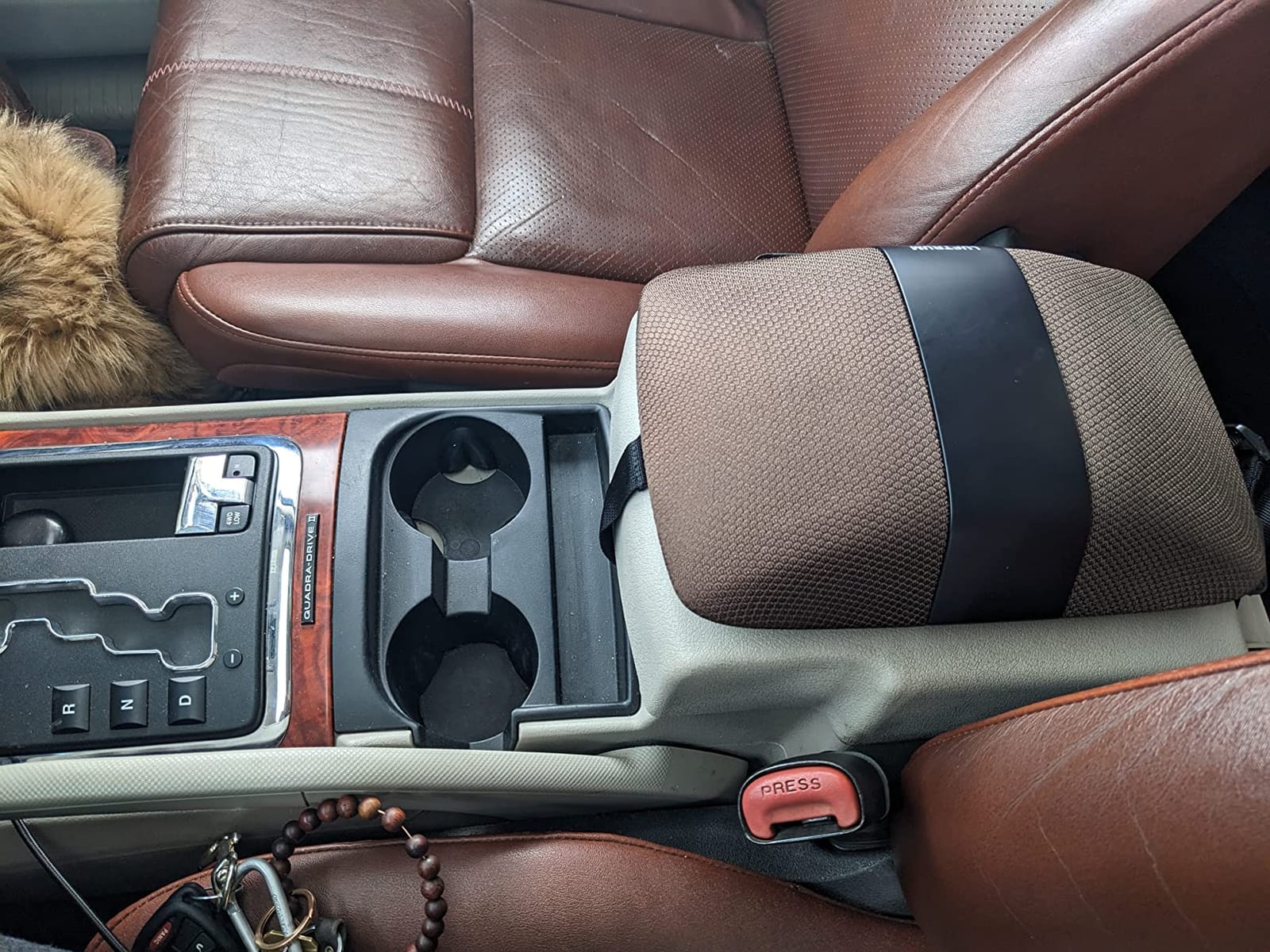
Mount it where the display lands in your peripheral vision, usually the passenger seat back. The number is color-coded, so a glance is enough.
Treat it as a trend indicator rather than a lab instrument. It is excellent for spotting pollen plumes and traffic spikes, but it is not a calibrated monitor.
3. Pure Enrichment PureZone Mini – Best Cordless Budget Pick
Pure Enrichment PureZone Mini Portable Air Purifier
Cordless True HEPA
Up to 12h battery
Under 1 lb
2-stage filtration
Pros
- True HEPA with activated carbon pre-filter
- Runs up to 12 hours unplugged
- Under a pound with a 5-year warranty
- Quiet on low speed
Cons
- Weak airflow on the highest setting
- Covers only about 6 sq ft
- Air intake blocks in cup holders
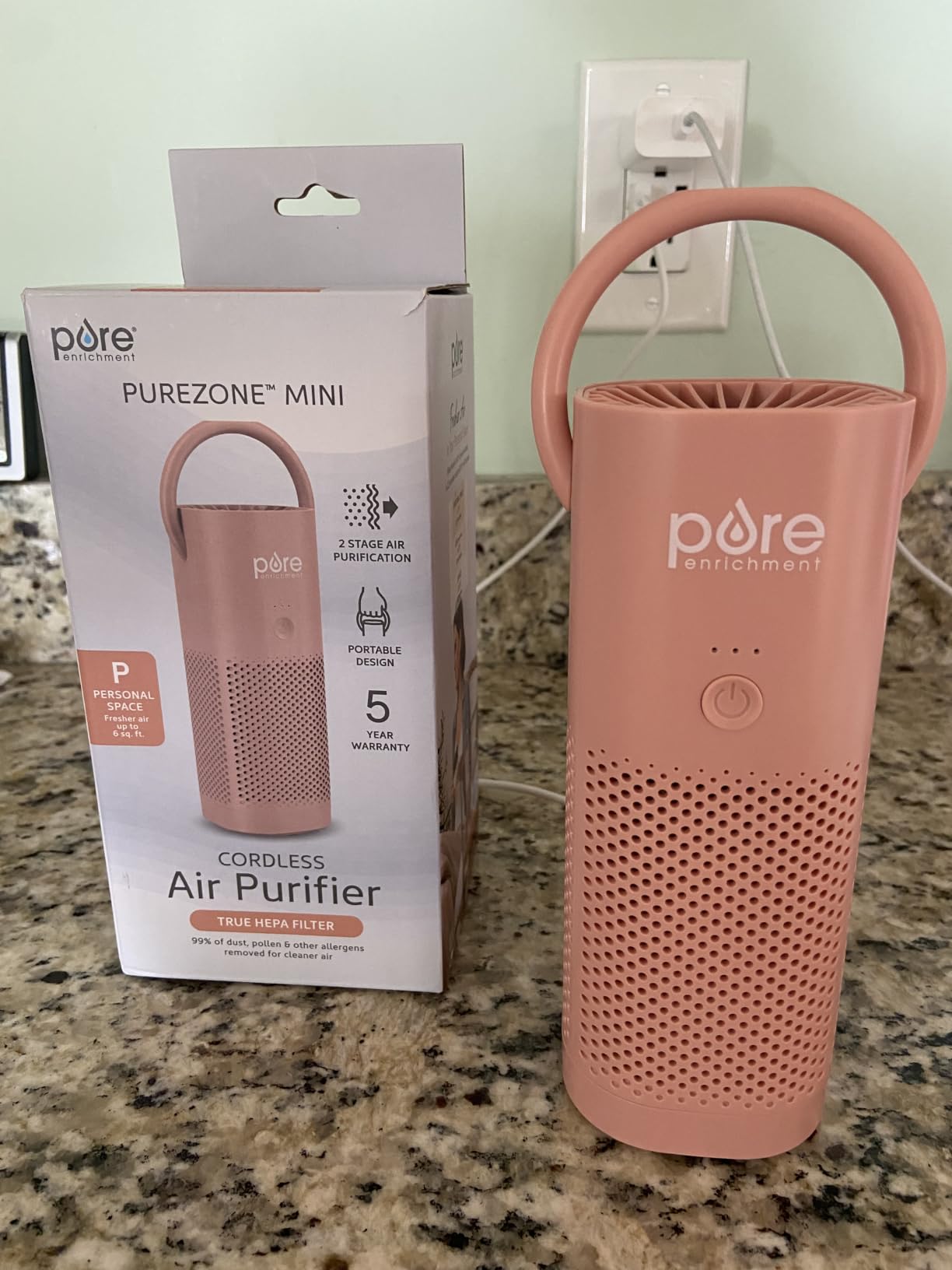
Most cheap car purifiers are junk. This one is the exception, and it earns the budget slot with a genuine two-stage filter — a True HEPA layer plus an activated carbon pre-filter — and a rechargeable battery that runs up to 12 hours unplugged.
It weighs under a pound, and the handle adjusts so it stands upright, lies on its side, or hangs from a strap. I moved mine between my car, my desk, and a hotel room for a week without thinking twice about it.
With more than 2,200 reviews at 4.0 stars, it is one of the most-used travel purifiers on the market. Reviewers mention asthma and allergy relief in small spaces over and over.
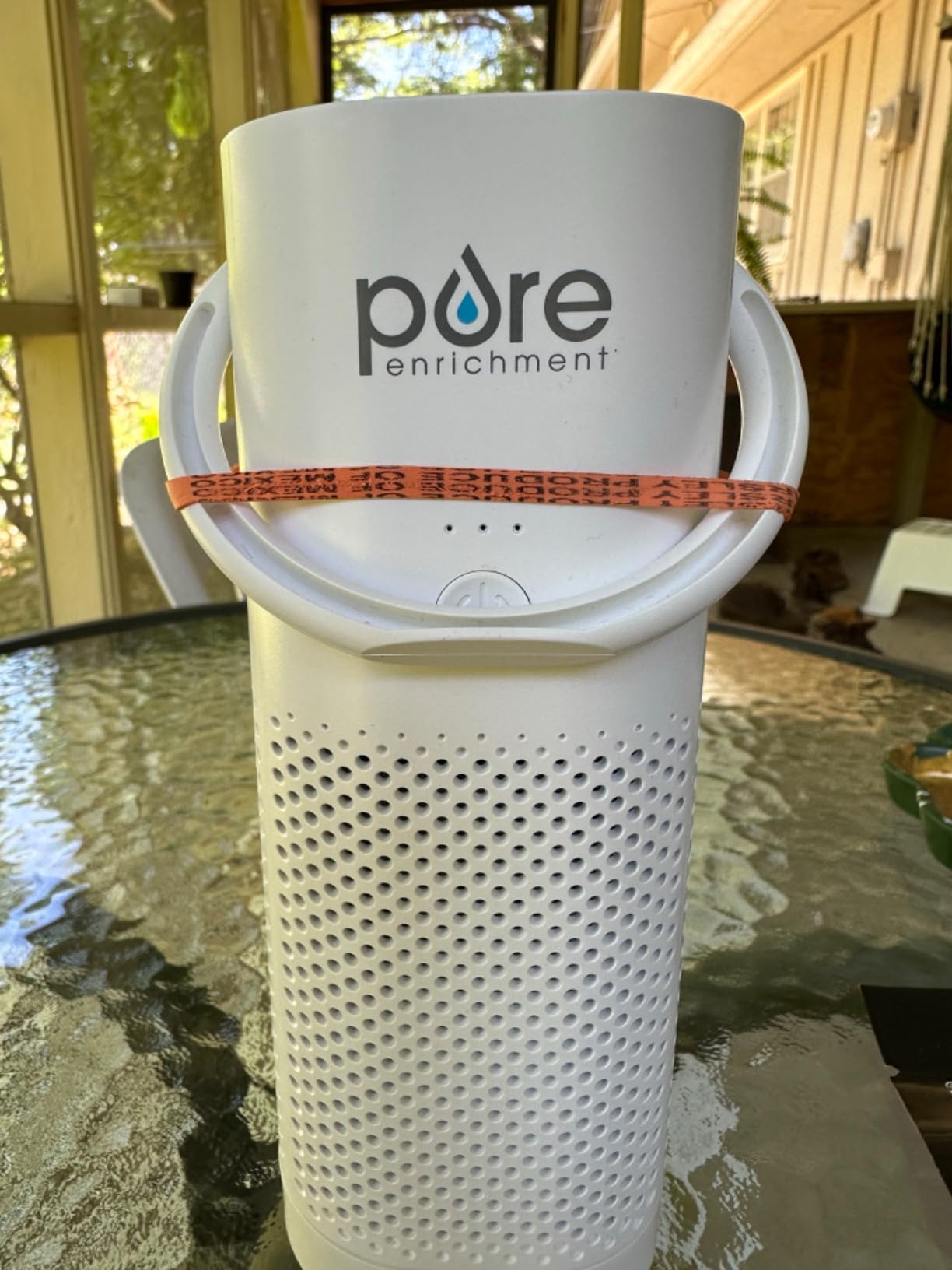
The limits are real, though. It is rated for about 6 square feet, which means it cleans the air right around your body rather than the entire cabin, and the airflow on high is weaker than the label suggests.
Battery life is also hit or miss. Some units hit the 12-hour mark on low, others conk out sooner, and the box includes a USB cable but no charging brick.
Placement and the Cup-Holder Trap
The marketing shows it in a cup holder, and it does fit, but the intake sits against the holder wall and airflow dies. That is the single most common complaint in the reviews, and it matched my experience exactly.
Stand it upright on the console or passenger seat instead. The handle doubles as a stand, and the output difference is obvious within a drive or two.
Battery Life in Real Commuting
On low speed you can reasonably expect a full week of hour-long commutes per charge. On high, plan on recharging every couple of days.
Charge it indoors overnight with a standard USB adapter and it stays a true cordless option — no 12V socket required, which makes it ideal for rentals and rideshares.
4. TDBYWAE H13 Purifier – Quietest Option for Car and Bedroom
TDBYWAE Air Purifier for Bedroom, H13 True HEPA Filter, Ultra-Quiet
H13 HEPA 3-stage
16dB sleep mode
2/4/8H timers
USB-C powered
Pros
- H13 HEPA with pre-filter and carbon
- Drops to 16 dB in sleep mode
- Timers for 2 4 or 8 hours
- Doubles as a 600 sq ft room unit
Cons
- Needs constant USB-C power
- Touch buttons need a firm press
- Airflow is modest for large rooms
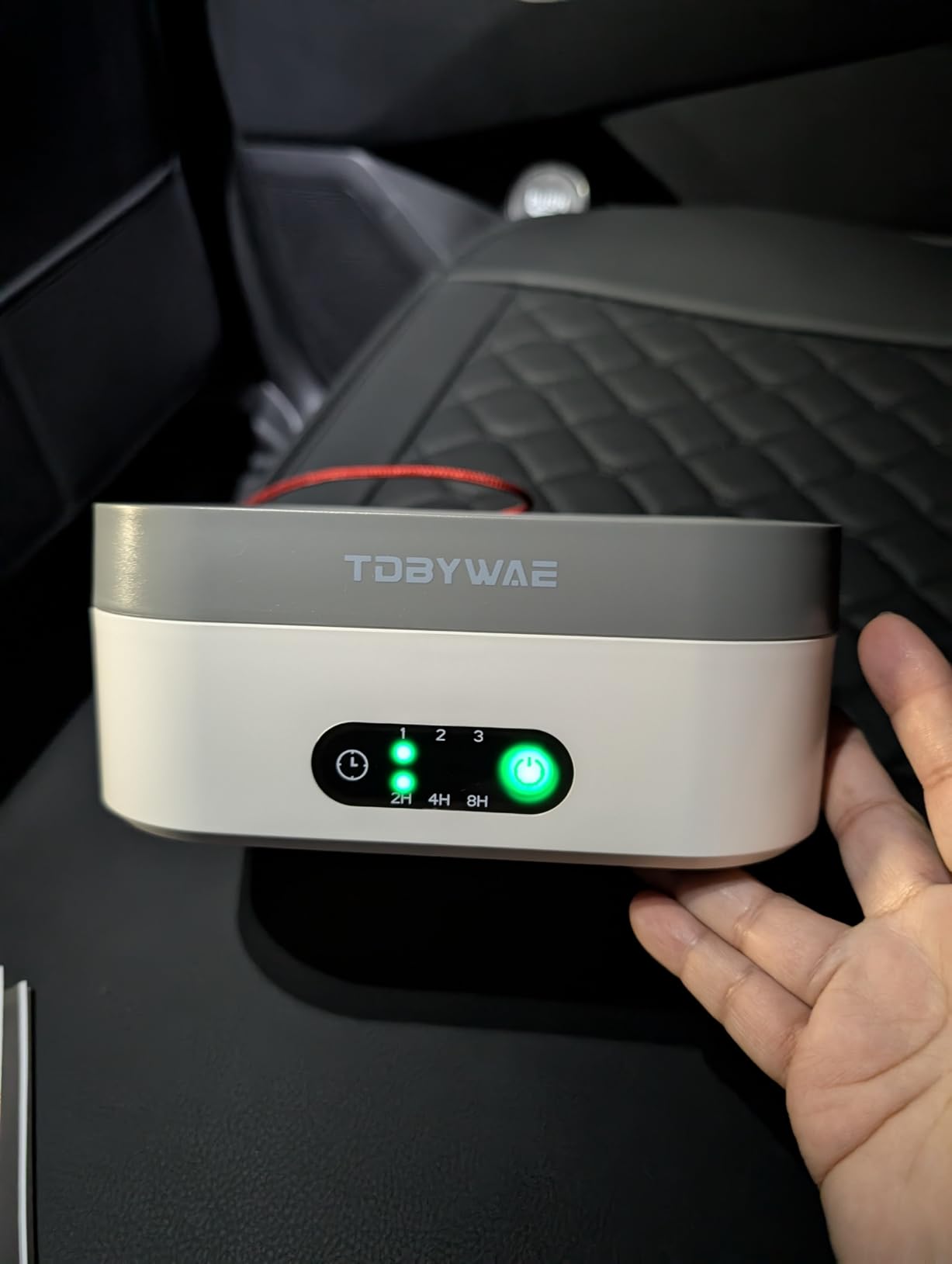
At 16 dB in sleep mode, this is the quietest unit I tested — low enough to leave running on a nightstand or a long highway stretch with no hum in your ears.
Inside is a proper three-stage stack: a pre-filter, an H13 True HEPA filter, and an activated carbon layer. It captures 99.97 percent of airborne particles, including PM2.5, pollen, and dander.
The square shape sits well on a car console, a nightstand, or a hotel dresser. It is rated up to 600 square feet, which is far more than a cabin needs, so it never strains in a car.
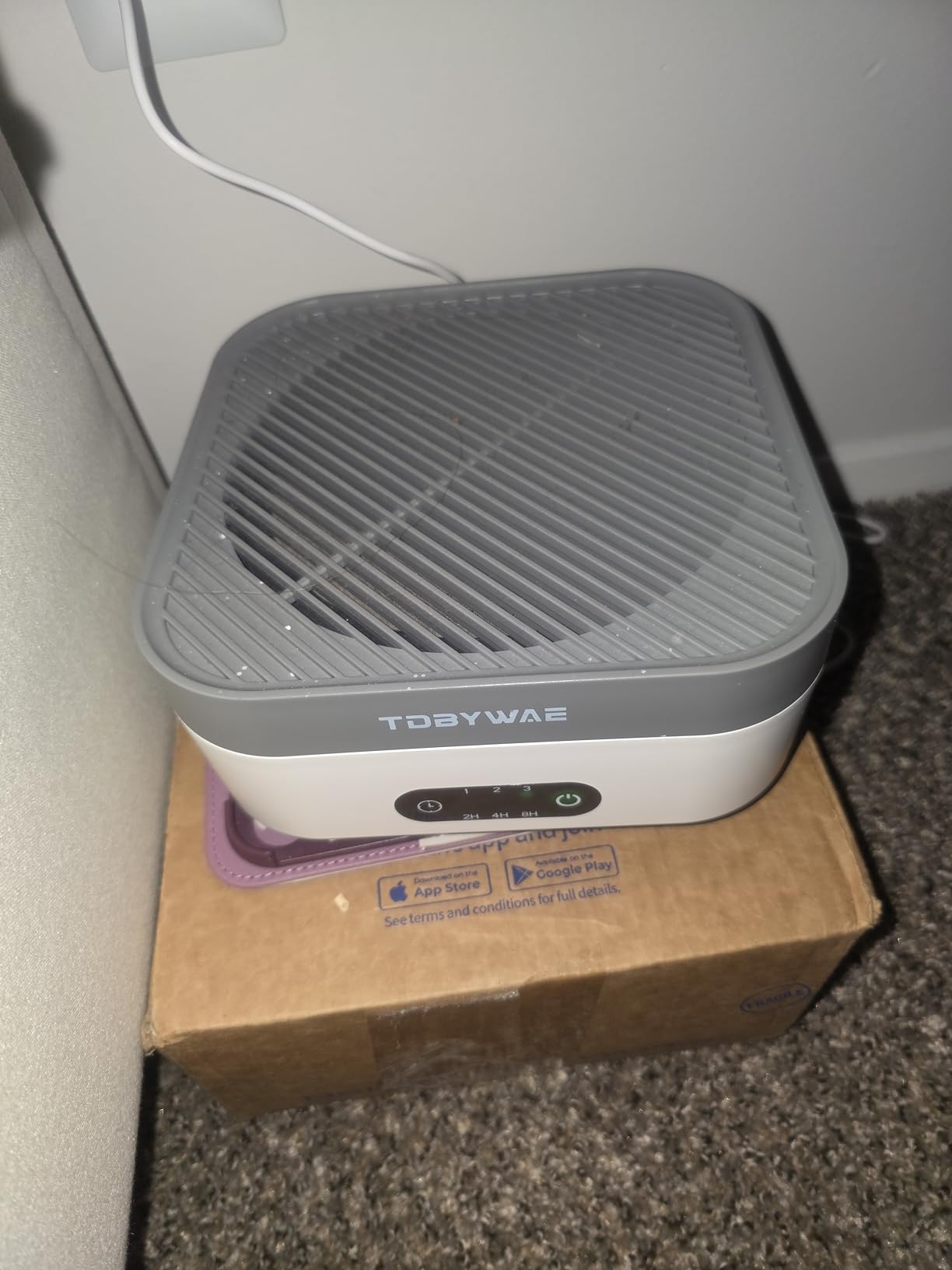
The catch is power. There is no internal battery, so it needs continuous USB-C power, which means a cable draped across your console whenever it is in the car.
The touch buttons need a deliberate press, a few owners report the cord connection wearing out over time, and the airflow is modest for genuinely large rooms. Treat the 600 square foot figure as a one-pass rating, not a real room size.
Powering It Without a Cable Mess
A USB-C port in your center console or a flush 12V adapter keeps the cable run short and away from the shifter.
If your car only has a front-facing outlet, a short right-angle USB-C cable solves most of the clutter.
Doubling It as a Bedroom or Hotel Unit
This is where the TDBYWAE beats every dedicated car unit on the list. Move it inside at night and one device covers two allergy environments, which is exactly how I ended up using it.
The 2, 4, and 8-hour timers make it a genuine sleep machine — set 8 hours and the near-silent fan runs until morning.
5. Prasky Plug-In Purifier – Best Cheap H13 Option for Commuters
Prasky Air Purifiers for Home, Plug-in, H13 True HEPA Filter Captures Smoke Odor Pet Dander, Portable Quiet Car Air Purifier for RV/Desk/Bedroom/Office, Covers up to 600 Ft², Timer – 1 Filter
H13 HEPA 3-stage
16dB low speed
Type-C powered
600 sq ft rating
Pros
- H13 HEPA with activated carbon
- Near-silent at 16 dB on low
- ETL FCC EPA and CARB certified
- Magnetic cover for easy filter swaps
Cons
- Timer misses shutoff on some units
- No internal battery
- Touch controls are oversensitive
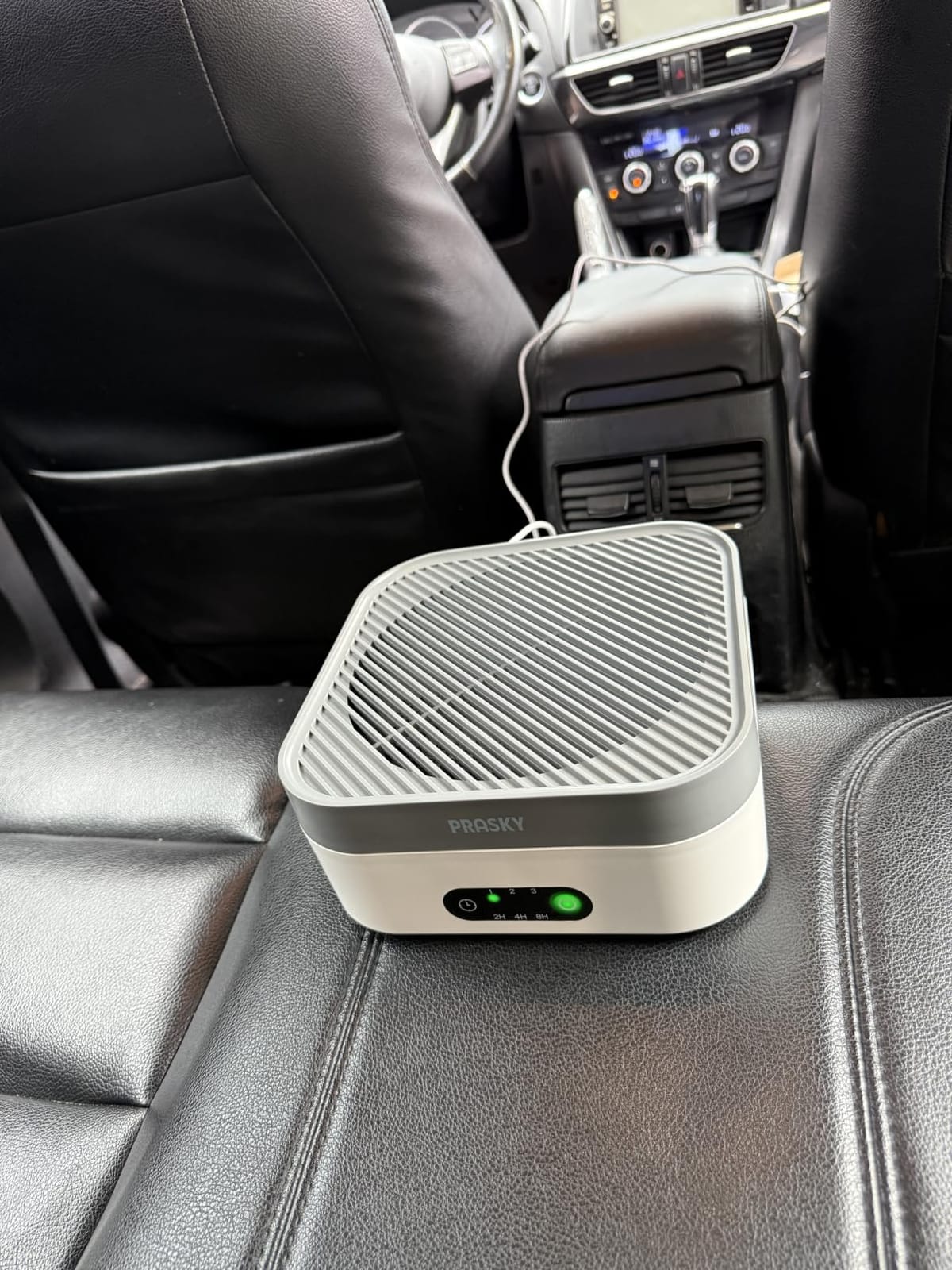
This is the least expensive true H13 HEPA unit in the lineup, and it does not cut the filter to get there. Pre-filter, H13 HEPA, and activated carbon all live inside a 7-inch square case that sits flat on a console.
It runs at 16 dB on low, which is effectively silent in a moving car — I could not hear it over tire noise even with the radio off. It also carries ETL, FCC, EPA, and CARB certifications, the kind of paperwork budget brands usually skip.
The Type-C power port means the same cable your phone uses will run it, which is one less thing rattling in the glovebox.
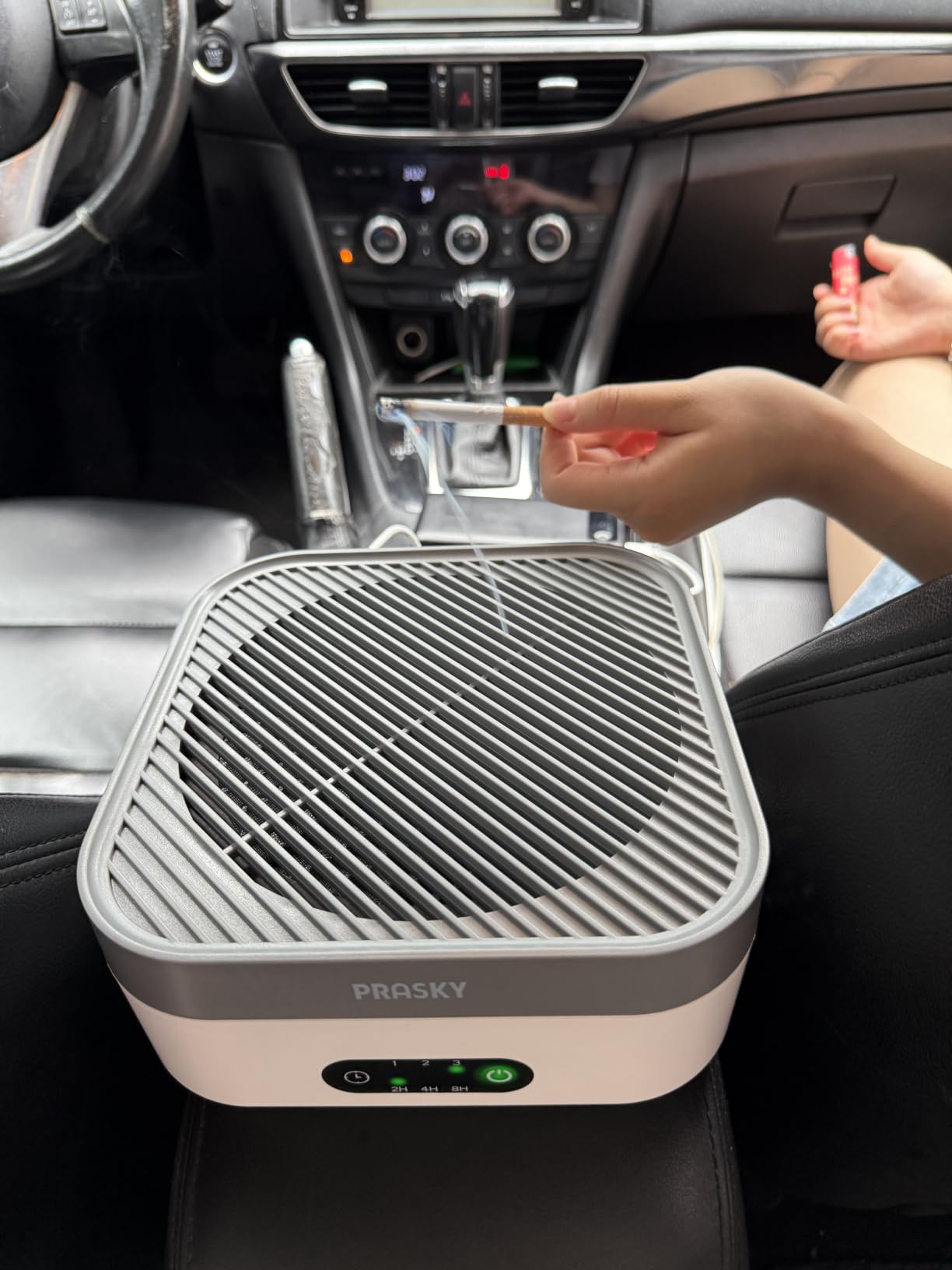
Two complaints come up repeatedly in the reviews. The touch controls are oversensitive, and on some units the timer counts down but never actually switches the purifier off.
Like the TDBYWAE, it has no battery and lives on the end of a cable. And while it is rated to 600 square feet, owners say it is best in small rooms, RVs, and car cabins rather than open living spaces.
Is the Timer Function Reliable
Not always. Several owners report the display finishing its countdown while the fan keeps running.
Treat the timer as a convenience feature and plan to switch it off manually on units that skip the shutoff.
Car, Desk, or RV – Where It Performs Best
It is happiest in enclosed spaces under about 200 square feet, which covers virtually every car cabin and most RV bedrooms.
The magnetic top cover pops off for filter changes in seconds, which matters more than it sounds once you are swapping filters every few months.
6. Aucleia Car Purifier – Best Cup-Holder Design with Aromatherapy
Aucleia Portable Car Air Purifier with H13 HEPA Filter, Smoke Odor Removal
H13 HEPA cup-holder
22dB quiet
Aromatherapy pad
USB powered
Pros
- H13 HEPA in a cup-holder body
- 22 dB operation
- Essential-oil aromatherapy pad
- Auto on/off with the ignition
Cons
- Shuts off unless perfectly upright
- No internal battery
- Whole-cabin coverage is limited
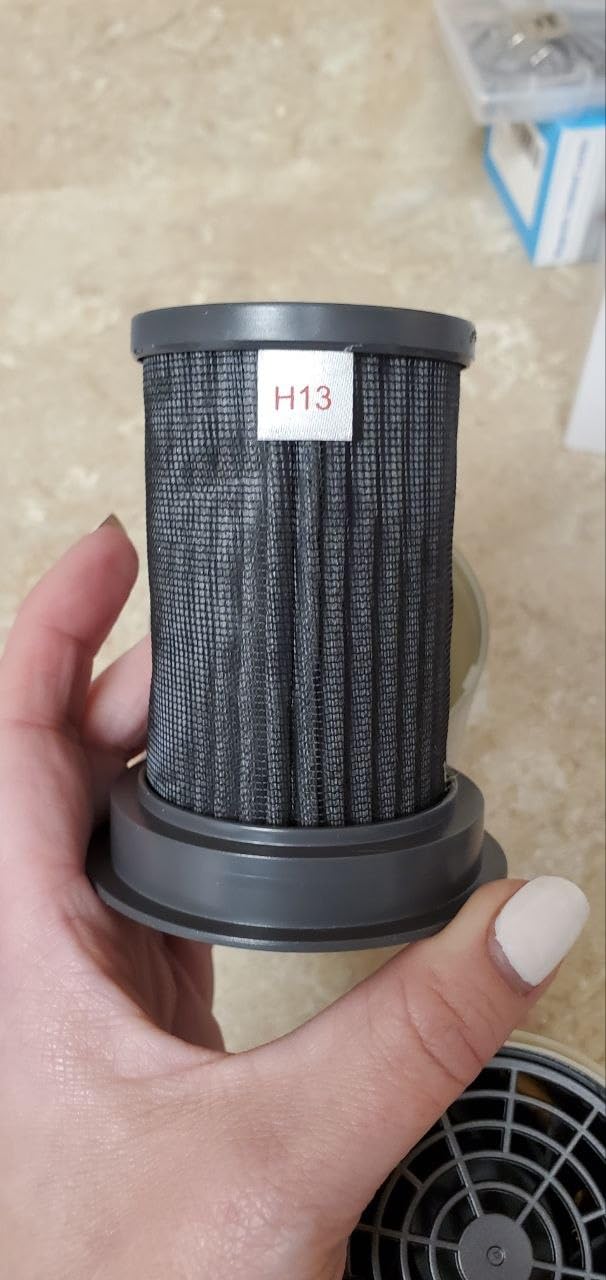
The Aucleia is the cup-holder purifier done properly. Instead of a weak mesh screen, it carries a true H13 HEPA element rated for 99.97 percent capture of dust, pollen, dander, and smoke.
It runs at 22 dB, quieter than a library, and cycles through three color-coded modes — Blue for standard, Yellow for fast, Red for boost — so you can raise output through a pollen-heavy stretch and drop back on the highway. I found myself tapping it up to Red every morning my car sat under a birch tree.
There is also an aromatherapy pad under the cap. One drop of essential oil and the cabin smells genuinely clean rather than masked.
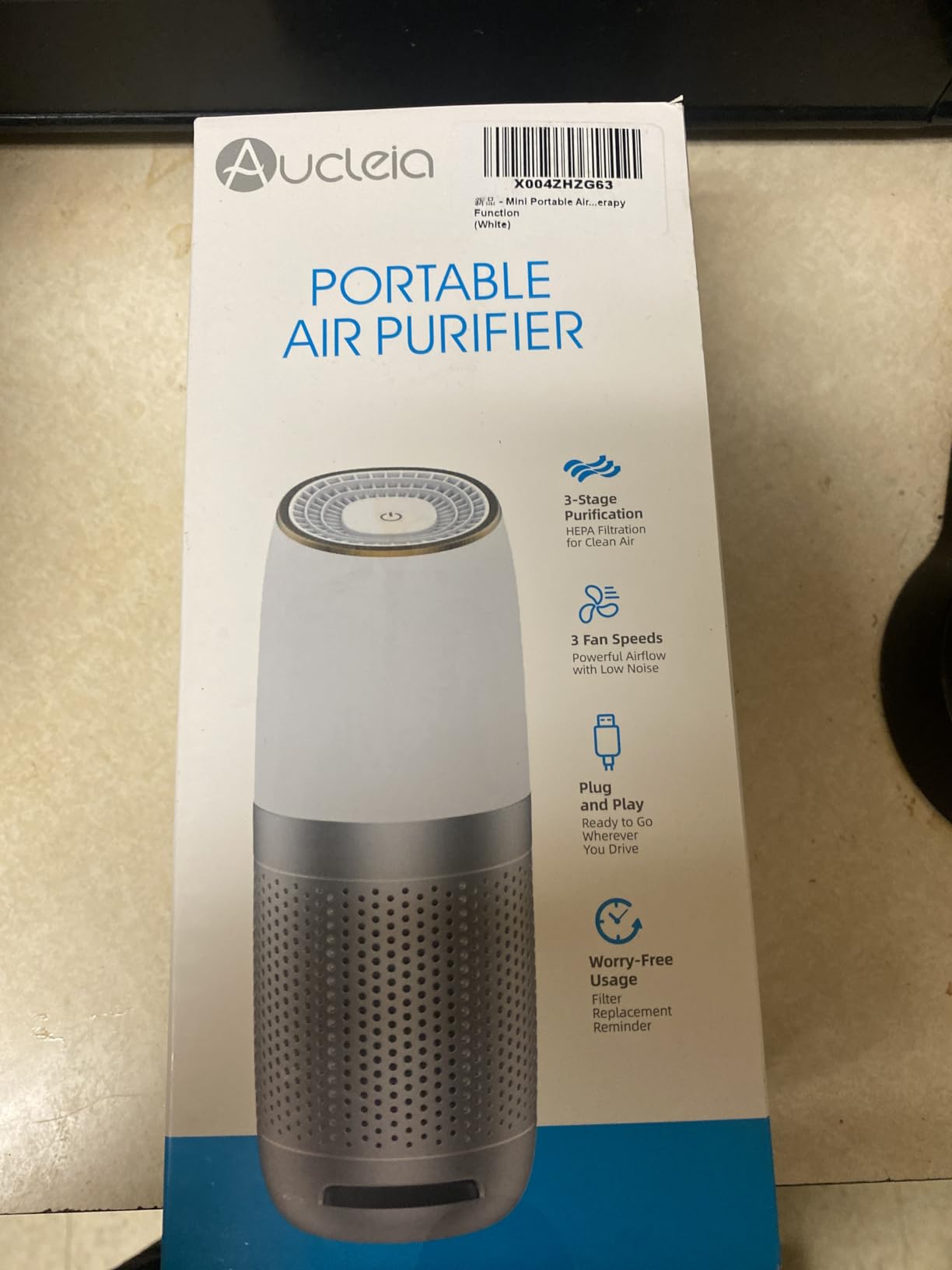
The design has quirks you need to know about before buying. It must sit completely vertical or a safety switch cuts the power, which is a real problem in cup holders that sit at an angle.
There is no internal battery, so it stays USB-tethered all the time. And like every cup-holder unit, whole-cabin coverage is limited — it cleans the air around the front seats well and the third row not at all.
One more note: it also releases negative ions alongside the HEPA filter. If you want zero ionizer function, choose the LUFTRUM or the IQAir instead.
Keeping It Upright in a Moving Car
Check your cup holder angle before ordering. A holder that leans more than a few degrees will trip the tip-over shutoff on every hard corner.
A folded non-slip mat under the base fixes minor lean, and the filter indicator that fires after 360 hours tells you when a swap is due.
Do You Want Fragrance With Your Filtration
If you are scent-sensitive, run it with an empty pad. The HEPA stage works exactly the same either way.
If you haul pets or gym gear, a drop of oil on the pad covers smells the carbon stage has not caught up with yet.
7. JVC KS-GA100 – Best Hands-Free Motion Controls
JVC KS-GA100 Car Air Purifier Portable USB Power Input HEPA Filter 3-Stage Filtration Motion Activated Controls Black
H13 HEPA 3-stage
Wave-motion controls
10 dB rating
USB with 12V adapter
Pros
- Wave a hand to change speeds
- H13 HEPA captures to 0.3 microns
- Runs at about 10 dB
- Aluminum body with 12V charger included
Cons
- Motion sensor fires when you reach across
- Fan speeds feel nearly identical
- No memory between trips
JVC took a different approach to controls — there basically are none. Wave your hand over the top to cycle from low to high to off, which is a smart idea when you are doing 70 on the freeway.
Inside is an H13 True HEPA three-stage system capturing 99.97 percent of particles down to 0.3 microns, and the aluminum body feels more expensive than the price bracket suggests.
It is rated at 10 dB, the lowest figure on this list, and it ships with a 12V USB car charger in the box so it is genuinely plug-and-play. Mine was running within a minute of opening the box.
The motion sensor is both the feature and the flaw. Reach across to the glovebox or grab a parking ticket and the unit reads your arm as a command and switches itself off.
There is no memory between trips either, so it needs a wave to restart every time. The three fan speeds also feel nearly identical in practice, which makes the gesture control less useful than it sounds.
Living With the Motion Sensor
You can teach yourself to reach around the unit rather than over it, and after a week it becomes muscle memory.
If you have kids in the back constantly passing items forward, expect the purifier to be off more often than it is on.
Where the 10 dB Rating Actually Matters
Ten decibels is effectively inaudible over road noise, so this is the one unit here that will never interrupt a call or a podcast.
For that reason alone, taxi and delivery drivers who spend all day on the phone tend to get along with it best.
8. GreenTech Active HEPA+ CAR – Best for Rideshare Drivers
Greentech Environmental Active HEPA+ CAR with ODOGard – Advanced Air Purifier and Odor Eliminator with 2 Specialized HEPA Air Filters – Easy Set Up for Cars, Trucks, Vans and Rideshare Vehicles
ODOGard HEPA filters
Dual purification
No ozone
Year-long washable filters
Pros
- ODOGard HEPA filters last up to a year
- Two mounting options included
- Dual USB-C ports for passengers
- Zero ozone emission
Cons
- Capacitive buttons lag and miss presses
- Auto on/off is unreliable
- Only 19 reviews so far
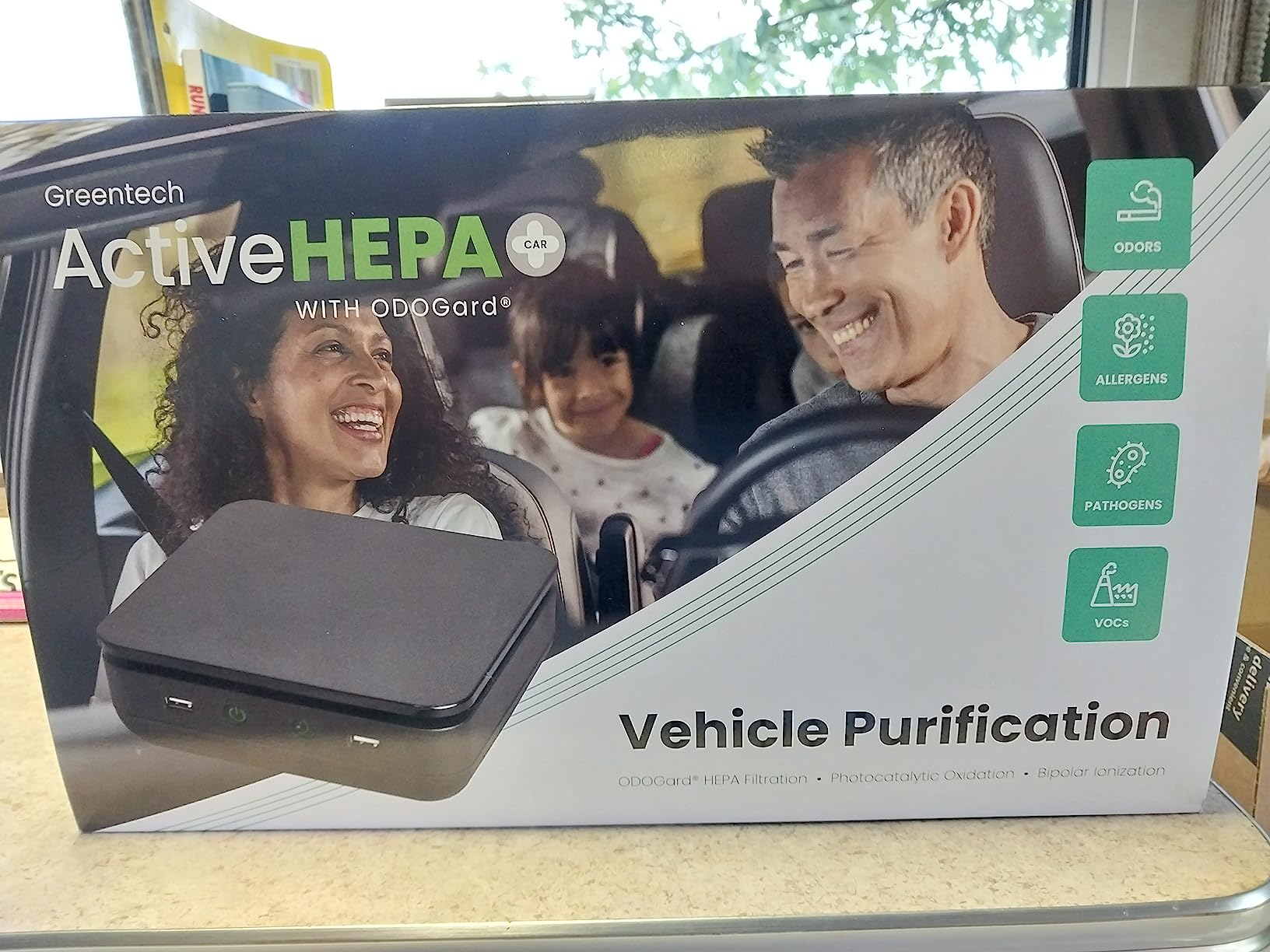
This one is built for people who drive for a living. It ships with two ODOGard-coated HEPA filters, a headrest strap, and a dash pad, and the filters are washable and rated to last up to a full year.
The dual system pairs HEPA with photocatalytic oxidation and bipolar ionization, and GreenTech states the unit produces no ozone. For rideshare work, where every passenger brings a new smell, the ODOGard coating breaks odors down instead of storing them in the filter.
It sips just 3.9 watts and offers two USB-C ports, so passengers can charge while the unit runs. I handed the spare port to a rider with a dying phone and it felt like a genuinely thoughtful touch.
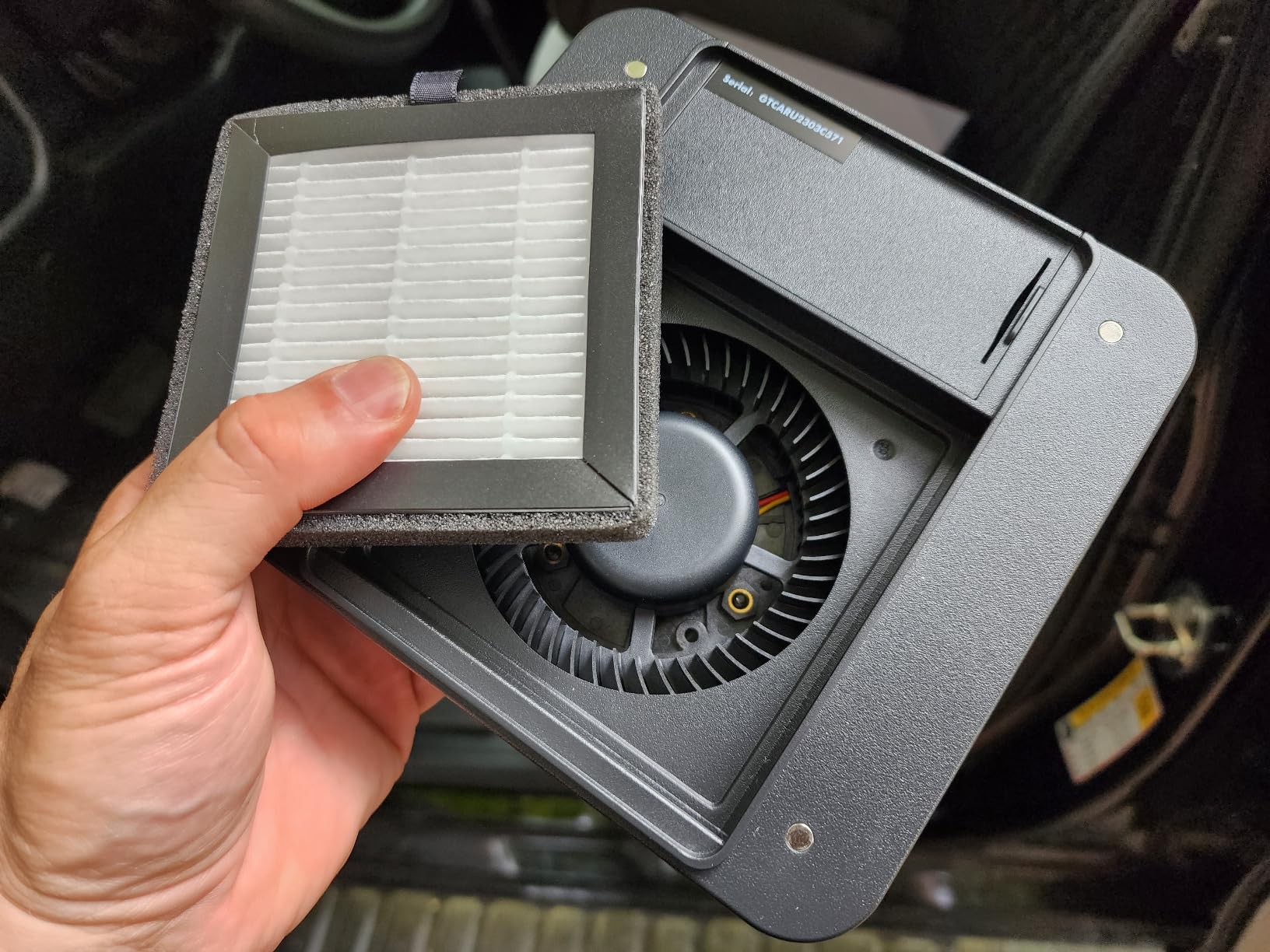
The honest problem is the interface. The capacitive buttons lag and sometimes miss presses entirely, which is a poor experience on gear positioned as professional-grade.
Auto on/off is not always reliable either, and the magnetic cover snaps can pop loose over rough pavement. With only 19 reviews so far, there is also little long-term data to lean on.
Mounting Options for Daily Rideshare Use
The headrest strap is the better choice for rideshare work because it keeps the dash clear and survives door slams.
Keep the anti-slip pad for when you switch vehicles, which happens often if you rent or share cars.
What a 19-Review Track Record Means for You
The rating sits at 3.7, and with so few reviews a handful of faulty units move that number a lot.
Buy it for the washable year-long filters and the odor technology, and test the buttons carefully inside the return window.
9. 4WDKING Car Ionizer – The Popular Plug-In, With an Asterisk
4WDKING Car Air Purifier Ionizer with Dual USB Charger Remove Smoke(Silver)
5.6M negative ions per cm3
Dual USB ports
12V plug-in
CARB certified
Pros
- Fits any 12V socket
- Dual 2.1A USB ports charge devices
- No filters to replace
- CARB certified
Cons
- Ionizer with no HEPA filter
- Emits ozone inside a sealed cabin
- Durability complaints after a few months
This is the best-selling unit on this list by a wide margin, with more than 1,800 reviews, and it is the cheapest way to put something in your 12V socket. It is also the only one here with no HEPA filter at all.
What it does is release up to 5.6 million negative ions per cubic centimeter, which makes floating particles clump and drop out of the air. Plenty of owners report real odor reduction, particularly cigarette smoke and food smells.
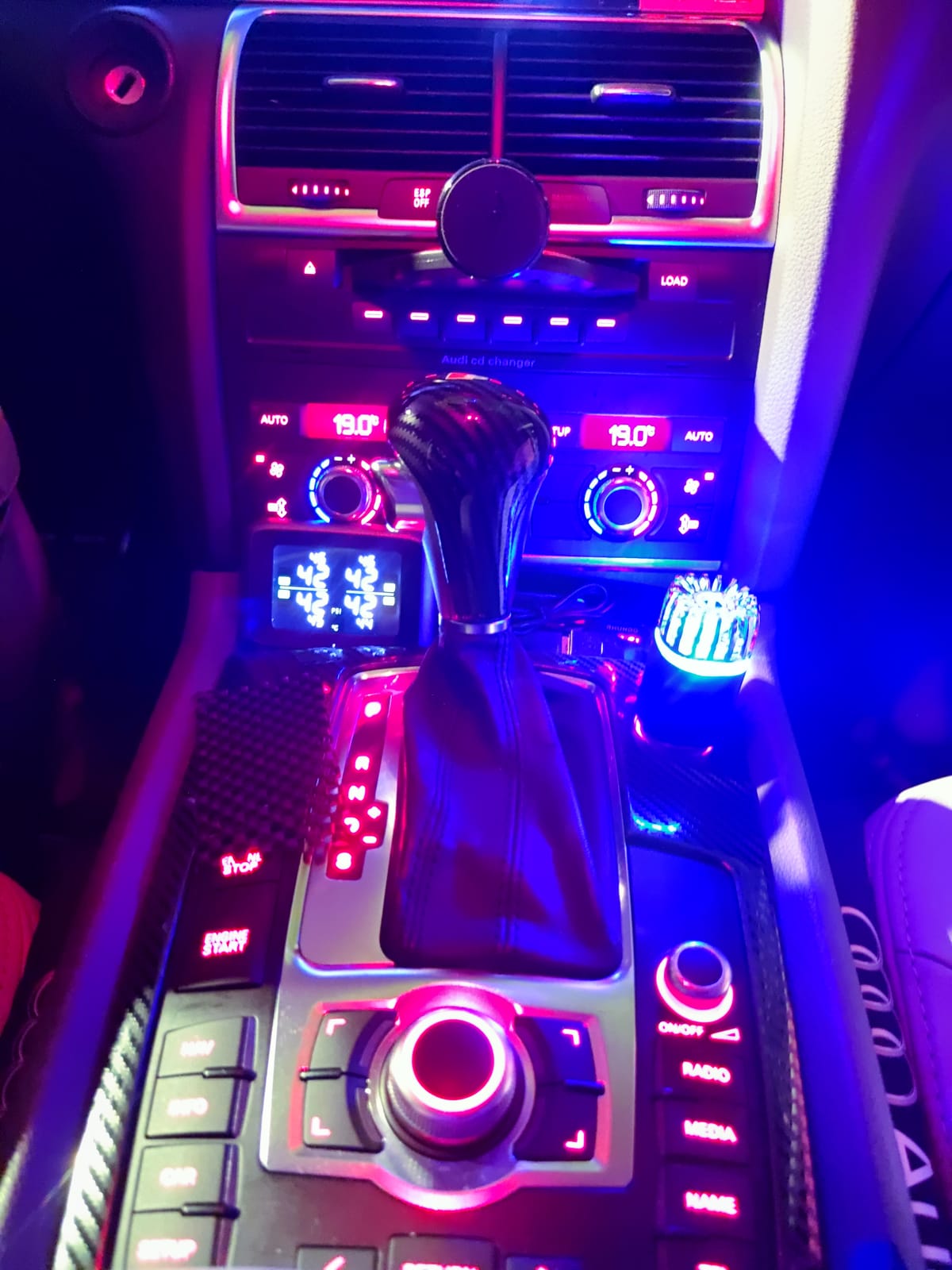
Practically, it is a 12V plug with two 2.1A USB ports, so you keep a charging socket free while it runs. It is CARB certified, meaning it meets California ozone emission limits.
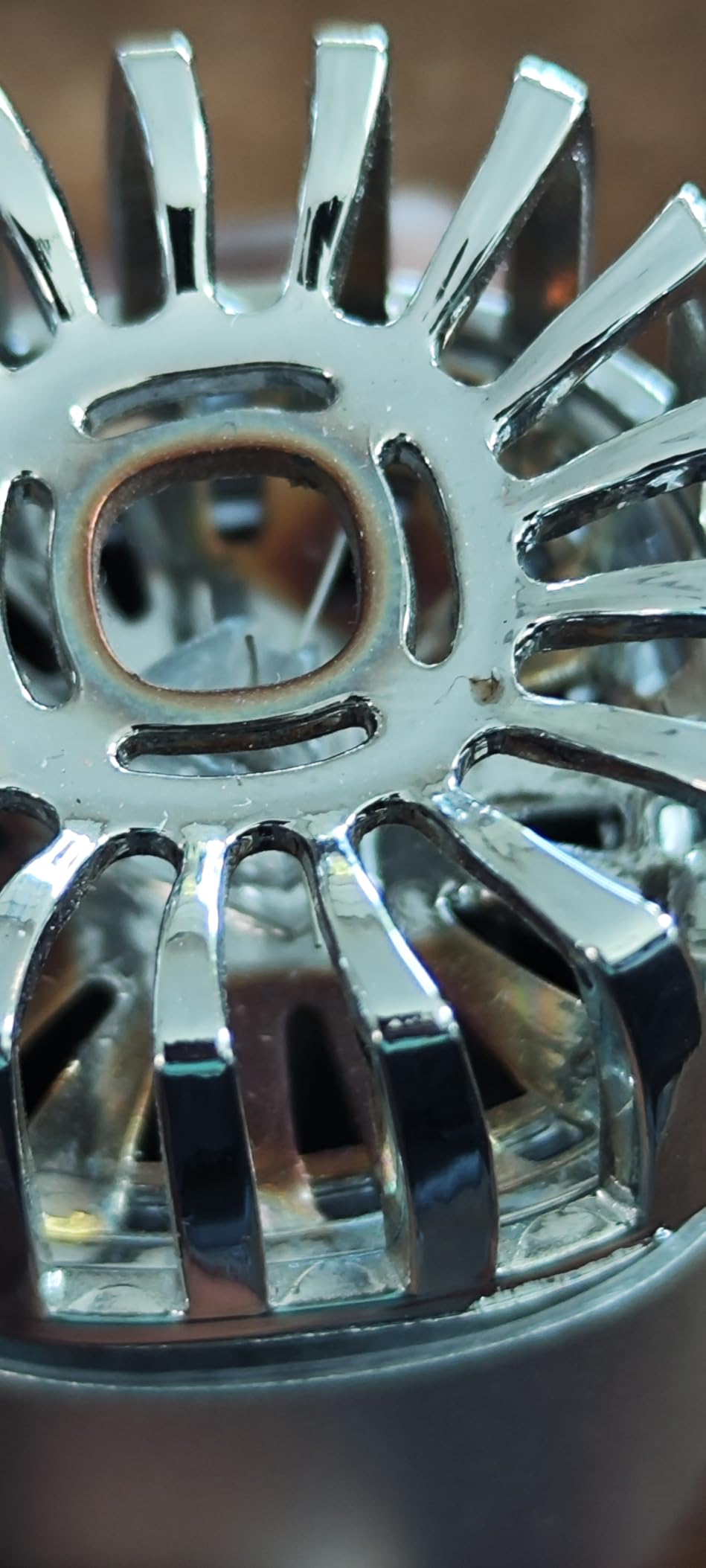
Now the asterisk. Ionizers produce ozone as a byproduct, and ozone is a documented lung irritant that tends to make allergy and asthma symptoms worse, not better.
Durability is the second complaint — a steady stream of owners report units dying within a few months, and there is at least one report of burn marks in a socket. It can also drain your battery if you leave it plugged in with the engine off.
The Ozone Question, Answered Straight
CARB certification limits ozone output, but it does not eliminate it, and a sealed cabin idling at a red light is a very small space.
If you have asthma or allergic airway disease, pick any HEPA unit above instead. If you are a healthy adult who mainly wants smoke odor gone on a tight budget, it is a defensible cheap experiment.
Battery Drain and 12V Socket Behavior
Unplug it when you park. In cars with always-live sockets, this is the unit most likely to leave you needing a jump start.
The blue LED is also bright at night, and several owners end up covering it with a small piece of tape.
10. AIRFEEL Car Purifier – HEPA Plus a Built-In Diffuser
Car Air Purifier, Air Purifier for Car with True HEPA Filter Clean Air,Eliminate Dust,Odor,Portable Car Accessories Built-in Air Freshener and Perfume Diffuser for Traveling, Home, Office Use
H13 HEPA
Perfume diffuser
USB plug and play
Cup-holder design
Pros
- HEPA plus a built-in fragrance diffuser
- Quiet enough to forget it is running
- Light enough to move between cars
- 4.0 rating across 850 reviews
Cons
- Airflow is low
- Top cap fights you on refills
- Frequently out of stock
The AIRFEEL splits the difference between an air purifier and an air freshener. There is an H13 HEPA filter inside, plus a perfume platform on top that lets you run fragrance through the same unit.
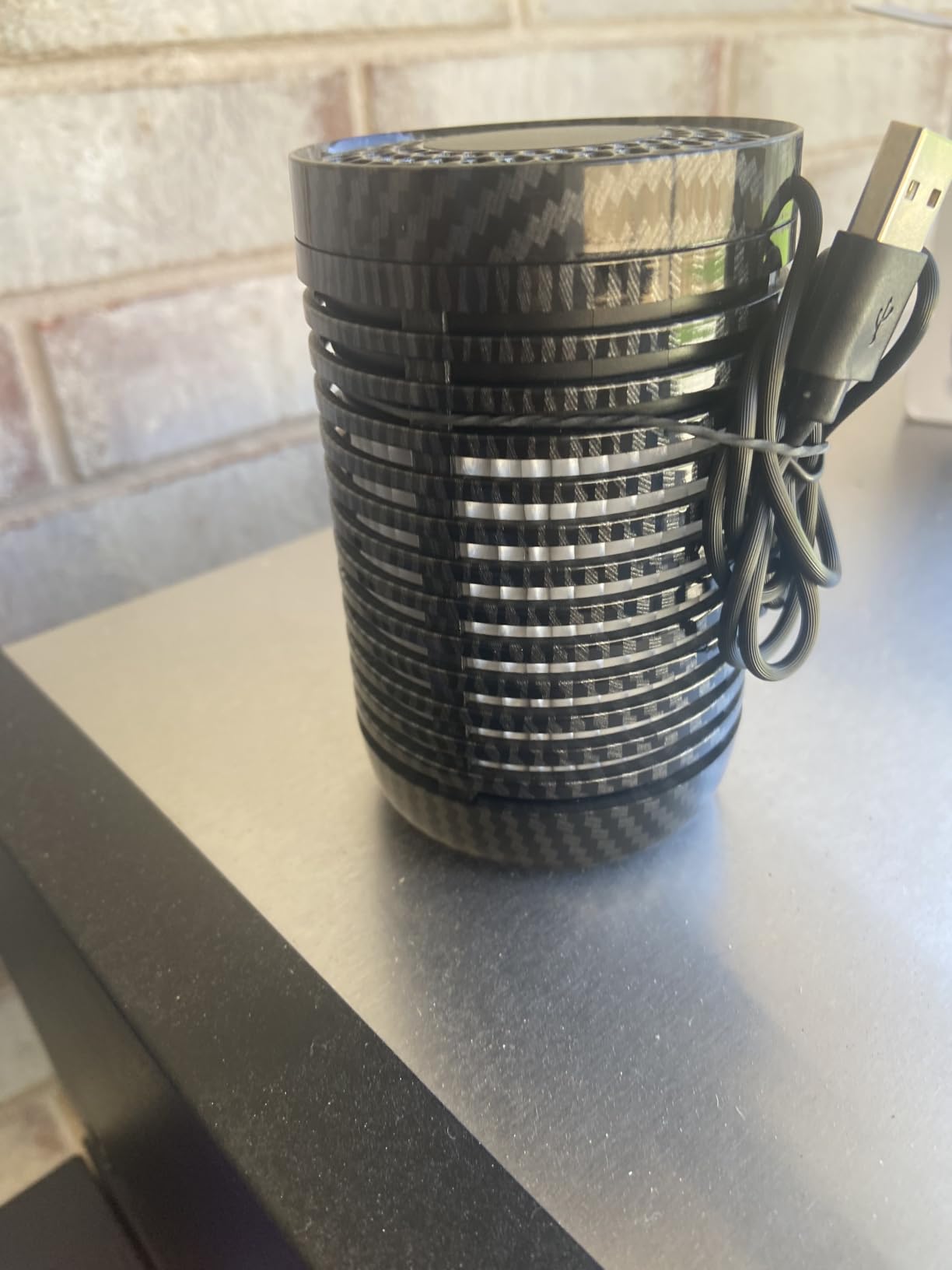
It plugs into USB and gets to work immediately, and it is quiet enough that you forget it exists. The carbon fiber finish looks sharp in a modern interior.
With 850 reviews at 4.0 stars, the track record is solid. The feedback follows a clear pattern — great in compacts, underpowered in minivans — and that matched what I saw in a crossover.
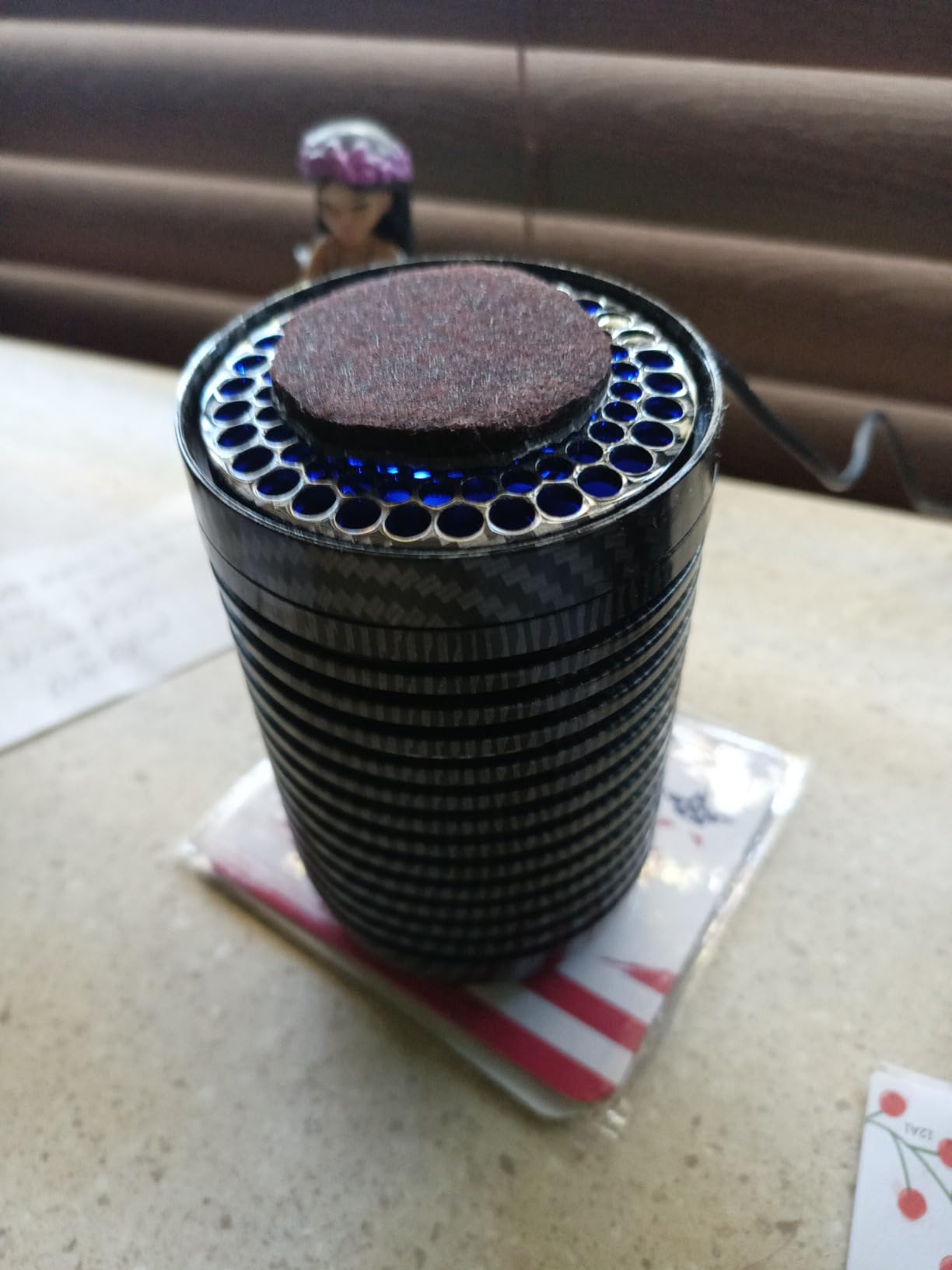
That airflow limit is the main drawback. It works best in small cabins where it can turn the air over faster than allergens settle.
The top cap is fiddly to open when you want to refresh the scent, and the power cord can come up short depending on where your socket sits.
Why It Keeps Going Out of Stock
Availability is the real problem — it has been listed as unavailable with no confirmed return date, so you may need to watch for a restock.
When it is in stock it is one of the better-looking budget options, which is exactly why it keeps selling out.
Sizing Expectations for Minivans and SUVs
In anything bigger than a sedan, expect personal-space coverage around the front seats rather than whole-cabin cleaning.
For three-row vehicles, pair it with the recirculation setting on your climate control or move up to the IQAir or LUFTRUM.
How to Choose the Best Car Air Purifier for Allergies
Filter grade, airflow, power source, and ozone output decide whether a car purifier helps your allergies or just occupies a cup holder. Here is how I sort the good from the decorative.
Do Car Air Purifiers Actually Work for Allergies? Yes, With Two Conditions
Yes, but only with a true HEPA filter and the windows kept closed with recirculation on. Forum testers and independent reviewers consistently see PM2.5 counts fall within 10 to 15 minutes of runtime.
What does not work is an ionizer plug on its own. It drops some particles onto surfaces and adds ozone while leaving nothing to actually collect the allergens.
Who Really Needs One
You benefit most if you drive more than 30 minutes a day during allergy season, carry pets or kids, drive professionally, or live with wildfire smoke and heavy traffic.
If you drive five minutes to a station in a clean-air region, skip the purifier and upgrade your cabin filter instead.
Which Allergens Actually Collect in Your Car
Pollen grains run 10 to 100 microns and are the easiest target. Dust mite debris sits around 10 microns, pet dander 5 to 10, and mold spores 2 to 20.
The hard one is ultrafine traffic soot below 0.1 microns. That is where H13 media and IQAir’s HyperHEPA earn their keep over basic mesh.
HEPA Grade Matters More Than Marketing
True HEPA and H13 HEPA both capture 99.97 percent at 0.3 microns, and H13 is the European certification standard for that performance. Anything described only as a filter or mesh with no HEPA rating will not help your allergies.
Look for the words True HEPA or H13 on the spec sheet along with a stated particle size, not just a 99 percent claim on the box.
Match Airflow to Your Cabin Volume
A typical sedan cabin holds 90 to 120 cubic feet, and a full-size SUV runs 150 or more. You want enough airflow to turn that volume over several times per hour.
As a rule of thumb, small cup-holder and battery units suit compact cars and personal-space cleaning, while strap-mounted and console-sized units handle SUVs and vans.
Activated Carbon for Exhaust and Odors
HEPA handles particles, but exhaust gases, upholstery VOCs, and that new-car smell pass straight through it. An activated carbon stage adsorbs gases and odors instead.
If traffic pollution is your main trigger, pick a unit with a substantial carbon layer like the LUFTRUM or IQAir rather than a thin carbon-coated pre-filter.
Power Source – 12V, USB, or Rechargeable Battery
Units that plug into 12V run whenever the car does and never need charging. USB units are flexible but tether you to a cable.
Rechargeable units like the PureZone Mini give the cleanest install and work in rental cars, but you have to remember to charge them.
Ozone and Ionizers – What Allergy and Asthma Sufferers Should Know
Ionizers charge particles so they cling to surfaces and to each other, and they generate ozone as a byproduct. Ozone irritates airways even at low concentrations and is a particular problem for people with asthma.
If a unit mentions negative ions, ionization, or photocatalytic oxidation, check for a CARB certification number. If your airways are sensitive, choose a pure mechanical filter — every HEPA-first pick above qualifies.
Cabin Air Filter vs Car Air Purifier
Upgrade your cabin filter first. A HEPA-media cabin filter treats all incoming air through the vents and does the heavy lifting for pollen.
Add a portable purifier when you need continuous cleaning of air already inside the cabin — recirculated air, dander ground into the seats, smoke from the car ahead. The two work best together.
Noise, Filter Schedules, and Long-Term Value
Anything under 25 dB disappears behind road noise. Check the spec if you take calls while driving, because a loud fan on a two-hour drive gets old fast.
Also check the replacement filter schedule before buying. An inexpensive purifier that needs a new filter every few months can outspend a premium unit over two years, and washable filters like the GreenTech change that math completely.
Frequently Asked Questions
What car air purifier is best for people with allergies?
The IQAir Atem Car is the best car air purifier for allergies thanks to its HyperHEPA filter, which traps particles down to 0.003 microns, including pollen fragments, pet dander, and diesel soot. The LUFTRUM C401 is the best value alternative, with an H13 HEPA filter and a built-in PM2.5 sensor.
Do car air purifiers actually work?
Yes, car air purifiers work when they use a true HEPA filter and run with the windows up and recirculation on. Independent testers and forum users consistently report PM2.5 levels dropping within 10 to 15 minutes of runtime. Ionizer-only plug-in units do not collect particles and can add ozone to a sealed cabin.
What is the best air purifier for cars?
The IQAir Atem Car is the best air purifier for cars overall, with filtration down to 0.003 microns and ozone-free operation. For most budgets, the LUFTRUM C401 delivers H13 HEPA filtration, a PM2.5 display, and auto on/off for far less.
Do car air purifiers remove pollen?
Yes. Pollen grains range from about 10 to 100 microns, and even fragmented pollen sits well above the 0.3 micron capture point of a true HEPA filter. Any H13 HEPA unit in this guide will trap pollen as long as the windows stay closed.
Are car air purifiers safe for asthma?
HEPA-only units are safe and often helpful for asthma because they remove the fine particles that trigger attacks. Avoid ionizer and ozone-generating models if you have asthma, because ozone is a known lung irritant even at low concentrations.
Are ionizer car air purifiers safe?
Ionizers are legal, and CARB-certified units meet ozone emission limits, but they still generate ozone as a byproduct, which irritates airways and can worsen allergy and asthma symptoms. A mechanical HEPA purifier removes the same particles without adding anything to the air.
Can a car air purifier replace the cabin air filter?
No. The cabin air filter treats all incoming air through the ventilation system, while a portable purifier only recirculates air already inside the cabin. Allergy sufferers get the best results by upgrading the cabin filter first, then adding a portable HEPA unit.
Where should I place a car air purifier?
Place it as close to your breathing zone as possible, ideally strapped to the back of a headrest or secured on the center console. Avoid cup-holder placement for units with bottom or side air intakes, because the holder itself blocks airflow.
How often should I change the filter in my car air purifier?
Most car purifier filters need replacing every 3 to 6 months, and heavy use such as wildfire smoke or rideshare driving can clog a filter in as little as 10 days. Follow the replacement indicator if your unit has one, and check the filter monthly during pollen season.
Final Verdict on the Best Car Air Purifiers for Allergies
For most allergy sufferers the LUFTRUM C401 is the smartest buy in 2026 — H13 HEPA filtration, a PM2.5 display that proves the work is happening, and auto on/off tied to your ignition.
If your symptoms are severe or you drive through wildfire smoke and diesel traffic, the IQAir Atem Car is worth the premium, with filtration 100 times finer than standard HEPA and no ozone at all.
On a tight budget, the Pure Enrichment PureZone Mini delivers genuine cordless True HEPA, and the Prasky covers the plug-in console role for less than anything else here.
Whichever you choose, pair it with a fresh cabin filter and keep the windows up through pollen season. That combination did more for my symptoms than any single device on this list.