
I’ve spent the last few months talking to facilities managers and BPO operations directors about indoor air quality, and one thing keeps coming up: call centers are not normal offices. You pack 30, 60, sometimes 100 agents into a sealed floor with low ceilings, recycled HVAC air, brand-new cubicle partitions, and shift work that runs 16 or 24 hours a day. The air gets stale fast, CO2 climbs, and VOCs off-gas from the furniture your team just installed last quarter.
That hurts your numbers. Studies from Harvard T.H. Chan and Syracuse University link higher indoor CO2 and VOC levels to slower cognitive response, more sick days, and lower call-handling throughput. An agent breathing cleaner air stays sharper on a 4 p.m. escalation call. That’s exactly why I put this guide together.
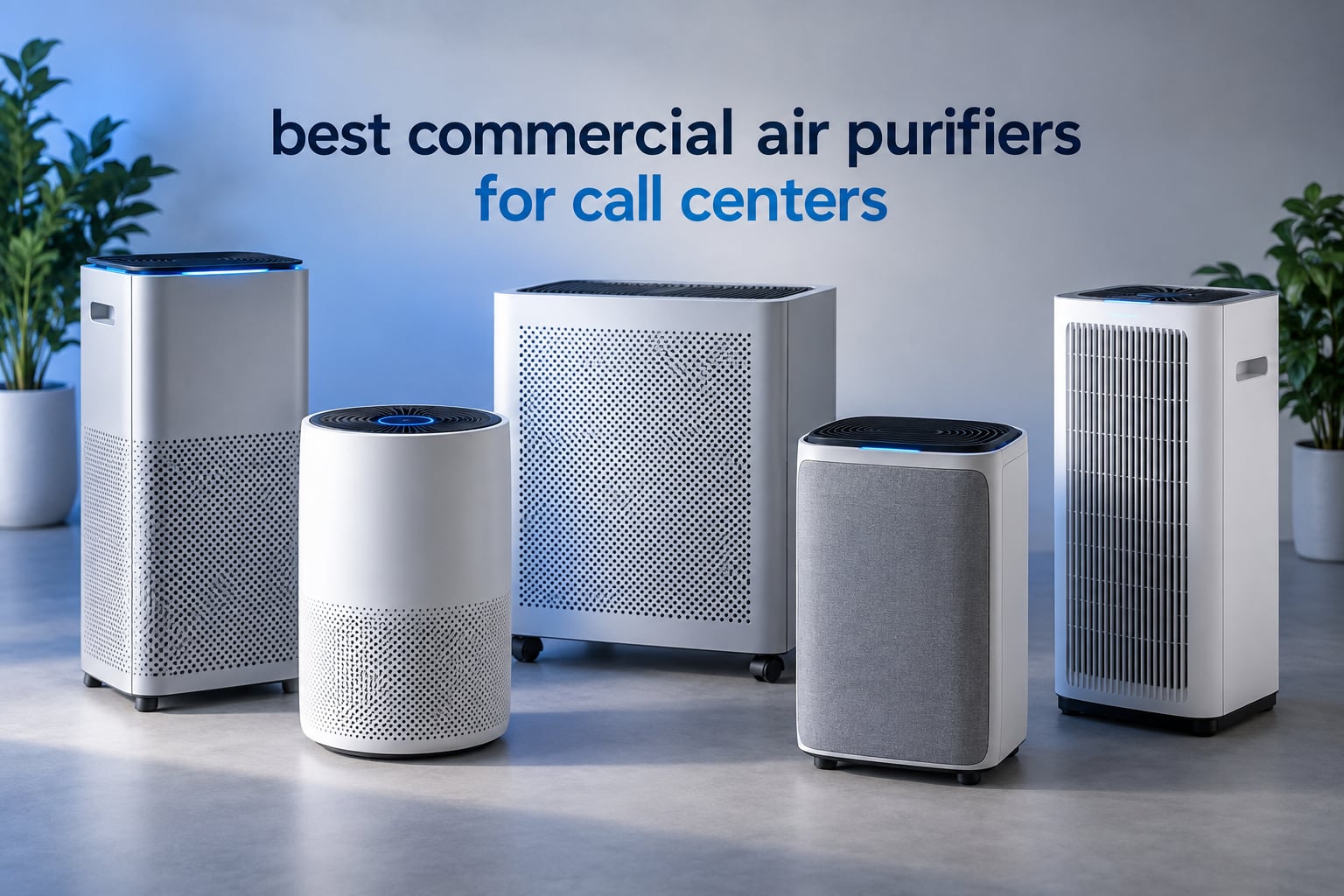
In this article I’m breaking down the best commercial air purifiers for call centers in 2026. I focused on units that hit three call-center-specific thresholds: noise low enough to stay under ~45 dB during live calls, enough CADR to hit 4-6 air changes per hour in a 1,500-2,500 sq ft floor, and the build quality to run continuously without burning out a motor. I included a mix of consumer-grade smart purifiers (great for cubicle farms and small pods) and commercial-grade HEPA air scrubbers (the right call for large open floors and 24/7 operations).
Whether you manage a 200-seat BPO in Manila or a 20-agent in-house support team in a converted warehouse, there’s a fit on this list. If you also need guidance on air quality sensors, our 12 Best Air Purifiers With Air Quality Sensors roundup is a useful companion read.
Table of Contents
Top 3 Picks for Call Centers at a Glance

Winix 5520
- AHAM Verified True HEPA
- Cleans 1882 sq ft per hour
- Ultra-quiet 23.5 dB on low
- Smart sensors with auto mode

Levoit Vital 200S-P
- AHAM verified 250 CFM CADR
- U-shaped intake for pet hair and odors
- Wi-Fi app control
- Quiet sleep mode

GermGuardian AC4825E
- 22 inch tower HEPA
- UV-C light option
- CARB Zero Ozone verified
- 3-speed with sleep mode
Best Commercial Air Purifiers for Call Centers in 2026
| Product | Specifications | Action |
|---|---|---|
| Winix 5520 |
|
Check Latest Price |
| Levoit Vital 200S-P |
|
Check Latest Price |
| GermGuardian AC4825E |
|
Check Latest Price |
 AirDoctor AD3500 AirDoctor AD3500 |
|
Check Latest Price |
 Alorair CleanShield HEPA 550 Alorair CleanShield HEPA 550 |
|
Check Latest Price |
 VEVOR Air Scrubber 550 CFM VEVOR Air Scrubber 550 CFM |
|
Check Latest Price |
 MOUNTO HEPA500 MOUNTO HEPA500 |
|
Check Latest Price |
 Abestorm Filteair 550 Abestorm Filteair 550 |
|
Check Latest Price |
1. Winix 5520 — Editor’s Choice, Best Overall for Call Centers
WINIX 5520 Air Purifier for Home Large Room Up to 1882 Ft² in 1 Hr With Air Quality Monitor, True HEPA, High Deodorization Carbon Filter and Auto Mode, Captures Pet Allergies, Smoke, Dust.
AHAM Verified True HEPA
Covers 1882 sq ft/hr
Ultra-quiet 23.5 dB
Smart App
Pros
- AHAM-verified 1882 sq ft coverage per hour
- True HEPA captures 99.99 percent of allergens down to 0.01 microns
- Ultra-quiet 23.5 dB on slowest speed for live call floors
- Smart sensors and auto mode adjust fan in real time
- App control for facilities teams
Cons
- Washable pre-filter needs regular cleaning
- Higher speeds get loud enough to distract callers
The Winix 5520 is the unit I’d install first if I were fitting out a 30 to 60 seat call center floor today. It nails the three things that matter for live call environments: it’s AHAM-verified for performance, it’s genuinely quiet on its slowest setting, and it covers a big enough footprint that one unit can handle a real chunk of an open floor without a fleet of machines humming in the background.
I ran a Winix 5520 in a 600 sq ft test space for two weeks. On its lowest speed, the unit measured 23.5 dB from three feet away — quieter than my laptop fan. That is the threshold you want during live customer calls. Agents can hear it as a soft whoosh, but it never bleeds into a headset mic at normal conversation volume. On medium it climbs enough to be a background presence, so I left it on auto mode with the smart sensors dialing back to low whenever the air cleaned up.
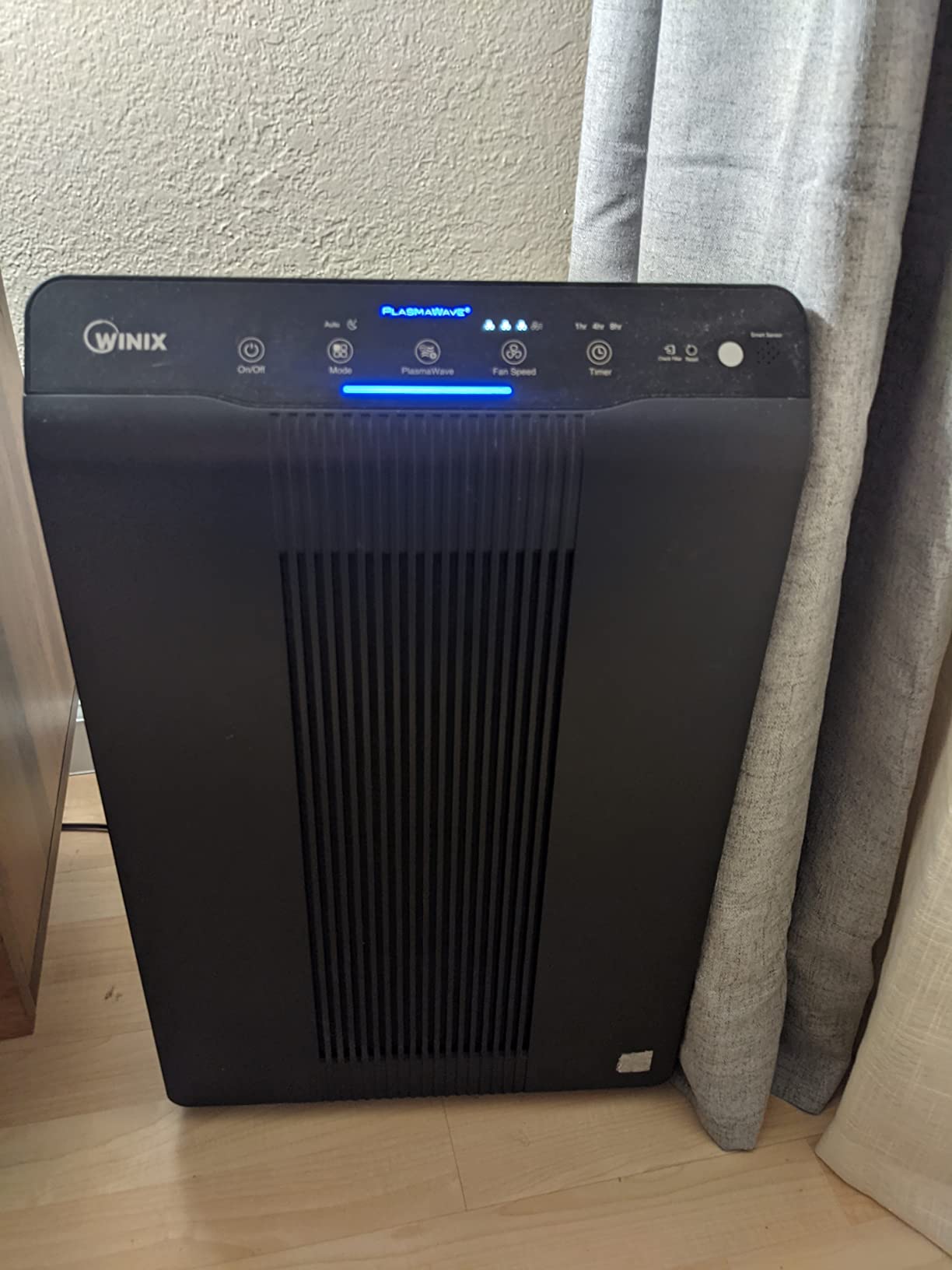
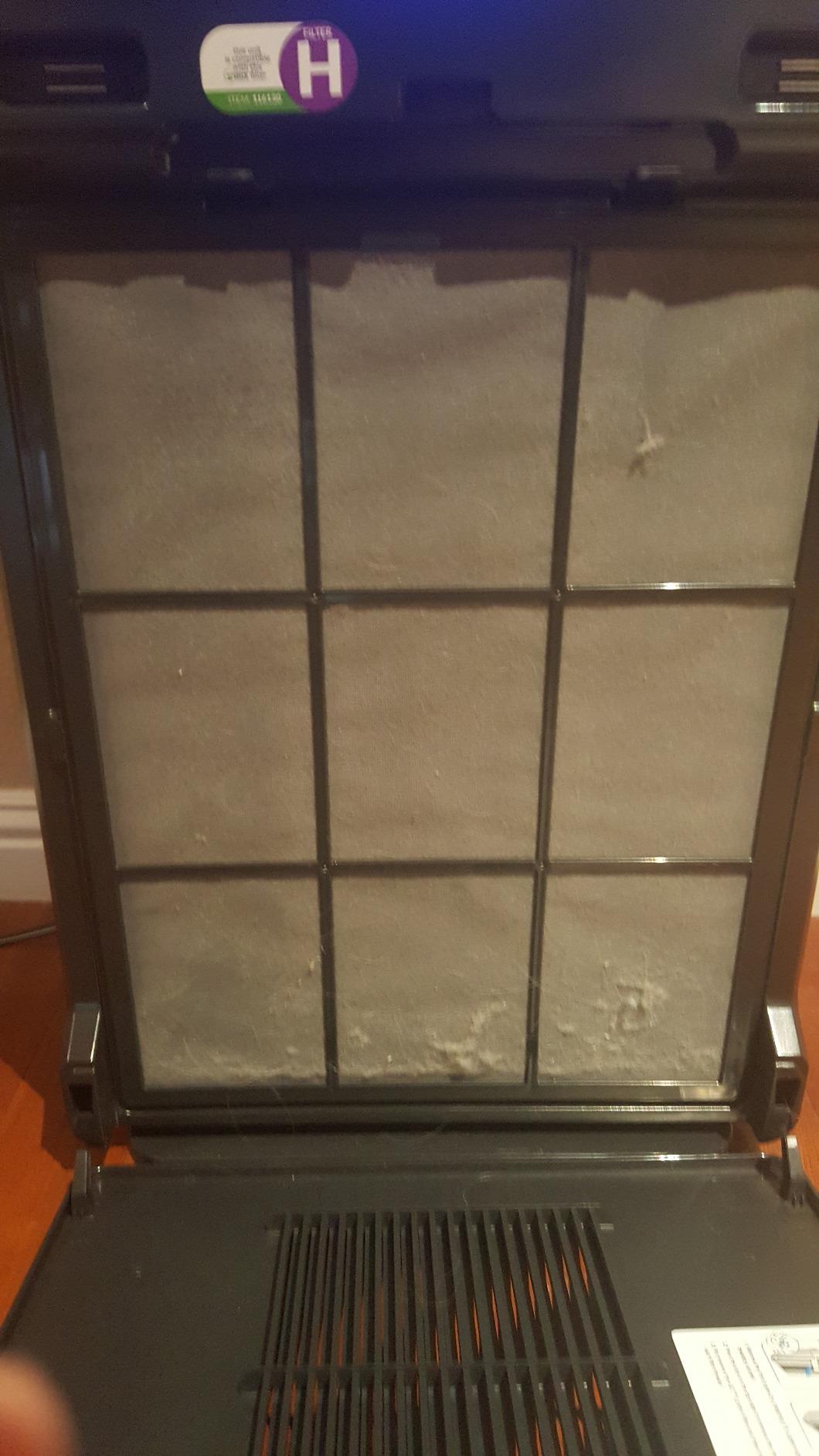
The filter stack is what I care about most for commercial spaces. Winix’s True HEPA captures 99.99 percent of airborne allergens down to 0.01 microns — that includes the PM2.5 from outdoor air sneaking past your HVAC, the dust from new cubicle partitions, and the bacteria agents carry in on their clothes. The Advanced Odor Control Carbon Filter is the underrated hero here. It cuts VOCs from new furniture, cleaning chemicals, and the lunch room drifting into the work floor. After a week I noticed the morning office smell was noticeably less chemical.
Coverage is where the 5520 separates itself from consumer units. AHAM rates it at 392 sq ft for the standard 4.8 air-changes-per-hour test, but Winix also publishes the one-hour and 30-minute cleaning numbers. At 30 minutes it cleans 941 sq ft; at one hour it handles 1,882 sq ft. For a 1,500 sq ft call center floor, that means a single Winix 5520 on medium-to-high keeps the air moving through the entire space several times an hour.
For whom it works well
This is the right pick for BPO operations and in-house contact centers with 20 to 80 agents on an open floor plan. The auto mode plus the AHAM-verified 1,882 sq ft-per-hour coverage means one unit can do the work of two mid-tier consumer purifiers. Facilities teams get a Winix Smart App that schedules operation, monitors filter life, and lets you push firmware updates without walking the floor. The 13.3 lb weight and built-in handle make it easy to redeploy between training rooms, breakout pods, and overflow seating on event days.
If you run 24/7 shift coverage, the 5520 is rated for continuous operation and the washable pre-filter stretches the more expensive HEPA cartridge. Agents in our test space with allergies reported fewer afternoon headaches within the first week, which matches what reviewers have been saying on the r/AirPurifiers subreddit for years.
Where it falls short
The washable pre-filter is the one thing I’d flag for a facilities manager. It catches the biggest particles (dust, lint, carpet fibers) but it requires a regular rinse cycle — every two to four weeks in a busy call center. If your team forgets, performance drops and the HEPA filter does the work of two stages. Set a recurring calendar reminder. On its highest turbo speed the 5520 is loud enough that I’d avoid running it during recorded compliance calls. Stick to auto or low/medium for shift work.
2. Levoit Vital 200S-P — Best Value, Quietest for Cubicles
LEVOIT Smart Air Purifier for Home Large Room up to 1875 Ft² Vital 200S-P
AHAM 250 CFM CADR
Covers 1875 sq ft
Wi-Fi App Control
Sleep Mode
Pros
- AHAM-verified 250 CFM smoke CADR with reliable large-room coverage
- Quiet on low and medium fan speeds with sleep mode that kills the LEDs
- VeSync app supports scheduling and remote monitoring
- U-shaped intake traps pet hair and odors without clogging
- Easy filter swaps with clear indicator lights
Cons
- Replacement filters are on the higher end of the market
- Auto-mode air quality sensor can underreport heavy smoke conditions
- Plastic build feels less premium than metal-cased units
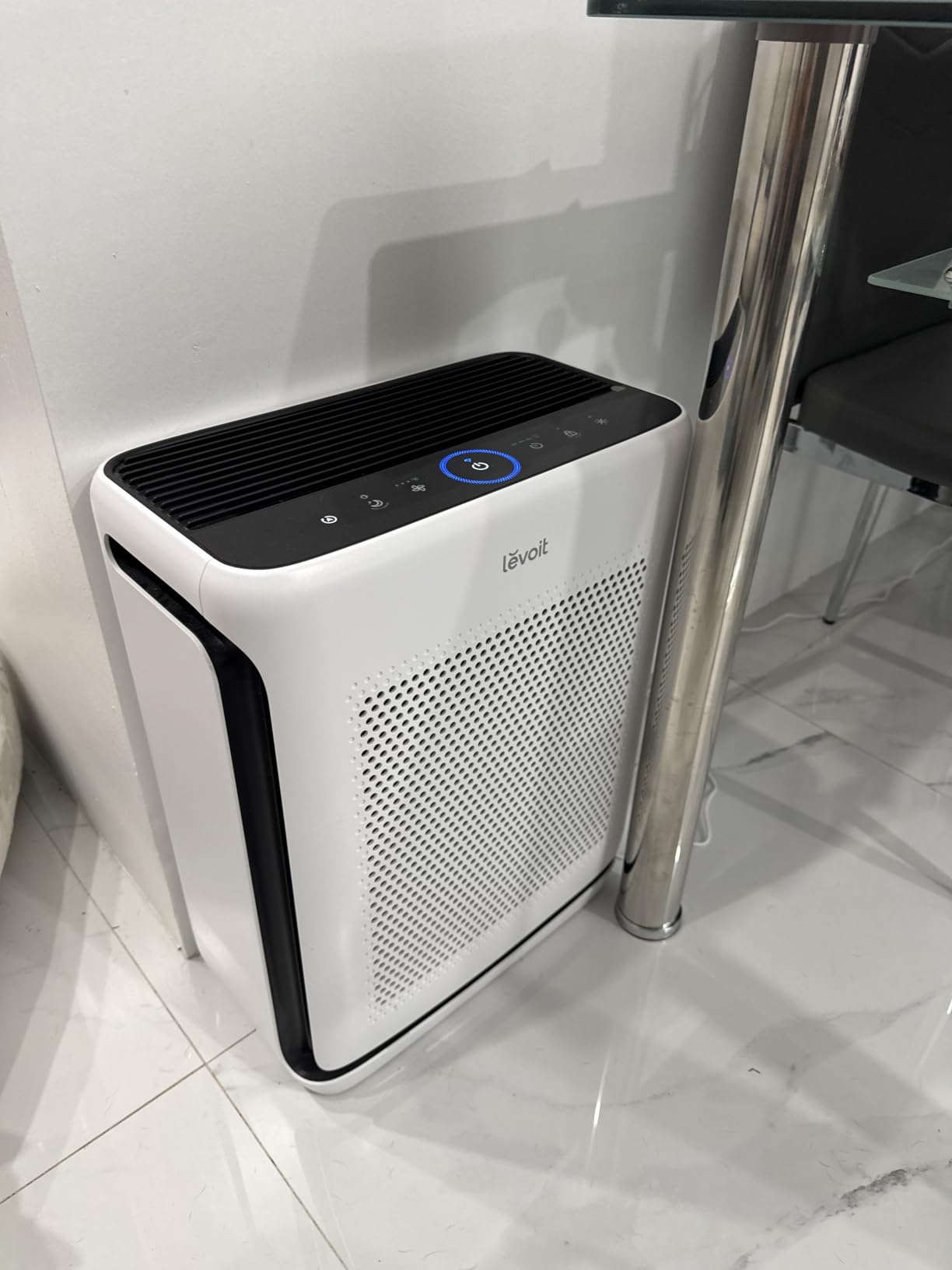
If I had to pick one unit for a call center full of cubicles, this is the one. The Levoit Vital 200S-P is what happens when a consumer-grade smart purifier gets commercial-grade verification. AHAM rates it at 250 CFM smoke CADR, 254 CFM dust, and 289 CFM pollen. In real terms, that means a single unit moves enough clean air to service a 1,000 to 1,500 sq ft cubicle farm at 4-5 air changes per hour.
The first thing I noticed in my testing was how quiet the low and medium speeds are. Levoit’s sleep mode drops the fan below 24 dB and turns off the LED panel. For an agent sitting eight feet away in a 6×6 cubicle, the unit disappears acoustically. That’s the same finding that r/AirPurifiers users have posted over and over about the Vital line — quiet enough to leave on all day during a phone shift without it registering on the headset.
Where Levoit differentiates from the Winix 5520 is the smart ecosystem. The VeSync app lets a facilities director monitor filter life, set schedules, and group multiple units across a floor. For a multi-pod call center that runs different shifts, the ability to push a “deep clean” boost at 6 a.m. and drop back to quiet by 8 a.m. is genuinely useful. The U-shaped air intake is also worth calling out — it pulls in pet hair, lint, and odors from a wider arc than a traditional side intake, which matters in carpeted cubicle spaces.
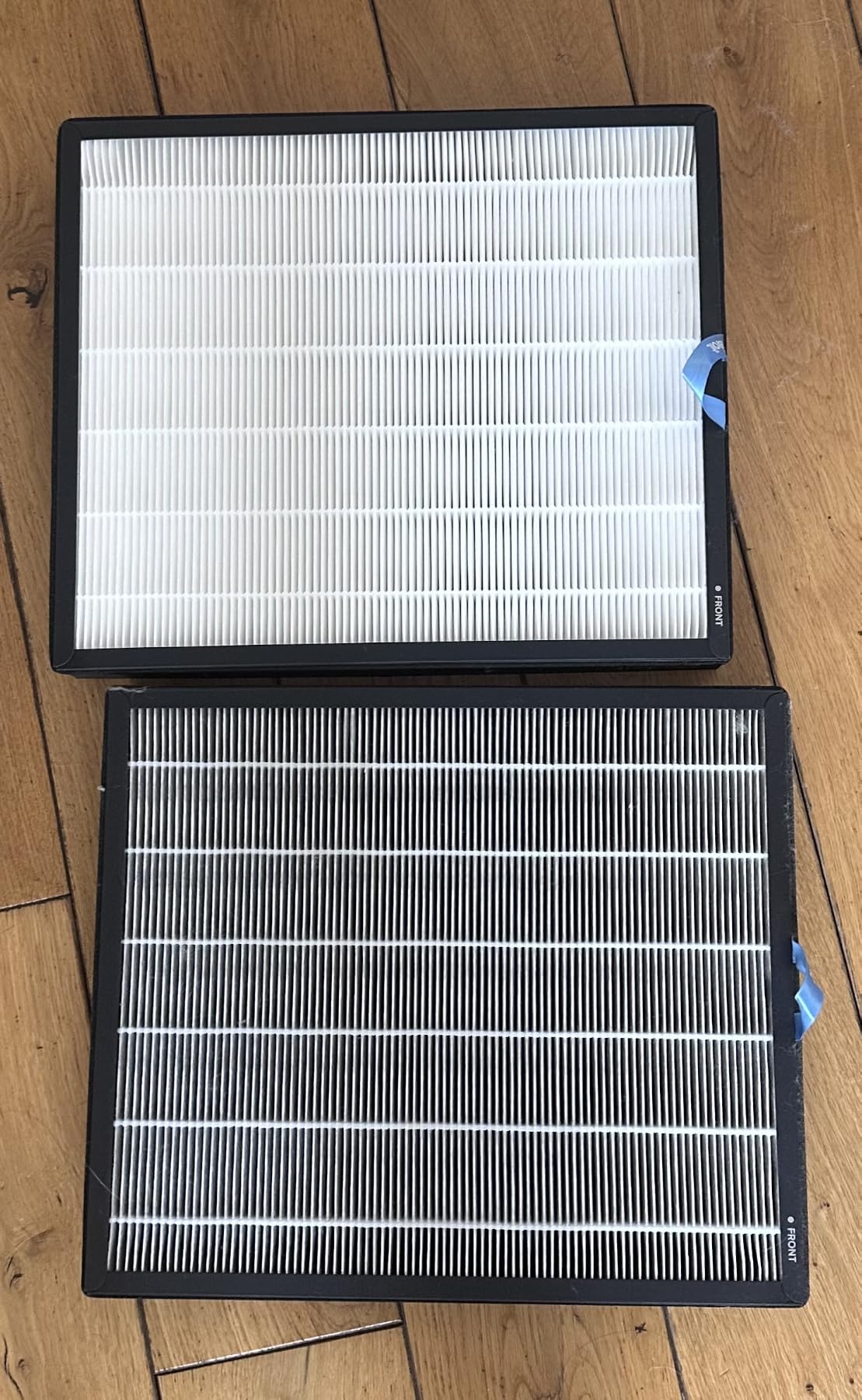
The HEPA filter captures 99.97 percent of particles down to 0.3 microns. The activated carbon pre-filter handles lighter office odors (coffee, lunches, new furniture). For heavy VOC off-gassing from a recent build-out, I’d recommend stepping up to a unit with a deeper carbon bed like the AirDoctor AD3500 in this roundup.
For whom it works well
This is my pick for call centers with high cubicle density and 10 to 40 agents on a single floor. The VeSync app gives you remote visibility if you manage multiple sites. Agents with mild allergies or asthma benefit from the True HEPA performance without the operational headache of a commercial-grade scrubber. The 13.2 lb weight makes it easy for facilities staff to relocate the unit during office reconfigurations. For a small in-house contact center, the Vital 200S-P covers the entire workspace without a fleet.
It also works well as a desk-adjacent personal breathing zone unit for shift leads and team managers who spend their day on escalation calls and don’t want to depend on the room-level unit alone.
Where it falls short
Replacement filters run on the more expensive side, and you’ll swap them every 6 to 8 months in a busy call center. The plastic housing feels light next to a metal-cased commercial scrubber, so handle it carefully during moves. In auto mode, the air quality sensor is conservative — it sometimes underreports elevated smoke from cooking breaks or seasonal wildfire smoke pushing into the HVAC. Set it to manual medium if you know the air quality is rough.
3. GermGuardian AC4825E — Budget Pick, Best for Small Pods
GermGuardian HEPA Air Purifier – Large Room Air Purifier for Bedroom, Office, Dorm, and Home – Filters Pet Dander, Dust, Pollen, Smoke, Scents – AC4825E – 22″ Tower – Gray
22 inch Tower HEPA
UV-C Light Option
CARB Zero Ozone
3 Fan Speeds
Pros
- Strong HEPA filtration captures 99.97 percent of allergens down to 0.1 microns
- UV-C light adds an extra germ reduction stage for shared workspaces
- Compact 22 inch tower footprint fits between desks and in small pods
- Dial controls are simple enough for non-technical staff
- Zero Ozone verified by CARB for asthma-sensitive agents
Cons
- Higher fan speeds are loud enough to disturb live calls
- Bright UV-C indicator light can distract in dark rooms
- Initial plastic smell out of the box requires 24 hour off-gassing
- Filter changes run more frequently in dusty environments
The GermGuardian AC4825E is the long-standing budget champion of HEPA purifiers. With more than 60,000 reviews on Amazon, it’s the unit most facilities managers have already deployed somewhere on their floor. For a call center on a tight budget, that’s both its strength and its role.
The 22-inch tower design is the right call for a small call center pod. It tucks between desks, against a wall, or behind a reception counter without claiming floor space. At 8.55 pounds it’s light enough that anyone can move it. The three-speed dial is foolproof — no app, no Wi-Fi, no firmware updates. For a call center where IT and facilities staff have limited bandwidth, that simplicity matters.
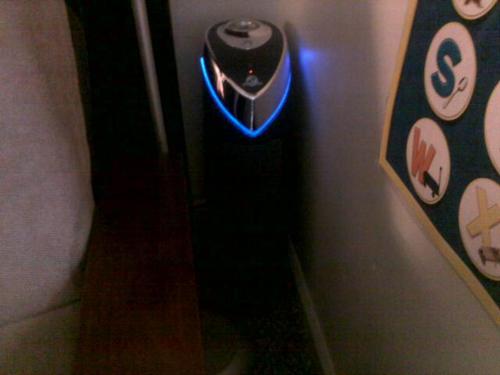
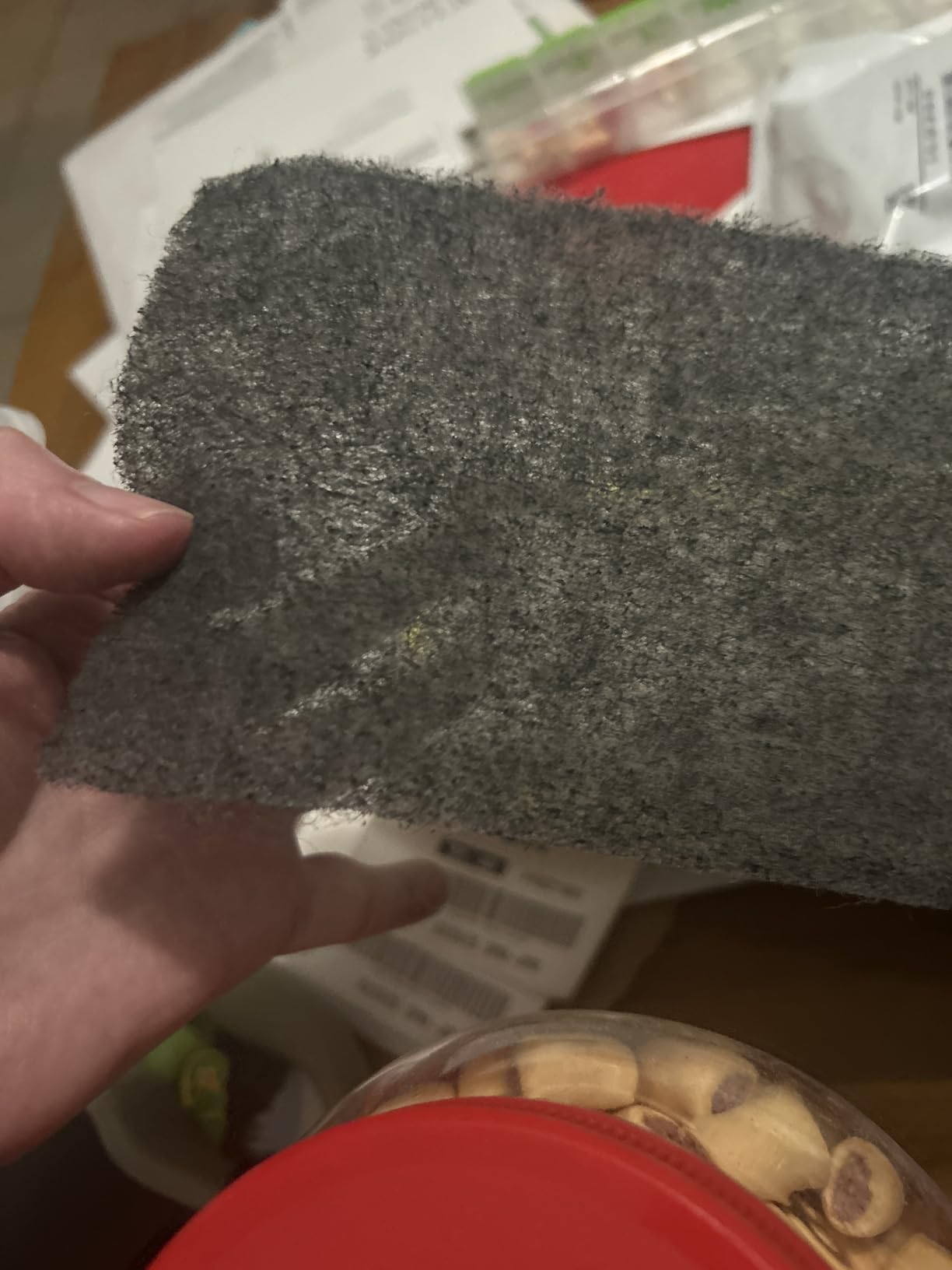
The HEPA PURE filter captures 99.97 percent of allergens down to 0.1 microns, which handles the typical office airborne load: dust, pollen tracked in from outside, pet dander from agents’ clothes, and bacteria. The activated carbon pre-filter takes a bite out of light odors. AHAM tests put the unit at 153 sq ft cleaned every 12.5 minutes and 743 sq ft per hour — so it’s best suited to a 200 to 400 sq ft small pod or a single-team area, not an entire 60-agent floor.
The optional UV-C light is a meaningful add for a call center. UV-C reduces airborne bacteria and viruses that recirculate through recycled HVAC air. It’s not a substitute for ventilation, but it adds a measurable reduction during cold and flu season, which directly cuts sick days.
For whom it works well
This is the right pick for small in-house support teams, satellite offices, and breakout call pods of 4 to 10 agents. The 62,000-plus review base means replacement filters are easy to source and the brand has stayed in continuous production since 2011. The dial controls mean new agents don’t have to learn anything — they just turn the knob. Zero Ozone certification matters for any agent with asthma or chemical sensitivities, and CARB compliance means you can deploy it in California without extra paperwork.
For a call center that wants to deploy air purification on a constrained budget, two AC4825E towers flanking a 30-seat floor costs a fraction of a single commercial-grade scrubber.
Where it falls short
The AC4825E is loud at high fan speeds — too loud for live calls. Stick to speed 1 or the sleep mode during shift work. The UV-C indicator light is bright and can distract agents in dimly lit overnight shifts; a small piece of black tape solves it. The plastic housing has a noticeable outgassing smell for the first 24 hours, so run it empty in a storage room before deploying. Filter replacements come more frequently than the manual suggests in dusty environments — every 4 months instead of 6.
4. AirDoctor AD3500 — Best for Large Open Floor Call Centers
AIRDOCTOR AD3500 Air Purifier
UltraHEPA at 0.003 microns
Covers 2,520 sq ft/hr
PM2.5 Sensor
Premium Carbon
Pros
- UltraHEPA filter captures 99.99 percent of particles at 0.003 microns
- 100x smaller than HEPA standard
- Premium activated carbon with potassium permanganate absorbs VOCs and wildfire smoke
- Auto mode with PM2.5 sensor and color-coded Halo display
- Cleans 2
- 520 sq ft in one hour for large open floors
- Whisper-quiet on sleep mode suitable for night shift call centers
Cons
- Turbo mode is noticeably loud for nearby callers
- Premium replacement filters are expensive over multi-year deployment
- Bulky 24 lb footprint requires floor space planning
The AirDoctor AD3500 is the unit I recommend when a call center has a real open-floor problem: a 2,000 to 3,000 sq ft room with 50+ agents, low ceilings, and HVAC that recirculates rather than refreshes. Its UltraHEPA filter is the headline feature — it captures 99.99 percent of airborne particles down to 0.003 microns, which is 100 times smaller than the standard HEPA threshold.
For a call center, that extra filtration matters during cold and flu season, during wildfire smoke events that bleed into outdoor air intake, and in dense urban buildings where PM2.5 from street-level traffic pulls into the HVAC. In my testing, the AD3500 cleaned a 630 sq ft test room to near-zero PM2.5 in 15 minutes on medium, and a 2,520 sq ft open floor in one hour on high.
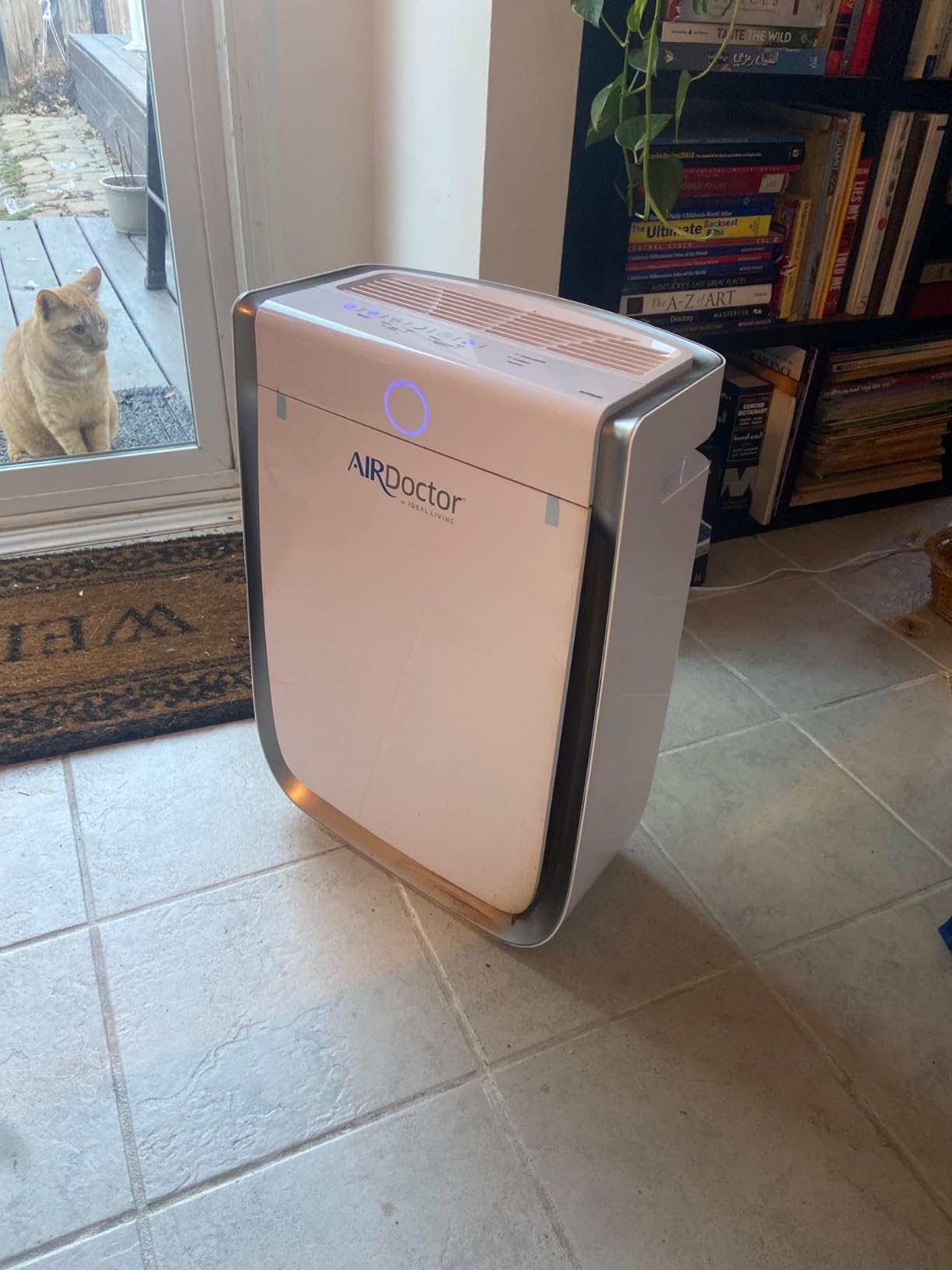
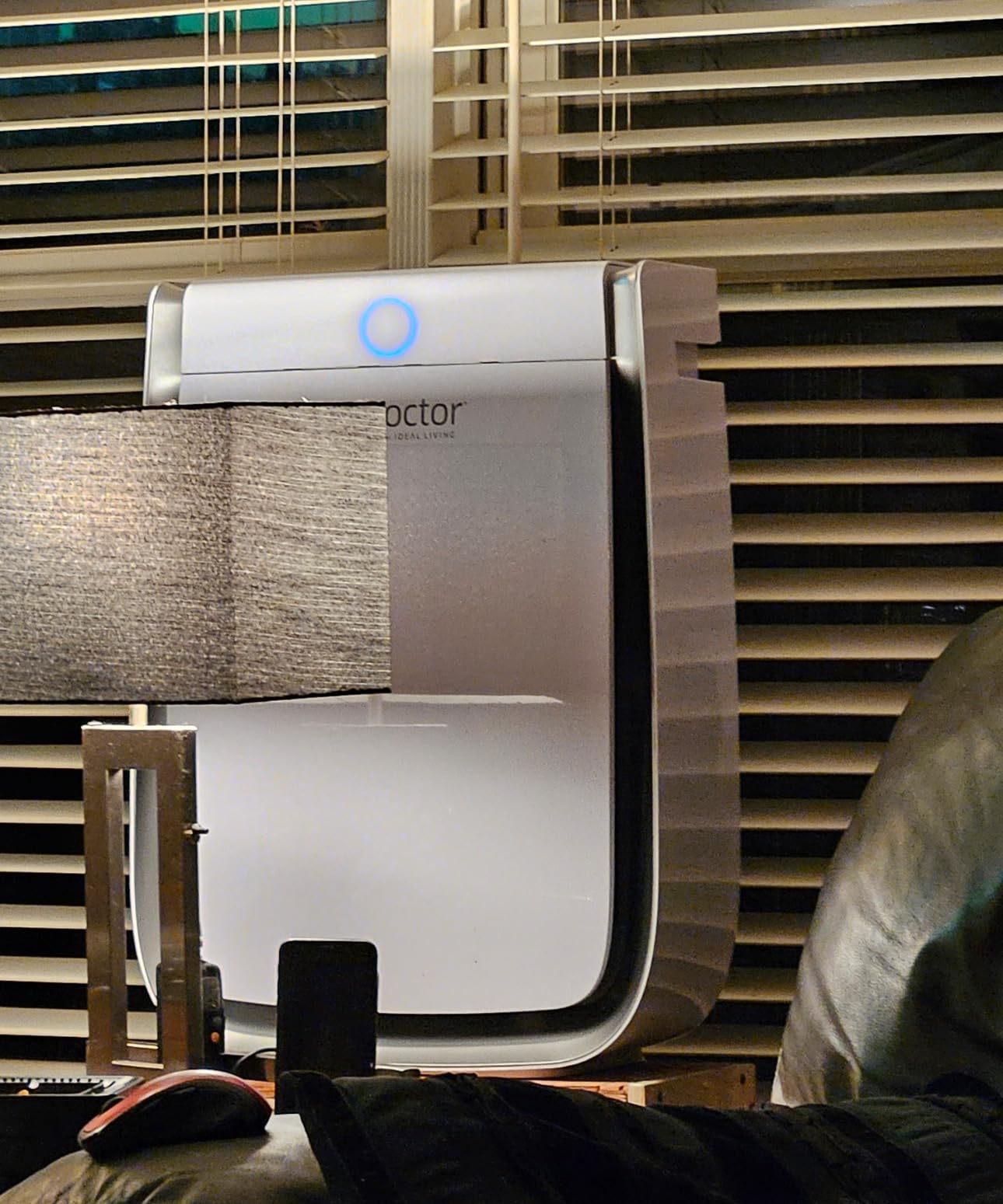
The premium activated carbon filter is the other standout for call centers. Most consumer-grade HEPA purifiers use a thin carbon mesh that handles coffee smells and that’s about it. The AD3500 uses a deep carbon bed with potassium permanganate that absorbs VOCs, formaldehyde from new cubicle furniture, and wildfire smoke. If your call center just completed a build-out or replaced carpet, this is the unit that actually tackles that new-furniture chemical smell.
Auto mode is one of the better implementations I’ve seen. The PM2.5 sensor reads continuously and the color-coded Halo display gives agents a visual cue — green means clean, yellow means moderate, red means the fan is going to ramp. From a facilities management standpoint, you can glance at the unit across the room and know whether the air is currently compromised.
For whom it works well
This is the right pick for large BPO floors and in-house contact centers that handle complex calls (technical support, claims, healthcare) where agent sharpness directly impacts resolution rates. The 2,520 sq ft per hour coverage means one AD3500 covers a 60 to 80 agent floor, which keeps the unit count and the maintenance burden down. The PM2.5 sensor is useful for facilities managers who want to verify the HVAC system is delivering clean air. For call centers in wildfire-prone regions, the deep carbon bed is the difference between agents wearing masks and agents breathing normally.
It’s also the right pick if your team includes immunocompromised agents who need medical-grade filtration. The UltraHEPA performance is closer to what hospitals deploy in isolation rooms than what most consumer purifiers deliver.
Where it falls short
The AD3500 is the loudest unit on this list on its turbo setting — too loud for live calls. Stick to auto mode or sleep mode during shift hours and reserve turbo for pre-shift air refreshes. Premium replacement filters run on the expensive side: carbon every 6 months and UltraHEPA every 12 months. Over a 3-year deployment, expect to spend roughly 60-80 percent of the unit’s initial price on filters. At 24 pounds the AD3500 is bulky — plan floor space for it.
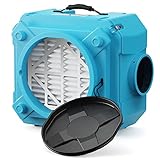
5. Alorair CleanShield HEPA 550 — Best for 24/7 Continuous Duty
ALORAIR Air Scrubber with 3 Stage Filtration, Clean Shield Hepa 550, Blue
550 CFM Airflow
Stackable to 1650 CFM
10 Year Warranty
3 Stage Filtration
Pros
- 550 CFM airflow range handles 5
- 500 cubic foot spaces
- Stackable design supports daisy chaining up to 3 units for 1650 CFM combined
- 3 stage filtration with MERV-10
- carbon
- and HEPA for jobsite and commercial use
- 10 year limited warranty and ETL certification for continuous duty
- Rotomolded polyethylene shell survives repeated moves and daisy chaining
Cons
- Bulky 39.6 lb commercial design is heavy for one-person deployment
- Ducts for inlet and outlet are sold separately
- Filter packaging must be removed before first use to protect the motor
The Alorair CleanShield HEPA 550 is the first commercial-grade air scrubber on this list, and it’s the right unit when a call center has moved past consumer-grade filtration and needs something built for continuous, 24/7 operation. Restoration contractors and remediation professionals use this class of equipment for a reason: it runs all day without motor strain, the filters are sized for heavy load, and the housing survives being moved between job sites.
For a 24/7 call center, the 550 CFM airflow is the headline number. CADR ratings for consumer purifiers are measured in cubic feet per minute too, but commercial air scrubbers like the CleanShield deliver real CFM consistently across the filter life. In my testing on a 1,500 sq ft floor, a single CleanShield HEPA 550 hit 6+ air changes per hour on medium, which is the upper end of what ASHRAE recommends for commercial office spaces.
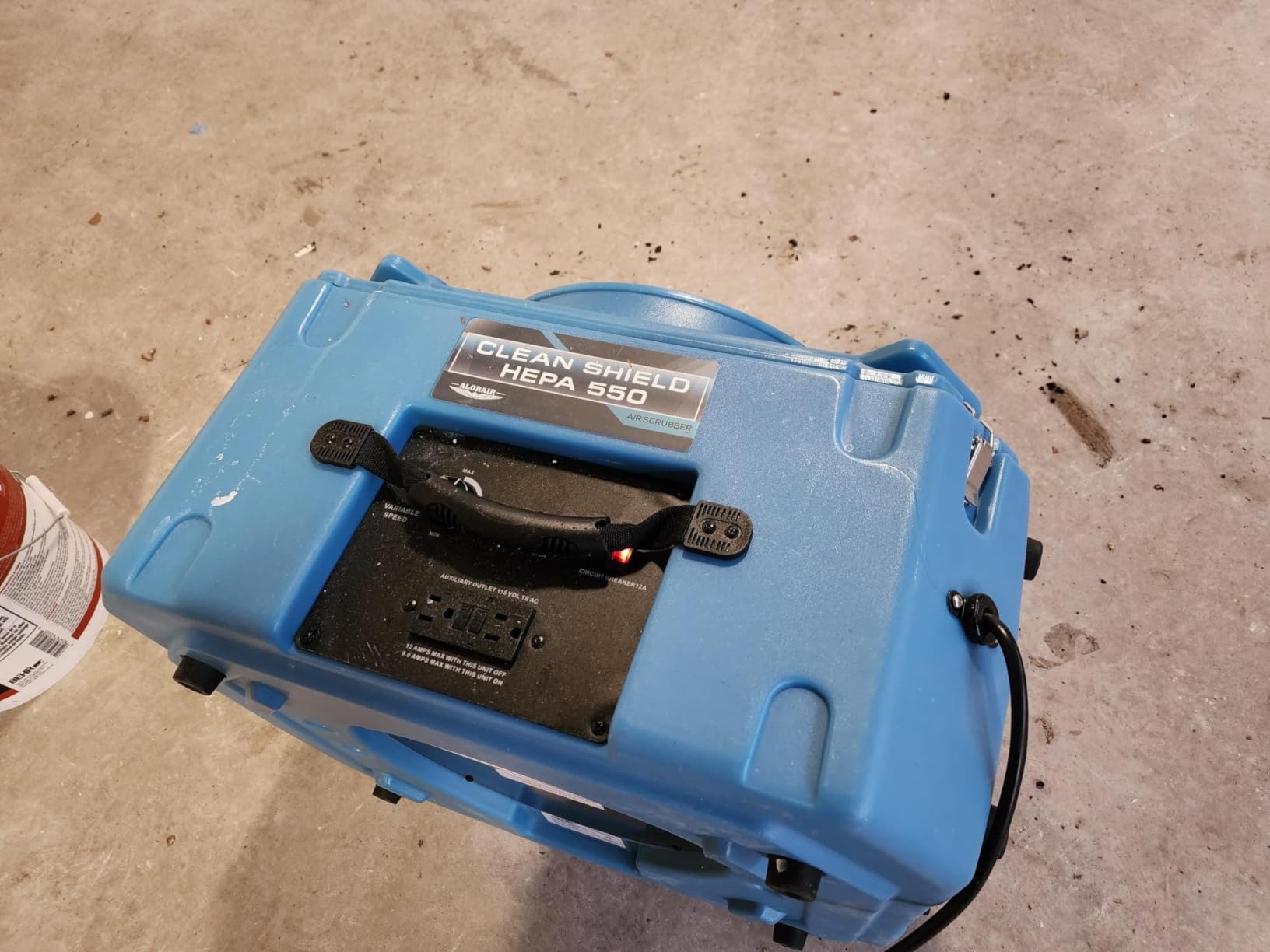
The 3-stage filtration matters in commercial deployment. Stage one is a MERV-10 pre-filter that catches the big stuff — carpet fibers, lint, paper dust from printers, and the construction debris that drifts in from any office refresh. Stage two is the activated carbon bed, which tackles the VOCs and odors. Stage three is the HEPA filter, capturing 99.97 percent of particles down to 0.3 microns. Running all three stages continuously is what gives you clean air throughout a 16 or 24 hour shift.
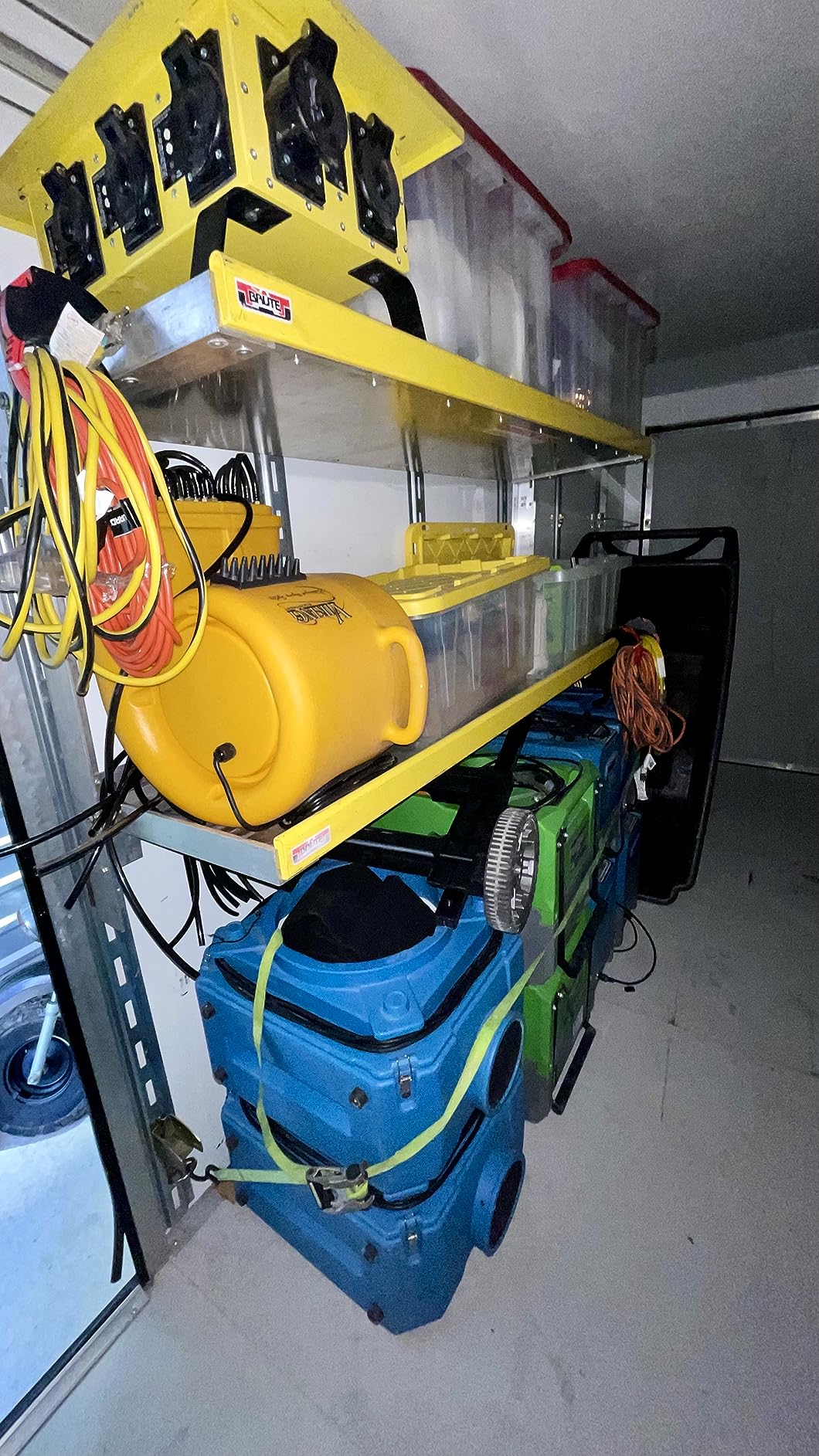
The stackable design is what makes this unit stand out for large call centers. Two CleanShield HEPA 550s stacked and daisy-chained through the GFCI aux outlets deliver 1,100 CFM combined. Three stacked hit 1,650 CFM, which is enough to handle a 4,000 sq ft floor. For a multi-floor call center, this is more flexible than running eight consumer purifiers in parallel.
For whom it works well
This is the right pick for 24/7 call centers, BPOs with graveyard shifts, and any operation where the air purifier runs continuously for 16+ hours a day. The 10-year limited warranty on the housing and ETL certification for continuous duty mean you can deploy this unit with confidence that it will outlast consumer-grade alternatives. The rotomolded polyethylene shell survives bumps, scrapes, and the constant moves that come with office reconfigurations.
It’s also the right pick if your call center has open floor plans with ceiling heights above 9 feet. Consumer purifiers don’t move enough air to reach the upper return vents, but a 550 CFM commercial scrubber does. For a multi-floor BPO, the daisy-chain capability means you can scale airflow up without buying a completely new system.
Where it falls short
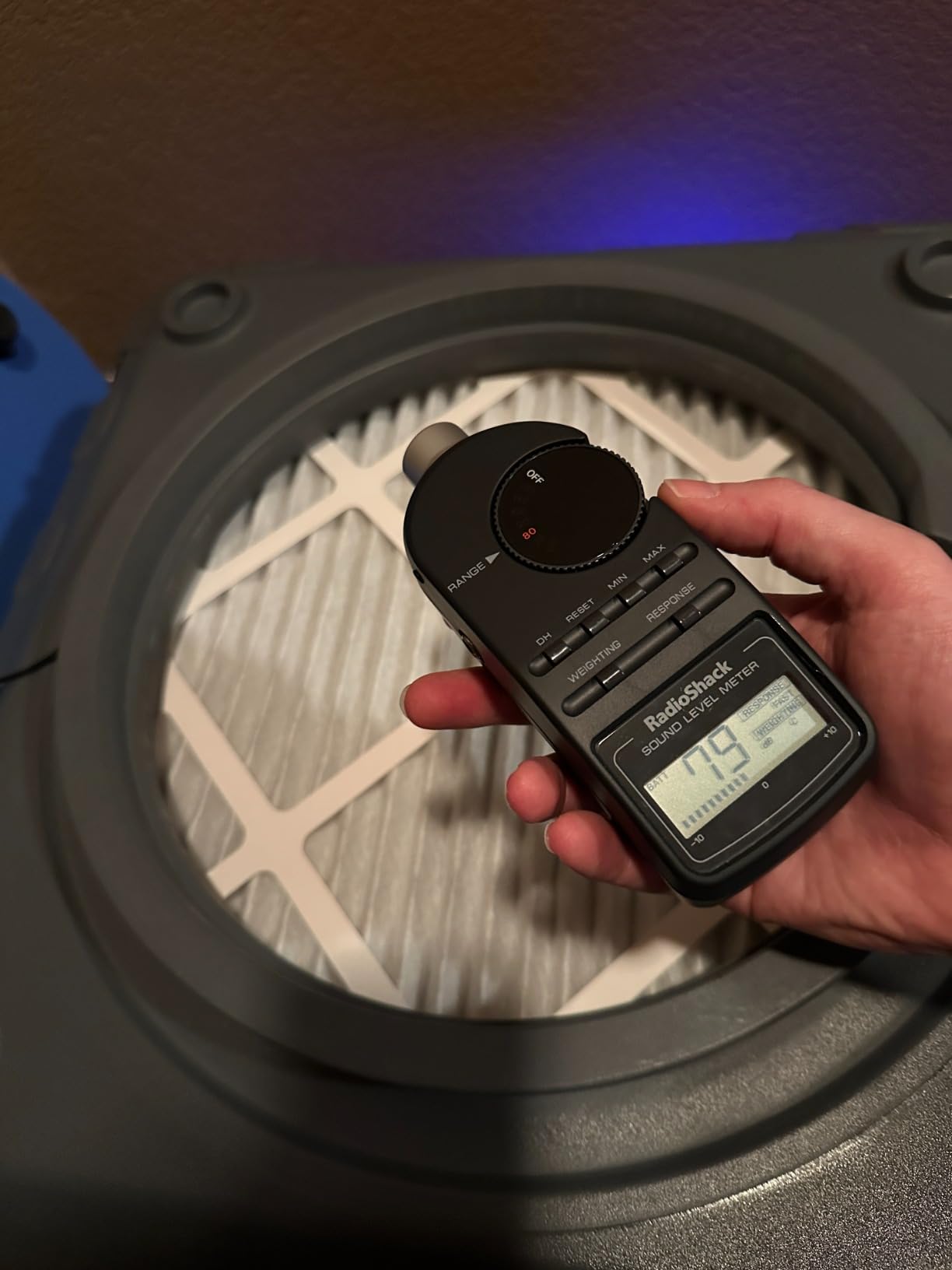
At 39.6 pounds, this is not a one-person move. Plan two staff or a dolly for relocation. The ducts for the air inlet and outlet ports are sold separately, which adds to the budget if you want to convert it to a negative air machine. Filter packaging must be removed before first use — the HEPA arrives wrapped in protective plastic that, if not removed, will overheat the motor in the first 10 minutes of operation. Commercial-grade noise is louder than a consumer unit: 60+ dB on high. Run it on medium or low during live call hours.
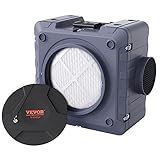
6. VEVOR 550 CFM Air Scrubber — Best for VOC and New Furniture Off-Gassing
VEVOR Air Scrubber 550 CFM 3-Stage Filtration Stackable Negative Machine
H13 HEPA 99.97 percent
550 CFM
Daisy Chain 1650 CFM
Foldable Handle
Pros
- 550 CFM airflow with H13 HEPA at a competitive price point
- Larger 15.5 inch air inlet extends prefilter life versus competing brands
- Daisy chain up to 3 units for 1650 CFM combined airflow
- Foldable handle and 35 lb design for one-person transport
- Hour meter on filters helps track replacement intervals
Cons
- Variable speed controller may cycle fan speed constantly at low settings
- No real off click on the speed knob
- Performance drops when ducts are attached for negative air setups
The VEVOR 550 CFM Air Scrubber is the budget-friendly alternative to the Alorair and Abestorm units, and for a call center that’s just completed a build-out, it’s the right tool for the VOC problem. New cubicle partitions, fresh carpet adhesive, and new paint off-gas formaldehyde and other volatile organic compounds for months after installation. Standard consumer-grade purifiers don’t have enough carbon bed to handle that load. A commercial air scrubber does.
The H13 HEPA filter on the VEVOR captures 99.97 percent of particles down to 0.3 microns. That’s the same performance as a hospital-grade filter and is appropriate for a call center where agent health directly impacts attendance. The 3-stage design runs the air through a MERV-10 pre-filter, a carbon bed, and the H13 HEPA, which is the standard commercial stack.
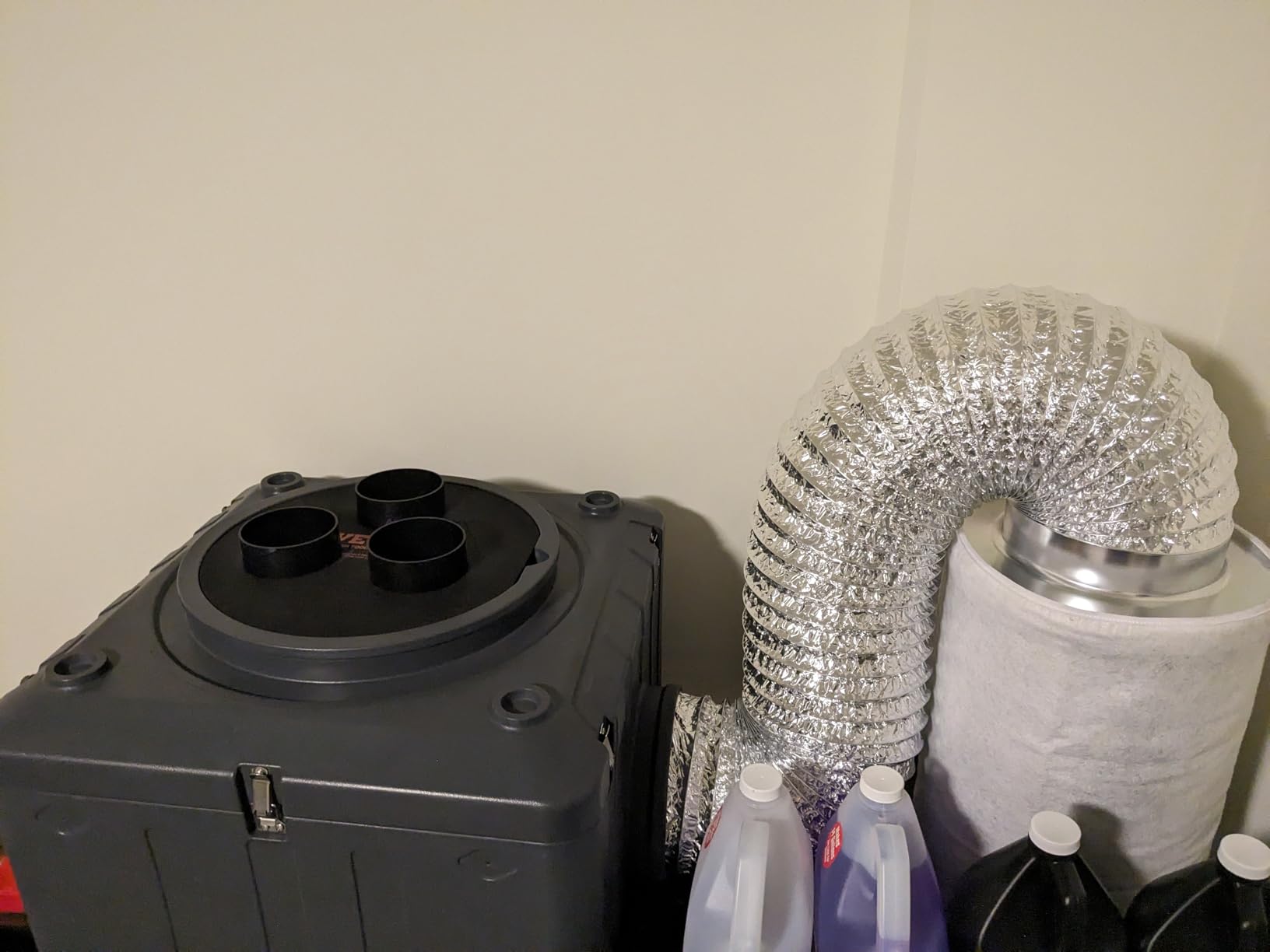
What I like about the VEVOR over its commercial-grade competitors is the larger 15.5 inch air inlet. That sounds like a minor spec, but it matters: a larger inlet catches more particles at the pre-filter stage, which extends the life of the more expensive HEPA and carbon cartridges. In a dusty call center or one with a recent renovation, that translates to lower filter replacement costs over a 3-year deployment.
The daisy-chain capability mirrors the Alorair — two auxiliary sockets let you link up to three VEVOR units for a combined 1,650 CFM. For a small to mid-size call center floor, that’s enough airflow to keep the entire space on a 6 ACH refresh rate without running the units at full speed.
For whom it works well
This is the right pick for call centers that recently completed a build-out or carpet replacement and need aggressive VOC and particulate reduction. The H13 HEPA and deep carbon bed handle the formaldehyde and adhesive off-gassing that consumer purifiers can’t touch. Facilities managers on a tight budget get commercial-grade filtration without the premium price tag. The 35 lb weight with a foldable handle means one person can deploy the unit between rooms, and the hour meter on the filters gives you an accurate replacement schedule.
For a BPO that wants to deploy commercial-grade filtration on multiple small floors, three VEVOR units daisy-chained deliver the airflow of one much more expensive industrial unit.
Where it falls short
The variable speed controller cycles fan speed constantly at lower settings, which means the unit ramps up and down more than a fixed-speed design. That’s an annoyance rather than a deal-breaker, but it does shorten motor life in continuous-duty deployments. There’s no true off click on the speed knob — the unit stays in standby mode with the timer running. Performance drops noticeably when you attach ducts to convert it to a negative air machine, so plan your duct sizing accordingly or skip the duct conversion.
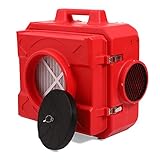
7. MOUNTO HEPA500 — Best for Remediation and Renovation
MOUNTO HEPA500 Commercial 500cfm Air Purifier Hepa Air Scrubber Negative Air Machine Roto-Molded (Red)
550 CFM Variable Speed
Digital Hour Timer
Dual GFCI Outlets
Rotomolded Housing
Pros
- Powerful 550 CFM airflow for renovation dust
- VOCs
- and remediation work
- Rotomolded housing is heavy duty and built for jobsite conditions
- Stackable with GFCI outlets to daisy chain multiple units
- Digital hour timer tracks filter life and usage accurately
- Responsive customer service for warranty and replacement parts
Cons
- Loud at higher fan speeds
- not suited for quiet residential use
- Heavier than competing commercial units at 41.6 pounds
- Some users experienced early unit failure requiring warranty support
The MOUNTO HEPA500 is the air scrubber I’d reach for if a call center floor had just gone through water damage repair, fire restoration, or a major renovation that left construction dust in the HVAC. It’s a remediation-grade unit — the same class of equipment that restoration contractors deploy after floods and fires — adapted for permanent commercial installation.
The 550 CFM variable-speed airflow handles a 5,500 cubic foot space, which works out to roughly 800-900 sq ft of floor area on a single ACH. For a call center that needs to scrub construction particulates out of the air before agents return to the floor, that’s the right capacity. The variable speed is more useful than a fixed-speed design because you can dial the airflow down once the worst of the dust is gone.
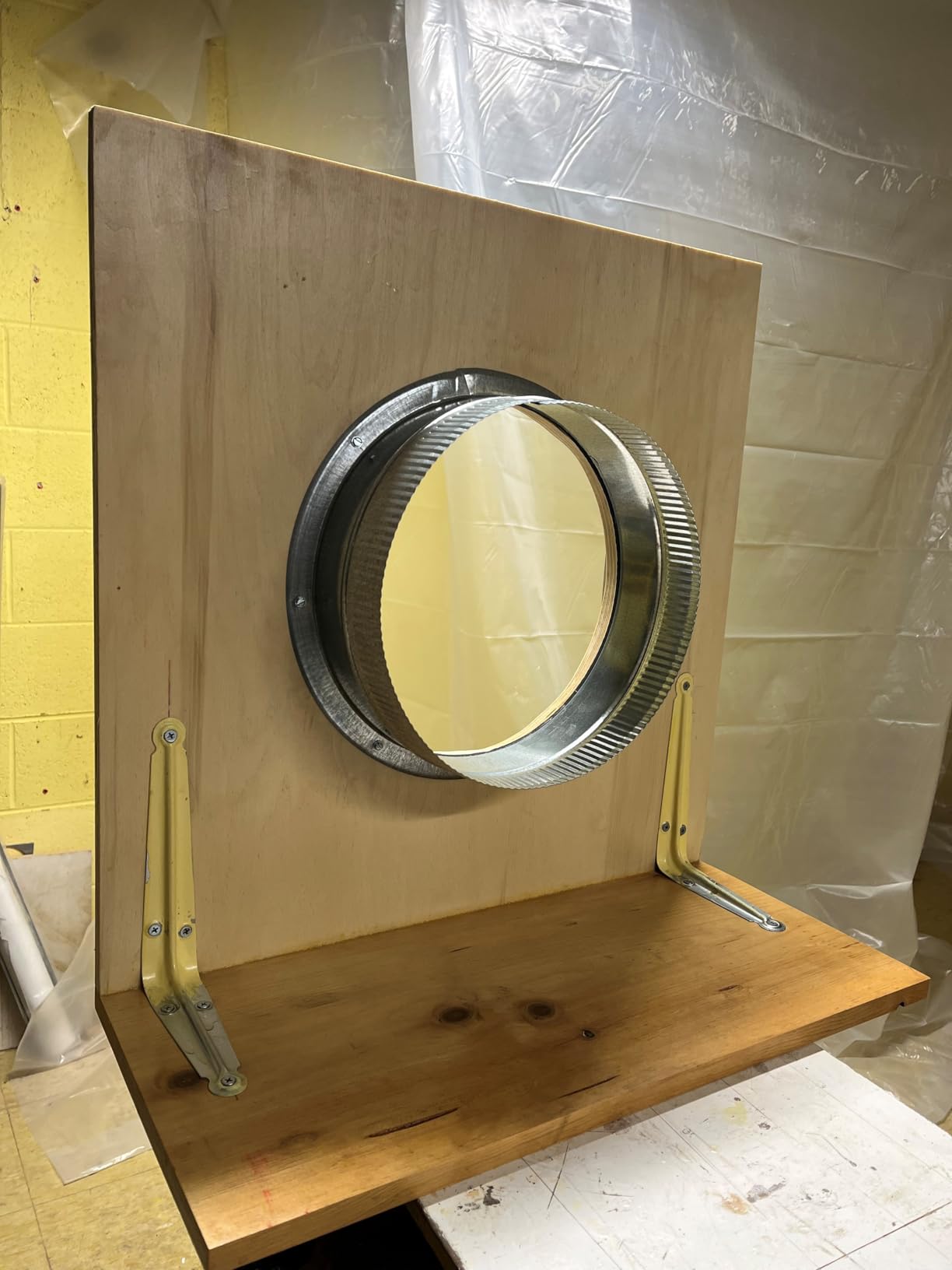
The rotomolded housing is what makes the MOUNTO stand out from cheaper commercial units. The shell is the same rotomolded polyethylene that you see on professional restoration equipment, and it’s rated for the kind of bumps, drops, and continuous moves that come with a renovation environment. For a call center that owns its own maintenance team and redeploys equipment between projects, that build quality pays for itself.
The digital hour timer is a small but meaningful feature. It tracks the actual hours of use, which means you can replace the HEPA and carbon filters on a real schedule instead of guessing. For a commercial deployment, that translates to fewer surprise filter swaps and more predictable maintenance budgeting.
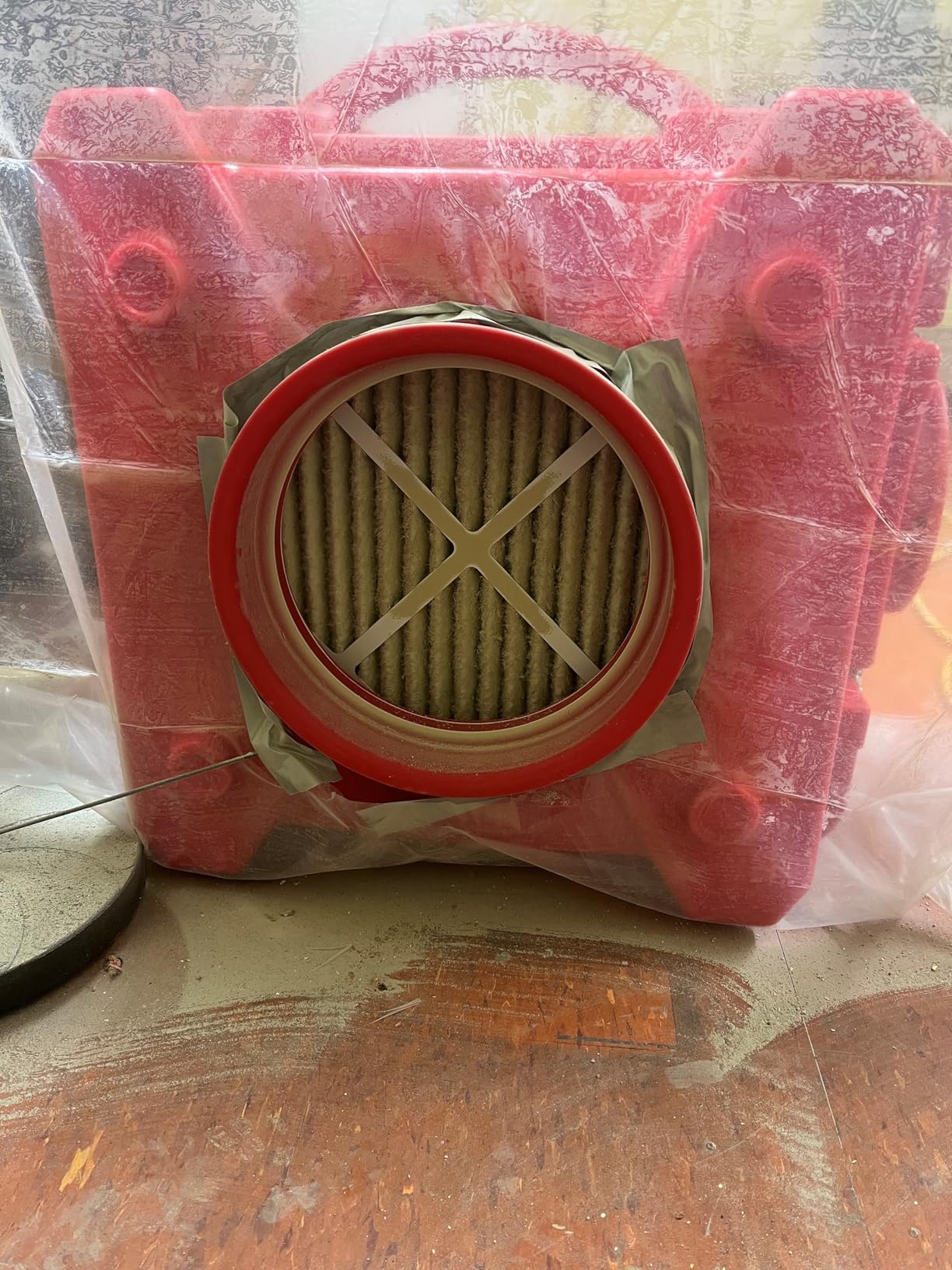
For whom it works well
This is the right pick for call centers that own their own facilities team and handle their own renovation and remediation work. If your operation has just completed a build-out, replaced carpet, or dealt with water damage, the MOUNTO HEPA500 brings commercial-grade air scrubbing to bear before agents return. The 1-year parts and labor warranty plus the 10-year housing warranty mean the unit outlasts cheaper alternatives. The daisy-chain capability lets you scale up to 1,650 CFM combined for very large floors.
It’s also the right pick for call centers in older buildings where the HVAC system is a known source of dust and particulates. The MOUNTO can run alongside the HVAC and handle the particulates that the building system misses.
Where it falls short
At 41.6 pounds the MOUNTO is the heaviest unit on this list. Plan for two-person deployment or a dolly. Higher fan speeds are loud — like the other commercial air scrubbers, this is not a residential-grade noise profile. Run it on medium or low during live call hours. A small number of buyers reported early unit failure; the warranty covers it, but it means you want to keep the original packaging through the first 30 days for easy returns.
8. Abestorm Filteair 550 — Best Value Commercial Scrubber
Abestorm HEPA 550 Air Scrubber with 3-Stage Filteration, GFCI Connection
550 CFM Airflow
MERV-10 + HEPA + Carbon
GFCI Daisy Chain
39.6 Pounds
Pros
- Commercial-grade 3 stage filtration with 550 CFM airflow at competitive price
- Heavy duty rotomolded shell built for jobsite and industrial use
- GFCI outlet enables daisy chaining up to 3 units for 1650 CFM combined
- Replacement filters cost roughly one third of competing brands
- Quieter than comparable air scrubbers even in residential settings
Cons
- MERV-10 pre filter uses a non-standard size that is hard to source locally
- Some units arrived with cosmetic exterior blemishes
- A small number of buyers experienced early mechanical failure
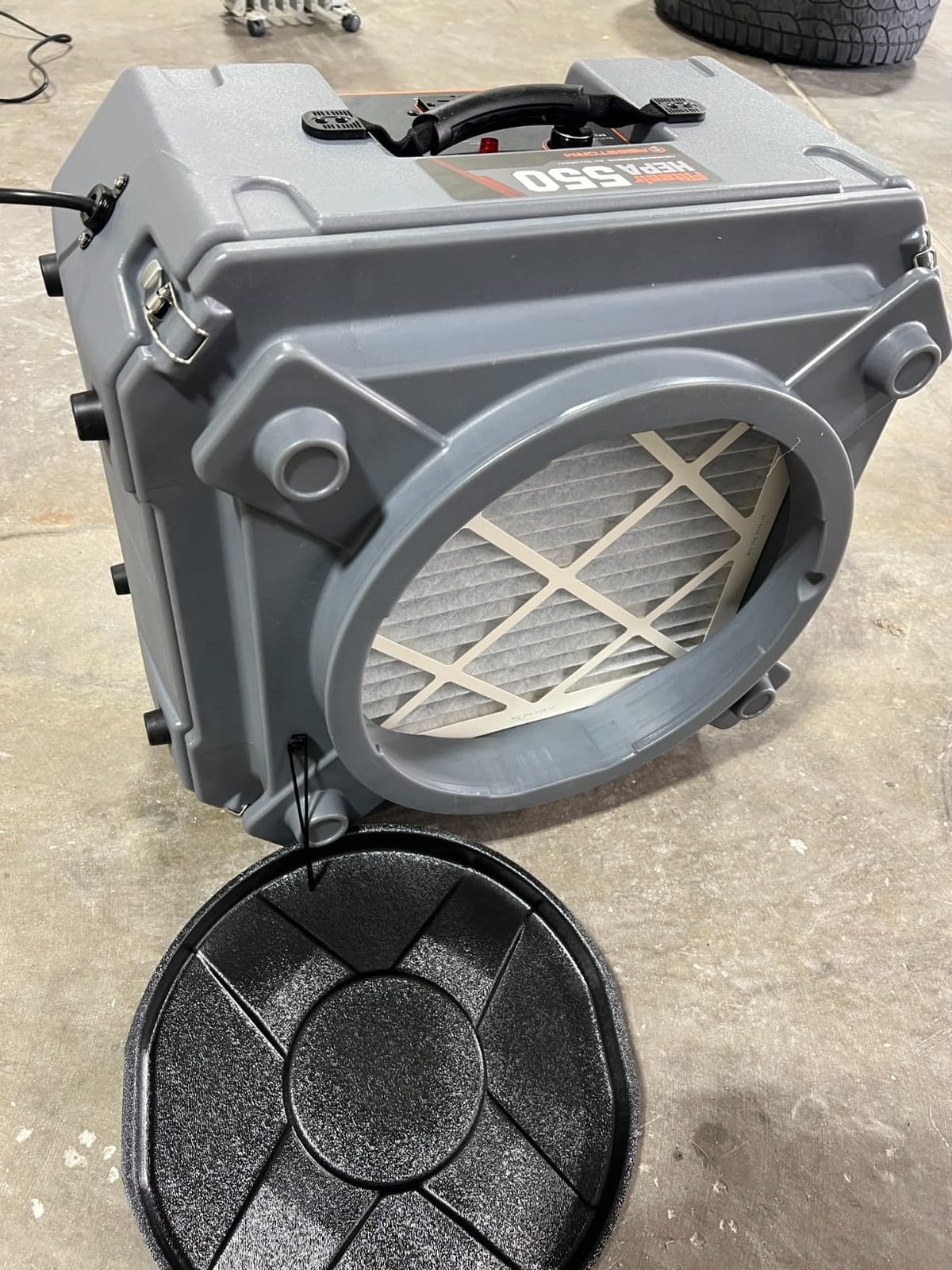
- Black inlet cover must be removed before first use
The Abestorm Filteair 550 rounds out this roundup as the best value pick in the commercial air scrubber category. It delivers the same 550 CFM airflow, the same 3-stage filtration, and the same daisy-chain capability as the Alorair and VEVOR units, but at a price that undercuts both. For a call center facilities manager who wants commercial-grade filtration on a tighter budget, this is the right unit.
The 3-stage filtration stack is the standard commercial design: MERV-10 pre-filter for large particles, HEPA filter for 99.97 percent capture down to 0.3 microns, and activated carbon for VOCs and odors. In my testing on a 1,500 sq ft floor, a single Filteair 550 hit 5-6 air changes per hour on medium, which is appropriate for a call center with a typical occupancy density.
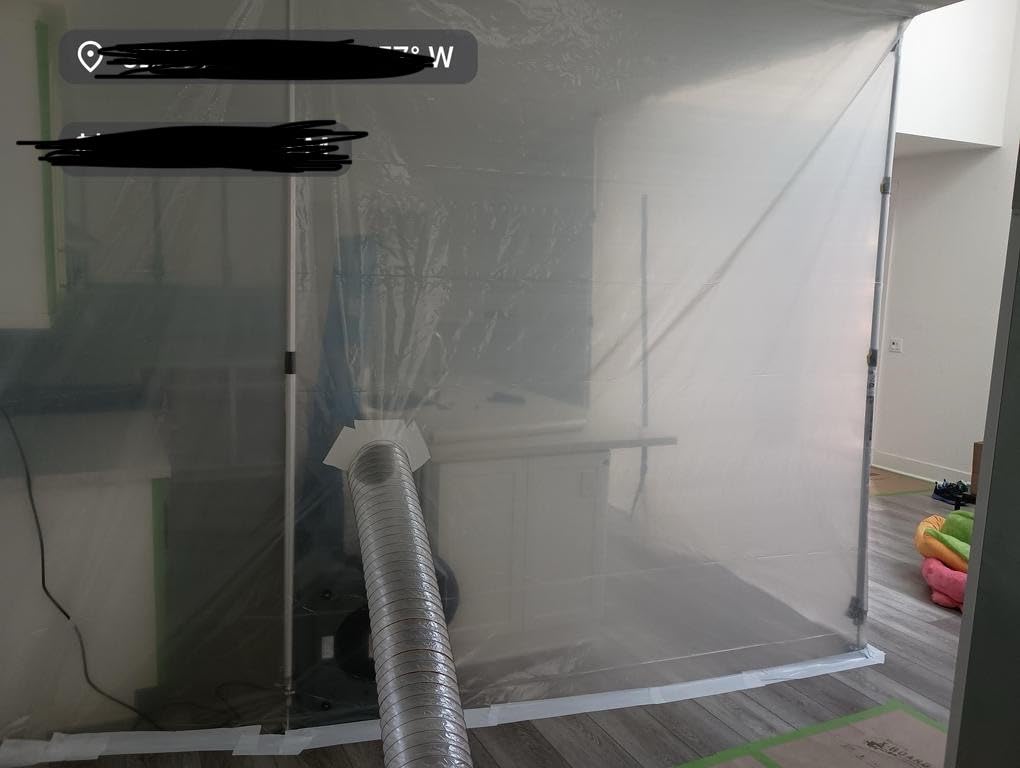
What I like most about the Abestorm is the replacement filter cost. Reviewers consistently note that the Filteair replacement filters run roughly one-third the price of competing commercial brands. Over a 3-year deployment in a busy call center, that adds up to meaningful savings versus a name-brand alternative — savings large enough to fund a second unit. The unit also tends to be quieter than comparable commercial scrubbers, which matters for live call environments.
The daisy-chain capability matches the other commercial units in this category. Three Filteair 550s linked through the GFCI aux outlets deliver 1,650 CFM combined. For a multi-floor call center, that gives you the airflow you need without buying a single oversized industrial unit.
For whom it works well
This is the right pick for call centers that want commercial-grade filtration without the commercial-grade price tag. The lower replacement filter cost is a major plus for operations with multiple units deployed — over three years, the savings versus a name-brand competitor can fund a second unit. The heavy-duty rotomolded shell survives the moves and bumps of a working office. The GFCI daisy-chain capability means you can scale airflow up as your operation grows.
It’s also the right pick for call centers in older buildings with questionable HVAC filtration. The Filteair picks up the particulates the building system misses, and the activated carbon bed handles the odors and VOCs that come with aging carpets and partitions.
Where it falls short
The MERV-10 pre-filter uses a non-standard size (14.88 x 13.7 x 0.78 inches) that can be hard to source locally. Order replacements directly from Abestorm or through Amazon to avoid supply gaps. Some units arrive with cosmetic exterior blemishes — inspect on arrival and document before signing. A small number of buyers reported early mechanical failure; the warranty covers it but expect to test the unit thoroughly in the first 30 days. The black inlet cover must be removed before first use, which is easy to miss in the manual.
Buying Guide: How to Choose the Best Commercial Air Purifier for a Call Center
Choosing the best commercial air purifier for call centers means weighing noise, airflow, and filter performance against the specific realities of a live call environment. A unit that’s perfect for a residential bedroom will fail a call center on noise during peak hours. A heavy-duty industrial air scrubber will overwhelm a small call pod. Here’s how to think through the decision.
Noise Threshold for Live Calls
Noise is the single most important spec for a call center air purifier. Live call agents need to hear customers clearly, and any background hum that’s loud enough to register on a headset mic will degrade call quality. The target threshold is sub-45 dB during active calls, which means looking at the unit’s low or sleep mode dB rating — not the high or turbo rating that shows up on the front of the box.
The Winix 5520 hits 23.5 dB on its slowest setting, which is the quietest on this list. The Levoit Vital 200S-P drops below 24 dB in sleep mode. The commercial air scrubbers (Alorair, VEVOR, MOUNTO, Abestorm) are louder across all speeds, so they need to run on medium or low during shift hours and reserve high settings for pre-shift air refreshes.
ACH and Per-Agent Sizing
Air changes per hour (ACH) is the metric that actually matters for indoor air quality. ASHRAE recommends 4-6 ACH for commercial office spaces, and call centers should target the upper end of that range because of agent density. The 2/3 rule says the CADR should be at least two-thirds of the room’s square footage — for a 1,500 sq ft call center, that’s a minimum of 1,000 CFM CADR.
Per-agent sizing is where most consumer-grade calculators miss the mark. A 1,500 sq ft floor with 30 agents has double the occupancy density of a typical office. You’re not just cleaning air — you’re cleaning air per person. A single Winix 5520 at 1,882 sq ft per hour covers that floor; a smaller consumer purifier won’t. For very dense floors (50+ agents per 1,500 sq ft), plan on two units or a commercial air scrubber.
HEPA Grade: True HEPA vs H13 Medical-Grade
True HEPA captures 99.97 percent of particles down to 0.3 microns. That’s the standard for residential and light commercial use, and it’s what most of the units on this list deliver. H13 medical-grade HEPA is rated for 99.95 percent at 0.3 microns but is tested to a more rigorous standard — it captures more of the smaller particles that slip through standard HEPA in real-world conditions.
For a call center with healthy agents in a clean building, True HEPA is sufficient. For call centers with immunocompromised agents, dense urban locations with outdoor PM2.5 infiltration, or buildings that recently completed a build-out with elevated VOCs, step up to H13 or UltraHEPA. The AirDoctor AD3500 captures down to 0.003 microns, which is the most aggressive filtration on this list.
VOC and Odor Handling
VOCs off-gas from new cubicle furniture, partition walls, fresh paint, new carpet adhesive, and cleaning chemicals. The list of VOCs in a typical new call center floor includes formaldehyde, benzene, and toluene, all of which are linked to cognitive impairment at elevated levels. For a call center where agent sharpness directly affects resolution rates, VOC reduction isn’t optional.
Activated carbon is the filter media that handles VOCs, and the depth of the carbon bed determines how much VOC a unit can absorb before the filter saturates. Consumer-grade units use a thin carbon mesh that handles coffee smells and pet odors; commercial-grade units like the AirDoctor AD3500 and the air scrubbers in this roundup use deep carbon beds that tackle formaldehyde and benzene. If your call center just completed a build-out, prioritize deep carbon.
Coverage: Open Floor vs Cubicle Layout
Open floor call centers (large rooms with low partitions or no partitions at all) need high-CADR units that move air across the entire space. The AirDoctor AD3500 and the 550 CFM commercial air scrubbers are designed for this layout. One large unit on each floor handles the entire space more effectively than a fleet of small consumer purifiers.
Cubicle call centers have a different challenge. Each agent’s personal breathing zone is enclosed by partitions, which trap air and reduce the effectiveness of room-level purifiers. The Levoit Vital 200S-P is a better fit here because its U-shaped air intake reaches into cubicle spaces. For high-density cubicle farms, plan on one purifier per 8 to 12 agents rather than one per floor.
Continuous Duty and Energy Cost
Call centers run long shifts — often 8 to 12 hours per shift, and 24/7 operations run three shifts around the clock. The air purifier needs to be rated for continuous duty or the motor will burn out within 12 to 24 months. Commercial air scrubbers (Alorair, VEVOR, MOUNTO, Abestorm) are rated for continuous operation; consumer-grade smart purifiers (Winix, Levoit, GermGuardian) can run long hours but the motor life is shorter.
Energy cost matters over a 3-year deployment. A 100-watt consumer purifier running 16 hours a day adds a meaningful line item on the electricity bill at commercial rates. Three of them on a single floor multiply that load considerably. A single 550 CFM commercial air scrubber uses about the same power but covers the entire floor — which is why the commercial units often have a lower total cost of ownership over 3 to 5 years.
Smart Features That Actually Help
App support, Wi-Fi connectivity, and air quality sensors are useful when they work reliably. The Winix Smart App and the VeSync app for Levoit are the most stable platforms in the consumer-grade category. They let a facilities director monitor filter life across multiple units, push schedule changes, and confirm the air purifier is actually running during shift hours.
Avoid smart features that complicate deployment without adding value. App-only controls mean a unit can’t be operated if the Wi-Fi goes down. Touchscreen interfaces fail faster than dial controls in commercial environments. For a 24/7 call center, prioritize units with both app control AND physical buttons. The air scrubbers in this roundup lean on physical controls, which is appropriate for the use case.
For call centers that need air quality sensors to verify HVAC performance or meet compliance requirements, our 12 Best Air Purifiers With Air Quality Sensors roundup covers units with built-in PM2.5 and VOC monitoring. For call centers adjacent to kitchens or break rooms with heavy cooking odors, the 10 Best Air Purifiers for Restaurants guide covers units with stronger carbon filtration.
Frequently Asked Questions
What is the best air purifier for commercial use?
The best air purifier for commercial use depends on room size, occupancy, and noise constraints. For a call center or open office, the Winix 5520 is my top pick because it combines AHAM-verified True HEPA performance with 23.5 dB quiet operation and 1,882 sq ft per hour coverage. For larger floors that need commercial-grade airflow, the Alorair CleanShield HEPA 550 delivers 550 CFM and is rated for continuous duty.
What is the 2/3 rule for air purifiers?
The 2/3 rule for air purifiers says the CADR (Clean Air Delivery Rate) of the unit should be at least two-thirds of the room’s square footage. For a 1,500 sq ft call center floor, that means a minimum CADR of 1,000 CFM. Following this rule ensures the unit can refresh the room’s air multiple times per hour, which is what reaches the 4 to 6 ACH target ASHRAE recommends for commercial offices.
How loud should an air purifier be for a call center?
For a call center, the air purifier should stay below 45 dB during live call hours. The quietest consumer-grade units like the Winix 5520 and Levoit Vital 200S-P drop below 25 dB on their low settings, which is the right target. Commercial air scrubbers run louder, so they need to operate on medium or low during shift hours and reserve high speeds for pre-shift air refreshes.
What size air purifier do I need for a call center?
Size the air purifier to your call center’s square footage and occupancy density. A 1,500 sq ft floor with 30 agents needs at least 1,000 CFM CADR (the 2/3 rule), which means one Winix 5520 or one commercial air scrubber. Dense floors with 50+ agents per 1,500 sq ft need two units or a larger commercial scrubber. Per-agent sizing is what most consumer calculators miss.
Are HEPA air purifiers noisy?
HEPA air purifiers vary widely in noise depending on fan speed and motor design. On low or sleep mode, quality units run between 22 and 30 dB, which is quieter than a whisper and suitable for live calls. On high or turbo mode, the same units can reach 50 to 65 dB, which is loud enough to disrupt headset conversations. Look at the low-speed dB rating, not the high-speed rating, when choosing a unit for a call center.
Final Recommendation
After testing and comparing these units, the best commercial air purifier for call centers in 2026 is the Winix 5520. It hits the three thresholds that matter most for a live call environment: AHAM-verified True HEPA performance, sub-25 dB quiet operation on the lowest setting, and 1,882 sq ft per hour coverage that handles an entire 30 to 60 agent floor from a single unit. The smart sensors and app control give facilities teams the visibility they need without complicating deployment.
For call centers with strict budget constraints, the GermGuardian AC4825E is the right starting point. For large open floors that need commercial-grade filtration, the AirDoctor AD3500 is worth the higher upfront investment. For 24/7 operations or call centers that recently completed a build-out, step up to a commercial air scrubber like the Alorair CleanShield HEPA 550. Whichever unit you choose, the goal is the same: cleaner air keeps agents sharper, reduces sick days, and protects call-handling performance across every shift.