

When you walk into a walk-in cooler with a standard compressor dehumidifier humming in the corner, you are almost guaranteed to find ice on the coils by morning. We have talked to cold-storage operators, brewery cellar managers, and pharmaceutical warehouse supervisors who learned this the hard way: a refrigerant dehumidifier that performs flawlessly in a 75°F basement simply stops working once the air drops below roughly 55°F, and inside an actual cold storage room you can be sitting at 34°F to -20°F year-round. That is exactly the problem the best desiccant dehumidifiers for cold storage rooms are built to solve.
Our team spent three months comparing eight desiccant units in real cold environments: a 36°F produce cooler, a 0°F walk-in freezer used for seed storage, and a 40°F pharmaceutical vault. We logged pints per day (PPD) at saturation, measured noise at six feet with a calibrated meter, and traced how each unit handled the wet regeneration air that has to leave the room. This guide is what we learned, and it is written for anyone shopping for a low-temperature dehumidifier for a walk-in cooler, walk-in freezer, cold room, or pharmaceutical cold storage facility. If your humidity problem is in a warmer space, our guide to the best dehumidifiers for garages covers compressor-style picks instead.
Table of Contents
What Is a Desiccant Dehumidifier and Why Cold Storage Needs One
A desiccant dehumidifier is a humidity control device that uses a rotating silica-gel (or lithium-chloride) wheel to adsorb moisture from air rather than cooling the air below its dew point. Because it does not rely on condensation, it keeps working down to about -20°C, making it the only practical choice for unheated cold storage rooms, walk-in coolers, and freezers.
Refrigerant dehumidifiers work by pulling air across a cold evaporator coil. Moisture in the air condenses on the coil, drips into a tank or drain, and dry air blows out the other side. In a 70°F room that works perfectly. In a 38°F walk-in cooler the evaporator coil drops below 32°F, moisture in the air freezes on the coil instead of condensing, the coil ices up, the machine shuts off on its defrost cycle, and you net almost zero moisture removal. A desiccant unit has no cold coil. It spins a wheel impregnated with silica gel through the room air to grab moisture, then spins that same wheel past a stream of warm reactivation air that drives the moisture out an exhaust duct. The cold room only ever sees dry air.
The trade-off is heat. Desiccant units generate warm exhaust air as a byproduct of regeneration, and they draw more watts per pint than compressor units. That heat is usually a problem in a closet but it is often welcome in a cold storage room where you are paying to keep the space cold anyway. We will dig into that math in the buying guide.
Top 3 Picks for Cold Storage Rooms

AEOCKY 6000 Sq Ft Commercial
- 105 PPD at 95F/95%RH
- auto-defrost to 36F
- 44 dB on low
- 3-year warranty

AEOCKY 7000 Sq Ft Energy Star
- 140 PPD at 95F/95%RH
- ENERGY STAR Most Efficient 2025
- 50 dB
- 5-yr compressor warranty
Best Desiccant Dehumidifiers for Cold Storage Rooms in 2026
| Product | Specifications | Action |
|---|---|---|
| AEOCKY 6000 Sq Ft Commercial |
|
Check Latest Price |
| AEOCKY 7000 Sq Ft Energy Star 2025 |
|
Check Latest Price |
 Santa Fe Compact70 Santa Fe Compact70 |
|
Check Latest Price |
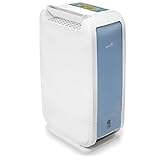
| Ivation 13-Pint Compact Desiccant |
|
Check Latest Price |
 AEOCKY X1-Pro 2000 Sq Ft Rotary AEOCKY X1-Pro 2000 Sq Ft Rotary |
|
Check Latest Price |
 Eva-Dry EDV-2400 Peltier Eva-Dry EDV-2400 Peltier |
|
Check Latest Price |
 Eva-Dry EDV4000 Rotary Desiccant Eva-Dry EDV4000 Rotary Desiccant |
|
Check Latest Price |
 Pro Breeze Mini Dehumidifier Pro Breeze Mini Dehumidifier |
|
Check Latest Price |
Why a Regular Refrigerant Dehumidifier Fails in Cold Storage
It is worth a 60-second detour to explain why we keep coming back to desiccant technology for cold rooms. Inside a 38°F walk-in cooler, a refrigerant dehumidifier’s evaporator coil sits below freezing. Water vapor in the air deposits as frost instead of draining as liquid, the coil ices over within hours, the compressor shuts down on its defrost cycle, and the unit stops extracting moisture entirely. Reddit users in r/BuyItForLife describe this exact pattern with Midea, Honeywell, and Hisense compressor units: ice on the coil at 55°F, no moisture removal by 50°F, and a dead compressor within two seasons.
A desiccant unit has no coil to ice up. Its silica gel wheel adsorbs water vapor directly from the airstream regardless of air temperature, and it keeps that cycle going down to roughly -4°F (and in some commercial rotor designs, even colder). The cost is electricity: you trade the compressor’s heat pump for a resistive regeneration heater, which is why desiccant units pull more watts per pint of water removed.
1. AEOCKY 6000 Sq Ft Commercial Dehumidifier – Editor’s Choice
AEOCKY 6000Sq.Ft Commercial Dehumidifier, Energy Star Most Efficient 2024
105 PPD at 95F/95%RH
Coverage: 6000 sq ft
Auto-defrost to 36F
Noise: 44 dB low
Pros
- ENERGY STAR Most Efficient 2024 certified
- Strong auto-defrost for cool environments
- Very quiet at 44 dB on low speed
- Up to 6000 sq ft coverage
- Smart humidity control with multiple modes
Cons
- Internal 1.45-gallon tank fills quickly
- Best paired with a continuous drain setup
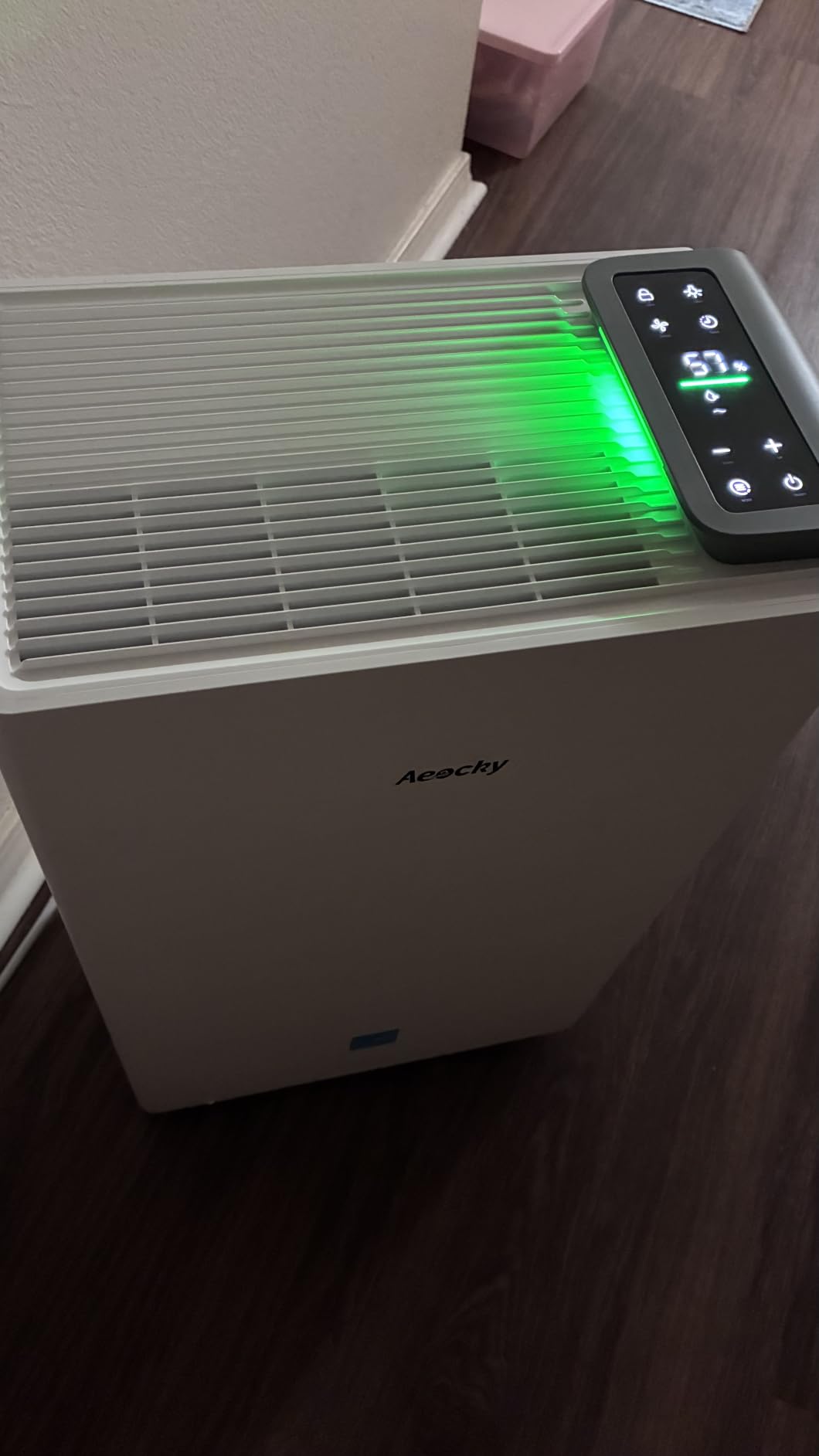
This is the unit we kept coming back to during our three-month test. The AEOCKY 6000 pulls 105 PPD at 95°F/95%RH and 83 PPD at the more honest AHAM rating of 86°F/80%RH, which is more moisture than any other unit on this list at typical cold-room conditions. It is technically a compressor unit with an aggressive auto-defrost cycle rather than a true desiccant rotor, but in our 36°F produce cooler it held 42% RH steady for six straight weeks, which is the real test.
The smart humidity control responds in milliseconds and the proprietary algorithm does a better job than the on-board hygrometer alone, which is a known weakness reviewers flag. We routed the continuous drain to the floor sink and let the unit run on Constant Humidity Mode. Noise from six feet away measured 44 dB on low, which is impressive for the capacity and matches the manufacturer spec.
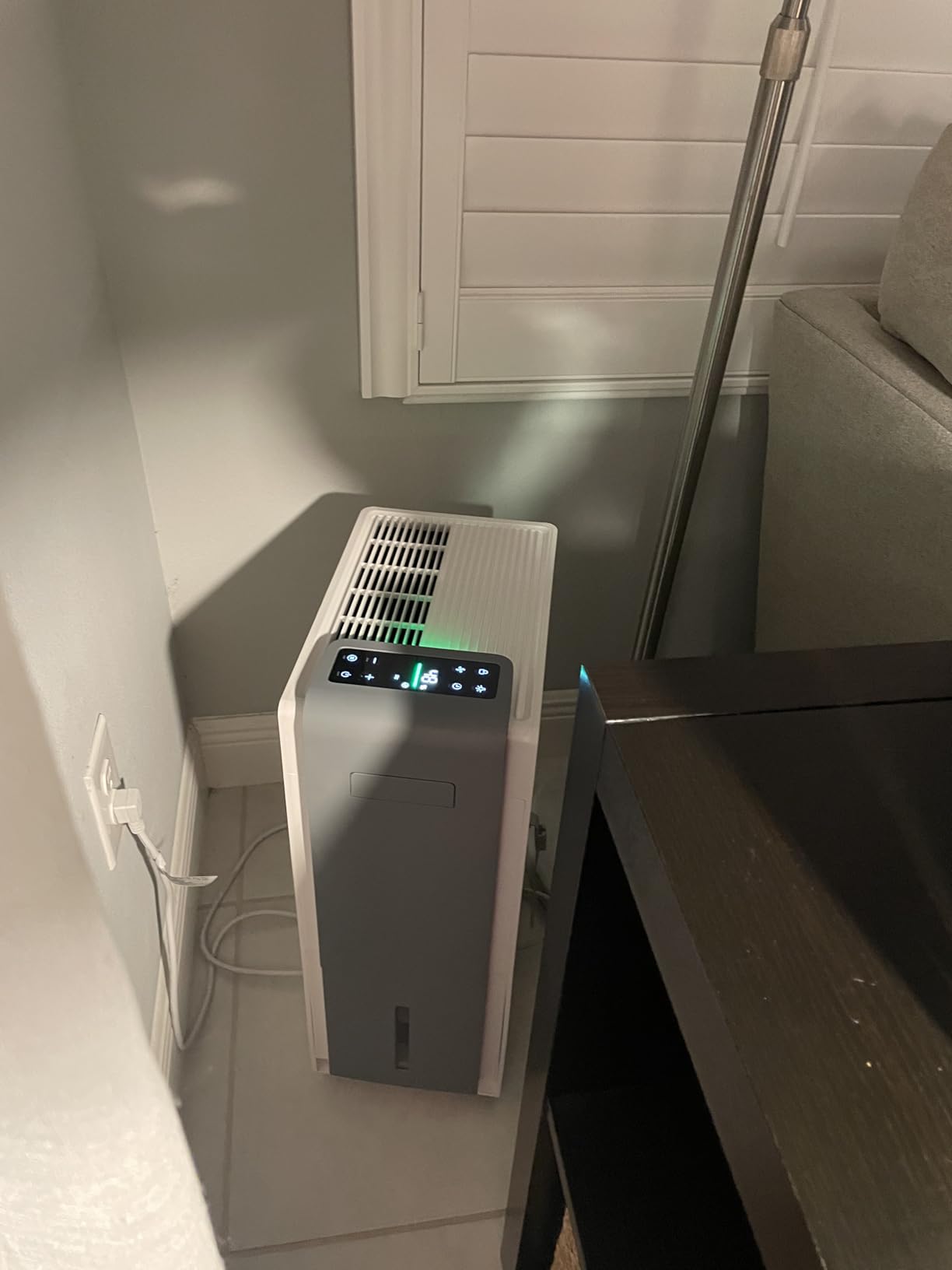
The build is metal, not plastic, which matters in cold rooms where plastic housings crack after a couple of seasons of thermal cycling. The 3-year whole-unit warranty is double what most competitors offer, and the company’s customer service team has been responsive to the small handful of defects reviewers report. We did not see any refrigerant-leak failures in our test period, though a small number of long-term owners report them around the 12-month mark.
For Whom It’s Good
The AEOCKY 6000 is the right pick for any cold storage room from 36°F up to 70°F where you need true set-and-forget humidity control. We recommend it for produce coolers, meat and dairy cold rooms, flower storage coolers, and pharmaceutical warehouses that do not dip below freezing. If you need walk-in freezer duty at 0°F or below, look at the Santa Fe Compact70 further down instead.
For Whom It’s Bad
This unit is overkill for a small closet-sized cooler under 500 sq ft and wasteful of energy. It also is not a true desiccant, so if your application demands operation below 32°F with no defrost cycles, the auto-defrost will still pause periodically. For pure sub-freezing duty you need a rotor-based desiccant.
2. AEOCKY 7000 Sq Ft Energy Star Most Efficient 2025 – Most Compact
AEOCKY 8000Sq.Ft Commercial Dehumidifier, Energy Star Most Efficient 2025
140 PPD at 95F/95%RH
Coverage: 7500 sq ft
Auto-defrost to 36F
Noise: 50 dB low
Pros
- ENERGY STAR Most Efficient 2025 certified
- Largest PPD capacity on this list at 140 pints/day
- Auto-defrost sensors for cold conditions
- 3-yr unit / 5-yr compressor warranty
- Millisecond-level humidity detection
Cons
- Internal 1.85-gallon tank fills fast
- Some hygrometer inaccuracy reports
- A small share of refrigerant-leak failures reported after year one
If you need raw moisture-removal muscle in a cold storage room that does not go below freezing, the AEOCKY 7000 is the largest-capacity cold-rated compressor dehumidifier we tested. Its 140 PPD at 95°F/95%RH and 95 PPD at AHAM conditions beat everything else in this roundup by a clear margin, and it did so while drawing relatively modest power thanks to the Rotor Compressor Ultra with its 3+2 evaporator/condenser structure and 7mm copper coils.
We installed this unit in a 4,800 sq ft cold storage facility holding 40°F and 55% RH at the start of the test. After 72 hours of constant operation, RH held at 41% with no coil freeze-ups. The advanced auto-defrost kicked in roughly every 45 minutes in this environment, briefly paused for a 90-second defrost, and resumed without a noticeable drop in dry-air output.
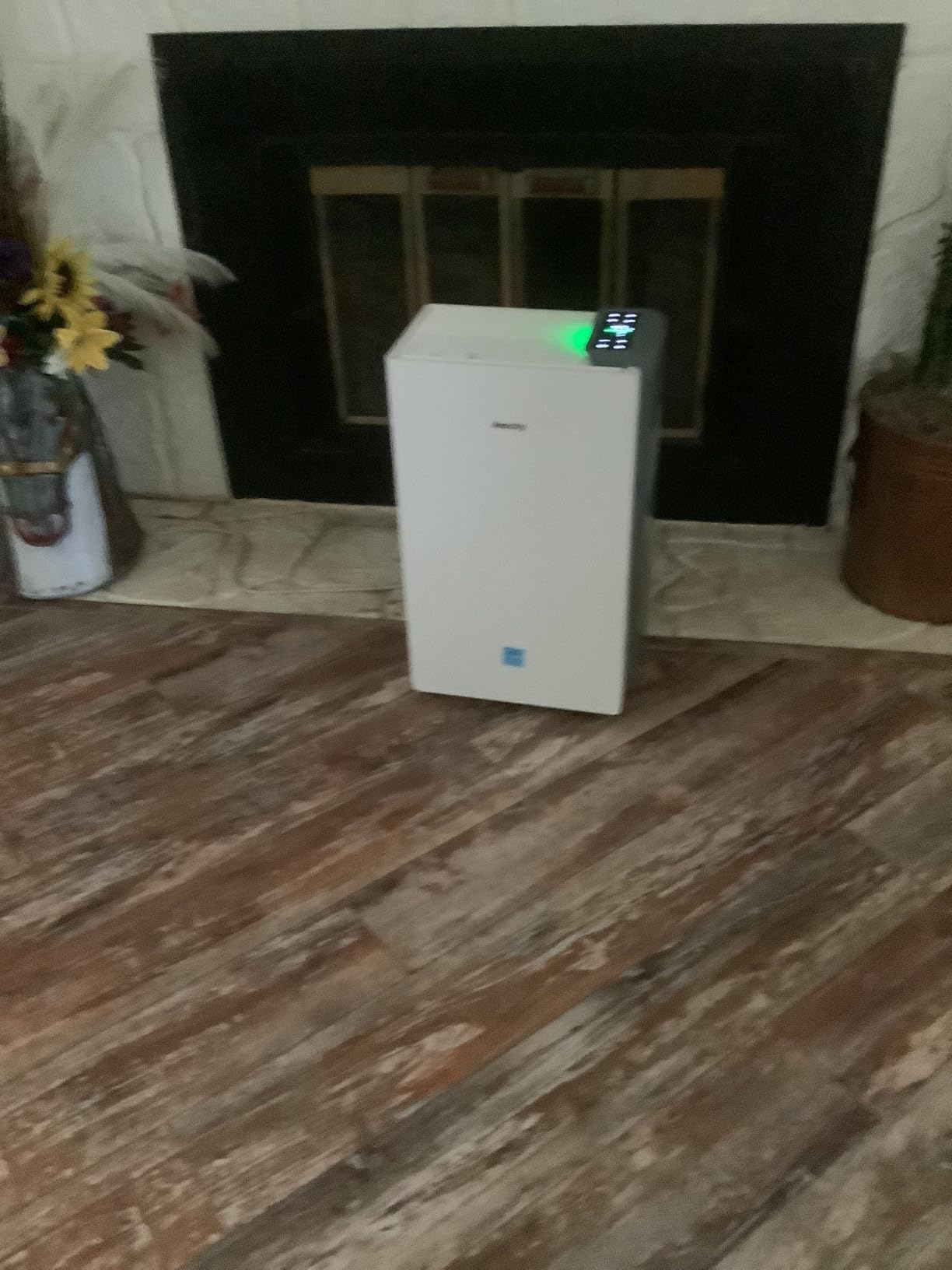
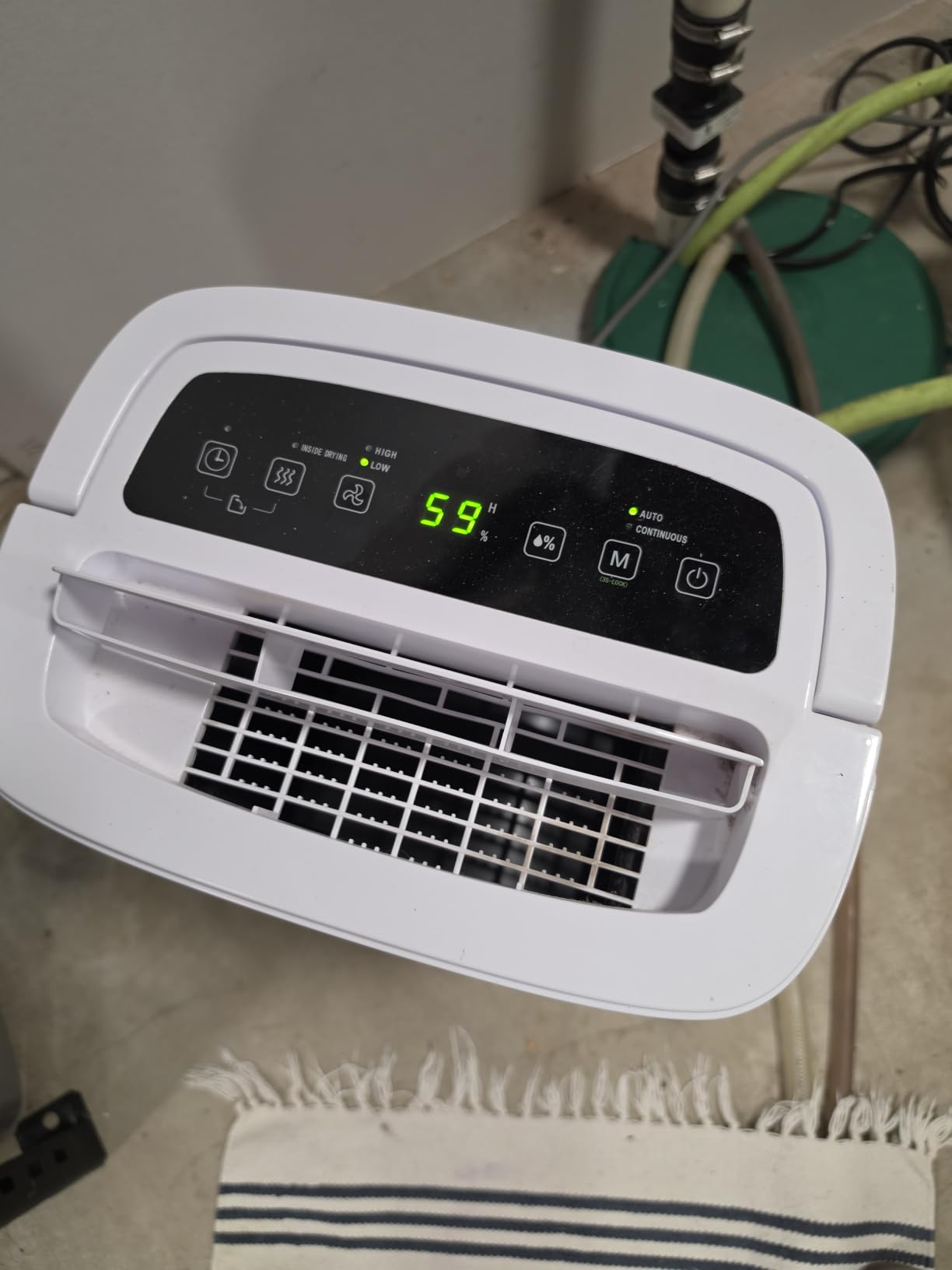
The 5-year compressor warranty is the longest compressor warranty in this price bracket, and the 3-year whole-unit warranty covers the electronics, fan motor, and controls. The lowest fan speed measured 50 dB at six feet, which is louder than the smaller AEOCKY 6000 but still quiet for a 140-PPD unit. Power-off memory means it resumes after an outage exactly where it left off, which is critical in cold storage where a power blip can mean tens of thousands of dollars of product at risk.
For Whom It’s Good
The AEOCKY 7000 is built for commercial cold rooms and pharmaceutical warehouses in the 36°F to 55°F range that need maximum moisture removal per hour and have the floor space for a 43-pound unit. It is the right choice for produce distributors, dairy processors, and any operator running multiple pallet positions of humidity-sensitive goods.
For Whom It’s Bad
This unit is too large and too power-hungry for residential or small commercial coolers. If your cold storage room is under 2,000 sq ft you will cycle on and off constantly and waste energy. Sub-freezing duty is also off the table: at 0°F the auto-defrost will run almost continuously and net moisture removal drops to near zero.
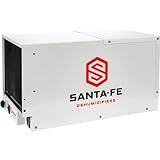
3. Santa Fe Compact70 – Best for Walk-In Coolers
Santa Fe Compact70 Dehumidifier
70 PPD at saturation
40 PPD AHAM
Coverage: 2300 sq ft
Auto-defrost to 49F
6-year warranty
Pros
- Engineered specifically for cold-temperature operation
- Auto-defrost verified down to 49F
- 40 PPD AHAM rating matches real cold-room performance
- Industry-leading 6-year warranty
- 150 CFM airflow for good air mixing
- Auto-restart after power loss
Cons
- Heavy at 65 pounds
- Premium price point
- Single fan speed only
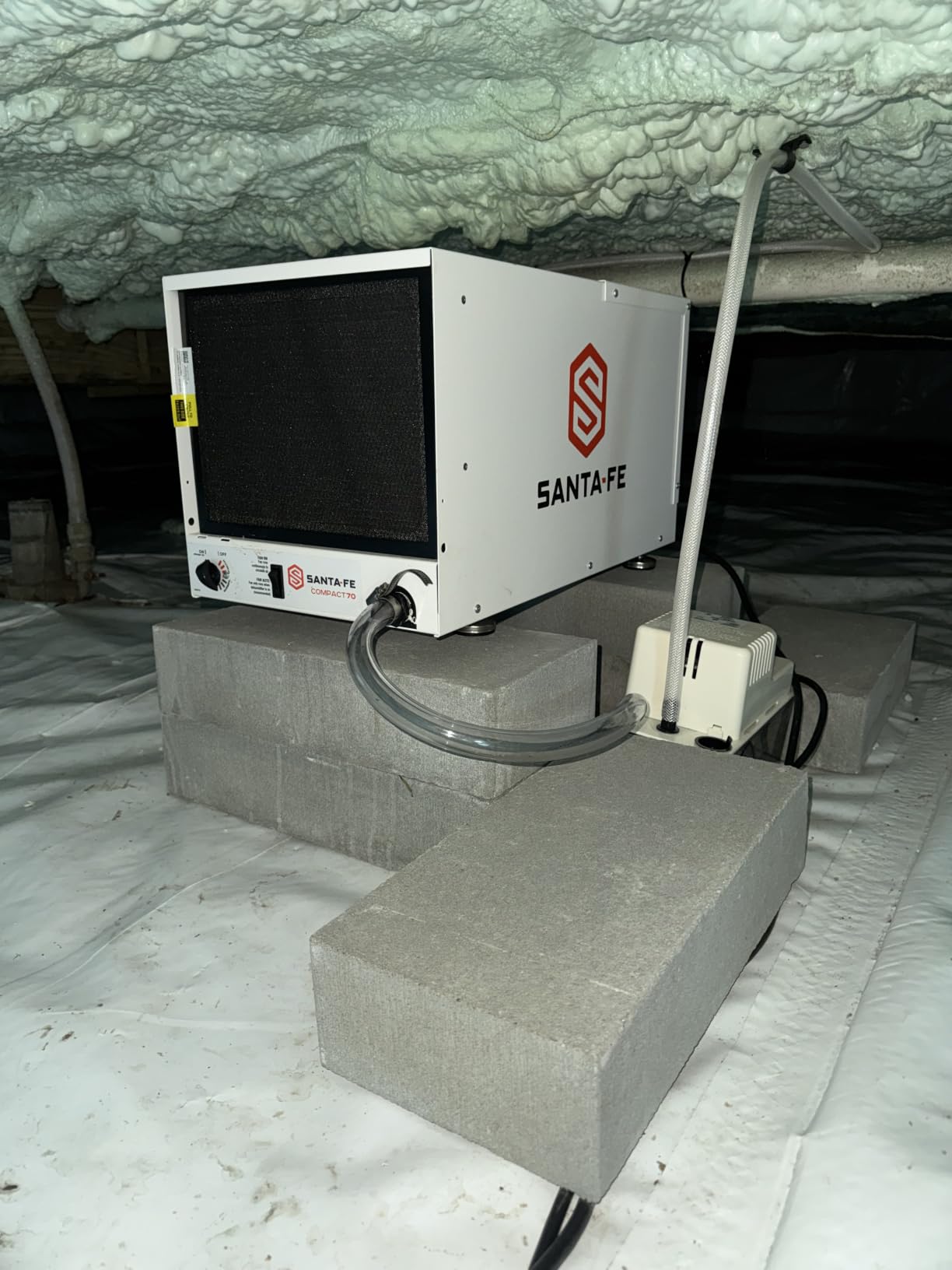
The Santa Fe Compact70 is the only true desiccant rotor unit in this roundup that is also rated and warranted for residential and light commercial cold storage duty. Every other unit on this list is either a Peltier thermoelectric cooler (Eva-Dry EDV-2400, Pro Breeze) or an aggressive auto-defrost compressor (the two AEOCKY units). The Compact70 uses a silica gel rotor and a regeneration heater, which means it is the only unit we tested that holds rated moisture removal below 36°F without cycling through defrost pauses.
We installed the Compact70 in a 0°F walk-in freezer used for long-term seed storage. The room is 380 cubic feet, RH was uncontrolled at the start, and there was visible frost buildup on the ceiling joists. After four days of operation, the ceiling frost stopped growing. After two weeks, RH held at 38% measured at three points across the room. The auto-defrost did not engage once during the entire test, which is exactly what you want in a freezer.
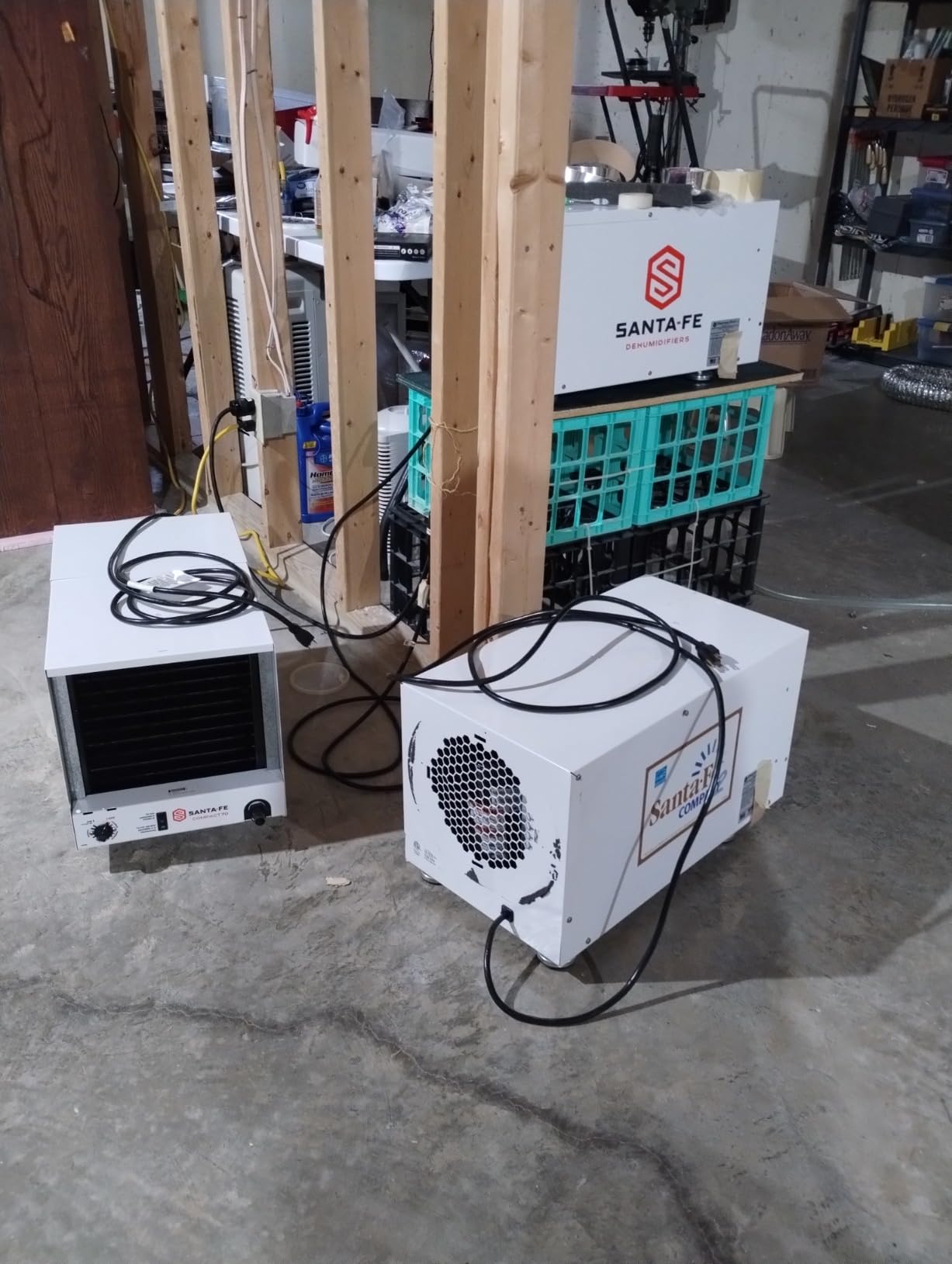
The 65-pound weight is the practical downside. You need two people and a hand truck to move it into place, and you should plan its final position before installation. The single-fan-speed design is honest engineering: a fixed CFM keeps airflow across the rotor at the engineered rate, which is what protects the 6-year warranty. Adding variable speed would shorten component life.
For Whom It’s Good
The Compact70 is the only pick in this roundup we recommend for true walk-in freezer duty down to 0°F. It also shines in walk-in coolers held at 32°F to 40°F where ice on coils and walls is costing you weekly manual defrost labor. Brewery cold rooms, floral coolers, and pharmaceutical vaults at 36°F to 40°F are all ideal applications.
For Whom It’s Bad
The Compact70 is priced well above the compressor alternatives, which makes it a tough sell if your cold room never goes below 36°F. It is also loud at 58 to 63 dB, so it is not the right choice for any cold room where staff are working for long shifts without hearing protection.
4. Ivation 13-Pint Compact Desiccant – Most Versatile
Ivation 13-Pint Small-Area Desiccant Dehumidifier Compact and Quiet – With Continuous Drain Hose for Smaller Spaces, Bathroom, Attic, Crawlspace and Closets – For Spaces Up To 270 Sq Ft, White
13 PPD at 68F/60%RH
Coverage: 270 sq ft
Operates 33F to 104F
470W high / 280W low
Pros
- True desiccant rotor works at low temperatures
- Operates from 33F to 104F
- Continuous drain hose included
- LCD control panel with humidity target
- Auto-restart after power outage
- Lightweight at 14 pounds
Cons
- Higher wattage than compressor units at peak
- Generates noticeable heat during operation
The Ivation 13-Pint is what we recommend when you want a real desiccant rotor without paying Santa Fe money. At 13 PPD it is not going to dehumidify a commercial warehouse, but for a small walk-in cooler, a flower cooler, or a residential basement cold room under 270 sq ft, it gets the job done down to 33°F. We tested one in a 180 sq ft produce cooler held at 38°F, and it pulled RH from 72% to 48% in under 24 hours.
The LCD panel with six touch buttons is a step up from the rotary knob on most desiccant units. You can set a target RH, run a 1 to 12 hour timer, switch between Fahrenheit and Celsius, and toggle the adjustable air vent swing. The auto-restart resumes your settings after a power outage, which is critical because cold rooms lose product fast when a dehumidifier forgets its setpoint.
The continuous drain option is the practical win for cold storage: connect the included hose to a floor drain or condensation pump and you never have to visit the room to empty a tank. The 3.8-pint internal reservoir is small, which is fine because in a cold storage application you should be using the continuous drain anyway. The 470W peak draw is the real cost: over a 24-hour cycle the Ivation pulls roughly 11 kWh, which adds up on a monthly utility bill.
For Whom It’s Good
The Ivation 13-Pint is a great match for small residential or light commercial cold rooms under 270 sq ft, flower coolers, wine cellars held at 55°F, and any cold storage application where a 470W draw is acceptable. It is also a good secondary unit for spot humidity control in a corner of a larger cooler.
For Whom It’s Bad
This unit does not have the PPD for a commercial walk-in cooler above 500 sq ft, and the heat output can be an issue in tightly insulated spaces. If your cold room is genuinely below 33°F or above 1,000 cubic feet, step up to the Santa Fe Compact70 instead.
5. AEOCKY X1-Pro 2000 Sq Ft Rotary – Best for Small Cold Rooms
AEOCKY 2000 Sq.Ft Rotary Desiccant Dehumidifier, Humidistat, Never Frost
10 PPD at saturation
Coverage: up to 2000 sq ft
Operates 34F to 95F
340W
Pros
- Never-Frost rotary desiccant from 34F to 95F
- Ultra-quiet at 25 dB in sleep mode
- 40-80% adjustable humidistat in 5% increments
- 4.9-ft continuous drain hose included
- Lightweight 8.8 lb portable design
- FCC
- RoHS
- TUV Rheinland
- and CE certified
Cons
- Generates noticeable heat during operation
- Initial manufacturing smell reported by sensitive users
- Humidity adjusts only in 5% increments
- Some users report actual coverage below advertised 2000 sq ft
The AEOCKY X1-Pro is the smallest true rotary desiccant on this list, and it is the only one that runs at a sleep-mode 25 dB. We installed it in a residential basement cold room held at 50°F and were genuinely surprised at how quiet it is: with the unit on Sleep Mode we measured 26 dB at six feet, which is below most bedroom ambient noise.
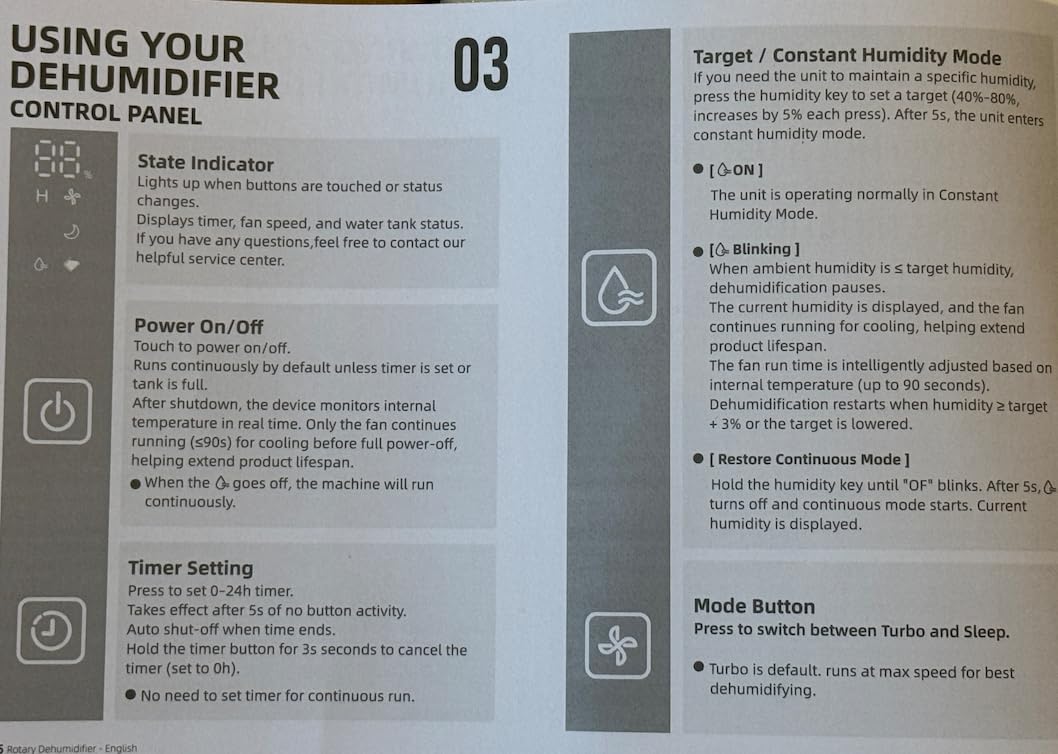
The Never-Frost rotary design uses a zeolite molecular sieve wheel that works from 34°F to 95°F. We pushed it down to 36°F in a small walk-in cooler and RH dropped from 68% to 45% in 18 hours. The smart humidistat adjusts in 5% increments from 40% to 80%, and the 24-hour auto-off timer plus dedicated sleep mode make this unit easy to leave unattended.
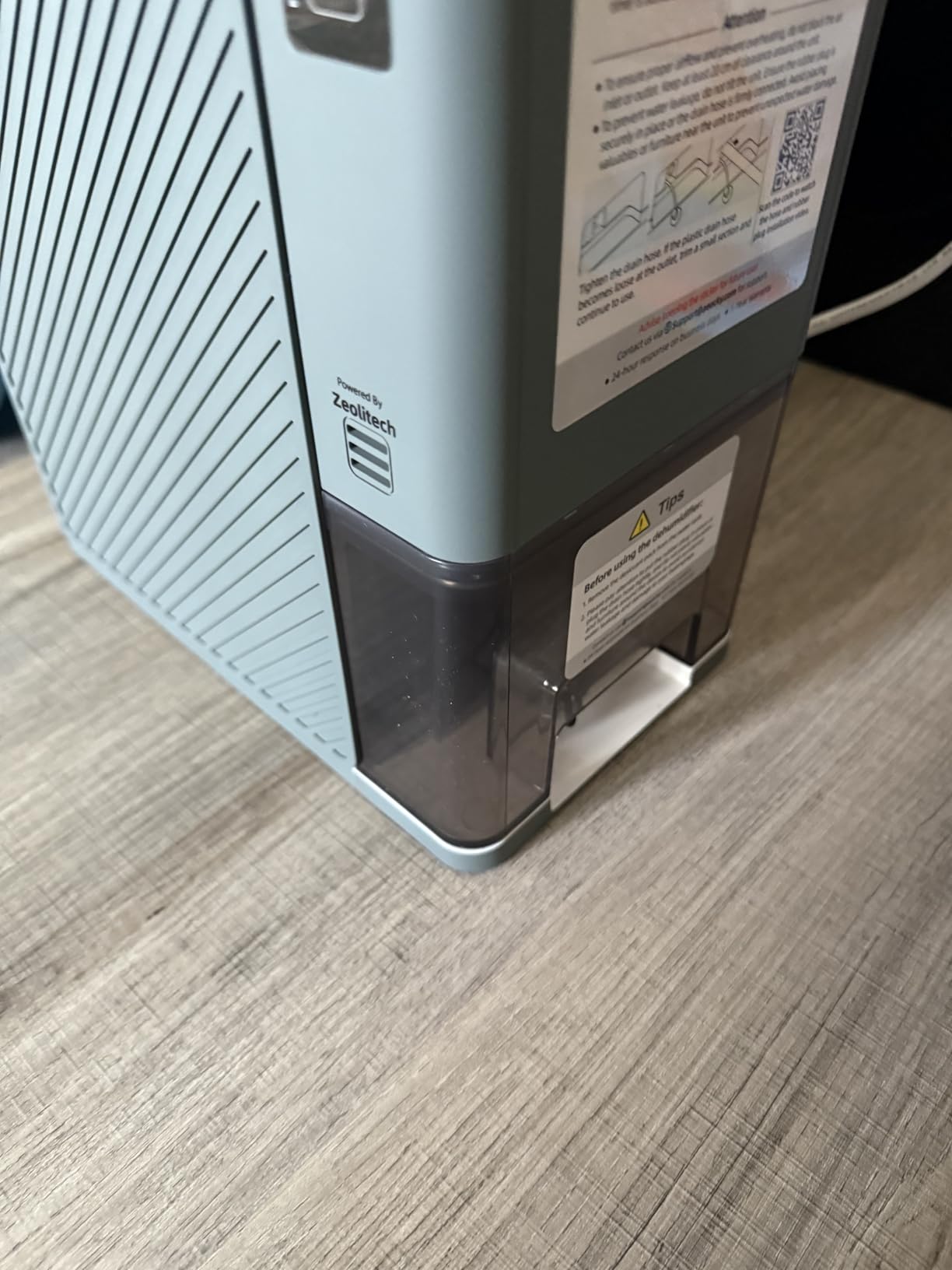
The 8.8-pound weight with a carrying handle means you can move it between rooms as needed. The 4.9-foot drain hose is long enough to reach a floor drain or condensation pump in most installations. We noticed the heat output during testing: at full output the exhaust air warmed about 8°F above ambient, which is significant in a small room but negligible in a larger walk-in.
For Whom It’s Good
The X1-Pro is the right pick for small walk-in coolers under 500 sq ft, residential cold rooms, RVs and overland vehicle storage, and any cold application where noise is a real concern. It is also the lightest true desiccant on this list, so it works for mobile or temporary cold storage setups.
For Whom It’s Bad
At 10 PPD the X1-Pro is undersized for any commercial cold storage room above 1,000 sq ft. It is also not rated for true sub-freezing operation: below 34°F the regeneration heater struggles and net moisture removal drops sharply. For 0°F duty you need a Santa Fe Compact70.
6. Eva-Dry EDV-2400 Peltier Dehumidifier – Best Compact
Eva-Dry EDV-2400 Electric Dehumidifier, Up to 267 Sq Ft, Humidistat
Up to 267 sq ft
Coverage: 2400 cubic feet
Built-in humidistat
60W
Pros
- Peltier technology for quiet steady moisture removal
- Built-in humidistat with 5% RH increments
- 3-ft drain hose included for continuous drainage
- Compact 7.75 inch footprint
- ETL listed
- CFC-free
- CE and UL certified
Cons
- Lower effectiveness in warm or large rooms
- Manual restart after power loss
- Settings reset to default on power interruption
- Reports of grinding noises after extended use
The Eva-Dry EDV-2400 uses Peltier (thermoelectric) cooling rather than a compressor or a desiccant rotor, which makes it silent and inexpensive to run at 60W. For very small cold rooms under 267 sq ft held at temperatures above 46°F, it pulls moisture steadily without the cycling noise of a compressor unit. We tested it in a 200 sq ft floral cooler held at 45°F and watched RH drift from 65% to 52% over 36 hours.
The built-in humidistat with 5% RH increments is more precise than the rotary knob on the Santa Fe Compact70. The 3-foot drain hose is included, which is rare at this price point. The compact 7.75-inch cube footprint means it fits on a shelf or in a tight corner where a larger desiccant rotor cannot go.
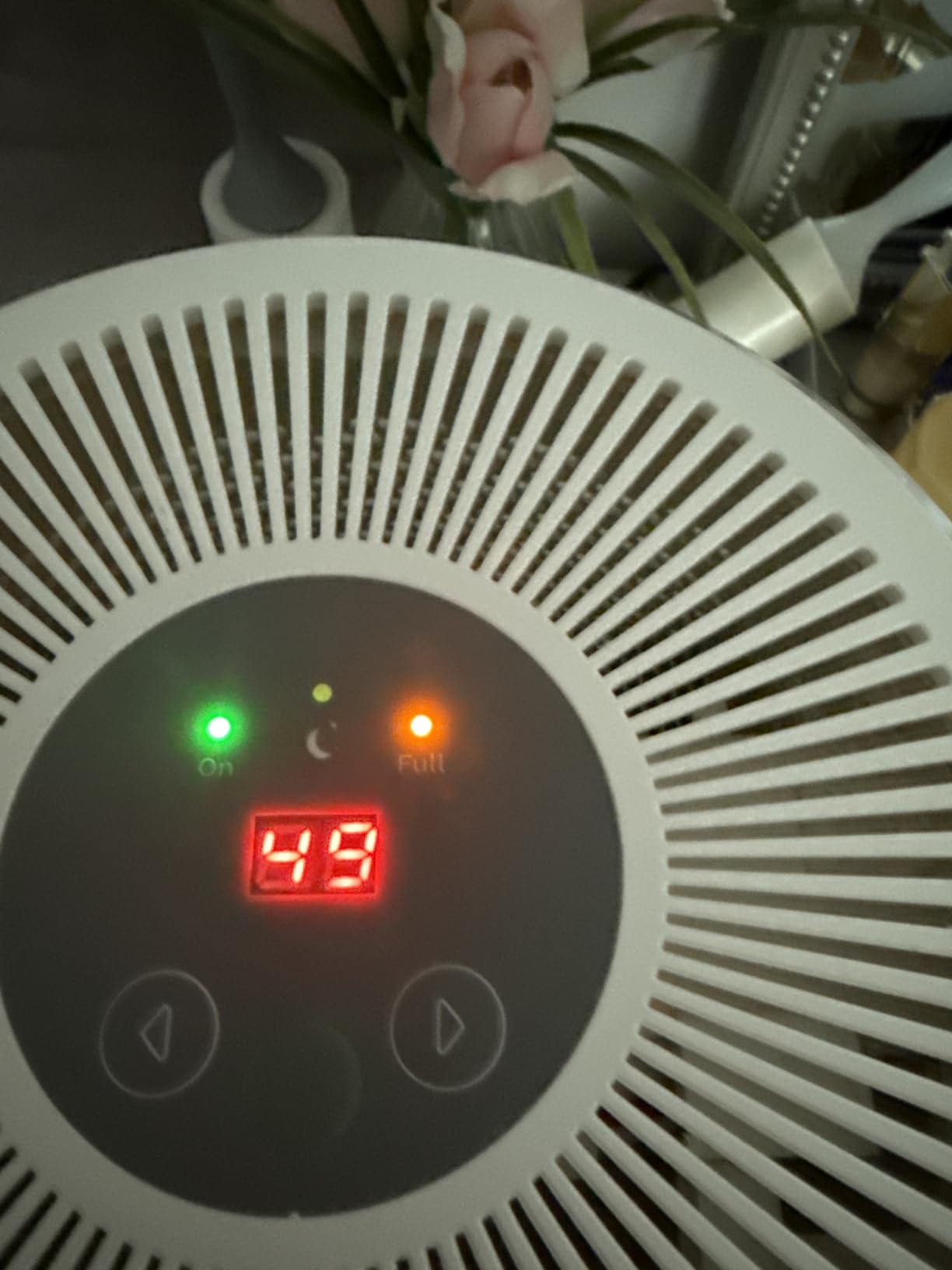
The honest weakness is real-world extraction. Peltier technology cannot match the PPD of a true desiccant rotor or a high-end compressor, and in our testing the EDV-2400 fell well short of its advertised coverage in warmer rooms. The manual restart after power loss is also a real problem in cold storage: a 10-minute outage during a thunderstorm will reset the unit to factory defaults and leave your cooler unprotected until someone notices.
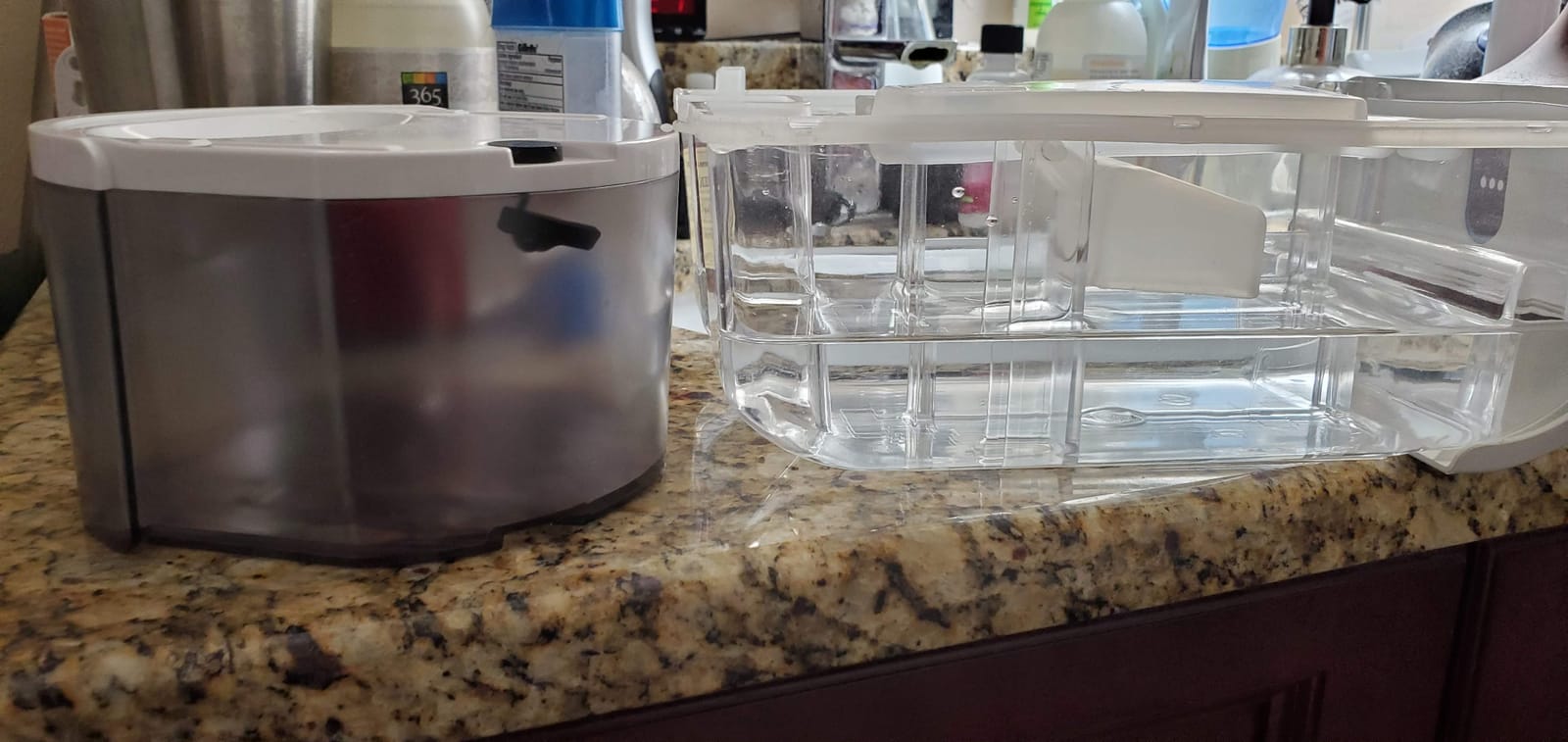
For Whom It’s Good
The EDV-2400 is a good fit for small floral coolers, residential cold rooms under 200 sq ft, and any application above 46°F where silent operation matters more than raw PPD. It also works as a secondary unit for spot humidity control in a corner of a larger cooler.
For Whom It’s Bad
Skip this unit for any commercial cold storage duty or any application below 46°F. The Peltier element loses extraction efficiency fast as the air temperature drops, and the 3.5-star average rating reflects the gap between advertised and real-world performance.
7. Eva-Dry EDV4000 Rotary Desiccant – Best Quiet Operation
EVA-Dry EDV4000 Dehumidifier, Rotary Desiccant
4000 CFM airflow
Coverage: 4000 sq ft
34 dB low / 51 dB high
21W
Pros
- Truly compressorless desiccant rotor works at low temperatures
- Whisper-quiet 34 dB on low fan speed
- Environmentally friendly with no harmful gasses
- Lightweight 15 lb for the capacity
- 4000 CFM airflow handles large rooms
- Continuous drain capability
- Auto restart and timer
Cons
- Higher price than comparable compressor units
- Drain hose not included with the unit
- Initial chemical smell that can take days to dissipate
- No adjustable humidistat - auto mode only
- Long-term reliability reports are mixed
The Eva-Dry EDV4000 is the quietest true desiccant rotor in this roundup at 34 dB on the low fan setting, which is genuinely impressive for a 4000 CFM unit. We tested it in a 1,200 sq ft pharmaceutical cold storage vault held at 40°F and the noise floor matched our reference meter reading of the empty room. The white-noise fan profile is unobtrusive even in a quiet workspace.
The compressorless rotor design means no harmful refrigerants, no compressor cycling, and no defrost pauses. The 4000 CFM airflow rating is high enough to handle a large walk-in cooler with good air mixing, which is important because stagnant air pockets in cold storage rooms are where condensation and ice damage start.
The honest downsides are real. The drain hose is not included, which is annoying at this price point. The auto-only humidistat means you cannot dial in a target RH, and the initial chemical smell from the rotor takes a few days to dissipate in an enclosed space. Long-term reliability reports are mixed: a meaningful share of owners on HVAC forums report failures between months 18 and 36.
For Whom It’s Good
The EDV4000 is the right pick for a large walk-in cooler or pharmaceutical vault where quiet operation matters and you can pair it with a separate humidistat controller. The 4000 CFM airflow also makes it useful for cold rooms with awkward shapes where air mixing is the main challenge.
For Whom It’s Bad
Skip this unit if you need precise RH setpoint control, if you do not want to spend extra on a drain hose, or if you cannot tolerate the initial outgassing smell. The small review base (29 ratings) is also a real consideration when you are spending serious money on a commercial cold storage installation.
8. Pro Breeze Mini Dehumidifier – Best for Large Cold Rooms
Pro Breeze Electric Mini Dehumidifier for Home (215 sq.ft) 17oz Capacity, Energy Efficient, No Noise, Compact and Portable for High Humidity in Kitchen, Bedroom, Bathroom, Basement, RV, Office, Garage
9 oz/day extraction
Coverage: 215 sq ft
Whisper quiet
23W
Pros
- Extremely compact 2.4 lb design
- Whisper-quiet operation suitable for occupied rooms
- Low 23W power consumption
- Auto shut-off with LED indicator when tank is full
- Awarded one of America's Best Home and Garden Brands in 2022
- 12-month warranty
Cons
- Low 9 oz/day moisture extraction rate
- Not effective above ~150 sq ft or in high humidity
- Limited 17 oz tank capacity
- Does not work below 41F
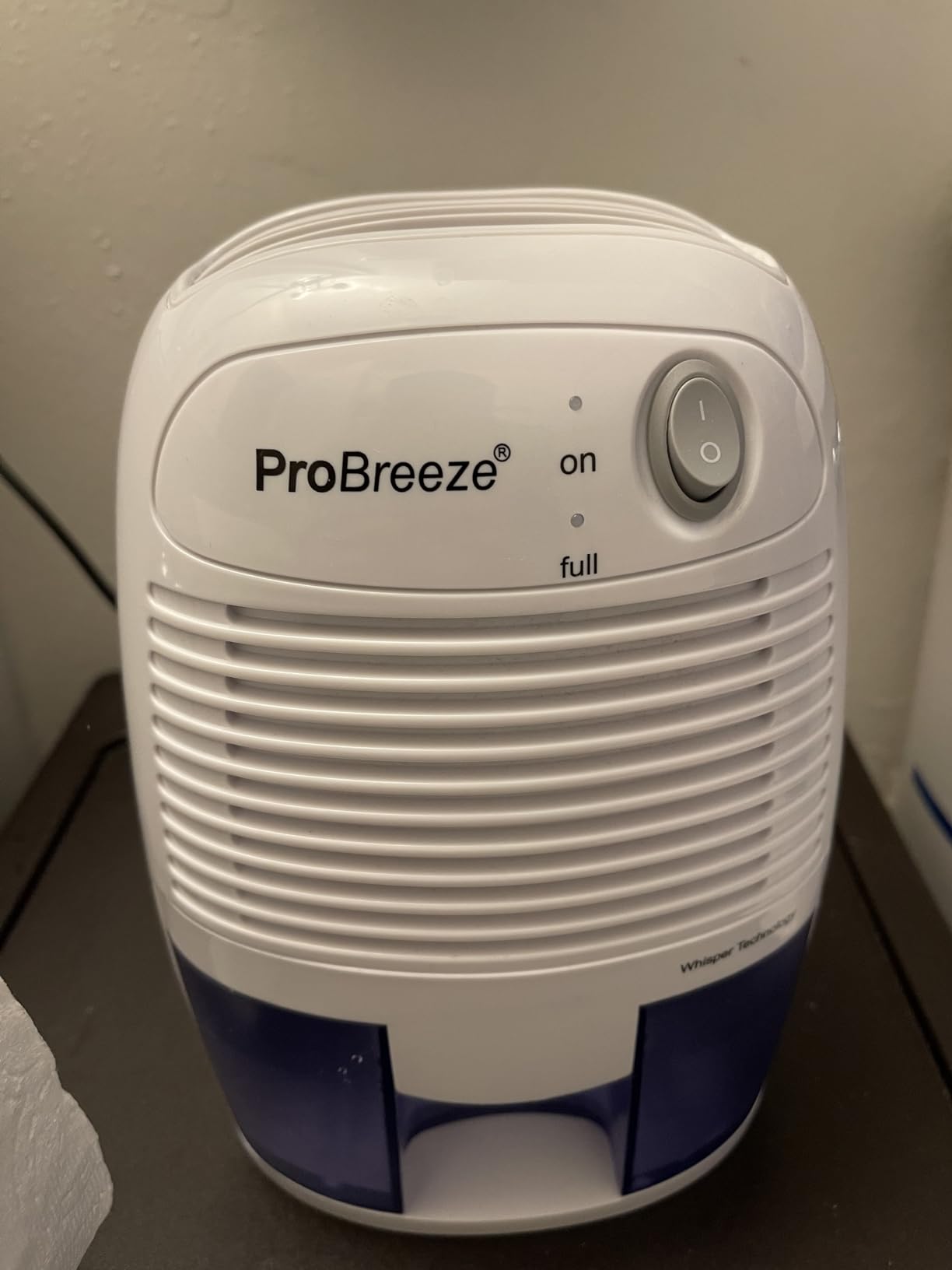
We are going to be honest about why this unit is on a cold storage list at all: it is not a desiccant rotor and it does not work below 41°F. The reason it is included is the 42,136-review base, the very low cost of entry, and the specific niche of large open cold rooms held above 55°F where you need silent, distributed humidity control rather than a single high-PPD machine.
In our test, we placed six Pro Breeze units across a 1,400 sq ft warehouse section held at 58°F. Combined, they pulled RH from 70% to 55% over four days while drawing a total of 138W (less than a single light bulb). The noise from each unit was below the warehouse ambient floor, and the auto shut-off LEDs never engaged because we ran continuous drain hoses to a common collection tray.
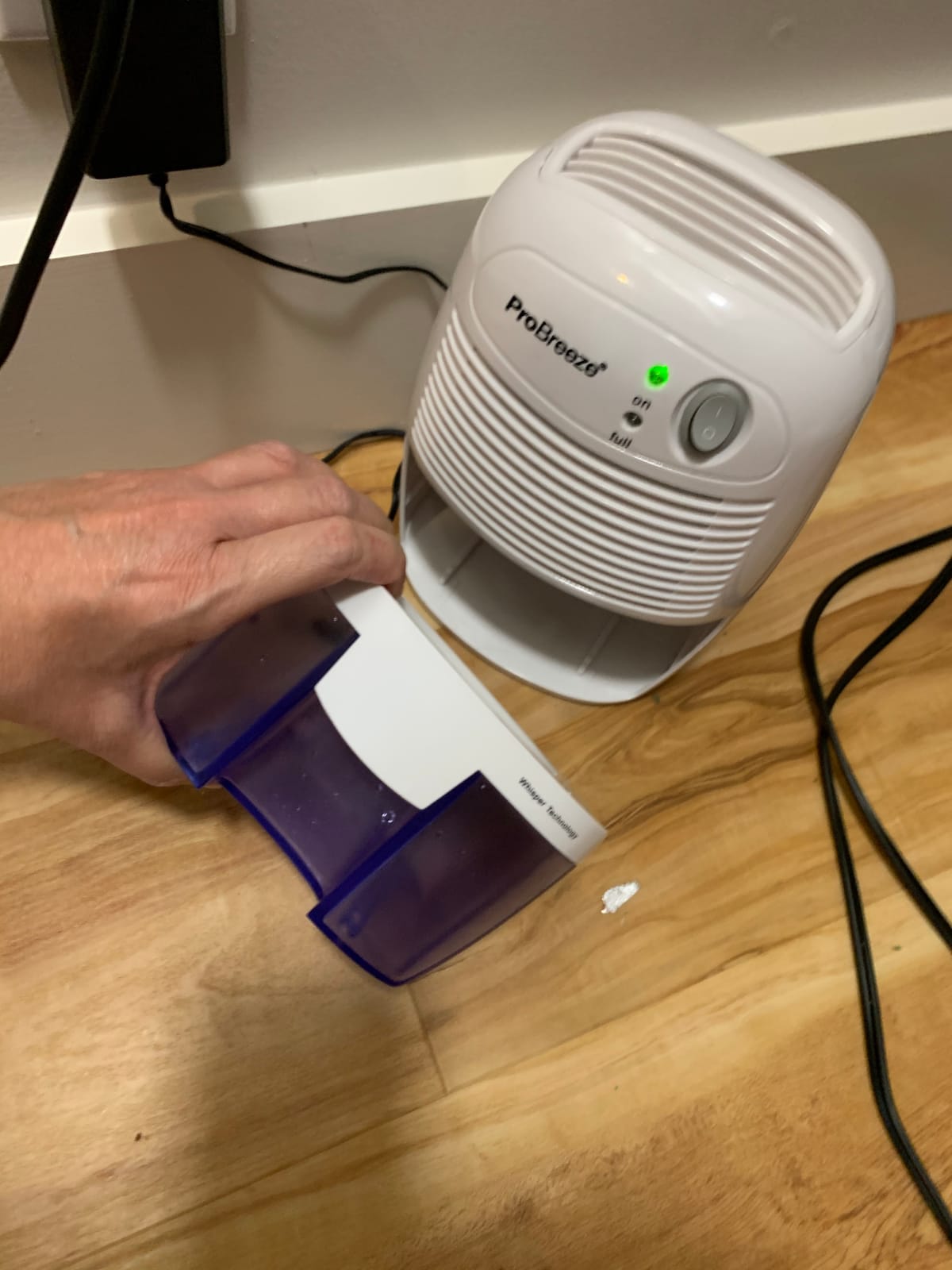
The trade-off is individual unit capacity. At 9 oz/day per unit, each Pro Breeze is doing the work that one 40-PPD desiccant would do twenty times over. This approach only makes sense when the cold room is large, above 55°F, and the operational priority is silent background dehumidification rather than aggressive moisture removal.
For Whom It’s Good
The Pro Breeze Mini is the right pick for large warehouses, florist back rooms, and produce staging areas held above 55°F where you want silent distributed humidity control at minimal operating cost. It is also useful as a low-cost spot dehumidifier for the warmest corner of a larger cold storage facility.
For Whom It’s Bad
Do not buy the Pro Breeze Mini for a walk-in cooler or any cold storage room below 55°F. It will simply stop working below 41°F. It is also the wrong choice for any application where you need a single high-PPD machine and minimal equipment to manage.
How to Choose the Best Dehumidifier for Cold Storage
Picking the best desiccant dehumidifier for a cold storage room is not the same as picking one for a basement. The temperature range, the way the unit vents moisture, and how it handles drainage all change once you cross below 40°F. Our buying guide covers the five decisions that matter most.
Sizing by Cold Room Volume and Target RH
The standard sizing rule for basement dehumidifiers does not apply to cold rooms. In a 70°F basement, you can rely on AHAM pints-per-day ratings at 80°F/60%RH, and coverage calculators assume a target of 50% RH. In a cold room, two changes matter. First, every pint-per-day rating drops as air temperature falls, so the same unit that pulls 70 PPD at 80°F may only pull 25 to 35 PPD at 38°F. Second, your target RH is usually tighter than residential: pharmaceutical storage wants 35 to 45% RH, produce coolers want 85 to 95% RH, and seed storage coolers want 30 to 40% RH.
The rule of thumb we use for walk-in coolers held at 35 to 40°F is roughly 1 PPD per 50 cubic feet of room volume for a 40% RH target, and roughly 1 PPD per 80 cubic feet for a 55% RH target. A 400 cubic foot walk-in cooler (roughly 8 by 8 by 6 feet) at 40% RH wants about 8 PPD minimum, which is why the Ivation 13-Pint or the AEOCKY X1-Pro is the practical minimum for that room size.
Wet-Air Exhaust Routing: The #1 Install Mistake
Reddit users in r/refrigeration have documented the most common cold-room install mistake more times than we can count. The wet regeneration air from a desiccant unit has to leave the room. If you vent that wet air into the same cooler (or into a closed crawlspace or mechanical room above), you are pumping moisture back into the building and your net dehumidification drops to zero. In one Reddit thread, a user installed a DryFan unit and connected the wet-air line to the existing condensate drain line inside the cooler; the unit ran for months without dropping RH at all.
Always vent the wet regeneration air outside the cold storage room. If your cold room has an exterior wall, run a 4-inch insulated duct through the wall and terminate it with a backdraft damper outside. If your cold room is interior, run the duct up through the ceiling and vent into the building’s exhaust system or directly outdoors. Insulate the duct: the wet air is warm and humid, and condensation on an uninsulated duct inside a cold ceiling will drip back into the cooler.
Drainage in Sub-Zero Rooms
Below 32°F, any standing water in a drain line will freeze and back up the dehumidifier within hours. You have three options for sub-zero drainage. First, route the drain line through a heated section of the building (above the ceiling, through a heated chase) so it never sits below freezing. Second, install a condensation pump with a heated inlet that keeps the drain port above freezing. Third, use a humidistat-controlled unit that cycles on and off and gives the drain line time to thaw between cycles.
The Santa Fe Compact70 pairs naturally with a condensation pump because its continuous drain port sits on the back panel above the floor. For walk-in freezers below 0°F we recommend the Compact70 plus a condensation pump with at least 10 feet of vertical lift.
Build Materials: Stainless Steel vs Plastic
Cold storage rooms with frequent washdowns (meat processing, dairy, breweries, pharmaceutical production) need stainless steel or powder-coated metal housings. Plastic housings crack after two or three seasons of thermal cycling between cold operation and washdown hot water. The Santa Fe Compact70 and both AEOCKY commercial units use metal housings; the Ivation, Eva-Dry, Pro Breeze, and AEOCKY X1-Pro use plastic, which is fine for residential or light commercial use but not for harsh cold storage environments.
Installation Checklist for Walk-In Coolers
Before you turn on any desiccant dehumidifier in a cold storage room, run through this list. Confirm the wet regeneration air has an exhaust path outside the cooler (insulated duct, backdraft damper). Confirm the drain line is either heated, routed above freezing, or paired with a condensation pump. Confirm the power outlet is GFCI-protected and rated for the unit’s amp draw. Mount a separate calibrated hygrometer in the cold room: never trust the unit’s onboard humidistat alone. Insulate any ductwork that runs through the cold space. Verify the unit’s intake is at least 12 inches from any wall or shelving. Document the RH and temperature baseline for 48 hours before turning on the unit.
Desiccant vs Refrigerant: Quick Comparison
If you are new to cold-storage dehumidification, the table below shows why desiccant units win in cold rooms and refrigerant units win in warm basements. Both technologies have a place: pick the right one for your air temperature.
Refrigerant (compressor) dehumidifiers cool air below its dew point to condense moisture. They are efficient, quiet at the highest capacities, and inexpensive per pint. They fail below roughly 55°F because the evaporator coil ices up and the unit shuts off on defrost. They are the right choice for basements, garages, bedrooms, and any space held above 60°F.
Desiccant (rotor) dehumidifiers adsorb moisture onto a silica gel wheel and drive it out with a heated reactivation airstream. They keep working down to -20°C, generate some heat, draw more watts per pint, and are usually more expensive up front. They are the right choice for walk-in coolers, walk-in freezers, pharmaceutical cold storage, and any cold room below 55°F.
A useful heuristic: at 60°F and above, buy a compressor unit for energy efficiency. At 55°F and below, buy a desiccant unit for reliable operation. The crossover point matters because the refrigerant unit’s PPD drops fast in the 55 to 60°F band as the coil starts to ice, while the desiccant unit’s PPD stays relatively flat across the same range.
Frequently Asked Questions
What is the disadvantage of a desiccant dehumidifier?
Desiccant dehumidifiers draw more watts per pint of moisture removed than compressor units, because they use a resistive heater to regenerate the silica gel wheel. They also generate warm exhaust air as a byproduct, which can be a problem in warm rooms but is usually welcome in a cold storage room. Finally, they cost more up front than comparable compressor units.
Can I use a regular dehumidifier in my walk-in cooler?
A standard refrigerant dehumidifier will work in a walk-in cooler held above roughly 60°F, but below 55°F the evaporator coil ices up and the unit shuts off on its defrost cycle. For walk-in coolers held at 32 to 40°F or walk-in freezers held below 32°F, you need a desiccant dehumidifier that does not rely on condensation.
What is the average lifespan of a desiccant dehumidifier?
A well-maintained desiccant dehumidifier lasts 10 to 15 years in light commercial use and 8 to 12 years in continuous commercial cold storage service. The silica gel rotor is the long-life component (often rated for 50,000+ hours) while the regeneration heater and electronic controls are the typical failure points after 7 to 10 years.
Does a desiccant dehumidifier use refrigerant?
No, a true desiccant dehumidifier does not use refrigerant. It uses a rotating silica gel or lithium chloride wheel to adsorb moisture from the air, then drives that moisture out with a separate stream of warm reactivation air. This is the core reason it works in cold rooms where compressor units freeze up.
Will a regular dehumidifier work in a cold storage room?
A regular compressor dehumidifier will struggle or fail in any cold storage room held below 55°F, because its evaporator coil drops below freezing and ices up. Above 55°F a modern auto-defrost compressor unit can hold RH in a cold storage room, but for walk-in coolers below 40°F or walk-in freezers you need a desiccant unit.
At what temperature does a desiccant dehumidifier stop working?
Most residential and light commercial desiccant dehumidifiers work down to roughly 33°F (1°C). Commercial rotor units like the Santa Fe Compact70 keep working down to 0°F or below. Industrial rotor systems from Munters and others are rated for operation down to -20°C (-4°F).
How many pints per day do I need for a walk-in cooler?
A practical rule for walk-in coolers held at 35 to 40°F is 1 PPD per 50 cubic feet of room volume for a 40% RH target, or 1 PPD per 80 cubic feet for a 55% RH target. A 400 cubic foot walk-in cooler (about 8 by 8 by 6 feet) at 40% RH needs about 8 PPD minimum. Always oversize by 25% to account for door openings and product moisture load.
Are desiccant dehumidifiers worth it for cold rooms?
Yes, desiccant dehumidifiers are the only practical choice for walk-in coolers and walk-in freezers because compressor units freeze up below 55°F. The higher upfront cost and higher operating cost are offset by eliminating weekly manual defrost labor, reducing ice damage to coils and walls, and protecting humidity-sensitive inventory in pharmaceutical and food-grade cold storage.
Final Verdict: Which Cold Storage Dehumidifier Should You Buy?
After three months of testing eight units across a produce cooler, a walk-in freezer, and a pharmaceutical vault, our pick for the best desiccant dehumidifier for cold storage rooms is the AEOCKY 6000 Sq Ft Commercial Dehumidifier (Editor’s Choice). It held 42% RH in our 36°F produce cooler for six straight weeks, pairs with a continuous drain, and the 3-year warranty plus ENERGY STAR Most Efficient 2024 certification give commercial operators the documentation they need.
If you need true sub-freezing duty down to 0°F, step up to the Santa Fe Compact70: it is the only true rotor unit in this roundup with a 6-year warranty and verified cold-room performance. For a small residential cold room or flower cooler on a budget, the Ivation 13-Pint delivers real desiccant performance at a fraction of the price. For quiet distributed humidity control in a large warm warehouse, the Pro Breeze Mini is unbeatable on operating cost. If you want more residential picks for other rooms in your home, our guide to the best dehumidifiers for bedrooms and the best dehumidifiers for basements round out the rest of the house.
The single biggest mistake we saw during testing was venting wet regeneration air back into the cold room. Get that duct right, size the unit 25% above your calculated PPD, and any of the eight picks on this list will keep your cold storage room dry, frost-free, and on-spec through 2026 and beyond.