
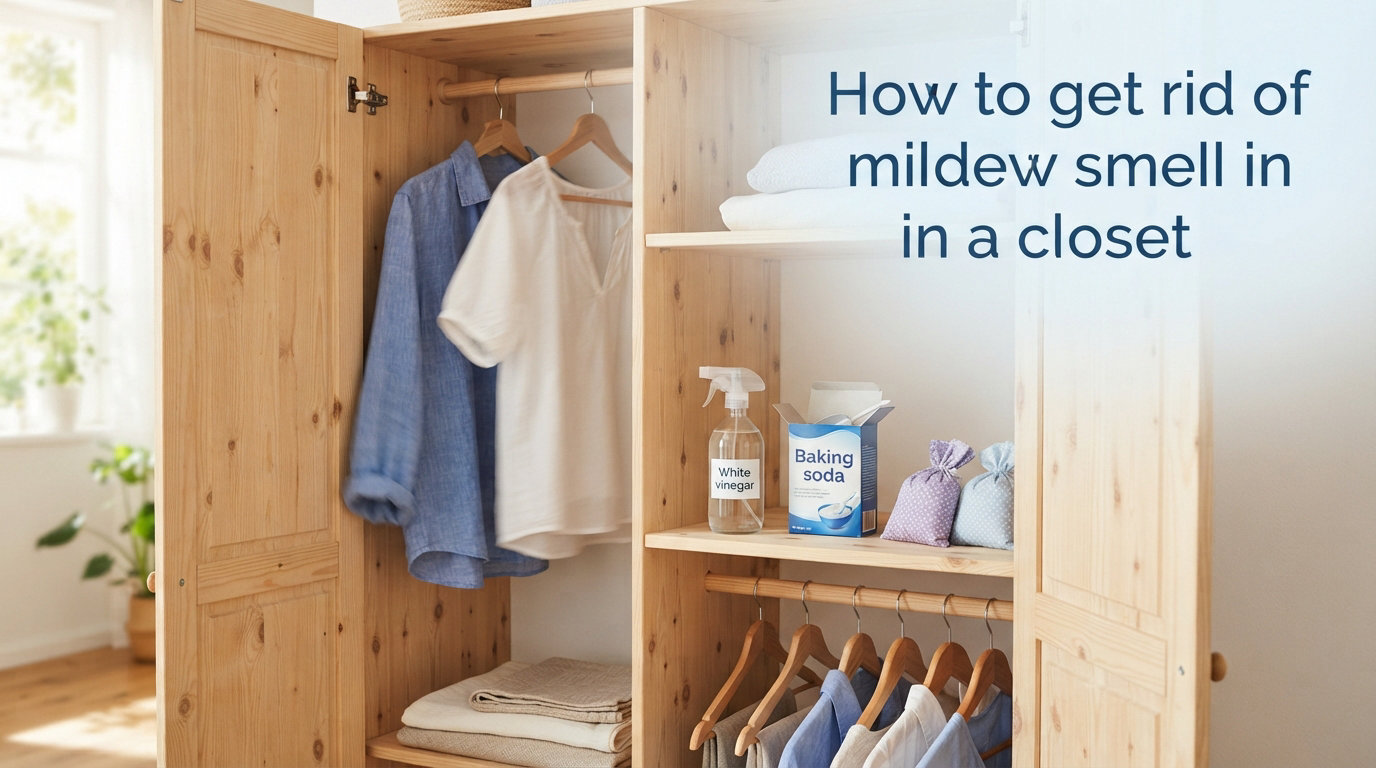
That damp, stale odor hits you the moment you reach for a shirt, and suddenly your whole day feels slightly off. If you are wondering how to get rid of mildew smell in a closet, you are far from alone. This is one of the most common household odor problems people deal with, especially in humid climates, older homes, and spaces with limited airflow.
I have dealt with stubborn closet odors in my own home and spent more weekends than I care to admit testing different methods to find what actually works. The good news is that mildew smell is fixable, usually with supplies you already have at home. The catch is that spraying air freshener or stuffing a dryer sheet in the corner only masks the problem. If you want the smell gone for good, you need to tackle the root cause.
In this guide, I will walk you through exactly why your closet smells, how to tell mildew odor apart from active mold growth, and a step-by-step cleaning process that removes the smell at its source. I will also cover natural remedies, prevention habits, and when to suspect a bigger problem hiding behind your walls.
Table of Contents
Why Does My Closet Smell Musty?
Closets are essentially small, dark, poorly ventilated rooms, which makes them perfect breeding grounds for mold and mildew. The musty smell you notice is not just “stale air.” It is the byproduct of microscopic fungi breaking down organic matter in damp conditions.
As mildew grows, it releases microbial volatile organic compounds, or MVOCs, into the air. These compounds are what produce that recognizable damp, earthy odor. The smell is actually a signal that living organisms are actively growing somewhere in or around your closet.
Several factors create the moisture that mildew needs to thrive. Humid air trapped in an enclosed space is the most common culprit. Other sources include damp clothing put away before it is fully dry, water leaks from pipes or the roof, condensation on exterior walls during cold months, and even wet shoes or umbrellas stored without drying.
Poor airflow makes all of this worse. When clothes are packed tightly against walls and there is no air circulation, moisture has nowhere to go. It settles into fabrics, wood, and drywall, creating the damp environment mildew loves. This is why the problem often appears in closets packed to the brim or pushed against exterior walls.
Is It Mildew or Mold? Signs to Look For
A musty smell does not automatically mean you have visible mold growth, but it does mean conditions are right for it. Understanding the difference helps you decide how aggressive your approach needs to be.
Mildew is a surface-level fungus that typically appears as a thin powdery layer, usually white, gray, or yellowish. It grows on surfaces and is relatively easy to clean. Mold tends to be darker, appearing green, brown, or black, and it can penetrate deeper into materials like drywall and wood.
Before you start cleaning, take a close look at your closet walls, shelves, baseboards, and ceiling corners with a flashlight. Look for discoloration, fuzzy patches, or water stains. Sniff different areas to try to pinpoint where the smell is strongest, which often points you toward the source.
If you see dark patches spreading across a large area of drywall, or if the smell persists after thorough cleaning, you may have mold growing behind the walls. In that case, surface cleaning alone will not solve the problem, and you may need professional help.
Also pay attention to health signals. If you notice increased allergy symptoms, coughing, or throat irritation when spending time near the closet, that is a sign the air quality issue is more serious than a simple odor.
How to Get Rid of Mildew Smell in a Closet (Step by Step)
This is the core process I use and recommend for eliminating mildew smell at its source. Follow these steps in order for the best results.
Step 1: Empty the Closet Completely
Start by removing everything from the closet. This means every piece of clothing, every shoe, every storage box, and every item on every shelf. You cannot properly clean or inspect a closet that is still full of belongings.
As you remove items, sort them into three piles: items that smell musty and need washing, items that are clean and dry, and items you no longer need. This is also a good time to declutter, since overcrowded closets trap moisture and restrict airflow.
Step 2: Inspect for Visible Mold and Water Damage
With the closet empty, examine every surface with a flashlight. Check the walls, especially behind where furniture or clothing was pressed against them. Look at the ceiling, baseboards, floor corners, and any shelving brackets where moisture can collect.
Look for water stains, bubbling or peeling paint, dark spots, or fuzzy growth. If you find small areas of surface mildew, you can treat them yourself. If you find large dark patches or soft, crumbly drywall, the problem may be deeper than surface level.
Step 3: Clean All Surfaces Thoroughly
Mix a solution of equal parts white vinegar and water in a spray bottle. Vinegar naturally kills most mold species and neutralizes odors without harsh chemicals. Spray down all hard surfaces including walls, shelves, baseboards, and the floor.
Let the vinegar solution sit for 10 to 15 minutes, then wipe everything down with a clean microfiber cloth. For stubborn spots, use a scrub brush with a baking soda paste made from baking soda and a small amount of water. Rinse with a damp cloth and dry everything completely.
If your closet has carpet, that may be holding odors. Consider having it professionally cleaned or, if possible, removing it entirely and replacing it with a hard surface that is easier to keep dry.
Step 4: Treat Walls with a Sealer or Primer if Needed
In older homes where musty smells keep returning even after cleaning, the odor may be trapped in the paint or drywall itself. Several homeowners on home improvement forums report success using a stain-blocking primer like Kilz or Zinsser on closet walls.
This step seals in lingering odors and creates a barrier that makes it harder for moisture to penetrate the surface. It is a bigger project, but if you have cleaned repeatedly and the smell persists, repainting with a quality primer is worth the effort.
Step 5: Deploy Odor Absorbers
Once surfaces are clean and dry, place natural odor absorbers throughout the closet. Open boxes of baking soda are inexpensive and effective for general odor absorption. Activated charcoal bags work even better for many people because they trap odor molecules and moisture simultaneously.
Spread two or three absorbers at different heights in the closet, one on a high shelf, one at floor level, and one in the middle. Replace them every two to three months for ongoing protection.
Step 6: Improve Airflow Before Restocking
Before you put anything back, think about how air moves through the space. Leave at least an inch of clearance between your clothes and the wall. Avoid packing garments so tightly that air cannot circulate between them.
If your closet has a louvered door, keep it slightly ajar for a few days after cleaning to let residual moisture escape. You can also run a small fan directed into the closet for a few hours to speed up the drying process.
Natural Remedies That Actually Work
You do not need expensive commercial products to fight closet odors. Some of the most effective solutions are natural items you probably already have at home. Here is what works and how to use it.
Baking soda is the most recommended natural odor absorber, and for good reason. Open a box and place it on a closet shelf, or pour some into a shallow bowl for more surface area. It passively absorbs odors over weeks. Replace it every two to three months. Many users on frugal living forums swear by this simple method as their go-to solution.
Activated charcoal goes a step further than baking soda because it absorbs both odors and moisture. You can buy small bags of bamboo charcoal designed for closet use. They last longer than baking soda and can be recharged by placing them in sunlight for a few hours every month. For stubborn odors, charcoal is often the better choice.
White vinegar is best used as a cleaning agent rather than a passive absorber. Its acidity kills mold spores on contact and neutralizes the compounds that cause musty smells. The vinegar smell dissipates within an hour as it dries, leaving behind a neutral surface.
Coffee grounds can absorb odors while adding a subtle pleasant scent. Place a bowl of dry, used coffee grounds in the closet and replace it weekly. This is a good option if you want a mild fragrance along with odor absorption.
Cedar planks and blocks naturally repel moths and add a fresh wood scent. They are more expensive than other options, but they last a long time and serve double duty as pest deterrents. Sand them lightly every few months to refresh the scent.
A quick note on essential oils: they smell wonderful but they only mask odors rather than eliminating them. Use them alongside absorbers, not as a replacement. Lavender and eucalyptus are popular choices that also deter pests.
How to Freshen Specific Closet Items
Clothing and other items that have absorbed the musty smell need attention too. Otherwise, they will bring the odor right back into your freshly cleaned closet.
For machine-washable clothing, run items through a hot wash with a cup of white vinegar added to the rinse cycle. Vinegar strips odors from fabric effectively. Follow with a regular wash cycle with detergent if the vinegar smell lingers.
For items that cannot be washed, like wool coats, leather jackets, or structured blazers, try hanging them outside in fresh air for a full day. Sunlight and moving air do wonders for pulling out trapped odors. Avoid direct sunlight on leather, which can cause fading.
For shoes, sprinkle baking soda inside and let them sit overnight, then shake it out. For persistent odors, crumple newspaper and stuff it inside the shoes overnight to absorb moisture and smell.
For dry-clean-only items that still smell after airing out, take them to a professional cleaner and mention the musty odor so they can use the appropriate treatment.
How to Prevent Musty Closet Smell from Coming Back
Cleaning gets rid of the smell, but prevention keeps it from returning. These habits make the biggest difference over time.
Control humidity. The single most effective prevention step is keeping closet humidity below 50 percent. In damp climates or basements, a small dehumidifier is worth the investment. For smaller closets, reusable moisture absorbers like DampRid containers help pull excess moisture from the air.
Never store damp items. This sounds obvious, but it is the most common cause of recurring odors. Make sure clothes are completely dry before hanging them. The same goes for shoes, umbrellas, gym bags, and anything else that might carry moisture. If you washed something, give it extra time in the dryer or on the line.
Improve air circulation. Keep closet doors open for a few hours each week to let air move through. If your closet has no ventilation, consider installing a louvered door or a small battery-operated fan that runs on a timer.
Do not overload the closet. Crammed closets trap moisture between garments. Leave breathing room between hangers and avoid stacking boxes directly against exterior walls where condensation forms.
Do seasonal checks. Every change of season, take five minutes to inspect your closet for early signs of moisture or odor. Rotate your odor absorbers, check for water stains, and make sure nothing damp has crept in unnoticed.
Avoid storing certain items in closets. Damp towels, dirty laundry, wet shoes, and food items do not belong in clothing closets. These introduce moisture and organic matter that feed mildew growth.
When to Suspect a Bigger Problem
Sometimes a closet smells musty no matter how thoroughly you clean, and that is a red flag. If the smell returns within days of deep cleaning, or if it seems to come from inside the walls rather than from the closet contents, you may have hidden mold.
Common hidden sources include leaky pipes behind the wall, roof leaks traveling down inside the wall cavity, or condensation building up in poorly insulated exterior walls. If you notice paint bubbling, soft spots in the drywall, or a smell that seems to get stronger after rain, these are signs of moisture intrusion that surface cleaning cannot fix.
In these cases, it is worth hiring a professional to inspect for hidden mold and identify the moisture source. Attempting to tear into walls yourself can spread mold spores throughout your home and make the problem worse.
FAQs
What neutralizes mildew smell?
White vinegar, baking soda, and activated charcoal are the most effective natural odor neutralizers. Vinegar kills mold spores on contact when used as a surface cleaner. Baking soda and activated charcoal passively absorb odor molecules from the air. Using all three together gives you the best results.
Will mildew smell go away once dry?
Not on its own. Drying out a closet stops new mildew from growing, but the existing odor compounds (MVOCs) linger in fabrics, walls, and wood. You need to clean surfaces and use odor absorbers to remove the smell that has already built up. Simply drying the space prevents the problem from getting worse but does not reverse existing odor.
Why do my clothes smell musty after being in the closet?
Clothes absorb moisture and odor compounds from the air around them. If your closet has high humidity or hidden mildew growth, fabrics act like sponges and trap the musty smell. This happens most often when clothes are stored in tightly packed closets with poor airflow or when damp items are put away before fully drying.
Does a musty smell in a closet always mean mold?
Not always, but it usually means conditions are right for mold growth. The musty odor comes from microbial volatile organic compounds produced by mold and mildew. Even if you cannot see visible growth, the smell indicates that moisture levels are high enough for fungi to thrive. Cleaning and reducing humidity will address both the odor and the underlying cause.
Why does my closet suddenly smell musty?
A sudden musty smell usually means a new source of moisture has appeared. Common causes include a hidden pipe leak, roof leak, increased seasonal humidity, condensation from temperature changes, or damp items recently placed in the closet. Check for water stains, inspect nearby plumbing, and look for items that may have been stored while still wet.
How do I get the mildew smell out of my closet naturally?
Empty the closet, clean all surfaces with a mixture of equal parts white vinegar and water, let everything dry completely, then place open boxes of baking soda or activated charcoal bags at multiple heights inside the closet. Improve airflow by keeping the door open periodically and avoiding overpacking. Replace the natural absorbers every two to three months.
Keep Your Closet Fresh for Good
Getting rid of mildew smell in a closet comes down to three things: removing the existing odor, eliminating the moisture source, and building habits that prevent it from returning. The step-by-step process above handles the first two. Consistent prevention habits handle the third.
Start with the basics. Empty the closet, clean with vinegar, dry thoroughly, and add natural absorbers. Most mild odor problems respond well to this approach within a few days. If the smell persists despite your best efforts, dig deeper for hidden moisture sources or consider repainting with a stain-blocking primer.
The most important takeaway is that covering up the smell with air fresheners or fragrances never works long-term. Address the root cause, and your closet will stay fresh and your clothes will smell clean every time you reach for them.