
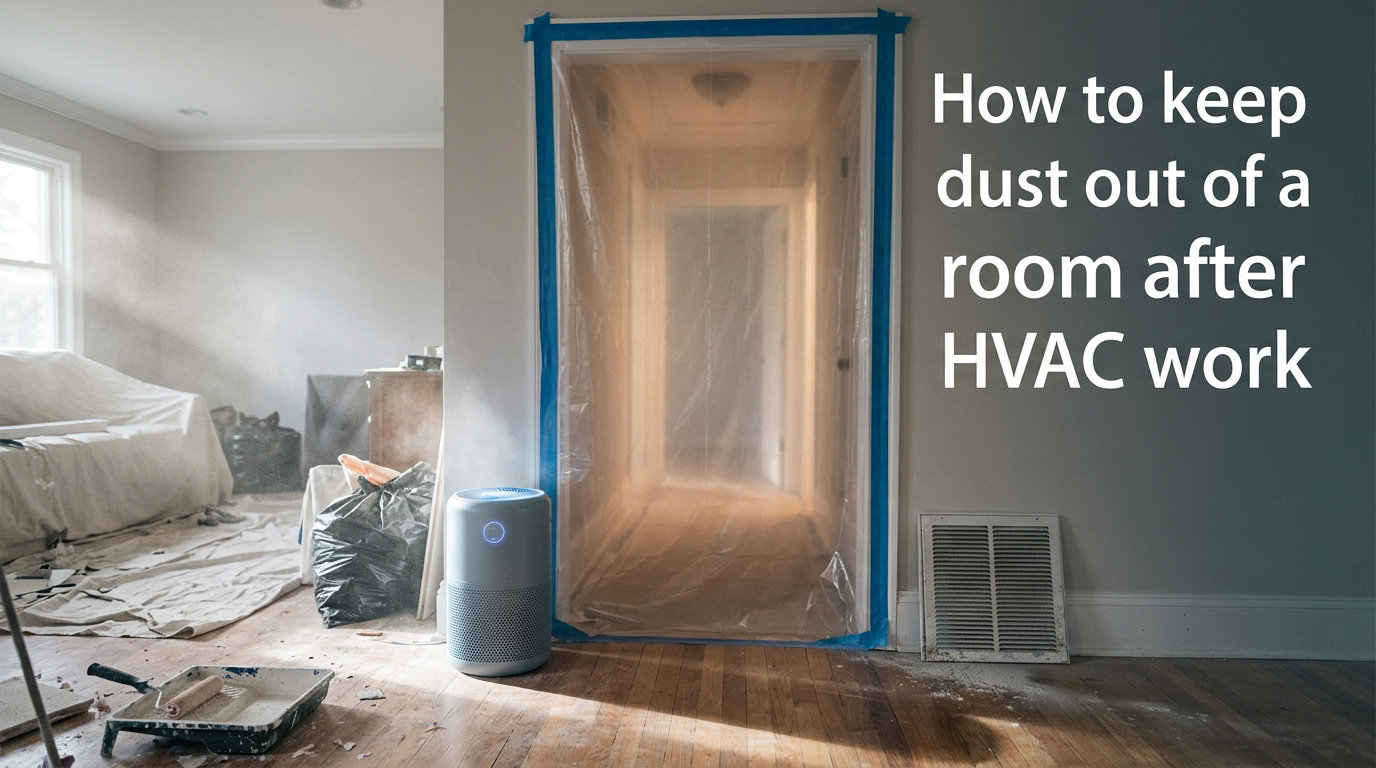
Anyone who has had a furnace replaced, ductwork repaired, or an AC unit installed knows the aftermath. A fine layer of grey-white dust coats every surface, floats in the air for days, and somehow finds its way into rooms nowhere near the work zone. Learning how to keep dust out of a room after HVAC work can save you hours of cleaning and protect your indoor air quality.
I have been through three major HVAC projects in the last several years, including a full furnace replacement and a ductwork reroute. The first time, I ended up vacuuming drywall dust for three weeks. By the third project, I had a system that kept 90 percent of the debris contained. This guide covers everything I learned, from sealing rooms before the technician arrives to the cleanup protocol that actually works.
The key insight most homeowners miss is that prevention starts before the work begins. Once fine particles enter your ductwork, they circulate through every room in the house every time the system kicks on. Sealing vents, hanging plastic sheeting, and swapping filters at the right moment makes all the difference.
Table of Contents
Where HVAC Dust Actually Comes From
HVAC dust comes from three main sources: debris already sitting inside your ductwork, particles created by the work itself, and material disturbed during installation or repair. Cutting sheet metal, drilling into framing, removing old ducts, and soldering pipe fittings all generate fine particulate matter.
Drywall dust is the worst offender. When technicians cut into ceilings or walls to run new ductwork, the resulting particles are small enough to stay airborne for hours. Sawdust from drilling through floor joists adds to the mix. Old insulation pulled from ducts releases fibres and accumulated debris that has been sitting in your system for years.
Your HVAC system makes the problem worse by acting as a distribution network. Supply vents push dust-laden air into every room connected to the same duct run. Return vents pull contaminated air back through the system, recirculating particles over and over. This is why a single afternoon of ductwork repair can leave dust throughout an entire house.
One Reddit user in r/HomeImprovement described it perfectly: they had a return air vent replaced in the basement and found grey dust on the second floor the next morning. The HVAC fan had been running the entire time, pushing construction debris through the ductwork and into bedrooms. Dirty return air vents are one of the most common hidden dust sources in homes.
How to Seal a Room Before HVAC Work Starts
The single most effective way to keep dust out of a room after HVAC work is to seal the room before the technician arrives. Sealing takes 30 to 45 minutes and prevents the vast majority of dust from entering protected areas. Here is the step-by-step process I use.
Step 1: Shut Down and Seal the HVAC System
Turn your thermostat to the off position at least 30 minutes before the technician arrives. A running HVAC fan is the fastest way to spread construction dust through your entire home. If the technician needs the system running for testing, wait until they specifically ask.
Once the system is off, locate your main return air vents. These are the large grilles, usually on a wall or ceiling, that pull air back to the furnace or air handler. Sealing these is more important than sealing supply vents because returns create negative pressure that sucks dust in.
Step 2: Cover Every Vent and Register
Cut pieces of plastic sheeting or even garbage bags slightly larger than each vent opening. Tape them in place using painter’s tape or duct tape, pressing firmly around all four edges. Cover both supply vents (the ones that blow air out) and return vents (the ones that pull air in).
Pay special attention to vents in the room where the HVAC work is happening and in adjacent rooms. Dust travels through wall cavities and along duct runs, so sealing vents two rooms away is not overkill. I made the mistake once of only sealing the immediate work area and ended up with drywall dust in a bedroom down the hall.
Leave the vent covers in place until all cutting, drilling, and grinding is finished. Remove them only when you are ready to replace the air filter and run the cleanup protocol described later in this guide.
Step 3: Hang Plastic Sheeting on Doorways
Use 4-mil or 6-mil plastic sheeting to seal every doorway leading into the work area. Tape the top and both sides to the door frame, then let the bottom hang loose so you can walk through. For extra protection, cut the plastic down the middle to create overlapping flaps that close behind you.
If the HVAC work is in a basement or utility room with an open staircase, run plastic across the entire stair opening. Warm air rising from the work zone carries dust upward into the floors above. Sealing the stairwell at the top prevents this chimney effect.
Zippered dust containment doors, available at hardware stores for around 15 dollars, make this easier. They stick to the door frame with adhesive and give you a reusable zipper entrance. I keep two on hand for any project that involves cutting or drilling.
Step 4: Protect Floors and Furniture
Cover floors with rosin paper or drop cloths, overlapping edges by at least 6 inches and taping the seams. Move furniture out of the work area if possible. For items that cannot be moved, drape them with plastic sheeting and tape it closed at the bottom.
Do not skip this step thinking you will vacuum afterward. Fine HVAC dust works its way into upholstery fibres, carpet pile, and fabric lampshades where it lingers for weeks. Prevention here saves hours of deep cleaning later.
How to Keep Dust Out of a Room After HVAC Work
Even with perfect preparation, some dust will escape. The steps below help you capture residual particles and stop them from circulating through your home in the days following the project.
Replace the Air Filter Immediately
Swap your HVAC air filter the same day the work finishes. Construction dust loads filters fast, and a clogged filter lets particles pass right through. I change the filter the moment the technician leaves, then again one week later to catch whatever was still settling in the ductwork.
Check the filter every few days for the first two weeks. If it looks grey and heavy after three or four days, swap it again. This is normal after ductwork repair and tapers off as the system clears.
What MERV Rating You Actually Need
For post-HVAC-work dust control, use a filter rated MERV 11 or MERV 13. MERV stands for Minimum Efficiency Reporting Value and measures how effectively a filter captures particles between 0.3 and 10 microns.
Standard fiberglass filters are rated MERV 1 to 4 and capture less than 20 percent of the fine particles HVAC work generates. A MERV 8 filter catches around 70 percent. MERV 11 captures 85 percent of particles as small as 1 micron, which covers most construction dust. MERV 13 pushes that to 90 percent and handles smaller particles like bacteria and smoke.
One caution: check your system’s specifications before jumping to MERV 13. Some older units cannot handle the airflow restriction and may strain the blower motor. If you are unsure, MERV 11 is a safe choice that works with nearly every residential system.
Run the HVAC Fan the Right Way
After replacing the filter, set your thermostat fan to “On” rather than “Auto.” This keeps air circulating continuously through the filter, pulling airborne dust out of the air. Run it this way for 48 to 72 hours after the work is complete.
Make sure all vent covers are open during this period. Closed vents reduce airflow through the system, which means less dust gets captured. The goal is maximum air circulation through a clean, high-MERV filter.
Once the air clears and the filter is no longer loading up quickly, switch the fan back to “Auto” to save energy.
The Box Fan Plus Filter Trick
This is a method I learned from r/CleaningTips and it works remarkably well. Tape a 20×20 MERV 11 or MERV 13 furnace filter to the back of a standard 20-inch box fan using duct tape. Make sure the filter’s airflow arrow points toward the fan.
Place the fan in the room where HVAC work happened and run it on medium speed. The fan pulls dusty air through the filter and pushes clean air back out. One of these DIY air purifiers costs under 40 dollars and clears a room noticeably faster than waiting for dust to settle on its own.
For larger spaces, set up two box fan units on opposite sides of the room. Check the filters after 24 hours. If they are visibly grey, replace them and keep running.
Use an Air Purifier with HEPA Filtration
If you already own a portable air purifier with a true HEPA filter, now is the time to deploy it. HEPA filters capture 99.97 percent of particles down to 0.3 microns, which covers even the finest drywall and metal dust.
Run the purifier on its highest setting in the affected room for the first 48 hours. Some homeowners on Reddit also report that ionizers help by charging dust particles so they clump together and fall to the floor faster, making them easier to vacuum. This is worth trying if you have one available.
How Long Does Dust Take to Settle After HVAC Work
Construction dust from HVAC work takes 2 to 4 hours for larger particles to settle, but the finest particles can remain airborne for 24 to 72 hours. Drywall dust, the most common type from HVAC projects, is extremely fine and may stay suspended for up to a week in a home with poor air circulation.
Several factors affect settling time. Particle size is the biggest one. Sawdust and metal shavings drop within an hour. Drywall dust and joint compound particles can float for days. Air movement also matters. An enclosed room with no airflow settles faster than one where doors keep opening and closing.
Here is a practical timeline based on my experience and what homeowners report on forums:
Within the first 2 hours, the heaviest particles fall. You will see visible dust on horizontal surfaces. Between 2 and 8 hours, medium particles settle and the air starts to look clearer. From 8 to 48 hours, the finest particles continue to settle, especially if you are running fans and filters. After 48 to 72 hours with good filtration, most airborne dust is captured and the room is back to normal.
Without any filtration or air movement, expect fine HVAC dust to linger for 5 to 10 days. Running the box fan trick or a HEPA purifier cuts this down dramatically.
Post-HVAC Work Cleanup Protocol
Cleanup works best when you follow a specific order. Random wiping and vacuuming stirs settled dust back into the air, forcing you to clean the same surfaces twice.
Step 1: Wait for Dust to Settle
Do not start wiping surfaces immediately after the technician leaves. Wait at least 2 to 3 hours for heavier particles to drop. If possible, wait overnight with a box fan filter running. Cleaning while fine dust is still airborne just pushes it around.
Step 2: Vacuum Top to Bottom
Always clean from the highest point down. Start with ceiling fan blades, light fixtures, and the tops of cabinets. Work your way down to walls, then furniture, then floors last. Use a vacuum with a HEPA filter so you are not blowing captured dust back out the exhaust.
Use brush attachments on surfaces and crevice tools in corners and along baseboards. Avoid dry dusting with a cloth at this stage. Dry cloths lift fine HVAC dust into the air rather than capturing it.
Step 3: Wipe Down Every Surface
After vacuuming, wipe surfaces with a damp microfiber cloth. Microfiber traps particles instead of pushing them around. Rinse the cloth frequently in clean water.
For stubborn drywall dust on hard surfaces, a 50/50 mix of water and white vinegar cuts through residue effectively. This is the basis of the cleaning solution some people call “grandma’s trick” for dust elimination. The vinegar helps break down the alkaline drywall compound residue so it wipes away cleanly rather than smearing.
Step 4: Clean the Vents and Ductwork
Remove vent covers and wash them in warm soapy water. Vacuum inside the visible portion of each duct opening with a hose attachment. If you notice a heavy dust smell or visible debris deep in the ductwork, consider scheduling a professional duct cleaning within the first month after major HVAC work.
Professional duct cleaning typically runs 300 to 500 dollars for a whole home. It is worth the cost after extensive ductwork replacement or new construction where large amounts of debris entered the system.
Common Mistakes to Avoid
The most common mistake is leaving the HVAC fan running during the work. This single error distributes construction dust through every room in the house. Always shut the system off before work begins.
Another frequent error is using a cheap fiberglass filter after HVAC work. A MERV 1 filter does almost nothing to capture fine particles. The few dollars you save on the filter cost you weeks of dusty air.
People also tend to start cleaning too soon. Wiping surfaces while fine dust is still floating just redistributes it. Patience in the first few hours pays off.
Forgetting to clean the return air vents is another overlooked step. Returns pull dust in and are often dirtier than supply vents after construction work. Pop the covers off and vacuum inside the opening.
Finally, do not neglect your vacuum cleaner. A standard vacuum without a HEPA filter captures large debris but exhausts fine particles right back into the room. If you do not have a HEPA vacuum, consider renting one for post-construction cleanup.
Grandma’s Simple Trick to Eliminate Dust
The “grandma’s trick” for dust elimination that surfaces in search results refers to using a damp cloth with a vinegar and water solution to wipe surfaces. The damp cloth captures dust instead of scattering it, and the vinegar breaks down residue from drywall compound and other construction materials.
The fuller version of this old-school method involves adding a few drops of fabric softener or a tablespoon of olive oil to the water. The slight residue left on surfaces creates a static-reducing film that slows future dust accumulation. It sounds unusual, but homeowners swear by it for keeping shelves and electronics dust-free longer between cleanings.
The core principle is simple: never dry-dust after construction work. Always use moisture to capture particles. Your grandmother may not have known the science of particulate matter, but the method works because damp surfaces trap fine dust instead of launching it back into the air.
FAQs
What can I put in my room to prevent dust?
Place an air purifier with a HEPA filter in the room, use door draft stoppers to block dust from hallways, keep windows closed on windy days, and place washable rugs at entry points. Houseplants like peace lilies and spider plants also help trap airborne particles, though their effect is modest compared to mechanical filtration.
How long does it take for dust to settle after building work?
Larger dust particles settle within 2 to 4 hours, but fine particles from drywall and HVAC work can remain airborne for 24 to 72 hours. Without any filtration, the finest construction dust may linger for 5 to 10 days. Running fans with attached filters or a HEPA air purifier shortens this to roughly 48 hours.
Can HVAC cause dust in the house?
Yes. An HVAC system can distribute dust throughout your home, especially after installation, repair, or ductwork work. Dirty ducts, clogged filters, and leaky return air ducts all contribute. If you notice a sudden increase in dust after HVAC service, check the air filter and inspect return vents for debris buildup.
What is grandma’s simple trick to eliminate dust?
Grandma’s trick is wiping surfaces with a damp cloth and a mild vinegar-water solution instead of dry dusting. The moisture captures fine particles rather than scattering them, and vinegar breaks down residue from construction materials. Adding a few drops of fabric softener to the water leaves a light film that slows future dust buildup.
How to remove dust from room after building work?
Wait 2 to 3 hours for dust to settle, then vacuum from top to bottom using a HEPA vacuum. Start with ceilings and light fixtures, work down to walls and furniture, and finish with floors. Follow with damp microfiber cloths on all surfaces. Replace the HVAC filter and run the system fan for 48 hours to clear remaining airborne particles.
Wrapping Up
Knowing how to keep dust out of a room after HVAC work comes down to three phases: seal before, filter during, and clean methodically after. Shut down the system, cover vents, hang plastic, and protect surfaces before the technician arrives. Replace filters with MERV 11 or higher immediately after, run fans with attached filters, and give dust time to settle before you start wiping.
The methods in this guide are field-tested from multiple HVAC projects and align with what experienced homeowners share in renovation communities. Take the prep seriously, use the right filter rating, and follow the cleanup order from top to bottom. Your lungs and your furniture will thank you.