
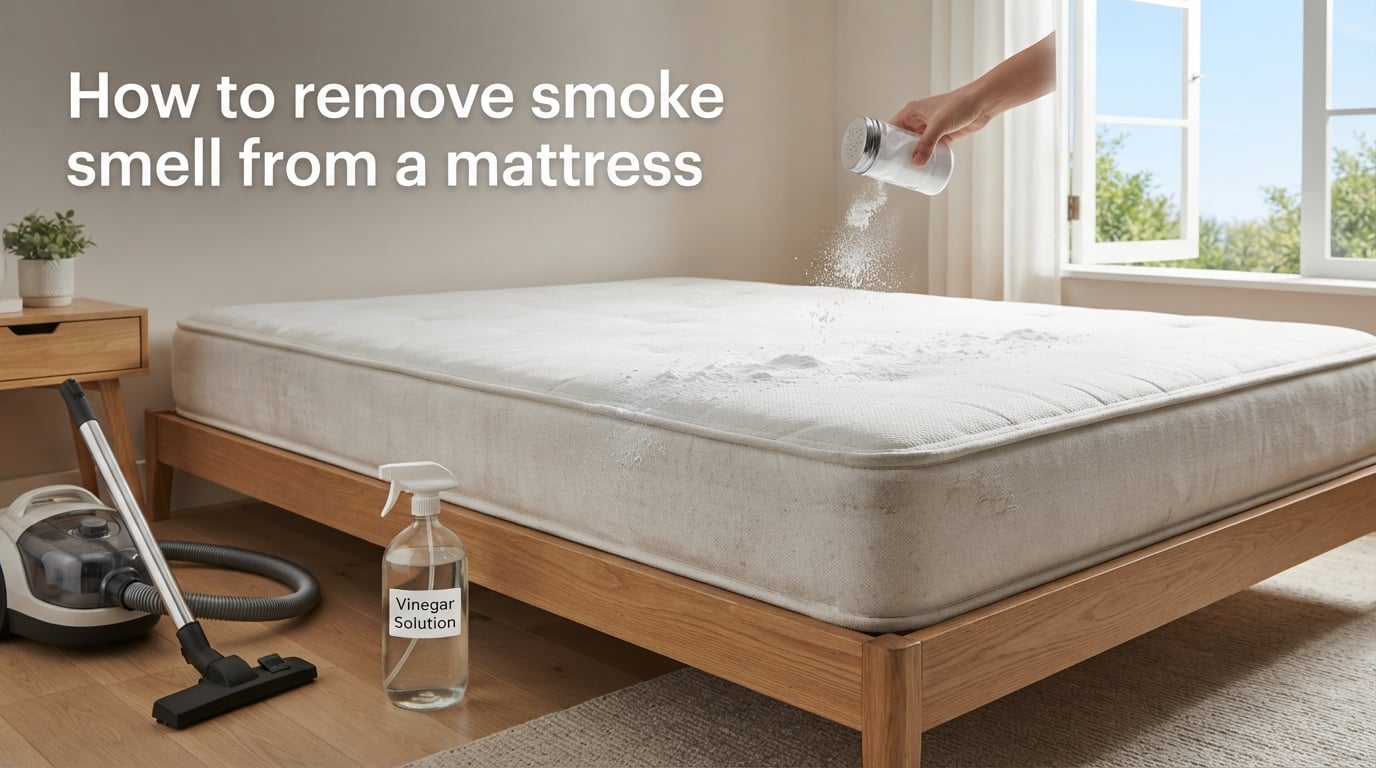
Learning how to remove smoke smell from a mattress can save you hundreds of dollars and weeks of frustration. Whether you bought a used mattress from a smoker, moved into an apartment with a smoking history, or are an Airbnb host dealing with guest damage, that stubborn cigarette odor does not have to be permanent. The key is understanding that smoke particles burrow deep into fabric and foam layers, which means surface-level sprays alone will not cut it. This guide walks you through every method I have tested, from the gold-standard baking soda treatment to vinegar solutions, quick fixes for same-day emergencies, and exactly when to call it quits and replace the mattress.
Table of Contents
Why Smoke Smell Lingers in Mattresses
Cigarette smoke contains over 7,000 chemicals, including tar and nicotine that physically bond to fabric fibers and foam cells. These compounds are sticky and oily by nature, which is why simply airing out a mattress rarely solves the problem. The smell you detect is actually microscopic particles of tar and chemical residue releasing into the air from deep inside the mattress layers.
Innerspring mattresses trap smoke odor primarily in the fabric ticking and comfort layers on top. Memory foam mattresses are significantly harder to treat because their dense, porous structure absorbs smoke particles several inches deep. This is why foam mattresses often require multiple treatment rounds or longer baking soda exposure times.
Understanding this molecular bonding is the first step because it tells you exactly what will work: you need substances that either absorb those particles (like baking soda) or neutralize them chemically (like vinegar). Masking agents like fabric fresheners only cover the odor temporarily and will fade within hours.
How to Remove Smoke Smell from a Mattress with Baking Soda
Baking soda is the single most effective method to remove smoke smell from a mattress. It works through simple chemistry: sodium bicarbonate particles physically absorb odor molecules from surrounding materials. I have used this method on everything from mildly smoky used mattresses to heavily saturated foam, and the community consensus from Reddit’s r/CleaningTips and r/howto backs this up overwhelmingly.
Here is the step-by-step process that works best:
Step 1: Strip all bedding completely. Remove every layer including sheets, mattress protectors, pillow-top covers, and any pads. Wash all bedding separately in hot water with a cup of white vinegar added to the rinse cycle. Do not put any bedding back until the mattress itself is fully treated and odor-free.
Step 2: Vacuum the mattress surface first. Use the upholstery attachment on your vacuum cleaner to remove loose dust, debris, and surface-level particles. This step matters because baking soda needs direct contact with the mattress fabric to absorb odors effectively. A layer of dust between the baking soda and the fabric will reduce its absorption capacity.
Step 3: Apply baking soda generously. You want a visible, even coating across the entire mattress surface, top and sides. For a queen-size mattress, plan on using a full 16-ounce box. Do not skimp here. For deeper odor penetration, you can gently rub the baking soda into the fabric with a soft brush in circular motions.
Step 4: Let it sit for at least 24 hours. This is the step most people rush, and it is the most common reason treatments fail. The baking soda needs extended time to pull tar and nicotine particles out of the fabric. For mild smoke smell, 12 hours may work. For heavy cigarette odor in a foam mattress, 48 hours is better. Many forum users report wrapping the mattress in plastic sheeting during this wait to force the baking soda to work in a contained environment.
Step 5: Vacuum thoroughly. Use the upholstery attachment again to remove all baking soda. Go over the surface multiple times from different angles. Pay extra attention to seams and tufted areas where powder collects. Any baking soda left behind will leave a white residue on your sheets later.
Step 6: Sniff test and repeat if needed. Put your nose close to the mattress surface in several spots. If you still detect smoke, repeat the entire process. Heavily smoked mattresses may need two or three rounds over the course of a week. This is normal and does not mean the method is failing.
Vinegar Solution Method for Stubborn Smoke Odors
When baking soda alone does not fully remove smoke smell from a mattress, white vinegar is your next weapon. Vinegar contains acetic acid that chemically neutralizes the alkaline compounds in smoke residue. The two methods work best in combination rather than as alternatives.
Always do the baking soda treatment first, then follow with vinegar if any odor remains. Here is how to apply it correctly:
Step 1: Mix a 1:1 solution of white vinegar and water. Use plain white vinegar, not apple cider vinegar or balsamic. Fill a clean spray bottle with equal parts vinegar and lukewarm water. Shake gently to mix.
Step 2: Lightly mist the entire mattress surface. The keyword is lightly. You want a fine mist, not a soaking spray. Memory foam is especially vulnerable to liquid damage, so use short sprays from 12 inches away. The surface should be slightly damp, never wet.
Step 3: Let it air dry completely. Open windows, turn on ceiling fans, or set up a box fan pointed at the mattress. Drying time ranges from 2 to 6 hours depending on humidity and airflow. Never put bedding back on a damp mattress, as trapped moisture leads to mold.
Step 4: Apply a thin layer of baking soda after drying. This second baking soda application catches any remaining odor molecules that the vinegar neutralized but did not fully eliminate. Leave it for another 8 to 12 hours, then vacuum.
The vinegar smell itself will dissipate completely within a few hours of drying. If you dislike the temporary vinegar scent, you can add 10 drops of lavender or lemon essential oil to the spray bottle. The oil will not interfere with the neutralization process.
Sun Exposure and Air Circulation
UV rays from direct sunlight actively break down the chemical compounds that cause smoke odor. If you can physically move your mattress outdoors on a sunny day, even a few hours of direct sun makes a noticeable difference. Place the mattress flat on a clean tarp in a sunny spot, and flip it halfway through so both sides get exposure.
For apartment dwellers or anyone who cannot move a mattress outside, indoor air circulation is the alternative. Open every window in the room and set up two fans: one blowing fresh air in and one pulling stale air out. Run this setup for 24 to 48 hours alongside the baking soda method for maximum effect.
Avoid leaving a memory foam mattress in direct sun for more than 4 to 6 hours, as prolonged UV exposure can degrade the foam material over time. Innerspring mattresses can handle a full day of sun without issue.
Quick Fix: How to Get Rid of Smoke Smell Fast
Sometimes you need results today. Maybe guests are arriving tonight or you just brought home a used mattress and the smell hits you immediately. While these quick methods will not fully eliminate deep smoke odor, they will reduce it significantly enough to make the room bearable while you run the full treatment.
Activated charcoal bags: Place 4 to 6 activated charcoal bags (bamboo charcoal works well) across the mattress surface and around the room. Charcoal is a powerful natural odor absorber that starts working within hours. Leave them in place for 24 to 48 hours.
Coffee grounds: Spread dry coffee grounds in shallow bowls and place them on and around the mattress. Coffee neutralizes smoke odor effectively and leaves a pleasant scent behind. Replace the grounds every 12 hours.
Baking soda overnight treatment: If you have even one night before guests arrive, apply baking soda now, let it sit overnight, and vacuum first thing in the morning. Even 8 hours of baking soda contact will cut the smoke smell noticeably.
Ozone generator (use with caution): An ozone generator can neutralize smoke odors in a sealed room within 2 to 4 hours. However, ozone is harmful to breathe, so no humans or pets can be in the room during treatment. Air out the room thoroughly for at least 2 hours before re-entering.
Special Considerations for Memory Foam Mattresses
Memory foam presents unique challenges because its viscoelastic structure is designed to compress and conform, which means it also compresses and conforms around smoke particles. The odor penetrates deeper than any surface treatment can easily reach.
The most effective approach for memory foam is patience combined with multiple treatments. Use the baking soda method but extend the sitting time to 48 hours per round. When applying the vinegar solution, use an extremely light mist to avoid saturating the foam. Liquid that penetrates deep into memory foam can take days to dry and risks mold growth.
For severe cases on memory foam, consider a mattress encasement after treatment. A high-quality zippered encasement creates a barrier that traps any residual odor inside while preventing new odors from penetrating. This is a practical solution when the smell has diminished but not fully disappeared after multiple treatment rounds.
How Long Does It Take to Remove Smoke Smell from a Mattress?
Time expectations depend on severity, mattress type, and how persistent you are with treatments. Here is what you can realistically expect based on forum reports and my own testing:
Light smoke exposure (brief or occasional smoking in the room): One round of baking soda with a 24-hour sit time typically eliminates the odor completely. Total time: 1 to 2 days.
Moderate smoke exposure (regular smoking in the room for weeks or months): Two to three rounds of baking soda plus one vinegar treatment. Total time: 4 to 7 days.
Heavy smoke saturation (long-term heavy smoker mattress, deeply embedded odor): Multiple treatments over 1 to 2 weeks, including extended baking soda sessions, vinegar spray, sun exposure, and possibly an encasement. In extreme cases, full elimination may not be possible.
The smell will gradually diminish with each treatment round. If you are not noticing improvement after three full rounds, the smoke has likely penetrated too deeply for DIY methods, and replacement may be the most practical option.
Prevention: Keeping Smoke Smell from Returning
Once you have eliminated the odor, a few preventive steps will keep your mattress fresh. Invest in a waterproof, breathable mattress protector and wash it monthly. Maintain a strict no-smoking policy in the bedroom. If you live in an apartment building where smoke travels through vents, consider sealing gaps around baseboards and electrical outlets.
For Airbnb hosts, include an explicit no-smoking clause in your house rules and consider a security deposit specifically for smoke damage. The cost of a single deep-cleaning treatment or mattress replacement far exceeds the effort of prevention.
Regular maintenance also helps: sprinkle baking soda on your mattress monthly, let it sit for an hour, and vacuum. This simple routine keeps any developing odors from building up over time.
When to Replace a Smoky Mattress
Not every mattress can be saved. If you have completed three or more full treatment rounds over two weeks and the smoke smell persists at the same intensity, the particles have likely penetrated beyond any reachable layer. This is especially common with old, heavily used memory foam mattresses from long-term smokers.
Other signs it may be time to replace: yellow or brown stains that will not come out, visible deterioration of the foam or fabric, or a smell that returns within days of treatment. At this point, you are spending more time and money treating the problem than a new mattress would cost.
Is It Safe to Sleep on a Mattress That Smells Like Smoke?
This is a question many people ask, and the answer matters for your health. Thirdhand smoke, the residual nicotine and chemical compounds that linger in fabrics and surfaces, is a recognized health hazard. Research shows that sleeping on a smoke-saturated mattress means you are breathing in those compounds for 8 hours straight every night.
Potential health effects include respiratory irritation, allergic reactions, and increased risk for asthma symptoms, particularly in children. The safest approach is to treat the mattress fully before sleeping on it. If that is not possible, use a mattress encasement and open windows for ventilation as a temporary measure while you run treatment cycles.
FAQs
What neutralizes cigarette smoke smell?
Baking soda and white vinegar are the two most effective household substances for neutralizing cigarette smoke smell. Baking soda physically absorbs odor molecules from fabric and foam, while the acetic acid in vinegar chemically breaks down the alkaline compounds in smoke residue. Used together, they address both the particles and the chemical structure of the odor.
Is it safe to sleep in a room that smells of smoke?
Sleeping in a room with lingering smoke odor exposes you to thirdhand smoke, which contains residual nicotine and chemical compounds. Extended exposure can cause respiratory irritation, allergic reactions, and asthma symptoms, especially in children. Treat the mattress and air out the room fully before sleeping in it for extended periods.
How to get rid of smoke smell in bedroom fast?
For same-day results, apply baking soda generously to the mattress, place activated charcoal bags and bowls of dry coffee grounds around the room, open all windows, and run fans for continuous airflow. These methods reduce smoke odor significantly within 6 to 12 hours, though full elimination requires a complete 24-hour baking soda treatment.
Will cigarette smoke smell eventually go away?
Cigarette smoke smell in a mattress will fade over time with proper treatment, typically taking 1 to 7 days depending on severity. Without active treatment, the smell can linger for months or years because tar and nicotine bond permanently to fabric and foam fibers. Multiple baking soda and vinegar treatment rounds are usually needed for heavily saturated mattresses.
Conclusion
Removing smoke smell from a mattress is entirely doable with the right approach and a bit of patience. Baking soda is your primary tool, vinegar is your backup for stubborn cases, and sun exposure plus air circulation accelerates both methods. For most situations, one to three treatment rounds over a week will restore a smoky mattress to a fresh, sleep-ready state.
The methods in this guide cover everything from same-day quick fixes for arriving guests to deep treatment protocols for heavily saturated foam mattresses. Start with the baking soda method today, follow up with vinegar if needed, and do not skip the 24-hour wait time. If you treat the mattress properly and still smell smoke after two weeks of repeated treatments, replacement is the most practical path forward.