
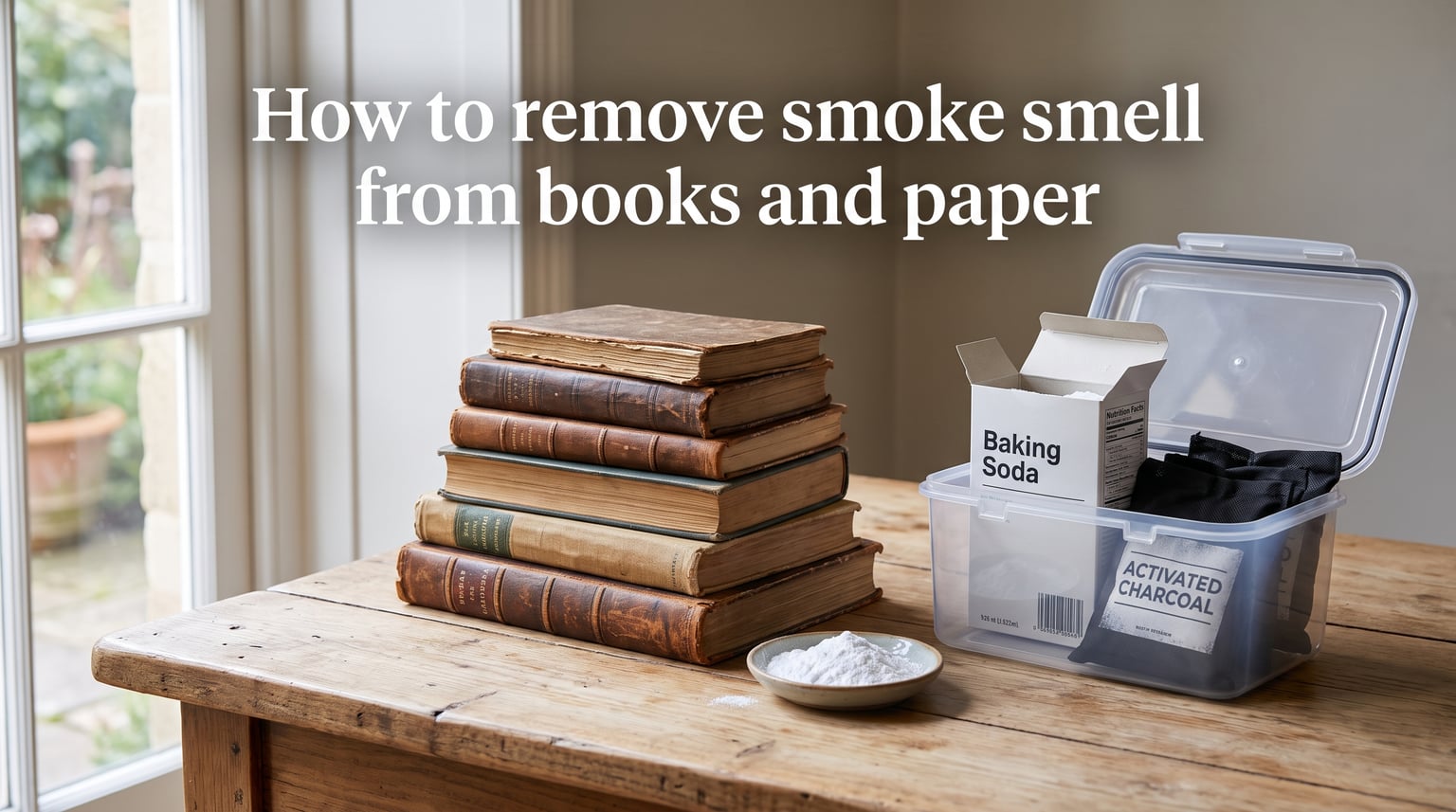
Opening a used book only to be hit with stale cigarette smoke is frustrating. I’ve bought dozens of books from eBay and thrift stores over the years, and many arrived with that unmistakable tobacco odor trapped in the pages. The good news is that you can remove smoke smell from books and paper using several proven methods that range from simple ventilation to professional-grade treatments.
Smoke particles penetrate deep into the porous cellulose fibers of paper and binding materials. These volatile organic compounds become trapped in the microscopic spaces between fibers, which is why simply airing out a book often fails. The smell can persist for decades if left untreated, affecting your reading experience and potentially triggering allergic reactions.
In this guide, I’ll walk you through five effective methods to deodorize smoke-damaged books. I’ve tested these techniques on everything from thrift-store paperbacks to inherited antique collections, and I’ll share real timelines, safety precautions, and what actually works based on conservation experts and user experiences.
Table of Contents
Quick Overview: Methods at a Glance
Before diving into detailed instructions, here’s a comparison of all five methods so you can choose the right approach for your situation.
| Method | Time Required | Difficulty | Effectiveness | Best For |
|---|---|---|---|---|
| Fresh Air Ventilation | 24-72 hours | Easy | Low-Moderate | Light odors, good weather |
| Baking Soda | 1-7 days | Easy | Moderate | Single books, moderate odors |
| Activated Charcoal/Kitty Litter | 1-4 weeks | Easy | High | Heavy odors, multiple books |
| Heat Treatment | 2-8 hours | Medium | Low-Moderate | Surface odors, sturdy books |
| Professional (CLO2/Ozone) | 1-5 days | Requires Service | Very High | Valuable/antique books, severe damage |
Method 1: Fresh Air Ventilation
Fresh air ventilation works best for books with light smoke exposure. This method requires no materials beyond patience and the right weather conditions. The circulating air helps volatile compounds dissipate naturally from the paper fibers.
When to Use This Method
Choose ventilation for books that have a faint smoke smell, not heavy tobacco contamination. This works well for library books that were briefly exposed or books from a non-smoking household that picked up odors during storage. You’ll need dry, breezy weather with low humidity.
Materials Needed
- Well-ventilated outdoor space (porch, balcony, or open window area)
- Clean, dry surface (table, screen, or drying rack)
- Protective covering (if rain is possible)
Step-by-Step Procedure
Step 1: Choose a dry, breezy day with temperatures between 60-80°F. Avoid humid conditions, as moisture can promote mold growth on paper.
Step 2: Find a shaded outdoor location. Direct sunlight can fade covers and damage bindings, especially on older books.
Stand the book upright with pages slightly fanned open. This allows air to circulate between the pages where smoke particles accumulate most heavily.
Step 3: Leave the book for 24-72 hours, checking periodically for weather changes. If you smell improvement after the first day, continue for another 24-48 hours.
Step 4: Test the smell by bringing the book into a closed room and taking a deep breath. If you still detect smoke, try another method from this guide.
Pros and Cons
Pros: Free, no materials needed, gentle on books, safe for all book types.
Cons: Weather-dependent, slow for heavy odors, won’t work on deeply embedded smoke particles.
Method 2: Baking Soda Absorption
Baking soda is one of the most accessible and effective odor absorbers for books. I’ve used this method successfully on dozens of thrift-store finds, and it works through adsorption—pulling odor molecules from the air and binding them to the baking soda particles.
When to Use This Method
Baking soda works well for moderate smoke odors on individual books or small batches. It’s safe for paperbacks, hardcovers, and most modern bindings. For books printed before 1900 or with leather bindings, consult a conservator first.
Materials Needed
- Airtight container (plastic bin with lid, large ziplock bag, or sealed box)
- Box of baking soda (fresh, not previously used for cooking)
- Small dish or plate (to hold baking soda inside container)
- Timer or calendar for tracking
Step-by-Step Procedure
Step 1: Pour about 1/2 cup of fresh baking soda into a shallow dish. Don’t sprinkle it directly on the book—baking soda can leave residue on pages.
Step 2: Place the dish and the book in an airtight container. Stand the book upright with pages slightly fanned to maximize air exposure.
Step 3: Seal the container completely. The sealed environment allows the baking soda to work continuously without air exchange diluting its effectiveness.
Step 4: Store the container in a cool, dry place away from direct sunlight. Leave it for 3-7 days for moderate odors, up to 14 days for heavier contamination.
Step 5: Check after 3 days. If the baking soda has absorbed moisture or changed color, replace it with fresh baking soda and continue.
Step 6: Remove the book and test the smell in a closed room. If smoke odor persists, repeat with fresh baking soda or try activated charcoal (Method 3).
Safety Precautions
Never let baking soda touch the book pages directly, as it can leave a white residue and may affect paper pH over time. Keep the container sealed to prevent humidity changes that could warp pages.
Real User Experience
One forum user reported success leaving a book sealed with baking soda for just one day for a light odor. For heavier tobacco smell, users on Reddit’s r/BookCollecting recommend 7-14 days with weekly baking soda changes until the smell disappears.
Method 3: Activated Charcoal or Kitty Litter
For books with heavy smoke damage or multiple books needing treatment, activated charcoal and unscented clay kitty litter offer stronger odor absorption than baking soda. I prefer this method for eBay purchases that arrive heavily contaminated.
When to Use This Method
Choose activated charcoal or kitty litter for books with strong, persistent smoke odors. This method works well for collections of multiple books and can handle contamination from years of smoke exposure. It’s also effective for books that didn’t respond to baking soda.
Materials Needed
- Large airtight plastic bin with lid
- Activated charcoal pellets (available at pet stores or online)
- OR unscented clay kitty litter
- Shallow containers or trays
- Old newspaper (to protect bin bottom)
Step-by-Step Procedure
Step 1: Line the bottom of your airtight bin with newspaper. This makes cleanup easier and prevents charcoal dust from coating the bin.
Step 2: Fill shallow trays with 1-2 inches of activated charcoal pellets or unscented clay kitty litter. You’ll need enough to create a thick layer that can absorb significant odor.
Step 3: Place trays on the bin bottom. For maximum effectiveness, some users spread a thin layer of kitty litter directly on the newspaper (avoid this if you’re concerned about dust).
Step 4: Arrange books upright with pages fanned open. You can treat multiple books at once, but don’t overcrowd the bin—air needs to circulate between books.
Step 5: Seal the bin and store in a cool, dry location. Leave for 1-4 weeks depending on odor severity. Heavy contamination may require up to 30 days.
Step 6: Replace charcoal or kitty litter weekly. As the materials absorb odors, they become saturated and lose effectiveness.
Step 7: Test books periodically by removing one and checking its smell in a closed room. Return to the bin if smoke odor remains.
Charcoal vs. Kitty Litter Comparison
Activated Charcoal: More effective for heavy odors, cleaner to handle, reusable after heating, more expensive upfront.
Kitty Litter: Less expensive, works well for moderate odors, messy if spilled, one-time use only.
Forum Insights
A user on Reddit’s r/Libraries successfully treated library books by burying them in kitty litter for just one day. Another user reported that activated charcoal pellets in a sealed plastic bin with weekly changes removed smoke odor completely after 3 weeks. For a 200-year-old book exposed to multiple types of smoke, one collector needed 5+ days using Gonzo Odor Eliminator (volcanic minerals similar to activated charcoal).
Method 4: Heat Treatment
Heat can help volatilize smoke compounds and speed up odor release from paper fibers. This method works faster than sealed-container treatments but carries risks for delicate books. Use heat treatment cautiously and only on books you’re willing to experiment with.
When to Use This Method
Heat treatment suits books with light surface odors and sturdy construction. Avoid this method for antique books, leather-bound volumes, books with delicate covers, or anything published before 1950. Heat can warp pages, crack bindings, and cause irreversible damage.
Sunlight Method
Step 1: Choose a sunny day with temperatures below 80°F. Extreme heat can damage bindings.
Step 2: Place the book in direct sunlight for 2-4 hours maximum. Fan pages slightly to allow air circulation.
Step 3: Rotate the book every hour to ensure even exposure. Check for any signs of fading or warping.
Step 4: Move to a shaded area to cool completely before testing the smell.
Hairdryer Method
Step 1: Set a hairdryer to the lowest heat setting (cool if possible, warm at most).
Step 2: Hold the hairdryer 6-8 inches from the book pages. Direct air between pages while fanning them gently.
Step 3: Work through the entire book over 15-30 minutes. The moving air helps volatilize surface odor compounds.
Step 4: Let the book rest for 1 hour before testing the smell.
Safety Warnings
Never use high heat, hairdryers on hot settings, or extended sunlight exposure. Heat treatment works best as a supplement to other methods—try it after ventilation but before sealed-container treatments. If you notice any page warping, binding cracks, or cover fading, stop immediately.
Method 5: Professional-Grade Options
When DIY methods fail or when you’re dealing with valuable antique books, professional treatments offer the most reliable results. These methods use advanced chemistry to neutralize odors at the molecular level.
When to Use Professional Treatment
Consider professional options for books valued over $100, pre-1900 publications, books with significant historical importance, or severe smoke damage from fires. If you’ve tried sealed-container methods for 30+ days without success, professional treatment may be your best remaining option.
CLO2 (Chlorine Dioxide) Treatment
Chlorine dioxide gas neutralizes odors through oxidation—it breaks down the molecular structure of volatile organic compounds rather than just absorbing them. CLO2 penetrates deep into paper fibers and can eliminate smoke, mold, and musty odors in 1-5 days.
Professional CLO2 treatments are available from conservation specialists and some disaster restoration companies. The gas is toxic in high concentrations, so this requires trained professionals with proper safety equipment. Costs typically range from $50-200 per book depending on severity and provider.
Ozone Treatment
Ozone generators create ozone gas that oxidizes odor molecules. This treatment is used by disaster restoration companies for smoke damage from fires. However, ozone can accelerate paper aging and may damage some book materials. Use ozone only as a last resort for heavily damaged books.
Professional Conservation Services
For rare books, consult a professional book conservator. The American Institute for Conservation maintains a directory of certified professionals who specialize in book restoration. Conservators can assess your book, recommend appropriate treatment, and preserve delicate materials that DIY methods might damage.
Special Considerations for Different Book Types
Not all books respond the same way to odor removal methods. Here’s how to approach different book types safely.
Leather-Bound Books
Leather is more sensitive than paper to environmental changes. Avoid moisture, high heat, and prolonged sealed-container treatments that could create humidity. Use fresh air ventilation first, then try baking soda with caution. For valuable leather bindings, consult a conservator before attempting any treatment.
Antique and Rare Books
Books printed before 1900 often use acidic paper that degrades over time. Avoid heat, moisture, and aggressive methods. Gentle ventilation is safest, followed by short-duration sealed-container treatments with activated charcoal. Always test a small area first.
Paperbacks vs. Hardcovers
Paperbacks are generally more forgiving than hardcovers because they lack delicate binding structures. However, paperback glue can soften in high humidity or heat. Hardcovers require extra care for the binding and cover boards—avoid methods that could warp the boards or crack the spine.
Archival Documents and Papers
Single sheets of paper are easier to treat than bound books. You can lay papers flat in a sealed container with baking soda or charcoal, ensuring even exposure. For irreplaceable documents, consult an archivist before attempting DIY treatment.
Prevention: Keeping Your Books Smoke-Free
Once you’ve removed smoke odors, prevent future contamination with proper storage and handling.
Storage Recommendations
Store books in a dedicated room away from kitchen smoke, fireplaces, and tobacco products. Use bookcases with solid backs to block airborne contaminants. Maintain temperature between 60-70°F with relative humidity at 30-50%.
Air Quality Control
Run an air purifier with activated carbon filters in rooms with book collections. These filters capture volatile organic compounds before they penetrate book materials. Change filters every 3-6 months for optimal effectiveness.
Immediate Action Tips
If a book is exposed to smoke, act quickly. Remove it from the contaminated area within 24 hours and begin ventilation treatment. The longer smoke compounds penetrate the paper, the harder they are to remove.
Long-Term Maintenance
Inspect your collection quarterly for odors. Early detection makes treatment faster and more effective. If you buy used books, treat them before shelving to protect your existing collection.
Common Mistakes to Avoid
Not all “remedies” work, and some can make the problem worse. Here are mistakes I’ve seen (and made) over the years.
Using Perfumes or Air Fresheners
Perfumes don’t remove smoke odor—they just mask it temporarily. Worse, the added fragrance combines with smoke compounds to create an even more unpleasant smell. Some users report books that ended up smelling like “perfumed cigarette smoke.”
The Coffee Grounds Myth
Many sources recommend coffee grounds for odor absorption, but this backfires. Multiple users report that books sealed with coffee grounds developed a strong coffee smell that replaced the smoke odor, not eliminated it. Skip this method entirely.
Freezer Method Lack of Evidence
Some guides suggest freezing books to kill odor-causing compounds. Conservation experts note there’s no scientific basis for this—freezing doesn’t break down volatile organic compounds or remove them from paper. It may slow odor release temporarily, but the smell returns when the book thaws.
Rushing the Process
Smoke odors take time to eliminate. Light odors may resolve in hours, but heavy contamination can require weeks. Don’t remove books from treatment too early—the smell will return. Patience is essential for permanent results.
Frequently Asked Questions
Can you get rid of smoke smell in books?
Yes, you can successfully remove smoke smell from most books using methods like fresh air ventilation, baking soda absorption, activated charcoal, or professional treatments. Light odors often disappear within days using simple ventilation, while heavy tobacco contamination may require weeks in a sealed container with activated charcoal or professional CLO2 treatment. The key is matching the method to the severity of the odor and being patient with the process.
Can you remove smoke smell from paper?
Yes, smoke smell can be removed from paper using the same methods as books. Single sheets of paper are actually easier to treat than bound books because you can expose all surfaces evenly. Place papers flat in a sealed container with baking soda or activated charcoal for 3-14 days. For archival or valuable papers, consult a professional conservator to ensure the treatment doesn’t damage the document.
What neutralizes the smell of smoke?
Several materials neutralize smoke odor through adsorption, including baking soda, activated charcoal, clay kitty litter, and volcanic minerals. Professional treatments like chlorine dioxide (CLO2) and ozone neutralize odors through oxidation, breaking down odor molecules at the chemical level. Ventilation also helps by allowing volatile compounds to dissipate naturally. The most effective neutralizer depends on odor severity, book type, and your timeline.
What materials absorb cigarette smells?
The most effective materials for absorbing cigarette smells from books include activated charcoal pellets, unscented clay kitty litter, baking soda, and volcanic mineral products like Gonzo Odor Eliminator. These materials work by adsorption—pulling odor molecules from the air and binding them to their porous surfaces. For best results, place these absorbers in a sealed container with the book for days or weeks, replacing the material weekly as it becomes saturated.
Final Thoughts
You don’t have to live with smoke-smelling books. Whether you’re rescuing a thrift-store find or preserving an inherited collection, you now have multiple proven methods to remove smoke smell from books and paper. Start with simple ventilation for light odors, progress to baking soda or activated charcoal for moderate contamination, and seek professional treatment for valuable or severely damaged books.
Remember that patience determines success more than the specific method you choose. Light odors can disappear in hours, but heavy tobacco contamination may require weeks of consistent treatment. Test your books in a closed room before declaring victory—what seems odor-free in open air might still smell when confined.
Have you successfully deodorized smoke-damaged books? I’d love to hear which method worked for you and how long the process took. Every collection is different, and your experience might help another reader rescue their books.