
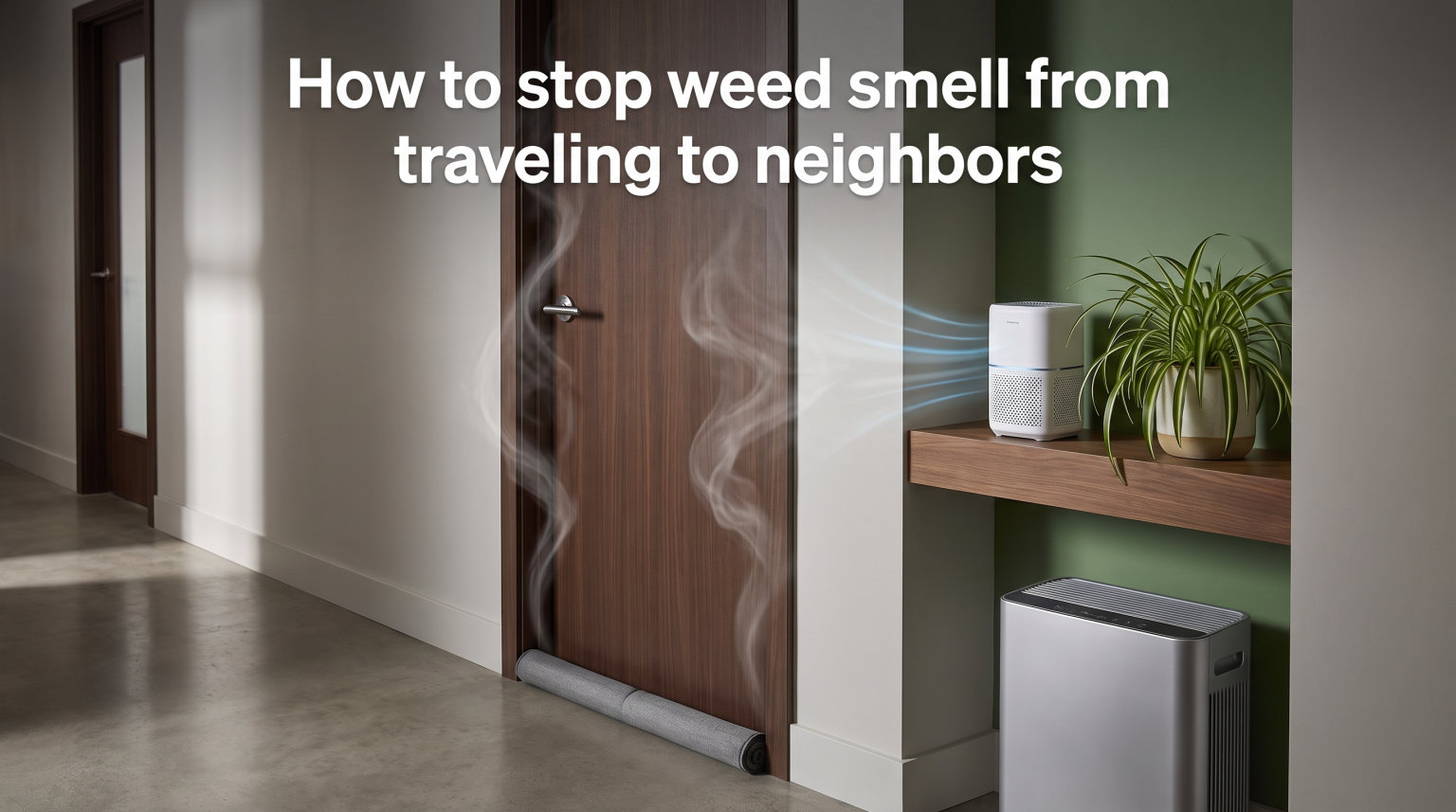
Learning how to stop weed smell from traveling to neighbors can save your relationships, your sleep, and your sanity when you live in shared housing. Whether you are a cannabis consumer who wants to be considerate or a non-smoker dealing with unwanted odor drifting into your home, this guide covers every practical solution available in 2026.
We spent weeks researching forums, testing strategies, and reviewing what actually works based on real apartment dwellers and homeowners who have dealt with this exact problem. The solutions below range from free quick fixes to modest investments in air filtration and home sealing.
The most effective approach combines three things: sealing the physical gaps where smoke enters, improving air filtration with activated carbon, and maintaining open communication with your neighbors. Skip any one of these and you will likely still smell it.
Table of Contents
Why Weed Smell Travels Between Units
Weed smell travels between neighboring units because cannabis smoke produces tiny airborne particles carrying odor-causing compounds called terpenes. These particles are small enough to pass through microscopic cracks in walls, gaps around electrical outlets, under doors, and through shared ventilation ducts.
Terpenes are the aromatic compounds responsible for the distinctive skunky, herbal smell of cannabis. Unlike cigarette smoke, weed smoke contains a higher concentration of these volatile organic compounds, which is why the odor is so pungent and persistent. The particles can measure as small as 0.3 microns, meaning they slip through openings you cannot even see.
In apartments and condos with shared walls, the problem intensifies. Building codes require fire-rated walls between units, but these walls are not airtight. Electrical boxes, plumbing penetrations, and HVAC ductwork all create pathways for smoke to travel. If your neighbor lights up and their unit has positive air pressure (from a running bathroom fan or open window on the windward side), that pressure pushes the smoke through every available gap into your space.
Stack effect also plays a role, especially in multi-story buildings. Warm air rises through the building, creating pressure differences that can pull smoke upward from lower units through wall cavities and utility chases. This is why some people notice weed smell strongest near electrical outlets, baseboards, and kitchen vents that connect to shared ductwork.
How Long Does Weed Smell Linger
Weed smell typically lingers in an enclosed space for 24 to 72 hours after exposure, depending on ventilation, room size, and the amount smoked. In a well-ventilated room with windows open and fans running, most of the odor dissipates within 3 to 6 hours.
Without active ventilation, the smell clings to porous surfaces like carpets, curtains, upholstery, and even painted walls. Fabric absorbs terpenes readily, which is why a single smoking session can leave a bedroom smelling for two full days. Soft furniture, clothing piles, and bedding are the worst offenders.
If the smell is coming from a neighbor and entering your space continuously, it will never fully dissipate on its own. The constant source means you are always getting fresh odor particles. This is why blocking entry points and filtration are more effective than trying to neutralize the smell after it arrives.
Sealing Entry Points: Your First Line of Defense
If you want to know how to stop weed smell from traveling to neighbors or stop it from entering your unit, sealing entry points is the single most effective step you can take. Smoke particles exploit every tiny gap, and closing those gaps eliminates the primary pathway odor uses to travel between units.
Weather Stripping for Doors and Windows
Weather stripping creates an airtight seal around doors and windows, blocking smoke particles from entering. Most hardware stores sell adhesive-backed foam tape or V-strip weather stripping that costs under $15 and installs in minutes.
Clean the door or window frame first with rubbing alcohol so the adhesive sticks properly. Apply the foam tape along the entire perimeter of the frame, making sure there are no gaps at corners. For doors, focus on the top and sides since the bottom needs a separate solution (door sweep). Press firmly and hold for 10 seconds to ensure bonding.
Check the seal by closing the door on a piece of paper. If you can pull the paper out easily, the seal is too loose. You should feel resistance when sliding it. Replace weather stripping annually since foam compresses and loses effectiveness over time.
Door Sweeps and Draft Stoppers
The gap under your door is the largest single entry point for smoke traveling between units. A door sweep attaches to the bottom of the door and brushes against the threshold, creating a barrier that blocks air flow.
For apartment doors, choose an adjustable door sweep with a rubber or silicone blade rather than bristle-style sweeps, which leave tiny gaps. Installation takes about 10 minutes with a screwdriver. Position the sweep so it makes light contact with the threshold when the door is closed.
If you cannot modify the door (rental restrictions), a draft stopper is your best alternative. These fabric tubes stuffed with insulation sit snugly against the base of the door. Some models slide under the door and move with it when opened or closed. They are not as effective as a permanent door sweep, but they reduce smoke infiltration by roughly 60 to 70 percent.
Sealing Electrical Outlets and Switches
Electrical outlets and light switches on shared walls are major smoke highways. The wall cavity behind your outlet box is often connected to the same cavity on the other side of the wall. Smoke enters the wall from your neighbor’s outlet and exits through yours.
Outlet sealers are pre-cut foam gaskets that fit behind the cover plate. They cost about $3 for a pack of six and install in under two minutes per outlet. Turn off the breaker, unscrew the cover plate, place the foam gasket over the outlet, and screw the plate back on.
For extra protection, use child-proof outlet plugs in any receptacle you are not actively using. This blocks the tiny gaps inside the outlet itself where smoke can seep through. Do the same for every outlet and switch on the shared wall, not just the ones near the floor.
Filling Wall Gaps and Cracks
Inspect the shared wall thoroughly for any gaps where it meets the floor, ceiling, or adjacent walls. Use a flashlight at a low angle to spot hairline cracks. Baseboard gaps are especially common in older buildings where settling has occurred.
Fill small cracks with paintable acrylic caulk. For larger gaps at the baseboard line, use expanding foam sealant, then trim the excess with a utility knife once it cures. Pay attention to where pipes enter the wall under sinks, as these penetrations often have generous gaps around them.
If you have a TV wall-mounted on the shared wall, check behind the mount. The hole drilled for the TV cable may be providing a direct path for smoke. Seal it with caulk or a cable pass-through wall plate with a built-in gasket.
Ventilation Strategies That Actually Work
Proper ventilation is essential for anyone figuring out how to stop weed smell from traveling to neighbors. If you are the one consuming cannabis, directing air outward prevents it from reaching your neighbors. If you are on the receiving end, creating negative pressure in your unit keeps smoke from entering.
The cross-breeze technique is the fastest way to clear smoke from a room. Open a window on one side of your unit and another on the opposite side, then place a box fan in one window pointing outward. This creates a tunnel of air that flushes smoke outside in minutes rather than letting it drift into hallways or neighboring units.
If you are trying to prevent smoke from entering your space, reverse the strategy. Place a fan in your window pointing inward, which pressurizes your unit and pushes air out through any gaps rather than drawing neighbor air in. Run bathroom exhaust fans continuously while the smell is active, as these remove air from your unit and vent it outside.
Avoid running your HVAC fan when the smell is present. Central air systems distribute air throughout the entire unit, which spreads smoke particles from one room to every other room. If you must run the system, make sure it is set to recirculate rather than draw in outside air.
Air Purifiers with HEPA and Carbon Filters
An air purifier is one of the most reliable investments for controlling weed smell in any living space. But not just any purifier will work. You need one with both a true HEPA filter and an activated carbon filter to effectively capture smoke particles and neutralize the odor they carry.
HEPA filters capture 99.97 percent of particles down to 0.3 microns, which covers most smoke particles. However, HEPA alone cannot trap the gaseous terpene molecules that cause the actual smell. Activated carbon adsorbs these gases through its porous surface, which is why both filter types are necessary.
When shopping for a purifier, check the Clean Air Delivery Rate (CADR) rating. For weed smoke specifically, look for a smoke CADR of at least 200 for a standard bedroom and 300 or higher for living areas. The CADR tells you how quickly the unit cleans the air, so higher numbers mean faster odor removal.
Run the purifier on its highest setting while smoking is occurring nearby, then drop to a medium setting for ongoing maintenance. Replace the carbon filter every 3 to 6 months, as saturated carbon loses its ability to adsorb odors. A clogged carbon filter can actually re-release trapped odors back into the room.
Natural Odor Absorbers
Natural odor absorbers offer an affordable, chemical-free way to reduce weed smell in your home. While they work more slowly than mechanical solutions, they are excellent as a supplementary defense, especially when combined with sealing and ventilation.
Baking soda is the classic odor absorber for good reason. Place open bowls of baking soda around the room, focusing on corners and near the source of the smell. A thin layer sprinkled on carpets and left for 30 minutes before vacuuming also pulls trapped odors from fibers. Refresh the bowls every week for continuous absorption.
White vinegar neutralizes alkaline odor compounds through a simple acid-base reaction. Set out bowls of undiluted white vinegar near entry points where smoke is coming in. The vinegar smell dissipates within an hour, taking the weed odor with it. You can also simmer a 50/50 mixture of vinegar and water on the stove for 20 minutes to treat an entire room.
Activated charcoal bags are another powerful option. These fabric pouches filled with bamboo charcoal can be hung near doors, placed in closets, or set on shelves. They passively absorb odors for up to two years before needing replacement. Recharge them monthly by placing them in direct sunlight for a few hours, which releases trapped odors and reactivates the charcoal.
Coffee grounds also absorb weed smell effectively. Fill shallow bowls with used coffee grounds (dried first) and place them around the room. Replace every few days. The coffee aroma is pleasant but mild enough that it will not overwhelm your space.
Masking and Neutralizing Odors
Sometimes you need immediate relief while longer-term solutions take effect. Masking and neutralizing products do not eliminate smoke particles, but they can make your space livable while you implement sealing and filtration strategies.
Essential oils with strong, clean scents work well against weed odor. Eucalyptus, tea tree, peppermint, and lemongrass are particularly effective because their compounds bind to and neutralize odor molecules. Add 10 drops to a diffuser or mix with water in a spray bottle for a quick room mist.
Beeswax and soy candles burn cleaner than paraffin and release negative ions that help settle airborne particles. Light a candle in the affected room and let it burn for at least 30 minutes. Avoid heavily scented candles, as mixing strong artificial fragrance with weed smoke can create an unpleasant combined odor.
For quick air freshening, avoid aerosol sprays, which simply add more chemicals to the air. Instead, use enzyme-based odor eliminators, which break down the organic compounds causing the smell. Spray generously near entry points and in corners where air stagnates.
Talking to Your Neighbor: The Diplomatic Approach
If you are dealing with a neighbor’s weed smell entering your home, communication is often the fastest path to resolution. Many cannabis users genuinely do not realize their smoke is bothering anyone. A respectful conversation can solve the problem without escalating to landlords or authorities.
Here is a step-by-step approach that has worked for many people in apartment and condo situations:
Step 1: Choose the right time. Approach your neighbor during daylight hours on a weekend when neither of you is rushing. Avoid confronting them while they are actively smoking or when you are angry about the smell.
Step 2: Be friendly and non-accusatory. Start with a casual greeting and frame the conversation around your shared living situation. Say something like, “Hey, I wanted to mention something as a neighbor. I’ve been noticing some smoke smell coming into my unit, and I wanted to see if we could figure out a solution together.”
Step 3: Offer specific suggestions. Rather than just complaining, propose actionable fixes. Mention that a window fan pointing outward, a towel under the door, or smoking on a different side of the unit could make a big difference. Most people are willing to make small changes when asked respectfully.
Step 4: Follow up. Give it a few days and check whether the situation has improved. If it has, a quick thank-you note reinforces the positive behavior. If nothing changes, you have at least established that you tried direct communication before escalating.
If you are not comfortable with a face-to-face conversation, an anonymous but friendly note is a reasonable alternative. Keep it brief, polite, and focused on solutions. Something like: “Hi neighbor, I’ve been noticing cannabis smell coming into my unit. I’m sure you don’t realize it’s traveling. Would you mind using a window fan? Thanks for understanding.” Slide it under their door.
If you are a cannabis user reading this from the other side, consider proactively talking to your neighbors. A simple heads-up goes a long way. Many people are far more tolerant when they feel respected and informed rather than blindsided by an unexpected odor problem.
When to Involve Your Landlord or Property Management
When direct communication with your neighbor does not resolve the issue, your next step is contacting your landlord or property management company. Most leases include clauses about nuisance odors, smoking policies, and the right to peaceful enjoyment of your unit.
Before you make the call, document everything. Keep a log with dates, times, and duration of when you smell weed in your unit. Note which rooms are affected and whether it correlates with specific times of day. Take photos of any visible smoke if possible. This documentation gives your landlord concrete evidence to act on rather than a vague complaint.
Review your lease for smoking and odor clauses. Many buildings are now designated entirely smoke-free, which gives management clear grounds to address the issue. Even in buildings that allow smoking, most leases include a covenant of quiet enjoyment that covers persistent odor intrusion.
When you contact management, be specific and solution-oriented. Share your documentation and mention that you have already tried talking to your neighbor directly. Property managers can send a formal notice, conduct an inspection, or install additional weather stripping as a building improvement.
If management is unresponsive, submit your complaint in writing via certified mail. This creates a paper trail showing you reported the issue formally. In some jurisdictions, landlords have a legal obligation to address habitability issues, and persistent smoke intrusion may qualify.
Legal Considerations by State
The legal landscape around cannabis varies widely, and your rights depend on where you live. In 2026, recreational cannabis is legal in over 20 states, medical use is permitted in nearly 40 states, and several states still prohibit all cannabis use. This patchwork affects what you can reasonably do about a neighbor’s weed smell.
Even in states where cannabis is fully legal, that does not mean your neighbor has the right to force you to endure their smoke. California Civil Code Section 1947.5 allows landlords to ban smoking of any kind in rental properties. Many states have similar provisions that protect your right to smoke-free housing.
If you live in a state where cannabis is not yet legal, calling the police is an option, though forums consistently suggest this should be a last resort. Many police departments treat neighbor odor complaints as low priority and may simply refer the matter back to property management.
Some residents in online forums report that police did respond to repeated complaints about heavy smoking in non-legal states. Others say police came, spoke to the neighbor, and the situation temporarily improved before reverting. The most reliable path remains documentation, landlord involvement, and building-level policy enforcement.
If you have a medical condition aggravated by smoke exposure, mention this to both your landlord and your neighbor. Some people on forums reported that explaining a health condition (such as asthma or a compromised immune system) motivated their neighbor to change their habits more quickly than a general complaint.
FAQs
What cancels out weed smell?
Activated charcoal, baking soda, and white vinegar are the most effective natural substances that cancel out weed smell. For mechanical solutions, air purifiers with true HEPA and activated carbon filters remove both the particles and the gaseous odor compounds. Essential oils like eucalyptus and tea tree can also neutralize terpene molecules in the air.
What can you do about the smell of weed from neighbours?
To stop weed smell from neighbors, start by sealing entry points with weather stripping, door sweeps, and outlet gaskets. Run an air purifier with a HEPA and carbon filter near the shared wall. Place bowls of baking soda or activated charcoal near where the smell enters. Try talking to your neighbor politely, and if that fails, document the issue and contact your landlord.
Can neighbors call cops for weed smell?
Yes, neighbors can call the police about weed smell, but the response depends on your state and local laws. In states where cannabis is legal, police are unlikely to take action unless other violations are involved. In states where cannabis remains illegal, police may respond but often treat it as a low-priority complaint. Documenting the issue and working through your landlord is generally more effective.
How long does the smell of weed travel?
Weed smell can travel through an entire apartment building within minutes due to air pressure differences and shared wall cavities. In enclosed spaces, the odor typically lingers for 24 to 72 hours on porous surfaces like carpets and fabric. With active ventilation and air purification, most of the smell dissipates within 3 to 6 hours.
What smells overpower the smell of weed?
Strong essential oils like eucalyptus, peppermint, tea tree, and lemongrass can overpower weed smell. Incense, beeswax candles, and cooking strong-smelling foods like curry or garlic also help mask the odor. For neutralization rather than masking, enzyme-based sprays and white vinegar are more effective because they break down the odor compounds rather than covering them up.
Conclusion
Figuring out how to stop weed smell from traveling to neighbors requires a multi-layered approach, but the right combination of strategies can dramatically reduce or eliminate the problem. Start by sealing every gap where smoke can enter or exit, invest in a quality air purifier with HEPA and activated carbon filtration, and use natural absorbers like baking soda and charcoal as backup.
If the smell is coming from a neighbor, try the diplomatic conversation first. Most people are willing to adjust their habits when asked respectfully. Document everything and escalate to your landlord if needed. You have the right to enjoy your home without unwanted smoke intrusion, and the tools in this guide give you a clear path to get there.