
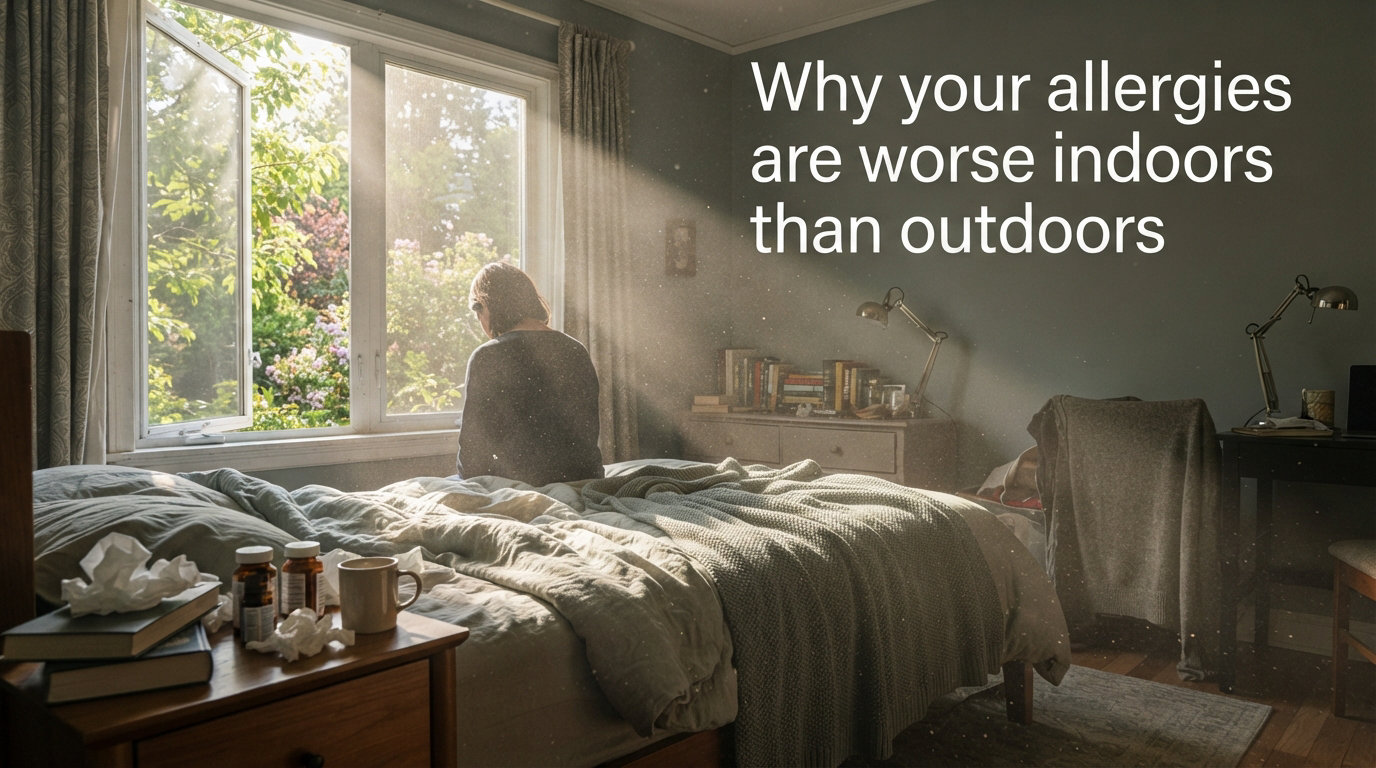
If you sneeze more inside your own home than you do in a pollen-filled park, you are not imagining it. Indoor allergies are very real, and for many people they hit harder than anything the outdoors can throw at them.
Your home was designed to keep the outside world out. Walls, insulation, and sealed windows are great for comfort and energy savings. But that same sealing traps allergens inside with you, recirculating the same particles through every breath.
Why your allergies are worse indoors than outdoors comes down to one core fact. Indoor spaces trap allergens in fabrics, carpets, and ventilation systems, creating continuous exposure unlike outdoor environments where wind disperses particles freely.
Research from the Asthma and Allergy Foundation of America confirms that indoor allergen concentrations often exceed outdoor levels. Dust mites, pet dander, mold spores, and tracked-in pollen build up in enclosed spaces and have nowhere to go. Outdoors, a good rain or a stiff breeze clears the air. Indoors, the same air circles back to your lungs.
I have spent years digging into this exact phenomenon, and the answer surprises almost everyone. Let me walk you through what is actually happening inside your home and what you can realistically do about it.
Table of Contents
Why Your Allergies Are Worse Indoors Than Outdoors
Indoor allergies feel worse because your home concentrates allergens and recirculates them continuously through the air you breathe all day and night.
Think about how outdoor allergens behave. Pollen counts rise and fall with weather, wind, and time of day. Rain washes particles from the air. Wind carries them away. The dose you get fluctuates constantly, and sometimes drops to nearly zero.
Indoor allergens do not have that escape valve. Your heating and cooling system pulls the same air through the same ducts dozens of times per day. Every cycle redistributes microscopic particles throughout every room in the house.
The concentration builds over time. Dust settles deep into your carpets. Pet dander clings to upholstery. Mold grows in damp corners. Each breath you take inside delivers a steady, predictable dose of allergens that your immune system has to fight around the clock.
Our team has noticed a pattern. Many allergy sufferers reach a tipping point where the indoor allergen load crosses a threshold. Symptoms that felt manageable outdoors suddenly become overwhelming the moment they walk through the front door.
The Main Indoor Allergy Triggers
Four allergens cause the vast majority of indoor allergy symptoms: dust mites, pet dander, mold spores, and pollen that tracks inside on shoes and clothing.
Each one behaves differently, hides in different places, and requires a different strategy to control. Understanding the difference is the first step toward real relief. Let me break them down one by one.
Dust Mites: The Microscopic Bedroom Invader
Dust mites are the number one indoor allergen, and they thrive in the exact place you spend the most time every single day. Your bed is dust mite paradise.
These microscopic creatures feed on dead skin cells that humans shed constantly. They love warm, humid environments between 68 and 77 degrees Fahrenheit with humidity above 50 percent. Your mattress, pillows, and bedding provide ideal conditions year-round.
The allergen itself comes from dust mite waste particles, not from the mites. These waste particles accumulate in fabric and become airborne every time you fluff a pillow, roll over in bed, or sit down on a couch.
Dust mite allergy symptoms include morning congestion, itchy eyes, and sneezing that feels worst right after you wake up. Many people blame their pillow or brush it off as “morning allergies” without ever connecting the dots to dust mites.
I always tell people the same thing. If your symptoms peak in the bedroom and ease when you leave the house, dust mites are your prime suspect.
Pet Dander: It Is Not Just the Hair
Pet allergies are triggered by microscopic skin flakes called dander, not by fur itself. Even homes that have never had a pet can harbor dander tracked in on visitors’ clothing.
Dander particles are extremely small and lightweight. They stay airborne for hours after being disturbed, then settle onto walls, furniture, and clothing. This persistence is why people can still react in a home where the pet was removed months ago.
Cats produce particularly potent allergens. The Fel d 1 protein found in cat saliva spreads across their fur during grooming, then flakes off as dander throughout your home. Cat allergen can linger in a house for six months or more after the cat leaves.
Dogs produce allergens too, though typically less potent than cats. Surprisingly, the size and breed of the dog matters far less than most people assume when it comes to allergen production.
If your allergies ramp up when you relax at home with your pet but ease when you travel without them, dander is almost certainly the trigger.
Mold Spores: Growing in the Shadows
Mold produces airborne spores that trigger allergic reactions in sensitive people, and it needs only moisture and a surface to grow. Bathrooms, basements, kitchens, and areas around leaks are prime territory.
You do not need to see visible mold to have a mold problem. Spores spread easily from hidden growth behind walls, under sinks, inside ductwork, or beneath flooring where you would never think to look.
Musty odors are the most reliable telltale sign of hidden mold. If a room smells earthy, damp, or stale, mold is likely growing somewhere nearby even if you cannot see it.
Mold allergy symptoms overlap heavily with other indoor allergies. Congestion, sneezing, itchy eyes, and skin irritation are all common. The key difference is that mold symptoms persist year-round and often worsen during humid weather or rainy seasons.
I recommend checking under every sink, around window frames, and in your basement if you suspect mold. A humidity meter reading above 60 percent in any room is a clear warning sign that conditions favor mold growth.
Pollen That Follows You Inside
Outdoor pollen enters your home through open windows and doors, and it hitches a ride on your clothing, hair, and shoes. Once inside, it settles into fabrics and carpets where it persists long after outdoor pollen counts have dropped.
This explains why spring and fall allergy sufferers often feel worse inside than out. They bring pollen home on their clothes, deposit it onto furniture and bedding, and then breathe it all night long while they sleep.
Pets that go outdoors compound the problem. Your dog or cat collects pollen on their fur and carries the exact allergen you are sensitive to right onto your couch and into your bedroom.
Why Poor Ventilation Makes Everything Worse
Poor ventilation is the single biggest reason indoor allergen levels can actually exceed outdoor concentrations, even during the peak of pollen season.
Modern homes are built tight. Energy-efficient windows, sealed doors, and heavy insulation prevent natural air exchange with the outdoors. This keeps your heating and cooling bills low but traps allergens inside with no fresh air to dilute them.
Without fresh air coming in, allergens accumulate to levels that would be impossible outdoors. Every activity, from walking across a carpet to folding laundry to sitting on a couch, stirs settled particles back into the air you breathe.
Your HVAC system can either help or hurt depending on its condition. A clean system with quality filters captures particles before they reach your lungs. A dirty system with clogged or low-grade filters becomes a distribution network, blasting allergens into every room simultaneously.
Many people report that allergies worsen specifically in upstairs rooms. This often traces back to HVAC issues. Ductwork running through hot attics, air handlers located in dusty closet spaces, and return vents pulling contaminated air from problem areas all contribute to the pattern.
Opening windows helps when outdoor air is clean and pollen counts are low. But during peak pollen season, keeping windows closed and running a HEPA air purifier is usually the safer choice for allergy sufferers.
The Surprising Psychology of Indoor Allergies
Here is something almost no one talks about. You probably expect your allergies to be triggered by the outdoors, and that mental model can blind you to what is really happening inside your home.
When you sneeze in spring, you blame pollen. When your eyes itch in fall, you blame ragweed. The framework most people carry is that allergies come from outside, so you retreat indoors for relief.
This expectation is exactly why indoor allergies catch people off guard. You can suffer from dust mites, dander, and mold for years without ever connecting your symptoms to your home environment.
I have read hundreds of forum posts from people who spent years avoiding parks and gardens during pollen season, only to discover their worst symptoms hit at night in their own bedroom. The frustration of realizing your safe space is actually the problem is real and common.
This is why awareness matters so much. Once you understand that indoor allergens can be more potent and persistent than outdoor pollen, you can finally start addressing the actual source of your suffering.
Hidden Allergen Sources Most People Never Check
The most overlooked allergen sources hide in places you rarely think about or never open. These hidden reservoirs can silently fuel your symptoms for years. Here is where to look.
Your HVAC System and Ductwork
Dust, mold, and debris accumulate inside air ducts over years of use. Every time your system runs, it can push those concentrated allergens directly into your living space.
One Reddit user traced their mystery allergies to an AC closet where mold had grown around the air handler unit. Another discovered that allergens concentrated heavily in a return air vent pulling air from a dusty, unfinished attic space.
Have your ducts professionally inspected if you have never done so, especially in an older home. Change filters every 1 to 3 months, and consider professional duct cleaning if your system has not been serviced in years.
Attic Spaces and Access Panels
Attic dust, insulation particles, and rodent allergens can enter your living space through gaps around attic access panels, recessed lighting fixtures, and plumbing chases.
Hot air rises, which means allergens from the attic migrate downward into upper-floor bedrooms. This is the physical mechanism behind why so many people experience dramatically worse symptoms on the second floor of their home.
Seal attic access points with weatherstripping and check recessed light fixtures for proper sealing. If you use the attic for storage, keep everything in sealed plastic bins rather than cardboard boxes.
Closets, Linen Storage, and Utility Spaces
Closets accumulate dust steadily, and stored items like old clothing, shoes, and linens become allergen reservoirs that release particles every time you open the door. Water heater closets and utility spaces often harbor dust and mold that go unchecked for years.
Linen closets are a particularly sneaky source. Stored towels, blankets, and extra bedding collect dust mites over months of sitting unused. Wash stored linens before use and keep closet doors closed to limit air exchange.
Why Your Allergies Are Worse at Night
Nighttime allergy symptoms peak because your bedroom concentrates the worst indoor allergens in the one place where you spend eight hours breathing deeply and lying still.
Your mattress, pillow, and bedding are ground zero for dust mites. Every time you shift position during the night, you kick up allergen particles that you then inhale with every breath until morning.
Lying flat also changes your nasal blood flow. Congestion worsens when you are horizontal, which is why a stuffy nose that felt manageable during the day becomes unbearable the moment you lie down to sleep.
The bedroom typically has the worst air circulation in the house. Closed doors, limited ventilation, and an abundance of soft surfaces that trap allergens all work together against you.
Temperature drops at night can also trigger histamine release in some people. This compounds the allergen exposure and helps explain why symptoms escalate precisely when you are trying to fall asleep.
How to Reduce Indoor Allergens
You can dramatically cut your indoor allergen load with a systematic approach that targets each major trigger. Here are the steps I recommend, ranked by impact.
Encase your mattress and pillows in allergen-proof covers. These zippered covers create a physical barrier between you and dust mites. Wash all bedding weekly in hot water above 130 degrees Fahrenheit to kill mites and remove waste particles.
Run a HEPA air purifier in your bedroom. Look for a unit properly rated for your room size, and keep it running continuously while you sleep. Position it at least a foot away from walls for maximum airflow.
Control indoor humidity with a dehumidifier. Keep humidity between 30 and 50 percent to starve both dust mites and mold. Monitor levels with an inexpensive hygrometer placed in each major room.
Vacuum weekly with a HEPA-filtered vacuum. Standard vacuums blow fine particles right back into the air. Pay extra attention to bedrooms, hallways, and any high-traffic areas.
Remove shoes at the door. This single habit stops pollen, dirt, and outdoor allergens from tracking through your home. Keep a shoe rack or tray near every entrance.
Wash pets that go outdoors regularly and keep them out of bedrooms whenever possible. Their fur collects pollen, dust, and mold spores that transfer directly to your furniture and bedding.
Replace HVAC filters monthly during heavy-use seasons. Consider upgrading to MERV 11 or MERV 13 filters if your system can handle the airflow restriction without straining the blower motor.
Reduce clutter and fabric surfaces. Replace carpet with hard flooring when feasible. Wash curtains, throw rugs, and removable cushion covers on a regular schedule.
Start with the bedroom since that is where you spend the most concentrated time breathing. Once your sleep environment is under control, work outward through your home one room at a time.
When Indoor Allergies Need Medical Treatment
Over-the-counter antihistamines help many people manage symptoms, but indoor allergies can be stubborn because your exposure is continuous rather than seasonal.
If your symptoms persist despite medication and solid environmental controls, see a board-certified allergist. Skin-prick or blood testing can pinpoint your exact triggers, which makes targeted treatment possible instead of guesswork.
Immunotherapy, whether through allergy shots or under-the-tongue tablets, gradually trains your immune system to tolerate specific allergens over time. For many people this is the closest thing to a long-term solution for persistent indoor allergies.
Many allergy sufferers report that standard medications like Zyrtec eventually stop working for indoor symptoms. This happens because continuous allergen exposure overwhelms what the medication can suppress. Reducing your allergen load at home is often more effective than simply increasing your medication dose.
FAQs
Why are my allergies worse in my house than outside?
Your house traps allergens like dust mites, pet dander, mold spores, and tracked-in pollen in enclosed spaces with limited ventilation. Your HVAC system recirculates these particles continuously, creating a higher concentration of allergens indoors than you would experience outdoors where wind disperses particles. Soft surfaces like carpets, bedding, and upholstery act as reservoirs that release allergens back into the air every time they are disturbed.
Is it better to be inside or outside with allergies?
It depends on the allergen. During high pollen counts, staying indoors with windows closed is better for pollen allergies. However, if your indoor allergen load is high from dust mites, pet dander, or mold, you may actually feel better outdoors where particles disperse. The key is controlling your indoor environment with HEPA filtration, humidity management, and regular cleaning so that indoors is genuinely the safer space.
Why do my allergies feel worse when I go inside?
When you walk inside, you move from an environment where allergens disperse freely into an enclosed space where they concentrate. Your home’s carpets, furniture, and bedding trap allergens, and your HVAC system distributes them through every room. Walking stirs settled particles back into the air, causing an immediate spike in allergen exposure that triggers symptoms within minutes.
Is heat or AC better for allergies?
Neither heat nor AC is inherently better, but how you use them matters. Air conditioning helps because it dehumidifies the air, which reduces dust mites and mold growth. Keep humidity between 30 and 50 percent. Avoid running the heater constantly in winter, as forced hot air can blow settled dust and allergens into the air. In both cases, use high-quality MERV 11 or MERV 13 filters and change them monthly during peak seasons.
Why am I suddenly allergic to my house?
A sudden onset of indoor allergies usually means allergen levels have crossed a threshold your immune system can no longer tolerate. Common causes include a new pet, increased humidity triggering mold or dust mite growth, a dirty HVAC system spreading accumulated allergens, changes in your immune system, or moving into a home with existing allergen reservoirs in carpets and ductwork. An allergist can test for specific triggers.
How can I tell if my allergies are from indoor triggers?
Indoor allergies typically cause year-round symptoms that worsen at home and improve when you leave for extended periods. Signs include symptoms that peak at night or first thing in the morning, congestion that clears when you travel, and symptoms that persist outside of pollen season. If you feel better outdoors than inside your own home, indoor allergens like dust mites, pet dander, or mold are the likely culprits.
Wrapping Up
Understanding why your allergies are worse indoors than outdoors changes the entire way you approach symptom management. Your home is not automatically a refuge from allergens. It is an enclosed environment that traps and concentrates the exact particles your immune system reacts to.
The encouraging part is that indoor allergens are largely controllable once you know what to target. Dust mites, pet dander, mold, and tracked-in pollen all respond to specific, proven strategies that reduce their presence in your living space.
Start with your bedroom, because that is where you spend the most concentrated hours breathing. Add allergen-proof covers, run a HEPA purifier through the night, and keep humidity in check. Then work outward through the rest of your home one room at a time.
If environmental changes are not enough on their own, an allergist can help you build a treatment plan that actually works for your specific triggers. You do not have to just live with indoor allergies, even if they have been bothering you for years.