
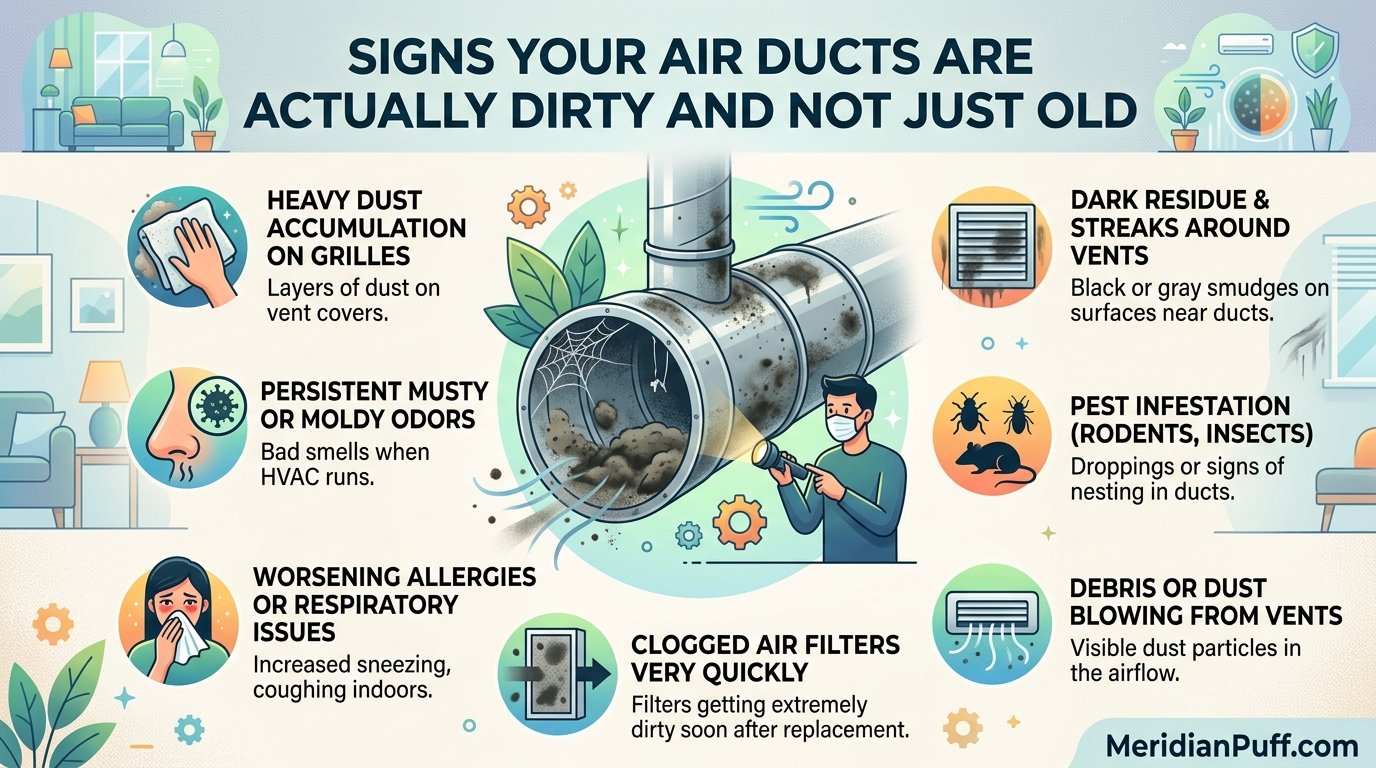
Most homeowners I talk with assume their air ducts need cleaning the moment the home hits a certain age. I made that same mistake in my first house, paying for a service I did not actually need. The truth is that old ductwork and dirty ductwork are two very different problems, and learning the signs your air ducts are dirty (not just aging) can save you hundreds of dollars and protect your family’s indoor air quality.
This guide draws on EPA guidance, NADCA standards, and the questions I see asked most often on homeowner forums. By the end, you will know exactly how to inspect your own ducts, what symptoms actually point to contamination, and when professional cleaning is worth the money.
Table of Contents
Old vs Dirty: Understanding the Critical Difference
Old ducts and dirty ducts are not the same thing. Aging ductwork simply means your system has been in service for many years, while dirty ducts mean contaminants have built up enough to affect air quality or HVAC performance.
Here is how I break it down. Old ducts can run perfectly well for 20 to 30 years if they were installed correctly and maintained. The metal itself does not wear out the way filters or motors do. What ages is the insulation around the ducts, the sealants at the joints, and occasionally the flex duct runs in attics.
Dirty ducts, on the other hand, reflect what has accumulated inside the system. Dust, pet dander, pollen, construction debris, mold spores, and sometimes rodent droppings can collect on interior surfaces. Once that buildup reaches a layer you can see or smell, the ducts need attention regardless of how old they are.
The age of your home tells you almost nothing about whether cleaning is necessary. A 5-year-old home with three dogs and recent renovations may have heavily contaminated ducts. A 25-year-old home with regular filter changes and no pets may run clean indefinitely.
Signs Your Air Ducts Are Dirty: Visual Indicators
The clearest signs of dirty air ducts show up at the vents and registers first. You do not need any tools to spot them.
Look for these visual indicators during your next inspection:
- Dark dust rings around supply vents. A thin layer of ordinary household dust is normal. A greasy, dark, or soot-like ring usually means the duct interior is loaded with the same material.
- Visible debris inside the vents. Shine a flashlight into each register. If you see mats of dust, cobwebs, or pet hair clumped together, contamination has spread into the trunk lines.
- Discoloration of interior duct walls. Open an access panel if you have one. Gray discoloration is typical. Black, brown, or green patches point to mold or excessive organic buildup.
- Dust puffs when the system starts. A small amount of dust on first startup each season is normal. Visible clouds of dust every time the blower kicks on is not.
- Pet hair and dander accumulation. Homes with multiple shedding pets or birds load ducts much faster than homes without animals.
I check my own vents every six months and photograph the grills. Comparing new photos to old ones tells me whether buildup is accelerating or staying stable.
Smell Test: Odor Indicators of Contamination
A musty smell from your vents is one of the strongest signs of dirty air ducts. Your nose is often more reliable than your eyes for catching early contamination.
Here is what different odors usually mean:
- Musty or earthy smell. This is the classic signature of mold growth inside the ductwork, evaporator coil, or condensate pan. It usually gets stronger when the system first runs.
- Burning smell on heat startup. A brief dusty smell the first time you fire the furnace in fall is normal. A persistent burning odor suggests heavy dust buildup on the heat exchanger or in the duct interior.
- Rotten egg or ammonia smell. Often a sign of rodent or insect activity inside the ductwork, particularly if you also hear scratching or droppings near vents.
- Chemical or stale smell. Can indicate off-gassing from old insulation that has crumbled into the airstream, or volatile organic compounds trapped in poorly ventilated duct runs.
If the smell disappears within a minute of startup and does not return, you are most likely fine. If it persists every time the system runs, contamination is present and worth investigating.
Health Symptoms Linked to Dirty Air Ducts
Dirty air ducts can absolutely make you sick, though the link is often indirect. The ducts distribute whatever is inside them every time the blower runs, and certain contaminants trigger real symptoms.
The symptoms I see reported most often on homeowner forums include:
- Worsening indoor allergies. Sneezing, itchy eyes, runny nose, or congestion that improves when you leave home and returns indoors.
- Asthma flare-ups at home. Especially in children or older adults who otherwise have stable symptoms outdoors.
- Persistent coughing or sore throat. Particularly on first waking, when overnight air circulation has coated mucous membranes with contaminants.
- Frequent headaches and fatigue. Linked in some studies to elevated carbon dioxide and poor ventilation, though this has multiple causes.
- Skin irritation or unexplained rashes. Less common but reported where biological growth is significant.
The key is pattern recognition. Symptoms that worsen indoors and improve outdoors point strongly toward an indoor air quality issue. Symptoms that stay constant regardless of location are more likely to be unrelated.
Always rule out other causes first. New pets, recent pesticide treatments, mattress age, and seasonal pollen can all produce similar symptoms.
HVAC Performance Signs of Dirty Ductwork
Dirty ducts force your HVAC system to work harder, and the symptoms show up in performance and utility bills. This is where contamination gets expensive.
Watch for these HVAC-specific signs:
- Higher than expected utility bills. A 20 to 30 percent jump in heating or cooling costs with no rate change or weather shift suggests the system is straining. Clogged ducts and a dirty evaporator coil are top causes.
- Uneven temperatures between rooms. Some rooms feel stuffy or never quite reach the thermostat setting, while others are comfortable. Restricted airflow from buildup is the usual suspect.
- Longer run times. The system cycles on more often or runs much longer to maintain temperature. This wears out motors and compressors faster.
- Weak airflow at registers. Hold your hand over a supply vent during operation. If airflow feels weak compared to a year ago, ducts may be partially blocked.
- Whistling or rattling noises from ducts. Air squeezing past debris or through narrowed sections creates unusual sounds. Loose connections can also whistle.
Do not jump straight to duct cleaning if you see these signs. A clogged air filter causes four of these five problems and costs almost nothing to fix. Always replace or clean the filter first, wait 48 hours, and see what changes.
How to Inspect Your Own Air Ducts
You can perform a basic air duct inspection in 15 to 20 minutes with a flashlight and a screwdriver. No professional equipment required for the homeowner’s check.
Follow these steps for a thorough self-inspection:
- Turn off the HVAC system. Safety first. Flip the breaker for the air handler or furnace before opening anything.
- Remove and inspect the air filter. Hold it up to a light. If you cannot see light through it, the filter has been restricting airflow. Note the filter size and condition for future reference.
- Remove vent covers. Take a photo of each supply and return register so you can compare later. Wipe a finger inside the boot. If you come back with more than a light powdering, contamination is present.
- Shine a flashlight down each duct run. You will see the first 1 to 2 feet. Dust streaks, clumps, or biological growth here means the rest of the run is similar.
- Check accessible trunk lines. Most homes have at least one access panel near the air handler. Open it carefully and look for matting, debris, or moisture stains.
- Inspect the evaporator coil and condensate pan. These sit inside the air handler and collect the same contaminants. Heavy slime or standing water here often produces musty odors throughout the system.
- Look for gaps and disconnected joints. Crushed flex duct, separated metal joints, and unsealed boots all pull contaminants from attics, basements, and wall cavities into the airstream. These are usually repairable without full cleaning.
- Document everything. Photos with dates let you track whether buildup is accelerating or stable over time.
If your self-inspection shows light dust and no odors, you do not need cleaning. If you see heavy buildup, biological growth, or rodent activity, professional service is justified.
When Air Duct Cleaning Is Actually Necessary
The EPA does not recommend routine duct cleaning, and NADCA standards agree. Knowing when cleaning is and is not necessary protects you from unnecessary expense.
Cleaning is genuinely needed in these specific situations:
- Visible mold growth inside ductwork. Cleaning alone is not enough. The moisture source causing the mold must be found and fixed, or mold will return.
- Infestation by rodents or insects. Droppings, nesting material, and carcasses must be removed, and entry points sealed. Cleaning without sealing invites a repeat problem.
- Major renovation or construction. Drywall dust, sawdust, and silica load ducts quickly if the system ran during work. Cleaning is often justified after substantial renovations.
- Heavy debris confirmed by inspection. If self-inspection shows visible mats of dust or material caked to duct walls, removal improves both air quality and airflow.
- Persistent odors traced to the ducts. Especially musty smells that respond to filter changes but return quickly.
Cleaning is generally NOT necessary in these situations:
- Routine maintenance on a healthy system with no contamination signs.
- After a normal filter change cleared up symptoms. The filter, not the ducts, was the issue.
- Light dust visible only on vent covers. Wiping the covers is sufficient.
- Homes without pets, smokers, recent renovations, or moisture issues.
A quick word about scams. Be cautious of door-to-door or phone solicitors offering deeply discounted duct cleaning. They often upsell unnecessary sanitizers, sealants, or mold treatments. NADCA-certified contractors who do an in-home inspection first are the safer choice. Always ask for a written scope of work before agreeing to service.
FAQ
How do you tell if your air ducts are dirty?
The most reliable signs are visible dark dust rings around vents, dust puffs every time the system starts, musty odors when the blower runs, and unexplained allergy symptoms that improve when you leave home. You can confirm with a flashlight inspection of vent boots and any accessible ductwork. If buildup is heavy enough to see or smell, the ducts need cleaning regardless of system age.
Is it okay to never clean air ducts?
In many homes, yes. The EPA does not recommend routine duct cleaning, and NADCA standards agree that ducts in well-maintained homes without pets, smokers, renovations, or moisture problems often run clean indefinitely. Focus on changing filters on schedule and inspecting ducts visually before paying for service you may not need.
Can you get sick from dirty air ducts?
Yes. Contaminants circulated through dirty ducts can worsen indoor allergies, trigger asthma flare-ups, and cause persistent cough, sore throat, or fatigue. Symptoms that improve when you leave home and return when you come back are a strong indicator of an indoor air quality issue, though you should always rule out other causes with a doctor if symptoms persist.
How often should air ducts be cleaned?
There is no fixed interval that fits every home. The EPA recommends cleaning only when needed rather than on a schedule. In most homes, a careful inspection every 2 to 3 years is enough to decide whether cleaning is warranted. Homes with pets, smokers, recent renovations, or moisture issues may need more frequent checks.
Conclusion
Knowing the real signs your air ducts are dirty, and not just old, comes down to observation. Look for dark dust rings, smell for musty odors when the blower runs, and pay attention to allergy or respiratory patterns that follow your time at home.
Your next step is a 20-minute self-inspection. Turn off the HVAC system, pull the vent covers, and shine a flashlight into the ducts. If you see light dust and smell nothing, your old ducts are doing their job just fine. If you find heavy buildup, biological growth, or pest activity, professional cleaning is justified. Either way, you will know the answer for yourself rather than paying for guesswork.