
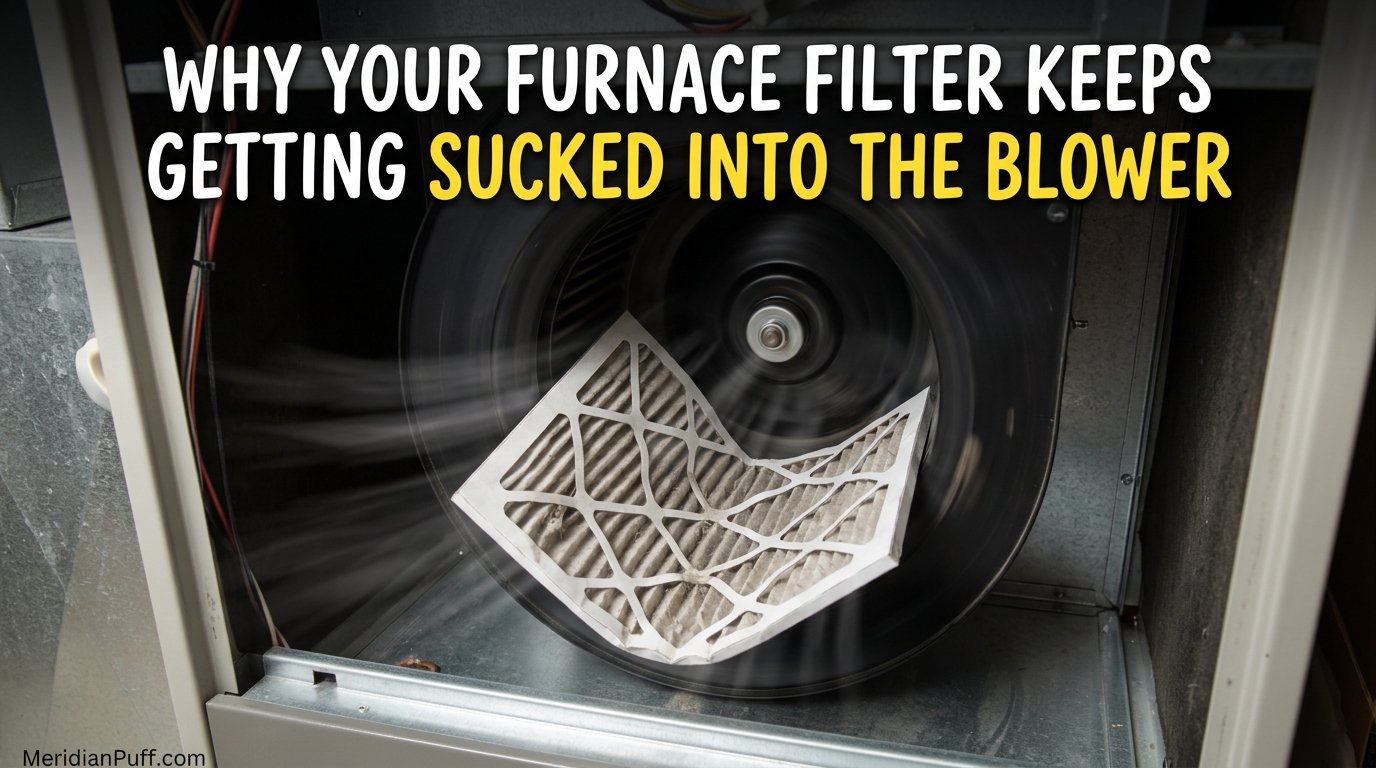
You walk down to the basement to swap out your HVAC filter, open the slot, and find nothing there. The filter is gone. After a moment of panic, you realize it has been pulled into the blower compartment or vanished somewhere into the return ductwork. If your furnace filter keeps getting sucked into the blower, you are dealing with a pressure problem that almost always points to an underlying airflow issue in your heating system.
This is not just an annoyance. A filter that keeps collapsing or disappearing into the furnace can damage the blower motor, restrict airflow through your home, and lead to costly repairs. I have seen homeowners replace filter after filter without ever addressing the root cause. The good news is that once you understand what is happening inside your system, the fixes are usually straightforward.
In this guide, we will break down exactly why a furnace filter keeps getting sucked into the blower, the six most common causes, how to prevent it from happening again, and when you should stop troubleshooting and call a professional.
Table of Contents
Why Your Furnace Filter Keeps Getting Sucked Into the Blower
Your furnace filter keeps getting sucked into the blower because the suction pressure from the blower fan is exceeding what the filter can hold up against. Under normal conditions, the filter sits snugly in its slot and the blower pulls air through it evenly. But when something restricts airflow upstream of the filter, the blower has to work harder to pull the same amount of air. That increased suction puts lateral pressure on the filter material, causing it to bow, bend, collapse, or get sucked entirely into the blower housing.
Think of it like drinking a thick milkshake through a flimsy paper straw. If the straw is strong and the shake flows freely, everything works fine. But if the straw is weak or the shake is too thick, the straw collapses inward under suction. The same physics applies to your furnace filter. The problem is always a combination of too much suction and not enough filter strength.
Understanding this mechanism is the first step. Now let us look at the specific reasons your system is generating that excess pressure.
Common Causes of Furnace Filter Collapse
1. A Clogged or Dirty Filter
This is the single most common cause, and it is the easiest to fix. When a filter becomes loaded with dust, pet hair, and debris, it restricts airflow. The blower motor still tries to pull the same volume of air through the system, which means it has to create more suction to compensate. A heavily soiled filter creates a large pressure drop across the filter media, and eventually the filter material gives way.
HVAC technicians on forums like HVAC-Talk and Reddit consistently point to dirty filters as the top culprit. One homeowner described it perfectly: as the filter gets dirtier, the pressure differential increases, and the filter gets pulled out of its frame. If you are waiting three months or longer between changes, you are tempting fate. In homes with pets, construction dust, or high traffic, filters can clog in as little as 30 days.
The fix is simple. Check your filter monthly and replace it before it looks visibly gray or opaque. A clean filter offers minimal resistance and will not collapse under normal blower suction.
2. Using a Filter With Too High a MERV Rating
Many homeowners assume that a higher MERV rating is always better because it captures more particles. This is a dangerous assumption. MERV, which stands for Minimum Efficiency Reporting Value, measures how tightly a filter can capture airborne particles. A MERV 11 or MERV 13 pleated filter catches far more than a basic MERV 8 fiberglass filter, but it also creates significantly more airflow resistance.
If your furnace blower motor and ductwork were not designed for that level of restriction, the system cannot breathe properly. The blower compensates by pulling harder, and the dense pleated filter gets sucked inward. I have talked to homeowners who upgraded to hospital-grade MERV 14 filters thinking they were protecting their family, only to find the filters bowing into the blower within a week.
Most residential furnaces are designed for MERV 8 to MERV 11 filters. If you are using anything higher and experiencing filter collapse, step down a rating and see if the problem resolves. You can also consult your furnace manual for the manufacturer’s recommended MERV range.
3. Blower Motor Issues and Excessive Suction
Sometimes the problem is not the filter at all but the blower motor itself. If the motor is running at a higher speed than the system was designed for, or if someone has adjusted the blower speed settings, the fan can generate excessive suction that overwhelms even a clean, properly rated filter. This often happens after a motor replacement where the new unit is mismatched to the system specifications.
Another related issue is a variable-speed blower motor that has been reconfigured or is malfunctioning. These motors ramp up and down based on system demand, but if the control board is sending the wrong signals, the motor can run at full speed continuously. The result is constant high suction that pulls filters inward no matter how clean they are.
If you have ruled out dirty filters and MERV ratings, a blower motor running too hot or too fast is a likely suspect. This is one situation where professional diagnosis is worth the cost, because testing motor speed and static pressure requires specialized gauges.
4. Blocked or Restricted Return Air
The return air side of your HVAC system is where the blower pulls air back from your living space to be reheated or recooled. If that pathway is obstructed, the blower has to work much harder to pull air through the return grille and filter. This creates a vacuum effect that bows the filter inward.
Common return air obstructions include furniture pushed against return vents, closed interior doors that block airflow from rooms with returns, dirty return grilles caked with dust, and undersized return ductwork. One Reddit user discovered that their return duct was partially crushed during a basement renovation, which explained why every filter they installed kept getting sucked in.
Walk through your home and check every return vent. Make sure nothing is blocking them, all return grilles are open and clean, and interior doors have enough clearance underneath for air to flow back to the return. If you have added rooms or finished a basement without upgrading return capacity, your system may simply be starved for air.
5. Incorrect Filter Size or Loose Filter Fit
A filter that is slightly too small for the slot will not stay in place under suction. Even a quarter-inch gap around the edges gives the blower enough room to pull the filter past its track. This is especially common when homeowners buy the wrong size at the hardware store or when a filter is installed without its supporting frame or clips.
Filter slots on some older furnaces rely on friction and a snug fit to hold the filter in place. If the slot has widened over time or the filter is undersized, there is nothing keeping it from being sucked inward. Check the printed size on your old filter and measure the actual slot opening to confirm they match. The nominal size printed on the filter, such as 16x25x1, is always slightly larger than the actual dimensions.
6. Cheap or Thin Filter Construction
Not all filters are built the same. The cheapest fiberglass panel filters have almost no structural rigidity. Their thin cardboard frame and loosely spun media can fold under relatively low suction. Even some budget pleated filters use flimsy frames that warp and bend after a few weeks of use.
HVAC professionals consistently recommend spending a little more on filters with rigid frames and reinforced media. Polyester filters tend to hold their shape better than fiberglass. If your filter has visible creases, soft spots, or a frame that flexes when you hold it by the edge, it is not strong enough to resist normal blower suction, let alone the extra pressure from a partially restricted system.
Signs Your Furnace Already Has Damage
If a filter has already been sucked into the blower, your furnace may have sustained damage that goes beyond a ruined filter. Here is what to look for before you simply install a new filter and move on.
Unusual noises from the blower compartment are a red flag. If you hear scraping, rattling, or thumping when the furnace runs, the blower wheel may have debris wrapped around it or a bent fin from the filter striking it at high speed. A filter shredded by the blower wheel can also send fragments into the heat exchanger or evaporator coil, creating blockages that reduce efficiency.
Reduced airflow from your supply registers is another warning sign. If the system feels weaker than usual even with a clean filter installed, debris from the old filter may be lodged in the coil or ductwork. You might also notice higher energy bills, as the blower works harder to push air past the obstruction.
A burning smell when the furnace runs could indicate that the blower motor is overheating from the strain. Shut the system off immediately and have it inspected before running it again. Motor damage from sustained airflow restriction is one of the most expensive repairs homeowners face, and it is entirely preventable.
How to Keep Your Furnace Filter From Collapsing
Preventing this problem comes down to reducing suction pressure and strengthening the filter setup. Here is a practical checklist you can work through.
Replace your filter every 30 to 60 days, or monthly if you have pets or allergies.
Use a MERV rating that matches your system, typically MERV 8 to MERV 11 for most homes.
Buy filters with rigid frames and reinforced pleats rather than the cheapest option available.
Verify the filter size matches the slot exactly, with no gaps around the edges.
Install filter clips or a filter grille cover if your slot does not hold filters securely.
Keep all return air vents open and unobstructed by furniture, rugs, or curtains.
Leave interior doors open or install transfer grilles so air can return to the system.
Schedule annual professional maintenance to check blower speed, static pressure, and duct integrity.
Consider upgrading to a 4-inch or 5-inch media filter if your system supports it, as thicker filters resist collapse far better than standard 1-inch filters.
If you work through this list and the problem persists, the issue is likely deeper in the system and warrants professional attention.
When to Call a Professional HVAC Technician
Some causes of filter collapse are beyond the scope of a DIY fix. You should call a licensed HVAC technician if any of the following apply to your situation.
If a filter has disappeared completely into the ductwork and you cannot see or reach it, do not run the furnace. A professional can locate and remove it using inspection cameras before it causes further damage. Trying to fish it out yourself can push it deeper or scratch the inside of the duct.
If you have tried lower MERV ratings, frequent changes, and proper sizing but the filter still bends or collapses, the problem is likely undersized return ductwork, a blower motor running at the wrong speed, or a system that was never properly balanced. Diagnosing static pressure requires a manometer and the training to interpret the readings.
If you hear grinding, smell burning, or notice the furnace short-cycling after a filter incident, shut it down and call for service. Blower wheels, motors, and heat exchangers are expensive components, and catching damage early can save you thousands compared to a full system failure in the middle of winter.
A typical diagnostic visit runs between $75 and $200 depending on your area, and most techs will measure static pressure and blower performance as part of the inspection. That is a small price to pay compared to replacing a burned-out blower motor.
FAQs
Why does my HVAC filter keep collapsing?
Your HVAC filter keeps collapsing because the blower fan is creating more suction pressure than the filter can withstand. The most common causes are a clogged dirty filter, a MERV rating too high for your system, blocked return air vents, or a blower motor running at excessive speed. Start by replacing the filter with a clean one at a lower MERV rating and ensuring all return vents are open.
How to keep a furnace filter in place?
To keep a furnace filter in place, use the exact size that matches your filter slot, install filter clips or a retention grille if the slot is loose, choose filters with rigid frames instead of flimsy cardboard, and keep return air vents unobstructed so the blower does not create excessive suction. A 4-inch media filter resists collapse far better than a standard 1-inch filter.
What are the common problems with furnace filters?
Common furnace filter problems include filters collapsing or getting sucked into the blower, using the wrong MERV rating for the system, installing the wrong size filter, failing to change filters often enough causing clogs, and blocked return air reducing airflow. Each of these can lead to filter damage, reduced heating efficiency, and potential blower motor strain.
Conclusion
When your furnace filter keeps getting sucked into the blower, the root cause is always excess suction meeting insufficient resistance. Whether that comes from a clogged filter, an overly restrictive MERV rating, blocked return air, a mismatched blower motor, or a cheap flimsy frame, the solution starts with identifying which of these factors is at play in your home.
Start with the easy fixes: change the filter more often, verify the size, step down the MERV rating, and clear your return vents. If the filter still bends or disappears, bring in a professional to measure static pressure and check your blower motor before the problem turns into a costly repair. Addressing the cause now will protect your furnace, improve your indoor air quality, and give you peace of mind heading into the heating season.