
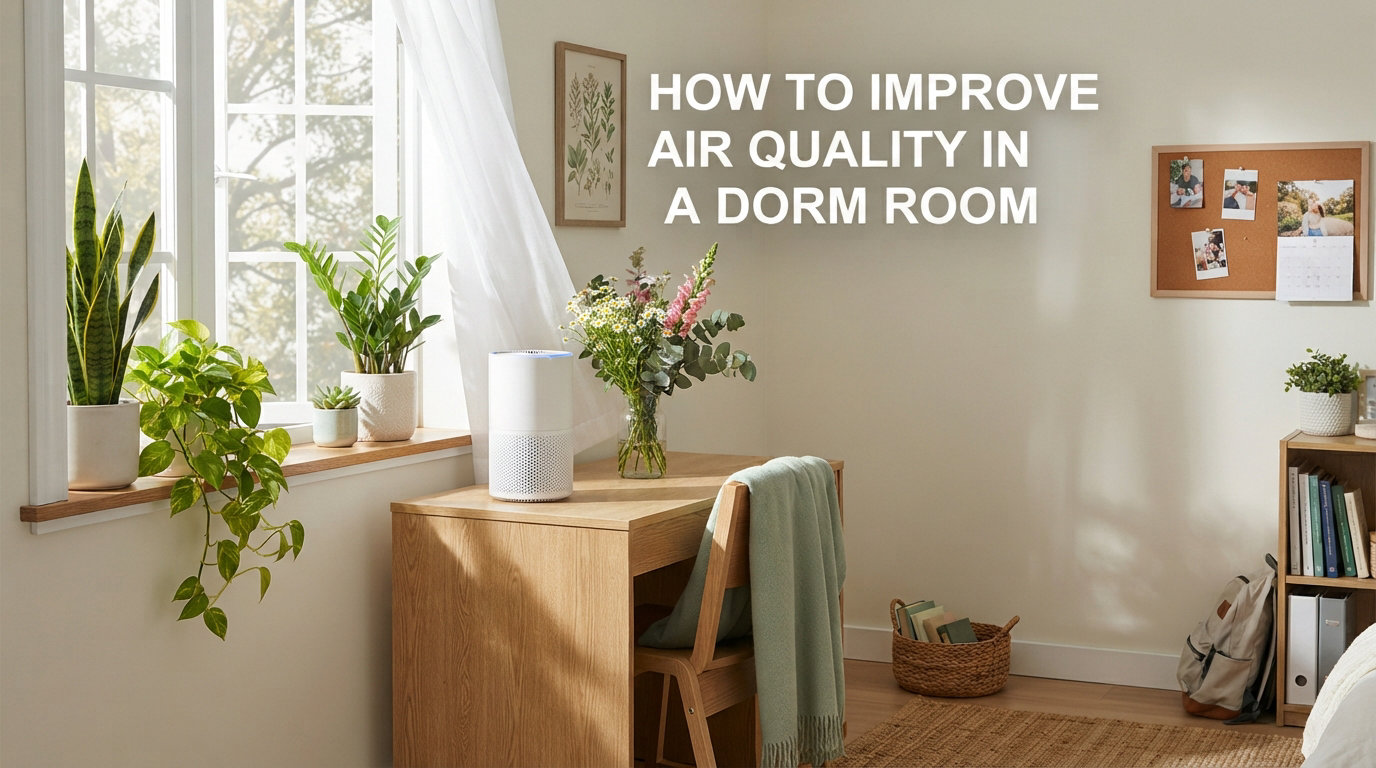
When my friend moved into a 1930s dorm at UGA, the air smelled like wet cardboard and all three of her roommates were sick within two weeks. The culprit wasn’t a virus going around the hall. It was the air itself.
If you’re reading this, you probably already suspect your dorm room air isn’t great, and you’re wondering how to improve air quality in a dorm room without spending a fortune or breaking housing rules.
The truth is, dorm air quality is genuinely bad in a lot of buildings. Older residence halls have outdated HVAC systems, carpets that trap decades of dust, and windows that barely open. Even newer buildings pack hundreds of students into tight spaces with shared ventilation, which means dust, allergens, mold spores, and volatile organic compounds from new furniture all build up fast.
The good news: you don’t need to gut-renovate your building or move out. With the right combination of an air purifier, smart ventilation habits, a solid cleaning routine, and a few small changes, you can cut the worst pollutants dramatically.
I’ve pulled these strategies together from the American Lung Association, IQAir’s research on cognitive performance, and real student experiences from Reddit threads in r/AirQuality and r/AirPurifiers so you can actually use them. Here’s what we’ll cover: what’s polluting your dorm air, how to choose and use an air purifier effectively, ventilation tactics that work even with sealed windows, mold and humidity control, the plants worth buying, how to cut VOCs, and when it’s time to involve housing staff.
Table of Contents
Why Dorm Room Air Quality Matters More Than You Think
Poor air quality isn’t just a comfort issue. It directly affects your health, your sleep, and your grades.
The American Lung Association notes that indoor air can be two to five times more polluted than outdoor air. Dorm rooms are a perfect storm of small space plus many pollutant sources.
Dust mites, mold spores, secondhand vapor, formaldehyde off-gassing from pressed-wood furniture, and particulate matter from HVAC systems all add up. Even a “clean” looking dorm can have surprisingly bad air.
The academic connection is real. IQAir’s reporting highlights research showing air pollution can increase the number of mistakes students make on tests by up to 150 percent. Other studies link poor indoor air quality to fatigue, headaches, and reduced cognitive function.
That means the air in your room could quietly be hurting your GPA. You might be blaming caffeine or stress for symptoms that are actually air-related.
If you have asthma, allergies, or a sensitive respiratory system, the stakes are higher. Mold exposure in particular can trigger real symptoms, and students on Reddit describe getting sick repeatedly until they added an air purifier or moved buildings.
Taking air quality seriously isn’t being high-maintenance. It’s protecting your health and the four years you’re paying good money to focus on.
What’s Actually in Your Dorm Room Air
Before you fix a problem, it helps to know what you’re dealing with. Dorm air pollution comes from a few predictable sources.
Dust and allergens. Carpet fibers, fabric upholstery, dust mites, pollen tracked in on shoes, and skin cells all contribute. HVAC systems in older buildings blow this stuff around constantly, which is why students complain about needing to dust every other day.
VOCs and formaldehyde. New mattresses, particleboard desks, laminate flooring, cleaning products, and air fresheners all off-gas volatile organic compounds. Formaldehyde is a particular concern in dorms because of all the new pressed-wood furniture. VOCs cause headaches, eye irritation, and longer-term health issues.
Mold and moisture. Leaky pipes, humid climates, poor bathroom ventilation, and sealed windows create the perfect mold environment. One Reddit student described their building as having “damp, moldy, stale air” that was a completely separate problem from typical bad smells.
Particulate matter from outside and shared spaces. If your dorm is near a busy road, dining hall exhaust, or designated smoking areas, PM2.5 and ultrafine particles drift in through vents and windows.
Biological pollutants. Bacteria, viruses, pet dander (yes, even in pet-free dorms), and cockroach or dust mite allergens circulate through shared ventilation.
Secondhand smoke and vapor. Even if your room is smoke-free, a roommate or neighbor who vapes or smokes can push contaminants into your space through vents and under doors.
How to Improve Air Quality in a Dorm Room
This is where we get practical. The steps below are organized roughly from highest impact to lowest, so you can prioritize what’s worth your money and effort.
Start With a True HEPA Air Purifier
An air purifier is the single biggest upgrade you can make. But not all purifiers are equal, and the wrong one is barely better than nothing.
Look for true HEPA, not “HEPA-style” or “HEPA-type.” True HEPA captures 99.97 percent of particles 0.3 microns or larger, which covers dust, pollen, smoke, and most mold spores. Cheaper filters miss the fine stuff that actually bothers your lungs.
Check the CADR (Clean Air Delivery Rate). CADR tells you how fast the purifier cleans a given room. For a typical 150 to 200 square foot dorm, you want a tobacco smoke CADR of at least 100. Bigger is better, but bigger also means louder and pricier.
Match the purifier to your room size. Most compact dorm purifiers are rated for 100 to 300 square feet. If you have a single, that’s plenty. If you’re in a double or suite with an open layout, get one rated for 300+ square feet or run two smaller units.
Activated carbon matters for odors and VOCs. HEPA doesn’t catch gases or smells. A layer of activated carbon absorbs VOCs, smoke, and the musty smell that haunts older dorms. If your room smells, prioritize a unit with a carbon pre-filter.
Consider noise. You’re sleeping next to this thing. Check reviews for low-decibel sleep modes. Many students on Reddit say a too-loud purifier ends up turned off, which defeats the purpose entirely.
Mind filter replacement costs. Cheap purifiers with expensive proprietary filters can cost more long-term than a pricier unit with standard filters. Budget for replacement filters every 6 to 12 months.
Run it constantly. Air purifiers work best when they run 24/7 on a low or medium setting, not on high for an hour. Set it and forget it.
Master Ventilation, Even With Sealed Windows
Ventilation dilutes indoor pollutants by replacing stale air with fresher air. If your windows open, use them, but use them strategically.
Open windows for 10 to 15 minutes in the morning and evening when outdoor air quality is decent. Check a free app like AirNow before opening if you live near traffic or in wildfire season.
Create cross-ventilation. If you have two windows or a window plus a door, open both and use a small fan to push air out one side. Even one window with a fan facing outward (exhaust mode) clears stale air faster than opening alone.
Use a small fan to keep air moving. Still air lets pollutants settle and accumulate. A cheap desk fan or clip-on fan keeps air circulating, which prevents mold growth and helps your purifier work more efficiently.
If windows are sealed, work with your door. Prop your door open for short stretches when the hallway air is fresher than your room. Avoid this during high-traffic times when hallway dust kicks up.
Position your bed smartly. Don’t sleep with your head right against the HVAC vent. Direct airflow all night dries out your throat and pushes whatever’s in the duct straight at your face.
Control Humidity and Stop Mold Before It Starts
Mold is the number one air quality complaint in older dorms. Mold needs moisture, food (dust, paper, fabric), and stagnant air to grow. Take away any of those and you starve it.
Aim for 30 to 50 percent humidity. Buy a $10 hygrometer. If your room is above 60 percent, you’re in mold territory. Run a small dehumidifier, run your AC (which dehumidifies as a side effect), or crack a window on dry days.
Dry wet stuff immediately. Towels, gym clothes, rain jackets, and umbrellas left damp are mold magnets. Hang wet towels fully spread out, not bunched on a hook.
Watch the bathroom. If your dorm has a private or suite bathroom, run the fan during and 20 minutes after every shower. Squeegee the walls if you can.
Report any visible mold or water stains to housing immediately. It’s a maintenance issue, not a personal problem, and they’re usually required to act on it.
Don’t over-water plants. Wet potting soil grows mold spores that end up in your air. Water only when the top inch is dry, and empty drip trays after watering.
If you spot mold, take photos and contact housing in writing. Don’t try to remediate major mold yourself. Bleach and scrubbing can release more spores. Document everything in case you need to request a room transfer.
Build a Cleaning Routine That Actually Cuts Dust
Vacuuming once a month won’t cut it in a dorm. Dust is constant. Build a routine that keeps up.
Weekly basics. Vacuum or Swiffer the floor, wipe down surfaces with a damp microfiber cloth, launder bedding in hot water, and empty the trash. A damp cloth captures dust instead of flinging it back into the air, which is why dry dusting makes things worse.
If you have carpet, get a HEPA vacuum. Standard vacuums suck up big stuff and blow fine dust out the exhaust. A HEPA-filtered vacuum actually traps it. Several Reddit students cite HEPA vacuums as the turning point in their dusty-carpet battle.
Wash your bedding weekly in hot water. Sheets, pillowcases, and duvet covers collect skin cells, dust mites, and sweat. Hot water (130 degrees Fahrenheit or hotter) kills mites.
Don’t forget overlooked dust magnets. The top of the fridge, behind the desk, vents, fan blades, and curtains all hold dust. Hit these monthly.
Pick the right cleaning products. Skip heavy sprays with strong fragrances. They add VOCs to your air while they “clean.” Look for fragrance-free, low-VOC cleaners, or use simple soap and water for most surfaces.
Keep clutter down. Every stack of paper, pile of clothes, or cardboard box is a dust collector. The less stuff you have exposed, the less surface area dust has to settle on.
Add Air-Purifying Plants (With Realistic Expectations)
Plants are nice, but they’re not a replacement for a real air purifier. The famous 1989 NASA study that launched the “plants purify air” trend was done in sealed chambers, not realistic dorm conditions. Modern research suggests you’d need a jungle of plants to measurably clean air.
That said, plants do help a little, they look great, and caring for something alive is good for mental health. Pick low-maintenance, low-light species that won’t die the first time you go home for break.
Snake plant. Nearly indestructible, tolerates low light and infrequent watering, and releases oxygen at night. Perfect for next to the bed.
Pothos. Trailing, fast-growing, handles neglect. Bonus: easy to propagate and share with friends.
Spider plant. Pet-safe (important if your dorm allows emotional support animals), low light, and produces baby plants you can give away.
Peace lily. Higher light needs but effective at absorbing some VOCs. Droops dramatically when thirsty, which makes watering easy to remember.
Aloe vera. Succulent that doubles as a sunburn remedy. Loves neglect.
Chinese evergreen and dracaena. Both tolerate low light and add height. Skip dracaena if you have a cat, since it’s toxic to them.
Realistic expectation: two to four small plants add ambiance and may slightly improve air, but pair them with a HEPA purifier for actual filtration.
Cut VOCs at the Source
Filtering VOCs is harder than preventing them. Here’s how to keep them out of your air in the first place.
Air out new furniture and mattresses. Unbox everything in a well-ventilated space (or even outside) for a few days before bringing it in. New pressed-wood desks and memory foam mattresses off-gas the most in the first week.
Avoid plug-in air fresheners and scented candles. These are basically VOC bombs. If you want scent, use a few drops of essential oil on a cotton ball placed far from your face, or simmer cinnamon and citrus on a hot plate if your dorm allows it.
Switch to low-VOC cleaning products and laundry detergent. Fragrance is the catch-all term that hides hundreds of chemical compounds. Fragrance-free is almost always lower in VOCs.
Skip aerosol sprays. Hairspray, deodorant, and cooking spray in aerosol form push fine particles into your air. Pump sprays or solid versions work just as well.
Don’t store paint, solvents, or chemicals in your room. Even sealed, these leak vapors. Use campus storage or a friend’s garage.
Cook smart. If you have a kitchenette, run the exhaust fan, open a window, and avoid high-heat oil cooking, which generates ultrafine particles.
Monitor Your Air Quality So You Know It’s Working
You can’t manage what you don’t measure. A cheap air quality monitor tells you what’s actually in your air so you know if your changes are working.
Look for a monitor that measures PM2.5, VOCs, and humidity. CO2 monitoring is a bonus if you’re worried about stuffy rooms and drowsiness. Skip monitors that only measure PM10. You want the finer PM2.5 reading.
Use it to find problem patterns. Set it on your desk for a week and watch the numbers. You might discover your air gets worse every time your neighbor vapes, or that humidity spikes when you shower.
Let it guide your routine. If PM2.5 climbs on cooking days, you know to ventilate. If VOCs jump after you bring in new furniture, air it out longer. If humidity stays above 60 percent, run the dehumidifier.
Don’t obsess over absolute numbers. Cheap monitors aren’t lab-accurate, but they’re excellent at showing trends and relative changes, which is what you actually need day to day.
Behavioral Tips and Roommate Coordination
Air quality isn’t just about gear. It’s about habits. And in a shared room, it’s about your roommate’s habits too.
Have the awkward conversation early. Sit down with your roommate in the first week and talk about vaping, smoking, candles, cooking, and cleaning. Most students aren’t trying to wreck your air. They just haven’t thought about it.
Set shared ground rules. Agree on what’s okay (a scented diffuser? occasional microwave popcorn?) and what isn’t (smoking indoors, plug-in air fresheners, leaving wet towels on the floor). Write it down in your roommate agreement.
Split cleaning duties. Trade off vacuuming, taking out trash, and wiping surfaces weekly. Shared responsibility means it actually gets done.
Ventilate during high-emission activities. Whoever showers, cooks, or sprays anything should run a fan or crack a window for 15 minutes after.
Avoid bringing in known pollutants. Cigarette smoke on clothing (thirdhand smoke) lingers and off-gases into your room. Ask smoker friends to keep their jackets outside.
If your roommate won’t cooperate, focus on what you can control. Run your purifier, ventilate on your own, use a clean sleep setup, and escalate to your RA if it’s affecting your health.
A 5-Step Quick Action Plan to Improve Air Quality
If you only do five things, do these. This is also the short answer to the common question of what are 5 ways to improve air quality, in order of impact.
- Buy a true HEPA air purifier sized for your room and run it 24/7. This single step removes the majority of particles and dramatically improves symptoms for most students.
- Ventilate daily. Open windows for 10 to 15 minutes when outdoor air is clean, or use a fan to push out stale air.
- Vacuum weekly with a HEPA-filtered vacuum and damp-dust surfaces. A damp microfiber cloth traps particles instead of resuspending them.
- Control humidity between 30 and 50 percent. Use a hygrometer, dehumidifier, or AC to starve mold of moisture.
- Remove pollutant sources. Air out new furniture, skip scented sprays and candles, and switch to low-VOC cleaners.
Do those five things consistently and most students notice a real difference in air freshness, allergy symptoms, and sleep within a week or two.
When to Escalate to Housing
Sometimes the problem isn’t in your room. It’s the building. Here’s when and how to advocate for yourself.
Document everything in writing. Take dated photos of visible mold, water stains, peeling paint, or stained ceiling tiles. Note when symptoms started and how often they recur.
File a maintenance request through your housing portal. Most schools have a formal process. Keep copies of every submission and the response.
Get your roommate to corroborate. Multiple complaints from multiple residents in the same building get more attention than one. Consider a group email or petition if multiple rooms have issues.
Know your rights. Many schools have policies on habitability and air quality, especially around mold. If housing refuses to act, ask your RA, residence director, the dean of students, or even campus health services for backup.
Push for a room transfer if needed. Health comes first. If you have a documented sensitivity (asthma, allergies) or medical accommodation, you have stronger grounds to request a move.
Contact your school’s student health center for symptom documentation. A doctor’s note linking your symptoms to your room makes a huge difference in getting housing to act.
Don’t suffer in silence. Many students on Reddit describe fighting for weeks or months before finally moving, and only then realizing how bad their air actually was.
Frequently Asked Questions
Do air purifiers actually work in dorms?
Yes, a true HEPA air purifier is one of the most effective ways to improve dorm air quality. HEPA filters capture 99.97 percent of particles 0.3 microns or larger, including dust, pollen, smoke, and most mold spores. Students on Reddit repeatedly report noticeable improvements in sleep, allergy symptoms, and air freshness after adding one. Choose a unit sized for your room’s square footage, look for an activated carbon layer if odors are an issue, and run it constantly on a low setting for best results.
Why are dorm rooms so dusty?
Dorm rooms get dusty fast because of high foot traffic, fabric upholstery, carpet fibers, dusty HVAC systems, and tight shared spaces. Older buildings often have aging ventilation that constantly blows particles around. Shared hallways, laundry rooms, and common areas pump dust through doors and vents. The fix is weekly vacuuming with a HEPA-filtered vacuum, damp dusting with a microfiber cloth, washing bedding in hot water, and running an air purifier to capture airborne dust.
What are 5 ways to improve air quality?
The five highest-impact steps are: (1) Run a true HEPA air purifier sized for your room 24/7. (2) Ventilate by opening windows or using fans to cycle stale air out. (3) Vacuum weekly with a HEPA-filtered vacuum and damp-dust surfaces. (4) Keep humidity between 30 and 50 percent to prevent mold. (5) Reduce pollutant sources by airing out new furniture, skipping scented sprays, and using low-VOC cleaners.
Can mold in dorms make you sick?
Yes. Mold exposure can trigger allergic reactions, asthma attacks, respiratory irritation, headaches, fatigue, and sinus issues. Students on Reddit repeatedly describe getting sick repeatedly in moldy dorm rooms until they added a dehumidifier, ran an air purifier, or moved buildings. If you see visible mold, smell a persistent musty odor, or have recurring symptoms that improve when you leave the building, document it and contact housing in writing. Do not try to remediate major mold yourself.
Wrapping Up
You don’t need a renovation or a windfall to figure out how to improve air quality in a dorm room. A true HEPA purifier, smart ventilation, weekly cleaning with the right tools, humidity control, and a few source-reduction habits will get you most of the way there.
Start with the 5-step action plan above. Even doing just the air purifier and ventilation steps will help most students feel a real difference within a week.
Document any persistent mold or water damage in writing and escalate to housing if your building is the problem. Your health and your grades are worth the effort, since the air you breathe for nine months a year shapes both.
Take it one step at a time. Small consistent changes beat one big purchase every single time, and your future self will thank you for the cleaner air.